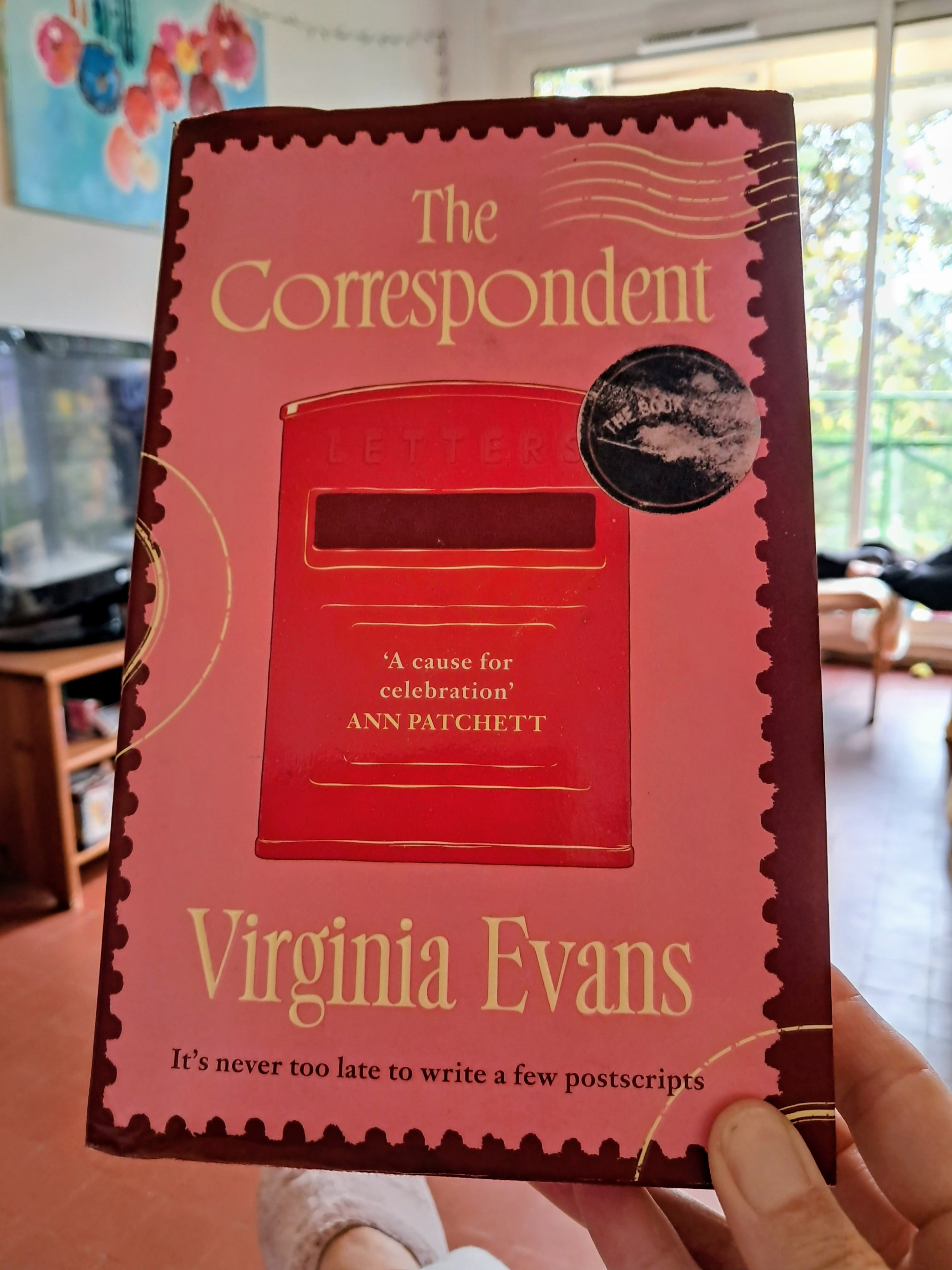
The Correspondent by Virginia Evans

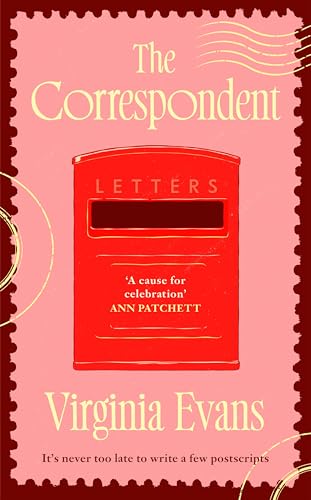
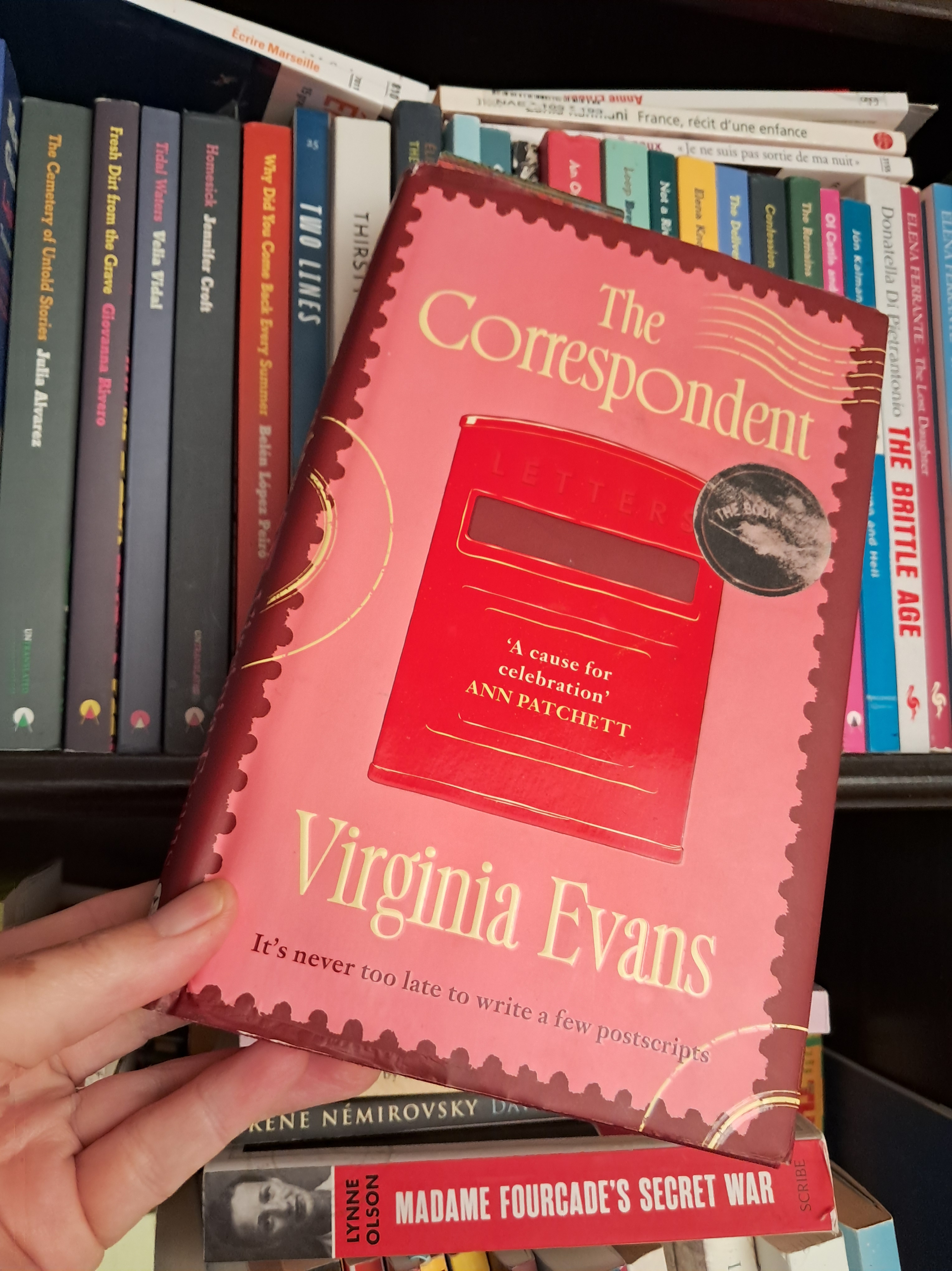
This book is one of those word of mouth sensations that people recommend and then it takes off. I had seen it reviewed a little earlier in the year, then a friend bought a copy and devoured it over the summer telling me this was the book, we were all going to have to read, to have that collective pleasure of knowing that people close to you, but who don’t necessarily live near you, can be on the same wavelength about a book.

One of the first things I say to reader friends who do live nearby, or visit here often and know, is that the first letter is written to the protagonist’s brother and he lives in Gordes!

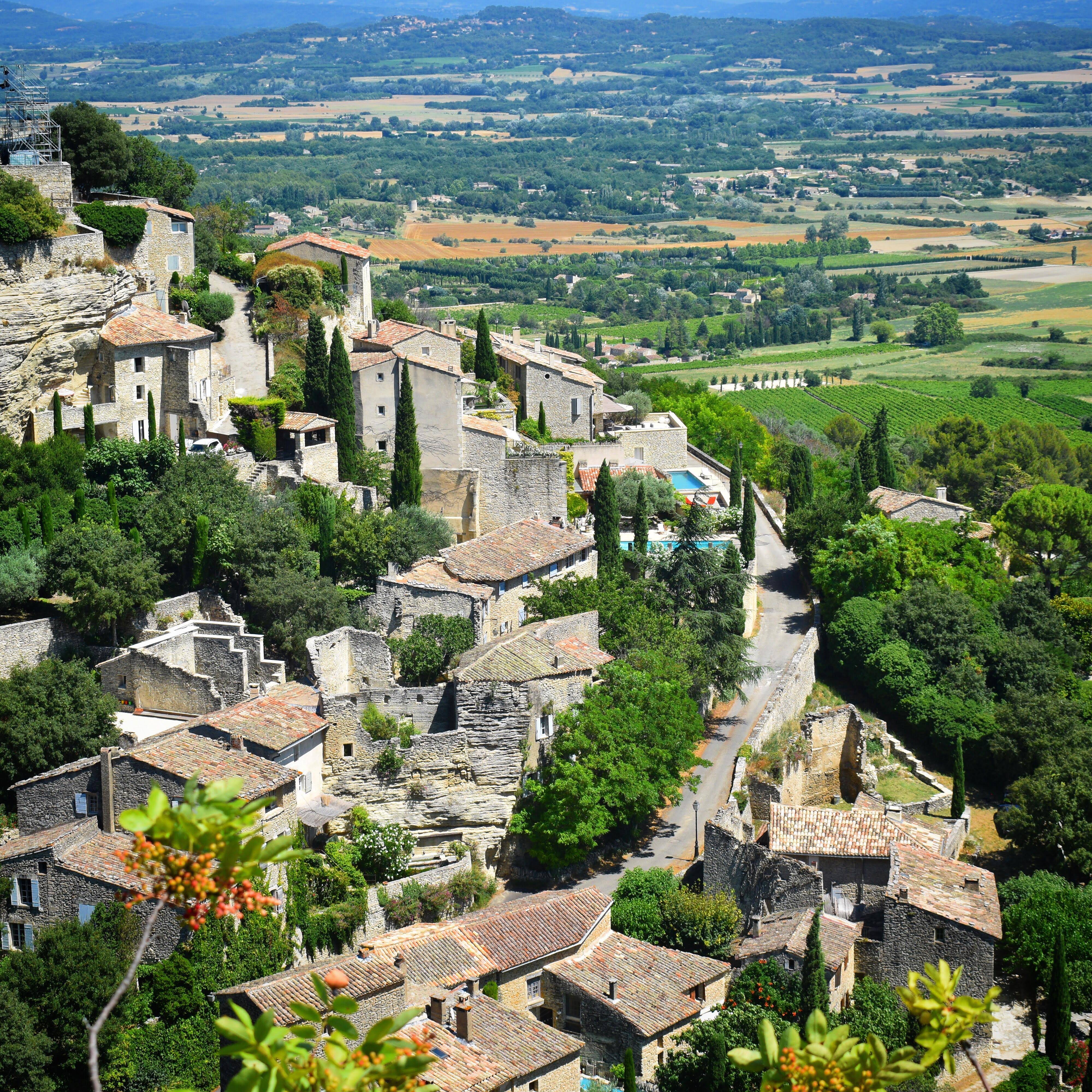
How often do we encounter a book written in English that features a local postcode? Almost never! Well, only the letters travel to Gordes, but before sharing more about a book, here’s a little more about Gordes.

A Letter to Gordes

The village of Gordes France in the address of a letter to her brother Felix The Correspondent Virginia Evans

So for those who don’t know Gordes is a pretty hilltop village in Provence, in the north Luberon area that is popular in summer with tourists for its summer market, restaurants and local produce, outstanding views, lovely walks and very beautiful old streets. Also a location for a few films.

When you stay longer in Provence and get to know some of its hidden aspects, its wonderful, cultural gems often arise unexpectedly, when you least expect it. As this one did.

Victor Vasarely and Gordes

A few years ago I watched a documentary (probably on ARTE) about Gordes and how it was stumbled upon in 1948 by the French-Hungarian graphic artist Victor Vasarely (1906-1997), who had a ‘coup de foudre‘ for the village, he fell under the charm of its architecture, colours and shapes, the light and luminosity.

He would spend many summers in a very basic shepherd’s cottage 2-3 kilometres from the village, reproducing some of its shapes, feeding into the inspiration for much of his abstract creative work with shape, form and optical illusion. From the inspiration of a small window in that cottage in differing light, he would produce many works, many of them suspended tapestries, little acknowledged at the time, but today housed in the Musée Vasarely, in Jas de Bouffan, Aix en Provence.

Musée Vasarely Aix en Provence graphic art optical illusion inspiration Gordes
Vasarely Musée, Aix en Provence

In effect, as his grandson Pierre Vasarely said, referring to his grandfather’s oeuvre, if there was not (the inspiration of) Gordes, there would not be (the museum of works) Aix-en-Provence.

The Correspondent, A Novel

Back to the novel, The Correspondent is a heart-warming novel told through the collection of letters, hand-written notes, emails, any and every type of correspondence that Sybil Van Antwerp (her married name thanks to her Belgian husband now living back in Brussels) writes in her seventy -third year.

Every morning at half past ten Sybil sits at her desk to deal with her correspondence, tackling it like a job, except with much more pleasure, her years as the assistant to the Judge giving her the discipline, intellectual acuity, at times a sharp tone and years of a certain type of wisdom she uses to her advantage.

So Much to Write About and Address

There are a number of threads, correspondents, favorite topics, institutions to harass, family dramas to navigate, interested or prospective men to consider or keep at a distance, an ex-husband who is not well, a best friend who likes to read, a daughter she doesn’t see eye to eye with.

Ten Years of Correspondence

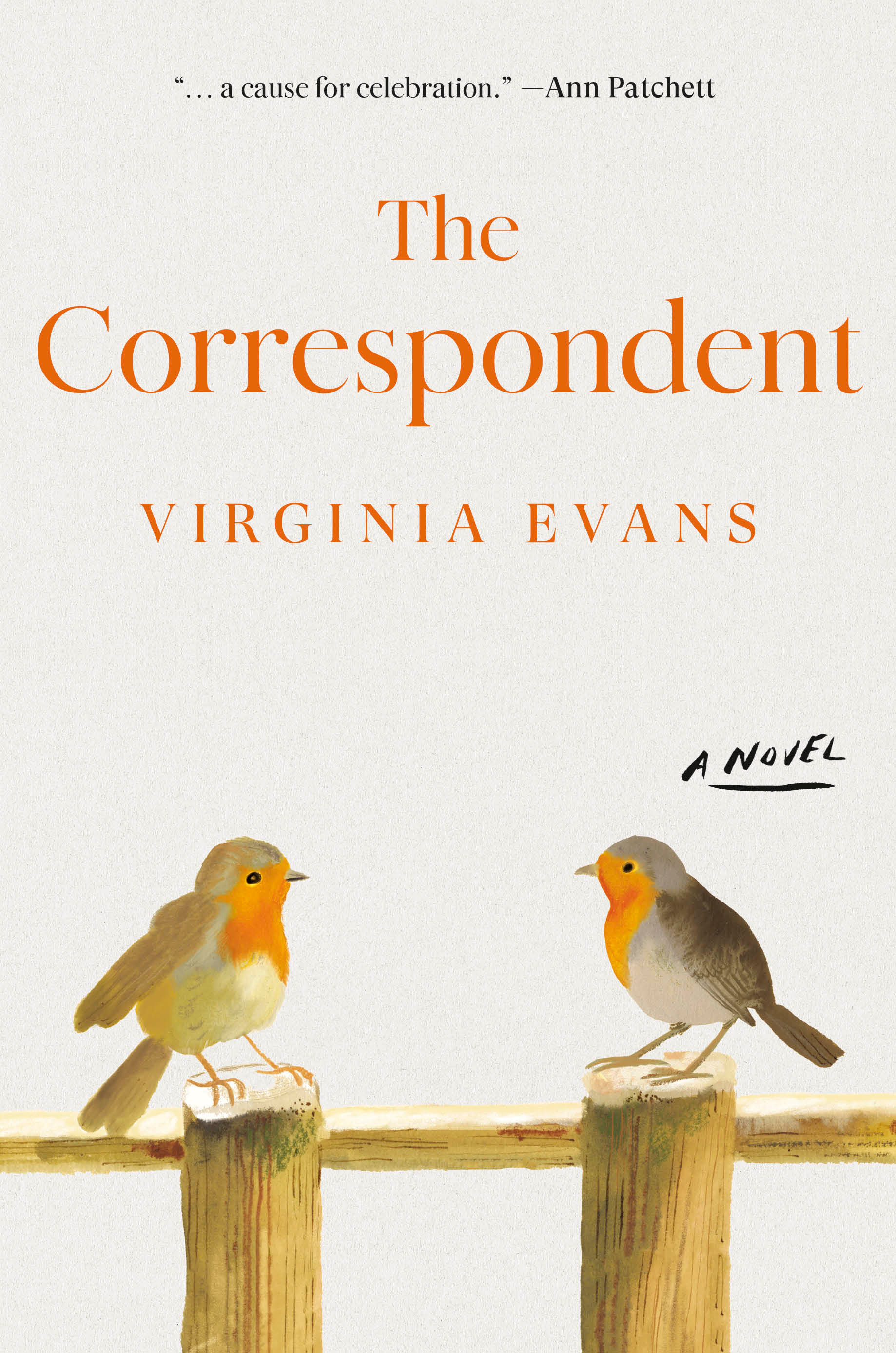
The epistolary novel The Correspondent by Virginia Evans US book cover

The narrative begins in June 2012 with that letter to Felix, about whose life we also have a little drama and it does seem to be affected by Syblil’s input, and ends in January 2022.

There are also a few letters from the 1950’s when she was a child that her best friend Rosalie sends her, these two have corresponded for many years and keep each other informed about their lives and sometimes they even fall out with each other, creating periods of silence and atonement.

Authors and Book Recommendations

Sybil and Rosalie always tell each other what they are reading and I began to note down these books in a list. Sybil never hesitated to write to authors, and had a particular fondness for writing to Joan Didion, author of The Year of Magical Thinking and Blue Nights. Her letters to Didion are the most intimate of all, showing part of her character, feeling more able to open up to a stranger with whom she feels an affinity than to her best friend, children, or either of the men she is sort of interested in.

They read Ann Patchett’s State of Wonder, Abraham Verghese’s Cutting for Stone, Agatha Christie’s Murder on the Orient Express, another classic novel of letters 84 Charing Cross Road by Helene Hanff, Lonesome Dove by Larry McMurtry and many more.

In the letters from the 1950’s the girls were reading C.S. Lewis’s Space Trilogy and Isaac Asimov.

Like the heroine of “The Correspondent,” Evans is a correspondent in the old-fashioned sense. For years she has been writing letters, mainly in longhand, to friends, family and writers she didn’t expect to hear back from, such as Joan Didion and Larry McMurtry. After reading Ann Patchett’s 2016 novel “Commonwealth,” Evans wrote to the author to tell her how much she liked it. Patchett wrote back. 

I couldn’t help noticing that I had read many of the books mentioned and laughed when I read this quote above in an interview, as a friend gave me Commonwealth a week ago. Now I’m curious, a potential Christmas read perhaps.

Intimate With Strangers

Epistolary novel The Correspondent Virginia Evans word of mouth sensation

In addition to opening up to Didion, Sybil becomes very familiar with the Admin person from the Kindred Project after receiving a not particularly wanted gift of a DNA search. She asks multiple questions, not all of them concerning herself and ignores the fact that the responses seem standardised. She can be very insistent and often gets her own way, even with complete strangers, shades of her law career, her persistence and not always keeping terribly good boundaries.

However, there is a menace present, someone perhaps from her past, a legal case that sits in the back of her mind that she can’t quite recall, something she has pushed down, but senses with a tinge of regret. That needs addressing. She hasn’t told anyone about this; it adds an element of foreboding to her otherwise, in control, life.

When I play it all back I am ashamed, and yet I cannot imagine having done any other thing. Grief shared, I think, can produce two outcomes. Either you bind yourselves together and hold on for dear life, or you let go and up goes a wall too high to be crossed. For us it was the latter.

Does Persistence Pay Off?

Sybil likes learning and has been taking a university literature class for at least nine years before they found a loophole to exclude her. Now she is hellbent on retrieving that place, because she does not like being excluded from anything she did not decide to exclude herself by choice. And so we have the back and forth correspondence, until finally something must actually be done about it.

old handwritten letters
Photo by Pixabay on Pexels.com

Even when Sybil acts, we know about events from follow up correspondence and yet when you finish reading the novel, it almost doesn’t seem like it has all been told through letters, as the story telling is comprehensive, the characters are well rounded and even the drama brilliantly captured.

As Sybil’s sight is failing and there arrives a kind of crescendo in her life where the mundane will no longer do, it becomes time to engage with what has been ignored or suppressed and own her part in it, we witness her own transformation having seen that of those around her through her interactions with them.

This was entertaining, heartfelt, empathetic and fun while dealing with issues around friendship, sibling relationships, mother daughter dynamics, old regrets, grief and reconciliation. And the mystery of one very long unsent correspondence, a need to reckon with a loss she has kept close to her chest these past thirty years.

A beautiful, thought provoking read, especially if you’ve had to deal with any of the issues our protagonist struggles with. An ideal Christmas gift novel for anyone who loves books and letters!

Highly Recommended.

Getting to your questions about the letter writing. I’ll start by saying your note heartened me because here is a secret: my letters have been far more meaningful to me than anything I did with the law. The letters are the mainstay of my life, where I was only practicing law for thirty years or so. The clerkship was my job; the letters amount to who I am.

Further Reading

Interview: Washington Post – The story behind the feel-good novel of the year, Nov 26, 2025

It would not be a spoiler to say that though “The Correspondent” offers solace, the story is both happy and sad. As Sybil, an opinionated retired lawyer, interacts with various people — a customer service agent, her children, her best friend, her ex-husband and more — readers come to see the complexity of her experience and choices, and how they have informed her sometimes cantankerous attitude.

Author, Virginia Evans

Virginia Evans is from the East Coast of the US. After starting a family she returned to school for her Master’s of Philosophy in creative writing at Trinity College in Dublin, Ireland. She lives in North Carolina.

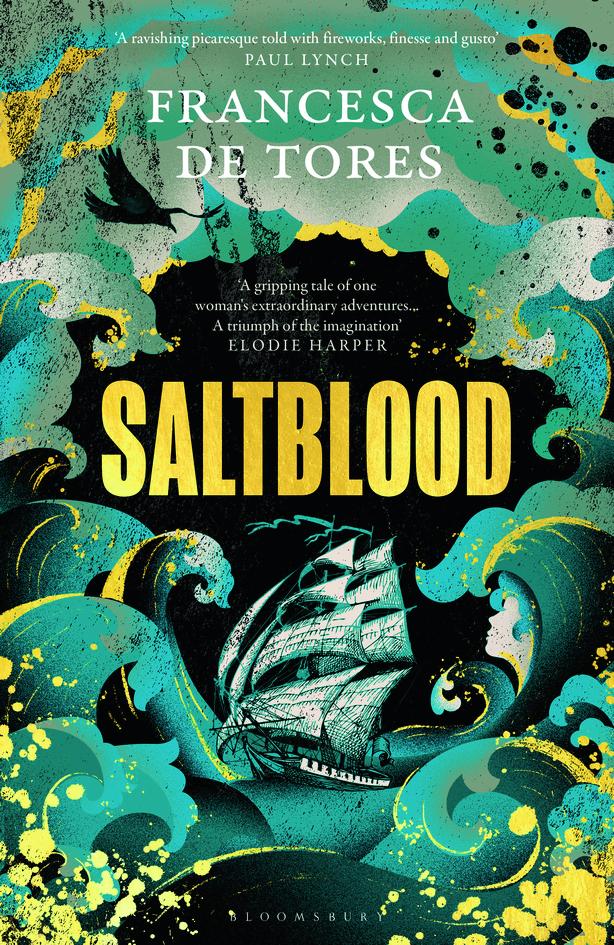
Saltblood by Francesca de Tores

In a rented room outside Plymouth in 1685, a daughter is born as her half-brother is dying. Her mother makes a decision: Mary will become Mark, and Ma will continue to collect his inheritance money.

Girls Initially Raised as Boys

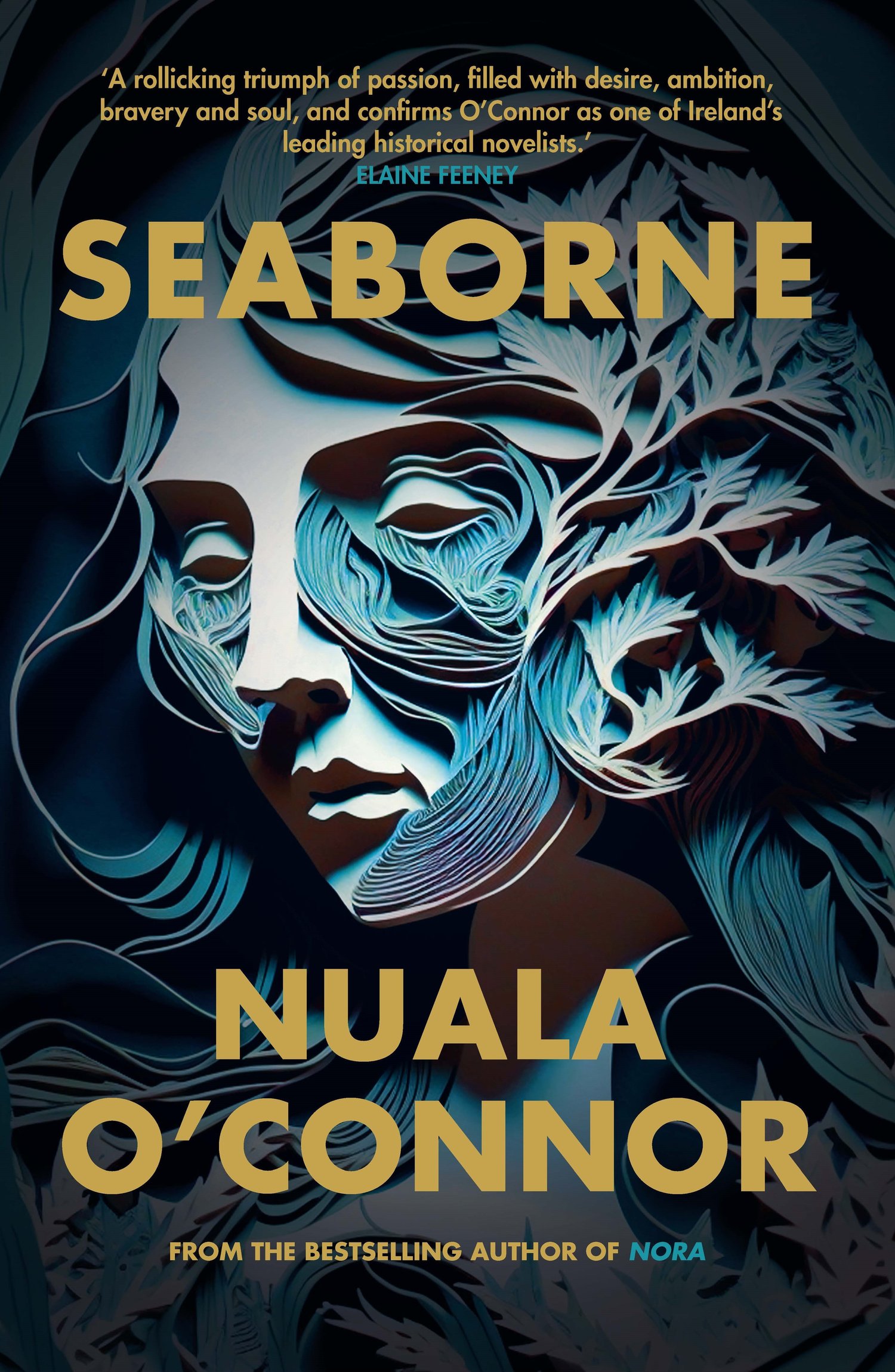
As I began to read about Mary Read in Saltblood by Tasmanian author Francesca de Tores, I had a sense of deja vu. I paused reading and revisited my review of Irish author Nuala O’Connor’s Seaborne, another work of historical fiction, but focused on Kinsale born Anne Bonny.

Stories of Real Female Pirates

In Saltblood, we meet Mary Read (true historical figure), raised by her mother as Mark, a practical solution to poverty, inheritance laws and social restrictions.

After such a beginning, perhaps not surprisingly, Mary preferred for some years to live as Mark, due to opportunity and freedom. Working in service in a grand house as a man led to her/him enlisting in the Navy, then as the battles moved to land, joining the Army.

From the Military to Piracy

Settling for a short period as a married woman, she would then return to the sea after a tragic loss.

I went to sea a girl dressed as a boy, and I come back as something else entirely. I come back sea-seasoned: watchful of winds, and with an eye on the tides. I do not know if I have come back wiser, or better or perhaps madder. But I am not the same. What the sea takes, it does not return.

Initially working as crew for a privateer ship (authority sanctioned raiders); when they are raided by pirates, she elects to jump ship to escape the overly attentive Captain Payton and joins pirate Captain Jack Rackman. Although in her earlier years in the navy and army she was disguised, her later years at sea she presents as a woman, but is accepted as one of the crew due to her experience and abilities.

Pirating Protocols

Most pirates know the rules: go in fierce and fast, and the captains will beg for quarter, just as Payton did, and the Spaniards now do too.

One of the things the novel does well is really give you an idea of how pirating and raids work, for a start each member of the crew is made to sign a contract ‘articles of conduct’ that state policies around behaviour, pirate behavior (such as drunkenness, fighting, and interaction with women) and disciplinary action should a code be violated. Failing to honour the Articles could get a pirate marooned, whipped, even executed. It was the Captain’s way to maintain order and avoid dissent and ensure loyalty. The articles stated how gains would be shared.

There was a lot less fighting than we might imagine. Pirates preferred their target acquiesce. A black flag signaled to a vessel that they were about to be attacked, but that “quarter” would be given. This meant the pirates would not kill everyone on board if they cooperated and handed over any cargo. Seeing the black flag instilled fear and alerted ships to what was about to happen. If crew members did not fight, they might save their lives, but not their cargo.  Crew sometimes elected to join the pirate ship as Mary did.

A Companion Crow

Photo by Alex Jaison on Pexels.com

One of the interesting fictional elements in de Tore’s version of Mary Read’s life is the appearance of a crow that follows Mary on land and out to sea. The crows presence acts as a warning to the men, it is not a good sign to them, but for Mary, it’s presence is reassuring.

A bird that can pounce from the top of the mainmast to skewer a sardine in the water, or snatch a crab from under rock and find out its soft parts, is a bird that sees well, and clear. It counts, this witnessing. To live your life under the vigilance of a crow is a kind of covenant.

A Pirate Nest in the Bahamas

Nassau became the base for English privateers, many of whom became lawless pirates over time. The Bahamas were ideal as a base for pirates as its waters were too shallow for a large man-of-war but deep enough for the fast, shallow vessels favoured by pirates.

It was here that Mary Read eventually met and befriended the much younger (by 15 years), emboldened Anne Bonny, encountered in Seaborne by Nuala O’Connor. The two women became fast friends, though opposite personalities.

Anne falls for Captain Jack and decides to join the crew, deepening her relationship with Mary simultaneously.

Photo by Pixabay on Pexels.com

Next to Anne Bonny, so bold and notorious, I had thought myself meek and colourless, and my story of little note. Yet she never tires of asking me about my years in the navy, and the army. Even my years on the Walcheren, which to me seem largely drab, fascinate Anne.

A Governor on a Mission

Saltblood continues to narrate the scrapes and adventures these two embark on and the efforts of Captain Rackham to avoid Governor Rogers, an English sea captain, privateer and colonial administrator who governed the Bahamas from 1718 to 1721 and again from 1728 to 1732. He aimed to rid the colony of pirates.

Initially I started then put this aside due to that feeling of having read something too similar, it starts off slowly and didn’t really pull me in, but more recently I picked it up again and continued only to find it much more engaging, as Mary is indeed quite a different character to Anne, and I enjoyed her land adventures as much as those at sea and the way their piracy days end is unforgettable.

After reading this I noticed I had another pirate book on my shelf, a work of history, The Stolen Village: Baltimore and the Barbary Pirates by Des Ekin, review coming soon.

Further Reading

Reviewed by Lisa at ANZ LitLovers

Author, Francesca de Tores

Francesca de Tores is a novelist, poet and academic. She is the author of five previous novels, published in over 20 languages, including Saltblood, which won the 2024 Wilbur Smith Adventure Writing Prize.

In addition to a collection of poems, her poetry is published widely in journals and anthologies. She grew up in Lutruwita/Tasmania and, after fifteen years in England, is now living in Naarm/Melbourne.

Buckeye by Patrick Ryan

Buckeye by Patrick Ryan

I have a ton of reviews to write, having been in a bit of a reading frenzy, so starting with the difficult task of one for whom I loved to begin with and then wanted to throw across the room.

Buckeye is popular work of historical fiction in the US and it is a novel a friend asked me if I had read, after seeing a promising review in the New York Times, buying a copy, abandoning it after 100 pages.

Although suspect, because there is a point with hyper popularity, beyond which I know it is probably not for me, I read the premise and thought it interesting, then when author and reviewer Margaret Renkl made the comment below, I decided to read it, rather than pre-judge and discern.

Sometimes I read a novel so completely absorbing, so populated by unforgettable characters in a world so beautifully built that entering it feels like coming home, and I can’t let myself start a new novel for a week, out of fear of breaking the spell.

If you love deceptively simple stories about deceptively ordinary human beings, about how family traumas and cultural prejudices can reverberate through the generations and how family secrets acquire ever more devastating power as the years unfold, please read this book. Especially if you believe in forgiveness and healing, and especially when forgiveness and healing are hard earned. I loved this book more than I can say. I absolutely loved it. Margaret Renkl
An Enticing Opening Scene

Buckeye is a novel set in Bonhomie, Ohio and opens with an enticing scene that gets the reader wondering who that was and what just happened. The narrative then shifts back to the early years of both those characters involved in that opening scene and we read about their lives leading up to that moment.

The two characters we meet in the opening scene are Margaret Salt, who grew up in an orphanage in Doyle, Ohio, having been dropped at its door in the middle of the night in October 1918.

The baby was eight, maybe nine months old, Lydia guessed. Pinned to her tiny shirt was a handwritten note. Please take care of this baby as I cannot. I named her Margaret, but call her what you like.

A ‘Buck’ Eye on Women

I guess this was probably one of the first red flags for me. I mean, leaving a baby outside an orphanage at that age indicated the mother had tried to take care of her child, but to flippantly write ‘call her what you like’ is an aggressive stance, inferring a lack of love or care, the first instance of portrayal of a mother as lacking.

Like other girls in the orphanage, Margaret would go in and out of families who wanted to adopt, then changed their minds, until finally in 1936, when she reached eighteen years, she moved to the city of Columbus, where her real adult education began.

Eve Entices Adam With the Forbidden Fruit

Photo by Berna on Pexels.com

And that opening scene? Well there we meet Margaret in 1945 as news of the allied victory in Europe is spreading through the community. Margaret walks into a hardware store in Bonhomie, where she now lived and asked the man behind the counter, Cal Jenkins if he had a radio. She needs him to turn it on and they will listen together. Their encounter represents a turning point in both their lives, but then the narrative switches back to tell their backstories up until that moment and ultimately beyond it.

But she was looking at the caramel-coloured radio. Her eyes were glistening. “Do you think- ” she said, then paused as if unsure of what she wanted to ask him. She took a breath. “Do you think people will start coming home?”

Cal is married to his high school girlfriend Becky, who from a young age has the ability to hear voices of the dead and as an adult has a line of people coming to her door wanting to hear these messages. After a few dates with Cal, she presented him with a letter to herself that she had written when she was eight years old, asking him to return it when she turned sixty. She wanted to know if the future was knowable by forgetting what was in the letter and encountering it later on.

“Will our older selves be anything like our younger selves thought we would be? We can only find out by writing it down and then putting it out of our minds and letting life take its course. The unraveling of time should be mysterious, don’t you think?”

Margaret has a rough start in Colombus, until she meets Felix, who seems perfect in every way, except that something is not quite right, which the reader quickly becomes aware of, though not Margaret.

Les Bons Hommes of Bonhomie

Photo by Lies on Pexels.com

The novel follows the lives of these couples in the suburban town of Bonhomie against the background of significant change in America, and the ripple effect of that encounter on the lives of these two couples, who are forced to confront what they might wish to stay hidden.

The suburban neighbourhood and 1940’s setting gave me a bit of the Revolutionary Road vibe, (Frank and April Wheeler, self-assured Connecticut suburbanites) that feeling of mild discontent that is ignored in order to keep up appearances, or grudges held when two people are unable to communicate and resolve their differences, that are likely to push them to cross lines of self-sabotage that force the issue.

Unpopular Opinion

I really enjoyed the first half of the novel, it is engaging and moves at a good pace, however towards the end, I started to notice certain patterns and once I saw them I couldn’t unsee them, in particular that all the nurturing characters were men, that the female characters either take a back seat, or are completely absent. When one character checks in on another or thinks to bring groceries, it is nearly always the men. For sure, this can be true, however this very domestic fiction in many ways felt inauthentic. A buck eye on les bons hommes?

I could feel myself bristling at the way the adult characters mismanaged the identity revelation, unable to understand the inevitable impact, there was not any addressing the unconscious impact of this throughout the character’s childhood. Again, that was probably the case, but adults ignoring the human rights of a child to know who they are, abusing their power and delaying the inevitable. Wondering about that reaction, not seeing their own violent part in it? It’s downright cruel.

The lack of reconciliation or exploration of Margaret’s story irked as well. Ultimately, this felt like a story of men being adequate family carers, perhaps we lack those kind of stories, but this just didn’t sit right with me.

Part of what had appealed to her about Columbus, when she was eighteen, was its vastness – all there was to see and do, and the chance to be a part of it. What appealed now was its vast anonymity, its ability to cloak people in its destiny, so that you could live your life without answering too many questions or encountering too many expectations. Right up to your last moments, if you wanted, so that the most lasting impression you left on your neighbours was that they’d known nothing about you.

But don’t take my word for it, unless you’re sensitive to to the same issues as I am, you might love this as many other (the majority) readers have.

Next up, another popular work, but one that has been a word of mouth sensation, a manuscript that was rejected over 100 times, because who wants to read a novel of letters? Well, me and a few friends and correspondents for starters!

The Loneliness of Sonia and Sunny by Kiran Desai

It has been twenty years since Kiran Desai published her Booker Prize winning The Inheritance of Loss, so this latest novel has been much anticipated by many.

It was one of two Booker shortlisted novels this year that I was interested to read, because of their cross-cultural settings, the other being Flashlight by Susan Choi, set in Japan, US and North Korea.

Character led New Generation Indian Drama

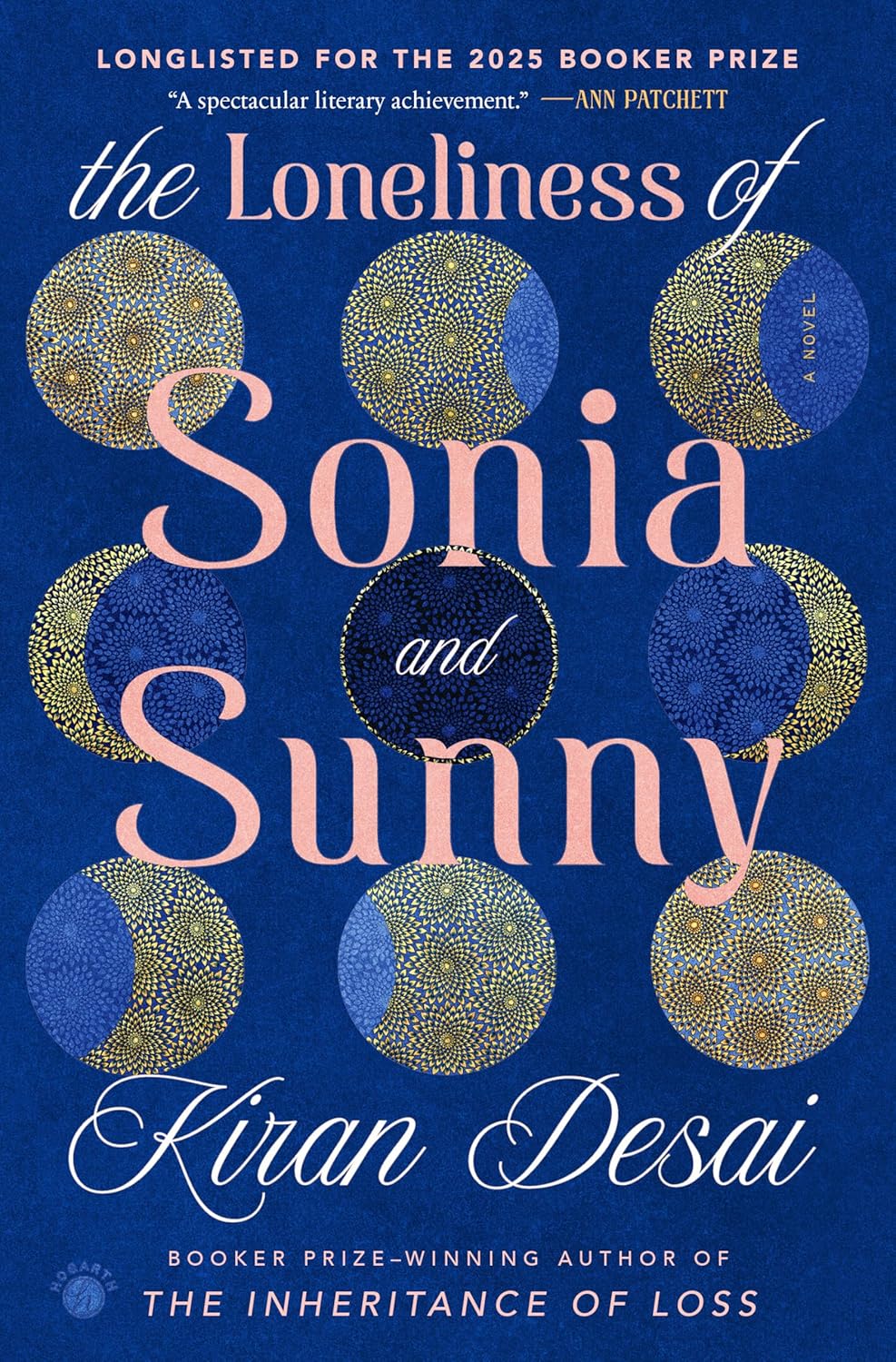
Cover of The Loneliness of Sonia and Sunny by Kiran Desai

At 670 pages, I had to be sure about Desai’s novel before committing to read it, an immersive Indian family saga sounded promising, then the author’s intention to write ‘a present-day romance with an old-fashioned beauty’ sealed it for me.

It was everything I hoped and more. All the old fashioned values and dilemmas of an India of the past and then the mix of young people sent abroad for an American education, isolated from their home culture and influences, while both benefiting from, and coping with the effect of a western education and so-called freedoms as they try to find their place in the world.

We also bear witness to the imbalance in power in a co-dependent and coercive relationship of a manipulative and emotionally abusive man over a young woman, who struggles to see what is happening to her and yet knows it is not right.

The Loneliness of Winter in a Foreign Country

In this modern day Indian family chronicle, we meet aspiring novelist, freelance writer Sonia in the snowy mountains of Vermont, and Sunny a struggling journalist now in New York.

Unable to return home during the holidays, having been in America for three years and not returned to India for two, Sonia complains to her family.

“Lonely? Lonely?”

In Allahabad they had no patience with loneliness. They might have felt the loneliness of being misunderstood; they might know the sucked-dead feeling of Allahabad afternoons, a tide drawn out perhaps, never to return, which was a kind of loneliness: but they had never slept in a house alone, never eaten a meal alone, never lived in a place where they were unknown, never woken without a cook bringing tea or wishing good morning to several individuals.

In Vermont working on campus in the library over the two month winter closure, with two foreign students, one day she encounters a much older man Ilan de Toorjen Foss, who invites her to dine, promises to find an internship for her. He takes something from her that becomes one of the core threads of the story, the thing that will bring Sonia and Sunny’s fates full circle.

Her colleagues in the library are suspicious.

“I still don’t understand who this person is and why he is here in the dead of winter. It doesn’t add up. Where is his family?”

The Jealous Confused Girlfriend

Photo by viresh studio on Pexels.com

When Sunny’s American girlfriend Ulla opens a letter from his mother with a photo of Sonia inside, he tries to downplay the foreign custom it refers to. She is suspicious.

“There’s nothing sinister about the letter,” he said. “Everyone gets these at my age, forwarded by relatives, friends, people who’ve never set eyes on you – a great pile arrives when you finish college, and the flood continues until everyone is settled. Then there is a lull before they begin marrying off the progeny of these mishaps, each generation lesser than what came before, because what hope can you have from such a process?”

Sunny avoids answering his mother’s calls and now his girlfriend suspects this custom might be the real reason he is reluctant to tell his family about their relationship. He finds it increasingly difficult to navigate his relationship, discovering there are as many pressures and expectations, with little understanding of the rules. He seeks an escape.

An Arranged Marriage? Not Likely!

Neither Sonia or Sunny are thinking about marriage according to the cultural traditions of their parents generation; they are too swept up dealing with their current circumstances. The letters they received were a response to a letter in India, sent from one family to the other, suggesting a match, inferring but never outright stating, a kind of favour that might balance out an old grievance these families had faced a decade ago, after an investment turned sour.

It was essential to remain close to those who had caused you harm so that the ghost of guilt might breathe through their dreams, that their guilt might slowly mature to its fullest potential. Not that Dadaji had thought it through – it never worked to consciously plot, to crudely calculate – and he himself was astonished at the possibility of what was unfolding. Even now it would never do to name this liability. The Colonel would not allow his grandson to bear the burden of his grandfather’s mistake. Dadji and Ba may simply suggest a desirable match between the grandchildren, two America-educated individuals, two equals, two people who naturally belonged together because of where they came from and where they were going. Without either of them mentioning it, the obligation might be beautifully unravelled.

The intended match fizzles out without Sonia or Sunny meeting, neither are interested, both already in romantic connections they are attached to but not entirely happy in.

However their paths will cross, igniting intrigue, but again they separate, as they struggle to find their place in the world and in themselves and overcome the mistakes they have made on the way, which have nothing to do with each other.

He passed a young woman sitting cross-legged staring at the rain. By her side was a book. Because Sunny couldn’t abide passing a book whose title he could not read, he walked by again and saw she had a face planed like a leopard, long lips, and watchful eyes, hair in a single oiled braid, but he still couldn’t see the title. So he passed by again. And one more time before he detected it: Snow Country by Kawabata.

Ultimately the two young people flee their present and go into a period of self imposed reflection, Sonia retreating to her mother’s house in the mountains, where she has mystical revelations that she decides not to be frightened of, but to look for simpler meaning from; while Sunny finds solace in nature and human rhythms in a village on the coast of Mexico, blending in with locals and receiving a visit from his friend Satya who is having his own realisations, seeking apology and reconciliation.

There is so much to navigate and nothing mentioned gives anything away, just an idea of the journey these two will go on as they seek a solution to their loneliness, a confrontation with themselves, in various parts of the world.

A Cultural Coming of Age Youth’s Journeying

Photo by Kunal on Pexels.com

I was hoping for an immersive, character led Indian novel and this was everything I hoped for and more. It had all the old fashioned values and dilemmas of an India of the past and then the interesting blend of young people sent abroad for an education, isolated from their culture and influences, experimenting with the new and forbidden, benefiting from and coping with the effect of a western education and freedoms, while trying to understand themselves and their place in the world.

Though there were aspects that were deeply troubling, like the grooming of a young foreign student by a much older man, they are sadly relevant to the situation an isolated young woman without family around, might encounter abroad.

At the same time there were generational threads and mystical elements that disturb the equilibrium; there are parasitic entities met on their paths that cause them to learn, to suffer and grow, requiring surrender and courage. Everyone, young and old alike, must deal with their situation in order for any kind of balance to be regained.

I found the novel thoroughly entertaining and engaging, the mix of traditional and contemporary attitudes, the facing up to change and resistance against old roles. To a certain extent, as outsiders to the culture, we rely on authors to represent it authentically, but here we have characters that have been influenced and educated outside their own culture from within privileged families, which makes them neither one thing nor the other.

Loved all of it, did not want it to end, the ending was perfect.

Further Reading

Book Extract: An extract from The Loneliness of Sonia and Sunny by Kiran Desai

NPR Review: ‘The Loneliness of Sonia and Sunny’ is a terrific, tangled love story by Maureen Corrigan

Kiran Desai, Author

Kiran Desai portrait with her novel The Lonliness of Sonia and Sunny © Yuki Sugiura for Booker Prize Foundation
Author Kiran Desai © Yuki Sugiura for Booker Prize Foundation

Kiran Desai was born in New Delhi, India, was educated in India, England and the United States, and now lives in New York.

She is the author of Hullabaloo in the Guava Orchard, which was published to unanimous acclaim in over 22 countries, and The Inheritance of Loss, which won the Booker Prize in 2006, as well as the National Book Critics Circle Award, and was shortlisted for the Orange Broadband Prize for Fiction. Her third novel, The Loneliness of Sonia and Sunny, was shortlisted for the Booker Prize 2025

In 2015, the Economic Times listed her as one of 20 most influential global Indian women. 

In the past of my parents, and certainly my grandparents, an Indian love story would mostly be rooted in one community, one class, one religion, and often also one place. But a love story in today’s globalised world would likely wander in so many different directions. My characters consider: Why this person? Why not as easily someone else? Why here, not there? In the past people were always where they had to be. My indecisive lovers, Sonia and Sunny, meet and part across Europe, India and America, their idea of themselves turning ever more fluid.

Dublin Literary Award Longlist 2026

The Dublin Literary Award nominations have been revealed, an award that allows international libraries to nominate one work of fiction, therefore achieving its aim to promote excellence in world literature.

For the 2026 Award, 69 titles have been nominated by 80 libraries from 36 countries, reflecting the best in fiction from Africa, Europe, Asia, USA, Canada, South America, Australia and New Zealand.

30 Books in Translation

The list features 20 debut authors, 30 translated titles in 17 languages including Brazilian Portuguese, Catalan, Chinese, Japanese and Polish.

This year the judges will select a longlist of up to 20 titles, to be announced on 17 February 2026 and the shortlist of 6 titles will be revealed on 7 April 2026. The winner will be announced on 21 May 2026.

Below I have listed all the titles by the country the author comes from, and next to it, the library that nominated it. I find this useful, in particular when a library votes openly and not merely patriotically.

The Nominated Titles By Country of Author

New Zealand (4 titles)

1985: a novel by Dominic Hoey (Dunedin Public Libraries)

Delirious by Damien Wilkins (Auckland Council Libraries)

Kataraina by Becky Manawatu (Wellington City Libraries) author of Aue

The Mires by Tina Makereti (Christchurch City Libraries)

Australia (4 titles)

First Name Second Name by Steve MinOn (State Library of Queensland)

Highway 13 by Fiona MacFarlane (National Library of Australia)

The Burrow by Melanie Cheng (State Library of NSW)

The Ladies Road Guide to Utter Ruin by Alison Goodman (State Library Victoria)

Ireland (5 titles)

Camarade by Theo Dorgan (Cork City Libraries)

Our London Lives by Christine Dwyer Hickey (Waterford City and County Libraries + Princess Grace Irish Library)

The Boy from the Sea by Garrett Carr (Galway Public Libraries)

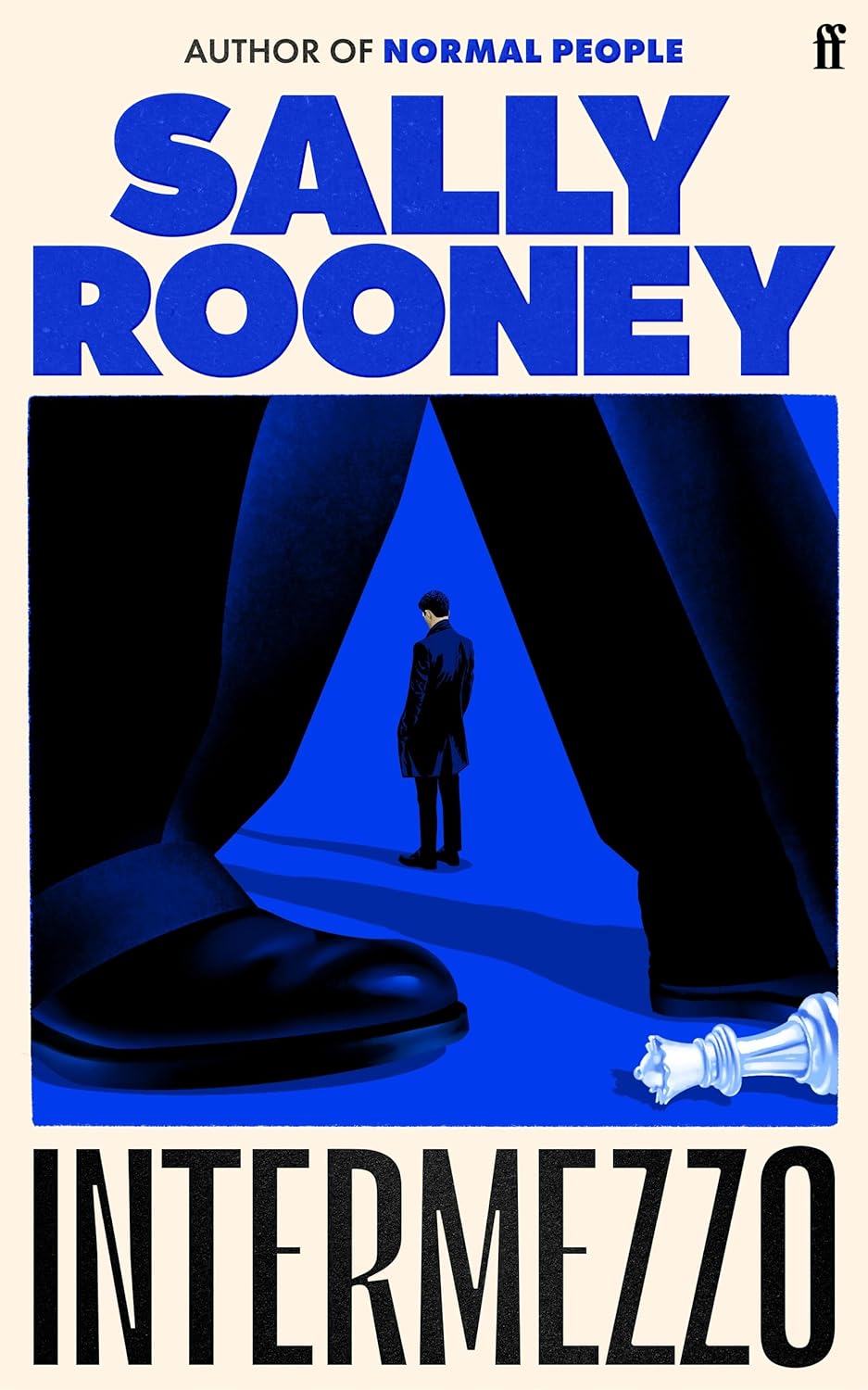
Intermezzo by Sally Rooney (Redbridge Central Library + Liverpool Libraries)

Ordinary Saints by Niamh Ni Mhaoileoin (Libraries NI)

Canada (3 titles)

Small Ceremonies by Kyle Edwards (Winnipeg Public Library)

The Weather Diviner by Elizabeth Murphy (Newfoundland and Labrador Public
Libraries)

What I Know About You by Éric Chacour tr. Pablo Strauss (Bibliothèque de Québec + Toronto Public Library)

USA (10 titles)

A Thousand Times Before by Asha Thanki (The Seattle Public Library)

Casualties of Truth by Lauren Francis-Sharma (DC Public Library)

Colored Television by Danzy Senna (Milwaukee Public Library)

Creation Lake by Rachel Kushner (Chicago Public Library)

Good Girl by Aria Aber (Cleveland Public Library)

Harriet Tubman: Live in Concert: A Novel by Bob the Drag Queen (LA Public Library)

The Antidote by Karen Russell (Iowa City Public Library + New Hampshire State Library)

The Emperor of Gladness by Ocean Vuong (Hartford Public Library)

Model Home by Rivers Solomon (Carnegie Library of Pittsburgh)

Long Island Compromise by Taffy Brodesser-Akner (Bibliotheek Gent, Belgium)

United Kingdom (5)

The Names by Florence Knapp (Limerick City Library)

The Wager and the Bear by John Ironmonger (Norfolk Library)

Gliff by Ali Smith (Katona József Könyvtár, Hungary)

The Echoes by Evie Wyld (Bruges Public Library)

Our Evenings by Alan Hollinghurst (Richland Library, North Carolina)

Turkey

There Are Rivers in the Sky: A Novel by Elif Shafak (Municipal Library of Prague + Biblioteca Nazionale “Vittorio Emanuele III” Napoli)

India

Great Eastern Hotel by Ruchir Joshi (India International Centre)

Egypt

The Dissenters by Youssef Rakha (Fingal Libraries)

Nigeria

Dream Count by Chimamanda Ngozi Adichie (Almeida Garrett Municipal Library, Portugal + Openbare Bibliotheek Amsterdam + Bibliotheca Alexandrina, Egypt)

Zimbabwe

The Creation of Half-Broken People by Siphiwe Gloria Ndlovu (City of Cape Town Library, S.Africa)

Malaysia

Leading Ledang by Fadzlishah Johanabas (National Library of Malaysia)

South Korea

Luminous by Silvia Park (Bucheon City Library)

Singapore

The Original Daughter by Jemimah Wei (National Library Board Singapore)

Ukraine

Endling by Maria Reva (Ottawa Public Library)

In Translation

Norway

Back in the Day by Oliver Lovrenski tr. Nichola Smalley (Leipziger Städtische Bibliotheken, Germany)

Germany (3 titles)

Blurred by Iris Wolff tr. Ruth Martin (City Library Heidelberg)

Brightly Shining by Ingvild Rishøi tr. Caroline Waight (Oslo + Bergen Public Library)

Murder at the Castle: A Miss Merkel Mystery by David Safier tr. Jamie Bulloch (Stadtbibliothek Bremen)

Austria

Darkenbloom by Eva Manesse tr. Charlotte Collins (Zentralbibliothek Zürich)

France (3 titles)

Dear Dickhead: A Novel by Virginie Despentes tr. Frank Wynne (Mediathèque de la Grande Garenne)

Live Fast by Brigitte tr. Giraud Cory Stockwell (Bibliothèque municipale de Lyon)

Perspective(s) by Laurent Binet tr.Sam Taylor (Bibliothèques municipales de Genève)

Italy

Perfection by Vincenzo Latronico tr. Sophie Hughes (Biblioteca San Giorgio)

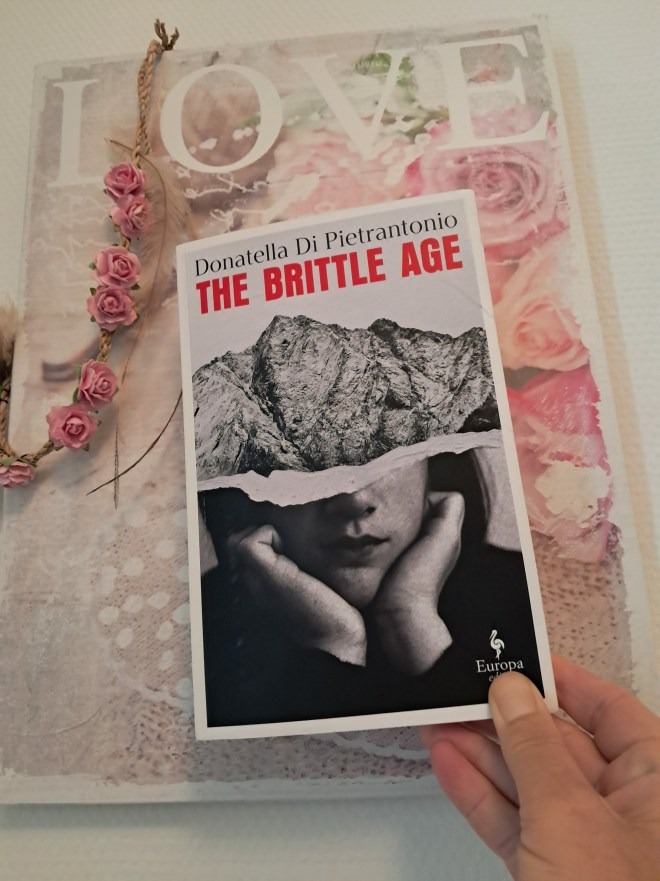
The Brittle Age by Donatella Di Pietrantonio tr. Ann Goldstein (Sistema Bibliotecario di Milano)

China

Diablo’s Boys by Yang Hao tr. Nicky Harman and Michael Day (Shanxi Library)

Japan (3 titles)

The City and Its Uncertain Walls by Haruki Murakami tr. Philip Gabriel (Frankfurt am Main Public Library)

Under the Eye of the Big Bird by Hiromi Kawakami tr. Asa Yoneda (Tartu Public Library, Estonia)

Vanishing World by Sayaka Murata tr. Ginny Tapley Takemori (Saiwaicho Okayama Public Library)

Portugal

Dust in the Gale by João Morgado tr. José Manuel Godinho (Lisbon Libraries)

The Netherlands

I Will Live by Lale Gül tr. Kristen Gehrma (de Bibliotheek Eindhoven)

The Edges by Angelo Tijssens tr. Michele Hutchison (De Bibliotheek Utrecht + National Library of the Netherlands)

Finland

The Clues in the Fjord by Satu Rämö tr. Kristian London (Helsinki City Library)

Iceland

The Night Guest by Hildur Knútsdóttir tr. Mary Robinette Kowal (Reykjavík City Library)

Poland

The Empusium by Olga Tokarczuk tr. Antonia Lloyd-Jones (”Octavian Goga” Cluj County Library, Romania)

Voracious by Małgorzata Lebda tr. Antonia Lloyd-Jones (Municipal Public Library of Tadeusz Różewicz, Wrocław)

Bosnia and Herzegovina

In Late Summer by Magdalena Blažević tr. Anđelka Raguž (University Library of Bern, Switzerland)

Croatia

Red Water by Jurica Pavičić tr. Matt Robinson (Rijeka City Library)

Slovenia

My Kingdom is Dying by Evald Flisar tr. David Limon (Mariborska knjižnica + Ljubljana City Library)

Spain

Napalm in the Heart by Pol Guasch Mara tr. Faye Lethem (Catalan) (Biblioteca Vila de Gràcia)

The Voices of Adriana by Elvira Navarro tr. Christina MacSweeney (Biblioteca de Andalucía)

Argentina

Time of the Flies by Claudia Piñeiro tr. Frances Riddle (Biblioteca Daniel Cosío Villegas, El Colegio de México)

We Are Green and Trembling by Gabriela Cabezón Cámara Robin Myers (Biblioteca Utopía) author of The Adventures of China Iron

Brazil

The Tokyo Suite by Giovana Madalosso tr. Bruna Dantas Lobato (Mário de Andrade Library + Biblioteca Demonstrativa Maria da Conceição Moreira Salles)

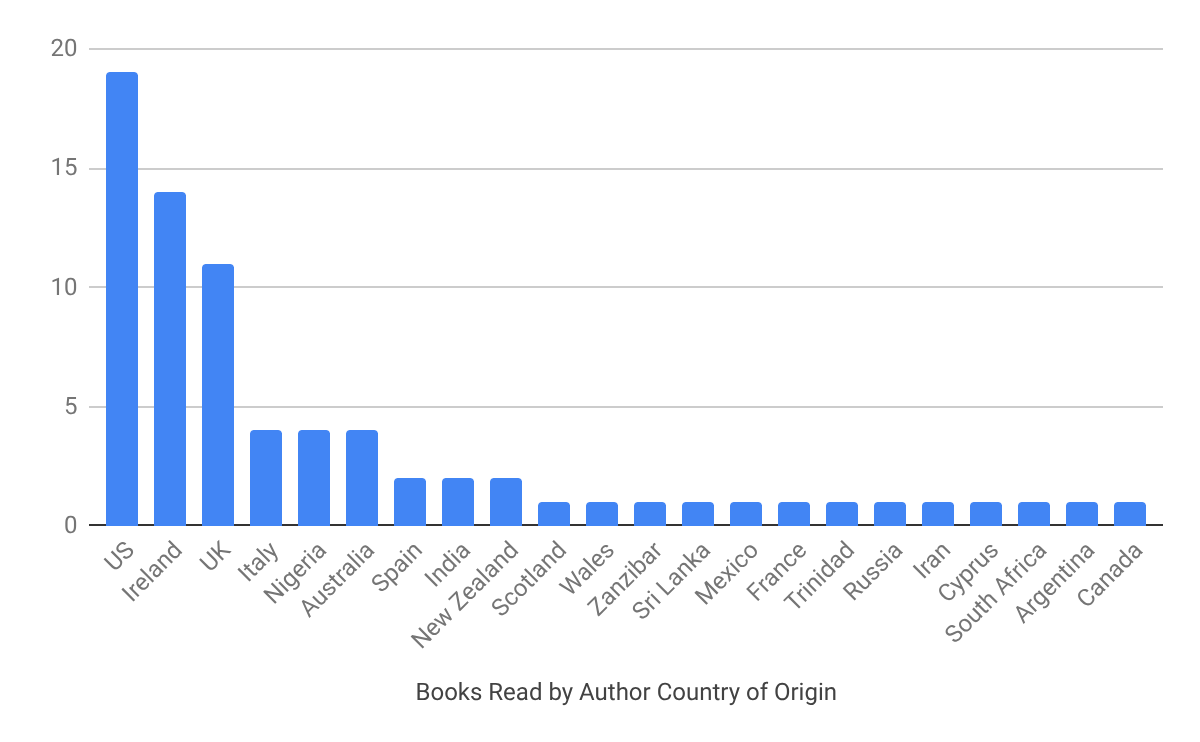
I have read four of the novels listed Elif Shafak’s There Were Rivers in the Sky which is excellent; Time of the Flies by Claudia Pineiro, a brilliant novel, Ocean Vuong’s excellent The Emperor of Gladness and the true crime novella The Brittle Age by Donatella Di Pietrantonio. I am currently reading Dream Count by Chimamanda Ngozi Adichie (Nigeria). I also have the Evie Wyld on my shelf and I want to read We Are Green and Trembling and The Mires by Tina Makereti.

There’ll likely be more but I need to look at them more carefully.

Any here interest you, especially the books in translation?

The Mothers (2016) by Brit Bennett

The Mothers by Britt Bennett author of The Vanishing Half

The third novel in my reading about mothers and motherhood is Brit Bennett’s The Mothers, the story of two young people, Nadia and Luke, who have both encountered significant turning points in their young lives, when they turn towards each other. Nadia, an only child, is mourning her mother, lost to suicide and Luke is nursing a football injury that has removed him from the limelight.

If Nadia Turner had asked, we would’ve told her to stay away from him.

Their coming together and drifting apart might have had less of an affect on their lives, had it not been for the teen pregnancy and cover-up that resulted from it, forever creating a fusion between them they have trouble negotiating, despite the years and distance they have put between them.

Her mother had died a month ago and she was drawn to anyone who wore their pain outwardly, the way she couldn’t.

Elder Knowledge and Wisdom

Luke is the son of a pastor and within that community are the older ‘Mothers‘, who provide the ‘We‘ voice to the narrative that isn’t always kind, it is the voice of those who have seen it all before.

We would’ve told her that all together, we got centuries on her. If we laid all our lives toes to heel, we were born before the Depression, the Civil War, even America itself. In all that living, we have known men,. Oh girl, we have known littlebit love. That littlebit of honey left in an empty jar that traps the sweetness in your mouth long enough to mask your hunger. We have run tongues over teeth to savor that last littlebit as long as we could, and in all our living, nothing has starved us more.

Photo by M. Kirkgoz Pexels.com

Though they don’t comment directly to Nadia or provide support to her, they are the all seeing, all knowing voice of the past, who also know that one has to live through their own experiences to learn anything, and so they enjoy their gossiping and smug knowledge of knowing how it will end before the living is done.

All good secrets have a taste before you tell them, and if we’d taken a moment to swish this one around our mouths, we might have noticed the sourness of an unripe secret, plucked too soon, stolen and passed around before its season. But we didn’t. We shared this sour secret, a secret that began when Nadia Turner got knocked up by the pastor’s son and went to the abortion clinic downtown to take care of it.

Nadia hides her secret from everyone, including her pious best friend Aubrey, the distance she puts between herself and her hometown, her foreign boyfriend and her higher education assist her in creating a new life far from unwanted memories.

Community Intentions

The Mothers meet regularly to pray. They read the prayer request cards and pray for the community who share their pain, their resentments, their anger and fears. And that too, is how they know all that is going on in their community, the clues that along with chatter create the jigsaw puzzle of lives that come and go among them.

That evening, we found a prayer card with his name on it in the wooden box outside the door. In the centre, in all lowercase, the words pray for her. We didn’t know which her he meant – his dead wife or his reckless daughter – so we prayed for both.

Youth Must Experience It

The novel follows the lives of the young people as they eventually confront the things they have tried to ignore, when they realise the impact they continue to have on them and slowly, the story behind the lost mother comes to light.

But she saw then that Nadia didn’t speak about her mother because she wanted to preserve her, keep her for herself. Aubrey didn’t speak about her mother because she wanted to forget that she’d ever had one.

The Mothers is more reflective and less intense than the previous two novels I read, which concerned the death of a child, whereas here it is the loss of a mother and the loss of becoming a mother, and others for whom their mothers, though present, provide no solace at all. And the little spoken about loss of a potential father, a failure to perform one of the primary functions, to protect his family.

Each of the three stories shows communities as both supportive and punitive and mothers as complex products of their circumstances. Love is present, but so are disappointment, misunderstanding, judgement and the fear of not being enough. Silence too, becomes both a survival strategy and a cause of generational pain, broken through often by external friendships, safe spaces where women can express openly and move through their grievances towards healing.

I found The Mothers a thoughtful exploration of complex issues that youth encounter and then must live with and navigate and grow through. It shows the numerous ways people do that, sometimes in community, other times in isolation, but always seeking to find that peaceful place within which they can exist.

3 novels of mothers and motherhooh The Mother Yvvette Edwards Mother to Mother Sindiwe Magona The Mothers Brit Bennett

What is Brit Bennett Working On Now?

It has been a while since Brit Bennet’s second novel The Vanishing Half (2020), so I checked to see what she might be working on and learned that while there is no publication date yet, she is a ‘few drafts deep’ into a third novel, focused on R&B musicians, a girl group, about two singers who have a lifelong feud. It is said to deal with themes of rivalry, celebrity, and identity.

Author, Brit Bennett

Born and raised in Southern California, Brit Bennett earned her MFA in fiction at the University of Michigan.

Her debut novel The Mothers was a New York Times bestseller, and her second novel The Vanishing Half was an instant #1 New York Times bestseller. Her essays have been featured in The New Yorker, the New York Times Magazine, The Paris Review, and Jezebel.

Mother to Mother by Sindiwe Magona

Mother to Mother is the second novel in my reading about the complexity of motherhood from three different perspectives, from within London’s Caribbean diaspora in The Mother by Yvvette Edwards, apartheid-era South Africa in Mother to Mother, and contemporary Black America in Brit Bennett’s The Mothers.

Making Sense of a Tragedy

 Sindiwe Magona decided to write this novel when she discovered that Fulbright Scholar Amy Biehl, who was set upon and killed by a mob of black youth in August 1993, died just a few yards away from her own permanent residence in Guguletu, Capetown.

She then learned that one of the boys held responsible for the killing was in fact her neighbor’s son. Magona began to imagine how easily it might have been her own son caught up in the wave of violence that day.

The outpouring of grief, outrage, and support for the Biehl family was unprecedented in the history of the country. Amy, a white American, had gone to South Africa to help black people prepare for the country’s first truly democratic elections. Ironically, therefore, those who killed her were precisely the people for whom, by all subsequent accounts, she held a huge compassion, understanding the deprivations they had suffered.

Mother to Mother, A Novel

When there are tragedies such as what happened here, usually and rightly, a lot is heard about the world of the victim, their family, friends, achievements and aspirations. The Biehl case was no exception.

Amy Biehl’s Last Home: A Bright Life, a Tragic Death, and a Journey of Reconciliation in South Africa by Steven D. Gish

Sindiwe Magona reflects and asks; are there no lessons to be had from knowing something of that other world, the opposite environments to those that grow and nurture the likes of Amy Biehl; to grow up under the legacy of apartheid, a society where you were born a second-class citizen, a system that relegated black people to the periphery and treated them as sub-human.

What was the world of this young woman’s killers, the world of those, young as she was young, whose environment failed to nurture them to the higher ideals of humanity and who, instead, became lost creatures of malice and destruction?

In reality, there were four young men, in the novel there is just one. Through the mother’s narrative of her life raising her children in this oppressive environment, through her memories, we come to understand a number of factors that contributed to the continuing dehumanisation of a population that became more and agitated as the little they had was taken from them, destroyed, bulldozed over and opportunities few and far between and one race of privileged people responsible.

Mandisa’s Lament

Mandisa, bewildered and grief-stricken, on learning the news of her son’s involvement in this terrible tragedy, mines her memory and reflects on the life her son has lived, that brought them to this moment. In looking for answers she paints a vision of her son and his world, the world she has inhabited and done her best to navigate and lead her children through, as if in conversation with that other mother, the one who has lost a daughter, forever.

Forced Removals

What began as a rumour, that the government was going to forcibly remove all Africans from numerous settlements to a common area set aside for them all was initially laughed off, not believed. Everyone talked about it, but not with concern, it was impossible.

There were so many of us in Blouvlei, a tin-shack location where I grew up, Millions and millions. Where would the government start? Who could believe such a thing?

The sea of tin shacks lying lazily in the flats, surrounded by gentle white hills, sandy hills dotted with scrub, gave us (all of us, parents and children alike) such a fantastic feeling of security we could not conceive of its ever ceasing to exist. This, convinced of the inviolability offered by our tremendous numbers, the size of our settlement, the belief that our dwelling places, our homes, and our burial places were sacred, we laughed at the absurdity of the rumour.

Mother to Mother by Sindiwe Magona "a tour de force" Andre Brink

But the government was not laughing. When the rumour paled and was all but forgotten, one day if returned with a deafening roar, as an aeroplane dropped flyers warning them all of the impending deadline, that they would be forcibly removed. To Guguletu.

A grey, unending mass of squatting structures. Ugly. Impersonal. Cold to the eye. Most with their doors closed. Afraid.

Oppressed by all that surrounds them…by all that is stuffed into them…by the very manner of their conception. And, in turn, pressing down hard on those whom, shameless pretence stated, they were to protect and shelter.

Segregation was enforced and black people were removed from their settlements, from suburbs where only white people would now live, pushed into a place and among people they did not know, in challenging conditions and the need to find work.

On A Dark Day, Resentments Build

The narrative is written in two timelines, the day of the protest, when Mandisa is sent home early from her job as a cleaner in a white woman’s home, due to the unrest – interspersed with memories of how their lives came to arrive at this point. She waits and waits for her son to come home and becomes increasingly concerned at his lack of appearance.

10.05 PM – Wednesday 25 August 1993

…where was Mxolisi? Not for the first time, I asked myself what it was that made him so different from the other two children… What had made Mxolisi stop confiding in me? And when had that wall of silence sprung between us? I couldn’t remember. He used to tell me everything…and then, one day I woke up to find I knew almost nothing about his activities or his friends.

As the family circumstances are shared and the life of this mother is revealed, I am reminded of the two autobiographies I have read, of the similarly challenging life and raising of her own children the author in similar circumstances. Although this is fiction, there is resemblance to her own circumstances, no doubt the reason why she understands this could so easily have been any one of those mothers in their neighbourhood.

The story leads up to the actual event, to what occurred on that day, the clash, the terrible crossing of paths, of being in the wrong pace at the wrong time, the burning hatred of an oppressor, the innocent face of one who looked like them, the dark desire of a race seeking revenge, the deep resentment of decades expressing itself in rage.

My son, the blind but sharpened arrow of the wrath of his race.

Your daughter, the sacrifice of hers. Blindly chosen. Flung towards her sad fate by fortune’s cruellest slings.

It is a courageous attempt to present a community in the grip of violent rage, to allow the voice of a mother to speak and share the growth of a family, the intense pain of all touched by a tragedy, to consider a path of redemption, to learn something from it. There may not be any conclusions, but perhaps we are all, all the better for being open to listen to the mothers, to find empathy for people doing the best they can in challenging circumstances. A thought provoking, powerful read.

Restorative Justice

In a final end piece to the story of Amy Biehl, after four men were convicted and given 18 -year prison sentences, there was in July 1987, an appearance before the Truth and Reconciliation Commission’s amnesty committee to argue for their release from prison, due to the politically motivated nature of the crime.

The parents, the Biehl’s attended the trial and shook hands with the parents of all four men. They understood the context of the South African struggle better than many South Africans.

Restorative justice communities of care and reconciliation, victim reparation, offender responsibility and accountability

The men spoke and asked for forgiveness. After consideration, all four were pardoned and the Biehl family supported their release.

Linda and Peter Biehl created a humanitarian organisation, the Amy Biehl Foundation Trust to develop and empower youth in the townships, in order to discourage further violence.

Two of the men who had been convicted of her murder went on to work for the foundation as part of its programs.

Further Reading

Amy Biehl’s Last Home: A Bright Life, a Tragic Death, and a Journey of Reconciliation in South Africa by Steven D. Gish

South African Press Association: Excerpts from SAPA Coverage of Biehl Amnesty Trials

Author, Sindiwe Magona

Sindiwe Magona (born.1943) a graduate of Columbia University, is an author, poet, playwright, storyteller, actor, and inspirational speaker. Magona retired from the United Nations, where she worked in the Anti-Apartheid Radio Programmes until June 1994 and UN Film Archives till her retirement. After twenty-five years in New York, she relocated to her home country, South Africa.

Her writings include To My Children’s Children and Forced to Grow (autobiography); Living, Loving, and Lying Awake at Night and Push-Push and Other Stories (short stories).

Her novels are When the Village Sleeps, Mother to MotherBeauty’s GiftLife is a Hard but Beautiful Thing (YA) and Chasing the Tails of My Father’s Cattle! Please, take photographs! a book of poetry, Modjaji Books and Awam Ngqo,(short stories) and Twelve Books of Folktales – written in both English and Xhosa.

Magona has written over a 120 children’s books, including: The Best Meal Ever and Skin We Are In and Her awards include include Honorary Doctorates from Hartwick College, USA; Rhodes University; and Nelson Mandela University; and the Order of iKhamanga.

My writing, on the whole, is my response to current social ills, injustice, misrepresentation, deception – the whole catastrophe that is the human existence. Sindiwe Magona

Next Up, the third novel : The Mothers by Brit Bennett

The Mother by Yvvette Edwards

Mothers in Literature

I had long wished to read Yvvette Edwards second novel, The Mother (2016) after very much enjoying her Booker longlisted A Cupboard Full of Coats (2011). I decided to read it alongside two novels on my shelf with similar themes of the bonds, burdens and breakthroughs of motherhood.

The three novels I chose are set in different countries and contexts: The Mother by Yvvette Edwards (UK) is set in London’s Caribbean community, Mother to Mother by Sindiwe Magona is set in apartheid-era South Africa, and The Mothers by Brit Bennett is set in contemporary Black America.

Sindiwe Magona has written numerous novels; however I have read and reviewed her autobiographies To My Children’s Children (1990) and Forced to Grow (1992), while Brit Bennett is well known for her novel that addresses the theme of passing, The Vanishing Half (2020).

The Complexity of Motherhood

All three novels expose motherhood as fraught with social pressure, moral judgment, and emotional complexity. Despite the different settings, they collectively form a global conversation about motherhood, resilience, and the human cost of structural and racial inequality.

3 novels of mothers and motherhooh The Mother Yvvette Edwards Mother to Mother Sindiwe Magona The Mothers Brit Bennett

In The Mother, Marcia grapples with grief and guilt after the murder of her son.

In Mother to Mother, Mandisa reflects on her life while writing to the mother of the girl her son has murdered.

And The Mothers, focuses on young women (and a collective “we” voice of church “mothers”) navigating the expectations of womanhood, including unwanted pregnancy.

The Mother by Yvvette Edwards

The Mother is the story of a mother’s struggle to come to terms with understanding her teenage son’s violent death, it is both a courtroom drama following the murder of Marcia and Lloydie’s 16-year-old son Ryan and a story of transformation and healing through grief.

I used to be good at making decisions, took it for granted completely, imagined it was one of those things that because I’d always been good at it, I would continue to be good at it, and then something like what happened to Ryan comes along and you realise some things are just temporary gifts granted for part of your life only, like the headful of hair you imagined would be yours forever that you went to sleep with one night and as usual but woke the following morning to find gone, clean gone.

Suffering Together, Drifting Apart – the Complexity of Grief

The Mother by Yvvette Edwards courtroom drama in London youth stabbing gang culture

Marcia wants to be present every day at court, her husband Lloydie does not. Increasingly emotionally estranged, she does not understand what he does all day, where he goes. Their habits are changing and they seem to be leaving each other behind, dealing with the loss in completely different ways, on their own.

Lloydie is putting my cup of tea on the side when I return to the bedroom. He looks slightly sheepish, is probably annoyed with himself for the mistiming that has meant he has found himself alone with me when we are both awake and alert. He looks at me without speaking.

‘Aren’t you going to ask how it went?’ I say.

It’s not the question I intended; too in-your-face, accusatory. I didn’t want to start the discussion here but it’s out now, I can’t take it back.

His tone is dutiful. ‘How did it go?’

‘It was hard. Listening. Seeing that boy, his mother. Very hard.’

The Need to Understand

Marci is determined to be present every day, to understand why this happened and comes to realise that there may be things about her son that she did not know.

Understanding has been my problem from the start. How is it possible that my son was doing all the right things, that as parents, Lloydie and I, we were doing all the right things, and yet still Ryan is dead?

The novel follows the case and outside the court other events begin to shed light on the situation, Marcia’s beliefs and assumptions are challenged. In her need to know, she becomes reckless.

She observes the boy who is being charged, his fixed stare and has already decided his fate.

…he stares ahead as if it is all beneath him, and as usual I find it unnerving. I have to say that single quality in him is enough to convince me that he did it, that he’s guilty because he has something in his aura of the type of person who could kill someone at six thirty, then stroll home, have dinner and a hot bath, followed by an early night of unbroken sleep.

Edwards is adept at tapping into the realms of Ryan’s peers and the insidious, threatening world of youth gang culture, which comes into full view through he character of Sweetie, the girl caught between the earnest world of Ryan and the manipulative obedience she has to Tyson Manley and his type.

It is a thought provoking story of complicated parenting and motherhood highlighting effects of judgment, truth seeking, and the social forces that shape personal and family outcomes, while reflecting on the particular role of mother. Motherhood becomes a lifelong, consuming identity, the loss of a child, in this case, destabilising her sense of self.

Author, Yvvette Edwards

Yvvette Edwards is a British East Londoner of Montserratian origin and author of two novels, A Cupboard Full of Coats (2011) nominated for The Hurston-Wright Legacy Award and longlisted for the Booker Prize, and The Mother (2016). Her short stories have been published in anthologies and broadcast on radio.

She is interested in writing that challenges the single narrative, giving voice to characters who are absent or under-represented in contemporary fiction.

An Upcoming Novel in March 2026

Good Good Loving, Yvvette Edwards first book in almost a decade, will be published in March 2026 by Virago. The synopsis reads:

Good Good Loving Yvvette Edwards a multi-generational British-Caribbean family across five decades

“Ellen’s big, beautiful family are gathered around her hospital bed as she prepares to slip away… her children have chosen now of all times to have a never-ending discussion about all her failings. Every single tiny thing they think she’s done wrong over the years – and the one big thing too. Even after everything, after all the sacrifices Ellen has made for every last ungrateful one of them, they still all take their father’s side. If only they knew the whole story.

“Moving backwards in time through all the decisive moments that have shaped Ellen’s life – the disasters, celebrations and surprises, the revelations, confrontations and betrayals – Good Good Loving is the vibrant story of a multi-generational British-Caribbean family across five decades.”

Next up is Sindiwe Magona’s Mother to Mother :

The Trees by Percival Everett (2021)

Having already read and enjoyed three novels by Percival Everett, So Much Blue (2017), Erasure (2001), and James (2024), when I saw The Trees at the local bookstore when I’d been in a reading rut, I picked it up, knowing it would be a guaranteed entertaining read.

The Trees Percival Everett shortlisted Booker Prize 2021

Percival Everett had already written 21 novels by the time he was shortlisted for The Booker Prize in 2022, won that year by an equally satirical novelist Sri Lankan author Shehan Karunatilaka for his The Seven Moons of Maali Almeida (my review).

Everett was more of a cult writer, well-known among regular readers, but not a mainstream name. His experimental style, genre-bending and intellectual satire made him more popular in literary and academic circles than in popular fiction. The author describes himself as “pathologically ironic“.

That began to change when The Trees was shortlisted for the Booker Prize in 2021 and his novel Erasure was adapted into the film American Fiction (2023). And then his 2024 novel James (a reimagining of Huckleberry Finn from Jim’s perspective) won the US National Book Award and the Pulitzer Prize for Fiction.

The Trees

So knowing the kind of writer Everett is, I read this without looking at the blurb. It was ironic to read about what is a murder investigation into the soul of America’s violent past, immediately after I finished Killers of the Flower Moon, the story of the targeting of the Osage people after they came into significant wealth.

The Trees is about the mysterious murders of white men in Money, Mississippi, an allegorical reckoning with centuries of racial terror inflicted upon Black communities. It is written in lean, precise and economical prose, like a script, unfolding like a crime story with mild, intriguing suspense driving the plot forward.

Copycat Crimes & Condemnation

Photo by cottonbro studio Pexels.com

Every time a man is found murdered, another body appears alongside them, a man who resembles Emmett Till, a young black boy lynched in the same town 65 years before. Locals find him the perfect scapegoat, creating fear and paranoia among the community, until the dead man reappears at the site of a second murder.

Confusion reigns, except for the team from the MBI (Mississippi Bureau of Investigation), who have been sent in to assist, though met with resistance by the local sheriff and townsfolk.

Satirical elements appear in his depiction of law enforcement and the media: their incompetence and self-interest are exaggerated to reveal systemic failings. As a spate of copycat killings spreads across the country, the investigation begins to have wider implications.

Remember Their Names

There is a great grandmother Mama Z who has been compiling files on every lynching that has happened in America since her father Julius Lynch was a victim in 1913, she is remembering their names, lest anyone forget.

When I write the names, they become real, not just statistics. When I write the names they become real again. It’s almost like they get a few more seconds here.

The book I read has an interesting cover, it looks like a dartboard, or a target and the circles are yellow, green, black and red, the colours of the Black Panthers, an influential militant black power organization from the 60’s whose members confronted politicians, challenged the police, and protected black citizens from brutality.

Witness and Memory

The Trees refers to the place where many were hung and I’m guessing that the fruit of those trees, represented on the book cover by twin peaches is a reference to all those who died who could not continue to reproduce. Trees represent historical memory, they are witness to the persistence of racial violence.

One thing I notice is how much easier it is to read about a violent past than it is to watch a twenty first century depiction of it. There’s no over dramatisation of the violence or needless exaggeration of the characters. While here on the page, there are an abundance of literary devices in use to deliver themes of racial violence and historical memory.

I certainly hope they don’t make this one into a film, I would not wish to see it, but I admire the ability of the author to demonstrate the effect of turning the tables and making a white population consider the trauma of having such atrocities committed against them.

Further Reading

Read an Extract from The Trees by Percival Everett

Percival Everett interview: ‘How long did it take to write The Trees? Sixty-three years’

Author, Percival Everett

Percival Everett lives in Los Angeles, where he is Distinguished Professor of English at the University of Southern California.

He has been nominated for the Booker Prize twice – he was shortlisted for The Trees in and shortlisted for James in 2024 – and is the author of over 30 books since his debut, Suder, was released in 1983. His works include I Am Not Sidney Poitier, So Much Blue, Erasure and Glyph.

A Guggenheim Fellow and Pulitzer Prize Finalist for his novel Telephone, Everett has won the PEN Oakland/Josephine Miles Literary Award, the Academy Award in Literature, the Bollinger Everyman Wodehouse Prize for Comic Fiction, and the Windham-Campbell Literature Prize for Fiction. In 2021, he received the Ivan Sandrof Lifetime Achievement Award at the National Book Critics Circle Awards and in 2024 won 4 major literary awards including the Pulitzer Prize for Fiction with James.

You’ve said in the past that reading is one of the most subversive acts we can perform. Can you elaborate? 

There’s a reason that oppressive regimes often resort to burning books. No one can control what minds do when reading; it is entirely private. We make of literature what we need to make. This is true of art. There is nothing more challenging to an oppressive government than a populace that can read, and therefore think.

Flashlight by Susan Choi

As I mentioned in the Booker Prize shortlist post, this is one of the two shortlisted novels I’m reading before the winner announcement on Nov 10.

Cross Cultural Relationships, Identity and Belonging

Flashlight interested me because it is a portrayal of a cross-cultural marriage and family that highlights the tensions between adults with different backgrounds and expectations, coping within one culture and the way a child of that union navigates both her life and her parents, when she comes from them both.

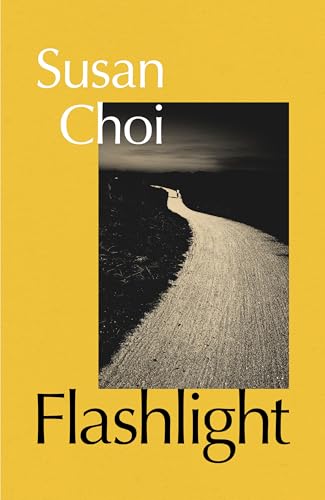
Flashlight by Susan Choi set in Japan USA and North Korea

The novel begins with a scene plucked from the middle of the story, when ten year old Louisa and her father Serk are out for a walk in the early evening, in a coastal town in Japan.

Serk was born in Japan to Korean parents and while furthering his education in America, met Louise’s mother Anne. The family are in Japan on a one year secondment from his American university.

Hours later, Louisa is found washed up on the beach and her father is missing, presumed drowned.

Finding One’s Place Nowhere

The story then returns to the beginning, where we learn of the childhoods and upbringing of Serk in Japan and Anne in America, of his attachment to Japan and his success in school, while his family long to return to Korea (having not told him earlier where they were from) and wish their children to attend another school where they can learn about their culture and identity.

To learn it was not Japanese but Korean was so profoundly disorienting that the greater discovery, that he himself was Korean, was for the moment secondary.

As Serk matures, he comes to understand the ambiguous nature of nationality and belonging, of being caught between two nations, perceived and treated as an outsider by both of them; American thus becomes both an escape and an even greater frustration.

…disillusioned as he was, when his parents decided to abandon Japan he was dumbfounded.

Photo by Chen Te on Pexels.com

The first half of the novel, prior to his disappearance has the feel of domestic fiction as the family navigate the intimate dramas of their lives and find their way.

Both Serk and Anne have withheld parts of their lives from each other and this adds tension to their marriage, as these things are sensed but unknown, or threaten to become visible, ultimately undermining their relationship.

That fall, Serk’s college announced it would send a member of its history department as a visiting professor to Japan, starting the following April. Before the history professor was chosen, Serk was asked if he would like to be considered and said he would not.

Louisa becomes partially aware of their secrets, adding to her own confusion and struggle to find a sense of belonging.

When Louisa hated her mother, it was because the thought of her caused her so much pain.

When she hated her father, it was because she was conscious of emulating his remoteness.

Shattered Lives Separate

In the second half of the novel, the family is no longer a cohesive unit, their lives diverge and chapters are then told from each character’s separate location and perspective. The pace changes, an element of mystery appears in the timeline and there was such a feeling of a true-crime element, that I paused reading and checked the back of the book for a bibliography. Sure enough, there are 15 works of fiction and non-fiction referenced, very revealing.

What Really Happened to the Disappeared

Photo by Lara Jameson on Pexels.com

As the mystery of what happpened to Serk is revealed, other characters appear who are searching for their own disappeared and thus stories of a similar nature are discovered, told with such detail that they seemed as though true.

So while the novel continues, it also provides an insight into historical tensions between Japan and North Korea and the untold stories of a number of families whose tales of missing members of their family were ignored and disbelieved until subsequently proven to be true.

I don’t want to reveal too much more than what you can read in the blurb, because encountering the story is all the better for not knowing. Not everything that occurs is written, as each character chapter ends, we often know what is to be revealed and we fill that in ourselves, creating connections as the narrative leaps forward from one character to the next.

Perhaps no one but Anne, who had lived with him and tried for so long, could understand how impossible Serk made it to know the least thing about him. A constant wretched privacy had radiated from him, more powerful and more wretched the nearer you got.

An Illuminating Text

Flashlight was so many things, a complex story of a multi cultural family, the relinquishment of a child, four people whose lives came together then split apart, who we continue to observe, often decades later. It explores the effect on each person in the family of their culturally diverse pasts, their birth circumstance and the geographic moves they make that shift perceptions of who they are.

It exposes the cruelties of nations, abuses of humankind, the determination of those who seek the truth, the perseverance of those who want to bring justice and the importance of closure, of being present even when someone seems beyond comprehension.

What an effort to bring all that together and create a novel that traversed so many elements of the cross cultural family, the immigrant life, the (false) allure of the return, lost family members and the dangers of trying to find them. I was reminded a little of Jessica Au’s Cold Enough for Snow, but this is much less introspective and Min Jin Lee’s Pachinko, but with a different focus on aspects of history & family predicaments.

This was such an eye opening, thought provoking read that felt like reading two novels, the first half interesting but mundane and predictable, the second half mysterious, disconcerting and dangerous. For me it started a little slowly and almost methodically and then suddenly you become aware of a much greater story within which this narrative sits, and then it became completely absorbing and I didn’t want to put it down.

Highly Recommended.

Further Reading

Read an extract from Flashlight by Susan Choi

Flashlight is a sprawling novel that weaves stories of national upheavals with those of Louisa, her Korean Japanese father, Serk, and Anne, her American mother. Evolving from the uncertainties surrounding Serk’s disappearance, it is a riveting exploration of identity, hidden truths, race, and national belonging. In this ambitious book that deftly criss-crosses continents and decades, Susan Choi balances historical tensions and intimate dramas with remarkable elegance. We admired the shifts and layers of Flashlight’s narrative, which ultimately reveal a story that is intricate, surprising, and profound.’ Booker Judges

Author, Susan Choi

Born in South Bend, Indiana, Susan Choi is the author of six novels.

Her first novel, The Foreign Student, won the Asian-American Literary Award for Fiction. Her second, American Woman, was a finalist for the 2004 Pulitzer Prize. Her third, A Person of Interest, was a finalist for the 2009 PEN/Faulkner Award for Fiction. In 2010 she was named the inaugural recipient of the PEN/W.G. Sebald Award. Her fourth novel, My Education, received a 2014 Lambda Literary Award. Her fifth novel, Trust Exercise, won the 2019 National Book Award for Fiction – and was a US bestseller.  

Her sixth novel, Flashlight, began as a short story in the New Yorker in 2020, and won the Sunday Times Audible Short Story Award in 2021. She serves as a trustee of PEN America and teaches in Writing Seminars at Johns Hopkins University.