
In 2021 I read approximately 80 books. Less than in 2020 which was an exceptional year, when reading basically replaced external social activity and travel.
This year I’m sharing the best reads of the year over three separate posts; the overview and bigger picture seen from the stats here in Part 1 + My One Outstanding Read of the Year, Top Fiction Reads in Part 2 and Top Nonfiction in Part 3. And a few special mentions along the way.
 My habit and ritual is to read a book a week, to read half an hour every morning and every evening, without fail. Now that I’m no longer required to fulfill the needs of little people in the early morning, a few pages accompanies my hot beverage to start the day and is like a reliable sedative that ensures I fall into easy sleep at night.
This year, it turns out I read a book and a half a week.
This change in rhythm and habit may explain why I’m reading more nonfiction, less escapism and imagination, more contemplative immersion.
Writing about reading is not only a pure joy it’s a way of decluttering; write a review, get rid of a book off the shelf, donate to the vide grenier!
So thank you to those who read and share the fun with me and apologies for email subscribers if I fill up your inboxes too rapidly at times.
The Stats
Over the years, I’ve made a conscious effort to read more women authors, to reverse a subconscious trend that had been occurring based on the exposure to reviews in traditional types of media. So now you could say I have a conscious bias towards women authors, this year representing 86%.
I know I’m missing out on some great storytelling, but I’ve become a little bit of a literary activist in this respect, so while Dalmon Galgut, the South African writer won the Booker Prize this year, I’m less likely to read The Promise, instead favouring another South African author Sindiwe Magona and her twin autobiographies, To My Children’s Children and Forced to Grow, two exceptional titles that deserve to be more widely known and read.
Reading Around the World

In 2021, I read books from 28 different countries, 87% of them were written in English and 13% translated from other languages. As you can see from the pie chart above, the Anglo-Saxon countries continue to dominate, although there was a much greater focus on Ireland than the UK, due to participating in the Brian Moore 100 read along.
The countries where authors originated from were US, Ireland, UK, South Africa, Australia, Uganda, New Zealand, Argentina, France, Canada, Uruguay, Italy, Cameroon, Nigeria, Lebanon, Jamaica, Zambia, Haiti, Chile, Antigua, Iran, Guadeloupe, Mexico, Kuwait, Hong Kong, Trinidad, Colombia, Japan.
Women In Translation
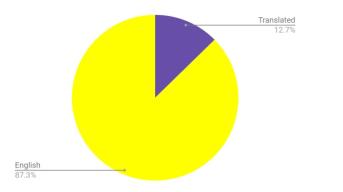 At 13%, this was down on 2020 when 32% of my reads were in translation. This year I spent July/August focusing on a personal writing project so I didn’t participate in the usual Women in Translation August reading challenge.
Below, the breakdown by region.

Fiction Rules, Nonfiction Rises
Being a big fan of fiction, I was surprised to see this year that my nonfiction reads increased from 30% to 35%. It’s been a struggle to come up with a limited shortlist of favourites, as there were so many!
I read more multiple books by the same authors this year, for example in Nonfiction Sindiwe Magona (South Africa) and Deborah Levy (South Africa/UK), while in Fiction Brian Moore (Northern Ireland) and Sara Baume (Ireland).
Audio Books, E-Books, Paperback or Hardbacks
This year 78% of my reading came from off my bookshelf while 21% were e-books I read on a kindle.

There has been a significant upward trend in the reading/listening world towards audio books, a change I have not jumped into. I do have a daily half hour commute, but it’s through the countryside of Provence and being present to the local landscape is a pleasurable, mindful lead-up to the work I do.
I think it is interesting and encouraging though, that many are rediscovering literature through having someone read to them aloud, something that each generation has valued, from the radio listening days before television, to podcasts to audiobooks, not to mention the nostalgia of childhood, having stories read to us. I can still remember the excited anticipation of sitting on the mat in primary school, at that hour of the day that the teacher would continue with a longer story that was being read to the class.
What Mood of Book Do We Gravitate Towards?
There’s a new app for storing your reading library called The Storygraph. It’s interesting though I don’t think it matches what I get from Goodreads yet, but one thing it does is analyse your reading by mood and pace. So I have discovered that I tend to read more slow and medium paced books, only 2% are fast paced! So it appears I’m fast at reading slow paced books and slow at reading fast paced? Here’s the breakdown for 2021.

The three main moods of the books I read according to this are Reflective, Emotional and Challenging!
Outstanding Book of the Year 2021
 And so to my One Outstanding Read of the Year, which thinking about it, combines a little of everything that appeals to me.
It is fiction, but based on the real life of a woman, so it has the best of what fiction offers through being able to reimagine a voice and the authenticity of nonfiction in using the life, the achievements, the poetry and self expression of a woman to channel her story. And it takes me to another country and culture, to open the mind and yet observe the universal.
Beyond Black There is No Colour : The Story of Forough Farrokhzad by Maryam Diener not only is my favourite and One Outstanding Read of 2021, but surely it is one of the least publicized and underrated books of the year.
Forough Farrokhzad, poet, mother, feminist, film-maker, radical, was one of the most iconic dissenting voices in modern Iranian history.
Maryam Diener reimagines the life of the young revolutionary poet in this heart-felt novella, portraying a young woman who desired to be authentic and write from the core of her being about her emotional life, loves and losses, in a way that no woman in her country before her had ever dared.
At only 150 pages, Diener has chosen certain events in Farrokhzad’s life from her childhood, marriage, her success with poetry and its contribution to the dissolution of her family life, her love for her son and the way she pours herself into her creative output, including film.
“What sets [Farrokhzad] apart from her predecessors and even her contemporary women writers is her rendering of quotidian experience with no intention to guide, to educate, to lead…(her) poetry is an accurate portrayal of the pain and pleasure of a whole generation undergoing radical change.” Iranian Scholar, Farzaneh Milani
It’s Outstanding and like nothing else I have read this year. This is the one slim book that rises to the top of the pile for me, one that haunts the reader, that leaves a legacy, that cuts a path for other women to step in to and follow.
And so next up My Top Fiction so 2021…
Did you have one book that stood out from all the rest this year? If so, share it in the comments below.
 I admire the way Claire Keegan creates atmosphere and a sense of place, I could well imagine the small Irish town they lived, the cold, the workplace, the river – although I had to keep reminding myself it was the 1980’s and that there was electricity. Bill’s deliveries of wood and coal and the way the women made it feel like a much earlier era, though I don’t doubt it was freezing then as few could afford to heat their homes by other means.
 It made me recall another character, Albert, from the film
  From the foundation of the Irish Free State in 1922 until 1996, at least 10,000 girls and women were imprisoned, forced to carry out unpaid labour and subjected to severe psychological and physical maltreatment in Ireland’s Magdalene Institutions. These were carceral, punitive institutions that ran commercial and for-profit businesses primarily laundries and needlework.
 I just love the concept of these works of flash fiction, postcard size stories, that have a geographic connection to a street or location in Northern Ireland, that originated as a story written on the back of a postcard – an alternative restriction to the usual one when writing flash fiction, of keeping it to 100 -150 words – and that the postcard was both sent and retained, a gift and an accumulated collection.
 It turns out there are only so many free coffees a person can drink before realising a hot beverage cannot cure loneliness, grief or melancholy.
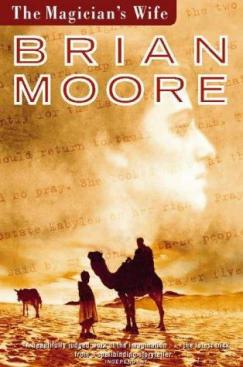 Being historical fiction, The Magician’s Wife became one of those books that I often put down to look up the historical characters, such as
  It becomes clear, that this particular série or group of invitees, are people whose influence might be required, to assist the ruler in his campaigns.
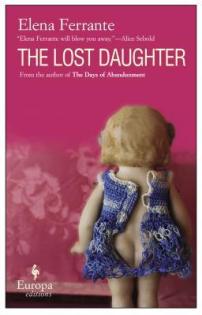 I just love the way her novels cast women in various stages of life, and this one, like
  She becomes acquainted with the regulars, the boy who puts out the chairs and umbrellas, a young woman with her child, a pregnant woman – part of a large Neapolitan family.

 Thus a struggle arises between two ways of seeing, of being, one that requires natural behaviour to be modified, medicated, suppressed, so that the child will appear and behave in the family and society as “normal”, while the other allows for that natural “but judged and condemned” way of being to exist.
 Minor Feelings is a collection of creative nonfiction essays that invites the reader to view aspects of the life experience of artist and writer Cathy Park Hong, from a little observed and known viewpoint, that of an Asian American woman pursuing her own authentic form of expression, while looking for other role models, disrupting the silence that is expected, through a polemic on race, ethnic origins and art.


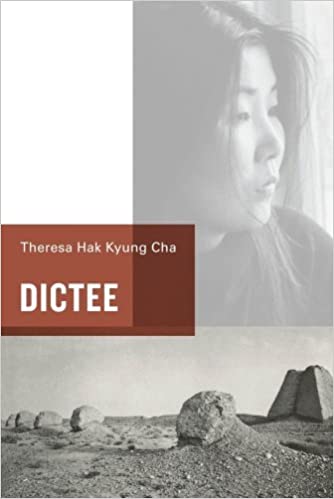 A tribute to thirty one year old artist and poet

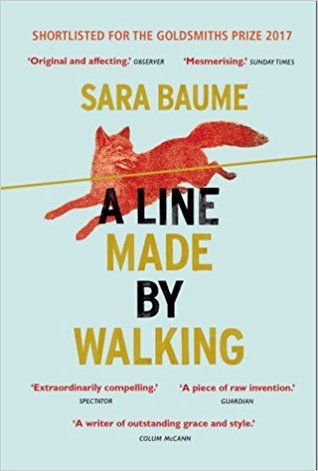 A Line Made By Walking takes place over one summer when 26 year old Frankie quits her Dublin bedsit and returns briefly to her parent’s home, before deciding to move temporarily into her grandmother’s slightly decrepit cottage that has long been on the market, since her death over a year ago.
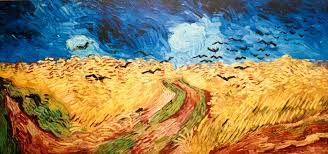 The line made by walking crops up three or four times in the novel, in reference to artworks, the first time in Van Gogh’s Wheatfield with Crows (1890) and represents the division between the field and sky, the sadness inherent in life. It was his final painting.
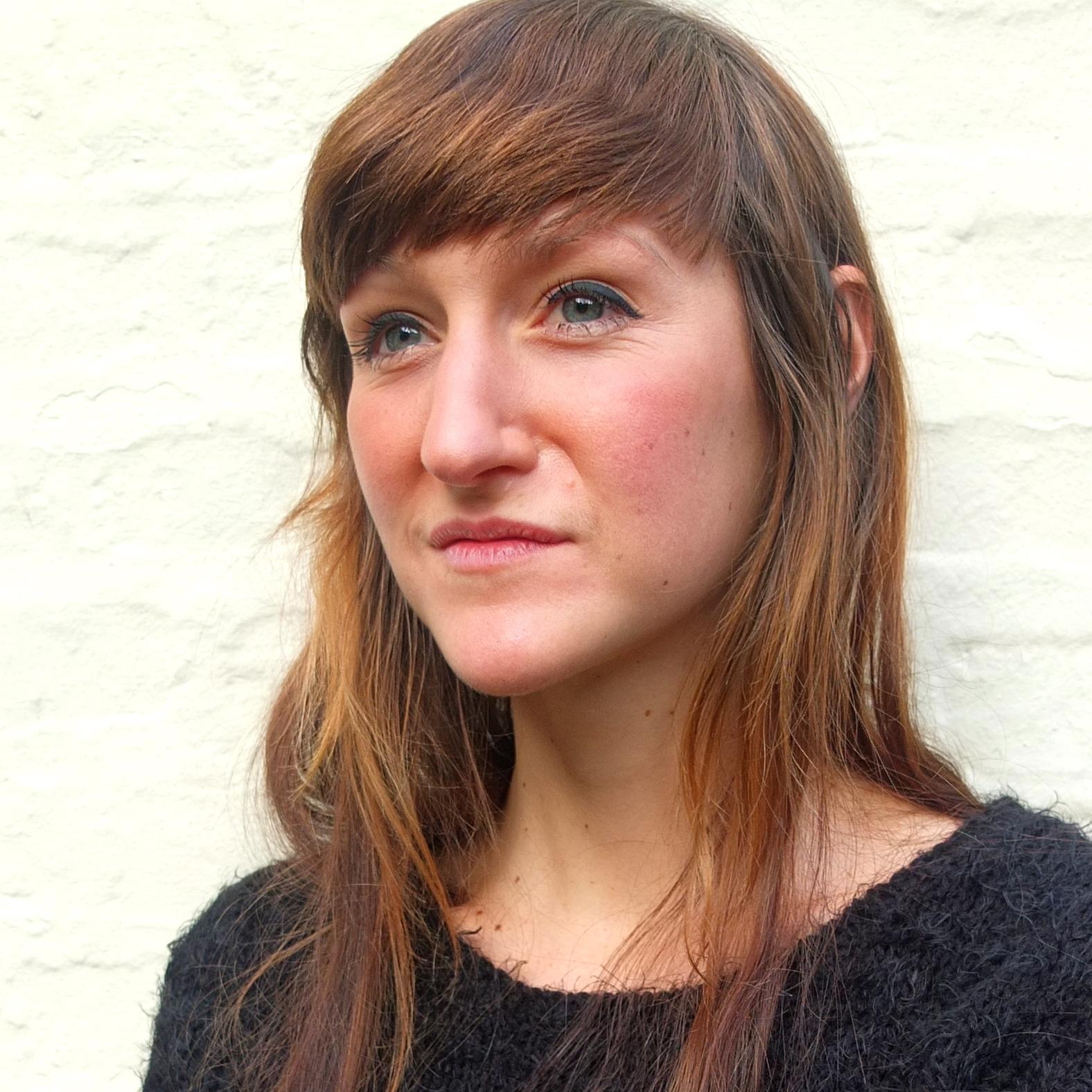 Sara Baume, born in 1984, was raised and now lives in County Cork, after having studied Fine Art at Dun Laoghaire College of Art, and Design and Creative Writing at Trinity College, Dublin.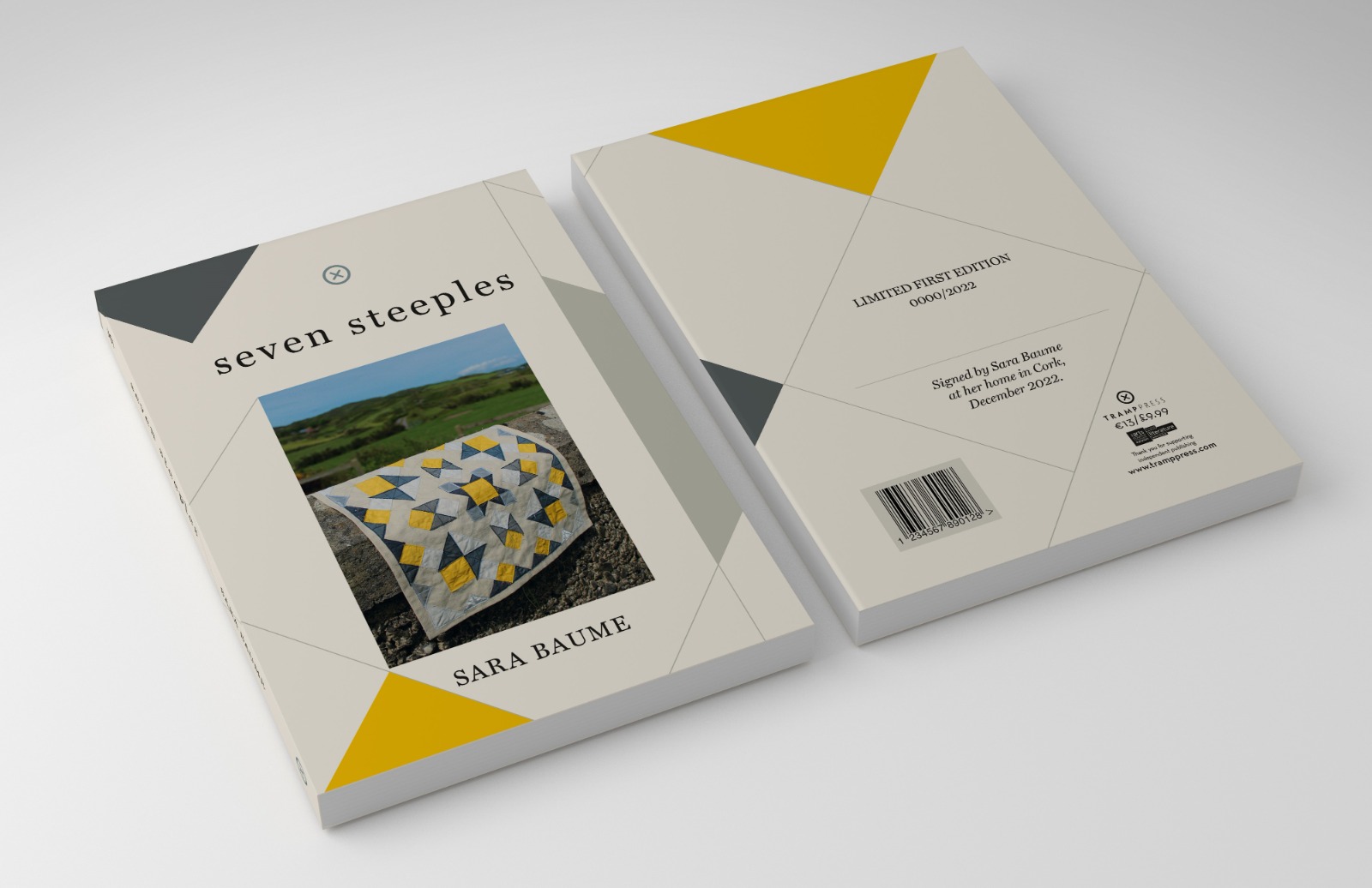
 Written when the author was 26 years old, a similar age to her young protagonist Ursa Corrie (Corregidora) when we first encounter her. Ursa sings blues in a bar, the first paragraph of the book, reads like a piece of flash fiction, a story in 150 words. Of her marriage to Mutt in Dec 1947, his dislike of her singing after their marriage because he believed marriage changed all that.
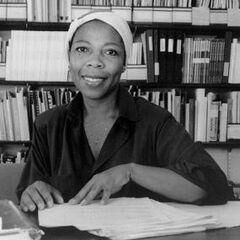 Gayl Jones was born in Kentucky in 1949. She attended Connecticut College and Brown University. She is a novelist, poet playwright, professor and literary critic.
 Word by Word