
A fabulous collections of correspondence and essay like responses to interview questions over a period of twenty-five years since the publication of her first novel Troubling Love.
 The title ‘Frantumaglia‘, a fabulous word left to her by her mother, in her Neapolitan dialect, a word she used to describe how she felt when racked by contradictory sensations that were tearing her apart.
She said that inside her she had a frantumaglia, a jumble of fragments. The frantumaglia depressed her. Sometimes it made her dizzy, sometimes it made her mouth taste like iron. It was the word for a disquiet not otherwise definable, it referred to a miscellaneous crowd of things in her head, debris in a muddy water of the brain. The frantumaglia was mysterious, it provoked mysterious actions, it was the source of all suffering not traceable to a single obvious cause…Often it made her weep, and since childhood the word has stayed in my mind to describe, in particular, a sudden fit of weeping for no evident reason: frantumaglia tears.
And so for her characters, this is what suffering is, looking onto the frantumaglia, the jumble of fragments inside.
 The first half chiefly concerns communication around Troubling Love and The Days of Abandonment, the latter written ten years after her debut, although other stories were written in between but never published, the author not happy with them as she so piercingly reveals:
I haven’t written two books in ten years, I’ve written and rewritten many. But Troubling Love and The Days of Abandonment seemed to me the ones that most decisively stuck a finger in certain wounds I have that are still infected, and did so without keeping a safe distance. At other times, I’ve written about clean or happily healed wounds with the obligatory detachment and the right words. But then I discovered that is not my path.
The second half implies a delay in the publication of the collection to include interviews and question-responses around the Neapolitan Quartet, beginning with the renowned My Brilliant Friend.
Readers ask poignant questions, while the media tend to obsess about her decision to remain absent (as opposed to anonymous) from promotional activity, to which she has many responses, one here in a letter to the journalist Goffredo Fofi:
In my experience, the difficulty-pleasure of writing touches every point of the body. When you’ve finished the book, it’s as if your innermost self had been ransacked, and all you want is to regain distance, return to being whole. I’ve discovered, by publishing, that there is a certain relief in the fact that the moment the text becomes a printed book it goes elsewhere. Before, it was the text that was pestering me; now I’d have to run after it. I decided not to.
Perhaps the old myths about inspiration spoke at least one truth: when one makes a creative work, one is inhabited by others-in some measure one becomes another. But when one stops writing one becomes oneself again.
…I wrote my book to free myself from it, not to be its prisoner.

She shares her literary influences (works of literature about abandoned women) from classic Greek myths, Ariadne to Medea, Dido to the more contemporary Simone de Beauvoir’s The Woman Destroyed, referring to recurring themes of abandonment, separation and struggle. She mentions literary favourites, Elsa Morante’s House of Liars.
One interviewer asks why in her early novels, her characters depict women who suffer, to which she responds:
The suffering of Delia, Olga, Leda is the result of disappointment. What they expected from life – they are women who sought to break with the tradition of their mothers and grandmothers – does not arrive. Old ghosts arrive instead, the same ones with whom the women of the past had to reckon. The difference is that these women don’t submit to them passively. Instead, they fight, and they cope. They don’t win, but they simply come to an agreement with their own expectations and find new equilibriums. I feel them not as women who are suffering but as women who are struggling.
And on comparing Olga to Madame Bovary and Anna Karenina, who she sees as descendants of Dido and Medea, though they have lost the obscure force that pushed those heroines of the ancient world to such brutal forms of resistance and revenge, they instead experience their abandonment as a punishment for their sins.
Olga, on the other hand, is an educated woman of today, influenced by the battle against the patriarchy. She knows what can happen to her and tries not to be destroyed by abandonment. Hers is the story of how she resists, of how she touches bottom and returns, of how abandonment changes her without annihilating her.
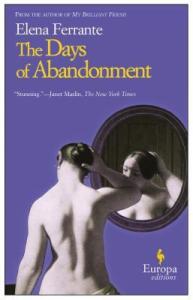 In an interview, Stefania Scateni from the publication l’Unità, refers to Olga, the protagonist of The Days of Abandonment as destroyed by one love, seeking another with her neighbour. He asks what Ferrante thinks of love.
The need for love is the central experience of our existence. However foolish it may seem, we feel truly alive only when we have an arrow in our side and that we drag around night and day, everywhere we go. The need for love sweeps away every other need and, on the other hand, motivates all our actions.
She again refers to the Greek classics, to Book 4 of the Aeneid, where the construction of Carthage stops when Dido falls in love.
Individuals and cities without love are a danger to themselves and others.
 The correspondence with the Director of Troubling Love (L’amore molesto), Mario Martone is illuminating, to read of Ferrante’s humble hesitancy in contributing to a form she confessed to know nothing about, followed by her exemplary input to the process and finally the unsent letter, many months later when she finally saw the film and was so affected by what he had created. It makes me want to read her debut novel and watch the original cult film now.
Frantumagli is an excellent accompaniment to the novels of Elena Ferrante and insight into this writer’s journey and process, in particular the inspiration behind her characters, settings and recurring themes.
Note: Thank you to the publisher Europa Editions, for providing me a copy of this beautiful book.
 I’m guessing that Ayobami Adebayo uses it as the title to her novel, because it relates to the twin desires of the main characters in the book, Yejide in her yearning to become pregnant and to keep a child, to be the mother she was denied, having been raised by less than kind stepmothers after her mother died in childbirth; and her husband Akin, in his desire to try to keep his wife happy and with him, despite succumbing to the pressures of the stepmothers and his own family, he being the first-born son of the first wife, to produce a son and heir.
 The narrative voice moves from first person accounts of both Yejide and Akin, ensuring the reader gains twin perspectives on what is happening (and making us a little unsure of reality) and the more intimate second person narrative in the present day, as each character addresses the other with that more personal “you” voice, they are not in each other’s presence, but they carry on a conversation in their minds, addressing each other, asking questions that will not be answered, wondering what the coming together after all these years will reveal.
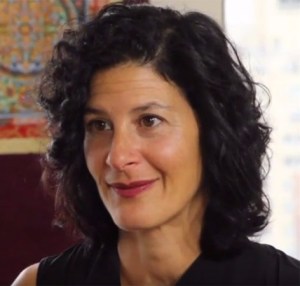
 That transition she made and the mentoring she received became the subject of her first book
  In Worthy, Boost Your Self-Worth to Grow Your Net Worth, she takes the jump a step further and analyses what might be behind the reluctance, or resistance as she likes to call it, to change. She tells the story behind the story of her own life, of how she rarely spent money on herself, but often on her husband because she was trying to make him happy. Through coaching, she was able to have greater awareness of her own patterns and see how she was getting in her own way of achieving what she wanted.
 The book moves further on, into defining what you want most and how to move from excuses to action, to taking back your power, taking responsibility, practising self-trust and self-respect.
 Three Daughters of Eve is an interesting, quietly provocative, philosophical novel. Shafak brilliantly sets up a character study of Peri, our Turkish protagonist, who on her way to a dinner party to meet her husband, decides to abandon her car in the middle of a traffic jam, in pursuit of an opportunistic handbag thief.


 Despite education, philosophical questions and new friends, Peri is a young, Turkish woman coming to live in a foreign country; as I was reading, I couldn’t help but notice the synchronicity between this combination of time, space and circumstance that made Peri vulnerable to manipulative intent and the protagonist of Claire Fuller’s excellent novel
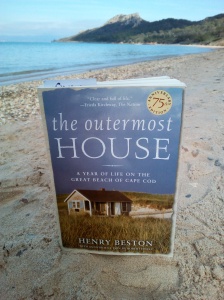
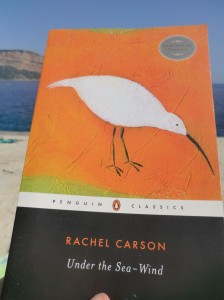 And though I enjoyed Henry Beston’s book considerably, Carson’s book for me left a greater impression, for who could not forget being made to see life through the eyes of the very creatures Henry Beston observes. Carson chose to narrate the three parts of her book from the point of view of a sanderling (bird), a mackerel, and a migrating eel. If you haven’t read it and loved this book, I am sure you will enjoy and appreciate Rachel Carson’s personal favourite of all the books she wrote, it is the perfect companion to The Outermost House.
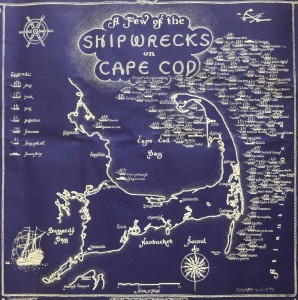 It was the late 1920’s and no doubt a year like any other, with its share of wrecks, disasters. The pragmatic attitudes of the locals, as likely to come to the rescue and do anything to help, as they are to salvage what is left, not always understood by the families of victims of the many shipwrecks.
 Astonishing, a work of art, an interwoven tapestry of stories that weave across the generations to create something so beautiful, so heartfelt, the thing that connects them is so strong, even when it isn’t known by its characters, somehow Yaa Gyasi conveys that to the reader, so that by the end when something quite magical happens, there is a feeling of grieving for all that has passed and of relief that something new has been found.


 Australia is in the midst of coping with an extremely hot summer, Sydney and Brisbane experiencing the hottest January on record, February looking even hotter with the arrival of a heat wave and increased fire risks in Victoria and New South Wales (where currently 49 fires are burning across the state, 17 of which are not contained and the fire rating is at the level of “catastrophic”).
 he story follows Aaron Falk, a police officer from Melbourne, who returns to the town he and father were run out of many years back, for the funeral of his childhood friend Luke. It is clear he wants the visit over and done with as soon as possible and is unwilling to engage with anyone.
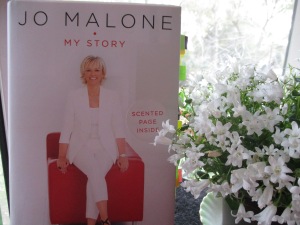 But Jo Malone the girl, wasn’t born into luxury. She was an ordinary girl raised in a family that struggled a bit on the good days, and a lot on the bad days, which were often brought on by her doting father’s gambling inclinations, her mother’s over-spending habit and the pressure to work long hours to keep the family afloat.
 When she really began to play around with fragrance, demand began to rise more than she could cope with, and Gary suggested they embrace the business, move it to its own premise and open a shop. Her business was beginning to overwhelm their living condition, he recognised the potential and offered to commit himself wholeheartedly it. That would be the beginning of Jo Malone, her signature brand.
 From there, a whirlwind of events follow and she will partner up with a perfume house in Paris, turning her instinct into a viable, enduring product. She tried to put into words her creative process and it is fascinating when she does, for it is something that can’t be copied or cloned, it is an insight into the pure magic of creativity, of how she uses image, colour and experience to create a scent.

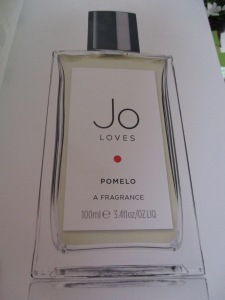 I absolutely loved this book, from it’s at times heartbreaking accounts of struggle in childhood, to the discovery of her passion, the development of her creativity and the strong work ethic that carried her forward, to finding the perfect mate and the journey they would go on together.
 Swimming Lessons is an evocative, thought-provoking novel that begins with an intriguing mystery, evolving into melancholy as the events before and during Ingrid’s marriage, the wife of Gil and mother of two young girls who disappeared 12 years before, are revealed.
 After Gil’s sighting, events bring the family together, highlighting their similarities and differences, exposing various family secrets and lies and all the while, each letter like a dripping tap, one by one revealing more of the relationship between Ingrid, the young Norwegian university student and Gil, her literature professor and the very different path her life would take once their lives intertwined.
 Word by Word