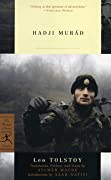
Hadji Murad by Leo Tolstoy tr. Aylmer Maude

The Kindness of Enemies Shamil ImamI read Hadji Murad because it was referenced in the last pages of Leila Aboulela’s excellent The Kindness of Enemies and is set in the same location as the historical part of her book, 1850’s Caucasus. Aboulela’s book centres on the kidnap of A Russian Princess and her time in captivity under the protection of the Highlander Shamil Imam. He wishes to trade her for his son, help captive by the Russians for more than ten years.

Tolstoy was in the Russian army for a time and clearly witnessed many missions. One of the events he had knowledge of and wrote about, though this novella was published post-humously by his wife, was the defection to Russia and subsequent killing of one of Shamil Khan’s chieftans, another Highlander, Hadji Murad.

Though I’m not a huge fan of the classics, there are some exceptions and I did enjoy Anna Karenina, however having read Aboulela’s version which really brings the characters alive and highlights their dilemmas so openly, I found it hard to connect with Tolstoy’s tale, which rarely touches on lives other than the soldiers and noble decision makers.

Hadji Murad Thistle Leo Tolstoy

Photo by nastia on Pexels.com

The opening scene though is brilliant, the ploughed field, bereft of life, everything turned over, leaves only one sturdy thistle, half destroyed but for that one stalk still standing tall, the flower head emitting its bold crimson colour.

The land was well tilled and nowhere was there a blade of grass or any kind of plant to be seen; it was all black. “Ah, what a destructive creature is man… How many different plant lives he destroys to support his own experience!” thought I, involuntarily looking round for some living thing in this lifeless black field.

It is the scene that brings back the memory of this man Hadji Murad and compels him to write out those pages, perhaps purging himself of a ghastly memory.

“What energy!” I thought. “Man has conquered everything, and destroyed millions of plants, yet this one won’t submit.” And I remembered a Caucasian episode of years ago, which I had partly seen myself, partly heard of from eye-witnesses, and in part imagined.

It does make me think that he had intended not to publish it, that perhaps it was written for another purpose altogether. Particularly as, at the time he wrote it (1896-1903)

he was spending most of his time writing his virulent tracts against the art of fiction and denouncing some of the best writers in the world, including Shakespeare.

In conclusion, it highlights to me the importance of reading various perspectives of history, not just one side or the other, but also across gender. It is refreshing to read a female historian’s fictional version of an age old conflict, inhabiting characters who observe from positions of lesser power, of oppression, for their powers of observation are that much stronger than the privileged, it being one of their necessary survival instincts.

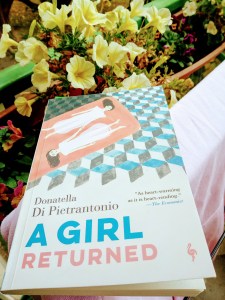
A Girl Returned by Donatella Di Pietrantonio

translated from Italian by Ann Goldstein.

Europa Editions Italian Literature Donatella Di PietrantonioA Girl Returned came to my attention because I like to see what Europa Editions are going to be publishing, they are known for bringing Italian literature to readers of the English language and their big title in 2020 will be Elena Ferrante’s The Lying Life of Adults. One I will be reading soon.

The Adoptee Experience

I chose to read A Girl Returned because I am interested in reading as much as possible, fiction or nonfiction, stories that portray the adoptee experience. And the premise of this book is shocking as the title suggests, when a thirteen year old girl is returned to the family she is born into without being told why or there appearing to be any clear motive.

Though as anyone with a connection with adoption will know, it is rare for the process to exist without the presence of secrets, lies, clandestine activities, resentments, heartbreak and denial.

Book Review

I was thirteen, yet I didn’t know my other mother.

The story opens as a 13-year-old girl struggles up the stairs of an apartment with an unwieldy suitcase and a bag of jumbled shoes. The door is opened by her sister Adriana, whom she has never met.

We looked like each then, more than we do as adults.

Through the months of adjustment that follow, thrown back into the reluctant family she was born into, events are narrated with hindsight, as her memory of that vision of her sister attests. She is determined to unravel the cause of this separation and abandonment by both sets of parents, at birth by her biological family and at 13 by her adoptive family, the latter, whose love she never questioned.

Photo by Ian Panelo on Pexels.com

Aware her mother had been suffering, she continues to worry and wonder about her, we the reader do too, trying to imagine and fearful of what might have ailed her that she was unable to share with her only daughter.

Who knew how my mother was. Whether she’d started eating again, whether she was getting out of bed more often. Or if instead she’d been taken to hospital. She hadn’t wanted to tell me anything about her illness, certainly she didn’t want to frighten me, but I had seen her suffering in the past months, she hadn’t even gone to the beach, she who was usually there in the first warm days of May. With her permission I went to our umbrella by myself, since I was grown up now, she said. I had gone the day before my departure and had even had fun with my friends: I didn’t believe that my parents would really find the courage to give me back.

As time passes, small clues diminish her resolve and trust in those around her, who seem to believe in or at least practice, silence and deception. The only way will be to take matters into her own hands.

The idea came to me at night, I reported it to Patrizia in the morning under the umbrella.

The one unexpected joy in her changed circumstances, though she accepts it reluctantly and is wary of it, is the fierce love, and admiration tinged with jealousy, she receives from her younger sister. Like candle light in a dark room, she is luminous yet capable of harm. There are wild differences, given their different upbringings, but there exists the thread of undeniable connection.

I wasn’t acquainted with hunger and I lived like a foreigner among the hungry. The privilege I bore from my earlier life distinguished me, isolated me in the family. I was the arminuta, the one who’d returned. I spoke another language and I no longer knew who I belonged to. I envied my classmates in the town, and even Adriana, for the certainty of their mothers.

Identity, Exile and The Mother

In a brilliant essay-style review, translator Stiliana Milkova suggests that the main concern of the novel is how essential the role of the mother is to our sense of identity.

Looking at mothers as the figures that determine and define who we are allows us to think about A Girl Returned as a novel about exile and dislocation, rather than simply motherhood. The Arminuta (a word that in the language of the Abruzzo region of Italy means “the returned”) is unexpectedly forced to leave her maternal home, or what she considers her maternal home, and exiled to a place whose customs, and even the language, are almost foreign to her.

The longer she stays in this forced exile, the more detached she becomes from both her present and her past, to who she was, is. So much had been tied to a mother’s love or bond. Though she remembers the feeling of being loved, she now questions it, faced with such devastating evidence.

In certain melancholy moods, I felt forgotten. I’d fallen out of her thoughts. There was no longer any reason to exist in the world. I softly repeated the word mamma a hundred times, until it lost all meaning and was only an exercise of the lips. I was an orphan with two living mothers. One had given me up with her milk still on my tongue, the other had given me back at the age of thirteen. I was a child of separations, false or unspoken kinships, distances. I no longer knew who I came from. In my heart I don’t know even now.

Photo by Bahaa A. Shawqi on Pexels.com

A short novel, A Girl Returned packs a powerful, moving punch and generously provides that glimmer of hope, in an unexpected alliance. Rereading these passages I highlighted makes me wish to repeat the entire reading experience, the shock, the solace, the resistance and resilience.

We look less like each other now, but we find the same meaning in this being thrown into the world.

Highly Recommended.

Reviews

Bella Mia by Donatella Di Pietrantonio, review by HeavenAli (Published in 2014, translated to English in 2016)

My Mother is a River by Donatella Di Pietrantonio, review by HeavenAli (Published in 2011, translated into English 2015)

Further Reading

Reviews by Translators: The Mother Of All Questions: Donatella Di Pietrantonio’s “A Girl Returned,” tr. Ann Goldstein by Stiliano Milkova

Article New York Times: ‘The Ferrante Effect’: In Italy, Women Writers Are Ascendant by Anna Momigliano

N.B. Thank you kindly to Europa Editions for sending me a copy of the book.

The Bird Within Me by Sara Lundberg (Sweden)

translated by B.J.Epstein

The Swedish Artist Berta Hansson

The concept of this illustrated children’s book really appealed to me. It’s inspired and based on the childhood of the Swedish artist Berta Hansson (1910-1994) during the period in her life when she was 12 years old and wanted to be outdoors in nature or painting or making birds out of clay.

However, her father was strict and serious and her mother was frail and in bed very ill, so she was needed to help out in the home and on the farm, and all the more so when one of her older sisters was sent away to study domestic science, to learn how to become a better homemaker.

She initiates a form of protest.

Housewife. Housewives.

That’s what Dad wants us to be –

Julia, Gunna and me –

because that’s how it’s always been

and that’s how it’s going to be.

A Role Model or a Muse

Berta wanted something else for her life, but had no role model or knowledge of how to make her dreams a reality. Her Uncle Johan whom she secretly admired, painted with oil paints and made fiddles instead of spending all his time on farm work, sadly he was looked down on and derided, referred to as the ‘theatre farmer‘.

Sometimes late at night she would sneak out and wander over to a copse of trees by the Doctor’s house, one of the few people who had ever complimented her art.

The Bird Within Me Painting Muse

Photo by Zaksheuskaya on Pexels.com

I peer in.
He sits in the armchair,
reading and smoking his pipe.
If he saw me, I would die.
Paintings hang on his walls from the floor to the ceiling.
They are so beautiful.
I can’t stop looking at them.
To think that someone has painted them.

Breaking Out

It is a story of family and obligations, and of the longing a child has for something that is difficult to articulate or express in words, little understood by the world of adults who harbour expectations.

How to sustain and realise dreams when the way is not clear.

It’s a celebration of the exploration of art and observation in youth and of the struggle against the familial and cultural conditioning and expectations of girls.

A beautiful and thought provoking book for all ages.

You can find a copy of the book here.

The Party Wall by Catherine Leroux (2016)

translated by Lazer Lederhendler (from French-Canadian into English).

Reading Women in Translation

French Canadian literature in translationMy final read of August for WITMonth was The Party Wall, French Canadian author Catherine Leroux’s third novel. It was shortlisted for the Scotiabank Giller Prize, which annually recognizes the best in Canadian fiction – and has just announced its 14 strong long list for 2020. The translation by Lazer Lederhendler won the Governor General’s Literary Award for translation (French to English).

This novel is told in chapters about paired characters; mother and son, brother and sister, husband and wife; so it stops and starts as we leave one pair and move to the next. There doesn’t initially appear to be a connection (although there is) between the lives so the stories are quite different, creating the effect of reading short stories with the expectation that the threads will come together to reveal the tapestry.

The novel opens with Madeleine (actually it doesn’t but it’s the more memorable opening chapter), a woman who has lost her husband; she visits the spot where his ashes lie beneath a tree and talks to him often. Her son has left home and she hears of him through the many travellers who arrive looking for a bed for a night, people he has given her address. There is a sadness of loss of the other in her, an affliction which is given a bizarre (but true) cause when she is told she is not a biological match for her son, when at last he does return.

The Party Wall Catherine Leroux lighthouse

Photo by Kristina Gain on Pexels.com

From the window of her office, Madeleine looks at the watchman doing his rounds. This is what she does when her eyes need a rest. There’s the sea, of course, but it isn’t at all restful. It’s a struggle, a call, a mystery whispered with every rising tide. The watchman, on the other hand, is calm and predictable. Afflicted by gout, he has never taken a day off. He circles around the lighthouse like a grey satellite; his hobbling in no way diminishes his reassuring presence.

As their lives move forward, the theme of separation becomes apparent, its inherent wounding manifesting in different ways in each pair of lives.

Oddly enough, it was a long time before they realised they had both been adopted. Marie, haunted by her origins, preferred to wait before broaching the subject and kept the truth sealed inside her chest. As for Ariel, his sense of belonging to the Goldstein family was so powerful that he rarely gave any thought to the fact he had been born elsewhere, welcomed into the world by unknown hands, which had passed him on to someone else like a baton in a relay race that was to lead to as yet unseen heights.

Silence as a Familial Weapon

graveyard shift cemetery ghostly presence

Photo by Pixabay on Pexels.com

Carmen and Simon are siblings and we meet them around their mother’s deathbed, a woman who never revealed to her children who their father was, controlling them through withholding, keeping them attached through the sliver of possible revelation. Carmen runs marathons to forget, while Simon tries to avoid witnessing his marriage fall apart, removing himself by choosing to work the graveyard shift.

The term “graveyard shift” is perfectly apt: the darkness and silence of a cemetery always mask a ghostly existence, the invisible dramas of the dead and their mourners.

It’s a thought provoking and cleverly constructed novel, however the disjointed stories inevitably expose the weaknesses of one against the strengths of another, and so writing about it a week after reading highlights that which was memorable and that lost to the river of stories who are lost in the current.

Ultimately, what stays with the reader is the importance of the connections we do make, those we choose and those we pursue, for better or worse. A couple of the stories could have evolved into novels in their own right.

The Party Wall has its own logic and its own internal structure and systems: four stories that become intertwined as the book progresses. Three of those came about from extraordinary news stories I had come across. Catherine Leroux

Further Reading

Article CBC/Radio Canada: Catherine Leroux on the literary value of loose ends

Article: How Catherine Leroux ripped fiction from the headlines in The Party Wall

Article: 14 Canadian books make the 2020 longlist for $100k Scotiabank Giller Prize, 8 Sept 2020

Sex and Lies by Leïla Slimani

translated by Sophie Lewis (from French)

Reality bites.

Sex and Lies Leila Slimani MoroccoThe last nonfiction book I read was also set in Morocco (at the time referred to as the Spanish Sahara) written by a foreign woman living openly with her boyfriend, it couldn’t be more in contrast with what I’ve just read here – although Sanmao does encounter women living within the oppressive system that is at work in this collection.

In Morocco the ban on ‘fornication’, or zina, isn’t just a moral injunction. Article 490 of the penal code prescribes ‘imprisonment of between one month and one year [for] all persons of opposite sexes, who, not being united by the bonds of marriage, pursue sexual relations’. According to article 489, all ‘preferential or unnatural behaviour between two persons of the same sex will be punished by between six months and three years’ imprisonment’.

Leïla Slimani interviews women who responded to her after the publication of her first novel Adèle, a character she describes as a rather extreme metaphor for the sexual experience of young Moroccan women; it was a book that provoked a dialogue, many women wanted to have that conversation with her, felt safe doing so, inspiring her to collect those stories and publish them for that reason, to provoke a national conversation.

Novels have a magical way of forging a very intimate connection between writers and their readers, of toppling the barriers of shame and mistrust. My hours with those women were very special. And it’s their stories I have tried to give back: the impassioned testimonies of a time and its suffering.

Photo by Sharon McCutcheon on Pexels.com

In these essays Leila Slimani gives a voice to Moroccan women trying to live lives where they can express their natural affinity for love, while living in a culture that both condemns and commodifies sex, where the law punishes and outlaws sex outside marriage, as well as homosexuality and prostitution. The consequences are a unique form of extreme and give rise to behaviours that shock.

It’s both a discomforting read, to encounter this knowledge and hear this testimony for the first time, and encouraging if it means that a space is being created that allows the conversation to happen at all.

However, overall it leaves a heavy feeling of disempowerment, having glimpsed the tip of another nation’s patriarchal iceberg. We are left with the feeling that this is a steep and icy behemoth to conquer. Article 489 is not drawn from sharia or any other religious source, it is in fact identical to the French penal code’s former article 331, repealed in 1982. They are laws inherited directly from the French protectorate.

In a conversation with Egyptian feminist and author Mona Eltahawy about the tussle between the freedom desired and the shackles forced upon women, Eltahawy responded by using words attributed to the great American abolitionist Harriet Tubman, who devoted her life to persuading slaves to flee the plantations and claim their freedom.

She is meant to have said: “I freed a thousand slaves. I could have freed a thousand more if only they knew were slaves.” Emancipation, Eltahawy told me, is first about raising awareness. If women haven’t fully understood the state of inferiority in which they are kept, they will do nothing but perpetuate it.

Women are stepping out of isolation and sharing their stories everywhere, finding solidarity in that first step, sharing in a safe space, being heard, realising they are not alone.

May it be a stepping stone to change.

I read this book as part of WIT (Women in Translation) month and was fortunate to have been gifted it by a reader, since I participated in the gift swap, so thank you Jess for sending me this book, you can read her review of it on her blog, Around The World One Female Novelist at a Time.

International Booker Prize Winner 2020 + Edinburgh Book Festival

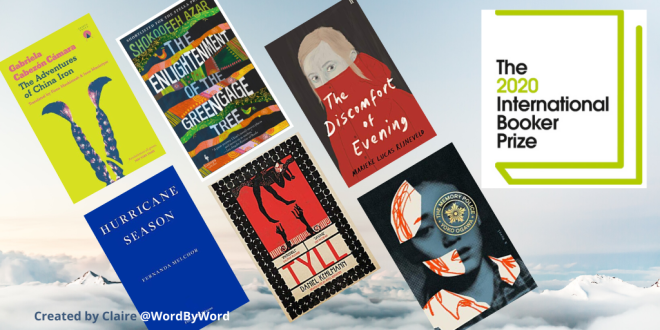
Back in late February thirteen novels in translation made the long list (see plot summaries here) for the International Booker Prize 2020 and then on April 2nd if you recall, these six novels below made the shortlist.

International Booker Prize 2020 shortlist logo

International Booker Winner 2020

After a delay of some months due to the Covid crisis, the winner was announced this evening, 29 year-old Marieke Lucas Rijneveld from The Netherlands, with The Discomfort of Evening and their translator Michele Hutchison.

The Discomfort of Evening International Booker Prize Winner 2020

Author, Marieke Lucas Rijneveld

Described as an exciting piece of poetic prose, a subject rarely grappled with – how children grieve, not a novel that allows the reader any distance, visceral and shocking in parts, readers either loved it or hated it or simply did not finish it.

It was probably the least talked about novel of the six, and its win tonight will have been surprising to many.

The Novel Description

Marieke Lucas Rijneveld The Discomfort of Evening International Booker Winner 2020Jas lives with her devout farming family in the rural Netherlands. One winter’s day, her older brother joins an ice skating trip. Resentful at being left alone, she makes a perverse plea to God; he never returns. As grief overwhelms the farm, Jas succumbs to a vortex of increasingly disturbing fantasies, watching her family disintegrate into a darkness that threatens to derail them all.

A bestselling sensation in the Netherlands by a prize-winning young poet, Marieke Lucas Rijneveld’s debut novel lays everything bare. It is a world of language unlike any other, which Michele Hutchison’s striking translation captures in all its wild, violent beauty.

I can’t say it was on my reading list, the dairy farming environment and strict religious upbringing, biblical references and childish fantasies were a turn off for me, but I did enjoy and was intrigued to listen to the author being interviewed this evening at the Edinburgh Book Festival, which is being held online, so I was able to attend.

Edinburgh Book Festival Online 2020Listening to the author read in Dutch was wonderful and the discussion between the judge, the translator and author worth listening to and may well influence more to discover what the book is about.

To watch that interview in replay, visit the EdBookFest site and check out some of the other interesting talks that are happening.


Further Reading

NY Times – A Dark Debut Propels A Dutch Writer to Reluctant Fame

The Guardian: My Family Are Too Scared to Read My Book

Naondel, The Red Abbey Chronicles by Maria Turtschaninoff (Finland)

translated by Annie Prime (from Swedish).

Naondel The Red Abbey Chronicles feminist fantasy WIT MonthNaondel is the name of the ship that will bring the First Women to the island of Menos.

We have already been on the island in the first book of this series, Maresi, where there have been mentions of the names of those who came here first. We know about the safety of this island, a place from which men are forbidden to set foot and we know from the stories of those who are on the island of the menace that exists elsewhere.

The Abbey must never forget what was endured to create this refuge for our successors, a place where women can work and learn side by side.

Now we go back to the beginning, to when these women lived in their own very different communities, with their families and learn how they came to be living together, imprisoned within the same household, there due to the desire of one man, and what it was that drives them ultimately to leave everything behind and seek refuge on this island.

Thus, most of the novel is spent in the oppressive ‘diarahesi’, the place of confinement where Iskan, the Vizier has brought the women within the palace of Ohaddin, to serve and service him. It is an idle life of entrapment, where they have no power over their lives or of their children, reduced to objects of one man’s desire.

I am not unhappy. There is no space inside me for unhappiness.  I am shedding my skin.  Beneath this old skin is one even older.  It is thick and hardy. It shall endure. It has scars along the wrists – one for each offering…With the power of this place  flowing through me, with an offering to the veins of the earth – blood for blood –  there are no walls that can stop the old Garai from emerging.

For Kabira, this place was once her home, long before its inhabitants were eliminated, its geography changed to suit the man who made her his wife. She had powers that came from Anji, something he would steal from her and misuse, bringing decades of torment.

There are few whom I have loved in my overlong life. Two of them I have betrayed. One I have killed. One has turned her back on me. And one has held my death in his hand. There is no beauty in my past. No goodness. Yet I am forcing myself to look back and recall Ohaddin, the palace, and all that came to passe therein.

As each woman joins the diarhesi, with their unique skills and talent, though they initially are weakened by this small life they are bound to; unbeknown to them, they are being prepared for something greater, that will pave the way for others, allowing them too to dream of escape, to a place where women can be safe, healed, educated and thrive.

Naondel Red Abbey Chronicles WIT MonthThe darkness these women endure, the evil that is perpetuated by their ruler, is only alleviated by the foreknowledge that we already know these women will eventually escape it. So we read in anticipation of that event, in the meantime getting to know each of them and the powers they had before they were enslaved.

And so we learn the stories of Kabira the First Mother, Clararas who led their flight, Garai the High Priestess, Estegi the servant and second Mother, Orseola the Dreamweaver, Sulani the Brave, Daera the first Rose, and Iona, who was lost.

Each women is so interesting, it’s almost a pity that we know only as much of her story, as is required to bring her to the palace. Maria Turtschaninoff writes interesting female protagonists, each of the unique and together an even greater force, if they can release themselves from the misused power their master has stolen and act together.

While the women live under the rule of a villainous man, the author never had the intention to create an anti-men series, however the book centres on the lives of the women and how they deal with their dilemma.

We have seen more women in fantasy recently, but they are still very much alone. One lone, strong girl, surrounded by men. And she’s always an anomaly, the one girl. So for me it was important building a community, and my point is not to support the myth that girls can’t be friends.

Fortunately it appears that she has re-entered this world and told the stories of two other characters, which hopefully will be picked up by a publisher and translated into English.

I already have two books published in Swedish and Finnish set in this world, but in very different parts of it, telling very different sorts of stories: Arra and Anaché. One is the story of a mute girl who can hear the songs of the world, and the other of a nomad girl who challenges her whole tribe’s gender norms in order to save her people. Each book I have written has left me with characters and story threads I would love to keep exploring.

Further Reading

My review of Maresi, Book 1 in The Red Abbey Chronicles

Maresi, The Red Abbey Chronicles by Maria Turtschaninoff (Finland)

translated by Annie Prime (from Swedish) – like Tove Jansson, Maria Turtschaninoff is from a Swedish speaking part of Finland.

A Utopian Island of Women

Maresi Finland YA WIT MonthRed Abbey is situated on the island Menos, run by women, a kind of educational refuge that has elements of sounding like a boarding school and a convent. On the mainland some are not even sure if it is myth or reality, but they send their girls there in hope that the rumours are trues. We learn that Maresi was sent there by her family during ‘Hunger Winter’ and that the abundance of food, the genuine care and education she is given makes it a place she adores.

There are many reasons why a girl might come to the island. Sometimes poor families from the coast lands send a daughter here because they can not provide for her. Sometimes a family notice that their daughter has a sharp and enquiring mind and want to give her the best education a woman can get. Sometimes sick and disabled girls come here because they know the sisters can give them the best possible care…Sometimes girls come as runaways… Girls who show a thirst for knowledge in cultures where women are not allowed to know or say anything. In these lands, rumour of the Abbey’s existence lives in women’s songs and and forbidden folk tales told only in whispers, away from enemy ears. Nobody talks openly about our island but most people have heard of it anyway.

The Red Abbey Maresi feminist fantasy YAThere are two maps at the front of the book, one of Red Abbey, a walled area showing various buildings, such as Novice House, Knowledge House, Body’s Spring, Temple of the Rose, named steps and courtyards and a map of the island drawn by ‘Sister 0 in the second year of the reign of our thirty-second mother, based on the original by ‘Garai of the Blood in the reign of First Mother’

As the novel opens a ship is sighted and the girls are joined by Jai, who becomes shadow to Maresi, it is clear she has been traumatised by an experience and continues to live in fear, believing that what she ran from will not relent until she is found.

Most of the first two thirds is made up of understanding their daily life, they are being educated both intellectually and develop a strong connection to nature. The community is able to survive and thrive due to their sustainable harvesting of a red dye from blood snails. Maresi loves nothing more than acquiring knowledge and spends every evening in Knowledge House reading the scrolls.

That evening I chose the ancient tales of the First Sisters. I have always loved reading about their journey to the island, their struggle to build Knowledge House and their survival in the first few years with nothing but fish and foraged wild fruits and berries as sustenance. Life on the island was difficult for the first few years. It did not get easier until some decades later, when they discovered the bloodsnail colony and the silver began to flow in.

Only women and girls are permitted on the island and when a threat seems imminent it requires the women to use all their knowledge and resources and it is as this happens that the girls begin to discover their unique talents and the courage to use them.

Sisterhood, Knowledge, Empowerment and True Courage

Bloodsnails Maresi Red Abbey

Photo by Alin Luna on Pexels.com

Described as a tale of sisterhood, survival and fighting against the odds, I chose this because it sounded like an empowering read for young women/adolescents and because it has been imagined and written by a woman from another culture/language, drawing on her storytelling tradition and experience.

I really enjoyed the story and characters and the community created on the island, it reminded me a little of Madeleine Miller’s Circe, who lives on an island, only she is in exile, so mostly alone, but it has that similar utopian feeling of the desire to create a nurturing environment where women live in harmony with nature and have access to education and knowledge, without the demands or agendas of men or the family dynamic and its expectations.

Maresi is the first in a trilogy, also described as feminist fantasy, the second book is Naondel and the the final Maresi Red Mantle.

Where Does the Inspiration Come From?

What was the inspiration behind the Red Abbey? And what kind of research did you undergo during the writing process? – from an interview by Bluebird Reviews 

It all started with a photograph exhibition.

I saw the exhibition many years before I began working on Maresi. It took place in Helsinki, and showcased photographs from Mount Athos, a Greek peninsula with a 1000-year-old monastic community. The pictures were breathtakingly beautiful and the houses of the monasteries represented crumbling splendour. Many of them were perched on top of steep cliffs, like eagles’ nests. I walked around with my notebook, making notes and getting very inspired.

And also, angry.

Because for a thousand years, no woman has been allowed on the island. Even today only male pilgrims are able to set foot on the island. The women get to take a boat ride and view the monasteries from the sea. And I thought “How is it possible that there’s a place today, in Europe, where women aren’t allowed?” This thought was immediately followed by: “And what would happen if I turned it on its head and there was an island, and an Abbey, where only women and girls are allowed? But because it would be set in my fantasy world, there would be a concrete reason why men are not allowed.”

Can you tell us a bit about the mythology of the Mother, Maiden, and Crone? What’s the background story and where did the idea come from? – interview by Huriyah Quadri, The Selkie

As I created the Red Abbey for the first book, I knew the women and girls had to worship something – it’s an abbey, after all – but in this fantasy world, our religions don’t exist. So I looked further back in history, to what humans believed in before the three monotheistic religions became dominant, and found goddess-worshipping cultures. I researched them, stole the best bits and made my own concoction.

The Author, Maria Turtschaninoff

Teenage and Young Adult author, Maria Turtschaninoff was born in 1977 and lives in Finland. She is the author of many books about magical worlds and has been awarded the Swedish YLE Literature prize and has twice won the Society of Swedish Literature Prize. She has also been nominated for the Astrid Lindgren Memorial Award and the Carnegie Medal.

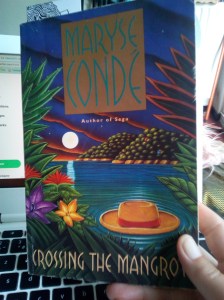
Crossing the Mangrove by Maryse Condé (1995)

translated (from French) by Richard Philcox.

A Favourite Author

Maryse Conde Crossing the Mangrove WIT MonthMaryse Condé is one of my favourite authors and I’ve been slowly working my way through her books since she was nominated for the Booker International Prize in 2015, back when it was held every two years, for an author’s lifetime works.

I started with vignettes from her childhood, then moved on to a novel about her grandmother whom she’d never met, then her masterpiece of historical fiction Segu, her own favourite The Story of the Cannibal Woman, A Season in Rihata and now this very Caribbean novel Crossing the Mangrove, which I absolutely loved. Links to my reviews below.

This is almost a form of noir novel; a death provides the catalyst to revealing an island society, portraying all it diversity and colour, its social good and evil – poverty, discrimination and exploitation, and rather than seek a tidy resolution of that death, it demonstrates the folly of that way of thinking, creating instead, a thought-provoking insight into a multi-layered, multi-ethnic mix of minds and bodies, in their states of love, bliss, paranoia, anxiety and confusion.

It is such a great read, I had to force myself to pause halfway in order to savour it. I can imagine rereading it, it’s such a multilayered novel, that can be read for pure entertainment value or thought about more deeply in how it attempts through exquisite storytelling and characterisation, to lay bare the complexity of such a diverse community, it’s impossible to keep up with who is who is what from where, demonstrating how farcical that is anyway and yet nearly everyone contributes to it, the labelling, the judgements, the superiority and inferiority complexes. Brilliant.

“Life’s problems are like trees. We see the trunk, we see the branches and the leaves. But we can’t see the roots, hidden deep down under the ground. And yet it’s their shape and nature and how far they dig into the slimy humus to search for water that we need to know. Then perhaps we would understand.”

Can You Cross A Mangrove?

Crossing the Mangrove Maryse Condé

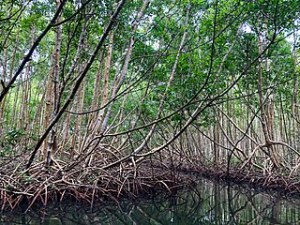
Mangrove of Sainte Rose, Guadeloupe

The trigger for all of this, in a novel where every chapter takes the perspective of a different character, is the wake of a man found dead in the mangrove. No one really knew Francis Sancher but everyone had had an encounter with him and there were rumours aplenty.

“Nobody ever understands, Madame Ramsaran. Everyone is afraid of understanding. Take me, for instance. As soon as I tried to understand, to ask for an explanation for all those corpses, all that blood, they called me every name under the sun. As soon as I refused to go along with the slogans, they kept a serious eye on me. Nothing is more dangerous than a man who tries to understand.”

I don’t know about the mangroves in Guadeloupe, but recalling the mangrove swamp from a biology field trip at school, they are incredibly difficult to navigate, like a natural defence system, with spiky roots sticking up out of the water, preventing a way forward. They become a tangled array of wet and slimy roots, attracting many species of bugs, insects and critters and are found in locations where salt water and fresh water mix, a buffer between land and sea.  An apt metaphor for navigating a life, for understanding a complex society.

Stories in his Wake

We come to know more about this intriguing stranger who came to Rivière au Sel expecting to die, we learn who cultivated a desire for that to happen, who fell for his charm, a variety of voices that convey the life stories of this diverse group of villagers – young and old, men and women, siblings and parents, illiterates and intellectual elites, peasants and upper class Creoles, those who belong and those who would always be considered outsiders.

Crossing the Mangrove Maryse Condé

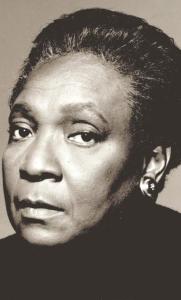
Maryse Condé

The multiplicity of voices, narrated through nineteen characters attendant at the wake, creates a portrait of the social, cultural, political, linguistic, intellectual and economic diversity of this Caribbean island society, complete with desire, unrequited love, arranged marriage, jealousy, disappointment, bitterness, greed, exploitation, revenge, racism, classism, joy and hilarity.

“I would say you are a man of great wisdom!” I murmured.

He smiled.

“Wisdom? I wouldn’t say that. Rather that I tried to untangle the skeins of life.”

The dead man is only given voice through those attending his wake, like the author who is given voice through her characters.

The quote above reminds me of all the narratives of Maryse Condé, of her life, her research including the all important oral histories and her own insatiable appetite for “untangling the skeins of life”, presenting them to us through her essays and novels. She truly is a magical and gifted writer, and in this novel she returns to a landscape closer to home, evoking it through this collection of characters beautifully.

“Now Francis Sancher is dead. But he alone has come to an end. The rest of us are alive and continue to live as we’ve always done. Without getting along together. Without liking ourselves. Without sharing anything. The night is waging war and grappling with the shutters. Soon, however, it will surrender to the day and every rooster will crow its defeat. The banana trees, the cabins and the slopes of the mountain will gradually float to the surface of the shadows and prepare to confront the dazzling light of day. We shall greet the new face of tomorrow and I shall say to this daughter of mine:

“I gave birth to you, but I misloved you. I neglected to help you flower and you grew stunted. It’s not too late for our eyes to meet and our hands to touch. Give me your forgiveness.”

In 2018 Maryse Condé was declared the winner of the Alternative Nobel Prize for Literature.

Further Reading

Tales From the Heart: True Stories From My Childhood

Victoire: My Mother’s Mother

Segu

The Story of the Cannibal Woman

A Season in Rihata

Stories of the Sahara by Sanmao

translated (from Chinese) by Mike Fu.

Literature Worthy of Translation
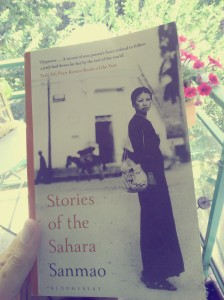
荷西 Sanmao Stories of the Sahara Echo ChenUsually when I come across a new book that sounds like my kind of read, meaning it is of cross-cultural interest, where a character (or person) from one culture (preferably not one I’m familiar with) encounters another, I’ll find others who’ve read it to discern whether it’s for me or not.

As soon as I saw the cover of Stories From the Sahara, I was intrigued. A fascinating and popular Taiwanese woman author of many books and essays, living in the Sahara with her Spanish lover; why has only one person I follow read this and why are we only hearing about this mysterious travel writer in 2020?

I don’t know the answer to my question (I suspect publisher’s had their radar tuned elsewhere in the past and perhaps the Anglosphere/Sinosphere head butting that takes place in the political arena affected their vision); but August is WIT (Women in Translation) month, a movement that’s gaining traction and interest, the genre and languages of books translated/published is widening and thanks to Eleanor at The Monthly Booking I bought this engaging and unforgettable read.

Thanks Mike Fu, who read the book as a young man and has translated it into English, he is now translating her next book, of their adventures in the Canary Islands.

Who is Sanmao? Echo Chen? Chen Ping?
Sanmao 荷西 Stories of the Sahara

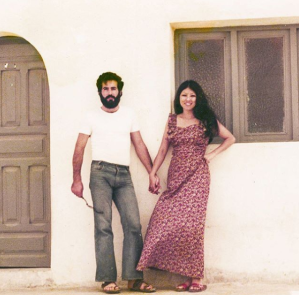
Sanmao & José, Al Aaiun, Sahara

In 1973, an independent young Chinese woman, born Chen Ping on 26 March 1943 left her family home in Taiwan, after a family tragedy, to travel to the Spanish Sahara with her friend José. They married in 1974. She had first lived in Spain in 1967 attending university in Madrid.

While in the Sahara she was inspired to write vignettes of her life there, they were published in Taiwan and China to great acclaim. The first volume debuted in May 1976.

Sanmao published more than twenty books, mostly semi-autobiographical essays, selling over fifteen million copies.

In a beautiful, moving essay, commemorating what would have been Sanmao’s 77th year, her niece Jessica Chen, remembers her Auntie, sharing something of the unique soul she was and the words of her grandparents, speaking of their tender, beloved daughter who, “had simply gotten off the train of life sooner than we expected”.

Grandpa and Grandma always said she was a special child with a gift from God, and the richness of her interior life was off-limits to others—unless she chose to let you in herself. Writing was the window she opened to the outside world. The people who understood this would naturally discover a path to her heart; those who didn’t could only stand at the window and gaze in from afar.

What was Sanmao doing in the Sahara?

Spanish Sahara Stories of the Sahara Sanmao

Photo by Taryn Elliott on Pexels.com

One day Sanmao was absent-mindedly flipping through the pages of National Geographic when she came across a feature on the Sahara. It was from that moment that she developed an obsession not just to visit, but to live there.

I only read it through once. I couldn’t understand the feeling of homesickness that I had, inexplicable and yet so decisive, towards that vast and unfamiliar land, as if echoing from a past life.

Arriving in Spain, she learned that 280,000 square metres of the Sahara at the time were designated Spanish territory. Her desire to go there deepened, torturing her with longing.

José went ahead of her, securing a job at a phosphate mine, found them a home, allowing her to fulfill that soul-whispered desire.

Book Review – Stories of the Sahara
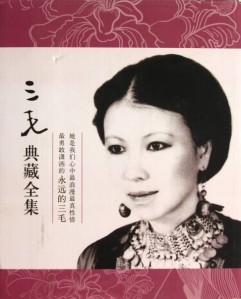
Stories of the Sahara Sanmao Portrait I absolutely loved Stories of the Sahara, in its entirety and it will likely be my favourite nonfiction title of the year. It is so refreshing to read a travelogue by a woman from another culture and discover a writer beloved of Chinese and Taiwanese readers for decades.

I almost couldn’t get over how tough it was during that initial period and thought often about heading back to Europe. Amid that endless stretch of sand, it was so hot during the day that water could scald your hands, while night was so cold that you had to wear a heavy coat. Many times I asked myself why I insisted on staying here. Why had I wanted to come to this long-forgotten corner of the world all by myself? As there were no answers to these questions, I continued to settle in, one day at a time.

I hadn’t expected it to be so funny, so many of her observations and the things requested of her made me laugh out loud. It’s unlike any other travel memoir I’ve read; here is a sensitive, empathetic woman, bringing a completely fresh set of eyes, to a place few of us will ever have dreamed of living.

At her first glimpse of the periphery of Al Aaiún, as they walk from the airport towards her new home, she is in awe seeing tents, bungalows, camels and herds of goats in the sand.

It was like walking into a fantasy, a whole new world.

The wind carried aloft the laughter of little girls playing a game. An indescribable vitality and joy can be found wherever humans exist. Even this barren and impoverished  backwater was teeming with life, not a struggle for survival. For the residents of the desert, their births and deaths and everything in between were all part of a natural order. Looking out at the smoke ascending to the sky from their homes, I felt that these people were almost elegant in their serenity. Living carefree, in my understanding, is what a civilised spirit is all about.

The combination of her naivete, determination and feminism – her refusal to be stopped from doing what she wants – create some of the most hilarious and alarming moments. Her kindness and frankness gain her entry inside the culture and landscape, providing insights few are capable of accessing. People trusted her – yes they often took advantage of her – but she was a willing participant. They provided rich literary material, clearly!

This is one of those books I don’t wish to share much of what is inside, I prefer to say, “Read this, it’s so good!”

I was intrigued by the obsession she had to go and live in the Sahara, I was delighted that she lived at the wrong end of the street in among the permanent locals, I loved her sense of adventure, how she overcame boredom in searing heat, getting in the car and driving for hours in the desert. But it is her frankness, her empathy and sense of humour that  make it an unforgettable read.

Reading Women in Translation

I picked this up to read for #WITMonth and it’s one of the best, that combination of travel to a new place, meeting local people through the perception of someone from a culture other than our own, priceless.

“Travel with an open heart, then bring back home the feelings that you find.” Sanmao

Further Reading

Colombia University: Interview with translator: Mike Fu

Words Without Borders, Essay by Jessica Chen (niece) March 2020: Sanmao’s Footprints: Remembering the Writer on Her 77th Birthday

New York Times Obituary: Overlooked No More: Sanmao, ‘Wandering Writer’ Who Found Her Voice in the Desert