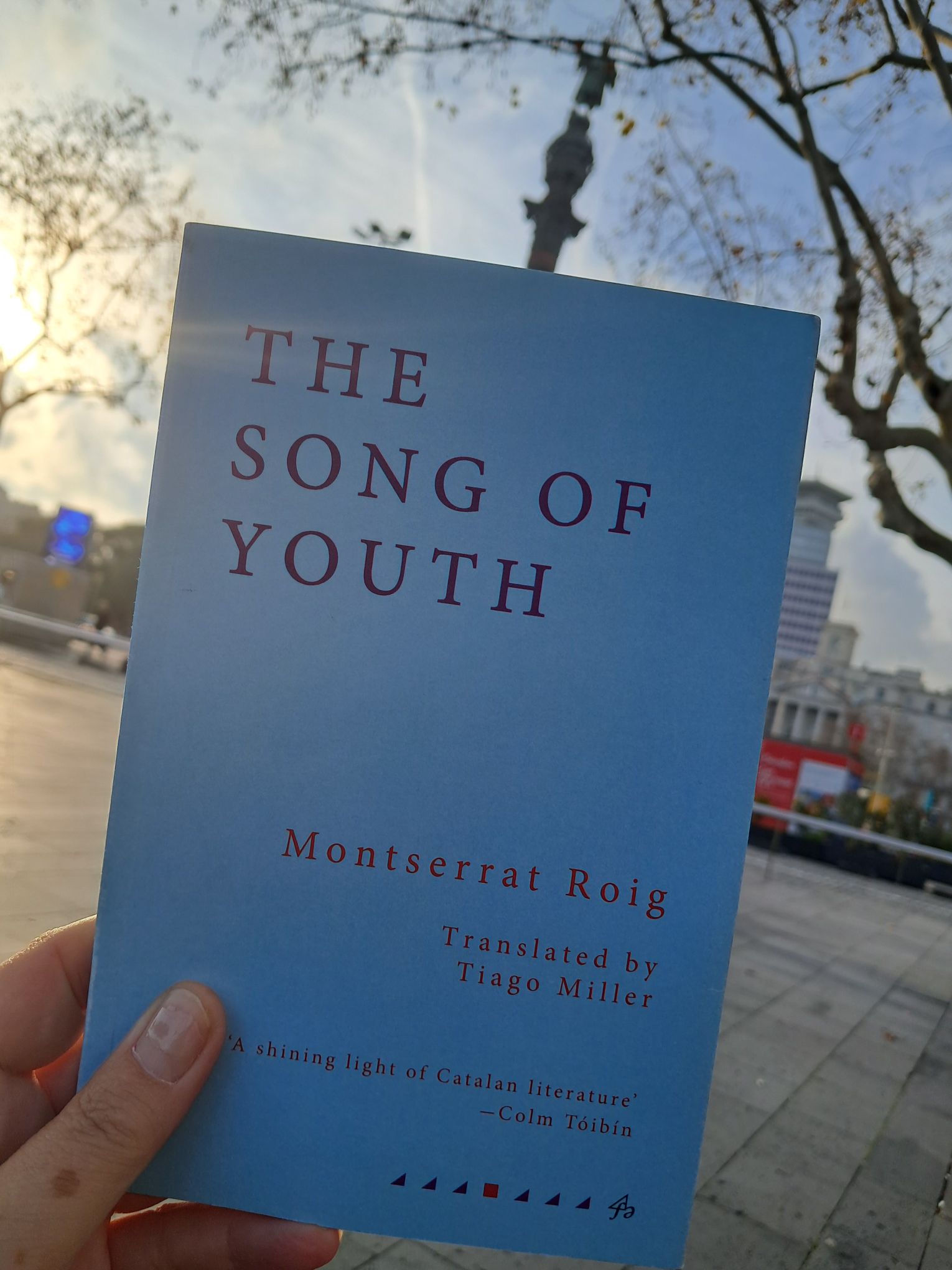
The Song of Youth by Montserrat Roig tr. Tiago Miller

The Song of Youth ‘el cant de la joventut’ is a slim collection of short stories written by Montserrat Roig translated by Tiago Miller, published in English in 2022 by fum de stampa press (originally published in Catalan in 1989).

It was shortlisted for the 2022 Republic of Consciousness Prize, (now rebranded the Queen Mary Small Press Fiction Prize) that rewards ‘bold and innovative’ literary fiction by small presses publishing 12 or fewer titles a year that are independent of any other commercial financial entity.

The winner of that prize in 2025 was There’s a Monster Behind the Door by Gaëlle Bélem (Ile de Reunion), translated from French by Karen Fleetwood and Laëtitia Saint-Loubert and in 2024 Of Cattle and Men (reviewed here) by Brazilian writer Ana Paula Maia, translated by Zoë Perry, published by Charco Press.

Finding and Reading Catalan literature in Catalonia
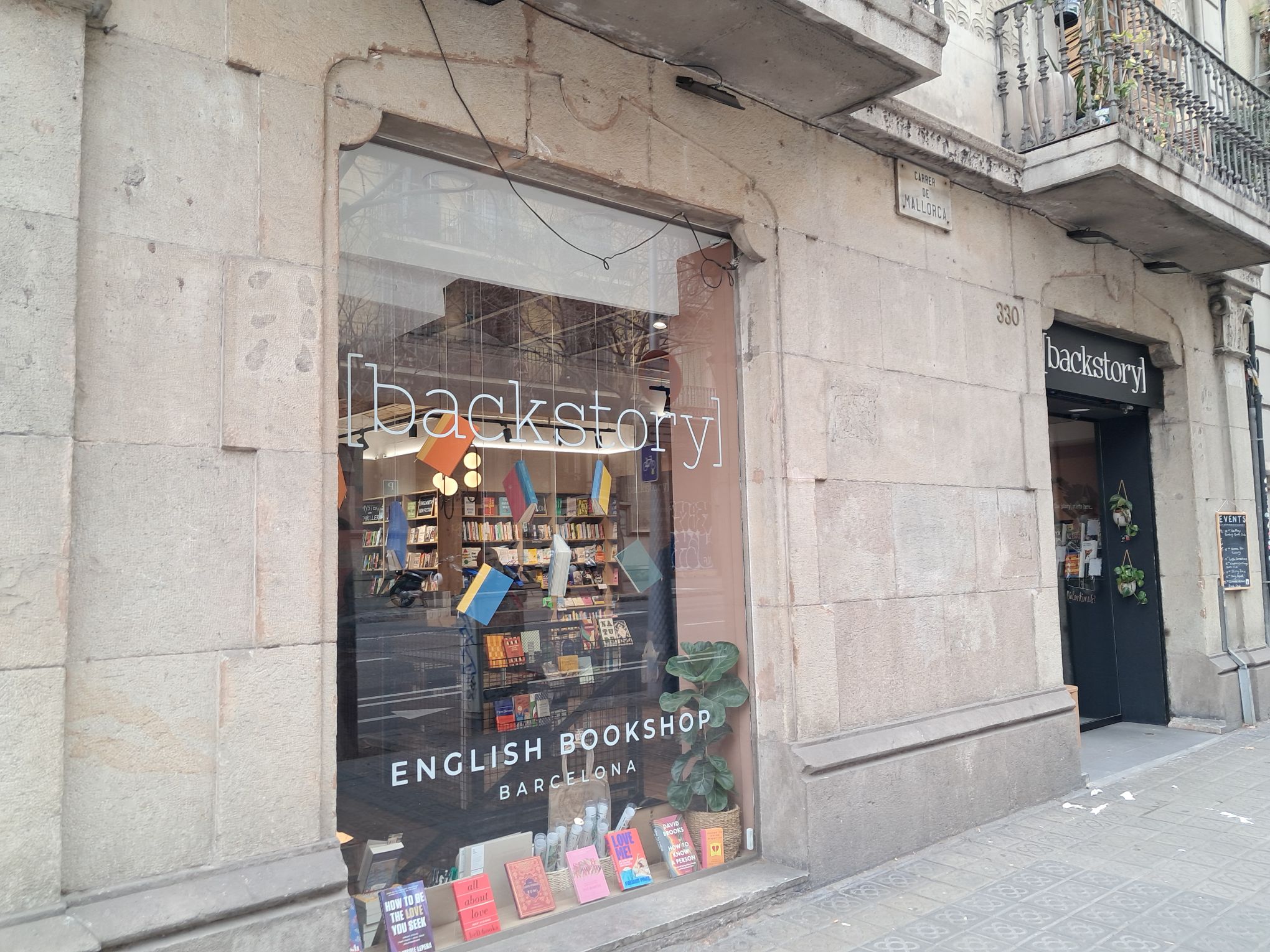
Backstory Bookstore Barcelona

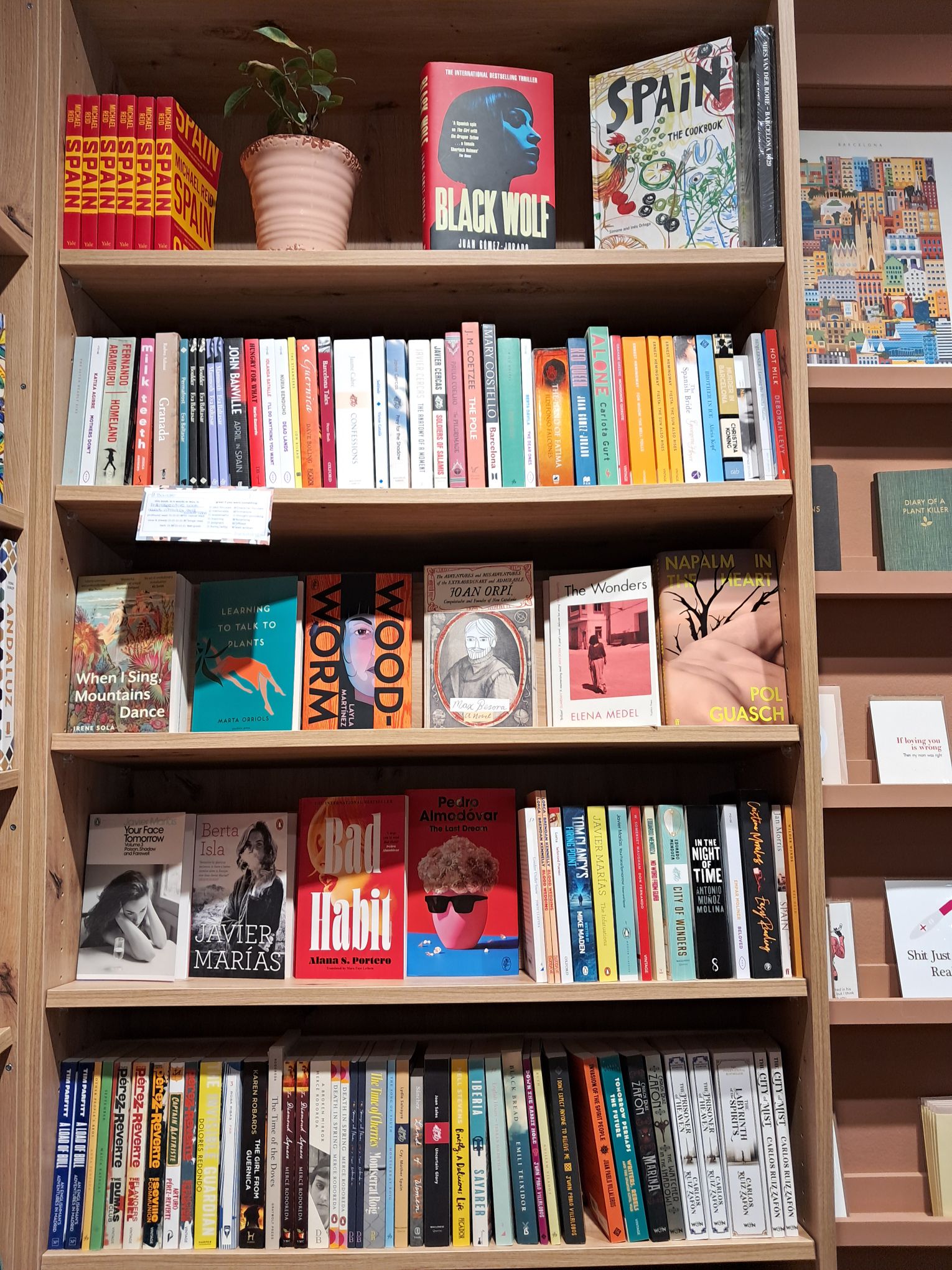
When I visited the Backstory Bookshop in Barcelona, I was interested in and looking for Catalan literature that embraced something of its history in some way.

Monserrat Roig (1946-1991) was a novelist, short story writer, investigative journalist and feminist activist widely regarded as forming a central part of the Catalan canon, inspiring many other Catalonian writers to seek the intimate, personal testimonies of ordinary people, within a wider version of history guided by a strong sociopolitical engagement.

One of Roig’s many literary strengths was creating and placing subversive characters in deeply philosophical and provocative narratives, and bringing out their flawed, tender and very real aspects. It is helpful to consider this when reading her bold collection of short stories.

I’m going to mention two out of the collection that really stayed with me, The Song of Youth and Mar. Love and Ashes packs a punch, but is so short, it need not be described here.

The Song of Youth

I found it helpful to be reminded of this context, written on the back of the book.

In The Song of Youth, Montserrat Roig boldly presents eight remarkable stories that use language as a weapon against political and social “dismemory.” Her powerful and striking prose allows the important stories of those silenced by the brutal Franco regime to, at last, come to the fore. The Song of Youth is undoubtedly feminist and deeply critical but, as always, Roig’s lyrical writing gives shape, depth, and significance to the human experience.

This is how author Eva Baltasar described the collection:

The Song of Youth represents an array of lagoons in which Montserrat Roig’s most extraordinary flowers lay their roots.”
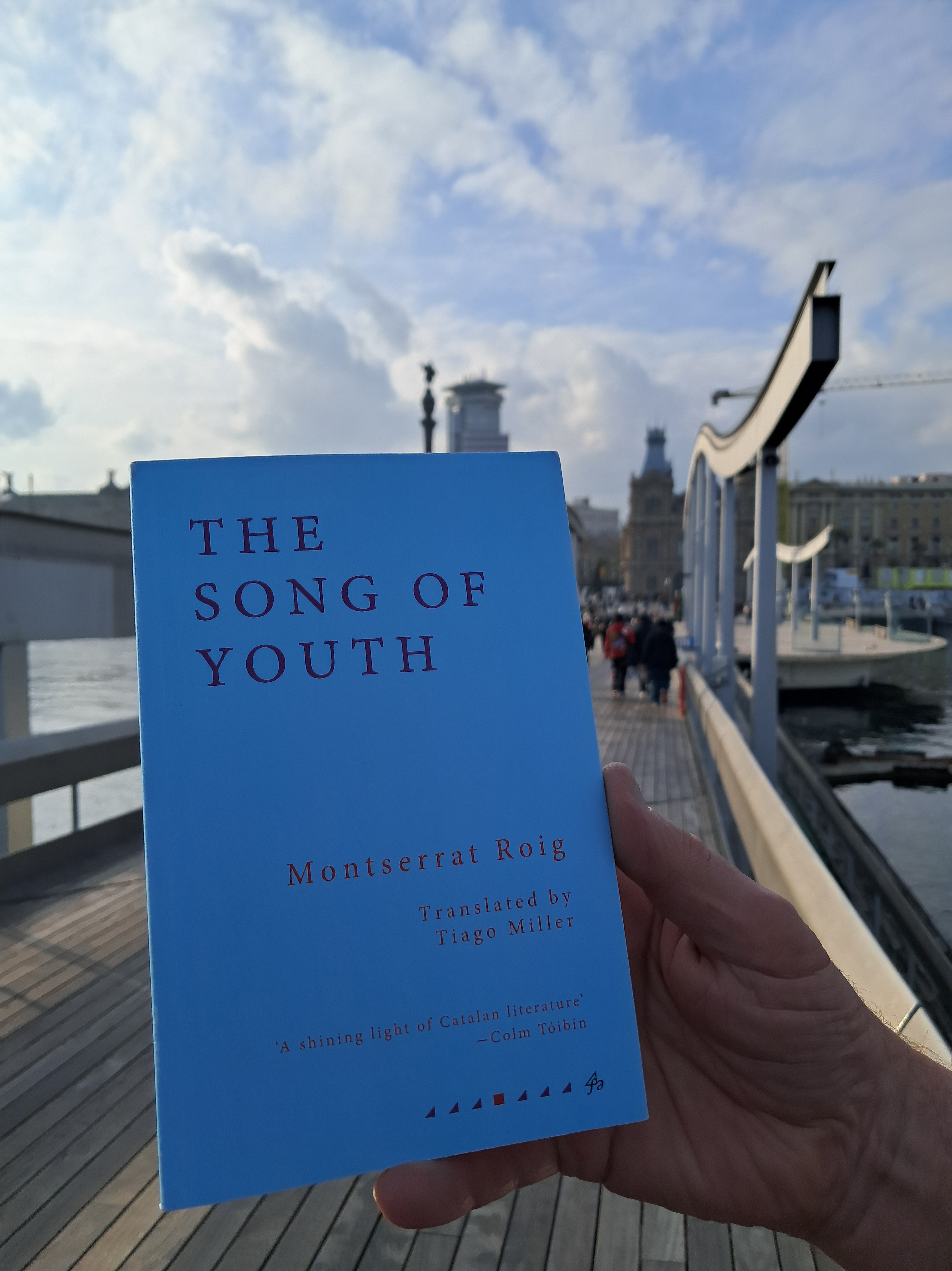
The short story collection by Montserrat Roig The Song of Youth Catalan literature translated fiction

After the first reading of each story, I felt like I was sitting at the edge of one of those lagoons, firstly appreciating the flowers, though not always seeing those roots in the deep, dark depths. And so I went back and reread them. I wrote on and around the pages, and looked up the poetic literary references and was in awe.

The opening story, The Song of Youth, reread a few times, revealed its many layers with each reading. It is magnificent. I think it is a story that needs to read quietly to concentrate, like contemplating a work of art, it won’t reveal itself at a first glimpse. However, it is perfect as it is. A celebration of dying moments and the power of memory, of a life lived courageously.

I turn my face from the ominous day,
Before it comes, everlasting night,
So lifeless, it’s long since passed away.

But shimmering faith renews my fight,
And I turn, with joy, towards the light,
Along galleries of deepest memory.
JOSEP CARNER, Absence

A woman lying prone in hospital with her eyes closed, near the end of her life, observes the white coat of the Doctor and has flashbacks to her youth, a stranger in a white shirt walked into the bar where she sat with her parents, with a decisive air. A transgression.

The men who came from the war didn’t have that air.

She opens her eyes, she is still alive. Everything as it was when she closed them. She knows the sounds. The sounds that keep them alive and the sounds that warn of encroaching death.

“They all died at daybreak. Just like the night.”

She is defiant. She is determined to remember a word. She succeeds.

It’s not easy to describe, this too is a story that needs to be experienced, to read the clues and the disjointed moments of the present and past that create the whole.

Death, Memory and Friendship
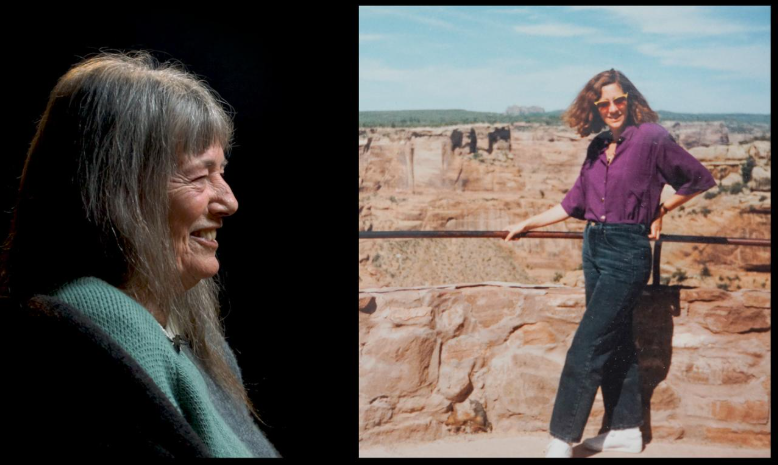
To Montserrat Blanes

Life has taught me to think but thinking has not taught me to live. HERZEN

The story MAR is the hardest hitting and most powerful – about a woman befriended, a relationship, admiration, of two people who are unalike but drawn towards each other, who go their own ways; until an accident changes everything.

…it never once occurred to me to give a name to that period of silence, madness and noise, to those moments when the hours would melt into timelessness and our intellectual friends, while watching us, would frown or raise an eyebrow.
“They’ve got some nerve,” said their suspicious eyes while they stared, unaware of their own fear.

The time they are together changes the one telling the story, she is an intellectual, always analysing everything, living in a world of opinions and judgments. While in this friendship, something shifts, changes her. The presence of this unconventional friend disturbed others, messing up the carefully compiled archives on their minds. From vastly different worlds, they each gain something powerful from being in each other’s lives. Something that unsettles others.

We hardly said a word, we certainly didn’t reinvent anything, but it was only with her that I lost my fear, the fear of revealing who I believe myself to be, that little girl I keep hidden in the deep, damp depths of my inner self.

A friendship of silences, commotion and madness

A tribute to friendship, this story originally published in 1989, was celebrated in December 2021 when a documentary was produced about Montserrat Roig and Montserrat Blanes friendship of silences, commotion and madness.

The audiovisual is made up of two narratives, the one in the short story and that told through the live voice and presence of Montserrat Blanes speaking from experience, memory and remembrance.

If you understand Catalan, you can watch and listen to the recording of “Roig i Blanes. Una amistat de silencis, enrenou i bogeria” on Youtube here.

Overall a powerful and thought provoking collection that makes me keen to read her longer fiction.

Further Reading

Biography: Amb uns altres ulls (With Other Eyes) by Betsabé Garcia (2016)

Article: Montserrat Roig : Up-close and from afar by Mercè Ibarz

“And when cancer attacked her, the hour of relentless truth that is illness brought out the self-portrait that the public persona had been hiding: a lucid, serene, combative writer and an excellent reader, who was cognisant of the fact that Franco’s dictatorship had pulled literary training up at its roots and who was, therefore, all too aware of her limits to that point and the power that, despite her illness, journalistic prose could give her.” Mercè Ibarz

Author, Montserrat Roig
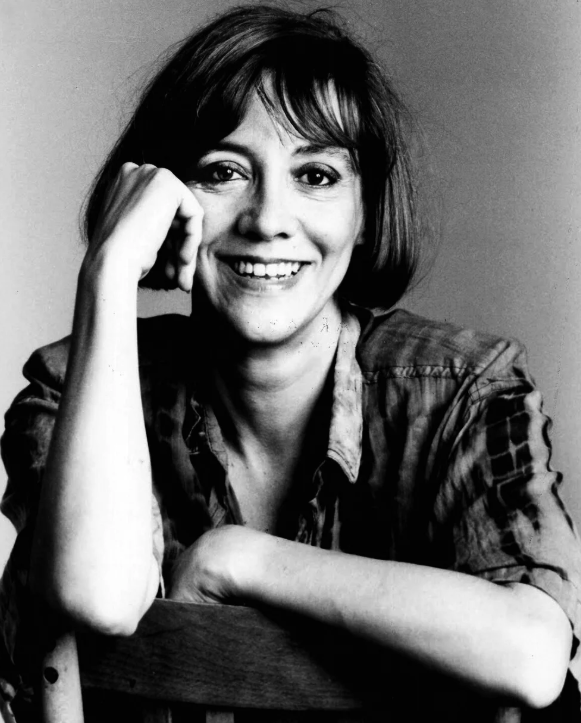
Montserrat Roig (Barcelona, 1946-1991) was an award-winning writer and journalist, and the recipient of numerous prestigious prizes including the Premi Víctor Català and the Premi Sant Jordi.

Her journalistic work focused on forging a creative feminist tradition, and on recovering the country’s political history.

Her novels take similar stances, reflecting on the need to liberate women who were silenced by history.

All That Remains by Virginie Grimaldi tr. Hildegarde Serle (2025)

Contemporary French literature translated to English Virginie Grimaldi All That Remains Il nous restera ça three silhouettes mimosa flowers

We are just coming out of our second summer heatwave and in this kind of heat, where it’s 38°C (100°F) every afternoon, reading needs to be light and propulsive, because the brain just doesn’t function in the same way.

I chose to read French author Virginie Grimaldi’s All That Remains because I felt sure it would provide the sustenance I was looking for, without having to think too much.

Good-hearted, uplifting fiction, great characters and a connection with some of the best parts of French life, that help overcome universal problems that anyone might face. Positive aspects of humanity overcoming the oppressive.

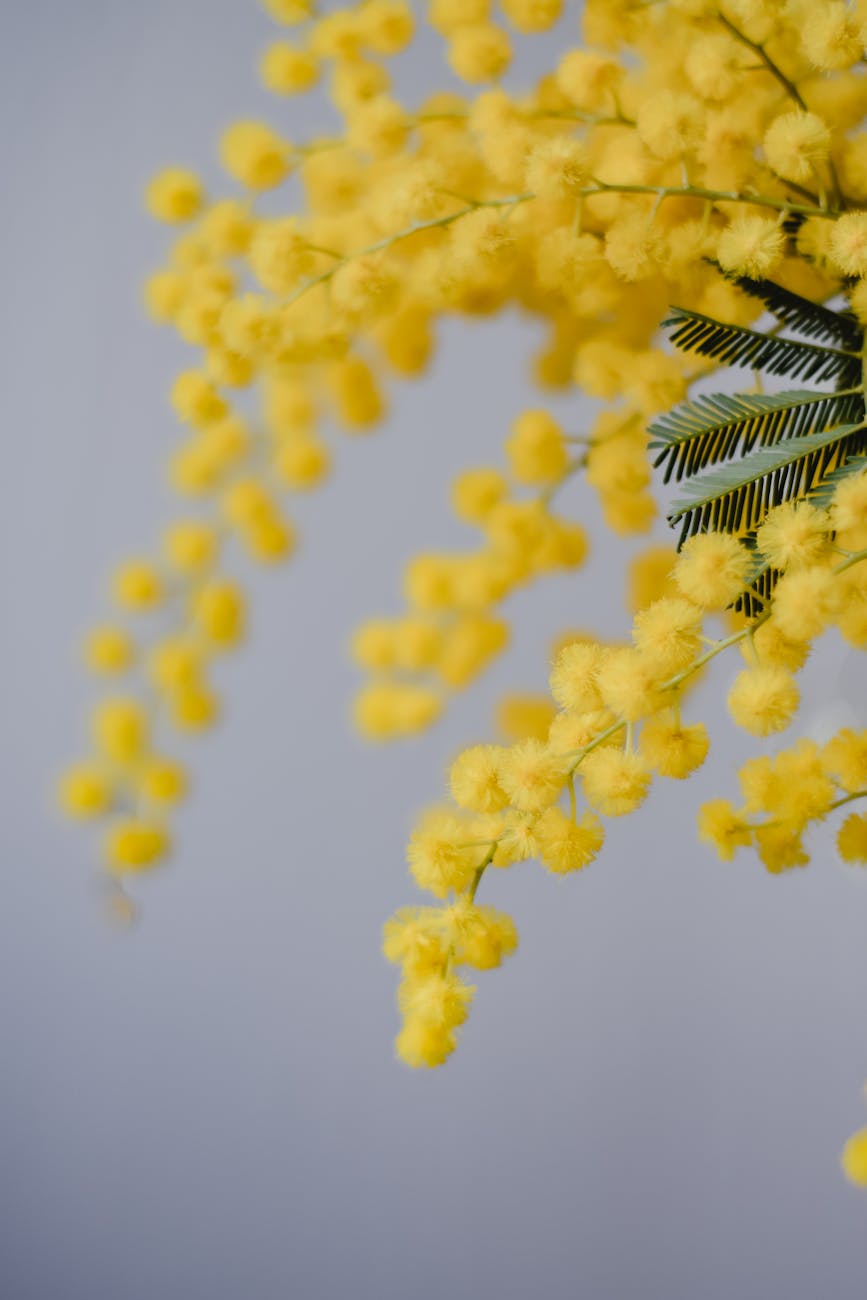
I love the sprigs of mimosa on the book cover, a beautiful winter flowering shrub that thrives in difficult conditions, blooming on the coastal region of the south of France in January and February. It evokes such good feeling, symbolising new beginnings, resilience and adaptability and a sign that spring is on its way.

La Cohabitation Intergénérationnelle

In addition, when I read the premise of three generations living together, it reminded me of a news item I had seen on French television about “La cohabitation intergénérationnelle“, where residents (over 60 years) in Paris and elsewhere, at risk of needing to move out of their apartments or homes, were being matched with students (under 30 years) seeking affordable accommodation, able to be a reassuring presence, particularly at night, and share meals together.

Seeing these people on the screen, sitting talking together, feeling safer at home, having more space, companionship – able to get through those years of difficulty – well, as we say here, « Vive la France »!

Grief, Homelessness and New Beginnings

sprigs of mimosa new beginnings, resilience, surviving in difficult conditions Virgine Grimaldi All That Remains
Photo by Eva Bronzini on Pexels.com

It’s a novel about three people from three different generations, who wind up sharing an apartment together, when their needs intersect.

Jeanne (74) is recovering from unexpected widowhood and needs to do something soon to address unforeseen financial concerns, if she wants to remain in her apartment in Paris. The woman in the bakery won’t allow her to put up a notice, but fortunately someone overhears her asking.

For the past three months, Jeanne had been unweaving those habits, thread by thread. The plural had become singular. The setting was the same, the timing the same, and yet everything rang hollow. Even the melancholy had disappeared, as if her entire life had been training for the bereavement she was now facing. She was desensitized.

Iris (33) a care worker, is being evicted from her temporary studio, living out of a suitcase and in hiding from a situation that will be revealed.

“Hello Madame, I just wanted to confirm my interest in your room for rent. And please know that, if it weren’t for my tricky situation, I’d never have interrupted your conversation with the young man, who also seems in real need of a home. If you’ve not yet made your choice, I’d understand if you favour him. Regards Iris.”

Paul, a French boulangerie bakery in London and Aix en Provence patisserie

Théo (18) is an apprentice in a local boulangerie (bakery) and has just reached the age of independence. Having just bought a car for €200, he parked up outside the house with the blue shutters and thought he’d solved his accommodation woes, however his problems have just magnified.

I don’t intend to drive around in this car. I settle down on the back seat, head resting on my bag, covered with my coat. I put in my earbuds and play Grand Corps Malade’s latest song. I light the roll-up saved since this morning and close my eyes. It’s a long time since I’ve felt this good. No sleeping in the metro for me tonight. For 200 euros, I’ve treated myself to a home.

Jeanne, Iris and Théo in Paris

Each short chapter moves to the next character and within very few pages I was deeply invested in wanting to know more about each one and where the story was going. It’s a wonderful novel about perseverance and overcoming challenges and the messiness of life and finding support and comradeship in unexpected places.

I loved this book and would be not be surprised to see it being made into a film, it’s got all the good vibes and realistic issues that people f all generations have to face, and a unique but encouraging way that different members of a society can be there for those who were strangers at first.

Another #WITMonth read, highly recommended!

There is a crack in everything,

That’s how the light gets in.

LEONARD COHEN

Author, Virginie Grimaldi

Virginie Grimaldi was born in 1977 in Bordeaux where she still lives. Translated into more than twenty languages, her novels are carried by endearing characters and a poetic and sensitive pen. Her stories, funny and moving, echo everyone’s life. She is the most read French novelist in 2019, 2020 and 2021 (Le Figaro littéraire/GFK awards) and winner of the Favorite Book of the French in 2022 (France Télévisions).

N.B. Thank you kindly to Europa Editions UK for sending this copy for review.

Women in Translation month #WITMonth

Every novel I’ve read in translation this month has been exceptional. I do love August for seeing what others are reading in this category to ensure I have a future supply of excellent reads originating from elsewhere, coming from other languages.

Here’s what I hope to read this month and I’d love to hear your favourites, what you’ve read and loved or are looking forward to during WIT Month or any time!

Translation Opens World Views

Covers of books ftom the shelf of novels by women in translation

I find it such an immense privilege to have the opportunity to read a novel that was originally conceived and written in another language, that can naturally dive into perspectives from other cultures that might be completely different or universally connected.

I loved norms being challenged and insights shared, new words, cultural references, all those opportunities to expand one’s awareness.

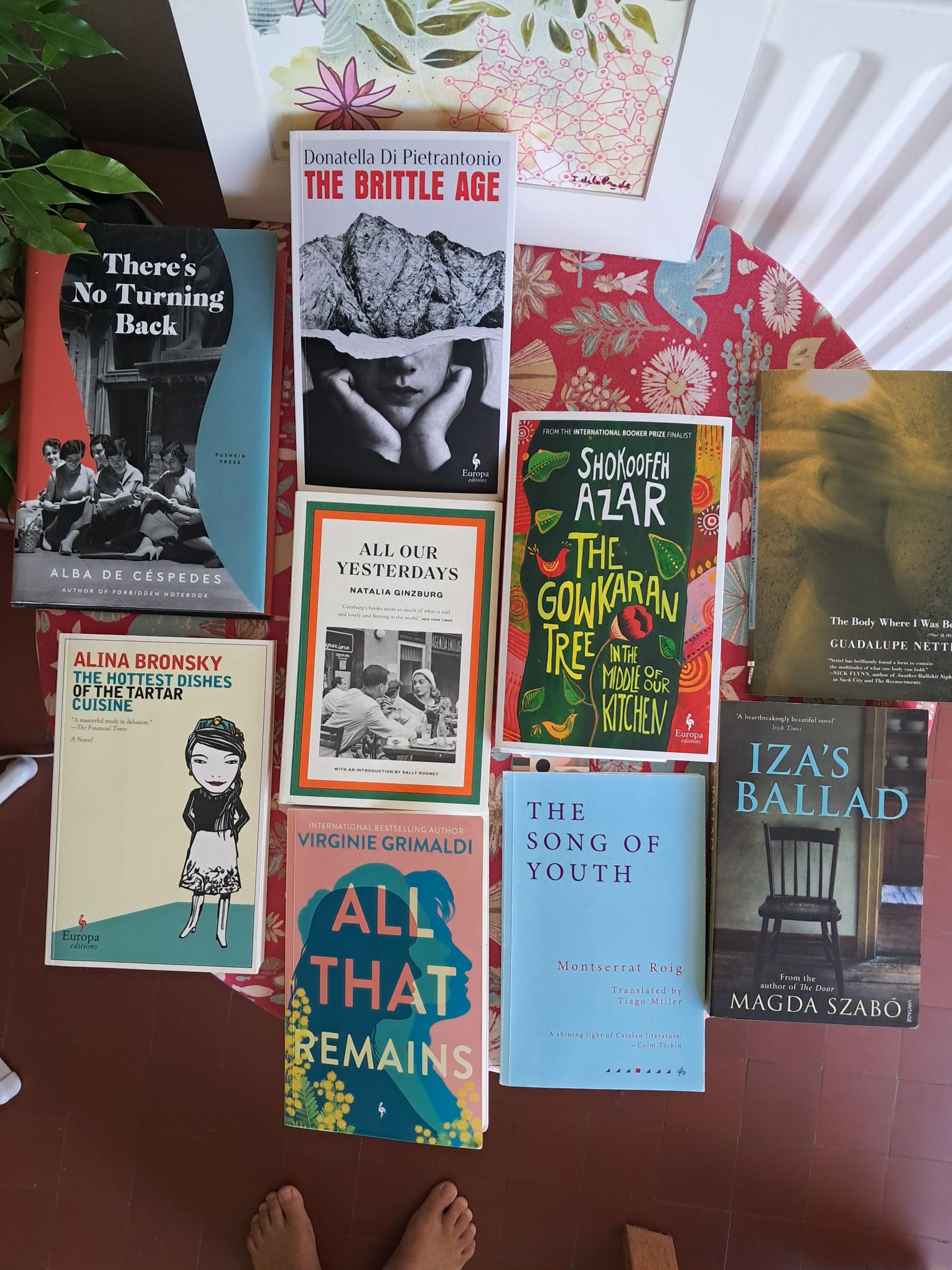
So I gathered what I had on my shelf to read for August to share here and I am very grateful to Daniela at Europa Editions UK who sent me three excellent new publications published by Europa in 2025, which arrived just as the month started, two of which I have devoured already.

Read Around the World

The books I have chosen are by women from Mexico (translated from Spanish), Rome and Abruzzo in Italy, Barcelona (Catalan), France (French), Iran (living as a political refugee in Australia, translated from Farsi), Russia living in Berlin (translated from German) and Debrecen, Hungary.

Mexico

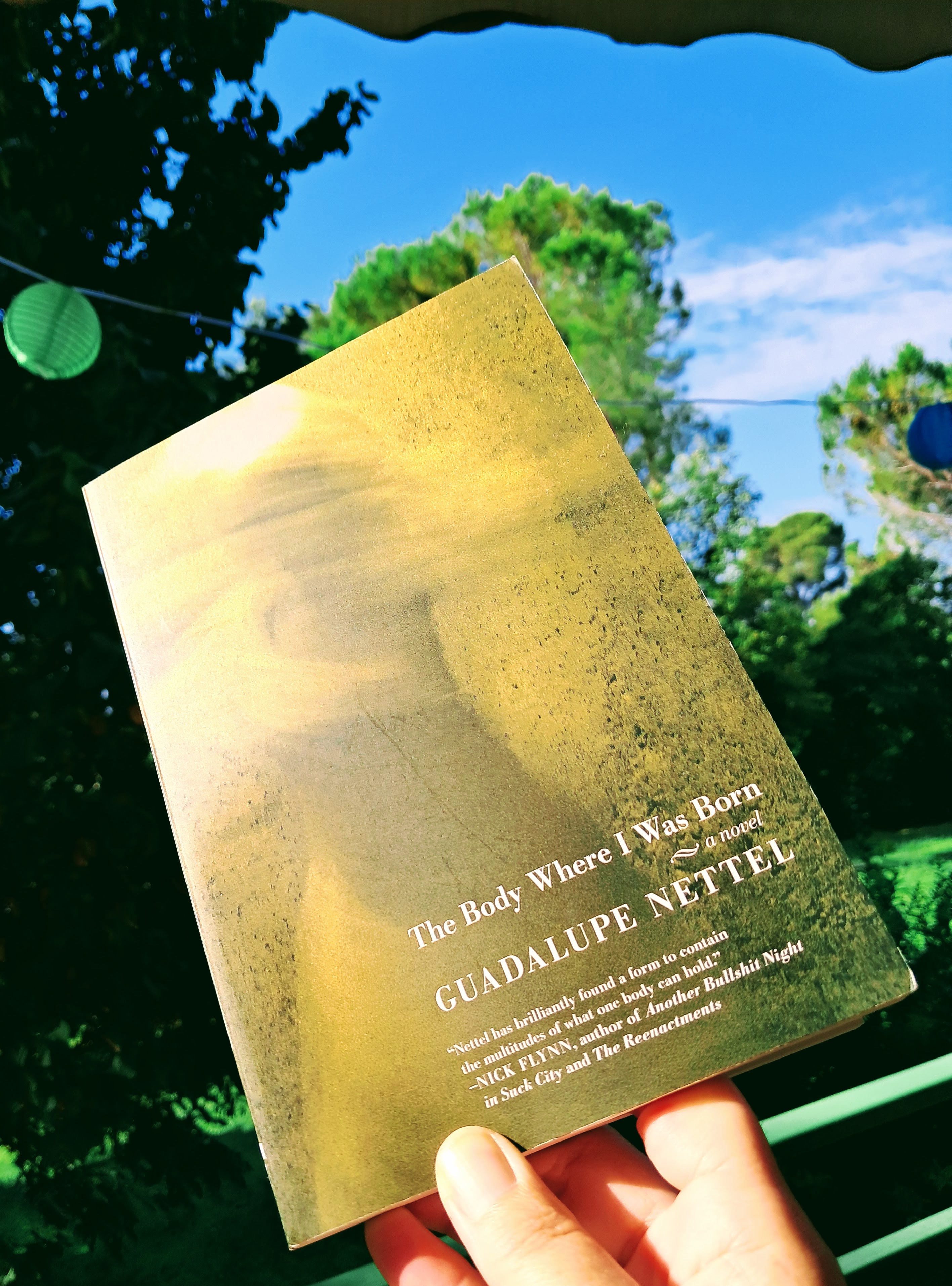
I started the month with Guadalupe Nettel’s (Mexico) excellent autobiographical novel The Body Where I Was Born (reviewed here) translated by J.T. Lichtenstein, a book that reads like a memoir of childhood and adolescence, but from the perspective of looking at how those various experiences she had, might have moulded her character.

The real surprise was when she and her brother join her mother to come and live here in Aix en Provence while she’s working towards a PhD. Very insightful and for me, utterly riveting. You can also read Still Born (reviewed here) shortlisted in 2023 for the International Booker, hers is a voice and style I adore.

Italy

I’ve definitely been in a phase of reading Italian women writers from the 30’s and 40’s, so of course there is more Natalia Ginzburg and Alba de Céspedes in my pile for this month.

I’ve already finished There’s No Turning Back (reviewed here) translated by Ann Goldstein, a novel of eight women entering adulthood and potential independence in the face of a society that wants women to stay traditional, and I’m looking forward to Ginzburg’s novel All Our Yesterdays about a pregnant 16 year old who marries an older family friend to save her reputation.

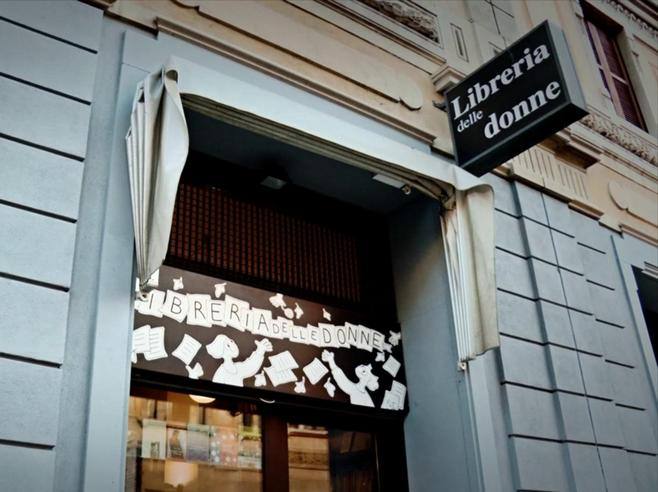
I recently read an excellent article about Italy’s feminist history and literature by Margarita Diaz, who after reading Elena Ferrante’s essay collection In the Margins, sought out a women’s bookstore collective, the Libreria delle Donne di Milano, whose work had been a source of inspiration for her Neapolitan novels. The bookstore occupies a unique place in the history of the Italian women’s movement, having established “an alternative genealogy of culture,” a perspective quite different to that of English speaking cultural feminism. I would love to visit this bookshop.

The Libreria delle Donne di Milano (The Milan Women’s Bookstore), on Via Pietro Calvi in the Zona Risorgimento, houses more than 7,500 carefully curated works, mostly in Italian, by 3,700 female writers from all around the world. Works by icons of Italian literature like Sibilla Aleramo, Grazia DeLedda, and Elena Ferrante sit next to translated copies of works by anglophone writers like Virginia Woolf and Jane Austen. It is a refreshing, unapologetic, women-only space, where female voices are celebrated and encouraged. 

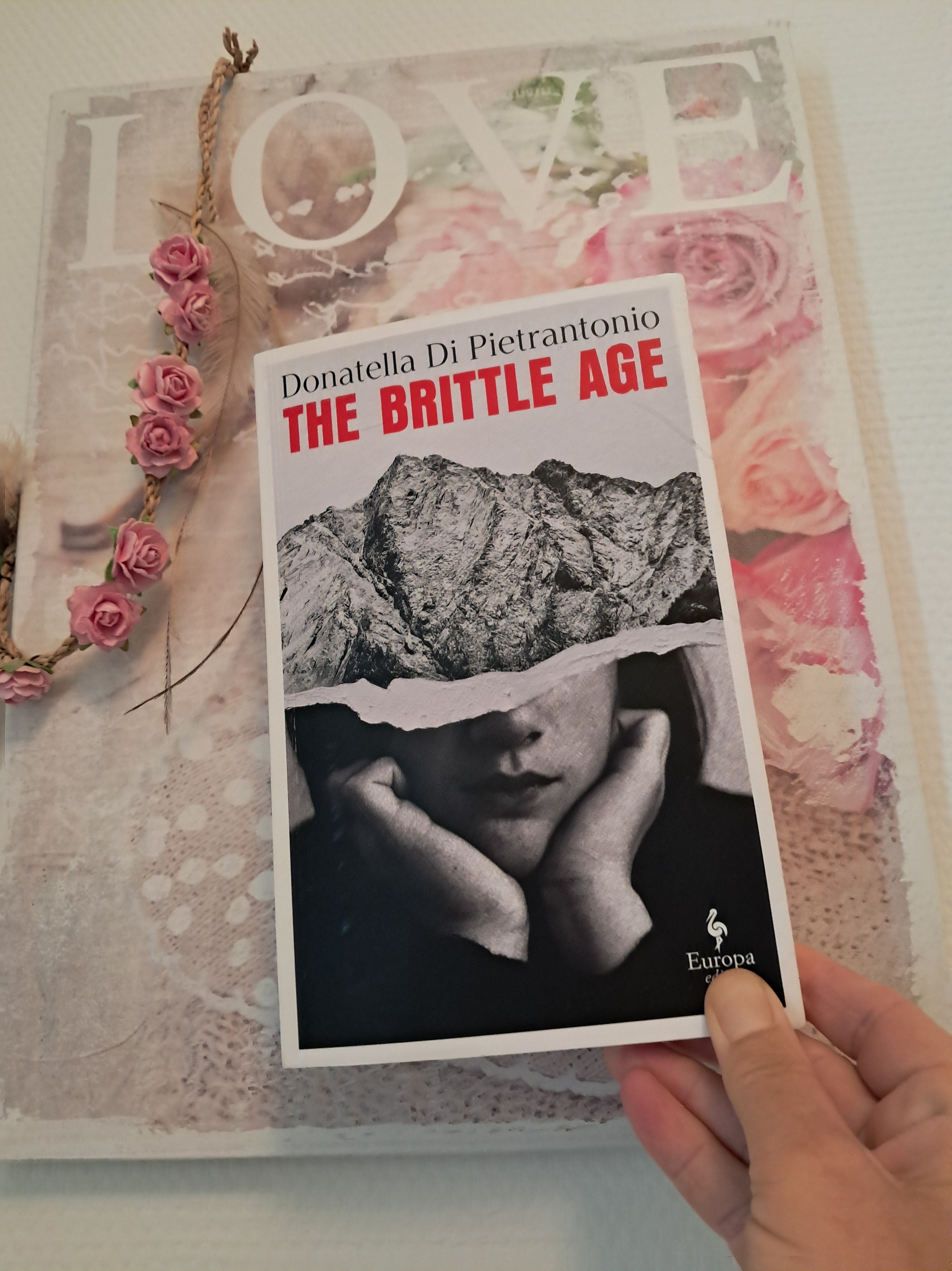
My third Italian read, more contemporary, with a flashback to events of the 90’s is the Strega Prize 2024 winning novel The Brittle Age by Donatella Di Pietrantonio (reviewed here), also translated by Ann Goldstein.

Her novels are excellent. A Girl Returned was exceptional, and I was riveted reading this latest. Historical true crime inspired and a psychological exploration of the effect of traumatic events on the individual and community and the small actions that help heal – just brilliant.

Doesn’t that mountain look like our local Mount Saint Victoire, with the cross at the summit?

France

It being a busy and hot working summer, I was also looking for lighter reads that would be captivating and so I chose Virginie Grimaldi’s second novel All That Remains (my review here) translated by Hildegarde Serle, a story of three people whose paths cross when each is at a significant turning point. Jeanne (74) is widowed and is overwhelmed, Iris (33) has made a near-escape and is in hiding, and Théo (18) working in a boulangerie (bakery) is starting out having left a boy’s home.

I was particularly interested in this after having seen French a news item about inter generational living arrangements, where young people move in with the elderly, enabling them to stay in their own homes. This was a page turner, totally feel good, brilliant and uplifting, a perfect all year round read!

Catalan, Spain

In February, visiting Barcelona, I found my way to the BackStory Bookshop where I discovered works in Catalan translated into English. The Song of Youth (reviewed here) by Montserrat Roig (1946-1991) translated by Tiago Miller is a collection of eight stories, which I have already started and I am pencil scribbling all over, they are so, so good.

Looking back at that lower bookshelf in the bookstore, from where I obtained this volume, I wish I had bought Time of the Cherries as well, one I’ve seen reviewed by Jacqui and more recently, Goodbye, Ramona. The latter, wasn’t in the store, but I have recently found and ordered a copy. Those Fum de Stampa Press editions are gorgeous but not easy to find!

Iran

Delighted to see a new bold chunkster translated from Farsi by Shokoofeh Azar, The Gowkaran Tree in the Middle of Our Kitchen (reviewed here). This one, spanning fifty years in the history of modern Iran, is described as a lush, layered story embracing politics and family, revolution and reconstruction, loss and love amid the colourful stories of twelve children, each told against the backdrop of cultural and political change.

Having loved her earlier novel, The Enlightenment of the Greengage Tree shortlisted for the International Booker (2020) and The Stella Prize, I’m saving this 500 page epic for holiday week at the end of August.

Russia

The Hottest Dishes of the Tartar Cuisine was the second novel written by Alina Bronsky, a German novelist born in the Ural mountain area of Russia, a dark, funny novel that stars Rosalinda, the irrepressible tyrant babushka who’ll stop at nothing to keep her family from emigrating without her as the Soviet Union falls apart. She’s brutal and cunning but also induces sympathy and amusement. This has been on my shelf too long and reading this NYT interview has pushed me to want to read it.

“Sometimes I do readings and people can’t stop laughing, but I’m reading about pretty tragic things,” Bronsky says. “I think Soviet humor is a desperate humor, rather typical of very different nations, of Jewish people, Ukrainians, and of course Russians. It’s despair — just keep laughing, until you are dead.”

Hungary

Lastly another that’s been waiting a while to be picked up is Magda Szabo’s Iza’s Ballad translated by George Szirtes, about a woman whose daughter insists she leaves her countryside home after her husband’s death to move to the city of Budapest. Uprooted from her community she must make a place and a life for herself anew.

I read her novel The Door some years ago and enjoyed it, so I’m looking forward to visiting Budapest and the countryside she left for it.

Recommendations

That’s my pile of potential reads for August, let us know in the comments below if you have read any of these or what you are looking forward to.

The Body Where I Was Born by Guadalupe Nettel tr. J.T.Lichtenstein #WITMonth

Feeling a little uninspired by recent reads, I decided to check my shelves for what I had in translation, August is WIT Month and my shelves are looking a little depleted in that regard!

I spotted Guadalupe Nettel’s novel The Body Where I Was Born and remembered how much I adored Still Born (my review here) in 2023, a book that was shortlisted for the International Booker Prize 2023. It’s a compelling exploration by two women into the question of whether or not to have children and how their ideas can change as life happens and circumstances arise that can awaken feelings not born of the mind.

Why Did I Do It, Doctor?

women in translation an autobiographical novel set in Mexico and Aix en Provence

It was the compelling style that made me want to read something else by Nettel and as I began to read The Body Where I Was Born I realised it is semi-autobiographical.

The novel is narrated from the psychotherapist’s chair and so occasionally there will an interruption where the narrator asks a question having recounted yet another episode of their childhood.

The novel is written in five parts, segmenting different parts of childhood and it is effectively a form of coming-of-age, albeit recounted to a therapist.

A Marked Childhood

As with her previous novel and writing style, I was immediately drawn into the narrative, which begins with the author recounting the consequence of having been born with a birthmark covering part of her eye.

The only advice the doctors could give my parents was to wait: by the time their daughter finished growing, medicine would surely have advanced enough to offer the solution they now lacked. In the meantime, they advised subjecting me to a series of annoying exercises to develop, as much as possible, the defective eye.

As a result, school became even more of an inhospitable environment and those measures marking her out for unwanted attention.

Condition and Correct, A Parental Institution

But sight was not my family’s only obsession. My parents seemed to think of childhood as the preparatory phase in which they had to correct all the manufacturing defects one enters the world with, and they took this job very seriously.

Our narrator ponders the harm of parental regimes and how we perpetuate onto the next generation the neuroses of our forebears, wounds we continue to inflict on ourselves.

In addition to these corrections, her parents were keen to adopt some of the prevailing ideas of the time (the seventies) about education, a Montessori school in Mexico City and a sexual education free of taboos and encouraging candid conversations.

Rather than clarifying things, this policy often made things more confusing and distressing for the children and was likely the cause of the rupture of the adults when they adopted a practice much in fashion at the time, the then-famous ‘open-relationship’.

During all the preparatory conversations I had worn the mask of the understanding daughter who reasons instead of reacts, and who would cut off a finger before aggravating her already aggravated parents. Why did I do it, Doctor? Explain it to me? Why didn’t I tell them what I was really feeling?

Separation and Abandonment

After the marriage separation their mother is interested for a while in community living, subjecting the children to another experiment, and later still sinks into a deep depression that affects them all.

Finally, in a burst of desperate willpower, she decided to exile herself. Hers was not political, but an exile of love. The pretext was getting a doctorate in urban and regional planning in the south of France.

But before they were sent to France, there was a period where their maternal grandmother – who much favoured her brother- came to live with and look after them. Full of questions about why their parents left them in this situation, the grandmother gave her usual cryptic response:

‘Since when do ducks shoot rifles?’ she’d say, meaning that children should not demand accountability from adults.

Heightened Observations, Humorous Occasions

Part II narrates the period with grandmother in charge, made all the more challenging for being in their own home, one that had held so many previously fond memories.

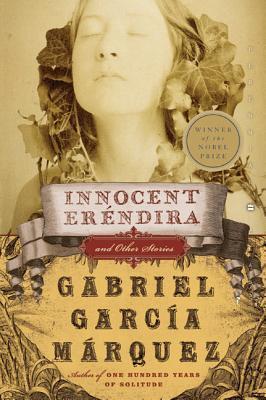
Reading was frowned upon, but the discovery of Gabriel Marcia Marquez’s The Incredible and Sad Tale of Innocent Erendira and her Heartless Grandmother cheered her up and provided a kind of solace.

Doctor, this discovery, as exaggerated as it sounds, was like meeting a guardian angel, or at least a friend I could trust, which was, in those days, equally unlikely. The book understood me better than anyone else in the world and, if that was not enough, made it possible for me to speak about things that were hard to admit to myself, like the undeniable urge to kill someone in my family.

From Mexico City to Aix-en-Provence

As I began part III, I was surprised to find the two young children following their mother to the south of France, to the Jas de Bouffan quartier of Aix en Provence near the musée Vasarely.

If I was already engaged in the novel, now I was riveted. I know the quartier well and the schools she and her brother are sent to, it awakened my own memories of being an outsider at the school gate, waiting for children to exit from the well regulated school environment.

Vasarely Musée, Aix en Provence

I have no doubt that my mother sought in Aix the institution that most resembled our school in Mexico. The percentage of atypical beings was equal, or maybe even higher. But still… everything there seemed strange to me.

From From the public Freinet education at La Mareschalé to the local middle school, Collège au Jas de Bouffan, a mix of children from multiple origins, North African, Indian, Asian, Caribbean and French.

To survive in this climate, I had to adapt my vocabulary to the local argot – a mix of Arabic and Southern French – that was spoken around me, and my mannerisms to those of the lords of the cantine.

Photo by Fernando G Pexels.com

In Part IV there is a visit back to Mexico, before Part V where they are sent off to a the infamous French institution, the colonie de vacances; supervised holiday camps organised according to interests or specialities, full of young people employed as ‘camp animateurs‘ an idealised form of first employment, being paid to be on holiday, looking after tweens and emerging teens.

The French experience is so well depicted, and gives an insight into the child’s perspective of being an uncommon foreigner among a population of more common second or third generation immigrants. When it ends back in Mexico City, I find myself wishing there were a follow up novel, to find out more about a life that started in this unusual way and had all these experiences in their formative years.

The novel is so engaging, a fascinating insight into a life that delves beneath the surface of events and happenings in a family that is culturally fascinating, as it moves between Mexico City and Aix en Provence, traversing childhood and adolescence, the relationships between a girl, her peers at different ages, her parents and her grandmother.

And then there are the layers of literary references, including the reference to the title, but those I leave the prospective reader to discover for themselves.

I loved it! Highly Recommended.

Author, Guadalupe Nettel

Guadalupe Nettel (born 1973) is a Mexican writer. She was born in Mexico City and obtained a PhD in linguistics from the École des Hautes Études en Sciences Sociales in Paris. She has published in several genres, both fiction and non-fiction.

The New York Times described Nettel’s acclaimed English-language debut, Natural Histories as “five flawless stories”. A Bogota 39 author and Granta “Best Untranslated Writer” The Body Where I Was Born was her first novel to appear in English. Her work has since been translated into more than twenty languages and adapted for theatre and film. Still Born, her most recent novel, was shortlisted for the 2023 International Booker Prize and her latest collection of short stories The Accidentals tr. Rosalind Harvey was published in April 2025.

She has edited cultural and literary magazines such as Número Cero and Revista de la Universidad de México. She lives in Paris as a writer in residence at the Columbia University Institute for Ideas and Imagination.

Fresh Dirt from the Grave by Giovanna Rivero tr. Isabel Adey

Fresh Dirt From the Grave is another Charco Press title, this time from Bolivia. It is a collection of six stories that unsettle the reader, navigating paths outside the norm, revealing aspects of characters, of circumstances and inclinations that pierce like a wound, while evoking expressions of love, justice and hope.

Described as where contemporary horrors and ancient terrors meet, these short stories by Bolivian author Giovanna Rivero are not my usual fare, however I chose to read it for #WITMonth and discover what the boundaries of Gothic really means.

There are six stories and the first few were tales of macabre revenge that reminded me of Yoko Ogawa’s excellent collection Revenge.

Overall an interesting, dark collection that brings out a quiet consideration in each of the protagonists as they grapple with their challenging situations and must either make a decision or give in to one made by an other.

blessed are the meek

A young woman is violated. Everyone around her seems to be denying the gravity of it. The family moves away, until the opportunity arrives to bury their grief, literally…

It shouldn’t have been her family that had to leave. But they were the ones who left.

fish, turtle, vulture

Photo A. Tuan on Pexels.com

A man survives 100 days at sea, the young apprentice companion with him does not.

Now he is meeting the mother of that young boy. She feeds him tortillas, asking him to repeat again what happened out there.

Atoning for his loss, he will atone for hers.

Tell me more, she says, pushing the plate of tortillas towards him as if she were paying him to tell the tale with that warm, fragrant dough.

it looks human when it rains

A Japanese widow in Bolivia teaches origami to women prisoners in a jail. She is curious about these so-called murderers, until she teaches them how to make a snake – and observes in the eyes of one woman, something terrifying.

She was surprised to find that she was not appalled by their crimes, their mistakes, their unbridled passions, the gross misjudgements that had led them there. Who was she to ponder their failings.

Her own past comes back to haunt her, a young woman lodger helps her in the garden, things that were buried resurface in her mind, in her life. A sense of injustice, a prickle of rage. The year of the snake had been the worst, the part she had tried to bury. Origami was a path, a light, because it never resorted to twists or curves to fix a form.

No one who had been so fortunate as to find themselves among the group of émigrés that embarked on the voyage to Brazil and Peru in 1957 before settling in Bolivia, in the eastern rainforest of Yapacani, had returned to Japan carrying the wilting flowers of the fiasco on their backs.

Socorro

“Those boy’s aren’t your husbands” says a deranged Aunt in the opening lines.

I didn’t know in that moment, what shook me more: the mad woman’s barbed remark or the cackle she unleashed as she spoke those words, which felt like a reprimand.

A woman, her husband and twin boys visit her mother and Aunt. She is an expert in mental health but being around her Aunt unsettles her in ways that her professional self finds hard to deal with. The moments of lucidity among the madness, reach in to her own hidden aspect and threaten to overwhelm her.

Donkey Skin

Two children orphaned overnight are sent to live with their French Aunt in Winnipeg, Canada. When they get to 17 years old, they plan an escape, and their world gets turned upside down again.

The only blood uncle we had left in Santa Cruz, Papa’s brother, said that children were always better off being raised near a female voice, and so without saying a word, he signed all the migration papers needed for Dani and me to leave Bolivia and his life for good. Being Bolivian is a mental illness, he told us in that good-humoured way of his, which made us forgive him for everything, even for handing us over like pets to Aunt Anita, who, when the time came to appear at the juvenile court, despite all those breath mints she slotted between her teeth, still couldn’t disguise the stench of whiskey.

Kindred Deer

A brown deer stands next to a dead tree Kindred Deer in Giovanna Rivero's Fresh Dirt from the grave attend a dead deer
Photo by Pixabay on Pexels.com

Intelligent but struggling financially, students sign up for medical trials that promise to cover their debts, but at what price.

The medicinal smell that rises from Joaquin’s body like an aura has taken over our bedroom. It’ll be gone in a few days, they told him.

They ignore the corpse of a dead animal outside their window, leaving it longer than they should to address. Like the strange mark on his back that shouldn’t be there, have they left that too late as well, will he pay the ultimate price?

Pay him double or I’m leaving, I say.

Author, Giovanna Rivero

Giovanna Rivero was born in the city of Montero, Santa Cruz, Bolivia in 1972 and is a writer of short stories and novels.

She holds a doctorate in Hispano-American literature. In 2004, she studied on the Iowa Writing Program and in 2006 was awarded a Fulbright scholarship, enabling her to take a masters in Latin American literature at the University of Florida. In 2014, she received her doctorate.​ In 2011, she was selected by the Guadalajara Book Fair as one of the 25 upcoming stars of Latin American literature.

She is the author of the books of short stories as well as children’s books. She has published four novels: Las camaleonas (2001), Tukzon (2008), Helena 2022 (2011) and 98 segundos sin sombra (2014). Her literary work, which moves between horror literature and science fiction, is regarded as a major contribution to the renewal of the Gothic and fantastic genres in Latin America.

Loop by Brenda Lozano tr. Annie McDermott

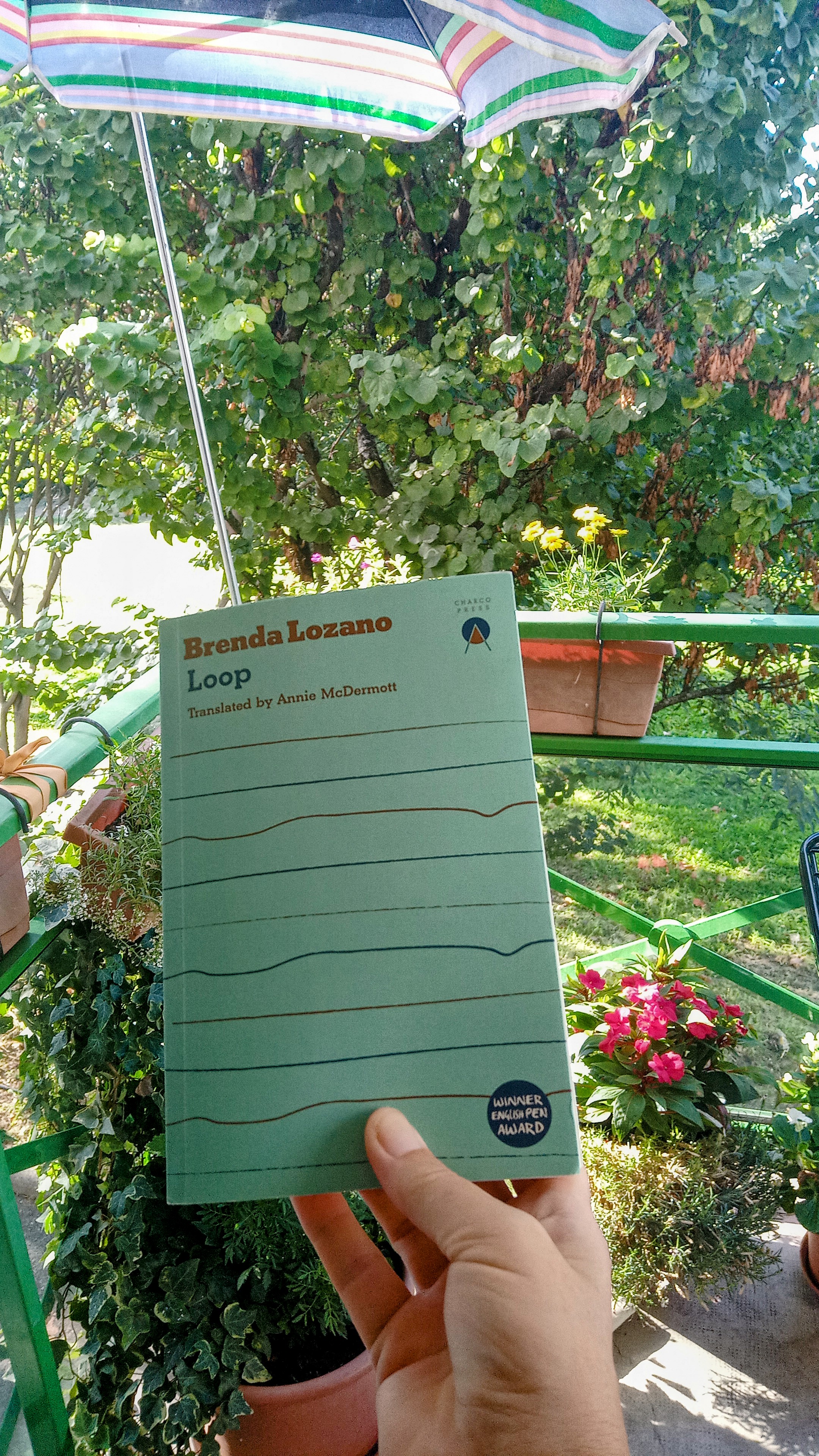
wp-1629982535768..jpgI picked up Loop for WIT (Women in Translation) month and I loved it. I had few expectations going into reading it and was delightfully surprised by how much I enjoyed its unique, meandering, playful style.

It was also the first work of fiction I have read, after a nine week pause, while I have been working on my own writing project, so its style of short well spaced paragraphs, really suited me. I highlighted hundreds of passages, an indicative sign.

Change. Unlearning yourself is more important than knowing yourself.

It was helpful to listen to the recent Charco Press interview linked below to understand that it is a kind of anti-hero story, inspired by her thinking about The Odyssey’s Penelope while her lover Odysseus is off on his hero’s quest – of the inner journey of the one who waits, the way that quiet contemplation and observation also reveal understanding and epiphanies.

Odysseus, he of the many twists and turns. Penelope, she of the many twists and turns without moving from her armchair. Weaving the notebook by day, unravelling it by night.

Penelope and OdysseusThe narrator is waiting for the return of her boyfriend, who has travelled to Spain after the death of his mother.

His absence coincides with her recovery from an accident, so she has a double experience of waiting, a greater opportunity to observe the familiar and unfamiliar around her, to see patterns, imagine connections, dream and catastrophise.

Childhood is so uncertain, so distant. It’s almost like childhood is the origin of fiction: describing any past event over and over to see how far away you are getting from reality.

And then there is her quiet obsession with notebooks, with the ideal notebook, another subject that evolves in her pursuit of it. It’s thought provoking, funny, full of lots of literary and musical references, which I enjoyed listening to while reading and quite unlike anything else I’ve read. And a nod to Proust. The dude.

I was left with a scar. I think telling stories is a way of putting a scar into words. Since not all blows or falls leave marks, the words are there, ready to be put together in different ways, anywhere, anytime, in response to any fall, however serious or slight.

Random observations over time create patterns and themes, eliciting minor epiphanies.

Wild-Is-The-WindA celebration of the yin aspect of life, the jewel within. And that jewel of a song, sung by both David Bowie and Nina Simone, Wild is the Wind.

…the present is also, as its name suggests, a gift. It doesn’t suggest longing or loss. It’s just a present, a gift, a time with no strings attached which is totally ours, to use however we want, however we please. There are days when I find the future overwhelming, with all the bright lights and commotion.

I highly recommend it if you enjoy plotless narratives that make you think and see meaning in the ordinary. And relate to the little things.

Dwarf things. Small things. Little things in relation to the norm. Insignificant things. Things with different dimensions. Curiously, the stories I like the most are made up of trivialities. Details. Trifles. These days, people look to what’s big. The big picture, big sales figures, success. Bright lights, interviews, breaking news. Whatever’s famous. Importance judged by fame. Maybe small things are subversive. Living on a modest scale compared to the norm. Maybe the dwarf is the hero of our time.

Brenda Lozano Author LoopBrenda Lozano is a novelist, essayist and editor. She was born in Mexico in 1981.

Her novels include Todo nada (2009), Cuaderno ideal (2014) published in English as Loop and the storybook Cómo piensan las piedras (2017). Her most recent novel is Brujas (2020).

Brenda Lozano was recognized by Conaculta, Hay Festival and the British Council as one of the most important writers under 40 years of age in Mexico and named as one of the Bogotá 39, a selection of the best young writers in Latin America.  She also writes for the newspaper El País.

Further Information

On Charco Press’s Instagram IGTV page there is a video interview with Brenda Lozano for WIT Month where she speaks about the process of translation as a part of the art of writing, about her influences as she wrote Loop and about how she has taken the story of Penelope and Odysseus as inspiration.

Don’t be alarmed if this isn’t going anywhere. Don’t expect theories, reliable facts or conclusions. Don’t take any of this too seriously. That’s what universities are for, and theses, and academic studies. Personally, I like cafés, bars and living rooms. Not to mention comfortable cushions. So nice and cosy.

Sex and Lies by Leïla Slimani

translated by Sophie Lewis (from French)

Reality bites.

Sex and Lies Leila Slimani MoroccoThe last nonfiction book I read was also set in Morocco (at the time referred to as the Spanish Sahara) written by a foreign woman living openly with her boyfriend, it couldn’t be more in contrast with what I’ve just read here – although Sanmao does encounter women living within the oppressive system that is at work in this collection.
In Morocco the ban on ‘fornication’, or zina, isn’t just a moral injunction. Article 490 of the penal code prescribes ‘imprisonment of between one month and one year [for] all persons of opposite sexes, who, not being united by the bonds of marriage, pursue sexual relations’. According to article 489, all ‘preferential or unnatural behaviour between two persons of the same sex will be punished by between six months and three years’ imprisonment’.

Leïla Slimani interviews women who responded to her after the publication of her first novel Adèle, a character she describes as a rather extreme metaphor for the sexual experience of young Moroccan women; it was a book that provoked a dialogue, many women wanted to have that conversation with her, felt safe doing so, inspiring her to collect those stories and publish them for that reason, to provoke a national conversation.

Novels have a magical way of forging a very intimate connection between writers and their readers, of toppling the barriers of shame and mistrust. My hours with those women were very special. And it’s their stories I have tried to give back: the impassioned testimonies of a time and its suffering.

Photo by Sharon McCutcheon on Pexels.com

In these essays Leila Slimani gives a voice to Moroccan women trying to live lives where they can express their natural affinity for love, while living in a culture that both condemns and commodifies sex, where the law punishes and outlaws sex outside marriage, as well as homosexuality and prostitution. The consequences are a unique form of extreme and give rise to behaviours that shock.

It’s both a discomforting read, to encounter this knowledge and hear this testimony for the first time, and encouraging if it means that a space is being created that allows the conversation to happen at all.

However, overall it leaves a heavy feeling of disempowerment, having glimpsed the tip of another nation’s patriarchal iceberg. We are left with the feeling that this is a steep and icy behemoth to conquer. Article 489 is not drawn from sharia or any other religious source, it is in fact identical to the French penal code’s former article 331, repealed in 1982. They are laws inherited directly from the French protectorate.

In a conversation with Egyptian feminist and author Mona Eltahawy about the tussle between the freedom desired and the shackles forced upon women, Eltahawy responded by using words attributed to the great American abolitionist Harriet Tubman, who devoted her life to persuading slaves to flee the plantations and claim their freedom.

She is meant to have said: “I freed a thousand slaves. I could have freed a thousand more if only they knew were slaves.” Emancipation, Eltahawy told me, is first about raising awareness. If women haven’t fully understood the state of inferiority in which they are kept, they will do nothing but perpetuate it.

Women are stepping out of isolation and sharing their stories everywhere, finding solidarity in that first step, sharing in a safe space, being heard, realising they are not alone.

May it be a stepping stone to change.

I read this book as part of WIT (Women in Translation) month and was fortunate to have been gifted it by a reader, since I participated in the gift swap, so thank you Jess for sending me this book, you can read her review of it on her blog, Around The World One Female Novelist at a Time.

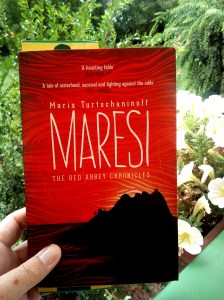
Maresi, The Red Abbey Chronicles by Maria Turtschaninoff (Finland)

translated by Annie Prime (from Swedish) – like Tove Jansson, Maria Turtschaninoff is from a Swedish speaking part of Finland.

A Utopian Island of Women

Maresi Finland YA WIT MonthRed Abbey is situated on the island Menos, run by women, a kind of educational refuge that has elements of sounding like a boarding school and a convent. On the mainland some are not even sure if it is myth or reality, but they send their girls there in hope that the rumours are trues. We learn that Maresi was sent there by her family during ‘Hunger Winter’ and that the abundance of food, the genuine care and education she is given makes it a place she adores.

There are many reasons why a girl might come to the island. Sometimes poor families from the coast lands send a daughter here because they can not provide for her. Sometimes a family notice that their daughter has a sharp and enquiring mind and want to give her the best education a woman can get. Sometimes sick and disabled girls come here because they know the sisters can give them the best possible care…Sometimes girls come as runaways… Girls who show a thirst for knowledge in cultures where women are not allowed to know or say anything. In these lands, rumour of the Abbey’s existence lives in women’s songs and and forbidden folk tales told only in whispers, away from enemy ears. Nobody talks openly about our island but most people have heard of it anyway.

The Red Abbey Maresi feminist fantasy YAThere are two maps at the front of the book, one of Red Abbey, a walled area showing various buildings, such as Novice House, Knowledge House, Body’s Spring, Temple of the Rose, named steps and courtyards and a map of the island drawn by ‘Sister 0 in the second year of the reign of our thirty-second mother, based on the original by ‘Garai of the Blood in the reign of First Mother’
As the novel opens a ship is sighted and the girls are joined by Jai, who becomes shadow to Maresi, it is clear she has been traumatised by an experience and continues to live in fear, believing that what she ran from will not relent until she is found.

Most of the first two thirds is made up of understanding their daily life, they are being educated both intellectually and develop a strong connection to nature. The community is able to survive and thrive due to their sustainable harvesting of a red dye from blood snails. Maresi loves nothing more than acquiring knowledge and spends every evening in Knowledge House reading the scrolls.

That evening I chose the ancient tales of the First Sisters. I have always loved reading about their journey to the island, their struggle to build Knowledge House and their survival in the first few years with nothing but fish and foraged wild fruits and berries as sustenance. Life on the island was difficult for the first few years. It did not get easier until some decades later, when they discovered the bloodsnail colony and the silver began to flow in.

Only women and girls are permitted on the island and when a threat seems imminent it requires the women to use all their knowledge and resources and it is as this happens that the girls begin to discover their unique talents and the courage to use them.

Sisterhood, Knowledge, Empowerment and True Courage

Bloodsnails Maresi Red Abbey

Photo by Alin Luna on Pexels.com

Described as a tale of sisterhood, survival and fighting against the odds, I chose this because it sounded like an empowering read for young women/adolescents and because it has been imagined and written by a woman from another culture/language, drawing on her storytelling tradition and experience.

I really enjoyed the story and characters and the community created on the island, it reminded me a little of Madeleine Miller’s Circe, who lives on an island, only she is in exile, so mostly alone, but it has that similar utopian feeling of the desire to create a nurturing environment where women live in harmony with nature and have access to education and knowledge, without the demands or agendas of men or the family dynamic and its expectations.

Maresi is the first in a trilogy, also described as feminist fantasy, the second book is Naondel and the the final Maresi Red Mantle.

Where Does the Inspiration Come From?

What was the inspiration behind the Red Abbey? And what kind of research did you undergo during the writing process? – from an interview by Bluebird Reviews 

It all started with a photograph exhibition.

I saw the exhibition many years before I began working on Maresi. It took place in Helsinki, and showcased photographs from Mount Athos, a Greek peninsula with a 1000-year-old monastic community. The pictures were breathtakingly beautiful and the houses of the monasteries represented crumbling splendour. Many of them were perched on top of steep cliffs, like eagles’ nests. I walked around with my notebook, making notes and getting very inspired.

And also, angry.

Because for a thousand years, no woman has been allowed on the island. Even today only male pilgrims are able to set foot on the island. The women get to take a boat ride and view the monasteries from the sea. And I thought “How is it possible that there’s a place today, in Europe, where women aren’t allowed?” This thought was immediately followed by: “And what would happen if I turned it on its head and there was an island, and an Abbey, where only women and girls are allowed? But because it would be set in my fantasy world, there would be a concrete reason why men are not allowed.”

Can you tell us a bit about the mythology of the Mother, Maiden, and Crone? What’s the background story and where did the idea come from? – interview by Huriyah Quadri, The Selkie

As I created the Red Abbey for the first book, I knew the women and girls had to worship something – it’s an abbey, after all – but in this fantasy world, our religions don’t exist. So I looked further back in history, to what humans believed in before the three monotheistic religions became dominant, and found goddess-worshipping cultures. I researched them, stole the best bits and made my own concoction.

The Author, Maria Turtschaninoff

Teenage and Young Adult author, Maria Turtschaninoff was born in 1977 and lives in Finland. She is the author of many books about magical worlds and has been awarded the Swedish YLE Literature prize and has twice won the Society of Swedish Literature Prize. She has also been nominated for the Astrid Lindgren Memorial Award and the Carnegie Medal.

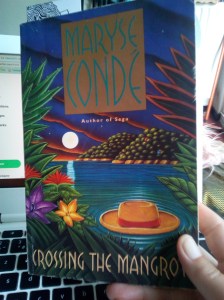
Crossing the Mangrove by Maryse Condé (1995)

translated (from French) by Richard Philcox.

A Favourite Author

Maryse Conde Crossing the Mangrove WIT MonthMaryse Condé is one of my favourite authors and I’ve been slowly working my way through her books since she was nominated for the Booker International Prize in 2015, back when it was held every two years, for an author’s lifetime works.

I started with vignettes from her childhood, then moved on to a novel about her grandmother whom she’d never met, then her masterpiece of historical fiction Segu, her own favourite The Story of the Cannibal Woman, A Season in Rihata and now this very Caribbean novel Crossing the Mangrove, which I absolutely loved. Links to my reviews below.

This is almost a form of noir novel; a death provides the catalyst to revealing an island society, portraying all it diversity and colour, its social good and evil – poverty, discrimination and exploitation, and rather than seek a tidy resolution of that death, it demonstrates the folly of that way of thinking, creating instead, a thought-provoking insight into a multi-layered, multi-ethnic mix of minds and bodies, in their states of love, bliss, paranoia, anxiety and confusion.

It is such a great read, I had to force myself to pause halfway in order to savour it. I can imagine rereading it, it’s such a multilayered novel, that can be read for pure entertainment value or thought about more deeply in how it attempts through exquisite storytelling and characterisation, to lay bare the complexity of such a diverse community, it’s impossible to keep up with who is who is what from where, demonstrating how farcical that is anyway and yet nearly everyone contributes to it, the labelling, the judgements, the superiority and inferiority complexes. Brilliant.

“Life’s problems are like trees. We see the trunk, we see the branches and the leaves. But we can’t see the roots, hidden deep down under the ground. And yet it’s their shape and nature and how far they dig into the slimy humus to search for water that we need to know. Then perhaps we would understand.”

Can You Cross A Mangrove?

Crossing the Mangrove Maryse Condé

Mangrove of Sainte Rose, Guadeloupe

The trigger for all of this, in a novel where every chapter takes the perspective of a different character, is the wake of a man found dead in the mangrove. No one really knew Francis Sancher but everyone had had an encounter with him and there were rumours aplenty.

“Nobody ever understands, Madame Ramsaran. Everyone is afraid of understanding. Take me, for instance. As soon as I tried to understand, to ask for an explanation for all those corpses, all that blood, they called me every name under the sun. As soon as I refused to go along with the slogans, they kept a serious eye on me. Nothing is more dangerous than a man who tries to understand.”

I don’t know about the mangroves in Guadeloupe, but recalling the mangrove swamp from a biology field trip at school, they are incredibly difficult to navigate, like a natural defence system, with spiky roots sticking up out of the water, preventing a way forward. They become a tangled array of wet and slimy roots, attracting many species of bugs, insects and critters and are found in locations where salt water and fresh water mix, a buffer between land and sea.  An apt metaphor for navigating a life, for understanding a complex society.

Stories in his Wake

We come to know more about this intriguing stranger who came to Rivière au Sel expecting to die, we learn who cultivated a desire for that to happen, who fell for his charm, a variety of voices that convey the life stories of this diverse group of villagers – young and old, men and women, siblings and parents, illiterates and intellectual elites, peasants and upper class Creoles, those who belong and those who would always be considered outsiders.

Crossing the Mangrove Maryse Condé

Maryse Condé

The multiplicity of voices, narrated through nineteen characters attendant at the wake, creates a portrait of the social, cultural, political, linguistic, intellectual and economic diversity of this Caribbean island society, complete with desire, unrequited love, arranged marriage, jealousy, disappointment, bitterness, greed, exploitation, revenge, racism, classism, joy and hilarity.

“I would say you are a man of great wisdom!” I murmured.

He smiled.

“Wisdom? I wouldn’t say that. Rather that I tried to untangle the skeins of life.”

The dead man is only given voice through those attending his wake, like the author who is given voice through her characters.

The quote above reminds me of all the narratives of Maryse Condé, of her life, her research including the all important oral histories and her own insatiable appetite for “untangling the skeins of life”, presenting them to us through her essays and novels. She truly is a magical and gifted writer, and in this novel she returns to a landscape closer to home, evoking it through this collection of characters beautifully.

“Now Francis Sancher is dead. But he alone has come to an end. The rest of us are alive and continue to live as we’ve always done. Without getting along together. Without liking ourselves. Without sharing anything. The night is waging war and grappling with the shutters. Soon, however, it will surrender to the day and every rooster will crow its defeat. The banana trees, the cabins and the slopes of the mountain will gradually float to the surface of the shadows and prepare to confront the dazzling light of day. We shall greet the new face of tomorrow and I shall say to this daughter of mine:

“I gave birth to you, but I misloved you. I neglected to help you flower and you grew stunted. It’s not too late for our eyes to meet and our hands to touch. Give me your forgiveness.”

In 2018 Maryse Condé was declared the winner of the Alternative Nobel Prize for Literature.

Further Reading

Tales From the Heart: True Stories From My Childhood

Victoire: My Mother’s Mother

Segu

The Story of the Cannibal Woman

A Season in Rihata

Troubling Love by Elena Ferrante

translated by Ann Goldstein.

Elena Ferrante’s debut novel was first published in Italy in 1991, translated into English in 2016. It became a literary sensation and earned its author the Elsa Morante prize, one of Italy’s most prestigious awards for literature.

A Drowning at Sea

Naples Italy Elena Ferrante Troubling Love

Photo by Bekir Du00f6nmez on Pexels.com

Troubling.

A daughter Delia is concerned after a telephone call from her mother. Following her subsequent disappearance and death, she returns to her mother’s empty apartment, trying to retrace her steps to understand what had been going on in her life that lead to her abrupt departure. Her frustration with her mother is apparent from the first page.

Her sociability irritated me: she went shopping and got to know shopkeepers with whom in ten years I had exchanged no more than a word or two; she took walks through the city with casual acquaintances; she became a friend of my friends, and told them stories of her life, the same ones over and over. I, with her, could only be self-contained and insincere.

Strange things happen, some of which a neighbour helps explain, a woman who opens her door ajar at the slightest noise, thus aware of her mother’s visitors. Yet Delia doesn’t act rationally herself, she’s not the most reliable narrator and there is a sense of confusion and danger as we follow her reckless pursuit of clues across town and memories of the past emerge.

The Abusive, Possessive Artist

Troubling Love Elena Ferrante WIT Month Father Artist

Photo by cottonbro on Pexels.com

Nearly every past relationship recounted is troubled, she and her sisters lived in fear of their father all their childhood, often watching him beat their mother in fits of irrational jealousy, blaming her should any man glance her way, yet he’d spent his days painting images of her naked body on canvas, selling them to anyone who’d pay.

During adolescence I saw those figures of a woman leave the house in the hands of strangers who were not sparing in their crude comments. I didn’t understand and perhaps there was nothing to understand. How was it possible that my father could hand over, to vulgar men, bold and seductive versions of that body which if necessary he would defend with a murderous rage?

Amalia spent her marriage suppressing her natural gaiety and charm, her daughter learned of the danger, developing an instinct for it.

When we went to the movies without him, my mother didn’t respect any of the rules that he imposed: she looked around freely, she laughed as she wasn’t supposed to laugh, and chatted with people she didn’t know. So when my father was there I couldn’t follow the story of the film. I glanced around furtively in the darkness to exercise, in my turn, control over Amalia, to anticipate the discovery of her secrets, to keep him, too, from discovering her guilt.

Much of the novel is narrated through the gaze of others, adding to the awkward, vulnerable, exposed feeling of the women. It’s a narrative of deep unease, both in the present day and in its long reach back to the first encounter between the young Amalia and her future possessive husband.

A Free Spirit Escapes

Troubling Love Elena Ferrante WIT Month

Her mother couldn’t be contained, she was an enigma to Delia, raised in that fearsome household, exposed to it from a very young age, conditioned by it, fear and judgement had become a natural part of her psyche.

I realised I was summarising a woman without prudence and without the virtue of fear. I had memories of it. Even when my father raised his fists and struck her, to shape her like a stone or a log, she widened her eyes not in fear but in astonishment.

Her mother used to sew, her world was measurements and fittings and bodies. Garments play a part in the story, again, a mystery to Delia to unravel and try to understand, as if they too might be a clue to her disappearance.

For all the days of her life she had reduced the uneasiness of bodies to paper and fabric, and perhaps it had become a habit, and so, out of habit, she tacitly rethought what was out of proportion, giving it the proper measure.

As she follows random leads, trying to reconstruct her mother’s movements, she revisits scenes from childhood, drawing a picture of her mother, a vivacious woman full of life, spilling outside the restrained bindings of an oppressive marriage and tries to reconstruct the latter part of her life that she’d lived out separate from her family, though still perceived by her daughter and ex-husband as being in secret.

Maybe in the end all that mattered of these two days without respite was the transplanting of the story from one head to the other, like a healthy organ that my mother had given up to me out of affection.

I was reminded of the experience of reading The Days of Abandonment, there is an intensity to the narrative, its visceral descriptions, evoking reactions, everything feels up close and confronting, we are passengers in the seat of a mind slightly out of control, where new thoughts send the protagonist out in pursuit of the elusive and we must accompany her, reassured by moments of clarity and spun out by acts of recklessness.

Elena Ferrante The Lying Life of Adults WIT MonthThat’s Ferrante.

She has a new book due out in September The Lying Life of Adults said to have the same additive, page-turning qualities of her earlier novels.

Ferrante follows Giovanna’s life from age 12 to 16, charting her development from the sweet girl who adores her parents to a sulking, aggressive teenager who finds pleasure in self-abasement and making those around her uncomfortable. The premise is a fertile one for the author, an expert chronicler of adolescence and its many indignities, as well as its erratic, overwhelming passions.

Kathryn Bromwich The Guardian

Further Reading

My Review of other Elena Ferrante titles:

The Days of Abandonment

My Brilliant Friend, The Story of a New Name, Those Who Leave & Those Who Stay, The Story of the Lost Child

Frantamuglia (non-fiction)

The Guardian: Review: The Lying Life of Adults – a rebel rich girl comes of age by Kathryn Bromwich – Italians who queued up into the night for the reclusive writer’s new tale of painful adolescence won’t be disappointed