
 Eva Sleeps is a thought-provoking novel that takes the reader on multiple journeys, as the narrative slowly unravels the mystery that connects Eva, her mother Gerda and Vito.
“Where’s Eva anyway?”
“Eva is sleeping.”
The brown parcel travelled backward along the road it had taken to arrive at that spot: two thousand, seven hundred and ninety-four kilometres in total,there and back.
Eva Sleeps is a reference from Paradise Lost and a quote in the book that is repeated both in the prologue (above) and at the end of the novel, referring to the delivery of a package that arrives from the postal worker for Eva, one that her mother rejects, saying it is unwanted. It is an indirect introduction to the three main characters, introducing a connection that will be alluded through throughout and revealed by the end after we too have travelled that same journey the package takes.
“Let Eve (for I have drench’d her eyes, Here sleep below, while thou to foresight wak’st.”
John Milton, Paradise Lost, book XI
We meet Eva as she is met at Munich airport by Carlo, he will drive her the three-hour journey across two borders to her home in Sudtirol/Alto Adige in a German-speaking part of northern Italy. It is the beginning of the Easter holiday and the beginning of a longer journey she will make when she receives the call from Vito telling her he doesn’t have long to live and that he’d like to see her again.
Eva’s chapters are titled Kilometre 0, Kilometres 0-35, up to Kilometre 1397 ending with Kilometre 0, Today. These chapters contain her thoughts and observations as she makes the 1400km journey towards the dying Vito in Sicily.
The interposing chapters are Gerda’s story and they are labelled by the years within which her story is narrated, beginning in 1919, a year in which:
“…the peace treaty was being signed in Saint-Germain, with which the victorious powers of the Great War – France, especially – wishing to punish the dying Austrian Empire, assigned South Tyrol to Italy. Italy was very surprised. There had always been talk of liberating Trento and Trieste, but never Bolzano – let alone Bozen. It was perfectly logical. South Tyrolean’s were German people, perfectly at ease in the Austro-Hungarian empire, and didn’t need anyone to liberate them. Even so, after a war that had certainly not been won on the battlefield, Italy ended up with that stretch of the Alps as their unexpected booty.”
It was also the year her father inherited the family home after the death of his parents. The fate of the family would forever be affected by that political decision, for all those native to the area, who overnight were ruled in a language and culture foreign to their ways, making them like strangers in their own country, as people from the poorer southern parts of Italy were sent to live among them, in an effort to try to make these tall, blond people more Italian.
Gerda’s family is poor and as soon as she is old enough she is sent out to work, she works in the kitchen of a large hotel and alongside her striking beauty, develops a talent for creating delectable local dishes, twin characteristics that will lift her out of poverty and give her a measure of independence, much required after her father disowned her upon the arrival of Eva. She finds a way to continue working without losing her daughter.
Alongside the enthralling life of Gerda, who is the most well-rounded and well-known of the characters we follow, we are exposed to the context of the freedom fights of Alto Adige, those who protested against the cultural white-washing, labelled terrorists for their protests when they turn violent.


“Until a few years ago, when you said you were a German speaker from Alto Adige, they thought you were a terrorist. At the very least they’d ask: but why do you people hate Italians so much?
Then things changed. In the weekly supplement of the newspaper, a few months ago, the front cover was devoted to separatist ethnic movements in Europe. It mentioned:
Corsica, Slovakia, Scotland, Catalonia, the Basque country, Kosovo, Montenegro, Slovenia, Croatia, Bosnia and the Po Valley.
The Po Valley!
No sign of Alto Adige.
Eva Sleeps is a provocative novel of journeys, of connections and contradictions across cultures, of love in its many forms, of struggles and conflicts, identity and how we are connected to place.
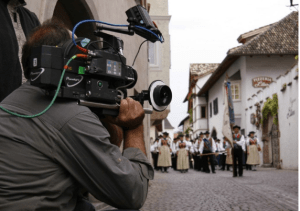
Told in a compelling narrative while backgrounding the fascinating and little known history of this part of northern Italy, it does what the historical novels often do best, increase our historical knowledge, while highlighting the ricochet effects political decisions can have on humanity, on innocent civilians, making us understand why the oppression that results turn some towards violence and others to seek love, as ways to dull the pain.
The novel is being made into a film.
Note: This book was kindly provided to me by the publisher, Europa Editions.
 I’m guessing that Ayobami Adebayo uses it as the title to her novel, because it relates to the twin desires of the main characters in the book, Yejide in her yearning to become pregnant and to keep a child, to be the mother she was denied, having been raised by less than kind stepmothers after her mother died in childbirth; and her husband Akin, in his desire to try to keep his wife happy and with him, despite succumbing to the pressures of the stepmothers and his own family, he being the first-born son of the first wife, to produce a son and heir.
 The narrative voice moves from first person accounts of both Yejide and Akin, ensuring the reader gains twin perspectives on what is happening (and making us a little unsure of reality) and the more intimate second person narrative in the present day, as each character addresses the other with that more personal “you” voice, they are not in each other’s presence, but they carry on a conversation in their minds, addressing each other, asking questions that will not be answered, wondering what the coming together after all these years will reveal.
 Three Daughters of Eve is an interesting, quietly provocative, philosophical novel. Shafak brilliantly sets up a character study of Peri, our Turkish protagonist, who on her way to a dinner party to meet her husband, decides to abandon her car in the middle of a traffic jam, in pursuit of an opportunistic handbag thief.


 Despite education, philosophical questions and new friends, Peri is a young, Turkish woman coming to live in a foreign country; as I was reading, I couldn’t help but notice the synchronicity between this combination of time, space and circumstance that made Peri vulnerable to manipulative intent and the protagonist of Claire Fuller’s excellent novel
 The Man Booker International Prize used to appear every two years and the authors nominated were not just writers in translation, they were from outside the UK and a nomination was for their body of work, not for one recently published book. That prize, for a translated work of fiction was called, the IFFP (Independent Foreign Fiction Prize).
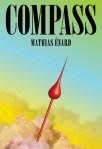


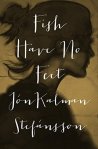


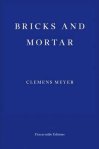


 Marlon James novel A Brief History of Seven Killings was the winner of the
 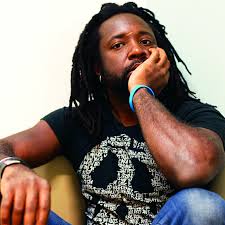 I can’t say I loved it, it was a tough read in places and definitely not the kind of book I would normally choose nor the kind of film/TV series I would watch, but it is an awe-inspiring creation and for that I agree, it is indeed an amazing oeuvre and warrants the 5 stars, though as far as favourite books go or works I’d recommend, I hesitate and would say its not an experience I would choose to repeat often.
 I was left admiring the creation even if it wasn’t always a particularly enjoyable ride and as my comment made to another reader below shows, the beach was actually a great place to read it!
 Rachel Cooke in this Guardian article
 It should have been perfect, but things change when an old friend of her mother’s Anne arrives and she and her father announce their intention to marry. Although it is actually something Cecile feels is right for them and she adores Anne, part of her resents what signifies to her the end to the playful era she and her father have indulged, for Anne’s presence in their lives will certainly bring order and sensibility.
 It is 1947, in the province of Punjab, which sits between India and Pakistan, an area where Hindu, Sikh, Muslim and others live side by side. Tension is mounting as political events cause rifts between friends and neighbours as many of the Muslim population support the area becoming part of Pakistan and many Hindu fear for their lives, while the same tensions exist among Muslims living in the predominantly Hindu parts of India.
 The thing they all fear most, that some desire most happens and Asha’s family leave their past behind and head for Delhi. Firoze helps them to escape and Asha leaves with a secret she has kept from everyone, the future unknown.
 A mysterious novella that begins in a quiet humble way as we meet the young widow Yasuko whose husband, the only son of Meiko Togano, we learn died tragically in an avalanche.
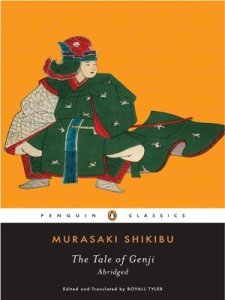 It is worth knowing a little about the plot of The Tale of Genji and the ‘Masks of Noh’ from the dramatic plays, as we realise there are likely to be references and connections to what is unfolding here. And not surprising given Fumiko Enchi translated this 1,000+ page novel into modern Japanese.
 Fumiko Enchi was a Tokyo born novelist and playright, the daughter of a distinguished philologist and linguist. Poorly as a child, she was home-schooled in English, French and Chinese literature by private tutors.
 Absolutely brilliant, astonishing, loved it, one of my Top Reads of 2016 for sure.


 The novel is predominantly a second person narrative addressed to Elijah, long after she has lost him, narrating the events of their meeting, her pursuit of the dinosaur fossils straight after meeting him, her return to Dhaka and then her escape from her family to Chittagong, to work alongside a female film-maker interviewing workers on the ship graveyards, beaches where enormous liners are dismantled and parts recycled.
 Word by Word