
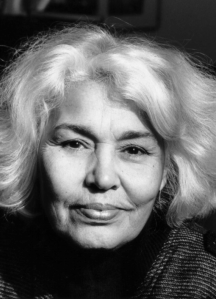
Author Nawal El Saadawi
Nawal El Saadawi is an internationally renowned feminist writer, activist, physician and psychiatrist. Born outside Cairo, Egypt in 1931, she has published nearly 50 plays, novels and short story collections, translated into over 40 languages worldwide. Many of her works are taught in universities around the world.
While practising as a psychiatrist in the 1970’s she had the opportunity while conducting research into the causes of women suffering from neurosis, to meet with a woman who had been imprisoned for killing a man, a woman who was due to be executed. The woman had refused to speak to anyone until that point, and she had also refused to sign an appeal by the prison Doctor to the President so that her sentence might be commuted to life imprisonment.
The idea of ‘prison’ had always exercised a special attraction for me. I often wondered what prison life was like, especially for women. Perhaps this was because I lived in a country where many prominent intellectuals around me had spent various periods of time in prison for ‘political offences’. My husband had been imprisoned for thirteen years as a ‘political detainee’.
After days of refusal, just as El Saadawi was leaving the prison for the last time, the Doctor told her the woman had agreed to meet her. They spent as many hours as were left of that day together, the woman recounting her the story of her life that had led to that moment.
El Saadawi left at the end of that day, never to see her again. She would be executed by hanging, her story absorbed by El Saadawi who would eventually put it to paper, in this telling of Firdaus or Woman at Point Zero, originally published in 1973.
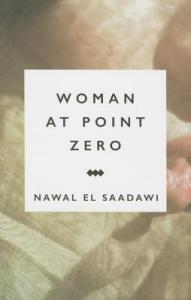 From her early days, Firdaus was a child who was noticed, though rarely looked out for, instances of cruelty and neglect made up the patchwork of her childhood. “Rescued” by an Uncle who’d already crossed filial boundaries, her one respite was to have been sent by him to school, his new wife further insisting she live there, perhaps the only paradisiacal period of her life, the one time she was left alone to flourish, to evolve, gaining her secondary school certificate, her sole prized possession.
Finding no place for her in her Uncle’s home on leaving school, still a teenager she is forced to marry the more than 60-year-old Uncle of her Aunt, eventually runs from him and is taken in by another only to suffer worse abuse, a fate she seems destined to continue to live through until she meets Sharifa, who takes her in and teaches her how to recognise and extract her value, a turning point in her awareness which will change her fate.
‘How is it possible to live? Life is so hard?’
‘You must be harder than life, Firdaus. Life is very hard. The only people who really live are those who are harder than life itself.’
‘But you are not hard, Sharifa, so how do you manage to live?’
‘I am hard, terribly hard, Firdaus.’
‘No, you are gentle and soft.’
‘My skin is soft, but my heart is cruel, and my bite deadly.’
‘Like a snake?’
‘Yes, exactly like a snake. Life is a snake. They are the same, Firdaus. If the snake realises you are not a snake, it will bite you. And if life knows you have no sting, it will devour you.’
She would learn the value of her flesh, of her person and how to ensure she was rewarded for it, she would find a measure of independence, and wished never to be beholden to man. She became an employee and discovered a world where women were held in even lower esteem, in many ways more a slave than a prostitute.
At various moments in her life, she experienced a feeling that might have been love, experienced like a poetic symptom, ‘two circles of intense black surrounded by two rings of pure white, expanding before my eyes’ but each time it fades to illusion, leaving a dark shadow on her heart.
But I expected something from love. With love I began to imagine I had become a human being…In love, I gave all: my capabilities, my efforts, my feelings, my deepest emotions. Like a saint, I gave everything I had without ever counting the cost. I wanted nothing, nothing at all, except perhaps one thing. To be saved through love from it all. To find myself again, to recover the self I had lost.To become a human being who was not looked upon with scorn, or despised, but respected, and cherished and made to feel whole.
Her story and those moments are narrated in spell-binding, lyrical prose with a compassionate sensitivity that underpins a tale of one woman’s life long oppression and desire to lift herself out of it, to put a stop to the cause of that injustice, to face the truth without fear, which she ultimately did so, through her fearlessness of death, in her absolute refusal to live.
Highly Recommended, a must read.
Buy Woman at Point Zero via Book Depository (Affiliate Link)
 Selected in 2010 as one of The Best of Young Spanish Language Novelists by
 Rachel Cooke in this Guardian article
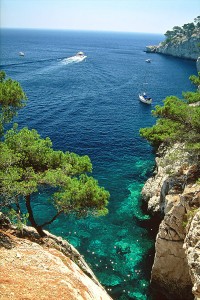 It should have been perfect, but things change when an old friend of her mother’s Anne arrives and she and her father announce their intention to marry. Although it is actually something Cecile feels is right for them and she adores Anne, part of her resents what signifies to her the end to the playful era she and her father have indulged, for Anne’s presence in their lives will certainly bring order and sensibility.
 It is 1947, in the province of Punjab, which sits between India and Pakistan, an area where Hindu, Sikh, Muslim and others live side by side. Tension is mounting as political events cause rifts between friends and neighbours as many of the Muslim population support the area becoming part of Pakistan and many Hindu fear for their lives, while the same tensions exist among Muslims living in the predominantly Hindu parts of India.
 The thing they all fear most, that some desire most happens and Asha’s family leave their past behind and head for Delhi. Firoze helps them to escape and Asha leaves with a secret she has kept from everyone, the future unknown.
 A mysterious novella that begins in a quiet humble way as we meet the young widow Yasuko whose husband, the only son of Meiko Togano, we learn died tragically in an avalanche.
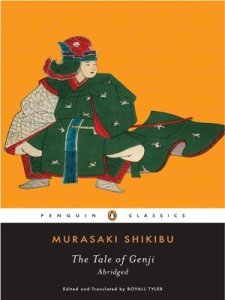 It is worth knowing a little about the plot of The Tale of Genji and the ‘Masks of Noh’ from the dramatic plays, as we realise there are likely to be references and connections to what is unfolding here. And not surprising given Fumiko Enchi translated this 1,000+ page novel into modern Japanese.
 Fumiko Enchi was a Tokyo born novelist and playright, the daughter of a distinguished philologist and linguist. Poorly as a child, she was home-schooled in English, French and Chinese literature by private tutors.
 Absolutely brilliant, astonishing, loved it, one of my Top Reads of 2016 for sure.


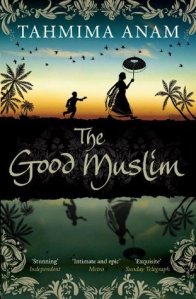
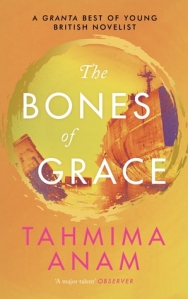
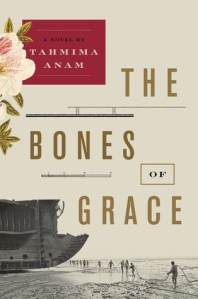 The novel is predominantly a second person narrative addressed to Elijah, long after she has lost him, narrating the events of their meeting, her pursuit of the dinosaur fossils straight after meeting him, her return to Dhaka and then her escape from her family to Chittagong, to work alongside a female film-maker interviewing workers on the ship graveyards, beaches where enormous liners are dismantled and parts recycled.
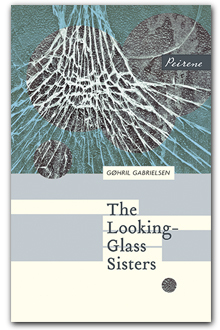 Two sisters have lived in the same house all their lives, their parents long gone and they can barely tolerate each other. They are bound together in one sense due to the practical disability of the younger sister, but also through the inherent sense of duty and responsibility of the first-born.
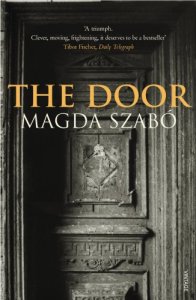 The Door is an overwrought, neurotic narrative by “the lady writer”, (possibly Szabó’s alter-ego, as there are similarities) describing her 20 year relationship with Emerence, the older lady who interviews her prospective employer to see if she’ll consider accepting the cleaning job on offer.
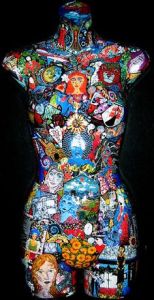 Later, only very much later, in one of the most surreal moments I have ever experienced, I wandered amidst the ruin of Emerence’s life, and discovered, there in her garden, standing on the lawn, the faceless dressmaker’s dummy designed for my mother’s exquisite figure. Just before they sprinkled it with petrol and set fire to it, I caught sight of Emerence’s ikonstasis. We were all there, pinned to the fabric over the dolls’ ribcage: the Grossman family, my husband, Viola, the Lieutenant Colonel, the nephew, the baker, the lawyer’s son, and herself, the young Emerence, with radiant golden hair, in her maid’s uniform and little crested cap, holding a baby in her arms.
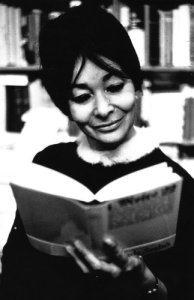 Magda Szabó was born in 1917 in Debrecen, Hungary, her father a member of the City Council, and her mother a teacher.

 Word by Word