
Raise Your Vibration is a book I read in 2016, but hadn’t reviewed as I read over a long period of time. I’ve since read another book by him, his latest called Light Warrior.
 Kyle Gray is an inspiring (and by his own admission, ‘flawed’ as we all are) Scottish, best-selling author. He is published by Hay House, an expert in archangels, ascended masters, goddesses and many other characters in mythology, religious stories and other enlightened souls of ancient wisdom traditions, as fields of spiritual energy in the universe.
I came across him, when I read Christiane Northrup M.D.’s book, Making Life Easy – A Simple Guide to a Divinely Inspired Life. In her book, she made a number of recommendations regarding authors and people whose work she is interested in and follows, and Kyle Gray was one of those who I followed up on, in particular because it was the period just over a year ago, when I was about to spend ten days in hospital with my daughter, who was undergoing surgery to straighten her spine, I was going to be bringing as many spiritual resources as I could muster with me, from the traditional to the more esoteric!
I’ve loved all Kyle Gray’s books, which I read little by little, he’s one of my preferred reading choices on public transport thanks to a few free ebook offers from Hay House.
I read this particular title over a number of months and I’m sure I have benefited from it significantly, and I know I will continue to do so as I use it in a more random fashion going forward, it’s one to keep nearby and dip in and out of.
 With it’s 111 vibes or spiritual practices, it’s designed not to be read in one sitting, but daily or randomly. I found often that the vibe for the day was often something that really resonated with my day, it’s also like an energising, elevating pick me up or start to the day, it sets the tone for the rest of the day.
Originally I read an electronic version on my kindle, but then bought a physical copy so I could use it in a random way, and during the second reading, I was drawn to the practices relating to the seven chakras, which dovetailed perfectly with a 21 day meditation I was doing, by Deepak Chopra, called Finding Your Flow.
This particular meditation practice was divided into three 7 day sections designed to activate the seven energy centres of consciousness, also known as chakras. In the first week, we find and become aware of them, week two we activate them and week three is focused on expressing them. Regardless of whether you relate to the system of chakras or not, it’s just about changing patterns of thoughts and behaviour that affect our energy, so listening to someone speak about how to do this, and/or reading, is beneficial to us all.

Kyle Gray’s work in this area, through this book extended the efficacy of the meditations and understanding of the energies in each of these areas.
I have since bought copies of this book as gifts for friends and family members who are open to a little spiritual inspiration and guidance. It’s one of the gems.
In conclusion, as I go back and reread my review on Christiane Northrup’s book, that lead me to Kyle Gray, I share this extract as it encapsulates much of my motivation for choosing this kind of reading input to accompany my other more literary tastes:
She also discusses thoughts and inputs, the effect of what we are constantly exposed to and how it should be managed in order to avoid overdosing on negativity and the toxic, fear-enhancing effect of the media for example. She discusses the positive power of affirmations, meditation, gratitude, the power of giving and receiving, connecting with nature, tapping and much more.
And in her own words:
“No human being has nervous, endocrine, and immune systems that were designed to process the negative news from all over the planet that’s being piped into their living room on a daily basis.”
“On a purely physical level, fear lowers our vibration and makes us far more susceptible to viruses and bacteria. The biochemical state that fear creates in our bodies adversely affects our immunity and increases our susceptibility to the pathological viruses and bacteria that are all around us.” Christiane Northrup M.D.
Buy Your copy of Raise Your Vibration via Book Depository
Note: This book was an Advance Reader Copy (ARC) kindly provided by the publisher.
P.S. I just tuned into Hay House Radio now, as I finish this review and, no surprise, Kyle Gray is speaking live!
 The second volume of essays by Kathleen Jamie that I’ve read, more encounters with birds on lonely, windswept islands that have long been abandoned by humans, though traces remain of their earlier occupation.
 The Hvalsalen
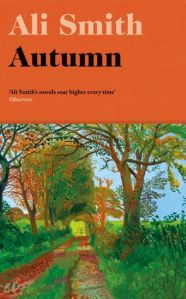 I have finally read a novel by Ali Smith and enjoyed it, though it is distracting to explain why with so many exuberant accolades and comments all over it saying how brilliant it is, I wish I could just read without the expectation this over abundance of blurbs brings. She is clearly the darling of British literary media and publishing, however all the superlatives are a little over the top in my opinion.
 I’ve been meaning to read this novel for some time, I remember when it was first published it was widely read by bloggers, it won a National Book Award in the US and it is covered in esteemed comments from reviews within many well-known media titles.
 It’s a novel about a family struggling to stay together under already challenging circumstances, about to become even more trying with a grade 5 hurricane heading their way. It is set (as is the new novel) in a fictional, rural coastal town named Bois Sauvage, Mississippi. Interestingly, the French edition of the novel is called Bois Sauvage, meaning Wild Wood, the author playing with the world savage and salvage, connected to the theme of survival.
 Although the mother is never present, her memory is held strong by Esch and fiercely through Skeetah, in his protection of China and her pups, Junior clammers for attention and affection, never having known her. They hold strong to how she made them feel and recognise that after the devastation, they can salvage what’s left and continue.
 Salt Creek is a powerful and riveting account of a family struggling to make a living in the harsh environment of coastal South Australia, depicting the pioneering patriarchal entrepreneur and his devoted but long-suffering wife, and the children that will grow up with both an attachment to the place and an instinct to escape it. This story gets inside you and makes you feel the struggle and the dilemma, and wish that it could have been different.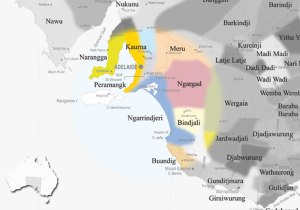

 The arrival of European settlers, their desire to own and restrict land, to create boundaries, while beneficial to their capitalist desires, becomes increasingly detrimental to the way of life of the indigenous people, as they pollute their fresh water access, introduce sickness and disease and contemplate removing their children.
 I was intrigued to read a book by a Mauritian author during Women in Translation month. Eve out of her Ruins hadn’t been on my initial list, but it was recommended to me and I decided to get a copy especially as I’ve been seeing many images of the island of Mauritius recently.




 Such Small Hands is an incredible and unique novella, quite unlike anything I have read, it’s written almost from another dimension. The author somehow enters into a childlike perspective and witnesses the aftermath of a car accident in which the child Marina’s parents don’t survive.
 Inspired by a disturbing event, this enters the realm of post trauma in an innocent and bizarre way, taking the reader back to a kind of twilight zone of an insecure childhood, where the nightmare becomes real and the line between reality and dreams is blurred.
 Nothing Holds Back the Night is the book Delphine de Vigan avoided writing until she could no longer resist its call. It is a book about her mother Lucile, who she introduces to us on the first page as she enters her apartment and discovers her sleeping, the long, cold, hard sleep of death. Her mother was 61-years-old.
 I read this book in a day, it’s one of those narratives that once you start you want to continue reading, it’s described as autofiction, a kind of autobiography and fiction, though there is little doubt it is the story of the author’s mother, as she constructs thoughts and dialogue inspired by the information provided by family members, acknowledging that for many of the events, some often have a different memory which she even shares.
 The impulsive Claudine, thinking a marriage of her own making and choice (not one chosen by her father or suggested by a man who had feelings for her that weren’t reciprocated) embarks on her marital journey which begins with fifteen months of a vagabond life, travelling to the annual opera Festival de Bayreuth, in Germany, to Switzerland and the south of France.
 This living in the past causes her even to forget that she now lives in this new apartment, coming out of her daydream, she readies herself to return home (to her father) only to realise she no longer lives there and ponders where her home really is.
 Their relationship plays itself out, up to the denouement, when Claudine seeking refuge decides to return to Montigny, to the safety of her childhood home, the woods, her animals whose loyalty she is assured of, and the affection of the maid Mélie and her humble, absent-minded father.
 Khushwant Singh takes the Punjabi farming village of Mano Majra, a small village on the border between India and Pakistan, one of strategic importance to the railway system, and narrates the moment when news of this change arrives and shows how it affects this community.
 ‘Why, don’t you people want to be free? Do you want to remain slaves all your lives?
 Word by Word