Reading Intentions 2024

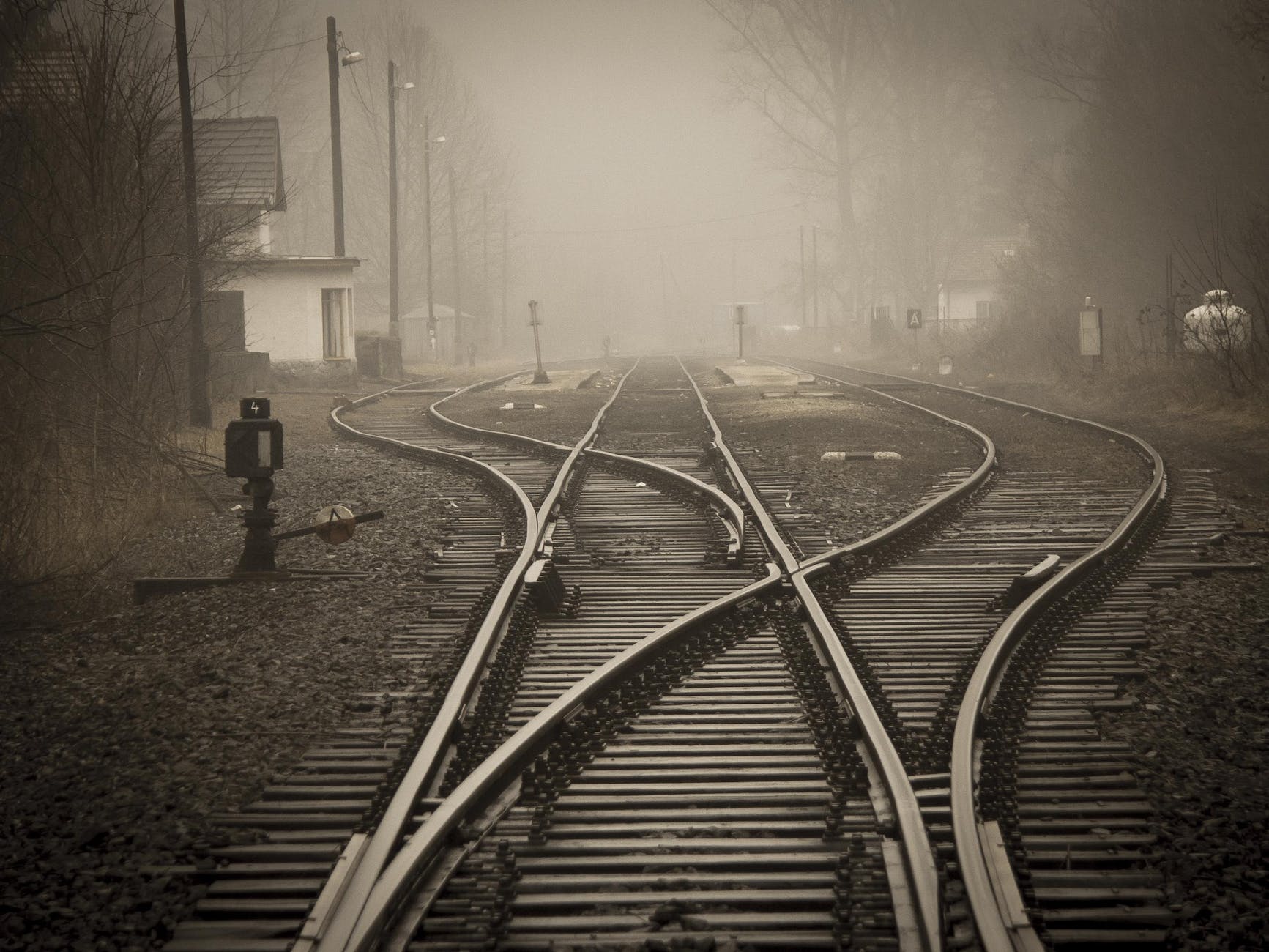
Photo Ylanite Koppens @ Pexels.com

I’m not really into reading goals and rarely participate in challenges that might oblige me to stick with a fixed plan.

A mood reader, I like being able to change my mind about what is going to be picked next. So often, the book I’m reading points the way forward to the next one, or a conversation leads me to recall another book I have on the shelf already.

That said, there are certain intentions I have, and I thought I would list them this year, to give a little direction or framework to the year. As always, things can change, they probably will and if so I will welcome that!

1. Read one book a week

While the number doesn’t really matter, it exists so that that at any one time I can see if I’m keeping with my intention or lagging behind. This reading challenge is on Goodreads, which is where I dump my first impressions as I read or makes notes while reading, or not.

Some may think that reading 50-60 books in a year is a lot; it is about the equivalent of reading 50 pages a day, which is around half an hour to an hour each day. The trick is to read a little every day. I mostly read at night, in the TV watching hour(s) and just before sleep.

2. Reading Ireland Month, March 2024

Last year I read 18 Irish books and I could easily do the same this year, the main focus being Reading Ireland Month in March over at Cathy’s 746Books.

In addition to books from this pile I own here, Cathy has just posted Irish Novels to look out for in 2024 and Irish Short Story Collections + Nonfiction to Look Out for in 2024.

There are few books here I am interested in, notably, from author’s I’ve read and enjoyed; Jan Carson’s Quickly, While They Still Have Horses (short stories) plus collections from Mary Costello and Lucy Caldwell; in fiction, Nuala O’Connor’s Seaborne, Siobhan Gleeson’s Hagstone, Caiolinn Hughe’s The Alternatives. There’s likely to be more temptations I’m sure!

3. Read More Latin American Fiction

Thanks to a subscription with Charco Press, I will be receiving nine books throughout 2024, as they are published.

2023 was a stellar year of reading books from this region, I enjoyed them all, in particular A Little Luck by Claudia Piñeiro (Argentina) tr. Frances Riddle, Two Sherpas by Sebastian Martinez Daniell (Argentina) tr. Jennifer Croft and The Delivery by Margarita Garcia Robayo (Colombia) tr. Megan McDowell.

The 2024 Fiction Bundle includes these titles, so many of which I am excited to read:

4. Read More Annie Ernaux, In French

In 2023, I read Annie Ernaux’s Nobel Prize lecture, I Will Write to Avenge My Race (2022), Simple Passion (1991), and Shame (1997).

In 2024, I hope to read her masterpiece The Years (2008) in English and these three titles in French, L’occupation (2002), (The Possession), Une femme (1987), (A Woman’s Story) and “Je ne suis pas sortie de ma nuit” (1997), (I Remain in Darkness).

I live in France, but tend to read French titles in English, in order to encourage readers to pick them up, however all these titles are available in English anyway and reading in French is a great way to increase vocabulary and exercise the brain!

5. Observe the Awards

Each year, there are certain awards, I like to follow, though they rarely influence what I am going to read. If anything, I’m more likely to find something that might interest me on the longlists, but I do enjoy watching the process of these so very subjective gatherings and all the literary chatter they evoke.

The awards I’ll be looking our for in 2024 are, the New Zealand Book Awards, The Irish Book Awards, The Dublin Literary Prize, The International Booker, The Booker and The Warwick Prize for Women in Translation.

I also like to see who makes the Dylan Thomas Prize longlist, an award for young writers, aged 39 and under, as it is can be a predictor of authors to watch out for in the future. The author Okwiri Oduour (Kenya), who wrote Things They Lost, my One Super Outstanding Read of 2023, was longlisted for this prize and another favourite author Sara Baume (Ireland/UK) was shortlisted.

6. Read More Women in Translation

I love to read around the world. In 2023, I read books from 23 countries and a third of them were in translation. I particularly like to support women authors in translation, due to the challenge this group has in being picked up by publishers and seen.

There is a wealth of great literature to discover here and it is heartening to see classics by the likes of Alba de Céspedes (Italy) coming to print in English for the first time, since being published in the 1950’s.

In 2024, I hope to read more of her work, more by Natalia Ginzburg (Italy), plenty via Charco Press and certainly more that I have yet to decide on. Women in Translation month #WITMonth is in August, which isn’t a great reading month for me, as it’s peak season work wise, so I’ll be reading it all year round, but following closely in August for recommendations.

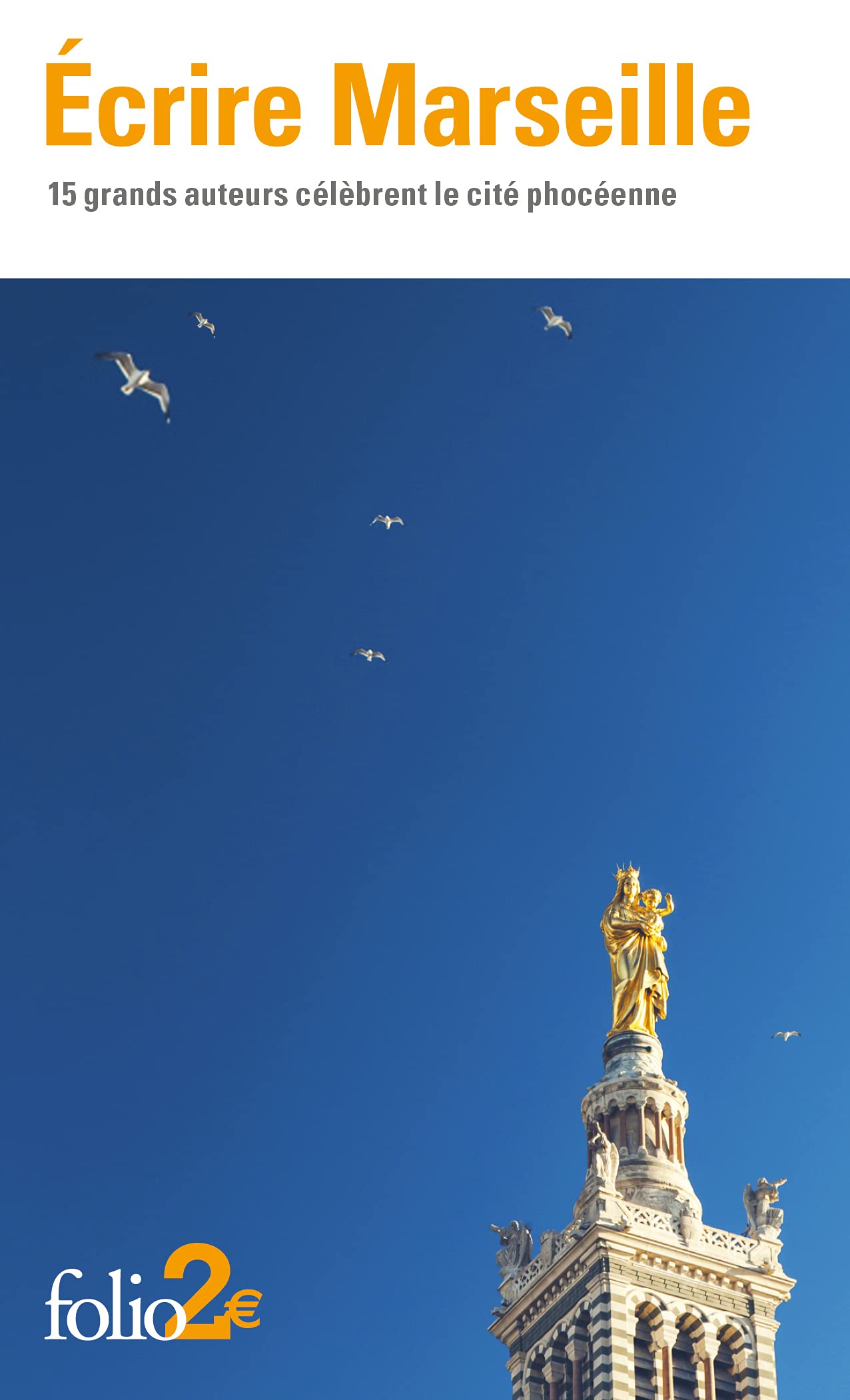
7. Écrire Marseille: 15 grands auteurs célèbrent la cité phocéenne
Jean Claude Izzo Alexandre Dumas Gustave Flaubert Albert Cohen Simone de Beauvoir

Marseille is a wonderful city, only 25 minutes from where I live. I came across this title in a local bookstore, a compilation of extracts from various French works that mention or celebrate the city of Marseille in some way.

Having had a glimpse inside, I won’t be exactly reviewing the titles or extracts, but I will allow each text to inspire me to write something, using them as a kind of springboard to discover whatever it is to be found by studying the text. That is likely to include a few visits to this complex, unique city herself.

The opening quote is from The Trilogy Fabio Mentale, of which I have read the first in the series, Jean-Claude Izzo’s Total Khéops (1995) (Total Chaos):

“Marseille n’est pas une ville pour les touristes. Il n’y a rien à voir. Sa beauté ne se photographie pas. Elle se partage. Ici, il faut prendre parti. Se passionner. Être pour, être contre. Être, violemment. Alors seulement ce qui est à voir se donne à voir.”

“Marseilles isn’t a city for tourists. There’s nothing to see. Its beauty can’t be photographed. It can only be shared. It’s a place where you have to take sides. Be passionate. Be for, be against. Be, violently. Only then what is to be seen, shows itself.” 

The 15 authors included in the anthology are:

Arrivées à Marseille: Alexandre Dumas (1802-1870), Gustave Flaubert (1821-1880), Albert Cohen (1895-1981), Simone de Beauvoir (1908-1986)

Regards sur la ville: Paul Valéry (1871-1945), Marcel Pagnol (1895-1974), Albert Camus (1913-1916), René Frégni (né en 1947), Rebecca Lighieri (née en 1966), Alain Damasio (né en 1969)

Quelques quartiers de la cité phocéenne: Paul Cézanne (1839-1906), Albert Londres (1884-1932), Louis Brauquier (1900-1976), Jean-Claude Izzo (1945-2000), Maylis de Kerangal (née en 1967)

8. Read What I Like, When I Like

Photo by Julia Kuzenkov on Pexels.com

Have intentions, not obligations. No need to review or finish a book, just follow what lights me up.

Reading and playing around on this blog is total freedom and enjoyment, never a chore, just a fun place to hang out and create content that are like the conversations I am unable to have, because I would never wish to impose all this on anyone.

But thank you to those willing to read and comment, who follow along anyway, that is like the icing on the cake, a gift that is much valued and appreciated and which often contributes to what I might read next.

* * * * * * * * *

Do you have any reading intentions for 2024? Let me know in the comments below.

The Last Train from Paris (2023) by Juliet Greenwood

Women of Courage, WWII

Juliet Greenwood writes immersive historical fiction, often set in Wales or Cornwall around World War II and always featuring women protagonists, who rise to the challenge in difficult times. Her books are a tribute to those women, often unseen, who keep the world turning, even in the most terrible of times.

I have been following Juliet’s progress and reading her books since she wrote Eden’s Garden and I have also read and reviewed We That are Left and The Ferryman’s Daughter.

The Last Train from Paris is set in the period just before and during World War II, moving from Paris, to London to Cornwall and was inspired in part by stories that Juliet’s mother told her about this period.

It’s a story I’ve been longing to write, ever since I was a little girl and my Mum first told me about studying French near Paris on the day war broke out in 1939. I couldn’t imagine then what it must have been liketo have been a 17-year-old English girl, on her own, catching the train to Calais through a country preparing for war and, like Nora, finding herself on a ferry in the middle of the Channel, being stalked by a German submarine. It’s a story that’s haunted me, especially since we found the letters Mum exchanged with my Dad in London, and the scribbled note she sent him when she finally arrived in Dover.

Past Circumstances, Present Lives

WWII Historical Fiction Cornwall Paris 1939

1964: Iris is visiting her mother in St Mabon’s Cove, Cornwall, an escape from her life in London. She has been having nightmares of feeling trapped. Her mother has given her a box. She has also been looking at the objects in it that relate to her past. It is awakening something that has become more insistent. She knows she was adopted and that these items have something to do with her original family.

Over the course of the weekend, she will ask her mother questions and begin to learn about the past. And encounter a strange reporter is snooping around the village asking questions, a caller her mother wishes to ignore.

Studying in Paris, 1939

The historical narrative centres around two young women characters in 1939; Nora lives in London, where she has worked as a dish washer in a kitchen since she was sixteen. Sabine, a freelance journalist works in a boulangerie (bakery) in Paris, living with her husband Emil, also a journalist, who is focused on writing the novel that is going to change their lives.

The two women meet when Sabine gives a talk in London, after spending a month gaining work experience at the London Evening Standard newspaper. They maintain contact, writing each letters regularly.

Nora, frustrated with the lack of opportunity in her job, comes up with the idea of going to Paris to do a chef training course at Madame Godeaux’s Cuisine Française, seeing no chance of promotion in her current employment.

The Risk of Relying on the Family Business

Juliet Greenwood historical fiction Paris 19
Photo Pixabay @ Pexels.com

Sabine and Emil’s lives are a little precarious due to their reliance on Emil’s brother Albert to subsidise their rent and pending war has contributed to the family boot business suffering. When bad news arrives, Emil, as the second son, is summoned to return to Colmar, to take over from his brother.

When Nora arrives in Paris, she is disappointed to learn that Sabine has already left for Colmar, but she settles into her course and meets other girls, amid a growing wariness of the safety of the city. When one of the girls Heidi tells her the real reason she is in Paris, Nora begins to understand the danger that is not far away.

The novel follows the twin time periods, the present day 1964 where Iris hearing from her mother stories of the past that will lead towards her understanding her identity and circumstances that lead to where she is now and the crossing of paths of two women in the past whose connection resulted in lives being forever changed.

As the story gathers pace, secrets are revealed, dangers confronted and choices made in desperation have long term effects.

There are so many twists and turns in the story, it’s one that you won’t want to put down once started, bt to share any more would be to spoil the joy of discovering and the detective work we begin to do as readers, trying to puzzle out the missing pieces of the jigsaw of these three women’s lives.

A riveting and immersive read, that reminds us just how precarious life is, how stability can be shattered from one day to the next, yet offers hope in its demonstration of the acts of kindness some will make to help others, to make each other safe.

N.B. Thanks you to the author Juliet Greenwood, for providing me a copy of the book to read and review.

Shame (1997) by Annie Ernaux, tr. Tanya Leslie

In her 2022 nobel prize lecture, I Will Write to Avenge My People, Annie Ernaux shares her motivation for writing in the particular way that is unique to her, telling us how it is at odds with the way she taught.

I had to break with ‘writing well’ and beautiful sentences – the very kind I taught my students to write – to root out, display and understand the rift running through me.

So it with this understanding, that I picked up Simple Passion (my review here) and now Shame, works of non-fiction that explore how certain pivotal events in her life affected her, by noticing her actions and reactions, how her own behaviour or perception changed.

The Origin of Shame

The book opens with a quote from Paul Auster‘s The Invention of Solitude:

Language is not truth.

It is the way we exist in the world.

The opening line begins with the pivotal event, shortly before her 12th birthday:

My father tried to kill my mother one Sunday in June, in the early afternoon.

and then describes everything she remembers about that day in a page of detail.

It was 15 June 1952. The first date I remember with unerring accuracy from my childhood. Before that, the days and dates inscribed on the blackboard and in my workbooks seemed just to drift by.

These words were written 45 years later, around 1997, when this book was first published in French, words that she tells the reader were impossible to write about, even in a personal diary, before then.

Silence Esteemed, The Seed of Unworthiness

I considered writing about it to be a forbidden act that would call for punishment. Not being able to write anything else afterwards for instance. (I felt a kind of relief just now when I saw that I could go on writing, that nothing terrible had happened). In fact, now that I have finally committed it to paper, I feel that it is an ordinary incident, far more common among families than I had originally thought. It may be that narrative, any kind of narrative, lends normality to people’s deeds, including the most dramatic ones.

Ernaux looks back at the origin of her experience of shame, awakened to it by certain moments, exploring the change(s) as she is made to feel them, in the many areas of her life within which it dwelt, sometimes just hidden behind a door, always at risk of being discovered by others.

From then on, that Sunday was like a veil that came between me and everything I did. I would play, I would read, I would behave normally but somehow I wasn’t there.

Beginning with that traumatic event, she observes the lingering effect it had on her, the strong presence it maintained, despite the fact that no one ever talked (to her) about it.

She revisits photos and news archives from that day, that time, trying to find something.

Writing an Ethnological Study of Self

While she rejects the idea of traditional therapy, it could be said that she has created her own form of it, by bringing her deepest shame to the page, as if in doing so, she is somehow sending it away, banishing it to readers.

I expect nothing from psychoanalysis or therapy, whose rudimentary conclusions became clear to me a long time ago – a domineering mother, a father whose submissiveness is shattered with a murderous gesture. To state it’s ‘childhood trauma’ or ‘that day the idols of childhood were knocked off their pedestal’ does nothing to explain a scene which could only be conveyed by the expression that came to me at the time: ‘gagner malheur‘, to breathe disaster. Here abstract speech fails to reach me.

Photo Pavel Danilyuk @ Pexels.com

This text she describes as carrying out an ethnological study of herself.

Like Simple Passion, written in short fragments, it is an engaging read that centres around the year 1952, living by the rules and codes of her world, which usually required unquestioning obedience, without any knowledge that there may be others.

The more I retrace this world of the past, the more terrified I am by its coherence and its strength. Yet I am sure I was perfectly happy there and could aspire to nothing better. For its laws were lost in the sweet, pervasive smells of food and wax polish floating upstairs, the distant shouts coming from the playground and the morning silence shattered by the tinkling of a piano – a girl practicing scales with her music teacher.

A brilliant depiction of a shattering of illusion and the origins of one girls perception of unworthiness.

As the book closes, and the year 1952 ends, her attention is caught by a film/book release.

In his novel, Fires on the Plain, published in 1952, the Japanese author Shōhei Ōoka writes: ‘All this may just be an illusion but all the same I cannot question the things I have experienced. Memories too belong in that category’.

Highly Recommended.

Author, Annie Ernaux

Born in 1940, Annie Ernaux (née Duchesne) was born in Lillebonne and grew up in Yvetot, Normandy, where her parents ran a café-grocery store in the spinning mill district.

She was educated at a private Catholic secondary school, encountering girls from more middle-class backgrounds, and experiencing shame of her working-class parents and milieu for the first time.

After a brief stint in Finchley, London, cleaning houses all morning and reading from the library all afternoon, she returned to France to study at the University of Rouen. Obtaining a degree in modern literature, she became a school teacher. From 1977 to 2000 she was a professor at the Centre National d’Enseignement par Correspondance.

Her books, in particular A Man’s Place (La Place) and A Woman’s Story (Une femme) have become contemporary classics in France. These books marked a break from the definitive novelistic form, she would continue teaching in order to never depend on commercial success.

One of France’s most respected authors, she has won multiple awards for her books, including the Prix Renaudot (2008) for The Years (Les Années) and the Marguerite Yourcenar prize (2017) for her entire body of work. The English translation of The Years (2019) was shortlisted for the Man Booker prize International and won the Warwick Prize for Women in Translation (2019).

The main themes threaded through her work over more than four decades are: the body and sexuality; intimate relationships; social inequality and the experience of changing class through education; time and memory; and the overarching question of how to write these life experiences.

Greek Lessons by Han Kang (Korea) tr. Deborah Smith + Emily Yae Won

The first book I read by Han Kang was Human Acts and it remains my favourite, a deeply affecting novel. Her novel The Vegetarian won the Booker International Prize 2016 and she has written another book translated into English, that I have not read The White Book (a lyrical, disquieting exploration of personal grief, written through the prism of the color white).

Of Language and Loss

Korean literature women in translation

In a classroom in Seoul, a young woman watches her Greek language teacher at the blackboard. She tries to speak but has lost her voice. Her teacher finds himself drawn to the silent woman, as day by day he is losing his sight.

The novel goes back in time, slowly uncovering their stories, occasionally revisiting the present, when they are in class, until finally near the end, there is a scene where they properly interact.

Greek Lessons was enjoyable, but it took me a while to figure out which characters (unnamed) were controlling the narrative at any one time, and that didn’t really become clear until quite a way into the book, when the Korean man who teaches Greek and who had lived in Germany for some time, began to interact with the mature woman student in his class, due to a minor accident and his need for help.

Yearning for the Unattainable

Both these characters are dealing with issues, the woman has just lost custody of her 6 year old child, due to an imbalance in power and wealth between the two parents. She was mute as a child and had a special relationship with language, which has lead to her unique desire to learn to read and write in Greek. She dwells in silence, sits and stares, or pounds the streets at night, walking off the frustration she is unable to express with words.

The Greek teacher is slowly losing his sight, a condition inherited from his father. He is aware that he needs to prepare himself for a future without sight.

He recalls a lost, unrequited love and the mistakes he made. His narrative is addressed to this woman who he knew from a young age. There are letters that recount his memories, as well as the discomfort of living in another culture and his desire to return to Korea without his parents. It took me a while to realise this was a different woman.

Ultimately I was a little disappointed, because it lacked the emotive drive that I had encountered before from Han Kang. There were flashes of it, but about halfway, I lost interest and stopped reading for a while. I am glad I persevered as I enjoyed the last 30% when the characters finally have a more intimate encounter and are brought out of themselves, but I was hoping for more, much earlier on.

Reading Print Improves Comprehension

Photo: Perfecto Capucine @ Pexels.com

I did wonder too if it might have been better for me to read the printed version, when the narrator is unclear, I can flick back and forth and take notes in a way that isn’t as easily done reading an ebook.

This perspective is supported by a recent study from the University of Valencia that found print reading could boost skills by six to eight times more than digital reading. I tend to agree that digital reading habits do not pay off nearly as much as print reading.

I picked it up now after reading that it was one of Tony’s Top 10 Reads of 2023 at Tony’s Reading List. He reads a ton of Japanese and Korean fiction, so this is a highly regarded accolade from him. I would recommend reading his review here for a more succinct account of the book. I see he read a library print version.

He finds echoes of The Vegetarian ‘with a protagonist turning her back on the world, unable to conform’ and ‘the poetic nature of The White Book, often slowing the reader down so they can reflect on what’s being said’ describing the reading experience as:

a slow-burning tale of wounded souls.  Poignant and evocative, Greek Lessons has the writer making us feel her creations’ sadness, their every ache. 

In a review for The Guardian, 11 Apr 2023, Em Strang acknowledged that the book wasn’t about characters or plot, so asked what was driving the craft, identifying a courageous risk the writer took.

One answer is that it’s language itself, and the dissolution of language, which is why in parts the narrative seems to almost dissolve.

If you’re interested in reading Greek Lessons, I do recommend reading the print version.

Author, Han Kang

Han Kang was born in 1970 in South Korea. A recipient of the Yi Sang Literary Award, the Today’s Young Artist Award, and the Manhae Prize for Literature, she is the author of The Vegetarian, winner of the International Booker Prize; Human Acts; and The White Book.

Further Reading

The Guardian Article: Greek Lessons by Han Kang review – loss forges an intimate connection by Em Strang, 11 Apr, 2023

The Guardian Article: Reading print improves comprehension far more than looking at digital text, say researchers by Ella Creamer, 15 Dec 2023

N.B. This book was an ARC (Advance Reader Copy) kindly provided by the publisher via NetGalley.

A Horse at Night, On Writing (2022) by Amina Cain

I came across this author as she is one of the many quoted in Kerri Ni Dochartaigh’s Cacophony of Bone and it fits with that book, in that it is a kind of journal presented as short essays or fragments on writing, of thoughts that occur while reading other writers’ works.

The chapters have no headings but the book has a contents page that displays from five up to nine words of the first sentence of that fragment/chapter/essay. So the first one begins:

Without planning it, I wrote a diary of sorts…

Through a Window of Words, I See

A number of them begin with referencing the work of an author/artist whose sentences or themes or art provoke her reflections, in particular Elena Ferrante, Annie Ernaux, Marguerite Duras, Rachel Cusk, Marie NDiaye. In contemplating Ernaux’s The Possession, she wonders what it is she loved exactly, alighting on its urgency, the way the narrator is taken over by something – an aspect that is often present in Ferrante’s novels.

In The Lost Daughter, when Leda goes alone…

One she refers to often The Lost Daughter, the story of a woman whose daughters are absent for the summer, she takes a holiday, not thinking of her daughters,

Introspection, Projection, Finding Direction

This leads into Cain’s contemplation of the way humans project on to other things (like the sea) and people and how the act of writing encourages this. She asks why we project at all and delves into that occupation of mind with scalpel-like precision.

She reads the diaries of Virgina Woolf, which cause her to recall 30 years of diaries of an Aunt, one entry telling her that she ‘began to keep a diary because she saw that life had mystical qualities.’

Writing about authenticity gives rise to reflections on Jean Gent’s play, The Maids and Bong Joon-ho’s film Parasite and the effect of maintaining roles, when mixed classes live under the same roof.

To have to maintain those class roles always, especially if they are enforced with any kind of degradation, is a violation of the sacredness of one’s life, and a violence all of its own.

The Feline Interruptor

Much of it was written during the pandemic, a period that encouraged introspection and in which humans didn’t always have other humans for company, after reflecting on solitude and the need for human connection and company, other creatures gain notoriety eliciting a chapter that begins:

As I write this my cat Trout whines loudly

It makes me wonder what phrase from this book Kerri Ni Dochartaigh made it into her own; I admit I didn’t have quite the same response on finishing it.

“Astounding…I was distraught when I finished.”

I found it more of an intriguing insight into the varied way writers analyse and respond to each other’s work. I related more to Aysegül Savas‘s blurb.

“Like light from a candle in the evening; intimate, pleasurable, and full of wonder.”

Rather than look at plot, character, dialogue or conflict, these reflections she describes as paying attention to the ‘accessories’, like animals, phrases that create a feeling of relaxation, pondering friendship, or the self. Even plants.

It’s something like finding meaning in other works, that intersects with where the reader/writer is on their own journey, whether that is life or a fictional landscape they are trying to create, looking for lessons that might lie between the lines of others who have gone before, whose words have elicited a response in that reader.

And we, the reader of this book, look through the window of another reader looking through the window of a writer looking at the world.

Author, Amina Cain

Amina Memory Cain is the author of the novel Indelicacy, a New York Times Editors’ Choice and staff pick at the Paris Review, finalist for the Rathbones Folio Prize and the Centre for Fiction’s First Novel Prize and longlisted for the Joyce Carol Oates Prize.

She is also the author of two collections of short stories. Her writing has appeared in Granta, the Paris Review Daily and other places.

She lives in Los Angeles with her husband.

Top Reads of 2023 – Part 2, Top 5 Non-Fiction

In Top Reads of 2023 – Part 1 I shared my One Super Outstanding Read of the Year and my Top 7 Fiction titles. I also provide a brief look into what I read overall, the 23 countries, the mix of fiction and non-fiction of works in translation.

Top 5 Non-Fiction, An Irish Scoop

In 2023, I read 19 works of non-fiction, from 9 countries, ranging from climate change memoirs like Ugandan author Vanessa Nakate’s A Bigger Picture and Doreen Cunningham’s Soundings to fragmentary slices of life by French nobel prize winner Annie Ernaux in Simple Passion and Shame and Natalia Ginzburg’s Family Lexicon and the true crime adventures of David Grann’s The Wager.

Everything I read was good, but the standouts were:

Irish Book Awards Biography of the Year 2023

Poor, Grit, courage and the life-changing value of self-belief by Katriona O’Sullivan (2023) (Ireland) (Memoir)

Poor is the incredible story of Katriona O’Sullivan, a university Professor in Dublin, who overcame incredible odds to rise up through the education system, having been raised by heroin addicts in a chaotic household, dropping out of school and becoming pregnant at 15.

She charts the turning points in her life, the people and the opportunities that allowed her to change the trajectory of her life and become a major influencer in advocating for access to higher education for working class girls from poor backgrounds.

She won two Irish Book Awards (Best Biography + Listener’s Choice Award). Totally Inspirational.

grief nature writing memoir motherhood loss apothecary garden

All My Wild Mothers, Motherhood, Loss and an Apothecary Garden by Victoria Bennett (2023) (UK) (Memoir/Nature Writing/Grief)

– This was one of the first books I read in 2023, a beautiful memoir that shares a mother’s journey of homeschooling her son while dealing with the grief of having lost a close sibling. Much like Helen MacDonald’s H is For Hawk, the author plunges into a creative project, to help move through the emotional challenges. Here it was to create an apothecary garden in a social housing estate in rural Cumbria, built over what was an industrial site, a barren, rubble-filled, now rule-restricted, wasteland.

Each chapter began with a different plant, starting with an intriguing medieval, magical perception of it, including stunning black & white woodcut illustrations, the medicinal properties, a bit of folklore and where it might be found. The real star of the book and source of comfort though is her inquisitive son.

A quiet book that celebrates the wisdom of small children and a tribute to sisters and mothers.

creative nonfiction nature writing Irish Literature

Cacophony of Bone by Kerri ní Dochartaigh (2023) (Ireland) (Creative Nonfiction)

– This memoir is a delightful sequel to the author’s more bleak, but exceptional, memoir Thin Places. That debut memoir was a mix of memoir and a reckoning with the after effect of a fractured childhood in a Northern Irish town.

In Cacophony of Bones, she has moved to a rural cottage in the middle of Ireland and while still in the process of healing, there is more light and poetry and inspiration from a multitude of nonfiction writers here. Written in the form of a 12 month journal, it is a book of reflection, poetic expression and of noticing, of planting, growing, of collecting objects, abandoned nests, bone remnants…

I find myself searching for the words of others as a means to fill the holes that the actions of (other) others have left in me.

In my review, I mention a number of the authors she quotes from; I spent a lot of pleasurable time looking up the many references and finding new sources of creative nonfiction to read. A great book and an extremely well-read author.

My Fourth Time We Drowned by Sally Hayden (2022) (Ireland) (Political Nonfiction)

– Though it is a challenging read, this is an incredible book and tribute to the endless support, research and investigative journalism, Sally Hayden has contributed. Winner of the 2022 Orwell Prize for Political WritingIrish Book Awards Book of the Year 2022, it tells the story of how she was contacted by refugees incarcerated in Libyan migrant detention centres, who were using hidden phones to appeal for help.

Abandoned by everyone, these people were being held in terrible conditions, treated inhumanely and often being extorted for huge sums of money in order to attempt the deadliest migrant rote of all, across the Mediterranean. While the rules of her profession prevented her from assisting them, she began to share their stories and investigate the different centres and discovered the complicity of the EU, in their policies that magnified the humanitarian crisis.

An extraordinary, detailed and condemnatory read. Highly Recommended.

essays memoir creative nonfiction Jamaican literature

Redemption Ground, Essays & Adventures by Lorna Goodison (2018) (Jamaica)

– A mix of memoir, poetry, life adventure and epiphanies, I loved this collection, that stops in and visits different periods in the life of the poet/writer Jamaican author Lorna Goodison (poet laureate of Jamaica from 2017 – 2020), including first time visits to London, New York, tributes to her mother and grandmother in poetry, to her mentor, the great poet and playwright, Derek Walcott, influential theatre and film experiences and inspirational women writers and poets.

Special Mentions, The Other Two Stand Outs

These two 5 star reads are very slim volumes, featuring one essay or lecture, they are literally half hour reads, but very worthwhile and not difficult to access and read.

I Will Write to Avenge My People by Annie Ernaux (2022) (France) translated by Tanya Leslie (French) (Essay + Bio)

Annie Ernaux won the Nobel prize for literature in 2022 and this is the lecture she gave to the committee, in it she shares her motivation for writing and an explanation of how she came to write in her very particular style.

Indignez-vous! (Time For Outrage) by Stéphane Hessel (2010) (France) (Essay)

– Very well known in France, this is the essay written by 93 year old Stéphane Hessel, since translated into numerous languages and sold 4.5 million copies worldwide. He wrote it 3 years before passing away and it is a message for youth of today, inviting them to find their cause and take action. It became a huge bestseller and long lines of young people lined up to have him sign their copy, much respect did they have for a man who had lived through it all, the war, the resistance, the concentration camp and a participant in the creation of the declaration of human rights.

* * * * * * * *

That’s it for nonfiction, let me know if you have any good recommendations for 2024!
Let us know your favourite non-fiction title from 2023 in the comments below.
Top Reads of 2023 – Part 1, Fiction + One Outstanding Read

In this post I share my Top 7 Fiction titles = One Outstanding Read of 2023, click here for Part 2, my Top 5 Nonfiction of 2023.

I have waited until this last day of December to share my Top Reads of 2023, thinking that there may be something to add in the last two weeks, sadly there wasn’t, instead there was a single book I struggled with that put me off reading, not wanting to pick it back up until yesterday.

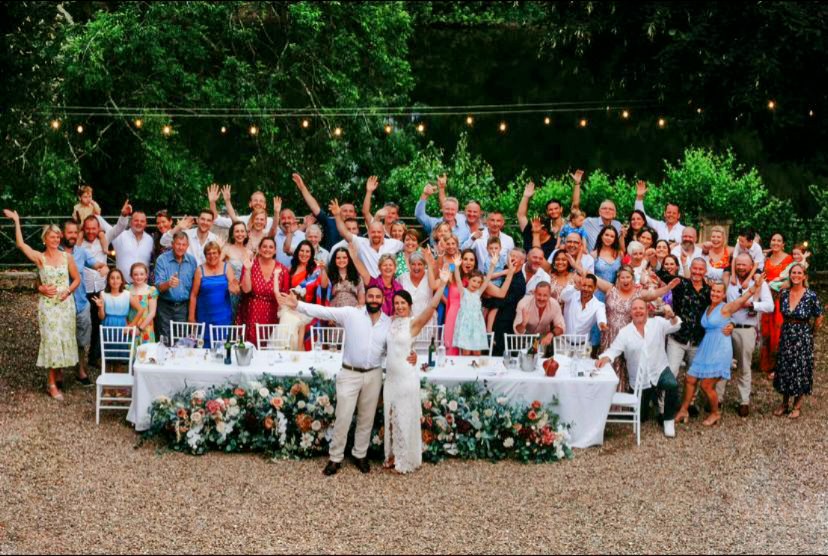
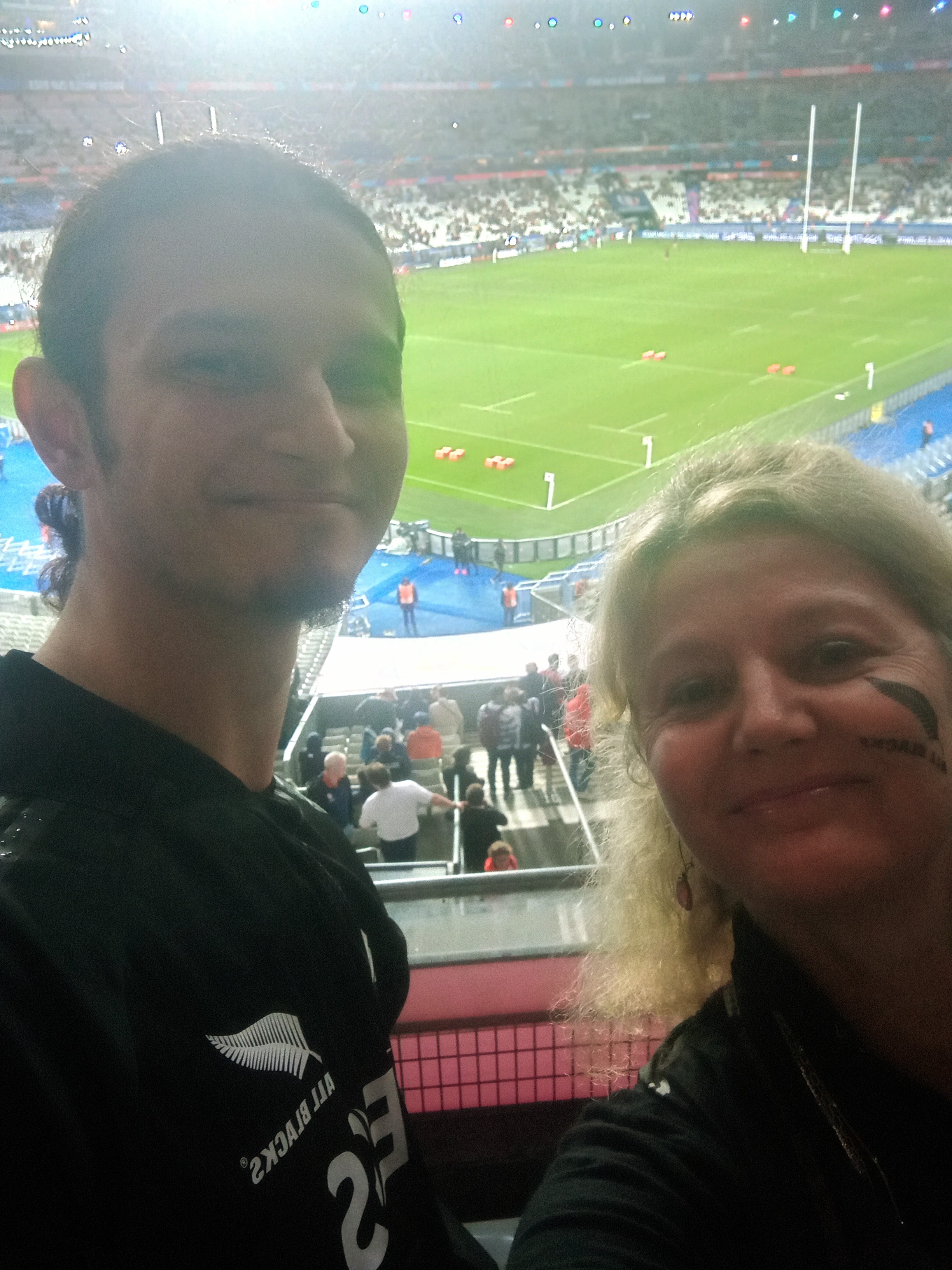
It’s been a great reading year, 68 books read despite a hiatus over the summer months when multiple humans encroached on my usual evening reading time, but it was worth it to see so many of my family and friends, visiting for the first time since 2019 thanks to wedding celebrations and a rugby world cup, here in France (with my son at the All Blacks vs Argentina semi-final, below right).

Non-Fiction Titles Continue to Ascend

Of the 68 books read, almost a third (19) were nonfiction, a recurring trend over the past few years.

I read so many excellent works of nonfiction this year, it was hard to whittle down my Top 5, as seven of the titles I read were 5 star reads.

For fiction, I’ve gone with a Top 7 but I’ll also share the other 5 star reads at the end.

Reading Around the World, A Small Island Nation Dominates

As you will know, I love to read around the world, works by authors from different countries, including in translation. And this year was no different, albeit with a lot more of the European reading from non-English language countries and Latin American featuring more prominently.

In 2023, I visited 23 countries through works of literature, with the lead country Ireland (18), with France (7), Argentina (4) and Italy (3) all in my top six destinations. I can predict that I’ll be spending more time in those literary destinations in 2024, thanks to a love of Irish literature which is indeed flourishing, a desire to read more French and Italian works and a 2024 Charco Press subscription for Latin America!

Opening Minds and Hearts Through Storytelling From Elsewhere

One of the great joys of recent years for me has been reading works originally written in other languages, translated into English and in particular, those often least favoured or likely to be published, women in translation.

What was a small niche aspect of publishing has become more popular, particularly with young adult readers, which is a life affirming trend, in an age where nationalism is so often promulgated.

In 2023 I read 22 books in translation, with seven of them 5 star reads and of my six outstanding fiction reads of the year, 3 of them were in translation.

It might take a little work to find these titles, but I’ve come to rely on my favourite independent presses, Europa Editions, Charco Press, One World Publications and more recently Daunt Books Publishing, who are reaching back to bring literary gems that deserve new light, to readers.

In this Part 1, I will share my Top Fiction Reads and Part 2 Top Non-Fiction Reads.

One Super Outstanding Read

14 novels were 5 star reads for me in 2023, so to whittle it down, I looked for those whose reading experience still stands out for me now in December. I always have one outstanding read, but this year there were seven I would describe as that, however there was that one that truly stood above them all, my Super Outstanding Read of 2023, that I read early in the year yet still feel the profound effect of reading it.

My One Super Outstanding Read of 2023 is:

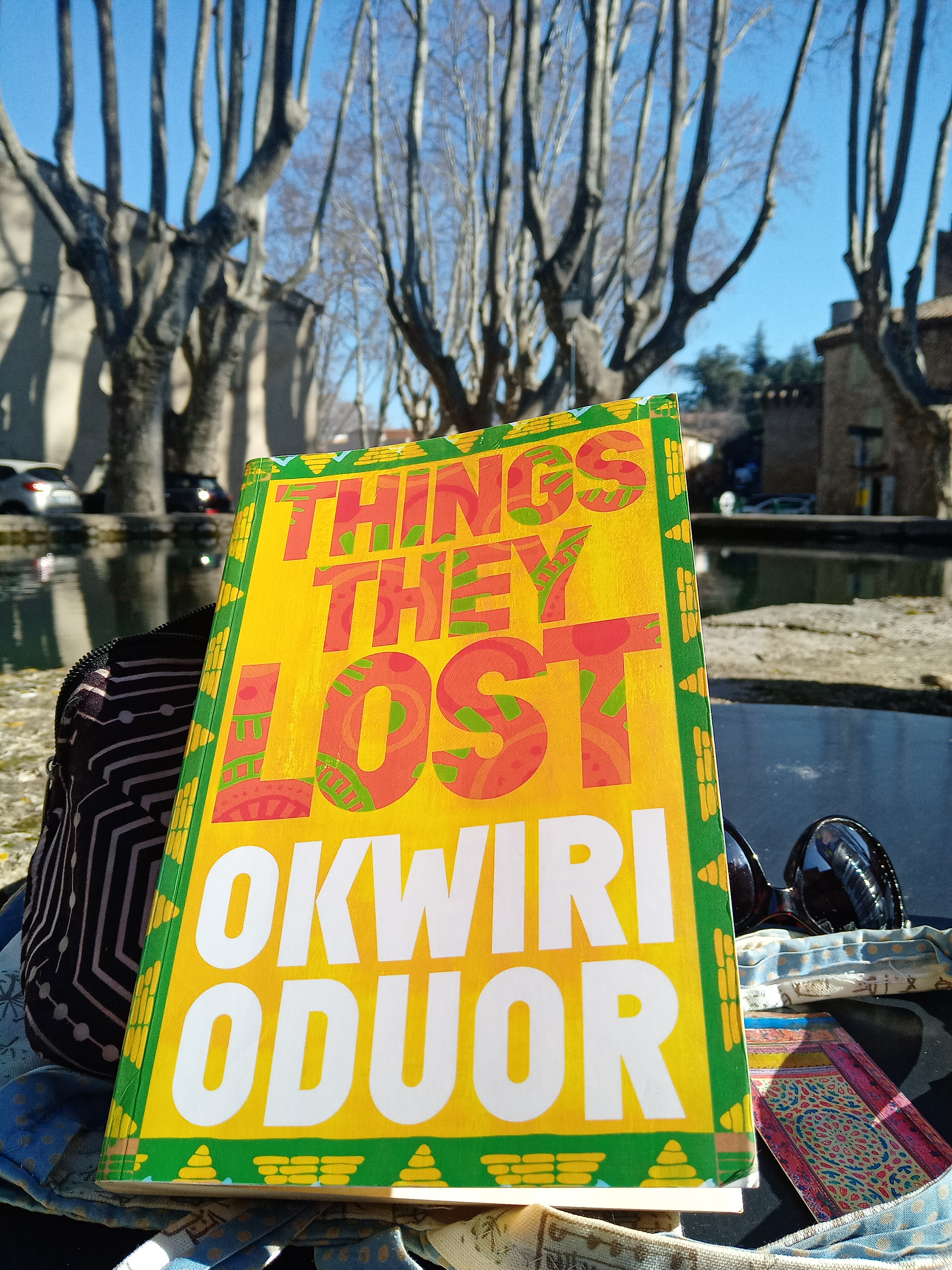
Things They Lost by Okwiri Oduour (Kenya)

Kenyan literary fiction Dylan Thomas Award 2023

This book is an absolute gem, a post-colonial, coming of age novel of a young girl Ayosa, living in a neglected house, full of aspects of the past, whose mother is often absent; she is kept company by her notebook, the radio, a couple of kind neighbours and a new friend, all of whom compensate in some way for this loss. Ayosa is omniscient, and remembers things from before she was born.

The story is told in vibrant, mesmerising prose that depicts her coming of age, the effect of abandonment and the nurturing to be found in her community, while allowing the reader to see from another perspective. In letting go of our own version of reality, we are invited to see differently, to understand anew. A story of mothers, daughters and of girls who are abandoned and alone, of girls who create family with other lonesome girls and of how death continuously permeates our lives and how poetry can redeem it.

This is a wonderful example of the richness that comes from reading stories told through the lens of a culture and mythologies other than one’s own. What Oduor accesses and how she tells this story is unique, enlightening and unforgettable. It was one of the most exhilarating reading experiences I have ever had, so new and otherworldy and insightful. A favourite author immediately. Longlisted for the Dylan Thomas Prize 2023.

A total trip, I read this in February and nothing came close to knocking it off top spot.

Top 7 Fiction

In no particular order, here are my top fiction reads of 2023, click on the title to read my review:

Japanese literature literary fiction

Child of Fortune by Yuko Tsushima (Japan) (1978), translated by Geraldine Harcourt (1986)

– I have not read much Japanese literature, but I was intrigued to read Yuko Tsushima based on reviews I had read on JacquiWine’s Blog. This novella is an immersive account of a young mother of an 11-year-old daughter, raising her alone without support and under the judgmental eye of a sister, whom the daughter increasingly prefers to be around. It is an unravelling, a period of giving in to what others think, before a quiet reassertion of her own unconventional beliefs, an honest reckoning and struggle for freedom.

Introspective, often uncomfortable, an immensely powerful read.

Nobel Prize Literature 2021 fiction

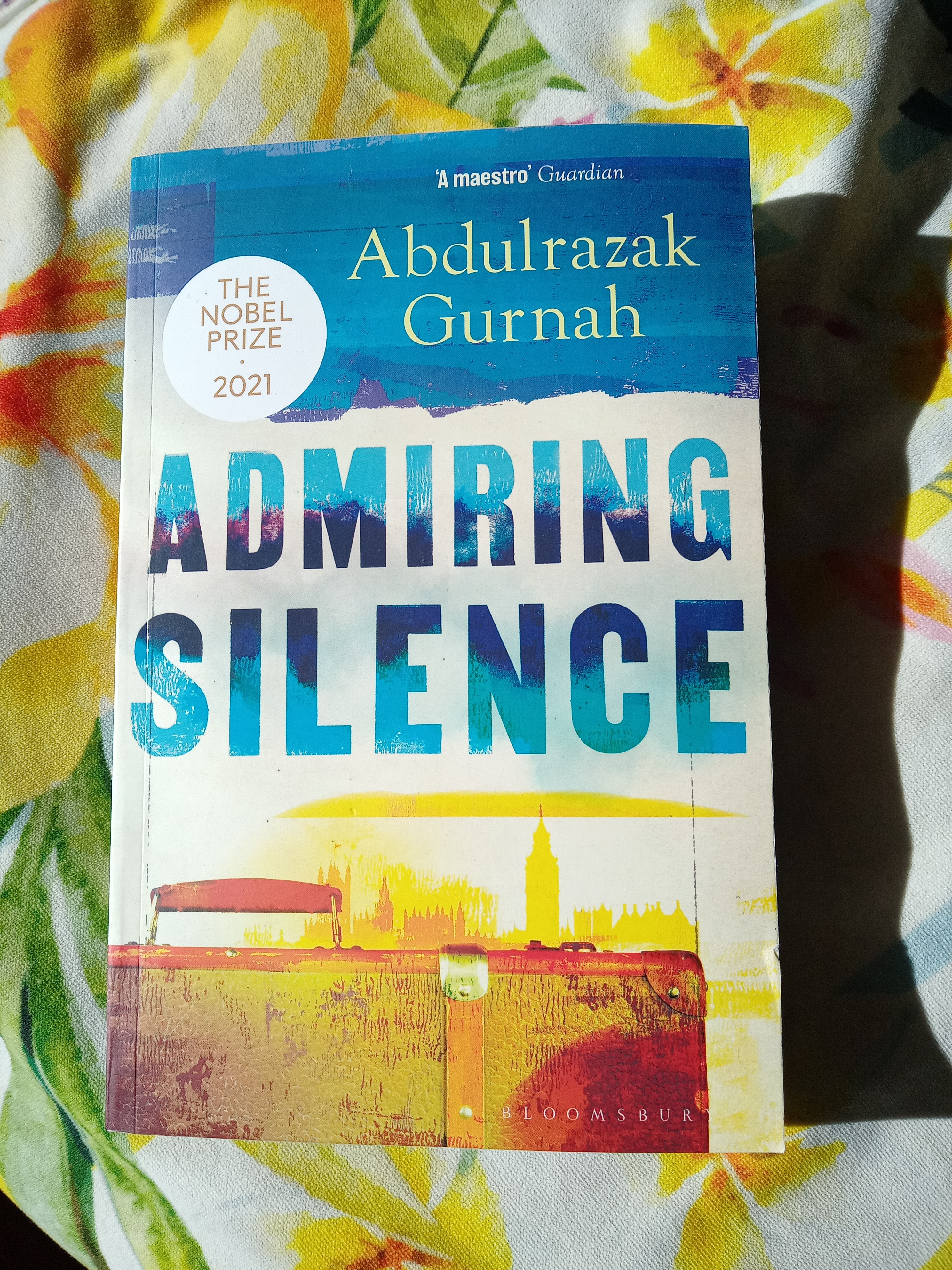
Admiring Silence by Abdulrazak Gurnah (Zanzibar/Tanzania/UK) (1996)

Gurnah won the Nobel Prize for Literature in 2021 and I chose this book to acquaint myself with his readability and discovered an insightful, erudite and humorous author from an island off the west of Africa, now based in the UK, who depicts the complexities of cross cultural relationships and the push/pull effect of having allegiances to two countries and cultures.

In this novel a young fatherless man from Zanzibar furthers his studies in England and begins to make a life there, without being totally upfront with his family about his circumstances. He observes his new life and relationships, avoiding his past, until it can no longer be ignored. 20 years after leaving, he returns.

Insightful, uncompromising yet compassionate, a chronicler of the outsider.

Italian feminist writing classic 1940s 1950s

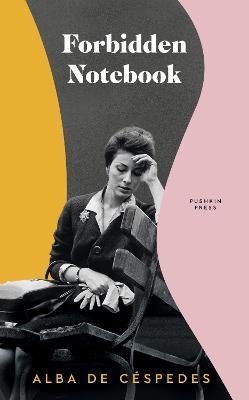
Forbidden Notebook, Alba de Céspedes (Italy/Cuba)(1952) translated by Ann Goldstein (Italian) (2023)

– this lost classic was a joy to discover and compelling to read as a middle aged working woman with two older children, begins to discover aspects of herself she has never dared to allow flourish, discovering through the act of writing in a notebook. The purchase of the notebook is her first transgressive act and the revelations within it will lead her to consider more. At first, a stranger to herself, it is revealing to witness how her thoughts and actions are often in conflict, so ingrained are society’s expectations, her will is unknown to her until she discovers it on the pages of her notebook.

A riveting, feminist awakening follows a restless rebellion from this unique Italian voice, with Her Side Of The Story (1949) coming in translation from Daunt Books Publishing in 2024.

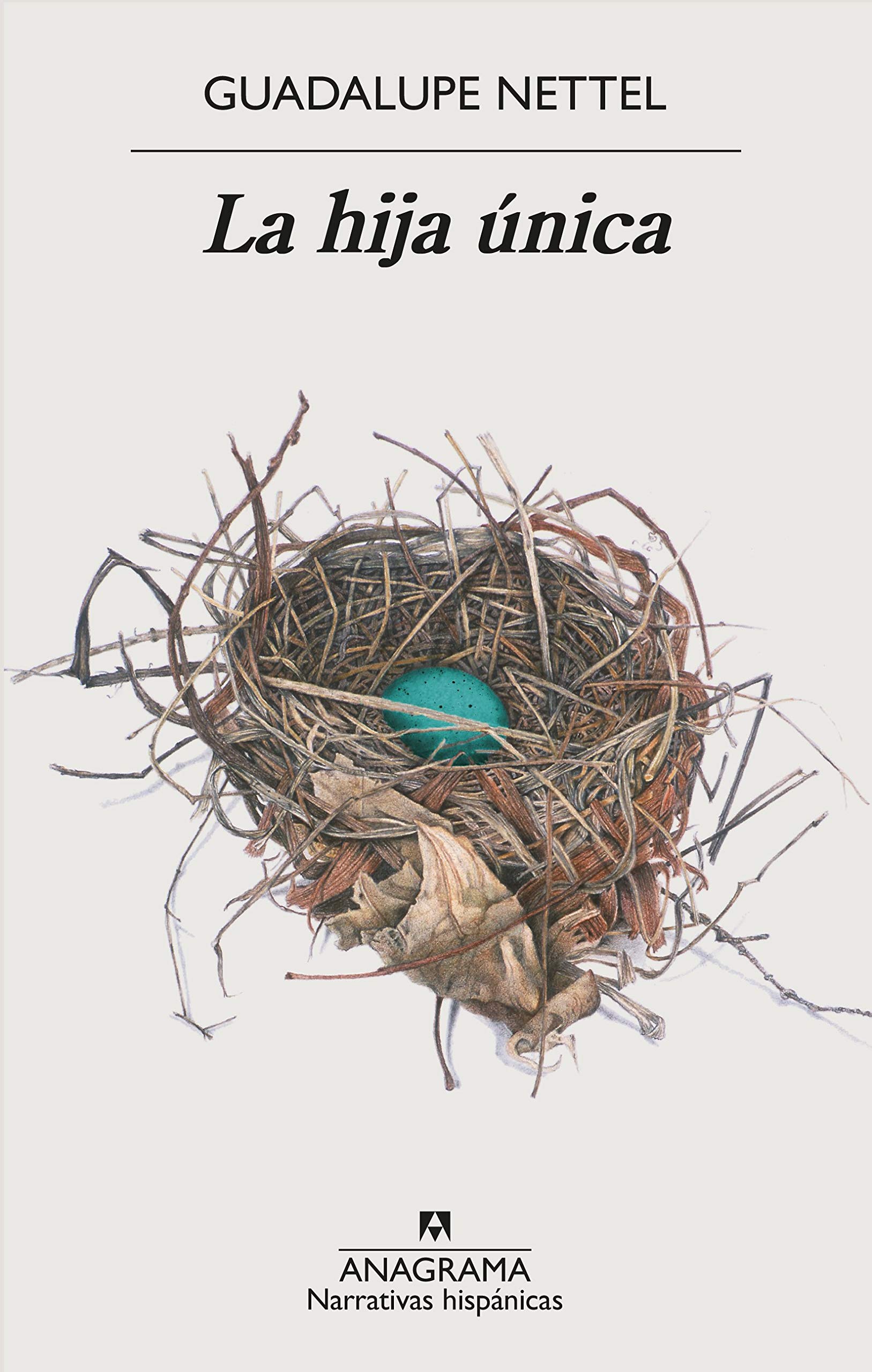
La hija unica Mexican literary fiction Women in Translation

Still Born by Guadalupe Nettel (Mexico) (2020), translated by Rosalind Harvey (Spanish) (2023)

– shortlisted for the International Booker 2023, this was a standout read for me, another whose method of storytelling was so compelling, it felt like I was reading a true story; I was sure the author must have had first hand experience to have portrayed much of what I read, as it concerned a family with a child that was often hospitalised and the way their treatment by the institution made them feel.

The story is about two independent and career-driven women, friends who initially declared they did not wish to have children and how their lives change as motherhood touches in different ways.

Like Claudia Pineiros’s A Little Luck, there is a thematic subplot, this time involving a pair of pigeons with two eggs in their nest, that appear to have been subject to a brood parasite.

A riveting read, a visceral encounter of all that surrounds the decision or be or not to become a mother, a carer and how the most insistent of intentions can mould, evolve and change according to our nature and circumstances.

women in translation argentinian literature crime fiction literary fiction

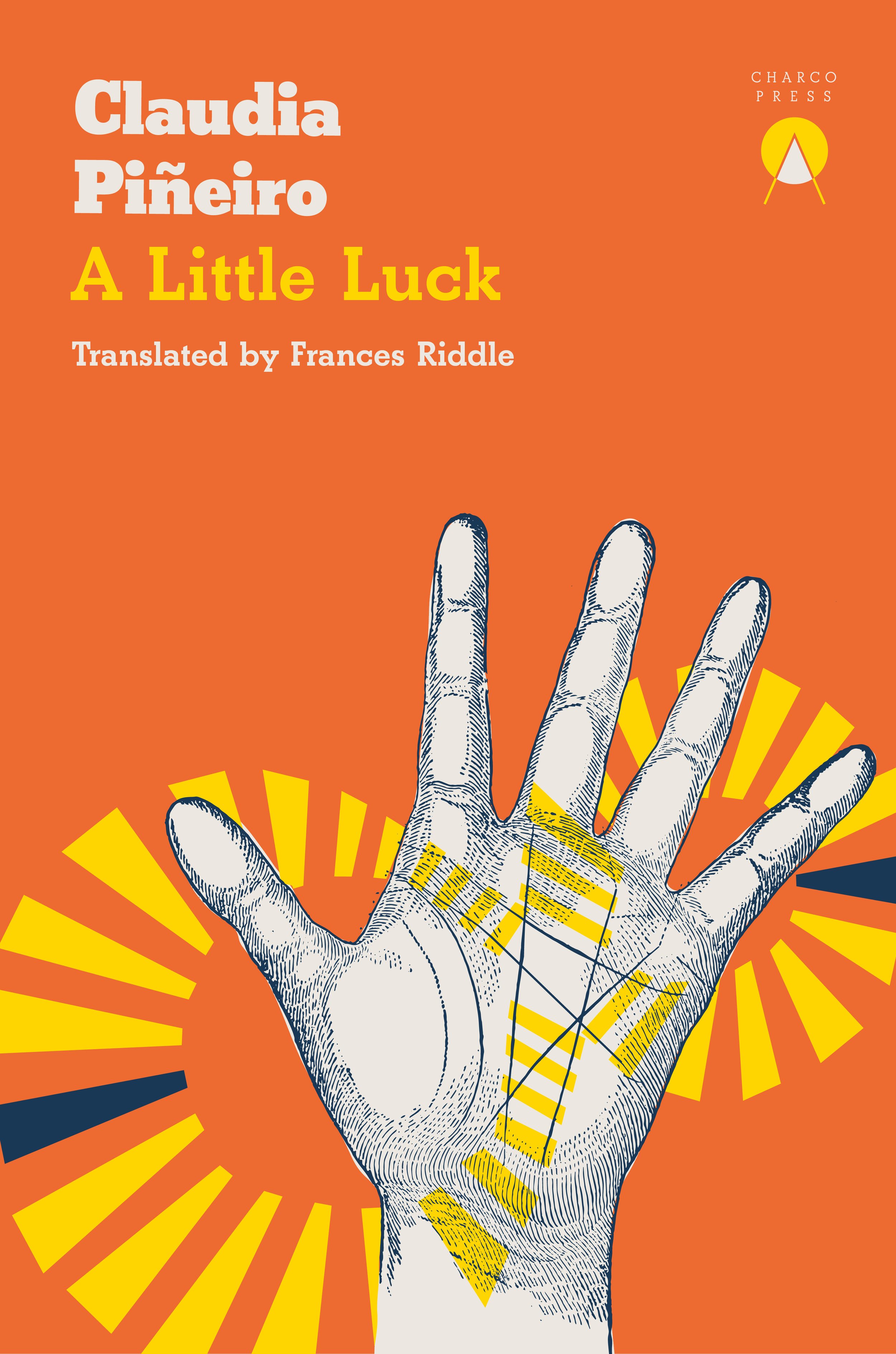
A Little Luck by Claudia Piñeiro (Argentina)(2015) translated by Frances Riddle (Spanish) (2023)

– having enjoyed Elena Knows I was keen to read more and this was absolutely stunning, intense, moving and one I could not put down. A woman returns to her home town after 20 years, in fear of what she is likely to confront. As her backstory is slowly revealed her visit provides the opportunity to reflect on the past and heal from tragic events.

A tour de force!

literary fiction Irish

Old God’s Time by Sebastian Barry (Ireland) (2023)

– clearly a writer at the height of his literary powers, this was a riveting, yet slow burning, introspective read. It observes a retired policeman’s new routine in his first year of retirement, disrupted by the investigation of a cold case, which awakens old memories of events he has no wish to revive.

The way Barry writes, we enter the declining mind of his protagonist, equally unsure of what is real and what is memory trying to re-impose itself. As the story progresses, the past comes back with a force, revealing the effect of rage and the counter effect of genuine familial love. Utterly brilliant.

Irish Book Awards 2023 motherhood literary fiction

Soldier Sailor by Claire Kilroy (Ireland) (Literary Fiction) (2023)

– a new author for me, Soldier, Sailor made quite an impression on those who read it including me. It confirms that I love to read books that make you feel the experience of the protagonist, this is a clear theme in many of my top fiction reads for 2023.

Soldier Sailor is the story of a mother (Soldier) and her son (Sailor) and the wild ride that entering motherhood takes her on, one she is little prepared for and ravaged by. Never sentimental, it takes the reader to the edge of a woman’s sanity, to coping and not coping with the onslaught of caring for an unformed, small human, a text written in the second person, addressed to that son, a sharing and a warning to him, to beware and be aware.

Motherhood as a thriller, a test of one’s sanity, the necessity of solidarity with a genuine friend.

The Special Mentions, The Other Seven

I couldn’t leave without sharing the close runners up, all of which were five star reads, that I highly recommend, I will leave you to discover them through my reviews (click on the title) below, should you be interested to learn more about their merits.

I loved the short story collection, Sambac Beneath Unlikely Skies (2021) by Heba Hayek (Gaza, Palestine) short vignettes of childhood, auto-biographical fiction; I was riveted by the debut novel The Dry Heart (1947) by Natalia Ginzburg (Italy) translated by Frances Fenaye (2021); in deep admiration of the classic debut novel Go Tell it On The Mountain (1953) by James Baldwin (US); best summer light read Lessons in Chemistry (2022) by Bonnie Gamus (US); most informative and memorable, historical fiction, The Art of Losing (2017) by Alice Zeniter (French) translated by Frank Wynne (2021); the unforgettable reflections of two men observing a fallen man in Two Sherpas (2018) by Sebastian Martinez Daniell (Argentina) translated by Jennifer Croft (Spanish) (2023); and another excellent novel in Baumish prose, from one of my all-time favourite authors Seven Steeples (2023) by Sara Baume (Ireland).

* * * * * * * *

Did any of these make your year end favourites? I hope you fins something here that might tempt your reading taste buds in 2024. Happy Reading and Happy New Year All.

A Little Luck by Claudia Piñeiro tr. Frances Riddle

women in translation argentinian literature crime fiction literary fiction

Stunning.

This was a heart-racing, thrilling and moving read that begins mysteriously as a woman returns to her home country (Argentina) following some kind of event 20 years earlier that we don’t fully learn of until almost halfway into the novel. 

Though she lived most of her early life there, her physical appearance is so radically different, no one recognises her – yet.

We are made aware, though it takes a while to reveal, that she is anxious about the possibility of seeing someone connected to that past event, that sent her into self-imposed exile.

I should have said no, that I couldn’t go, that it would have been impossible for me to make the trip. Whatever excuse. But I didn’t say anything. Instead I made excuses to myself, over and over, as to why, even though I should’ve said no, I agreed in the end. The abyss calls to you. Sometimes you don’t even feel its pull. There are those who are drawn to it like a magnet. Who peer over the edge and feel a desire to jump. I’m one of those people. Capable of plunging headlong into the abyss to feel – finally – free. Even if it’s a useless freedom, a freedom that has no future. Free only for the brief instant that the fall lasts.

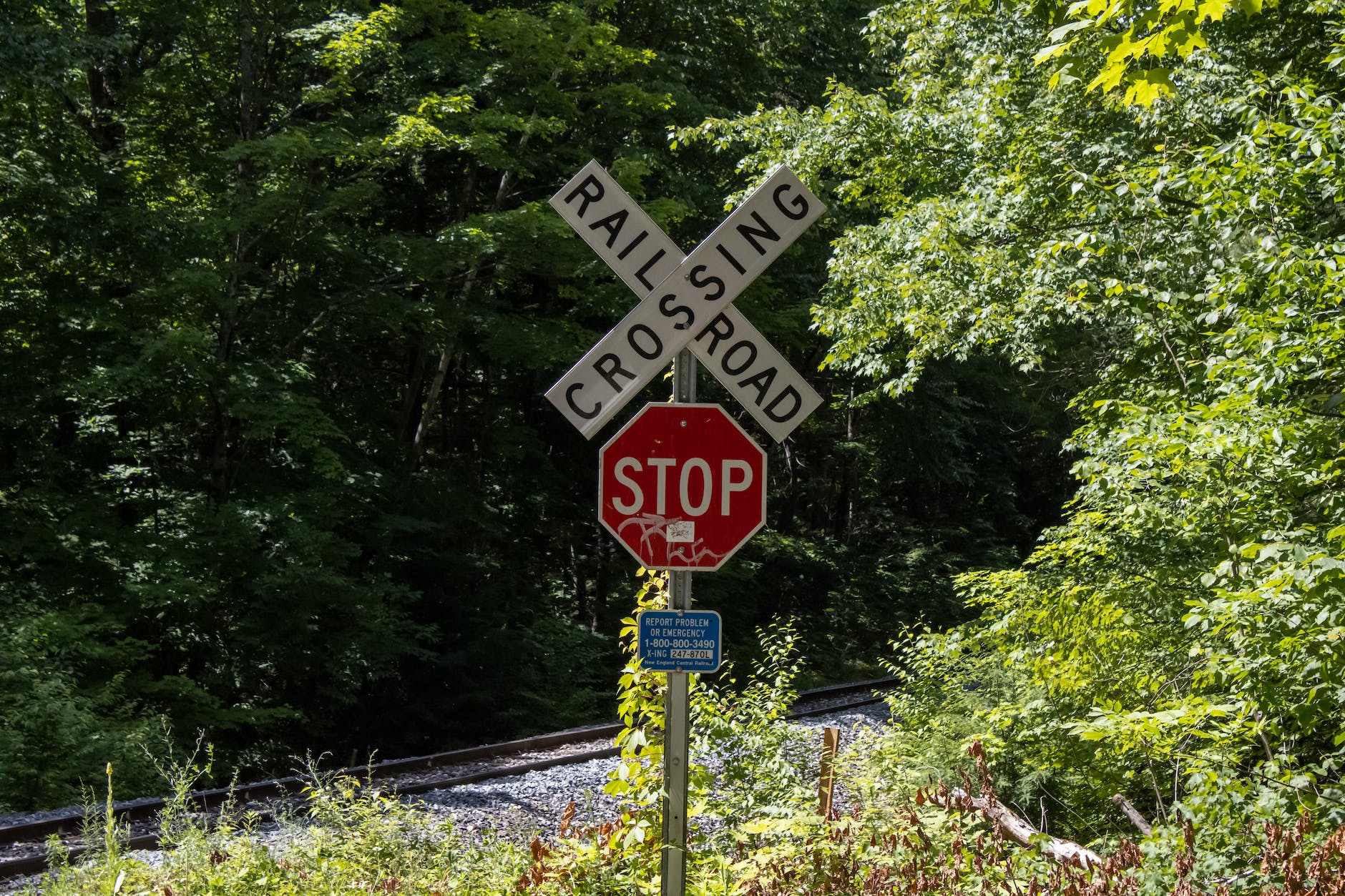
rail crossing train barrier A Little Luck
Photo Tim Dusenberry Pexels.com

As the mystery unravels, the tension mounts. Each new chapter begins with part of the backstory, then stops, this is used as a kind of repetition, as the narrator acquires the courage to reveal the full extent of the backstory.

The constant repeating of this text adds to the volume of its impact on the reader and the sense of suspense and intrigue.

The barrier arm was down. She stopped, behind two other cars. The alarm bell rang out through the afternoon silence. The red lights below the railway crossing sign blinked off and on. The lowered arm, the alarm bell, and the red lights all indicated that a train was coming.

As these events of the past some into clarity, in the present day this woman is booking into a motel, arranging to visit the school that she will consider for accreditation, we encounter the mndane reason for her visit and the extraordinary motivation behind it.

Photo by Y. Shuraev Pexels.com

Simultaneously we follow a small sub-plot drama featuring a bat. And a theme of entrapment. The story of the bat corresponds to our protagonists state of mind and how it evolves over the course of the novel. Once again she must make a life or death decision.

I’m still trapped. I must now decide whether to go out and face the task at hand or stay here and wait for the poison to kill me or the smoke to force me out.

Ultimately, it explores many themes, in a profound way, of motherhood, of domination, community judgement, condemnation and gas-lighting, of the effect of undermining a person’s self-worth, of twin aspects of abandonment, of why it might be deemed necessary and the effect it has on the one abandoned.

Do I deserve to explain why? What I mean is, do I have that right? The right to unburden myself and expect someone to listen?

Claudia Piñeiro’s Elena Knows (see my review here) I found curious; there is a similar feeling of mysteriousness as the author withholds telling all, drawing the reader in – however, in A Little Luck, she plummets the mind of the protagonist, letting us into her thoughts, showing us the events and enabling the reader to witness the reactions – allowing us to see the patterns, those all too familiar ways of subjugating a person, of the desire to blame, the withdrawal, the disappearance.

A Little Luck is also a story of healing, of kindness and finding the one person who puts the right thing in one’s way that will lead to release. In this story, a kind man finds the right stories that assist a woman to express and release suppressed emotions. And sends her on a trip.

I began to list the questions that I’d asked myself while reading Alice Munro’s story, questions posed in her words. ‘Is it true that the pain will become chronic? Is it true that it will be permanent but not constant, that I won’t die from the pain? Is it true that someday I won’t feel it every minute, even though I won’t spend many days without it?

Brilliantly conceived, after a few chapters, I absolutely could not put it down, I highlighted so many passages, and it had a surprising though satisfying, tear-jerking conclusion, definitely one of my top fiction reads of 2023. I read this in October, but found it hard to describe the intense reading experience, but I’m sharing my thoughts now, before my end of year review, where it will feature!

Highly Recommended, another fabulous title from Charco Press!

Claudia Piñeiro, Author

As an author and scriptwriter for television, Claudia Piñeiro has won numerous national and international prizes, among them the renowned German LiBeraturpreis for Elena Knows and the prestigious Sor Juana Inés de la Cruz Prize for Las grietas de Jara (A crack in the wall).

She is best known for her crime novels which are bestsellers in Argentina, Latin American and around the world. Many of her novels have been adapted for the big screen. According to the prestigious newspaper La Nación, Claudia Piñeiro is the third most translated Argentinean author, after Borges and Cortázar.

More recently, Piñeiro has become a very active figure in the fight for the legalisation of abortion in Argentina and for the legal recognition of writers as workers. Her fiction (as shown with Elena Knows) is stemmed in the detective novel but has recently turned increasingly political and ideologically committed, reflecting the active role she plays in the fight for the legalisation of abortion in Argentina and Latin America, and for the recognition of employment rights for writers..

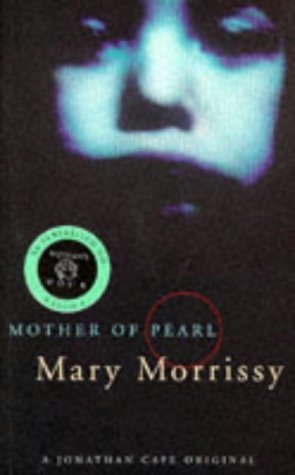
Mother of Pearl by Mary Morrissy

I decided to read Mother of Pearl (1996) as a precursor to Mary Morrissy’s latest novel Penelope Unbound (2023), a re-imagined and slightly changed life of Nora Barnacle (the wife of James Joyce) which I intend to read in 2024. Having enjoyed Nuala O’Connor’s excellent novel Nora, I’ll be curious to see where Morrissy takes her.

It is only now, since the death of Joyce’s grandson Stephen in 2020, one of the most litigious heirs in history, that stories can safely be written about Nora and James Joyce – as Stephen did all he could to prevent access or usage of the family archive, including the destruction of hundreds of letters. James Joyce, a brilliant writer with an overprotective grandson

It seems that Mary Morrissy likes to take inspiration from real life characters or stories, and so it was with Mother of Pearl. A little backstory then before reviewing the novel.

Truth Stranger Than Fiction

A notorious baby-snatching case in 1950’s Ireland was the inspiration for Mary Morrissy’s Mother of Pearl. Re-imagining elements of that story, rather than retelling the facts was a decision she made because the truth would have come across to readers as unbelievable. Morrissy in an article on her website explains:

Elizabeth Browne 1950 Dublin kidnap victim

Elizabeth Browne, above, was kidnapped from a pram on Henry Street in Dublin on November 25, 1950. Her kidnapper, Mrs Barbara McGeehan, who lived in Belfast, took her north on the train and passed her off as her own child to her unsuspecting husband.

Four years later – and this is where truth is stranger than fiction – Mrs McGeehan travelled south again and stole another child, this time a boy, Patrick Berrigan, from outside Woolworths on Henry Street. As luck would have it, a fellow passenger on the Belfast train noticed Mrs McGeehan, in particular that she had no milk for her baby, and went to the dining car to get some. Afterwards when the alert was raised about the Berrigan baby kidnap, she remembered this incident and contacted the police.

Mrs McGeehan was traced to her home in the White City estate in Belfast where police found the Berrigan baby and the four-year-old Elizabeth Browne, now renamed Bernadette. In these pre-DNA days, she was identified by a distinctive birth mark, and her parents, news-vendors John and Bridget Browne, travelled to Belfast to claim her.

Identity Trauma

What interested Morrissy in particular, was the identity trauma of a four-year-old being forcibly removed from a loving home and familiar “parents” and being returned to a family, who though biologically related, were strangers to her.

Clearly this was something Elizabeth’s parents thought about or experienced the repercussions of, because there was another twist, a strange fact that once again did not go into the novel. After Mrs McGeehan served her two year jail year sentence for the kidnap, the Browne family contacted her. Following their reconciliation, every year Elizabeth would travel to Belfast to spend a holiday with the very same woman who had kidnapped her.

Though Elizabeth would marry and have her own family, sadly she died at the very young age of 38 years from cancer.

The Novel, A Dark Re-Imagining

A novel in three parts, Mother of Pearl explores perspectives in three women’s lives, the first two will mother the same child, the third is that of the child grown – the consequence of a repressed childhood, of events never talked about, of the effect of those events and years and the suppression of them, on her psyche.

Part 1 – We meet Irene in Granitefield sanotorium, an institution where she spends some years due to having contracted TB. She willingly leaves her family behind and finds some kind of comfort in the hospital environment, electing to remain there as an employee long after she has recovered from her illness and might easily have left.

The operation, they told her, had saved her. But she had lost four of her ribs, cracked open by a giant pair of shears…Without her ribs Irene felt as if part of her protection against the world had been removed.

Standing vigil, she is known to recognise the imminence of death patients. One in particular will be kife changing.

Irene knew the moment she saw Stanley Godwin that he was watching someone beloved die. Healthy people keeping vigil seemed to take on the symptoms of the disease.

This son, who is with his mother, suddenly understands the implications of his mothers death, of the great loss and hole in his life, her absence will mean for him. His attention moves towards Irene.

Inwardly he was quaking. He could comprehend the impending loss; what he couldn’t imagine was his life afterwards. A middle-aged man about to be granted unwanted freedom.

Outside of the institution, longing for a child she knows will not come, brooding on her own losses, Irene succumbs to fantasies and one day indulges her desire, removing a sickly child from a hospital, a baby she names Pearl.

This was her offspring, hers alone, the child of her illness, Irene’s first loss. And she was still out there. Not dead, simply lost. In a hospital ward somewhere, unclaimed, waiting for her mother. This time Irene determined she would tell no one, not even Stanley. She would seek out the child who was rightfully hers, the fruit of Eve’s ribs.

Part 2 – We meet Rita, who becomes Mrs Mel Spain, mother of the baby she had not initially realised how much she wanted, until the day she is taken from her. And the husband Mel, son of an absent father, who feels a yearning to follow in his carefree footsteps.

It didn’t stop Mel wondering, however, how his father had managed the extraordinary trick of disappearing into thin air. He had become invisible by simply walking out of his life. Ten years after the event, as he nursed his fourth drink of the night, Mel finally understood how easy it must have been. It was not, as he had always thought, a daring but calculated move; it was a matter of impulse and extreme selfishness.

Part 3 – we meet the child, a child who remembers little of her early life, who is told stories that don’t resonate with the dream-like memories she has, who feels like an outsider in her family and can not explain to herself why.

Exploring themes of loss, abandonment, denial, Mother of Pearl takes us inside the dysfunction of family, of obsession with and rejection of a child, of the long-lasting impact on those formative years of the compromised adult that will little understand their own inclination(s), as those threads of early development and the scars of traumatic events imprint on their psyche and affect their future selves.

A compelling and thought provoking read that is all the more astounding given the events that propelled the author to recreate such a situation.

Further Reading

The Guardian: Penelope Unbound by Mary Morrissy review – masterly alternative life of Nora Barnacle by John Banville

JSTOR Interview With Mary Morrissy, Studies, An Irish Quarterly Review Vol. 87, No. 347 (Autumn, 1998)

Author, Mary Morrissy

Mary Morrissy was born in Dublin in 1957.  She has published four novels – Mother of Pearl (1995), The Pretender (2000), The Rising of Bella Casey (2013) and Penelope Unbound (2023) and a collection of short stories, A Lazy Eye (1993). 

She won a Hennessy Award for short fiction in 1984 and a prestigious US Lannan Literary Foundation Award in 1995.  Mother of Pearl was shortlisted for the Whitbread/Costa Award and longlisted for the Women’s (Orange)Prize for Fiction (1996) while The Pretender was nominated for the Dublin Impac Award and shortlisted for the Kerry Group Irish Fiction Award. The Rising of Bella Casey was nominated for the Dublin Literary Award.

A member of Aosdána, she is a journalist, a teacher of creative writing and a literary mentor. She blogs on art, fiction and history at marymorrissy.com

“I suppose I explore a female kind of darkness. My characters tend to be very restricted, restricted emotionally, I mean, by fear and guilt and an inability to move in and inhabit the centre of their own lives. And despite all our so-called modernity, I think this still holds true for thousands of women. We may have broken away from the traps of our mothers’ generation, but there is a long way to travel before women have, if I may use the phrase in this context, parity of esteem. - Interview with Mary Morrissy, Studies, An Irish Quarterly Review Vol. 87, No. 347 (Autumn, 1998)

The Wager, A Tale of Shipwreck, Mutiny and Murder by David Grann

A tale of shipwreck mutiny and murder British navy

The Wager by David Grann recently won the 2023 Goodreads Choice Award for Best History & Biography.

David Grann is the author of the #1 New York Times bestsellers Killers of the Flower Moon (recently made into a film by Martin Scorcese) and The Lost City of Z.

In this latest book he chronicles the fate of the 18th century British warship, the Wager, which had set out on a secret mission during an imperial war with Spain (with dubious reasoning behind it), with the intention of tracking down a fleet rumoured to be carrying a horde of treasure.

Not only was there a significant human cost to these excursions, it was the era of plundering natural resources, constructing a single large warship could require as many as four thousand trees, therefore a hundred acres of forest might be felled.

The conflict was the result of the endless jockeying among the European powers to expand their empires. They each vied to conquer or control ever larger swathes of the earth, so that they could exploit and monopolise other nations’ valuable natural resources and trade markets. In the process, they subjugated and destroyed innumerable indigenous peoples, justifying their ruthless self-interest – by claiming they were somehow spreading “civilisation” to the benighted realms of the earth. Spain had long been the dominant empire in Latin America, but Great Britain, which already possessed colonies along the American eastern seaboard, was now on the ascendance – and determined to break its rival’s hold.

Wrecked off the coast of Patagonia, after rounding the notoriously dangerous Cape Horn, those who survived would spend months on an island before putting together makeshift vessels from what they had salvaged, leaving the island in two groups, heading in opposite directions, with different stories to tell.

Reading Outside the Norm

It’s not my usual reading fare, however after reading a praise-worthy review, I was drawn to it, when I read that the men who laboured on these large ships were often kidnapped and forced to crew, sometimes taken from workhouses or even snatched just as they were returning from having crewed on another ship, much to the consternation of their waiting families.

After peaceful efforts to man the fleets failed, the Navy resorted to what a secretary of the Admiralty called a “more violent” strategy. Armed gangs were were dispatched to press seafaring men into service – in effect, kidnapping them. The gangs roamed cities and towns, grabbing anyone who betrayed the telltale signs of a mariner: the familiar checkered shirt and wide-kneed trousers and round hat; the fingers smeared with tar, which was used to make virtually everything on a ship more water-resistant and durable.

It took a little to get into the rhythm of the book, as the various characters and their backgrounds were introduced, just as the ship HMS Wager delayed leaving British shores due to setbacks, both human and due to adverse weather conditions. Once they set sail, on August 23, 1740 and with the help of route maps on the inside front and back flaps, the story became more captivating.

Hidden Histories in the Archives, Disrupting the Historical Narrative

It is a fascinating account that David Grann became aware of upon visiting the UK National Archive in Kew, reading an ancient logbook of one of the crew of the ship, which then lead him to other accounts of the adventures of those onboard, in particular, rival perspectives on what happened after HMS Wager was shipwrecked on May 14, 1741 off the southern coast of Patagonia, Chile.

The time survivors spent on Wager Island is reminiscent of William Golding’s Lord of the Flies. As Captain David Cheap tries to keep order and calm, as food sources they manage to salvage deplete and disagreements increase, men become desperate, divisions occur, loyalties waver.

When the Captain crosses a serious line, his authority and ability to stay in charge decline, causing a major rupture in support for the direction they plan to take.

Indigenous Intuition, Avoiding the Real Savagery

One of the more interesting parts of their land based story, given how difficult it was for them to survive and the factions that develop as the group splits loyalties, was the arrival of a group of Kawésqar indigenous people, who pretty much live in their canoes circumnavigating the coast, living off the land, sea and foreshore.

These people helped the castaways by obtaining meat and seafood for them, quickly and adeptly building dwellings and then would leave (they knew not to trust these pale faced marauders). Witnessing the insidious tensions mounting among the castaways, one morning they would awake to discover them, their canoes and dwelling all gone, never to return.

Aware of how helpless the Englishmen were, the Kawésqar would regularly venture out to sea and then magically return with nourishment for them. Byron saw one woman depart with a companion in a canoe and , once offshore, grip a basket between her teeth and leap into the freezing water. “Diving to the bottom,” Byron wrote, she “continued under water in an amazing time.” When she emerged, her basket was filled with sea urchins – a strange shellfish, Byron wrote, “from which several prickles project in all directions.”

Logbooks of Seafaring Adventures Can Be Important Navigation Tools

Eventually the castaways would rebuild from what they had been able to salvage, another sailing vessel and one group who disagreed with the Captain which route to take would depart in one direction and the rest, some months later in the opposite direction.

Cheap’s plan, meanwhile, was taking on new, hidden dimensions. Poring over charts, he began to believe that there was a way to not only preserve their lives but also fulfill their original military mission. He calculated that the nearest Spanish settlement was on the island of Chiloé, which was off the Chilean coast and some 350 miles north of their present location.

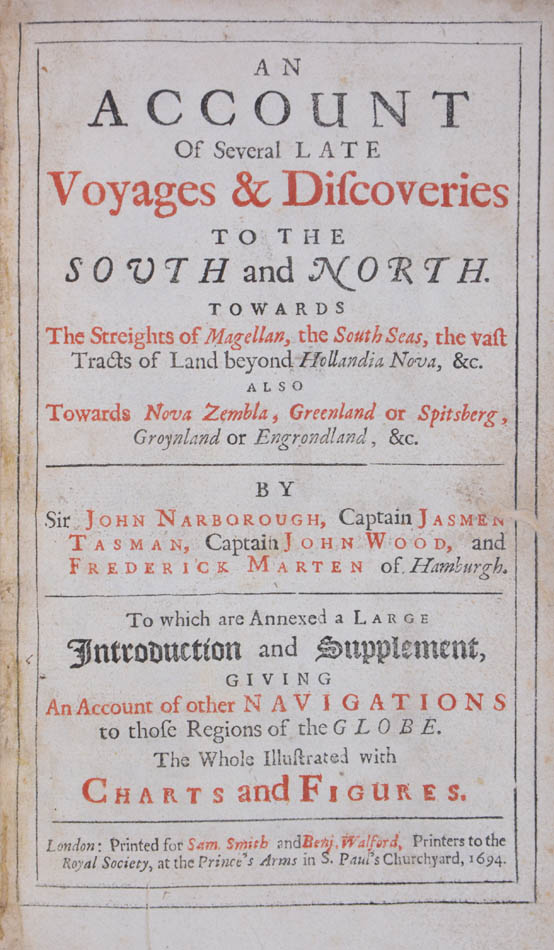
Bulkeley, on the other hand, borrowed the 16-year-old midshipman John Byron’s copy of Sir John Narborough’s chronicle of sea tales exploring the Patagonia region, believing it may contain critical clues for navigating a safe passage away from Wager Island. He would use this reference to take his group of men through the tricky Strait of Magellan, thus avoiding Cape Horn.

After a voyage, the captain of a ship turned over the requisite logbooks to the Admiralty, providing reams of information for building an empire – an encyclopedia of the sea and of unfamiliar lands.

Anson and his officers would frequently consult the journals of the few seamen who had ventured around Cape Horn.

Moreover, these “logbooks of memory”, as one historian coined them, created a record of any controversial actions or mishaps that occurred during a voyage. If need be they could be submitted as evidence at courts-martial; careers and lives might depend on them.

Who Is Actually On Trial Here, Man or An Empire?

The trip culminates in some survivors return to England and various allegations against different people, threat of imprisonment or hanging. A trial will be held.

In the meantime the stories and individual accounts captured the imagination of ‘Grub Street hacks’ and others who profited by publishing narratives of the high sea and inhospitable island adventures, in an era that ironically resembled the ‘fake news’ era of our own time. Due to the sheer number of differing accounts, perceptions of the Wager affair varied from reader to reader.

Once the broadsheet newspapers and periodicals were filled with breathless reports, book publishers competed to release first-hand accounts from the former castaways.

Though few of those narratives survived today, plenty of archive material made it possible for David Grann to put together an interesting account of an inconclusive British imperial adventure that may have lost the nation more than just men and a ship, but much credibility for the human and financial cost of their exploits, all in the name of retaining their perception as being a superior imperial power.

Author, David Grann

David Grann is an American journalist, a staff writer for The New Yorker and author of Killers of the Flower Moon, The Osage Murders and the Birth of the FBI, which was a finalist for the National Book Award and winner of an Edgar Allan Poe Award for best true crime book. He also wrote The Lost City of Z, A Tale of Deadly Obsession in the Amazon shortlisted for the Samuel Johnson Prize, also adapted into a critically acclaimed film directed by James Gray.

Grann’s investigative reporting has accumulated several honours, including a George Polk Award. He lives with his wife and two children in New York.