
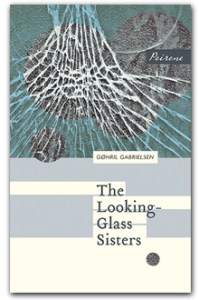
This is a tragedy about a woman who yearns for love but ends up in a painfully destructive conflict with her sister. It is also a story about loneliness – both geographical and psychological. Facing the prospect of a life without love, we fall back into isolating delusions at exactly the moment when we need to connect.
Mieke Ziervogel, Peirene Press
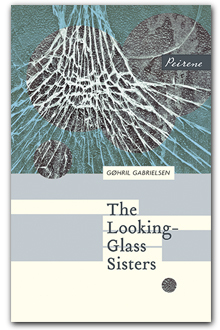 Two sisters have lived in the same house all their lives, their parents long gone and they can barely tolerate each other. They are bound together in one sense due to the practical disability of the younger sister, but also through the inherent sense of duty and responsibility of the first-born.
At times like these, in the dark, maybe with a candle lit, a sudden, intense feeling overcomes me that Ragna and I are one body, completely inseparable. We have gradually let go of parts of ourselves in favour of the other. Over the years, through conflicts and confrontations, we have shaped, kneaded and formed ourselves into a lopsided, distorted yet complete organism. Ragna has the body and I have the soul. She puts on the firewood, I do the thinking. She makes the tea, I read and write.
They manage with their hostile acceptance of each other until the new neighbour Johan begins to visit and competes for the attention of the able, caring, repressed Ragna, a potential disruptive threat to her invalid sister and to the way things in their household have been for a long time.
Days and weeks go by, I glide into a soothing rhythm of calm everydayness. It is an illusion, I know that, for beneath the dependable surface conspiracies smoulder, along with my sister’s hot-tempered desire for her own life.
Narrated from the perspective of the crippled sister in a stream of consciousness style, its intense, frustrating and laced with a sense of foreboding as the third character, Johan, arrives and either in her imagination or in reality – we are never quite sure – convinces the sister to make plans to change their circumstances.
Can it be that I, the sick one, have given rise to impatience in Ragna because of my exaggerated gestures and unreasonable demands? Can it be that I, the helpless one, have bred the anger in her by making myself more pathetic than I am? And can it be that I, in my struggle to gain the inviolable position of victim, have forged and fashioned Ragna the violator?
Claustrophobic, at times surreal, it fits perfectly with the Peirene Press Close Encounters theme, which comprised the three novellas below.
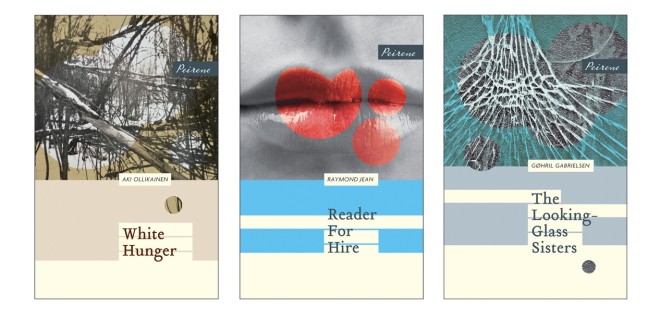
Peirene Press publish three books a year in a themed series. Their 6th series ‘Chance Encounters’ comprised three books that explored different aspects of interpersonal relationships and the importance of the Other in our development as individuals and our understanding of ourselves.







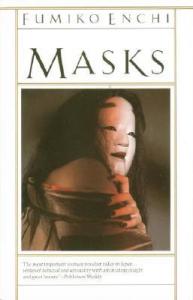
 The Door is an overwrought, neurotic narrative by “the lady writer”, (possibly Szabó’s alter-ego, as there are similarities) describing her 20 year relationship with Emerence, the older lady who interviews her prospective employer to see if she’ll consider accepting the cleaning job on offer.
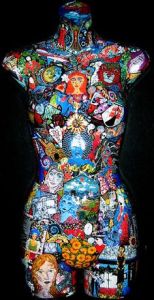 Later, only very much later, in one of the most surreal moments I have ever experienced, I wandered amidst the ruin of Emerence’s life, and discovered, there in her garden, standing on the lawn, the faceless dressmaker’s dummy designed for my mother’s exquisite figure. Just before they sprinkled it with petrol and set fire to it, I caught sight of Emerence’s ikonstasis. We were all there, pinned to the fabric over the dolls’ ribcage: the Grossman family, my husband, Viola, the Lieutenant Colonel, the nephew, the baker, the lawyer’s son, and herself, the young Emerence, with radiant golden hair, in her maid’s uniform and little crested cap, holding a baby in her arms.
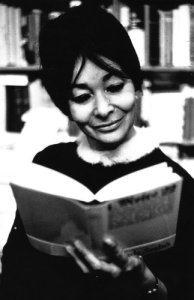 Magda Szabó was born in 1917 in Debrecen, Hungary, her father a member of the City Council, and her mother a teacher.








 Proulx hasn’t published a novel since 2002 and has spent the last ten years researching, studying, writing about and travelling to visit trees and forests of the world. Her novel has at its heart, the theme of deforestation and uses the two families to illustrate her thinking, that there is no greater protector or more harmonious dweller of a lands natural resources than those who are native to the area.





 Dear Husband,


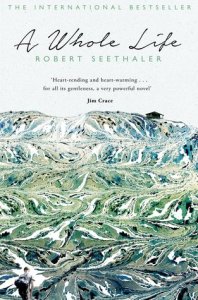 Dumped with an uncaring relative after his mother dies of consumption Andreas Eggers connects with the mountain more than with the family that barely tolerate him and when he is strong enough to resist the thrashings, will leave and make his own way as a labourer eventually earning sufficient to buy a plot of land up the mountain where he can build a cabin.
 Born in Vienna, Austria, Robert Seethaler is an actor (most recently in Paulo Sorrentino’s Youth) and writer, he grew up in Germany and now lives in Berlin. A Whole Life is his fifth novel and the first to be translated into English.
 Word by Word