The Last Migration by Charlotte McConaghy

Franny Stone is a woman with an obsession that she will follow to the death.

When we meet her she is in windswept Greenland during nesting season, braving the elements to tag birds, Arctic terns. She manages to tag three. She wants to follow them, on what might be their last migration, in a world where so many other species have already disappeared.

She is looking for a boat and a crew she can influence, to follow the birds, because they will lead these fishermen to where the fish are -they are also disappearing and this profession is in danger, both from humans wanting to stop them and by governments who want to ban their activities. Frannie doesn’t support them, but she needs them, so compromises her beliefs to pursue her obsession.

Ennis Malone. Captain of Saghani. The Saghani: an Inuit word for raven.

His vessel is one of the last legally certified to fish for Atlantic herring, and he does so with a crew of seven.

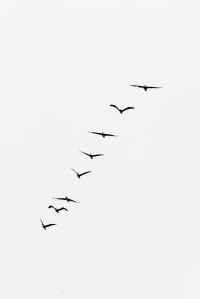
bird migration Charlotte McConaghy

Photo by Wendy Wei on Pexels.com

As they journey following the red dot tracker of the bird, her own story, character and the mystery surrounding her is slowly revealed.

I decided to follow a bird over an ocean. Maybe I was hoping it would lead me to where they’d all fled, all those of its kind, all the creatures we thought we’d killed. Maybe I thought I’d discover whatever cruel thing drove me to leave people and places and everything, always. Or maybe I was just hoping the bird’s final migration would show me a place to belong.

Chapters flick back and forward between places she has inhabited, people she has known: Ireland with her mother, Australia with an unloving grandmother, jail time, a box that reveals information about her father, letters to her husband Niall, a man we don’t know what happened to. Clues are dropped throughout the narrative, as she continues a dangerous journey.

After nearly losing one crew member they pull in to port for medical help, met by angry protestors. It is unsure whether they can continue on their mission.

novels about bird migration natureI admit I found it difficult to believe that a young woman could convince the tough crew of one of the last fishing boats to accept her suggestion to follow the blinking light of a few birds, over the knowledge and intentions of an experienced captain.

It was difficult to suspend belief, particularly as the more we come to know about her as a character, the less it seemed she was capable was influencing their decisions.

It becomes clear that she is chasing more than just a flight path, as her dark secrets are revealed.

Speculative Eco Fiction

It has been described as a hybrid novel, ‘both an adventure story and a piece of speculative climate fiction’, personally I’d call it mystery and adventure set in a not too distant future, when more species are extinct and there is a greater sense of urgency and violent activism to prevent those seen as contributing towards it.

Asked about the inspiration for writing the novel, Charlotte McConaghy said:

Toni Morrison said ‘If there’s a book that you want to read, but it hasn’t been written yet, then you must write it.’ And this book was like that for me. It just felt necessary for me to engage with this climate crisis in a personal, intimate way, to write about something that’s breaking my heart.

I enjoyed it, but it wasn’t a stand out novel for me. In the US, the book is marketed under the title Migrations, I read the UK version entitled The Last Migration.

N.B. I read an ARC (advance reader copy) of this novel, provided by the publisher via Netgalley.

Further Reading

Interview: Sophie Masson of Feathers of the Firebird interviews Charlotte McConaghy

Review: NY Times – The Animals Are Dying. Soon We Will Be Alone Here by Ellie Tzoni

I, Tituba Black Witch of Salem by Maryse Condé tr. Richard Philcox

A Maryse Condé FanGirl Moment

I Tituba Black Witch of Salem Maryse Conde

When I opened I, Tituba to begin reading, on the first page there was a quote from the author Maryse Condé that read:

Tituba and I lived for a year on the closest of terms.
During our endless conversations she told me things she had confided to nobody else.

It gave me such a good feeling to read that, knowing that Condé was doing here, what she did in Victoire: My Mother’s Mother, when the grandmother she’d never met, awakened her from her dreams, to chastise her from the corner of the room.

Sometimes I would wake up at night and see her sitting in a corner of the room, like a reproach, so different to what I had become.

‘What are you doing running around from Segu to Japan to South Africa? What’s the point of all these travels? Can’t you realise that the only journey that counts is discovering your inner self? That’s the only thing that matters. What are you waiting for to take an interest in me?’ she seemed to be telling me.

But that book wasn’t published until 20 years after Condé was listening to Tituba tell her story.

A Caribbean Writer Returns

I, Tituba is the first novel written after Segu and The Children of Segu, historical masterpieces that inform, disrupt and provoke, however the initial reaction was such that Maryse Condé declared she would never write about Africa again.

Tituba came to me or I came to her at a period of my life when really I wanted to turn toward the Caribbean and start writing about the Caribbean.

Who was Tituba?

Tituba existed, she was accused and ultimately set free, however, despite the shelves of history books about the Salem witch trials, there is little factual information about her, who she was, who freed her, or her life after release from prison.

I felt this eclipse of Tituba’s life was completely unjust. I felt a strong solidarity with her, and I wanted to offer her her revenge by inventing a life such as she might perhaps have wished it to be told.

If we look for her story in the history of Salem, it isn’t there. Condé too, looked for her history in the colonization of the continent and found silences, omissions, distortions, fabrications and fleeting, enigmatic insinuations. And so she wrote this novel.

Review

On a ship sailing for Barbados, young Abena was raped by an English sailor, then sold to a planter along with two male slaves. She was employed in the household until the pregnancy discovered whereupon she was banished to the cabin of a male slave Yao. Tituba was born.

In a short reprieve, they find comfort in each other’s company and Tituba would adored by a man more father to her than any other. The joy that now lightened Abena’s world was seen by the master and desired for himself. She struck back, died for it, and for his concubine’s crime, Yao was sold.

Driven off the plantation, Tituba was taken in by Mama Yaya; still grieving for two sons, she had cultivated the ability to communicate with the invisible.

People were afraid of her, but they came from far and wide because of her powers.

Mama Yaya taught her everything, in the ways of her people:

Mama Yaya initiated me into the powers of knowledge. The dead only die if they die in our hearts. They live on if we cherish them and honour their memory, if we place their favourite delicacies in life on their graves, and if we kneel down regularly to commune with them.

Ann Petry Tituba Salem Witch TrialsAnd so Tituba is given a past, skills and knowledge and might have remained in that life, had she not grown into a young woman with desires herself and fallen for the man who would become her husband John Indian.

He belonged to Susanna Endicott who I encountered in the memorable opening scene of Ann Petry’s Tituba of Salem Village.

After a short period in that household where John had lived most of his life, things deteriorated and in an act of revenge the mistress sold them both to the frightening Reverend Samuel Parris, who sailed for the Bay Colony the very next day.

From Island Life to Boston, Massachusetts

In Boston, with the mistress unwell in a room upstairs, Tituba spends time with the daughter Betsey and orphaned niece Abigail, who makes trouble that spreads like a contagion to other young girls in the community, as they fall prey to strange fits and mass hysteria.

I also recognized Abigail and Betsey’s companions in their dangerous games, those young girls whose eyes were shining with excitement. They were dying to roll on the ground too and to attract everybody’s attention.

And so the bad behaviours of girls given credence, turn into accusations of witchcraft against Tituba and others, they are jailed and many lose their lives, until the Govener writes to London for advice on legal proceedings concerning witchcraft resulting in a general pardon and Tituba is condemned to live.

Prison costs mean she can only leave if someone pays and a man with nine children who has lost his wife claims her. And it is through this relation that she will gain her freedom.

Freedom At What Price

If the first part is written from compassion, yet seeking revenge, the second part initially seems strange and challenges the reader, in its use of parody. I found it difficult to accept, the reader isn’t given the satisfaction of a gratifying ending, yet reading past the novel into the essay and interview at the end of the book, I’m confronted with my own subconscious bias and lack of understanding, in a clever and deliberate intervention by the author.

And so Tituba is granted her revenge. We are all complicit.

Reading the book and thinking about it after reading the interview resulted in a deeper reading experience and consideration. My feeling while reading was heightened by having read Ann Petry’s sympathetic version first, Condé takes a different approach, reckoning with the past.

I suggest that though Petry’s version was written 30 years before, it might be better to read her more optimistic version last.

What Is it About Witchcraft?

Magic witchcraft spells Tituba Isobel GowdieLike Condé, who said she knew nothing of witchcraft, I have decided to read a contemporary book next, published in 2020, to see what’s going on in the world of witchcraft today.

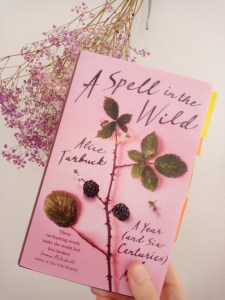
Next up A Spell in the Wild: A Year (and Six Centuries) of Magic by Alice Tarbuck.

Further Reading

Paper: Hesitating Between Irony and the Desire to Be Serious in I, Tituba by Sarah Barbour, Wake Forest University


Tituba of Salem Village, A Novel Based on the Witch Trials of 1692 by Ann Petry (1956)

I read this for two reasons, one I’ve been wanting to read Ann Petry for a while, The Street and The Narrows were republished in 2020, so I’m looking forward to reading them, but the main reason I chose this title is because I’m an avid reader of Maryse Condé, who wrote I, Tituba, Black Witch of Salem. One of her inspirations was this book written for young people by Ann Petry, which predates her novel by 30 years, so it made sense for me to read this one first.

For her the story of Tituba was a story of courage in the face of adversity. It was a lesson of hope and dynamism.

Witch Trials of Salem, History

The witch trials of Salem began in March 1692 with the arrests of Sarah Good, Sarah Osborne and the black slave, Tituba, based on forced confessions. The trials were started after people had been accused of witchcraft, primarily by teenage girls, though traced to adult concerns and adult grievances. Quarrels and disputes with neighbors often incited witchcraft allegations.

Women who did not conform to the norms of Puritan society were more likely to be the target of an accusation, especially those who were unmarried or did not have children.

It marked the beginning of a period of paranoia in which nineteen women and one man were hanged, before the governor of the colony sent a report to London about the cases of 50 women and a general pardon was granted, putting an end to a disturbing chapter in the history of the village, subsequently renamed Danvers.

Though Tituba was acquitted, prisoners were required to pay the cost of their stay in prison, including the cost of chains and shackles. She was eventually sold for the price of those fees, though it is not known to whom. Ann Petry shares her theories, which we discover here, and Maryse Condé has another.

It is one of Colonial America’s most notorious cases of mass hysteria,  a cautionary tale about the dangers of isolationism, religious extremism, false accusations, fake news and lapses in due process.

Review

Ann Petry Tituba Salem Witch TrialsI had read nothing about the witch trials before, though I’d heard of them, but I’m glad that this was my introduction, to see this little segment of American history, through the eyes of the innocent black slave, Tituba and her husband John.

As the book opens and Tituba and John are in the kitchen of the Barbados home they live in, the scene is so evocative, you can’t imagine how their lives are going to change so abruptly, having been so stable for so long – but then the harsh reality of them being commodities, slaves, sold like jewels, to pay a debt, their lives irrevocably changed, within 24 hours they are on a ship heading for the Bay Colony of Boston, their new owner the Reverend Parris.

Her husband instills in her the importance of staying alive and maintaining good health.

“Remember, always remember, the slave must survive. No matter what happens to the master, the slave must survive.”

Petry’s descriptions of the environment are so evocative, the contrast so great, from the warmth of the island to the damp, unwelcoming cold climate of Massachusetts.

Tituba is caring and empathetic, she has a traditional knowledge of herbs from the island, learned from the women in her family, in Boston she searches in the woods for substitutes and is helped by another woman with knowledge of herbal medicine. She is sensitive to people, animals and the environment.

Tituba Samel witch cauldron fire

Photo by Plato Terentev on Pexels.com

Sometimes if she stood still, used all her senses, sight and sound and touch and small would make a place speak to her. She closed her eyes and took a deep breath.

She decided it was not an evil house. It was sad and gloomy. Nothing about it suggested happiness in the future. It had been a long time since anyone had been happy in this house. People leave something of themselves in a house, and the spirit of this house was frighteningly sad.

However, these people live in fearful times and among people whose belief system instills fear and suspicion. They bear children whose imaginations run wild, their behaviour’s running even wilder.

She finally accepted the fact that Abigail was her enemy, and though young, a dangerous enemy. On the other hand, Samuel Conkin, the weaver, was her friend, and though a new friend, a very good friend.

Tituba Salem Witch Trials Weaver Thread Ann Petry

Photo by Susanne Jutzeler on Pexels.com

Tituba is a wonderful character, depicted with compassion and understanding, put in a situation where young people are drawn towards her but unable to overcome their own inner hurts, exaggerate and invent scenarios, combining imagination and superstition, creating drama that spirals out of control into very real consequences for those accused of “witching”, until the farce that it is, becomes all too clear, though not without lives having been lost.

Elena Ferrante in The Lying Life of Adults shows that sometime erratic behaviour of an adolescent and its consequences. Ann Petry shows how childish games, immaturity, attention seeking and hurt can claim lives, and though her book offers a message of courage in the face of adversity, it also offers a warning to that same youthful audience, that lives can be irrevocably damaged by the actions of a few.

I loved the character Petry created, her many talents and her resilience and the imagined appreciation that did exist, even if that might have been willful fantasy, knowing that in the era in which she lived, it was rare indeed for any person who purchased a slave to treat them as her weaver did.

Petry offers perhaps the most persuasive explanation of all—that cruelty begets cruelty, among children as well as adults. At least half the novel takes place before the trials, building the case for the horrors that follow. Anna Mae Duane, The Journal of the History of Childhood and Youth, Johns Hopkins University Press

Highly Recommended.

Further Reading

Article, Smithsonian Magazine: Unraveling the Many Mysteries of Tituba, the Star Witness of the Salem Witch Trials by Stacy Schiff; Nov 2015

Play: The Crucible (1952), by Arthur Miller

Essay: Ann Petry

Story of the Week: Harlem Ann Petry (1908-1997)


The Lying Life of Adults by Elena Ferrante translated Ann Goldstein

Another excellent example of Elena Ferrante’s ability to zoom in close, with intensity into the subconscious of her protagonist, this time through the lens of a girl entering adolescence.

The Lying Life of Adults Elena Ferrante Ann GoldsteinFrom the opening pages, as Giovanna overhears a random comment from her father, it expands in her mind and overtakes her physically and mentally like a disease, affecting her mind, causing her to act in certain ways.

To the reader it may seem irrational, but to the hormone affected adolescent everything is magnified and causes her to imagine, lash out, withdraw, have moments of tenderness followed by hate and indifference.

She is uncomfortable in her skin and mind, lurching between strategies of action and non-action, always confrontational.

Though warned against her and until now they’ve never met, Giovanna cultivates a relationship with her estranged Aunt Vittoria, seeing her as a convenient tool of provocation and a source of not always reliable information.

She spewed bitterness, and yet those words now brought me relief, I repeated them in my mind. They affirmed the existence of a strong and positive bond, they demanded it. My aunt hadn’t said: you have my face or at least you look something like me; my aunt had said: you don’t belong only to your mother and father, you’re mine, too, you belong to the whole family that he came from, and anyone who belongs to us is never alone, is charged with energy.

It is a roller coaster of emotions and a river of consciousness as we ride along, wondering who is going to survive these years unscathed.

The Class Divide

There is the intensity we’ve come to expect of Ferrante, the twisted emotions and imaginings of her protagonist leading the story, reading the surface of behaviours of adults around her, creating confusion, with that precise, recognisable linguistic clarity. Her father and Aunt represent a class divide that Giovanni witnesses, growing up on one side her father has escaped to, and now intrigued by the other that her Aunt inhabits.

Their mutual hatred remained intact, and I soon gave up any attempt at mediation. I began instead to say to myself explicitly that that hatred was an advantage for me: if my father and his sister made peace, my encounters with Vittoria wouldn’t be exclusive, I might be downgraded to niece, and certainly I would lose the role of friend, confidante, accomplice. Sometimes I felt that if they stopped hating each other I would do something to make them start again.

I can’t really talk about the novel in the singular as I see her individual novels now as a tapestry of different women characters from Naples, in various stages of their life – the two friends in My Brilliant Friend, the daughter in Troubling Love and the betrayed wife of The Days of Abandonment.

The Lying Life of Adults Elena Ferrante

Photo by Luidi Cardoso on Pexels.com

Inside the overthinking mind of an adolescent and the pushing boundary-like behaviours, exposing that lying life, provoking reactions, seeing the damage of truth-telling and then the transition, an increasing self-awareness, noticing a reduced need to react to annoyances, about one’s parents, one’s friends, teachers, family. A letting go. A transition. Decisions. To care or not to care.

I behaved like that certainly to feel free from all the old bonds, to make it clear that I didn’t care anymore about the judgment of relatives and friends, their values, their wanting me to be consistent with what they imagined themselves to be.

Ferrante provides the reader no easy conclusions, makes no judgments, but leads you down paths that will confront you with your own, as you carry on a conversation inside your own mind, wondering and trying to guess what her character might do next.

As the novel nears the end, it reads almost like a thriller, as we can see she is moving towards adulthood, her behaviours are less volatile, she feels less of a need to respond so violently, and yet, there is the danger that now she is becoming one of them – an adult – those who hide their behaviours behind lies.

Raw, intense, a delightful, refreshing, “stand up to them” protagonist.

My Reviews of Ferrante Books

Photo by Emre Kuzu on Pexels.com

Troubling Love (novel)

The Days of Abandonment (novel)

The Neapolitan Quartet: (tetralogy – 4 novels)

My Brilliant Friend

The Story of a New Name

Those Who Leave and Those Who Stay

The Story of the Lost Child

Frantumaglia, A Writer’s Journey (nonfiction)

Further Reading

Review, Guardian:  a rebel rich girl comes of age

Elena Ferrante Shares 40 Favourite Books by Female Authors


Elena Ferrante Shares 40 Favourite Books by Female Authors

As I’m currently reading her most recent novel, The Lying Life of Adults published in September 2020 and being a fan of many of her books to date, including My Brilliant Friend, The Days of Abandonment, Troubling Love and Frantumaglia, I was interested to learn thanks to the publisher Europa Editions that:

Elena Ferrante has compiled a list of novels close to her heart, all by women authors, and exclusively for Bookshop.org, the new alternative to Amazon for socially conscious shoppers wanting to support high street bookshops when they shop online.

Given the type of characters and narratives Elena Ferrante is known for, her stories usually set in or have a connection with the working class neighbourhood of Naples and concern female protagonists coming to terms with their situation, whether they are girls, young mothers, grieving daughters or an adolescent trying to make sense of the adult world, I thought it would be interesting to know which authors she gravitates towards, who she has been influenced by and being Italian, she is likely to have read books that might be outside the common anglo reading mainstream.

I’m sharing the list here as an easy reference for me to look at and will link any of the titles I have already read to my reviews. I have read 13 of the titles, though only reviewed six of them.

Elena FerranteI’ve also added the countries the author is associated with, either by birth and/or nationality, as I find that helpful, it being one of the criteria by which I decide whether to read a book or not – to avoid always reading works from the same cultural influence.

The list is quite Euro-American influenced, with only one African representation (or two if you count Doris Lessing), so while not quite as diverse as what I like to read, it’s an interesting exploration of the female pysche through female literature of the ages from those cultures represented.

I did also read that the list was limited by what is available in English and by what is available from the Bookshop, so there are titles that haven’t been shared because either they haven’t been translated into English or are not available. I wish they had been included because that might have sparked an even more interesting debate about the lack of availability of works in other languages and to hear the chorus of readers who might have helped persuade publishers to do something about that.

Juliana at The Blank Garden has more to say about that in her critique of the list (see the link to her blog post below), she is very widely read across languages, a wonderful reviewer and has read 28 of the titles. I’ll be referring to her favourites of Elena’s favourites as a further guide!

Elena Ferrante’s top 40 books by female authors

Americanah by Chimamanda Ngozi Adichie (Nigeria/America)
The Blind Assassin by Margaret Atwood (Canada)
The Enlightenment of the Greengage Tree by Shokoofeh Azar (Iran/Australia) translated by Anonymous
Malina by Ingeborg Bachmann (Austria) translated by Philip Boehm (German)
A Manual for Cleaning Women by Lucia Berlin (US)
Outline by Rachel Cusk (UK)
The Year of Magical Thinking by Joan Didion (US)
A Girl Returned by Donatella Di Pietrantonio (Italy) translated by Ann Goldstein
Disoriental by Négar Djavadi (Iran/France) translated by Tina Kover
The Lover by Marguerite Duras (France) translated by Barbara Bray
The Years by Annie Ernaux (France) translated by Alison Strayer
Family Lexicon by Natalia Ginzburg (Italy) translated by Jenny McPhee
The Conservationist by Nadine Gordimer (South Africa)
Fates and Furies by Lauren Groff (US)
Motherhood by Sheila Heti (Canada)
The Piano Teacher by Elfriede Jelinek (Austria) translated by Joachim Neugroschel
Breasts and Eggs by Mieko Kawakami (Japan) translated by Sam Bett and David Boyd
Interpreter of Maladies by Jhumpa Lahiri (US/India)
The Fifth Child by Doris Lessing (Zimbabwe/UK)
The Passion According to GH by Clarice Lispector (Ukraine/Brazil) translated by Idra Novey
Lost Children Archive by Valeria Luiselli (Mexico)
Arturo’s Island by Elsa Morante (Italy) translated by Ann Goldstein
Beloved by Toni Morrison (US)
Dear Life by Alice Munro (Canada)
The Bell by Iris Murdoch (UK)
Accabadora by Michela Murgia (Italy) translated by Silvester Mazzarella
Le Bal by Irene Nemirovsky (Ukraine/France) translated by Sandra Smith
Blonde by Joyce Carol Oates (US)
The Love Object: Selected Stories by Edna O’Brien (Ireland)
A Good Man Is Hard to Find by Flannery O’Connor (US)
Evening Descends Upon the Hills: Stories from Naples by Anna Maria Ortese (Italy) translated by Ann Goldstein & Jenny McPhee
Gilead by Marylynne Robinson (US)
Normal People by Sally Rooney (Ireland)
The God of Small Things by Arundhati Roy (India)
White Teeth by Zadie Smith (UK)
Olive Kitteridge by Elizabeth Strout (US)
The Door by Magda Szabò (Hungary) translated by Len Rix
Cassandra by Christa Wolf (Poland/Germany) translated by Jan van Heurck
A Little Life by Hanya Yanagihara (US)
Memoirs of Hadrian by Marguerite Yourcenar (Belgium/US) translated by Grace Frick

Further Reading

Critic of the List: Elena Ferrante’s Shopping Advice | Reading Project

Article, Guardian: ‘This is revolutionary’: new online bookshop unites indies to rival Amazon

Article, Guardian: List by pseudonymous author of Neapolitan novels includes Zadie Smith, Sally Rooney and several Italian classics


Booker Prize 2020 Winner – Shuggie Bain by Douglas Stuart

Scottish-American author Douglas Stuart has won the Booker Prize  2020 for his Scottish working-class novel, Shuggie Bain, a novel that follows a boy growing up in poverty in 1980s Glasgow with a mother who is battling addiction.

Booker Prize Winner 2020 National Book Award WinnerIt was inspired by some of his own personal experience, his mother died of alcoholism when he was 16.

Here’s what the judges had to say:

Shuggie Bain has so much heart and it does much to put you so deeply inside the society of impoverished Glasgow in the 1980’s. Emily Wilson

It’s heartrending, it’s hopeful, but it’s also desperately sad, it has humour, it has so many qualities, it’s fiction at its best. Margaret Busby

The author, through the two magnificent characters at the centre of this book, they lead us through this world and they are the spark of humanity that makes the pain bearable. Sameer Rahim

The poetic prose and the clear characterisation and sense of place, that has to make this the number one. Lemn Sissay

For future generations of our readers I sincerely think it will be a long term classic that is loved, admired and remembered for a very long time. Lee Child

Glasgow Scotland Shuggie Bain Douglas Stuart

‘Glasgow’ – Photo, Anna Urlapova on Pexels.com

Scottish Prime Minister and avid reader, Nicola Sturgeon describing it as a raw, searing and beautifully tender novel, mentioned that Douglas Stuart becomes the second Scot to have won the prize; his book also a finalist for the National Book Award (an American Literature Prize) for Fiction awarded this week, that prize won by Charles Yu for Interior Chinatown.

“When James Kelman won in the mid-90s, Scottish voices were seen as disruptive and outside the norm. And now to see Shuggie at the centre of it, I can’t express it,” he said. “Young boys like me growing up in 80s Glasgow, this wasn’t ever anything I would have dreamed of.”

Writing about Glasgow from the US “brought clarity, but it also allowed me to fall in love with the city again”, describing it as “a city of reluctant optimists by default”.

“How would we have survived otherwise?” he asked. “When you don’t have the comfort of money, then you are forced to deal with life on the frontlines, and sometimes love, humour, optimism is all you can bring to a bad situation.”

– extract from interview with Stuart by the Guardian

The only two I have read from the shortlist were Maaza Mengiste’s The Shadow King and Tsitsi Dangarembga’s This Mournable Body.  Dangarembga’s Nervous Conditions is already considered a modern classic, one I’d highly recommend if you haven’t already read it.

I have been seeing excellent reviews of Shuggie Bain so I may read it in the months to come. Although I have Maaza Mengiste’s Beneath the Lion’s Gaze on my shelf, so that might be sooner!

Booker Prize Shortlist 2020

Have you read Shuggie Bain? If so, what did you think of it?

Further Reading

Article: Douglas Stuart wins Booker Prize – the Guardian


Hadji Murad by Leo Tolstoy tr. Aylmer Maude

The Kindness of Enemies Shamil ImamI read Hadji Murad because it was referenced in the last pages of Leila Aboulela’s excellent The Kindness of Enemies and is set in the same location as the historical part of her book, 1850’s Caucasus. Aboulela’s book centres on the kidnap of A Russian Princess and her time in captivity under the protection of the Highlander Shamil Imam. He wishes to trade her for his son, help captive by the Russians for more than ten years.

Tolstoy was in the Russian army for a time and clearly witnessed many missions. One of the events he had knowledge of and wrote about, though this novella was published post-humously by his wife, was the defection to Russia and subsequent killing of one of Shamil Khan’s chieftans, another Highlander, Hadji Murad.

Though I’m not a huge fan of the classics, there are some exceptions and I did enjoy Anna Karenina, however having read Aboulela’s version which really brings the characters alive and highlights their dilemmas so openly, I found it hard to connect with Tolstoy’s tale, which rarely touches on lives other than the soldiers and noble decision makers.

Hadji Murad Thistle Leo Tolstoy

Photo by nastia on Pexels.com

The opening scene though is brilliant, the ploughed field, bereft of life, everything turned over, leaves only one sturdy thistle, half destroyed but for that one stalk still standing tall, the flower head emitting its bold crimson colour.

The land was well tilled and nowhere was there a blade of grass or any kind of plant to be seen; it was all black. “Ah, what a destructive creature is man… How many different plant lives he destroys to support his own experience!” thought I, involuntarily looking round for some living thing in this lifeless black field.

It is the scene that brings back the memory of this man Hadji Murad and compels him to write out those pages, perhaps purging himself of a ghastly memory.

“What energy!” I thought. “Man has conquered everything, and destroyed millions of plants, yet this one won’t submit.” And I remembered a Caucasian episode of years ago, which I had partly seen myself, partly heard of from eye-witnesses, and in part imagined.

It does make me think that he had intended not to publish it, that perhaps it was written for another purpose altogether. Particularly as, at the time he wrote it (1896-1903)

he was spending most of his time writing his virulent tracts against the art of fiction and denouncing some of the best writers in the world, including Shakespeare.

In conclusion, it highlights to me the importance of reading various perspectives of history, not just one side or the other, but also across gender. It is refreshing to read a female historian’s fictional version of an age old conflict, inhabiting characters who observe from positions of lesser power, of oppression, for their powers of observation are that much stronger than the privileged, it being one of their necessary survival instincts.

The Kindness of Enemies by Leila Aboulela (2015)

Earlier this year I read my first book by Leila Aboulela Bird Summons (2019), a wonderful novel about three immigrant women, born in different countries but living in Scotland, setting off on a holiday in the Highlands, to pay homage to Lady Evelyn Cobbold, the first British woman convert to Islam to perform the pilgrimage to Mecca.

I really enjoyed it for many reasons, confirming I wished to read more of her work, thus I chose The Kindness of Enemies as her next book to read, one I have had my eye on for some years, having refused to buy earlier because of the dreadful cover. That may sound whimsical, but I think that earlier cover does this book a great disservice, the way it turns readers away.

Being Muslim and an Academic in 21st century Scotland

Hadji Murad Tolstoy Leila AboulelaI was completely drawn into the dual narrative story and loved both parts of it, modern day Scotland and mid 1800’s Russia and the Caucasus.

The contemporary story centres around Natasha Wilson (born Natasha Hussein to a Russian mother and Sudanese father, themselves the product of a Russian university education, her name is changed when her mother marries a Scot). A university lecturer in Scotland, her research concerns the life of the Caucasian Highlander, Shamil Imam.

Natasha is friends with Malak, of Russian/Persian parentage; her son Oz, is in her class and they possess a historical artefact belonging to Shamil Imam, due to an ancestral connection. Natasha is in their home when Oz is arrested for downloading  materials related to jihad and she too comes under suspicion, her telephone and laptop seized.

“I was seeing in these awkward composites my own liminal self. The two sides of me that were slammed together against their will, that refused to mix. I was a failed hybrid, made up of unalloyed selves. My Russian mother who regretted marrying my Sudanese father. My African father who came to hate his white wife. My atheist mother who blotted out my Muslim heritage. My Arab father who gave me up to Europe without a fight. I was the freak. I had been told so and I had been taught so and I had chewed on this verdict to the extent that, no matter what, I could never purge myself of it entirely.”

Meanwhile, in Sudan, her father whom she hasn’t seen for 20 years is dying and there is pressure for her to go and see him, along with feelings of resentment and ill-will, demanding her to stand up for herself and her existence, a daughter of mixed heritage, living a life she has created for herself.

“It was an effort formulating this summary, explaining myself. I preferred the distant past, centuries that were over and done with, ghosts that posed no direct threat. History could be milked for this cause or that. We observed it always with hindsight, projecting onto it our modern convictions and anxieties.”

Being Muslim and a Caucasian Highlander in the 19th century

Interwoven between chapters of Natasha’s story, we are transported to the Caucasus territory in the 1850’s, to a period during the conflict between the Highlander mountain men lead by Shamil Imam who were resisting Tsarist Russia from expanding into their territory.

Shamil Imam, the Chieftan of Dagestan, led an armed resistance for thirty years, he appears in Leo Tolstoy’s classic posthumous novella Hadji Murad.  Through imagination and historical fact, Leila Aboulela enters his territory and home, bringing us a view from the spaces women and children inhabit, not just that of men, as Tolstoy does.

Caucasus Pricess Anna of Georgia kidnap

In earlier years, to settle a conflict, Shamil was only able to negotiate peace by surrendering his son Jamaleldin, who for the next ten years or so was raised as part of the Tsar’s family (as his godson). Now Shamil’s men have captured the  Russian Princess Anna (previously of Georgia – her grandfather Gregory XI, the last King of Georgia, ceded the territory to Russia), her French governess and two children Alexander and Lydia.

“Nothing has caused me so much pain as treachery. If the Russians would fight me honourably, I would not mind living the rest of my life in a state of war. But they tricked me; in Akhulgo they treated me like a criminal, not a warrior, and they sent my son far away to St Petersburg.”

The Kindness of Enemies follows these stories and although one carries the heavyweight magnitude of a well-known story of significant characters in history, the foreshadowing of it by a modern story, brings to light the many aspects of the past, whose threads might be seen as being current today.

Kindness and Empathy, Another Perspective

Much of the literature of the Caucasus in the literary imagination is told from the Russian perspective, by grand novelists like Tolstoy and Pushkin, whereas Leila Aboulela, by setting this historical period during the time of the Princess’s capture, takes us on that journey, re-imagining events that took place, understanding better the complicated and mixed sympathies of Princess Anna, a young mother, exploring her loss and how those eight months in captivity might have changed her.

The Kindness of Enemies Leila Aboulela The Queen's Gambit

Photo by Charlie Solorzano on Pexels.com

She also presents the perspective of young Jamaleldin in another light, how his childhood memories lie dormant yet present, his mixed feelings of the return, his strange and estranged reality of feeling part of himself belonging to both worlds, the Highlands and to St Petersburg.

There was a time when it had all been much simpler. He rescued from the wild, Nicholas the benevolent godfather. He the pet, Nicholas the mighty. He the puppet, Nicholas the conductor, the thrower of crumbs, the arranger of roles, the changer of destinies. Jamaleldin the chess piece, and now Shamil had changed the rules of the game.

In the contemporary world, Natasha experiences something of the same, born of culturally different parents, spending her childhood in one country, her adulthood in another. She must create her own sense of belonging, to find peace of mind somehow. Being neither one thing or the other, having no one place called home, hers, by necessity is a spiritual journey, determined by the need for the soul to find home, rather than body or mind.

“I said that I was not a good Muslim but that I was not a bad person. I said I had a brother that I wanted to keep in touch with. I said that I wanted to give up my share of the inheritance to him. Apart from my father’s Russian books and Russian keepsakes, I wanted nothing. I said that I did not come here today to fight over money or for the share of a house. I came so that I would not be an outcast, so that I would, even in a small way, faintly, marginally, tentatively, belong.”

Highly Recommended.

My Reviews of Interest

Bird Summons by Leila Aboulela

Zuleikha by Guzel Yakhina tr. Lisa Hayden

Eugene Onegin by Alexander Pushkin

There Once Lived A Girl Who Seduced Her Sister’s Husband, And He Hanged Himself, Love Stories by Ludmilla Petrushevskaya

Further Reading/Watching

Interview: Leila Aboulela Discusses The Kindness of Enemies The Arab Weekly

Review: For the Joy of Reading: The Kindness of Enemies by David Kenvyn

Documentary: Mountain Men and Holy Wars – film-maker Taran Davies traces the life and legacy of Shamil Imam

Article: Why do we Continue to Use the Word Caucasian? by Yolanda Moses, Professor of Anthropology

This Mournable Body by Tsitsi Dangarembga

I couldn’t stop thinking about this trilogy and all that it depicted after reading, and wasn’t sure how to even write about it, with all it’s implications, meaning and symbolism, implicit within the story and its complicated, unlikable but understandable protagonist.

This Mournable Body Nervous Conditions

Nervous Conditions The Trilogy

A month since I finished it, I waited so I could listen live to Sara Collins (author of The Confessions of Frannie Langton) interview Tsitsi Dangarembga for the London Review Bookshop, following on from her Booker Prize shortlisting.

This exceptional interview should be available soon, one I highly recommend listening to. Dangarembga is such an asset to Zimbabwe and to world literature, for all that she pours into her work and the example she sets in her life, a form of “celebration in resistance”.

Her first book Nervous Conditions, published 30 years ago, won the Commonwealth Writer’s Prize in 1988 and was hailed as a masterpiece by the grandfather of African literature Chinua Achebe. It was a 5 star read for me, brilliant.

Preview of Nervous Conditions & The Book of Not
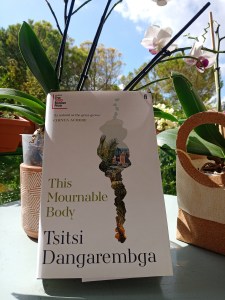
Tsitsi Dangarembga Nervous Conditions trilogyOn the surface, as we discover in the first two books of this trilogy (each book can be read stand alone) Nervous Conditions and The Book of Not (links to my reviews below), this is the story of Tambudzai, a girl from a Zimbabwean village.

We are witness to her coming of age and entry into adulthood and how that is influenced by her encounters with the outside world, beginning with her cousin Nyasha and family, who return from living in England changed, possessed of an air Tambudzai aspires to, knowing she will only acquire it via a certain type of education.

Though she succeeds, it marks the beginning of her losing something of herself, in the way that every country that was ever colonised, began a simultaneous descent when their vision of themselves too, was slanted in another direction.

Tambudzai is diligent and focused on becoming something that “others” approve of and pursues it relentlessly, in the belief that this will enable her to succeed and create a more self-gratifying life than she would have been destined for in the destitute village she came from.

This Mournable Body

In This Mournable Body, Tambudzai is at a low point, she has left a job at an ad agency on a principle, having had her work used and feted without acknowledgement. It is a resentment she has never uttered, nor been supported in, and knows it is futile to pursue. Wrongs happen in silence, rights are not up for discussion. But now she is without a job and approaching the limit of the acceptable age to be dwelling in a girl’s hostel.

This Mournable Body Tsitsi Dangarembga

Photo by Drigo Diniz on Pexels.com

As the novel opens, she views herself in the mirror and sees reflected a hideous image, something Collins asked Dangarembga to explain the symbolism of.

“She is consumed with self loathing, and this goes back to, how being black is, if you have not really made that psychological and internal journey, one can still take on all the negativity around blackness from society and internalise it, so in her bid to become educated and shake off everything that she sees as negative and simply disastrous from her life in the village, she has internalised all that, and this is what she sees when she looks into the mirror. She sees a hideous monster that she doesn’t want to have anything to do with. And the whole book really is trying to bring her perception of herself and her actual self together in a healthier manner.”

She moves to a widow’s home and ponders another route out of her self-imposed stuckness. While helping herself to the contents of the vegetable garden, she imagines seducing one of the widow’s sons, though never acts on it. Homemaking has never been one of her aspirations.

Returning to teaching, we recall her experience as a pupil, however what she encounters are wholly different children, the “born-frees”, born after the independence of 1980, who she has difficulty relating to, having been conditioned by a colonial style education.

She considers writing to her cousin Nyasha, who is now living in Berlin, for advice on leaving Zimbabwe, as she begins to feel more and more out of place.

You do not post the letter. Instead, you tear it up and laugh bitterly at yourself: If you cannot build a life in your own country, how will you do so in another? Were you not offered an escape from penury and its accompanying dereliction of dreams through many years of education provided by your babamukuru, your uncle, first at his mission, then at a highly respected convent?

Writing in the Second Person Narrative Style

Author Tsitsi Dangarembga ZimbabweWe see Dangarembga’s evolution as a writer, in her decision to use the second person (you) narrative perspective, something I noticed straight away as it gives the reader a jolt and then it reels you in, making you step inside the mind of the protagonist and experience her thoughts and actions first-hand.

“It created a kind of intimacy that forces the reader to listen and engage with and it enables someone to unburden themselves.”

Tambu has always adapted to fit in and tried to excel to overcome obstacles, in the classroom signs of mental unease appear, she reaches breaking point. And tips over.

Returning to her cousins home, she is further disillusioned, unwilling to accept her reality, her aspirations still carry foreign expectations.

It’s a life of pursuit and escape as each new venture brushes up against values and principles that force her to act when she realises she is compromising who she is. Denial battles with mental stability. When ants appear it’s a sign that a course-correction is required.

Collins describes that use of the second person as a form of “shaking the reader awake” and asks if the novel intended to take a nation and shake it awake. Although it wasn’t Dangarembga’s intention to write specifically about the nation, that is perhaps something that unfolds as she explains:

“You can not be who you are outside of the context that you are living in, and so of course your context is going to determine you. The question for a writer is how far do I want to follow that kind of interconnection between an individual and society and for me that has been my subject matter in these three novels.”

And here in this longer quote, she speaks about the necessity and importance of an individual and a nation to be able to have choices, to be able to reflect, something that is taken for granted by those who are not oppressed.

“The idea of shaking awake was on my mind, my feeling was that our society in Zimbabwe does not really reflect very much, it’s very much about getting the next meal, making sure that things are working and this goes back into our culture pre-colonial days, because it was never the utopia that people like to think it is sometimes, and especially the state likes us to think that everything was wonderful pre-colonial days. 

There were our fair share of troubles, and the climate here has never been very abundant, so just the general things of food and surviving were very practical issues that people had to engage with and there wasn’t that much time to reflect

I felt that we needed to find a way to reflect, but to reflect in a way that wasn’t about pointing fingers and reflecting externally, but to see how we are part of the whole process and then if we understand how the ways we think and behave and the culture that we have built up, is complicit in creating the conditions that we are living in now, I felt that we would perhaps be able to think our way out of the situation. It had to be done gently, it had to be done in a non-accusatory manner and so these were the things on my mind when I wrote This Mournable Body.”

When NPR’s Sacha Pfeiffer interviewed the author, she asked what message Tsitsi Dangarembga was giving to young Zimbabweans, given the despair of her anti-hero Tambudzai:

“What happens is up to us because Tambudzai – all she’s concerned with is getting ahead in her own life. I show that that kind of attitude may lead to a person getting what they want for some time. But in the end, the repercussions of that kind of behaviour are going to be felt by everybody…because since the economy is so difficult, people think, I just have to put my head down and do what’s best for me. But that doesn’t solve the community – and – national – level issues that we have to engage with.”

Highly Recommended and gets my vote to win the Booker Prize 2020.

My Reviews of Zimbabwean Literature
Novuyo Rose Tshuma ZimbabweNervous Conditions by Tsitsi Dangarembga Book #1

The Book of Not by Tsitsi Dangarembga Book #2

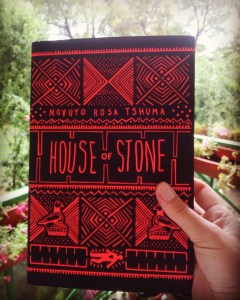
House of Stone by Novuyo Rose Tshuma – Highly Recommended by Tsitsi Dangarembga (published 2018)

We Need New Names by NoViolet Bulawayo (shortlisted for Booker Prize & the Guardian First Book Award, 2013)

Further Reading

Review: This Mournable Body by Mphuthumi Ntabeni

Born Free: 40 Years After Independence in Zimbabwe by Thandekile Moyo

Listen/Read: Sacha Pfeiffer NPR, interviews Tsitsi Dangarembga ‘This Mournable Body’: A Novel About Life In Independent Zimbabwe

Article, New Yorker by Teju Cole: Unmournable Bodies – inspiration for the title

Savage Her Reply by Deirdre Sullivan

Savage Her Reply Deirdre SullivanI was drawn to read this having never heard of the Irish myth, fairytale The Children of Lir and I was intrigued by the Gaelic names and words. I’m planning to read Tangleweed and Brine, a collection of shorter retold stories by the same author as well.

I loved the structure of the book, the italicised pages preceding some chapters that narrate a classic version of the tale, followed by the author’s chapter which provides greater depth and is told from the point of view of Aife, the middle sister, married off to Lir after her sister died in childbirth, who casts a spell on these children that disgraces her forever, and is punished in turn.

In an interview the author speaks of having an affection for the story since first encountering an illustrated version, as a child in the Galway City Library.

I was pulled to her, so much of the narrative unfolds because of the force of her, her need for love, her anger and her strength, but she disappears once she has been shamed and punished, transformed into a demon of the air. I didn’t know what a demon of the air was, but I wanted to know.

Fostered, Remarried & Step-Mothered

I can imagine she is usually depicted as sinister, she is a stepmother after all and they seemed destined to not be capable of any act of kindness or heroism in storytelling across all cultures, so I suppose we ought to be grateful that at least she will encounter forgiveness. I did hold out hope that perhaps the author might have dug deeper or stretched the imagination to somehow redeem this woman’s callous actions even more. I wish there could have been room for more engagement with the source of her pain and regret.

It is a strange tale as her actions seem to be on account of her character – or perhaps due to a deep unacknowledged resentment at having been severed and separated, along with her two sisters, from their parents at a young age – rather than any apparent bad treatment by the husband or father as one might expect. Something in her motive remains a mystery despite the little soul searching she does.
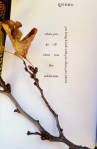
“Perhaps I am a dark, unpleasant creature. But I am my own creature. I am mine, my feet on the earth and the water in my soul and fire in my heart. And when all is taken from me I will still have my anger and my pain and they will feed me.”

Calligrams, Poems and the Artful Language Of Ogham

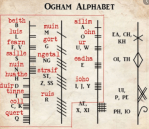
The artwork and use of feathers is brilliant, I enjoyed that each chapter had a mysterious, almost cryptic illustration of calligrams and poems laid out in particular shapes, their titles words from a language I’d never heard of. The shapes mimic the characters (and many letters are said to be linked to trees), using letters of the earliest Irish medieval alphabet Ogham.

I couldn’t help but add my own little autumn tree representation to some of the pages below, the photos can be seen and read more clearly in this thread I created here. It is a day for rituals after all.

Reaffirming once again (having just read A Ghost in the Throat) the importance of poetry, storytelling and creativity to Irish myth and culture, in its many forms.

The Author, Deirdre Sullivan

is an award winning author from Galway, Ireland and this is her tenth book, which has been shortlisted for an Irish Book Award 2020. Her collection of dark and witchy fairytale retellings, Tangleweed and Brine won Book of the Year at the 2018 Children’s Books Ireland awards and Young Adult Book of the Year at the 2017 Irish Book Awards. Her play Wake was performed at No Ropes theatre company in February 2019.

Further Reading

Interview: A Deeply Felt Book: Savage Her Reply by Deirdre Sullivan