Erasure by Percival Everett (2001)

I read this after Percival Everett’s excellent So Much Blue (my review) so my reading was influenced by having read that earlier novel, which I enjoyed more.

I did really enjoy this, however I enjoyed So Much Blue more on account of the type of reader I am, because it takes you outside of America to Paris and El Salvador – that novel was about the growth of the protagonist as a result of those experiences, whereas Erasure is more of a commentary on American culture and racial bias.

Revenge Can Backfire

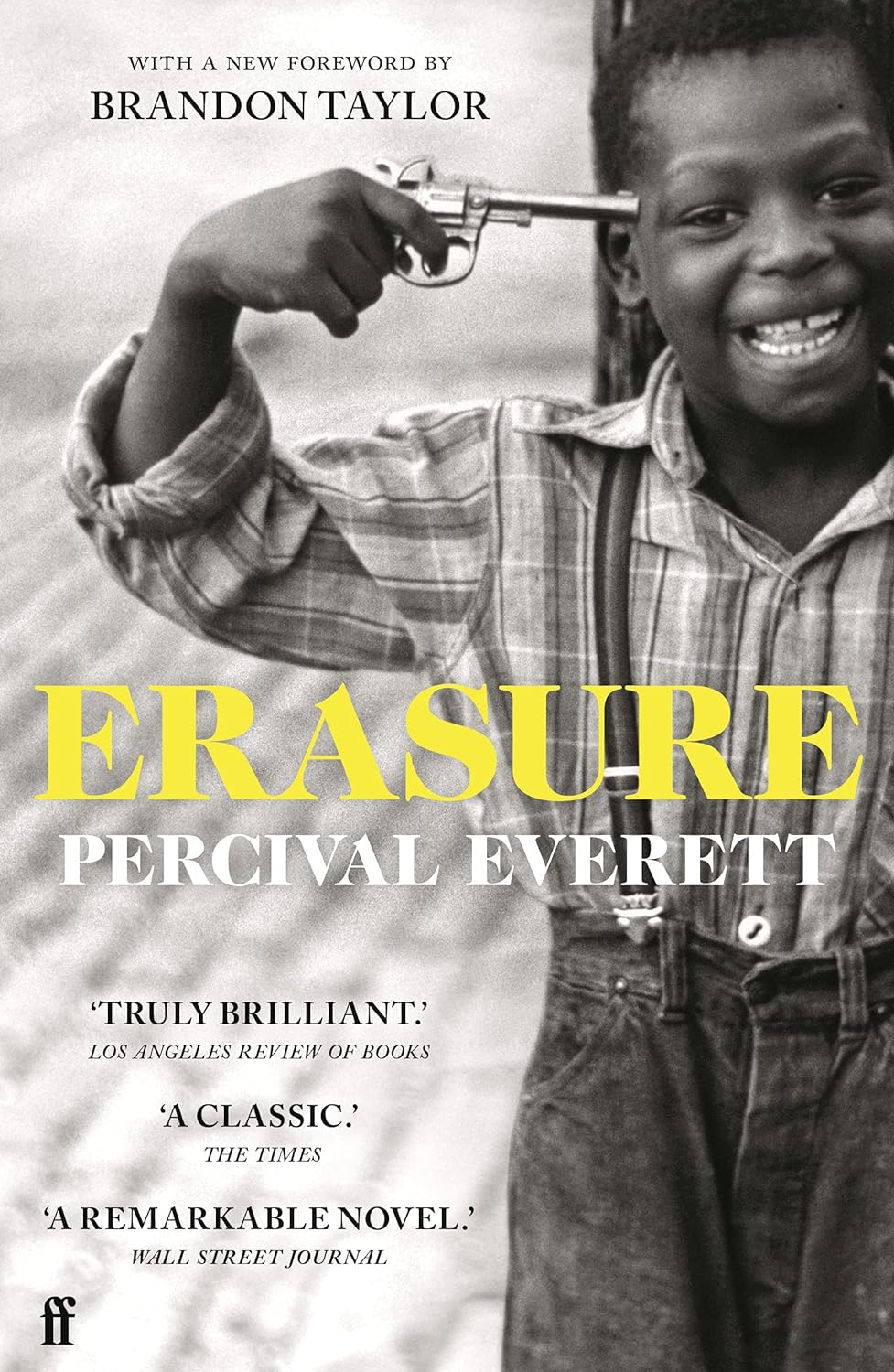
American Fiction film classic satire Cord Jefferson book cover young smiling black boy child holds a toy pistol to his head wearing checked shirt and jeans with braces photo in black and white the word Erasure in yellow text

In Erasure, a deeply satirical novel of the publishing industry and its biases; we have a Black American writer ‘Monk’ as protagonist, whose current work isn’t gaining traction.

I called my agent to check on the status of my novel and he had no good news for me. Three more editors had turned it down. ‘Too dense,’ one had said. ‘Not for us,’ a simple reply from another. And, ‘The market won’t support this kind of thing,’ from the third.

‘So, what now?’ I asked.

‘I don’t know what to tell you,’ Yul said. ‘If you could just write something like The Second Failure again.’ The ice clinked in his glass.

‘What are you telling me?’ I asked.

‘I’m not telling you anything.’

He feels resentful of some of what he is seeing gain popularity (fiction about the Black community using performative and pejorative racial themes and language); and he has had enough of his work being criticised for being too white.

He is middle aged and his mother is showing signs of needing additional care as her dementia begins to endanger her life. His sister and brother are both Doctors as was his late father. He visits his mother and sister, to learn his sister is being harassed by pro-life protestors every day and his mother has been lighting fires inside – a box of papers his father asked her to burn.

The Novel With A Novel

In his angst about work he writes a revenge novella using the pseudonym Stagg R. Leigh, one that uses every terrible trope about his race and sends it to his agent. The agent thinks it is a joke, he is instructed to send it out to prospective publishers anyway.

I remembered passages of Native Son and The Color Purple and Amos and Andy and my hands began to shake, the world opening around me, tree roots trembling on the ground outside, people in the street shouting dint, ax, fo, screet, and fahvre! and I was screaming inside, complaining that I didn’t sound like that, that my mother didn’t sound like that, that my father didn’t sound like that and I imagined myself sitting on a park bench counting the knives in my switchblade collection and a man came up to me and he asked me what I was doing and my mouth opened and I couldn’t help what came out, ‘Why fo you be axin?

I put a page in my father’s old manual typewriter. I wrote this novel,, a book on which I knewI could never put my name:

That 80 page novella, initially entitled My Pafology is contained within the novel Erasure. When I started reading, I skipped ahead to see how long it was. It is a unique experience to read a novel within a novel and one that is…well, I don’t really know how to describe it, because it is so deliberately offensive – and so then we witness the author watch his act of protest backfire as he is made to kind of account for what he has done.

Dealing With A Parent With Dementia

In the meantime he takes his mother and her maid on a short holiday, which results in hastening things forward there, dealing with a tragedy and coming to terms with aspects of the family that had been hidden.

Photo furkanfdemir Pexels.com

As in So Much Blue, where we learned that Percival Everett has a bit of a fascination for secrets, so too are they present here. He explores their impact on those whom they have been withheld from.

It is a thought provoking novel and there are many references to other writers and artists and thinkers within, like clues to the things that the author might have been thinking about while writing, that can take the reader down various rabbit holes. Like this one:

* * *
D.W. Griffith: I like your book very much.
Richard Wright: Thank you.

* * *

Going Down A Rabbit Hole

I learned that film director D.W.Griffith, in 1915, directed a controversial, silent film, Birth of a Nation, that depicted previously enslaved African Americans as uncivilised, and that order was restored to the chaotic South by the noble KKK.

African American author Richard Wright wrote Native Son, a book with a similar premise to My Pafology, one that may or may not undermine the humanity of the African American. James Baldwin objected to it, believing it confirmed the damning judgment on African-Americans delivered by their longstanding tormentors.

All that to say there are complex references and issues contained within Erasure that might require more close reading.

It also satirises the book prize industry, when our protagonist finds himself in a dilemma having been asked to judge a prize.

The Movie American Fiction

The book has recently been made into a film which I have not seen, entitled American Fiction. It was written and directed by Cord Jefferson and won an Academy Award (Oscar) for Best Adapted Screenplay in 2024. Jefferey Wright plays the role of the author ‘Monk’, he received a nomination for Best Actor in the Academy Awards 2024.

I was aware of this, although I did not look at any reviews or trailers, but did wonder how much of the depth of reflection could ever be portrayed in a film.

Highly Recommended. Read the book before seeing the film.

Have you read Erasure or seen the film American Fiction? What did you think?

Further Reading

New York Times: The Book Behind ‘American Fiction’ Came Out 23 Years Ago. It’s Still Current.

NPR: Advice from a critic: Read ‘Erasure’ before seeing ‘American Fiction’ by Carole V. Bell

Percival Everett, Author

Percival Everett is the author of over thirty books, including So Much BlueTelephoneDr No and The Trees, which was shortlisted for the 2022 Booker Prize and won the 2022 Bollinger Everyman Wodehouse Prize.

He has received the Hurston/Wright Legacy Award and the PEN Center USA Award for Fiction, has been a Pulitzer Prize finalist, and is Distinguished Professor of English at the University of Southern California. His novel Erasure has now been adapted into the major film American Fiction.

His latest novel James (a reimagining of Mark Twain’s The Adventures of Huckleberry Finn, told from the perspective of the enslaved Jim) was published on 11 April 2024. He lives in Los Angeles.

Top Reads of 2023 – Part 2, Top 5 Non-Fiction

In Top Reads of 2023 – Part 1 I shared my One Super Outstanding Read of the Year and my Top 7 Fiction titles. I also provide a brief look into what I read overall, the 23 countries, the mix of fiction and non-fiction of works in translation.

Top 5 Non-Fiction, An Irish Scoop

In 2023, I read 19 works of non-fiction, from 9 countries, ranging from climate change memoirs like Ugandan author Vanessa Nakate’s A Bigger Picture and Doreen Cunningham’s Soundings to fragmentary slices of life by French nobel prize winner Annie Ernaux in Simple Passion and Shame and Natalia Ginzburg’s Family Lexicon and the true crime adventures of David Grann’s The Wager.

Everything I read was good, but the standouts were:

Irish Book Awards Biography of the Year 2023

Poor, Grit, courage and the life-changing value of self-belief by Katriona O’Sullivan (2023) (Ireland) (Memoir)

Poor is the incredible story of Katriona O’Sullivan, a university Professor in Dublin, who overcame incredible odds to rise up through the education system, having been raised by heroin addicts in a chaotic household, dropping out of school and becoming pregnant at 15.

She charts the turning points in her life, the people and the opportunities that allowed her to change the trajectory of her life and become a major influencer in advocating for access to higher education for working class girls from poor backgrounds.

She won two Irish Book Awards (Best Biography + Listener’s Choice Award). Totally Inspirational.

grief nature writing memoir motherhood loss apothecary garden

All My Wild Mothers, Motherhood, Loss and an Apothecary Garden by Victoria Bennett (2023) (UK) (Memoir/Nature Writing/Grief)

– This was one of the first books I read in 2023, a beautiful memoir that shares a mother’s journey of homeschooling her son while dealing with the grief of having lost a close sibling. Much like Helen MacDonald’s H is For Hawk, the author plunges into a creative project, to help move through the emotional challenges. Here it was to create an apothecary garden in a social housing estate in rural Cumbria, built over what was an industrial site, a barren, rubble-filled, now rule-restricted, wasteland.

Each chapter began with a different plant, starting with an intriguing medieval, magical perception of it, including stunning black & white woodcut illustrations, the medicinal properties, a bit of folklore and where it might be found. The real star of the book and source of comfort though is her inquisitive son.

A quiet book that celebrates the wisdom of small children and a tribute to sisters and mothers.

creative nonfiction nature writing Irish Literature

Cacophony of Bone by Kerri ní Dochartaigh (2023) (Ireland) (Creative Nonfiction)

– This memoir is a delightful sequel to the author’s more bleak, but exceptional, memoir Thin Places. That debut memoir was a mix of memoir and a reckoning with the after effect of a fractured childhood in a Northern Irish town.

In Cacophony of Bones, she has moved to a rural cottage in the middle of Ireland and while still in the process of healing, there is more light and poetry and inspiration from a multitude of nonfiction writers here. Written in the form of a 12 month journal, it is a book of reflection, poetic expression and of noticing, of planting, growing, of collecting objects, abandoned nests, bone remnants…

I find myself searching for the words of others as a means to fill the holes that the actions of (other) others have left in me.

In my review, I mention a number of the authors she quotes from; I spent a lot of pleasurable time looking up the many references and finding new sources of creative nonfiction to read. A great book and an extremely well-read author.

My Fourth Time We Drowned by Sally Hayden (2022) (Ireland) (Political Nonfiction)

– Though it is a challenging read, this is an incredible book and tribute to the endless support, research and investigative journalism, Sally Hayden has contributed. Winner of the 2022 Orwell Prize for Political WritingIrish Book Awards Book of the Year 2022, it tells the story of how she was contacted by refugees incarcerated in Libyan migrant detention centres, who were using hidden phones to appeal for help.

Abandoned by everyone, these people were being held in terrible conditions, treated inhumanely and often being extorted for huge sums of money in order to attempt the deadliest migrant rote of all, across the Mediterranean. While the rules of her profession prevented her from assisting them, she began to share their stories and investigate the different centres and discovered the complicity of the EU, in their policies that magnified the humanitarian crisis.

An extraordinary, detailed and condemnatory read. Highly Recommended.

essays memoir creative nonfiction Jamaican literature

Redemption Ground, Essays & Adventures by Lorna Goodison (2018) (Jamaica)

– A mix of memoir, poetry, life adventure and epiphanies, I loved this collection, that stops in and visits different periods in the life of the poet/writer Jamaican author Lorna Goodison (poet laureate of Jamaica from 2017 – 2020), including first time visits to London, New York, tributes to her mother and grandmother in poetry, to her mentor, the great poet and playwright, Derek Walcott, influential theatre and film experiences and inspirational women writers and poets.

Special Mentions, The Other Two Stand Outs

These two 5 star reads are very slim volumes, featuring one essay or lecture, they are literally half hour reads, but very worthwhile and not difficult to access and read.

I Will Write to Avenge My People by Annie Ernaux (2022) (France) translated by Tanya Leslie (French) (Essay + Bio)

Annie Ernaux won the Nobel prize for literature in 2022 and this is the lecture she gave to the committee, in it she shares her motivation for writing and an explanation of how she came to write in her very particular style.

Indignez-vous! (Time For Outrage) by Stéphane Hessel (2010) (France) (Essay)

– Very well known in France, this is the essay written by 93 year old Stéphane Hessel, since translated into numerous languages and sold 4.5 million copies worldwide. He wrote it 3 years before passing away and it is a message for youth of today, inviting them to find their cause and take action. It became a huge bestseller and long lines of young people lined up to have him sign their copy, much respect did they have for a man who had lived through it all, the war, the resistance, the concentration camp and a participant in the creation of the declaration of human rights.

* * * * * * * *

That’s it for nonfiction, let me know if you have any good recommendations for 2024!
Let us know your favourite non-fiction title from 2023 in the comments below.

Time For Outrage, Indignez-vous! by Stéphane Hessel tr. Marion Duvert

Looking Beyond the Ordinary & Expected

On a recent visit to Paris, I accompanied friends on a day-trip to the town of Épernay in the North East of Paris, 30 kilometres south west of Reims. Like Reims, it is known for its champagne houses, vineyards and the close to 50 kilometres of underground tunnels built to store their wine, a veritable underground city.

The town sits on layers of chalk, which gives those underground tunnels their unique aspect that contributes to the uniqueness of their product and why the fierce protection over the use of the word ‘champagne‘. Champagne is only ‘champagne‘ if grown and cellared and produced in the Champagne region of France. If not, its crémant, prosecco, cava, sparkling …

The archbishops of Reims controlled the town of Épernay from the 5th-10th century, it then passed to the counts of Champagne and in 1642 to the Duke of Bouillon.

 It was badly damaged during the Hundred Years’ War, and was burned by Francis I in 1544. Having been destroyed or burned more than 20 times, the town has few ancient buildings, the mansions you can see there today are mostly from the 1800’s.

The Champagne Hillsides, Houses and Cellars are on the World Heritage list for the Protection of World Culture and Heritage for all humanity.

The town also houses some 9th century manuscripts, a wine museum and archaeological artifacts.

Stéphane Hessel encourages youth to engage!

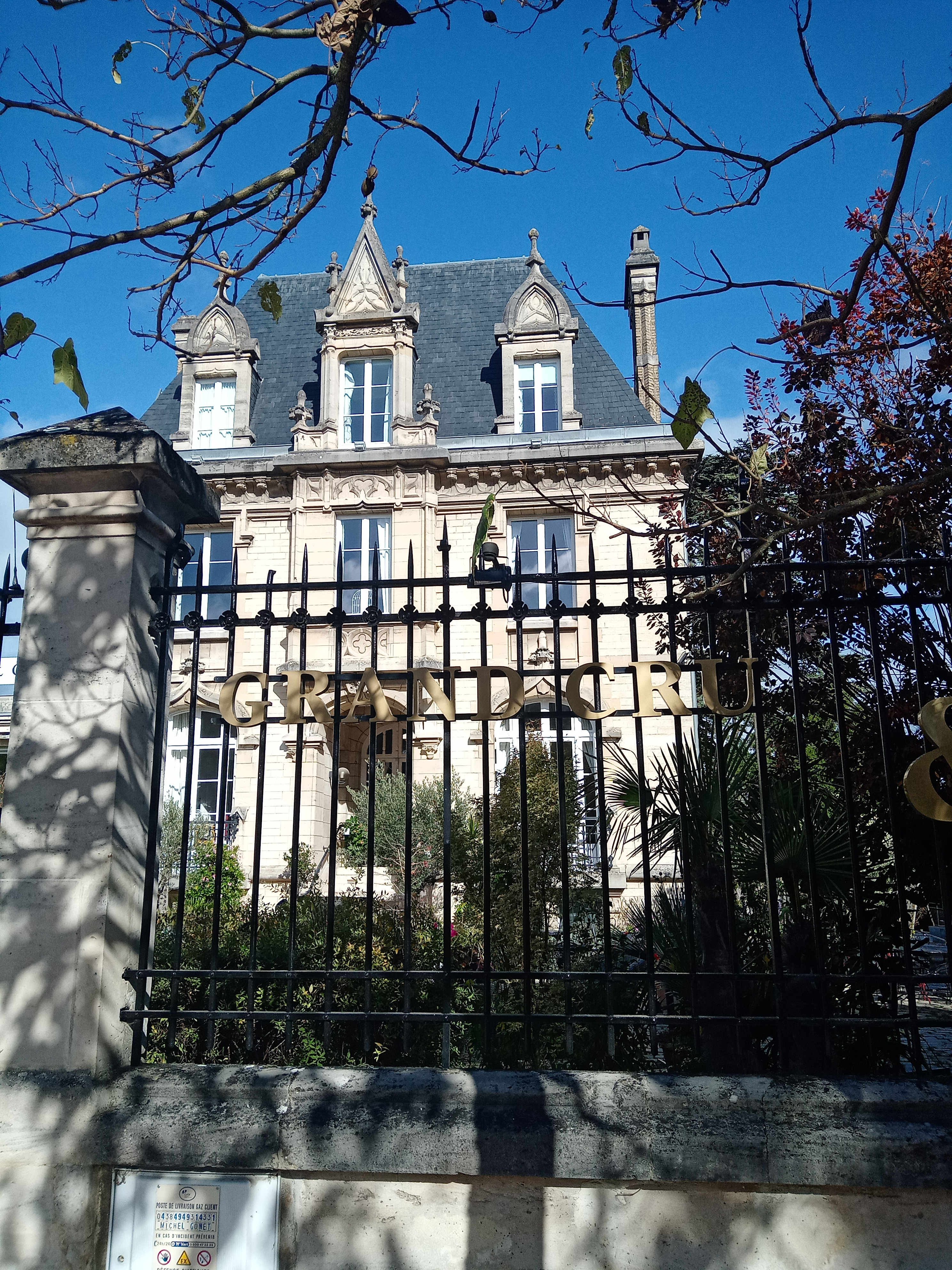
As we wandered along the famous Avenue Champagne with its palatial 19th century mansions, some of which can be visited for wine tastings, I looked for number 31 (a favourite number) to take a photo. At about the halfway point in the long, fairly sterile avenue, it was not a champagne house, but a 2,000 + student lycée (high school), named Lycée Stéphane Hessel.

I was intrigued and delighted to see the name of this institution, certain that it must have been named recently, I knew that Stéphane Hessel had died only 10 years ago.

Indignez vous Time for Outrage

The high school was named in 2013/2014 when the lycée Godart-Roger et lycée Léon-Bourgeois merged to become the lycée Stéphane Hessel, renamed in tribute to this inspirational author of a best-selling essay, written and directed specifically towards youth.

Discovering this lycée was one of the highlights of my visit, I found it brilliantly provocative that in the middle of this world famous avenue of procuring bubbles, sat a human rights activist, member of the Resistance, a voice for peace and equality, the author of a famous essay, written in his 93rd year, 3 years before his death in 2013.

It a short half hour read that has since been translated into numerous languages and sold 4.5 million copies worldwide.

I knew about it because at the Salon de Livre in Paris in 2014, there were massive queues of young people lining up to get their booklet signed by him or to listen to him talk. Journalists were intrigued and wanted to know why these young students were so interested in the words of a very old man. The response was “because he lived it” they said, unlike most who teach us about this era, this man actually lived through everything he has written about. He is authentic, we respect that.

The Essay

Stéphane Hessel wrote his essay in his 93rd year and considered himself fortunate to be able to reflect at that age on events that laid the foundation for his lifelong commitment to politics and human rights.

Born in Germany, he became French in 1939 and in 1941 fled to London and became part of Charles de Gaulle’s group of Resistance members.

He returned to France to organise communications, was captured and sent to Buchenwald, tortured and later sentenced to execution by hanging. He and two others managed to escape execution through an act of identity exchange.

He wrote of the declaration adopted by the National Council of Resistance in March 1944, a set of values and principles created to guide the nation’s modern democracy once it was freed from occupation. He reiterated the importance of many freedoms that came with the end of the war, demanding that they continue to be protected for the good of all.

It is the duty of us all to ensure that our society remain one of which we are proud, not a society wary of immigrants and intent on their expulsion or a society that disputes the welfare state or a society in which the media are controlled by the wealthy.

Find Your Reason

The basic motive of the Resistance was indignation. He addressed his young audience, reminding them of this and implores them to find their reason for indignation, to join the great course of history, to understand the Universal Declaration of Human Rights and if encountering someone who is robbed of these rights, to have empathy and them help them reclaim them.

He wrote about the rise of fascism and his understanding of the origins of it, and how young people today will find their own reasons for expressing their outrage. His indignation was born less of emotion than a desire to engage. He was influenced by the words of Jean-Paul Sartre who said “You must engage – your humanity depends on it.”

The Worst Attitude is Indifference

There are unbearable things all around us, look for them he said:

This is what I tell young people: If you spend a little time searching, you will find your reasons to engage. The worst attitude is indifference. “There’s nothing I can do; I get by” – adopting this mindset will deprive you of one of the fundamental qualities of being human: outrage. Our capacity for protest is indispensable, as is our freedom to engage.

He highlights the challenges, of grievous injustices inflicted on people deprived of the essential requirements for a decent life, the widening gap between rich and poor and the violation of basic freedoms and fundamental rights, citing Franklin Delano Roosevelt’s “Four Freedoms” and his own participation in the creation of the UN’s Universal Declaration of Human Rights.

I will never forget the crucial role played by Eleanor Roosevelt, whose great kindness and natural authority worked wonders to help reconcile the disparate personalities that comprised the commission. She was a vibrant feminist, and it is largely due to her that, for the first time, and on a global scale, the equality of men and women was inscribed without ambiguity in an official text.

His message is one of active engagement, nonviolence and hope, against injustice.

“TO CREATE IS TO RESIST.
TO RESIST IS TO CREATE.”

It is an inspiring short work, that I encourage everyone to read, its message could not be more appropriate at this time, given all that the world is currently facing.

Stéphane Hessel, Author

Stéphane Frédéric Hessel (20 Oct 1917–26 Feb 2013) was a French diplomat, ambassador, writer, concentration camp survivor, French Resistance member. Born in Germany, he became a naturalised French citizen in 1939. He became an observer of the editing of the Universal Declaration of Human Rights of 1948.

In 2011 he was named by Foreign Policy magazine in its list of top global thinkers. In later years his activism focused on economic inequalities, the Israeli-Palestinian conflict and protection for the post-World War II social vision.

His book IndignezVous! (Time for Outrage! )sold 4.5 million copies worldwide. Hessel and his book were linked and cited as an inspiration for the Spanish Indignados, the Arab Spring, the American Occupy Wall Street movement and other political movements.


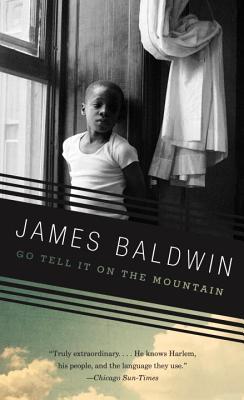
Go Tell It On The Mountain by James Baldwin

James Baldwin’s Go Tell It On The Mountain (1953) was his debut novel, a semi-autobiographical story (inspired by his own childhood in Harlem and his troubled relationship with his father), that narrates a day in the life of 14 year old John, who is the son of a fiery Pentecostal preacher Gabriel, and his second wife Elizabeth.

The Initiation

semi autobiographical novel

It is a coming-of-age story that depicts a range of thoughts, emotions and actions of this boy, while sharing the back stories of his family, culminating in a frenzied religious experience that appears to have set him on his true path.

The story is told in three parts, and though it follows the events of that one day, the three parts focus on the pasts of different characters connected to John’s family. 

Part One, The Seventh Day, is about John, it is his fourteenth birthday and he spends the day thinking about the expectations the family has of him to follow in his father’s footsteps and that he is no longer a child.

He begins to worry that he doesn’t have the same conviction as young Elisha, he feels not only unseen by his father, he feels his wrath and returns it full force in his mind – it enters his dream-life with even greater violence than the looks of disapproval he receives daily. 

The opening chapters are full of biblical language, religious fear and fervour, making it quite intense to begin with, though saved by the dialogue that brings us back to the present day.

“His father’s face, always awful, became more awful now; his father’s daily anger was transformed into prophetic wrath. His mother, her eyes raised to heaven, hands arced before her, moving, made real for John that patience, that endurance, that long suffering, which he had read of in the Bible and found so hard to imagine.”

An Act of Resistance

His mother gives him money and he uses it to attend the cinema. He begins to question his faith, and his father, noticing a rising desire for things he ought not to be thinking of:

Photo by Yuting Gao on Pexels.com
Broadway: the way that lead to death was broad, and many could be found thereon; but narrow was the way that lead to life eternal, and few there were who found it. But he did not long for the narrow way, where all his people walked; where the houses did not rise, piercing, as it seemed, the unchanging clouds, but huddled, flat, ignoble, close to the filthy ground, where the streets and the hallways and the rooms were dark, and where the unconquerable odor was of dust, and sweat, and urine, and homemade gin. In the narrow way, the way of the cross, there awaited him only humiliation forever; there awaited him, one day, a house like his father’s house, and a church like his father’s, and a job like his father’s, where he would grow old and black with hunger and toil.”

The Sins of the Father

Photo by Brett Sayles on Pexels.com

Part Two, The Prayer’s of the Saints is told in 3 parts entitled Florence’s Prayer, Gabriel’s Prayer and Elizabeth’s Prayer.

This section focuses on the past, on Gabriel’s upbringing and life, his sister Florence, her escape North and marriage, a young woman Gabriel worked with named Esther, whose life would be forever changed by their encounter. We learn of Elizabeth’s past, how she meets Richard and also travels North, their tragic story and her meeting Florence, a turning point in her life.

“And this became Florence’s deep ambition: to walk out one morning through the cabin door, never to return. Her father, whom she scarcely remembered, had departed that way one morning not many months after the birth of Gabriel.”

Everything we read here begins to explain the depth of feeling John has, often driven by events he is not aware of, including his own being, his true identity, that he does not yet know. All that has been withheld from him, the secrets people have kept, impact the lives of everyone in this extended family, often without their knowledge.

In the final part, The Threshing Floor, John has a religious experience with terrifying hallucinations, but it is an event that appears to have propelled him out of childhood and towards his calling.

Love/Hate of Parents, Escaping Reality, Awaiting the Calling

Photo by Valdemaras D. on Pexels.com

This is the third book written by Baldwin I have read and while quite different from the others, it is equally compelling. The two I have read I have linked to my reviews below, also highly recommended.

It personifies the common experience of a confused adolescent, whose situation is magnified by the love/hate he feels from one or other parent and the guilt he takes on for it, the emotional roller coaster of new exciting friendship, and the desire to escape into another reality.

The stories of the secondary characters are informative and revelatory, as they contributed to my growing understanding of the unease of the young man.

John’s narrative was convincingly portrayed to the point of it feeling like you were in his shoes and in his mind, the relentless worrying, his paranoid and angry emotions that seemed to take over him, until they culminate in his heightened ‘salvation’ experience.

These heights are a reference to the mountain, a symbol of the ascent and descent through he must pass to move closer to his God, to his own salvation, to his becoming a worthy man.

He thought of the mountaintop, where he longed to be, where the sun would cover him like a cloth of gold, would cover his head like a crown of fire, and in his hands he would hold a living rod.

Life Informs Art

In The Fire Next Time, Baldwin’s essay that first appeared in the New Yorker as Letter from a Region of My Mind, talked of his developing self-awareness as he entered adolescence and the choice he made to seek both refuge and revenge by going into the Church.

“Shortly after I joined the church, I became a preacher – a Young Minister – and I remained in the pulpit for more than three years. My youth quickly made me a much bigger drawing card than my father. I pushed this advantage ruthlessly, for it was the most effective means I had found of breaking his hold over me. That was the most frightening time of my life, and quite the most dishonest, and the resulting hysteria lent great passion to my sermons – for a while. I relished the attention and the relative immunity from punishment that my new status gave me, and I relished, above all, the sudden right to privacy.James Baldwin

Further Reading

If Beale Street Could Talk by James Baldwin

The Fire Next Time by James Baldwin

Thank you to Liz Dexter who blogs at Adventures in running, reading and working from home for the invitation to read this at the time time she was. You can read Liz’s review here.

Women’s Prize for Fiction Shortlist 2023

Today the Women’s Prize for Fiction 2023 shortlist of six novels was announced; the Chair of judges Louise Minchin summed up their decision to select this group of books by saying:

 ‘This is an exquisite set of ambitious, diverse, thoughtful, hard-hitting and emotionally engaging novels. A glittering showcase of the power of women’s writing. My fellow judges and I feel it has been a huge privilege to read these novels, and we are delighted to be part of their journey, bringing them to the attention of more readers from across the world.’

The six shortlisted books are as follows:

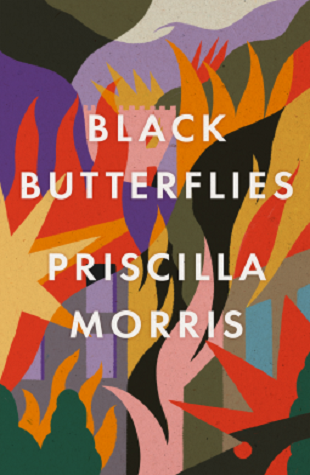
Black Butterflies by Priscilla Morris
Pod by Laline Paull
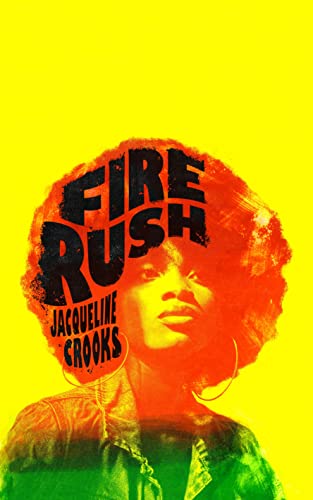
Fire Rush by Jacqueline Crooks
Trespasses by Louise Kennedy
The Marriage Portrait by Maggie O’Farrell
Demon Copperhead by Barbara Kingsolver


Black Butterflies by Priscilla Morris (Yugoslav/Cornish – UK) (Historical Fiction)

– a city under seige, 90’s Sarajevo, a breathtaking story of disintegration, resilience and hope of a young woman artist/teacher and her friends.

Ea dolphin narrator animalPod by Laline Paull (UK) (Nature/Oceanic Fantasy)

– an ocean world, its creatures, mysteries and mythologies , their relationships to each other – increasingly haunted and damaged by the cruelty and ignorance of the human race, told through Ea, a dolphin.

Fire Rush by Jacqueline Crooks (Jamaican/British) (Historical Fiction) 

– set in 80’s London & Jamaica,  a mesmerizing story of love, loss, and search for home, that vibrates with the liberating power of music

Trespasses by Louise Kennedy (Northern Ireland) (Contemporary Fiction)

– set in Northern Ireland during the Troubles, a drama of of thwarted love and irreconcilable loyalties; a young woman caught between allegiance to community and a dangerous passion.

The Marriage Portrait by Maggie O’Farrell (UK/Ireland) (Historical Fiction)

– set in 1550 Florence, Renaissance Italy,  an extraordinary portrait of a resilient young woman, the duchess Lucrezia de’ Medici, whose life arc changes when her older sister dies on the eve of her wedding to the ruler of Ferrara, Modena and Reggio. Lucrezia is thrust unwittingly into the limelight and must navigate and survive the demands of her new position.

Demon Copperhead by Barbara Kingsolver (US) (Fan Fiction)

– a retelling of David Copperfield in contemporary America that speaks for a new generation of lost boys, and all those born into beautiful, cursed places they can’t imagine leaving behind.

The Known, The Oceanic, The Talked About, The New

It is an interesting shortlist, with the familiar, experienced authors Maggie O’Farrell (who won the prize in 2020 with Hamnet) and Barbara Kingsolver (who won in 2010 with Lacuna). Both authors I have enjoyed reading and wouldn’t hesitate to pick up anything by them.

I am currently reading Pod by Laline Paull, after being completely entranced by her world creating in The Bees. Pod isn’t as compelling a reading experience for me as The Bees was, but it is equally fascinating the way the reader is drawn into her disturbing, oceanic world. Fire Rush is one I sought out, after seeing it on the longlist, I’ll likely be reading that next.

Louise Kennedy’s Trespasses I read and reviewed during Reading Ireland Month and enjoyed it. This novel has been on The Times bestseller list the last few weeks, a word of mouth sensation that has built up immense popularity in the past few months.

The winner of this year’s Women’s Prize for Fiction will be awarded on Wednesday 14th June 2023.

Have you read any books from the shortlist that you recommend? Are you going to pick up any others? Let me know in the comments below.

Booker Prize Longlist 2021

Though it was announced at the end of July I wasn’t paying attention during my busy summer, but before the short list is announced on September 14, I wanted to share the long list and short summaries of the titles, as this is often where we might find something that appeals.

The panel of judges this year includes historian Maya Jasanoff (Chair), writer and editor Horatia Harrod, actor Natascha McElhone, twice Booker-shortlisted novelist and professor Chigozie Obioma, and writer and former Archbishop Rowan Williams.

I haven’t read any of the titles but I do have a copy of Mary Lawson’s A Town Called Solace, which I thought looked like a light read that I might enjoy.

“Readers of every taste and every kind of interest will find something on this list. What we tried to do was hear what the books had to say to us. We find what marks all of these books is a really distinctive voice. Some of them are very lyrical, some of them are very spare, but there is a kind of deliberate quality and attention to the writing in each of these books that makes them really distinct and special.”  Maya Jasanoff, Chair of Judges

Below are the 13 novels long listed.

A Passage North, Anuk Arudpragasam (Sri Lanka) (Granta Books)

A Passage North Anuk ArudpragasamA Passage North begins with a message from out of the blue: a telephone call informing Krishan that his grandmother’s caretaker, Rani, has died under unexpected circumstances. The news arrives soon after an email from Anjum, an impassioned yet aloof activist Krishnan fell in love with years before while living in Delhi, stirring old memories and desires from a world he left behind.

As Krishan makes the long journey by train from Colombo into the war-torn Northern Province for Rani’s funeral, so begins an astonishing passage into the innermost reaches of a country. At once a powerful meditation on absence and longing, and an unsparing account of the legacy of Sri Lanka’s thirty-year civil war, this procession to a pyre ‘at the end of the earth’ lays bare the imprints of an island’s past, the unattainable distances between who we are and what we seek.

Written with precision and grace, Anuk Arudpragasam’s novel attempts to come to terms with life in the wake of devastation, a poignant memorial for those lost and those still alive.

Second Place, Rachel Cusk, (UK/Canada) (Faber)
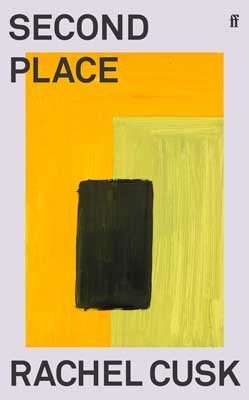
Second Place Rachel CuskA woman invites a famed artist to visit the remote coastal region where she lives, in the belief that his vision will penetrate the mystery of her life and landscape. Over the course of one hot summer, his provocative presence provides the frame for a study of female fate and male privilege, of the geometries of human relationships, and of the struggle to live morally between our internal and external worlds.

With its examination of the possibility that art can both save and destroy us, Second Place attempts to affirm the human soul, while grappling with its darkest demons.

The Promise, Damon Galgut, (South Africa) (Chatto & Windus)
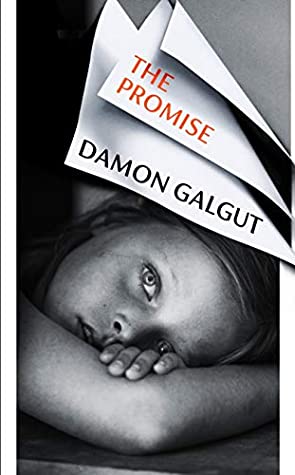
The Promise Damon GalgutThe Promise charts the crash and burn of a white South African family, living on a farm outside Pretoria. The Swarts are gathering for Ma’s funeral. The younger generation, Anton and Amor, detest everything the family stand for, not  least the failed promise to the Black woman who has worked for them her whole life. After years of service, Salome was promised her own house, her own land… yet somehow, as each decade passes, that promise remains unfulfilled.

The narrator’s eye shifts and blinks: moving fluidly between characters, flying into their dreams; deliciously lethal in its observation. And as the country moves from old deep divisions to its new so-called fairer society, the lost promise of more than just one family hovers behind the novel’s title.

In this story of a diminished family, sharp and tender emotional truths hit home.

The Sweetness of Water, Nathan Harris (US) (Tinder Press)
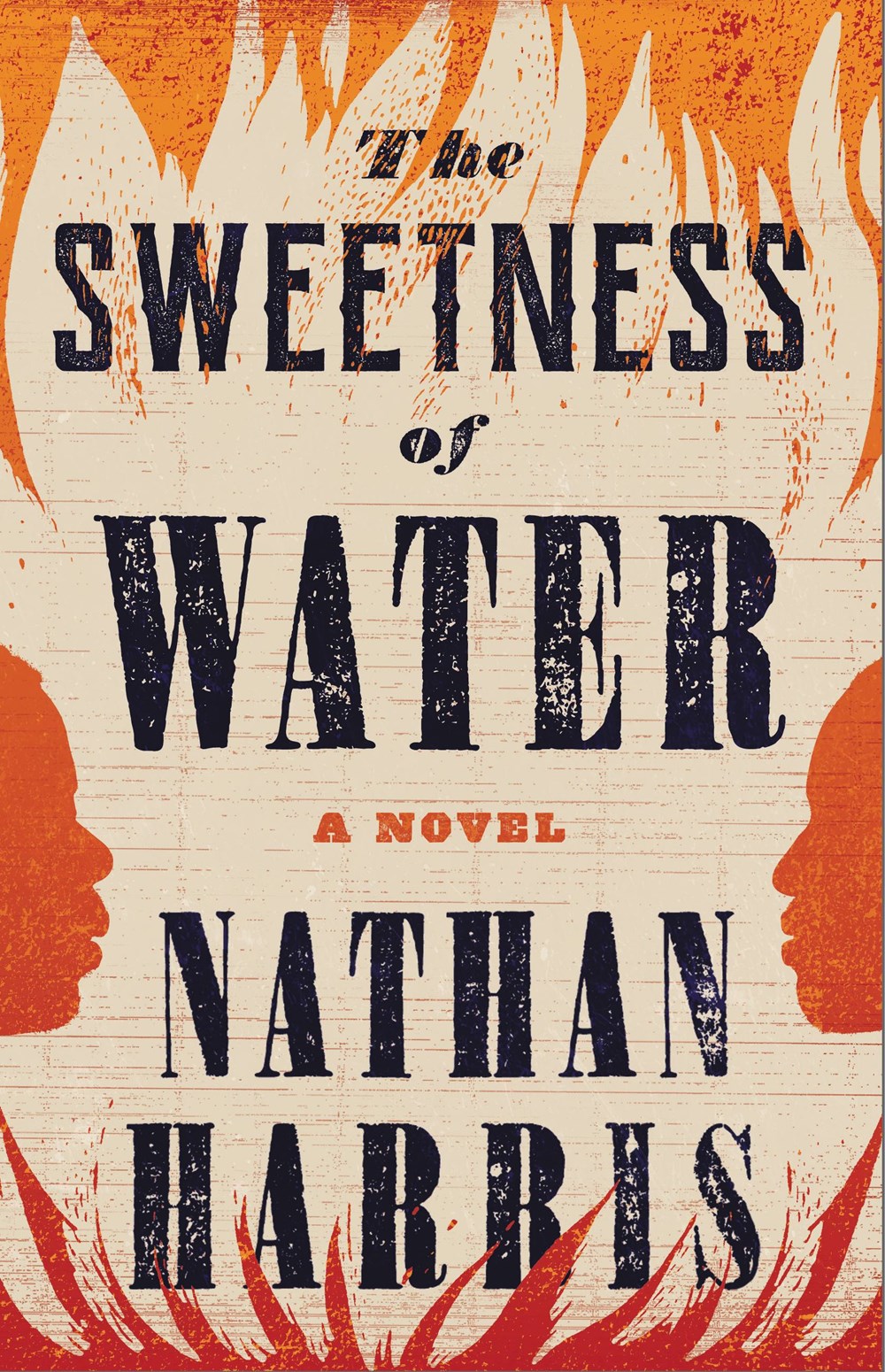
The Sweetness of Water Nathan HarrisIn the dying days of the American Civil War, newly freed brothers Landry and Prentiss find themselves cast into the world without a penny to their names. Forced to hide out in the woods near their former Georgia plantation, they’re soon discovered by the land’s owner, George Walker, a man still reeling from the loss of his son in the war.

When the brothers begin to live and work on George’s farm, tentative bonds of trust and union begin to blossom between the strangers. But this sanctuary survives on a knife’s edge, and it isn’t long before the inhabitants of the nearby town of Old Ox react with fury at alliances being formed a few miles away.

Conjuring a world fraught with tragedy and violence yet threaded through with hope, The Sweetness of Water is a debut novel unique in its power to move and enthrall. An Oprah pick for her July book club and on Barack Obama’s summer reading list.

Klara and the Sun, Kazuo Ishiguro (UK) (Faber)
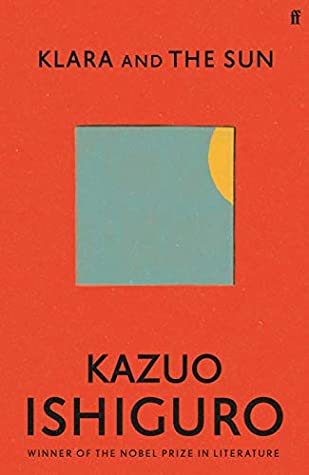
Klara and the Sun Kazua IshiguroFrom her place in the store, Klara, an Artificial Friend with outstanding observational qualities, watches carefully the behaviour of those who come in to browse, and those who pass in the street outside. She remains hopeful that a customer will soon choose her, but when the possibility emerges that her circumstances may change for ever, Klara is warned not to invest too much in the promises of humans.

In Klara and the Sun, Kazuo Ishiguro looks at our rapidly-changing modern world through the eyes of an unforgettable narrator to explore a fundamental question: what does it mean to love? Also on Barack Obama’s summer reading list.

An Island, Karen Jennings (South Africa) (Holland House Books)
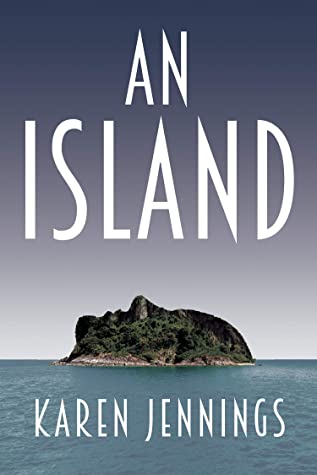
An Island Karen JenningsSamuel has lived alone for a long time; one morning he finds the sea has brought someone to offer companionship and to threaten his solitude…

A young refugee washes up unconscious on the beach of a small island inhabited by no one but Samuel, an old lighthouse keeper. Unsettled, Samuel is soon swept up in memories of his former life on the mainland: a life that saw his country suffer under colonisers, then fight for independence, only to fall under the rule of a cruel dictator; and he recalls his own part in its history. In this new man’s presence he begins to consider, as he did in his youth, what is meant by land and to whom it should belong. To what lengths will a person go in order to ensure that what is theirs will not be taken from them?

A novel about guilt and fear, friendship and rejection; about the meaning of home.

A Town Called Solace, Mary Lawson (Canada) (Chatto & Windus)

A Town Called SolaceClara’s sister is missing. Angry, rebellious Rose had a row with their mother, stormed out of the house and simply disappeared. Eight-year-old Clara, isolated by her distraught parents’ efforts to protect her from the truth, is grief-stricken and bewildered. Liam Kane, newly divorced, newly unemployed, newly arrived in this small northern town, moves into the house next door – a house left to him by an old woman he can barely remember — and within hours gets a visit from the police. It seems he’s suspected of a crime.

At the end of her life Elizabeth Orchard is thinking about a crime too, one committed thirty years ago that had tragic consequences for two families and in particular for one small child. She desperately wants to make amends before she dies. Set in Northern Ontario in 1972, A Town Called Solace explores the relationships of these three people brought together by fate and the mistakes of the past. By turns gripping and darkly funny, it uncovers the layers of grief and remorse and love that connect us, but shows that sometimes a new life is possible.

No One is Talking About This, Patricia Lockwood (US) (Bloomsbury Circus)

Noone Is Talking ABout ThisA woman known for her viral social media posts travels the world speaking to adoring fans, her entire existence overwhelmed by the internet — or what she terms ‘the portal’. Are we in hell? the people of the portal ask themselves. Who are we serving? Are we all just going to keep doing this until we die?

Two texts from her mother pierce the fray: ‘Something has gone wrong,’ and ‘How soon can you get here?’ As real life and its stakes collide with the increasing absurdity of the portal, the woman confronts a world that seems to contain both an abundance of proof that there is goodness, empathy and justice in the universe, and a deluge of evidence to the contrary.

Sincere and profane, No One Is Talking About This is a love letter to the infinite scroll, a meditation on love, language and human connection from an original voice of our time.

The Fortune Men, Nadifa Mohamed (Somalia/UK) (Viking, Penguin)

The Fortune Men Nadifa MohamedMahmood Mattan is a fixture in Cardiff’s Tiger Bay, 1952, which bustles with Somali and West Indian sailors, Maltese businessmen and Jewish families. A father, a chancer, a some-time petty thief, he is many things but not a murderer.

So when a shopkeeper is brutally killed and all eyes fall on him, Mahmood isn’t too worried. It is true that he has been getting into trouble more often since his Welsh wife Laura left him. But Mahmood is secure in his innocence in a country where he thinks justice is served.

It is only in the run-up to the trial, as the prospect of freedom dwindles, that it will dawn on Mahmood that he is in a terrifying fight for his life — against conspiracy, prejudice and the inhumanity of the state. Under the shadow of the hangman’s noose, he begins to realise that the truth may not be enough to save him.

Bewilderment, Richard Powers (US) (Hutchinson Heinemann)

Bewilderment Richard PowersTheo Byrne is a promising young astrobiologist who has found a way to search for life on other planets dozens of light years away. The widowed father of an unusual nine-year-old, his son Robin is funny, loving and filled with plans. He thinks and feels deeply, adores animals and spends hours painting elaborate pictures. On the verge of being expelled from third grade for smashing his friend’s face with a metal thermos, this rare and troubled boy is being recommended psychoactive drugs.

What can a father do or say when his son wants an explanation for a world that is clearly in love with its own destruction? The only thing for it is to take the boy to other planets, all the while fostering his desperate campaign to help save this one.

China Room, Sunjeev Sahota (UK) (Harvill Secker)
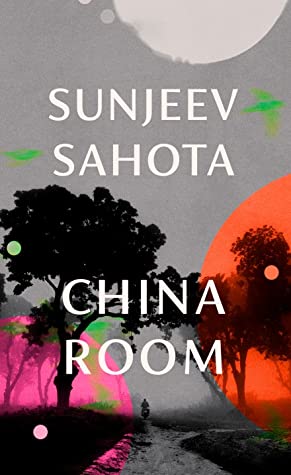
China Room Sunjeev SahotaMehar, a young bride in rural 1929 Punjab, is trying to discover the identity of her new husband. She and her sisters-in-law, married to three brothers in a single ceremony, spend their days hard at work in the family’s ‘china room’, sequestered from contact with the men.

When Mehar develops a theory as to which of them is hers, a passion is ignited that will put more than one life at risk. Spiralling around Mehar’s story is that of a young man who in 1999 travels from England to the now-deserted farm, its ‘china room’ locked and barred. In enforced flight from the traumas of his adolescence — his experiences of addiction, racism, and estrangement from the culture of his birth — he spends a summer in painful contemplation and recovery, finally finding the strength to return home. Partly inspired by the author’s family history it explores how systems of power affect individual lives and the human capacity to resist them.

Great Circle, Maggie Shipstead (US)(Doubleday)

Great Circle Maggie ShipsteadIn 1920s Montana, wild-hearted orphan Marian Graves spends her days roaming the rugged forests and mountains of her home. When she witnesses the roll, loop and dive of two barnstorming pilots, she promises herself that one day she too will take to the skies.

Years later, after a series of reckless romances and a spell flying to aid the British war effort, Marian embarks on a treacherous flight around the globe in search of the freedom she craves,  never to be seen again.

More than half a century later, Hadley Baxter, a troubled Hollywood starlet beset by scandal, is  drawn to play Marian Graves in her biopic, a role that leads her to probe the deepest mysteries of the vanished pilot’s life.

Light Perpetual, Francis Spufford (UK)(Faber)

Light Perpetual Francis SpuffordLunchtime on a Saturday, 1944: the Woolworths on Bexford High Street in South London receives a delivery of aluminum saucepans. A crowd gathers to see the first new metal in ages—after all, everything’s been melted down for the war effort. An instant later, the crowd is gone; incinerated. Among the shoppers were five young children.

Who were they? What futures did they lose? Inspired by real events, written in luminous prose,  the author reimagines the lives of five souls as they pass through the extraordinary changes of the twentieth-century London.

*  *  *  *  *

That’s it, the 13 books that make up the Booker’s dozen, chosen from 158 submissions. Are there any that jump out at you, that look interesting?

I’m intrigued by Sri Lankan author Anuk Arudpragasam’s novel, I’m always going to be more interested in stories that are set within another culture and I recall wishing to read his first novel, though I never did. Bewilderment seems to be receiving unanimously high praise by those who’ve had the chance to an early copy, but I really have no idea what will make the short list, watch this space to find out!

“Many of them consider how people grapple with the past—whether personal experiences of grief or dislocation or the historical legacies of enslavement, apartheid, and civil war. Many examine intimate relationships placed under stress, and through them meditate on ideas of freedom and obligation, or on what makes us human.”
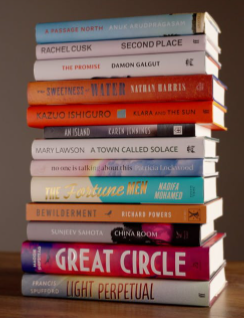
Booker Longlist 2021

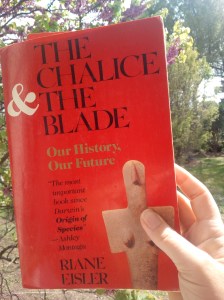
The Chalice and the Blade by Riane Eisler

Our History, Our Future

This is a book I’ve been fascinated by and slow reading over the past couple of months. Today, somewhat reluctantly, as it’s a large and in-depth work that can’t really be summarised, I decided I needed to write about it, especially as the sequel is due out and I’ve pre-ordered it, so I wanted to share my thoughts on this first. And because it’s brilliant and deserves a much wider readership.

Riane Eisler was born in Vienna, Austria. When she was a child she and her parents fled for their lives from the Nazis, first to Cuba and finally to the United States, thus she experienced three different cultures, each with their own version of truth and reality.

Very early in my life I saw that what people in different cultures consider given – just the way things are – is not the same everywhere. I also very early developed a passionate concern about the human situation.

She began to ask herself many questions:

Why do we hunt and persecute each other? Why is our world so full of man’s infamous inhumanity to man – and woman? How can humans be so brutal to their own kind? What is it that chronically tilts us toward cruelty rather than kindness, toward war rather than peace, toward destruction rather than actualization?

These and other questions lead her to re-examine the past, present and future, captured here in The Chalice and the Blade, looking at human history and pre-history and at both male and female aspects of humanity and in particular, those societies where the feminine aspect was revered.
This work gave rise to what she termed:
– the dominator model (popularly referred to as patriarchy or matriarchy) – the ranking of one half of humanity over another and
– the partnership model  – based on the principle of linking, affiliation and cooperation

Her work further suggested that:

the original direction in the mainstream of our cultural evolution was toward partnership but that, following a period of chaos and almost total cultural disruption, there occurred a fundamental shift.

Hence the title The Chalice (the life-generating and nurturing powers of the universe – in our time symbolized by the ancient chalice or grail) and the Blade the power to take rather than give life that is the ultimate power to establish and enforce domination.

She reevaluates the past and present, sharing insights from research that has often been ignored or misinterpreted.

The chapters tell a story that begins thousands of years before our recorded (or written history). Of how the original partnership direction of Western culture veered off into a bloody 5,000 year dominator detour.

showing that our mounting global problems are in large part the logical consequences of a dominator model of social organisation and that there is another course which, as co-creators of our own future experience, is still ours to choose.

Both the mythical and archaeological evidence indicate that perhaps the most notable quality of the pre-dominator mind was its recognition of our oneness with all of nature,which lies at the heart of both Neolithic and the Cretan worship of the Goddess. Increasingly, the work of modern ecologists indicates that this earlier quality of mind, in our time often associated with some types of Eastern spirituality, was far advanced beyond today’s environmentally destructive ideology.

From the paleolithic, the neolithic, Old Europe, Goddess worship and the unique long lasting civilization of Crete to the invaders, the colonizers, warfare, slavery and sacrifice, we see the world and our reality through a different lens and yet once you’ve seen it, you recognize it, without realizing how it acts on us, in our homes, our workplaces, ours schools, institutions, governments.

It is so interesting to read this, originally written in 1987, over 30 years ago, in the context of our reality today. It provides a unique perspective on our history and analyzes it rigorously and yet in an easily understandable and accessible way, synthesizing information from a varieties of sources and disciplines to give us this helpful view of the influences that have been directing our progress (or lack of) suggesting the greater role that a more feminine (yin) collaborative, partnership approach might bring.

It is a seminal work in understanding the impact of repressing the positive characteristics of the feminine and demonstrating that a more partnership oriented model can reap rewards that benefit not just the individual, but the community. Despite the fact that our media is full of much doom and gloom, it is possible to look a little closer to home and see examples of people working in partnership and collaboration, of people leaving behind corporations and institutions and choosing ways of living and working that allow for greater creative expression.

She continues to ask questions, and these two that she mentions, seem fitting to what will follow:

Is a shift from a system leading to chronic wars,  social injustice, and ecological imbalance to one of peace, social justice and ecological balance a realistic possibility? Most important, what changes in social structure would make such a transformation possible?

Though this was written 30 years ago, there is a sequel due to be published in August 2019, in collaboration with peace anthropologist Douglas P. Fry Nurturing Our Humanity: How Domination and Partnership Shape Our Brains, Lives, and Future exploring how behaviors, values, and socio-economic institutions develop differently in these two environments, revealing connections between disturbing trends like climate change denial and regressions to strongman rule. It combines Eisler’s partnership-domination social scale with extensive evidence from neuroscience and other fields.
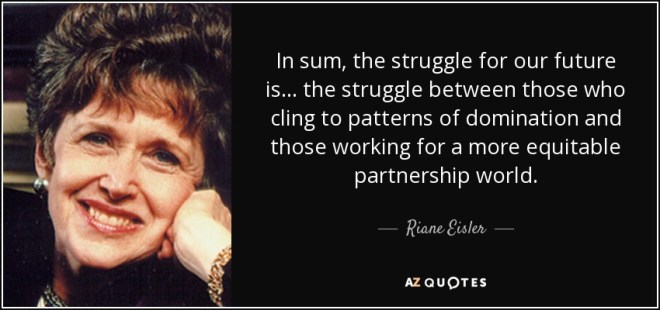
It shows that, contrary to popular beliefs about “selfish genes” driving human behavior, how people think and feel is heavily influenced by whether they grow up in partnership or domination oriented environments. It also documents that in reality humans in the course of evolution developed a propensity for empathy, caring, and creativity, which is, however, inhibited in domination systems. It further points to interventions that can accelerate the contemporary movement toward partnership and prevent further regressions to domination.

About the Author
Riane Eisler, JD, PhD (hon), is President of the Center for Partnership Studies, Editor-in-Chief of the Interdisciplinary Journal of Partnership Studies, internationally known as a systems scientist, cultural historian, pioneering attorney working for women’s and children’s human rights, and recipient of many awards. Her groundbreaking books include The Chalice and the Blade, Tomorrow’s Children, and The Real Wealth of Nations. She lectures worldwide, keynoting conferences, addressing the U.N. General Assembly, U.S. State Department, corporations, and universities. Her website is https://rianeeisler.com/.

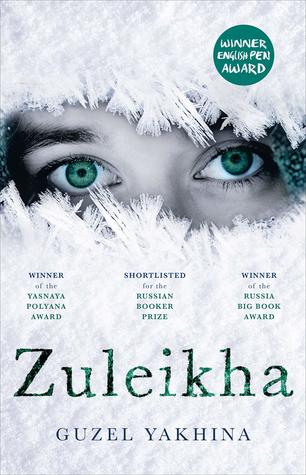
Zuleikha by Guzel Yakhina (Russia) tr. Lisa Hayden

Last year my favourite read Kintu, by Ugandan author Jennifer Nansubuga Nakumbi was published by OneWorld Publications. This year, I enjoyed another of their award winning titles The Baghdad Clock by Shahad Al-Rawi (Iraq) (tr. Luke Leafgren) and now I am adding to that list, this wonderful historical fiction epic, Zuleikha by Guzel Yakhina (Russia) translated by Lisa Hayden.

The Russian Gulag – Labour Camps

April 2019 is the 100th anniversary of the beginning of the Gulags in Russia. Gulag is an acronym for Glavnoe Upravlenie Lagerei, or Main Camp Administration, they were a system of forced labour camp, a kind of re-education in a prison-like environment.

The Gulag was first established in 1919, and by 1921 the Gulag system had 84 camps. But it wasn’t until Stalin’s rule that the prison population reached significant numbers. From 1929 until Stalin’s death, the Gulag went through a period of rapid expansion.

At its height, the Gulag network included hundreds of labor camps that held anywhere from 2,000 to 10,000 people each. Conditions at the Gulag were brutal: Prisoners could be required to work up to 14 hours a day, often in extreme weather. Many died of starvation, disease or exhaustion— others were simply executed. The atrocities of the Gulag system have had a long-lasting impact that still permeates Russian society today.

Kulaks and Dekulakization

The first people to be interned in these camps were known as kulaks (literal translation – fist, as in tight-fisted) meaning affluent peasants – originally the term referred to independent farmers in the Russian Empire who emerged from the peasantry and became wealthy, but the definition broadened in 1918 to include any peasant who resisted handing over their grain to authorities and under Joseph Stalin’s leadership it came to refer to peasants with a couple of cows or five or six acres more than their neighbors and eventually any intellectual who offended him.

Portrayed as class enemies of the USSR, the process of re-education was dekulakization the campaign of political repressions, including arrests, deportations, and executions of millions of prosperous peasants and their families. It is these people, decreed kulaks in the 1930’s, that are the subject of this novel.

Book Review – Zuleikha

As soon as I read premise of this novel, I wanted to get it, one of my favourite books The Industry of Souls by Martin Booth was set in a Russian gulag, though these are very different books. And there is nothing quite like being swept away by those wonderful character-lead novels such as Dostoevsky’s The Idiot and Tolstoy’s, Anna Karenina and the provocative poetry of Pushkin’s Eugene Onegin that have entertained us and demonstrated important aspects of creating characters in literature, and who could forget one of the highest grossing films of all time, Doctor Zhivago.

While we may not quite reach the heights of the masters, we are offered a refreshing and unique perspective in this compelling novel about a Tartar Muslim woman named Zuleikha, whose independent farmer husband has been accused of not having collectivised his property, resulting in her being sent away to be dekulakized.

They encounter the Red Army and their leader Comrade Ignatov as they return from hiding provisions, a meeting that will forever be etched in the minds of both Zuleikha and Ignatov, the latter becoming an equally important protagonist in the novel, which charts the journey and evolution of both characters.

They travel the same paths in opposite roles, one of the ironies of the novel to see how imprisonment in many ways improves the life of Zuleika, and control of the camp significantly diminishes the life of her captor.  Effectively she is rescued from a tyrannical husband and mother-in-law, having been married off at the age of fifteen (he 30 years her senior) where she was little more than a slave in their household, having also given birth and lost all her babies in that period.

Photo by Pixabay on Pexels.com

Unlike some gulag stories, the people in this novel who are sent to be dekulakized are not sent to an existing facility. They spend months on a long train journey, where many will die, some escape, getting to know each other and then just as winter sets in they’re put on a barge, travel up a river and are dumped there. In order to survive, they must build shelter and find food, so their fate also extends to the leader who oversees them, Ignatov.

Although Zuleikha arrives in an emaciated state, she soon attains strong motivation to remain healthy, she finds solace in her role in the kitchen and ultimately strength in her eventual role as a hunter, venturing into the forest every day to set traps and capture wildlife to keep them all from starving.

Whereas Ignatov, who has enjoyed relative freedom and even privilege in his previous role, riding across the country rounding up suspected kulaks, is unhappy with orders to take on the role of Commandant to accompany these people to an unknown destination. His transformation is more of a decline from his lofty position of power, he loses faith and no longer commands the same respect he had, even for himself.

Who was Zuleikha?

On the cover of the book and mentioned throughout the text, are Zuleikha’s intense green eyes, other versions of the novel are entitled “Zuleikha Opens her Eyes“, this transformation of character through having her eyes opened is one of the themes of the novel, she sees beauty as well as suffering, she will experience true love and profound heartbreak. It’s about a woman who comes out from having been defined and used by men, into finding new strength and her own role. It is a form of emancipation, albeit it a preliminary one.

Yusef runs away from Zulaikha

One aspect of the novel I haven’t seen discussed anywhere is the significance of the names, Zuleikha and Yuzuf. I had a sense that those names somehow went together and I discovered an epic poem of the same name written in 1483 AD by the Sufi poet Jami.

It is an allegorical poem about the pursuit of love and of God, which also covers the allure and the suppression of love, the suffering of slavery and in aspects of this poem, I find aspects of three characters in the novel, Zuleikha, Ignatov and Yuzuf and I end my review with an ambiguous extract that may refer to a lover or a son, from the poem that reminds me of the closing pages of the novel.

The novel is unique in that it is written (and translated) by a woman who makes a young woman the centre of such an epic story, in part inspired by the actual memories of her own grandmother. She hasn’t set out to recreate the dire, conditions and cruelty of the camps, we witness a tale of survival, and through the eyes of a woman who already had a dire life, despite being the wife of an affluent peasant.

Guzel Yakhina’s grandmother was arrested in the 1930’s, taken by horseback to Kazan and then on a long railway journey (over 2,000 miles) to Siberia. She was exiled from the age of 7 until 17 years, returning to her native village in 1947. It was these formative childhood years that were in a large part responsible for her formidable character.
Upon her death at the age of 85 years, the author realised the importance of her early life and thus began her research and determination to understand how her grandmother operated, bringing her back in part through the inspired creation of the extraordinary character Zuleikha.

“I realised it would be impossible to remember the things she said as her stories were not recorded,” Yakhina says. “There was a feeling of guilt.”

A thought-provoking, interesting story and reflection, not at all brutal or hard to read, the author writes with compassion for her characters and brings out something very different from what we have come to expect from stories set in prison-like environments.

Highly Recommended.

 Zuleikha and Yusuf – extract from the epic poem

“The one sole wish of my heart,” she replied,
“Is still to be near thee, to sit by thy side;
To have thee by day in my happy sight,
And to lay my cheek on thy foot at night;
To lie in the shade of the cypress and sip
The sugar that lies on thy ruby lip;
To my wounded heart this soft balm to lay;
For naught beyond this can I wish or pray.
The streams of thy love will new life bestow
On the dry thirsty field where its sweet waters flow.”

Jami, Sufi poet (tr. Charles Francis Horne)

My Reviews of Novels set in Russia

Eugene Onegin by Pushkin

The Kindness of Enemies by Leila Aboulela

The Industry of Souls by Martin Booth

Further Reading

Review: Lisa Hill’s review of Zuleikha at ANZLitLovers

Article: The Calvert Journal: “Learn to live with it, even forgive.”Guzel Yakhina on the traumas of Soviet history

Article: Peninsula, Qatar: Russian novel tells story of survival, love in Stalin’s camp

Buy a Copy of Zuleikha via Book Depository

N.B. Thank you to OneWorld Publications for providing me with an advance reader’s copy of this novel.

Mend the Living by Maylis de Kerangal #WITMonth

Although I’ve read reviews and seen this book appear often over the last year, and knew I really wanted to read it, I couldn’t remember what is was about or why.
It was down to a consistent feeling and feedback from readers whose views I respect, their brief tweets of encouragement igniting the flame of motivation that made me choose this as the first #WIT (Women in Translation) novel I’d read in August 2018. Yes, it is WIT Month again, now in its 5th year!

So how to describe this remarkable novel?

There’s a clue in the two versions of the English translations, (the American and British English versions have different titles and different translators). The novel was originally written in French and ironically one of the characters, a 50-year-old woman awaiting a heart transplant in a Parisian hospital, is also a translator.

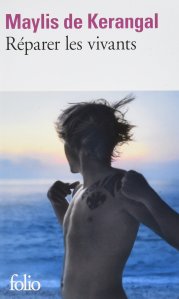
The American translation (by Sam Taylor) is entitled The Heart and it is indeed a story that follows the heart of a 19-year-old youth from the moment his alarm clock rings at 5.50 a.m one morning, an hour he rarely awakes, as he sets off with two friends on a surfing mission during a rare mid-winter half-tide; over the next 24 hours until his body is meticulously prepared to be laid to rest.

He lets out a whoop as he takes his first ride, and for a period of time he touches a state of grace – its horizontal vertigo, he’s neck and neck with the world, and as though issued from it, taken into its flow – space swallows him, crushes him as it liberates him, saturates his muscular fibres, his bronchial tubes, oxygenates his blood; the wave unfolds on a blurred timeline, slow or fast it’s impossible to tell, it suspends each second one by one until it finishes pulverised, an organic, senseless mess and it’s incredible but after having been battered by pebbles in the froth at the end, Simon Limbeau turns to go straight back out again.

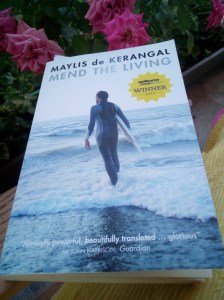
The British translation (by Jessica Moore) is entitled Mend the Living, broader in scope, it references the many who lie with compromised organs, who dwell in a twilight zone of half-lived lives, waiting to see if their match will come up, knowing when it does, it will likely be a sudden opportunity, to receive a healthy heart, liver, or kidney from a donor, taken violently from life.
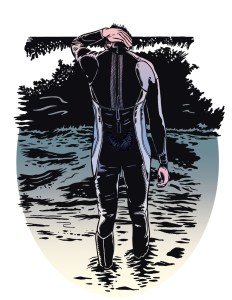
It could also refer to those who facilitate the complex conversations and interventions, those with empathy and sensitivity who broach the subject to parents not yet able to comprehend, let alone accept what is passing – to those with proficiency, who possess a singular ambition to attain perfection in their chosen field, harvesting and transplanting organs.

Maylis de Kerangal writes snapshots of scenes that pass on this one day, entering briefly into the personal lives of those who have some kind of involvement in the event and everything that transpires connected to it, in the day that follows.

It’s like the writer wields a camera, zooming in on the context of the life of each person; the parents, separated, who will be brought together, the girlfriend confused by a long silence, the nurse waiting for a text message from last nights tryst, the female intern following in the family tradition, the Doctor who she will shadow removing thoughts of the violent passion of the woman he abandoned when his pager went off, and the one who bookends the process who listens to the questions and requests, who respects the concerns of the living and the dead, the one who sings and is heard.

Within the hospital, the I.C.U. is a separate space that takes in tangential lives, opaque comas, deaths foretold – it houses those bodies situated exactly at the point between life and death. A domain of hallways and rooms where suspense holds sway.

The translator Jessica Moore refers to her task in translating the authors work, as ‘grappling with Maylis’s labyrinthe phrases’, which can feel like what it must be like to be an amateur surfer facing the wave, trying and trying again, to find the one that fits, the wave and the rider, the words and the translator. She gives up trying to turn what the author meant into suitable phrases and leaves interpretation to the future, potential reader, us.

It is an extraordinary novel in its intricate penetration and portrayal of medical procedure, it’s obsession with language, with extending its own vocabulary, its length of phrase, as if we are riding a wave of words, of long sentences strung out across a shoreline, that end with a dumping in the shallows.

In the process of writing the book, the author’s own father had a heart attack, which put the writing on hold and sent her thinking to even greater depths:

“A few months later I was in Marseille and I wanted to understand what is a heart. I began to think about its double nature: on the one hand you have an organ in your body and on the other you have a symbol of love. From that time I started to pursue the image of a heart crossing the night from one body to another. It is a simple narrative structure but it’s open to a lot of things. I had the intuition that this book could give form to my intimate experience of death.”

This is one of those novels that unleashes the mind and sends it off in all kinds of directions, thinking about the impact events have on so many lives, the different callings people have, the incredible developments in medical science, how little we really know and yet how some do seem to know intuitively and can act in ways that restores our faith in humanity.

A deserving winner of the Wellcome Book Prize in 2017, a prize that rewards books that illuminate the human experience through its interaction with health, medicine and illness, literature engaging with science and medical themes, the book has also been made into a successful film and two stage productions.

Highly Recommended.

Interview with Maylis de KerangalWhat is a Heart? by Claire Armistead

The Hope Fault by Tracy Farr

Uplevelling my blending skills

I’ve been busy doing some studies and practice in ‘Spiritual Phytoessencing’ which is all about blending essential oils which deal with disharmony in an individual’s soul. It might sound ethereal, however, it’s been quite demanding intellectually and so for the past two months my reading has had to be complementary to my studies, so I haven’t been reading any fiction.

Yesterday however, I finally finished a novel I’d been wanting to get to for a while, escaping the current heat wave happening here in the south of France, with this book, its beautiful raindrops on the cover, so enticing.

I loved Tracy Farr’s The Life and Loves of Lena Gaunt (review link) so I was looking forward to this, her next book.

Hope in a Heatwave

The Hope Fault for the most part, takes place over a long weekend as a small, extended family meet at the family beach house that has now been sold, as all their lives are moving on. They meet to pack everything up, to have one last party and to acknowledge their youngest member, the month old Baby that has yet to be given a name.

The one family member that is missing is 99-year-old Rosa, days shy of her 100th birthday, she’s in a care facility, but remembered often throughout the weekend and among the various objects that are unearthed as they pack.

The mid-section of the novel is given over to Rosa, in a unique, slow revealing way, it maps out snippets of her life from the present, through the past, snapshots that reveal the cracks, turning points and little known aspects of her life, that have unbeknownst to the group that now meets, had an impact on their lives.

Although it is ostensibly a novel about families, there are poems and letters from a geologist, which I won’t reveal, as they are part of the mystery and intrigue of the novel, but they provide an interesting connection and create one aspect of the metaphor of the ‘hope fault’, natural occurrences that disrupt and reform landscapes, families and humanity.

They also represent that aspect of the past, of our parents or grandparents lives that most of us don’t know about, things that happened before we were born, which may never have been spoken about or revealed, clues in the junk that gets thrown away, imprints often carried forward in our behaviours, the non-genetic aspects inherited within families, hidden within the stories never told, secrets never shared, loves never realised.

Knowing that Tracy Farr has lived many years in NZ, I imagine she was in part inspired by the Nov 2016 earthquake in Kaikoura, NZ, a complex 7.8 earthquake of 21 faults (some previously unknown) that ruptured the landscape in various ways, raising the seabed by more than a metre. It is thought to be part of the evolution of the boundary between the Australian and Pacific plates, underlying planetary change that can remain dormant for years, then suddenly reform, disrupt, create anew.

Kaikoura Earthquake, New Zealand Nov 2016

The fault is that unseen force that underlies what we think is a solid reality, it represents change, movement, transformation, as it has done so in the past, as it will do in the future, there for us to see in the present if we open our eyes and mind to it.

For me, this is what this story is about, change, transformation, moving on, new generations replacing old, letting go, the awkwardness and disturbance of youth as they encounter parts of themselves they don’t understand, the various manifestations of middle life, how men and women deal with it, how it impacts families and of just making the best of it all, of not judging others for their flaws.

In dealing with its faults, cracks and flaws, it’s actually a novel of quiet hope.

P.S. One little intrigue this novel does reveal, which isn’t about the storyline per se, is the connection to the authors twitter account. I’d noticed a long time ago that Tracy Farr’s twitter handle is @hissingswan and wondered what that was a reference to. In reading this novel, at least one of the reasons for this reference is revealed!  How Mister Willow came to Missus Maker, from Miss Fortune’s Faery Tales by Rosa Fortune. Read it to find out more.

P.P.S. Thank you to Gallic Books for providing me with this ARC (Advance Reader Copy).

Buy a Copy of The Hope Fault via Book Depository

If you’re interested in the book, why not Look Inside read the first few pages, click on the images or words below:

Read a Sample from The Hope Fault