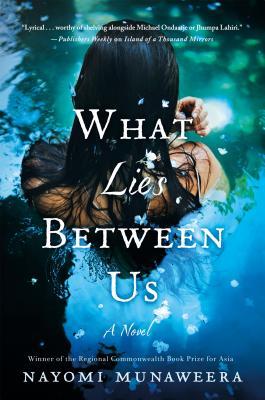
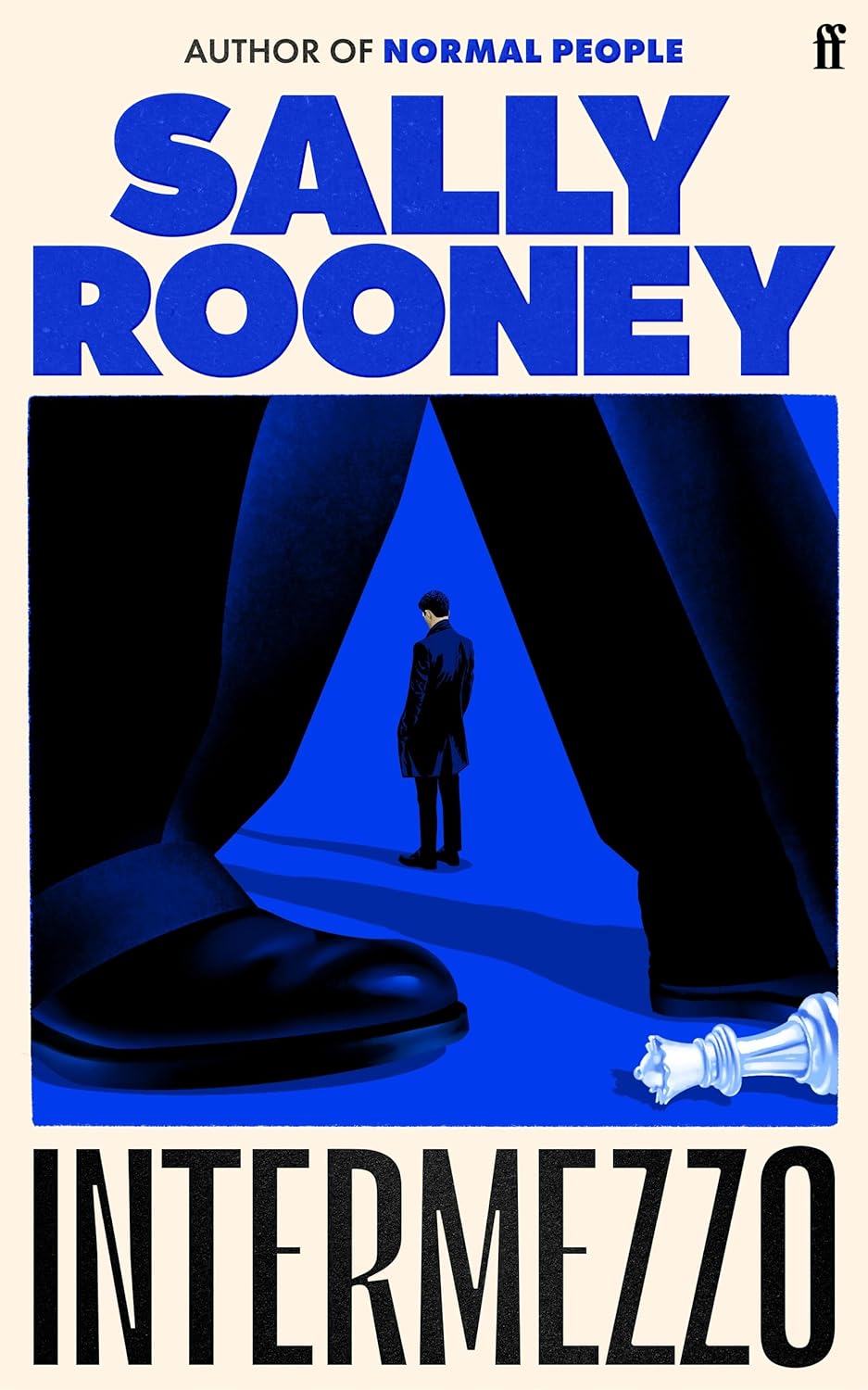
Intermezzo by Sally Rooney (2024)

After donating a bag of books at a recent book sale, I spotted a few novels on the shelves of this small English library that I was curious about, so joined the library and came home with four popular titles I thought I might read over the festive season, the first one being Intermezzo by Irish author Sally Rooney. I had heard it discussed by the Irish Times Woman’s Podcast Bookclub where thoughts on it were quite divisive.

Sally Rooney’s earlier novels Conversations With Friends (2017), Normal People (2018) and Beautiful World, Where Are You (2021) all examine how educated young people try to love each other under conditions of class inequality, political exhaustion, and intense self-consciousness, where desire is constantly constrained by these factors and the question then becomes whether love can survive these somewhat undermining conditions.

An Irish Millennial Perspective

Intermezzo by Sally Rooney Irish literature 2025

I haven’t read anything by Rooney, however knowing those novels have been a huge international success, being a writer with her literary pen poised on particular millennial characteristics, I picked up the latest, Intermezzo (2024) set in modern day Dublin, to understand what that might be all about.

I finished it in late December and overall I enjoyed it, though in the beginning I found it a little tiresome and repetitive, especially all the awkward self-conscious sex scenes between the younger brother and his newfound lover, but as the story progressed and the conflicts and mysteries become more present in the narrative, it became ever more psychologically interesting and I ended up really liking it. So it almost lost me in the beginning, but ultimately (in 442 pages) it gets there and I’m all the more appreciative of it for going back and considering it again now, from a distance.

Grief As a Turning and Growth Point

The Kindness of Enemies Leila Aboulela The Queen's Gambit Intermezzo Sally Rooney
Photo C. Solorzano Pexels.com

The novel charts the months following the father’s premature death and how it affects his two sons Ivan 22, a socially awkward, competitive chess player who has not been on form recently and is questioning whether he might be past his best, and his elder brother Peter 32, a corporate, detached Dublin lawyer juggling two relationships and medicating himself to get sleep.

You know, a lot of people told me I was letting it take up too much time, and I just thought they didn’t understand. But now I think, maybe I’ve really wasted a lot of my life.

Unresolved Mother Son Issues

The boys mother has long since moved on to a new relationship and the boys have complicated relationships with her.

I guess I would say, if you’re interested, they’re both kind of dominant personalities. Who like getting their own way. So my mother trying to be the authority figure, that never went down too well with Peter, if you get me. Because he wouldn’t be a great fan of getting bossed around.

I see, Margaret says.

Ivan is looking at her. Yeah, he says. Whereas with me, I guess, my mother can be the authority more. But with no great results, because she’s never happy with me.

Photo: Katrin Bolovtsova

The brothers have different personalities and are no longer close like they once were. In fact, they find it difficult being around each other without emotions escalating to volatility. And yet. Underneath, there’s a desire to connect.

Without their father present in their lives, they get easily derailed, falling into old destructive patterns. Something needs to shift and change if they are to arrive in a place of acceptance.

The same ritual he thinks each time. She tries to extract from him some valuably hurtful information and he tries to conceal from her any aspect of his life in which he suspects she might gain a foothold. Her fake innocuous queries and his studied evasions. Screens her calls whenever Naomi is home. Why does his mother even want to know; why does he want not to. Contest for dominance. Story of his life.

In essence, this is what the novel explores. Are these two brothers able to grow through the grieving process into a new form of relationship with each other that might sustain them in the years ahead? And can they successfully be in a relationship with another, given the stagnant place they are currently at.

Millennial Self-Consciousness and Entangled Love Lives

They are each trying to navigate romantic relationships, and here there is much interiority expressed, both anxiety and indecisiveness, but the feelings push them forward and the interactions they have with women allow them to be tested and move forward as they confront someone else they have feelings for and have to adapt to stay in relationship.

Ivan meets the older, separated Art Centre Manager, 36 year old Margaret, who struggles with how they might be perceived due to the age difference, but she can’t deny the strong connection and positive effect they have on each other. They must explore their own different perspectives and experiences to maintain that something they have together, if it is deemed worth it.

Dimly she wonders now whether she has been thinking somehow about herself, her own circumstances, and she feels her face again growing flushed. It is this, she thinks, her own sense of identification, that has thrown everything into confusion. She has lost sight of the brother Ivan has been describing, replacing him with herself, and therefore attributing to herself a greater understanding of his motives than she could possibly possess.

Peter is navigating the familiar, intellectually compatible friendship with his ex-girlfriend Sylvia, a chronically ill English literature professor he’s known since college, and a more challenging, non-committal relationship with student Naomi who sells images of herself online to help fund her studies.

Unclear whether you’re cheating on me with her, or you’re cheating on her with me, she said. Absentmindedly he considered the proposition. Either option preferable he thought. Dignity of old-fashioned faithlessness. Neither, he answered. Sylvia is a very dear friend of mine. And you’re just a homeless college student who lives in my house. That made her laugh. The actual disrespect, she said.

Using Voice Stylistically to Create Power Dynamics

Photo by Leeloo Pexels.com

Rooney explores how intimacy is negotiated under constant moral and social evaluation, both from the family and society and from one’s own self-judgement.

Peter’s thoughts are expressed in short, clipped, declarations with little depth, a voice trained to avoid vulnerability, and control interpretation, reducing the risk of him being misunderstood or judged, which doesn’t always help navigate the path of more intimate relationships.

This controlled minimal manner of speaking suits his profession and will have developed as he absorbed criticism in the maternal relationship and created a habit regarding his brother. His short sentences create discomfort, they become a form of domination by withholding forcing the other to elaborate.

They are initially disconcerting to read, but after a while you get used to the style. This manner has been said by some to be ‘Joycean’ not because it is like Ulysses in style, but because it shares with Joyce a particular attitude to consciousness, authority, and language under pressure. This way of expression gives Peter’s voice a hard, self-contained quality that Joyce often gave to male consciousness.

Meanwhile Ivan’s longer, more considered sentences allow for doubt and consideration, for exploration and confirmation in the relationship. Oh, and there is a touching storyline around the family whippet.

A Long Positional Game

Ultimately every character has a reckoning, no one is immune to the need to look at their own part in creating some of the perceived conflict and the novel travels the arc from the initial state of these relationships, through the hashing things out, blame, judgement, self pity, self consciousness, fear of what others might think, and out the other side to talking it out, owning up, allowing unconventionally without fear of judgement, settling differences through to forgiveness.

It’s not a fast paced read, it’s more of a slow, gradual navigation of challenging relationships between not particularly likeable characters, but that makes it all the more interesting to see how and whether they might overcome the exit of the one person who was their centre, and move to a healthier way of co-existing. It is an exploration of buried pain and unresolved issues meeting new opportunities and fresh hurts. A long, positional game played in mutual fear of getting it wrong.

Further Reading

The Guardian – Intermezzo by Sally Rooney review – is there a better writer at work right now?

Chicago Review of Books – Mixing Loss with Life in “Intermezzo” by Cait O’Neill, October 1, 2024

Author Sally Rooney

Sally Rooney is an Irish novelist from Castlebar, Country Mayo. She is the author of Conversations With Friends, Normal People and Beautiful World, Where Are You.

Interesting Fact: While attending Trinity College Dublin, Rooney was a university debater and in 2013 became the top debater at the European Universities Debating Championships.

Best Books of 2025 Top Reads in Translation

Apaprt from committing to read Women in Translation in August, I read less consciously and more by mood or whatever stood out on the shelf this year.

Though I read more books, I read from the same number of countries, but less in translation. In 2024, 33% (20 books) of the titles I read were in translation – a conscious effort. This year only 15%. It is also in part the effect of taking a subscription, I loved most of the Charco Press titles I read, but there were some I was less inclined to read; I would look at them and then choose something else.

It’s about discernment. So I remove those books from the shelf and more carefully research those I have no hesitation in wanting to read. I chose well this summer and so I here are the best seven titles I highly recommend. I’ll be making a more conscious effort to read more in translation in 2026, so please share with me your favorites from this year.

Top 7 Reads in Translation

The Runner Up Outstanding Read of 2025

Somebody is Walking On Your Grave: My Cemetery Journeys, Mariana Enriquez (Argentina) tr. Megan McDowell

See yesterday’s post Runner Up for Outstanding Book of the Year. The author travels to 13 countries over two decades, visiting cemeteries – mixing travelogue, personal history, cultural history and collective memory. I read the essays over a month, each one exhibiting not just the protocols around death, but the context of different eras that each country has been through, and how that has impacted the collective memory. Her essays take the reader to :

Europe: Italy, Spain, France, United Kingdom (England & Scotland), Czech Republic, Germany
Americas: Argentina, Chile, Mexico, United States, Peru, Cuba
Oceania: Australia

Argentina in the ’70s, the decade where I was born, had a dictatorship that made a lot of bodies disappear. Therefore, there’s a generation of people that were killed by the government, and they don’t have a grave.

I realized that that trauma, that is very engraved in my life, somehow made me feel that a grave, a tombstone – it’s something of comfort. It’s a final thing in a good way.

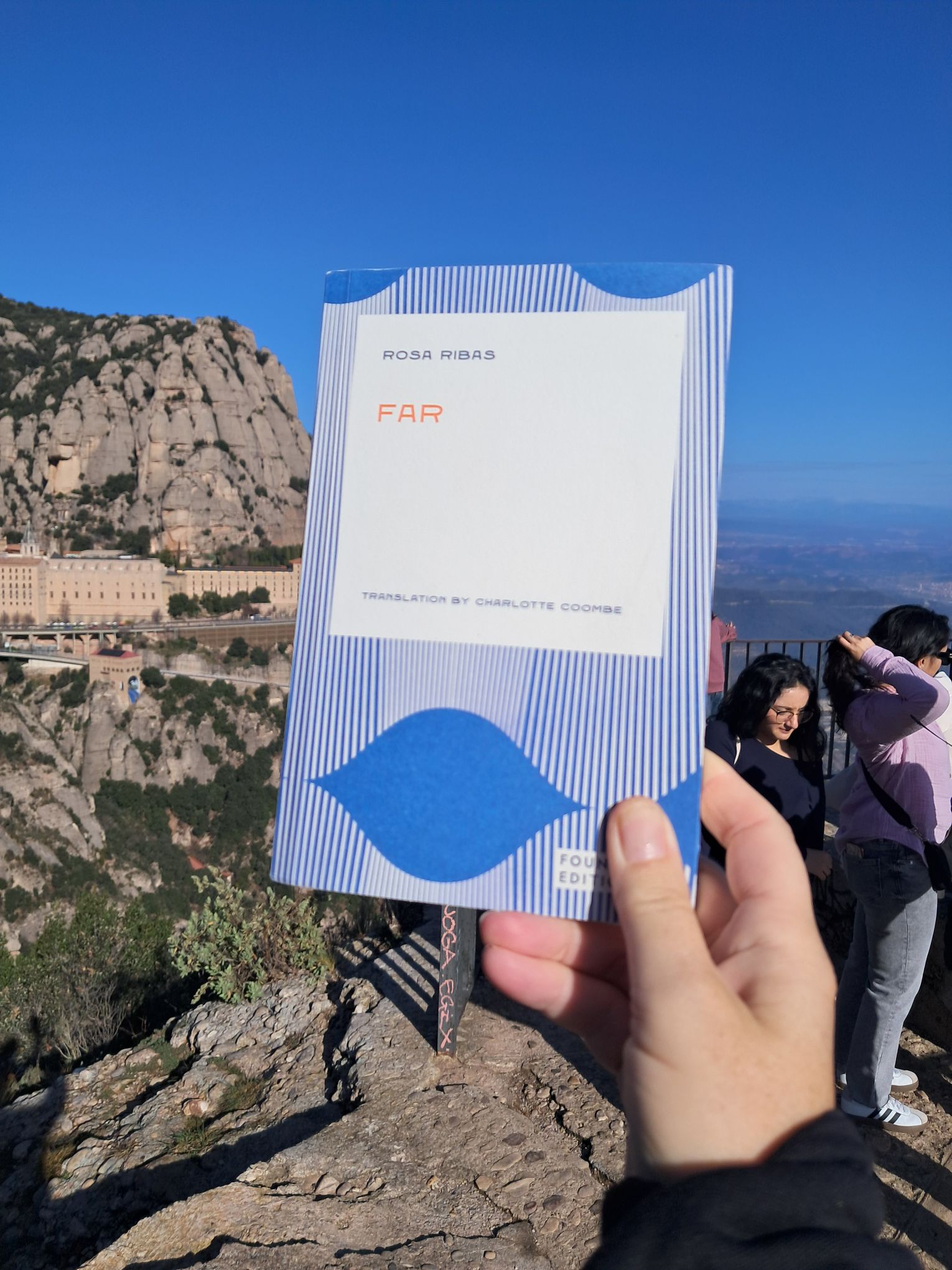
Far by Rosa Riba (Spain) tr. Charlotte Coombe

Book cover of English translation of Far by Rosa Ribas translated by Charlotte Coombe, mountain and monastery of Montserrat, Catalonia in the background

Far was a novel I came across by the relatively new publisher of Mediterranean literature, Foundry Editions after reading an article in the Guardian about a building project in Spain, 13,500 affordable apartments built to house 40,000 people, a ghost town after the global financial crisis, and the deepest economic recession Spain had experienced for fifty years.

Author Rosa Ribas was taken by friends to visit this strange monument to a broken era in Seseña; the housing development was known as ‘The Manhattan of La Mancha’ and as night fell three lights came on and inspired an idea for her novel Far, a story of determined inhabitants trying to create community, while others are escaping who knows what? We follow two characters, both dealing with issues, one in hiding, the other part of the community. Tensions rise, the locals become paranoid and angry at their untenable situation, mirroring the disintegration of the country’s economic situation, disenfranchised youth and a rise in racism and xenophobia.

The entire development was constructed on a pile of poorly concealed sleaze, a chain of bribery, corruption, intimidation, and complicit silences. No ancient manuscripts, no mythical foundations. If these lands had been the scene of some momentous event, back when battles of conquest and reconquest were being fought all over the area, no one had bothered to record it. It was a bleak place, devoid of stories, where it was impossible to satisfy any yearnings for greatness.

The Body Where I Was Born by Guadalupe Nettel (Mexico) tr. J.T. Lichenstein

The Body Where I Was Born by Guadalupe Nettel

Having loved Still Born by the same author, I picked this up and was equally mesmerised. This novel is a semi-autobiographical coming of age story set in the 1970’s, that follows a girl’s childhood in Mexico, the things that marked her experience, that she looks back on now (from a therapist’s chair) with a better understanding of the impact.

She ponders the harm of parental regimes and how they perpetuate onto the next generation the neuroses of one’s forebears, in her case her parents were ‘open-minded’ in a way that ultimately lead to the disintegration of the family and a period of living with a grandmother who disliked her. She and her brother then move to the south of France while her mother pursues studies and a new love.

Enjoying it, I was surprised to learn the narrative moved to the same town where I live. The siblings navigate life at a local school among pupils from multiple origins, North African, Indian, Asian, Caribbean and French, a unique and unforgettable experience, very much unlike the international schools they had attended elsewhere.

It is an engaging, insightful recollection of an atypical upbringing, within different cultures. Loved it!

To survive in this climate, I had to adapt my vocabulary to the local argot – a mix of Arabic and Southern French – that was spoken around me, and my mannerisms to those of the lords of the cantine.

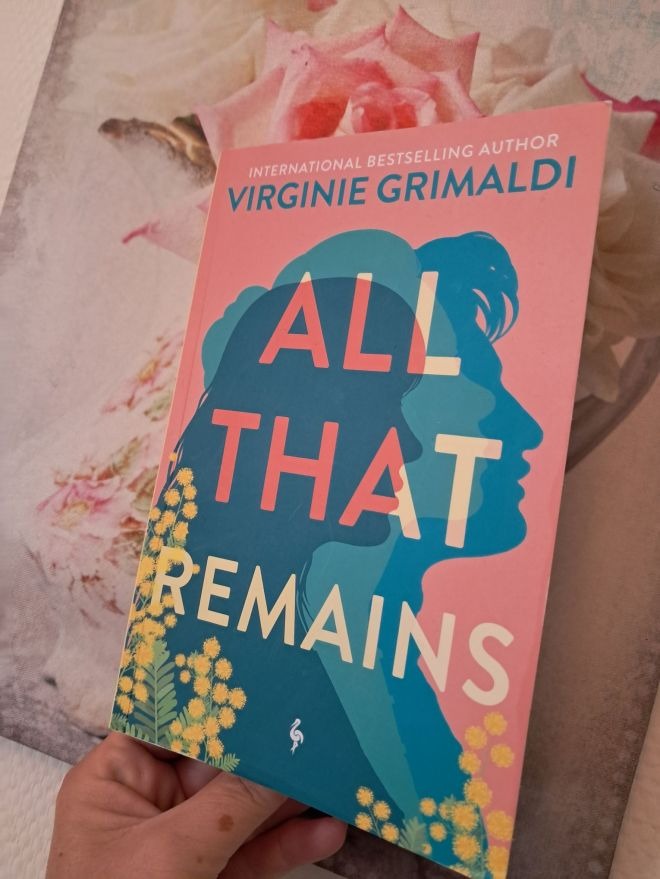
All That Remains by Virginie Grimaldi (France) tr. by Hildegarde Serle (French)

Another book set in France, this time set in Paris, this a page turner from the opening chapters, a feel good novel and another that I was attracted to due to its connection to real life events. I had heard about elderly widowed Parisians in largish apartments being assisted by a specialist agency that matched them with mature students as a way to keep them in their own homes, and to provide students with accomodation.

This is the premise of the novel; recently widowed Jeanne (74) decides to rent one of her rooms and two people quickly respond, an 18 year old Théo, apprentice boulanger, of no fixed abode and a thirty something Iris, who is escaping from something. It’s a perfect slice of ordinary life in Paris and a wonderful example of a new way to live, where young and old help each out and all the better for it.

“Hello Madame, I just wanted to confirm my interest in your room for rent. And please know that, if it weren’t for my tricky situation, I’d never have interrupted your conversation with the young man, who also seems in real need of a home. If you’ve not yet made your choice, I’d understand if you favour him. Regards Iris.”

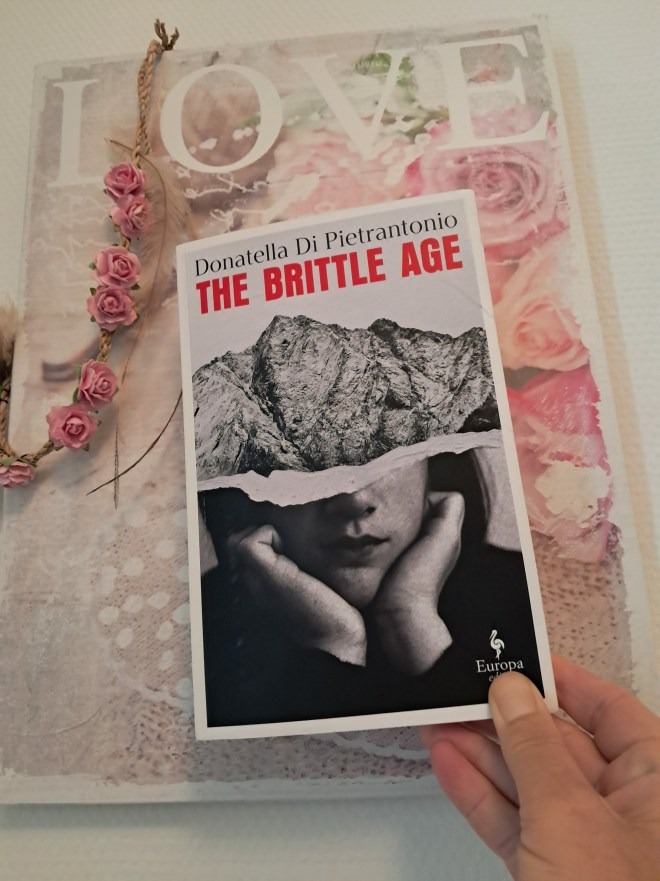
The Brittle Age (L’età fragile) by Donatella Di Pietrantonio (Italy) tr. Ann Goldstein

Winner of the 2024 Strega Prize, The Brittle Age is a novella inspired by an historic true-crime event in the 1990’s, a double femicide in the mountainous region of the Abruzzo Apennines in Italy, a novel dedicated to “all the women who survive”. The third novel I’ve enjoyed by her, since A Girl Returned and A Sister’s Story.

Though it is framed by an actual event, this novel really piqued my interest for the way it dealt with the mother-daughter relationship. Lucia’s daughter Amanda returns from Milan on one of the last trains as the pandemic shuts everything down, she stays in her room, barely eats, doesn’t talk, her phone lies uncharged under the bed. Lucia worries but can get nothing out of her.

The novel explores both the events of the past and the mother’s struggle to understand what is going on with her daughter. Amanda’s reclusiveness awakens memories and feelings Lucia has suppressed from 30 years ago. Although the story is about a crime, the mystery of what happens sits alongside the portrait of a fractured family and community, all impacted by the past, burying it with silence. I loved the balance of revelations of both past events and present predicaments, a most memorable read.

Our birthplace had protected us for a long time, or maybe that had been a false impression. We grew up in a single night.

All Our Yesterdays, Natalia Ginzburg (Italy) tr. Angus Davidson, Intro Sally Rooney

This might be my favourite Natalia Ginzburg novel – it sits alongside her family memoir Family Lexicon and often reminded me of parts of that book, clearly inspired by events she lived through.

Set in Northern Italy in the lead up to WWII, the war era through to liberated, it is a brilliant depiction of two Italian families (one family own the leather factory in town, the other is middle class), neighbours who live opposite each and everyone they’re connected to, everyone who enters their home – what they live through during this era, how they keep tabs on each other, the dilemmas they face, how they deal with them, their tragedies and accomplishments, their loves and losses.

The absence of the mother, and the ill health of their authoritarian father, intent on writing a memoir critical of the regime, looms over them and creates tension and an air of rebellion. Youth desire change and autonomy in a country that feels increasingly oppressive leading them towards risk and turbulent decisions.

This story and its characters was so immersive, and the depiction of difficult times treated with compassion, as we encounter each event, every friend or person connected to those two households. When not present they are the subject of letters, so at almost all times everyone is aware of the well-being of the others. In the second part of the novel, the focus shifts to the impoverished rural Italian south

It was so, so good, it really gives a sense of what it was like to live through this period for this family, especially knowing the hardship the author lived through, her young, anti-fascist husband Leone was tortured and murdered by the Gestapo.

This was a war in which no one would win or lose, in the end it would be seen that everyone had more or less lost.

Brandy Sour by Constantia Soteriou (Cyprus) tr. Lina Protopapa (Greek)

Another favourite from Foundry Editions, this is a wonderful novella that is like a series of vignettes set in an old hotel in Cyprus, each one from the perspective of a character with a connection to the hotel, their story told through a tale related to a particular beverage and often how it cures them of various afflictions. Clever but simplistic and there are threads that carry through making it read more like an interconnected story than separate stories.

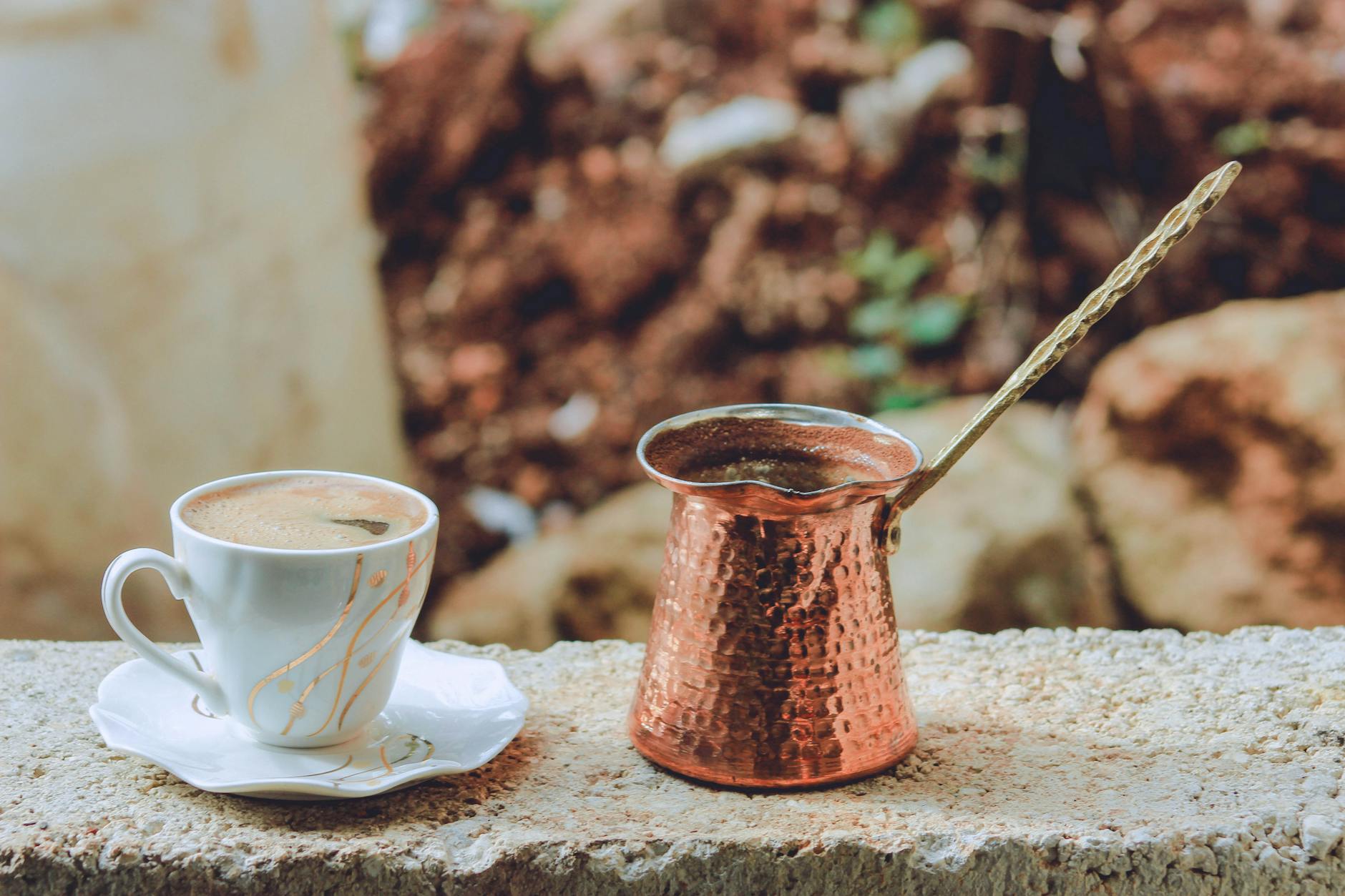
He always wakes at dawn and he goes to the kitchen to have his coffee prepared the way he likes it. The only coffee of the day. With lots of kaymak and no sugar. Turkish coffee – Greek coffee, he always corrects himself – with sugar is an absolute waste of coffee. It needs to be bitter. There’s no point otherwise.

Coffee Brandy Sour turkish greek cofee Cyprus
Photo S. Daboul Pexels.com

The emblematic Ledra Palace Hotel was established in 1949 on Nicosia’s UN-controlled buffer zone, the Green Line that, since 1964, has divided the island into Greek Cypriot and Turkish Cypriot sectors and reading the book one discovers a little known history of the island and its people, those who visited int he past, from colonial visitors to the Egyptian King, employees, local villagers.

“The Palace was the epicentre of the island’s recent history. It was built as the promise of a new era; a haven for all nationalities, all communities. It drew people from all backgrounds: the wealthy bourgeoisie who lounged by its cerulean pool; the poorer working classes who made its beds – and its Brandy Sours…”

* * * * * *

That’s it for 2025. Let me know what works in translation were your favourites this year. Thanks for reading and sharing and commenting. Happy Reading!

Further Reading

My Top Fiction Reads of 2025

My Top Non-Fiction Reads of 2025

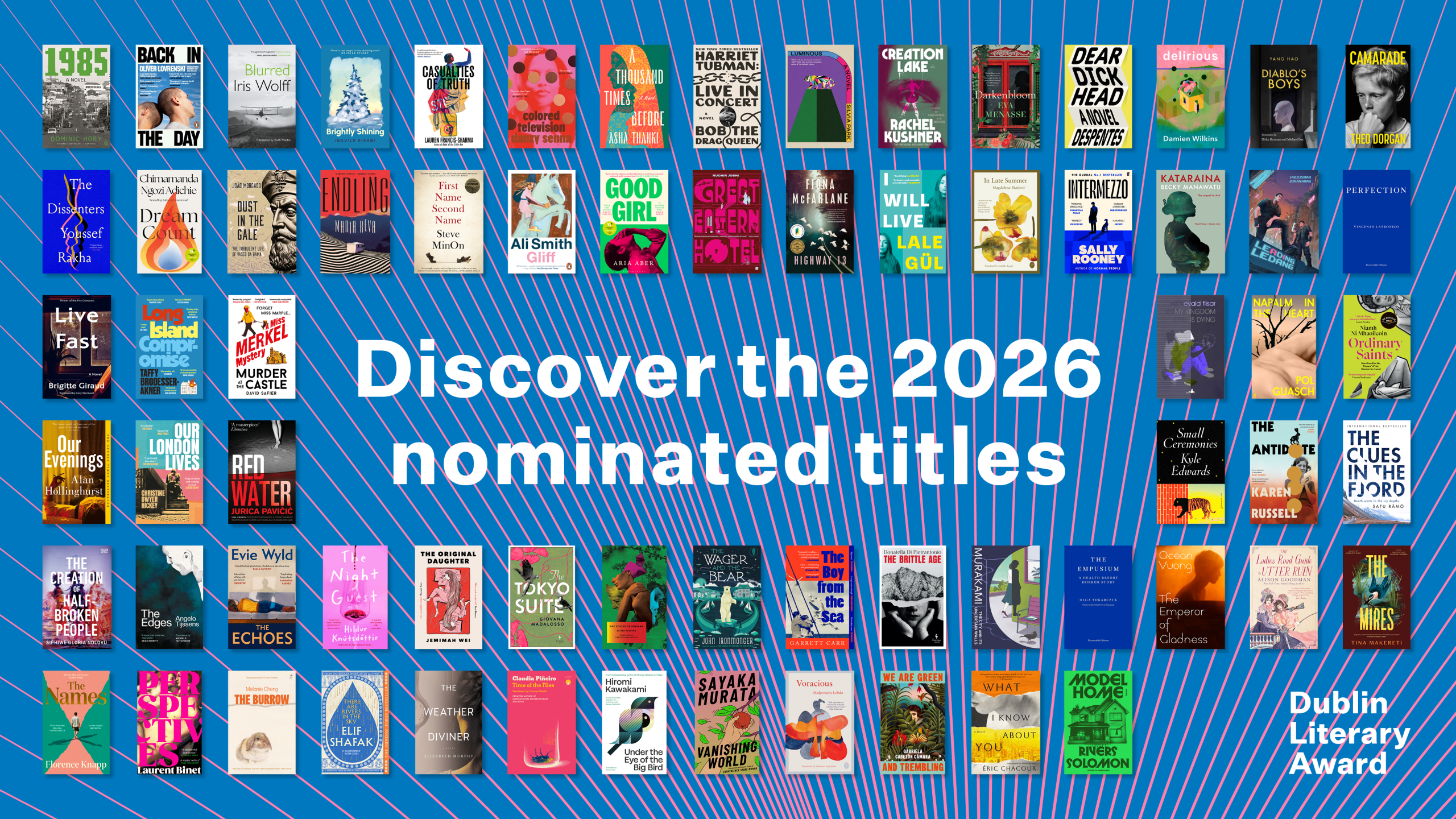
Dublin Literary Award Longlist 2026

The Dublin Literary Award nominations have been revealed, an award that allows international libraries to nominate one work of fiction, therefore achieving its aim to promote excellence in world literature.

For the 2026 Award, 69 titles have been nominated by 80 libraries from 36 countries, reflecting the best in fiction from Africa, Europe, Asia, USA, Canada, South America, Australia and New Zealand.

30 Books in Translation

The list features 20 debut authors, 30 translated titles in 17 languages including Brazilian Portuguese, Catalan, Chinese, Japanese and Polish.

This year the judges will select a longlist of up to 20 titles, to be announced on 17 February 2026 and the shortlist of 6 titles will be revealed on 7 April 2026. The winner will be announced on 21 May 2026.

Below I have listed all the titles by the country the author comes from, and next to it, the library that nominated it. I find this useful, in particular when a library votes openly and not merely patriotically.

The Nominated Titles By Country of Author

New Zealand (4 titles)

1985: a novel by Dominic Hoey (Dunedin Public Libraries)

Delirious by Damien Wilkins (Auckland Council Libraries)

Kataraina by Becky Manawatu (Wellington City Libraries) author of Aue

The Mires by Tina Makereti (Christchurch City Libraries)

Australia (4 titles)

First Name Second Name by Steve MinOn (State Library of Queensland)

Highway 13 by Fiona MacFarlane (National Library of Australia)

The Burrow by Melanie Cheng (State Library of NSW)

The Ladies Road Guide to Utter Ruin by Alison Goodman (State Library Victoria)

Ireland (5 titles)

Camarade by Theo Dorgan (Cork City Libraries)

Our London Lives by Christine Dwyer Hickey (Waterford City and County Libraries + Princess Grace Irish Library)

The Boy from the Sea by Garrett Carr (Galway Public Libraries)

Intermezzo by Sally Rooney (Redbridge Central Library + Liverpool Libraries)

Ordinary Saints by Niamh Ni Mhaoileoin (Libraries NI)

Canada (3 titles)

Small Ceremonies by Kyle Edwards (Winnipeg Public Library)

The Weather Diviner by Elizabeth Murphy (Newfoundland and Labrador Public
Libraries)

What I Know About You by Éric Chacour tr. Pablo Strauss (Bibliothèque de Québec + Toronto Public Library)

USA (10 titles)

A Thousand Times Before by Asha Thanki (The Seattle Public Library)

Casualties of Truth by Lauren Francis-Sharma (DC Public Library)

Colored Television by Danzy Senna (Milwaukee Public Library)

Creation Lake by Rachel Kushner (Chicago Public Library)

Good Girl by Aria Aber (Cleveland Public Library)

Harriet Tubman: Live in Concert: A Novel by Bob the Drag Queen (LA Public Library)

The Antidote by Karen Russell (Iowa City Public Library + New Hampshire State Library)

The Emperor of Gladness by Ocean Vuong (Hartford Public Library)

Model Home by Rivers Solomon (Carnegie Library of Pittsburgh)

Long Island Compromise by Taffy Brodesser-Akner (Bibliotheek Gent, Belgium)

United Kingdom (5)

The Names by Florence Knapp (Limerick City Library)

The Wager and the Bear by John Ironmonger (Norfolk Library)

Gliff by Ali Smith (Katona József Könyvtár, Hungary)

The Echoes by Evie Wyld (Bruges Public Library)

Our Evenings by Alan Hollinghurst (Richland Library, North Carolina)

Turkey

There Are Rivers in the Sky: A Novel by Elif Shafak (Municipal Library of Prague + Biblioteca Nazionale “Vittorio Emanuele III” Napoli)

India

Great Eastern Hotel by Ruchir Joshi (India International Centre)

Egypt

The Dissenters by Youssef Rakha (Fingal Libraries)

Nigeria

Dream Count by Chimamanda Ngozi Adichie (Almeida Garrett Municipal Library, Portugal + Openbare Bibliotheek Amsterdam + Bibliotheca Alexandrina, Egypt)

Zimbabwe

The Creation of Half-Broken People by Siphiwe Gloria Ndlovu (City of Cape Town Library, S.Africa)

Malaysia

Leading Ledang by Fadzlishah Johanabas (National Library of Malaysia)

South Korea

Luminous by Silvia Park (Bucheon City Library)

Singapore

The Original Daughter by Jemimah Wei (National Library Board Singapore)

Ukraine

Endling by Maria Reva (Ottawa Public Library)

In Translation

Norway

Back in the Day by Oliver Lovrenski tr. Nichola Smalley (Leipziger Städtische Bibliotheken, Germany)

Germany (3 titles)

Blurred by Iris Wolff tr. Ruth Martin (City Library Heidelberg)

Brightly Shining by Ingvild Rishøi tr. Caroline Waight (Oslo + Bergen Public Library)

Murder at the Castle: A Miss Merkel Mystery by David Safier tr. Jamie Bulloch (Stadtbibliothek Bremen)

Austria

Darkenbloom by Eva Manesse tr. Charlotte Collins (Zentralbibliothek Zürich)

France (3 titles)

Dear Dickhead: A Novel by Virginie Despentes tr. Frank Wynne (Mediathèque de la Grande Garenne)

Live Fast by Brigitte tr. Giraud Cory Stockwell (Bibliothèque municipale de Lyon)

Perspective(s) by Laurent Binet tr.Sam Taylor (Bibliothèques municipales de Genève)

Italy

Perfection by Vincenzo Latronico tr. Sophie Hughes (Biblioteca San Giorgio)

The Brittle Age by Donatella Di Pietrantonio tr. Ann Goldstein (Sistema Bibliotecario di Milano)

China

Diablo’s Boys by Yang Hao tr. Nicky Harman and Michael Day (Shanxi Library)

Japan (3 titles)

The City and Its Uncertain Walls by Haruki Murakami tr. Philip Gabriel (Frankfurt am Main Public Library)

Under the Eye of the Big Bird by Hiromi Kawakami tr. Asa Yoneda (Tartu Public Library, Estonia)

Vanishing World by Sayaka Murata tr. Ginny Tapley Takemori (Saiwaicho Okayama Public Library)

Portugal

Dust in the Gale by João Morgado tr. José Manuel Godinho (Lisbon Libraries)

The Netherlands

I Will Live by Lale Gül tr. Kristen Gehrma (de Bibliotheek Eindhoven)

The Edges by Angelo Tijssens tr. Michele Hutchison (De Bibliotheek Utrecht + National Library of the Netherlands)

Finland

The Clues in the Fjord by Satu Rämö tr. Kristian London (Helsinki City Library)

Iceland

The Night Guest by Hildur Knútsdóttir tr. Mary Robinette Kowal (Reykjavík City Library)

Poland

The Empusium by Olga Tokarczuk tr. Antonia Lloyd-Jones (”Octavian Goga” Cluj County Library, Romania)

Voracious by Małgorzata Lebda tr. Antonia Lloyd-Jones (Municipal Public Library of Tadeusz Różewicz, Wrocław)

Bosnia and Herzegovina

In Late Summer by Magdalena Blažević tr. Anđelka Raguž (University Library of Bern, Switzerland)

Croatia

Red Water by Jurica Pavičić tr. Matt Robinson (Rijeka City Library)

Slovenia

My Kingdom is Dying by Evald Flisar tr. David Limon (Mariborska knjižnica + Ljubljana City Library)

Spain

Napalm in the Heart by Pol Guasch Mara tr. Faye Lethem (Catalan) (Biblioteca Vila de Gràcia)

The Voices of Adriana by Elvira Navarro tr. Christina MacSweeney (Biblioteca de Andalucía)

Argentina

Time of the Flies by Claudia Piñeiro tr. Frances Riddle (Biblioteca Daniel Cosío Villegas, El Colegio de México)

We Are Green and Trembling by Gabriela Cabezón Cámara Robin Myers (Biblioteca Utopía) author of The Adventures of China Iron

Brazil

The Tokyo Suite by Giovana Madalosso tr. Bruna Dantas Lobato (Mário de Andrade Library + Biblioteca Demonstrativa Maria da Conceição Moreira Salles)

I have read four of the novels listed Elif Shafak’s There Were Rivers in the Sky which is excellent; Time of the Flies by Claudia Pineiro, a brilliant novel, Ocean Vuong’s excellent The Emperor of Gladness and the true crime novella The Brittle Age by Donatella Di Pietrantonio. I am currently reading Dream Count by Chimamanda Ngozi Adichie (Nigeria). I also have the Evie Wyld on my shelf and I want to read We Are Green and Trembling and The Mires by Tina Makereti.

There’ll likely be more but I need to look at them more carefully.

Any here interest you, especially the books in translation?

Warwick Prize for Women in Translation longlist 2025

Fourteen titles have been longlisted for the 8th annual award of the Warwick Prize for Women in Translation. The 2025 competition received a total of 145 eligible entries from 34 languages.

The longlist covers 10 languages, with Slovenian represented for the first time in the history of the prize. 

The £1000 prize was established by the University of Warwick in 2017 to address the gender imbalance in translated literature and to increase the number of international women’s voices accessible by a British and Irish readership. 

“For this award that considers all genres on equal terms, the judges have found longlist places not only for fiction of all sorts – from fiercely contemporary short stories to the epic debut by one of the 20th century’s greatest literary voices. We have selected searing memoir too, and (this year) an especially rich haul of poetry. The poetry books stretch from luminous snapshots of everyday experience to immersive mythic narrative in verse. Like our prose selections, they demonstrate the vision and artistry both of the original authors – and of the translators who carry this precious cargo across languages and cultures. Without them, our imaginative worlds would be so much smaller, and poorer.”

The 14 longlisted titles are:

And the Walls Became the World All Around, Johanna Ekström & Sigrid Rausing (Sweden)

translated from Swedish by Sigrid Rausing (Granta) (Biography/Memoir)

– Johanna Ekstrom was a Swedish artist and writer who published over a dozen books of poetry, fiction and memoir in her lifetime. In 2022, ill with cancer, she asked her closest friend, Sigrid Rausing, to edit and finish her final book. Originally a memoir on the loss of a relationship during the pandemic, the focus shifted from the loss of love to, potentially, the loss of life.

These excerpts from Ekstrom’s notebooks interwoven with Rausing’s reflections on the text and on their friendship are a testament to a voice and a life; a book made in grief over the loss of a close friendship of over thirty years.

Désirée Congo, Evelyne Trouillot (Haitian)

translated from French by M.A. Salvodon (University of Virginia Press)

– Désirée Congo is a riveting, powerful, original novel set in the final years of the Haitian Revolution. In this richly textured work, Trouillot constructs an intricate web from the varied experiences of freedmen and women, maroons, enslaved African people and their Creole children, as well as French planters and white smallholders in colonial Saint-Domingue at a historical moment of upheaval.

A lyrical book whose characters enrich our understanding of the last confrontations between Haitian revolutionaries and Napoleon’s imperial forces – a conflict that resulted in the success of the largest slave revolt in recorded history and the independence of the first Black state in the western hemisphere.

Djinns, Fatma Aydemir (Kurdish)

translated from German by Jon Cho-Polizzi (Peirene Press)

– For thirty years, Hüseyin has worked in Germany, taking every extra shift and carefully saving, providing for his wife and their four children. Finally, he has set aside enough to buy an apartment back in Istanbul – a new centre for the family and a place for him to retire. Just as this future is in reach, Hüseyin’s tired heart gives up. His family rush to him, travelling from Germany by plane and car, each of his children conflicted as they process their relationship with their parents, and each other.

Reminiscent of Bernardine Evaristo or Zadie Smith, Djinns portrays a family at the end of the 20th century in all its complexity: full of secrets, questions, silence and love.

The Empusium, Olga Tokarczuk (Poland)

translated from Polish by Antonia Lloyd-Jones (Fitzcarraldo Editions)

– In Sept 1913, Mieczysław Wojnicz, a student suffering from TB, arrives at Wilhelm Opitz’s Guesthouse for Gentlemen, a health resort in what is now western Poland. Every day, residents gather to imbibe the hallucinogenic local liqueur, to obsess over money, status and to discuss the great issues of the day: Will there be war? Monarchy or democracy? Do devils exist? Are women inherently inferior?

Meanwhile, disturbing things begin to happen around the guesthouse. As stories of shocking events in the nearby highlands reach them, a sense of dread builds. Someone, or something seems to be watching them and attempting to infiltrate their world. Little does Mieczysław realise, as he tries to unravel truths within himself and the mystery of the sinister forces beyond, that they’ve chosen their next target.

A century after the publication of The Magic Mountain, Olga Tokarczuk revisits Thomas Mann territory and lays claim to it, blending horror story, comedy, folklore and feminist parable with brilliant storytelling.

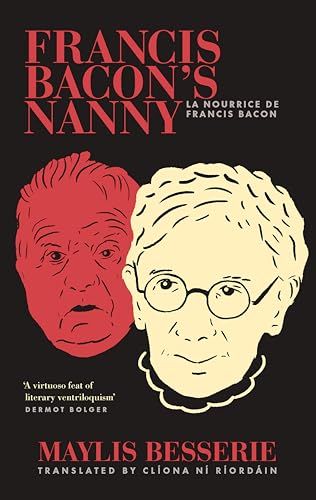
Francis Bacon’s Nanny, Maylis Besserie (France)

translated from French by Clíona Ní Ríordáin (The Lilliput Press)

– At the centre of the life of the great artists was an unexpected life-long influences Jessie Lightfoot shielded a young Francis Bacon from the brutish violence of his bullying father, as well as from his worst self-immolating excesses later in life. The tenderness, wit and warmth of this inimitable Nanny stands in illuminating relief to the sulphurous palette that defined Bacon’s work.

Beyond the humour and heart of an extraordinary woman confronted with the shade and guile of the art world, Maylis Besserie offers a glimpse of Ireland in the first half of the 20th C, a place apart from the rest of the world, whose landscapes, imagery and animals haunted the painter’s canvases.

In the final of Maylis Besserie’s trilogy, her focus on the art and lives of artists who crossed borders between France and Ireland closes as Bacon confronts boundaries between the real and the imagined.

Hungry for What, María Bastarós (Spain)

translated from Spanish by Kevin Gerry Dunn (Daunt Books Publishing)

– Violence and desire shatter the surface of the everyday in an exceptional collection of short stories.

A game between a woman’s father and husband simmers and boils into scalding danger; a daughter creates an elaborate feast for her grieving mother; a solar eclipse burns the emotions and truths of a suppressed neighbourhood into the open.

Foregrounding voices and experiences of women and children, veering from claustrophobic, suffocating suburbia to untamed nature and its great vistas of desert and sky, hungry for what focuses on the terror of normality, prising back its veneer of respectability to reveal the hostility & menace that seethe beneath.

Lies and Sorcery, Elsa Morante (Italy

translated from Italian by Jenny McPhee (Penguin Press)

– For years Elisa has lived in an imaginary world of her own but when her guardian dies, young Elisa feels compelled to confront the truth of her family’s tortured and dramatic history by telling the story of her mother, Anna, and grandmother, Cesira. Elisa is a seductive, if less than reliable, spinner of stories, drawing the reader into a tale of intrigue, treachery and self-delusion, which is increasingly revealed to be an exploration of a legacy of political and social injustice.

First published in 1948, Elsa Morante’s novel won the Viareggio Prize & earned her the lasting admiration of writers such as Italo Calvino and Natalia Ginzburg.

My Secret Life, Krisztina Tóth (Hungary)

translated from Hungarian by George Szirtes (Bloodaxe Books)

My Secret Life is the first book in English translation by one of the leading Hungarian poets of the generation who began publishing in the late 1980s. The poems in My Secret Life were selected from three of nine published collections, with the addition of some new or previously uncollected poems. 

Phantom Pain Wings, Kim Hyesoon (South Korea)

translated from Korean by Don Mee Choi (And Other Stories)

– Winged ventriloquy – a powerful new poetry collection channelling the language of birds by one of South Korea’s innovative contemporary writers. An iconic figure in the emergence of feminist poetry in South Korea and now internationally renowned, Kim Hyesoon pushes the poetic envelope into the farthest reaches of the lyric universe. In her new collection, Kim depicts the memory of war trauma and the collective grief of parting through what she calls an “I-do-bird-sequence,” where “Bird-human is the ‘I.’”

Too Great A Sky, Liliana Corobca (Romania)

translated from Romanian by Monica Cure (Seven Stories Press UK)

– The story of the deportation of Romanians from Bukovina, an exercise in historical memory which demonstrates how to maintain humanity in impossible conditions.

Translation of the Route, Laura Wittner (Argentina)

translated from Spanish by Juana Adcock (Bloodaxe Books & Poetry Translation Centre)

– In poems that are precise, frank & finely tuned, award-winning Argentine poet Laura Wittner explores the specificities of parental and familial love, life after marriage, and the re-ignition of the self in middle age.

Un Amor, Sara Mesa (Spain)

translated from Spanish by Katie Whittemore (Peirene Press)

– Fleeing from past mistakes, Nat leaves her life in the city for the rural village of La Escapa. She rents a small house from a negligent landlord, adopts a dog and begins to work on her first literary translation. But nothing is easy: the dog is ill tempered and skittish and misunderstandings with her neighbour’s thrum below the surface. When conflict arises over repairs to her house, Nat receives an unusual offer that tests her sense of self, challenges her prejudices, and reveals her most unexpected desires. As she tries to understand her decision, the community of La Escapa comes together in search of a scapegoat.

Vanishing Points, Lucija Stupica (Slovenia)

translated from Slovenian by Andrej Peric (Arc Publications)

– Lucia Stupica’s 4th book of poetry comes after a decade of silence allowing her poetic voice to become more complex and sensitive to the cracks in time and in the world through which she observes fragments of life – imperfect, painful and real. Her expression retains its tenderness, establishing a deep dialogue with the world, the past and the present, with appearances and the things they conceal.

In an attempt at a new understanding of the world, Stupica writes of the role of women as the hidden movers of history, and the role of those, be they a man, a child or a random stranger, who see the experience of the other, and are open to it. These poems of love, loss, mystery and what lies beyond our understanding make for a haunting and memorable collection in Andrej Peric’s beautiful translation.

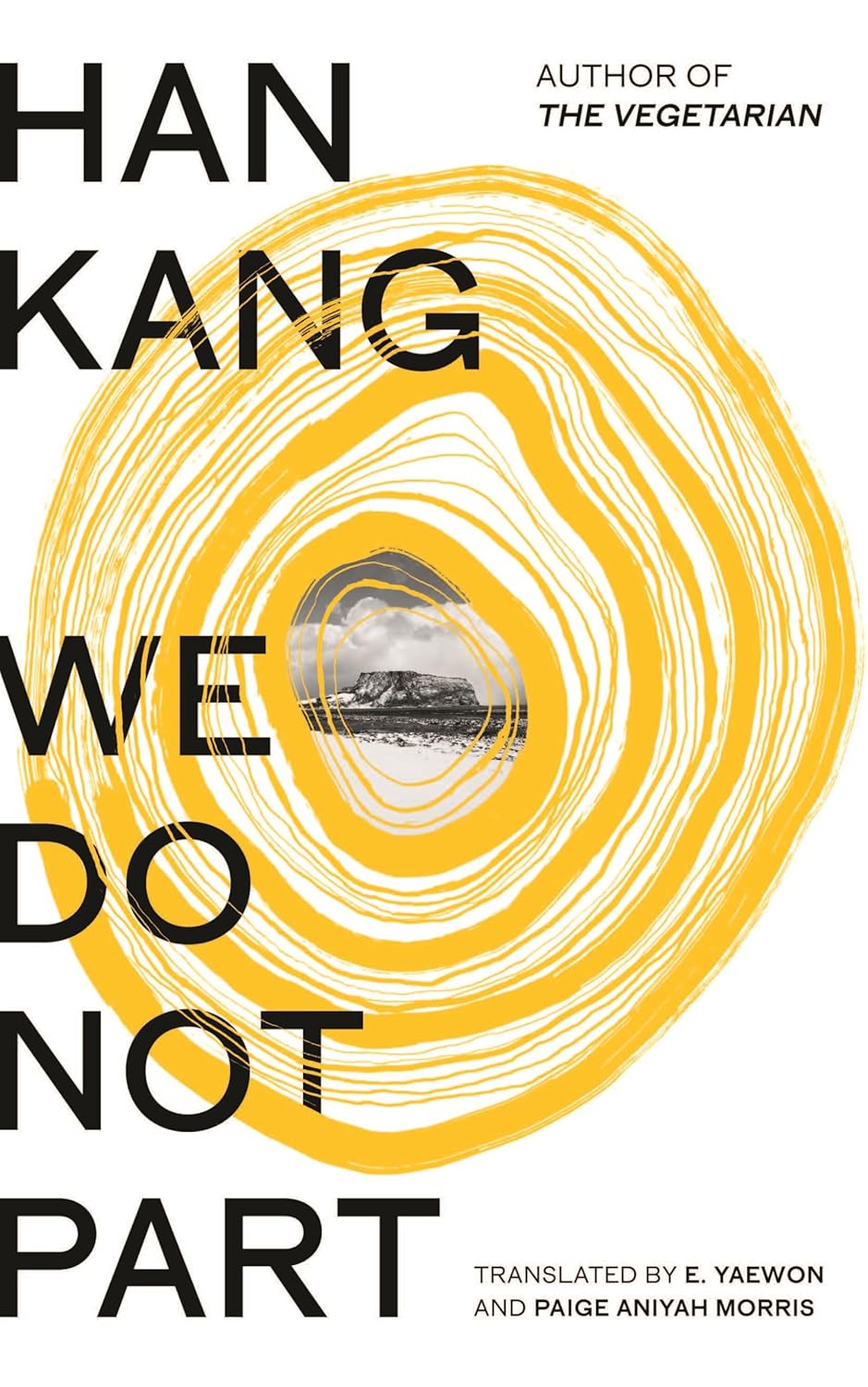
We Do Not Part, Han Kang (South Korea)

translated from Korean by e.yaewon & Paige Aniyah Morris (Hamish Hamilton, Penguin Random House UK)

– One morning in December, Kyungha is called to her friend Inseon’s hospital bedside. Airlifted to Seoul for an operation following a wood-chopping accident, Inseon is bedridden and begs Kyungha to take the first plane to her home on Jeju Island to feed her pet bird, who will quickly die unless it receives food.

As Kyungha arrives a snowstorm hits. Lost in a world of snow, she begins to wonder if she will arrive in time to save the bird – or even survive the terrible cold that envelops her with every step. She doesn’t yet suspect the darkness awaiting at her friend’s house.

There, the long-buried story of Inseon’s family surges into light, in dreams and memories passed from mother to daughter, and in a painstakingly assembled archive, documenting the terrible massacre 70 years before that saw 30,000 Jeju civilians murdered.

We Do Not Part is a hymn to friendship, a eulogy to the imagination, and above all a powerful indictment against forgetting.

* * * * * *

I have not read any of these titles, though I have read Han Kang’s extraordinary Human Acts, which this new novel reminds me of. Here the Novel Prize winning author asks similar questions of humanity. Another Nobel Prize winning author Olga Tokarczuk, has a new book here; I enjoyed Drive Your Plow Over the Bones of the Dead, but looking out for the less familiar, I’m interested in Kurdish author Fatma Aydemir‘s Djinns and another Italian classic author Elsa Morante looks tempting, despite the length.

Now that I’ve created the summaries, I can reread them at a leisurely pace in one location.

Any that interest you from this list?

The winner will be announced at a ceremony at The Shard in London on Thursday 27th November.

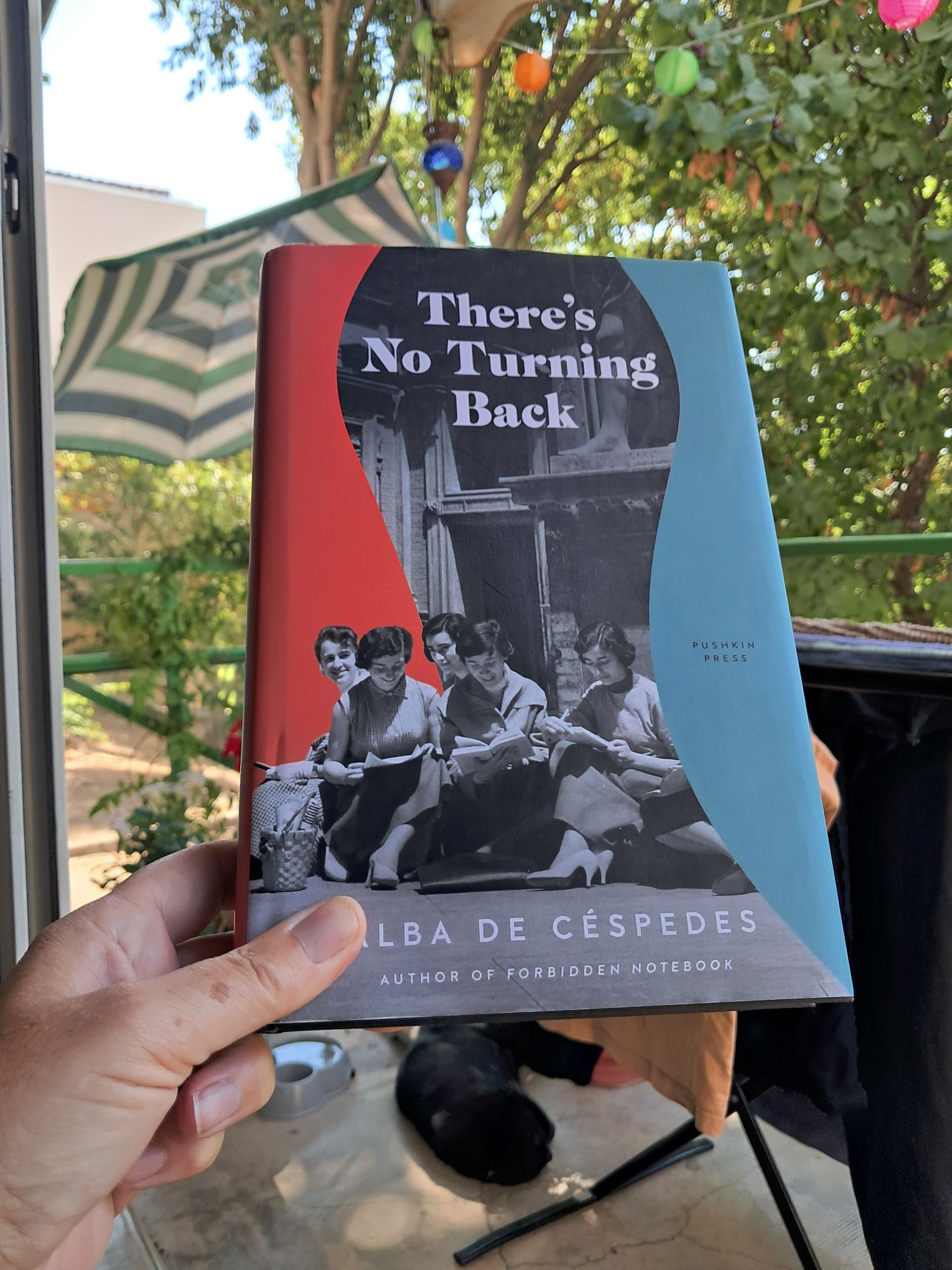
There’s No Turning Back by Alba de Céspedes tr. Ann Goldstein (2025)

Every novel I’ve read by Alba de Céspedes has been excellent and this controversial debut (at the time of its original publication in Italy, 1938) brims with the seeds of what was to come from her work, starting with this excellent, collective coming-of-age, of eight, twenty-something year old women in pre-war Rome.

I pre-ordered this novel, as she is a favourite author, of whose work I want to read everything, sharing now for WIT Month (Women in Translation).

Literature and Morality

Feminism Journal writing Womens Rights Italian Literature

In the informative translator’s note at the beginning of the book, Ann Goldstein shares some of the historical context within which the book became an immediate and immensely popular bestseller, despite the authorities finding the novel’s breaking of female stereotypes and suggestion of other possible pathways for women offensive.

“By the time the novel was published the fascist dictator Benito Mussolini had been in power for more than a decade. His government promoted the idea that the proper place for women was to be at home and to bear children; sposa e madre esemplare (exemplary wife and mother). While there is no overt mention of Mussolini or fascism in the novel, none of the young women conform to this female ideal. In fact, in their different ways they are challenging it, even if not intentionally or even consciously.”

Selected to win the prestigious Viareggio Literary Prize in 1939, a government order stopped it and attempted to block further editions from being published, claiming it went against ‘fascist morality’. As Margarita Diaz points out in a recent article ‘An Immoral Endeavour‘:

Vague accusations of ‘immorality’ have been, and continue to be, used by dominant institutions, governments and autocratic regimes to stifle free expression and to censor legions of books and artworks. 

Women at a Turning Point

Alba de Cespedes debut novel Theres No Rurning Back translated by Ann Goldstein from Italian

Set in Rome 1936-1938, the novel focuses on eight young women in higher education, most studying at university, who live together in convent boarding house in Rome. They have greater freedoms than school girls, with restrictions deemed appropriate for unmarried single women.

From different backgrounds they have different issues, desires and ideas about life, which they share with each other as they progress through the year and one by one prepare to leave the premises.

On the cusp of “no turning back”, concluding their theses, each must make a decision about what to do next and none of them are thinking, acting or passively accepting the route that tradition has dictated.

The mere consideration of other life avenues and the outward expression of those thoughts, the girls’ discussions with each other, in this safe and open, female community, demonstrate an important processing step in their being better informed, while equally often challenged by their peers, at this formative moment in their lives.

“In all her novels de Céspedes investigates women’s attempts to both deconstruct and construct their lives and gain a sense of themselves, as she investigated her own life.”

A Year In the Life

Photo by cottonbro studio Pexels.com

Throughout that year, the girls will learn more than just the subject of their thesis as they share and navigate the issues that arise, including their reactions to things some have kept secret. They attend mass and adhere to the curfew, then gather after lights out to talk about everything deemed pressing.

Their conversations and reflections often lead to scenes from the past, as the reader gains insight into each of the circumstances that lead each young woman to this place.

Xenia is the first to present her thesis and to leave and she does so under cover of night, severing her connection with the girls, choosing the least conventional path, allowing an older businessman to arrange a job for her and accommodation, introducing her to a different circle of associates. Her desires are revealed in one of the early exchanges with the girls:

“Some nights a kind of yearning grips me: I can’t close my eyes and I get worn out thinking how I’m caged in this cloister of nuns, while outside life is flowing, fortune passing by – who knows? – and I can’t take advantage of it. You have to jump into life head-long, grab it by the throat. I won’t ever go back to Veroli, anyway.”

No Two Paths

If Xenia’s failure and disappearance shakes the girls up, the fate of quiet Milly, who writes letters in braille to a blind organist rocks their world even more.

As soon as Papa found out about our meetings, he made me come to Rome. But I’m not unhappy here: I can play the harmonium and write to him with that device there, which is all holes, in the braille alphabet, made just for blind people. By now I can write well, and he reads my letters by running his fingers over them, like this, see?

Silvia is a high performing literature student, a favourite of the Professor, who asks her to do research on his behalf, which he presents to great acclaim, telling her she will go far.

Silvia had on her face the expression of servile gratitude typical of those who are accustomed to submission from birth. Who were her parents, after all? Scarcely more than peasants. Someone had always taken possession of their work without even saying “Thank you, well done.” Confused by that praise, Silvia would have liked to promise : “I won’t take my eyes off the books professor, I’ll even work at night”; but at that moment Belluzzi’s wife came in, carrying a cup of tea.

Mirroring and Reflecting

a woman holds a mirror a reflection
Photo by Tasha Kamrowski on Pexels.com

Emanuela has told everyone her parents are travelling in America, disappearing every Sunday to visit her five year old daughter she has told no-one about, just like her father had written to the Mother Superior of the boarding school she attends, saying his daughter was abroad.

Though she does not study, she is drawn into the literature group, who appreciate her vigilant, intuitive faculty:

which revealed and illuminated, in those who approached her, only the aspect of the self capable of inspiring a mutual sympathy. So each saw her own image reflected, as in a mirror; and although the mirror had many faces, it projected only the one that it animated. And this game of reflections was a continuous revelation for Emanuela, too, who saw rising from the depths of herself, and appearing on the surface, constantly new and until then unknown aspects of her personality. Illuminated from the outside, exposed by the contact with others, her true physiognomy emerged gradually, and in a surprising way, from the shadows.

Women as Masters of Themselves

Debut novel by Italian author Alba de Cespedes Theres No Turning Back, banned by Mussolini challenged female stereotypes in 1938 Italy

Augusta is enrolled in classes but doesn’t plan to sit the exams. She stays up late writing novels and sending them out. When Emanuela asks her how long she plans to stay, she replies:

Until I’ve done something. I go back to Sardinia only for a month or two, in summer. By now, one can’t go home anymore. Our parents shouldn’t send us to the city; afterward, even if we return, we’re bad daughters, bad wives. Who can forget being master of herself? And in our villages a woman who’s lived alone in the city is a fallen woman. Those who remained, who passed from the father’s authority to the husband’s, can’t forgive us for having had the key to our own room, going out and coming in when we want. And men can’t forgive us for having studied, for knowing as much as they do.

Vinca is from Spain and during her time with the girls, she learns from the newspaper that Spain is at war and that the young man she has been seeing will go and join the fight. These and subsequent events change her trajectory.

One by one, they have their experiences and they make their own decisions, no two the same, yet all of them having been through the process of living together and sharing their developing ideas, strengthening their positions and coming to some kind of resolution about how they will live their lives.

It’s another brilliant read by this fabulous author and one can just imagine how this book would have been devoured by many women in the era it was published, providing them insight and a form of company to their own thoughts, or provoking them in their solitude as they lived out those traditional paths and dreamed of something else.

Highly Recommended.

“Emanuela took her head in her hands. “I think that at a certain point you have to stop searching and accept yourself. Find the courage not to count on others anymore, to separate from childhood even at the cost of solitude;”
“It’s all a matter of courage, in life. If you have it, you do well to leave,” Augusta murmured, tapping the ashes from her cigarette.”

Further Reading

Cleveland Review of Books: An Immoral Endeavor: On Alba de Céspede’s “There’s No Turning Back” by Margarita Diaz, August 7, 2025

The Guardian: Resistance fighter, novelist – and Sartre’s favourite agony aunt: rediscovering Alba Céspedes by Lara Fiegel, Mar 2023

My reviews of Alba de Céspedes Forbidden Notebook and Her Side of The Story

Author, Alba de Céspedes

Alba de Céspedes (1911-97) was a bestselling Italian-Cuban novelist, poet and screenwriter.

The granddaughter of the first President of Cuba, de Céspedes was raised in Rome. Married at 15 and a mother by 16, she began her writing career after her divorce at the age of 20. She worked as a journalist throughout the 1930s while also taking an active part in the Italian partisan struggle, and was twice jailed for her anti-fascist activities.

After the fall of fascism, she founded the literary journal Mercurio and went on to become one of Italy’s most successful and most widely translated authors.

After the war, she accompanied her husband, a diplomat to the United States and the Soviet Union. She would later move to Paris, where she would publish her last two books in French and where she spent the rest of her life. She died in 1997.

Booker Prize Longlist 2025

The 2025 Booker Prize longlist was announced last week, 13 novels were chosen from 153 submitted, celebrating long-form literary fiction by writers of any nationality written in English, published in the UK and/or Ireland between 1 October 2024 and 30 September 2025.

There are two debut novelists among the nine authors appearing on the list for the first time. Indian author Kiran Desai is listed, having won the prize 19 years ago with The Inheritance of Loss and Malaysian author Tash Aw is listed for the third time.

13 Novels, A Booker Dozen

The longlisted titles are:

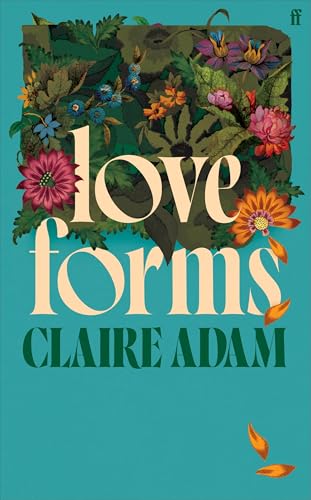
  • Love Forms by Claire Adam (Trinidad)
  • The South by Tash Aw (Taiwan/Malaysia)
  • Universality by Natasha Brown (UK)
  • One Boat by Jonathan Buckley (UK)
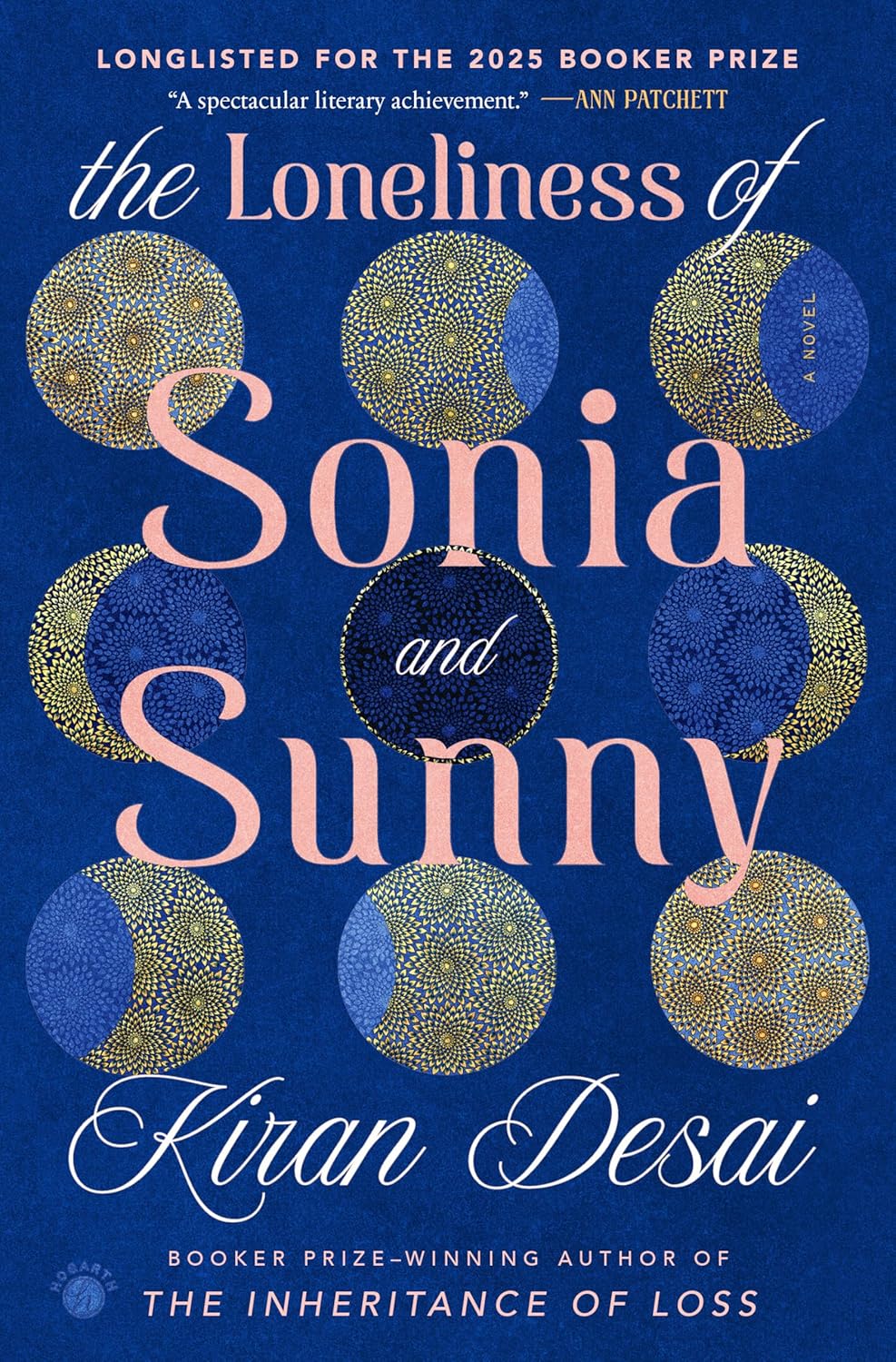
  • The Loneliness of Sonia and Sunny by Kiran Desai  (India/US)
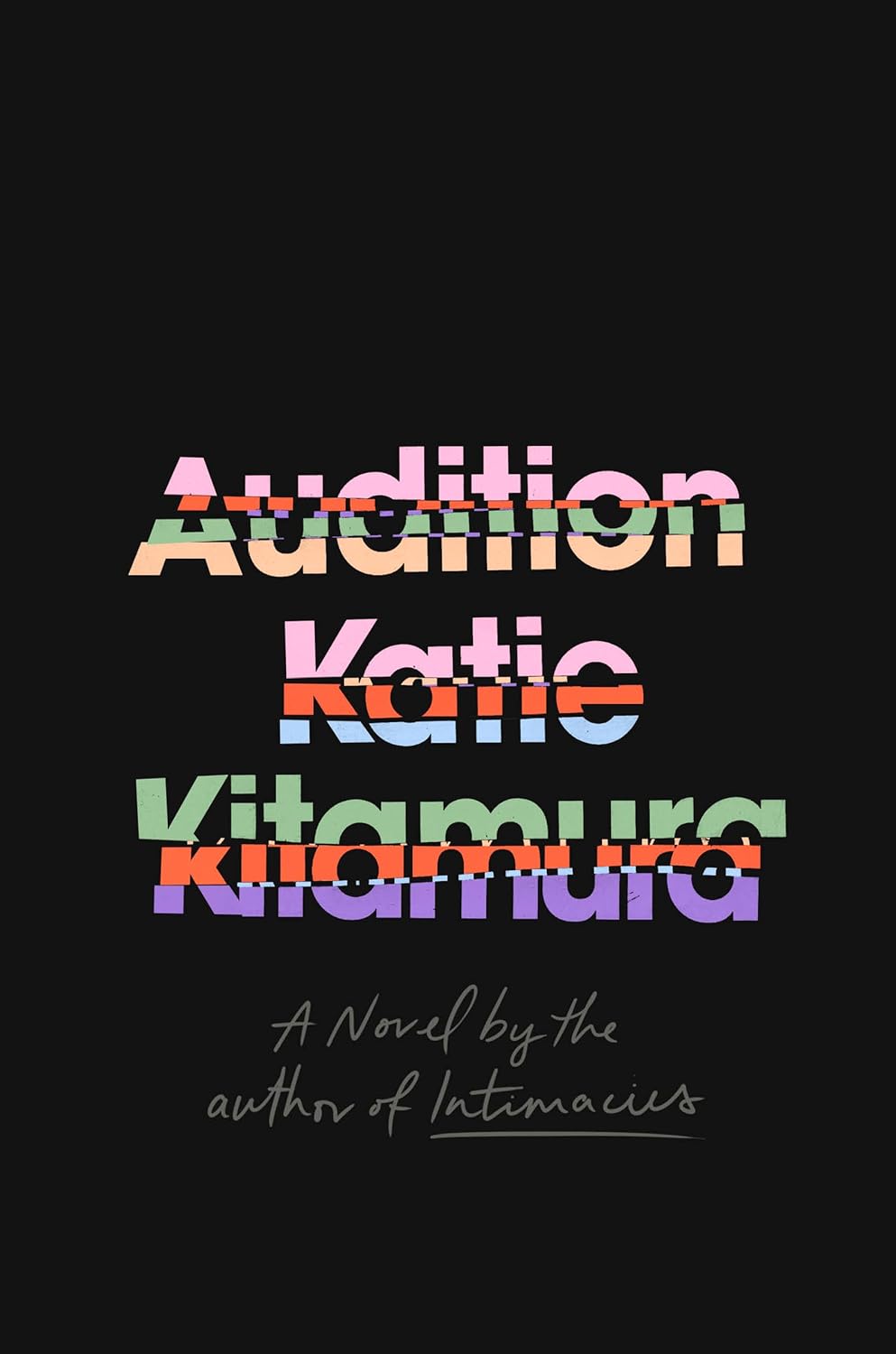
  • Audition by Katie Kitamura (US)
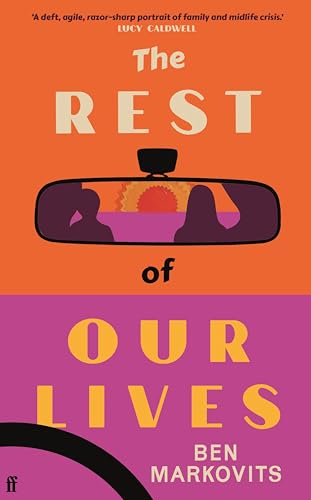
  • The Rest of Our Lives by Benjamin Markovits  (US/UK)
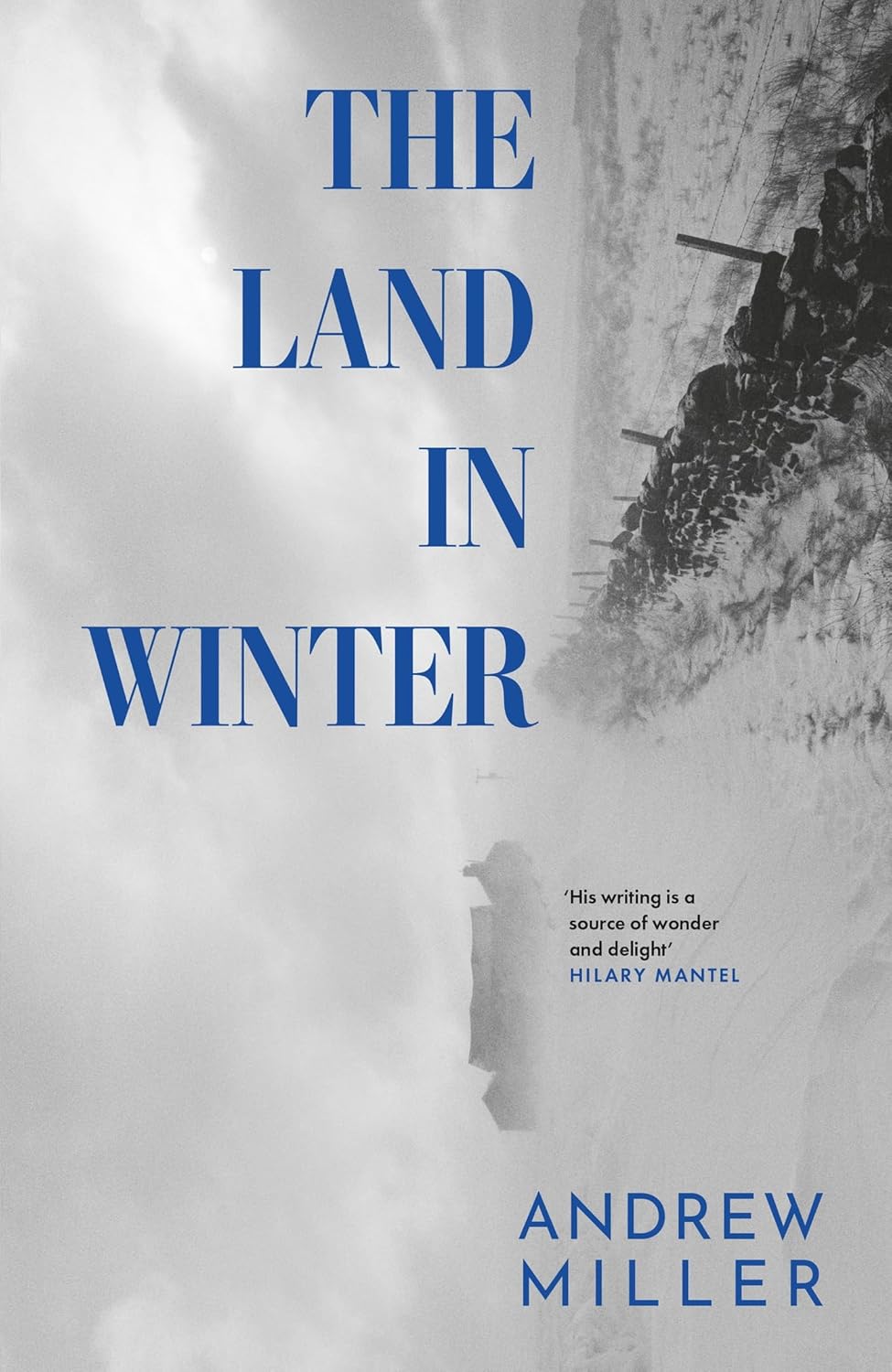
  • The Land in Winter by Andrew Miller (UK)
  • Endling by Maria Reva (Ukraine/Canada)
  • Flesh by David Szalay (Canada/Austria)
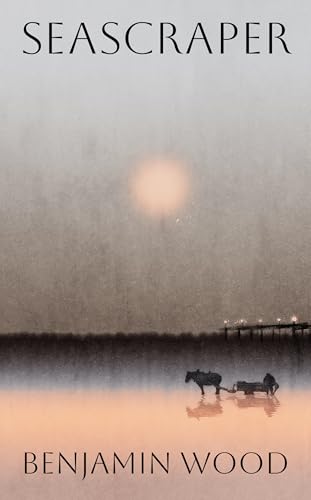
  • Seascraper by Benjamin Wood (UK)
  • Misinterpretation by Ledia Xhoga (Albania/US)
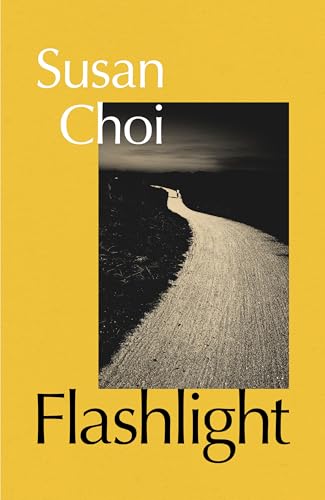
  • Flashlight by Susan Chow (US)

It’s an interesting and very British list compared to other years, and a lot more experimental in style than straight forward traditional storytelling, though that’s to be expected from a literary prize. Coming in August, for me it competes with my wishing to read women in translation for #WITMonth.

Irish Recommendations & Cross Cultural Leanings

After a quick glimpse at the titles the first one that stood out for me was Love Forms by Trinidadian author Claire Adam as I first heard it discussed on The Irish Times Women’s Podcast Summer Reading Recommendations episode and was very tempted. One of my favourite podcasts, their bookclub is fabulous, all the more so, for the host Róisín Ingle’s mother Ann Ingle being part of it (she talks about and recommends Flesh by David Szalay another longlisted title), and adds an interesting mother-daughter dynamic and inter-generational exchange and perspective to the club – and she can’t see, so all her reading is via audio book.

I’m also interested in The Loneliness of Sonia and Sunny by Kiran Desai because it’s a cross cultural story, although I’m not in a rush to read a 600 page novel at present. And Endling sounds interesting, comparisons being made to Percival Everett and George Saunders are both intriguing and promising.

What It’s About & the Judges’ Comment

Below is a summary book description and judges’ comment:

Love Forms by Claire Adam (Trinidad) (My Review Here)

A heart-aching novel of a mother’s search for the daughter she left behind a lifetime ago.

Trinidad, 1980: Dawn Bishop, 16, leaves home and journeys across the sea to Venezuela. She gives birth to a baby girl and leaves her with nuns to be given up for adoption. Dawn tries to carry on with her life; a move to England, marriage, career, two sons, a divorce – but through it all, she still thinks of the child she left, of what might have been.  

40 years later, a woman from an internet forum gets in touch saying she might be Dawn’s daughter, stirring up a mix of feelings: could this be the person to give form to the love and care Dawn has left to offer? 

‘Claire Adam returns to Trinidad for her sophomore novel. We first meet Dawn, a pregnant 16 year-old, on a clandestine journey across the sea to Venezuela. There, she gives birth and returns home without the baby, just as her parents had prescribed. Now, at 58, Dawn is the divorced mother of two adult men, but the loss of the baby girl consumes her every move. The story, heartbreaking in its own right, comes second to its narration. Dawn’s voice haunts us still, with its beautiful and quiet urgency. Love Forms is a rare and low-pitched achievement. It reads like a hushed conversation overheard in the next room.’ 

The South by Tash Aw  (Taiwan/Malaysia)

A radiant novel about family, desire and what we inherit, and the longing that blooms between two boys over the course of one summer.

When his grandfather dies, Jay travels south with his family to the property he left them, a once flourishing farm fallen into disrepair. The trees are diseased, the fields parched from months of drought. Still, Jay’s father Jack, sends him out to work the land. Over the course of hot, dense days, Jay finds himself drawn to Chuan, son of the farm’s manager, different from him in every way except for one. 

Out in the fields, and on the streets into town, the charge between the boys intensifies. At home, other family members confront their regrets, and begin to drift apart. Like the land around them, they are powerless to resist the global forces that threaten to render their lives obsolete. 

Sweeping and intimate, The South is a story of what happens when private and public lives collide. It is the first in a quartet of novels that form Tash Aw’s portrait of a family navigating a period of change.

‘It’s summertime in the 1990s and rural Malaysia is hot. Teenager Jay and his family leave their home of Kuala Lumpur to work on a farm in the Johor Bahru countryside. There, Jay meets Chuan, who opens Jay up to friendship, illicit pastimes, and a deeper understanding of his sexuality. To call The South a coming-of-age novel nearly misses its expanse. This is a story about heritage, the Asian financial crisis, and the relationship between one family and the land. The South is the first instalment of a quartet, and we’re so pleased that there is more to come.’ 

The Loneliness of Sonia and Sunny by Kiran Desai (India/US)

A spellbinding story of two people whose fates intersect and diverge across continents and years – an epic of love & family, India & America, tradition & modernity

When Sonia and Sunny first glimpse each other on an overnight train, they ar captivated, and embarrassed their grandparents had once tried to matchmake them, a clumsy meddling that served to drive Sonia and Sunny apart.  
  
Sonia, an aspiring novelist who completed her studies in the snowy mountains of Vermont, has returned to India, haunted by a dark spell cast by an artist she once turned to. Sunny, a struggling journalist resettled in New York City, attempts to flee his imperious mother and the violence of his warring clan. Uncertain of their future, Sonia and Sunny embark on a search for happiness as they confront the alienations of our modern world.  
  
The Loneliness of Sonia and Sunny is the tale of two people navigating the forces that shape their lives: country, class, race, history, and the bonds that link one generation to the next. A love story, a family saga, and a rich novel of ideas, it is an ambitious and accomplished work by one of our greatest novelists.

‘This novel about Indians in America becomes one about westernised Indians rediscovering their country, and in some ways a novel about the Indian novel’s place in the world. Vast and immersive, the book enfolds a magical realist fable within a social novel within a love story. We loved the way in which no detail, large or small, seems to escape Desai’s attention, every character (in a huge cast) feels fully realised, and the writing moves with consummate fluency between an array of modes: philosophical, comic, earnest, emotional, and uncanny.’

Flashlight Written by Susan Choi (US)

A thrilling, globe-spanning novel that mines questions of memory, language, identity and family

One evening, 10-year-old Louisa and her father take a walk out on the breakwater. They are spending the summer in a coastal Japanese town while her father Serk, a Korean émigré, completes an academic secondment from his American university. When Louisa wakes hours later, she has washed up on the beach and her father is missing, probably drowned. 

The disappearance of Louisa’s father shatters their small family. As Louisa and her American mother return home, this traumatic event reverberates across time and space, as the mystery of what happened unravels. 

Flashlight moves between the post-war Korean immigrant community in Japan, to suburban America, and the North Korean regime, to tell the astonishing story of a family swept up in the tides of 20th-century history. 

Flashlight is a sprawling novel that weaves stories of national upheavals with those of Louisa, her Korean Japanese father, Serk, and Anne, her American mother. Evolving from the uncertainties surrounding Serk’s disappearance, it is a riveting exploration of identity, hidden truths, race, and national belonging. In this ambitious book that deftly criss-crosses continents and decades, Susan Choi balances historical tensions and intimate dramas with remarkable elegance. We admired the shifts and layers of Flashlight’s narrative, which ultimately reveal a story that is intricate, surprising, and profound.’

Audition by Katie Kitamura (US)

An exhilarating, destabilising novel that asks whether we ever really know the people we love

Two people meet for lunch in a Manhattan restaurant. She’s an accomplished actress in rehearsals. He’s attractive, troubling, young – young enough to be her son. Who is he to her, and who is she to him? 

In this compulsive, brilliantly constructed novel, two competing narratives unspool, rewriting our understanding of the roles we play every day – partner, parent, creator, muse – and the truths every performance masks, especially from those who think they know us most intimately.

‘This novel begins with an actress meeting a young man in a Manhattan restaurant. A surprising, unsettling conversation unfolds, but far more radical disturbances are to come. Aside from the extraordinarily honed quality of its sentences, the remarkable thing about Audition is the way it persists in the mind after reading, like a knot that feels tantalisingly close to coming free. Denying us the resolution we instinctively crave from stories, Kitamura takes Chekhov’s dictum – that the job of the writer is to ask questions, not answer them – and runs with it, presenting a puzzle, the solution to which is undoubtedly obscure, and might not even exist at all.’

Universality by Natasha Brown (UK)

A twisty, slippery descent into the rhetoric of truth and power

‘Remember – words are your weapons, they’re your tools, your currency.’ 

Late one night on a Yorkshire farm, a man is bludgeoned with a solid gold bar. A plucky young journalist sets out to uncover the truth, connecting the dots between an amoral banker landlord, an iconoclastic columnist, and a radical anarchist movement. She solves the mystery, but her exposé raises more questions than it answers. 

Through a voyeuristic lens, Universality focuses on words: what we say, how we say it, and what we really mean. The follow-up novel to Natasha Brown’s Assembly is a compellingly nasty celebration of the spectacular force of language. It dares you to look away.  

‘Natasha Brown’s Universality is a compact yet sweeping satire. Told through a series of shifting perspectives, it reveals the contradictions of a society shaped by entrenched systems of economic, political, and media control. Brown moves the reader with cool precision from Hannah, a struggling freelancer, through to Lenny, an established columnist, unfurling through both of them an examination of the ways language and rhetoric are bound with power structures. We were particularly impressed by the book’s ability to discomfit and entertain, qualities that mark Universality as a bold and memorable achievement.’ 

Endling by Maria Reva (Ukraine/Canada)

An unforgettable debut novel about the journey of three women and one extremely endangered snail through contemporary Ukraine

Ukraine, 2022. Yeva is a maverick scientist who scours the forests and valleys, trying and failing to breed rare snails while her relatives urge her to settle down and start a family. What they don’t know: Yeva dates plenty of men – not for love, but to fund her work – entertaining Westerners who take guided romance tours believing they’ll find docile brides untainted by feminism.  
  
Nastia and her sister, Solomiya, are also entangled in the booming marriage industry, posing as a hopeful bride and her translator while secretly searching for their missing mother, who vanished after years of fierce activism against the romance tours.  So begins a journey across a country on the brink of war: three angry women, a truckful of kidnapped bachelors, and Lefty, a last-of-his-kind snail with one final shot at perpetuating his species.

‘Endling shouldn’t be funny, but it is – very. Set in Ukraine just as Putin invades, it features three young women, on two different missions, in one vehicle. Structurally wild and playful, Endling is also heart-rending and angry. It examines colonialism, old and neo, the role of women, identity, power and powerlessness, and the very nature of fiction-writing. Maria Reva also tells a riveting, unique story; the shock is that this is her first novel. It’s a book about the world now, and about three unforgettable women, Yeva, Nastia and Solomiya, travelling together in a mobile lab. The endling, by the way, is a snail.’ 

Seascraper by Benjamin Wood (UK)

A mesmerising portrait of a young man confined by his class and the ghosts of his family’s past, dreaming of artistic fulfilment

Thomas lives a slow, deliberate life with his mother in Longferry, working his grandpa’s trade as a shanker. He rises early to take his horse and cart to the grey, gloomy beach and scrape for shrimp, spending the afternoon selling his wares, trying to wash away the salt and scum, pining for Joan and rehearsing songs on his guitar. At heart, he is a folk musician, but it remains a private dream.  
  
When a striking visitor turns up, bringing the promise of Hollywood glamour, Thomas is shaken from the drudgery of his days and imagines a different future. But how much of what the American claims is true, and how far can his inspiration carry Thomas?  Haunting and timeless, a story of a young man hemmed in by circumstances, striving to achieve fulfilment far beyond the world he knows.

Seascraper seems, at first, to be a beautifully described account of the working day of a young man, Thomas Flett, who works as a shanker in a north of England coastal town, scraping the Irish Sea shore for scrimps. And it is that: the details of the job and the physicality of the labour are wonderfully captured by Benjamin Wood. But this novel becomes much more than that. It’s a book about dreams, an exploration of class and family, a celebration of the power and the glory of music, a challenge to the limits of literary realism, and – stunningly – a love story.’

One Boat by Jonathan Buckley (UK)

Artfully constructed, absorbing and insightful, One Boat grapples with questions of identity, free will, guilt and responsibility

On losing her father, Teresa returns to a small Greek coastal town – the same place she visited when grieving her mother nine years ago. She immerses herself in the life of the town, observing the inhabitants, a quiet backdrop for reckoning with herself. An episode from her first visit resurfaces – her encounter with John, a man struggling to come to terms with the violent death of his nephew.  

Teresa encounters people she met before: Petros, an eccentric mechanic, whose life story may or may not be part of John’s; the beautiful Niko, a diving instructor; and Xanthe, a waitress in one of the cafés. They talk about their longings, regrets, the passing of time, their sense of who they are.

‘Following the death of her father, Teresa returns to the small coastal town in Greece she first visited when her mother died nearly a decade before. From this scenario, tacking between the events of the second trip and memories of the first, Buckley creates a novel of quiet brilliance and sly humour, packed with mystery and indeterminacy. The way in which the book interleaves Teresa’s relationship to her mother, her involvement in an amateur murder investigation, and an account of a love affair, raises questions about grief, obsession, personhood and human connectivity we found to be as stimulating as they are complex.’

Flesh by David Szalay (Canada/Austria)

A propulsive, hypnotic novel about a man who is unravelled by a series of events beyond his grasp

Fifteen-year-old István lives with his mother in an apartment complex in Hungary. New to the town and shy, he is unfamiliar with social rituals at school and becomes isolated, with his neighbour – a woman close to his mother’s age – his only companion. Their encounters shift into a clandestine relationship that István barely understands, as his life spirals out of control.  
   
As the years pass, he is carried upwards on the century’s tides of money and power, moving from the army to the company of London’s super-rich, with his own competing impulses for love, intimacy, status and wealth winning him riches, until they threaten to undo him completely.  Flesh asks profound questions about what drives a life: what makes it worth living, and what breaks it.

‘David Szalay’s fifth novel follows István from his teenage years on a Hungarian housing estate to borstal, and from soldiering in Iraq to his career as personal security for London’s super-rich. In many ways István is stereotypically masculine – physical, impulsive, barely on speaking terms with his own feelings (and for much of the novel barely speaking: he must rank among the more reticent characters in literature). But somehow, using only the sparest of prose, this hypnotically tense and compelling book becomes an astonishingly moving portrait of a man’s life.’

The Land in Winter by Andrew Miller (UK)

A masterful, page-turning examination of the minutiae of life and a dazzling chronicle of the human heart

December 1962, the West Country.  Local doctor Eric Parry, mulling secrets, sets out on his rounds, while his pregnant wife sleeps on in their cottage. Across the field, funny, troubled Rita is also asleep, her head full of images of a past her husband prefers to ignore. He’s been up for hours, tending to the needs of the small dairy farm where he hoped to create a new version of himself, a project that’s faltering.  
  
When the ordinary cold of an English December gives way to violent blizzards, the two couples find their lives unravelling.  Where do you hide when you can’t leave home? And where, in a frozen world, can you run to?  

Misinterpretation by Ledia Xhoga (Albania/UK)

Ledia Xhoga’s ruminative debut interrogates the darker legacies of family and country, and the boundary between compassion and self-preservation

In present-day New York City, an Albanian interpreter reluctantly agrees to work with Alfred, a Kosovar torture survivor, during his therapy sessions. Despite her husband’s cautions, she becomes entangled in her clients’ struggles: Alfred’s nightmares stir up buried memories, and an impulsive attempt to help a Kurdish poet leads to a risky encounter and a reckless plan. 

As ill-fated decisions stack up, jeopardising the narrator’s marriage and mental health, she travels to reunite with her mother in Albania, where her life in the United States is put into stark relief. When she returns to face the consequences, she must question what is real and what is not.

‘A Kosovan torture survivor requests translation assistance at his therapy sessions. Our narrator, a nameless translator, reluctantly agrees. But Alfred’s account of his experiences conjures hidden memories that seep into her psyche, forcing her to question her marriage and her place in the world. This is a story of a woman saddled between her Albanian past and her New York present. It explores the way that language is kept in our bodies, how it can reveal truths we aren’t ready to hear. Misinterpretation subtly blurs the distinction between help and harm. We found it propulsive, unsettling, and strangely human.’

The Rest of Our Lives by Ben Markovits (US/UK)

An unforgettable road trip of a novel about getting older, and the challenges of long-term marriage

What’s left when your kids grow up and leave home?  When Tom Layward’s wife had an affair, he resolved to leave her as soon as his youngest turned 18. Twelve years later, while driving her to start university, he remembers his pact.  Also he’s on the run from health issues, and the fact he’s been put on leave at work after students complained about the politics of his law class – a detail he hasn’t told his wife.  
   
After dropping Miriam off, he keeps driving, with the vague plan of visiting various people from his past – an old college friend, his ex-girlfriend, his brother, his son – on route, maybe, to his father’s grave.  Pitch perfect, quietly exhilarating, moving, The Rest of Our Lives is a novel about family, marriage and moments that may come to define us.

‘When Tom Layward’s wife cheated on him, he stayed for the children but promised to leave when his youngest turned eighteen. Twelve years later, Tom drops his daughter off at college, but instead of driving back to New York he heads west. What follows is a remarkably satisfying road trip full of strangers, friends, and self-discovery. It’s clear author Ben Markovits has spent time teaching. This novel speaks like a much-loved professor, one whose classes have a terribly long waitlist. It’s matter of fact, effortlessly warm, and it uses the smallest parts of human behaviour to uphold bigger themes, like mortality, sickness, and love. The Rest of Our Lives is a novel of sincerity and precision. We found it difficult to put it down.’ 

What Do You Think?

Are you tempted by anything on the list or have you read any of these titles? Let us know in the comments below.

If you’re not sure, Take the Quiz and see what your preferences suggest. I took the quiz and it suggested I read Flesh by David Szalay. Not sure about that! But Ann Ingle did recommend it.

Madame Sosostris & the Festival for the Broken-Hearted by Ben Okri

I haven’t read a Ben Okri novel for a long time. He is well known for his third novel, the 1991 Booker Prize winning The Famished Road, the story of Azaro, a spirit child around the time of Nigerian independence; a challenging novel to read as it slips in and out of reality, and one the writer recalls being spooked by, as those spirits he wrote about crashed into his dreams.

There were times, writing at night, when the story I was telling would spook me. Those where nights when I feared for my sanity. I couldn’t shake the feeling that when people read the novel they’d think something was wrong with me. It must have taken a species of madness to write The Famished Road. It certainly took a stronger psyche than I realised I had to work on that taboo-breaking material, and to withstand the horrors involved. Writing about the spirit world at night, for a long period, is dangerous if you come from a land that believes in them. Spirit children, born several times to the same mother, have a special mythology about them, part dread, part magic.

Booker Prize Winner 1991 for The Famished Road Ben Okri Madame Sosostris homage to T.S. Eliot The Waste Land she  can be perceived as the central consciousness of the tale

There is something alluring about Ben Okri’s work, the way he seeks to portray a cultural inner authenticity that embraces the ordinary, the mythical, the poetic and the mysterious. It can feel slightly beyond reach, and then there are moments of universal resonance. A wonderful, considered author, who embraces all literature and forms.

For some time I had known that there is no objective reality that is true for everyone. There is only the reality perceived through culture, traditions, education, consciousness. We don’t see what is there. We see what we are taught to see. Our reality is a product of culture and consciousness. 

After the challenge of The Famished Road, I remember picking up the slimmer Astonishing the Gods, a beautiful fable-like story about being invisible and having the courage to go forth anyway; a man finds himself among invisible beings who live by one principle ‘to repeat or suffer every incident until we experience it properly or fully’ – the sort of book that was ideal to read in youth, one I loved for its magical element and transformative power when I read it in my 20’s.

Madame So So Sad, Sorceress or Alter Ego

ASo where does Madame Sosostris and the Festival for the Broken-Hearted fit? More along the lines of Astonishing the Gods for sure, with a nod in homage to T.S. Eliot’s (1888-1965) character in his epic poem The Waste Land, who may be perceived as this tale’s central consciousness. She comes from the first phase of that poem ‘The Burial of the Dead’, with its themes of sorrow and disappointment, of April and the cruelty in the coming of Spring. Eliot too, is said to have been referencing a character from Aldous Huxley’s Crome Yellow.

Madame Sosostris, famous clairvoyante,

Had a bad cold, nevertheless

Is known to be the wisest woman in Europe,

With a wicked pack of cards. 

The Novel

Okri’s Madame Sosostris is a modern fable, with a touch of cynisism and humour, it is about two upper-class power couples, one of the women has the idea to create a festival for those who have suffered loss but are never acknowledged, the brokenhearted. It has been 20 years since her own major heartbreak.

A Touch of Theatre

Much of this novella length story is dialogue and I couldn’t help but feel like I was watching a play, even the voices seemed louder as if projected out to an audience more so than to each other. We get the feeling that these people don’t much like each other and have long ago left their more authentic aspects of themselves behind.

We spend our lives trying to become ourselves. Few people ever succeed.

Photo by G. PITOIS Pexels.com

The festival will be a masked, costumed event, an idea they hope will allow people to reconnect with something more authentic, since no one will know who they are. This will prove strange to Viv, a member of the House of Lords, who is not used to being encountered by people who do not who she is or the position she holds in society.

But she soon realised that the things they were saying were genuine, that they wanted nothing from her, and had no idea who she was. This was disquieting and charming in equal measure. Disquieting because she was used to people reacting to her because of her money. She was used to the influence of her position in society, the power it gave her. Being liked without that power was new to her. But it did not alter her anxiety.

A Sacred Space in Nature to Unmask

A sacred forest in the south of France, Sainte Baume

It will be for one night only, abroad, in a sacred forest in the south of France. The special invitee is Madame Sosostris, whom they have come across once in the House of Lords (where one of the women works) who will do readings for each guest.

They had come to her weighed down with the dark burdens of their unendurable agonies. They left with a streak of light in their eyes. They were people who had chewed their innards and devoured their own hearts. They were locked in the narrow space of their beings. They were imprisoned for long periods of time in the hell of their own minds, turning over their agonies till they grew and filled their world. What most of them needed was a glimpse beyond themselves, a glimpse of something real, something with the texture of dry bone, the fragrance of a dead beetle, the roughness of a cement wall.

When plans go awry, it becomes necessary to adapt and step out of comfort zones. Some will rise to the occasion, others will be destabilised by it. Ultimately, the couples all experience moments of consciousness raising and are changed in some way by their encounter.

The novel explores identity and personality and how society reinforces these constructs which move further and further away from the authentic, creating a mirage masking the true self. It demonstrates how a shift in perspective and stepping outside oneself can be beneficial to the psyche.

It’s an entertaining read, that plays around with what is real, what is seen and unseen, thought provoking in a theatrical sense and ready for the stage in my humble opinion.

Further Reading/Listening

An Interview: Ben Okri – How The Famished Road was Written on a Magic Tide of Freedom

Listen To: Ben Okri Talking About T.S. ELiot and The Waste Land (16mins)

Guardian: Madame Sosostris & the Festival for the Broken-Hearted by Ben Okri review – a slender fable

Ben Okri, Author

Sir Ben Okri was born in Minna, Nigeria. His childhood was divided between Nigeria, where he saw first-hand the consequences of war, and London.

His writing has used magic realism to convey the social and political chaos in the country of his birth, however no two books are the same exploring themes of reality, unreality, society, storytelling, freedom, magic, consciousness, history, politics, justice.

His books include The Last Gift of the Master Artists (2022), The Freedom Artist (2019); the short story collection Prayer for the Living (2019); the prose-poetry hybrids Tales of Freedom (2009) and A Time for New Dreams (2011); the long poem Mental Fight (1999); the essay collection A Way of Being Free (1997); the poetry collection An African Elegy (1992); and the Booker Prize-winning novel The Famished Road (Anchor, 1991).

He has won many awards over the years, including the Booker Prize for Fiction and is also an acclaimed essayist, playwright, and poet. In 2019 Astonishing the Gods was named as one of the BBC’s 100 Novels That Shaped the World. In June 2023 he was awarded a knighthood in the King’s official birthday honours.
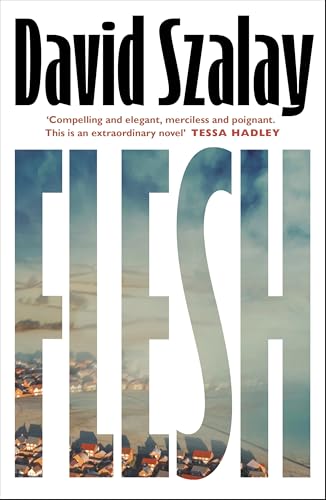
Booker Prize 2025

The longlist for the Booker Prize 2025 will be announced on Tuesday, 29 July 2025. The shortlist of six books will be announced on 23 September and the winner will be announced on 10 November.

Have you read any Ben Okri books? Let us know in the comments below?

N.B. This book was an ARC (Advance Reader Copy) kindly provided by the publisher via NetGalley.

The Seven Moons of Maali Almeida by Shehan Karunatilaka

The Seven Moons of Maali Almeida by Sri Lankan author Shehan Karunatilaka won the Booker Prize in 2022. It wasn’t on my radar, probably because it seemed to me like it was trying to be too many things, but when I saw a hardcover copy on sale at the annual Ansouis vide grenier last September, I decided to delve into it and see for myself.

Outstanding Sri Lankan Literature

I knew that it was about the civil war era in Sri Lanka and I have read some excellent novels that are set in those difficult times, most recently the novel that won the Women’s Prize for Fiction in 2024 Brotherless Night by V.V. Ganeshananthan (see my review here), but my favourite novel set in that country is Naomi Munaweera’s Island of a Thousand Mirrors (my review here), winner of the Commonwealth Writer’s Prize in 2013.

Munaweera writes exquisitely of the island of Sri Lanka, in lyrical prose that takes the reader inside the family experiences, evoking all the senses, the aroma of the cuisine, the fear and excitement of young, forbidden love, the pain of heartbreak, the palpable tension as sisters walk to school, sometimes witnessing images that will stain their minds and revisit their dreams for years.

Mystery, Satire, Historical Fiction and Magical Realism in One

Booker Prize Winner 2022 Sri Lankan literature magic realism afterlife noir

Seven Moons is a literary mystery about the life and death of Maali Almeida, who from the opening pages, in a second person narrative, turns up dead and from the In Between, that place between life and the afterlife that he now inhabits, proceeds to uncover the mystery of his death.

Set in 1990 Colombo, Maali was a war photographer, a promiscuous gay man, sometimes gambler and seeker of the next photograph that will show the dark and gruesome elements of those in power, a witness to crimes he believes can bring down governments, stop wars.

The In Between, Down Below and The Light

When he arrives at the In Between, he and others like him are told they have seven moons, seven nights to meet the criteria to enter The Light. As they queue and ask questions about their deaths, Maali hopes he is about to wake up from a dream.

The swarm of souls presses closer, berating and badgering the woman in white. You gaze upon the pallid faces, sunken eyes in broken heads, squinted in rage and pain and confusion. The pupils are in shades of bruises and scabs. Scrambled browns, blues and greens – all of which disregard you. You have lived in refugee camps, visited street markets at noon, and fallen asleep at packed casinos. The heave of humanity has never been picturesque. This heave throngs towards you and heaves you away from the counter.

metaphysical thriller civil war Sri Lanka supernatural

Every soul has those seven moons to wander around the In Between, to recall past lives, and to forget.

While he should be completing the tasks to get to The Light, instead he shifts from The In Between back to the present, the Down Below and observes the aftermath of his death.

He tries to direct those close to him towards his most incriminating photographs in order to achieve which he was not able during life. He doesn’t understand quite how these shifts happen, and neither does the reader, making it somewhat confusing to keep up with this trippy journey.

Here’s what you remember from two nights ago: (a) visiting the Leo casino, (b) drinking at the bar, (c) eating the buffet, (d) fooling around with the bartender. here’s what you don’t remember: (a) sitting with a suddha (b) being thrown to your death.

Conversations With the Dead

As well as investigating his own murder, along the way he has conversations with a dead athiest, a dead revolutionary, lawyer, bodyguard, priest, dogs and more. He observes the number of spirits hanging on to the living whispering their ears.

You’ve always thought the voice in your head belonged to someone else. Telling you the story of your life as if it had already happened. The omniscient narrator adding a voiceover to your day. The coach telling you to stop feeling sorry and do what you’re good at. Which was winning at blackjack, seducing young peasants and photographing scary places.

Moons, Chapters and Beats

On his motivation for writing this novel, the author had this to say:

‘I began thinking about [Seven Moons] in 2009, after the end of our civil war, when there was a raging debate over how many civilians died and whose fault it was. A ghost story where the dead could offer their perspective seemed a bizarre enough idea to pursue, but I wasn’t brave enough to write about the present, so I went back 20 years, to the dark days of 1989.’

Not just an author of fiction, Shehan Karunatilaka has also written rock songs and speaks of his work in terms of beats and rhythm, infused with supernatural folklore, ghost stories and history.

It’s a long novel that for me held my interest in parts and then lost me as it shifted, but each time that began to annoy me and slow me down, the narrative would shift back to something of interest and so I persevered, however, I did find it overly long in its digressions, drifting in and out of reality. It’s an undeniably clever, erudite novel, unique in its conception that reminded me a little of the surreal experience of reading David Mitchell’s Cloud Atlas.

The Judges on A Metaphysical Thriller Winner

In addition to praising its ambitious scope and hilarious audacity of narrative techniques, the Booker judges had this to say of the metaphysical thriller:

‘Life after death in Sri Lanka: an afterlife noir, with nods to Dante and Buddha and yet unpretentious. Fizzes with energy, imagery and ideas against a broad, surreal vision of the Sri Lankan civil wars. Slyly, angrily comic.’

‘This is a metaphysical thriller, an afterlife noir that dissolves the boundaries not just of different genres, but of life and death, body and spirit, east and west. It is an entirely serious philosophical romp that takes the reader to ’the world’s dark heart’ — the murderous horrors of civil war Sri Lanka. And once there, the reader also discovers the tenderness and beauty, the love and loyalty, and the pursuit of an ideal that justify every human life.’

Have you read The Seven Moons of Maali Almeida? Share your thoughts in the comments below.

Further Information

Read an Interview With the author Shehan Karunatilka

Click here to read an extract from the first section of the novel – Read an Extract from The Seven Moons of Maali Almeida

House of Splendid Isolation by Edna O’Brien

Back to the final days of Reading Ireland Month 2025, this week I slowly read Edna O’Brien’s political novel House of Splendid Isolation, the first of the Modern Ireland Trilogy, books written in the 1990’s that depict significant events in modern Ireland. The other two novels in that series are Down By the River and Wild Decembers.

Incarceration, Idealism and Ignorance, An Irish Story

Modern Ireland trilogy Edna O'Brien a political novel of the 1990's

House of Splendid Isolation is a story of one event and incidents involving a community, over a few days as a man involved in murderous events is on the loose and actively being hunted.

It is also a book of parts and voices, a child’s voice, the past, the present, a woman Josie who returns to Ireland after a period of youth in Brooklyn, her disappointing yet predictable marriage, an impossible affair and violent retribution, an accident, people who drop by, whose good deeds lead to violent consequences, friendships that hide betrayal, communities that breathe suspicion, harbour fear and occasionally a fugitive.

I hear stories. It could be myself telling them to myself or it could be these murmurs that come out of the earth. The earth so old and haunted, so hungry and replete. It talks. Things past and things yet to be. Battles, more battles, bloodshed, soft mornings, the saunter of beasts and their young. What I want is for all the battles to have been fought and done with. That’s what I pray for when I pray. At times the grass is like a person breathing, a gentle breath, it hushes things.

A Not So Quiet Last Act

Josie is now a lone widow in a big old house that she came to inhabitant through marriage, she did not wish to die in a Home, she has returned. A nurse visits occasionally and her grocery order is delivered. Memories still haunt her.

The nurse muses why, the older they get, the madder they are for talk; their past, their present, their futures, anything, everything, afraid of death too as if she was not afraid of it herself.

Edna O'Brien The Country Girls The House of Splendid Isolation

Into her last solitary days arrives this unwelcome visitor on the run, they play cat and mouse, wary of each other, challenging each other, co-existing nevertheless, never quite knowing if one can trust the other, providing each other something they need for a brief moment, while the world outside goes mad in their paranoia, the rumour-mill running rampant, suspicions gone mad.

The grass smells good to him and after three months cooped up in a house in a town, he’s tuned to the smell of grass and the fresh smell of cow-dung, to the soft and several lisps of night. He knows his country well, McGrevvy does, but only in dark. The dark is his friend. Daylight his enemy. Who set him up. Who can he trust, not trust.

The Grass Was Never Greener

While their words and worlds would never align, there is something in the brief respite one provides the other in this house of Splendid Isolation, before they each face the inevitable that awaits them; capture or death, peace no longer an option. Here the first confrontation.

‘There’s myself and my maker,’ she says quietly. So this is how it happens, this is how a life is suborned, one’s insides turned to whey, an opening door, a man, hooded, with not a lax muscle in his being, a loaded rifle and outside crows cawing with the same eventide fussiness and no one any the wiser that her time is up.

A novel of many layers and consequences revealed of humans wronged, who know not how to seek healing or harmless resolution, whose path leads to occasional respite en route to destruction.

It brilliantly depicts two faces of a staunchly divided territory, their failed attempts to escape their destiny, a brutal confrontation and a land that continues to absorb the repercussions.

Forward, back, slow, quick, slow

The writing moves from poetic, contemplative reflection to rapid, coarse dialogue to action oriented tension as the slow hours spent in captivity contrast with the build up externally as the police net closes in on the fugitives location. At times the prose is sparse, and other times it shifts as our protagonist loses her grip on reality and shifts into past memories or present situations that confuse her.

It’s not a straight forward read, as it navigates and holds all these time frames, but it propels forward at a good pace and leaves the reader with much to reflect on.

A Year With Edna O’Brien

I read this for Reading Ireland Month 2025 with Cathy at 746Books and also for Cathy and Kim’s A Year With Edna O’Brien which they are doing in 2025. Kim will be reading another of the Modern Ireland trilogy novels, Wild Decembers in August.

Further Reading

My review of Edna O’Brien’s renowned Country Girls Trilogy (initially banned in Ireland due to its bold faced portrayal of a young woman’s quest for independence and awakening sexuality) consists of three novels: The Country Girls (1960), The Lonely Girl (1962), and Girls in Their Married Bliss (1964). It was re-released in 1986 in a single volume including a revised ending to Girls in Their Married Bliss and the addition of an epilogue.

Author, Edna O’Brien

Edna O’Brien was born in December 1930 in Tuamgraney, County Clare. She died in 2024, having written over 20 works of fiction, known to provoke, dissect and dig into social, cultural and religious issues deep in the fabric of Irish society.

In addition to The Country Girls trilogy, her novels include A Pagan Place (1970), the story of a girl growing up in rural Ireland, winner of the Yorkshire Post Book of the Year Award; Zee & Co (1972); Johnny I Hardly Knew You (1977), a story of love, murder and revenge; Time and Tide (1992), winner of a Writers’ Guild Award, the story of a young wife who faces a crisis when she leaves her husband and is forced to fight for the custody of her sons.

She is the author of a trilogy of novels about modern Ireland: House of Splendid Isolation (1994), she writes about Irish nationalism and sectarian violence; Down by the River (1996), based on the true story of a young Irish rape victim forced to travel to England for a legal abortion; and Wild Decembers (1999), about a farmer, Joseph Brennan, and his sister, Breege, living in an isolated rural community. In the Forest (2002), is based on the true story of a disturbed, abused young man who murdered a young mother, her infant son and a Catholic priest in the west of Ireland in the early 1990s. The Light of Evening (2006) and Byron in Love (2009), Haunted (2010), The Little Red Chairs (2016), Girl (2020), Joyce’s Women (2022).

She wrote Mother Ireland (1976), a travelogue with photographs by Fergus Bourke, and a biography of James Joyce, published in 1999. She is the author of several plays. In 2021 she was awarded the French Ordre des Arts et Des Lettres.

“I wanted to write from as far back as I can recall. Words seemed and still seem an alchemy, and story the true conductor of life, of lives.”

Reading Ireland Month 2025

Birding by Rose Ruane

Birding by Rose Ruane is longlisted for the Women’s Prize for Fiction 2025.

The novel is about two women living in a rundown, gentrifying seaside town in Britain, arriving at their moment of realisation of how their lives have been affected by damaging events of the past and their beginning to separate from and reject the power this has had over them.

One Woman’s Trauma is Another (Wo)Man’s Drama

Lydia, in her late forties is contacted by Henry “the most assiduously avoidant human she’d ever encountered”, to inform her he will put on a play that recounts a part of their history that ought to have negated their continued contact. Lydia is stunned, haunted and full of regret.

rundown gentrifying British seaside town Birding by Rose Ruane
Photo by R.Keating on Pexels.com

Joyce, of similar age, lives with her super controlling, critical mother Betty in a small house a few blocks back from the sea, after their comedown from The Palace, the departure of Joyce’s father without a word of explanation or contact since she was a child.

Beyond the beach, streets lined with terraces and bungalows crouch behind Victorian buildings with mid-century interiors; carved up into bedsits and B&Bs, their pastel facades crumble like stale cake after a party.

The impact of absent men on both women works like an invisible thread, until a mass social movement of women sharing their experiences of abuse awakens the impact and creates an increasingly conscious ripple effect in their lives.

Like Mother Like Daughter, But No

Photo by cottonbro studio Pexels.com

Joyce has never joined adulthood, her mother keeping her in a kind of stasis, until one Saturday evening when they prepare to go to the club, Betty utters that maybe they might meet a man, both of them, mother and daughter.

Joyce knows people stare because she and her mother wear identical outfits and hairstyles, attired as if they are twins.

Birding navigates a short period of time in these two women’s lives as they live with who they have become and reflect on significant aspects of the past in the 90’s that shaped them.

A lifetime’s habit of exactitude Joyce never used to question. But it has begun to feel stuffy and constricting, as if Joyce is outgrowing all her clothes.

Fake Spice Not Nice

Lydia and her friend Pandora had been a one hit pop wonder in their youth, a promising career thwarted by bad decisions made by powerful people that had little impact on the decision maker’s, but curtailed the girls’ dreams and made them targets of scorn for a while.

Lydia has always been carried by Pan’s sheer force of will; even when unsure if she’s been bullied or beloved, Lydia’s always ridden pillion on Pan’s survival instinct.

But whereas Pan has perfected the art of utter denial, Lydia has not. It never works.

Both have a desire to step outside of their patterns and in some small way the shift begins to happen, as their current minor transgressions exhibit a healthier rebellion and acknowledgement of what inside them, needs to find expression.

It’s a novel that carries a message of hope amid the lost opportunities that stunt some lives, showing the effect one has upon the other. In an interview about her multi-disciplinary creative life, Rose Ruane shared lines from a poem by Frank Bidart that reflect a truth she has learned to live by, one perhaps shared by her characters as they come into their own.

Whether you love what you love
Or live in divided ceaseless
Revolt against it
What you love is your fate

Further Reading

Women’s Prize: In Conversation With Rose Ruane

Irish Times : Birding by Rose Ruane: Friendship, friction and moments of reckoning

Article: Rose Ruane – A Creative Life Story by Leslie Tate

Birding asks if we can ever see ourselves clearly or if we are always the unreliable narrators of our own experiences. It is a story about the difference between responsibility and obligation, unhealthy relationships and abusive ones, third acts and last chances, and two women trying to take flight on clipped wings. Women’s Prize

Author, Rose Ruane

Rose Ruane is an artist and writer living and working in Glasgow. She graduated from the Glasgow School of Art in 2007 and completed a Master of Fine Art research degree and an MLitt in creative writing at the University of Glasgow. She has made podcasts and documentaries for BBC Radio 3, BBC Radio Scotland and Radiophrenia, exhibited her art at home and abroad, and was the 2015 winner of the Off West End Adopt A Playwright award.

Rose is chair of The Adamson Collection, comprised of work created in the art therapy studio at Netherne Hospital during the mid-20th century and is about to complete a PhD exploring the lives and experiences of the individuals who were compelled to live there. Rose is an avid collector of 20th Century crafts and kitsch. Birding is her second novel.