Keegan’s novel does everything except go inside the establishment to find out who is in there, why and how they are being treated. Instead it focuses on one man who is portrayed as kindly and empathetic. That man will make a righteous action, whereas the author commits the sin of omission, maintaining a societal silence that continues to bind, in neglecting to shift the narrative gaze towards anything related to those unjustly incarcerated inside. Like standing to one side at the scene of a car accident, choosing to gaze at the sheep in the fields opposite.
Girl in the Tunnel is a memoir of childhood. Of a girl from a large blended family, who is removed from abuse and sent to one of Ireland’s notorious Magdalene laundries. Maureen Sullivan’s second paragraph of her Author’s Note in the front of the book speaks volumes.
It might surprise you, or it might not, to know that there are people still pushing me to stay silent. There are people who want this book kept from your hands. People who say to me in the street, ‘Would you not get over it?’ People who tell me to shut up about it – they defend men and they defend the Catholic Church. But this is my story to tell and this is how I remember it.
Maureen was not even a teenager when she was taken from her school, from her family, from her loving Granny, without being told where she was going, only that she was to attend a new school and would have to live there. None of her questions were ever answered. She would be deposited at the Magdalene laundry in New Ross, County Wexford run by the Order of the Good Shepherd nuns. Stripped of her possessions including the new pencil case her mother bought her as she was leaving, she was thrown into forced labour, washing clothes, pressing linens and scrubbing floors, forbidden an education or contact with any of the children who attended the school there.
I changed most of the names in this book – my abuser, relatives, locals and the nuns – because I’m not out to hurt or for revenge. I wrote this book because I was silenced as a child when I was the victim of abuse and I was silenced by society when I left the laundry. I want people to know what happened. This is my history, but it’s also the history of this country.
Someone recently said to me that a great opening line of a book can foreshadow the entire story. When I go back and read the first line of Maureen’s memoir, I find so many of the reasons for what happened to her, there in that line.
I never knew my father, John L. Sullivan, but there was a photograph of him on the wall in my grandmother’s house.
Maureen’s mother was married, nineteen and pregnant with Maureen when her father died suddenly leaving two young sons and an unborn daughter. They lived with her Granny, her father’s mother, the only person in her life who ever spoke of the father she never knew. But her Granny was poor and her mother quickly married and created a new family with another man, Marty Murphy, who from very early on took out all his frustrations on the dead man’s children.
My brother’s and I were terrified of Marty from day one. He didn’t restrain himself and lost his temper in a second, sometimes for nothing you could place, and he would go for you, even in his boots, and his kicks would hurt for days. He really hated us. Or he hated himself, maybe, for what he couldn’t stop doing to us, but either way living with Marty was like living with the devil himself. We suffered every single day.
Maureen describes their lives in incredible and evocative detail. Being so poor and having so little, when she describes the few tender and joyous moments, they stand out in the narrative, as they clearly did in her mind as that child.
The way it is written is absolutely captivating, not because of the misery or injustices, but because of the emotional intelligence exhibited. It is so honest and evocative of the way a child would experience things, except that Maureen has grown up and is able to express the questions and thoughts she had as a child. But she does so, with an understanding of where her country and society is today and how it was then. Nevertheless, there is no excuse for the cruelty and lack of basic human rights she experienced. There is a lot that remains hidden and denied to this day.
It’s hard to imagine the reasons for people behaving as they did, given how fast Ireland has progressed, and it’s hard to imagine how my mother thought things through. I know now she had no choices – women were the property of their husbands. Their bodies belonged to the men they married, their children did too.
When Maureen responds to the kind voice of her favourite teacher at school and opens up to her questions, she believes that she is going to rescued, perhaps even go to live with her Granny. This idea of being with her Granny was so powerful, she told her everything.
So I told on him. I told on Marty. I sat there in that room with a chocolate in my mouth and an open heart and talked about it.
When her mother arrives after being called in by the school and sees Maureen sitting in the hallway, she asks her why she is not in class. And worse.
As she went by me, she turned and said, ‘Oh Maureen, what have you done?’ She knocked on the office door and disappeared through it. What had I done?
That same day she would be removed and taken to the laundry. She would also be told that she had a new name. They all did.
For years I couldn’t figure out why our names were changed in the Magdalene laundries. What reason had they? A number would have made more sense to me if they wanted us to be nothing and nobody. But a number is a way to trace us, and it would have been unique. It would have been remembered and displayed somewhere. By changing our names they made sure, not that we struggled on the inside, but that on the outside we had no way to identify or find each other. And how could we stand as a witness to what went on there if there was nothing to say we had been there at all? We didn’t exist.
Maureen describes all the work they do in the laundry by day and then the work they must do at night, in the tin boxes. It is revelatory and will not leave any reader unaffected.
Merely describing the day to day activities and routine of their lives, and who they were not – (at the time she was in New Ross none of the women there were pregnant), is captivating. A 1911 census referred to them as “inmates”, at New Ross they were referred to as penitents.
It means a person who seeks forgiveness for their sins. There were no sinners in New Ross. Just victims, victims of the patriarchy, victims of misogyny.
The tunnel was the long corridor that separated the sleeping area and the children’s school from the laundry. Every so often she would be locked in there. When the men in suits arrived.
Those men in suits were likely state inspectors. They were sent around to all of the Magdalene laundries in Ireland to check on conditions.
People like Maureen were not supposed to be in the laundry being used as child labour, so they were hidden.
Maureen’s story is an important record of the historical treatment of girls and young women in Ireland, and a testament to the proliferation of abuses in households and the historic risk of speaking out.
Perhaps more tellingly, as Justice for Magdalenes Research’s book notes, there were never any Magdalene laundries for men. There were no corresponding church-run rehabs for the men who abandoned their families, nor for those who put girls and women in those situations that landed them in institutions. RENÉ OSTBERG, National Catholic Reporter
March is Reading Ireland month and I have been in an early spring mode since mid Feb, attending to other activities, nature excursions, writing and editing projects, reading and listening to texts while reflecting elsewhere. There is a new energy present that demands it of me and I follow it contentedly.
I did write some notes on one Irish book I have read this month. I love to participate in Cathy’s March reading month, so here it is. I will continue (intend) to read Irish literature this year, although I am making writing and editing more of a priority, so there may be fewer reviews here.
Review
This was an unusual read for me, not the kind of novel I usually choose, one I selected because I admire the Irish publisher Tramp Press, who publish Doireann Ní Griofa and Sara Baume.
Where I End might be horror, but I’m not even sure since I’ve never read that genre before. It was described by the Irish Independent as
‘a truly different Irish novel. One that entwines Irish myth, the reality of human bodies, life and death, and traditional gothic horror in a macabrely beautiful and, in the end, redemptive dance.’
The novel won the Shirley Jackson Award (2023), an award that recognises ‘outstanding achievement in the literature of psychological suspense, horror, and the dark fantastic’, voted on by writers, critics, editors, and academics.
It depicts a short period in the life of a teenage daughter caring for a mute, incapacitated mother, who appears to have been that way since she was a baby. Her paternal grandmother, who also lives with them is about to start a job that will absent her from the house, allowing Aoileann a freedom and recklessness she has not until now experienced.
It reminded me of the experience of reading another Irish author, Jan Carson’s The Firecatchers because it depicts a character who has no faculty for empathy. But the feeling that it evoked was different, White’s character Aoileann compels the reader to want to stay with her and find out if there will be a transformation, a redemption, despite all the signs of foreboding.
The decision to end this thing comes on slowly, like light filling a room after a fathomless night. It began like this:
The opening line of the first chapter. We observe her as carer of ‘the thing’ which I ask myself, is that her mother? And when she occasionally uses that word, I realise, yes it is.
There is a question I have never asked. On the nights that we find her far from her bed, her ragged hands reaching towards nothing, the idea prods me. Is the bedthing trying to get away? Are we doing this to her?
This the mystery is seeded. Why does this young woman who daily cares for her immobile mother refer to her in such a way? What happened that this situation should have come about and why doesn’t anyone know what goes on here? Why do people look at her strangely and spit as she passes by?
In the opening pages before chapter one, she describes the three things that describe her limited world. My mother. My home. My house. A woman trapped inside a body, a small insular community living on an island, three women living in a house no one visits, except the man.
The islanders all share a similar look, the result of genetic material passed back and forth for so many generations – it has distilled into a distinct, unpleasant appearance. Móraí has it too. Me, less so as my mother is from the outside; Dad is the same as me – a little watered down because his father was also a mainlander.
It is a disturbing read that the arrival of a visitor, an artist with a young baby at first seems like an opportunity for growth and healing, but increasingly becomes another avenue of dysfunction, a creeping fear of what is in danger of happening.
It speaks to both the fear and allure of the outsider, of the extremes of dysfunction that a lack of maternal nurturing and love can bring and the desire to overcome and escape all of that.
The writing and descriptions were brilliant, moving between enticing literary prowess and elements of the macabre. Somehow this is balanced out in a way that made me both wary of what was coming but unable to stop turning the pages.
Very well portrayed, a haunting, compelling read.
Further Reading
Irish Times Interview, Sophie White, Where I End – a horror about a young woman’s attempts to find motherly love, and to get to the bottom of family secrets that made her who she is. Niamh Donnelly
Sophie White, Author
SOPHIE WHITE is a writer and podcaster from Dublin. Her first four books, Recipes for a Nervous Breakdown (Gill, 2016), Filter This (Hachette, 2019), Unfiltered (Hachette, 2020) and The Snag List (Hachette, 2022), have been bestsellers and award nominees. Her fifth book, the bestselling memoir Corpsing: My Body and Other Horror Shows (Tramp Press, 2021), was shortlisted for an Irish Book Award and the Michel Déon Prize for non-fiction.
Sophie writes a weekly column ‘Nobody Tells You’ for the Sunday Independent LIFE magazine and she has been nominated for Journalist of the Year at the Irish Magazine Awards, Columnist of the Year at the Irish Newspaper Awards and for a Special Recognition Award at the Headline Mental Health Media Awards.
TV adaptations of her first two novels are in development and she is co-host of the comedy podcasts Mother of Pod and The Creep Dive. In addition to writing literary horror, Sophie has written commercial fiction titles for Hachette, such as the recent My Hot Friend.
I stumbled across Carson McCullers in our local French library one day, it was one of the titles on the very few shelves dedicated to books written in English. Back then, I realised my reading had exposed me to very little American fiction. I was keen to try a slim classic, even though it was a title I was unfamiliar with. The book was Reflections of a Golden Eye (1941), I remember that it was a strange, uncomfortable tale, full of dread, I knew nothing of the world it inhabited and felt incurious about that environment or its people.
I am wary of authors/books esteemed as classics, to then often encounter impenetrable language, however I came across McCullers again recently at an English book sale, this slim novella with its enticing title, which made me think of the indie cult-film Baghdad Cafe (1987) and the timeless classic soundtrack, Javetta Steele’s ‘Calling You’.
Another Sad Town Enlivened by a Café
So I read this out of curiosity and perhaps a misplaced nostalgia for another sad café, but had low expectations. It was absolutely riveting and so different to the memory of what I had read previously. I loved it!
The opening paragraph describes this lonesome, isolated town where nothing much happens and the climate is harsh. The building/house upon which the story is centred is no longer lively, boarded up and leaning to the point of almost collapse. It appears to have been half painted at one time.
On the second floor there is one window that is not boarded; sometimes in the late afternoon when the heat is at its worst a hand will slowly open the shutter and a face will look down on the town.
A Thumbnail Sketch Encapsulates All
In these first two pages, it is as if McCullers has launched a tasty morsel of bait on a fishing line. Everything that is to come is somehow referenced in these first couple of pages and it leaves the reader with an intriguing curiosity to know what has come about to have left this place and these people abandoned once again, from the liveliness we are sure to soon read about. For no café starts out being sad.
The owner of the place was Miss Amelia Evans. But the person most responsible for the success and gaiety of the place was a hunchback called Cousin Lymon. One other person had a part in the story of this café – he was the former husband of Miss Amelia, a terrible character who returned to the town after a long term in the penitentiary, caused ruin, and then went on his way again.
The characters are crafted with intriguing detail, they are each a little extraordinary in their own way and they act in unpredictable ways. Just like the residents of the town who come to Miss Amelia’s trade store, which eventually becomes a café, the reader too will wonder about the attraction and connection that exists between each of the characters. We come to know the characters by their habits and behaviours, but the thing that binds two characters together in their destinies becomes the mystery of the novella.
Miss Amelia was rich. In addition to the store she operated a still three miles back in the swamp, and ran out the best liquor in the county. She was a dark, tall woman with bones and muscles like a man. Her hair was cut short and brushed back from the forehead, and there was about her sunburned face a tense, haggard quality. She might have been a handsome woman if, even then, she was not slightly cross-eyed. There were those who would have courted her, but Miss Amelia cared nothing for the love of men and was a solitary person. Her marriage had been unlike any other marriage ever contracted in this county – it was a strange and dangerous marriage, lasting only for ten days, that left the whole town wondering and shocked. Except for this queer marriage Miss Amelia had lived her life alone. Often she spent whole nights back in her shed in the swamp, dressed in overalls and gum-boots, silently guarding the low fire of the still.
Insights Into Humanity
In between sketching out her unique characters and narrating the arrival of the two men in her life, McCullers presents the town members often as a group, the “they” voice, the ‘group-think’.
Some eight or ten men had convened on the porch of Miss Amelia’s store. They were silent and were indeed just waiting about.They themselves did not know what they were waiting for, but it was this: in times of tension, when some great action is impending, men gather and wait in this way. And after a time there will come a moment when all together they will act in unison, not from thought or from the will of any one man, but as though their instincts had merged together so that the decision belongs to no single one of them, but to the group as a whole. At such a time, no individual hesitates.
No gesture is without meaning, no look is innocent, no moment recounted is without meaning. A stranger arrives and the café is born.
To Be Loved or Beloved
The author occasionally interjects into the narrative, setting the story line up in advance, providing so-called explanations for some of their behaviour, as if giving the reader clues to the underlying mystery of the interconnection of its three main characters. One of those explanations is on the difference between the lover and the beloved.
…these two come from different countries. Often the beloved is only a stimulus for all the stored-up love which has lain quiet within the lover for a long time hitherto.
…And the curt truth is that, in a deep, secret way, the state of being beloved is intolerable to many.
The story builds to its tense conclusion and is both compelling and contemplative all the way to the end.
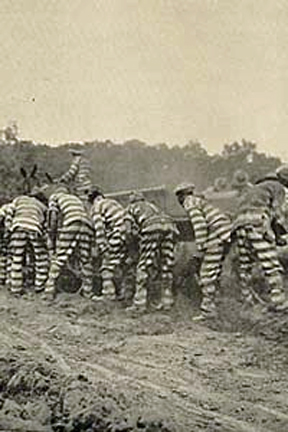
It begins and ends with the one thing that never seems to change, that signifies both life and repression, the sound of first one, rising to twelve men singing, wearing black and white prison suits, working on the distant Fork Falls highway.
The music will swell until at last it seems that the sound does not come from the twelve men on the gang, but from the earth itself, or the wide sky. It is music that causes the heart to broaden and the listener to grow cold with ecstasy and fright. Then slowly the music will sink down until at last there remains one lonely voice, then a great hoarse breath, the sun, the sound of the picks in the silence.
I loved imagining these larger than life characters, discovering the way they were interconnected and drawn to each other’s weakness, thereby exposing something about themselves. And figuring out the triangle of love, desire and revenge that existed between them, the inevitability of what will pass.
Author, Carson McCullers
Born Lula Carson Smith in Colombus, Carson McCullers (1917-1967) was an American novelist, short-story writer, playwright, essayist, and poet. Her first novel, The Heart Is a Lonely Hunter, explores the spiritual isolation of misfits and outcasts in a small town of the Southern United States. Her other novels have similar themes and most are set in the Deep South.
She wrote five novels, two plays, twenty short stories, more than two dozen nonfiction pieces, a book of children’s verse, a small number of poems, and an unfinished autobiography.
Carson McCullers is considered to be among the most significant American writers of the twentieth century. She is best known for her novels The Heart Is a Lonely Hunter (1940), The Ballad of the Sad Cafe (1951), Reflections in a Golden Eye (1941), and The Member of the Wedding (1946). At least four of her works have been made into films.
A new author to me, I became aware of this novel when I saw that it had won Best Novel in the Ngaio Marsh Awards 2023 (an award made for the best crime, mystery, or thriller novel written by a New Zealand citizen or resident, published in New Zealand during the previous year).
Life’s Turning Point
Emily, a middle aged children’s book illustrator, living alone in London, receives a call from her father’s neighbour Raewyn in Tawanui, New Zealand to say she ought to come, that her father Felix’s memory is deteriorating, the dementia much worse than when she last visited. The neighbour has been voluntarily helping him out, her son leases land off him, their families have been close for many years.
Emily is the youngest, her brother and sister though nearer have reasons why they can’t help. Not only does her father not recognise her when she first arrives, but the house is full of notes he has written to himself, an attempt to slow down the fast encroaching disease.
Notes To Self
He held up the envelope. ‘Something for you to look after.’ ‘What’s this?’ ‘Keep it for me, will you? Please, please, don’t open it until the event mentioned on the front. Until then, I’d rather you didn’t let anyone know of its existence. I will undoubtedly forget I’ve give it to you. I’m afraid I’m going doolally.’
Her return coincides with the 25th anniversary since Raewyn’s daughter Leah disappeared without a trace, last seen by Emily who was working in a petrol station where Leah bought something before going into the local bush on one of her conservation research trips, trying to save an endangered snail species from predators, but making a few enemies in the process. She was never seen again.
‘I envy you,’ she says.
She doesn’t. Why would she envy me? She’s Dr Leah Parata, five years older and infinitely, effortlessly superior. Everything about the woman screams energy and competence, even the way she’s twirling that turquoise beanie around her index finger. She’s tall, light on her feet, all geared up for back-country hiking in a black jacket – or maybe navy blue, as I’ll later tell the police.
The Slow Unravelling
Though she had never been close to her father, now that his short term memory is failing and his guard is slipping, she comes to realise there is much about her father she did not know, both in the way he cared and the terrible secrets he has kept.
Emily, I’m lost in the mist, I’m sliding into an abyss. You can’t begin to imagine the terror.’
Determined not to put him into care, as her siblings prefer, Emily decides to stay, reconnecting with her own past and begins to unravel what has been covered up and must decide what to do about it.
It’s an evocative read that brings the reader deep into the east coast North Island setting of a small town in the foothills of the bush covered Ruahine Mountain Range. It creates a strong sense of its locals, both those who stay and those who leave, all of whom have a history and connections, who harbour secrets, fear judgement and maintain strong loyalties, especially when outsiders come into the community.
It’s a slow unravelling of the mystery of Leah’s disappearance and the revelation of who a father really is to his daughter, as time runs out and he begins to forget not just who she is, but who he is himself and the important final task he has set himself.
Author, Charity Norman
Charity Norman was born in Kampala, Uganda, the seventh child of missionary parents, raised in Yorkshire and Birmingham. A barrister specialising in crime, family law and mediation, in 2002 she took a break from law and moved with her family to New Zealand and began a writing career.
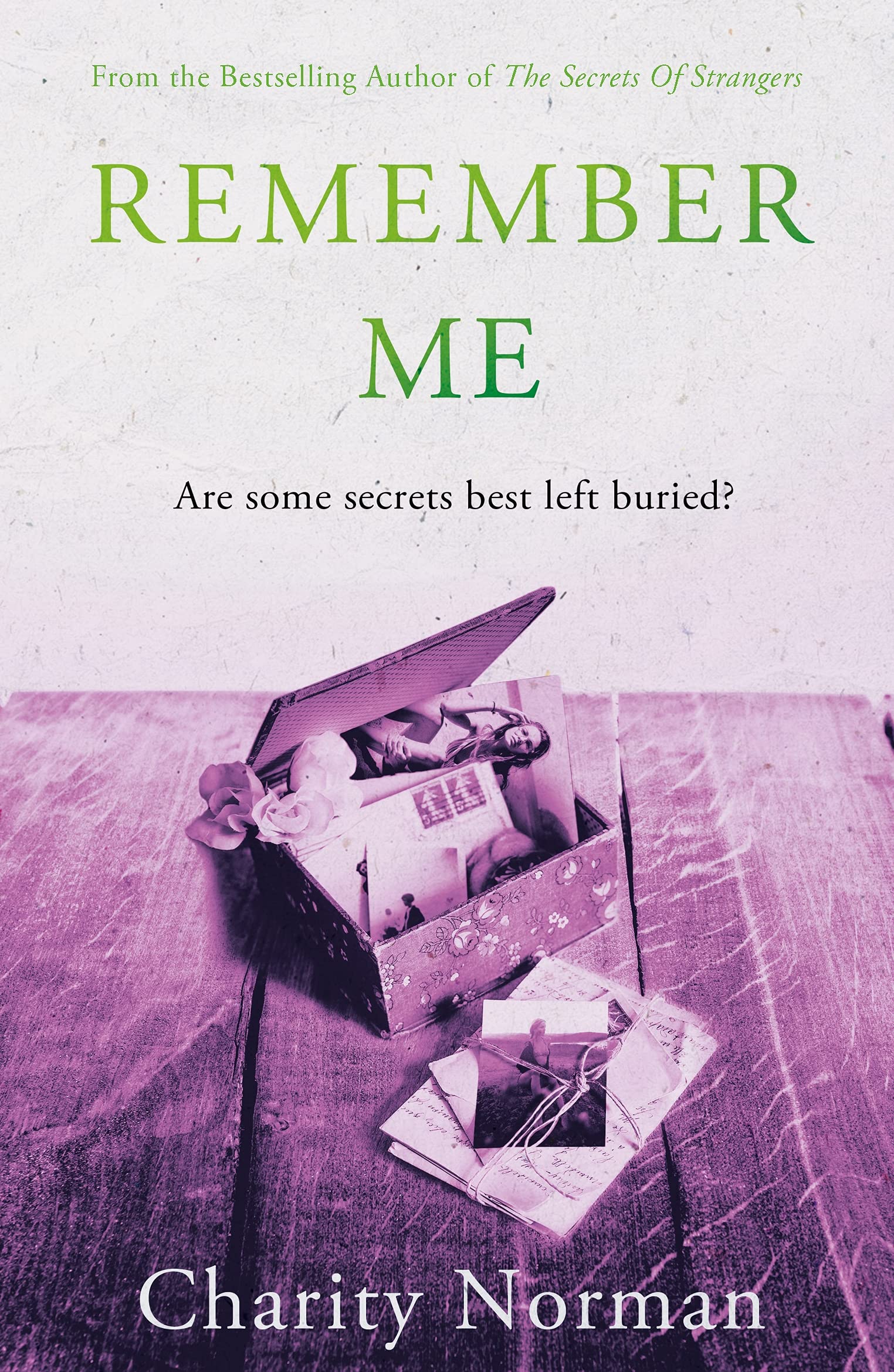
She has written seven novels, See You in September (2017) and The Secrets of Strangers (2020) were both shortlisted for the Ngaio Marsh Award for crime novel. The New Woman/The Secret Life of Luke Livingstone was selected for the BBC Radio 2 Book Club. Remember Me (2022) was a Ngaio Marsh Award winner.
How could I not love a miniature work of narrative nonfiction that the author quotes as having being in part inspired by the opening two lines of a poem from the 18th century English poet Alexander Pope.
The heroic rhyming couplets of Pope’sThe Rape of the Lock (1712) were my optional choice for the fifth form School Certificate exam many moons ago, a memorable chapter of my own literary journey. Kerninon quotes from his Why did I write? what sin to me unknown.
Why did I write? what sin to me unknown Dipp’d me in ink, my parents’, or my own?
Why and How I Write
A Respectable Occupation is a short nonfiction narrative about how and why the French author Julia Kerninon became a writer and the necessity of reading.
I came across this book in a photo on author Kerri ní Dochartaigh’s Substack g l i m m e r s where she wrote about her favourite books of the year for 2023.
Dochartaigh is the q u e e n of referencing creative nonfiction and nature writing in her own writing. Her second memoir Cacophony of Bone is full of literary references to little known, enticing contemporary works of narrative nonfiction.
Julia Kerninon had a unique upbringing in many ways, not least because she lived in multiple countries, Canada, England and France, but also because it is as if she were raised to become a writer, more of an expectation than a desire, so she pursues it in the same way many others might pursue a career that has been held in high esteem by their parents. Only writing isn’t like law, medicine or business.
I had an incredibly heavy electric typewriter my mother had lent me, and she had glued little labels with lowercase letters onto the keys because I found capitals confusing, and I wrote lots of stories about talking animals with my friend Pete.
The Legend of Writers
She recalls a kind of bohemian childhood and the first six years where she was an only child and the focus of her mother who she admired, and how her world tilted when they became a family of 4 not 3.
An identical monument of books had saved her as well, thirty years earlier, from a hopeless childhood, and so she spread her secret before me, she explained what she loved most in the world, in a gesture that was also a potlatch, an immeasurably generous offering, which I might be expected to return one day with an even greater gift.
Her mother had been born in a small fishing village, the eldest of four, the only girl, she had learned Russian at ten in boarding school and read everything she could lay her hands on. She passed on all she could to her daughter, who did everything in her power to satisfy her, to repair her, to recompense her for the enormous effort it must have cost her to make all this known to her first child.
I read books non-stop, in a panicked frenzy, trying to catch up on lost time, trying to catch up with my mother who seemed to know everything.
If I lost a manuscript and went crazy with panic, she would just shrug with no compassion at all and explain that in any case I would have to throw away or lose lots of books before writing a single good one. The best thing that can happen to you is a house fire.
At sixteen she had found a community of ‘old poets’ who met in an old biscuit factory in her hometown, a second education, after a house full of books.
At twenty she was reading Gertrude Stein‘s ill-conceived advice: If you don’t work hard when you are twenty, no one will love you when you are thirty.
She confronted her father and told him she wanted to take a gap year from her university studies. He agreed.
I thought that to be a writer, I had to train like an athlete, like a dancer, until it didn’t hurt anymore, until I didn’t ask myself any more questions. I wanted to possess that skill.
She takes herself off to Budapest for a year. Her life becomes a cycle of working hard, playing hard, then taking herself off somewhere for a year or six months to write.
She becomes a waitress in the summers, so she can write throughout the winter. She decides that to be poor is acceptable if she can be free instead and that she would learn to live alone, to be alone, to work alone, during those productive times of her life. That maybe these were not sacrifices at all, they were merely aspects of the life that she had created, that she loved.
Though she figures out how to live like this herself, she attributes this advice given to her by a much loved man:
the main thing is to have free time – you’ll obviously work out how to earn a crust somehow – but free time is something you’ll always have to scavenge, he told me earnestly.
It’s a wonderful little book, a digression of sorts, a reminder that the writing life comes in many shapes and forms, that the sharing of the various experiences can also provide inspiration to those who are on that path and that the pursuit of the occupation can also be a subject to write about, that people like reading about.
I write books because it’s good discipline, because I like sentences and I like putting things in order in a Word document. I like counting the words every night and I like finishing what I start.
I will leave you with one final quote from Julia Kerninon, one that applies as equally to reading as it does to writing.
I’ve been striding through literature like a field, where my footsteps flatten the grass for a moment, just long enough to see the path I’ve taken and the immensity of what is yet to be discovered.
Julia Kerninon is a French novelist from Brittany, whose first novel Buvard (2013) won the prestigious Prix Françoise Sagan in 2014.
Born in 1987, she holds a Ph.D in American Literature. She has been compared to French New Wave filmmaker Éric Rohmer for her sense of style and feeling for dialogue, and to Alain Resnais for the artful structure of her narratives. Most of all, her work stands out for its contagious joy, drive, exuberance.
Kerninon’s second novel, Le dernier amour d’Attila Kiss, won the Prix de la Closerie des Lilas in 2016, and her latest novel, My Devotion, won the 2018 Fénéon Literary Prize. She lives in Nantes.
Juliet Greenwood writes immersive historical fiction, often set in Wales or Cornwall around World War II and always featuring women protagonists, who rise to the challenge in difficult times. Her books are a tribute to those women, often unseen, who keep the world turning, even in the most terrible of times.
The Last Train from Paris is set in the period just before and during World War II, moving from Paris, to London to Cornwall and was inspired in part by stories that Juliet’s mother told her about this period.
It’s a story I’ve been longing to write, ever since I was a little girl and my Mum first told me about studying French near Paris on the day war broke out in 1939. I couldn’t imagine then what it must have been liketo have been a 17-year-old English girl, on her own, catching the train to Calais through a country preparing for war and, like Nora, finding herself on a ferry in the middle of the Channel, being stalked by a German submarine. It’s a story that’s haunted me, especially since we found the letters Mum exchanged with my Dad in London, and the scribbled note she sent him when she finally arrived in Dover.
Past Circumstances, Present Lives
1964: Iris is visiting her mother in St Mabon’s Cove, Cornwall, an escape from her life in London. She has been having nightmares of feeling trapped. Her mother has given her a box. She has also been looking at the objects in it that relate to her past. It is awakening something that has become more insistent. She knows she was adopted and that these items have something to do with her original family.
Over the course of the weekend, she will ask her mother questions and begin to learn about the past. And encounter a strange reporter is snooping around the village asking questions, a caller her mother wishes to ignore.
Studying in Paris, 1939
The historical narrative centres around two young women characters in 1939; Nora lives in London, where she has worked as a dish washer in a kitchen since she was sixteen. Sabine, a freelance journalist works in a boulangerie (bakery) in Paris, living with her husband Emil, also a journalist, who is focused on writing the novel that is going to change their lives.
The two women meet when Sabine gives a talk in London, after spending a month gaining work experience at the London Evening Standard newspaper. They maintain contact, writing each letters regularly.
Nora, frustrated with the lack of opportunity in her job, comes up with the idea of going to Paris to do a chef training course at Madame Godeaux’s Cuisine Française, seeing no chance of promotion in her current employment.
Sabine and Emil’s lives are a little precarious due to their reliance on Emil’s brother Albert to subsidise their rent and pending war has contributed to the family boot business suffering. When bad news arrives, Emil, as the second son, is summoned to return to Colmar, to take over from his brother.
When Nora arrives in Paris, she is disappointed to learn that Sabine has already left for Colmar, but she settles into her course and meets other girls, amid a growing wariness of the safety of the city. When one of the girls Heidi tells her the real reason she is in Paris, Nora begins to understand the danger that is not far away.
The novel follows the twin time periods, the present day 1964 where Iris hearing from her mother stories of the past that will lead towards her understanding her identity and circumstances that lead to where she is now and the crossing of paths of two women in the past whose connection resulted in lives being forever changed.
As the story gathers pace, secrets are revealed, dangers confronted and choices made in desperation have long term effects.
There are so many twists and turns in the story, it’s one that you won’t want to put down once started, bt to share any more would be to spoil the joy of discovering and the detective work we begin to do as readers, trying to puzzle out the missing pieces of the jigsaw of these three women’s lives.
A riveting and immersive read, that reminds us just how precarious life is, how stability can be shattered from one day to the next, yet offers hope in its demonstration of the acts of kindness some will make to help others, to make each other safe.
N.B. Thanks you to the author Juliet Greenwood, for providing me a copy of the book to read and review.
In her 2022 nobel prize lecture, I Will Write to Avenge My People, Annie Ernaux shares her motivation for writing in the particular way that is unique to her, telling us how it is at odds with the way she taught.
I had to break with ‘writing well’ and beautiful sentences – the very kind I taught my students to write – to root out, display and understand the rift running through me.
So it with this understanding, that I picked up Simple Passion (my review here) and now Shame, works of non-fiction that explore how certain pivotal events in her life affected her, by noticing her actions and reactions, how her own behaviour or perception changed.
The Origin of Shame
The book opens with a quote from Paul Auster‘s The Invention of Solitude:
Language is not truth.
It is the way we exist in the world.
The opening line begins with the pivotal event, shortly before her 12th birthday:
My father tried to kill my mother one Sunday in June, in the early afternoon.
and then describes everything she remembers about that day in a page of detail.
It was 15 June 1952. The first date I remember with unerring accuracy from my childhood. Before that, the days and dates inscribed on the blackboard and in my workbooks seemed just to drift by.
These words were written 45 years later, around 1997, when this book was first published in French, words that she tells the reader were impossible to write about, even in a personal diary, before then.
Silence Esteemed, The Seed of Unworthiness
I considered writing about it to be a forbidden act that would call for punishment. Not being able to write anything else afterwards for instance. (I felt a kind of relief just now when I saw that I could go on writing, that nothing terrible had happened). In fact, now that I have finally committed it to paper, I feel that it is an ordinary incident, far more common among families than I had originally thought. It may be that narrative, any kind of narrative, lends normality to people’s deeds, including the most dramatic ones.
Ernaux looks back at the origin of her experience of shame, awakened to it by certain moments, exploring the change(s) as she is made to feel them, in the many areas of her life within which it dwelt, sometimes just hidden behind a door, always at risk of being discovered by others.
From then on, that Sunday was like a veil that came between me and everything I did. I would play, I would read, I would behave normally but somehow I wasn’t there.
Beginning with that traumatic event, she observes the lingering effect it had on her, the strong presence it maintained, despite the fact that no one ever talked (to her) about it.
She revisits photos and news archives from that day, that time, trying to find something.
Writing an Ethnological Study of Self
While she rejects the idea of traditional therapy, it could be said that she has created her own form of it, by bringing her deepest shame to the page, as if in doing so, she is somehow sending it away, banishing it to readers.
I expect nothing from psychoanalysis or therapy, whose rudimentary conclusions became clear to me a long time ago – a domineering mother, a father whose submissiveness is shattered with a murderous gesture. To state it’s ‘childhood trauma’ or ‘that day the idols of childhood were knocked off their pedestal’ does nothing to explain a scene which could only be conveyed by the expression that came to me at the time: ‘gagner malheur‘, to breathe disaster. Here abstract speech fails to reach me.
This text she describes as carrying out an ethnological study of herself.
Like Simple Passion, written in short fragments, it is an engaging read that centres around the year 1952, living by the rules and codes of her world, which usually required unquestioning obedience, without any knowledge that there may be others.
The more I retrace this world of the past, the more terrified I am by its coherence and its strength. Yet I am sure I was perfectly happy there and could aspire to nothing better. For its laws were lost in the sweet, pervasive smells of food and wax polish floating upstairs, the distant shouts coming from the playground and the morning silence shattered by the tinkling of a piano – a girl practicing scales with her music teacher.
A brilliant depiction of a shattering of illusion and the origins of one girls perception of unworthiness.
As the book closes, and the year 1952 ends, her attention is caught by a film/book release.
In his novel, Fires on the Plain, published in 1952, the Japanese author Shōhei Ōoka writes: ‘All this may just be an illusion but all the same I cannot question the things I have experienced. Memories too belong in that category’.
Highly Recommended.
Author, Annie Ernaux
Born in 1940, Annie Ernaux (née Duchesne) was born in Lillebonne and grew up in Yvetot, Normandy, where her parents ran a café-grocery store in the spinning mill district.
She was educated at a private Catholic secondary school, encountering girls from more middle-class backgrounds, and experiencing shame of her working-class parents and milieu for the first time.
After a brief stint in Finchley, London, cleaning houses all morning and reading from the library all afternoon, she returned to France to study at the University of Rouen. Obtaining a degree in modern literature, she became a school teacher. From 1977 to 2000 she was a professor at the Centre National d’Enseignement par Correspondance.
Her books, in particular A Man’s Place (La Place) and A Woman’s Story (Une femme) have become contemporary classics in France. These books marked a break from the definitive novelistic form, she would continue teaching in order to never depend on commercial success.
One of France’s most respected authors, she has won multiple awards for her books, including the Prix Renaudot (2008) for The Years (Les Années) and the Marguerite Yourcenar prize (2017) for her entire body of work. The English translation of The Years (2019) was shortlisted for the Man Booker prize International and won the Warwick Prize for Women in Translation (2019).
The main themes threaded through her work over more than four decades are: the body and sexuality; intimate relationships; social inequality and the experience of changing class through education; time and memory; and the overarching question of how to write these life experiences.
The first book I read by Han Kang was Human Acts and it remains my favourite, a deeply affecting novel. Her novel The Vegetarian won the Booker International Prize 2016 and she has written another book translated into English, that I have not read The White Book (a lyrical, disquieting exploration of personal grief, written through the prism of the color white).
Of Language and Loss
In a classroom in Seoul, a young woman watches her Greek language teacher at the blackboard. She tries to speak but has lost her voice. Her teacher finds himself drawn to the silent woman, as day by day he is losing his sight.
The novel goes back in time, slowly uncovering their stories, occasionally revisiting the present, when they are in class, until finally near the end, there is a scene where they properly interact.
Greek Lessons was enjoyable, but it took me a while to figure out which characters (unnamed) were controlling the narrative at any one time, and that didn’t really become clear until quite a way into the book, when the Korean man who teaches Greek and who had lived in Germany for some time, began to interact with the mature woman student in his class, due to a minor accident and his need for help.
Yearning for the Unattainable
Both these characters are dealing with issues, the woman has just lost custody of her 6 year old child, due to an imbalance in power and wealth between the two parents. She was mute as a child and had a special relationship with language, which has lead to her unique desire to learn to read and write in Greek. She dwells in silence, sits and stares, or pounds the streets at night, walking off the frustration she is unable to express with words.
The Greek teacher is slowly losing his sight, a condition inherited from his father. He is aware that he needs to prepare himself for a future without sight.
He recalls a lost, unrequited love and the mistakes he made. His narrative is addressed to this woman who he knew from a young age. There are letters that recount his memories, as well as the discomfort of living in another culture and his desire to return to Korea without his parents. It took me a while to realise this was a different woman.
Ultimately I was a little disappointed, because it lacked the emotive drive that I had encountered before from Han Kang. There were flashes of it, but about halfway, I lost interest and stopped reading for a while. I am glad I persevered as I enjoyed the last 30% when the characters finally have a more intimate encounter and are brought out of themselves, but I was hoping for more, much earlier on.
I did wonder too if it might have been better for me to read the printed version, when the narrator is unclear, I can flick back and forth and take notes in a way that isn’t as easily done reading an ebook.
This perspective is supported by a recent study from the University of Valencia that found print reading could boost skills by six to eight times more than digital reading. I tend to agree that digital reading habits do not pay off nearly as much as print reading.
I picked it up now after reading that it was one of Tony’s Top 10 Reads of 2023 at Tony’s Reading List. He reads a ton of Japanese and Korean fiction, so this is a highly regarded accolade from him. I would recommend reading his review here for a more succinct account of the book. I see he read a library print version.
He finds echoes of The Vegetarian ‘with a protagonist turning her back on the world, unable to conform’ and ‘the poetic nature of The White Book, often slowing the reader down so they can reflect on what’s being said’ describing the reading experience as:
a slow-burning tale of wounded souls. Poignant and evocative, Greek Lessons has the writer making us feel her creations’ sadness, their every ache.
In a review for The Guardian, 11 Apr 2023,Em Strang acknowledged that the book wasn’t about characters or plot, so asked what was driving the craft, identifying a courageous risk the writer took.
One answer is that it’s language itself, and the dissolution of language, which is why in parts the narrative seems to almost dissolve.
If you’re interested in reading Greek Lessons, I do recommend reading the print version.
Author, Han Kang
Han Kang was born in 1970 in South Korea. A recipient of the Yi Sang Literary Award, the Today’s Young Artist Award, and the Manhae Prize for Literature, she is the author of The Vegetarian, winner of the International Booker Prize; Human Acts; and The White Book.
I came across this author as she is one of the many quoted in Kerri Ni Dochartaigh’sCacophony of Bone and it fits with that book, in that it is a kind of journal presented as short essays or fragments on writing, of thoughts that occur while reading other writers’ works.
The chapters have no headings but the book has a contents page that displays from five up to nine words of the first sentence of that fragment/chapter/essay. So the first one begins:
Without planning it, I wrote a diary of sorts…
Through a Window of Words, I See
A number of them begin with referencing the work of an author/artist whose sentences or themes or art provoke her reflections, in particular Elena Ferrante, Annie Ernaux, Marguerite Duras, Rachel Cusk, Marie NDiaye. In contemplating Ernaux’s The Possession, she wonders what it is she loved exactly, alighting on its urgency, the way the narrator is taken over by something – an aspect that is often present in Ferrante’s novels.
In The Lost Daughter, when Leda goes alone…
One she refers to often The Lost Daughter, the story of a woman whose daughters are absent for the summer, she takes a holiday, not thinking of her daughters,
Introspection, Projection, Finding Direction
This leads into Cain’s contemplation of the way humans project on to other things (like the sea) and people and how the act of writing encourages this. She asks why we project at all and delves into that occupation of mind with scalpel-like precision.
She reads the diaries of Virgina Woolf, which cause her to recall 30 years of diaries of an Aunt, one entry telling her that she ‘began to keep a diary because she saw that life had mystical qualities.’
Writing about authenticity gives rise to reflections on Jean Gent’s play, The Maids and Bong Joon-ho’s film Parasite and the effect of maintaining roles, when mixed classes live under the same roof.
To have to maintain those class roles always, especially if they are enforced with any kind of degradation, is a violation of the sacredness of one’s life, and a violence all of its own.
The Feline Interruptor
Much of it was written during the pandemic, a period that encouraged introspection and in which humans didn’t always have other humans for company, after reflecting on solitude and the need for human connection and company, other creatures gain notoriety eliciting a chapter that begins:
As I write this my cat Trout whines loudly
It makes me wonder what phrase from this book Kerri Ni Dochartaigh made it into her own; I admit I didn’t have quite the same response on finishing it.
“Astounding…I was distraught when I finished.”
I found it more of an intriguing insight into the varied way writers analyse and respond to each other’s work. I related more to Aysegül Savas‘s blurb.
“Like light from a candle in the evening; intimate, pleasurable, and full of wonder.”
Rather than look at plot, character, dialogue or conflict, these reflections she describes as paying attention to the ‘accessories’, like animals, phrases that create a feeling of relaxation, pondering friendship, or the self. Even plants.
It’s something like finding meaning in other works, that intersects with where the reader/writer is on their own journey, whether that is life or a fictional landscape they are trying to create, looking for lessons that might lie between the lines of others who have gone before, whose words have elicited a response in that reader.
And we, the reader of this book, look through the window of another reader looking through the window of a writer looking at the world.
Author, Amina Cain
Amina Memory Cain is the author of the novel Indelicacy, a New York Times Editors’ Choice and staff pick at the Paris Review, finalist for the Rathbones Folio Prize and the Centre for Fiction’s First Novel Prize and longlisted for the Joyce Carol Oates Prize.
She is also the author of two collections of short stories. Her writing has appeared in Granta, the Paris ReviewDaily and other places.
This was a heart-racing, thrilling and moving read that begins mysteriously as a woman returns to her home country (Argentina) following some kind of event 20 years earlier that we don’t fully learn of until almost halfway into the novel.
Though she lived most of her early life there, her physical appearance is so radically different, no one recognises her – yet.
We are made aware, though it takes a while to reveal, that she is anxious about the possibility of seeing someone connected to that past event, that sent her into self-imposed exile.
I should have said no, that I couldn’t go, that it would have been impossible for me to make the trip. Whatever excuse. But I didn’t say anything. Instead I made excuses to myself, over and over, as to why, even though I should’ve said no, I agreed in the end. The abyss calls to you. Sometimes you don’t even feel its pull. There are those who are drawn to it like a magnet. Who peer over the edge and feel a desire to jump. I’m one of those people. Capable of plunging headlong into the abyss to feel – finally – free. Even if it’s a useless freedom, a freedom that has no future. Free only for the brief instant that the fall lasts.
As the mystery unravels, the tension mounts. Each new chapter begins with part of the backstory, then stops, this is used as a kind of repetition, as the narrator acquires the courage to reveal the full extent of the backstory.
The constant repeating of this text adds to the volume of its impact on the reader and the sense of suspense and intrigue.
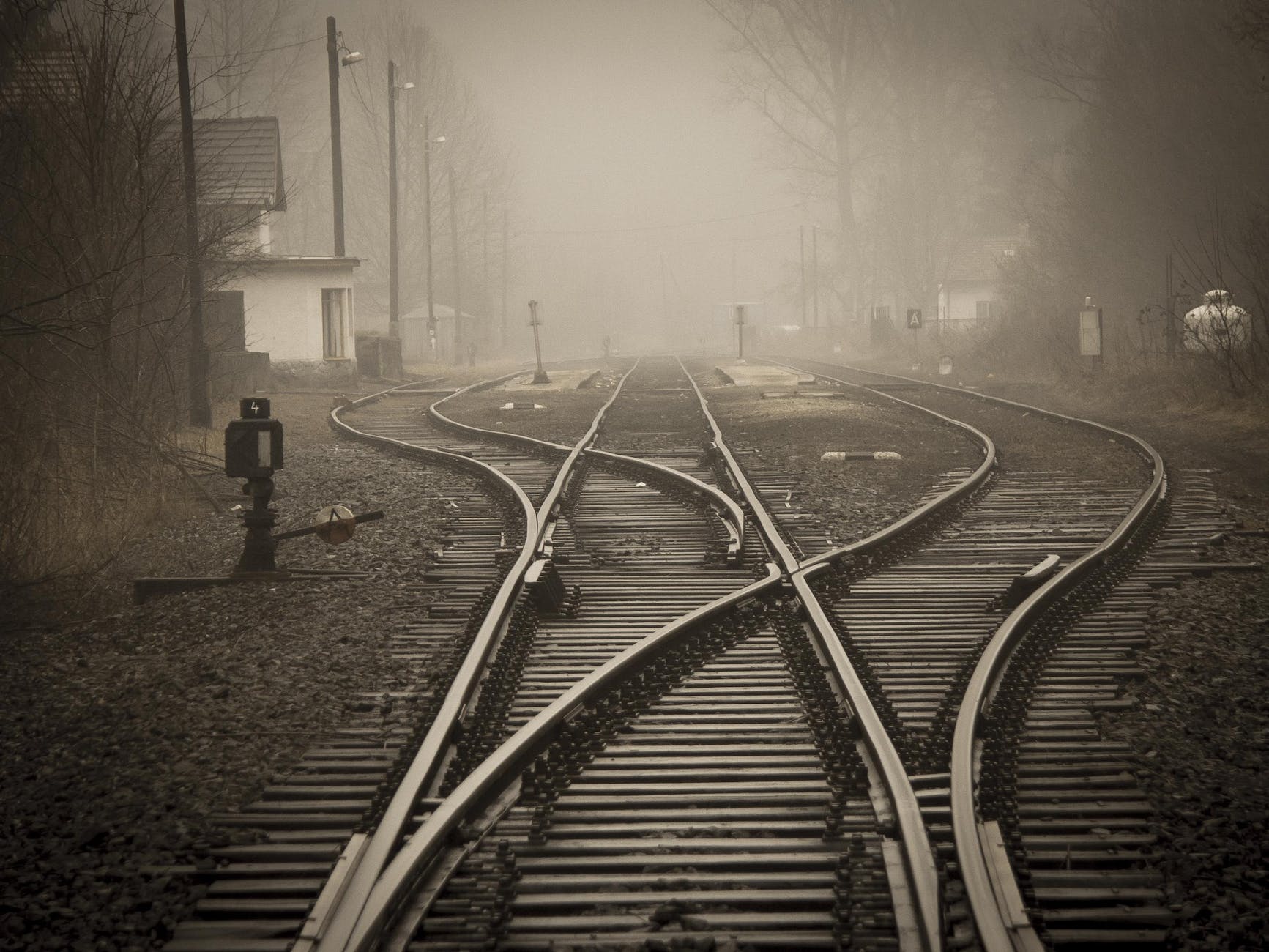
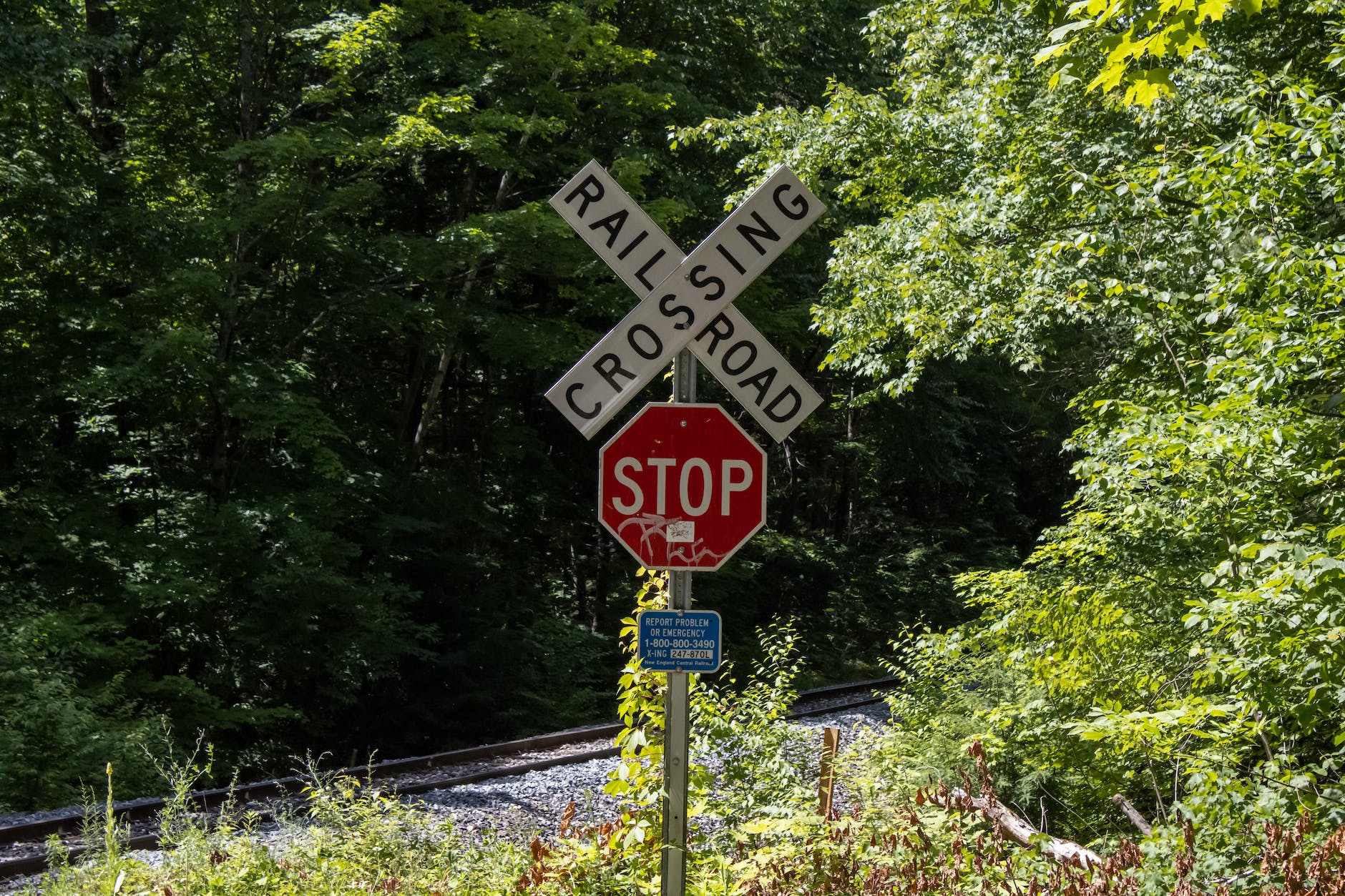
The barrier arm was down. She stopped, behind two other cars. The alarm bell rang out through the afternoon silence. The red lights below the railway crossing sign blinked off and on. The lowered arm, the alarm bell, and the red lights all indicated that a train was coming.
As these events of the past some into clarity, in the present day this woman is booking into a motel, arranging to visit the school that she will consider for accreditation, we encounter the mndane reason for her visit and the extraordinary motivation behind it.
Simultaneously we follow a small sub-plot drama featuring a bat. And a theme of entrapment. The story of the bat corresponds to our protagonists state of mind and how it evolves over the course of the novel. Once again she must make a life or death decision.
I’m still trapped. I must now decide whether to go out and face the task at hand or stay here and wait for the poison to kill me or the smoke to force me out.
Ultimately, it explores many themes, in a profound way, of motherhood, of domination, community judgement, condemnation and gas-lighting, of the effect of undermining a person’s self-worth, of twin aspects of abandonment, of why it might be deemed necessary and the effect it has on the one abandoned.
Do I deserve to explain why? What I mean is, do I have that right? The right to unburden myself and expect someone to listen?
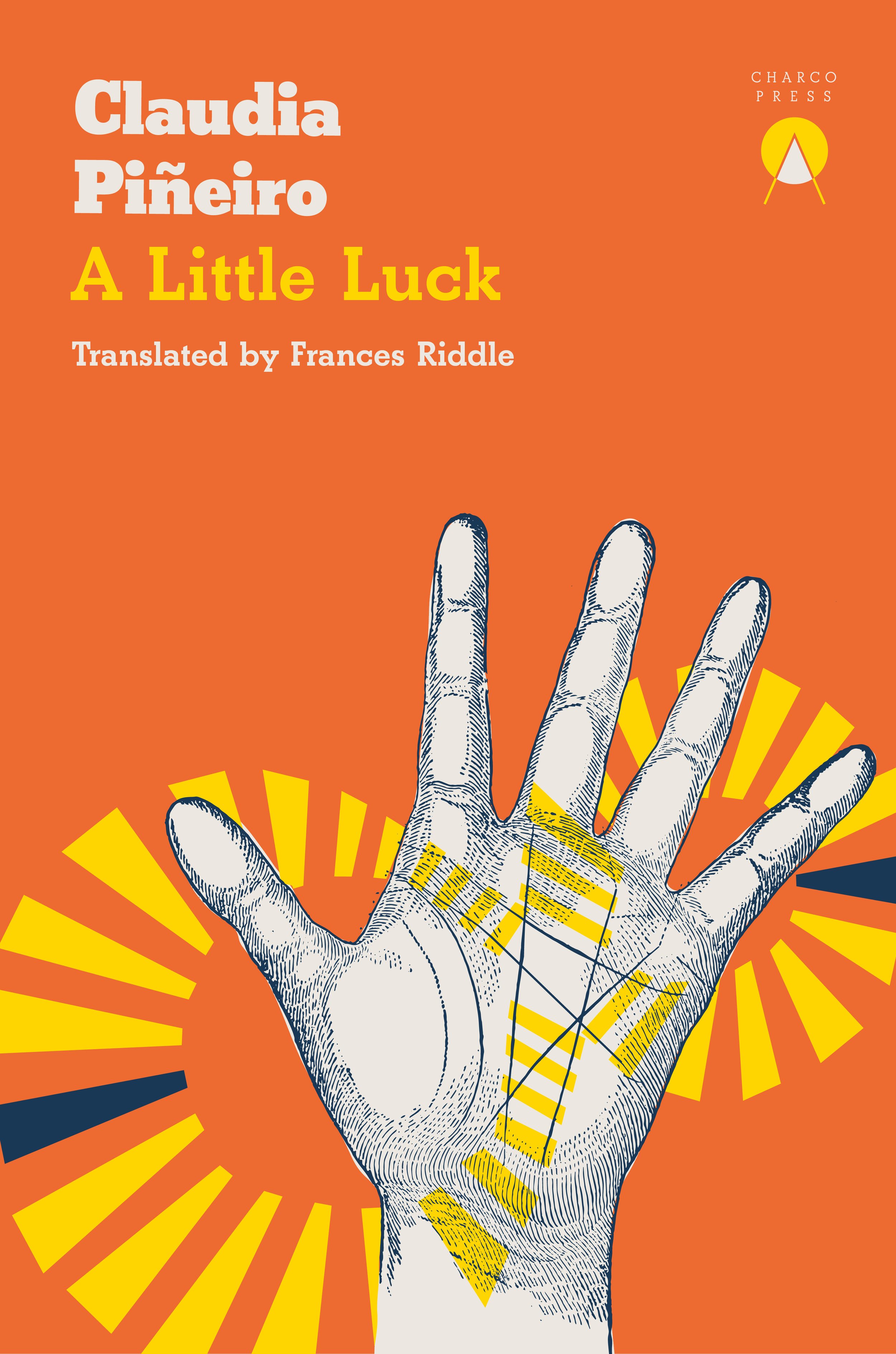
Claudia Piñeiro’s Elena Knows (see my review here) I found curious; there is a similar feeling of mysteriousness as the author withholds telling all, drawing the reader in – however, in A Little Luck, she plummets the mind of the protagonist, letting us into her thoughts, showing us the events and enabling the reader to witness the reactions – allowing us to see the patterns, those all too familiar ways of subjugating a person, of the desire to blame, the withdrawal, the disappearance.
A Little Luck is also a story of healing, of kindness and finding the one person who puts the right thing in one’s way that will lead to release. In this story, a kind man finds the right stories that assist a woman to express and release suppressed emotions. And sends her on a trip.
I began to list the questions that I’d asked myself while reading Alice Munro’s story, questions posed in her words. ‘Is it true that the pain will become chronic? Is it true that it will be permanent but not constant, that I won’t die from the pain? Is it true that someday I won’t feel it every minute, even though I won’t spend many days without it?
Brilliantly conceived, after a few chapters, I absolutely could not put it down, I highlighted so many passages, and it had a surprising though satisfying, tear-jerking conclusion, definitely one of my top fiction reads of 2023. I read this in October, but found it hard to describe the intense reading experience, but I’m sharing my thoughts now, before my end of year review, where it will feature!
Highly Recommended, another fabulous title from Charco Press!
Claudia Piñeiro, Author
As an author and scriptwriter for television, Claudia Piñeiro has won numerous national and international prizes, among them the renowned German LiBeraturpreis for Elena Knows and the prestigious Sor Juana Inés de la Cruz Prize for Las grietas de Jara (A crack in the wall).
She is best known for her crime novels which are bestsellers in Argentina, Latin American and around the world. Many of her novels have been adapted for the big screen. According to the prestigious newspaper La Nación, Claudia Piñeiro is the third most translated Argentinean author, after Borges and Cortázar.
More recently, Piñeiro has become a very active figure in the fight for the legalisation of abortion in Argentina and for the legal recognition of writers as workers. Her fiction (as shown with Elena Knows) is stemmed in the detective novel but has recently turned increasingly political and ideologically committed, reflecting the active role she plays in the fight for the legalisation of abortion in Argentina and Latin America, and for the recognition of employment rights for writers..









 Word by Word