Everything Inside by Edwidge Danticat (2019)

Everything Inside is a collection of short stories by Haitian author Edwidge Danticat.

Little Haiti in Miami, Florida

Edwidge Danticat Literary Fiction Short StoriesHaving left Haiti when she was twelve years to live in America, it’s not surprising that her stories involve a cast of characters with connections to her home country and a neighbourhood in Miami Dade County, Florida referred to as ‘Little Haiti’ after a Haitian pro-democracy activist wrote to a Miami newspaper referring to his new home as “Little Port-au-Prince” which was shortened and known thereafter as ‘Little Haiti’.

Many Haitians fled their country in the sixties and seventies, to escape the brutal dictatorship of François “Papa Doc” Duvalier.

The stories concern those who left, those who stayed, those who visited one place or another for a short time, those who belong, those who are trying to find their place, those who have found success by honest means and those who resorted to taking advantage of the vulnerable.

The Immigrant Dilemma, Stay or Return?

When the dictatorship in Haiti ended, so did a lot of marriages. This tension and divide is also explored within the stories.

There was a hard line between those who wanted to stay in America and others who wanted to go back and rebuild the country.

Exploring the connections that bind people together and the events that force them apart, they could be tales of any number of immigrant individuals or families. The clash of cultures shifts and evolves as immigrants find themselves seen as the other, if they stay too long and get too used to life elsewhere.

Character Driven Narratives

Everything Inside Hope Edwidge Danticat short stories Haiti

Photo by Sudipta Mondal on Pexels.com

There are eight contemplative, character driven stories that are slightly melancholic, that all represent some change in the status quo, but that each provide the prospect of hope.

This is the third book I’ve read by Edwidge Danticat and I enjoy the way she fuses the characters of her origin country with present day life in America and the intersection of the two.

It maps the slow beginnings of a divide between the generations, grandparents who have never met their grandchildren, business people trying to entice successful Haitians back to their motherland and the increasing disconnect between the two, as their worlds grow further apart. And the vulnerability of women who put their trust in another.

The stories were published over a twelve year period, so pick up on historical events that create turning points in her stories, the earthquake of 2010, the actions of foreign aid workers, and the elevated perception of North America.

Her debut novel Breath, Eyes, Memory (1994) a story of four generations of women was excellent, as was the gripping memoir Brother, I’m Dying (2007) which focuses on the relationship between her father and her Uncle Joseph.

Further Reading

NY Times : Haitians May Leave Their Country, but It Never Leaves Them by Aminatta Forna

Review NPR: Coming to terms with loss and grief in ‘Everything Inside’ by Michael Schaub

N.B. This book was an ARC (Advance Reader Copy) kindly provided by the publisher via Netgalley.

Top Reads of 2020

In 2020 I read more books than usual, as a result of the diminished social and leisure life we’ve all had to rein in. That extra home time I gifted to my reading and writing activities and was aptly rewarded.

Books That Soothe the Soul

It was a slow start as the year began, still in the terrible lull that followed the death of my teenage daughter in August 2019. I couldn’t read and when I tried it wasn’t easy to find the right match. The few books that soothed me were more of a spiritual nature, Julie Ryan’s Angelic Attendants Felicity Warner’s Sacred Oils, and The Grief Recovery Handbook; though I wasn’t able to express here how they sustained me, they just did.

Confinement in France

Then in March we were ordered to stay home. In France, it is known as le confinement. For two months I wasn’t able to work and we were only allowed to leave home for an hour a day for exercise within a 1 kilometre radius of home and to carry a printed attestation each time we left home. Ironically, while this was the beginning of a difficult period for many, it was the beginning of a return to a new reality and routine for me. The daily walk, the immense gratitude, the arrival of spring, noticed and appreciated in a new way. I was finding a way back to balance, re-centering.

I wrote a series of blog posts entitled Reading Lists for Total Confinement, which included my:
Alberto Villoldo How Shamans Dream the World into BeingTop Five Spiritual Well Being Reads, Top Five Nature Inspired Reads, Top Five Uplifting Reads,

Top Five Translated FictionTop Five Memoirs and the Top Five books I was intending to read next.

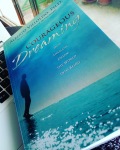
It was a tipping point and re-entry back into reading, and one title that I slow-read and drip-fed myself, no more than a chapter a day, during those two months, that was like an uplifting, therapeutic intervention was Cuban-American Alberto Villoldo’s Courageous Dreaming.

Our situation may be a difficult one, but it’s only a nightmare if we choose to make that our reality. By taking the facts and writing a new story with them, we can script a different experience of reality.

He reminds us that we are all living within our own stories, that they can either stay stuck in the past and put on repeat, or we can rewrite them and courageously imagine or dream a better version of ourselves and of our future. Never was there a better time to refresh this knowledge and to recall the benefit of expressing one’s creativity.

“Curing is the elimination of symptoms. Healing is a journey on which you discover the cause of your ailment and make fundamental life changes from diet to belief systems that will create health.”

Travelling the World From Home

And so my reading mojo returned and from the comfort of home, I rested in the present, resisted the pull of other media and travelled the world through literature, reading a little over a book a week, by authors from 34 countries, a third of them in translation.

Continuing to favour the imagination in storytelling, 70% of the books I read were fiction, however I read more non-fiction this year than ever and some of my favourite reads came from this genre.

Here are my Top Fiction and Non-Fiction Reads, as well as my annual ‘One Outstanding Read of the Year’.

Outstanding Read of the Year
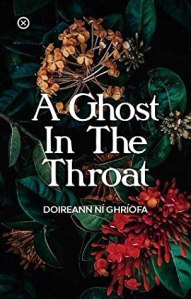
Best Non Fiction Read of 2020A Ghost in the Throat, Doireann Ní Ghríofa (Ireland) – I read so many deserving, excellent works of fiction that were also outstanding, so I revisited this book to remind me why it deserves to be elevated above the rest.

It may be due to my own journey, perhaps there is something about this book that validates my desire to write something fragmented and unconventional, something that isn’t easily categorised.

This work of creative nonfiction is as personal as it is universal, it uses a poem and the author’s passion for it, to bring together various threads of her own life, both before having a family, while on the threshold of birth, being in proximity to death, experiencing love and daring to author a work that bursts beyond genre, challenges academia and waves the flag for women in all her multifaceted complexity.  Language, poetry, babies, dark nights of the soul, creativity, writing, Irish life, the burying and rise of women authors working in partnership.

Much of this book was written sitting inside her car, parked up after dropping her children at school. Forget excuses about finding time to write, or a room of one’s own, Ni Ghriofa deserves a prize for perseverance, achievement, breaking all convention and writing an utterly engaging 21st century kick-ass, feminist oeuvre. Just brilliant. Read it people!

Top Fiction Reads of 2020

Here, in no particular order is the best of the fiction I read in 2020, reading experiences that have stayed with me, that I continue to highly recommend to you all, just click on a title to read my original review:

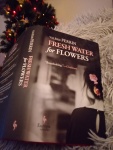
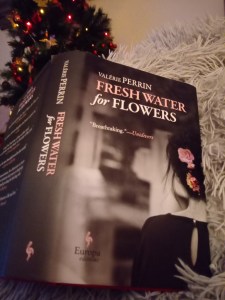
Fresh Water for Flowers, Valérie Perrin (France) tr. Hildegarde Serle – this was the last book I read in 2020 and a fitting way to end the year, it is a beautiful translation of what was a bestseller in France in 2018, about a young woman who becomes a train level-crossing keeper, then cemetery-keeper. It a story of love, loss and redemption told through an extensive cast of characters, both living and not, demonstrating the interconnectivity of lives, viewed through a compassionate lens. Evocative, lyrical, character lead and quintessentially French.

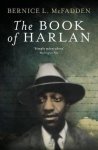
The Book of Harlan, Bernice McFadden (US) – this work of historical fiction, in part inspired by the author’s own family was hugely memorable and one of the first in 2020 that really stood out for me. It was also the book that lead me into a bit of Harlem Renaissance period of reading which uncovered some excellent older reads that I adored. It follows the life of Harlan from his early years with his grandparents to Harlem and the music scene, to Paris and Germany, and while reading I was accompanied by the music of that era which McFadden incorporates brilliantly into the narrative and had me pausing, listening, watching and learning all the way through. Absolutely brilliant.

Quicksand, Nella Larsen (US) (semi-autobiographical) – while the reading world in 2020 was devouring Brit Bennett’s The Vanishing Half, a contemporary exploration of the American history of passing, I opted to read Nella Larsen’s classic novellas Passing (1929) and Quicksand (1928). I enjoyed Passing, however the semi-autobiographical Quicksand was equally brilliant. It follows the life of a young woman, a third culture kid of mixed race parentage with a white mother from Denmark and a black father from the Danish West Indies (as were Nella’s parents), foreigners, immigrants, a child growing up with little connection to either culture, who has trouble settling in to the society she is born into. Brilliantly written and observed, I highly recommend it.

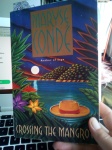
Crossing the Mangrove, Maryse Condé (Guadeloupe) tr. Richard Philcox (French) – I love reading Condé and managed another two this year including I, Tituba Black Witch of Salem however Crossing the Mangrove was a stand out and had me shaking my head in admiration of her talent. Here she returns to a Caribbean setting, where the death and subsequent funeral of an outsider brings together a number of characters, each of whom narrate a chapter, revealing the multilayered diversity of island society. Though the man’s death is a mystery, it is is more of a ‘noir‘ novel, no tidy resolution, rather an insightful, penetrative look at the folly of life. Brilliant, one I want to reread.

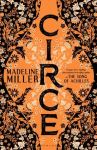
Circe, Madeline Miller (US) – I’d wanted to read this for a while and finally did so earlier in the year and loved it. With Circe, Miller brings a refreshing, feminist perspective to an ancient Greek myth, that reconsiders the motivations of the jealous nymph, allowing her to evolve and grow into the fully fledged, capable, learned, wise woman self that she becomes while living in exile. Rather than the evil sorceress men have historically depicted her as, here we meet a more nuanced, balanced and complex character. Brilliant.

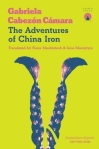
The Adventures of China Iron, Gabriela Cabezón Cámara (Argentina), tr. Fiona Mackintosh, Iona Macintyre (Spanish) – short listed for the International Booker Prize 2020 this was one of the most humorous books I’ve read in a while, a contemporary retelling of a well-known Argentinian gaucho poem Martin Fierro by José Hernández; that title a lament for a disappearing way of life, whereas this is an elegy to what could have been, told from the perspective of his little mentioned wife, a tale of adventure, emancipation, sexual freedom and liberation. It didn’t win, but it remains a firm favourite of the year for me.

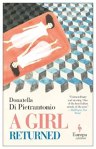
A Girl Returned, Donatella Di Pietrantonio (Italy), tr. Ann Goldstein – this novella was an unexpected surprise, I read four books translated from Italian this year, Elena Ferrante’s latest The Lying Life of Adults and her debut Troubling Love, both of which were excellent, but it was this novella that has stayed in my mind. A thirteen year old girl is returned to the family she was born to without being told why. Determined to unravel the cause of abandonment by both sets of parents, at birth by her biological family and now by her adoptive family, the book explores the changes that happen as she detaches from one and becomes entwined in the other. It’s brilliantly depicted, thought provoking and insightful.

Auē, Becky Manawatu (NZ) – last year I read the winner of the NZ Book Award This Mortal Boy by Fiona Kidman and this year when Auē took the prize, I bought a copy immediately. Very different books, both explore a darker aspect of New Zealand life. Aue has you on the edge of the seat, following the lives of an eight year old boy, his older brother and a couple they are connected to. The characters are unforgettable, portrayed with empathy without indulging sentimentality. The proximity of vulnerability to brutality is intense and unforgettable. You won’t read anything else like this in 2020. Extraordinary literary fiction from elsewhere. Go on. Read it.

Top Non-Fiction Reads of 2020

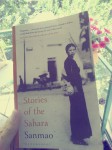
Stories of the Sahara, Sanmao (Taiwan) tr. Mike Fu (Chinese) – incredible that it has taken 40 years for this title to come to our attention and be translated. This was definitely the funniest, sometimes scariest and surprising read of the year. Sanmao wasn’t exactly a hippy, she was one of a kind, a woman way ahead of her time and outside of her culture, travelling with her Spanish boyfriend in the 70’s with the intention to live in the Spanish Sahara like a local, thanks to a deep passion for the landscape and curiosity for its people. The situations she finds herself in, the people she meets and the tender love affair with the man who indulges her whims, was a close runner up for outstanding read of the year.

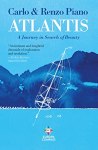
Atlantis, A Journey in Search of Beauty, Carlo & Renzo Piano (Italy), tr. Will Schutt – another from Italy, this is a father and son adventure, a journalist and an architect who take an eight month trip by boat around the world, visiting the various sites of Renzo Piano’s architectural constructions. I requested it on a whim and found it both educational, entertaining, philosophical and surprisingly riveting. This now 80 year old father is an inspiration and his son an engaging, provocative narrator. It left me wishing that more familial partnerships could come together to capture these kind of conversations, that have such universal appeal.

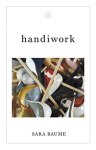
Handiwork, Sara Baume (Ireland) – an author whose name I was familiar with, I read Handiwork after finding it was published by Tramp Press, who published A Ghost in the Throat. I couldn’t believe my luck to have come across another title that blurs the boundaries of genre. Handiwork is an artwork, a lyrical account of a year spent sculpting and painting small birds for an installation. Her morning she spends writing, her afternoons making stuff with her hands, just her Dad and Grandad did before her. An eclectic collage of thoughts, observations, memories and quotes from various masters, it was a total pleasure to read.

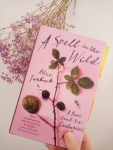
A Spell in the Wild, A Year & Six Centuries of Magic, Alice Tarbuck (Scotland) – after reading two novels about Tituba, the black slave woman accused of witchcraft, I decided to read a book with a contemporary view of witchcraft, now that we are safely beyond the era when admitting to being partial to the practice of ritual outside of acceptable religion could get you hanged. And I stumbled across the incredibly knowledgeable author Dr Alice Tarbuck, who puts the formality of her PhD aside to share her monthly rituals, spells and historical anecdotes from a vast canon of literature that portrayed women as something wicked and powerful that needed to be suppressed if not put down. Her six centuries of magic is quite the opposite, unputdownable.

The Warmth of Other Suns, Irene Wilkerson (US) – the product of years of research, and an intimate relationship with three people, from three different states and decades through whom Wilkerson recounts history, this is a factual account of the little acknowledged great migration of African Americans out of the Jim Crow Southern states of America, beginning just after WW1 in 1915, continuing until the 1970’s. It’s a long continuous diaspora that had a significant impact on families, their culture and connections between their new home and old and a fascinating insight into black American history told in a compelling way.

* * * * * * *

And there it is, a summary of the most memorable books I read in 2020, thank you for your patience if you managed to read this far! Do you have a few absolute favourite reads of the year to share? Did you read any of those I mention here? Let me know in the comments below.


Fresh Water for Flowers by Valérie Perrin tr.Hildegarde Serle

“If life is but a passage, let us at least scatter flowers on that passage.”

cemetery keeper changer l'eau des fleursWhat a refreshing read to end 2020 with, a novel of interwoven characters and connections, threaded throughout the life of Violette Touissant, given up at birth.

When I was born I didn’t even cry. So I was put aside, like a 2.67kg parcel with no stamp, no addressee, while the administrative forms were filled in, declaring my departure prior to my arrival.
Stillborn. A child without life and without a surname.

We first meet Violetteas an adult. Having been a level-crossing keeper she is now a cemetery keeper. She introduces her neighbours and their characteristics in common, they are an intriguing lot, who we are going to get to know better.

Those neighbours she lives among are the dead, while she lives in the heaven of the living, at the mid-range of life having been through plenty of pain and suffering to get there. Now rewarded, she has found her place, her people and those who deserve to be part of it, have found her too.

My present life is a present from heaven. As I say to myself every morning, when I open my eyes.
I have been very unhappy, destroyed even. Nonexistent. Drained. I was like my closest neighbours, but worse. My vital functions were functioning, but without me inside them.

Level Crossing Keeper

The 94 short chapters all begin with a thought provoking quote, the narrative seesaws back and forth to moments in that life, sometimes revisiting the same moments, but seeing them from the point of view of Violette, her husband Philippe and the many other pairs of characters we encounter, through their connection to those dead neighbours of hers.

Since taking on the job of cemetery keeper, after meeting one of the most life-changing characters, Sasha, she has been recording details of the events that take place in the cemetery, making diary-like entries, references that she is able to refer back to when people stop by to have a cup of tea or something stronger, looking for the resting place of someone important to them, not always family, but people with connections that weren’t always able to be fully expressed in life.

Death never takes a break. It knows neither summer holidays, not public holidays, nor dentist appointments…It’s there, everywhere, all the time. No one really thinks about it, or they’d go mad. It’s like a dog that’s forever weaving around our legs, but whose presence we only notice when it bites us. Or worse, bites a loved one.

The narrative returns to her early adult life, at 18, already married, she discovers the 821 page novel L’Oeuvre de Dieu, la part du Diable a French translation of John Irving’s The Cider House Rules, a book known to open minds and hearts, eliciting compassion for a set of circumstances no one really thinks about, making the reader look at the world in a slightly different way.

Which is perhaps what Fresh Water For Flowers does, taking characters in unconventional circumstances and sharing their stories, watching how those stories shock, enlighten, end and change lives.

Violette too will have to deal with death. A death that develops into the more significant mystery at the core of the novel. And with it, innumerable twists and turns, suspicions and revelations.

Life is but an endless losing of all that one loves.

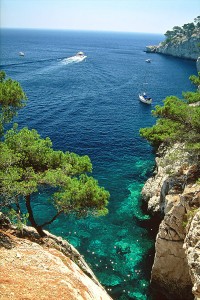
Every summer she stays in the chalet of her friend Célia, in the calanque of Sormiou, Marseille. A place of refuge and rejevenation, that Perrin too brings alive, eliciting the recovery and rehabilitation this nature-protected part of the Mediterranean offers humanity.

It’s a gentle novel because even though there are moments of tragedy, they are seen through the eyes of the most empathetic character, so even the most villainous, unlikable characters are given a generous, understanding hearing.

The details of the life of a keeper, whether it’s the level crossing or the cemetery are so realistic, evocative and visual, it wouldn’t surprise me to hear that this book may be turned into a series; it’s too long for a movie and with so many interconnecting lives, it  feels like it could have continued on, just as life and death does, always someone arriving, someone departing, and someone there to soothe the way through those transitions.

It’s not a book I have heard anything about until now, but it’s going on my list of favourites for 2020 and is one I highly recommend.

Not a day goes by without us thinking of you.

N.B. Thank you to Europa Editions for sending me a copy for review.

The Death of Vivek Oji by Akwaeke Emezi

Emezi’s Freshwater was an incredible read and a real insight into a cultural perspective, taking you inside it and experiencing it, so I was very much looking forward to this next work.

Akwaeke Emezi trans literatureThough we learn that Vivek is dead from the cover and in the opening pages, the novel is in a sense a mystery as the details around the death are not revealed until the end. The novel is set in Nigeria, in a community of mostly mixed race families.
The narrative is multi perspective, told through the voice of Vivek, his cousin and close friend Osita and a third-person omniscient narrator. The first chapter is one sentence:

They burned down the market on the day Vivek Oji died.

The market burning down provides a beginning, a middle and an ending, it features in exactly those places, here as a marker or a clue, in the middle as an observation by a previously unknown character whose wife runs a stall in the middle of the market and at the end, when Vivek’s final day is shared.

The first half of the book we get to know the families, Chika, his brother Ekene, married to Mary, then later Chika’s Indian wife Kavita, mother to Vivek. The narrative tells the story of their marriage, of how they try to raise their only child. Kavita is part of a group of women referred to as the Nigerwives.

She had learned to cook Nigerian food from her friends – a group of women, foreign like her, who were married to Nigerian men and were aunties to each other’s children. They belonged to an organisation called Nigerwives, which helped them assimilate into these new lives so far away from the countries they’d come from. They weren’t wealthy expats, at least not the ones we knew. They didn’t come to work for oil companies; they simply came for their husbands, for their families.

The Death of Vivek Oji Awaeke Emezi

Photo by Taryn Elliott on Pexels.com

Through the friendships of the mothers, Osita and Vivek become friends with JuJu and Elisabeth. Among themselves, away from school or family and outside of society, they are already a group who is different, and with each other, they are accepting, able to express themselves, though they have each inherited varying degrees of conditioning from their mixed parentage.

Vivek is sent away to school, about which we learn very little, we know he is unhappy and bears scars.

The narrative explores the development of their friendships and sexuality, interspersed with the present day obsession of Kavita, determined to find out how her son’s body mysteriously turned up on their front veranda wrapped in a fabric.

Chika didn’t want to ask any question. Kavita, though, was made of nothing but questions, hungry questions bending her into a shape that was starving for answers.

Maybe it was intentional, but in creating the element of mystery, much about the character of Vivek is held back, perhaps to recreate the effect of what the parent might have experienced, but for me personally, I found it disappointing that the character of Vivek was compromised and an opportunity missed to inhabit that character more.

The deliberate obscuring heightens the effect of the reveal, but sacrifices the opportunity to share something more profound with readers. It’s difficult to develop empathy for a character, when so much is held back and when the potential is clearly there.

That was why they’d kept it from their parents, to protect Vivek from those who didn’t understand him. They barely understood him themselves, but they loved him, and that had been enough.

It’s a novel of secrets and lies and the debate of truth versus respect, in that belief that the two can’t coexist. And the safety inherent within a fear of judgement by some, versus the danger of a lack of fear in others. A theme that is likely to continue to be explored by Emezi.

“Look,” she said, “eventually all secrets come out. It’s just a matter of time. And the longer it takes, the worse it is in the end.”

As I read, I can feel what I am bringing to the narrative, where I want the author to go and by the end they do go some of the way, but not all. And that is on me, it is asking an already courageous writer to go further, to places that us readers, like sports fans, might never go ourselves, but from the benches we shout in encouragement. So I leave the last words to the author, as a reminder to us all of what this is.

I had to remember why I was making this work. I wasn’t making it for institutional validation. I was making this work for specific people — all the people living in these realities feeling lonely and wanting to die because they’re like, this world thinks I’m crazy and I don’t belong here. All the little trans babies who are just like, there is no world in which my parents will love me and accept me. There’s a mission to all of this. Akwaeke Emezi

Further Reading

My review of Freshwater by Awaeke Emezi

N.B. This book was an ARC (advance reader copy) kindly provided by the publisher via Netgalley.

The Last Migration by Charlotte McConaghy

Franny Stone is a woman with an obsession that she will follow to the death.

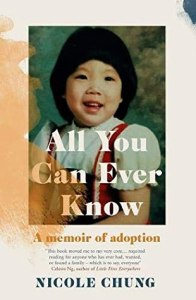
When we meet her she is in windswept Greenland during nesting season, braving the elements to tag birds, Arctic terns. She manages to tag three. She wants to follow them, on what might be their last migration, in a world where so many other species have already disappeared.

She is looking for a boat and a crew she can influence, to follow the birds, because they will lead these fishermen to where the fish are -they are also disappearing and this profession is in danger, both from humans wanting to stop them and by governments who want to ban their activities. Frannie doesn’t support them, but she needs them, so compromises her beliefs to pursue her obsession.

Ennis Malone. Captain of Saghani. The Saghani: an Inuit word for raven.

His vessel is one of the last legally certified to fish for Atlantic herring, and he does so with a crew of seven.

bird migration Charlotte McConaghy

Photo by Wendy Wei on Pexels.com

As they journey following the red dot tracker of the bird, her own story, character and the mystery surrounding her is slowly revealed.

I decided to follow a bird over an ocean. Maybe I was hoping it would lead me to where they’d all fled, all those of its kind, all the creatures we thought we’d killed. Maybe I thought I’d discover whatever cruel thing drove me to leave people and places and everything, always. Or maybe I was just hoping the bird’s final migration would show me a place to belong.

Chapters flick back and forward between places she has inhabited, people she has known: Ireland with her mother, Australia with an unloving grandmother, jail time, a box that reveals information about her father, letters to her husband Niall, a man we don’t know what happened to. Clues are dropped throughout the narrative, as she continues a dangerous journey.

After nearly losing one crew member they pull in to port for medical help, met by angry protestors. It is unsure whether they can continue on their mission.

novels about bird migration natureI admit I found it difficult to believe that a young woman could convince the tough crew of one of the last fishing boats to accept her suggestion to follow the blinking light of a few birds, over the knowledge and intentions of an experienced captain.
It was difficult to suspend belief, particularly as the more we come to know about her as a character, the less it seemed she was capable was influencing their decisions.

It becomes clear that she is chasing more than just a flight path, as her dark secrets are revealed.

Speculative Eco Fiction

It has been described as a hybrid novel, ‘both an adventure story and a piece of speculative climate fiction’, personally I’d call it mystery and adventure set in a not too distant future, when more species are extinct and there is a greater sense of urgency and violent activism to prevent those seen as contributing towards it.

Asked about the inspiration for writing the novel, Charlotte McConaghy said:

Toni Morrison said ‘If there’s a book that you want to read, but it hasn’t been written yet, then you must write it.’ And this book was like that for me. It just felt necessary for me to engage with this climate crisis in a personal, intimate way, to write about something that’s breaking my heart.

I enjoyed it, but it wasn’t a stand out novel for me. In the US, the book is marketed under the title Migrations, I read the UK version entitled The Last Migration.

N.B. I read an ARC (advance reader copy) of this novel, provided by the publisher via Netgalley.

Further Reading

Interview: Sophie Masson of Feathers of the Firebird interviews Charlotte McConaghy

Review: NY Times – The Animals Are Dying. Soon We Will Be Alone Here by Ellie Tzoni

All You Can Ever Know by Nicole Chung

A Memoir of Adoption

Nicole Chung All You Can Ever KnowWhile every adoptee’s experience is different, there are so many aspects to the experience and responses to them that resonate with other adoptees, that reading a memoir like this can be very helpful, sharing experiences helps us understand.
And the more there are like this, the more anyone thinking of participating in this practice, might do well to be informed of those varying responses, and to check not just their own motivations, but to do an empathy check; to ask themselves, how might it feel to be the shoes of a child as they become a teenager and an adult, when they come to realise they are not the person you tried to mould.

It’s common for some adoptees to grow up believing they haven’t been affected by the pre-verbal trauma of post-birth separation. At the time the author was born, it was still widely believed, in many western countries at least, that babies were a blank slate, you could mould them into the child you wished for.

Family lore given to us as children has such a hold over us, such staying power. It can form the bedrock of another kind of faith, one to rival any religion, informing our beliefs about ourselves, and our families, and our place in the world. When tiny, traitorous doubts arose, when I felt lost or alone, or confused about all the things I couldn’t know, I told myself that something as noble as my birth parent’s sacrifice demanded my trust. My loyalty.

Love is Colourblind

Her family did have a question, in that they were white Americans of European extraction and their child Korean, though she was born in America. That said, when asked, they were advised by various professionals that race wasn’t an issue. And when it was, she kept it to herself.

I didn’t have the background and the language to call it racism. I’d been led to believe racism was something in the past. Even teachers at school presented racism as a thing we had conquered. It was very well intentioned and wrong. I don’t think I gained perspective on that until I moved away from home and lived in pretty diverse areas on the East Coast.

Nicole Chung shares her experience of being an only child in a caring and loving family, but an over-protective one none the less, holding a subconscious resistance to the idea of their child reconnecting with her biological family.

Empathy Nicole Chung Adoption Adoptee

Photo by Brett Sayles on Pexels.com

It’s an attitude that isn’t about actively preventing them, but about never doing anything to support or facilitate that contact, or conversation, or having sufficient self-awareness to look at defensive responses to the idea and recognise them as unresolved issues.

A classic problem, where the one person you might turn to for support, instead of sympathising, feels threatened and therefore may act in ways that undermine the process, creating trust issues.

An awkward, near impossible dilemma of a child needing an empathetic understanding ear about a subject that is at the core of their being, intersecting with a parent pierced with the reminder of a wound or vulnerability (infertility) making it an unbearable thought, that a child they thought was their own (as if a possession) wants to do something they fear may risk their bond with them.

This may be all you will ever know, I was told. It wasn’t a joyful story through and through, but it was their story, and mine too. The only thing we had ever shared. And as my adoptive parents saw it, the story could have ended no other way.

The Search for Biological Family

Nicole Chung follows the clues she has, and discovers she has a family and siblings, but also discovers information that prevents her from having a complete reunion. The timing of when contact happens coincides with the birth of her first child, an upcoming event that provided a strong motive for searching. Emboldened by the request for medical information, given she was an ailing premature baby herself, the two events move closer and almost collide, becoming  too much for her, the roller coaster of setting off down a path of no return.

The contact she does make is ultimately positive, in particular with one of her sisters, she gains a special and close friend, whom she dedicates the book to (and their children). In an interview she talks about the privilege of telling both their stories.

It was honestly a gift. One of the best things I think that’s come out of this book is the chance to talk even more with my sister about it. I just feel really lucky both to have her in my life, and the fact that she really let me — not just let me, but encouraged me to write our story and has been so supportive of it and feels honored by it. – extract from podcast interview, Medium

transracial adoption Nicole Chung All You Can Ever Know

Photo by Alex Green on Pexels.com

The birth of her daughter also awakens the desire for her to connect with a language and culture that is completely foreign to her. It is a reminder that the next generation born, is not born having been separated and conditioned by the families involved, children are able embrace all, from their perspective it is simple to love family in any shape, form, colour, nationality.

There’s a tendency in adoption still to think that the differences are unimportant compared to the love. And I guess I would just say I think both of those things are really important. And I think if you’re going to look at it realistically — you know — look at the child for the whole person that they are and think about what their experience is going to be. You know, these are conversations that you have to have before you adopt and then, obviously, after, as they age in age-appropriate ways. – extract from podcast interview, Medium

Adoptee memoir transracial adoptionIt is a very personal account and kudos to the author for having the courage to share it and inviting readers to go along on the emotional roller coaster of a journey it must have been.
There is a profound sadness in her story though, those aspects of the human story that can’t always be navigated or confronted, understood or forgiven. And so they are judged. And that is the risk and potential source of pain, that taking such a journey involves. Ongoing. The potential for healing.

Since the early 1950s, parents in the United States have adopted more than a half-million children from other countries, with the vast majority of them coming from orphanages in Asia, South America, and, more recently, Africa. South Koreans are the largest group of transracial adoptees in the U.S., and by some estimates, make up 10 percent of the nation’s Korean American population. – Victoria Namkung

Further Reading/Listening

An Extract : Just assimilate Her Into Your Family and You’ll Be Fine by Nicole Chung

Interview with Nicole Chung : ‘I Didn’t Have the Language to Call It Racism’ by Victoria Namkung

No, You Go – A Podcast : Getting Personal with Nicole Chung

Adoption Memoirs Reviewed Here

An Affair With My Mother by Catriona Palmer (Ireland) (2016) (Adoptee)

You Don’t Look Adopted by Anne Heffron (US) (2016) (Adoptee)

Never Stop Walking, A Memoir of Finding Home Across the World by Christina Rickardsson (Sweden/Brazil) (2016) (Adoptee)

Why Be Happy When You Could Be Normal? by Jeanette Winterson (UK) (2011) (Adoptee)

Red Dust Road by Jackie Kay (Scotland/Nigeria) (2010) (Adoptee)

A Long Way Home (Lion) by Saroo Brierley (Australia/India) (2013) (Adoptee)

Blue Nights by Joan Didion (US) (2011) (Adoptive Parent)

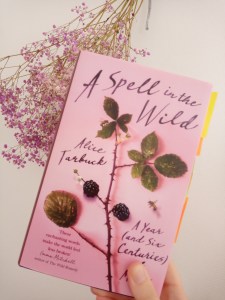
A Spell In the Wild, A Year and Six Centuries of Magic by Alice Tarbuck

I came across this book in a newsletter I read by the founders of Tramp Press, who published two nonfiction books I recently read and loved, Doireann Ni Ghriofa’s A Ghost In The Throat and Sara Baume’s Handiwork.
Laura Waddell mentioned hibernation season approaching and the desire to curl up and zone out, which she’d been doing with A Spell in the Wild, describing it as “a witch’s year broken down month by month, full of foraging, feminism, magic, and making meaning” expounding further in this column she wrote for The Scotsman.

At the time I was reading two novels about a woman accused of being a witch, Ann Petry’s Tituba of Salem Village and Maryse Condé’s I, Tituba, Black Witch of Salem and I thought it would be interesting to follow those up with a contemporary view of witchcraft, so the timing of this book, from a Scottish/British perspective, with rich historical references was perfect. 

Review

Dr Alice Tarbuck is a woman at the intersection of many interests and influences, a poet, an academic, a keen forager with a practical and intellectual interest in witchcraft. Being such a loaded word, her book is a wonderful celebration of ritual and magic as well as a demystification of things witch-related, from someone who appreciates the natural world, pulling various practices together into her version of ‘witchcraft’, a blend of the practical, spiritual, academic, magical and intuitive.

Magic happens in all those moments when the world and you aren’t separated any longer by any sort of barrier; be it the brain or the body. It is a stepping into awareness of connection, a tuning into that feeling. Witchcraft is, among other things, a good container for trying to communicate these difficult-to-talk about experiences. We aren’t sure how else to articulate them, so we use metaphor, metaphysics, magic.

She records a year living in accordance with this way of being in the world, sharing it from both a practical perspective and through the vast canon of literature that has gone before.

A Spell For Every Season

Dr Alice Tarbuck, Author

The book is structured into twelve chapters, months of the year, mapping seasonal occurrences, discovering magic in the ordinary, sharing rituals, spells, making suggestions and backing up her pondering with a wealth of literature, indexed at the end. I read the book straight through, but it can be dipped into month by month.

Reigning in the academic somewhat, makes it an extremely accessible and compelling read, blending in personal experience, musing on and striking back at the snobbery, judgement and the often patronising attitudes of those who diminish the occult as some dark, fanciful indulgence, while applying critical academic rigour and vigour to her subject.

An urban dweller, she seeks to demonstrate and share the possibilities inherent in a city, the sacred spaces, the possibility of urban foraging, making use of what is around, rather than dwelling on what it is not.

Debunking the myths, she makes a case for creating one’s own practices, and takes us along as she enters what might be a more traditional sacred space, a forest near Moniack Mhor, and sits and waits. And gauges everything with a sense of humour and realism.

The ground is soft with the decaying remnants of falling trees, velveted with moss. It’s damp. Unmistakeably, so am I. There is nothing less transcendent than a damp arse. It’s time to go back I think.

A Spell in the Wild Alice Tarbuck December magic

Photo by Lisa Fotios on Pexels.com

Reading this in December, the month entitled Midwinter and Magic in the Dark holds particular resonance. Solstice means ‘sun-stop,’ in Neolithic times, sacrifices were made to entreat the sun to return. We in turn become sorcerers of light, following traditions that illuminate, with candles, hanging lights to create a warm ambiance indoors.

It isn’t surprising that humans quickly turn to introspection as the light fails. We light candles against the darkness, and talk long into the night, turning thoughts inward, using the little light left to illuminate our darkest places. Winter can be seen as a time of healing, regrouping, of doing work on ourselves rather than work in the world.

Witches Confessions and Popular Medieval Literature

Tarbuck gives a fascinating short talk, an extension of her April chapter Witches Becoming Animals referring to the trials and subsequent writings that exist around a cotter’s wife Isobel Gowdie’s confession in 1662. She has a wonderful storytelling voice and gives an informative, riveting account, questioning many of the assumptions various writer’s have made about her.

History and reference to the North Berwick witch trials, King James Daeomonologie text, Isobel Gowdie’s confession and Latin treaties on witchcraft make for mesmerising reading.

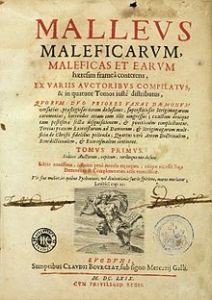
Referring to a popular Latin text that likely influenced King James text, Malleus Maleficarum (The Hammer of Witches) produced in 1487 in Germany, was so popular that by 1669, thirty editions had been published.

It contained among other things why women were particularly prone to satanic seduction, the answer – their weak character and voracious sexual appetite – a misogynistic, church-sanctioned sentiment which echoed throughout medieval witch panics.

Listening to her speak so knowledgeably on her subject in the two talks below, especially the historical context, makes me realise how much Tarbuck has held back, each chapter could easily have been a book. Her ability to narrow it down into something digestible to the everyday reader is exceptional.

Totally down to earth, yet open to the magic of being the silent observer, Alice Tarbuck introduces an enchanting perspective on connecting with nature, creating one’s own simple remedies from urban foraging, keeping and displaying little things one collects on nature walks, inventing spell-poems, (which could as easily be affirmations or prayers) and a little bit of ritual and divination to see one through various difficulties.

Witchcraft is, I believe, the practice of entering into relation with the world, of exerting your will in it and among it, and learning how to work with it in ways that are fruitful for yourself and the world.

The casual, engaging style is a pleasure to read and I couldn’t help but think what a privilege of the 21st century it is, to nonchalantly be able to refer to one’s passion and pastime as witchcraft, without threat of dire consequence. As Tarbuck reminds us, now that witchcraft and research into it is legal, those with an interest are able to reclaim the nuances that were lost during that terrible period of history that condemned women for their ways, opening ourselves up to the more than human environment that surrounds us.

“magic is the superpowerfulness of everything, just as it is” Sabrina Scott

Further Reading/Listening

Human Animal Transformation in Early Witchcraft – a video/talk by Dr Alice Tarbuck, Nov 2020
 
What the Witch Trials & Herecy was All About – Alice Tarbuck talks to Hannah Trevarthen at the Wigtown Book Festival
 
Witchcraft Workshops – for those with an interest in the history, ethics and practice of witchcraft, whether from a personal or a research-based point of view.
 

Purchase a Copy via UK Independent Bookshop

I, Tituba Black Witch of Salem by Maryse Condé tr. Richard Philcox

A Maryse Condé FanGirl Moment

I Tituba Black Witch of Salem Maryse Conde

When I opened I, Tituba to begin reading, on the first page there was a quote from the author Maryse Condé that read:

Tituba and I lived for a year on the closest of terms.
During our endless conversations she told me things she had confided to nobody else.

It gave me such a good feeling to read that, knowing that Condé was doing here, what she did in Victoire: My Mother’s Mother, when the grandmother she’d never met, awakened her from her dreams, to chastise her from the corner of the room.

Sometimes I would wake up at night and see her sitting in a corner of the room, like a reproach, so different to what I had become.

‘What are you doing running around from Segu to Japan to South Africa? What’s the point of all these travels? Can’t you realise that the only journey that counts is discovering your inner self? That’s the only thing that matters. What are you waiting for to take an interest in me?’ she seemed to be telling me.

But that book wasn’t published until 20 years after Condé was listening to Tituba tell her story.

A Caribbean Writer Returns

I, Tituba is the first novel written after Segu and The Children of Segu, historical masterpieces that inform, disrupt and provoke, however the initial reaction was such that Maryse Condé declared she would never write about Africa again.

Tituba came to me or I came to her at a period of my life when really I wanted to turn toward the Caribbean and start writing about the Caribbean.

Who was Tituba?

Tituba existed, she was accused and ultimately set free, however, despite the shelves of history books about the Salem witch trials, there is little factual information about her, who she was, who freed her, or her life after release from prison.
I felt this eclipse of Tituba’s life was completely unjust. I felt a strong solidarity with her, and I wanted to offer her her revenge by inventing a life such as she might perhaps have wished it to be told.

If we look for her story in the history of Salem, it isn’t there. Condé too, looked for her history in the colonization of the continent and found silences, omissions, distortions, fabrications and fleeting, enigmatic insinuations. And so she wrote this novel.

Review

On a ship sailing for Barbados, young Abena was raped by an English sailor, then sold to a planter along with two male slaves. She was employed in the household until the pregnancy discovered whereupon she was banished to the cabin of a male slave Yao. Tituba was born.

In a short reprieve, they find comfort in each other’s company and Tituba would adored by a man more father to her than any other. The joy that now lightened Abena’s world was seen by the master and desired for himself. She struck back, died for it, and for his concubine’s crime, Yao was sold.

Driven off the plantation, Tituba was taken in by Mama Yaya; still grieving for two sons, she had cultivated the ability to communicate with the invisible.

People were afraid of her, but they came from far and wide because of her powers.

Mama Yaya taught her everything, in the ways of her people:

Mama Yaya initiated me into the powers of knowledge. The dead only die if they die in our hearts. They live on if we cherish them and honour their memory, if we place their favourite delicacies in life on their graves, and if we kneel down regularly to commune with them.

Ann Petry Tituba Salem Witch TrialsAnd so Tituba is given a past, skills and knowledge and might have remained in that life, had she not grown into a young woman with desires herself and fallen for the man who would become her husband John Indian.
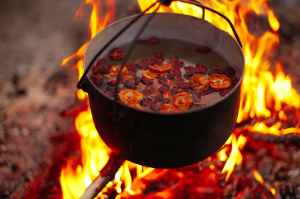
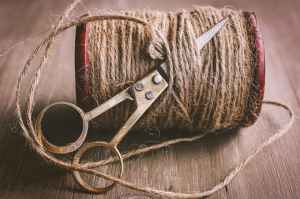
He belonged to Susanna Endicott who I encountered in the memorable opening scene of Ann Petry’s Tituba of Salem Village.

After a short period in that household where John had lived most of his life, things deteriorated and in an act of revenge the mistress sold them both to the frightening Reverend Samuel Parris, who sailed for the Bay Colony the very next day.

From Island Life to Boston, Massachusetts

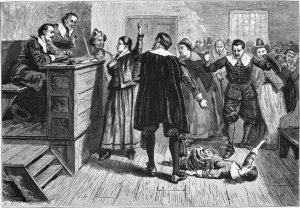
In Boston, with the mistress unwell in a room upstairs, Tituba spends time with the daughter Betsey and orphaned niece Abigail, who makes trouble that spreads like a contagion to other young girls in the community, as they fall prey to strange fits and mass hysteria.

I also recognized Abigail and Betsey’s companions in their dangerous games, those young girls whose eyes were shining with excitement. They were dying to roll on the ground too and to attract everybody’s attention.

And so the bad behaviours of girls given credence, turn into accusations of witchcraft against Tituba and others, they are jailed and many lose their lives, until the Govener writes to London for advice on legal proceedings concerning witchcraft resulting in a general pardon and Tituba is condemned to live.

Prison costs mean she can only leave if someone pays and a man with nine children who has lost his wife claims her. And it is through this relation that she will gain her freedom.

Freedom At What Price

If the first part is written from compassion, yet seeking revenge, the second part initially seems strange and challenges the reader, in its use of parody. I found it difficult to accept, the reader isn’t given the satisfaction of a gratifying ending, yet reading past the novel into the essay and interview at the end of the book, I’m confronted with my own subconscious bias and lack of understanding, in a clever and deliberate intervention by the author.

And so Tituba is granted her revenge. We are all complicit.

Reading the book and thinking about it after reading the interview resulted in a deeper reading experience and consideration. My feeling while reading was heightened by having read Ann Petry’s sympathetic version first, Condé takes a different approach, reckoning with the past.

I suggest that though Petry’s version was written 30 years before, it might be better to read her more optimistic version last.

What Is it About Witchcraft?

Magic witchcraft spells Tituba Isobel GowdieLike Condé, who said she knew nothing of witchcraft, I have decided to read a contemporary book next, published in 2020, to see what’s going on in the world of witchcraft today.

Next up A Spell in the Wild: A Year (and Six Centuries) of Magic by Alice Tarbuck.

Further Reading

Paper: Hesitating Between Irony and the Desire to Be Serious in I, Tituba by Sarah Barbour, Wake Forest University


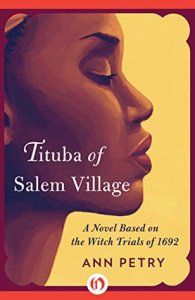
Tituba of Salem Village, A Novel Based on the Witch Trials of 1692 by Ann Petry (1956)

I read this for two reasons, one I’ve been wanting to read Ann Petry for a while, The Street and The Narrows were republished in 2020, so I’m looking forward to reading them, but the main reason I chose this title is because I’m an avid reader of Maryse Condé, who wrote I, Tituba, Black Witch of Salem. One of her inspirations was this book written for young people by Ann Petry, which predates her novel by 30 years, so it made sense for me to read this one first.

For her the story of Tituba was a story of courage in the face of adversity. It was a lesson of hope and dynamism.

Witch Trials of Salem, History

The witch trials of Salem began in March 1692 with the arrests of Sarah Good, Sarah Osborne and the black slave, Tituba, based on forced confessions. The trials were started after people had been accused of witchcraft, primarily by teenage girls, though traced to adult concerns and adult grievances. Quarrels and disputes with neighbors often incited witchcraft allegations.

Women who did not conform to the norms of Puritan society were more likely to be the target of an accusation, especially those who were unmarried or did not have children.

It marked the beginning of a period of paranoia in which nineteen women and one man were hanged, before the governor of the colony sent a report to London about the cases of 50 women and a general pardon was granted, putting an end to a disturbing chapter in the history of the village, subsequently renamed Danvers.

Though Tituba was acquitted, prisoners were required to pay the cost of their stay in prison, including the cost of chains and shackles. She was eventually sold for the price of those fees, though it is not known to whom. Ann Petry shares her theories, which we discover here, and Maryse Condé has another.

It is one of Colonial America’s most notorious cases of mass hysteria,  a cautionary tale about the dangers of isolationism, religious extremism, false accusations, fake news and lapses in due process.

Review

Ann Petry Tituba Salem Witch TrialsI had read nothing about the witch trials before, though I’d heard of them, but I’m glad that this was my introduction, to see this little segment of American history, through the eyes of the innocent black slave, Tituba and her husband John.

As the book opens and Tituba and John are in the kitchen of the Barbados home they live in, the scene is so evocative, you can’t imagine how their lives are going to change so abruptly, having been so stable for so long – but then the harsh reality of them being commodities, slaves, sold like jewels, to pay a debt, their lives irrevocably changed, within 24 hours they are on a ship heading for the Bay Colony of Boston, their new owner the Reverend Parris.

Her husband instills in her the importance of staying alive and maintaining good health.

“Remember, always remember, the slave must survive. No matter what happens to the master, the slave must survive.”

Petry’s descriptions of the environment are so evocative, the contrast so great, from the warmth of the island to the damp, unwelcoming cold climate of Massachusetts.

Tituba is caring and empathetic, she has a traditional knowledge of herbs from the island, learned from the women in her family, in Boston she searches in the woods for substitutes and is helped by another woman with knowledge of herbal medicine. She is sensitive to people, animals and the environment.

Tituba Samel witch cauldron fire

Photo by Plato Terentev on Pexels.com

Sometimes if she stood still, used all her senses, sight and sound and touch and small would make a place speak to her. She closed her eyes and took a deep breath.

She decided it was not an evil house. It was sad and gloomy. Nothing about it suggested happiness in the future. It had been a long time since anyone had been happy in this house. People leave something of themselves in a house, and the spirit of this house was frighteningly sad.

However, these people live in fearful times and among people whose belief system instills fear and suspicion. They bear children whose imaginations run wild, their behaviour’s running even wilder.

She finally accepted the fact that Abigail was her enemy, and though young, a dangerous enemy. On the other hand, Samuel Conkin, the weaver, was her friend, and though a new friend, a very good friend.

Tituba Salem Witch Trials Weaver Thread Ann Petry

Photo by Susanne Jutzeler on Pexels.com

Tituba is a wonderful character, depicted with compassion and understanding, put in a situation where young people are drawn towards her but unable to overcome their own inner hurts, exaggerate and invent scenarios, combining imagination and superstition, creating drama that spirals out of control into very real consequences for those accused of “witching”, until the farce that it is, becomes all too clear, though not without lives having been lost.

Elena Ferrante in The Lying Life of Adults shows that sometime erratic behaviour of an adolescent and its consequences. Ann Petry shows how childish games, immaturity, attention seeking and hurt can claim lives, and though her book offers a message of courage in the face of adversity, it also offers a warning to that same youthful audience, that lives can be irrevocably damaged by the actions of a few.

I loved the character Petry created, her many talents and her resilience and the imagined appreciation that did exist, even if that might have been willful fantasy, knowing that in the era in which she lived, it was rare indeed for any person who purchased a slave to treat them as her weaver did.

Petry offers perhaps the most persuasive explanation of all—that cruelty begets cruelty, among children as well as adults. At least half the novel takes place before the trials, building the case for the horrors that follow. Anna Mae Duane, The Journal of the History of Childhood and Youth, Johns Hopkins University Press

Highly Recommended.

Further Reading

Article, Smithsonian Magazine: Unraveling the Many Mysteries of Tituba, the Star Witness of the Salem Witch Trials by Stacy Schiff; Nov 2015

Play: The Crucible (1952), by Arthur Miller

Essay: Ann Petry

Story of the Week: Harlem Ann Petry (1908-1997)


Warwick Prize for Women in Translation 2020, shortlist and the winner

This is a relatively new prize in the UK, established and run by the University of Warwick and now in it’s 3rd year.  Its aim is to address the gender imbalance in translated literature and to increase the number of international women’s voices:

Women in Translation Warwick Prize ShortlistSeven titles were shortlisted for the annual Women in Translation award from 132 eligible entries, 16 titles made the initial longlist:

The 7 shortlisted titles included 3 novels (one an epistolary novel), 2 collections of short stories, 1 collection of letters, and 1 young adult novella.

Six languages were represented: Arabic (Sudan), Chinese (China & Malaysia), German (Georgia/Germany), Hungarian (Hungary), Italian (Italian) & Swedish (Finland).

The shortlist was dominated by independent publishers, including Comma Press and 5 publishers who appeared on the shortlist for the first time: Daunt Books, Granta, HopeRoad, Scribe UK and Sort of Books.

Seven make the Shortlist

The full list of shortlisted titles, in alphabetical order, is as follows:

Abigail Magda Szabo HungaryAbigail by Magda Szabó (Hungary), translated by Len Rix (MacLehose Press, 2020)

– the story of a headstrong teenager growing up during World War II. Gina is the only child of a general, a widower who has long been happy to spoil his bright and willful daughter. Gina is devastated when the general tells her he must leave and she will attend a boarding school in the country and more so when she discovers how grim it is. She fights with her students, rebels against teachers, is ostracized and runs away. Caught and returned, she is entrusted to the legendary Abigail.


Natalia Ginzburg Happiness As Such Happiness, As Such by Natalia Ginzburg (Italy) translated by Minna Zallmann Proctor (Daunt Books Publishing, 2019)

– The story of the Prodigal Son turned on its head, Happiness, As Such is a short, absurdly funny novel-in-letters about complicated families and missed connections.
Michele is the beloved only son of a large, dysfunctional family in 1970s Italy. Headstrong and independent, he has disappeared to London without explanation. Back in Italy, his father lies dying. Michele’s departure sets forth a series of events that will bring together everyone in his life.


Lake Like a Mirror by Ho Sok Fong (Malaysia) translated from Chinese by Natascha Bruce (Granta Publications, 2019)
– A portrait of Malaysian society in nine stories, Lake Like a Mirror explores the lives of women buffeted by powers beyond their control. Squeezing themselves between the gaps of rabid urbanisation, patriarchal structures and a theocratic government, these women find their lives twisted in disturbing ways.

In precise and disquieting prose, Ho Sok Fong draws her readers into a richly atmospheric world of naked sleepwalkers in a Muslim women’s home, mysterious wooden boxes, gossip in unlicensed hairdressers, hotels with amnesiac guests, and poetry classes with accidentally charged politics – a world that is both bizarre and utterly true.


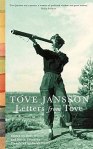
Letters from Tove by Tove Jansson (Finland) edited by Boel Westin & Helen Svensson, translated from Swedish by Sarah Death (Sort of Books, 2019)

– Out of the thousands of letters Tove Jansson wrote, a cache remains that she addressed to her family, her dearest confidantes, and her lovers, male and female. Into these she spilled her innermost thoughts, defended her ideals and revealed her heart. To read these letters is both an act of startling intimacy and a rare privilege.

Penned with grace and humour, this collection offers an almost seamless commentary on her life as it unfolds within Helsinki’s bohemian circles and her island home. Spanning 50 years between her art studies and the height of Moomin fame, they cover the bleakness of war, hopes for love that were dashed and renewed, and her determined attempts to establish herself as an artist.

Vivid, inspiring and shining with integrity, Letters from Tove shows precisely how an aspiring and courageous young artist can evolve into a very great one.


Translated Fiction The Eight LifeThe Eighth Life by Nino Haratischvili (Georgia/Germany), translated from German by Charlotte Collins and Ruth Martin (Scribe UK, 2019)

–  the story of seven women living through one of the greatest drama’s of the twentieth century.

1900, Georgia: in the deep south of the Russian Empire, Stasia, the daughter of a famous chocolatier, dreams of ballet in Paris, but marries a soldier, and is caught up in the October Revolution. Escaping with her children, she finds shelter with her unworldly sister Christine, whose beauty, fatally, has caught the eye of Stalin’s henchman. Disastrous consequences ensue for the whole family.

2006, Germany: after the fall of the Iron Curtain Georgia is shaken by a civil war. Niza, Stasia’s great granddaughter has broken from her family and moved to Berlin. But when her 12-year-old niece Brilka runs away, Niza must track her down and tell her the truth about their family — and about the secret recipe for hot chocolate, which has given both salvation and misfortune over six generations.

Epic and absorbing, The Eighth Life is a novel of seven exceptional lives lived under the heat and light of empire, revolution, war, repression, and liberation.


Rania Mamoun Thirteen Months of Sunrise Translated FictionThirteen Months of Sunrise by Rania Mamoun (Sudan), translated from Arabic by Elisabeth Jaquette (Comma Press, 2019)
– A young woman sits by her father’s deathbed, lamenting her failure to keep a promise to him…

A struggling writer walks every inch of the city in search of inspiration, only to find it is much closer than she imagined…

A girl collapses from hunger at the side of the road and is rescued by the most unlikely of saviours…

In this powerful, debut collection of stories, Rania Mamoun blends the real and imagined to create a rich, complex and moving portrait of contemporary Sudan. From painful encounters with loved ones to unexpected new friendships, Mamoun illuminates the breadth of human experience and explores, with humour and compassion, the alienation, isolation and estrangement that is urban life.


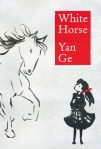
White Horse Yan Ge China Warwick Prize TranslationWhite Horse by Yan Ge (China), translated from Chinese by Nicky Harman (HopeRoad, 2019)

– This compact novella contains a gripping psychological tale, enlivened by wickedly sharp insights into contemporary small-town life in China.

Yun Yun lives in a small West China town with her widowed father and an uncle, aunt, and older cousin who live nearby. One day, her once-secure world begins to fall apart. Through her eyes, we observe her cousin, Zhang Qing, keen to dive into the excitements of adolescence, but clashing with repressive parents. Ensuing tensions reveal that the relationships between the two families are founded on a terrible lie.

Three Commended By the Judges

Although not on the shortlist, 3 titles from the longlist were singled out for commendation by the judges:

Isabella Isabella Morra Poetry ItalyIsabella (Smokestack Books, 2019), a collection of fiercely feminist poems by the Italian Renaissance writer Isabella Morra translated by Caroline Maldonado

– Isabella Morra (c1520-1545/6) was born into an impoverished aristocratic family in Southern Italy. Forced to live in strict isolation in the family castle in Valsinni on a steep cliff above the Ionian Sea, she devoted herself to writing a series of extraordinary poems, ‘amaro, aspro e dolente’ (‘bitter, harsh and sorrowful’), about her longing for escape. When she was twenty-six she was brutally murdered by three of her brothers in an honour killing. She was buried in an unmarked grave, and her poetry was forgotten for several hundred years.

The Way Through the Woods On Mushrooms and Mourningthe extraordinary memoir about mushrooms and grief, The Way Through the Woods (Scribe UK, 2019) by Malaysian-born Long Litt Woon, translated from Norwegian by Barbara Haveland

– A grieving widow feeling disconnected from life discovers an unexpected passion, hunting for mushrooms, in a story of healing and purpose.
Long Litt Woon moved to Norway from Malaysia as a nineteen-year-old exchange student. Soon after her arrival, she met Eiolf who became the love of her life. After thirty-two years together, Eiolf’s sudden death left Woon struggling to imagine a life without the man who had been her soulmate and best friend. Adrift in grief, Woon signed up for a beginner’s course on mushrooming. She found, to her surprise, that the hunt for mushrooms and mushroom knowledge rekindled her appetite for life, awakened her dulled senses providing a source of joy and meaning.

Marion Brunet Summer of Reckoningand the pacey young adult thriller set in a small French town rife with racism and rage Summer of Reckoning (Bitter Lemon Press, 2020) by Marion Brunet, translated from French by Katherine Gregor.

– in the suffocating atmosphere of a social housing estate in the south of France, sixteen-year-old Céline and her sister Jo, fifteen, dream of escaping to somewhere far from their daily routine, far from their surly, alcoholic father and uncaring mother, both struggling to make ends meet.

A dark and upsetting account of an ailing society, filled with silent and murderous rage

And the winner is…

Translated Fiction The Eight Life

The Eighth Life by Nino Haratischvili

translated from German by Charlotte Collins and Ruth Martin

‘Elegant … It is a triumph of both authorship and painstaking translation … The Eighth Life is an unforgettable love letter to Georgia and the Caucasus, to lives led and to come, and to writing itself.’

CATHERINE TAYLOR, THE ECONOMIST