Top Reads 2016

In 2016, I read 55 books, just over my ongoing intention, to read a book a week.

I managed to read books by authors from 26 different countries and 19 of them, just over a third, were translations. My absolute favourite book of the year, was written by an author from Guadeloupe, translated from French into English, and 3 of my top 5 fiction reads were translated.

Outstanding Read of 2016
Bridge of Beyond

The book that has stayed with me, that I loved above all else was Simone Schwarz- Bart’s The Bridge of Beyond, a novel that touched on the lives of three generations of women from the French Antillean island of Guadeloupe, narrated by the granddaughter Telumee as she grows up on the island, learning from experience and the traditions of her culture, guided by the wisdom of her grandmother Toussine, ‘Queen Without a Name’. A masterpiece of Caribbean literature, “an unforgettable hymn to the resilience and power of women,” translated from French, republished as a New York Review of Books (NYRB) classic.

Top 5 Fiction Reads

Human ActsHuman Acts, Han Kang (South Korea) tr. Deborah Smith

As much a work of art as novel, Human Acts is an attempt to understand a despicable act of humanity through story telling, Han Kang was one of the most thought provoking authors of 2016 for me, equally incredible was her novel The Vegetarian, which won the Man Booker International Prize in 2016.

What Lies Between UsWhat Lies Between Us, Nayomi Munaweera (Sri Lanka)

Like The Bridge of Beyond, Munaweera’s work is evocative of place and she brings a childhood in the gardens of Sri Lanka alive. A woman remembers her past from behind the walls of a cell, and as she reveals her upbringing and the changes that brought her family to live in America, we wonder what went terribly wrong, that caused her to lose everything. And best book cover!

zoraTheir Eyes Were Watching God, Zora Neale Hurston (USA)

I finally read this great American classic and it was absolutely fantastic, another story that touches on multiple generations of women and how the lives of each affects the other, as they all wish a different life for the future generation. Janie is determined to live her life differently, but some lessons have to be lived thought and not told. The prose is astounding, melodic and the whole reading experience one I’ll never forget.

FirdausWoman at Point Zero, Nawal El Saadawi (Egypt) tr. Sherif Hetata

An internationally renowned feminist writer, activist, physician, psychiatrist and prolific writer, I’d been wanting to read her for some time and during August, reading books by Women authors in translation #WITMonth was the perfect opportunity. And what a novel! Inspired by real events, after she was given the opportunity to interview a woman who had been been imprisoned for killing a man and due to be executed, she retells this story of Firdous, too beautiful and poor to pass through life unscathed, who finds the desire to lift herself and others out of oppression and will pay the ultimate price. Haunting, beautiful, a must read author and book!
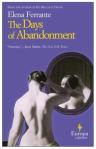
Days of AbandonmentDays of Abandonment, Elena Ferrante (Italy) tr. Ann Goldstein

The year wouldn’t be complete without Elena Ferrante, the reclusive Italian author whose identity was outed this year, although I didn’t read any of the reports, preferring she remain as unknown to me now as before. Days of Abandonment was published before her popular tetrology which began with My Brilliant Friend and is a compelling, searing account of one woman’s descent into semi madness following abandonment by her husband, in the days where the hurt prevents her from seeing things objectively and her rationality leaves her. It’s full of tension, as she has two young children and Ferrante uses her incredible talent to make the reader live through the entire uncomfortable experience of this roller coaster ride of temporary insanity.

Top Non Fiction Reads

Memoir

Brother Im DyingBrother I’m Dying by Edwidge Danticat (Haiti)

A beautiful memoir of her father and his brother, alternating between Haiti and America, it is a tribute to a special relationship and an insight into the sacrifices people make to better the lives of others, whether its family or their community. I’ve read her novel Breath, Eyes, Memory she is a wonderful writer with a gift for compassionate storytelling.

why-be-happyWhy Be Happy When You Could Be Normal by Jeanette Winterson (UK)

Wow, this is the adoption memoir that tops all others, a literary tour de force, an entertaining, horrifying account of a young girl’s childhood, survived by a strong passion for life and literature that gets her through some tough moments and develops an iron will to pursue the joy that appeals so much more than the conformity her mother sought. Brilliant.

woman-on-the-edgeA Woman on the Edge of Time by Jeremy Gavron (UK)

Less a memoir of the son, than one of his obsession to understand why his mother, when she appeared to have everything a young woman would ever want, decided to end it all. Having never asked questions about his mother’s suicide, Jeremy Gavron, now a father of two girls becomes obsessed with knowing who she was and what pressures lead her to her end. Early 1960’s insight.

The Blue Satin NightgownThe Blue Satin Nightgown by Karin Crilly (US)

A reading highlight of the year for me, I’ve seen Karin’s book go through many stages leading to publication this year, in my review you’ll read how I was involved a little in its development. I knew it would be a success, as we sipped champagne together in Aix after she won the Good Life in France short story competition for the first chapter, Scattered Dreams. Last seen, Karin and her friend Judy were in China continuing their adventures, which age will never hamper and there’s a mysterious new man appearing in her recent Facebook posts, suggesting she may be writing a sequel perhaps?

Soul Food

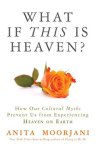
This year, in particular after the harrowing experience accompanying my 14-year-old daughter through back surgery to correct a curvature of the spine, I read a few books by authors published by Hay House, whose radio show I often  listen to. I’m already a fan and follower of Colette Baron-Reid and her book Uncharted came out this year, and through her I discovered, listened to and read What if This is Heaven by Anita Moorjani, Making Life Easy by Christiane Northrup and I’m still slow reading a few others. During challenging times, these authors are a soothing balm, reminding us of much we may already know, offering an alternative perspective on how we see things and tips for remaining grounded and healthy in body, mind and spirit.
Special Mentions
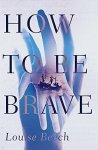
how-to-be-braveUnforgettable Reading Experience Ever: How to Be Brave, Louise Beech(UK)

I couldn’t let the year pass without mentioning the extraordinary reading experience of Louise Beech’s How to Be Brave. I read this book while I was in the hospital with my daughter and it was surreal, a captivating, incredible story, based partly on true events, both those of the author and her daughter, who are both coming to terms with a recent diagnosis of Type1 diabetes and a retelling of her grandfather’s epic journey lost at sea, after their ship was destroyed.

Bonjour TristesseBest Translations: Bonjour Tristesse(France) & The Whispering Muse (Iceland)

Two fabulous novellas, from Iceland, Sjón’s The Whispering Muse was my first read of the year for 2016 and I loved it, it’s a kind of parody of The Argonauts and had me looking up references to the Greek classic and enjoying both the story and its connections.

Bonjour Tristesse is an excellent, slim summer read, of a young woman’s regret, a heady summer on the French Riviera, engaging as she has a deft ability to portray her minds workings and see herself interacting with the others, aware of her own manipulative ability and yet unable to stop herself. Brilliant.
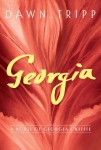
GeorgiaBest Fictional Biography: Georgia, A Novel of Georgia O’Keeffe, Dawn Tripp (US)

I love the work of the artist Georgia O’Keeffe, she’s probably my favourite artist in fact. And she was an incredible woman, who lived a long time and had an intriguing relationship with her husband, who discovered her as one of his protege, the photographer and gallery owner Alfred Steiglitz. Dawn Tripp has done an outstanding job of researching her life, bringing to this novel, insights from new material available and succeeds in doing what hasn’t really been done before, channelling the voice of the artist, providing a perspective that is loyal to the artist and how she may have thought.

Brief HistoryBiggest, Most Satisfying Challenge: A Brief History of Seven Killings, Marlon James (Jamaica)

Written a large part in Jamaican patois, with a wide array of characters, this 700+ page book won the Man Booker Prize in 2015 and was my summer chunkster for 2016. I gave it 5 stars for sheer effort, even though it’s not really my style of book, I tend to prefer the stories by women writers from around the Caribbean, Marlon James is perhaps too modern for me, he moves his story out of generational tradition and into the cold, dark, masculine front lines of survival, jealousy and ambition in a trigger happy, drug induced frightening world that is far from sleepy villages I prefer to inhabit.

Biggest Disappointment: The Fox Was Ever the Hunter, Herta Muller (Romania)(DNF)

It wasn’t on my reading list and I should have listened to my instinct, but since I was reading books by women in translation and I’d been sent this by the publisher (unsolicited), and it was a novel by a Nobel Prize winning author I attempted it. Impossible. Incomprehensible. Stop. Prize winning authors and books should be looked at like any other book I tell myself, forget about what a committee of 18 Swedish writers, linguists, literary scholars, historians and a prominent jurist with life tenure think, they are not you.

Well that’s it for 2016, another great reading year!

What was your outstanding read for 2016?


A Season in Rihata by Maryse Condé (Guadeloupe) tr. Richard Philcox #WITMonth

Marysé Conde is a Guadeloupean writer I came across in 2015 when she was nominated for the Man Booker International Prize, at a time when it was a two yearly prize for a lifetime’s work.

It has now evolved into an annual prize split between the author and translator for a book translated into English that year and in 2016 it was awarded to Han Kang (South Korea) and Deborah Smith (translator) for the novel The Vegetarian.

Maryse Condé didn’t win the prize back in 2015, but was the author on the list who most appealed to me.

Since reading about her at that time, I followed her own recommendations in terms of what to read to be introduced to her work, starting with a collection of vignettes in Tales from the Heart: True Stories from my Childhood, then Victoire: My Mother’s Mother and finally, the grand masterpiece and novel she is most well-known for, especially in academic circles, as it is widely studied and recognised as an important work of historical fiction set in the African Kingdom during a significant period of change: Segu.

I’ve wanted to read more of her work, so tracked down a couple more books that have been translated into English and was fortunate enough to have listened to her speak at our local library earlier this year – though she lived in France for many years, she is now retired and has returned to her native Guadeloupe to live, though still active in literary circles.

A Season in Rihata – reviewSeason in Rihata

Zek and his Guadeloupean wife Marie-Hélène live in a small fictitious African town of Rihata, with their six children and another due any day. It is far from Paris where they met and lived in very different way and far removed from the kind of life Marie-Hélène’s remembers on the island home of her childhood.

Like all men of his ethnic group, Zek had been brought up with a kind of fear and contempt of woman – malevolent creatures whose dark instincts had to be mastered. Love had taken him by surprise. He had difficulty accepting the power Marie-Hélène held over him and was convinced that no other man except him had undergone such humiliation.

Neither are happy; Zek has never been able to get over the feeling of being looked down on by his father, even though he is long dead, and remains resentful of his younger brother Madou, who found favour without having to do anything and who was the cause of him having to relocate his family due to the unwanted attentions of his brother towards his wife.

Influenced by a father who made no pretence of his preferences, Madou had soon considered Zek as a person of limited ability and in all ways inferior; although this did not exclude a certain brotherly affection.

Now Madou is coming to Rihata, he is a political Minister coming to conduct negotiations, his presence causing many to feel uneasy, a disruption in the sleepy town where not much usually happens.

It is a novel of discontent, of the effects of selfish behaviour, which none are immune to or able to rise above. Contentedness is within their reach, but so is temptation and the effect of indulging it ricochets through all members of the extended family and the rulers of the country.

While it doesn’t reach the heights of her other work I’ve read, it’s a worthy contribution to her body of literature and I look forward to reading more.

To Buy A Novel by Maryse Condé Click here (Book Depository Affiliate Link)

The Days of Abandonment by Elena Ferrante (Italy) tr. Ann Goldstein #WITMonth

ItalyOn the day when the nation is shocked and grieving after a devastating earthquake, that has destroyed entire villages and resulted in a significant loss of life, I don’t know how appropriate it is to share their literature, perhaps in the case of this particular novel, it serves to put things in perspective.
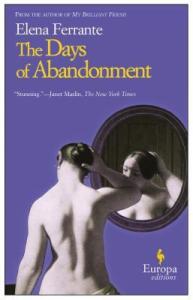
For while the protagonist of this novel may have felt her world was coming to an end, knowing how quickly and without warning life and home can be snatched away, might prompt us get over the more indulgent grievances of the heart.

Days of AbandonmentA national bestseller for almost an entire year, The Days of Abandonment shocked and captivated its Italian public when first published.

“One April afternoon, right after lunch, my husband announced that he wanted to leave me.”

Like an orchestrated composition that begins with a quiet, solo voice and rises to a crescendo with the addition of more instruments, Ferrante’s novel and its female character move from reasonable, melodic harmony to loud, discordant cacophony.

“I listened to him attentively, I contradicted him calmly, I didn’t ask him questions of any kind nor did I dictate ultimatums, I tried only to convince him that he could always count on me. But I have to admit that, behind that appearance, a wave of anguish and rage was growing that frightened me.”

Like the stages of grief, The Days of Abandonment charts the stages of decline following a lost love, beginning with the irony of a love more fierce than it was when it was present, then the deterioration, as the realisation and reality of life without it comes to pass for this mother of two children, cooped up in her apartment one hot August, with only the sad figure of a morose cellist living downstairs to observe her descent.

The abandoned woman acts terribly reasonably, only to deteriorate into desperate disillusionment. Like madness descending, the loss of love and the feeling of abandonment rages through the various emotions like a tempest, no person or animal immune to its violent, destructive force.

“The circle of an empty day is brutal and at night it tightens around your neck like a noose.”

It is shocking in how far the madness delves and astounding as it reaches a turning point and she is able slowly to perceive herself and the illusion of what she thought she had, for what it really was.

“It was really true, there was no longer anything about him that could interest me. He wasn’t even a fragment of the past, he was only a stain, like the print of a hand left years ago on a wall.”

Elena Ferrante observes the minutiae of human emotion and suffering, the obstinacy of a grasping, possessive love, the effect of our behaviour on those around us and the resilience of the human spirit.

Exhausting, terrifying, ferocious, we are both beast and beauty.

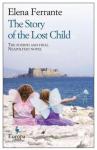
Elena Ferrante is the pseudonym of an Italian novelist, whose true identity remains a mystery, author of the four novels in the Neapolitan tetralogy My Brilliant Friend, The Story of a New Name, Those Who Leave and Those Who Stay and The Story of the Lost Child. The Days of Abandonment was the first of her novels to be translated into English by Europa Editions in 2005.

Buy The Days of Abandonment via Book Depository

WIT logo


Affections by Rodrigo Hasbún (Bolivia) tr. Sophie Hughes

AffectionsSelected in 2010 as one of The Best of Young Spanish Language Novelists by Granta, Bolivian author Rodrigo Hasbún’s Affections is his second novel and will be published in ten languages. It was the winner of an English PEN Award 2016.
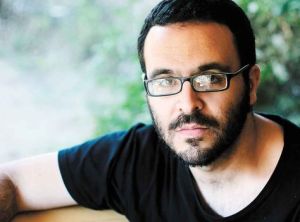
The novel is less a story and more a set of loosely connected vignettes from the lives and perspectives of the three daughters of  Aurelia and Hans Ertl, a family who fled post-war Germany in the wake of their father’s position as a cameraman, (he had worked on several Nazi propaganda films), to live in exile in Bolivia.

One of his daughters Monika Ertl became involved with the survivors of Che Guevara’s guerrilla movement and was allegedly involved in the assassination of the Bolivian consul in Hamburg, a man said to have ordered the hands of Guevara be cut off and sent to La Paz.

Hasbún’s novel takes these threads and weaves a disparate narrative, that highlights different moments in the lives of all members of this family, whose life trajectory was dramatically altered by their geographic displacement.

No sooner have they arrived, than Hans, a climber, explorer, photographer, seeker of adventure announces he is quitting climbing and organising an expedition to find a lost Inca city named Paititi buried somewhere deep in the Amazon forest. Two of his daughters come with him, and for his eldest Monika, it becomes a first step towards a life of social activism, which will result in her involvement in revolutionary guerilla warfare.

With a father seeking adventure and a mother prone to melancholy, the girls find themselves in a place they can never truly call home, where they will always be viewed as outsiders and find it difficult to find solace even among their ex-pat community, which in a cruel twist of fate, view them similarly to the way they were regarded in post-war Germany, only now it seems futile to escape their fate.

“All that grind to end up back where I started,” he complained to me one day down the phone. He said he’d experienced something similar after the war, that they’d already made him feel like an outcast once before, that during that period they closed one door after another to him, but that this time he wouldn’t move an inch.

Also included in the narrative are what appear to be the responses to an interview or interrogation of one of Monika’s lovers Reinhard, who was her brother-in-law, probably in a follow-up to the assassination of the Bolivian consul.

//yes, she’s the only one who matters now, the misunderstood child, the chaotic, rebellious teenager, the woman who went on to lose all perspective and no longer knew where to stop and ended up hurting herself and others. //Yes, if you pressed me I would say this is the definition of her that sticks: the woman who went on to cause so much hurt.

Bolivian Author, Rodrigo Hasbún

Bolivian Author, Rodrigo Hasbún

It is a fragmentary novel that depicts a family set adrift, unable to remain united nor to be held together by their adopted community, the daughters seek to carve out a life of their own, struggling in isolation.

The piecemeal structure of the novel with its alternating narrators is symbolic of that disconnect and isolation, exile may have heralded adventure and discovery, however the expedition to discover a lost city, became the catalyst to the disintegration of all that once kept them together.

It’s not true that memory is a safe place. In there too, things get distorted and lost. In there, too, we end up turning away from the people we love the most.

Note: Thank you to the publisher Pushkin Press for a copy of this haunting novella.

Further Reading

The City and the Writer: In Cochabamba with Rodrigo Hasbún – an interview by Nathalie Handal.

Buy a copy of Affections via Book Depository (Affiliate Link)

Masks by Fumiko Enchi tr. Juliet Winters Carpenter #WITMonth

MasksA mysterious novella that begins in a quiet humble way as we meet the young widow Yasuko whose husband, the only son of Meiko Togano, we learn died tragically in an avalanche.

Yasuko has stayed close to her mother-in-law who in the early chapters seems like a peripheral character, however as the story ventures further, it is suspected that she may be manipulating events and that this is not the first time in her life she has done so.

“A woman’s love is quick to turn into a passion for revenge – an obsession that becomes an endless river of blood, flowing on from generation to generation”

Yasuko is ready to move on with her life and the two men who are in love with her become part of a triangle of deception, where the motives take some time to become clear.

Mieko is a poet and an essay she wrote called ‘The Shrine in the Fields‘, resurfaces, intriguing the two men. The shrine is a reference to a location in the Japanese classic The Tale of Genji that is mentioned in connection with tone of the characters in that novel the Rokujo lady.

“She has a peculiar power to move events in whatever direction she pleases, while she stays motionless. She’s like a quiet mountain lake whose waters are rushing beneath the surface toward a waterfall. She’s like the face on a No mask, wrapped in her own secret.”

Tale of GenjiIt is worth knowing a little about the plot of The Tale of Genji and the ‘Masks of Noh’ from the dramatic plays, as we realise there are likely to be references and connections to what is unfolding here. And not surprising given Fumiko Enchi translated this 1,000+ page novel into modern Japanese.

It may be that Masks, is an allegory to one or more chapters of The Tale of Genji, and in particular in relation to the story of the Rokujo lady, something that made me remember reading Sjon’s The Whispering Muse which did a similar thing with the Greek poet, Apollonius of Rhodes, and his epic poem The Argonautica.

Masks is an enchanting read, that begins as a straightforward narrative and becomes an intriguing multi-layered tapestry of long held deceptions and narcissistic conspiracies that will haunt the lives of these characters.

An intriguing, thought-provoking read, that expands our horizons, introducing us as it does, to classic works and theatre from the long Japanese literary culture.

Fumiko EnchiFumiko Enchi was a Tokyo born novelist and playright, the daughter of a distinguished philologist and linguist. Poorly as a child, she was home-schooled in English, French and Chinese literature by private tutors.

Her paternal grandmother introduced her to the Japanese classics such as The Tale of Genji, as well as gesaku novels,  kabuki and bunraku theatre. Her  adolescent reading included the works of Oscar Wilde, Edgar Allan Poe, Kyōka Izumi, Nagai Kafū, Ryūnosuke Akutagawa, and especially Jun’ichirō Tanizaki, whose sado-masochistic aestheticism particularly fascinated her.

Much of her work explores female psychology and sexuality, while three of her works have been influenced by The Tales of Genji, – Masks, The Waiting Years and The Tale of An Enchantress.

Buy a Copy of Masks via Book Depository (Affiliate Link)


The Bridge of Beyond by Simone Schwarz-Bart tr. Barbara Bray #WITMonth

Bridge of BeyondAbsolutely brilliant, astonishing, loved it, one of my Top Reads of 2016 for sure.

Originally published in 1972 as Pluie et vent sur Télumée Miracle, The Bridge of Beyond is acknowledged as one of the masterpieces of Caribbean literature. It was republished in English in 2013 as an NYRB Classic, with an introduction by Jamaica Kincaid, beautifully translated by Barbara Bray, described as ‘an intoxicating tale of love and wonder, mothers and daughters, spiritual values and the grim legacy of slavery’.

Telumee is the last in a line of proud Lougandor women on the French Antillean island of Guadeloupe. It is a novel best left to speak for itself, as the many quotes from the novel that follow here illustrate, a work infused throughout with a vital and vibrant female energy, a force that empowers them to forge ahead, no matter the circumstances, one that will permeate the reader, instilling courage and awe at the language that creates this positive, intoxicating feeling.

In the first part we learn about her people, her mother Victory,

“a laundress, wearing out her wrists on flat stones in the rivers, and her linen emerged like new from under the heavy waxed irons”

her father, his life cut short in a fatal stabbing,

“Angebert, had led a reserved and silent existence, effacing himself so completely
that no one ever knew who it was died that day. Sometimes I wonder about him, ask myself what anyone so kind and gentle was doing in this world at all.”

the man who pulled her mother out of her grief, and out of her daughter’s life,

“The fact is that a mere nothing, a thought, a whim, a particle of dust can change the course of a life. If Haut-Colbi had not stopped in the village my little story would have been different.”

and her grandmother Toussine, ‘Queen Without a Name’, to whom her mother sent her to live.

“My mother’s reverence for Toussine was such I came to regard her as some mythical being not of this world, so that for me she was legendary even while still alive.”

Simone Schwarz-Bart

Simone Schwarz-Bart

Telumee narrates the story of her life, in small details, in melodic, incantatory prose that lures the reader in, consuming her story with great pleasure. Every change of home, village, or great journey takes them across the Bridge of Beyond, a symbol of change and the unknown, the other side.

As she passes through various stages of life, she is guided but never pressured by her grandmother, remembering her stories, her songs, her advice.

“My little ember”, she’d whisper, “if you ever get on a horse, keep good hold of the reins so that it’s not the horse that rides you.” And as I clung to her, breathing in her nutmeg smell, Queen Without a Name would sigh, caress me, and go on, distinctly, as if to engrave the words on my mind: “Behind one pain, there is another. Sorrow is a wave without end. But the horse mustn’t ride you, you must ride it.”

She will fall in love, leave to work in the kitchen of wealthy white family, build her own home, experience both profound happiness and the depths of despair, brush up against madness and find its cure, and always the reassuring presence of her grandmother.

“Sometimes old thoughts arose in me, shooting up like whirls of dust raised from the road by a herd of wild horses galloping by. The Grandmother to try to whistle up a wind for me, saying we should soon be going away, for the air in Fond-Zombi didn’t agree with my lungs now.”

As Jamaica Kincaid articulates well in the introduction, The Bridge of Beyond is not a conventional novel, and it never tries to be. It is a fluid, unveiling of a life, and a way of life, lived somewhere between a past that is not forgotten, that time of slavery lamented in the songs and felt in the bones, and a present that is a struggle and a joy to live, alongside nature, the landscape, the community and their traditions.

The cultural traditions and historical events from which this work of art springs cannot be contained in a strict linear narrative. In fact, such a device might even lend a veneer of inevitability to them. For the narrative that began with a search for fresh water on an island one Sunday morning has no end – it circles back on itself, it begins again, it staggers sideways, it never lurches forward to a conclusion in which the world where it began is suddenly transformed into an ideal, new world. Schwarz-Bart’s prose awakens the senses and enlarges the imagination; it makes me anxious for my own sanity and yet at the same time certain of it; her sentences, rooted in Creole experience and filled with surprising insights and proverbs, resonate in my head and heart.” Jamaica Kincaid

It is one of the best books I have read in a long time, coming from a place of love and appreciation that reaches far back, acknowledging the gifts of all, that make up who we are. Outstanding.

Simone and André Schwarz-Bart

Simone and André Schwarz-Bart

Simone Schwarz-Bart was born in France(her parents were from Guadeloupe) in 1938, her father a solider, her mother a teacher. When war broke out, she and her mother returned to Guadeloupe. She studied in Paris, where she met her future husband, the writer André Schwarz-Bart.

They collaborating on more than one work of literature, including a six-volume encyclopaedia Hommage à la femme noire, (In Praise of Black Women), to honour the black heroines who were missing in the official historiography.

Click to Buy The Bridge of Beyond via Book Depository

(Affiliate Link)

WIT logo

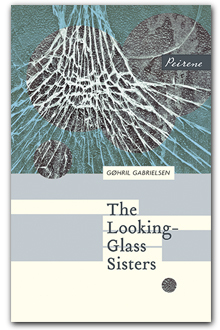
The Looking-Glass Sisters by Gøhril Gabrielsen tr. John Irons #WITMonth

This is a tragedy about a woman who yearns for love but ends up in a painfully destructive conflict with her sister. It is also a story about loneliness – both geographical and psychological. Facing the prospect of a life without love, we fall back into isolating delusions at exactly the moment when we need to connect.

Mieke Ziervogel, Peirene Press

Looking Glass SistersTwo sisters have lived in the same house all their lives, their parents long gone and they can barely tolerate each other. They are bound together in one sense due to the practical disability of the younger sister, but also through the inherent sense of duty and responsibility of the first-born.
At times like these, in the dark, maybe with a candle lit, a sudden, intense feeling overcomes me that Ragna and I are one body, completely inseparable. We have gradually let go of parts of ourselves in favour of the other. Over the years, through conflicts and confrontations, we have shaped, kneaded and formed ourselves into a lopsided, distorted yet complete organism. Ragna has the body and I have the soul. She puts on the firewood, I do the thinking. She makes the tea, I read and write.

They manage with their hostile acceptance of each other until the new neighbour Johan begins to visit and competes for the attention of the able, caring, repressed Ragna, a potential disruptive threat to her invalid sister and to the way things in their household have been for a long time.

Days and weeks go by, I glide into a soothing rhythm of calm everydayness. It is an illusion, I know that, for beneath the dependable surface conspiracies smoulder, along with my sister’s hot-tempered desire for her own life.

Narrated from the perspective of the crippled sister in a stream of consciousness style, its intense, frustrating and laced with a sense of foreboding as the third character, Johan, arrives and either in her imagination or in reality – we are never quite sure – convinces the sister to make plans to change their circumstances.

Can it be that I, the sick one, have given rise to impatience in Ragna because of my exaggerated gestures and unreasonable demands? Can it be that I, the helpless one, have bred the anger in her by making myself more pathetic than I am? And can it be that I, in my struggle to gain the inviolable position of victim, have forged and fashioned Ragna the violator?

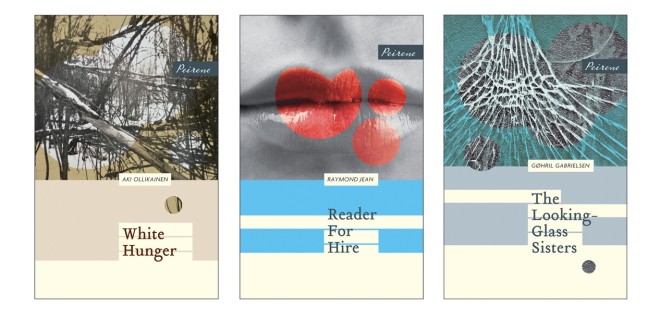
Claustrophobic, at times surreal, it fits perfectly with the Peirene Press Close Encounters theme, which comprised the three novellas below.

Chance Encounter Series

Peirene Press publish three books a year in a themed series. Their 6th series ‘Chance Encounters’ comprised three books that explored different aspects of interpersonal relationships and the importance of the Other in our development as individuals and our understanding of ourselves.

The Poisoning Angel by Jean Teulé tr. by Melanie Florence #TranslationThursday

Poisoning (3)A real-life character tour de force from French author Jean Teulé featuring a famous female serial killer from the nineteenth century.
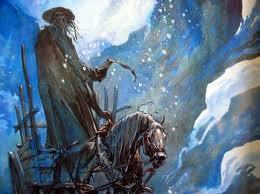
Hélène Jégado is warned about and thus introduced to the deathly effects of certain plants and flowers from a young age, she learns what to watch out for, including their superstitions.

‘Maman, who’s this Ankou you’re always talking about?’

Her mother tells her he is Death’s worker, the girl becomes obsessed with this idea, and makes it her vocation to fulfill his wishes, the only way she knows how.

Beginning with the demise of her very own maman.

Ankou‘The Ankou wears  a cloak and a broad hat,’ said Anne Jégado, sitting down again. ‘He always carries a scythe with a sharpened blade. He’s often depicted as a skeleton whose head swivels constantly at the top of his spine like a sunflower on its stem so that with one glance he can take in the whole region his mission covers.’
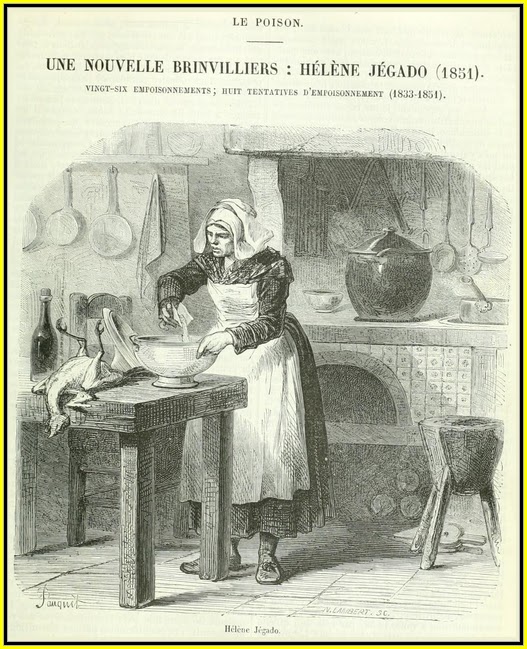
 

A story of the travels and inclinations of a girl who after poisoning her mother, travels from household to household as a domestic cook unable to restrain herself from eventually succumbing to the desire to add that little something extra to the recipe, her speciality the infamous soupes-aux-herbes.

Her deathly intent, seemingly existed without malice or evil inclination, more of an addiction, a calling, a macabre loyalty to that voice in her head, the legend of Ankou, death’s helper, leading her on, guiding her towards the next victim.

Each chapter begins with a small map of the Breton region, indicating her journey, where she will travel to next, until finally, very much later, she is confronted and must face her accusers.

Macabre, yet told with an element of detachment that stops it from being sinister. Entertaining and fascinating, a little insight into another era and a moment of unforgettable history in the north of France.

Jégado

Note: This book was an ARC (Advance Reader Copy) kindly provided by the publisher Gallic Books.

The Whispering Muse by Sjón tr. Victoria Cribb

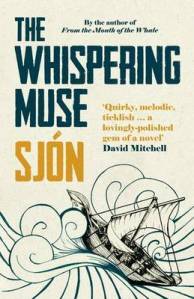
Whispering MuseThe Whispering Muse by Icelandic poet, songwriter and novelist Sjón, known for his collaborations with Björk and winner of the Nordic Council Literary Prize (equivalent of the Man Booker Prize) for this novel, was the first book I chose to read for the New year.
I chose it because it’s by an Icelandic author and because it delves into the realm of myth and fable, Alberto Manguel called it:

“an extraordinary, powerful fable – a marvel.”

I loved this gem of a book, which demanded much more from the reader wanting true fulfilment, than the mere 143 pages it was written on.

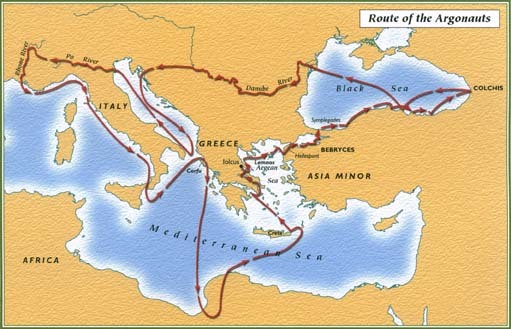
It is an invitation to embark on the adventures of The Argonauts, as told by the second mate Caeneus, who while voyaging on a ship in 1949 narrates his previous adventures on the ship Argo under Captain Jason in their quest for the Golden Fleece.

“Before embarking on his tales the mate had the habit of drawing a rotten chip of wood from his pocket and holding it to his right ear like a telephone receiver. He would listen to the chip for a minute or two, closing his eyes as if asleep, while under his eyelids his pupils quivered to and fro.”

Not being familiar with the epic poem written by Apollonius of Rhodes, (Hellenistic poet, 3rd century BC) I diverged off course to familiarise myself with its plot, and some of the named characters mentioned, as the book is full of mythological literary references that make a pleasant and fulfilling divergence in its reading, not least of which we learn why Caeneus has much respect for wood, though more is revealed on its significance later.

Set in 1949 as an elderly, eccentric Icelandic man is invited by the father of one of the fans of his work on Nordic culture and fish consumption, to embark on a voyage at sea from Copenhagen to the Black Sea, he recounts his journey as he sees it, while learning about the grand voyage of Caeneus and his many transformations.

lead_deskew=-22 checksum=dedd67dbcf472173344bd720e473d789

The sources quoted on the last page provide a link to the ancient sparks that ignited the imagination of Sjón. Familiarity with The Argonauts, Medea, Hypsipyle and Metamorphoses would benefit, but the story is equally accessible with superficial knowledge of those stories.

Entertaining, intriguing, intellectually stimulating and fun, what more could one ask for from a book read on the 1st day of the new year 2016.

I scribbled more notes in the margin than I have every done before and I’m still wondering whether the old man might have had a mild dementia, as the latter part of the book has him witnessing some strange, unaccounted for events. Nothing is ever as it seems and a reader’s imagination can contribute as much to the story as one wishes.

“I was thinking: could the voice you detect in the humming of the wood be your own voice? Like the poet who obstinately believes that he is writing about the world but is in reality only telling yet another story about himself?”

Victoire: My Mother’s Mother by Maryse Condé tr. Richard Philcox

Maryse Condé is the author I discovered on the Man Booker International long list, the author that stood out for me, even if she didn’t win the prize. Since discovering her, I have read and reviewed the book she recommended for those wishing to discover her work, Tales From the Heart: True Stories From my Childhoodvignettes of her life growing up as the youngest and 8th child of a civil servant (who had been a school principal when her mother married him) and school teacher in a black bourgeoise family.

I decide to follow this up with another tale Victoire: My Mother’s Mother, though publishers label it as fiction, it is based on the life and facts of her grandmother. Victoire was an illiterate, white skinned woman she never met, who worked as a highly reputable cook for a white Creole family, the Walbergs, a connection that her mother Jeanne, though raised, supported and educated by this family, appeared to reject.

VictoireMaryse Condé wrote this account in a desire to learn more of her family history, a quest that began by researching the life of Victoire Elodie Quidal, speaking to a lot of people and a project that would take three years to complete.

When she questioned her mother Jeanne, a woman with no discernible palate, incapable of boiling an egg, she was shocked to learn her grandmother had been a cook.

‘And she didn’t teach you anything, not even one recipe?’ She continued without answering the question. ‘She first worked in Grand Bourg for the Jovials, some relatives of ours. That ended badly. Very badly. Then …then she migrated to La Pointe and hired out her services to the Walbergs, a family of white Creoles, right up until she died.’

Maryse wanted answers, but that was as much as her mother would share, they never resumed the conversation, the years passed by, in a kind of chaos, however that conversation never left her curious mind and her grandmother began to seep into her imagination.

Sometimes I would wake up at night and see her sitting in a corner of the room, like a reproach, so different to what I had become.

‘What are you doing running around from Segu to Japan to South Africa? What’s the point of all these travels? Can’t you realise that the only journey that counts is discovering your inner self? That’s the only thing that matters. What are you waiting for to take an interest in me?’ she seemed to be telling me.

Victoire’s mother Eliette was a twin who died in childbirth at the age of fourteen. More than the shock of her pregnancy and sudden death, was the appearance of a child with clear eyes and pink skin. No one was aware of her having crossed paths with a white man, there were no whites in La Trielle where she lived except priests and at one point a garrison of soldiers, who’d been training in the area, before being despatched back to France.

Eliette’s mother Caldonia raised Victoire and became close to her, when most people were wary of her with her too white skin and transparent eyes. The only education she received was religious and at the age of 10, the Jovial’s requested she come and work for them in the kitchen. Given only the thankless tasks, she observed the others and began to acquire the culinary skills she would become so well-known for.

Obtaining a position as cook for the Dulieu-Beaufort family was a turning point in her life, perhaps even more so than finding herself pregnant at 16-years-old, for in this family she would meet her lifelong friend Anne-Marie, her same age, outraged at having been married off to Boniface Walberg, Victoire’s future employers and the beginning of a mysterious and enduring relationship, one that set people talking and would be seen by her daughter Jeanne (Maryse’s mother) with utmost disapproval.

Apart from a brief period when Victoire fell in love with another, causing a period of separation from her daughter, and a significant turning point in their relationship, she would stay loyal to the Walberg’s all her life. Though she could neither read or write, she accepted her life, despite suffering the disapproval of her unforgiving daughter Jeanne, who would obtain an excellent education and position, marry a man twenty years her senior, removing all risk of insecurity that she’d observed in her mother and previous generations, determined to avoid a similar fate.

In an interview with Megan Doll, in Bookslut Maryse Condé explains her desire to write about her grandmother:

Maryse Condé‘The story is, of course, about my grandmother but the real problem was my mother. I lost my mother when I was very young — fourteen and a half. And during the short time that I knew her I could never understand her. She was a very complex character. Some people — most people, the majority of people — disliked her. They believed she was too arrogant, too choleric. But we knew at home that she was the most sensitive person and I could not understand that contradiction between the way she looked and the way she actually was. So I tried to understand as I grew up and I discovered that it was because of a big problem with her own mother. She seems to have failed; she had the feeling that she was not a good, dutiful daughter. I had to understand the grandmother and the relationship between my mother, Jeanne, and her mother, Victoire, to understand who Jeanne was, why she was the way she was, and at the same time understand myself.’

Condé also finds a connection between her and Victoire through their creativity, her grandmother’s through her renowned cuisine, Condé’s through her writing. At times she almost appears to channel her grandmother, as she senses what she may have been thinking or why she reacted in a certain way,  connecting with this mysterious woman who was so different to the mother she knew, a woman equally misunderstood by the community around her.

This was the perfect follow-up to Tales of the Heart and an intriguing look into the impact of circumstances of birth of three generations of women, how the past constantly threatens and can mock one’s position in the present, somewhat explaining Jeanne’s instinct to distance herself from her illiterate mother while fulfilling her ambitions and then her guilt at having treated her mother badly, when she only wanted the best for her.

The two books I have read were translated from French into English.