
One Summer Chunkster
Summer reading used to be beach reads, these days I have one beach read, my one summer chunkster, otherwise I try to participate in #WITMonth, reading women writers in translation, those who originally wrote their books in a language other than English.
I won’t be putting any pressure on myself to achieve any lists or numbers, but a quick scan of my shelves shows me that I already have a few potentially excellent novels to choose from for #WITMonth.
One Summer Chunkster
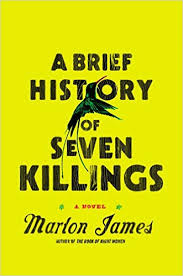
My summer chunkster isn’t a woman writer, it will be Marlon James Booker Prize winning novel A Brief History of Seven Killings, a novel that explores Jamaican life, culture, politics and the drug trade through a fictionalised telling with a multitude of characters, of the attempted assassination of Bob Marley in the late 70’s in a blend of standard English prose and Jamaican patois.
Women in Translation
A quick look at my shelves tells me that these are the novels I’ll be choosing from in August to read books by women writing in a language other than English. I’ll be reading them in the English translation and starting off with Han Kang’s The Vegetarian.
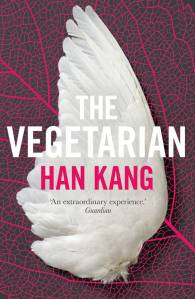

The Vegetarian by Han Kang (South Korea) tr. Deborah Smith (Korean)
Viewed in South Korea initially as ‘extreme and bizarre’ it has gone on to become a cult bestseller and in English, it was the winner of the Man Booker International Prize 2016 – an allegorical novel about modern-day South Korea told via three narratives surrounding a woman’s decision to become vegetarian; a story of obsession, choice, and our faltering attempts to understand others. I read and was blown away by her Human Acts earlier this year.
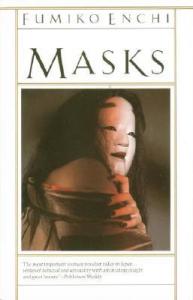
Masks by Fumiko Enchi (Japan) tr. Juliet Winters Carpenter (Japanese)
A subtle and sometimes shocking novel about seduction and infidelity in contemporary Japan and the destructive force of feminine jealousy and resentment with allusions to the masks of the traditional Japanese theatrical Nō plays and the 11th century epic The Tale of Genji.
The Rabbit House by Laura Alcoba (Argentina) tr. Polly McLean (French)
A short memoir set in 1975 Buenos Aires, Argentina when Laura is seven years old and the brutal military regime has just taken over. Her father is imprisoned and she and her mother go into hiding in ‘the rabbit house’ where the resistance movement is involved in clandestine activity that puts their lives in constant danger.


The Bridge of Beyond by Simone Schwarz-Bart (French-Guadeloupean) tr.Barbara Bray (French)
Set on the French Antillean island of Guadeloupe, a story of mothers and daughters, spiritual values and the grim legacy of slavery, a reminder of the Creole oral tradition.
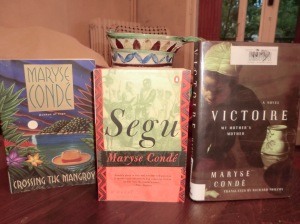
Crossing the Mangrove by Maryse Condé (Guadeloupean) tr. Richard Philcox (French)
More from Guadeloupe, following the death of a handsome outsider, villagers reveal clues that will uncover the mystery of this man’s death, a story imbued with the nuances of Caribbean culture.
A Season in Rihata by Maryse Condé (Guadeloupean) tr. Richard Philcox (French)
Condé’s second novel set in a sleepy backwater fictitious African state, a family struggle amid the backdrop of political upheaval, a community torn between progress and tradition, subject to the whims of a dictatorship.
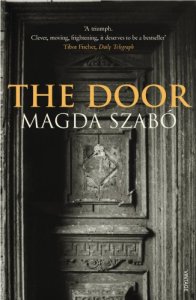
The Door by Magda Szabó (Hungary) tr. Len Rix (Hungarian)
A young writer employs an elderly woman as housekeeper, a woman everyone knows, though no one knows anything about, nor have they ever crossed her threshold. An event will provoke her to unveil glimpses of her past, shedding light on her peculiar behaviour as the relationship between the two evolves. This recent New Yorker article makes comparisons with Elena Ferrante’s My Brilliant Friend. The Hungarian Despair of Magda Szabó’s “The Door”
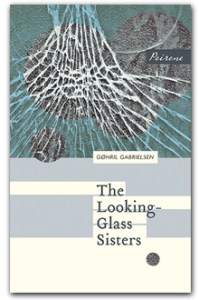
The Looking Glass Sisters by Gøhril Gabrielsen (Norway) tr. John Irons (Norwegian)
A Peirene Press novella from the Chance Encounters series and another intense relationship between two women; sisters who live an isolated life, one who nurses the other and keeps house. Until one day, a man arrives… ‘raw, dark and wonderfully different from anything else’
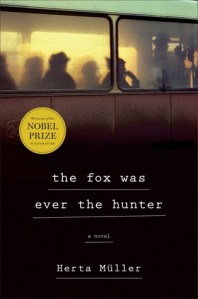
The Fox Was Ever the Hunter by Herta Müller (Romania) tr. Philipp Boehm (Romanian)
An early masterpiece set in Ceaușescu’s Romania by Herta Müller, winner of the 2009 Nobel Prize for Literature. A young school teacher returns home to find her fox fur rug has had its tail cut off. Then a foreleg. Signs she is being tracked by secret police – a portrayal of the corruption of the soul under totalitarianism.
I would love to hear any recommendations you have, that I might add to the list, anything you’ve read and absolutely loved, or are anticipating reading soon that you’ve heard good things about, let me know in the comments below. And if you’ve made a list, feel free to provide a link to it in the comments as well.
******
To buy any of these titles, click on the Book Depository link below, for which I receive a small commission to put towards buying more books:
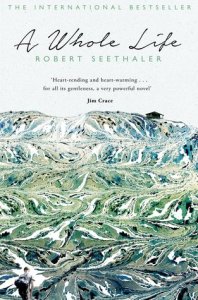 Dumped with an uncaring relative after his mother dies of consumption Andreas Eggers connects with the mountain more than with the family that barely tolerate him and when he is strong enough to resist the thrashings, will leave and make his own way as a labourer eventually earning sufficient to buy a plot of land up the mountain where he can build a cabin.
 Born in Vienna, Austria, Robert Seethaler is an actor (most recently in Paulo Sorrentino’s Youth) and writer, he grew up in Germany and now lives in Berlin. A Whole Life is his fifth novel and the first to be translated into English.
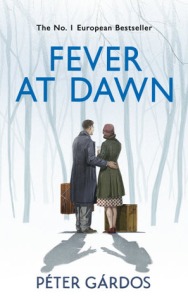 An utterly charming novel based on a true story of the courtship of the authors parents, young Hungarian survivors of the Nazi concentration camps, post World War Two.
 Gárdos has written a heart-warming, unsentimental account of their relationship and of the characters that surrounded the two young people during this time, their compatriots, the doctors and nurses and the Rabbi who received letters from a concerned friend of Lili, intent on stopping the liaison and her intention to convert to Catholicism.
 A woman working in an asylum centre as a translator is called to fill in for an interview. She utters the word she has all but banished from her vocabulary. Yes.
 While adrift from the internet and with little time to read and review, I missed this literary event, which I’ll still mention as it’s one of the literary highlights of the year for readers of world and translated fiction like me.
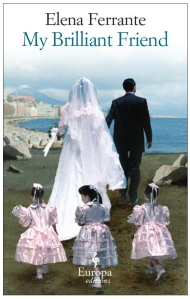 The most popular literature languages translated into English in 2015 were French, Italian, Japanese, Swedish and German while the top-selling author was Elena Ferrante, with her all-consuming, Neapolitan series of four books:




 Today the longlist of the newly formed Man Booker International (MBI) 2016 was announced. In the past, this award was made every two years to an author for a body of work, so usually an author who has written numerous novels and is recognised as having made a significant literary contribution.



 Human Acts is the author Han Kang’s attempt to make some kind of peace with the knowledge and images of the Gwangju massacre in South Korea in 1980.
 Human Acts, which seems to me to be an interesting play on words, is divided into six chapters (or Acts), each from the perspective of a different character affected by the massacre and using a variety of narrative voices.
 I believe in reason and in discussion as supreme instruments of progress, and therefore I repress hatred even within myself: I prefer justice. Precisely for this reason, when describing the tragic world of Auschwitz, I have deliberately assumed the calm, sober language of the witness, neither the lamenting tones of the victim nor the irate voice of someone who seeks revenge. I thought that my account would be all the more credible and useful the more it appeared objective and the less it sounded overly emotional; only in this way does a witness in matters of justice perform his task, which is that of preparing the ground for the judge. The judges are my readers.


 Her novel Heremakhonon(1976), which I’ve not yet read, is a semi-autobiographical story of a sophisticated Caribbean woman, teaching in Paris, who travels to West Africa in search of her roots and an aspect of her identity she has no connection with.
 In 1797, the kingdom of Segu is thriving, its noblemen are prospering, its warriors are prominent and powerful, at their peak.


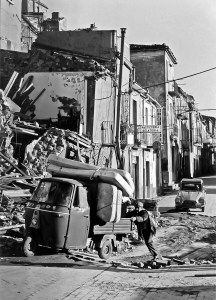 It is the 1980’s and one of the turning points in Lila’s deterioration is the earthquake that occurred on November 23, 1980 killing 3,000 and rendering 300,000 of Naples inhabitants homeless. It is used as a powerful metaphor for the destabilisation that occurs in Elena and Lila’s lives.
 It is interesting to write about this story after having just read
 Word by Word