Reading Lists for Total Confinement

Health and Well-Being

Our bodies are affected by what we eat, the air we breathe, how much we move and the strength of our immune systems. When these things are in balance they have a positive effect on the mind.

When we are told to stay at home, whether that’s due to recovering from an ailment or like now, to protect us from one, we risk becoming out of balance, physically and mentally.

We are discovering alternative ways to continue activities in unique ways, whether learning, exercising, preventing boredom or coping with the effect of the over abundance of panic/fear inducing news stories out there.

Some are creating suggestions for the #StayAtHome period, so when Paula at Book Jotter in her Winding Up the Week post asked if anyone was creating therapeutic reading lists, I thought I might create a few, I have shared a few of these titles with people already this week, being worthy titles that might assist or entertain us during this crisis.

I believe that what we consume affects our state of mind and that applies to our reading material as much as food. In order to bring balance, we can refer to books that have a positive effect on the mind, that allow us to stay in a calm, neutral state, an antidote to the excess of material and media that triggers fear, panic and other states of disequilibrium.

So over the next few days, I’ll be making a few suggestions from books I’ve read, according to the following themes, which I’ll link back to this page:

Top 5 Spiritual Well-Being Reads

  • books that suggest how to move to a perspective that fosters calm, helps prevents trigger inducing states, moves us out of drama and protects us from negative energies. And how to have fun doing it.

Top 5 Nature Inspired Reads

  • since we can’t all go there, these books put you in nature and allow you to appreciate it, going to places you’ll probably never visit, bought alive and evoking the senses without ever getting bored.

Top 5 Uplifting Reads

– they are few and far between in my opinion, books that actually make you laugh or feel good about humanity, the no drama, no trauma zone, feel good factor.

Top 5 Translated Fiction

– a sample from the millions that we’ll never read, the few that have made it through to be translated into English, providing us a glimpse into storytelling from parts of the world we probably don’t even know how to ‘Hello’ in.

Top 5 Memoirs

– Not the rich or famous, just glimpses into a slice of life of someone who has experienced something that gave them an interesting insight into life.

Top 5 Popular Fiction

– just a really good unputdownable read.

For today, I’m going to share the Top 5 Books on my TBR (To Be Read) across different genres and themes, which at the moment changes daily!

Top 5 Books On My TBR

1. Courageous Dreaming – How Shamans Dream the World Into Being (Spiritual) by Alberto Villoldo – I’ve read 3 or 4 books by Villoldo and loved them all, a psychologist and medical anthropologist who studied the spiritual practices of the Amazon and the Andes, he shares more of these ancient wisdom teachings. You can read my reviews of his other works here.

I’ve already read each of the opening chapter quotes, which I find reminiscent of our times, Chapter One, Escaping The Nightmare begins with the following thought-provoking epigram:

“I believe in looking reality straight in the eye and denying it.”

GARRISON KEILLOR

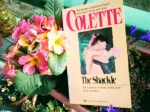
2. The Shackle by Colette (Fiction) – I LOVE Colette, my favourite French classic author, a woman with attitude, totally outside her time, read Introduction to Colette (my review)here. I bought this novella because Vivian Gornick discusses The Shackle and The Vagabond in her new book Unfinished Business – Notes of a Chronic Re-Reader. I can’t read that till I’ve at least read The Shackle!

I have also read The Complete Claudine, (my review) a series of four novellas that can be read as one and I have Earthly Paradise, a selection of extracts from her  memoirs, notebooks, and letters which together provide an insight into her life.

3. The Book of Harlan by Bernice L. McFadden (Historical Fiction)– Last year I read Praise Song for the Butterflies,(my review) my first novel by McFadden and it was excellent. She seems to write well researched, easy reading novels that teach us something interesting, that earlier novel was inspired by a tale told her by two women she met when visiting Ghana concerning a practice called trokosi.

The Book of Harlan is historical fiction set during WWII about black American musicians in Paris invited to perform in a Montmartre, affectionately referred to by them as “The Harlem of Paris”. Also based on extensive research, it blends the stories of her actual ancestors and imagined characters.

4. Surfacing by Kathleen Jamie (Nature Essays) – One of my favourite nature essayists, Kathleen Jamie is a poet and an astute observer of sensory detail no matter what she is studying. Surfacing is her latest blend of memoir, cultural history, and travelogue of her visits to Alaska, Orkney and Tibet. From the thawing tundra linking a Yup’ik village in Alaska to its hunter-gatherer past to the shifting sand dunes of the preserved homes of neolithic farmers in Scotland, she explores the natural world, considering that which surfaces and that which connect us with the past.

My reviews of her debut collection Findings and Sightlines here.

5. Plainsong by Kent Haruf (Fiction) – There’s nothing like a good trilogy and I’ve read a couple of excellent ones, such as Sandra Gulland’s excellent historical fiction of the life of Josephine Bonaparte: The Many Lives & Secret Sorrows of Josephine B, Tales of Passion – Tales of Woe, The Last Great Dance on Earth and Nancy E Turner’s memoirs of her great grandmother Sarah Prine, an astonishing, willful, unforgettable pioneering woman who seeks a living in the harsh, untamed lands of the Arizona Territory circa late 1800’s, These is My Words, Sarah’s Quilt, A Star Garden.

Kent Haruf’s Plainsong trilogy follows the lives of a cast of characters in a small farming town in Colorado.

Ursula K. Le Guin said when he passed away in 2014 that Haruf’s

“courage and achievement in exploring ordinary forms of love – the enduring frustration, the long cost of loyalty, the comfort of daily affection – are unsurpassed by anything I know in contemporary fiction”.

I’ve just finished Octavia E. Butler’s excellent novel Kindred, so tonight I’ll start one of these. Watch this space!

Please take care everyone, don’t take unnecessary risks, stay at home and be safe.

What exciting read do you have on your TBR to read next?


Her Mother’s Mother’s Mother and Her Daughters by Maria José Silveira (Brazil) tr. Eric.M.B. Becker

Just brilliant.

What a perfect way to navigate through 500 years of history of a country, without ever getting bogged down in the detail, to follow the lives of daughters, a matrilineal lineage, whose patterns are affected if not dictated by the context of the era within which they’ve lived.

An omniscient narrative begins with the daughter of a native tribeswoman, who leaves her village and family on the arm of a Portuguese ship hand, and moves to the many generations living on sugarcane plantations, to the era of daughters of wealthy business owners living off the profits of those ancestors; from the bitter to the sweet, the uncaring to the revolutionary, five centuries of women, interlaced through stories.

Each chapter follows one young woman and though some of their lives are short-lived, they at least give birth to one daughter, even if some don’t live to raise them. Though unlikely in reality that so many generations would all produce at least one daughter who survives long enough to reproduce, this construct provides the framework for telling the stories, weaving together the historical threads, allowing only us as readers to see what they often don’t, that they are, that we all connected if we look back far enough, or inside deep enough.

Translator Eric M. B. Becker, the winner of a 2014 PEN/Heim Translation grant, produces an excellent translation. By leaving particularly Brazilian terms such as “emboaba” and “cafuzo” untranslated, Becker manages to make readers of English understand the untranslatable within its context. The novel maintains a casual, dreamlike quality, as if the narrator were telling these stories to a friend. Each character is given their own original voice, emotions, and musicality. If some syntax feels unexpected, it is almost always for the benefit of sound.

L. E. Goldstein, Harvard Review

Their stories are grouped into five parts:
A Shortlived Romance – Inaia (1500 – 1514) and her daughter Tebereté (1514 -1548)
Desolate Wilderness -six daughter descendants, the slave years (1531 – 1693)
Improbable Splendour – five daughters, the commercial trading years, accumulating wealth (1683 – 1822)
Vicious Modernity – four daughters, revenge, jealousy, naivety, the elite upper classes (1816 – 1906)
A Promising Sign – three daughters, working class, equality, human rights, exile, freedom (1926 – present)

There are so many stories, it is difficult to retain them all and remember them, and for this it’s necessary to slow-read this book to really take in the breadth of storytelling, which implicitly tells the greater story of a country’s evolution, growth, pain and development. But what better way than to inhabit the lives of one family and follow them over the course of time, recalling the fates of each character and the essence of the life they lived, was enabled or disabled by the time they lived through.

The narrator makes an appearance from time to time, like the hand that threads the needle, they are threadbare and unintrusive, like a pause in reading to make a cup of tea, they don’t disturb the reader, if anything we are comforted by the presence.

I absolutely loved it, I read this because I seek out works by women in translation to read in August for #WITMonth and finding a book like this is such a joy, for it gives so much in its reading, great storytelling, a potted history of Brazil, a unique multiple women’s perspective and an introduction to an award winning author, the writer of ten novels, this her first translated into English.

The variety of their personalities, and the pain, beauty, and strength they display shows that genetics alone does not make a person who they are. In this book, the characters’ environments form them, from the people with whom they interact to the great changes taking place in the pulsing heart of Brazil itself.

L. E. Goldstein, Harvard Review

I wrote most of this review back in August last year, and as you know, I wasn’t capable of sharing anything for some time after that. I passed the book on to a wonderful friend who came to be with me during that time, and for that reason too I’m unable to share any quotes.

It was one certainly of my favourite reads of 2019. A real gem.

Thank you to Enrico for his excellent review that made me get my own copy of the book to read. Read his review, it’s more of an incisive literary criticism that looks at the challenges of writing a novel like this and how Silveira overcomes them.


International Booker Long List 2020

The International Booker Prize long list was announced today Feb 27. Thirteen novels of translated fiction from 8 languages, 11 countries, six male authors and seven women. The judges this year were looking for distinctive voices that stayed with them, fiction that once you’d read it, you couldn’t stop thinking about.

The prize is awarded every year for a single book that is translated into English and published in the UK or Ireland. It aims to encourage more publishing and reading of quality fiction from all over the world and to promote the work of translators.  The contribution of both author and translator is given equal recognition, with the £50,000 prize split between them.

Ted Hodgkinson, Chair of Judges said:

‘What a thrill to share a longlist of such breadth and brilliance, reflecting a cumulative artistry rooted in dialogue between authors and translators, and possessing a power to enlarge the scope of lives encountered on the page, from the epic to the everyday. Whether reimagining foundational myths, envisioning dystopias of disquieting potency, or simply setting the world ablaze with the precision of their perceptions, these are books that left indelible impressions on us as judges. In times that increasingly ask us to take sides, these works of art transcend moral certainties and narrowing identities, restoring a sense of the wonderment at the expansive and ambiguous lot of humanity.’

Below are the novels on the list with a short summary of their premise. Surprisingly, I have read and reviewed two (reviews linked below) and they are indeed thought provoking novels, and I have The Adventures of China Iron on my shelf to read. The shortlist will be announced on April 2nd.

The Enlightenment of The Greengage Tree by Shokoofeh Azar (Iran) Translated by Anonymous from Farsi

Set in Iran in the decade following the 1979 Islamic Revolution, this moving, richly imagined novel is narrated by the ghost of Bahar, a 13-year-old girl whose family is compelled to flee their home in Tehran for a new life in a small village, hoping in this way to preserve both their intellectual freedom and their lives. They soon find themselves caught up in the post-revolutionary chaos that sweeps across the country, a madness that affects both living and dead, old and young.
The Enlightenment of the Greengage Tree speaks of the power of imagination when confronted with cruelty, and of our human need to make sense of the world through the ritual of storytelling. Through her unforgettable characters and glittering magical realist style, Azar weaves a timely and timeless story that juxtaposes the beauty of an ancient, vibrant culture with the brutality of an oppressive political regime.
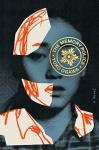
The Memory Police  by Yoko Ogowa (Japan) Translated by Stephen Snyder from Japanese

Hat, ribbon, bird, rose. To the people on the island, a disappeared thing no longer has any meaning. It can be burned in the garden, thrown in the river or handed over to the Memory Police. Soon enough, the island forgets it ever existed. When a young novelist discovers that her editor is in danger of being taken away by the Memory Police, she desperately wants to save him. For some reason, he doesn’t forget, and it becomes increasingly difficult for him to hide his memories. Who knows what will vanish next?
The Memory Police is a beautiful, haunting and provocative fable about the power of memory and the trauma of loss, from one of Japan’s greatest writers.

The Adventures of China Iron by Gabriela Cabezón Cámara (Argentina)Translated by Iona Macintyre & Fiona Mackintosh from Spanish

1872. The pampas of Argentina. China is a young woman eking out an existence in a remote gaucho encampment. After her no-good husband is conscripted into the army, China bolts
for freedom, setting off on a wagon journey through the pampas in the company of her new-found friend Liz, a settler from Scotland. While Liz provides China with a sentimental education and schools her in the nefarious ways of the British Empire, their eyes are opened to the wonders of Argentina’s richly diverse flora and fauna, cultures and languages, as well as to the ruthless violence involved in nation-building.
This subversive retelling of Argentina’s foundational gaucho epic, Martín Fierro, is a celebration of the colour and movement of the living world, the open road, love and sex, and the dream of lasting freedom. With humour and sophistication, Gabriela Cabezón Cámara has created a joyful, hallucinatory novel that is also an incisive critique of national origin myths and of the casualties of ruthless progress.
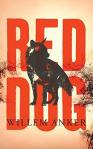
Red Dog by Willem Anker (South Africa) Translated by Michiel Heyns from Afrikaans

In the 18th century, a giant bestrides the border of the Cape Colony frontier. Coenraad de Buys is a legend, a polygamist, a swindler and a big talker; a rebel who fights with Xhosa chieftains against the Boers and British; the fierce patriarch of a sprawling mixed-race family with a veritable tribe of followers; a savage enemy and a loyal ally. Like the wild dogs who are always at his heels, he roams the shifting landscape of southern Africa, hungry and spoiling for a fight.
Red Dog is a brilliant, fiercely powerful novel – a wild, epic tale of Africa in a time before boundaries between cultures and peoples were fixed.

The Other Name: Septology I – II byJon Fosse (Norway) Translated by Damion Searls from Norwegian

Follows the lives of two men living close to each other on the west coast of Norway. The year is coming to a close and Asle, an ageing painter and widower, is reminiscing about his life. He lives alone, his only friends being his neighbour, Åsleik, a bachelor and traditional Norwegian fisherman-farmer, and Beyer, a gallerist who lives in Bjørgvin, a couple hours’ drive south of Dylgja, where he lives. There, in Bjørgvin, is another Asle, also a painter. He and the narrator are doppelgangers – two versions of the same person, two versions of the same life. Written in hypnotic prose that shifts between the first and third person, The Other Name calls into question concrete notions around subjectivity and the self. What makes us who we are? And why do we lead one life and not another? With The Other Name, the first volume in a trilogy of novels, Fosse presents us with an indelible and poignant exploration of the human condition that will endure as his masterpiece.
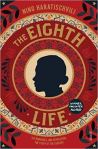
The Eighth Life by Nino Haratischvili (Georgia) Translated by Charlotte Collins and Ruth Martin from German

At the start of the 20th century, on the edge of the Russian empire, a family prospers. It owes its success to a delicious chocolate recipe, passed down the generations with great solemnity and caution. A caution which is justified: this is a recipe for ecstasy that carries a very bitter aftertaste…
Stasia learns it from her Georgian father and takes it north, following her new husband Simon to his posting at the centre of the Russian Revolution in St Petersburg. But Stasia’s will be the first of a symphony of grand, if all too often doomed, romances that swirl from sweet to sour in this epic tale of the red century.
Tumbling down the years, and across vast expanses of longing and loss, generation after generation of this compelling family hears echoes and sees reflections. Great characters and greater relationships come and go and come again; the world shakes, and shakes some more, and the reader rejoices to have found at last one of those glorious old books in which you can live and learn, be lost and found, and make indelible new friends.

Serotonin by Michel Houellebecq (France) Translated by Shaun Whiteside from French

Dissatisfied and discontented, Florent-Claude Labrouste feels he is dying of sadness. His young girlfriend hates him and his career as an engineer at the Ministry of Agriculture is pretty much over. His only relief comes in the form of a pill – white, oval, small. Recently released for public consumption, Captorix is a new brand of anti-depressant which works by altering the brain’s release of serotonin.
Armed with this new drug, Labrouste decides to abandon his life in Paris and return to the Normandy countryside where he used to work promoting regional cheeses, and where he had once been in love. But instead of happiness, he finds a rural community devastated by globalisation and European agricultural policies, and local farmers longing, like Labrouste himself, for an impossible return to what they remember as the golden age.

Tyll by Daniel Kehlmann (Austria-Germany) Translated by Ross Benjamin from German

He’s a trickster, a player, a jester. His handshake’s like a pact with the devil, his smile like a crack in the clouds; he’s watching you now and he’s gone when you turn. Tyll Ulenspiegel is here!
In a village like every other village in Germany, a scrawny boy balances on a rope between two trees. He’s practising. He practises by the mill, by the blacksmiths; he practises in the forest at night, where the Cold Woman whispers and goblins roam. When he comes out, he will never be the same. Tyll will escape the ordinary villages. In the mines he will defy death. On the battlefield he will run faster than cannonballs. In the courts he will trick the heads of state. As a travelling entertainer, his journey will take him across the land and into the heart of a never-ending war. A prince’s doomed acceptance of the Bohemian throne has European armies lurching brutally for dominion and now the Winter King casts a sunless pall. Between the quests of fat counts, witch-hunters and scheming queens, Tyll dances his mocking fugue; exposing the folly of kings and the wisdom of fools.
With macabre humour and moving humanity, Daniel Kehlmann lifts this legend from medieval German folklore and enters him on the stage of the Thirty Years’ War. When citizens become the playthings of politics and puppetry, Tyll, in his demonic grace and his thirst for freedom, is the very spirit of rebellion – a cork in water, a laugh in the dark, a hero for all time.

Hurricane Season by Fernanda Melchor (Mexico) Translated by Sophie Hughes from Spanish

Hurricane Season opens with the macabre discovery of a decomposing body in a small waterway on the outskirts of La Matosa, a village in rural Mexico. It soon becomes apparent that the body is that of the local witch, who is both feared by the men and relied upon by the women, helping them with love charms and illegal abortions.
Mirroring the structure of Gabriel García Márquez’s Chronicle of a Death Foretold, the novel goes back in time, recounting the events which led to La Matosa’s witch’s murder from several perspectives. Hurricane Season quickly transcends its detective story constraints: the culprits are named early on in the narrative, shifting the question to why rather than who. Through the stories of Luismi, Norma, Brando and Munra, Fernanda Melchor paints a portrait of lives governed by poverty and violence, machismo and misogyny, superstition and prejudice. Written with a brutal lyricism that is as affecting as it is enthralling, Hurricane Season, Melchor’s first novel to appear in English, is a formidable portrait of Mexico and its demons.

Faces on the Tip of My Tongue by Emmanuelle Pagano (France) Translated by Sophie Lewis & Jennifer Higgins from French

Meetings, partings, loves and losses in rural France are dissected with compassion.
The late wedding guest isn’t your cousin but a drunken chancer. The driver who gives you a lift isn’t going anywhere but off the road. Snow settles on your car in summer and the sequins found between the pages of a borrowed novel will make your fortune. Pagano’s stories weave together the mad, the mysterious and the dispossessed of a rural French community with honesty and humour. A superb, cumulative collection from a unique French voice.

Little Eyes by Samanta Schweblin (Argentina) Translated by Megan McDowell from Spanish

They’ve infiltrated homes in Hong Kong, shops in Vancouver, the streets of Sierra Leone, town squares of Oaxaca, schools in Tel Aviv, bedrooms in Indiana.
They’re not pets, nor ghosts, nor robots. They’re real people, but how can a person living in Berlin walk freely through the living room of someone in Sydney? How can someone in Bangkok have breakfast with your children in Buenos Aires, without you knowing? Especially when these people are completely anonymous, unknown, untraceable.
The characters in Samanta Schweblin’s wildly imaginative new novel, Little Eyes, reveal the beauty of connection between far-flung souls – but they also expose the ugly truth of our increasingly linked world. Trusting strangers can lead to unexpected love, playful encounters and marvellous adventures, but what if it can also pave the way for unimaginable terror? Schweblin has created a dark and complex world that is both familiar but also strangely unsettling, because it’s our present and we’re living it – we just don’t know it yet.
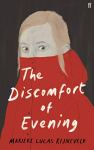
The Discomfort of Evening by Marieke Lucas Rijneveld (The Netherlands) Translated by Michele Hutchison from Dutch

Jas lives with her devout farming family in the rural Netherlands. One winter’s day, her older brother joins an ice skating trip. Resentful at being left alone, she makes a perverse plea to God; he never returns. As grief overwhelms the farm, Jas succumbs to a vortex of increasingly disturbing fantasies, watching her family disintegrate into a darkness that threatens to derail them all.
A bestselling sensation in the Netherlands by a prize-winning young poet, Marieke Lucas Rijneveld’s debut novel lays everything bare. It is a world of language unlike any other, which Michele Hutchison’s striking translation captures in all its wild, violent beauty.

Mac and His Problem by Enrique Vila-Matas (Spain) Translated by Margaret Jull Costa & Sophie Hughes from Spanish

Mac is not writing a novel. He is writing a diary, which no one will ever read. At over 60, and recently unemployed, Mac is a beginner, a novice, an apprentice – delighted by the themes of repetition and falsification, and humbly armed with an encyclopaedic knowledge of literature.
Mac’s wife, Carmen, thinks he is simply wasting his time and in danger of sliding further into depression and idleness. But Mac persists, diligently recording his daily walks through the neighbourhood. It is the hottest summer Barcelona has seen in over a century.
Soon, despite his best intentions (not to write a novel), Mac begins to notice that life is exhibiting strange literary overtones and imitating fragments of plot. As he sizzles in the heatwave, he becomes ever more immersed in literature – a literature haunted by death, but alive with the sheer pleasure of writing.


The Memory Police by Yoko Ogawa tr. Stephen Snyder

From an extraordinary writer and storyteller who defies categorisation, another tale that stretches and flexes the readers imagination, hauntingly written, leaving me to wonder just how she does it, a thought I had after reading her novel, or story collection Revenge in 2013.

The Memory Police are an oppressive, bureaucratic menace slowly making things on the island disappear along with all memories of them in the minds of inhabitants. And they enforce forgetfulness. Checking up on people to be sure memory has been erased, because though for most the memories disappear without effort, in some they linger. Those whose memory somehow stays intact live in danger, they begin to disappear, go in to hiding or are forcefully removed.

Our unnamed narrator has lost both her parents, taken by the police and no longer heard of; though her mother tried to preserve and hide some of the things that disappeared through her art. The daughter is a novelist, as long as words, imagination and voice exist she continues to write. She accepts her fate and continues to adapt to each disappearance with the help of an old man she is close to and the company of the neighbour’s dog, when its owners are removed.

Her editor R goes into hiding due to his ability to remember and tries to instill in her the importance and value of memories, while sometimes a memory returns, for her, it no longer has emotional significance or meaning. She possesses empathy but is void of nostalgia, without the objects the memories disappear and even when one reappears, it no longer evokes any emotion or feeling.

Gathering photographs (when they become the next thing to disappear) and albums to burn, R makes a desperate effort to stop her:

“Photographs are precious. If you burn them, there’s no getting them back. You mustn’t do this. Absolutely not.”
“But what can I do? The time has come for them to disappear,” I told him.
“They may be nothing more than scraps of paper, but they capture something profound. Light and wind and air, the tenderness or joy of the photographer, the bashfulness or pleasure of the subject. You have to guard these things forever in your heart. That’s why photographs are taken in the first place.”

It’s a dystopian novel that focuses more on the survival of the citizens than on exploring the tyranny that oppresses them, the Memory Police don’t seem to be afflicted with “forgetting” and we don’t understand what motivates them. Is it an allegory of collective degeneration, or an attempt to make the reader understand something that is universal among the aged? Suffering seems to rest with those to retain memory, those who forget adapt, and forget that they have forgotten.

There doesn’t seem to be any purpose, merely an exploration of those aspects of humanity of the oppressed to survive and care for one another, whether that means putting one’s life at risk to hide someone who does retain memories, to seek out old memories at the risk of being caught, caring for an old man and a dog.

Some things are innate to humanity and no matter what afflicts us, we are endlessly adaptable, continuing to find ways to work around and/or accept obstacles, here presented in a somewhat absurd manner, highlighting our inability to fight against adaptability. We have no choice but to adapt, it’s written into our genes, and this regime has somehow managed to find a way to control and rewrite them.

Alongside what is happening on the island’s (sur)real world, our protagonist writes a novel about a woman taking typing lessons from a man who will put her in a tower, these chapters are interspersed throughout the narrative and provide an alternative, thought-provoking aspect to the wider story.

When novels disappear and hers remains unfinished despite numerous attempts to write at the request of R, and a loss of inspiration, the old man asks her if it’s possible to write about something in a novel if you’ve never experienced it.

“I suppose it is. Even if you haven’t seen or heard about something, it seems you can just imagine it and then write it down? It doesn’t have to be exactly like the real thing; it’s apparently all right to make things up or even lie.”

“That’s right. Apparently no one blames you for lying in a novel. You can make up the story out of nothing, starting from zero. You write about something you can’t see as though you can see it. You make something that doesn’t exist just by using words. That’s why R says we shouldn’t give up, even if our memories disappear.”

Each disappearance activates the reader’s imagination and the novel provokes many questions that make this an interesting one to discuss.

It’s a novel that stayed with me long after reading, wondering what it was getting at; just as you think you’ve found some deeper meaner, it kind of gets erased, there are no easy conclusions…it’s like the advent of short term memory loss, a literary version of mild cognitive impairment, an affliction all humans post middle age experience and one this novel makes you experience what that might be like in reading. Astonishing.

Further Reading

The Guardian: The Memory Police by Yōko Ogawa review – profound allegory of loss by Madeleine Thien

NY Times Article: How “The Memory Police” makes you See  by Jia Tolentino

Thanks to an email from Peirene Press this morning sharing news of the long list nomination of their novella Faces On the Tip of My Tongue by the French author Emmanuelle Pagano, I see that both The Memory Police and The Enlightenment of the Greengage Tree by Shokoofeh Azar have also been nominated for the International Booker 2020.

The Enlightenment of the Greengage Tree by Shokoofeh Azar

In yesterday’s post I mentioned I had just finished reading this book, a wonderful, if challenging work of translated fiction by the Iranian author Shokoofeh Azar, who lives in exile in Australia. This novel was shortlisted for the Stella Prize in 2018 (a literary award that celebrates Australian women’s writing and an organisation promoting cultural change).
I was very quickly pulled into this book and for the most part seamlessly travelled between the realistic part of the story and parts where the author shifted into the character’s imagination.

Azar uses the lyrical magic realism style of classical Persian storytelling to tell the story of a family of five in the period immediately after the 1979 Islamic revolution and the story is narrated by the spirit of the 13 year old daughter. When fire takes their daughter and much that have till then valued, the family flees Tehran in search of a place as far away as possible from conflict and interference, making their home on a hill above the sleepy village of Razan.

One day Beeta tells Bahar: ‘When life is so deficient and mundane, why shouldn’t imagination supplement reality to liven it up?’

The story shifts between the quiet lulls where it appears they have realised such a utopia and flights of the imagination, where we are temporarily protected from exposure to the harshness and brutality of reality, just as this family attempts to do to preserve their way of life and life itself.

Azar says she wrote the story, in an attempt to answer this question:

Can we survive without passion and hope in a religious dictatorial system?

By letting go of the need to have all of the story narrated in the realistic voice, we hang loosely onto the storyline and then detach, like a kite being given more length of string, flying high above, sometimes so high we no longer recognise where we are, before being pulled back to ground.

I managed to stay with the narrative until Beeta’s metamorphosis around page 178, where I felt my mind spinning, trying to stay with it, wondering what was happening. I almost felt defeated, and then arrived that wonderful moment of clarification, when without giving anything away, the father is forced by the dictatorship to write a statement, and as readers we are given insight into the reality we have been protected from and how the imagination has carried us through it. And though we might question what was real and what wasn’t, it no longer matters, because we have been made to understand why.  As if the universe is making a point here, this realisation ironically appears on page 222.

Dad wrote everything again. This time he cut out all the parts he had realized were incomprehensible to their stale minds, and embellished here and there to make it thoroughly believable.

This made me very curious to understand more about the Persian style of storytelling, whether this was the author’s imagination or something that was inherent in the culture she came from. And this is one of the reasons I love reading translated fiction, because of the gift of this kind of insight into another culture’s storytelling and way of thinking, how they cope with the often harsh reality of life.

Asked in an interview with the LARB (LA Review of Books) about her use of magical realism, Azar said:

Magical realism comes from an old or ancient deep-seated insight. It is more than a literary style that you can learn at university or from the books. I did not learn it only by reading magic realism modern fictions, but I also learned from mythic texts, Persian classic texts, and my own people’s culture. People of old or ancient cultures sometimes seek the metaphysical solution for realistic problems. And it has nothing to do with superstition or religion. If you learn to look at these beliefs in the right way and deeply, you can find the roots of myths, and important and beautiful meanings in these beliefs.

I highlighted many passages, too numerous to include, but leave you with this one:

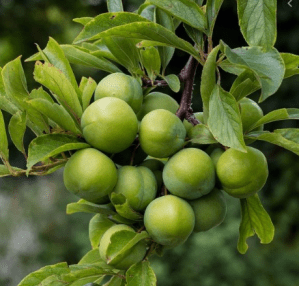
Persian Greengage Plum Tree

I looked at the eyes of the ghosts sitting around the fire and at Beeta, and suddenly I realized that we dead are the sorrowful part of life, while the living are the joyful side of death. And yet, Beeta was not joyful and it was the sad side of life that she didn’t even know she should be joyful in life because there was nothing else she could do. I wanted to tell her this, but was afraid of bringing her damaged spirit down even further. Fortunately, she herself eventually spoke and said, “It seems that from among you, I am the more fortunate because nobody killed me. But I don’t feel happy at all.”

She looked at we who had died. The dead who had been the first to meet her in the world of the living outside Razan. An old man in the group responded, “This is because you don’t yet realize how beautiful, young, and healthy you are.” Beeta smiled and her cheeks reddened by the light of the fire in silent emotion; and all of us who were dead saw how good the smile looked on her. But as she recalled dark memories, her smile faded and she said, “But the man who loved me simply turned his back on me and married a young girl.” The middle-aged man said, “All the better! It means you were lovable enough but he wasn’t smart enough to realize it.”

This is one of those books that demands perseverance, for which we are warmly rewarded when we do so. I am pleased to read that she is at work on a second novel in a similar style asking the question:

Can true love exist in a religious dictatorship in which the body and love are censored? When you are not allowed to love your body and mind, can you truly be in love with another’s body and mind?

Further Reading:

Deep Into the Heart: An Interview With Shokoofeh Azar by Robert Wood, LARB

The Stella Interview: where she discusses the experiences that informed the novel, the writers that inspire her work and how writing is a means of resistance

Thank you to Daniela at Europa Editions for sending me a review copy.

Top 10 Books by Women In Translation #100BestWIT

Meytal Radzinski, the founder of #WITMonth, an initiative to encourage people to read more books by women that have been translated from another language, therefore promoting diversity, has asked readers to share their top 10 ten books by women writers in translation.

I initially shared mine in a thread on twitter, but since not everyone uses twitter, I thought I’d share my ten reads here as well before #WITMonth starts (August 1st) and if I can manage it, I may even share a picture of the pile of books from which I hope to read during August.

So here are my top 10 reads of books by women in translation, with links to my reviews, not in any particular order, although I have to say the first probably is my absolute favourite.

My Top 10 Books by Women in Translation

1. The Bridge of Beyond by Simone Schwartz-Bart (Guadeloupe) tr.Barbara Bray (French)

– the life of Telumee, the last in a line of proud Lougandor women on the French Antillean island of Guadeloupe. My Outstanding Read of 2016.

“a fluid, unveiling of a life, and a way of life, lived somewhere between a past that is not forgotten, that time of slavery lamented in the songs and felt in the bones, and a present that is a struggle and a joy to live, alongside nature, the landscape, the community and their traditions”

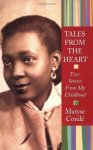
2. Tales From The Heart, True Stories From My Childhood by Maryse Condé (Guadeloupe)tr. Richard Philcox (French)

– essays of her early years in Guadeloupe, her education, and growing awareness of her ignorance of literature from the Caribbean & her own family history, when she moves to further her studies in Paris.

The ideal introduction to her many wondrous novels, including her masterpiece, the historical novel Segu and the novel of her grandmother’s life Victoire, My Mother’s Mother.

3. Zuleikha by Guzel Yakhina (Russia) tr. Lisa Hayden (Russian)

– an historical novel inspired by the author’s grandmother’s memories of exile in a Russian gulag (labour camp), published in English 100 years since the gulags first began in Russia.

The novel  follows the story of a young woman for whom exile is a kind of emancipation, freed from the tyranny of marriage, she finds a new role and skills despite the hardship, and experiences genuine love for the first time.

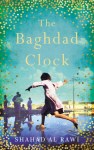
4. The Baghdad Clock by Shahad Al Rawi (Iraq) tr. Luke Leafgren (Arabic)

– Slightly surreal, nostalgic, deeply philosophic portrayal of a neighbourhood in Baghdad, of childhood and early youth lived in the shadow of war.

We are the last teardrop aboard the ship, the last smile, the last sigh, the mast footstep on its ageing pavement. We are the last people to line their eyes with its dust. We are the ones who will tell its full story. We will tell it to neighbours’ children born in foreign countries, to their grandchildren not yet born – we, the witnesses of everything that happened.

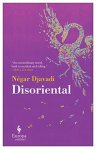
5. Disoriental by Negar Djavadi (Iran) tr. Tina Kover (French)

– the story of a family forced to flee Iran, a family history, a modern young woman now living in France, sits in a fertility clinic but something about her situation isn’t as it should be, she reflects on the past, while waiting to control the outcome of her present, a clash of the old and the new.

“That’s the tragedy of exile. Things, as well as people, still exist, but you have to pretend to think of them as dead.”

6. So Long A Letter by Mariama Bâ (Senegal) tr. Modupé Bodé Thomas (French)

– an epistolary novella, a letter from a widow to her best friend, reflecting on the emotional fallout of her husband’s death, unable to detach from memories of better times, a lament.

I am not indifferent to the irreversible currents of the women’s liberation that are lashing the world. This commotion that is shaking up every aspect of our lives reveals and illustrates our abilities.
My heart rejoices every time a woman emerges from the shadows. I know that the field of our gains is unstable, the retention of conquests difficult: social constraints are ever-present, and male egoism resists.
Instruments for some, baits for others, respected or despised, often muzzled, all women have almost the same fate, which religions or unjust legislation have sealed.

7. The Complete Claudine by Colette (France) tr. Antonia White (French)

– Claudine at school, in Paris, in Marriage and with her friend Annie, the unfettered, exuberant joys of teenage freedom vs the the slap in the face of an approaching adult, urban world.

“a novel that anticipates by ninety years, the contemporary fashion for wry, first-person narratives by single, thirty something career women. Its heroine examines her addictions to men with amused detachment, and flirts, alternately, with abstinence and temptation. Is there love without complete submission and loss of identity? Is freedom really worth the loneliness that pays for it? These are Colette’s abiding questions.”

8. Woman at Point Zero by Nawal El Saadawi (Egypt) tr. Sherif Hetata (Arabic)

– an Egyptian woman is imprisoned for killing a man, soon to be executed. Nawal El Saadawi gains permission to interview before her death. A spell-binding tale of lifelong oppression & desire to be free of it, told with compassionate sensitivity.

The idea of ‘prison’ had always exercised a special attraction for me. I often wondered what prison life was like, especially for women. Perhaps this was because I lived in a country where many prominent intellectuals around me had spent various periods of time in prison for ‘political offences’. My husband had been imprisoned for thirteen years as a ‘political detainee’.

9. Human Acts by Han Kang (South Korea) tr. Deborah Smith (Korean)

– the Gwangju massacre in South Korea in 1980 witnessed from multiple perspectives, an attempt at understanding humanity.

At night, though, when all the grown-ups were all sitting in the kitchen and I knew I’d be safe…I crept into the main room in search of that book. I scanned every spine until finally I got to the top shelf; I still remember the moment when my gaze fell upon the mutilated face of a young woman, her features slashed through with a bayonet. Soundlessly, and without fuss, some tender thing deep inside me broke. Something that, until then, I hadn’t even realised was there.

10. The Wall by Marlen Haushofer (Austria) tr. Shaun Whiteside (German)

– living behind an invisible wall, alone, with a few animals, a stream of consciousness narrative of one woman’s courageous survival, using the feminine instinct .

The Wall is a muted critique of consumerism and a delicate poem in praise of nature, a challenge to violence and patriarchy, an encomium to peace and life-giving femininity, a meditation on time, an observation on the differences and similarities between animals and humans, and a timeless minor masterpiece.

If you have a top 5 or 10 to share, or even just one favourite, share it on twitter or instagram using the hashtag below:

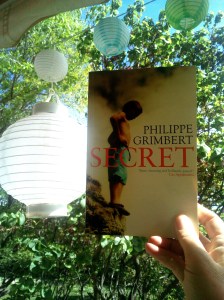
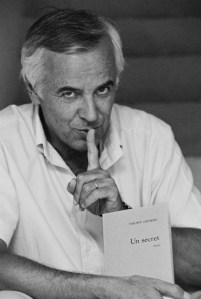
Secret by Philippe Grimbert (France) tr. Polly McLean

Twenty years after his parents jumped from the window of their Parisian apartment to their deaths, Philippe Grimbert decided to write about the secret that had overwhelmed their lives. “I had been in mourning for those 20 years,” says the French psychoanalyst, “which is a lot more than Freud suggests is normal. The Guardian, April 2007

Secret, by Philippe Grimbert, translated from French by Polly McLean, is a haunting story of a boy who senses something held back from him from those around him, it is post-war Paris, he is an only child who imagines he has a make-believe brother, seeing things from his perspective as well as his own, even going so far as to fight with him.

He is aware of his mother’s silences, his father’s sadness, without knowing the reason why, yet knowing not to ask. They are athletic, good-looking parents, but they birthed him, a delicate child they must keep from the jaws of death.

I survived, thanks to the care of doctors and the love of my mother. I would like to think my father loved me too – overcoming his disappointment and finding in care, worry and protectiveness enough to stoke his feelings. But his first look left its trace on me, and I regularly glimpsed that flash of bitterness in his eyes.

Full of fear at school, one day after watching a particularly disturbing documentary about the Holocaust, he is overcome by emotion at the insulting comment of a boy in the class and starts a fight, an act completely out of character for him and yet he had felt an inner rage that compelled him to react violently.

The incident left me with a patch above one eye that I wore around school with great pride. But the injury brought me much more than ephemeral glory – it was the sign for which Louise had been waiting.

The neighbour Louise is the only person he tells the truth about why he got in the fight.

Louise was always my favourite, even though she wasn’t actually part of the family. Perhaps I felt a deeper complicity with her than with my blood relatives. Affectionate as they were, my uncles, aunts and grandparents seemed surrounded by an intangible barrier forbidding questions and warding off confidences. A secret club, bound together by an impossible grief.

He is surprised at how upset she becomes, not at his behaviour, but something else, something greater, the burden of which overwhelms her, something she too has known all these years, and believes now she must reveal to him.

The day after my fifteenth birthday, I finally learnt what I had always known.

He fills in the gaps of the story, imagining the narrative himself, he knows nearly all the characters, except those that have haunted him, but he seems to have known them too. However, he too guards the secret, knowing makes it easier on him, but it can’t change his relationship with his family.

To overcome the final hurdle, he needs to fill in the gaps, to find out the facts.

There remained a gap in my story, a chapter whose contents were not known even to my parents. I knew a way to un-stick its pages: I had heard about a place in Paris where I could find the information I was missing.

The narrator shares the same name as the author, and though he never knew the exact details of what happened before he was born, except by anecdote, he used fiction to explore and build a narrative that hopefully might have let some of the ghosts he had lived with for many years to rest.
Why, I ask him, did he write a novel that would involve fictionalising real events? “Because I had no choice. For me, in reconstituting this story that was so brief in terms of what I had been told, reconstituting it in all its duration, was all I could do. My sole tool was the novel. Perhaps someone else could have made a film, done a painting. Somebody else could have written a history, but I couldn’t. The only way I could pay homage was to write this book.”

The Guardian, April 2007

It’s a compelling, thought-provoking read and all the more so upon finishing when I realised there is indeed a strong link to the author’s own life. In addition to the secrets explored in the book, which I don’t want to give away as they are better left to explore in reading, they also let him grow up thinking he was Catholic, something that I think may have been quite common among survivors of WWII.

“I now think that what they did was an act of love rather than cowardice. They sought to protect themselves and me by doing these things. But discovering that I was really a Jew and not a Catholic made me into a neurotic and then into a shrink.”

The book has also been made into a dramatic French film.

Buy a Copy of Secret via Book Depository

Zuleikha by Guzel Yakhina (Russia) tr. Lisa Hayden

Last year my favourite read Kintu, by Ugandan author Jennifer Nansubuga Nakumbi was published by OneWorld Publications. This year, I enjoyed another of their award winning titles The Baghdad Clock by Shahad Al-Rawi (Iraq) (tr. Luke Leafgren) and now I am adding to that list, this wonderful historical fiction epic, Zuleikha by Guzel Yakhina (Russia) translated by Lisa Hayden.

The Russian Gulag – Labour Camps

April 2019 is the 100th anniversary of the beginning of the Gulags in Russia. Gulag is an acronym for Glavnoe Upravlenie Lagerei, or Main Camp Administration, they were a system of forced labour camp, a kind of re-education in a prison-like environment.

The Gulag was first established in 1919, and by 1921 the Gulag system had 84 camps. But it wasn’t until Stalin’s rule that the prison population reached significant numbers. From 1929 until Stalin’s death, the Gulag went through a period of rapid expansion.

At its height, the Gulag network included hundreds of labor camps that held anywhere from 2,000 to 10,000 people each. Conditions at the Gulag were brutal: Prisoners could be required to work up to 14 hours a day, often in extreme weather. Many died of starvation, disease or exhaustion— others were simply executed. The atrocities of the Gulag system have had a long-lasting impact that still permeates Russian society today.

Kulaks and Dekulakization

The first people to be interned in these camps were known as kulaks (literal translation – fist, as in tight-fisted) meaning affluent peasants – originally the term referred to independent farmers in the Russian Empire who emerged from the peasantry and became wealthy, but the definition broadened in 1918 to include any peasant who resisted handing over their grain to authorities and under Joseph Stalin’s leadership it came to refer to peasants with a couple of cows or five or six acres more than their neighbors and eventually any intellectual who offended him.

Portrayed as class enemies of the USSR, the process of re-education was dekulakization the campaign of political repressions, including arrests, deportations, and executions of millions of prosperous peasants and their families. It is these people, decreed kulaks in the 1930’s, that are the subject of this novel.

Book Review – Zuleikha

As soon as I read premise of this novel, I wanted to get it, one of my favourite books The Industry of Souls by Martin Booth was set in a Russian gulag, though these are very different books. And there is nothing quite like being swept away by those wonderful character-lead novels such as Dostoevsky’s The Idiot and Tolstoy’s, Anna Karenina and the provocative poetry of Pushkin’s Eugene Onegin that have entertained us and demonstrated important aspects of creating characters in literature, and who could forget one of the highest grossing films of all time, Doctor Zhivago.

While we may not quite reach the heights of the masters, we are offered a refreshing and unique perspective in this compelling novel about a Tartar Muslim woman named Zuleikha, whose independent farmer husband has been accused of not having collectivised his property, resulting in her being sent away to be dekulakized.

They encounter the Red Army and their leader Comrade Ignatov as they return from hiding provisions, a meeting that will forever be etched in the minds of both Zuleikha and Ignatov, the latter becoming an equally important protagonist in the novel, which charts the journey and evolution of both characters.

They travel the same paths in opposite roles, one of the ironies of the novel to see how imprisonment in many ways improves the life of Zuleika, and control of the camp significantly diminishes the life of her captor.  Effectively she is rescued from a tyrannical husband and mother-in-law, having been married off at the age of fifteen (he 30 years her senior) where she was little more than a slave in their household, having also given birth and lost all her babies in that period.

Photo by Pixabay on Pexels.com

Unlike some gulag stories, the people in this novel who are sent to be dekulakized are not sent to an existing facility. They spend months on a long train journey, where many will die, some escape, getting to know each other and then just as winter sets in they’re put on a barge, travel up a river and are dumped there. In order to survive, they must build shelter and find food, so their fate also extends to the leader who oversees them, Ignatov.

Although Zuleikha arrives in an emaciated state, she soon attains strong motivation to remain healthy, she finds solace in her role in the kitchen and ultimately strength in her eventual role as a hunter, venturing into the forest every day to set traps and capture wildlife to keep them all from starving.

Whereas Ignatov, who has enjoyed relative freedom and even privilege in his previous role, riding across the country rounding up suspected kulaks, is unhappy with orders to take on the role of Commandant to accompany these people to an unknown destination. His transformation is more of a decline from his lofty position of power, he loses faith and no longer commands the same respect he had, even for himself.

Who was Zuleikha?

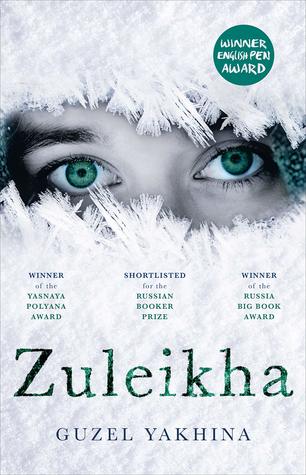
On the cover of the book and mentioned throughout the text, are Zuleikha’s intense green eyes, other versions of the novel are entitled “Zuleikha Opens her Eyes“, this transformation of character through having her eyes opened is one of the themes of the novel, she sees beauty as well as suffering, she will experience true love and profound heartbreak. It’s about a woman who comes out from having been defined and used by men, into finding new strength and her own role. It is a form of emancipation, albeit it a preliminary one.

Yusef runs away from Zulaikha

One aspect of the novel I haven’t seen discussed anywhere is the significance of the names, Zuleikha and Yuzuf. I had a sense that those names somehow went together and I discovered an epic poem of the same name written in 1483 AD by the Sufi poet Jami.

It is an allegorical poem about the pursuit of love and of God, which also covers the allure and the suppression of love, the suffering of slavery and in aspects of this poem, I find aspects of three characters in the novel, Zuleikha, Ignatov and Yuzuf and I end my review with an ambiguous extract that may refer to a lover or a son, from the poem that reminds me of the closing pages of the novel.

The novel is unique in that it is written (and translated) by a woman who makes a young woman the centre of such an epic story, in part inspired by the actual memories of her own grandmother. She hasn’t set out to recreate the dire, conditions and cruelty of the camps, we witness a tale of survival, and through the eyes of a woman who already had a dire life, despite being the wife of an affluent peasant.

Guzel Yakhina’s grandmother was arrested in the 1930’s, taken by horseback to Kazan and then on a long railway journey (over 2,000 miles) to Siberia. She was exiled from the age of 7 until 17 years, returning to her native village in 1947. It was these formative childhood years that were in a large part responsible for her formidable character.

Upon her death at the age of 85 years, the author realised the importance of her early life and thus began her research and determination to understand how her grandmother operated, bringing her back in part through the inspired creation of the extraordinary character Zuleikha.

“I realised it would be impossible to remember the things she said as her stories were not recorded,” Yakhina says. “There was a feeling of guilt.”

A thought-provoking, interesting story and reflection, not at all brutal or hard to read, the author writes with compassion for her characters and brings out something very different from what we have come to expect from stories set in prison-like environments.

Highly Recommended.

 Zuleikha and Yusuf – extract from the epic poem

“The one sole wish of my heart,” she replied,
“Is still to be near thee, to sit by thy side;
To have thee by day in my happy sight,
And to lay my cheek on thy foot at night;
To lie in the shade of the cypress and sip
The sugar that lies on thy ruby lip;
To my wounded heart this soft balm to lay;
For naught beyond this can I wish or pray.
The streams of thy love will new life bestow
On the dry thirsty field where its sweet waters flow.”

Jami, Sufi poet (tr. Charles Francis Horne)

My Reviews of Novels set in Russia

Eugene Onegin by Pushkin

The Kindness of Enemies by Leila Aboulela

The Industry of Souls by Martin Booth

Further Reading

Review: Lisa Hill’s review of Zuleikha at ANZLitLovers

Article: The Calvert Journal: “Learn to live with it, even forgive.”Guzel Yakhina on the traumas of Soviet history

Article: Peninsula, Qatar: Russian novel tells story of survival, love in Stalin’s camp

Buy a Copy of Zuleikha via Book Depository

N.B. Thank you to OneWorld Publications for providing me with an advance reader’s copy of this novel.

Reading Contemporary Latin American Fiction

‘cruzar el charco’

It seems appropriate to begin this post with a word, since this reading and writing adventure takes place word by word, across time and continents. Our word for today is charco which means puddle in Spanish and is also a colloquialism in some Latin American countries referring to the Atlantic Ocean.

And cruzar el charco means crossing the puddle, a way of referring to when someone is leaving the country, taking a trip somewhere far from home, across the ocean.

And this is what I have decided to do in 2019, to take a literary trip across the ocean to Latin America, and I’ll be doing that with the help of Charco Press, a small press based in Edinburgh, creating a bridge of cultural discovery for us to access the richness of that new world with a guide to contemporary literature authors that will likely be unfamiliar to us all.

We select authors whose work feeds the imagination, challenges perspective and sparks debate. Authors that are shining lights in the world of contemporary literature. Authors that have won awards and received critical acclaim. Bestselling authors. Yet authors you perhaps have never heard of. Because none of them have been published in English.

Until now.

Photo by Pixabay on Pexels.com

So this year I have taken a subscription with Charco Press, so I don’t choose the books, I will read whatever they publish in their catalogue in 2019.

This will mean it’s not necessarily going to be something I might ordinarily read, I’ll be reading across borders and outside my comfort zone. But what a journey. No vaccinations required, no need for language classes, although we may still learn a few words along the way.

I have already read the first book and my review will be coming shortly, however, below are summaries of the six books I’ll be reading from this part of the world this year, in case you’d like to join me. As I read them, I’ll link my reviews back to this summary post.

Do let me know if any of these titles interest you, or whether you’ve read any other books published by Charco Press that you have enjoyed.

Click on the title to visit the Charco bookstore.

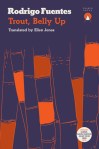
Trout, Belly Up by Rodrigo Fuentes (Guatemala) (tr. Ellen Jones)

In this highly original collection of interconnected short stories, the Guatemalan countryside is ever-present, a place of timeless peace yet also riven by sudden violence. The stories provide glimpses into the life of Don Henrik, a good man struck time and again by misfortune, as he confronts the crude realities of farming life. Over the course of these episodes we meet merciless entrepreneurs, hitmen, drug dealers and fallen angels, all wanting their piece of the pie. Told with precision and a stark beauty, in a style that recalls Hemingway, Trout, Belly Up is a unique ensemble of beguiling, disturbing stories set in the heart of the rural landscape in a country where violence is never far from the surface.

Feebleminded by Ariana Harwicz (Argentina) (tr. Annie McDermott & Carolina Orloff)

In Feebleminded, Harwicz drags us to the border between fascination and discomfort as she explores aspects of desire, need and dependency through the dynamics between a mother and her daughter, searching through their respective lives to find meaning and define their own relationship.

Written in a wild stream of consciousness narration in the best tradition of Virginia Woolf and Nathalie Sarraute, and embedded in a trend of elusive violence so ingrained in contemporary Latin American fiction, Feebleminded follows the pair on a roller coaster of extreme emotions and examinations into the biographies of their own bodies where everything – from a childhood without answers to a desolate, loveless present – has been buried.

Told through brief but extremely powerful chapters, this short lyrical novel follows Die, My Love (my review here) as the second part in what Harwicz has termed an ‘involuntary trilogy’.  An incredibly insightful interrogation on the human condition, desire and the burden of deep-rooted family mandates.

The Wind That Lays Waste by Selva Almada (Argentina) (tr. Chris Andrews)

The Wind That Lays Waste begins in the great pause before a storm. Reverend Pearson is evangelizing across the Argentinian countryside with Leni, his teenage daughter, when their car breaks down. This act of God – or fate – leads them to the home of an aging mechanic called Gringo Brauer and his boy named Tapioca.

As a long day passes, curiosity and intrigue transform into an unexpected intimacy between four people: one man who believes deeply in God, morality, and his own righteousness, and another whose life experiences have only entrenched his moral relativism and mild apathy; a quietly earnest and idealistic mechanic’s assistant, and a restless, sceptical preacher’s daughter. As tensions between these characters ebb and flow, beliefs are questioned and allegiances are tested, until finally the growing storm breaks over the plains.

Selva Almada’s exquisitely crafted début, with its limpid and confident prose, is profound and poetic, a tactile experience of arid landscapes, heat, squat trees, broken cars, sweat-stained shirts, and ruined lives. The Wind That Lays Waste is a philosophical, beautiful, and powerfully distinctive novel that marks the arrival in English of an author whose talent and poise are undeniable.

Loop by Brenda Lozano (Mexico) (tr. Annie McDermott)

Loop is a love story narrated from the point of view of a woman who waits for her boyfriend Jonás to return from a trip to Spain. They met when she was recovering from an accident and he had just lost his mother. Soon after that, they were living together. She waits for him as a sort of contemporary Penelope who, instead of knitting only to then un-knit, she writes and erases her thoughts in a notebook: Proust, a dwarf, a swallow, a dreamy cat or David Bowie singing ‘Wild is the Wind’, make up some of the strands that are woven together in this tapestry of longing and waiting.

Written in a sometimes irreverent style, in short fragments that at points are more like haikus than conventional narrative prose, this is a truly original reflection on love, relationships, solitude and the aesthetics and purpose of writing.

An Orphan World by Giuseppe Caputo (Colombia) (tr. Sophie Hughes & Juana Adcock)

In a run-down neighbourhood, in an unnamed seaside city with barely any amenities, a father and son struggle to keep their heads above water. Rather than being discouraged by their difficulties and hardship, they are spurred to come up with increasingly outlandish plans for their survival. Even when a terrible, macabre event rocks the neighbourhood’s bar district and the locals start to flee, father and son decide to stay put. What matters is staying together. This is a bold poignant text that interplays a very tender father-son relationship while exposing homosexuality and homophobia with brutal honesty. With delicate lyricism and imagery, Caputo is extremely original and creative producing a tale that harmoniously balances violence, discrimination, love, sex and defiance, demonstrating that the he is a storyteller of great skill.

An Orphan World is about poverty, and the resourceful ways in which people manage to confront it. At the same time, it is a reflection about the body as a space of pleasure and violence. Perhaps above all else, An Orphan World is a brutally honest love letter between a father and son.

Adventures of China IronThe Adventures of China Iron by Gabriela Cabezón Cámara (Argentina) (tr. Iona Macintyre & Fiona Mackintosh)

(* China. Pronounced ‘cheena’: designation for female, from the Quechua. Iron: The English word for Fierro, reference to the gaucho Martín Fierro, from José Hernández’s epic poem.)

This is a riotous romp taking the reader from the turbulent frontier culture of the pampas deep into indigenous territories. It charts the adventures of Mrs China Iron, Martín Fierro’s abandoned wife, in her travels across the pampas in a covered wagon with her new-found friend, soon to become lover, a Scottish woman named Liz. While Liz provides China with a sentimental education and schools her in the nefarious ways of the British Empire, their eyes are opened to the wonders of Argentina’s richly diverse flora and fauna, cultures and languages, as well as to its national struggles. After a clash with Colonel Hernández (the author who ‘stole’ Martín Fierro’s poems) and a drunken orgy with gauchos, they eventually find refuge and a peaceful future in a utopian indigenous community, the river- dwelling Iñchiñ people.

Seen from an ox-drawn wagon, the narrative moves through the Argentinian landscape, charting the flora and fauna of the Pampas, Gaucho culture, Argentinian nation-building and British colonial projects.

In a unique reformulation of history and literary tradition, Gabriela Cabezón Cámara, with humour and sophistication, re-writes Martín Fierro from a feminist, LGBT, postcolonial point of view. She creates a hilarious novel that is nevertheless incisive in its criticism of the way societies come into being, and the way they venerate mythical heroes.

***********

Some promising, diverse explorations across this puddle, I do hope you might join me at one of these destinations!

Further Reading: Exposing the UK to Contemporary Latin American Literature

Man Booker International Prize shortlist 2019

Translated Fiction

The Man Booker International Prize, celebrates newly translated fiction into English; this years judges have now whittled their long list down to six titles, giving us this interesting and diverse shortlist below. Though you’ll find a lot of translated fiction on the pages of this blog, it’s a niche that’s dominated by small publishers, so less known and indulged by the wider reading public.

Things are changing however and readers are becoming more discerning and aware of being made to seem ignorant by publishers who’ve stuck predominantly to nationalistic loyalties. I say this personally, as I discovered when I moved to France that without even making an effort you are just as likely here to read Russian, Colombian or Japanese authors as you are French authors. 45% of their fiction is translated! 5% of ours is.

Do we really only want to be offered stories written by authors from one country, to read thoughts generated in the imagination of only one original language?

Though we are in a climate of Brexit and an era of vociferous intolerance towards multiculturalism; storytelling and literature in translation offer a quiet route to developing empathy and understanding of ‘the other’ and a reminder that we can both learn something new and find the familiar in words from elsewhere.

The prize equally awards the translator, which should boost the industry and help translators take on more projects bringing us more excellent literature from elsewhere. The shortlist includes five languages, Arabic, French, German, Polish and Spanish from six different cultures.

Bettany Hughes, chair of the 2019 Man Booker International Prize judging panel, said:

‘Wisdom in all its forms is here. Unexpected and unpredictable narratives compelled us to choose this vigorous shortlist. Subversive and intellectually ambitious with welcome flashes of wit, each book nourishes creative conversation. We were struck by the lucidity and supple strength of all the translations.’

The six titles are listed below, summaries edited from the prize’s website: click on title to purchase a copy.

Celestial Bodies by Jokha Alharthi (Oman) tr. Marilyn Booth (Arabic) Sandstone Press

Set in the village of al-Awafi in Oman, we encounter three sisters: Mayya, who marries Abdallah after a heartbreak; Asma, who marries from a sense of duty; and Khawla who rejects all offers while waiting for her beloved, who emigrated to Canada. The three women and their families witness Oman evolve from a traditional, slave-owning society, slowly redefining itself after the colonial era, to the crossroads of its complex present. Elegantly structured and taut, it tells of Oman’s coming-of-age through the prism of one family’s losses and loves.

“No matter where you are, love, loss, friendship, pain and hope are the same feelings and humanity still has a lot of work to do to believe in this truth.” Jokha Alharti

The Years by Annie Ernaux(France) tr. Alison Strayer (French) Fitzcarraldo Editions

Considered by many to be the iconic French memoirist’s defining work, a narrative of the period 1941 to 2006 told through the lens of memory, impressions past and present, photos, books, songs, radio, television, advertising, and news headlines. Local dialect, words of the times, slogans, brands and names for ever-proliferating objects are given voice. The author’s voice continually dissolves and re-emerges as Ernaux makes the passage of time palpable. Time itself, inexorable, narrates its own course, consigning all other narrators to anonymity. A new kind of autobiography emerges, at once subjective and impersonal, private and collective, a remembrance of things past.

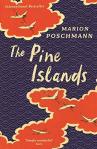
The Pine Islands by Marion Poschmann tr. Jen Calleja (German) Profile Books, Serpent’s Tail

When Gilbert, a journeyman lecturer on beard fashions awakes from a dream that his wife has cheated on him, he flees to Japan. In discovering the travel writings of the great Japanese poet Basho, he finds a purpose: a pilgrimage in the footsteps of the poet to see the moon rise over the pine islands of Matsushima. Falling in step with another pilgrim – a Japanese student with a copy of The Complete Manual of Suicide – Gilbert travels across Basho’s disappearing Japan with Yosa, one in search of his perfect ending and the other a new beginning that might give his life meaning. A serene, playful, moving story of the transformations we seek and those we find along the way.

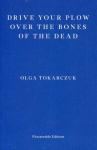
Drive Your Plow Over The Bones Of The Dead by Olga Tokarczuk (Poland) tr. Antonia Lloyd-Jones (Polish) Fitzcarraldo Editions

In a remote village in south-west Poland Janina Dusezjko, an eccentric woman in her 60s, describes the events surrounding the disappearance of her two dogs. When members of a local hunting club are found murdered, she becomes involved in the investigation. No conventional crime story, this novel offers thought-provoking ideas on perceptions of madness, social injustice against people who are marginalised, animal rights, the hypocrisy of traditional religion, and belief in predestiny.

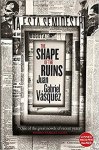
The Shape of the Ruins by Juan Gabriel Vásquez (Colombia) tr. Anne McLean (Spanish) Quercus, MacLehose Press

Pacing the dark corridors of a hospital during the birth of his twin daughters, Juan Gabriel Vásquez befriends a physician. Through him he meets Carlos Carballo, a man consumed by a conspiracy theory about the assassination of a politician Jorge Eliécer Gaitán in 1948. He tries to persuade Vásquez to write a novel about the murder, but despite repeated refusals Vásquez is drawn into the conspiracy when Gaitán’s vertebrae, stored in a glass jar at a mutual friend’s house, goes missing. Sparking a turn of events, Varquez opens up a second, darker conspiracy about the assassination of another politician, Rafael Uribe Uribe, in 1914.

“It’s a novel about past violences written at a time in which my country was trying to find some form of present peace. It turns around two political murders that shaped Colombian history in the twentieth century, and it uses them to think about the ways in which violence can be inherited: an act committed half a century ago can influence and even determine our private lives in the present. Deep down, how does political violence work? How does it change our private lives?” Juan Gabriel Vasquez

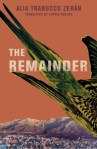
The Remainder by Alia Trabucco Zerán (Chile) tr. Sophie Hughes (Spanish) And Other Stories

Santiago, Chile. The city is covered in ash. Three children of ex-militants are facing a past they can neither remember nor forget. Felipe sees dead bodies on park benches, counting them in an obsessive quest to tally figures with the official death toll. He is searching for the perfect zero, a life with no remainder. Iquela and Paloma are also searching for a way to live on. When the body of Paloma’s mother gets lost in transit, the three take a hearse and a handful of pills up the cordillera for a road trip with a difference. Intense, intelligent, and extraordinarily sensitive to the shape and weight of words, this remarkable debut presents a new way to count the cost of generational trauma.

******

I haven’t read any of the titles shortlisted, I’ve been watching since the long list came out, the one that most intrigues me is Celestial Bodies, because it promises to highlight aspects of Oman’s history as shown through the story of three sister’s lives. While The Shape of the Ruins sounds intriguing, I’m a little wary of it seeming a little like Roberto Bolano’s 2666 another lengthy South American novel that centred around unsolved murders, that was too much for me.

I’m also intrigued by Olga Tokarczuk’s latest, she won the prize last year, though this is said to be a different and lighter read to Flights that can be read on multiple levels, with its elements of mystery, nature writing and reflective, philosophical inclinations.

So have you read any of the novels on the shortlist? Do you already have a favourite?

The winner will be announced on May 21.