Literary Blog Hop Winner of My Brilliant Friend

Thank you to everyone who participated in and entered the Literary Blog Hop to win this excellent book, My Brilliant Friend, originally written in Italian by Elena Ferrante.

My Brilliant Friend

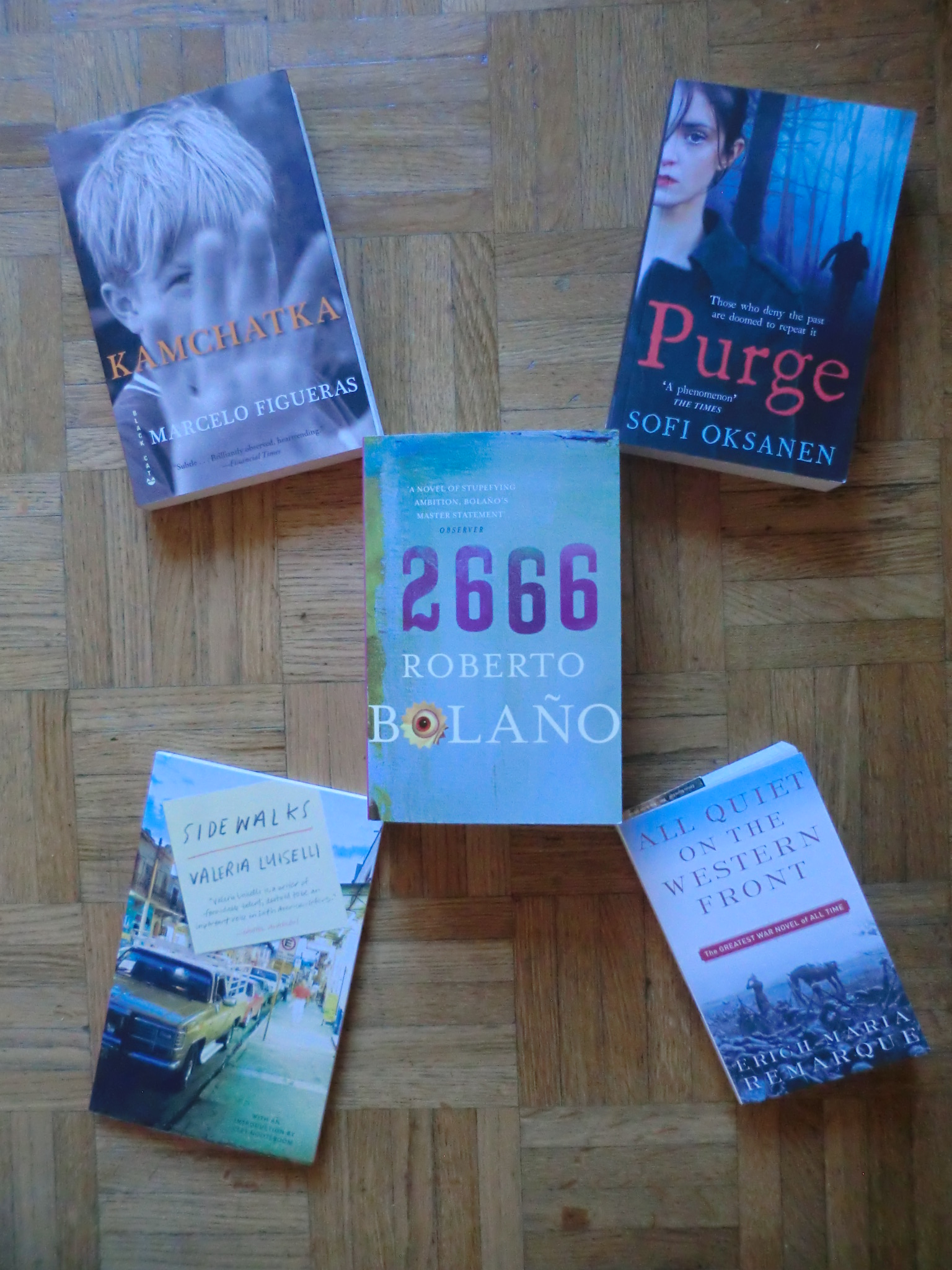
And thank you for all the wonderful comments and book recommendations of your favourite translation or book written in a language other than English. As you can see, my TBR is growing!

My New Book Haul

And the winner of the draw is…..

Michelle Willms

Congratulations Michelle! I’ll send you an email to ask you for your address details. Please answer this by Sunday 9th November.

Thanks again to everyone who commented and participated and shared such wonderful book recommendations.

Happy Reading All!

“All Paths Lead to Rome” – The Vatican Cellars by André Gide tr. by Julian Evans

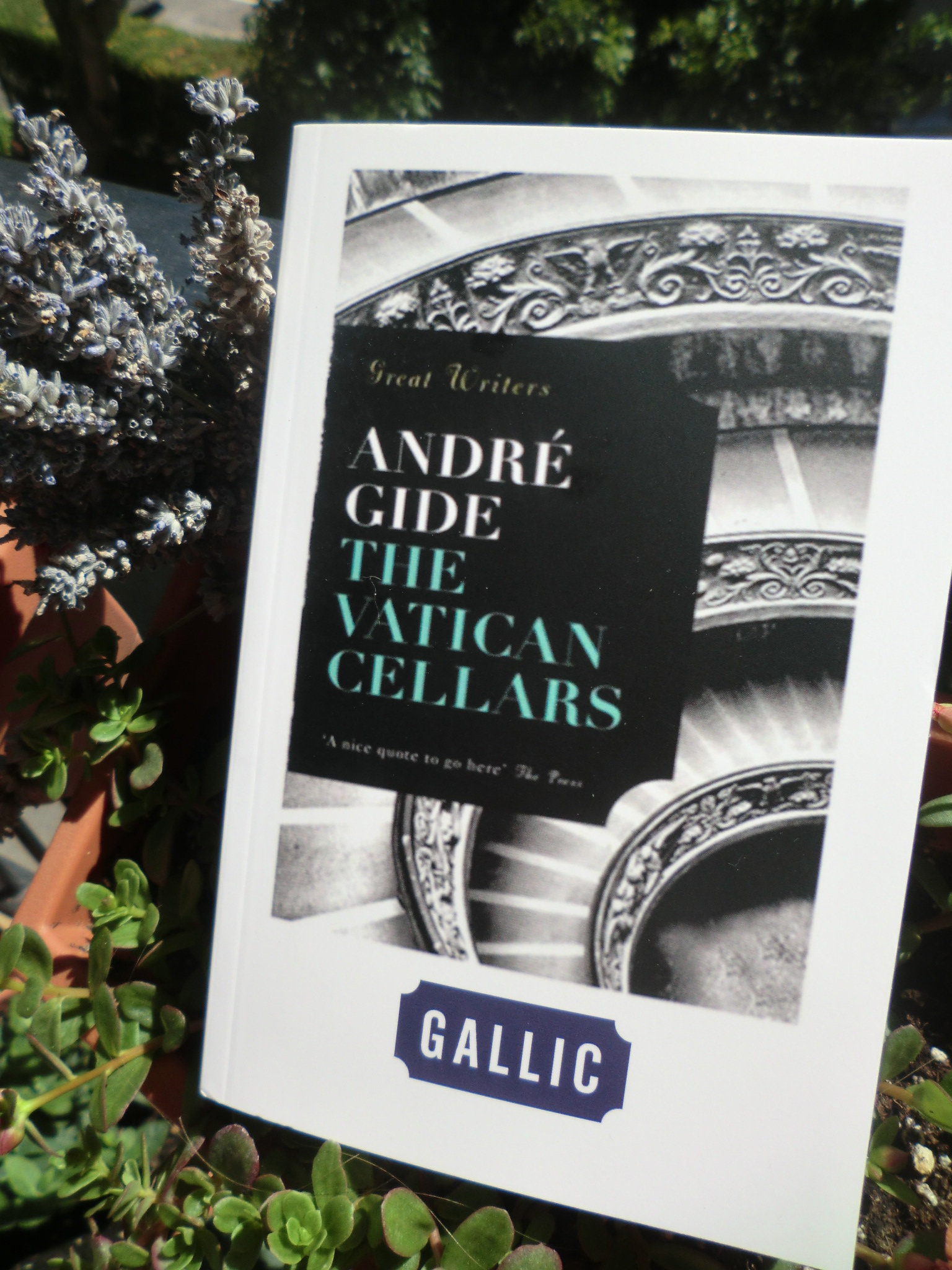
Vatican CellarsOriginally published in the summer of 1914, this year is the 100th anniversary of André Gide’s Les Caves du Vatican otherwise known as The Vatican Cellars and sometimes as Lafcadio’s Adventures in English.

André Gide had quite a reputation and was adored and detested in equal measure in the French literary community during his time. He was a provocative writer, not sensationalist by today’s standards, but he rocked the foundations of robust entities in the early 1900’s and tested some of his friendships with his provocative, satirical works, that challenged the solemnity of the novelistic form and bourgeois attitudes of the time.

He declared the book not to be a novel, but a sotie, a medieval farce in which the players freely mock the powers that be, more often than not, the Church.

“Even in the authentic soties of the Middle Ages there was the attempt to demonstrate the madness of the real world by showing it capsized and lead by fools.” Wallace Fowlie, Andre Gide: His Life and Art

He did this to stand apart from that tradition of European fiction, characterised by its extreme seriousness. Many chose to judge it at face value, or to apply an interpretation that wasn’t his own and cause him to be ostracized by some.
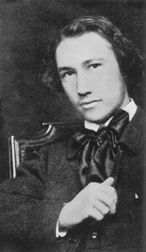
A Young Gide Source: Center for Gidean Studies andregide.org

A Young Gide
Source: Center for Gidean Studies
andregide.org

He wasn’t looking for recognition or accolades, but he was a writer who wasn’t afraid to take on a subject and look at it through a symbolic, metaphorical lens even if it did court contempt in some quarters. Though still highly controversial in France, he was awarded the Nobel Prize in Literature in 1947, he died in 1951 and a year later his works were placed on the Vatican’s list of banned books.

That act was certainly provocative and no doubt helped to heighten the author’s popularity as negative publicity tends to do. So when this book arrived unsolicited in my mailbox, I was curious to find out more, not just about the story, but André Gide, a writer previously unknown to me. In a strange coincidence, this week I see that Papal controversy – or is it just rumour, continue, when I read this headline in The Independent.

God isn’t a magician with a magic wand according to the pope and there are non-believing vicars 

The basic premise of The Vatican Cellars centres around the members of one family, whose connections are slowly revealed, whether by blood or marriage, the first three books (more like parts as the book is only 300 pages) are portrayed from each of the main characters point of view and running throughout the narrative is the effect of a rumoured plot that a gang has kidnapped the Pope and placed him in the Vatican cellars, an imposter installed in his place. The fourth book introduces us to the gang, referred to as The Millipede and the final book is dedicated to the young man Lafcadio and brings all the characters to Rome.

Book One introduces us to Anthime Armand-Dubois, a crippled freemason devoted to scientific research, an atheist who leaves France to settle in Rome to be near a specialist in rheumatic diseases. His departure causes his brother-in-law Julius De Baraglioul great sorrow and his wife Véronique small joy.

“As one of those people who fill their flat disappointed lives with countless small devotions, in her sterility she offered up to the Lord every attention that a baby would have demanded from her. Sadly she entertained almost no hope of leading her Anthime back to Him. She had known for a long time how much stubbornness that broad brow, knitted in perpetual denial, was capable of. Father Flons had warned her.”

Julius, his wife (Véronique’s sister) and their 9-year-old daughter Julie visit, during which Anthime experiences an apparition of the Virgin Mary and the miraculous healing of his affliction. He converts, but loses his freemason and lucrative research contacts and must move to Milan to await compensation promised by the Vatican.

André Gide Source: Centre for Gidean Studies andregide.org

André Gide
Source: Centre for Gidean Studies
andregide.org

Book Two is Julius De Baraglioul, a novelist who arriving back in Paris receives a letter from his father, who is on his deathbed and wishes him to anonymously make the acquaintance of a certain Lafcadio Wluiki to check out his ambitions and character. Julius visits the Lafcadio’s lodgings, meets Carola Venitequa and snoops around his things reading a private notebook since the room is unlocked and uninhabited. He eventually meets him and gives him a copy of his latest novel, one that has been panned by critics. Recognising the book is based on the author’s father, Lafcadio eyes the dying man as a potential new “Uncle” and goes to see him.

In Book Three we meet Amédée Fleurissoire, debated by some to be the true hero of this story; within these pages the entire plot to kidnap the Pope is unveiled. A priest calls on the widow Countess de Guy de Saint-Prix, Julius’s younger sister just after her return from her father’s funeral in Paris and regales her with the extraordinary tale of the Pope’s demise. And here there is an author interjection, a sidestep of the story plot to tell of the factual plot, as the story was inspired by real events that occurred in 1893 by a gang of fraudsters, taking advantage of the Pope’s sympathies toward the French Revolution.

“Whether God’s representative on earth could have been abducted from the Holy See and, by the intervention of the Quirinal, stolen from all of Christendom as it were, is an excessively thorny problem which I do not have the temerity to raise in these pages. But it is a historical fact that, around the end of 1893, rumours were circulating to that effect. It goes without saying that numerous devoted souls became deeply agitated. A pamphlet on the subject appeared in Saint-Malo and was suppressed. …There is no doubt that countless pious souls made financial sacrifices, but it was dubious whether all those who received donations were genuine campaigners, or whether some were perhaps fraudsters.”

The priest wishes the Countess to make a significant donation, so she rushes off to see Madame Fleurissoire, the younger sister of Véronique and Marguerite and wife of our genuine hero Monsieur Amédée Fleurissoire. Hearing about all the fuss Fleurissoire decides he must leave Pau and travel to Rome himself to see what can be done.

Book Four is The Millipede (the centipede) which continues to follow the travels of Amédée, the presence of the gang undetected. He is intercepted at the station and brought to slovenly rooms, where we again meet Carola and he is taken on a bit of a wild goose chase to Naples and back, bumping into Julius who has also appeared in Rome.

Then Book Five brings us back to Lafcadio, raised by his mother and five uncles, across different European countries, he is at home everywhere, but belongs nowhere. After his encounter with Julius’s dying father, he too decides to take the train south, but he is heading for adventure, his destination Borneo. He is the anti-hero, the free spirit, parentless, he lives without obligation or restraint, he can do as he pleases, provided he has the means. His charm takes care of that.

And what happens when they all find themselves in Rome? For that you’ll need to read the book.

As the literary critic Albert Guerard said:

“Perhaps only the maligned casual reader sees that les Caves du Vatican is above all a very funny book.”

It is a book that Gide had in the back of his mind for 20 years before writing it and many of the scenes were inspired from aspects of his own life or those close to him. For example, Anthime’s conversion is said to be based on Emile Zola’s Freemason cousin, who abjured his atheism in a public ceremony at a church in Rome.

The Vatican Cellars is an entertaining, easy read and can be intellectually stimulating if you are interested to analyse it further. I enjoyed it very much and all the more for having read around it, dipping into some of the published literary essays to understand the intentions of the author and the responses of the critics.

He was a humble author with a fascinating intellect who refused to accept literary prizes and acknowledgement at home, until it came to the Nobel, which he felt would have gone to Paul Valéry, if not for his untimely death and accepted it without reserve, though he was too ill to receive it in person.

In an open letter to several leading Swedish newspapers which had sought interviews, Gide confessed that he had received the Nobel Prize:

“with deep emotion, with tears in my eyes, like a schoolboy who has won a prize.”

I leave you with this very funny anecdote that I picked up from an essay by the critic George D.Painter.

“On 7 January 1930 Gide was returning by train from Toulon to Paris with Jacques de Lacretelle. At the opposite table, which was covered with flowers, sat a honeymoon couple, the husband engrossed in The Vatican Swindle. It was the first time Gide had ever seen a stranger reading himself. ‘Here’s your chance,’ said Lacretelle, ‘Tell him who you are – write him a dedication!’ But to do this, Gide would have had to feel sure that the unknown liked the book. Suddenly the young man pulled out a penknife. Good heavens, was he about, like Lafcadio, to plunge it in his thigh? But no, worse still, he seemed to intend to cut the book itself in pieces, and Lacretelle was seized with a fou rire. With great care the bridegroom cut the threads of the binding, detached the part he had read, handed it to his young wife; and both buried themselves in their reading.”

train reading

Note: Thank you most kindly to Gallic Books for sending me a copy of the book.

Literary Blog Hop … Book #Giveaway

From now until Wednesday November 5th Word by Word is participating along with other international bloggers in a Literary Blog Hop Giveaway hosted by Judith at Leeswamme’s Blog, an avid reader and reviewer from the Netherlands.

literarybloghopnovember

The blog hop offers you the opportunity to win a book here and you can visit other blogs listed below, each one offering a book of literary merit as a giveaway.

Just leave a comment below to enter the draw and on Thursday 6 November I will notify the winner.  And seriously,  even if you don’t win, you must read this book!

The book is Elena Ferrante’s My Brilliant Friend and the giveaway is open worldwide.

Win a copy of

My Brilliant Friend!

My Brilliant Friend

This entire series is definitely one of my Top Reads of 2014.

Elena Ferrante is an Italian author from Naples, where the books are set. We know little about her as she doesn’t accept interviews and uses a pen name, however that hasn’t prevented her books from becoming a word of mouth sensation. You can read my review of My Brilliant Friend here.

My Brilliant Friend is the story of two friends Elena and Lila growing up in an impoverished neighbourhood of Naples and their efforts to escape the inevitability of their fate, as members of a lower class community.

I found it a compelling read and loved the second book The Story of  New Name (reviewed here), as much as the first.

There are three books available in English (I’m reading Book 3 ) and a fourth book due out in 2015. (It was published in Italian on Oct 29 2014).

To Enter:

1. Leave a comment and tell me whether you have ever read a book in a language other than English, or a translated book. If you have, do you have a favourite? (1 entry)

2. Follow this blog. Mention in the comments if you already do. (2 entries)

3. Follow @clairewords on twitter (3 entries)

Then click on the links below to visit other blogs participating in the giveaway.

Make sure to visit the author Juliet Greenwood, whose two books Eden’s Garden and We That Are Left are excellent reads and also reviewed here at Word by WordClick on the titles to read the reviews.

Linky List:

  1. Leeswammes
  2. Read Her Like an Open Book (US/CA)
  3. My Book Self (N. Am.)
  4. The Book Stop
  5. My Book Retreat (US)
  6. Books in the Burbs (US)
  7. Guiltless Reading
  8. Word by Word
  9. Juliet Greenwood
  10. BooksandLiliane
  11. Words for Worms (US)
  12. The Relentless Reader
  13. The Misfortune of Knowing
  14. The Friday Morning Bookclub (US)
  15. Readerbuzz
  16. Lavender Likes, Loves, Finds and Dreams
  17. The Emerald City Book Review
  18. Wensend
  1. Laurie Here
  2. A Cup Of Tea, A Friend, And A Book (US)
  3. Moon Shine Art Spot (US)
  4. I’d Rather Be Reading At The Beach (US)
  5. Lost Generation Reader
  6. Books Speak Volumes
  7. Mom’s Small Victories (US)
  8. Books on the Table (US)
  9. Orange Pekoe Reviews
  10. Lavender Likes, Loves, Finds and Dreams
  11. Words And Peace (US)
  12. Booklover Book Reviews
  13. Inside the Secret World of Allison Bruning (US)

Note: Thank you to Daniela at Europa Editions for organising a copy of the book.

Nora Webster by Colm Tóibín

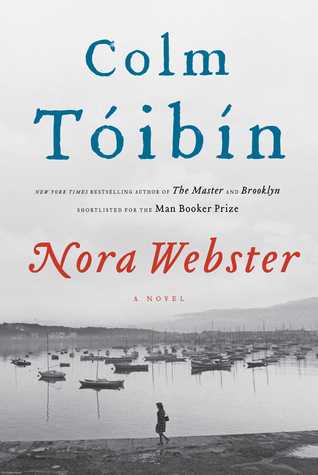
Nora WebsterSomething about the promise of Colm Tóibín’s new novel Nora Webster pulled me in right from the beginning, the cover with its familiar Irish landscape of boats moored against a grey sky, the less conspicuous protagonist, a 40-year-old housewife who doesn’t become the mother of a prophet, an oversensitive woman who rarely gives voice to the many thoughts that race through her mind as she tries to cope with the aftermath of her husband’s untimely death and the shift in relations with her four children.

We know little of her life with her husband Maurice, she doesn’t wallow in pity, though we know she neglected all else, including visiting her sons who were living with her Aunt, one of whom develops a stutter as a result, during those last months when he was dying.

“In these months, she realised, something had changed in the clear, easy connection between her and them, perhaps, for them, between each other. She felt that she would never be sure about them again.”

Nora Webster is a complex character whom few on the outside really understand, including her siblings, who despite their sister’s loss, well, according to Nora – seem to want to avoid her. Even when invited, she senses they wish her gone so they can talk about her. She behaves in a way to provoke them, ensuring they will have something to talk about, deliberately avoiding helping out, resolving not to do any washing up or to help in the kitchen.

“She wondered if she would ever be able to have a normal conversation and what topics she might be able to discuss with ease and interest.”

Set in a small town outside Dublin, in 1960’s Ireland, the novel charts a short period of time after her husband’s death in which Nora makes some important decisions such as selling the beach house and going back to work. She gets her hair dyed and joins the Gramophone Society. She takes singing lessons and following the advice of her Aunt puts her son into boarding school. She begins to create a life that would have been unimaginable in the past and becomes a woman she is comfortable with but surprised by, almost in spite of herself.

Colm Tóibín uses a particular narrative device that has a significant effect on how we see things. By writing in the third person limited perspective, we only ever see things from Nora’s point of view, there is little opportunity to see events in any other way, with the exception of the occasional insightful dialogue. This is the only time we hear what people have to say about Nora.

POVThe narrative perspective creates a narrow, introspective insight into her thinking, but also raises doubts as to whether what she thinks actually reflects reality, as she so rarely expresses her questioning thoughts and prefers to let them lie unstated, preferring to deal with the consequence of her silence. It made me want to shout  “Speak your mind Nora!”

She visits her sister who doesn’t offer them food after a long journey, Nora knows the boys are hungry and wonders if her sister believes they had already eaten, but says nothing.

“What was strange, she noticed, was that Catherine did not give her any opportunity to mention food; instead she spoke to her as though she were not really there. Once she noticed this, she found that she could notice nothing else….she had created an atmosphere in which Nora could have nothing to say.”

Nora has such powerful equanimity, that she rarely speaks, it is as if she lives continuously outside herself, observing herself and others in the situation and wondering many things that she will never utter. It is part of her character, accentuated by grief. To the point that when she does act and we see what she is capable of, it is a shock, it seems out of character. She is quite a force after all.

“She had trained herself not to ask any of the children too many questions. If she came home with a parcel of any kind when she was growing up, her mother would need to know what was in the parcel, or if a letter came for her, her mother would need to know who it was from and what news it contained. Nora had found this constantly irritating, and tried with her own children not to intrude.”

Nora Webster is a perplexing character and Colm Tóibín a masterful creator of character, deliberately using a narrative device that prevents the reader from feeling comfortable with her observation of reality, while forcing us to accept it. We too are trapped inside Nora’s mind, just as she is trapped inside her grief. We feel the need to escape, to shout, to ask someone what is really happening here.

“They did not have her way of watching every scene, every moment, for signs of what was missing or what might have been.”

I found the novel a compelling, albeit at times annoying read. I turned the pages hungry for more and found myself resenting the authorial control over the narrative perspective. I wanted to read a companion novel, the one written from the point of view of her son Donal or her daughter Fiona, I didn’t trust Nora Webster’s interpretation of people’s motives and although she knew people gossiped behind her back, I really wanted to know what it was they were saying and not just her wild, over analytic guess at what was passing through the minds of members of her family and community.

042512_1611_IntheSpring1.jpgNora’s grief is unique in that she very rarely dwells on the past and we aren’t sure whether the way she is now, is how she always was or how much of it is the result of her grieving.

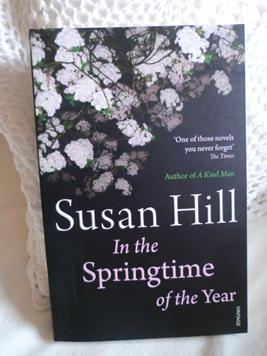
One of the best novels I have read portraying a widow’s grief was Susan Hill’s astonishing, In the Springtime of the Year, which I highly recommend, her protagonist is equally displaced by grief and experiencing an existential crisis provoked by the untimely death of her young husband.

Note: This book was an ARC (Advance Reader Copy) kindly provided by the publisher via NetGalley.

My Brilliant Friend, Elena Ferrante tr. by Ann Goldstein…Neapolitan Tetralogy Book1

Elena Ferrante is already something of an Italian legend. An author said to spurn interviews, her pen name fuelling speculation about her real identity. Her work is said to be autobiographical and already capturing the attention of English readers in a similar way to the autobiographical series of novels by the Norwegian Karl Ove Knausgaard.

Being a fan of translated fiction I have had my eye on this series for a while and from the reviews and articles I have read, her work reminds me of Caroline Smailes, whose excellent novel The Drowning of Arthur Braxton was my favourite read in 2013.

My Brilliant FriendIn 2012, My Brilliant Friend, the first in the trilogy of Neapolitan novels was translated into English and the two subsequent books The Story of a New Name and Those Who Leave and Those Who Stay were published in 2013 and 2014 consecutively.

The trilogy follows the lives and friendship of Elena Greco and Lila Cerullo, two astute girls from a downtrodden suburb slum of post war  1950’s & 1960’s Naples, as they navigate the challenges and opportunities necessary to survive and overcome their upbringing.

My Brilliant Friend spans Elena and Lila’s childhood and adolescence years in their neighbourhood, one where aggression, tension and feuds reign and graduating from school is less of a priority than finding safety and protection from the inhabitants of their immediate environment.

The first pages begin with the naming of characters, a family tree of the neighbourhood, members of each family and their occupations. I often find these lists of characters overwhelming, so ignored them, telling myself, if the book is good, I’ll know who all these characters are by the end. And when I went back to look at it, sure enough, I knew who they all were.

The story then begins with a prologue when the girls are women in their mid-fifties and creates a mystery that won’t be resolved in the first book, as the girls only reach the age of sixteen by its conclusion. It intrigues and teases the reader to continue to read on and discover what it is Elena knows, that no one else does.

“It’s been at least three decades since she told me that she wanted to disappear without leaving a trace, and I’m the only one who knows what she means.”

A Naples Slum

A Naples Slum

Elena is angry and so begins to write this narrative, in an act of revenge-like competitiveness, a trait that has defined her relationship with Lila throughout their childhood and adolescence.

Narrated from the point of view of Elena, the girls first recollection of being together is around the fearful presence of Don Achille, the local grocer whose name is associated with a fairy tale ogre.

In their play, Lila’s actions are always decisive and with bold intent, Elena is less bold, yet more determined, she follows her friend but wishes to surpass her and learns how to cope with the sacrifices necessary to continue to be her friend. Starting with the day Lila dropped her doll through the street grating into a dark underground cellar.

“But that day I learned a skill at which I later excelled. I held back my despair, I held it back on the edge of my wet eyes, so that Lila said to me in dialect:

‘You don’t care about her?’

I didn’t answer. I felt a violent pain, but I sensed that the pain of quarrelling with her would be even stronger. I was as if strangled by two agonies, one already happening, the loss of the doll, and one possible, the loss of Lila.”

After her early years of passing well her exams, there is one year when Elena’s attention strays and as a result her parents are no longer willing to support her in school. They won’t pay for extra tuition but if she studies and resits the exams, they will allow her to continue.

Lila, who never fails, will have to leave school, regardless of her ability, her family isn’t willing to support her education. She has a hunger for education and follows Elena’s progress, increasing her knowledge, surpassing her friend, becoming more like her teacher, though never sitting another exam.

“She had begun to study Greek even before I went to high school? She had done it on her own, while I hadn’t even thought about it, and during the summer, the vacation? Would she always do the things I was supposed to do, before and better than me? She eluded me when I followed her and meanwhile stayed close on my heels in order to pass me by?”

Snapshot 1 (09-11-2012 17-25)

Friendship by Allia

The book ends with a wedding, the girls paths seem to be heading in different directions, they continue to navigate their lives according to the expectations and threats of their community, yet their paths, in their different ways, potentially hold the seeds of their escape.

My Brilliant Friend is an emotionally charged coming-of-age read and the story held me riveted all the way through from the prologue that isn’t resolved through their early schooldays up to that wedding day.

Ferrante’s depiction of the two girls friendship bristles with vulnerable authenticity, igniting our curiosity in their interactions with their community, making the reader care about what will happen to them all next.

Next Book in the Series: The Story of a New Name (click title to read review)

Buy This Book

Buy My Brilliant Friend at Book Depository

H is for Hawk by Helen Macdonald

Winner of Samuel Johnson Prize, Costa Prize

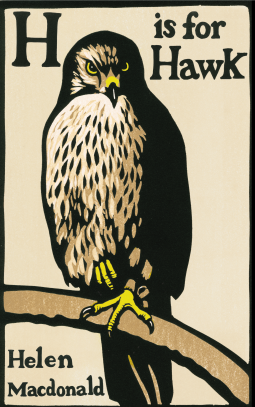
H is for Hawk and for Helen Macdonald, and her Hibernation from Humanity in coping with her father’s untimely death and her own pending transition, as her Cambridge University fellowship is coming to an end and she must soon leave the comfortable country cottage that came with it.

H is for HawkResponding to an instinctive need to escape reality she obtains a goshawk, retreats into her cottage, unplugs her telephone and focuses on training the raptor at the same time observing her own behaviour which begins to resemble the bird’s.

“The kind of madness I had was different. It was a madness designed to keep me sane. My mind struggled to build across the gap, make a new and inhabitable world. The problem was that it had nothing to work with. There was no partner, no children, no home. No nine-to-five job either. So it grabbed anything it could. It was desperate, and it read off the world wrong.”

In all her years as a falconer, she had never wanted to fly a goshawk, she feared them and comes to realise she has taken on the attitudes of those who glorified falcons, bird of nobility, of aristocracy, men of privilege, those who mocked the humble goshawk. But times and perceptions had changed, and getting to know and train a goshawk was the challenge she set for herself.

“Goshawks were ruffians: murderous, difficult to tame, sulky, fractious and foreign.”

She waits on a Scottish pier for the Belfast ferry, which is transporting a man and his goshawk, soon enough she will become the owner of the bird she names Mabel.

One Woman’s Obsession

The days pass and her focus must be with Mabel, she spurns human company, spending her free time in the company of T.H White, rereading The Goshawk, a book she had read as a child when her passion for birds was in its formative stages. White wrote about his failed attempt to train a goshawk, his account wrapped up in childhood fears and inclinations. Helen Macdonald reads around the life and writings of this man in order to understand him, as if to explain to her childhood self, why he did what he did.

“I understood why people considered it a masterpiece. For White made falconry a metaphysical battle. Like Moby-Dick or The Old Man and the Sea, The Goshawk was a literary encounter between animal and man that reached back to Puritan traditions of spiritual contest: salvation as a stake to be won in a contest against God.”

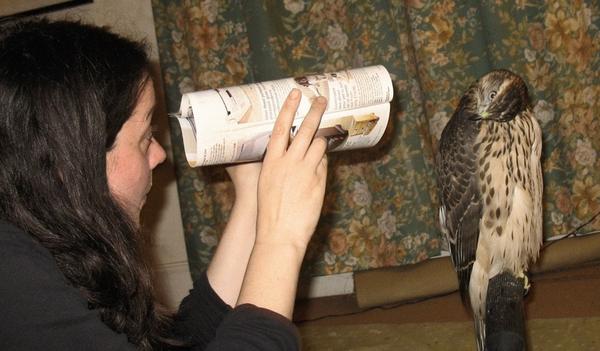
Mable and Helen playing with a paper telescope Photo by Christina McLeish @_Xtin_

Mable and Helen playing with a paper telescope
Photo by Christina McLeish @_Xtin_

It is a fascinating and insightful read as the author shares her commitment to an obsessive need to tame the hawk and exposes her vulnerability in coping with all that she wishes to avoid. Writing about the training of a goshawk is also a way of avoiding talking about herself.

We must read outside the narrative of the book to know more about Helen’s previous experience and expertise with hawks, we can tell she is no amateur, however she avoids looking back or enlightening the reader too much about her past, we are kept very much in the present, as unnerved as she is by her descent into hawk-like behaviours and instincts.

Nature Writing Memoir

I love nature writing that stimulates the imagination, that offers more than just an observation of what the author sees, but describes the environment and what an observer brings to it, one that provokes us to think about our own relationship to birds, animals and nature. Helen Macdonald comes to her goshawk challenge with fixed ideas about the need to escape all, she sets herself up like a scientific hypothesis, begins her transformation into a hawk like creature and then slowly deconstructs it, coming back to the realisation of her own humanity.

“Hands are for other human hands to hold. They should not be reserved exclusively as perches for hawks. And the wild is not a panacea for the human soul; too much in the air can corrode it to nothing.”

Falconry_sport_of_kings_(1920)

Falconry, the sport of Kings Source: wikipedia

She reminds us of the place and symbolism of falconry within humanity, its association with the hunt, with death, war, power and subservience.

It is unique in being a woman’s perspective within a heritage that has long been the domain of men, nobility, landowners, gentry, medieval lords.

It is refreshingly alive, honest and knowledgeable, exhibiting how our weaknesses and our strengths advance and recede in unison as naturally as the ebb and flow of tides.

Note: This book was an ARC (Advance Reader Copy) kindly provided by the publisher via NetGalley.

Family Heirlooms by Zulmira Ribeiro Tavares

My first read of Brazilian literature, read while the World Cup Football was playing out, though I admit to watching very few of the games, and none after my 11-year-old son left for a holiday with his Grandparents, no longer here to insist I stay up and watch the game with him. But Brazilian literature, why yes please!

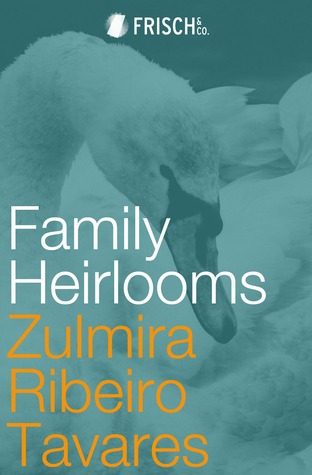
Family HeirloomsFamily Heirlooms was written by Zulmira Ribeiro Tavares, translated by Daniel Hanh. Born in 1930 in Sao Paulo, she wrote both fiction and non-fiction and was the recipient of many literary awards including the highest honour, the Jabuti Prize for this novella, now available for the first time in English.

It is the story of Maria Bráulia Munhoz, a widow whose nephew Julião is acting as her secretary, though not entirely trusted by his Aunt and especially after the news he brings her in the opening pages about her family heirloom.

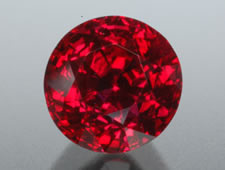
The family heirloom brings back the memory of her husband, the judge, who brought it to impress her and her family. It is symbolic of their relationship, an item of great beauty and admired by all, though deceptive, multi-faceted, rarely seen for what it truly is.

Pigeon blood ruby

Pigeon blood ruby

Regardless of the deception, Maria maintains her honour, dignity and the illusion of her marriage long after her husband has departed. She uses her naiveté as a tool for her own survival, for as long as she continues to live with the perception of normalcy, so it continues to reign in her life. Like the emperor in his new clothes, she wears her heirloom with pride.

Maria reminds me a little of the mother figure in Carmen LeForet’s Nada, attempting to retain her bourgeois respectability despite evidence to the contrary, though she never allows us to feel sorry for her, for she makes of her situation exactly what she wishes it to be and insists that everyone sees it her way too. She is indeed a survivor.

An enjoyable, thought-provoking read of illusion, deception, acceptance and survival.

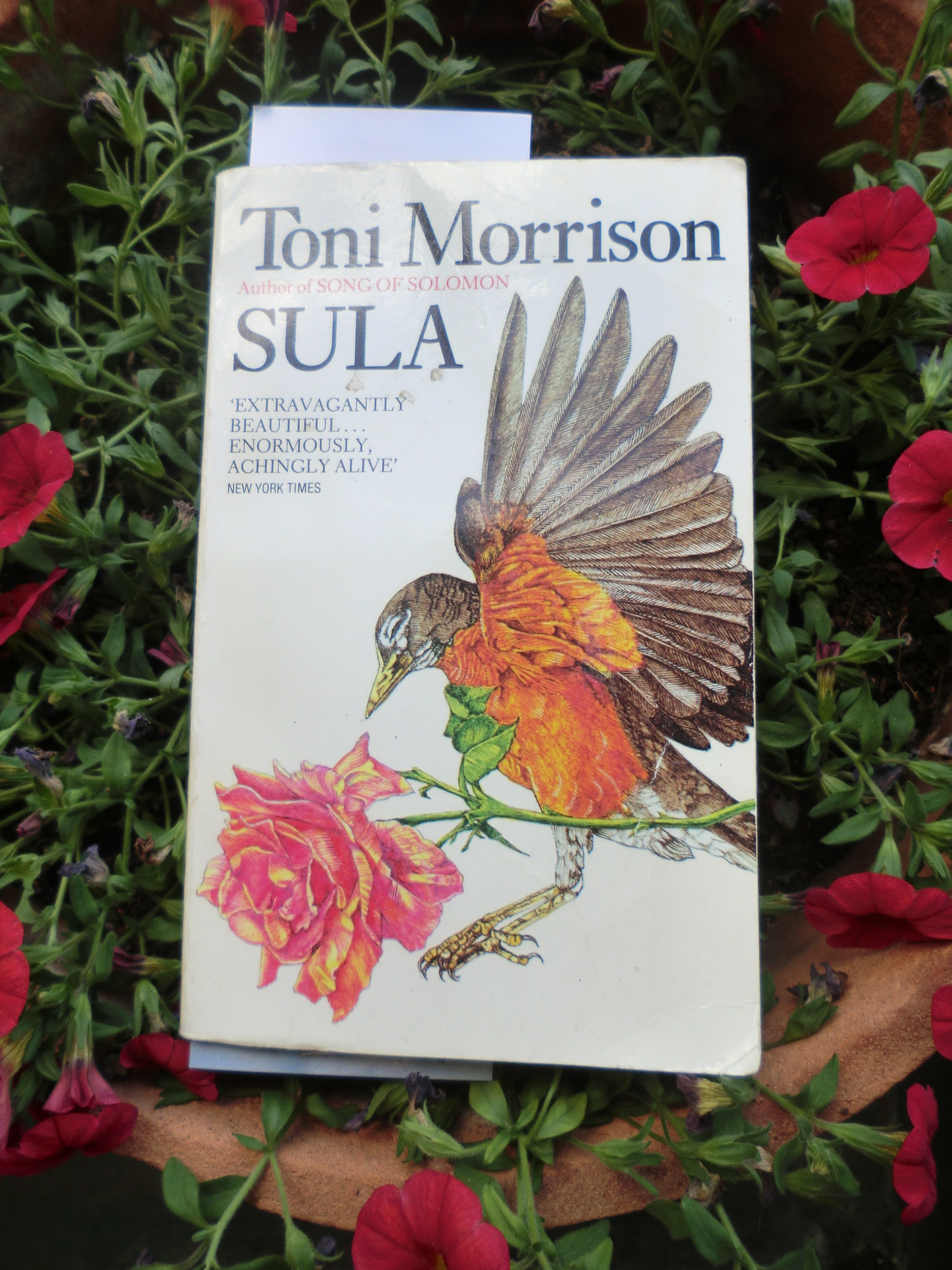
Sula, Toni Morrison

SulaA farmer promises freedom and a piece of land referred to as Bottom, to his slave if he performs some difficult chores. The town of Medallion grows up around the farmland, looking down on the valley where the more fertile land and the white folks live.

The slave blinked and said he thought valley land was bottom land. The master said, ‘Oh no! See those hills? That’s bottom land, rich and fertile.

‘But it’s high up in the hills,’ said the slave.

‘High up from us,’ said the master, but when God looks down, it’s the bottom. That’s why we call it so. It’s the bottom of heaven, the best land there is.’

It’s the town where Sula and Nel grow up in the 1920’s. Both are only children, Nel raised in her mother’s quiet, orderly neat home that oppresses her and keeps her protected and Sula in the home of her infamous grandmother Eva Pearce, a woman who hasn’t come downstairs in years and may or may not have done despicable things before she became one-legged and runs a kind of boarding house for vagrants.

“a household of throbbing disorder constantly awry with thins, people, voices and the slamming of doors”

In childhood, the two girls differences are insignificant, they revel in each other’s company, they test the boundaries of their community and environment, they experience joy and witness horror. They bury the past until it returns to haunt them in adulthood, when they can no longer avoid who they were always destined to be, thanks to the judgments and perceptions of others and the behaviours of those who went before them. And themselves.

“Their evidence against Sula was contrived, but their conclusions about her were not. Sula was distinctly different. Eva’s arrogance and Hannah’s self-indulgence merged in her and, with a twist that was all her own imagination, she lived out her days exploring her own thoughts and emotions, giving them full reign, feeling no obligation to please anybody unless their pleasure pleased her.”

The book is separated into two parts, the early 1920’s during the girls childhood and the late 30’s, early 40’s when Sula returns and creates a disturbing ripple throughout the small community, no longer used to her carefree ways, having forgotten the inclinations of the female characters she was spawned from. She becomes estranged from them all. Except one.

It is about the innocence and bonds of childhood, secrets between friends, the inclination to follow the well-trodden path of those who have gone before, despite the desire for freedom and individuality and the reluctance of others to see them any differently.

Toni Morrison

Toni Morrison

Her books are almost always the perfect size of a novella and every one of Toni Morrison’s stories I have read brings so much more than the sum of its pages to the reader in terms of things to consider, long after the last page is turned.

Her language is poetic, her characters resplendent with their flaws, they speak for the one and the many and show us ourselves, the parts we hide from view, that which is judged from outside and the inclination to judge without knowing.


14 July La Fête Nationale: A Salmagundi of French Literature

Prise de la Bastille by   Jean-Pierre Houël Source:Wikipedia

Prise de la Bastille by Jean-Pierre Houël
Source:Wikipedia

Today is a holiday here in France, marking the celebration of la fête nationale or as we know it in English Bastille Day, commemorating 14 July 1789 when the population fearing an attack by the royal military stormed the Bastille prison and released the many political prisoners in what became a symbol of the end to the rule of the monarchy and the beginning of independence.

There will be a military parade in the Avenue des Champs-Élysées in Paris and here in Aix-en-Provence and most towns in France there will be organised displays of fireworks to commemorate.

To celebrate the National Holiday, I am following the initiative of Marina Sofia at Finding Time To Write to highlight some recently read and upcoming French reads, now available in English, here is my salmagundi of French Literature!

Click on the title to read the review and read to the end to find the definition of that tasty word for the day Salmagundi:

Two French Books I am looking forward to reading:

Poisoning (3)

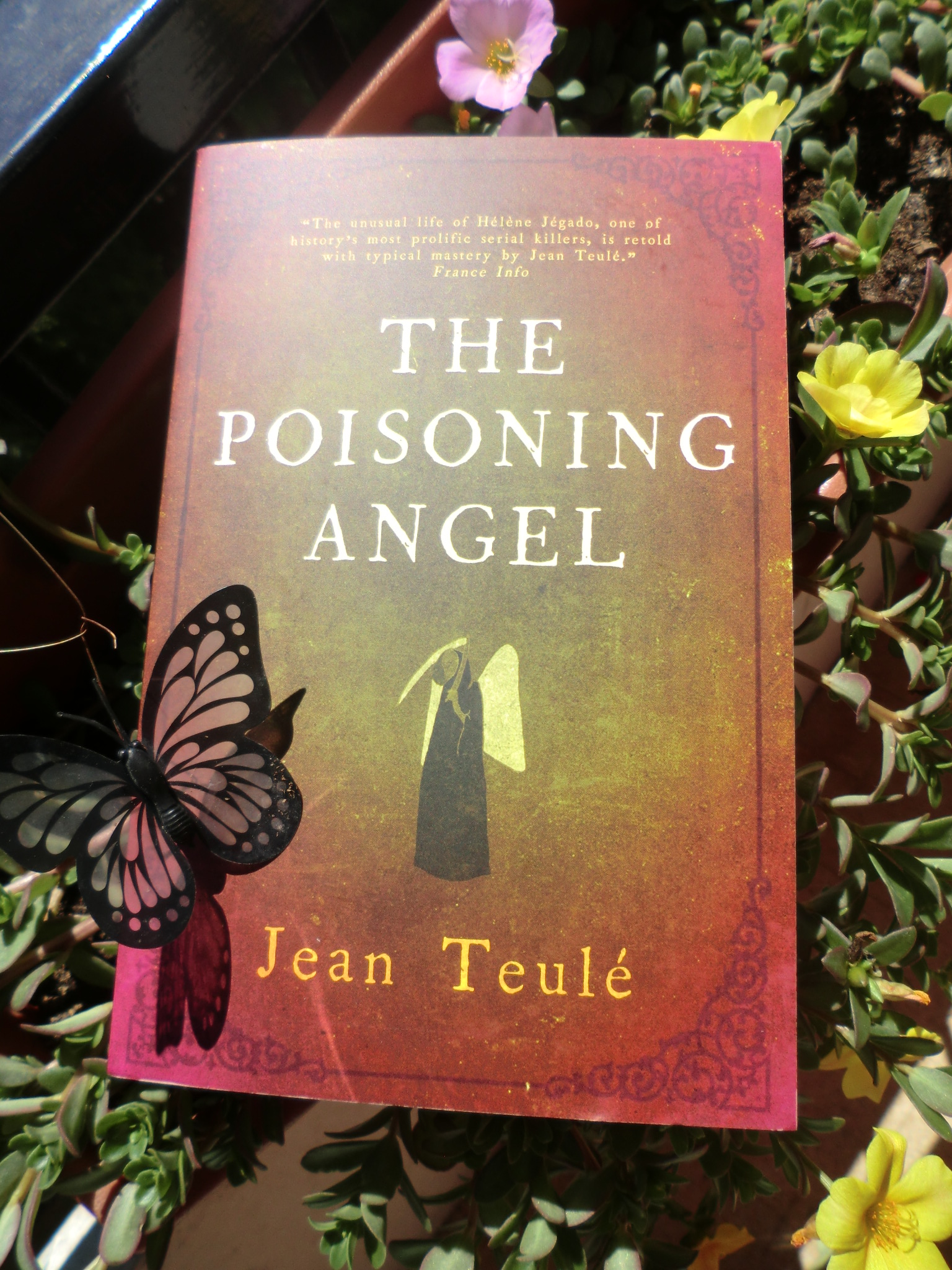
The Poisoning Angel by John Teule

translated by Melanie Florence

This book is actually to be published today 14 July 2014 and the author is a well-known name in French contemporary literature. In fact I have one of his books in French on the shelf already.

This one is based on a true but gruesome story of one of the most notorious serial poisoners that France has ever known and was described by the Sunday Telegraph as:

“a bawdy romp one minute, a gruesome tragedy the next. The writing is beautiful, witty, grisly and moving, and reeks of authenticity.”

Let’s hope all that comes off in translation.

Vatican Cellars

The Vatican Cellars by André Gide

translated by Julian Evans

This book will be published in August 2014 to mark the centenary of the book’s first publication. It is set in the 1890’s around a group of ingenious fraudsters who claim that the Pope has been imprisoned and a false Pope enthroned in his place.

I haven’t read anything by this author, but he sounds like he caused quite a sensation with this novel and others, as he took it upon himself to explore morality in his work and was a major influence on the writing of Jean-Paul Sartre and Albert Camus. He was awarded the Nobel Prize for Literature in 1947 and one year after he died (in 1951) his works were placed on the Vatican’s list of banned books.

Three French Books I Read This Year:

Nagasaki (2)

Nagasaki by Eric Faye

translated by Emily Boyce

A short novella, based on a true story of an event that happened in Japan, that will make you check your fridge contents and ensure you lock the door at night.

Foundling2

The Foundling Boy by Michel Deon

translated by Julian Evans

Coming of age story of a young boy left as a baby on a doorstep, who grows up and has an insatiable need to travel and experience the world. The sequel soon to be translated into English as well.

People in Photo

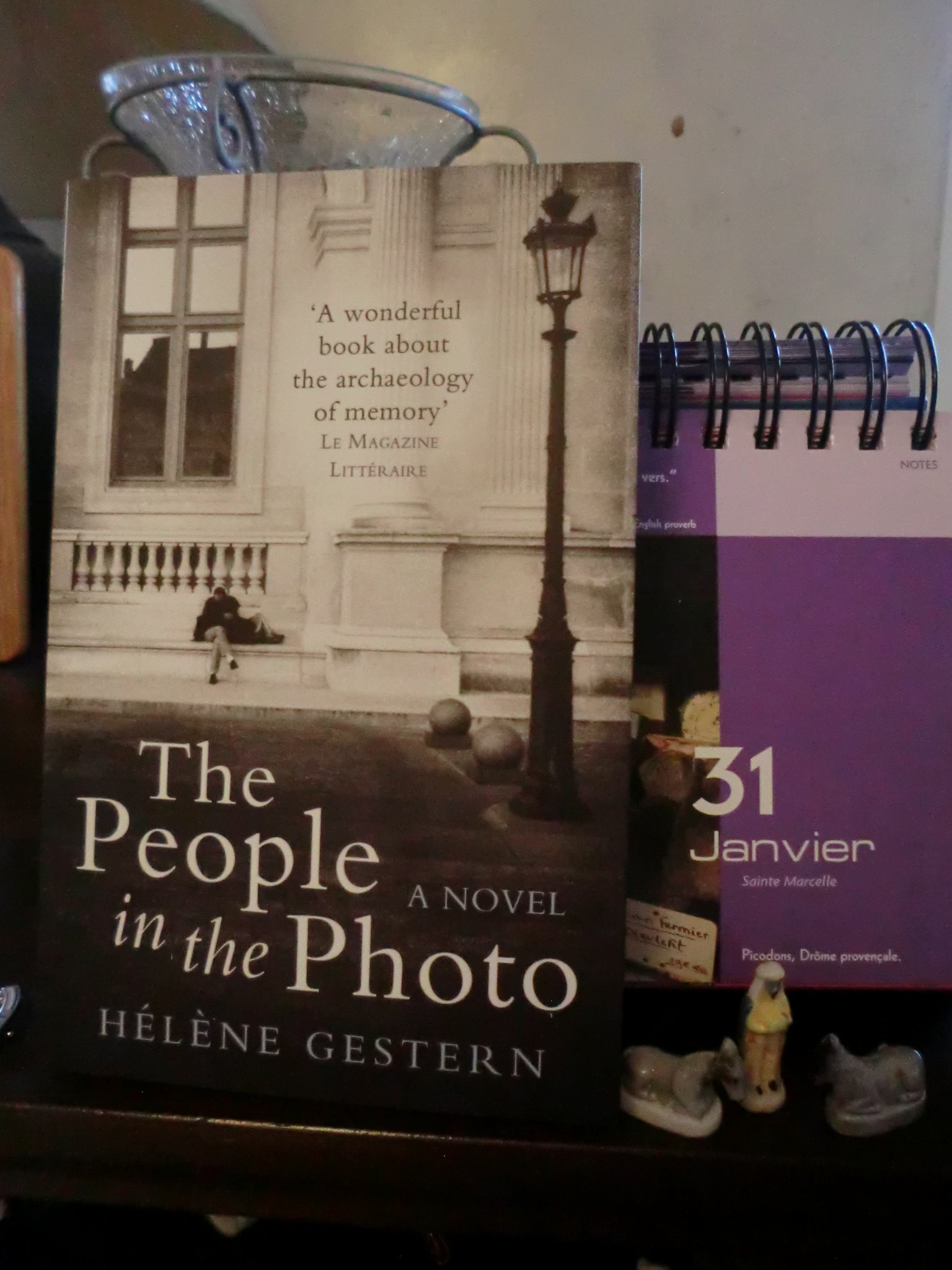
The People In the Photo by Hélène Gestern

translated by Emily Boyce,Ros Schwartz

A wonderful epistolary novel about a young woman searching for answers about events in her mother’s life before she was born, a photo provides a clue to those she knew.

Two Great Books Set in France:

All the Light

All the Light We Cannot See

by Anthony Doerr

Paris and Saint-Malo pre and during WWII following the lives of two children and their growth into adolescence, Marie-Laure who lost her sight at six and Werner who lost his parents and is raised in an orphanage. An excellent story that leads to the crossing of paths of these two characters and wonderfully evocative of place.

I Always Loved You

I Always Loved You

by Robin Oliveira

An insightful historical novel about the American painter Mary Cassatt, her life in late 1800’s Paris as she struggles to establish her name in the art world, enduring a life-long though fractious relationship with the impressionist painter and sculptor Edgar Degas.

Salmagundi:

  1. a mixed dish consisting usually of cubed poultry or fish, chopped meat, anchovies, eggs, onions, oil, etc., often served as a salad.
  2. any mixture or miscellany.

 Bonne Fête!


Very Inspiring Book Blogs

The Very Inspiring Blogger Award is flying like an angel around the blogosphere, touching down on many of the dedicated and inspiring people out there dedicated to books and writing and sharing the word on literature.

very-inspiring-blog-award-logo

So congratulations to the following for being nominated, you are all an inspiration to me and I thank you most kindly for nominating Word by Word.

Thank you:

  1. Lizzi at These Little Words – Thoughtful considered reviews,she reads a mix of contemporary recent publications and favourites from the shelf waiting to be read.
  2. Sandra Danby Author of Ignoring Gravity – a new blog for me, but I am soon to read her book, so watch this space.
  3. Jacqui at Jacqui Wine’s Journal – Long-time reader and tweeter, new recruit to blogging, excellent shelf of reads with a penchant for translated fiction and a connoisseur of wine! Also part of the Shadow Jury for IFFP – see Stu below.
  4. Nancy at Ipsofactodotme – Out of The Comfort Zone Reading more like it, Nancy is Inspiration extraordinaire, taught herself to read in French through reading classic French literature, with a cat and a Heineken for company, while living in the Netherlands, I love the eccentricity and achievements of inspirational bloggers!

The award has the following rules:

  • Thank and link to the person who nominated you.
  • List the rules and display the award.
  • Share seven facts about yourself.
  • Nominate 15 other amazing blogs and comment on their posts to let them know they have been nominated.
  • Optional: display the award logo on your blog and follow the blogger who nominated you.

Seven Things About Me You May Not Know:

  1. Golden Plover - the other life...

    Golden Plover – the other life…

    The first time I went on a date I had to ride 6 kilometres across farmland on my horse to get there.

  2. I learnt to drive on a Massey Ferguson tractor with no second gear.
  3. I was once an extra in a film called ‘Bedlam Britannica’ a documentary about how the British treated their mentally ill. My role was a lunatic, part of a patient’s hallucination.
  4. When I was travelling in India, someone asked me if I was Japanese.
  5. Now people ask me “Vous êtes Anglais?”
  6. I once attended two weddings in subsequent weekends; the first was in Beirut, the second in Lagos.
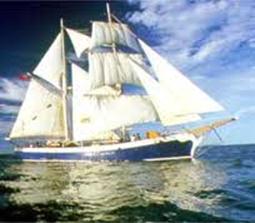
  7. I love the sea and sometimes wonder how life might have unfolded had I said yes to that job on a tall ship sailing around the world.

So Fifteen Book Bloggers That Inspire Me Today:

  • The Lonesome Reader – I will read anything and everything he reviews, whether I like the book or not, Eric is an inspirational and aspirational reviewer, one of the best. His reviews read like compelling essays and I know Col (see below) is a big fan of his too.
  • Vishy The Knight – Diligent reader, lover of books across genre, the most comprehensive reviews ever & the kindest, most attentive blog commenter in history.
  • The Only Way Is Reading – When Col gives a 10 (check out his awesome rating system) I absolutely have to read the book, introduced me to Primo Levi.
  • The Writes of Women – Reviews of Books By Female Writers, Influential Opinion Maker on Books @Frizbot
  • Winstons Dad – Stu is the Super Champion of Translated Fiction and Chair Person of the Shadow Jury for IFFP (International Foreign Fiction Prize), a Translation Activist who reads around the world!
  • HeavenAli – Unearths and Rediscovers Forgotten Books, has read more Persephone Books than Anyone I know!
  • My Writing Life – Julia Hones, a creative spirit writing, reading and sharing insightful and compassionate pearls of wisdom, a place to rest a while.
  • A Life In Books – Susan is an ex bookseller and knows what’s coming out, writes informed reviews and contributes to the conversation.
  • Book to the Future – SteJ reads books with the weirdest covers ever, he thrives on finding the literary bizarre and his reviews and blogs are compelling and original. Blogging shines a bright light out from under the bushel for this one.
  • KimberlySullivan – Kimberly is based in Rome but travels a lot and writes amazing short stories and she goes to the Matera Women’s Fiction Festival every year!! One day I’m going to meet her there! She is total inspiration and gets out there and achieves her dreams and reads and blogs and juggles kid stuff.
  • Thinking in Fragments – Alex is a thinker, a reader and comes to blogging having left the academic world which we are all the richer for having her valued presence and contribution to our virtual world.
  • Books and Reviews – Elena, Spanish Feminist, I came across her wonderful blog when we both read Carmen LeForet’s Nada at the same time, inspirational indeed!
  • ReadEng. Didi’s Press – Well Deidre is up there in the North of France and I’m down here in the South and one day we’ll meet in the middle, I love her, love her blog and A D O R E her Youtube channel! She’s evolved into a SuperStar BookTuber, Go Girl! Love all her recommendations, and she’s great to listen to. More on Youtube than the blog these days. I’m sure we knew each other in a previous life. J
  • Mes étagères en franglais – What dedication, reading in French and English, she puts up her reviews in both languages, dedication to books and reviewing and the French/English languages. Bravo I say!
  • Biblioglobal – Another champion of reading around the world, across cultures, translated fiction and fiction written by those who live or come from other cultures, always love visiting here.

Wow, that was hard work! And sorry for those I missed, there are too many to choose from, so many great blogs by writers as well as readers, I hope you enjoy the selection and find someone new to visit and follow. Just click on the title to go there. And of course, no obligation to those nominated to participate.

After all that, I need a little inspiration from Matera!