The Missing One by Lucy Atkins

The Missing OneFellow French resident Rosemary who blogs at Aussie in France, mentioned this book after reading my review of Hélène Gestern’s The People in the Photo, a novel written in letters, which is also an unravelling of a mystery, where a woman seeks to understand who her mother really was in those years before she was born.

GesternIn Gestern’s book, the mother died when the daughter was only 4 years old, it took her more than 30 years to begin searching.

Lucy Atkins protagonist Kal is 38 years old, the mother of an 18 month old boy Finn and living in England when her mother dies. It is both her death and the discovery of suspicious text messages on her husbands telephone that prompt her somewhat irrational, spur of the moment decision to dig into her mother’s past, the period around her birth, when she lived in North America.

Kal is grieving not just her mother’s death, but a loss she can’t explain, the reason her relationship with her mother was so fraught, what it was she reminded her of that seemed to cause such angst. On an impulse, she runs away from confronting her own relationship difficulties, an escape that carries her to the small island of Spring Tide, near Vancouver to find Susannah, a woman who sent her mother a postcard on the same day every year, a friend she had never ever mentioned.

Orca by Ayman

Orca by Ayman

Lucy Atkins brings an air of tension and menace to the story, as those with knowledge of the questions Kal is asking actively avoid answering to prevent her from finding out. She creates a story with pace and suspense while a captivating back-story recounts to the reader little by little the events that occurred in her mother Elena’s life leading up to her birth.

The author evokes this sense of place well, although for a British woman arriving on a small Canadian island for the first time, she makes few observations relating to its foreignness, we forget that she is in a place where we would likely be noticing many of the differences of a foreign culture, although it might be said that Kali is completely blinded by her grief and outrage, because she makes plenty of decisions that will make the average reader gasp in disbelief. If anything, England felt more foreign and the wildness of Canada described with real familiarity.

Orca by Allia

Orca by Allia

The author uses a dual narrative technique to tell  a little of the back-story of Kal’s mother Elena’s life.  She met her British husband while doing a PhD at a university in California, and as the story will reveal, ended up in Canada.

The narrative around the mother and the sharing of her passion for sea creatures, their unique behaviours, relationships and ways of communicating – did you know that orca whales speak in different dialects? – was a fascinating distraction from the drama of our foolhardy heroine and the not so friendly friend she pursued for enlightenment.

Atkin’s uses various “mystery” devices to create intrigue, like failing to mention characters that would have been present in the narrative and mind of the character, and although this sometimes interrupted my reading occasionally, ultimately I just wanted to continue to know what was going to happen, especially as there was a young child involved!

An Island Floathouse

An Island Floathouse

It was an enjoyable read  even though I was a aware at times of the author pulling strings in the narrative to create effect and had to try to stop myself from expecting that Kal act more sensibly or true to her instinct, as anyone who has ever had an 18 month old baby would likely agree, her journey was indeed just what she needed to teach her some sense.

I took this book with me on a flight to London and it was the perfect in-flight read, no likelihood of dozing with The Missing One, you’ll want to stay awake until its finished.

Note: This book was an Advance Reader Copy (ARC) provided by the publisher via NetGalley and Artwork provided by my children, one who likes to draw, the other who likes to make digital art. Yes, it’s the school holidays!

The Foundling Boy – Le jeune homme vert by Michel Déon

Foundling2Thank you to publisher Gallic Books, who noticing that I had recently read The Lost Domain (le Grand Meaulnes) by Alain-Fournier suggested I might also enjoy Michel Déon’s The Foundling Boy. Originally written in French Le jeune homme vert was first published in 1975 and now translated into English for the first time, is beginning to be enjoyed by readers of the English language.

Set in Grangeville, Normandy in the inter-war years prior to WWII, it is a coming-of-age story of the young Jean Arnaud, who starts his life in a basket on the doorstep of Albert, a one-legged war veteran, now a pacifist gardener cum caretaker  and his wife Jeanne, who raise the child as their own.

Jean grows up in the shadow of Michel and Antoinette, children of Antoine de Couseau, an errant landowner whose father built up a fortune, only for his son to slowly lose it all – unsurprisingly as much of the first 200 pages is spent in his company, a man who whenever challenged by his wife or confronted by business decisions, takes to his latest model Bugatti, a car he replaces every year and heads south, following what becomes a well-worn trail via Lyon, Aix, St Tropez to Menton, allegedly to see his grown daughter Genevieve, recuperating in a hospital residence from lung problems.

The visits rarely last longer than a wave from the window before he heads off to enjoy the hospitality and warm sheets of various mistresses en route and this being France of course, the husbands all take it in their stride.

There is a real fascination throughout the novel for unique cars that love to take to the road. I went back to look at the references which I probably glossed over in my first read, now much more knowledgeable about Ettore Bugatti and his racing cars, from the 1923 Type 22 here on the left through many other models to the 1938 57SC Atlantic on the right. And Antoine de Couseau is not the only character whom Jean Arnaud meets, to possess a similar fascination. For being raised a peasant, he has seen many a luxurious interior when it comes to cars.

Jean too, has a love of his bike and travel and will spend four days in London, developing a taste and allure for freedom and adventure and not long after will follow in the footsteps of the writer Stendhal to Milan, Florence and Rome, meeting up with Ernst, a German lad who is following a similar trail in the footsteps of Goethe, his father’s hero – having swapped his son’s copy of Mein Kampf for Goethe’s Italienische Reise (Italian Journey).

Arnauds JourneyThe two young men share adventures, debate philosophical perspectives and encounter the fragility of friendship in the face of prejudice and racism.

Losing everything and having almost become the amoureux slave of a restaurant proprietor, who offers him a job so he can earn enough money to return home, Jean finally returns making the acquaintance of Palfry on his way, only to discover things at home vastly changed.

Throughout all Jean’s experiences, there are the interactions with family, friends, neighbours, villagers and people he meets along the way, it is not enough to accept the wisdom of others, he wants to explore for himself, whether it is the landscapes of neighbouring countries or the social acquaintances of his friend Palfry, a man who gave him a ride in his car dressed as a priest and whom he meets at various stages in his life who teaches him that things are not always as they seem. Ultimately, this searching might also be to understand who he really is, something within him, but that he also seeks outside from those he knows, the mystery of his birth.

“What is certain is that, overnight, Jean Arnaud matured by several years, learning that a priest may also be a plotter, and that without being thieves and murderers men might have to hide from the police because they were defending a noble cause. The world was not built of flawless blocks, of good and bad, of pure and impure. More subtle divisions undermined the picture he had so far been given of morality and duty. “

Fairly early on, it occurred to me that nearly every female character was caricatured as something of an object, the neighbour’s daughter, the house-maids, the women Antoine de Courseau encounters on his travels, even his daughter Geneviève becomes a ‘kept’ woman.

While it is an engaging and entertaining read, that moves along at the rambling, colourful pace of a joy-ride in a Bugatti, it began to feel like a book written for men, for it is they who travel (with the exception perhaps of Geneviève), have adventures, engage in meaningful banter, witty dialogue and to whom much of the advice within is given.

I admit to a moment of despair in being unable to think of one woman with redeeming qualities, that a female reader might relate to, why even the landlady of the Bed & Breakfast in Dover drags the poor 13-year-old youth off to the pub keeping him there till closing, Jean’s first impression of England is certainly one that stays long in his memory.

Jean purchases himself a notebook early on in his journeys and in his letters and notes, we are witness to how he begins to see the world:

I’ve bought myself a notebook where I’ve started making a few notes:

a) Duplicity: absolutely necessary for a life without dramas. You have to harden your heart. I need to be capable, without blushing to my roots, of sleeping with a woman and then being a jolly decent chap to her lover or husband. This is essential. Without it society would be impossible.

I guess, we could just say it is delightfully French and certainly the women are not portrayed as victims, quite the opposite in many cases, but they did make this reader pause for reflection. An eye-opening, memorable journey through the European landscape whilst inhabiting a very French culture and perspective.

Michel Déon inhabits his male characters with pride and indeed enjoys himself so much, he can’t help but put himself into the narrative from time to time speaking with much enthusiasm and familiarity directly to the reader. And with good reason, for it has been said of his young hero that:

“The character of Jean Arnaud has been heralded as one of French literature’s great adolescents, alongside Flaubert’s Frédéric Moreau, Stendhal’s Julien Sorel and Alain-Fournier’s Augustin Meaulnes.”

les vingt ans

Michel Déon has the last say, as he leaves Jean Arnaud in a military camp on the eve of war, a sealed envelope in his pocket with instructions not to open it unless he is in extreme need, his life full of promise yet hardly begun by telling us not to worry about those things he has not revealed, that here he was a foundling boy and in another book, he will tell the story of how his protagonist becomes a man.

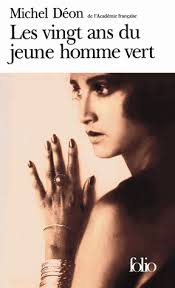
The sequel, The Foundling’s War (Les Vingt Ans du Jeune Homme Vert) is due to be translated into English and published also by Gallic Books. I am intrigued to know what Jean Arnaud makes of life given his experience thus far and how war might change him. Watch this space!

The Crane Wife by Patrick Ness

The Extraordinary Happens Every Day

A Monster Calls

A Monster Calls

You may remember that last year Patrick Ness’s A Monster Calls was one of my few 5 star reads for the year, a young adult novel, it told the story of a teenage boy coping with his mother’s illness and his nightly visits from a tree-like monster creating an allegory that captures the angst and silent rage of a fearful boy like nothing I have ever read.

Not only is the storytelling incredible as well as moving, the author was telling a story that another author Siobhan Dowd wanted to tell, but her own illness kept her from doing so. If you haven’t read it, keep an eye out for it, it is a timeless classic.

I had seen a few reviews for The Crane Wife, an adult novel by Patrick Ness that sounded intriguing and when our local English bookstore put the hardcover version of it out in their sale, I snapped it up and immediately stopped everything I was reading to begin reading. Such is the power of words written by Patrick Ness for this reader. He is a writer who deftly uses a touch of magic realism which I like, not to dwell in it all the time, but when used sparingly with purpose to elevate or create a turning point in a story, I find it no trouble to accept.

The Crane Wife is inspired by the Japanese myth of the same name Ness was read in kindergarten by the Japanese-American teacher he adored, in which a sail maker finds an injured crane and helps it and the next day a mysterious woman walks into his life, whom he falls in love with and marries. She tells him, “I can weave you beautiful sails, as long as you don’t watch me weave”. She does so, they grow rich, until he becomes too consumed by greed and curiosity and breaks his promise, only to experience irretrievable loss.

The_Crane_Wife__pentaptych_by_Crooty

The story stayed with the author over the years and then many years later he heard The Decemberists song The Crane Wife 1 which captured the emotion of the story just as he felt it. It was the catalyst to start writing, he was ready to tell the story that had been in incubation for so long. And what a beautiful song, I can’t stop listening to it myself.

In this novel, George wakes one morning to hear a mournful keening come from his backyard and in the freezing temperatures, investigates to find a large crane with an arrow shot through its wing. He assists the crane and then watches it fly off. The next day in his print shop as he is working on his latest obsession, making paper cut-outs from second-hand abandoned books, in walks a woman we come to know as Kumiko, an event that marks the beginning of an artistic and love bound encounter, touching the lives of George, his daughter Amanda and those close to them.

George is in his 40’s and in something of a comfortable rut, amicably divorced, running his small shop with the help of Mehmet, his assistant and alter-ego. His daughter Amanda lives alone with her son Jean-Pierre, her uncontrollable anger having driven out her French husband, despite their still burning love.

Crane Wife

There is much unsaid between characters and that which is communicated, isn’t always done so as it was intended, until Kumiko and George begin to collaborate through their art, work that affects all who see it, accessing those uncommunicative wordless depths and giving them expression. The work affects them all, artists and observers.

It is a story about humanity, how even those who act out of kindness make mistakes, are tempted by greed and suffer tragic consequences. It is also about how a story changes depends on who is telling it, the power of the imagination in creating different perspectives, viewed in the shadow or in the light. Kumiko says,

‘A story must be told. How else can we live in this world that makes no sense?’

‘How else can we live with the extraordinary?’ George murmured.

‘Yes,’ Kumiko said, seriously. ‘Exactly that. The extraordinary happens all the time. So much, we can’t take it. Life and happiness and heartache and love. If we couldn’t put it into a story-‘

‘And explain it-‘

‘No!’ she said, suddenly sharp. ‘Not explain. Stories do not explain. They seem to, but all they provide is a starting point. A story never ends at the end. There is always after. And even within itself, even by saying that this version is the right one, it suggests other versions, versions that exist in parallel. No, a story is not an explanation, it is a net, a net through which the truth flows. The net catches some of the truth, but not all, never, all, only enough so that we can live with the extraordinary without it killing us.’ She sagged a little, as if exhausted by this speech. ‘As it surely, surely, would.’

In the beginning I was reminded a little of Nick Hornby, the London novel set in a shop, the banter between employer and employee, the vulnerable, angry young woman, the great dialogue and strong characters that come to life from the very first pages and the immediate interest in what will befall them, wondering what consequences their flaws will make manifest. But then Kumiko walks in, a traveller from afar and I remember this is Patrick Ness, something extraordinary is going to happen, even if it is not immediately apparent.

He writes with compassion and as a reader I trust him, whether it’s tragedy, darkness or exhilaration, he handles it all with responsibility, without resorting to cliché and makes me want to slow read every word.

Coincidentally, yesterday on The Guardian, Patrick Ness participated in the books podcast performing an exclusive short story, an addition to his short story collection for adults Topics About Which I Know Nothing which is to be republished and talked to Claire Armistead about writing short stories and the differences in writing for adults and teenagers.

Armistead thought he was being coy about the differences between young adult (YA) and adult fiction, suggesting YA books had a ‘more cheerful trajectory’ to which he replied:

‘I always say the concerns of a teenage novel tend to be about testing your boundaries and finding out who you are and finding out the limits of yourself and crossing those limits and discovering it hurts or discovering that it’s a new thing that you can be and are, and an adult novel tends to be …about someone whose boundaries are already solidified and the story tends to be about what happens when you are taken outside those boundaries or how those boundaries are limited to you …both make for fantastic stories, intellectual ones, complex ones, the concerns might be different, but it’s not a simplistic thing, that you must be direct in one and indirect in another’ Patrick Ness

The People in the Photo – Eux sur la photo by Hélène Gestern

Belgravia BooksI have been patiently waiting for this book to be published since discovering it at the same time I learned of the existence of Gallic Books, francophile publishers based in London specialising in bringing a varied collection of excellent French titles across genres to the English reading world. You can buy their books online or at Belgravia Books which specialises in books in translation (5 mins walk from Victoria train station).

I had something of a French literature binge in December, reading Philippe Claudel’s Brodeck’s Report, Alain Fournier’s classic The Lost Domain, Faïza Guène’s young adult novel Just Like Tomorrow and a couple of Albert Camus essays in commemoration of his 100th anniversary. And I am set to continue this theme in 2014, perhaps even venturing into reading a few in the original language!

The People in the Photo is Hélène Gestern’s debut novel and centres on 40-year-old Parisian archivist Hélène’s personal endeavour to learn more about her mother Nathalie, who died when she was four-years-old and about whom no-one would ever speak, not her father, nor her step-mother or any other person and she never understood why.

Gestern

Her father has passed away and now her stepmother, the last living connection between her and her mother is seriously unwell, an event that prompts her into action.
Hélène has only one photo of her mother alongside two unknown men and places an advertisement to try to find anyone who might recognise them.

It marks the beginning of a correspondence and indeed much of the novel is in epistolary form, made up of letters and emails, with the exception of extracts that describe the various photos that are uncovered by Hélène and Stéphane, a Swiss biologist, who recognises one of the men in the photo.

The letters add more than just their content to the narrative, they are an adept device for creating pace and intrigue, their length and dates are significant measuring the time that passes, the pauses, the urgency of an occasional email and yet there is an unwillingness to let go of the controlled structure and single dialogue of the letter, their preferred medium; the revealing sign-off salutations a clue to the developing relationship between the two protagonists.

LettersIt is a revelatory journey of two people into the past of their parent’s lives. Inherent in delving into the past, no matter how necessary it may seem, is the risk of deception, disappointment, even horror in enlightenment.

Hélène Gestern deftly captures the seesaw of emotions as both characters experience waves of exhilaration in their search and periods of retreat from the insinuations of discovery, suggestions they aren’t always ready to face the implications of.

At times the characters seemed extraordinarily restrained, upon receiving a box likely to contain pertinent information, Hélène leaves it unopened for days, her excuse – no time or inclination, yet there is always sufficient to write the correspondence. It is understandable in a sense, the fear of what the revelation will bring, then Stéfane does the same, after developing a set of photos, has no time to look at them, yet has time for a 2 hour walk and his correspondence as well.

Perhaps the lure of corresponding with the living, that ever-present possibility of a future still to be enjoyed, sometimes overwhelms the need to continue digging into a dusty, forgotten past that holds little promise of joy. Or it might just be the sign of a compelling read, and our impatience with characters, living or between the pages of a book, who don’t act as we might, were we in their shoes.

It is a captivating read, intensely thought-provoking and intricately plotted, revealing little by little clues to lives lived in a distant era, yet which explain much of the more recent past for two young people allowing them greater understanding and the potential for forgiveness of those who, until their truth was revealed, were to them like shadows of their former selves.

Note: Thank you kindly to Gallic Books for sending me a copy of the book to read and review.

The Literary Blog Hop – #Giveaway

Today and until 12 February, I’m participating in a literary giveaway blog hop hosted by Judith at Leeswammes’ Blog, an avid reader and blogger.

literarybloghop

All the blogs listed below are participating and offering a literary giveaway to readers. Just leave a comment below to be in the draw for my giveaway and visit any of the blogs listed below, to be in with a chance to win a book. This giveaway is open to you all, worldwide!

WIN A COPY of

Philippe Claudel’s Brodeck’s Report !

I am giving away a copy of one of the best books I read in 2013, a brilliant English translation of a contemporary French novel and winner of a French literary Prize Brodeck’s Report by Philippe Claudel.

You can read My Review here or the brief summary I wrote immediately upon finishing it.

Quietly devastatingly brilliant. Claudel takes one village which happens to be near the border – and what is a border but an imagined line – of an occupying nation and uses the village and its resident to portray humanity and its many inclinations, when a stranger rides into town, makes himself comfortable and goes about his business, without letting anyone know what that business was.

Brodeck is tasked with writing an account of events that take place and as he does so, he simultaneously writes another account, his own, of what is occurring now and what has happened to them all in the recent past, he tries to make sense of it, as is his nature and to know what to do.

I have another giveaway running concurrently (only open to US readers), if you like historical fiction, I am offering a copy of the recently published I Always Loved You by Robin Oliveira recounting the life of the artist Mary Casssat and her friend Edgar Degas in Paris in the late 1800’s. Read my review here and enter the giveaway here.

This is a great opportunity to visit blogs that review literary books and win a book! Entry into the draw via comments are open until 12 February.

Linky List:

  1. Leeswammes
  2. Seaside Book Nook
  3. Booklover Book Reviews
  4. Biblionomad
  5. Laurie Here
  6. The Well-Read Redhead (US/CA)
  7. River City Reading
  8. GirlVsBookshelf
  9. Ciska’s Book Chest
  10. The Book Stop
  11. Ragdoll Books Blog
  12. Nishita’s Rants and Raves
  13. Lucybird’s Book Blog
  14. Reading World (N-America)
  15. Journey Through Books
  16. Readerbuzz
  17. Always With a Book (US)
  18. 52 Books or Bust (N.Am./UK)
  19. Guiltless Reading (US/CA)
  20. Book-alicious Mama (US)
  21. Wensend
  22. Books Speak Volumes
  23. Words for Worms
  24. The Relentless Reader
  25. A Lovely Bookshelf on the Wall (US)
  1. Fourth Street Review
  2. Vailia’s Page Turner
  3. The Little Reader Library
  4. Lost Generation Reader
  5. Heavenali
  6. Roof Beam Reader
  7. Mythical Books
  8. Word by Word
  9. The Misfortune of Knowing
  10. Aymaran Shadow > Behind The Scenes
  11. The Things You Can Read (US)
  12. Bay State Reader’s Advisory
  13. Curiosity Killed the Bookworm
  14. Lizzy’s Literary Life
  15. Books Can Save a Life (N. America)
  16. Words And Peace (US)
  17. The Book Club Blog

This giveaway is now closed.

What Do We Read?

Photo0652

Recently there has been discussion in the media, on twitter and on various blogs about how books written by women are represented with respect to published reviews and the #readwomen2014 campaign launched as a result.

The annual survey carried out by VIDA – The Count continues to show them as  being under represented in most of the major publications that provide reviews and in translated fiction.

It made me wonder what I do read. I don’t think I have a bias towards male or female authors, but I do have a preference for cross-cultural fiction and I like to read translations, so I decided to look back over the last year and see how I fared.  As you can see below, I definitely read more female than male authors and slightly more than 2012 when 62% of the books I read were by women.

Gender 2013

In total, during 2013 I read 70 books, slightly more than the one book a week I have as an intention and 10 books more than I read in 2012.

As those who read this blog may know, I like to read cross-cultural, contemporary literature, so I read more modern than classics and I like to read around the world. What I hadn’t realised was that last year I read books by authors from 22 countries! Check out this fabulous pie chart.

Country 2013

Compared to 2012 when I only read books from 17 countries! From the US and the UK, I read exactly the same number of books (19) and a visit to Istanbul in May prompted an increase in Turkish literature (5) and three books in December helped my French literature (4) to increase, but I hope that will improve in 2014.
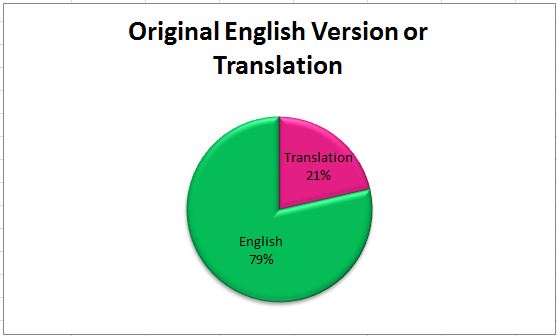
To read that widely, it is necessary to read translated work and 15 of the books I read or 21% were translated compared to only 10% in 2012. I’ve certainly travelled the world through books, I may have to start checking the globe to see which continents are missing.

Translation 2013

And what kind of books do I read? Well mostly fiction, a hefty 76% compared to 23% non-fiction and only 1% poetry, but less than 2012 when 82% of my reading was fiction and 16% non-fiction. I did read some excellent non-fiction in 2013 and hope to do the same this year.

Genre 2013

And lastly, how do I read? Yes, I have a kindle and in 2012 I read 25 books or 41% of them electronically. In 2013 that has increased to 46%, that’s 32 books on the kindle, almost half my reading! That’s thanks mostly to NetGalley who send me ARC’s (Advance Reader Copies) from the publishers that I request, which I am immensely grateful for.

E Book 2013

So now I know what I read and I think I shall just keep on doing the same, which is to be as spontaneous as possible, to engage with others who read for recommendations and keep reading around the world!

Ashes in my Mouth, Sand in My Shoes by Per Petterson

This is Per Petterson’s first book, though only recently translated (by Don Bartlett) into English following the success of his novel Out Stealing Horses (translated into 40 languages) and the sequel to this novel , my personal favourite I Curse the River of Time.

Ashes in My MouthThis book provides a literary snapshot of a childhood growing up in the outskirts of Oslo, Norway in the early 1960’s. His father works in a shoe factory and his Danish mother used to work in a chocolate factory (in the good old days) and now works as a cleaner.

Arvid is six and a half years old and doesn’t always feel secure in the various environments he inhabits, whether at home or at school, or out fishing his Father and his Uncle, where there is no nagging voice to still their hand when they overindulge their mind altering beverage and revert to discussing childhood jealousies, a dialogue that descends into the physical.

His Grandfather has died and this alters things, even though they appear on the outside to be the same.

Arvid listens to the raised voices at night, hears the kitchen door slam and watches his mother tread the same long walk, out there to the dark and back, a walk with no destination, one she makes in the icy cold of night without wearing a coat.

One day he realises his mother is getting older, that time is moving on, and that it is also happening to him.

“He held his hands to his face as if to keep his skin in place and for many nights he lay clutching his body, feeling time sweeping through it like little explosions. The palms of his hands were quivering and he tried to resist time and hold it back. But nothing helped, and with every pop he felt himself getting older.”

I Curse

This is a quiet book whose observations cut deep, a sensitive child with a tough father who likes to remind those around him of his achievements, a boy who admires his father but lives in quasi-fear of not being able to live up to his expectations. It is an author getting into his stride, not as good as the work that will follow, though showing signs of the great work that was to come.

In the sequel, I Curse the River of Time, it is 1989 and Arvid Jensen is 37 years old,  in the throes of a divorce and has discovered that his mother is battling cancer.  It might sound grim, but it I remember it as an astonishing read and I shall make sure to reread it again in 2014, because I think this one could be one of my all time favourite reads.

The Lost Domain – Le Grand Meaulnes by Alain Fournier

Classics don’t feature too often on my list and when they do, I tend to be attracted towards the Russian and French classics, because they offer an element of the unknown and the unfamiliar. I like reading across cultures and am fortunate to live within a culture that provides me with learning opportunities every day, whether I read the literature or not. But reading it adds so much more to the experience and to interactions with local people.

West End Lane Books

West End Lane Books

I had come across references to Le Grand Meaulnes a few times and nearly brought it home with me after visiting West End Lane Books in London last October, leaving it behind on that occasion, but purchasing Brodeck’s Report, which I have since read and Alistair Grayling’s non-fiction work Friendship, of which I read a few pages and found it a little dense, not yet abandoned, but left for a rainy day.

Le Grand Meaulnes crossed my path again via NetGalley, where I learned of the centenary version below which coincides with the 100th anniversary of Fournier’s death.  This version translated by Frank Davison, published by Oxford University Press.

I decided – enough – stop reading ABOUT the book and READ the book!

The Lost DomainAnd then what joy, to find myself in the company of Hermione Lee who has written such a wonderful introduction filling us in on Alain-Fournier’s life, that I could almost write an entire post on the gems she shares her excellent essay. She writes of the unique captivation this book has held over generations of readers and the literary qualities that have allowed it to continue to survive as a modern classic.

“Alain-Fournier’s only novel maps an imaginary vision onto a real landscape. It is the story of his childhood, transformed into a romantic quest. It is set in real places which he had known all his life, with real names of villages and towns and shops and train stations, but it takes us on mysterious journeys to places that seem to belong to a fairy tale.” Hermione Lee.

The title itself and its translation present a dilemma, as it is not possible to translate all that it means in one expression, it is a play on words, for it is the nickname of one of the chief characters and a reference to an estate, a château that he will search for in vain.

For a man who died at 28, Alain-Fournier lead a full and dramatic life, making one wonder what more he may have accomplished had he not been killed tragically in 1914 shortly after being called up to fight in WWI. The drama continued after his death, as this one book that he wrote became a cult sensation and created a feud over his legacy, complicated further by the split between his parents, claims by his sister and her husband (Fournier’s best friend) and the married women Simone (whose husband he had ghost written a book for) whom he’d had an affair with, who aborted his unborn child.

Alain-Fournier_maison_natale

Birthplace of Alain_Fournier
La Chapelle-d’Angillon
Source: Wikipedia

One gets the impression having read Le Grand Meaulnes, that having addressed childhood, the author was just warming up for an entire litany of novels, drawing on the many experiences and emotions he had already encountered in such a short life.

“His longing for his childhood places and his desire to turn that emotion into writing was one of the fundamental impulses behind Le Grand Meaulnes.”

Beginning in the 1890’s, Le Grand Meaulnes is narrated by the quiet, unassuming Seurel, a boy whose life at the schoolhouse is relatively uneventful until Meaulnes, nicknamed Le Grand Meaulnes arrives and just as soon disappears, only to return again.

The arrival of Augustin Meaulnes at a small provincial secondary school sets in train a series of events that will have a profound effect on his life. Lost and alone, he stumbles upon an isolated house, mysterious revels, and a beautiful girl. Determined to find the house again, and the girl with whom he has fallen in love, Meaulnes is torn between his love and competing claims of loyalty and friendship.

It is a story of a childhood and adolescence told by one who observes, follows, understands and tries to assist, at the expense of living his own life to fulfilment. What happened to his friend in those few days he disappeared will obsess both boys thereafter, one because he wants to know what happened and the other because he wants to return there and cannot remember the way.

The books first pages are narrated when Seurel is five, the main story taking place when he is 15 and Meaulnes is 18 and will end when Seurel is almost 20. Whenever Meaulnes is present, there is an air of drama. Life and even his character take on a different aspect for Seurel when his friend is there, and when he is not, he mulls over what has passed and tries to make sense of it, and at times even do something about it.

“Meaulnes gone, I was no longer following in the footsteps of a visionary path-finder; I was once more a village lad like the rest of them – a status which demanded no effort and concurred with my own inclinations.”

alain-fournier

Alain-Fournier
Source: Wikipedia

It is a nostalgic read, somewhat melancholy, infused with an air of pending tragedy – and reminiscent of the life of the author. It creates an ambiance of short-lived joy and then loss, one that is repeated often. We don’t read for the destination, but for the journey and its distractions, for the differences between characters facing the same situations. In this, it is a microcosm of humanity on a small scale during one phase of life, youth.

It is symbolic, not just of the end of childhood and romantic notions, but the end of an era of narrative style, published at the same time as Proust’s Swann’s Way, hailed as something new and a sign of the way forward for French literature, part of the new modernist movement, whilst Le Grand Meaulnes represented the end of the romantic tradition.

Loved it.

Note: This book was an ARC (Advance Reader Copy) provided by the publisher via NetGalley.

Top Reads 2013

I thought it was impossible last year and this year seems just as difficult, unlike last years clear-cut outstanding read, which I would recommend to anyone and everyone, I’m not so confident that my Outstanding Read of 2013 has universal appeal. But I absolutely loved it and recommend it highly!

Outstanding Read of the Year

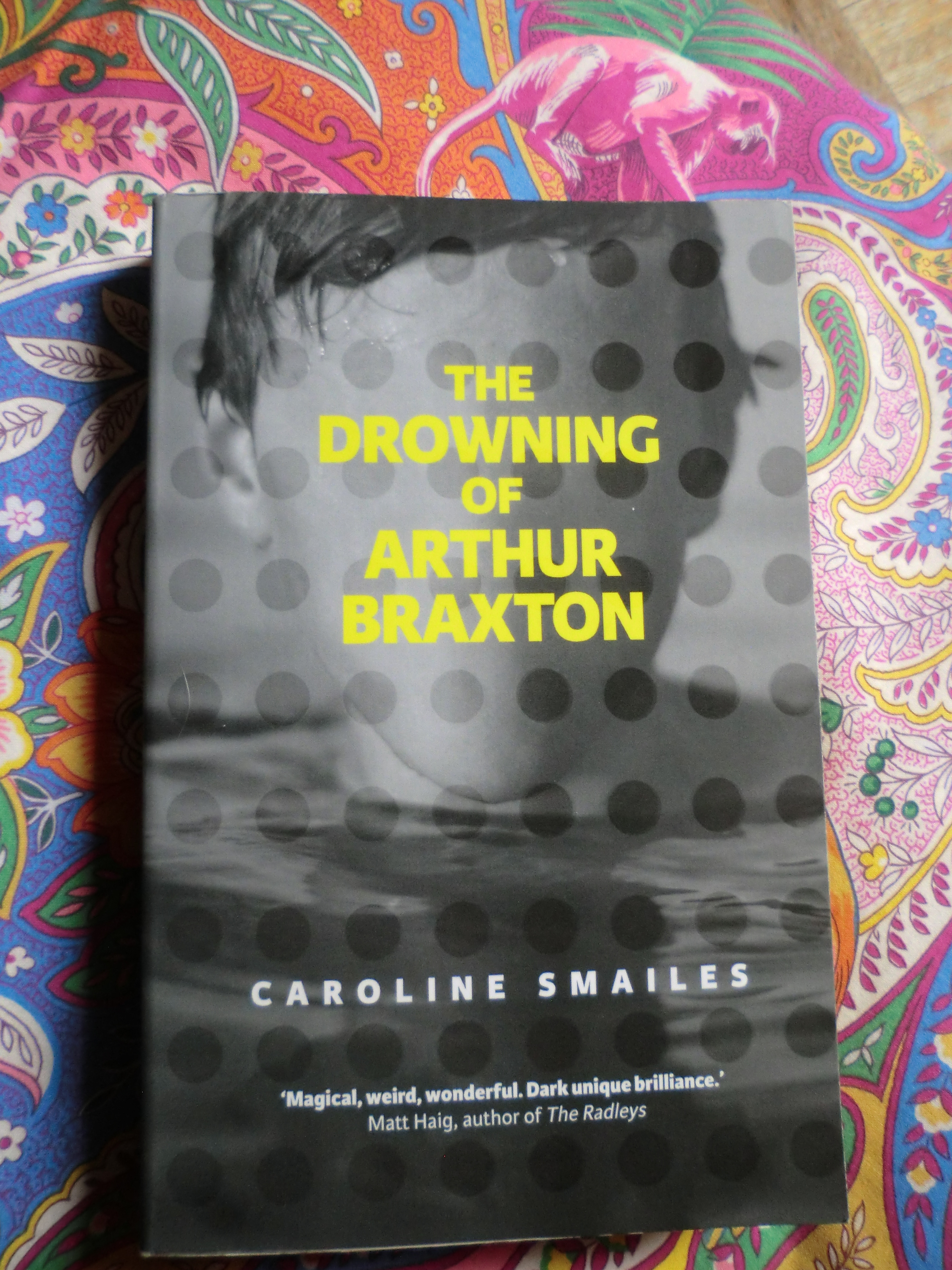
Arthur BraxtonMy outstanding read of the year, the one that stopped me in my tracks and then pulled me along at a fast pace and left me wondering what it was that was so compelling only to realise it was the originality of voice was Caroline Smailes The Drowning of Arthur Braxton.

I love that I knew nothing about it before reading it, I chose it on instinct, had never heard of the author and the book just worked its magic from the beginning . Then there was the serendipitous event occurring at the Victorian Baths where it is set, just as I was reading it – well that was the icing on the cake.

It’s a coming age story of a teenage boy who starts hanging out at an abandoned Victorian bath-house where things don’t always appear as they should, he discovers an uninhibited young woman swimming naked in the pool, the point from which all his perceptions about life begin to alter. It is strange, magical, weird and infused with hope without being in any way sentimental.  But don’t take my word for it, read it!

As for the rest, in no particular order, here are my memorable fiction and non-fiction reads for 2013.

Top Fiction

BoothThe Industry of Souls by Martin Booth was the first book of the year and a reread for me, something I rarely do, but I wanted to see if Martin Booths excellent book stood the test of time. And it sure did. I love this book and the way this author writes. The book is about a British prisoner held for many years in a Russian gulag, who decides not to return home after his release. The story is narrated on the day of his 80th birthday as he looks back and his past comes to visit him.

monster 2A Monster Calls by Patrick Ness – in all pursuits, sometimes it’s a good idea to go off piste  and for me this venture into young adult fiction was exactly that.  I picked this up in the library having recalled seeing a few excellent reviews and was intrigued by the concept of a writer picking up the threads of another writers idea and bringing it to fruition – Siobhan Dowd died tragically at the age of 47 and Patrick Ness brilliantly brings her story idea to life in this incredible, poignant tale.

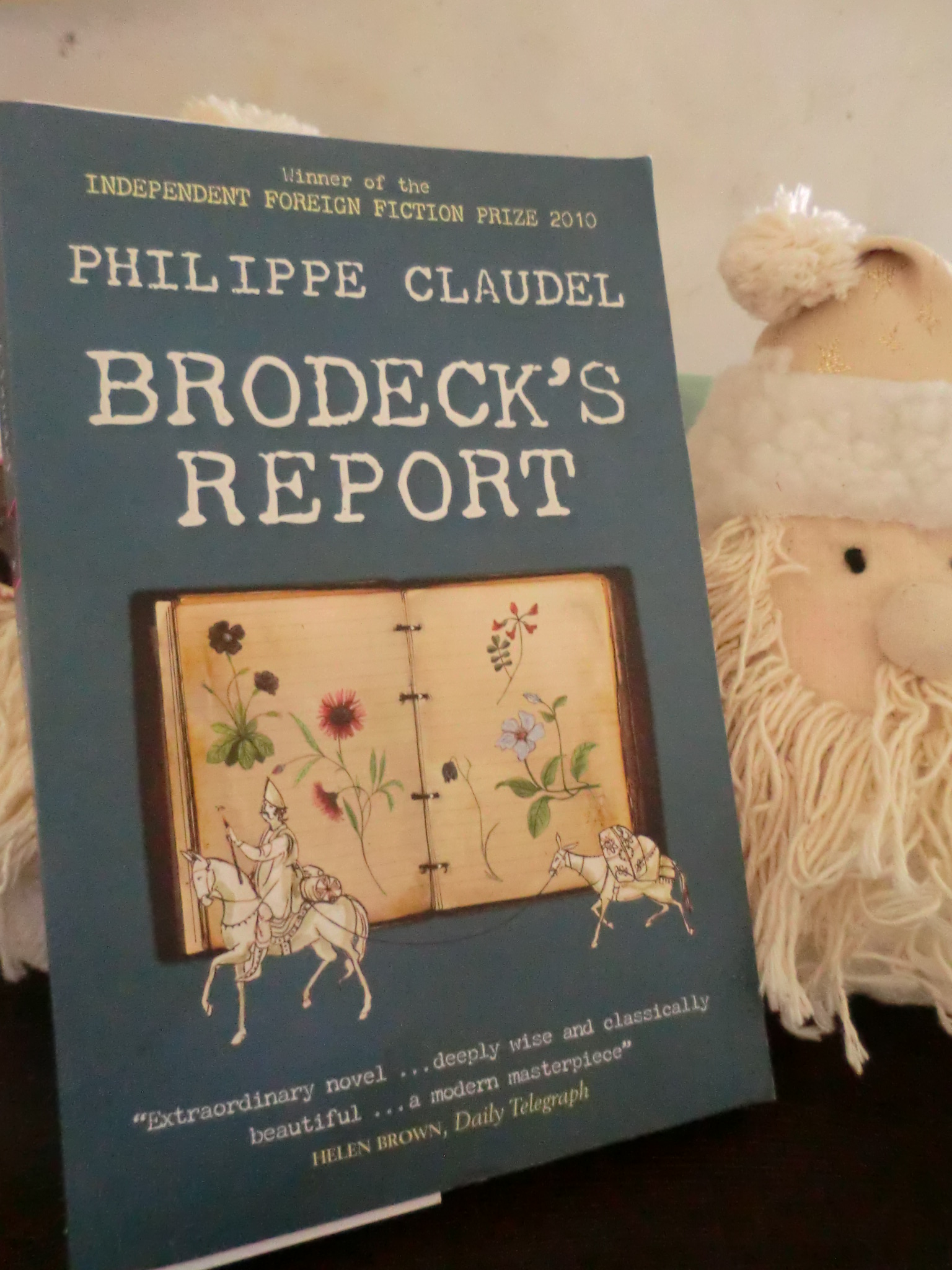
BrodeckBrodeck’s Report by Phillipe Claudel – a very recent read and his words stay with me, I feel like I want to read everything he has written. Having survived a concentration camp, Brodeck returns to his village where life resumes as before until a stranger arrives in the village unsettling the inhabitants to the point where they decide to dispose of him, Brodeck isn’t involved but is given the task of writing a report about it. He writes twin narratives, unveiling the best and worst tendencies of humanity.

HonourHonour by Elif Shafak The 4th book by this wonderful Turkish author I have read and she is becoming more known with each new book, this one being nominated for numerous prizes and Turkey being the guest nation at this years London Book Fair. Honour is a story of a poor family and follows the lives of two sisters, one who goes to live in London as an immigrant, though she will always be that girl from the village. It highlights the difficulty in straddling two worlds, especially for the next generation, who try to assimilate into the new culture, but who when vulnerable are often drawn back into the least desirable aspects of the old culture.

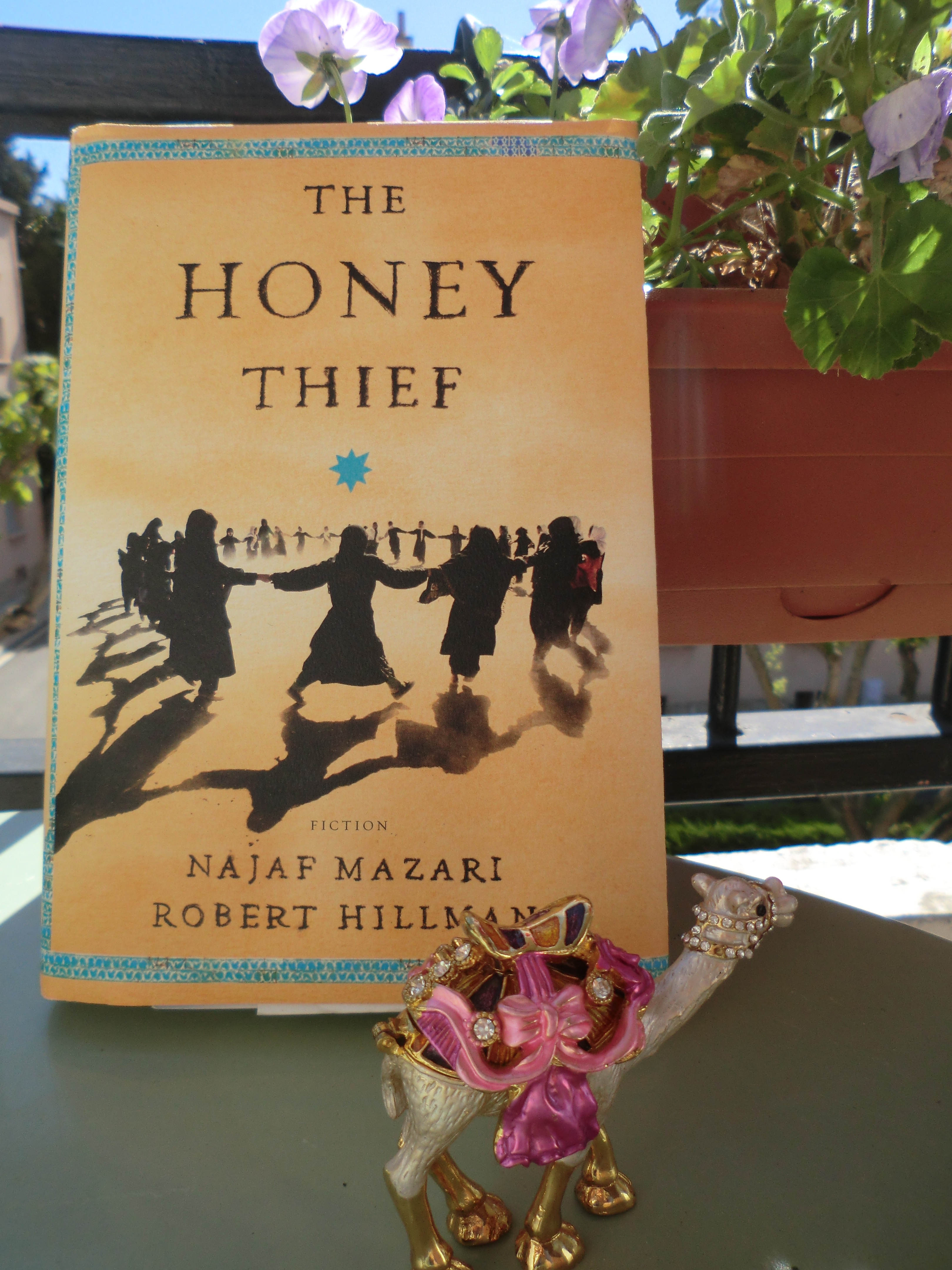
The Honey ThiefThe Honey Thief by Mazari Najaf this is an original set of short stories told by a Hazari man from Afghanistan to his Australian friend. The stories originate from an oral story telling tradition and offer a unique insight into an ancient, adaptable people, who have survived  centuries of persecution. In addition, the author shares some excellent recipes.

Shadows & WingsShadows & Wings by Niki Tulk A wonderful story about family connections, silence and our inability to bury the past. A young girl living in Australia travels to Germany to visit the birthplace of her Grandfather and to learn about his role in the war. Simultaneously, his story is narrated from when he was a boy, to when he became that young man who, like all men at that time, was drafted into war. A beautiful book, thoughtfully narrated and at times so excruciating, it is as if we are reading a personal diary, not a work of fiction. I wish more people knew about this astonishing book.

Top Non-Fiction

Hare Amber EyesThe Hare With Amber Eyes by Edmund de Waal – I am probably one of the last to have read this, since it was published two years before I picked it up, although I bought numerous copies when it did come out for family as Christmas gifts, knowing it would be an excellent read – and while it may not be to everyone’s taste, if you have any interest in European culture and history, this story of the Ephrussi’s, a Russian Jewish family from Odessa, whose two sons set themselves up in Paris and Vienna, told through the eyes and potter’s hand of the ceramicist and descendant Edmund De Waal will certainly appeal.

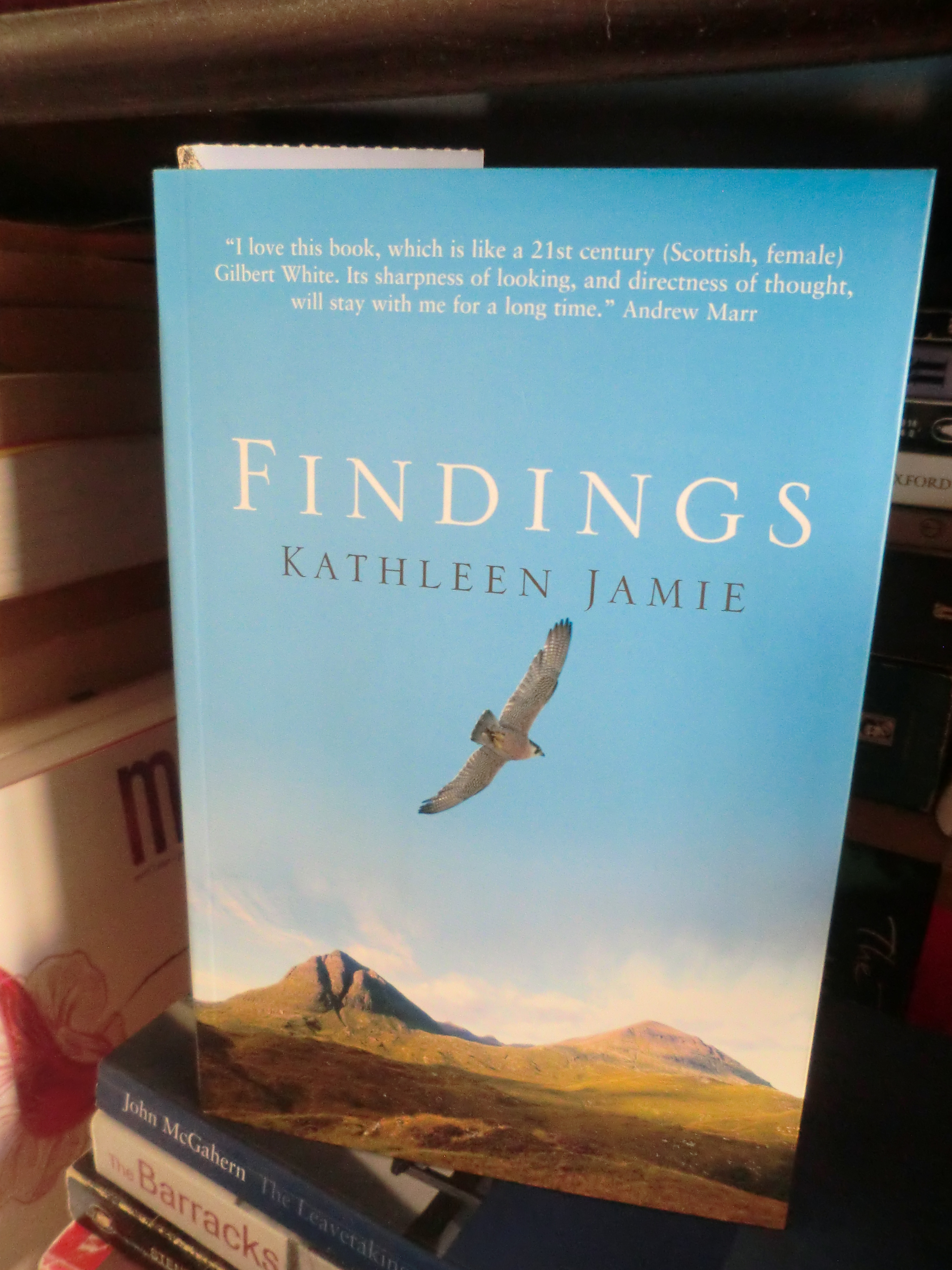
FindingsFindings by Kathleen Jamie I read this excellent collection of essays in February, a month in the northern hemisphere where many are in hibernation and there is not much to sing and dance about. Finding’s was like being in nature when we are not, the way Kathleen Jamie writes is to make us appreciate and really see without the need to label, identify or show off our knowledge. She observes with a painter’s eye and takes the reader on a similar journey, infusing the imagination with images of those forsaken Scottish  islands she visits. Brilliant winter reading.

Brain on FireBrain on Fire: My Month of Madness by Susannah Cahalan This book is a must read for anyone who knows anyone who has had any kind of brain disease or impairment. Susannah Cahalan was just an ordinary girl, working as a journalist, when in her early twenties, she started imagining things and observed herself becoming somewhat crazy. Some kind of infection got to her brain and thankfully for thousands of others, who have already benefited from the things she shares here, she lived to write about it and demystify the malfunction of the brain, something that results in thousand of incorrect diagnoses, due to the little we know about how to remedy it.

Portrait of a FamilyPortrait of a Turkish Family by Irfan Orga After a visit to Istanbul in May, I indulged in a wonderful period of reading Turkish literature and this book was a great find – a recommendation from the English bookshop in Istanbul and they weren’t wrong. It is a classic, a fabulous story of the life of one family whose destiny is changed by war – another unique insight into a culture and the intimate family life of people we don’t usually have the opportunity to witness.

Happiness of Blond PeopleThe Happiness of Blond People: A Personal Meditation on the Dangers of Identity by Elif Shafak it’s a short but compelling essay by one of my favourite writers, a woman who was born in the East and lived many years in the West and  has a unique perspective from which to make her observations. Worthwhile reading and love these Penguin Specials, short essays are so popular here in France, it’s great to see them being made available in English too.

The Hidden LampThe Hidden Lamp: Stories from Twenty-Five Centuries of Awakened Women what better way to wind up a year of reading than with some short, poignant Buddhist stories, some only a few sentences long. This is a volume to sit near the bedside and dip in and out of, because not every message will be relevant for today. One hundred stories interpreted by another 100 wise women and we are free to interpret them ourselves. 

So what books stood out for you in 2013?

Brodeck’s Report by Philippe Claudel, tr. John Cullen

BrodeckThis book has been on my radar since I read Le Petite Fille de Monsieur Linh by Philippe Claudel last year. That was the first book I had read by Philippe Claudel and our book club decided we should read it in French. I remember at the time, one of my twitter followers mentioned Brodeck’s Report as being her favourite, and on a recent visit to West End Lane Bookshop in London, I found this copy.

Brodeck’s Report is the story of the young man Brodeck, who as a child arrived in a French village with an old woman who had taken pity on him, finding him sitting alone in the ruins of a house fire.

He becomes a protégé of the village, who save enough to send him to university with the intention of him making an important contribution to village life, as it was clear he had the capability. Their plans are thwarted by unrest in the city and Brodeck flees to the village with a young woman who will become his wife. The village soon becomes occupied, resistance is taught a harsh lesson and the community are encouraged to ‘cleanse the village’. Brodeck and one other who came from elsewhere are sent away.

InnWhen the story begins, Brodeck is home, having survived the camp and after stepping out to find butter, stumbles into the midst of a village gathering at the Schloss Inn, where those grouped have decided he will write a report about the unknown, nameless stranger who came to visit, who had now met his end.

The novel is quiet, devastating and yet brilliant. Claudel takes one village which happens to be near the border – and what is a border but an imagined, even a painted line on paper – of an occupying country, and uses the village and its resident to portray humanity and its many inclinations, including its inability to learn from mistakes – which manifest when a stranger rides into town, installs himself at the local inn and goes about his business, without letting anyone know what that is. Many of the events portrayed in the novel are the result of illusory thought, of man’s inclination to create a story when there is none and to punish the outsider, the one who has inspired their dark imagination.

BrodeckBrodeck is tasked with writing an account of the events that do take place and as he does so, he simultaneously writes another account, his own narrative of what is occurring and what has happened in the recent past. He writes to try to make sense of it, as is his nature and to know what he must do.

Reading Primo Levi adds to an understanding of Claudel’s work and having read this novel so soon after Aminatta Forna’s The Hired Man, it illuminates something more of that work as well, it is as if they write about the same people, only Claudel dares to take the reader deeper into the heart of his villagers forcing us to open our eyes.

“It is a strange time of day. The streets are deserted, the encroaching darkness turns them into cold, grey blurs, and the houses become shifty silhouettes, full of menace and innuendo. Night has the curious power of changing the most everyday things, the simplest faces. And sometimes it does not so much change them as reveal them, as if bringing out the true natures of landscapes and people by shrouding them in black.”

Stunning.