Segu by Maryse Condé tr. by Barbara Bray

As I have been on something of a reading journey through Maryse Condé, I want to capture a little background leading up to how she came to write this masterpiece of historical fiction, set in a time of major change in this part of Africa where her ancestors came from.

Background

 Maryse Condé grew up in a large black bourgeoise family in Guadeloupe, well-educated, with regular family visits to Paris, in fact her parents felt French and were surprised when people they deemed of a lesser status than they, (like Parisian cafe waiters) commented on how well they spoke French, in a patronising way.
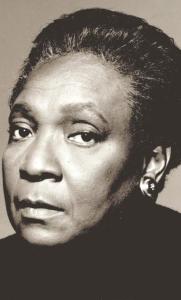
Maryse Condé

Maryse Condé

Maryse Condé was the youngest of eight children, her mother married an older, financially and professionally stable man, she was a formidable teacher, a staunch, authoritative force to be reckoned with.

She died when Maryse was 14 and it wasn’t until years later that Condé began to question why her mother had been the way she had been with her and others, wondering what unseen forces had been pushing from within. this led her to research her grandmothers story, which she published as the novel Victoire, My Mother’s Mother (reviewed here).

Her own childhood she writes about in the beautiful set of vignettes, autobiographical essays collected in Tales of the Heart, Stories from My Childhood (reviewed here).

What she discovered in researching her mother and grandmother’s lives was a history of struggle, of single, compromised women, forced by the abuses inflicted upon them – for which they were harshly judged, though little more was expected of them – to raise their children alone and make do as best they could.

While Condé’s mother was fortunate to have been gifted the opportunity to acquire an education, it was a favour she wanted little or nothing to do with, never sharing the reasons  or people behind it, for her mother Victoire, had been the open mistress of her employer, a friend of his wife, a situation her daughter detested and determined to remove herself far from.

Embarking on her own education, the young Maryse Condé, discovered that though she’d had the best education possible, enabling her to find success in France and Guadeloupe, she learned little about her own history or that of  her people. It was a gap in her education she couldn’t live with, that she wished to fill and it sent her off on a historical pursuit to understand both her maternal history and the voyage of her ancestors.

HeremakhononHer novel Heremakhonon(1976), which I’ve not yet read, is a semi-autobiographical story of a sophisticated Caribbean woman, teaching in Paris, who travels to West Africa in search of her roots and an aspect of her identity she has no connection with.

It is an insightful and somewhat disappointing experience, however for Maryse Condé personally, it was a springboard to the research and work that would follow, as her subsequent novels explore issues of race, gender and culture in a variety of historical periods and locations.

From this context, we come to what is considered a significant and radiant accomplishment, Segu (1984), set in the 19th century Kingdom of Segu (contemporary Mali), entering the soul of the African continent, at a point of prophetic enlightenment, as multiple forces and influences enter into the lives of those, who until now have known great spiritual power and authority.

Review

SeguIn 1797, the kingdom of Segu is thriving, its noblemen are prospering, its warriors are prominent and powerful, at their peak. 

Their people, the Bambara are guided by story-telling griots and divining priests, their lives ruled by the elements and tradition. However their visions fall short in preparing their followers for what is to come.

From the East, religion revolutions have spread Islam across two-thirds of West Africa; from the West, despite laws passed to stop it, the slave trade continues to flourish, and from within merchants make new demands for tropical goods, developing legitimate commerce.

Segu follows the life and descendants of Dousika Traore. He is the king’s most trusted advisor and the fate of his four sons epitomise the challenges that threaten to tear their family and society apart, in this historical turning point of African history. 

Dousika falls out of favour with the King and his son’s each go off in search of adventure outside the kingdom, where they discover quite a different perception of their people and their race.

Tiekoro, renounces his people’s religion, travels North to become a religious scholar and embraces Islam. He is by turn revered, scorned, returns to his home and becomes respected. However his position is always in flux and the balance of power between peoples and their associated beliefs are continuously challenged, he falls in and out of favour.

Siga, initially accompanies his brother and must survive in the same town, but without the introductions his brother has received to help him, he retains his belief in the Bambara gods, defending tradition and becomes a merchant. Although he was born on the same day as Tiekoro, his mother was a slave, so he must accept a less ambitious, less well-connected future.

Naba, is snatched by slave traders and sold and somehow ends up as a slave on a plantation in Brazil. He escapes, only to live on another plantation, a kind of free slave, to be near the woman he loves, whose children will reconnect with the family through a series of coincidences.

Malobali, the youngest, could no longer bear to listen to his older prodigal brother preaching, storms off one day in contempt, never to return. He becomes a mercenary, spending a period of time in a makeshift army, eventually converting to Christianity to improve his chances and has an encounter with the spirit of one of his brothers.

Based on actual events, Segu transports the reader to a fascinating time in history, capturing the earthy spirituality, religious fervour, and violent nature of a people and a growing nation trying to cope with jihads, national, tribal and family rivalries, racism and suspicion, amid the vagaries of commerce.

It shines a light on the impact of cross tribal marriage and partnership, of slavery, both that perpetuated by the Europeans and from within the African continent. The role of the son and the daughter, the rules of marriage, the perceptions of religion, the rise of Islam, the practices of fetishists and superstitions of their followers. The importance of relaying history through the storytelling griots, an inherited role, passed down from family member to family member.
Intuition

Just as with Condé’s previous work, here too there is communication and connections between family members not present, whether alive or manifesting as departed ancestors, they enter via dreams, intuition, providing guidance and reassurance. The presence and guiding voice of ancestors and the reincarnation of souls is important, as is the effect of love/lust on each of them.

As with the best of historical fiction, Segu takes us through a period of significant change, by engaging the reader with a family and its members, its traditions and those who wish to rebel against them, the will to modernise, to make their way forward in a world that is rapidly changing.

It engagingly portrays the balance of power and perceptions between people from different ethnic groups, where one is judged on everything except character. We encounter historic family feuds, feuds between peoples, religion and the rise of Islam, fetish priests, slaves, concubines and nobles, a complex society.

It was a deliberately slow read for me, but at the same time riveting, a book that scratches at the surface of a significant and fascinating subject and does wonders to assist in helping that era and people become more understood.
Buy Segu by Maryse Condé via Book Depository

Top Reads 2015

If you’ve noticed a lack of reviews recently, please know it’s not from a lack of interest, time or reading, just a temporary technical problem, not yet resolved but should be by mid January.

So, 2015 was a bumper reading year, I surpassed my book a week ambition and actually read 65 books from 26 different countries, a third of what I read was translated from another language, something I seek out in my interest to experience literature and storytelling from within other cultures and not only by those who have access to the English language.

I will create a separate post to talk more about my impressions and attractions of reading outside the main literary cultures and the cultures and landscapes that keep drawing me back for more.

As with previous years, I’ll share my one Outstanding Read and the Top 5 Fiction and Non-Fiction reads, with a few special mentions.

Outstanding Read of 2015

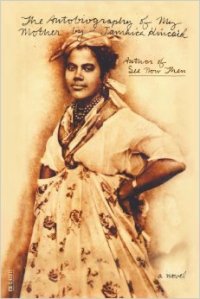
Autobiography MotherThe Autobiography of My Mother by Jamaica Kincaid My first read of the long-established author Jamaica Kincaid (Antigua) and it moved me like no other book had since last years outstanding read, Jennifer Clement’s Prayers for the Stolen.

This is a novel about a young woman growing up without a mother, abandoned for a time by her father and looking back at her life and the thoughts, reactions she had back then, using all the senses.

It is a kind of awakening, a visceral account that is insightful and squeamish both. It was for me too, the beginning of a season of Caribbean reads that were one of the major reading highlights of the year, soon after this I read three books by Maryse Condè (Guadeloupe), Cristina García’s Dreaming in Cuba, Edwidge Danticat’s Breath, Eyes, Memory (Haiti) all of which were 5 star reads.

Top Fiction

Click on the title below to read the review.

1.  The Wall,  Marlen Haushofer a riveting story of one womans survival in the aftermath of a catastrophic event, with only a few animals for companions. A lost classic that was revived years after the death of the writer and one that had me spellbound until the end.

2. The Yellow Rain, Julio Llamazares set in an almost abandoned village in the Spanish Pyrenees, this is a haunting, elegiac account of one man who refused to leave and was witness to the degradation of all that man had contributed as nature reclaimed what was left. Captivating in the way it is written, you will want to slow read it, brief yet unforgettable.

3. Dreaming in Cuban, Cristina Garcia spanning three generations of women from Cuba, told from their differing perspectives, particularly the grandmother who is rooted in her country and culture, it explores separation, identity, the strong bonds of family and the weight of expectation. How these women survive their circumstances. Just brilliant and part of a great collection of literature from the region.

4. Frankenstein, Mary Shelley well it started with listening to the BBC audio broadcasts for learners of English, followed by watching a relayed broadcast of Benedict Cumberbatch in the London National Theatre adaptation, which was brilliant, to finally reading the work itself. I was a little hesitant, old classics aren’t really my thing, but I loved reading Frankenstein and couldn’t help but admire the tremendous achievement of Mary Shelley in creating it. Made all the more fabulous by having seen how it continues to inspire creative direction in the 21st century.

5. The Life and Loves of Lena Gaunt, Tracy Farr I didn’t read a lot of newly published works in 2015, but this one was a standout read for me, I was quickly drawn into the world of Lena Gaunt, an Australian theremin player who was born in Asia and had a few life changing experiences from her encounters there, who lived without much parental guidance or supervision, and developed her musical talents amid an eclectic group of artistic friends, had one true love and faced certain tragedy, all of which is brought to life after a recital she gave in her eighties attracted the attentions of a filmmaker. All the more interesting, for it being inspired by a true legend.

Top Non-Fiction

1. Unbowed: Autobiography of Wangari Maathai the truly inspiring story of Kenyan Nobel Peace Prize winner Wangari Maathai, the work she did, the challenges overcome that gave her a top education and the will to make a real difference, particularly for the lives of women in her country. She empowered others and created enduring projects and movements for all.

2. Under the Sea-Wind, Rachel Carson first in a nature inspired trilogy about the sea and her inhabitants, brought to life in a creative narrative, as seen from the perspective of three sea creatures, part one, the edge of the sea shows the habitat from the point of view of a female sanderling bird, she names Silverbar, part two, the Gulls way, is dedicated to the open sea and navigated by Scomber, the mackerel, and finally part three, river and sea, we follow Anguilla the eel as he travels from his coastal river pool downstream towards the sea and that deep instinctual pull towards the abyss.

3. Tales of the Heart: Stories from my Childhood, Maryse Condé essays, vignettes of childhood, recommended as the place to start in reading the work of this talented and enthralling writer from Guadeloupe. Loved it and was quick to follow-up with Victoire, My Mothers Mother, a book she says is true, though sold as a novel by her publishers due to the tendency of her research subjects to rely on oral stories to pass on their history. Brilliantly told, as she delves into the unknown life of her grandmother to better know and her own mother who died when she was 14.

4. The Immortal Life of Henrietta Lacks, Rebecca Skloot (review to come) the background story to the global presence and utilisation of the immortal HeLa human tissue cells, that were discovered to be unique in that they never died, continued to replicate and could be used to do all manner of tests for disease and drugs and how cells respond, something of a revolution for medical science.

HeLa were the initials of the person from whom the samples were taken, as was the procedure at the time. But who was HeLa and what did she or her family have to say about these extraordinary developments thanks to the cells of one woman? Rebecca Skloot spent 10 years researching the life of Henrietta Lacks and the subject of the HeLa cells to bring this extraordinary narrative.

5. Tiny, Beautiful Things: Advice on Love and Life from Dear Sugar, Cheryl Strayed these are letters from the columnist Sugar, who it turned out was Cheryl Strayed, author of the book Wild about her solo journey to trek the Pacific West trail in her twenties.

These letters are written when she is in her forties and though still young, has lived multiple lives and had more than her share of extreme and dysfunctional experiences, from which to draw her own brand of wisdom. It’s a pick up at will kind of book, but her confrontational yet compassionate style is refreshing and thought-provoking, her ability to be very clear on her opinion and advice, without being judgmental.

Special Mentions

Outstanding Debut – Our Endless Numbered Days Claire Fuller

Excellent Classic – The Enchanted April, Elizabeth von Arnim

Most Uplifting Read – Antoine Laurain’s The Red Notebook and The President’s Hat

Most Disturbing Read – Agaat by Marlene Van Niekerk

Most Disappointing Read – The Waves , Virginia Woolf

Foster by Claire Keegan

Foster‘Early on a Sunday, after first Mass at Clonegal, my father, instead of taking me home, drives deep into Wexford towards the coast where my mother’s people came from.’

She wears light, worn clothing and brings nothing with her. The girl is left with the Kinsella family, the father returns to her mother, soon to give birth again. There is no goodbye or word of when he might return. This is Ireland. Remember Nora Webster and all that is unspoken?

So begins Claire Keegan’s long, short story Foster, a vivid telling of the period following a girl being fostered into a family in rural Ireland. In the stranger’s home she finds an atmosphere unlike that which she is used to, one she enjoys and becomes used to, though always there is the presence of that feeling that it might soon all be taken from her.

‘When I follow the woman back inside, I want her to say something, to put my mind at ease. Instead, she clears the table, picks up the sharp knife and stands in the light under the window, washing the blade under the running tap.’

Seen and heard from the perspective of the girl, we learn the circumstances of both families that led to this situation. They fall into a regular routine, life settles in this new family and nothing appears to happen to destroy the ease with which the girl has come to know.

There is a strange atmosphere throughout the book, it is the anticipation of something, we, like the girl, are wondering and waiting for it to happen. For she seems like the pawn on the chess board, her parents on one side having handed her over, the foster parents on the other having received her. Each move, every event that is outside the daily routine, ignites in the girl heightened powers of observation, developing an acute awareness of even the most subtle changes in those around her.

‘Kinsella looks at me and smiles a hard kind of a smile then looks over to the window ledge where a sparrow has come down to perch and readjust her wings. The little bird seems uneasy – as though she can scent the cat, who sometimes sits there. Kinsella’s eyes are not quite still in his head. It’s as though there’s a big piece of trouble stretching itself out in the back of his mind. He toes the leg of a chair and looks over at me.’

Author, Claire Keegan

Author, Claire Keegan

A touching and yet eerie telling of a story that begs to be read and reread, the writing is exquisite in its depiction and ability to create a taut atmosphere without significant plot, it showcases an author with an immense talent for the short story and makes the reader want more.

Claire Keegan is an Irish writer highly regarded for her award-winning short stories, she has published two collections Antarctica (1999) and Walk the Blue Fields (2007) which I have read excellent reviews of.

Have you read any of Claire Keegan’s work?

The Story of the Lost Child by Elena Ferrante tr. Ann Goldstein

The final book in the Neapolitan Novels tetralogy that began with Elena Ferrante’s My Brilliant FriendThe Story of the Lost Child continues the saga of two compelling woman, Elena and Lila, childhood friends and now single mothers, back living in the neighbourhood of their humble origins.

At the end of Book 3 Those Who Leave and Those Who Stay, Elena was in the midst of a crisis, unable to think or act in anyone’s best interests, rather, she was lead by the wild palpitations of a lust driven heart and appeared to be prepared to risk all she had fought so hard and for so long to rise above and gain.

Now with everything collapsing around her, she returns to her roots, where things are as likely to be in disorder and chaos, but in a place where she feels safe, it is familiar, known.

Elena’s daughters must adapt to a less pampered life, although their mother wishes that they, like her, acquire sufficient education to allow them choices about where and how they might live. Elena and Lila’s children present them both with significant challenges, causing them to move closer together in some respects and further apart when tragedy strikes hard.

As with the previous books, Elena is never quite sure of Lila’s intentions, questioning her motives when she appears helpful and suspicious of her intentions when she informs her of gossip. It is a characteristic of their friendship that has existed since the beginning, an aspect Elena never fully unravels and keeps her always on guard.

‘I went home depressed. I couldn’t drive out the suspicion that she was using me, just as Marcello had said. She had sent me out to risk everything and counted on that bit of fame I had to win her war, to complete her revenge, to silence all her feelings of guilt.’

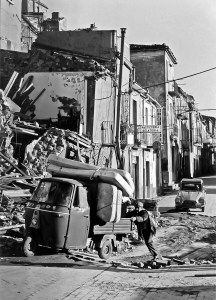
Naples Earthquake 1980It is the 1980’s and one of the turning points in Lila’s deterioration is the earthquake that occurred on November 23, 1980 killing 3,000 and rendering 300,000 of Naples inhabitants homeless. It is used as a powerful metaphor for the destabilisation that occurs in Elena and Lila’s lives.

‘It expelled the habit of stability and solidity, the confidence that every second would be identical to the next, the familiarity of sounds and gestures, the certainty of recognising them. A sort of suspicion of every form of reassurance took over, a tendency to believe in every prediction of bad luck, an obsessive attention to signs of the brittleness of the world, and it was hard to take control again. Minutes and minutes and minutes that wouldn’t end.’

Elena has always sought her independence and intended to create a career as a writer, it is only when she moves back to the neighbourhood that she realises with greater urgency that she must be autonomous.

‘It was then that a part of me – only a part – began to emerge that consciously, without particularly suffering, admitted that it couldn’t really count on him. It wasn’t just the old fear that he would leave me; rather it seemed to me an abrupt contraction of perspective. I stopped looking into the distance, I began to think that in the immediate future I couldn’t expect from Nino more than what he was giving me, and that I had to decide if it was enough.’

Book Four brings the girls full circle into the adult world where the relationships of childhood and dramas of their youth play out in a more dangerous playground, where boyhood pranks have evolved into criminal activities and the annoying habits of children transform into the damaging actions of adults with far-reaching and destructive consequences.

They are no longer observers of the world around them, they are perpetrators of events and circumstances that will affect the next generation, their children. Though they never wanted it and put all their energy into trying to prevent it, in many ways, they have begun to resemble the already departed, those they worked so hard not to become.

Book Four brings Elena and Lila’s stories back to where it all began, reacquainting us with the story’s beginning, of memories and possessions that have endured, that contain within them that sense of unease alongside the familiar, the two coexist and can not be separated, even in maturity. It is a conclusion of sorts, as thought-provoking as we have come to expect previously, not quite giving in to that alternative literary tradition of tying things up neatly.

I read the first three books in close proximity, each volume adding to the compulsion to want to re-enter their lives and discover what would happen next.  The longer gap in awaiting this final novel meant it took a little longer to pick up the pace, suggesting it might be a series best read consecutively.

If you haven’t read Elena Ferrante yet, here are links to reviews of the first three books in this series:

The Neapolitan Novels Reviewed

Book 1: My Brilliant Friend

Book 2: The Story of a New Name

Book 3: Those Who Leave and Those Who Stay


Note: This was an Advance Reader Copy (ARC) thank you to the publisher Europa Editions for kindly providing me with a review copy.


The Pollen Room by Zoë Jenny tr. Elizabeth Gaffney #GermanLitMonth

The Pollen Room was written by the Swiss writer Zoë Jenny when she was 23-years-old and became an international bestseller, translated into more than 27 languages and invitations to speak to readership audiences in Japan, China and the US among others.

Pollen RoomIt is interesting to write about this story after having just read Toni Morrison’s God Help the Child, this novella yet another version of what Morrison demonstrates.
It is the memory of childhood without maternal love and its after-effect. It is not dramatic, nor a traditional story, it is a narrative that sets the reader up to feel something of the isolation and vulnerability of the protagonist and follow her forward as she tries to plug the gap, looking for that nourishment as if it were something tangible she could use to plug the abyss it created by its absence.

Jo stayed with her father when her mother left. There is no explanation, just significant and detailed memories of insignificant events, noises that communicate the beginning of her father’s daily routine, signals that provoke anxiety, nameless visitors, the one he married Elaine, who eventually left too.

‘At night I would fall into a restless slumber. Fractured dreams floated past my sleeping eyes like scraps of paper in the raging torrent of a river. Then I would hear a clatter and find myself wide awake. I looked at the spiderwebs on the ceiling and knew that my father was in the kitchen…

There came a series of muffled rustling noises and a moment of quiet. My breath quickened. A lump rose in my throat and swelled to enormous proportions as I watched my father put on his leather jacket and pull the door quietly closed behind him.’

After initial weekly visits, her mother soon moves on to a new life and there is no contact for 12 years. Eventually Jo goes in search of her, however being reaquainted doesn’t bring her companionship or stability, it brings responsibility, creates concern, disquiet. She seeks solace in the company of others, those who appear to live in the semblance of a home, acquaintances short-lived, consequences that won’t leave her.

 Author Zoë Jenny

Author Zoë Jenny

The prose is spare, observant, it infiltrates your mood and makes the reader suffer alongside the protagonist.

Brilliantly conceived, it is not a book to read if you are feeling sad or vulnerable. There is dialogue, interaction, and a great swathe of stream-of-conscious thought as Jo observes each encounter and responds in her inward-looking, sensitive way to it all.

Unfortunately I read this without realising that and so didn’t appreciate it’s best qualities as much as I might have done, had I read it at another time. I read it at a time of being acutely aware of the fragility and vulnerability of youth and couldn’t see past the neglect and narcissism of those around Jo and spent the entire book worrying that something even more terrible was going to happen to her and just felt great relief when it was all over and we were safe.

I was recommended this title by Vishy and I would highly recommend reading his review, which celebrates the beauty and artistic merit of the novella, showing us just how great it can be, when we choose the right time to read it. It was one of his favourite reads of 2015.

Vishy’s Review of The Pollen Room

And it’s German Literature Month, thanks to Caroline at Beauty Is a Sleeping Cat and Lizzy at Lizzy’s Literary Life

Follow the hashtag #GermanLitMonth on twitter, or click on the links to see what they’ve been reading, and what great works in translation there are out there for us!

German Literature Month


All Our Names by Dinaw Mengestu

All Our NamesFinding a book like this on the English language shelves of our local French library, is one of life’s small pleasures in a world that offers few escapes these days from tragic reality.

A book like this, by an author named Dinaw Mengestu, winner of the Guardian First Book Prize for his debut novel Children of the Revolution, chosen as one of the 20 best writers under 40 by The New Yorker in 2010, born in Ethiopia and raised in the suburbs of Chicago – well I cast all other reading plans aside and jumped right in, relishing the feel of the hardback, admiring the simplicity of such a striking cover and anticipating a joyous, literary ride.

The title All Our Names, reminded me immediately of Zimbabwean author NoViolet Bulawayo’s  We Need New Names, hers a reference to the move to America, while Mengestu delves further back and makes us realise just how deep and far-reaching the naming ritual is.

“On the bus ride to the capital, I gave up all the names my parents had given me. I was almost twenty-five, but by any measure, much younger. …I tried to think of myself as a revolutionary in the making, though I had come to the capital with other ambitions.”

Library Entrance

The Library Where This Book Lives

Ill-prepared for the world that awaited him, he assumed the few Victorian novels he had read would prepare him for studying literature, having been inspired by reading of a conference of a group of African writers and scholars in a newspaper that had belatedly arrived in his village.

“No one I met believed I was a revolutionary, and I didn’t have the heart to claim I wanted to be a writer.”

Right from the opening pages, when he meets the young man who tells him his name ‘for now is Isaac’, we are made aware of the significance and dispensability of names.

“Isaac” was the name his parents had given him and, until it was necessary for us to flee the capital, the only name he wanted. His parents had died, in the last round of fighting that came just before independence. “Isaac” was their legacy to him, and when his revolutionary dreams came to an end, and he had to choose between leaving and staying, that name became his last and most precious gift to me.

UgandaThe story is narrated in alternate chapters, one entitled Isaac, the other Helen. Isaac takes place during a short period in the life of the male protagonist after he has left the family village somewhere in Ethiopia, planning never to return, arriving in Kampala, a city in Uganda where he hopes to study at the university.
It is there he meets the young man named Isaac, recognising in him a similar ambition and humble origins, though in his presence he is also aware of an undercurrent of fear and trepidation, not yet realising, but intuiting the dangerous depths Isaac is capable of descending  into in order to achieve that ambition.

The Helen chapters take place in a small midwest town in the US, Helen is the social worker assigned to him when he arrives from Africa; she installs him in accommodation and helps him to adjust to the new life as a foreign exchange student.

The relationship becomes complicated when boundaries are breached, as the two offer each other something of an escape from their very different pasts.

It is a simple story possessing its own undercurrent that pulls the twin narratives along, the emotional pull in Helen’s story, her struggle to navigate the space between her feelings for him and society’s expectations and in the Isaac chapters, a mounting tension as student protests and harmless revolutionary activities turn sinister and violence becomes the shortest and most effective negotiating tool to obtaining power.

Set in the 1970’s during the Ugandan post-colonial revolt, this novel was hard to put down and offered a unique insight into one example of the kind of experience that might have occurred to any refugee fleeing a violent uprising. Equally, it aptly depicts the discomfort of even the most liberal, unjudging character, raised in a quiet, conservative town, whose wavers between ignoring and following her instinct to abandon all she knows in order to follow her heart.

“I wonder whether, if before meeting Isaac I had tried to challenge the easy, small-time bigotry that was so common to our daily lives that i noticed it only in it extremes. I might have felt a little less shame that evening. It’s possible that I might have been able to release some of it slowly over the years, like one of those pressure valves that let out enough steam on a constant basis to keep the pipes from bursting. It’s also equally possible that such relief is impossible, that, regardless of what we do, we are tied to all the prejudices in our country and the crimes that come with them.”

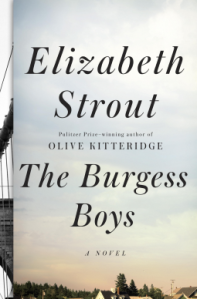
The Burgess BoysIt reminded me a little of Elizabeth Strout’s The Burgess Boys (read and reviewed in 2013), which I was a little disappointed by, this is the kind of book I was expecting, but understandably, she wrote it from the perspective of the Burgess boys, whereas Dinaw Mengestu gives us both perspectives and the story is all the more powerful for it.
Mengestu writes in an engaging and flawless style, his storytelling and insights are enough to convince me I will definitely be reading more of his work soon.


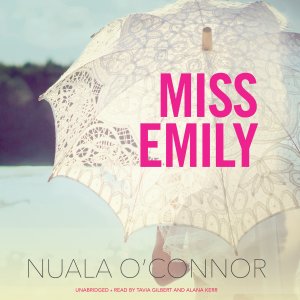
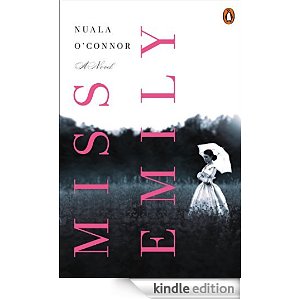
Miss Emily by Nuala O’Connor

Nuala O’Connor is the Irish author I discovered in 2014 thanks to the Irish Times Book Club.

You may remember last year, I read and reviewed her novel The Closet of Savage Mementos which she wrote under her Irish name Nuala Ní Chonchúir. That novel was about an Irish girl who left Dublin for a Scottish seaside town after the death of her boyfriend and to escape her mother’s dramas. In Scotland she encountered her own drama and was forced to make a life-changing decision.

Emily Dickinson and an Irish Maid

Now, writing as Nuala O’Connor for US and UK  readers, she pens the story of another Irish woman, the feisty but hard-working Ada, who also leaves Dublin, destined to become housemaid to the Dickinson family. It is a fictional account of the friendship between the Irish maid and the poet Emily Dickinson.

Ada Concannon, the eldest of 7 children, possesses an energetic zest for life that was unappreciated by her previous employer; upon being demoted to scullery maid she decides to seek her fortune elsewhere, taking a passage on the boat to New England where her Aunt Mary, Uncle Michael and a couple of not too friendly cousins reside.

She lands on her feet with the job at the Dickinson household, a family of four with their spinster sisters Vinnie and Emily, neighbours to their gruff brother Austin and his wife Sue, whom Emily appears to (not very convincingly) pine for.

The American Frugal Housewife

The Frugal Housewife

Emily is reluctant to leave the house, preferring words to company and attaches herself to Ada, the kitchen being one of her preferred refuges, thus friendship with the housemaid most important.

Her friendship with the maid flouts convention and is a kind of quiet rebellion within the home that the poet rarely steps out of.

“When I talk too much, everything I think and feel is wrung from me. I have nothing to write about when all is spent. It takes me so long to restore myself. It is as if I must heal a wound after each party where all is chitchat and glances and fun.”

Ada is adept in the kitchen, devoted to the family and the book The Frugal Housewife that Mrs Dickinson has lent her.

“Think of this as your second Bible,” she said.

Ada is charmed by the quiet and unassuming Daniel Byrne, her stay marred only by the creepy presence of the nephew of Daniel’s boss, Patrick Crohan.

Chapters alternate between Miss Emily’s and Ada’s perspective to reveal brief but eventful encounters in the kitchen and rooms of the Dickinson home, between Ada, Miss Emily and those around them.

Although Ada is outgoing and attractive, she still has something of the Irish reserve and tendency to silence when there is trouble. And trouble there will be. Ada and Emily must attempt to navigate the narrow space between their classes to deal with the trouble, without compromising their reputations.

Miss Emily is a lively, charming read, she brings her characters to life, especially the Irish and creates a world we can quickly imagine and inhabit. There is something comfortable and reassuring in her prose and novels that makes you want to abandon all else until the last page is turned. Just as she did with Savage Mementos, so too she achieves with Miss Emily. My only regret is that it all ends too soon, I’m still wondering about Ada and could easily follow after her into a sequel.

“For now I need the solace of words. Words bracket silence. That quiet gives propulsion to the words and all that they say. Words smoulder, they catch fire, they are volcanic eruptions, waiting to explode. I like to start small. With the fewest words I can manage. If the words run away, I trip them up and pull them back – they are elastic. If they do not cooperate, I obliterate them.”

Miss Emily audio

The Readers of Broken Wheel Recommend by Katarina Bivald, tr. Alice Menzies

Readers of Broken WheelSometimes, these are the only books that will do. That rare breed of literature that entertains, uplifts and demands little in return, the books we read when we are fed up with thinking and wondering why certain things are the way they are.

Sara has always been seen by her family as wanting, harbouring a mild disapproval of her predilection for staying in and reading, her acceptance of a job in a quiet bookstore. Now that she is doing something out of the ordinary, leaving their sleepy Swedish town to travel to small town Iowa, they’re still not happy.

“It wasn’t clear which was worse, the tediousness or the risk of bumping into one of the many serial killers hiding in every nook and cranny… Honestly though, what do you know about people? If you didn’t have your nose in a book all the time…”

The bookshop Sara worked in has closed down and her world seems to have diminished to books and the lives within them. 

“Her little sister Josefin worked as a trainee lawyer for the district court on Södertälje. Eventually, she would be a solicitor, a socially viable profession carried out in suitability expensive suits. Sara, on the other hand… A bookshop. In a suburban shopping centre. That was only marginally better than being an unemployed former bookshop assistant like she was now. And now that she had finally gone abroad? She had chosen to go to a little backwater in the American countryside, to stay with an elderly lady.”

Broken Wheel SierraSara has been writing letters to Amy for the last two years, they are bookish pen pals who share a love of literature and enjoy the uninterrupted conversation of a letter. Amy invites Sara to visit, she arrives in the small, dilapidated town of Broken Wheel, most-likely it first and only ever tourist, only to find that the person who invited her didn’t tell her something VERY important that will affect her two month stay.

The Readers of Broken Wheel Recommend takes a melancholic bunch of characters from a declining town in Iowa and puts the introverted, bookish Sara into its midst.

Though it is a small town, with not much going for it, it is an adventure for Sara to leave Sweden and travel to meet her bookish friend.

She discovers the important thing that Amy left out of her letters on her very first day and it will have an effect on the rest of her 2 month stay, where we meet a cast of fabulous, quirky characters and observe the transformation of a depressing little town.

The residents of Broken Wheel are not avid readers, they are not readers at all and don’t see things the way Sara sees them.

‘People are better in books,’ she muttered. She said it so quietly she didn’t think he could have heard her, but when she stole a glance at him, she thought she could see one of his eyebrows twitch. ‘Don’t you agree?’ she asked defensively?

‘No,’ he said.

Sara decides to convert Amy’s empty shop in the deserted town of Broken Wheel despite the fact the residents claim not to be readers. Slowly the wheel begins to turn…

Broken WheelA light-hearted, uplifting story that should be in the section of the bookstore or library entitled “guaranteed to lift or lighten your mood”.

It reminded me of that same feeling created by the author Antoine Laurain in The Red Notebook and was an absolute delight, just what I needed, a literary, bookish pick me up!

Note: This book was an ARC (Advance Reader Copy) kindly provided by the publisher.

Agaat by Marlene Van Niekerk tr. Michiel Heyns

Marlene Van Niekerk was one of the ten nominees for the Man Booker International Prize 2015, before this prize joined forces with the IFFP (International Foreign Fiction Prize). The newly created prize will retain the name Man Booker International Prize, but will follow the format of the IFFP, which was to nominate a book published in the year of the prize, not an author’s oeuvre of work.

Finalists

I have been reading the work of Maryse Condé, one of the ten nominees and I chose Marlene Van Niekerk’s Agaat after reading Rough Ghosts excellent and enticing review, linked below.

Agaat is the name of the adopted daughter/maidservant, taken into Milla’s home at 4-years-old, in a state of neglect, her arm disabled, rescued from an abusive, dysfunctional existence that might fill the vacuum inside a barren woman allowing her to create a useful child/companion, trained in all aspects of family and farming life.

Milla is the only child of a farming family and set to inherit and work her own farm, she is poised to marry Jak as the book opens. The novel explores the growing tension in their relationship through Milla’s diaries and the effect of Milla bringing Agaat into their (at the time) childless marriage. Twelve years into that bereft marriage she gives birth to a son.

AgaatThe chapters alternate between life as it was on the farm and the present, when Agaat, now a mature woman is caring for dying 67-year-old Milla, as her body shuts down, paralysed, infirm, communicating only through her eyes with this character she “tamed” whom she is now dependent on for everything.

Agaat is set on a the farm Milla inherited from her mother in South Africa, from the early years of apartheid until its dying days, just as Nelson Mandela and the African National Congress come into power. Milla takes over the farm when she marries Jak, the couple seem well-suited on the surface, though cracks and resentments appear early in the marriage, deepening to suggest otherwise.

Agaat is witness to, victim of and in many ways, moulded by this relationship, the family and the farm itself. She will learn everything from Milla, all that is required to run the home, the farm ; she will  help raise the son and establish a unique bond with him, passing to him her own knowledge, a consciousness more rooted in the land and its culture than any colonising people are ever capable of embracing. Rarely rebellious, it is in small but important ways that Agaat subverts the intentions of her masters, she who will ultimately inherit all.

The novel is narrated from Milla’s shifting point of view, the present tense, first person (I) view, a stream of consciousness narrative, in the latter weeks of her life when she lies bedridden, almost paralysed, in advanced stage motor neurone disease; the past tense, second person (you) view as she remembers episodes from the past, no doubt prompted by Agaat’s reading to her from the bundle of diaries she has kept over the years, both the original entries and annotations written in at a later time. The novel is bookended by a prologue and epilogue that give voice to the estranged son, something of a mystery and strangely absent from much of the narrative.

Agaat has become Milla’s specialist nurse and caregiver, tending to her needs with a detached, precision-like efficiency, communicating through the eyes, blinking an intuitive, telepathic like conversation, the result of a lifelong, if at times acerbic intimacy, command and control. The roles are now reversed, the landscape has changed and we are uncertain whether these actions are driven by love, hate, a sense of duty, a learned, stalwart independence, revenge or the imagined interpretations of a dying, guilt-ridden patroness.

French Version Cover

French Version Cover

We never enter into Agaat’s perspective, we view her through her mistress’s interpretation and the more we come to know about their relationship, the less sure we are of Agaat’s motives and feelings, unsettled by all that has come before, as we become aware that Milla’s present day view has to a certain extent rewritten the past into a more easily digested form.

There is something that Milla wants from Agaat and it is this minor battle of wills that provides a dramatic thread throughout Milla’s dying days. Agaat avoids fulfilling the request, bringing her mistress everything but the things she wants, a set of maps of the farm, like her body, the thing she is losing control of and the maps represent her last effort at retaining some form of control.

For a long time after finishing Agaat, I was not able to adequately express what I thought of it, I found it very disturbing. It is a story that stays with the reader a long time and reviewing it required a lengthy incubation period.

I read reviews in the New York Times and Rumpus (see links below) where critics referred to it as an allegory, convinced that these characters represented an abstract idea, that of apartheid, that it was there to teach or explain some kind of moral lesson. Sarah Pett, in her academic article refers to it as an ‘unruly text’, something that upends and disturbs the reader and here I find more resonance, along with these words proffered by the author herself, suggesting that these characters and this story should invite questions:

“…novels are texts of structured ambiguity that enable many readings. My reading of the text is no more valid than yours at this or any other point.  What I am mainly interested in as an author is to complicate matters…in such a densely patterned way that the text will not stop eliciting questions and that it will refuse to provide any definite answers to questions such as the ones you (and I) might ask.” Marlene Van Niekerk

In my reading of the story, the focus isn’t as much an indictment of apartheid, as a portrayal of that aspect of humanity, in which people attempt to enslave, train and/or control the other for a selfish purpose, as with slavery, as we know of the past and now of the present, often disguised as something else, it can be what an employer asks of an employee, a parent of a child, a human trafficker of its victims, a husband of a wife and it can occur in the reverse, the victim becomes the oppressor.

UK Cover Version of Agaat

UK Cover Version of Agaat

What is portrayed between Milla and Agaat seems to me something other than South Africa’s political policy of the 1940-1980’s, for that would be to limit it, it is born of it for sure, it shows what we are all capable of, depending on what we are born into, what we are influenced by and how we respond to those things. It is about how we think things through, with whom we share, discuss and listen, igniting and strengthening those neural parts of the brain whose inflammation will solidify that thinking, strengthening the belief and justification in our resultant behaviours.

I disliked being witness to it, to the playing along with the way things were for Milla on the farm, fulfilling her familial and societal expectations, flaunting them by taking in Agaat and exploiting her, with ignorant, self-righteous justification. However I couldn’t help wondering if Agaat was equally capable of the same. Disturbing and difficult to write about.

The allegory, if it is so, lacks any moral message, true the victim may eventually inherit the earth, however she too seems as likely to become the oppressor, for it is not the colour of one’s skin that dictates moral or good, all are capable of the same, we are weights on the end of the pendulum and depending on which way it is currently swinging, and where we are positioned, we could all too easily become either victim or oppressor.

Do read Rough Ghosts’ review, his will convince you to read it.

Further Reading:

Rough GhostsAnd Her Name Was Good

Liesl Schillinger, New York Times: Truth and Reconciliation

Luke Gerwe, Rumpus: Agaat

Sarah Pett, University of YorkThe via dolorosa in the Southern hemisphere: Reading illness and dying in Marlene van Nieker’s Agaat (2006)

Purge by Sofi Oksanen tr. Lola Rogers

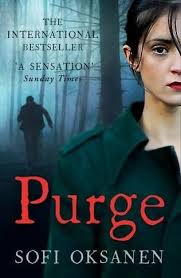
PurgePurge by Sofi Oksanen is set in a rural village in the region of Läänemaa, west Estonia. The book is translated from Finnish by Lola Rogers.

It is a novel of two histories, one in the late 1930’s and 1940’s when Aliide and her sister Ingel were adolescents, spanning the changes in their lives after Estonia was annexed by the Soviet Union and renamed Estonian Soviet Socialist Republic (ESSR) and the other in the early 1990’s when a Russian-Estonian girl Zara, turns up unannounced seeking refuge.

At the time of the political occupation in 1944, those who failed to do their ‘political duty’ of voting Estonia into the USSR were condemned to death and mass deportations occurred (half perished, the rest unable to return until the 1960’s).

The novel of five parts opens with a letter written by Hans Pekk, son of Eerik, an Estonian peasant entitled Free Estonia! Each of the five parts begins with one of his letters, which date from June 1949 until September 1951 and then the chapters alternate between 1992 (post-independence), when the dishevelled young woman Zara arrives at Aliide’s home and the past, revealing Aliide’s youth and the years she lived through the Soviet occupation, from 1944 until 1951.

Zara’s story flips back occasionally to 1991 in Vladivostok, Russian Federation and to Berlin the same year, before her arrival at Aliide’s home. Zara is escaping brutal captors, men involved in sex slavery, human trafficking, for whom violence is an acceptable form of discipline and retribution and sex a currency of payment.

Aliide too has her secrets, having harboured a yearning for one man for many years, an obsessive, unrequited love that lead her to make decisions and live a life of repression and lies, to trust no one and operate continuously behind a mask to protect herself and the one she loved.

As the novel progresses and switches between era’s, the stories of the two women are revealed, we move closer to learning what happened to Aliide’s sister Ingel and the letter writer, Hans Pekk.

It is a compelling read whose slow revelations fasten the pace of reading, countered by the need to pay attention to the dates, as Oksanen flips back and forth in time.
Against a volatile and dangerous political backdrop, the idealism, obsessive love and risk taking characteristic of youth is played out and repeated across the generations, leaving one to wonder if anything ever really changes with time. In particular, the burden, degradation and abuse of women during war and conflict and the strategies pursued by them for survival.

‘Aliide went toward the road and tried to find the man that the voice had come from, and she found him. He was marching like a leader toward the dairy, and three or four men were following him, and Aliide saw how the tails of his coat thrust out like they were going to take off into the wind and how the others turned toward him when they spoke, but he didn’t turn to them when he answered, , he just looked straight ahead, his brow raised, looking toward the future. And then Aliide knew he was the man to rescue her, to safeguard her life.’

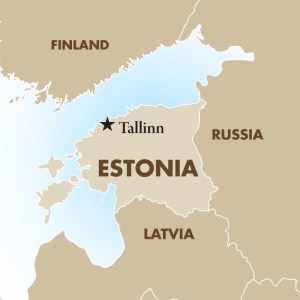
estonia_mapWanting to visualise where the region of Läänemaa in Estonia was, I found it was connected to a somewhat ironic slogan, “Your safe nesting place,” a reference to the areas wetlands and meadows, providing a protective habitat to its wildlife.

It is a thought-provoking metaphor in relation to the novel, where civilians required a safe place to be protected from a different kind of predator. Is that nature? To require protection from the human predator? Is there safe refuge for those persecuted by the more brutal aspects of human power seeking? If we found ourselves living in such circumstances, how would we react?

Sofi Oksanen speaking about the title:

“When I was a child,” says Oksanen, “no one talked about deportations. People ‘went to Siberia’. Certain things were so dangerous to mention that people used a lot of expressions to circumvent the actual issues.”

“When I started the play and was thinking about the title, I was thinking about the traumatic reaction people can have after they’ve experienced violence or been raped,” she says. “People always try to clean themselves. So that was the first meaning – cleansing.”

Purge was a bestseller in Finland, winning numerous literary prizes and has been translated into 38 languages. The Finnish-Estonian author Sofi Oksanen, was born in Finland and spent her summers in Estonia, visiting her grandmother on a kolkhoz, a Soviet collective farm, giving her an insight into a life not many outside it had access to. The story appeared as a play before the author wrote the novel.