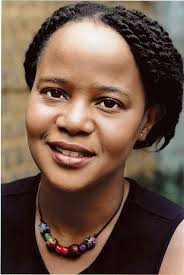
Redemption Ground, Essays and Adventures by Lorna Goodison

A mix of memoir, poetry, life adventure and epiphanies, I loved this collection by Jamaican writer Lorna Goodison.

Bonding With the Irish Over Tea & Poetry

essays memoir creative nonfiction Jamaican literature

The opening essay ‘The Song of the Banana Man’ and ‘The Fiddler of Dooney’ totally sets the scene for the rest of the book. It is an anecdotal story of the author and her friend, excited to be in London, overhearing two ‘bobbies’ (policemen) talk about a cafe they were just passing, in a way that lured them inside.

‘Whassis then, a new tea ‘ole?’

Their schooling in Kingston, Jamaica had been heavy on all things British and European, so entering this establishment was something related to that indirect familiarity. They encounter three boys from Ireland, who ask if they are from the West Indies and they begin to banter, drinking toasts to the colonial experience, singing songs and reciting poetry.

When I play on my fiddle in Dooney,
folk dance like a wave of the sea;

The poems they chose were about ordinary people, sure of themselves, of what they did, grounding words shared by these young people, whose paths have crossed, starting out on their own journeys. The exchange lasts while they’re having their tea and comes to a natural end, upon which they part ways. The author is at the beginning of her life journey, but the lines recited by them all have staying power.

And I was not sure where I belonged or what my own purpose was in life back then…. But listening to those three Irish men recite ‘The Fiddler of Dooney’ that afternoon, maybe I’d thought yes, that’s what I’d like to be, someone whose artistry makes people dance like a wave of the sea.

A Working Class Teen Dares to Do Better

In, A Taste of Honey, she recounts the experience of seeing a movie in 1963, adapted from the play created by Shelagh Delaney (who was 18 years old when she wrote it) that moves her, that is a moment of epiphany. Being one of nine children, she relished the opportunity to go and see the film one Saturday afternoon alone.

Shelagh Delaney went to a play that she found boring, pretentious and condescending, and said to herself I can do better than that, and went home and wrote A Taste of Honey.

The film would win a BAFTA award.

A Taste of Honey showed working-class women from a working-class woman’s point of view, had a gay man as a central and sympathetic figure, and a black character who was neither idealised nor a racial stereotype. – extract from The Guardian by Dennis Barker

Goodison reflects on why she was so moved by this film, how it gave her some of her life and writing purpose and inspiration.

Shelagh was pronounced ‘ineducable’, but was able to produce work that affected me so deeply that I ended up sitting alone in a cinema after everyone else had filed out, trying hard to compose myself enough to go outside and face a world where most people would not understand why a simple thing like a Saturday afternoon matinee could make me weep as if a close friend or relative had died.

The Daffodil Drama

Writing poetry from a young age, in ‘Some poems that made me’ we read more of this early education and a different take on Wordsworth’s ‘I Wandered Lonely as a Cloud’, aka ‘The Daffodils’ poem, after she researches his childhood and life and decides to give the poet a break. See my review Lucy by Jamaica Kincaid for another reference to the daffodil drama.

Over the years I have said quite a lot about this poem, as have other writers throughout the British Commonwealth who have come to regard it as the ultimate anthem to British colonial oppression.

She will encounter may poets and poems until she arrives at the one voice that cause her to stop reading everyone else and just read his poems. In the work of Derek Walcott, who would become a friend and mentor, she found poem as a source of hope and consolation; poem as a lifeboat, anchor and safe harbour.

As she begins to think of her own place in the world, she seeks out women poets, finding nourishment in the work of Gwendolyn Brooks and other African-American fiction writers, while still searching for poetry by Caribbean women, ultimately ending up writing the poems she wanted to read and finding the right language to express them.

I learnt early in my life as a writer that if I wanted to write about my people I had to learn to listen carefully to family stories then imagine, and constantly reimagine those stories…All writer’s do this, but Caribbean writers face formidable or particular challenges because of the ways in which slavery, and then colonialism, erased or distorted so much of our lives that we have to learn to writer ourselves into the story in any way we can.

Tributes to the Mothers & Imagination

We read ‘Guinea Woman’ the poem she wrote trying to imagine a woman she had never met, her great grandmother, an elegy for her mother Doris ‘After the Green Gown of My Mother Gone Down’, and another poem entitled ‘Bedspread’ inspired by news of the home of Winnie Mandela being raided by police, where they seize personal effects including a bedspread, taken because it was in the colours of the African National Congress.

The collection takes the reader to different countries and places on her journeying, sharing both fun and pivotal moments, stories of redemption, of good souls that come to set the indebted free, of her own life crisis in New York, that preceded a change in direction, acting on a promise to herself.

A Musical Accompaniment

Like my reading experience of Bernice McFadden’s excellent The Book of Harlan, whenever Lorna Goodison mentions music, like in the vignette ‘A Part for Tarquin’, I look it up and listen while reading. This one is about her friend Bernard dragging her along to a non-party that she doesn’t wish to attend, and ends with them listening into the night to the pianist Wynton Kelly playing the Miles Davis sextet Some Day My Prince Will Come.

That was the night I began to really appreciate the genius of the Jamaican-American pianist Wynton Kelly, about whom Miles himself was supposed to have said, ‘Wynton is the light for the cigarette; without him there is no smoking.’ That night I realised that if hope has a sound it would be Wynton Kelly’s piano-playing. His hope notes were like sunbeams on the morning waves coming in at Bluefields beach.

Loved it all.

Author, Poet, Essayist, Lorna Goodison

Caribbean poet Lorna Goodison was born in Kingston, Jamaica in 1947. A painter before she turned her focus to poetry, Goodison was educated at the Jamaica School of Art and the School of the Art Students League in New York. She was appointed poet laureate of Jamaica from 2017 – 2020. In 2018, she received a Windham–Campbell Literature Prize, and in 2019, she was awarded the Queen’s Gold Medal for Poetry.

Her numerous poetry collections include Collected Poems (2017), Supplying Salt and Light (2013), Goldengrove: New and Selected Poems (2006), Controlling the Silver (2005), Traveling Mercies (2001), Heartease (1988), and Tamarind Season (1980).

She is the author of the short story collections By Love Possessed (2011), Fool-fool Rose is Leaving Labour-in-Vain Savannah (2005), and Baby Mother and the King of Swords (1990), and the memoir From Harvey River: A Memoir of My Mother and Her People (2007), which won the British Columbia National Award for Canadian Non-Fiction.

In 2019, she published Redemption Ground: Essays and Adventures

Professor of English and of Afroamerican & African Studies at the University of Michigan, Goodison divides her time between Toronto and the north coast of Jamaica.

Goodison’s image-rich and socially- and historically-engaged poems often inhabit the lives and landscapes of her Jamaican homeland. “I suspect that I might always write about Jamaica,” Goodison stated in an interview with Mosaic: Literary Arts of the Diaspora. Goodison also discussed the humor in her work, noting, “Jamaicans are very comical people, and laughter is a way of coping with life’s displeasures. Also, when you make something of it [a hard situation], it says that you are in control. There are incidences when we have no control; all we can do is make some sort of a gesture. Sometimes, the world can throw things at you that are so cruel and so devastating that you are in no position to have any kind of real response but to make a gesture. And I think that sometimes laughter is a gesture saying that you have not completely annihilated me; you have not robbed me of my ability to respond as a human being.”

Noting that Goodison often “complements her careful observation of the physical world and her fine eye for detail with a tense, lean, elliptical style” in a review of Supplying Salt and Light, Jim Hannan observed, “At their best, Lorna Goodison’s poems observe the unsavory in history and society even as they guide us firmly toward sources of redemption. With compassion and empathy, Goodison writes about human failure and triumph in large and small measures.”
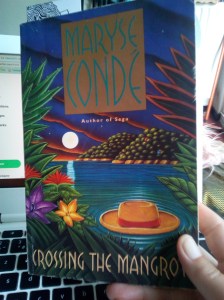
Crossing the Mangrove by Maryse Condé (1995)

translated (from French) by Richard Philcox.

A Favourite Author

Maryse Conde Crossing the Mangrove WIT MonthMaryse Condé is one of my favourite authors and I’ve been slowly working my way through her books since she was nominated for the Booker International Prize in 2015, back when it was held every two years, for an author’s lifetime works.

I started with vignettes from her childhood, then moved on to a novel about her grandmother whom she’d never met, then her masterpiece of historical fiction Segu, her own favourite The Story of the Cannibal Woman, A Season in Rihata and now this very Caribbean novel Crossing the Mangrove, which I absolutely loved. Links to my reviews below.

This is almost a form of noir novel; a death provides the catalyst to revealing an island society, portraying all it diversity and colour, its social good and evil – poverty, discrimination and exploitation, and rather than seek a tidy resolution of that death, it demonstrates the folly of that way of thinking, creating instead, a thought-provoking insight into a multi-layered, multi-ethnic mix of minds and bodies, in their states of love, bliss, paranoia, anxiety and confusion.

It is such a great read, I had to force myself to pause halfway in order to savour it. I can imagine rereading it, it’s such a multilayered novel, that can be read for pure entertainment value or thought about more deeply in how it attempts through exquisite storytelling and characterisation, to lay bare the complexity of such a diverse community, it’s impossible to keep up with who is who is what from where, demonstrating how farcical that is anyway and yet nearly everyone contributes to it, the labelling, the judgements, the superiority and inferiority complexes. Brilliant.

“Life’s problems are like trees. We see the trunk, we see the branches and the leaves. But we can’t see the roots, hidden deep down under the ground. And yet it’s their shape and nature and how far they dig into the slimy humus to search for water that we need to know. Then perhaps we would understand.”

Can You Cross A Mangrove?

Crossing the Mangrove Maryse Condé

Mangrove of Sainte Rose, Guadeloupe

The trigger for all of this, in a novel where every chapter takes the perspective of a different character, is the wake of a man found dead in the mangrove. No one really knew Francis Sancher but everyone had had an encounter with him and there were rumours aplenty.

“Nobody ever understands, Madame Ramsaran. Everyone is afraid of understanding. Take me, for instance. As soon as I tried to understand, to ask for an explanation for all those corpses, all that blood, they called me every name under the sun. As soon as I refused to go along with the slogans, they kept a serious eye on me. Nothing is more dangerous than a man who tries to understand.”

I don’t know about the mangroves in Guadeloupe, but recalling the mangrove swamp from a biology field trip at school, they are incredibly difficult to navigate, like a natural defence system, with spiky roots sticking up out of the water, preventing a way forward. They become a tangled array of wet and slimy roots, attracting many species of bugs, insects and critters and are found in locations where salt water and fresh water mix, a buffer between land and sea.  An apt metaphor for navigating a life, for understanding a complex society.

Stories in his Wake

We come to know more about this intriguing stranger who came to Rivière au Sel expecting to die, we learn who cultivated a desire for that to happen, who fell for his charm, a variety of voices that convey the life stories of this diverse group of villagers – young and old, men and women, siblings and parents, illiterates and intellectual elites, peasants and upper class Creoles, those who belong and those who would always be considered outsiders.

Crossing the Mangrove Maryse Condé

Maryse Condé

The multiplicity of voices, narrated through nineteen characters attendant at the wake, creates a portrait of the social, cultural, political, linguistic, intellectual and economic diversity of this Caribbean island society, complete with desire, unrequited love, arranged marriage, jealousy, disappointment, bitterness, greed, exploitation, revenge, racism, classism, joy and hilarity.

“I would say you are a man of great wisdom!” I murmured.

He smiled.

“Wisdom? I wouldn’t say that. Rather that I tried to untangle the skeins of life.”

The dead man is only given voice through those attending his wake, like the author who is given voice through her characters.

The quote above reminds me of all the narratives of Maryse Condé, of her life, her research including the all important oral histories and her own insatiable appetite for “untangling the skeins of life”, presenting them to us through her essays and novels. She truly is a magical and gifted writer, and in this novel she returns to a landscape closer to home, evoking it through this collection of characters beautifully.

“Now Francis Sancher is dead. But he alone has come to an end. The rest of us are alive and continue to live as we’ve always done. Without getting along together. Without liking ourselves. Without sharing anything. The night is waging war and grappling with the shutters. Soon, however, it will surrender to the day and every rooster will crow its defeat. The banana trees, the cabins and the slopes of the mountain will gradually float to the surface of the shadows and prepare to confront the dazzling light of day. We shall greet the new face of tomorrow and I shall say to this daughter of mine:

“I gave birth to you, but I misloved you. I neglected to help you flower and you grew stunted. It’s not too late for our eyes to meet and our hands to touch. Give me your forgiveness.”

In 2018 Maryse Condé was declared the winner of the Alternative Nobel Prize for Literature.

Further Reading

Tales From the Heart: True Stories From My Childhood

Victoire: My Mother’s Mother

Segu

The Story of the Cannibal Woman

A Season in Rihata

Man Booker Prize Winner 2015

On Tuesday 13 October the Man Booker Prize for 2015 was announced.

This years winner was 44-year-old Marlon James from Jamaica (now living in Minneapolis, USA). He is the first writer from Jamaica to win the prize in its 47 year history.

His book A Brief History of Seven Killings is a fictional history, an imagined biography of the singer Bob Marley, and the events surrounding an attempted assassination in 1976. Crediting Charles Dickens as one of his former influences, here in his 686 page epic, James pulls together a band of characters:

from witnesses and FBI and CIA agents to killers, ghosts, beauty queens and Keith Richards’ drug dealer – to create a rich, polyphonic study of violence, politics and the musical legacy of Kingston of the 1970s

Michael Wood, Chair of the judges, commented:

‘This book is startling in its range of voices and registers, running from the patois of the street posse to The Book of Revelation. It is a representation of political times and places, from the CIA intervention in Jamaica to the early years of crack gangs in New York and Miami.

‘It is a crime novel that moves beyond the world of crime and takes us deep into a recent history we know far too little about. It moves at a terrific pace and will come to be seen as a classic of our times.’

It sounds like a riveting pageturner, with its cast of over 75 characters and voices. I haven’t read the book, but I’ve requested my local library buy it. Here is what a few reviewers have had to say:

Eileen Battersby, The Irish Times – Booker winner Marlon James tops Tarantino for body count

Reading Marlon’s prose is akin to injecting liquid fire into your brain.

Kei Miller, The Guardian – bloody conflicts in 70s Jamaica

tendency to inhabit the dark and gory places, and to shine a light on them

Michiko Kakutani, The New York Times – Jamaica via a Sea of Voices

raw, dense, violent, scalding, darkly comic, exhilarating and exhausting

Have you read it yet? Or planning to?


Breath, Eyes, Memory by Edwidge Danticat

Breath Eyes MemoryNarrated from the point of view of the grand-daughter Sophie Caco, who we meet while she is living with her unmarried Aunt, Tante Atie in a village in Haiti, we enter the difficult world of being female and being raised by women, in an environment where an innocent life, a contented child can turn into a tormented adult, ravaged by recurring dreams and nightmares.

“I know old people, they have great knowledge. I have been taught  never to contradict our elders. I am the oldest child. My place is here. I am supposed to march at the head of the old woman’s coffin. I am supposed to lead her funeral procession. But even if lightning should strike me now, I will say this: I am tired. I woke up one morning and I was old myself.”

Maryse Condé’s novel Victoire: My Mother’s Mother, a book that recounts the facts as she could gather them on the life of her grandmother, helps us understand the importance of memory in the context of a historical narrative of people’s lives. I find her comments important in relation to Edwidge Danticat’s work which also harvests the ‘rich landscape of memory’.

In an interview with Megan Doll, responding to a question about how she went about researching the life of a woman who had died before she was born:

“…people will tell you that in places like the Caribbean, West Africa and so on, we have two distinct elements. We have history which is written in books about the white people — how they came to Guadeloupe, how they colonized Guadeloupe, how they became the masters of Guadeloupe — and you have memory, which is the actual facts of the people of Guadeloupe and Martinique — the way they lived, the way they suffered, the way they enjoyed life. We are trained to rely more on our memories and the memories of people around us than on books. So I interviewed people, I asked questions to everybody who knew her or knew my mother or my father. It took me about three years to write Victoire. I wanted to find the history of my immediate family but at the same time the history of Guadeloupe – a period of time that I didn’t know, which was not too distant, after all, but was distant in terms of the behaviour of the people of Guadeloupe.”

Edwidge Danticat’s novel is a tale that encompasses four generations of women, where stories are passed on, secrets are sent away and a lantern observed in the distance will tell us whether a boy or girl has been born.

“There is always a place where women live near trees that, blowing in the wind, sound like music. These women tell stories to their children both to frighten and delight them. These women, they are fluttering lanterns on the hills, fireflies in the night, the faces that loom over you and recreate the same unspeakable acts that they themselves lived through. There is always a place where nightmares are passed on  through generations like heirlooms. Where women like cardinal birds return to look at their own faces in stagnant bodies of water.”

Sophie’s mother lives in New York, she knows little about her and relates to her Aunt more as a mother figure, she doesn’t know why her mother lives far away, nor is she curious about it, but when she turns twelve her mother sends a plane ticket, it is time for her to join her.

Her mother is a care worker and initially takes her with her to work, until school begins. She presses on her daughter the importance of education, the only escape, opportunity for a girl child to have choices. Sophie witnesses her mother’s violent nightmares, a fear she can not assuage, she learns the reason for her mother’s disturbing state of mind and discovers the ways mother’s ‘test’ their daughters.

Edwidge Danticat

Edwidge Danticat

Despite a protected adolescence, Sophie falls in love, she concocts a lie to put her mother off, but suffers the torment of suspicion and decides to rebel against it.

Eventually she returns to her Aunt and grandmother, to the familiar, the women who have known her from birth, to try to make sense of things.

It is a compelling story of a family, their traditions and superstitions, their aspirations and fears, the things they accept and those they run from. It also touches on the sadness and dissociation of the immigrant from their culture and roots, that in order to attain their desire, it is necessary to give up much of their identity.

“It is really hard for the new-generation girls,” she began. “You will have to choose between the really old-fashioned Haitians and the new-generation Haitians. The old-fashioned ones are not exactly prize fruits. They make you cook plantains and rice and beans and never let you feed them lasagna. The problem with the new generation is that a lot of them have lost their sense of obligation to the family’s honour. Rather than become doctors and engineers, they want to drive taxicabs to make quick cash.”

A simple read and an extraordinary book, the lives of these characters seep into the reader, these generations of women raising their daughters alone, living with their demons of the past, trying to ensure nothing of their own suffering passes on to the next generation.

Edwidge Danticat was born in Haiti in 1969, raised by her Aunt and joined her parents in America when she was twelve. Breath, Eyes, Memory was her first novel, she has written many award-winning short stories and novels including The Farming of Bones, The Dew Breaker and her most recent Claire of the Sea Light.