Women in Translation #WITMonth

During August many I will be reading novels by women that have been translated from a language other than English. It’s an initiative created by Meytal Radzinski at Biblibio, Life in Letters and can be followed on twitter using the hashtag #WITMonth.

WITMonth15

Literature in translation represents less than 5% of published works in the English language, compared to nearly 50% for example in France and of works translated, approximately 30% is attributed to women.

I have gathered together a stack of books I already own that are works of translation and it is from this pile that I will be reading this month. It coincides with my interest in reading what I call cross cultural fiction, or literature from another perspective than that which we have grown up and/or been educated around, which in my case was very Anglo-focused.

WIT Month

If you have a favourite book by a woman, that has been translated, please tell us about it in the comments below so I can add it to my list for next year.

So far in 2015, I have read and reviewed the following books by women that have been translated: (click on the title to read the review)

Stone in a Landslide by Maria Barbal (Spain) translated Laura McGloughlin, Paul Mitchell (Catalan)

Beside the Sea by Véronique Olmi (France) translated Adriana Hunter (French)

Tales From The Heart, True Stories From My Childhood, by Maryse Condé (Guadeloupe) translated Richard Philcox (French)

Ru by Kim Thuy (Vietnamese-Canadian) (read in French, available in English)

The Wall by Marlen Haushofer (Austria) translated Shaun Whiteside (German)

Victoire: My Mother’s Mother by Maryse Condé (Guadeloupe) translated by Richard Philcox (French)

Happy Reading All.

Breath, Eyes, Memory by Edwidge Danticat

Breath Eyes MemoryNarrated from the point of view of the grand-daughter Sophie Caco, who we meet while she is living with her unmarried Aunt, Tante Atie in a village in Haiti, we enter the difficult world of being female and being raised by women, in an environment where an innocent life, a contented child can turn into a tormented adult, ravaged by recurring dreams and nightmares.

“I know old people, they have great knowledge. I have been taught  never to contradict our elders. I am the oldest child. My place is here. I am supposed to march at the head of the old woman’s coffin. I am supposed to lead her funeral procession. But even if lightning should strike me now, I will say this: I am tired. I woke up one morning and I was old myself.”

Maryse Condé’s novel Victoire: My Mother’s Mother, a book that recounts the facts as she could gather them on the life of her grandmother, helps us understand the importance of memory in the context of a historical narrative of people’s lives. I find her comments important in relation to Edwidge Danticat’s work which also harvests the ‘rich landscape of memory’.

In an interview with Megan Doll, responding to a question about how she went about researching the life of a woman who had died before she was born:

“…people will tell you that in places like the Caribbean, West Africa and so on, we have two distinct elements. We have history which is written in books about the white people — how they came to Guadeloupe, how they colonized Guadeloupe, how they became the masters of Guadeloupe — and you have memory, which is the actual facts of the people of Guadeloupe and Martinique — the way they lived, the way they suffered, the way they enjoyed life. We are trained to rely more on our memories and the memories of people around us than on books. So I interviewed people, I asked questions to everybody who knew her or knew my mother or my father. It took me about three years to write Victoire. I wanted to find the history of my immediate family but at the same time the history of Guadeloupe – a period of time that I didn’t know, which was not too distant, after all, but was distant in terms of the behaviour of the people of Guadeloupe.”

Edwidge Danticat’s novel is a tale that encompasses four generations of women, where stories are passed on, secrets are sent away and a lantern observed in the distance will tell us whether a boy or girl has been born.

“There is always a place where women live near trees that, blowing in the wind, sound like music. These women tell stories to their children both to frighten and delight them. These women, they are fluttering lanterns on the hills, fireflies in the night, the faces that loom over you and recreate the same unspeakable acts that they themselves lived through. There is always a place where nightmares are passed on  through generations like heirlooms. Where women like cardinal birds return to look at their own faces in stagnant bodies of water.”

Sophie’s mother lives in New York, she knows little about her and relates to her Aunt more as a mother figure, she doesn’t know why her mother lives far away, nor is she curious about it, but when she turns twelve her mother sends a plane ticket, it is time for her to join her.

Her mother is a care worker and initially takes her with her to work, until school begins. She presses on her daughter the importance of education, the only escape, opportunity for a girl child to have choices. Sophie witnesses her mother’s violent nightmares, a fear she can not assuage, she learns the reason for her mother’s disturbing state of mind and discovers the ways mother’s ‘test’ their daughters.

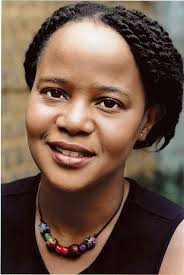
Edwidge Danticat

Edwidge Danticat

Despite a protected adolescence, Sophie falls in love, she concocts a lie to put her mother off, but suffers the torment of suspicion and decides to rebel against it.

Eventually she returns to her Aunt and grandmother, to the familiar, the women who have known her from birth, to try to make sense of things.

It is a compelling story of a family, their traditions and superstitions, their aspirations and fears, the things they accept and those they run from. It also touches on the sadness and dissociation of the immigrant from their culture and roots, that in order to attain their desire, it is necessary to give up much of their identity.

“It is really hard for the new-generation girls,” she began. “You will have to choose between the really old-fashioned Haitians and the new-generation Haitians. The old-fashioned ones are not exactly prize fruits. They make you cook plantains and rice and beans and never let you feed them lasagna. The problem with the new generation is that a lot of them have lost their sense of obligation to the family’s honour. Rather than become doctors and engineers, they want to drive taxicabs to make quick cash.”

A simple read and an extraordinary book, the lives of these characters seep into the reader, these generations of women raising their daughters alone, living with their demons of the past, trying to ensure nothing of their own suffering passes on to the next generation.

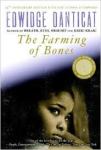
Edwidge Danticat was born in Haiti in 1969, raised by her Aunt and joined her parents in America when she was twelve. Breath, Eyes, Memory was her first novel, she has written many award-winning short stories and novels including The Farming of Bones, The Dew Breaker and her most recent Claire of the Sea Light.

Victoire: My Mother’s Mother by Maryse Condé tr. Richard Philcox

Maryse Condé is the author I discovered on the Man Booker International long list, the author that stood out for me, even if she didn’t win the prize. Since discovering her, I have read and reviewed the book she recommended for those wishing to discover her work, Tales From the Heart: True Stories From my Childhoodvignettes of her life growing up as the youngest and 8th child of a civil servant (who had been a school principal when her mother married him) and school teacher in a black bourgeoise family.

I decide to follow this up with another tale Victoire: My Mother’s Mother, though publishers label it as fiction, it is based on the life and facts of her grandmother. Victoire was an illiterate, white skinned woman she never met, who worked as a highly reputable cook for a white Creole family, the Walbergs, a connection that her mother Jeanne, though raised, supported and educated by this family, appeared to reject.

VictoireMaryse Condé wrote this account in a desire to learn more of her family history, a quest that began by researching the life of Victoire Elodie Quidal, speaking to a lot of people and a project that would take three years to complete.

When she questioned her mother Jeanne, a woman with no discernible palate, incapable of boiling an egg, she was shocked to learn her grandmother had been a cook.

‘And she didn’t teach you anything, not even one recipe?’ She continued without answering the question. ‘She first worked in Grand Bourg for the Jovials, some relatives of ours. That ended badly. Very badly. Then …then she migrated to La Pointe and hired out her services to the Walbergs, a family of white Creoles, right up until she died.’

Maryse wanted answers, but that was as much as her mother would share, they never resumed the conversation, the years passed by, in a kind of chaos, however that conversation never left her curious mind and her grandmother began to seep into her imagination.

Sometimes I would wake up at night and see her sitting in a corner of the room, like a reproach, so different to what I had become.

‘What are you doing running around from Segu to Japan to South Africa? What’s the point of all these travels? Can’t you realise that the only journey that counts is discovering your inner self? That’s the only thing that matters. What are you waiting for to take an interest in me?’ she seemed to be telling me.

Victoire’s mother Eliette was a twin who died in childbirth at the age of fourteen. More than the shock of her pregnancy and sudden death, was the appearance of a child with clear eyes and pink skin. No one was aware of her having crossed paths with a white man, there were no whites in La Trielle where she lived except priests and at one point a garrison of soldiers, who’d been training in the area, before being despatched back to France.

Eliette’s mother Caldonia raised Victoire and became close to her, when most people were wary of her with her too white skin and transparent eyes. The only education she received was religious and at the age of 10, the Jovial’s requested she come and work for them in the kitchen. Given only the thankless tasks, she observed the others and began to acquire the culinary skills she would become so well-known for.

Obtaining a position as cook for the Dulieu-Beaufort family was a turning point in her life, perhaps even more so than finding herself pregnant at 16-years-old, for in this family she would meet her lifelong friend Anne-Marie, her same age, outraged at having been married off to Boniface Walberg, Victoire’s future employers and the beginning of a mysterious and enduring relationship, one that set people talking and would be seen by her daughter Jeanne (Maryse’s mother) with utmost disapproval.

Apart from a brief period when Victoire fell in love with another, causing a period of separation from her daughter, and a significant turning point in their relationship, she would stay loyal to the Walberg’s all her life. Though she could neither read or write, she accepted her life, despite suffering the disapproval of her unforgiving daughter Jeanne, who would obtain an excellent education and position, marry a man twenty years her senior, removing all risk of insecurity that she’d observed in her mother and previous generations, determined to avoid a similar fate.

In an interview with Megan Doll, in Bookslut Maryse Condé explains her desire to write about her grandmother:

Maryse Condé‘The story is, of course, about my grandmother but the real problem was my mother. I lost my mother when I was very young — fourteen and a half. And during the short time that I knew her I could never understand her. She was a very complex character. Some people — most people, the majority of people — disliked her. They believed she was too arrogant, too choleric. But we knew at home that she was the most sensitive person and I could not understand that contradiction between the way she looked and the way she actually was. So I tried to understand as I grew up and I discovered that it was because of a big problem with her own mother. She seems to have failed; she had the feeling that she was not a good, dutiful daughter. I had to understand the grandmother and the relationship between my mother, Jeanne, and her mother, Victoire, to understand who Jeanne was, why she was the way she was, and at the same time understand myself.’

Condé also finds a connection between her and Victoire through their creativity, her grandmother’s through her renowned cuisine, Condé’s through her writing. At times she almost appears to channel her grandmother, as she senses what she may have been thinking or why she reacted in a certain way,  connecting with this mysterious woman who was so different to the mother she knew, a woman equally misunderstood by the community around her.

This was the perfect follow-up to Tales of the Heart and an intriguing look into the impact of circumstances of birth of three generations of women, how the past constantly threatens and can mock one’s position in the present, somewhat explaining Jeanne’s instinct to distance herself from her illiterate mother while fulfilling her ambitions and then her guilt at having treated her mother badly, when she only wanted the best for her.

The two books I have read were translated from French into English.

To the River: A Journey Beneath the Surface by Olivia Laing

A relationship ends, prompting the author to plan a journey that follows the course of the River Ouse in Southern England, a river that has changed over time, through man’s battles, interventions and industrial/agricultural practices.

To The RiverAs she walks the river, Olivia Laing narrates a number of those historic events, occurrences that the river today bears little trace of, including the last immersion of Virginia Woolf, her pockets laden with heavy rocks as she strode with purpose into the river, her corpse emerging downstream three weeks later.

“Let me then, like a child advancing with bare feet into a cold river, descend again into that stream.” Virgina Woolf

The narrative meanders like the river might have done, had it not had its more interesting aspects and life-filled curves, sliced and straightened long ago, making it in parts more like a dredged canal. By bringing disparate events together in one narrative, Laing attempts to connect history to the landscape, reviving ghosts of the past, on a route where no markers inform the casual walker of its gruesome days gone by.

It is an attractive premise, to walk the length of a river as a form of therapy, writing and researching its length, though rather than submerge as Virginia Woolf was so drawn towards doing and did in this same river, Olivia Laing’s journey is more one of, walk, pause, reflect on great battles and digs, other lives lived, move swiftly on.

She spends little time reflecting on her own troubled narrative, the barely mentioned Matthew, a ghost-like figure never fully formed, their dilemma not shared on the page, instead it is the river we begin to grieve for, her character sliced and cut and reformed to meet the purpose of man, ignorant of the smaller life forms dependent on it for survival.

Deflecting attention away from her own purpose, Laing has written a tribute to a little known river, a metaphor of life, with all the events that chip away at and form its character, though its true essence remains.

She recalls the brutal Barons’ War of the 13th century, the dinosaur hunters of the 19th century at a time when that word had not yet been invented and the many writers whose lives and works were inspired or touched by rivers.

“I’d been thinking that morning of  The Wind and the Willows, and it struck me that if it had nurtured my love of rivers,  might also be responsible for this faint mistrust of woods…”

As she recalls listening with her sister to tapes of Kenneth Grahame’s stories of Rat, Mole, Toad and Badger, she tells the tragic tale of the author’s son Alistair, aspects of whose nature were immortalised in the character of Toad, his difficulty adjusting to the expectations of public school and university life and his premature death. This event segues into the question of whether A.S. Byatt in her novel The Children’s Book, who casts a character who writes children’s stories and uses her children as inspiration, has created an epitaph for Kenneth Grahame.

Of particular interest to those familiar with the landscape and interested in its history and of Virginia Woolf, it provides a brief introduction to many subjects, meandering off course at times. The book may have held my attention more, if the author had reached deeper into her own inner journey, though perhaps these lessons are realised long after the physical journey has taken place.

“Water,in Woolf’s personal lexicon, represented a way of slipping the superficial self … and ducking down into a deeper, nameless realm.  When Virginia writes about writing, the images she employs are liquid. She is flooded or floated; she breaks the current. When the books are going well she plunges off, happy as a swimmer, into the marine element of private thought.  When the work is going poorly, however, when headaches prevail,  or sleeplessness sets in, her descriptions begin to acquire a nightmarish dryness.”

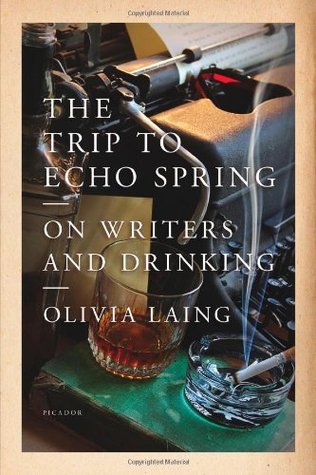
Trip to Echo SpringOlivia Laing combines a present day physical journey with threads of the past, as she does with The Trip to Echo Spring, a journey across America via a topographical map of alcoholism that examines the link between creativity and alcohol apparent in the books of John Cheever, John Berryman, Raymond Carver, Ernest Hemingway, F. Scott Fitzgerald and Tennessee Williams.

Under the Sea-Wind by Rachel Carson

Under the Sea-Wind (1941) was Rachel Carson’s literary debut and the first title in her Sea Trilogy, three books she wrote about the sea, the second The Sea Around Us (1951) and finally The Edge of the Sea (1955).

I discovered Under the Sea-Wind one day because I felt sure someone must have written a creative non-fiction book about the sea, someone with an affinity for the sea and an ability to bring it alive in the way I was imagining.

I like to read page-turning, lyrical nature writing, the kind of prose written by poets, though not poetry; authors like Kathleen Jamie who wrote Findings (my review here) and Sightlines, Barry Lopez and his Arctic Dreams (review here), Annie Dillard’s Pilgrim at Tinker Creek. They are all books that fascinate, entertain and enthrall on the subject of nature, in a way that traditional, factual texts about those subjects rarely inspire.

So I asked myself, well who has written in this form, about the sea? Because the sea is my muse, my resting place, that living, moody, playful, dangerous place that I never tire of and rarely get enough of and I wanted to read something that attempted to articulate the essence of it. So I could bring the sea nearer to me, when I can’t go to her. In that search I discovered Rachel Carson’s literary debut, her personal favourite book of all those she wrote, a book all about the sea, invoking its mystery and wonder.

The book started out as an assignment she completed in 1936, when she was an unemployed zoologist and freelance writer for the U.S. Bureau of Fisheries. Asked to write an introduction to a brochure on marine life, she submitted an essay entitled “The World of Waters” neatly typed by her mother, as all her manuscripts would be.

The next day Carson sat in Higgins’s Washington D.C. office waiting for his verdict.The government ichthyologist knew at once that it was unsuitable. What he was reading was a piece of literature. Carson never forgot the conversation: ‘My chief…handed it back with a twinkle in his eye. ‘I don’t think it will do,’ he said. ‘Better try again. But send this one to the Atlantic Monthly.’

The essay was a narrative account of the countless sea creatures that cohabit in and underwater and introduced her two most enduring and renowned themes: the ecological relationships of ocean life that have been in existence for millenia and the material immortality that embraces even the tiniest organism. It was the essay that spawned a classic in nature literature.

A sanderling shore bird

A sanderling shore bird

Under the Sea-Wind is structured in three parts, and in each part, we view the sea and sea life from the point of view of one of its inhabitants.

In Part One, Edge of the Sea, written for the life of the shore, and inspired by a stretch of North Carolina sea-coast, we meet a female sanderling she names Silverbar, it is Spring and the great Spring migration of shore birds is at its height and concludes with the end of summer where the movements of  birds, fish, shrimp and other water creatures heralds the changing of the seasons.

“Pressing close to the backwash, Silverbar saw two shining air bubbles pushing away the sand grains and she knew that a crab was beneath. Even as she watched the bubbles her bright eyes saw that a wave was taking form in the tumbling confusion of the surf. She gauged the speed of the mound of water as it ran, toppling, up the beach. Above the deeper undertones of moving water she heard the lighter hiss that came as the crest began to spill. Almost in the same instant the feathered antennae of the crab appeared above the sand. Running under the very crest of the green water hill, Silverbar probed vigorously in the wet sand with opened bill and drew out the crab. Before the water could so much as wet her legs she turned and fled up the beach.”

She describes the terror of the shore birds as they hide in the beach grass from the noisy, boisterous migrating flocks that briefly occupy their territory; the terrible snow storm that will freeze hundreds of egg embryos, where only the fittest and strongest survive; the way the birds lure a fox away from their nests and the day the parents finally abandon their young, their job complete.

A school of Mackerel

A school of Mackerel

Part Two The Gull’s Way, is dedicated to the open sea, a parallel time period in the open ocean and here we encounter Scomber the mackerel, following his journey from birth through infancy and youth in a quiet New England harbour, only to join a school that follows its instinct into the great sea where numerous predators await. As the fish move from one location to the next, trying to outwit predators, including man, the sea becomes the scene of a thriller and Scomber the mackerel, our fugitive!

Anguilla, the eel

Anguilla, the eel

Part Three River and Sea is written in the deepest, darkest, fathoms, we follow Anguilla, the eel from the far tributaries of a coastal river pool, downstream to the gently sloping depths of the sea, ‘the steep descent of the continental slopes and finally the abyss’.

After 10 years of uneventful river habitation, the eels are drawn by instinct downriver returning to their place of birth, a deep abyss near the Sargasso Sea where they will spawn and die. It is the most remarkable journey, as is that of the newborn spawn originating from two continents, who float side by side and drift towards those same coastal rivers their parents swam from, a voyage of years and over time the two species will separate and veer towards their continent, the US or Europe.

“Anguilla had entered Bittern Pond as a finger-long elver ten years before. She had lived in the pond through its summers and autumns and winters and springs, hiding in its weed beds by day and prowling through it waters by night, for like all eels she was a lover of darkness…Now it was autumn again… a strange restiveness was growing in Anguilla the eel. For the first time in her adult life, the food hunger was forgotten. In its place was a strange, new hunger, formless and ill-defined. Its dimly perceived object was a place of warmth and darkness – darker than the blackest night over Bitten Pond.  She had known such a place once – in the dim beginnings of life, before memory began. Many times that night, as the wind and rain tore at the surface film of the pond, Anguilla was drawn irresistibly towards the outlet over which the water was spilling on its journey to the sea.”

Rachel Carson writes about the sea, the sand, the birds, fish and the smallest of creatures and organisms in a way that makes us realise how little we observe of what is occurring around us, though we may stand, swim, float or fish in the midst of it. For the sea, its shore and the air above thrum like a thriving city of predator and prey of all sizes and character, constantly fluctuating, its citizens ever alert to when it is prudent to move and when it is necessary to be still.

Original, enthralling, it opens our eyes to much that we do not see or understand, I am in awe of shore birds, mackerel, eels, the sea, streams, rivers, ponds and the interconnectedness of them all.

Man, when his ambitions were more local, was once a balanced part of this ecosystem, though many of the practices of today appear to have stretched the boundaries of our role too far towards destructive exploitation, in our ignorance, we are upsetting this delicate yet complex ecosystem, which will be to our detriment if not stopped.


Fortunately, we have people like Captain Paul Watson and the Sea Shepherd Conservation Society, who have made themselves guardians of marine wildlife, actively pursuing  and preventing those who exploit and destroy without regard for the destructive effect of their pillaging the oceans.

Rachel Carson explores the sea-shore, the shallow and the deep, seeing them from the point of view of three species natural to those habitats, while mentioning so many more that they encounter, in a narrative that makes nature writing absolutely thrilling and survival an astounding feat.

Highly Recommended!

Buy a copy of Under the Sea-Wind via Book Depository

From Caucasia With Love by Danzy Senna

A Longish Intro on How I Came Across this Book

OreoDanzy Senna reviewed a book in the New Yorker in May 2015, a work she refers to as that hilarious, badass novel Oreo* by Fran Ross, an overlooked classic, a satire about race, originally published in 1974 without a stir, the novel everyone remembers from that time published two years later, had the title Roots.

Senna read Oreo in the late 1990’s, when she was living in a neighbourhood of what she called ‘Brooklyn’s dreadlocked élite‘ talented, up and coming, young black musicians, film-makers, artists said to be backed by the likes of Tracy Chapman and Alice Walker.

Though it had been written 20 years before, the book seemed to speak of their present and in her article she reflects on the narratives that had tended to gain traction and audience, those like Roots that looked back at slavery and oppression and then those that had been ignored, like Oreo, narratives that looked forward, that addressed modern issues, where no one is immune to criticism.

Sadly, Fran Ross died at a young age of cancer, little known in the literary world, this her only published work. It was republished in July 2015.

*To much of the public, an oreo is a black biscuit with white cream filling, in the African-American community however, it is a racial slur used to insult a black person who appears to act white.

You can read the article linked below, I hope to read the book soon, and all this to say how I came across the author Danzy Senna, who wrote From Caucasia, With Love, a novel about a mixed race family and the effect on their two daughters, when they separate, on account of the differing colour of their skin.

Review of From Caucasia, With Love

CaucasiaBirdie and Cole are two sisters, so close, they have their own made up language they speak fluently, that no one else can understand. The rest of society judges them on appearance, for Birdie appears white and her older sister Cole appears to be black.

While their parents are together it is less of an issue, but when they separate and move away from each other, each daughter departing with one parent, they will discover how much their colour dictates other people’s perceptions of them. Cole leaves for Brazil with her father and Birdie is on the run with her white activist mother fleeing the authorities.

The story is narrated from the point of view of Birdie and although she feels just like her sister, there were already signs of their differences in the behaviour of those closest to them. Her white grandmothers favouritism, and her father’s new girlfriend who won’t look her in the eye,  favoured by one, rejected by the other.

Birdie travels with her mother, losing all contact with her sister and father and integrates into a new life and school as someone she is not, she accepts it, but the truth seethes beneath the surface of all her interactions, she becomes numb to the misconceptions about who she is, until she has had enough and decides to go looking for Cole and her father.

“Strange as it may sound, there was safety in this pantomime. The less I behaved like myself, the more I could believe that this was still a game. That my real self – Birdie Lee – was safely hidden beneath my beige flesh, and that when the right moment came, I would reveal her, preserved, frozen solid in the moment in which I had left her.”

Danzy Senna

Danzy Senna

It is a gripping coming of age story of a girl who must deal with so much more than growing up, being forced to subsume another identity, neither one thing nor the other, without a role model to guide her.

It is a courageous effort to place the reader in the mind of a character who is like a changeling, crossing racial and geographic boundaries, making choices that will ensure not just her survival, but that she gets the answers she is looking for.

Further Reading:

New Yorker Article – An Overlooked Classic About the Comedy of Race by Danzy Senna


Lotusland by David Joiner

LotuslandLotusland starts out with the main protagonist Nathan, taking a long train journey from Saigon in the south of Vietnam where he lives, to Hanoi, the capital where he will visit his friend Anthony who he hasn’t been in touch with for some time.

Ironically, he reflects on the many things in his life that he perceives have always been a long wait for him. Ironic, because he is a character who has difficulty keeping a commitment, distracted too easily by the allure of the new and unknown, like the girl with the pink hair he meets on the train, or the attraction and undivided attention he gives to a new feature article he is asked to write, neglecting other commitments.

What follows is a well written story exploring the relationships between these two expatriate American men living in Vietnam, both their relationships to each other and the local women they marry/befriend and their contrasting attitudes to work.

Girl With a Fan by Công Quốc Hà Source: Wikipedia

Girl With a Fan by Công Quốc Hà
Source: Wikipedia

Nathan, a struggling writer, considers entering Anthony’s real estate business to make money, promising he is serious this time, though his word is rapidly thwarted by his developing relationship with the pink-haired woman, a traditional Vietnamese lacquer artist and gallery owner Le, in the weeks before he is supposed to leave Saigon and move to Hanoi.

“Somehow the mystery of the painting excited him even more than Anthony’s job offer. As he prepared to return to Saigon with the task of wrapping up his life there, the offer paled in importance to the chance he had of getting to know her.”

Anthony, now a successful business owner, husband and father of two small children he can’t communicate with, is barely in control of his rapid success or family life, unsure whether to rely on his friend, though it is clear he needs him for more than just work reasons.

The couples are like the escaped and the escapee, almost doomed from the beginning as they represent that often classic situation of the allure of a foreign culture, where the aims of the individuals are the opposite to each other despite their attraction.

Le has an interview at the American consulate for a visa and has made it clear to Nathan that that is the basis of her interest in him, a fact he seems intent on ignoring, preferring to pursue the illusion of a more intimate relationship.

“How’d it go?” He touched her hand, her arm, her cheek. “You’re still alive, and your body’s intact – all good signs.”

“It went okay,” she said, giving him a quick hug. “It’s hard to tell with Americans. They’re serious but also friendly. I don’t know what’s real. The worst part was dealing with the Vietnamese staff. They look down on people like me.”

It’s an often painful, uncomfortable read as David Joiner makes no excuses for his characters’ flaws and we witness that selfish aspect of humanity in which every person appears to want something from the other yet rarely puts the needs of the other before their own before acting or speaking.

Like a falling trail of dominoes, each person wants something from the next, though rarely is the desire reciprocated, individuals search for that thing just beyond their reach without appreciating what they have at hand. Blindness, illusion, disillusion, the impulse to escape.

It reminded me of a quote from Jamaica Kincaid’s expansive essay A Small Place, on her returning to the island of Antigua where she grew up, after many years of being away.

“That the native does not like the tourist is not hard to explain. For every native of every place is a potential tourist, and every tourist is a native of somewhere. Every native everywhere lives a life of overwhelming and crushing banality and boredom and desperation and depression, and every deed, good and bad, is an attempt to forget this. Every native would like to find a way out, every native would like a rest, every native would like a tour. But some natives – most natives in the world—cannot go anywhere. They are too poor. They are too poor to go anywhere. They are too poor to escape the reality of their lives; and they are too poor to live properly in the place they live, which is the very place you, the tourist, want to go – so when the natives see you, the tourist, they envy you, they envy your ability to leave your own banality and boredom, they envy your ability to turn their own banality and boredom into a source of pleasure for yourself.”

David Joiner excels in evoking the sense of being in Hanoi, a city I visited 20 years ago and adored (see my photos above). I was quickly transported back there through his ability to develop a vivid sense of place and found those passages where the action is accompanied by this strong sense of the surroundings captivating.

“In Hanoi the French presence could still be felt, preserved in the architecture and layout, whereas in Saigon the atmosphere still harked back 30 or 40 years to the American era, the notion of aesthetics crowded out by the practicalities of war.”

I was shocked to find myself at the final page, an abrupt ending that leaves the reader with much to think about and likely to provoke discussion about the mix of post-war opportunity, life in foreign cultures, immigration, freedom and entrapment, capitalism and whether and or how it is possible to overcome the clash of cultures within a relationship.

Hanoi by Cheong Source: Wikipedia

Hanoi by Cheong
Source: Wikipedia

Ru by Kim Thúy

RuReading Ru by Kim Thúy is like taking a long overland journey while looking up regularly to witness that which passes in front of our eyes. Sometimes the view is stunning, sometimes it elicits sadness, it can be moving, nostalgic, perhaps an odour transports us back to a scene from childhood, a person we see reminds us of someone we once knew.

Reading it in French imbues it with a drifting, lyrical resonance, sometimes I drifted off as the excess of descriptive words were beyond my reach and I was too lazy to look them up, not wanting to interrupt the flow. Until the next day, when I would happily read with the two dictionaries beside me and remember how much more fulfilling it is to venture further into unknown linguistic territory, enriching one’s vocabulary in another language.

blue dragon tattooMost of the pages read like short vignettes, experiences that provoke a memory, the man at the petrol station who sees a scar and recognises a childhood vaccination from Vietnam, his own hidden beneath a tattoo of a blue dragon, he shares a few memories, he touches her scar and places her finger in the middle of the blue dragon.

Reflections of times gone by, the journey of a woman with her family leaving the south of Vietnam for Canada via a refugee camp in Malaysia, she is a woman connected with another culture and the past, who intends to and does embrace ‘the dream’, whose own children will grow up in that modern culture with different references. Uprooted and yet connected at the same time.

A short but powerful read, that is incredibly moving without being sentimental. A rare and authentic talent, Kim Thúy channels her experience into this fictional tribute, which makes me remember reading Vadney Ratner’s In The Shadow of the Banyan, a tribute to another author’s human experience, struggle and survival despite the horrors lived through.

Ru in French means a small stream or a flow – of water, blood, tears or liquid. In Vietnamese, Ru is a lullaby.

Also Reviewed By

Nancy at Ifsofactodotme 

Jennifer D at LiteralLife

I read the book in French, but it is available in English, under the same title.

Ru English

The Wall by Marlen Haushofer tr. Shaun Whiteside

The WallHaushofer’s novel begins on the 5th of November, the day the protagonist, a middle-aged woman, begins to write a report of what has occurred over the last two years, since she became isolated in a hunting lodge in the Austrian Alps, where she had been visiting her cousin Luise and Luise’s husband Hugo.

Some kind of unwitnessed catastrophic event occurs, creating an invisible wall between that which lives and that which doesn’t.

As I started reading and then discovered what The WallWake Elizabeth Knox was, I recalled Elizabeth Knox’s Wake, where a similar event occurs, though rather than one woman as we observe in Marlen Haushofer’s modern classic The Wall, with Knox we followed what happened to a group of survivors adding elements of fantasy and horror that suspend belief  allowing the reader to interpret it more as the form of entertainment it was written to be.

In The Wall, Luise and Hugo walk to the nearby Alpine village one evening, putting them on the deathly side of the catastrophic event. Sending their dog Lynx home before them, he becomes one of the important and constant companions of this lone woman, who will learn what it takes to survive.

Eventually she realises she is living in the forest completely alone, she is joined by a cow she names Bella whom she hopes is pregnant, an old cat who will also give birth, and she finds a sack of potatoes she can plant and some beans which she will also use to create a crop. She is grateful to Hugo for his forethought.

“At the time everyone was talking about nuclear wars and their consequences, and this led Hugo to keep a little store of food and other important things in his hunting-lodge.”

The book recalls the days, the months, the seasons, the work she creates for herself, the relationship between her and the animals, her nurturing of them and attempt to protect them from the harsh elements of the environment and their interactions with her, that remind her of her duty to survive.

Lynx prodded me with his muzzle and pushed me sideways. Maybe he didn’t like the flood, maybe he also felt that I was miles away and wanted to attract some attention. As always on such occasions I followed him in the end. He knew much better than I did what was good for me.

It is written in a stream of conscious style that never becomes monotonous, despite the monotony of her days, she must live in the present to survive and that depends very much on caring for the needs of the animal life that support her. She must deal with her own mental turbulence and anguish, discovering that her manual labours and constant activity, though tiring, keep her from the dangers of over thinking and decline.

By cutting timber, in fact, I missed a very fine Indian summer. I didn’t see the landscape at all, obsessed as I was by the thought of stacking up a big enough supply of wood.  Once the last log had been stored under the verandah I had a stretch and decided to treat myself a little. It’s strange, in fact, how slight my pleasure is every time I complete a task. Once it’s out of the way I forget it,  and think about new things to do. Even at that time I didn’t allow myself much time to recover. That’s how it always was: while I was slaving away I dreamt about how I would quietly and peacefully rest on the bench, but as soon as I finally sat down on the bench I grew restless, and started looking out for new work to do. I don’t think this was due to any particular industriousness, since by nature I’m rather lethargic,  but was probably through self-protection, for what would I have done otherwise but remember and brood? That was exactly what I mustn’t do, so what was there to do but more work? I didn’t even have to look for work, it turned up insistently of its own accord.

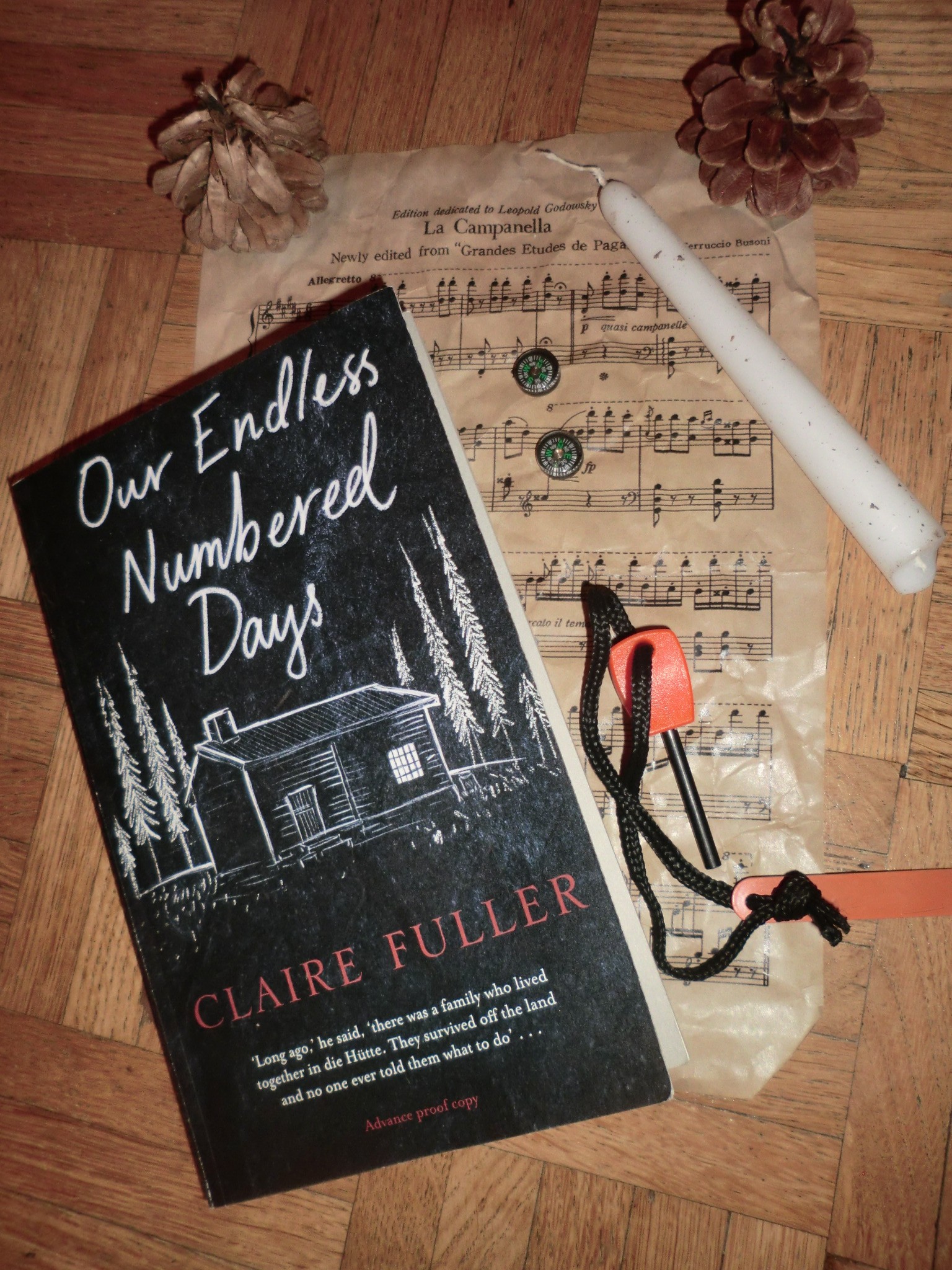
EndlessI was also reminded of Claire Fuller’s Our Endless Numbered Days, another book of survival in the European forest lands, a novel that contains distractions other than just survival, it being about a daughter whose father has taken her off to survive in the forest.

Marlen Haushofer’s protagonist has no zombies or deranged father’s to contend with, purely one woman’s survival and existence alongside a select few animals.

I found it utterly compelling and could not put it down. It is a brilliant novel that strips away the noise and manic obsessions of society placing one woman in a basic situation that will exhibit humanity’s natural feminine instinct to nurture, to protect, to achieve and survive while intermittently falling prey to the melancholic tendencies of mind that threaten to derail us. It does this without the use of fantastical elements apart from the existence of the wall itself, making it feel realistic and believable.

Marlen Haushofer wrote the book in the early 1960’s and it wasn’t published until 1968, two years before her premature death at the age of 49. The book was resurrected 15 years later when discovered by the feminist and anti-nuclear movements and has since been translated into 18 languages and made into a major motion picture by the Director Julian Pölsler. Deserving of being categorised as a modern classic.

The Wall is a muted critique of consumerism and a delicate poem in praise of nature, a challenge to violence and patriarchy, an encomium to peace and life-giving femininity, a meditation on time, an observation on the differences and similarities between animals and humans, and a timeless minor masterpiece. Jerry Whyte , Film critic on Julian Pölsler’s film adaptation

Wall Movie

Highly recommended and thank you to Vishy (click here for his review) for recommending it to me.

Mayumi and the Sea of Happiness by Jennifer Tseng

“I am a quiet lady, but my imagination is wild and busy.” Isobelle Ouzman

Livia and TsengFrom one island to another, having left the four holidaymakers from elsewhere on Little Lost Island in Brenda Bowen’s Enchanted August, I find a not so little, but lost islander in Mayumi, a 41-year-old librarian and resident of another New England island.

With a demanding 4-year-old daughter who has claimed a place in the marital bed, an emotionally and physically distant husband and finding solace between the pages of the books she reads, Mayumi’s life seems to lack something she isn’t aware of, until someone arrives at the library counter to ignite it.

She develops a fixation on a 17-year-old boy, seducing him and slotting him timetable-like in her already routine, controlled life, as if forbidden love is just another aspect of a carefully planned existence, something that be contained.

In addition, she can’t help but allow a friendship to develop with the boy’s mother, her equal desire for friendship and understanding crossing neurotic wires that seem destined to create an emotional explosion.

Publisher, Europa Editions describe the book as:

“With echoes of  The Giant’s House and shot through with literary references, the debut novel by Asian-American poet Jennifer Tseng is a book that leaves a lasting impression.”

and Kirkus Reviews:

Tseng explores time and place, isolation and connection, and veers more toward the lyrical than the lurid.”

while the author herself said:

“I love the premise of someone in a mundane setting, then a stranger walks in, and everything changes.”

Jennifer Tseng

Jennifer Tseng

It was a strange read for me and while many authors succeed in bringing the reader inside a perspective that might be counter-intuitive to their own instinct, it felt as though I remained on the outside of this narrative, never able to crossover into the world Muyumi inhabits, through her narcissistic obsession.

I haven’t read The Giant’s House, although reading the blurb of it I can see why comparisons might be made.

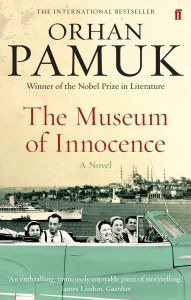
orhan-pamuk-the-museum-of-innocenceThe only reading experience I can compare this too is Orhan Pamuk’s The Museum of Innocence, which is a very long treatise on the experience of obsession, it is so long that you can’t help but experience the tedium of an unrelenting obsession.

Tseng’s exploration is unique by virtue of it being a female obsession, confusing the roles of mother, lover, friend and wife.

It is a reminder that in the quietest of environments, the imagination is actively at work and you never know when inspiration or obsession might alight.

I leave you with a quote from the book, where Mayumi is feeling frustrated by the pending departure of the young man for a couple of weeks over the summer:

“You know I didn’t come here to mix with your sort. If anything I came here to escape such excitements.”

What had in it the seed of a compliment came off sounding like a snub. He drew back slightly as if I had just hit him.

“What I meant to say,” I persisted, determined to salvage the moment and bolster his confidence, “is that this is a highly unusual circumstance. I’ve lead a very sheltered life, sheltered from good as much as from bad. I’ve minded my own business. I never sought thrills. I’ve been content to avoid the company of youth and beauty. Before you, I had no desire.”

“With all due respect, May, I find it hard to believe,” he finished in iambic pentameter, “that a woman with your brain and your appetite came halfway across the world in search of nothing.”

He was well-mannered yet restless; his eyes studied me as though I were a page in a book. I had the sense of being one among many, of being read intensely but fleetingly by a reader who would soon turn the page.

In addition to being a poet and fiction writer, the author Jennifer Tseng is a librarian on Martha’s Vineyard, a New England island.

Pumpkin Island Maine

Note: This book was an ARC (Advance Reader Copy) kindly provided by the publisher.