
 Selected in 2010 as one of The Best of Young Spanish Language Novelists by Granta, Bolivian author Rodrigo Hasbún’s Affections is his second novel and will be published in ten languages. It was the winner of an English PEN Award 2016.
The novel is less a story and more a set of loosely connected vignettes from the lives and perspectives of the three daughters of Aurelia and Hans Ertl, a family who fled post-war Germany in the wake of their father’s position as a cameraman, (he had worked on several Nazi propaganda films), to live in exile in Bolivia.
One of his daughters Monika Ertl became involved with the survivors of Che Guevara’s guerrilla movement and was allegedly involved in the assassination of the Bolivian consul in Hamburg, a man said to have ordered the hands of Guevara be cut off and sent to La Paz.
Hasbún’s novel takes these threads and weaves a disparate narrative, that highlights different moments in the lives of all members of this family, whose life trajectory was dramatically altered by their geographic displacement.
No sooner have they arrived, than Hans, a climber, explorer, photographer, seeker of adventure announces he is quitting climbing and organising an expedition to find a lost Inca city named Paititi buried somewhere deep in the Amazon forest. Two of his daughters come with him, and for his eldest Monika, it becomes a first step towards a life of social activism, which will result in her involvement in revolutionary guerilla warfare.
With a father seeking adventure and a mother prone to melancholy, the girls find themselves in a place they can never truly call home, where they will always be viewed as outsiders and find it difficult to find solace even among their ex-pat community, which in a cruel twist of fate, view them similarly to the way they were regarded in post-war Germany, only now it seems futile to escape their fate.
“All that grind to end up back where I started,” he complained to me one day down the phone. He said he’d experienced something similar after the war, that they’d already made him feel like an outcast once before, that during that period they closed one door after another to him, but that this time he wouldn’t move an inch.
Also included in the narrative are what appear to be the responses to an interview or interrogation of one of Monika’s lovers Reinhard, who was her brother-in-law, probably in a follow-up to the assassination of the Bolivian consul.
//yes, she’s the only one who matters now, the misunderstood child, the chaotic, rebellious teenager, the woman who went on to lose all perspective and no longer knew where to stop and ended up hurting herself and others. //Yes, if you pressed me I would say this is the definition of her that sticks: the woman who went on to cause so much hurt.
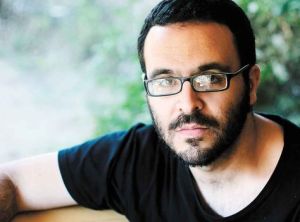
Bolivian Author, Rodrigo Hasbún
It is a fragmentary novel that depicts a family set adrift, unable to remain united nor to be held together by their adopted community, the daughters seek to carve out a life of their own, struggling in isolation.
The piecemeal structure of the novel with its alternating narrators is symbolic of that disconnect and isolation, exile may have heralded adventure and discovery, however the expedition to discover a lost city, became the catalyst to the disintegration of all that once kept them together.
It’s not true that memory is a safe place. In there too, things get distorted and lost. In there, too, we end up turning away from the people we love the most.
Note: Thank you to the publisher Pushkin Press for a copy of this haunting novella.
Further Reading
The City and the Writer: In Cochabamba with Rodrigo Hasbún – an interview by Nathalie Handal.
 Rachel Cooke in this Guardian article
 It should have been perfect, but things change when an old friend of her mother’s Anne arrives and she and her father announce their intention to marry. Although it is actually something Cecile feels is right for them and she adores Anne, part of her resents what signifies to her the end to the playful era she and her father have indulged, for Anne’s presence in their lives will certainly bring order and sensibility.
 It is 1947, in the province of Punjab, which sits between India and Pakistan, an area where Hindu, Sikh, Muslim and others live side by side. Tension is mounting as political events cause rifts between friends and neighbours as many of the Muslim population support the area becoming part of Pakistan and many Hindu fear for their lives, while the same tensions exist among Muslims living in the predominantly Hindu parts of India.
 The thing they all fear most, that some desire most happens and Asha’s family leave their past behind and head for Delhi. Firoze helps them to escape and Asha leaves with a secret she has kept from everyone, the future unknown.
 A mysterious novella that begins in a quiet humble way as we meet the young widow Yasuko whose husband, the only son of Meiko Togano, we learn died tragically in an avalanche.
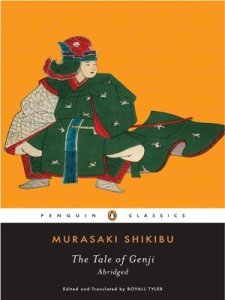 It is worth knowing a little about the plot of The Tale of Genji and the ‘Masks of Noh’ from the dramatic plays, as we realise there are likely to be references and connections to what is unfolding here. And not surprising given Fumiko Enchi translated this 1,000+ page novel into modern Japanese.
 Fumiko Enchi was a Tokyo born novelist and playright, the daughter of a distinguished philologist and linguist. Poorly as a child, she was home-schooled in English, French and Chinese literature by private tutors.
 Absolutely brilliant, astonishing, loved it, one of my Top Reads of 2016 for sure.



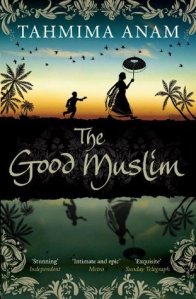
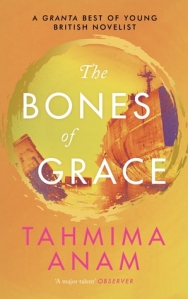
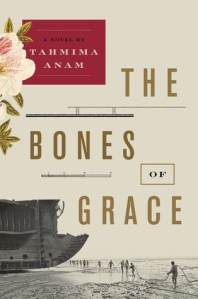 The novel is predominantly a second person narrative addressed to Elijah, long after she has lost him, narrating the events of their meeting, her pursuit of the dinosaur fossils straight after meeting him, her return to Dhaka and then her escape from her family to Chittagong, to work alongside a female film-maker interviewing workers on the ship graveyards, beaches where enormous liners are dismantled and parts recycled.
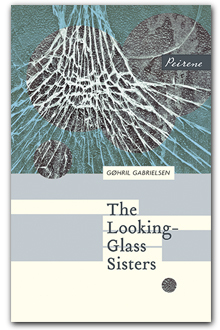 Two sisters have lived in the same house all their lives, their parents long gone and they can barely tolerate each other. They are bound together in one sense due to the practical disability of the younger sister, but also through the inherent sense of duty and responsibility of the first-born.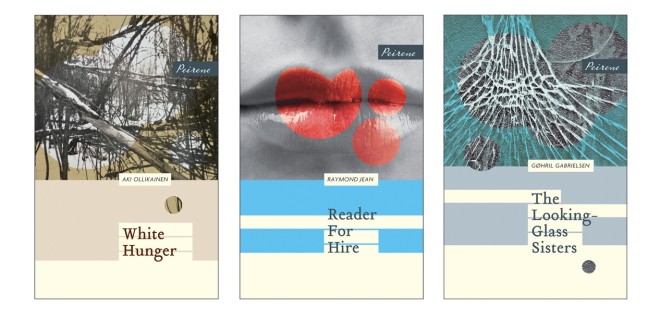






 A few years ago a lady who had recently moved here to Aix-en-Provence contacted me in relation to
  Excited about the opportunity to put her writing skills to the test, Karin took the first chapter of her book, moulded it as much as she could to meet the criteria, sent it to me to look over and to make recommendations on how to whittle it down further without losing any of the content and then sent it off! We came up with the title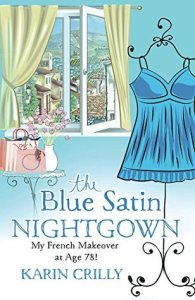

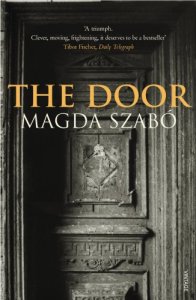 The Door is an overwrought, neurotic narrative by “the lady writer”, (possibly Szabó’s alter-ego, as there are similarities) describing her 20 year relationship with Emerence, the older lady who interviews her prospective employer to see if she’ll consider accepting the cleaning job on offer.
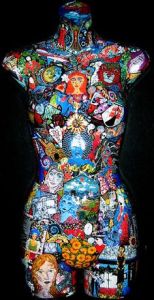 Later, only very much later, in one of the most surreal moments I have ever experienced, I wandered amidst the ruin of Emerence’s life, and discovered, there in her garden, standing on the lawn, the faceless dressmaker’s dummy designed for my mother’s exquisite figure. Just before they sprinkled it with petrol and set fire to it, I caught sight of Emerence’s ikonstasis. We were all there, pinned to the fabric over the dolls’ ribcage: the Grossman family, my husband, Viola, the Lieutenant Colonel, the nephew, the baker, the lawyer’s son, and herself, the young Emerence, with radiant golden hair, in her maid’s uniform and little crested cap, holding a baby in her arms.
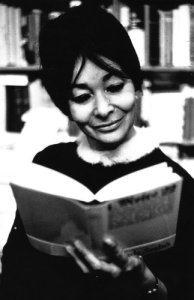 Magda Szabó was born in 1917 in Debrecen, Hungary, her father a member of the City Council, and her mother a teacher.
 Word by Word