
Totally brilliant and original, what a voice, a narrative and an insight into a woman’s desire for fulfilment.
 If you have read or were considering reading Marlon James Booker winning A Brief History of Seven Killings, then this is the Yin to his Yang, this is the feminine yearn to his masculine ambition.
Immersed in the dynamic culture of the American South, its language, traditions and folklore and equally fascinated by it, Zora Neale Hurston had instant access to a rich depth of stories, songs, incidents, idiomatic phrases and metaphors and an adept ear for the rhythm of speech patterns. With her literary intelligence and skill, she brings it together with remarkable power and beauty to the written page.
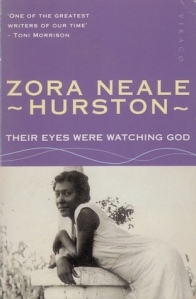
Their Eyes were Watching God is an American classic, the esteemed author Toni Morrison called her “One of the greatest writers of our time”, though she may be lesser known beyond those shores. There has been much written about her work and of this particular novel, criticized by feminists at the time of publication, yet come to be more appreciated and understood with time.
Alice Walker’s essay, “In Search of Zora Neale Hurston” revived interest in the author and since then there have been numerous new editions published. It was originally published in 1937.
Zora Neale Hurston tells the story of Janie, a girl raised by her Nanny, who was an ex-slave and therefore wanting to protect her daughter and grand-daughter from the things she feared, which amounted to marriage to a man with land or money or to live under the wings of a good, white family.
 Unable to protect her daughter, who was raped by her schoolteacher, her focus moves to Janie, whom the daughter leaves her with. As soon as adolescence beckons she arranges for her to marry an older farmer with land. Janie dreams of love and fulfilment and when mentions not finding it in this marriage is reprimanded by her grandmother for her romantic notions.
“There are years that ask questions and years that answer.Janie had had no chance to know things, so she had to ask. Did marriage end the cosmic loneliness of the unmated? Did marriage compel love like the sun the day?”
She moves on and marries Joe Sparks who takes her to a new town in Florida, a town built by black people for black people. It isn’t as Joe expects, so he sets about continuing its creation, getting himself elected as mayor and becoming a wealthy man. Janie becomes his showpiece, working in the shop, however he curtails her interactions with the community, thwarting her ability to be herself, even making her cover her hair due to his jealousy.
“She had found a jewel down inside herself and she had wanted to walk where people could see her and gleam it around. But she had been set in the market place to sell. Been set for still-bait. When God had made The Man, he made him out of stuff that sang all the time and glittered all over. Then after that some angels got jealous and chopped him into millions of pieces, but still he glittered and hummed. So they beat him down to nothing but sparks, but each little spark had a shine and a song. So they covered each one over with mud. And the lonesomeness in the sparks made them hunt for one another, but the mud is deaf and dumb. Like all the other tumbling mud-balls, Janie had tried to show her shine.”
Finally, her quest will become fulfilled, though not without its share of life’s ordinary and extraordinary sufferings, when she meets Tea Cake and they manage to ride life’s roller coaster of events and emotions, working together to deal with the demons and living their dream.
“Dis is uh love game. Ah done lived Grandma’s way, now Ah means tuh live mine.”
The excellent afterword of the Virago edition I read, says the following to explain one of the reasons this novel has attributed such notoriety today and why it is that she achieved something so rare.
Black women had been portrayed as characters in numerous novels by blacks and non-blacks. But these portraits were limited by the stereotypical images of, on the one hand, the ham-fisted matriarch, strong and loyal in the defense of the white family she serves (but unable to control or protect her own family without the guidance of some white person), and, on the other, the amoral, instinctual slut. Between these two stereotypes stood the tragic mulatto: too refined and sensitive to live under the repressive conditions endured by ordinary blacks and too coloured to enter the white world.
Even the few idealised portraits of black women evoked these negative stereotypes. The idealisations were morally uplifting and politically laudable, but their literary importance rests upon just that: the correctness of their moral and political stance. Their value lies in their illuminations of the society’s workings and their insights into the ways oppression is institutionalised. They provide, however, few insights into character or consciousness. And when we go (to use Alice Walker’s lovely phrase) in search of our mother’s gardens, it’s not really to learn who trampled on them or how or even why – we usually know that already. Rather, it’s to learn what our mothers planted there, what they thought as they sowed, and how they survived the blighting of so many fruits. Zora Hurston’s life and work present us with insights into just these concerns.” Sherley Anne Williams
Zora Neale Hurston’s depiction of Janie’s life provides a wonderful insight into the character and consciousness of a woman of her era, drawing from her own experience, though the character of Janie has a different personality to Hurston, providing a look not so much into the experiences, but of the yearnings and emotional life of women, their quest for fulfilment and self-discovery and though it’s not without obstacles, allows a little light to shine on those moments where her life does reach that bitter-sweet destination, leaving wisdom in its wake.
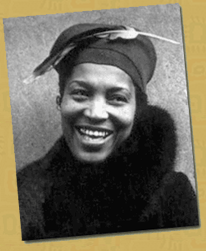
Zora Neale Hurston
Zora Neale Hurston (1892-1960) was born in Eatonville, Florida, the first incorporated black town in America. Her life there, nine years of wanderings is described in her book Dust Tracks on the Road. She studied at Howard University and began to write, attracting the attention of the Harlem Renaissance with her essays and short fiction and won a scholarship to Barnard College where she studied Cultural Anthropology, subsequently spending four years researching folklore on the South and publishing another five books including this novel and a collection of tales, songs, games and voodoo practices from the time.
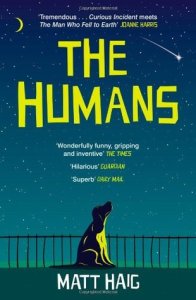 The Humans sounded like a heart warming, entertaining read and something a little different to what I normally read. I chose it because it appeared to have something heart warming and yet humorous about humanity. It did, the perfect light read for those periods when you can’t handle anything too demanding.
 Eliminating those in the know proves an easier task than winning over the wife and son, however he perseveres and begins to understand and even value what it means to be human, developing an attraction to its quirks and foibles, despite the many bizarre acts they indulge.
 The Ballroom is Anna Hope’s second novel and one inspired in part by a family connection. I review it in full at
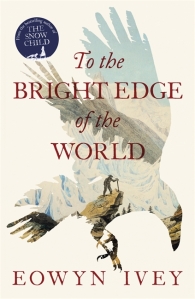 Eowyn Ivey was the author of my favourite book of 2012 and one of my all time favourite reads, her debut novel
 And in a style true to Eowyn Ivey and familiar from her novel


 Jean Rhys was born in the Caribbean island of Dominica in 1890, the daughter of a Welsh doctor and a third generation white Creole mother of Scots origin (‘Creole’ was broadly used to refer to any person born on the island, whether of white or mixed blood). When she was sixteen she was sent to England to school, mocked due to her accent, left and became a chorus girl. After a disastrous affair and disillusioned by events, she began to write, fictionalising many of her experiences and thanks to finding a mentor in Ford Maddox Ford, found moderate success.
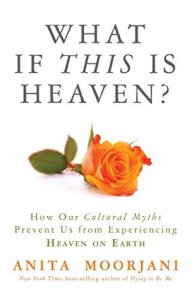 Anita Moorjani wrote her first book Dying to Be Me: My Journey from Cancer, to Near Death, to True Healing after being tracked down by the late Wayne Dyer, who’d come across her story on the internet and wanted to know more about what she had experienced on the day she had been expected to die but miraculously returned from stage four cancer to heal totally and live.
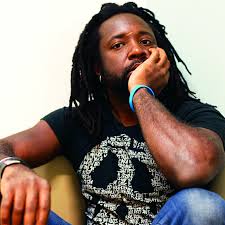
 Marlon James novel A Brief History of Seven Killings was the winner of the
  I can’t say I loved it, it was a tough read in places and definitely not the kind of book I would normally choose nor the kind of film/TV series I would watch, but it is an awe-inspiring creation and for that I agree, it is indeed an amazing oeuvre and warrants the 5 stars, though as far as favourite books go or works I’d recommend, I hesitate and would say its not an experience I would choose to repeat often.
 I was left admiring the creation even if it wasn’t always a particularly enjoyable ride and as my comment made to another reader below shows, the beach was actually a great place to read it!


 On the day when the nation is shocked and grieving after a devastating earthquake, that has destroyed entire villages and resulted in a significant loss of life, I don’t know how appropriate it is to share their literature, perhaps in the case of this particular novel, it serves to put things in perspective.
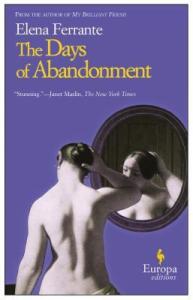 A national bestseller for almost an entire year, The Days of Abandonment shocked and captivated its Italian public when first published.


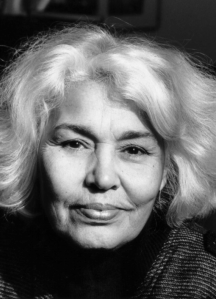
 From her early days, Firdaus was a child who was noticed, though rarely looked out for, instances of cruelty and neglect made up the patchwork of her childhood. “Rescued” by an Uncle who’d already crossed filial boundaries, her one respite was to have been sent by him to school, his new wife further insisting she live there, perhaps the only paradisiacal period of her life, the one time she was left alone to flourish, to evolve, gaining her secondary school certificate, her sole prized possession.
 Word by Word