Sugar by Bernice McFadden

I just love the way that right from the first pages Bernice McFadden’s characters jump off the page and in this case Sugar Lacey makes her grand entrance, dragging her suitcase, strutting through the small town of the deep south, Bigelow, Arkansas (1950’s) in her high heels, tight dress, brightly coloured wig and nonchalant attitude,  peering through the window of the hairdresser knowing that would be where all the talk happens, and on to number 10 Grove Street, her new abode, right next door to Pearl and Joe.

Sugar Lacey Vintage ClassicPearl has promised the Reverend to welcome this newcomer, but she wasn’t expecting the shock of seeing Sugar’s face and who it reminds her of, nor the sudden flurry of visitors who want to sit in her kitchen in case they get a peek at this unwelcome new resident, whom they’re so inquisitive of.

Was this the woman the Reverend spoke of? The woman Pearl had been asked to guide and help eventually lead into the flock? Was this her? This woman didn’t look like she’d ever spent a second in a house of worship, much less knew what one was. But there was something else too. A slither of something familiar that Pearl was yet to put her finger on.

When they do spot her, they’re certainly given more to talk about.

Sugar has grown up not knowing her family, raised by the three Lacey sisters before setting out and discovering how much tougher life is on your own. Pearl still hasn’t got over the loss of her daughter Jude and many things about her life, date from that moment, who she was before and who she is now.

When she finally plucks up the courage to go next door and introduce herself, she can’t herself from commenting on what she thinks is an unusual name, asking Sugar if that’s her nickname.

“No, that’s my Christian name. Why? Don’t you know sugar is brown first? White folks couldn’t stand the fact that something so sweet shared the same colour as the people who cut the cane, slopped the hogs and picked the cotton. So they bleached it to resemble them, and now they done gone and fooled everybody. You included.”

Pearl and Sugar develop an unlikely friendship, the one challenging the other to change perspective, enabling them both to meet somewhere in the middle, an improvement for both of them in the way they had been living their lives.

As we know, life never sits still, change and disruption often arrive uninvited and when they do Sugar must make a decision. The book closes with a few threads indicating that there could be more to come and indeed there is, Sugar being the first in the Sugar Lacey trilogy of novels.

In this wonderful debut novel, 20 years after being first published, now available in the UK, we encounter the enchanting, captivating and entertaining storytelling of Bernice McFadden, her unforgettable characters and the community that surrounds them.

McFadden is an author who I will happily read all her work, there’s something reliable and comforting when you sit down with one of her works, knowing you’re not going to want to put it down until it’s finished, but forcing yourself to do so, because you want the experience to linger.

The second novel This Bitter Earth will be published in the UK by Vintage Classics in August 2022 and sees Sugar leaving Bigelow and returning to her childhood home, where she learns the truth about her parentage: a terrible tale of unrequited love, of one man’s enduring hatred, and of the black magic that has cursed generations of Lacey women.

Bernice L. McFadden

Bernice McFaddenBernice L. McFadden is the author of ten critically acclaimed novels including Sugar, Loving Donovan, Nowhere Is a Place, The Warmest December, Gathering of Waters (a New York Times Editors’ Choice and one of the 100 Notable Books of 2012), and Glorious, which was featured in O, The Oprah Magazine and was a finalist for the NAACP Image Award.

Her most recent novel, Praise Song for the Butterflies (Jacaranda Books), was longlisted for the Women’s Prize in 2019. Sugar featured in the Richard and Judy Autumn 2021 Bookclub.

She is a three-time Hurston/Wright Legacy Award finalist, as well as the recipient of three awards from the BCALA. McFadden lives in Brooklyn, New York.

Other Works by Bernice McFadden Reviewed Here

Praise SongPraise Song For the Butterflies

– a visit to Ghana in 2007 where she met two women who told her about a rehabilitation centre and a tradition referred to as trokosi are the inspiration for this intriguing, excellent novel.

The Book of HarlanThe Book of Harlan

– one of my top reads of 2020, a truly immersive read, inspired by the lives of some of the authors ancestors and the little known history of Black Americans in Paris circa WWII.

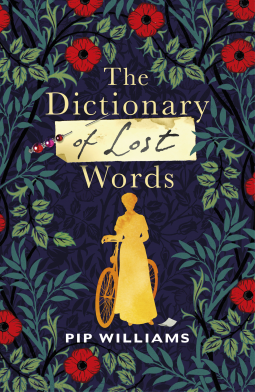
The Dictionary of Lost Words by Pip Williams

A historical fiction novel about words both entices and because of its popularity also made me hesitate.

Background

Scottish lexicographer Dr James Murray was the primary editor of the Oxford English Dictionary, published in 1884. The only word Dr Murray ever conceded had been overlooked was “bondmaid”, meaning a girl bound to serve without wages.

When author Pip Williams discovered this omission, the idea for her debut novel, The Dictionary of Lost Words, was born. Jenny Valentish, Guardian

Pip Williams Language Words DictionaryAnd so I dive in and find myself often using the dictionary feature on the kindle – yes there are a lot of lost words, or words that are no longer in common use, and one of the main words, and locations, the scriptorium had me confused right from the start – a tin shed where a few learned, self-important men are compiling the first edition of the Oxford dictionary? Even as I write these words, the spellcheck has underlined that word in red.

We are introduced to this place and the main character Esme as she is crawling around beneath the table in this scriptorium, we don’t understand a lot about why she is there, as her father appears to be raising her alone without childcare.

A slow build up in the early years, the pace picks up finally when Esme is old enough to go to town and meet a few unconventional women and hears new to her ears, ancient popular but unknown words, and when she meets Tilda, an actor and suffragette her vocabularly and life experience widen even further.

It is the late 1880’s, an era of slow progress, both on the dictionary and on the rights of women.

black and white book business close up

Photo by Pixabay on Pexels.com

Esme grows up and begins to work with her father, collecting “slips” and the necessary quotations, that give words the right to be part of this grand dictionary.

The problem being that much of a women’s world is left out, words that have existed, often for centuries, but have either not been written in any notable works or are deemed not appropriate for polite society. 

Esme has found her calling.

It’s an interesting journey through a particular period of history, though I found the character of Esme to be a little two-dimensional compared to some of the secondary characters and one of the characters appears mostly through letters, which rather than illuminate some of the mysteries in Esme’s life, just had me asking why this one character if she was so important to her life, wasn’t present. The story seemed to lose pace towards the end or perhaps just went on too long, as I began to lose interest.

There are moments of humour, but also predictability – in Esme’s 30’s her like of words pertaining to women and the poor are discovered by the villainous Dankworth, as the slips flutter to the floor, who should arrive but her literary knight (not yet in armour) Gareth, the compositeur. She ponders the words “manhandled, pillock and git”.

A slow consciousness raising and cast of characters across the class divine in Oxford, with the controlled compilation of the Dictionary at the centre of it.

Further Reading

Guardian Books: All words are not equal’: the debut novelist who’s become a lockdown sensation by Jenny Valentish

Lisa’s Review at ANZLitLover’s – a more passionate take on the history and the bias resulting from it being a virtually male endeavour

Guardian Review: A Gentle Hopeful Story 


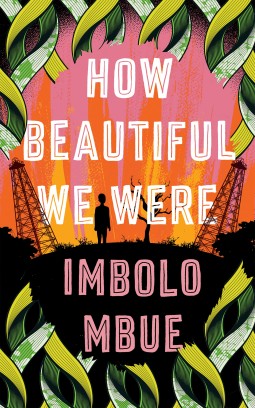
How Beautiful We Were by Imbolo Mbue

This was a brilliant read and the kind of cross cultural, reading journey I love.

Colonialism Capitalism Africa Cameroon Literary fictionImbolo Mbue takes you back to the fictional African village, Kosawa in the 1980’s. It could be in any number of countries, a fact acknowledged by naming her characters after real towns and cities.

She tells what should be a simple story, about how the village has been affected by the interventions of outsiders and those placed in power within their own country and the people’s attempt to seek and find justice.

Mostly the story is narrated through the multi-generational members of one family, of Thula and her brother Juba, their mother Saleh, grandmother Yaya, uncle Bongo and then the third person plural (we) of The Children, Thula’s age mates. It reaches back to the 1970’s and travels through to the current day.

Seeking Justice, Inviting Retribution

The issue the village initially attempts to address is the polluting of the river and air, resulting in the poisoning of the land, the destruction of their farming way of life and the deaths of too many of their children, since this latest American corporation Pexton, arrived and began drilling for oil.

Though the villages allowed the corporation to drill for oil, based on assurances that all would be more than well for them, they suspect their problems are due to contamination created by the activities of Pexton. The corporation deny all and their paid village representative tries to downplay the gravity of their losses. Continue reading

The Fire Next Time by James Baldwin

Delighted to pick this up at a book sale in the small French village of Ansouis recently, it contains two pieces previously published in other formats, brought together in this slim but powerful book, originally published in 1963, a period of time when he had returned from eight years living in Paris and before he returned to live in the south of France for the last 17 years of his life.

I have read one of Baldwin’s novels If Beale Street Could Talk (also made into a film in 2018) and listened to his 1965 impassioned speech in the historic debate between James Baldwin v. William F. Buckley Jr. at Cambridge University on the question: “Is the American Dream at the expense of the American Negro?“.

Letter to My Nephew

The Fire Next Time James BaldwinThe first ‘Letter to my nephew on the one hundredth anniversary of the emancipation’ entitled My Dungeon Shook originally appeared in the Progressive Madison, Wisconsin – a magazine known for its strong pacifism, championing grassroots progressive politics, civil liberties, human rights, economic justice, a healthy environment, and a reinvigorated democracy, is a letter to his 15 year old nephew James (who appears in a photo with his author Uncle on the cover of the book I read).

He shares with him what and who he sees in him, that comes from within the family, qualities that endear and those to be careful of, all from a place of deep love.

He writes to him too of his country and what it means to be of this country, to be black, to be at home in it despite all, to retain dignity and remember, to take inspiration from the long line of poets he comes from and remember one of them who said:

The very time I thought I was lost, My dungeon shook and my chains fell off.

A Letter to Me and You

The second is an essay Down at the Cross first appeared in the New Yorker as Letter from a Region of My Mind and is a wonderful talking through of his own development of self-awareness as he entered adolescence, describing how he and his peers came into a change that transformed girls and boys into something other and the refuges they seemed destined for, given how much beyond childhood wasn’t available to them.

He dissects his own choice to simultaneously seek refuge and revenge by going into the Church and the clarification it gave him, having seen beneath the veneer of that institution, while equally learning to use the tools it flexed to bring about an objective.

“I was saved. But at the same time, out of a deep, adolescent cunning I do not pretend to understand, I realized immediately that I could not remain in the church  merely as another worshipper. I would have to give myself something to do, in order not to be too bored and find myself among all the wretched unsaved of the Avenue. And I don’t doubt that I also intended to best my father on his own ground. Anyway, very shortly after I joined the church, I became a preacher – a Young Minister – and I remained in the pulpit for more than three years. My youth quickly made me a much bigger drawing card than my father. I pushed this advantage ruthlessly, for it was the most effective means I had found of breaking his hold over me. That was the most frightening time of my life, and quite the most dishonest, and the resulting hysteria lent great passion to my sermons – for a while. I relished the attention and the relative immunity from punishment that my new status gave me, and I relished, above all, the sudden right to privacy.”

He also speaks of his meeting and audience with Elijah Muhammad, then leader of the Nation of Islam, and analyses what he perceives of this man and their intentions, beyond the religious element.

america ancient architecture art

Photo by Pixabay on Pexels.com

It is noteworthy to consider this organisation that brought together religion and a population suffering from racism, when one thinks about the fact that most wars come about over religious difference, what terrible outcome might have occurred should they have been successful in the aim of their conversion, to make Islam the religion of Black American people, thus turning an issue of race into one of ideology.

“It is rare indeed that people give. Most people guard and keep; they suppose that it is they themselves and what they identify with themselves that they are guarding and keeping, whereas what they are actually guarding and keeping is their system of reality and what they assume themselves to be.”

Ultimately Baldwin’s message is one of love, for standing up for one’s rights, of dignity and the health of one’s soul, of our responsibility to life. His words seem as relevant today as they were at the time he wrote them.

“I am what time, circumstance, history, have made of me, certainly, but I am also, much more than that. So are we all.”  James Baldwin

Highly Recommended.

James Baldwin (1924-1987)

James_Baldwin_in_his_house_in_Saint-Paul_de_Vence

Baldwin at home in Saint Paul de Vence

James Baldwin was an essayist, playwright, novelist and voice of the American civil rights movement. His essays, collected in Notes of a Native Son (1955), explore intricacies of racial, sexual, and class distinctions in the society of the United States during the mid twentieth-century. 

An unfinished manuscript, Remember This House, was adapted for cinema as the Academy Award–nominated documentary film, the visual essay currently showing on Netflix (in France) I Am Not Your Negro (2016)

Other notable works include Go Tell It On The Mountain, Giovanni’s Room, Another Country, If Beale Street Could Talk.

Further Reading

Interview: Paris Review – The Art of Fiction James Baldwin talking with  Jordan Elgrably

New York Times: James Baldwin – His Voice Remembered; Life in His Language by Toni Morrison

LA Times: 30 Years After His Death James Baldwin Has Another Pop Culture Moment by Scott Timberg


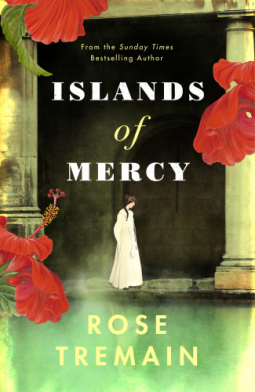
Islands of Mercy by Rose Tremain

“I have felt for years that there was much more to say about the psychic distance between west and east and those who tried to make that journey in the 19th century.” Rose Tremain

Islands of Mercy Rose TremainSet in late 1800’s Ireland, Bath, London and Borneo, this is the story of a community of people whose lives intersect in the town of Bath, a dual narrative of events concerning those who live there and the efforts of two men in Borneo with ambitions slightly at cross purposes.

As I reread Tremain’s quote above, and wonder about the journey’s taken by some of the characters, I realise the irony too in the different paths of what a journey west to east meant. For an ambitious woman travelled from Ireland to England and a man from England to Southeast Asia’s Malay archipalego.

The novel opens with the ambitious young woman Clorinda, who travels west to east, from Ireland to Bath, and after some months of work realising she is unlikely to raise her status to where she strives, she sells her family inheritance, a necklace of rubies, to purchase rooms she turns into a salon de thé, where society can mix and gather and she can listen and observe.

One afternoon she observes a couple in earnest conversation, until the young woman abruptly gets up to leave, having taken neither her tea or cake.

old temple facade reflecting in roman baths in england

Photo by Rachel Claire on Pexels.com

The young woman Jane, referred to by locals as ‘Angel of the Baths’ is the daughter of the esteemed Doctor Adeane and known for her therapeutic treatments and hands on healing that relieve the aches of the body, the pains of their souls, her voice of encouragement leading them to bathe in the waters of Bath.

The young man is Valentine Ross, also a Doctor, who works for her father. His brother, inspired by Darwin and passionate about nature, is on an expedition and has just arrived where the second part of the narrative takes place, seeking refuge with an Englishman Sir Ralph Savage, referred to as Rajah Sir on the island of Borneo, where he has gifted a parcel of land in return for favours to the Sultan of Brunei, built himself an impressive mansion and is infatuated by a local man Leon, who harbours ambitions of his own.

After this encounter with Valentine, Jane goes to London to spend time with her childless, unmarried, financially independent Aunt Emmilene, an artist. She is like a mother to Jane and it is during this visit that Jane discovers more of the essence of who she is, an aspect captured by her Aunt in a portrait she sits for. The events that unfold create a significant dilemma for Jane, that she must navigate.

The world, Jane already knew, reeked horribly of old, exhausted things. Day could follow day without a single original or exciting moment stirring her pulse. But now Aunt Emmeline – by far the most exceptional and independent person the Adeane family – was going to reveal something new.

brown bare tree on brown rock formation

Photo by Iqx Azmi on Pexels.com

Sir Ralph is intent on improving what the Creator has given him telling his lover that he wished to go down in history as one who had ‘enabled happiness’. Leon advises him to begin by building a road.

‘A road to where?’ Sir Ralph had asked.
‘Sir Raff,’ said Leon? ‘There is no “where” in Sarawak. There is only Nature. Men begin; Nature finishes.’
‘Then what is the point of the road?’
‘The point of the road is to try to be’.

The narrative in Borneo centres on the men and the colonial struggle, whether it’s to create manors and roads and capitalist ventures or chasing butterflies and being distracted by ruined goldmines. Regardless of their pursuits, there are warnings embedded in their endeavours and the risk of danger to those who are ignorant of the environment within which they operate.

At a certain point while reading, when I thought of all the female characters, and realised how strongly independent all of them were, and looked at the relationships they had to the men around them, I wondered if this novel was actually satire. For most of the yearning and longing is done by the male characters, the female characters are all strong and given the era and location, none of them sit around in parlours pining for suitors, they’re too busy creating their lives, working and supporting each other.

It highlights some of the issues of that era, but does so with a cast of characters that are not stereotypical, which makes it all the more interesting to read, because it defies expectation and presents an alternate scenario by focusing on those who defy convention, transgressing this straight-laced, Victorian society daring to live in ways outside mainstream society and getting away with it.

One of the more shocking historical revelations was the mention of the Private Member’s Bill entitled the Married Woman’s Property Act, a measure to address and reverse the fact that though an unmarried woman could inherit, by law, as soon as she married any property automatically was transferred to her husband.

At one point there is a conversation between Jane and her friends in London, where they discuss literature, a french author’s novel is set in a morgue and asks a lot of the reader, not least a strong stomach, they note there is nothing like it in England.

The French and the Russians are the only writers who follow a dark road like this one. Because they have no fear of scandal, no fear of fear. They show human life in all its difficulty. And they know that readers are wolves.
‘Wolves? I have never thought of them like that. Do you think Miss Austen’s readers are wolfish?
‘Yes, Even they. They tear at the flesh of her stories. They love to see the wicked punished or humiliated. Do we not gloat when Fanny Price rejects Henry Crawford in Mansfield Park?

It was an enjoyable read, albeit at times perplexing, because I kept asking myself questions about what the author was doing, when I realised and read more closely the difference in attitudes and dialogue of the male versus female characters. It had this daring and thought provoking intention, that didn’t quite come off in its execution, so there many moments of reader satisfaction. In a brilliant review in the FT, Natalie Whittle describes it exactly:

“In Islands of Mercy, Rose Tremain seizes the traditional image of a cautiously celibate Victorian England and blasts it with a suite of women for whom transgression leads neither to emancipation nor to damnation. Her female characters live spontaneously, sometimes dangerously, but they are not alone in making spirited sexual choices. And, in an act of pleasing literary reversal, it is a “fallen” man who leaves the country in desperate exile. These are the strengths of what is otherwise a problematic narrative, split neatly but strangely into two streams, one in Bath and the other in Borneo.” Natalie Whittle, FT

Further Reading

FT Review: Islands of Mercy by Rose Tremain — Victorian transgressions

Review: by Lisa at ANZLitLovers

Transcendent Kingdom by Yaa Gyasi

Yaa Gyasi’s debut novel Homegoing was my One Outstanding read of 2017, and it was a book I initially avoided as it was the subject of much hype and expectation, which can cloud our ability to discern. However it was exactly the kind of book I love, thought provoking, taking the reader outside of their own culture but showing how the threads of an earlier culture have influenced where they are today.

wp-1631377083656.jpgIn a sense that too is at the heart of Transcendent Kingdom, a family from Ghana immigrate to the US, the mother, the father (who the narrator, the daughter Gifty, the only one of the family born in the US, refers to as Chin Chin man), and their son Nana. Though they leave their country behind, something of remains in them, and though they are determined to ascend in their new country, it comes at a price.

I wanted her stories to about her life in Ghana with my father to be filled with all the kings and queens and curses that might explain why my father wasn’t around in terms far grander and more elegant than the simple story I knew. And if our story couldn’t be a fairy tale, then I was willing to accept a tale like the kind I saw on television, back when the only images I saw of Africa were those of people stricken by warfare and famine. But there was no war in my mother’s stories, and if there was hunger it was of a different kind, the simple hunger of those who had been fed one thing but wanted another. A simple hunger, impossible to satisfy.

Gifty is a sixth year PhD student studying neuroscience, observing mice in order to better understand the role of the brain and neural circuitry in relation to the desire for and restraint of reward-seeking behaviour. In other words, the tendency towards addiction or depression.

To know that if only I could understand this little organ inside this one tiny mouse, that understanding still wouldn’t speak to the intricacy of the comparable organ inside my own head. And yet I had to try and understand, to extrapolate from that limited understanding in order to apply it to those of us who made up the species Homo sapiens, the most complex animal, the only animal who believed he had transcended his Kingdom…

The narrative moves back and forth in time, in the present she works in a lab, while at home her mother stays in bed all day. This is not the first time her mother has succumbed, so memories of the first time return and the events that lead up to the disappointment(s) that became too much. Only now their roles have reversed.

The question I was trying to answer…was: Could optogenetics be used to identify the neural mechanisms involved in psychiatric illnesses where there are issues with reward seeking, like in depression, where there is too much restraint in seeking pleasure, or drug addiction, where there is not enough?

medication pills on yellow background

Photo Anna ShvetsPexels.com

The novel also explores the controversial American opioid issue, how what begins in innocence can lead to devastating consequences. The inspiration behind the science of the novel comes from the work of Yaa Gyasi’s best friend as she shares in the acknowledgments and in the interview below.

‘At the time of writing, the opioid crisis was being reported on near-daily. I found the reporting to be very moving and willing to look at the effects, not only on the people with addiction but the families, too. It was the first time we were seeing an interrogation of the role of pharmaceutical companies in creating this crisis. I wanted to add my voice to the chorus but from the perspective of a black family.’

Though Gifty is focused on the science on what has afflicted her family, she is reluctant to observe or consider her own behaviour, her difficulty in forming relationships or allowing people to get close to her, the consequence of having lived through trauma.

While she pursues the science and looks for a logical answer to her question, she considers the role of faith. Because science doesn’t explain the feelings of shame, of anger, of hatred, self-loathing.

“What is prayer?” my mother asked?
This question stumped me then, stumps me still. I stood there, staring at my mother, waiting for her to give me the answers. Back then, I approached my piety like I did my studies: fastidiously.

It’s a thought provoking novel of seeking to understand human behaviour, of the propensity “to try to make order, make sense, make meaning of the jumble of it all” and to find a way to seek solace and refuge from it all.

Though it took me a little while to get into it, there was a turning point where it began to click and become more than just a story, where the interconnecting threads became apparent. An enjoyable read and follow up to her impressive debut.

Yaa Gyasi

Yaa GyasiYaa Gyasi was born in Mampong, Ghana and raised in Huntsville, Alabama. Her first novel, Homegoing, was a Sunday Times and New York Times bestseller, won the National Book Critics Circle Award for Best First Novel and was shortlisted for the PEN/Robert W. Bingham Prize for Debut Fiction.

In 2017 Yaa Gyasi was selected as one of Granta’s Best of Young American Novelists and in 2019 the BBC selected her debut as one of the 100 Novels that Shaped Our World. Transcendent Kingdom was shortlisted for the Women’s Prize for Fiction 2021. She lives in Berkley, California.

Further Reading

Women’s Prize Shortlist Interview + Reading: ‘I couldn’t imagine having a life where books weren’t important’: Yaa Gyasi on her Inspirations (Interview Begins at 27:30)

Interview : Paris Review: We Take Everything with Us: An Interview with Yaa Gyasi By Langa Chinyoka

U.S. Department of Health and Human Services: What is the U.S. Opioid Epidemic?

A Town Called Solace by Mary Lawson

I came across this author by chance having seen another of her books reviewed and after a period of not reading, her novel(s) sounded like something I’d quite enjoy as a way back in to reading. There were comparisons made to Anne Tyler, of whom I’ve read and reviewed a couple of novels here Ladder of Years and A Blue Spool of Thread, however having now finished I would say this offers much more beneath the surface of plot.

Booker Prize 2021 Mary Lawson CanadaWhat I wasn’t expecting was to then see this novel long listed for the Booker Prize a short while after I requested it. Doubly intrigued, as this is the only book on that list I have, I began to read.

I loved it.

Not only was it the good choice I had expected for my own personal reasons, it exceeded my expectations in so many ways.

The title is both intriguing and promising and the cover, the way it zooms in on the house in a way that shows little else around it, is such an apt metaphor for the three lives it focuses on, those three windows into their worlds, and the three time sequences it immerses in to portray them.

A character driven mystery that explores boundaries and trust, the characters and their voices are superbly portrayed, they are like closeups, snapshots of little action, complex inner worlds, all of whom have been tilted in some way and are in the process of finding their upright, their wings even; yet there is a clear, interlinked story that ties them together keeping the reader engaged and the plot moving forward at a good pace.

I came to think of these three characters, Mrs Orchard (Elisabeth), the grown up child and previous neighbour of Mrs Orchard, now adult (Liam), and 8 year old current neighbour of Mrs Orchard (Clara), as depicting narratives of past, present and future, that overlap.

When the story begins we meet Clara standing at the window of her house, watching obsessively, waiting for her sister Rose (16) who has run away from home. She is waiting for any sign of her return and is disturbed to see a strange man carrying boxes into Mrs Orchards home next door.

The Inner Journey (Anti-hero)

Rose having gone missing may appear to some as the central drama, however each of the three characters are embarking on their own inner quest that this drama brings to light. Rose and her parents are not central characters, and the mystery of Rose’s disappearance is not allowed to take over the narrative.

This may prove to frustrate some, so tuned in are we to the more dramatic story pushing in to take centre stage. Here, the larger than life character, though involved in the more dangerous narrative, is made into a secondary character, kept at a distant. It’s the Penelope versus Odyseuss dynamic again, as recently depicted in Brenda Lozano’s excellent Loop.

More than disturbed, Clara is anxious because she has the keys to the house to enable her to feed the cat Moses while Mrs Orchard is in hospital. She’d promised she wouldn’t be gone long. Through Clara’s perspective we observe how confusing childhood can be when adults put so much effort into lying and withholding truth from them. In reality, they are extra sensitive to everything outside of and beyond words, cues that enable them to feel truths, therefore making them mistrust adults, whose words deny their truth.

But she had been away long, she’d been away weeks and weeks. Clara had run out of cat food several times and had to ask her mother for money so that she could go and buy some more. (This was before Rose disappeared, when everything was normal and Clara could go wherever she liked.) She’d expected Mrs Orchard to be more reliable, and was disappointed in her. Adults in general were less reliable than they should be, in Clara’s opinion, but she’d thought Mrs Orchard was an exception.

The Lying Life of Adults

wood rooftop building construction

Photo by Renato Rocca on Pexels.com

Clara doesn’t know this yet, but Liam remembers what it was like to be that child and he is the one adult who doesn’t lie to her. But in order to gain her trust, he will be required to step outside his own comfort zone and finds himself getting involved in a community and the lives of people he had no intention of knowing. In the midst of his own mid-life crisis, this unexpected event had given him a welcome distraction, however he had planned to stay 2 weeks and leave.

By six in the evening, nightmarish northern roads notwithstanding, he was walking up the steps of Mrs Orchard’s porch, with Toronto, his career and his marriage behind him.
And now, not much more than twelve hours later, somewhat dazed and very short of sleep, he was sitting in a strange house, which he happened to own, trying to explain it all to a cop.

In an entertaining subplot to his story, his effort to fix a leaking pipe under a sink miraculously leads to him to become the builder’s labourer, in on of those familiar scenarios of “well in order to fix that, first we’re going to have to fix the roof and unfortunately…”

‘How much is all this going to cost?’

‘Materials and labour. Biggest cost is labour, but with you working for free I’ll knock a third off that.’

Liam’s narrative happens ahead of Mrs Orchard’s and Clara’s narrative occurs ahead of Liam’s. It is so subtle and yet so clever as it creates a kind of mystery within the individual story of each character. So we sometimes read of the same event later from a different perspective.

Angelic Attendants

Elisabeth is in hospital (in the past because in the present we know she has already passed away) and her narrative uses the second person (You) as she is speaking to her dead husband (of many years now), who is very present for her, a sign to the reader of how close to her own passing is likely to be. As she speaks to her husband, she is recalling a period many years ago when the boy Liam lived next door with his family. Little clues drop indicating that something happened, something only Elisabeth now remembers.

Times without number I have asked myself how it could have come to that. Now, from a distance thirty years I can see the answer clearly: little by little.

The writing is superb and atmospheric, the structure is sophisticated and yet flows with ease you could read this and be completely unaware of it. The individual voices of the characters are pitch perfect and atmosphere created, remarkable. The drama is understated yet palpable and the mundane slowly gets filled with intrigue and curiosity was the layers are revealed. And it made me laugh out loud – often, little surprises and a fabulous last laugh for the closing scene.

I don’t know if this will make the shortlist but I totally understand why it has been nominated. I’m excited to read more of her work, because this was brilliant.

Highly Recommended.

Mary Lawson, Author

Mary LawsonMary Lawson was born and brought up in a small farming community in southwestern Ontario and moved to England after graduating from McGill University with a degree in psychology.

She is the author of three previous nationally and internationally bestselling novels, Crow Lake, The Other Side of the Bridge, and Road Ends. Crow Lake was a New York Times bestseller and was chosen as a Book of the Year by The New York Times and The Washington Post, among others. The Other Side of the Bridge was longlisted for the Booker Prize.

Further Reading/Listening

Q & A Interview: In conversation with novelist Mary Lawson by Kobo

Video Interview: Reader Meets Writer, Wiley Cash interviews Mary Lawson on A Town Called Solace

N.B. Thank you kindly to the publisher Random House UK for providing a copy for review via Netgalley.

shallow focus photography of gray cat in box

Photo E.Grossgasteiger on Pexels.com

The Old Drift by Namwali Serpell (Zambia)

I read this over a period of four weeks in a group read along in July.

wp-1629985501548..jpgIt is a vast tome, that traverses generations and continents, though the thing that connects them all is the country Zambia.

The novel is book-ended by brief chapters entitled The Falls and The Dam. It begins near the infamous Victoria Falls in an area five miles above the Falls on the banks of the Zambezi River, where it’s deepest and narrowest and easiest for ‘drifting’ a body across the other side.

Here there was an old colonial settlement that came to be known as The Old Drift and an old drifter caught up in an event that sets off the intertwined narrative.

“This is the story of a nation — not a kingdom or people — so it begins, of course, with a white man.”

Split into three sections, within which there are three characters in each, from three parts of a family tree. The Grandmothers, The Mothers, The Children.

It is a sprawling saga by nature of crossing that many generations, though the stories narrow and overlap by the time it comes to the children, the differences between them nothing like the generations before them.

Drifting Across Genre

The Old Drift Namwali Serpell

Zambezi River at the junction of Namibia, Zambia, Zimbabwe and Botswana

Its a novel that also crosses genre beginning in a colonial era with European settlers, and the women they brought with them, the secrets they kept, the way they live, what is expected of them.

I enjoyed reading the first part of Sibilla and Agnes and I liked that the chapters were structured that way, that we were reading of the three grandmothers, that we knew this ahead of time.

It felt comforting to be reading inside this known framework, (for such a vast book), so while there were many characters, these women orient the reader.

While reading a section I could hold on to who the characters were however as the sections changed it was often necessary to refer back to the family tree. I enjoyed the first two sections and though I was forewarned that the ending was going to cross genre, it felt somewhat disconnected to the earlier sections and I found myself reluctant to pick it up at times.

In an interview the author when asked about this genre crossing responded that “these collisions are at the heart of the creative process.”

waterfalls

Photo Jonny Lew on Pexels.com

I wondered if it was because I read it over the course of a month, but reading weekly commentary in the ReadAlong group discussing the book, it seems many had a similar issue with the change of pace and narrative direction of the latter part of the novel. Like the river itself, the narrative drifts and wanders, swirls and eddies, then changes pace as it moves towards that vast precipice, converging for the final spill.

“with a sprawling cast that springs from Zambia, England and Italy. Over the course of three generations, Serpell follows historical figures and fictional characters as they converge on Lusaka, drawing them closer into each others’ orbit through independence in 1964, the HIV/Aids epidemic and on into a near future filled with mosquito drones and revolution” – extract from an interview with Richard Lea, Guardian

Further Reading

A Helpful Review: NPR The Old Drift’ Takes The Long View Of Human (And Mosquito) History

Interview:  Guardian Richard Lea speaks to Namwali Serpell The Old Drift ‘As a young woman I wasn’t very nice to myself’

Booker Prize Longlist 2021

Though it was announced at the end of July I wasn’t paying attention during my busy summer, but before the short list is announced on September 14, I wanted to share the long list and short summaries of the titles, as this is often where we might find something that appeals.

The panel of judges this year includes historian Maya Jasanoff (Chair), writer and editor Horatia Harrod, actor Natascha McElhone, twice Booker-shortlisted novelist and professor Chigozie Obioma, and writer and former Archbishop Rowan Williams.

I haven’t read any of the titles but I do have a copy of Mary Lawson’s A Town Called Solace, which I thought looked like a light read that I might enjoy.

“Readers of every taste and every kind of interest will find something on this list. What we tried to do was hear what the books had to say to us. We find what marks all of these books is a really distinctive voice. Some of them are very lyrical, some of them are very spare, but there is a kind of deliberate quality and attention to the writing in each of these books that makes them really distinct and special.”  Maya Jasanoff, Chair of Judges

Below are the 13 novels long listed.

A Passage North, Anuk Arudpragasam (Sri Lanka) (Granta Books)

A Passage North Anuk ArudpragasamA Passage North begins with a message from out of the blue: a telephone call informing Krishan that his grandmother’s caretaker, Rani, has died under unexpected circumstances. The news arrives soon after an email from Anjum, an impassioned yet aloof activist Krishnan fell in love with years before while living in Delhi, stirring old memories and desires from a world he left behind.

As Krishan makes the long journey by train from Colombo into the war-torn Northern Province for Rani’s funeral, so begins an astonishing passage into the innermost reaches of a country. At once a powerful meditation on absence and longing, and an unsparing account of the legacy of Sri Lanka’s thirty-year civil war, this procession to a pyre ‘at the end of the earth’ lays bare the imprints of an island’s past, the unattainable distances between who we are and what we seek.

Written with precision and grace, Anuk Arudpragasam’s novel attempts to come to terms with life in the wake of devastation, a poignant memorial for those lost and those still alive.

Second Place, Rachel Cusk, (UK/Canada) (Faber)
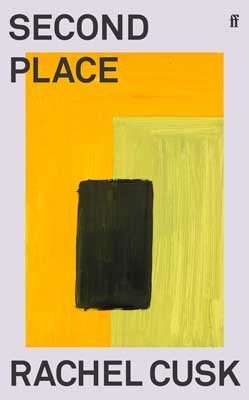
Second Place Rachel CuskA woman invites a famed artist to visit the remote coastal region where she lives, in the belief that his vision will penetrate the mystery of her life and landscape. Over the course of one hot summer, his provocative presence provides the frame for a study of female fate and male privilege, of the geometries of human relationships, and of the struggle to live morally between our internal and external worlds.

With its examination of the possibility that art can both save and destroy us, Second Place attempts to affirm the human soul, while grappling with its darkest demons.

The Promise, Damon Galgut, (South Africa) (Chatto & Windus)
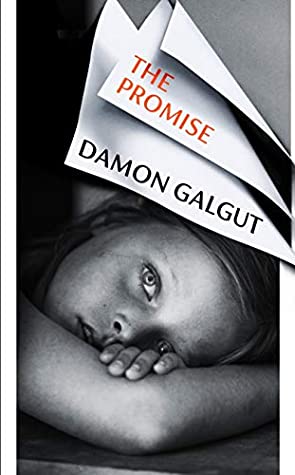
The Promise Damon GalgutThe Promise charts the crash and burn of a white South African family, living on a farm outside Pretoria. The Swarts are gathering for Ma’s funeral. The younger generation, Anton and Amor, detest everything the family stand for, not  least the failed promise to the Black woman who has worked for them her whole life. After years of service, Salome was promised her own house, her own land… yet somehow, as each decade passes, that promise remains unfulfilled.

The narrator’s eye shifts and blinks: moving fluidly between characters, flying into their dreams; deliciously lethal in its observation. And as the country moves from old deep divisions to its new so-called fairer society, the lost promise of more than just one family hovers behind the novel’s title.

In this story of a diminished family, sharp and tender emotional truths hit home.

The Sweetness of Water, Nathan Harris (US) (Tinder Press)
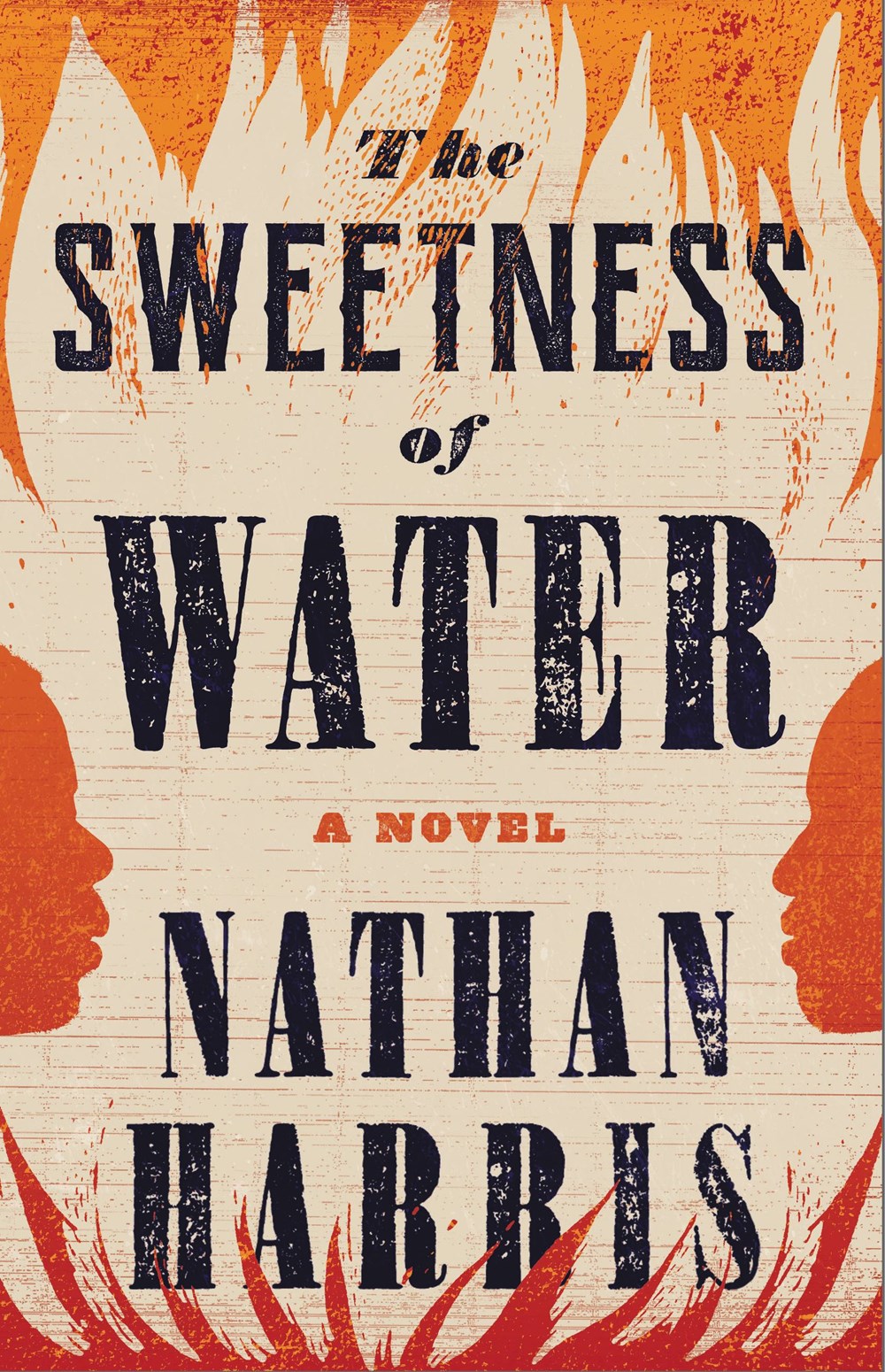
The Sweetness of Water Nathan HarrisIn the dying days of the American Civil War, newly freed brothers Landry and Prentiss find themselves cast into the world without a penny to their names. Forced to hide out in the woods near their former Georgia plantation, they’re soon discovered by the land’s owner, George Walker, a man still reeling from the loss of his son in the war.

When the brothers begin to live and work on George’s farm, tentative bonds of trust and union begin to blossom between the strangers. But this sanctuary survives on a knife’s edge, and it isn’t long before the inhabitants of the nearby town of Old Ox react with fury at alliances being formed a few miles away.

Conjuring a world fraught with tragedy and violence yet threaded through with hope, The Sweetness of Water is a debut novel unique in its power to move and enthrall. An Oprah pick for her July book club and on Barack Obama’s summer reading list.

Klara and the Sun, Kazuo Ishiguro (UK) (Faber)

Klara and the Sun Kazua IshiguroFrom her place in the store, Klara, an Artificial Friend with outstanding observational qualities, watches carefully the behaviour of those who come in to browse, and those who pass in the street outside. She remains hopeful that a customer will soon choose her, but when the possibility emerges that her circumstances may change for ever, Klara is warned not to invest too much in the promises of humans.

In Klara and the Sun, Kazuo Ishiguro looks at our rapidly-changing modern world through the eyes of an unforgettable narrator to explore a fundamental question: what does it mean to love? Also on Barack Obama’s summer reading list.

An Island, Karen Jennings (South Africa) (Holland House Books)
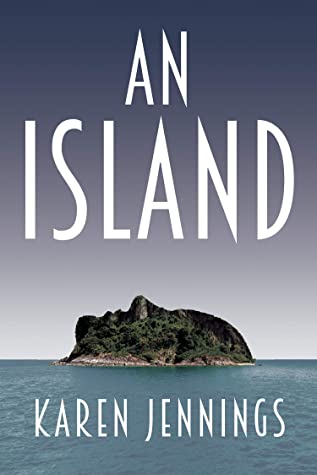
An Island Karen JenningsSamuel has lived alone for a long time; one morning he finds the sea has brought someone to offer companionship and to threaten his solitude…

A young refugee washes up unconscious on the beach of a small island inhabited by no one but Samuel, an old lighthouse keeper. Unsettled, Samuel is soon swept up in memories of his former life on the mainland: a life that saw his country suffer under colonisers, then fight for independence, only to fall under the rule of a cruel dictator; and he recalls his own part in its history. In this new man’s presence he begins to consider, as he did in his youth, what is meant by land and to whom it should belong. To what lengths will a person go in order to ensure that what is theirs will not be taken from them?

A novel about guilt and fear, friendship and rejection; about the meaning of home.

A Town Called Solace, Mary Lawson (Canada) (Chatto & Windus)

A Town Called SolaceClara’s sister is missing. Angry, rebellious Rose had a row with their mother, stormed out of the house and simply disappeared. Eight-year-old Clara, isolated by her distraught parents’ efforts to protect her from the truth, is grief-stricken and bewildered. Liam Kane, newly divorced, newly unemployed, newly arrived in this small northern town, moves into the house next door – a house left to him by an old woman he can barely remember — and within hours gets a visit from the police. It seems he’s suspected of a crime.

At the end of her life Elizabeth Orchard is thinking about a crime too, one committed thirty years ago that had tragic consequences for two families and in particular for one small child. She desperately wants to make amends before she dies. Set in Northern Ontario in 1972, A Town Called Solace explores the relationships of these three people brought together by fate and the mistakes of the past. By turns gripping and darkly funny, it uncovers the layers of grief and remorse and love that connect us, but shows that sometimes a new life is possible.

No One is Talking About This, Patricia Lockwood (US) (Bloomsbury Circus)

Noone Is Talking ABout ThisA woman known for her viral social media posts travels the world speaking to adoring fans, her entire existence overwhelmed by the internet — or what she terms ‘the portal’. Are we in hell? the people of the portal ask themselves. Who are we serving? Are we all just going to keep doing this until we die?

Two texts from her mother pierce the fray: ‘Something has gone wrong,’ and ‘How soon can you get here?’ As real life and its stakes collide with the increasing absurdity of the portal, the woman confronts a world that seems to contain both an abundance of proof that there is goodness, empathy and justice in the universe, and a deluge of evidence to the contrary.

Sincere and profane, No One Is Talking About This is a love letter to the infinite scroll, a meditation on love, language and human connection from an original voice of our time.

The Fortune Men, Nadifa Mohamed (Somalia/UK) (Viking, Penguin)

The Fortune Men Nadifa MohamedMahmood Mattan is a fixture in Cardiff’s Tiger Bay, 1952, which bustles with Somali and West Indian sailors, Maltese businessmen and Jewish families. A father, a chancer, a some-time petty thief, he is many things but not a murderer.

So when a shopkeeper is brutally killed and all eyes fall on him, Mahmood isn’t too worried. It is true that he has been getting into trouble more often since his Welsh wife Laura left him. But Mahmood is secure in his innocence in a country where he thinks justice is served.

It is only in the run-up to the trial, as the prospect of freedom dwindles, that it will dawn on Mahmood that he is in a terrifying fight for his life — against conspiracy, prejudice and the inhumanity of the state. Under the shadow of the hangman’s noose, he begins to realise that the truth may not be enough to save him.

Bewilderment, Richard Powers (US) (Hutchinson Heinemann)

Bewilderment Richard PowersTheo Byrne is a promising young astrobiologist who has found a way to search for life on other planets dozens of light years away. The widowed father of an unusual nine-year-old, his son Robin is funny, loving and filled with plans. He thinks and feels deeply, adores animals and spends hours painting elaborate pictures. On the verge of being expelled from third grade for smashing his friend’s face with a metal thermos, this rare and troubled boy is being recommended psychoactive drugs.

What can a father do or say when his son wants an explanation for a world that is clearly in love with its own destruction? The only thing for it is to take the boy to other planets, all the while fostering his desperate campaign to help save this one.

China Room, Sunjeev Sahota (UK) (Harvill Secker)
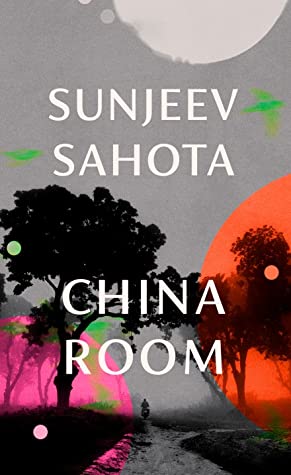
China Room Sunjeev SahotaMehar, a young bride in rural 1929 Punjab, is trying to discover the identity of her new husband. She and her sisters-in-law, married to three brothers in a single ceremony, spend their days hard at work in the family’s ‘china room’, sequestered from contact with the men.

When Mehar develops a theory as to which of them is hers, a passion is ignited that will put more than one life at risk. Spiralling around Mehar’s story is that of a young man who in 1999 travels from England to the now-deserted farm, its ‘china room’ locked and barred. In enforced flight from the traumas of his adolescence — his experiences of addiction, racism, and estrangement from the culture of his birth — he spends a summer in painful contemplation and recovery, finally finding the strength to return home. Partly inspired by the author’s family history it explores how systems of power affect individual lives and the human capacity to resist them.

Great Circle, Maggie Shipstead (US)(Doubleday)

Great Circle Maggie ShipsteadIn 1920s Montana, wild-hearted orphan Marian Graves spends her days roaming the rugged forests and mountains of her home. When she witnesses the roll, loop and dive of two barnstorming pilots, she promises herself that one day she too will take to the skies.

Years later, after a series of reckless romances and a spell flying to aid the British war effort, Marian embarks on a treacherous flight around the globe in search of the freedom she craves,  never to be seen again.

More than half a century later, Hadley Baxter, a troubled Hollywood starlet beset by scandal, is  drawn to play Marian Graves in her biopic, a role that leads her to probe the deepest mysteries of the vanished pilot’s life.

Light Perpetual, Francis Spufford (UK)(Faber)

Light Perpetual Francis SpuffordLunchtime on a Saturday, 1944: the Woolworths on Bexford High Street in South London receives a delivery of aluminum saucepans. A crowd gathers to see the first new metal in ages—after all, everything’s been melted down for the war effort. An instant later, the crowd is gone; incinerated. Among the shoppers were five young children.

Who were they? What futures did they lose? Inspired by real events, written in luminous prose,  the author reimagines the lives of five souls as they pass through the extraordinary changes of the twentieth-century London.

*  *  *  *  *

That’s it, the 13 books that make up the Booker’s dozen, chosen from 158 submissions. Are there any that jump out at you, that look interesting?

I’m intrigued by Sri Lankan author Anuk Arudpragasam’s novel, I’m always going to be more interested in stories that are set within another culture and I recall wishing to read his first novel, though I never did. Bewilderment seems to be receiving unanimously high praise by those who’ve had the chance to an early copy, but I really have no idea what will make the short list, watch this space to find out!

“Many of them consider how people grapple with the past—whether personal experiences of grief or dislocation or the historical legacies of enslavement, apartheid, and civil war. Many examine intimate relationships placed under stress, and through them meditate on ideas of freedom and obligation, or on what makes us human.”
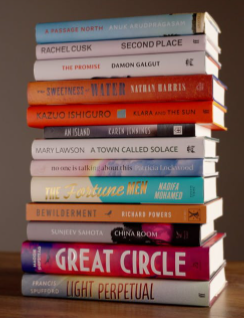
Booker Longlist 2021

Waiting for the Waters to Rise by Maryse Condé (2021) tr. Richard Philcox

This story (originally published in French in 2010 as En attendant la montée des eaux) follows the character of Babakar, a Doctor from Segu, Mali who delivers babies. In the opening chapter while it pours with rain outside, he is called to attend a birth of a young woman he does not know but recognises, who does not survive the birth. Understanding that the man who accompanies her Movar, is not the father, he claims the baby as his own, seeing it as a sign, a return.

It does occasionally trouble him, what he has done and sure enough, one day Movar returns and tells him of the promise made to the young mother, to return her child to her family in Haiti, from where she had fled. The novel begins in Guadeloupe and moves to Haiti, while also travelling to other places through the backstories of the adjacent characters.

Waiting For the Waters to Rise Maryse CondeThough the story follows Babakar, each time we encounter a new character, there is this digression into their backstory(s), so we learn of all these male characters stories, Babakar (in Mali and the often present apparition of his mother Thécla Minerve), Movar, (in Haiti) Fouad (in Lebanon, though being Palestinian he dreams of the poetry of Mahmoud Darwich) who all come together in Haiti, and underlying the visit, this search to find family and learn why the young mother had fled.

Although the story is about the search for Anais’s (the baby) family, for all that this is an employed man raising a young baby on his own, she was remarkably absent, as were her carers, creating a bit of a disconnect, considering the entire motivation for this grand journey was supposedly her well-being, or the pursuit of this promise. The baby seemed to pose no great inconvenience, which seemed strange, the story centred solely on the male characters.

With so much of the novel told in backstory, there was a lot of ‘telling’ and I found myself reading over parts of those narratives quite quickly as they didn’t seem to progress or relate to the story itself. Perhaps there was something universal in the stories of the three main men, in the collapse of their earlier lives that found them seeking solace in each others company, but it didn’t work for me as well as I had hoped.

The family that Anais came from had its own complicated history and political associations, but was less in the foreground.

It was interesting, having just read Love, Anger, Madness: A Haitian Trilogy by Marie Vieux-Chauvet, to be back in Haiti and to understand more of the references and pick up on the atmosphere of the location, the unpredictability and quasi-fear around certain people, never quite knowing if they are safe or not and that metaphor of the title, suggesting disaster not far off.

close up water drop photography

Photo by PixabayPexels.com

As the novel came to a close, those waters began to rise and there is yet another opportunity to enter into an interesting story as the two characters make a plot direction changing decision and enter into an aspect of the story we will never know. And what about the baby, I wonder, not for the first time?

Maryse Condé is a Guadeloupean author writing in French, the author of many novels including the historical fiction masterpiece Segu and I, Tituba Black Witch of Salem.

She remains a favourite author and I’m looking forward to reading more of her work, last year’s Crossing the Mangrove was just brilliant as were her childhood essays in Tales from the Heart: True Stories from My Childhood.