Loop by Brenda Lozano tr. Annie McDermott

wp-1629982535768..jpgI picked up Loop for WIT (Women in Translation) month and I loved it. I had few expectations going into reading it and was delightfully surprised by how much I enjoyed its unique, meandering, playful style.

It was also the first work of fiction I have read, after a nine week pause, while I have been working on my own writing project, so its style of short well spaced paragraphs, really suited me. I highlighted hundreds of passages, an indicative sign.

Change. Unlearning yourself is more important than knowing yourself.

It was helpful to listen to the recent Charco Press interview linked below to understand that it is a kind of anti-hero story, inspired by her thinking about The Odyssey’s Penelope while her lover Odysseus is off on his hero’s quest – of the inner journey of the one who waits, the way that quiet contemplation and observation also reveal understanding and epiphanies.

Odysseus, he of the many twists and turns. Penelope, she of the many twists and turns without moving from her armchair. Weaving the notebook by day, unravelling it by night.

Penelope and OdysseusThe narrator is waiting for the return of her boyfriend, who has travelled to Spain after the death of his mother.

His absence coincides with her recovery from an accident, so she has a double experience of waiting, a greater opportunity to observe the familiar and unfamiliar around her, to see patterns, imagine connections, dream and catastrophise.

Childhood is so uncertain, so distant. It’s almost like childhood is the origin of fiction: describing any past event over and over to see how far away you are getting from reality.

And then there is her quiet obsession with notebooks, with the ideal notebook, another subject that evolves in her pursuit of it. It’s thought provoking, funny, full of lots of literary and musical references, which I enjoyed listening to while reading and quite unlike anything else I’ve read. And a nod to Proust. The dude.

I was left with a scar. I think telling stories is a way of putting a scar into words. Since not all blows or falls leave marks, the words are there, ready to be put together in different ways, anywhere, anytime, in response to any fall, however serious or slight.

Random observations over time create patterns and themes, eliciting minor epiphanies.
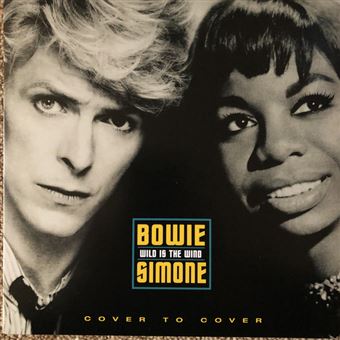
Wild-Is-The-WindA celebration of the yin aspect of life, the jewel within. And that jewel of a song, sung by both David Bowie and Nina Simone, Wild is the Wind.

…the present is also, as its name suggests, a gift. It doesn’t suggest longing or loss. It’s just a present, a gift, a time with no strings attached which is totally ours, to use however we want, however we please. There are days when I find the future overwhelming, with all the bright lights and commotion.

I highly recommend it if you enjoy plotless narratives that make you think and see meaning in the ordinary. And relate to the little things.

Dwarf things. Small things. Little things in relation to the norm. Insignificant things. Things with different dimensions. Curiously, the stories I like the most are made up of trivialities. Details. Trifles. These days, people look to what’s big. The big picture, big sales figures, success. Bright lights, interviews, breaking news. Whatever’s famous. Importance judged by fame. Maybe small things are subversive. Living on a modest scale compared to the norm. Maybe the dwarf is the hero of our time.

Brenda Lozano Author LoopBrenda Lozano is a novelist, essayist and editor. She was born in Mexico in 1981.

Her novels include Todo nada (2009), Cuaderno ideal (2014) published in English as Loop and the storybook Cómo piensan las piedras (2017). Her most recent novel is Brujas (2020).

Brenda Lozano was recognized by Conaculta, Hay Festival and the British Council as one of the most important writers under 40 years of age in Mexico and named as one of the Bogotá 39, a selection of the best young writers in Latin America.  She also writes for the newspaper El País.

Further Information

On Charco Press’s Instagram IGTV page there is a video interview with Brenda Lozano for WIT Month where she speaks about the process of translation as a part of the art of writing, about her influences as she wrote Loop and about how she has taken the story of Penelope and Odysseus as inspiration.

Don’t be alarmed if this isn’t going anywhere. Don’t expect theories, reliable facts or conclusions. Don’t take any of this too seriously. That’s what universities are for, and theses, and academic studies. Personally, I like cafés, bars and living rooms. Not to mention comfortable cushions. So nice and cosy.
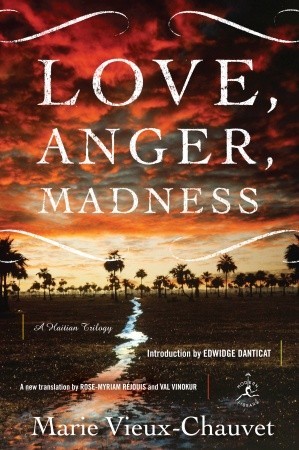
Love Anger, Madness by Marie Vieux-Chauvet tr. Rose Myriam-Réjouis, Val Vinokur

A Haitian Trilogy – Introduction by Edwidge Danticat

Love Anger Madness Marie Vieux ChauvetOriginally published in French as Amour, colère et folie, this trilogy of novellas was originally suppressed upon its initial publication in 1968. Seen as a scathing response to the struggles of race, class and sex that had occurred in Haiti, this major work became an underground classic, would send its author into exile and would finally be released in an authorised edition in France in 2005 (this English version in 2009).

Considered by Edwidge Danticat as the cornerstone of Haitian literature, she opens her introduction telling us that “Fewer than a handful of Haitian writers have, both while alive and dead, inspired as much adulation, analysis, and discussion as Marie Vieux-Chauvet.”

Born in Port-au-Prince in 1916, Marie Vieux-Chauvet was a member of the “occupation generation”, that is, born a year after the United States invaded Haiti, an occupation that would last 19 years. She would use the turmoil of that rebellion as the back-story for Love, the first novella of the trilogy.

“We have been practicing at cutting each other’s throats since Independence,” she writes of the country we Haitians like to remind the world was the first black republic in the Western Hemisphere, home to the only slave revolt that succeeded in producing a nation. What we would rather not say, and what Claire Clamont and Marie Vieux-Chauvet are brave enough to say, is that this same country has continued to fail at reaching its full potential, in part because of foreign interference and domination, but also because of internal strife and power struggles.

In three distinct novellas it unflinchingly manages to condemn totalitarianism and tyranny, with little care of the consequences, an act of courageousness or recklessness, but one that would make a significant and permanent mark in the chronicles of Haitian literature.

Love

The narrator of Love, Claire Clamont, is the eldest of three daughters, of a landowning upper-class family. She is the son her father never had and he wishes her to runs things as he would have them done. However, he hasn’t reckoned on her stubbornness and refusal to affiliate with some of the old ways he indulges, having raised her to think of them as superstitious. As a result she is neither feared nor respected by the workers, whom he had sold parcels of land to fund his political campaigns, a futile effort that has left the family near penniless.

The three sisters of this aristocratic family live together, all coveting the same man, Felicia’s husband. Annette succeeds in seducing him, Claire silently, voyeuristically encouraging her.

Meanwhile, a man sent to reform Haiti is known to use violent, torturous means to get his message across, preying on the innocent.

The love this elder daughter practices is tinged with jealousy, revenge and resentment, laying blame at the feet of an ancestor with dark skin. She resents this ancestor who made her so, resents her father for trying to turn her into the son he never had, resents one sister for marrying a man she loves and the other for having seduced him.

Anger

Anger centres around a family and the day a group of black uniformed paramilitary seize their land, putting stakes in the ground, the grandfather and the young disabled grandson are indignant, the son and his wife wary and afraid, their older daughter Rose is practical, the young adult son Paul going crazy, desires revenge.

Men arrive and plant stakes in the ground of land belonging to a family, they wear black uniforms and invoke fear. Each of the family inside react. Then the concrete arrives. They’re seizing the land and building a wall.

The family is observed, tries to address the injustice, is compromised.

The mother got up slowly, put down her needlework, walked over to the old man and spoke into his ear.

“Look at him, Grandfather,” she whispered, “just look at him.”

The child was clenching his fists and grinding his teeth.

“Who will flog those who have taken our land?” he said without paying any attention to the mother. “Is there no longer a steward who can do it?”

“Alas, no!” the grandfather answered.

“Why not?”

“Because there are ups and downs in the life of a people. As the arrow rises, it gives birth to heroes; when it falls, only cowards come into the world. No steward would agree to stand up to those who have taken our land.”

He told himself that his crippled and sickly grandson was the faint beginning of the next era of heroes and that the arrow had begun its slow ascent only eight years ago. Hundreds more must have come into the world the same time he did, he thought, and with feet and legs as well as a brave soul. A day will come when they will grow up and the birds of prey will have to account for their deeds to every last one of them.

Madness

Madness is narrated by René, a lower class mulatto poet hiding inside his shack, paranoid about what’s going on outside his door and inside his mind, finding solace in a bottle, in rituals to do with voodoo beliefs that most of his life he has rejected and the poet friends he fearfully opens his door to, to offer them refuge. Unclear, what is real and what is the projection of a man’s fearful mind, we read on, aware that under oppression anything is possible.

A thought provoking read that invites the reader to understand more about the historical and present situation in Haiti.

Marie Vieux ChauvetMarie Vieux-Chauvet was a Haitian novelist, poet and playwright, the author of five novels including Dance on the Volcano, Fonds des Negres, Fille d’Haiti and Les Rapaces.
Her works focus on class, color, race, gender, family structure and the upheaval of Haitian political, economic and social society during the United States occupation of Haiti and the dictatorship of François Duvalier. She died in New York in 1973.

Further Reading

Permanent Exile: On Marie Vieux-Chauvet

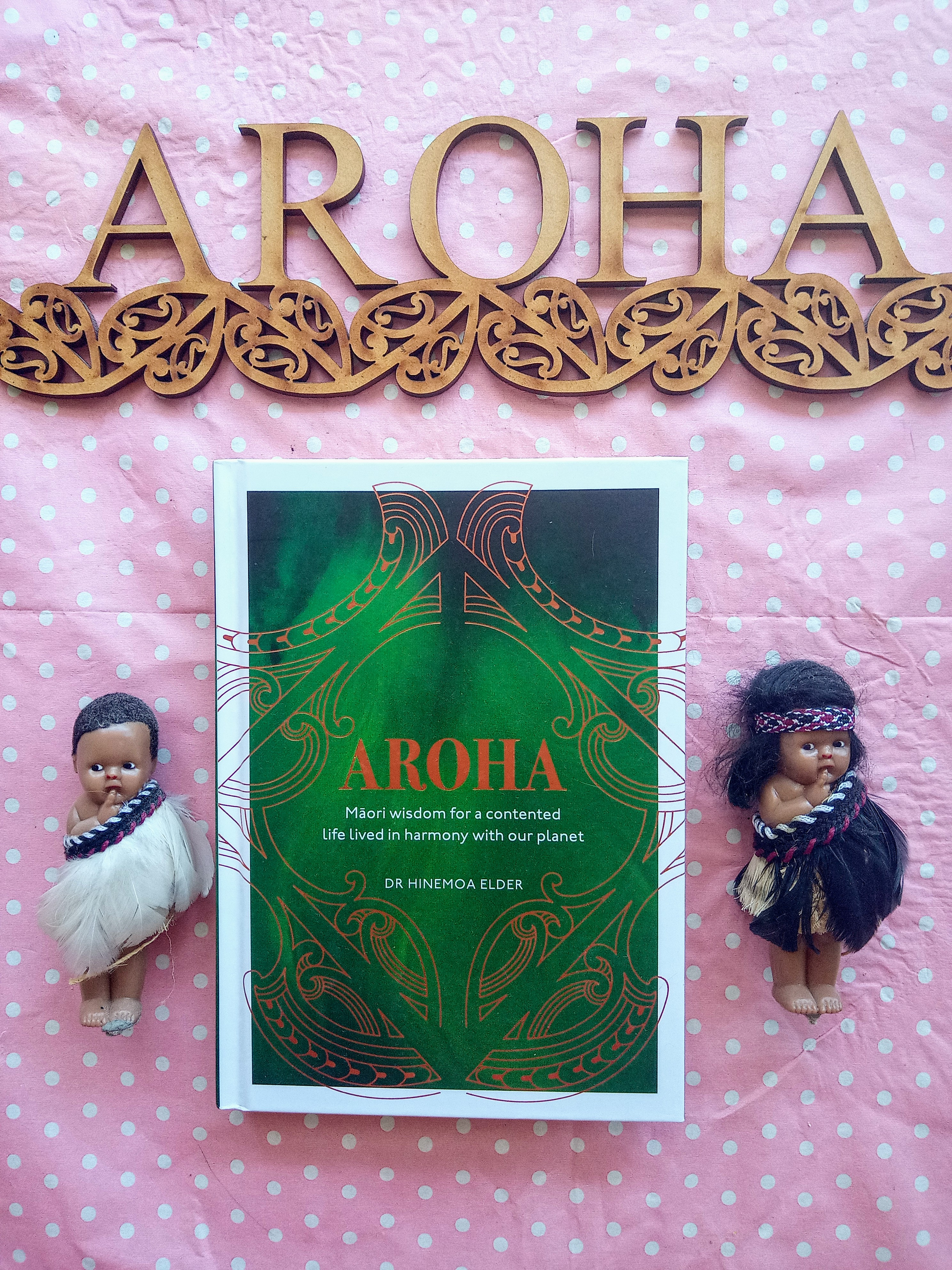
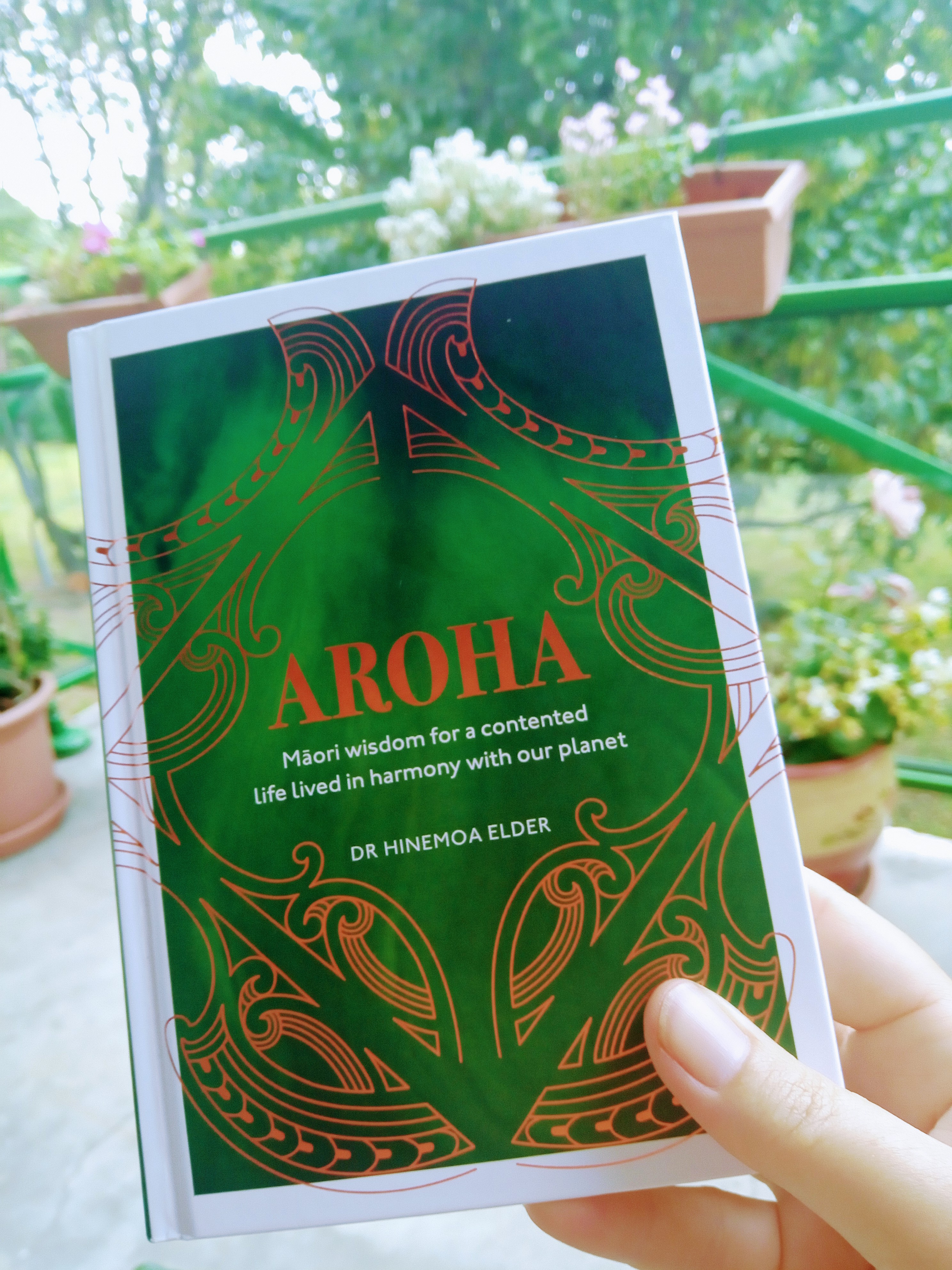
Aroha by Hinemoa Elder

Ancient Voyagers, An Oral Storytelling Culture

Recently I read and shared my thoughts on Christina Thompson’s, Sea People, a non fiction collection of historical explorations of the Pacific and various attempts to recreate the voyages of the ancient navigators of Polynesia. It finishes with the exhilarating re-enactment of a 2,500 mile canoe voyage led by a descendant, using non-instrument navigation, proving what many Europeans had seen the result of but denied was possible in such challenging seas.

Some of the most challenging journeys were made by the Maori on their ocean going waka canoes, carrying them across Te-Moana-nui-a-Kiwa, the Pacific Ocean to New Zealand, the most southern point of the Polynesian triangle. And it is from this culture that another descendant, Hinemoa Elder shares some of their ancient wisdom through a modern day interpretation, finding meaning and encouraging others to find theirs too.

Maori wisdom for a contented life lived in harmony with our planet

Aroha is the Maori word for love, but look a little deeper and we learn that it is a concept, described by Hinemoa Elder as a deeply felt emotion and way of thinking that encompasses love, compassion, sympathy and empathy.

Aroha Maori Wisdom Hinemoa Elder

A compound word, ‘Aroha’ includes the parts Aro, Ro, Hā, Oha.  Words that contribute additional layers of meaning:

ARO is thought, life principle, paying attention, to focus on, to face or front
RO is inner, within, introspection
HA is life force, breath, energy
OHA is generosity, prosperity, abundance, wealth

This little book of Maori proverbs and wisdom is an attempt to reconnect to the wider meaning of an ancient word.

They are called whakatauki and are a way to connect to the words of Maori ancestors, an oral history passed down.

a portal, a doorway into the ancient, sacred energy of aroha, the timeless wisdom of Maori culture.

They provide insight and can be interpreted by the reader, offering an alternative perspective with which to look at the world and a reminder of our connection to nature and our duty to care for her abundant resources that are under threat. 

Aroha Hinemoa ElderThere are 52 whakatauki, one for every week of the year and it’s a book that can either be read through or dipped in and out of randomly. The sayings are grouped into four themes, each one explained at the outset of that section and further inspired by toi whakairo, the Maori art of carving:
  • Manaakitanga – te aroha ki te tangata

care, respect and kindness towards other and ourselves

  • Kaitiakitanga – te aroha ki a Papatunuku

love for our world

  • Whanaungatanga – te aroha ki nga hononga

empathy and connection between people

  • Tino rangatiratanga – te aroha ki te tika

the pursuit of what is right, self-determination

Many of the proverbs refer to nature, the sea, the forest, observations of how it is, that we can think about and reflect on in our own lives.

Hinemoa Elder translates the saying literally, then offers an alternative in English that better reflects her own interpretation of it. She then writes a two or three page conversation-like reflection on what it brings to mind for her. Some of them like this one below, have the kernel of a myth inside them, combining story and nature to bring a lesson.

wp-1624958913074.jpg4. 

Ko te Mauri,

he mea huna

ki te moana.

The life force is hidden in the sea.

Powerful aspects of life are hidden in plain sight.

This refers to an ancestor who cast his traditional feathered cloak into the sea, a treasure, that is still there, out of sight, said to signify the ongoing presence of those that have gone before and to the hidden gifts that reside within us, that we have forgotten, that can be awakened with a little effort and reflection. You can reclaim them.

Remember your hidden powers, your true self, and bring it into the light.

There are many more to discover, it is a very easy read, full of nuggets of cultural wisdom and it is especially good for young people to read,  clearly having been written and partly inspired by her encounters with youth.

Highly Recommended.

The Female Archangels by Claire Stone

Reclaim Your Power with the Lost Teachings of the Divine Feminine

the female archangels Claire StoneAlongside everything else I like to read and as you may have noticed on this blog, there is a section called Spiritual Well-Being, these are the books that I often have at least one of on my bedside table.

They are like a night time vitamin, or a daytime source of empowerment, most definitely in the feel good category and often offering practical solutions or alternative ways to perceive common life situations and issues.

The Young Scotsman Who Empowers Through Angels

I’ve been a fan of Kyle Gray’s writings on the subject and when this recent volume came to my attention, with its focus on 11 of the female archeia, at the dawn of the age of Aquarius, as the divine feminine aspect is rising, I jumped at the chance to read it.

We are astrologically positioned on the cusp of the Aquarian Age (a 2,160 year cycle) which makes this the perfect time to get to know the female archeia. This is a prophesised time of the feminine rising back into her power. BY healing your life and restoring your sacred feminine essence, you’ll receive a head-start in smoothly adjusting towards the new paradigm of the great shift.

I have my own personal relationship with a few of the archangels and this was like an invitation to a gathering, to get to know a few more, for my own self-healing and self-empowerment.  I wondered why I hadn’t been aware of this focus on the female archangels before, and it seems they too have been wiped out of history, like the voices and wisdom and narratives of so many women. They didn’t fit into the way our cultures have been conditioned, thus becoming invisible.

As was extensively outlined in Riane Eisler’s The Chalice and the Blade (1987) and the more recent Nurturing Our Humanity, How Domination and Partnership Shape Our Brains, Lives, and Future by Riane Eisler and Douglas Fry (2020), we have been living under a societal system of domination predicated on force and fear.

We rush, we push and force. While these qualities serve us well at times, it’s not natural to be int his state constantly. Knowing when to slow, to surrender and wait are qualities of the feminine. A balance of both allows us to embrace life fully while taking time to ‘smell the roses’.

Inspiration for living can come from numerous sources and there is something both nourishing and nurturing about these new feminine energies and possibilities that resonates and connects us with something within that has waiting for this, they can lead us but the real benefit comes from our own active participation in using the various tools to listen, see and follow the guidance that comes from within and in seeking to connect with and support others to create harmony. 

Eleven Female Super Energies to Cultivate In You

The eleven archangels that Claire Stone shares in her book, are just a few of the many, her personal favourites.  They each align with other systems that some may be familiar with, such as the chakra/energy system, gemstones, both of these provide clues as to the characteristics that she can assist with. It doesn’t require a belief system on the contrary, this is something that is easier to work with when belief systems and conditioning have been or are in the process of being dismantled, and an open mind cultivated.

ArcheiaTwin Flame
Lady Ariel – Root ChakraArchangel Raziel
Lady Amethyst – Third Eye ChakraArchangel Zadkiel
Lady Aurora – Solar Plexus ChakraArchangel Uriel
Lady Charity – Heart ChakraArchangel Chamuel
Lady Christine – Crown ChakraArchangel Jophiel
Lady Faith – Throat ChakraArchangel Michael
Lady Haniel – Sacral ChakraArchangel Nathaniel
Lady Hope – Sacral ChakraArchangel Gabriel
Lady Mary – Heart ChakraArchangel Raphael
Lady Shekinah – Earth Star ChakraArchangel Sandalphon
Lady Seraphina – Stellar Gateway ChakraArchangel Seraphiel
Female Archangels Claire Stone

Fotografierende @Pexels.com

On her website, she has even created a simple quiz that you can participate in to see which archangel, might be of assistance to us right now, or you can just read through the eleven and intuitively see who you are drawn towards. Rather than tell you about any of them, I would encourage you to find out yourself, by initially taking the quiz.

Take the Quiz

Which Female Archangel Can Accelerate Your Growth? 

There are suggested rituals or meditations you can follow or create yourself. These can be adapted to suit your own particular practice, they are excellent for creative inspiration and provide a focus that moves us away from thinking about a situation, into actively doing something symbolic that can transform the energy around it and alter our perception and boost our inherent intuition in a way that is healthy and healing.

It thought it was excellent. I began reading it as an e-book and when I realised how much of a reference it was, I bought a print copy and look forward to reading it again and focusing on the two that stood out for me that I want to work with.

Claire Stone is a Hay House UK author, and holistic practitioner of many therapies, designed to equip participants with resources and technique to reawaken their gifts and empower themselves.


Sea People by Christina Thompson

In Search of the Ancient Navigators of the Pacific

Growing up in rural/coastal New Zealand and being immersed in Maori culture from the age of 5-12, the myths, legends, stories, cultural practices have always resonated with me.

Perhaps because I was so young, or because there was a clear connection to the landscape and environment that rang true, the geography of New Zealand was part of the mythology, that curious blend of enchantment and reality; it made sense to a child.

Sea People In Search of Ancient Navigators of the PacificA Polynesian Connection and Resonance

I read Sea People not so much out of that European curiosity to discover where people originated from, but for the familiarity of that “way of seeing” through the oral tradition of storytelling, of describing things from where I see and what I see around me, not from the lofty heights of above looking down.

My curiosity in all honesty, lay too in wondering if a woman’s perspective and approach might be different.

As the number of oral cultures in the world has diminished, interest in them has grown, and one of the most intriguing questions is whether there might be such a thing as an ‘oral way of seeing’, a  worldview common to oral peoples that might be different in some generalizable way from the worldview of people in cultures with writing.

I loved it.

Like her own mixed family, the author Christina Thompson straddles the masculine/feminine, Polynesian/European aspects and shares something that goes back over all the approaches to Polynesia from the earliest eyewitnesses of 1521 to the brilliant modern day reconstructions of Polynesian canoes, that set sail with a crew of experimental voyagers, trained in the old non-instrument methods of navigation, to re-enact the voyages of the ancient Polynesians.

map-polynesia-frontThe Polynesian Triangle is an area of ten million square miles, defined by the three points of Hawai‘i, New Zealand and Easter Island. All the islands inside this triangle were originally settled by a clearly identifiable group of voyagers: a people with a single language and set of customs, a distinctive arsenal of tools and skills, and a collection of plants and animals that they carried with them wherever they went.
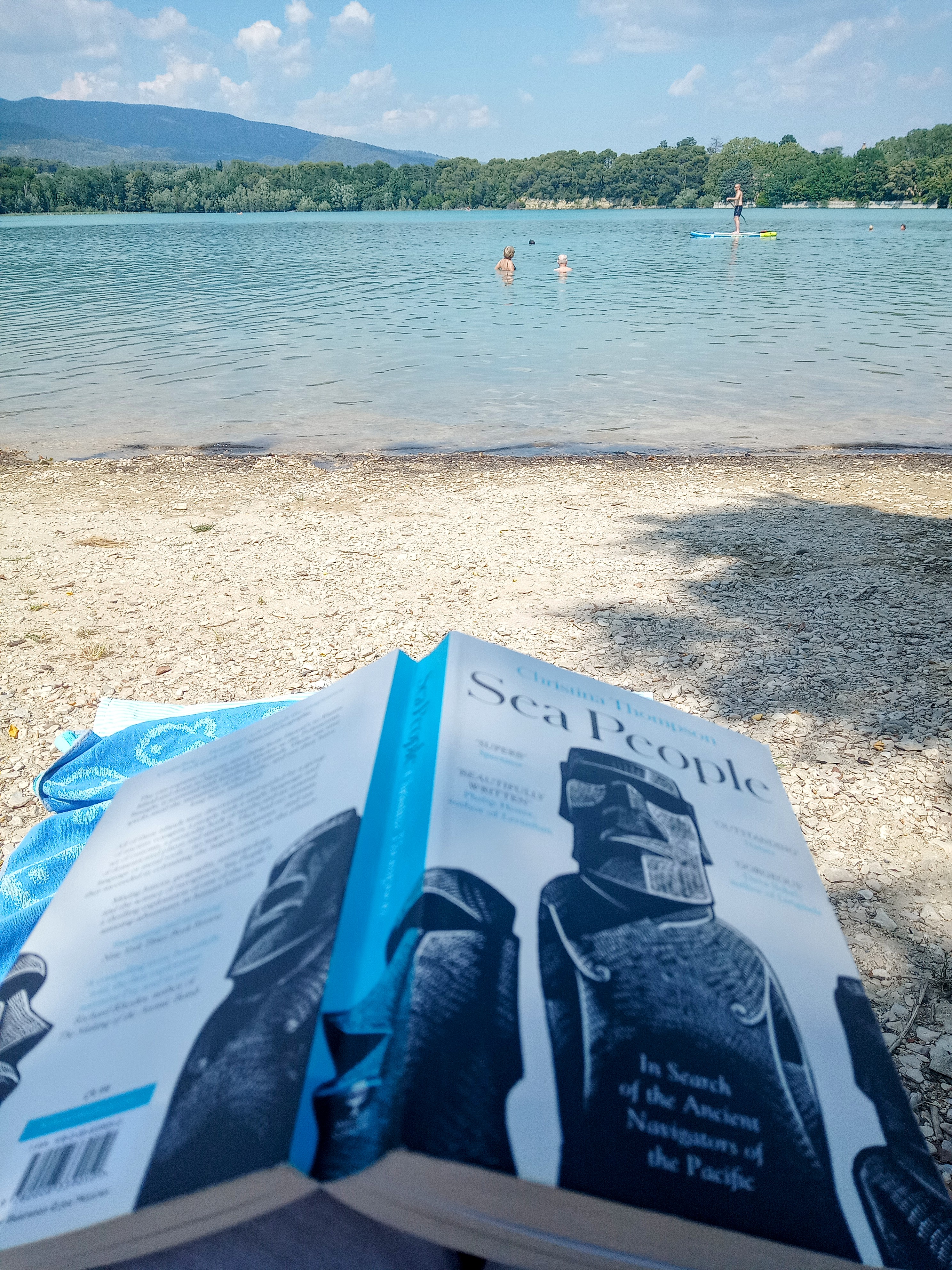
Sea People tells the story of these remarkable voyagers and of the many people—explorers, linguists, anthropologists, folklorists and navigators—who have puzzled over their astonishing history for more than three hundred years.

There is a reason the remote Pacific was the last place on Earth to be settled by humans: it was the most difficult, more daunting even than the deserts or the ice.

cottages in the middle of beach

Photo by Julius Silver on Pexels.com

Written in six parts, chronologically, we follow the thinking of the different eras, immersing in the exploration and research studies of the time, travelling through all the speculation, attitudes, reverence and mystery of a very Eurocentric enquiry, until recent times when those of Polynesian heritage themselves, as decolonization and indigenous rights movements were gaining strength worldwide, demanded representation and respect in these constant intellectual probings.

The first parts look at the various European explorations, their intentions, their reception, discoveries and the kind of records they kept about they witnessed. It also shows the difference in their encounter(s) when they befriend and take a Polynesian navigator with them, bridging a cultural divide, that had often resulted in violence previously.

Much has been made in histories of the Pacific about the problem of observer bias. Early European explorers saw the world through lenses that affected how they interpreted what they found. The Catholic Spanish and Portuguese of the sixteenth century were deeply concerned with the islanders’ heathenism; the mercantile Dutch, in the seventeenth century were preoccupied with what they had to trade; the French, coming alone in the eighteenth century, were most interested in their social relations and the idea of what constituted  a “state of nature”.

Part Three looks at some of the stories the Polynesians told about themselves and the difficulty their European visitors had in understanding and interpreting them.

Europeans and Polynesians, it would seem, had very different ideas about the purpose of narratives and the relative meanings of “falsehood” and “truth”.

The Polynesian Art of Non-Instrument Navigation

For me that was the highlight of the literary journey, when Nainoa Thompson, a young Hawaiian, did all he could to learn the old ways, studying the stars, the winds, reading the waves and ocean swells, the imagined island, all the techniques known that had been passed down, to navigate like the ancient mariners, great ocean distances with nothing but what nature offered to guide them.

And in the face of disbelief by all the European sceptics who’d come before, unable to embrace the paradigm of this ancient skill, they succeeded, using practical sea voyaging, no computer simulation or dusty pottery references or annals of research; a brilliant touch of reality and reaching back through the generations of ancestry.

It was a stunning achievement. Without maps or charts or instruments or recording devices, without even paper and pen, an apprentice navigator – the first from Hawai’i in at least half a century – had piloted a canoe more than 2,500 miles, spanning more than thirty-five degrees of latitude.

A wonderful history and a beautifully accessible read. While it is inevitably limited due to being addressed from within those same structures that European exploration came from, and written by an outsider (albeit married to someone from the region), it provides a valuable insight into that outsider view and representation of centuries of exploration.

It will lead very nicely on to my next read, appropriately, the inside view from Dr Hinemoa Elder in her book of Maori wisdom, Aroha.

Sea People Christina Thompson

Christina Thompson

A dual citizen of the United States and Australia, she was born in Switzerland and grew up outside Boston and spent a decade living in Australia. Since 2000 she has been the editor of Harvard Review and teaches writing at Harvard University Extension. She lives outside Boston with her husband and three sons.

Sea People won the 2020 Australian Prime Minister’s Literary Award, the 2020 Victorian Premier’s Literary Award, and the 2019 NSW Premier’s General History Award. Her first book, Come on Shore and We Will Kill and Eat You All, was a finalist for the 2009 NSW Premier’s Literary Award and the 2010 William Saroyan International Prize for Writing.

Further Reading/Listening

NPR Interview: ‘Sea People’ Examines The Origins And History Of Polynesia by Ilana Masad

Read More Co: Author Interview: Christina Thompson

The Mermaid of Black Conch by Monique Roffey

Read Caribbean Book of CinzJune is Caribbean Heritage Month in the US, held to recognise the many contributions they have made, so not surprisingly, it has been picked up by Book of Cinz to create awareness for Caribbean Literature, Caribbean Authors and Authors from Caribbean Heritage for readers, encouraging us all to discover and read more of their works.

The Contemporary Caribbean Woman Writer, Keeping Ancestral Connections Alive

I have a fondness of Caribbean women writers and in years past I have reviewed a number of books by the Guadeloupean author Maryse Condé. Crossing the Mangrove  was one of my favourite reads in 2020.

Jamaica Kincaid is another author I admire and her novel The Autobiography of My Mother was an Outstanding Read of 2015. There is something special in the way they writer inter-generational stories, even when some have immigrated, there remains a connection between women in families, even those who have passed, that they have a particular way of expressing that I find magical, as they address themes of identity, belonging and familial connection.

Mythology and Colonisation

It seems that they have developed their own history, mythology, use of language and tradition and not only are they connected to the African diaspora, there is the effect and influence of colonisation, something that both takes away from their essence and has woven itself into their thinking, they can neither rid themselves of it or embrace its legacy.

mermaid of the black conch Monique RoffeyThe Mermaid of Black Conch is an excellent example of the intersection of those effects and her well drawn characters each possess something of that heritage and complication.

Monique Roffey uses a Neo-Taino (people who inhabited the Caribbean 2000 years before the Christian era) legend of a woman transformed into a mermaid, having been cursed by jealous women due to her beauty and effect on men as the foundation of a contemporary story, when this ancient mermaid is captured by an opportunistic and exploitative American man and his son in a fishing competition.

A local fisherman David sings to himself awaiting his catch and the ancient mermaid Aycayia first appears to him. The story is told in part through his journals and in part through the poetic songs of the mermaid and a third person narrative.

She looking like a woman from long ago, like old time Taino people I saw in a history book at school. She face was young and not pretty at all and I recognise something ancient there too. I saw the face of a human woman who lived centuries past, shining at me.

David feels guilty when he hears of the mermaids capture knowing that she has become familiar with his presence. He blames himself for her capture and decides to intervene knowing nothing good will come of her being taken by men not from the island.

Trophy Hunting

photo of man fishing

Photo by William McAllister on Pexels.com

The man who captured her insists she is a fish and has destructive, misogynistic intentions, while his son, whom he had brought with him in the hope of father-son bonding, is appalled but ineffective in stopping him, as are the other men on the boat.

They are a reminder of the many who came before them exploiting the islands natural resources, wishing to claim her bounty as their own.

Uncomfortable yet uncaring, violence and violation has become normalised and the suggestion that she may be worth millions renders them all complicit.

David’s original plan to release her is thwarted as she transforms into a woman, but with few of the skills necessary to survive and he is afraid of people finding out he had sheltered her. He tries to gain her trust, but she is wary of men.

She’d changed his comprehension of what it was to be human. An intuition pestered him that they had met before, that he’d even been searching for her, out there, by those jagged rocks off Murder Bay.

Settler Colonialism and Land Ownership

Miss Arcadia Rain, another island inhabitant lives in the biggest house on the island with her deaf son Reggie. She is local, white and a landowner; she keeps herself distant from the population, though she is as much a part of it as them all. The bay area was her inheritance, it is both her joy and a burden something she struggles to reconcile.

The Rain family had owned almost the whole of St Constance, since 1865, a generation after slavery time. The estate was mostly rainforest high up in the hills, but it came down to St Constance and the bay.

The mermaid becomes friends with Reggie and the two use sign language, to communicate; the friendship brings David and Miss Rain together as they try to figure out what to do.

humpback whale in ocean water on sunny day

Photo: Stefanie Klenner @ Pexels.com

Inevitably there is another jealous woman, and the ill-meaning cackle of those who long ago cursed Aycayia can be heard, as strange things happen on the island making it clear that she is unlikely to be able to stay.

The story explores love, loss, separation, the destructiveness of female jealousy, the ease and allure of male corruption and the repercussions of one family possessing ownership of most of the land in a community.

Although the mermaid is the oldest inhabitant, she is seen as an outsider and her presence brings out the good and the bad in the community, exposing its cracks.

It’s a thought -provoking read and an interesting portrayal of a community living under the influence of its historical past and that influences the behaviour of contemporary inhabitants.

The Mermaid of Black Conch was the 2020 winner of the Costa Book Award, with another Caribbean author Ingrid Persaud winning the Debut Fiction Prize for Love After Love.

Further Reading

The Observer: The Mermaid of Black Conch by Monique Roffey review – a fishy tale of doomed womanhood by Anthony Cummins

Do you have a favourite Caribbean novel?

Breath by James Nestor

The New Science of a Lost Art

I stumbled across this book almost by accident, in a conversation with a client about the importance of the breath to regulate health. I’d been practicing a version of the Lion’s Breath to balance a throat chakra (energy centre) issue and I had become aware of the power of the breath and mantra combined.

Another client had shared after being able to resume swimming training, “Do you know what the best thing about getting back in the pool and training is? The deep breath.” Upon hearing this anecdote, the first client returned with this book.

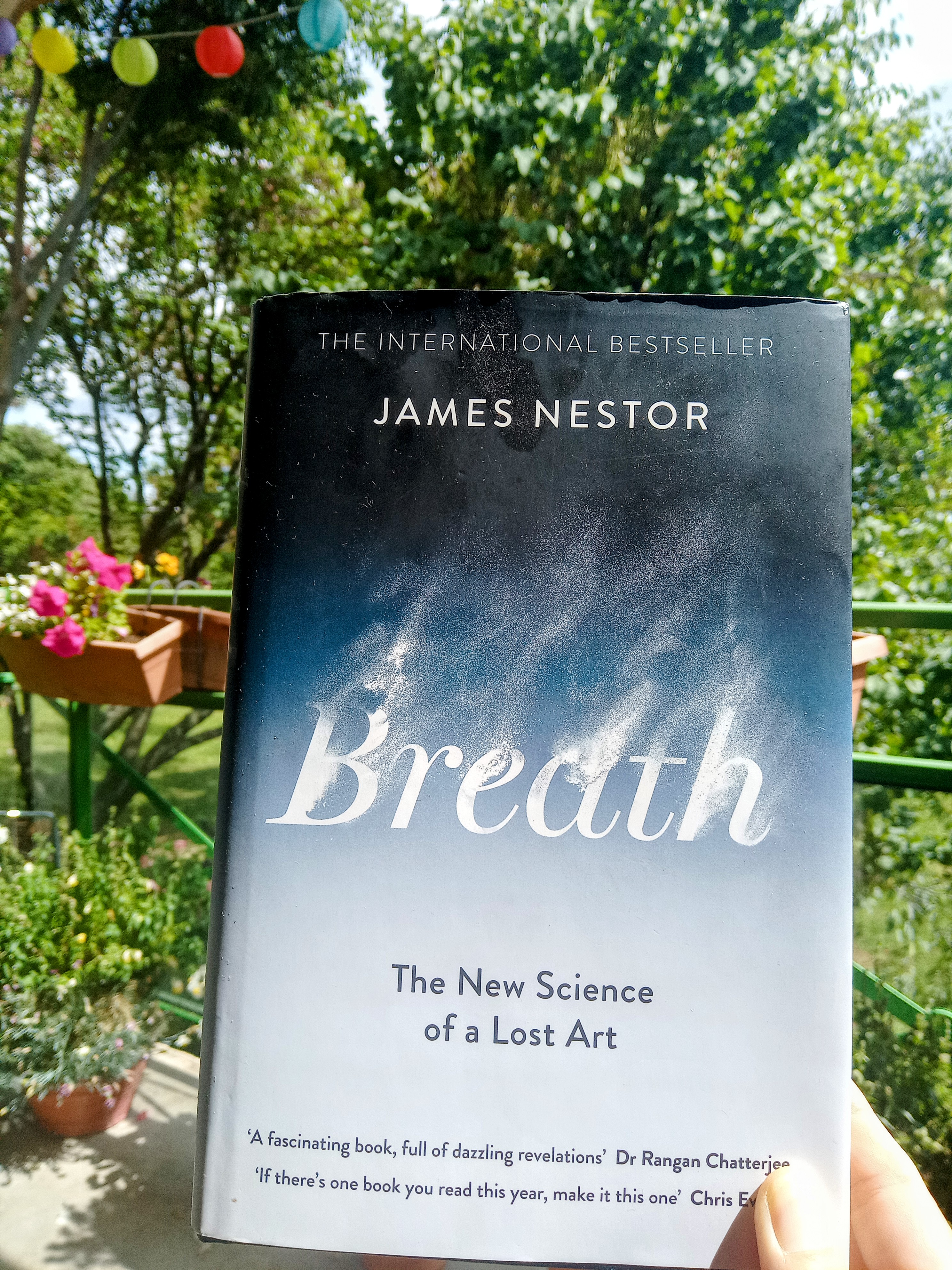
science of breathing nasal breathing pranayamaThe book is written by the American journalist and author James Nestor, who also wrote the nonfiction science and adventure book, DEEP: Freediving, Renegade Science, and What the Ocean Tells Us about Ourselves (2014) exploring the abilities of those who have trained themselves to be able to stay underwater for 4 or 5 minutes without oxygen.
Breath takes that research even further and is a book he researched and wrote over a period of ten years, as he explored the hypotheses that the human species had lost the ability to breath properly, causing not only changes in the structure of the face and respiratory apparatus, but hastening health problems.

Over the millenia, these cultures developed hundreds – thousands – of methods to maintain a steady  flow of prana. They created acupuncture to open up prana channels and yoga postures to awaken and distribute the energy.

But the most powerful technique was to inhale prana: to breathe.

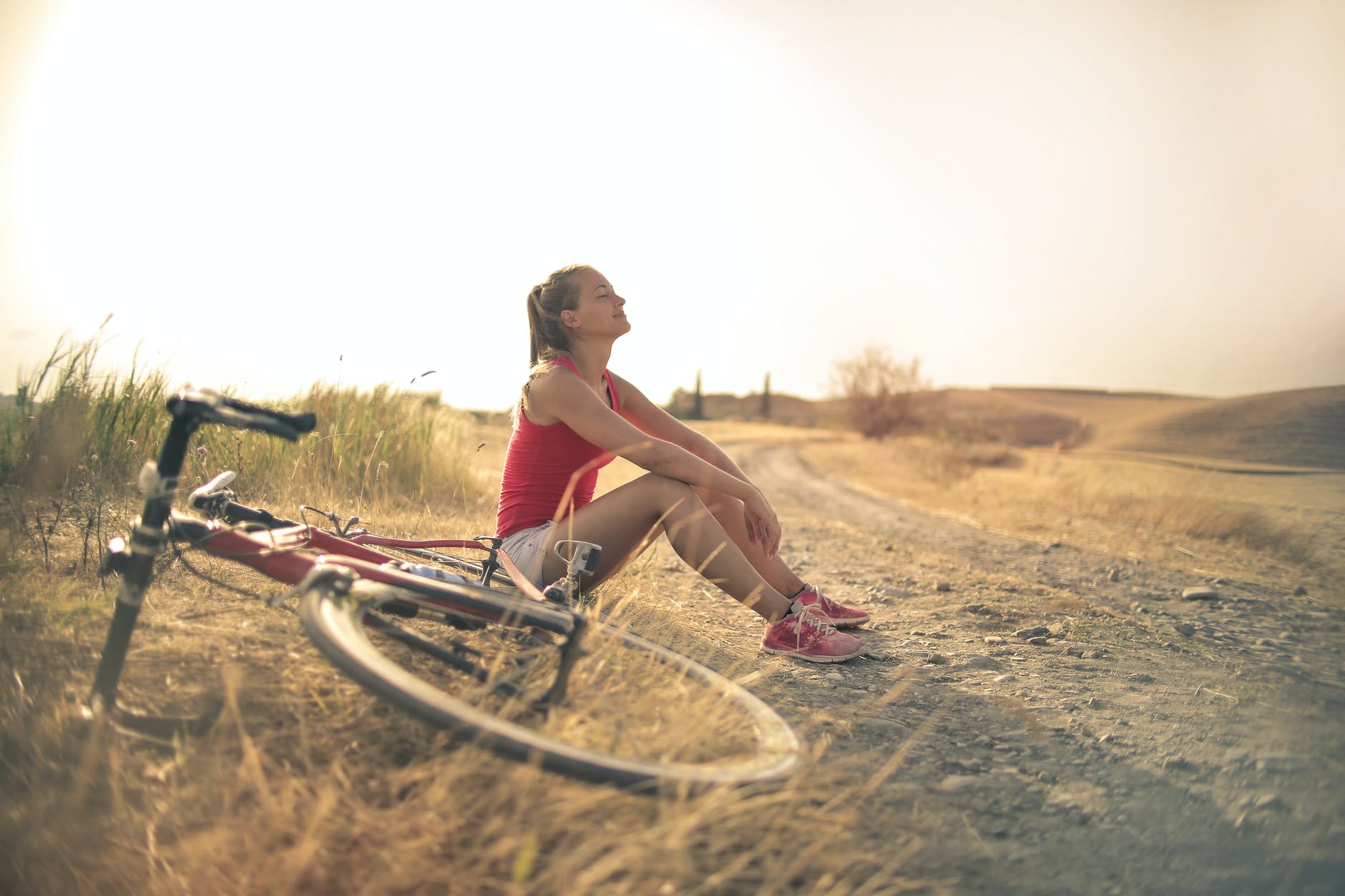
sportive woman with bicycle resting on countryside road in sunlight

Photo by Andrea Piacquadio on Pexels.com

His obsession with the breath took him from the Himalayas to Brazil, into the homes and offices of people equally dedicated to pursuing the art of the breath for improving health and discovered miraculous findings that western science seemed to have ignored until very recently.

Pranayama. Buteyko. Coherent Breathing. Hypoventilation. Breathing Coordination. Holotropic Breathwork. Adhama. Madhyama. Uttama. Kevala. Embryonic Breath. Harmonising Breath. The Breath by the Master Great Nothing. Tummo. Sudarshan Kriya.

I’ve been reading it over the past two weeks and I certainly agree that upon reading this, you’ll never breathe the same again, to have one’s awareness raised in this way about the health promoting effects of certain types of breathing and the detriment to the health of the other.

As a result of some of the experiments James Nestor and Anders Olsson put themselves through, another two-year study was being put together with 500 subjects to research the effects of sleep tape on snoring and sleep apnea.

man doing hand stand on mountain

Photo by Sam Kolder on Pexels.com

The overall summary of helpful breathing techniques and resources at the end of the book is excellent and the journey to get there is interesting and entertaining, if occasionally somewhat tiresome, as the level of eccentricity of the author in pursuing so many of these guru-types begins to make what should be a simple technique, into something akin to scaling a mountain.

Thankfully, the reader doesn’t need to go to any of the lengths the author did, from the summary of techniques (see the NY Times link below), it’s enough to find the one that resonates and try it out, or if it’s snoring that ails you, try out the mouth tape!

Breathing is a missing pillar of health.

Further Reading

James Nestor Responds: How is it possible for humans to have evolved this way? 

New York Times: Breathe Better With These Nine Exercises by James Nestor

The Observer: How One Hour of Breathing Changed My Life, 26 July 2020, by James Nestor

“You can’t be truly healthy unless you’re breathing correctly.”

Silence is a Sense by Layla AlAmmar

A lone young woman watches the world outside her window from the relative safety and refuge of her apartment, in a British town. She refers to those she observes in the East, West, South tower blocks by pseudonyms, Juicer, No-Lights-Man, Anime Girl. She too is unnamed, a refugee from Syria.

Self-Imposed Safety

literary fiction, trauma, survival, communityShe rarely leaves and when she does, it’s within her self-imposed ‘safe zone’ including the nearby shop, the mosque, and part of the park.

When I first arrived, I couldn’t reconcile myself to the notion that I was free to go anywhere. So I set invisible borders that I abided by for a good, long while.

She has email contact with a magazine editor she sends her writing to, using her own pseudonym Voiceless. She writes a kind of truth, as something of her experience, perspective and trauma passes through her into the page.

The editor is after a more nuanced narrative, truth but not quite that truth, tempering the Voiceless, pandering to the expectations of a home-based audience.

Silence Protects

I  don’t know how to explain to her that I am cornered by memories, caged in by recollections. I feel persecuted by the things I remember and by what my mind chooses to hide from me.

Flashbacks from her last days in Aleppo, her friends, protests, declarations, family decisions, a world disrupted.

Journeying alone through a continent that equates refugee with terrorist, and that violence exists even in refuge.

It’s not so difficult to know what people want. At the root of it we all want the same things: freedom, happiness, safety. I want to write what I want to write without the fear of a knock at the door and an interrogation room. I want to love who I want to love without the fear of death or corrective rape. I want to wear what I want to wear without the worry that men will see my skirt or the buttons on my shirt as an invitation. That’s it. The freedom to live how we want to live.

In her silence she is overwhelmed by the other senses, unable to speak, yet filled with so much looking for outward expression.

Trauma Endures

silence is a sense Layla alammarAn intense, visceral insight and demonstration of the effect of trauma, the ongoing sensitivities, reactions, the struggle to adapt, to accept safety, to even perceive safety, when threats are observed everywhere, violence seen through windows, threatened against communities.

And yet, something within the human spirit needs to reach out, to have contact, to be a part of what little community is offered, tentative gestures, towards healing.

Sensitively depicted, rather than witnessing the events themselves, the author draws the reader into the fragmented mind of the victim of trauma, making us feel what it can be like, to be in that post traumatic period, trying to live again in an unwelcoming, welcome British town.

A Real Life Story, A Young Syrian Woman Refugee

While Lalya AlAmmar’s story is fiction and is focused more on the aftermath of of a young woman experiencing her hometown turn into a warzone, on her trying to overcome the feeling of not being safe in another country, and the effect of trauma, I found it helpful having already read a true account of another young woman’s true life experience in Syria, her life before the war, during it and the inevitable escape she and her sister would make alone.

It makes an excellent companion read to AlAmmar’s novel and I highly recommend Butterfly by Yusra Mardini.

Further Reading

NPR: ‘Silence Is A Sense’ Works To Dispel The Terrible Abstractions Of Syria’s Civil War

Interview: Scan, University of Lancaster, An Interview with Layla AlAmmar, Author of Silence is a Sense by Harriet Fletcher

Nurturing Our Humanity by Riane Eisler and Douglas P. Fry

How Domination and Partnership Shape Our Brains, Lives, and Future

Thirty Years Later

I’d been looking forward to reading this after reading Riane Eisler’s The Chalice and The Blade two years ago, though it was originally published in 1987, over 30 years ago.

Riane Eisler is a systems scientist, cultural historian, educator, speaker and pioneering attorney working for women’s and children’s human rights, and the recipient of many awards. Her work on cultural transformation has inspired scholars and social activists. She is President of the Centre For Partnership Studies dedicated to research and education.

Douglas P Fry is an American anthropologist. He has written extensively on aggression, conflict, and conflict resolution in his own books and in journals such as “Science” and “American Anthropologist.” His work frequently engages the debate surrounding the origins of war, arguing against claims that war or lethal aggression is rooted in human evolution. He is a Professor and Chair of the Department of Peace and Conflict Studies at the University of North Carolina at Greensboro.

A Guide to Raising More Conscious, Socially Responsible, Caring Future Generations

Nurturing HumanityBringing together these two authors has created an immensely readable work that describes how our societies and families and cultures, not to mention our brains, have been shaped by a system of domination that favours hierarchical structures, ranking of one kind over another, authoritarian parenting and leadership, fueled by fear, tamed by punishment, sustained by conditioning that makes silencing and oppression the norm.

Eisler and Fry argue that the path to human survival and well-being in the 21st century hinges on our human capacities to cooperate and promote social equality, including gender equality.

Social systems that orient closely to the domination side of the continuum are ultimately held together by fear and force. In this system, beliefs and social structures support rigid top-down rankings, and the closer a culture or subculture orients to it, the more stressful it is.

Despite the narratives that exist that suggest humanity is hardwired for ruthless selfishness and violence, there is abundant evidence, referenced here, that:

“Indicates that humans have also evolved powerful capacities, indeed proclivities, for empathy, equity, helping, caring and various other prosocial acts.”

There are examples from ancient times past (anthropological evidence) and present in contemporary Nordic societies, one of the significant differences being a greater sense of partnership and equality between couples and also in the value attributed to “caring industries”, a sector of society that has been virtually ignored by academia, and undervalued, underfunded by governments worldwide.

In contrast, the partnership configuration is more peaceful, egalitarian, gender-balanced, and environmentally sustainable. As in the strivings of countless families, businesses and communities today, the partnership system consists of beliefs and structures that support relations based on mutual benefit, respect and accountability.

Once we understand these dynamics, of domination versus partnership, and the characteristics of each, the imbalance in the world becomes glaringly obvious. This work gives multiple examples and acknowledges that pockets of the partnership approach do exist and are growing, but there are significant challenges to be addressed before we can truly begin to benefit from the improved standard of living that more ‘caring societies’ can bring.

Fear and force are not woven into the cultural tapestry of of the partnership system because they are not needed to maintain rigid top-down rankings, whether it is man over woman, race over race, religion over religion, or nation over nation. Instead of hierarchies of domination, some partnership societies and leaders use power to empower rather than disempower. So love, care, nurturance, and creativity can flourish.

New Evidence About Human Nature

There is now a plethora of evidence from many different fields, ranging from ethnography, history and psychology to genetics, neuroscience and ethology that provide a shock-and-awe set of counter arguments to the assumption that selfishness and violence are central to what it means to be human.

Nurturing Our Humanity Riane Eisler Douglas Fry Caring Economics

Photo by CDC on Pexels

Human nature has an enormous genetic capacity for empathy, working together sharing, caring and helping, however we know from neuroscience that stress can inhibit this capacity by changing our brain neurochemistry. And starting with the crucial early family relations, domination oriented societies are extremely stressful.

We Need A Caring Econonics

As long as caring is culturally devalued, we cannot realistically expect caring social and economic policies designed to promote human well-being and protection of the natural environment. Measures of economic health such as GDP and GNP include as “productive” work, those activities that harm and take life, such as selling guns and cigarettes with their resulting health and funeral costs – but they fail to count as productive  the hard work of people who care for children, the sick, the elderly and others at home, and accord very low value to this work in the market.

The book ends with four cornerstones of Partnership, Childhood Gender, Economics and Narratives & Language, with recommendations and examples of policies and practices towards improving these areas, bringing new economic and social interventions that give value to caring and caregiving work in both the market and nonmarket sectors.

Nurturing Our Humanity: How Domination and Partnership Shape Our Brains, Lives, and Future

Riane Eisler and Douglas Fry

I can’t recommend this book highly enough for anyone at a loss to why the world seems to have become so divisive and uncaring, this deeply researched, erudite text stands back and shows us where we’ve been and where we could go, and what policies need to change to bring us to a more humane era.

There isn’t a page where I haven’t highlighted a passage, reading this book makes one see the world differently, even though we already knew it. It makes me realise I’ve been working on evolving my brain for years, undoing the conditioning, rewiring it for a better way to live and be.

It makes me realise how starved I am for stories/films that present and represent the partnership model of society, rather than the proliferation of narratives that continuously adher to and promulgate the domination model. And why those stories have been having such a profoundly negative effect on me recently. The combination of empathising with characters and being witness to their maltreatment by other characters (or the author in their creation of them) is affecting my brain!

“Understanding the origins, natures, and impacts of partnership and domination systems on human lives and societies is crucial to human well-being and survival.”

Lifting the veil on the system behind so much of how our world works, to keep the domination system in place, once aware of it, it is almost overwhelming, the steep gradient of the uphill battle before us, however I like to believe we are on the way, that a new vision of future generations will embrace the partnership model more and more.

Totally fascinating and Highly Recommended.

Further Listening

Podcast : “Is Human Nature Peaceful?” Douglas Fry discusses human nature, our potential for peace, and some of the archeological/anthropological evidence behind his work.

Podcast : Behind Greatness by Inspire North : Riane Eisler JD, PhD(h) – President, Center for Partnership Studies / Author / Speaker – Building a World that Supports Capacity for Caring, Creativity & Consciousness 

Forced to Grow by Sindiwe Magona (1992)

A Second Autobiography, From Disempowered to Empowered

After reading the first volume of her autobiography To My Children’s Children, this second volume covers South African writer, teacher and facilitator Sindiwe Magona’s life, from the age of 23 to 40, from the lowest point in her life, to one of the highest. The last chapter of the first volume Forced to Grow, becomes the title of this wonderful book.

Sindiwe MagonaFinding herself unemployed and pregnant with her third child after being pushed out of a teaching job – her husband’s parting shot as he abandons his young family, to inform her employer of his disapproval (a husband’s approval was required for a married (black) woman to be eligible to work) – she reinvents herself, creating her own work (selling sheep heads (cooked) she’d bought on credit) initially to survive, determined to reinstate herself back into the teaching profession, to extend and elevate her education and move beyond surviving to thriving.
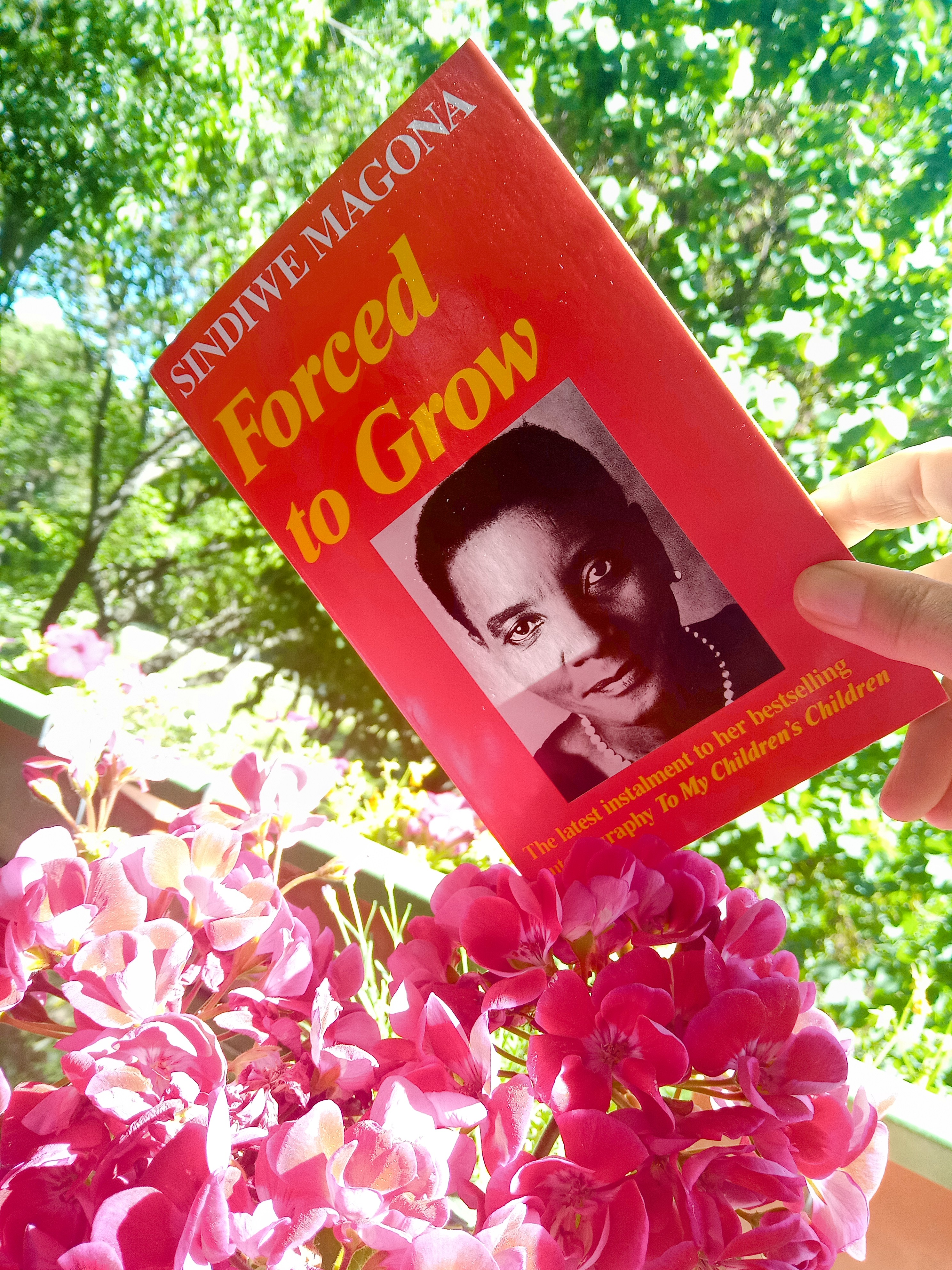
From poverty and struggle to a job offer with the UN in New York, this second volume of autobiography was hard to put down.

Overcoming Fear Through Perseverance and Self-Belief

Though she had a legal certificate to teach, she would spend four years working as a domestic servant in white women’s homes, because she was not a “breadwinner”, she had a husband. Unmarried, childless women enjoyed preferential hiring, as long as they retained that status. Ironically, she would find a way back into teaching when two unmarried teachers were forced to resign their posts, due to being “in the family way”.

I have this fear that if I ever believe that others wield power over my destiny, that I am so vulnerable, I might as well abdicate control of my life. For if I accept that, what is to stop me attributing to others all the setbacks I encounter? And once that happens, why would I do anything to get back on my own two feet? I would be virtually saying that it was beyond me to reclaim myself. I would be accepting absolute lack of control. And the Good Lord knows, I had very little control over my life as it was.

This fear, this need to go on believing I am in the driver’s seat, may be the one ingredient in my make-up I will not find easy to relinquish.

Therefore, with everything I cherished taken, broken or out of reach, I resolved I would become self-sufficient. I would work hard. I would study. I would pull myself up by my bootstraps. Yes, even though I had still to acquire the boots.

wp-1621263406986..jpgPursuing a higher level of education to offset so much else that set her back, fed into Magona’s ambition; as she achieved, her self belief grew and she pushed herself further, while assuming the role of both parents.

Moving from teaching into administration she witnessed how the country’s racist policies affect families, joining SACHED (South African committee for Higher Education) widened her circle of contact, connection, perspective & confidence.

What an inspiration Sindiwe is and what a gift to have witnessed her journey through reading; her perseverance and determination to make something more of herself, while trying to raise her children in a way to overcome the societally perceived disadvantage of being without the support or presence of the children’s father.

She sees the gift inherent in his abandonment, which is an example of how strong her mind is, she rewrites the narrative of her own life and how it will be. An errant husband is one thing, trying to create a career and attain a higher education while living within a system of apartheid and not being recognised as a citizen of your own country is impossible to imagine.

We are all the more fortunate to have been given such an insight into this personal and collective struggle and one courageous woman’s ability to work through and overcome it, in defiance of what the govt of the time wanted for the local African population.

Women Cooperating in Partnership

This volume too is an affirmation of the power and support made possible when women work in partnership, in collaboration, in community for a higher good.

The various groups she becomes part of that bring women together from different races, social classes and backgrounds and the facilitated discussions they have, both bring out her natural ability as a facilitator and leader and create a safe place for all them to develop empathy, to know each other, hear differing perspectives, challenge them, look for ways to resolve problems and how to put pressure where things need to change.

Invited to attend a meeting of a group of women who wanted change, it would create a pivotal turning point in her career.

As might be surmised, CWC (Church Women Concerned) was multi-racial, multi-denominational, inclusive of all faiths. It had members from the Christian faith, the Islamic faith and the Jewish faith. The primary objective was to build bridges, to effect reconciliation, to attempt to live lives that projected well into the future, to a time when the laws that separated us according to skin colour would be no more.

It was a fond dream put forward as a testimony of faith. We truly believed the possibility existed for apartheid to be dismantled. Therefore, it behoved us to hasten the process by living the future now.

How domination and partnership shape our brains lives and futureI was reminded of my recent read of Riane Eisler and Douglas Fry’s Nurturing Our Humanity: How Domination and Partnership Shape Our Brains, Lives, and Future, and the pockets of a Partnership System approach to living and being they promote and suggest already exist; something women are naturally capable of creating if given a chance, or are bold enough to go ahead and create these circles of connection and support anyway, as Sindiwe Magona and others did, despite the risks.

“Humans are capable of living in egalitarian social systems where neither dominates the other, where violence is minimized, and where prosocial cooperation and caring typify social life. This image is not a utopian fantasy but rather a set of potentials, if not inclinations, stemming from our evolutionary heritage.” Riane Eisler

A Third Volume of Autobiography Please

Oh I wish there was a third volume, I do hope she might be writing one, covering the last 30 years. However I also understand why since her retirement she has been writing children’s books, creating a necessary resource for children in her country and around the world, to learn, be entertained and create understanding, hope and belief in the ability for situations to change.

Highly Recommended.