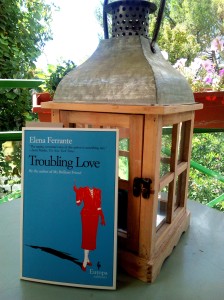
Troubling Love by Elena Ferrante

translated by Ann Goldstein.

Elena Ferrante’s debut novel was first published in Italy in 1991, translated into English in 2016. It became a literary sensation and earned its author the Elsa Morante prize, one of Italy’s most prestigious awards for literature.

A Drowning at Sea

Naples Italy Elena Ferrante Troubling Love

Photo by Bekir Du00f6nmez on Pexels.com

Troubling.

A daughter Delia is concerned after a telephone call from her mother. Following her subsequent disappearance and death, she returns to her mother’s empty apartment, trying to retrace her steps to understand what had been going on in her life that lead to her abrupt departure. Her frustration with her mother is apparent from the first page.

Her sociability irritated me: she went shopping and got to know shopkeepers with whom in ten years I had exchanged no more than a word or two; she took walks through the city with casual acquaintances; she became a friend of my friends, and told them stories of her life, the same ones over and over. I, with her, could only be self-contained and insincere.

Strange things happen, some of which a neighbour helps explain, a woman who opens her door ajar at the slightest noise, thus aware of her mother’s visitors. Yet Delia doesn’t act rationally herself, she’s not the most reliable narrator and there is a sense of confusion and danger as we follow her reckless pursuit of clues across town and memories of the past emerge.

The Abusive, Possessive Artist

Troubling Love Elena Ferrante WIT Month Father Artist

Photo by cottonbro on Pexels.com

Nearly every past relationship recounted is troubled, she and her sisters lived in fear of their father all their childhood, often watching him beat their mother in fits of irrational jealousy, blaming her should any man glance her way, yet he’d spent his days painting images of her naked body on canvas, selling them to anyone who’d pay.

During adolescence I saw those figures of a woman leave the house in the hands of strangers who were not sparing in their crude comments. I didn’t understand and perhaps there was nothing to understand. How was it possible that my father could hand over, to vulgar men, bold and seductive versions of that body which if necessary he would defend with a murderous rage?

Amalia spent her marriage suppressing her natural gaiety and charm, her daughter learned of the danger, developing an instinct for it.

When we went to the movies without him, my mother didn’t respect any of the rules that he imposed: she looked around freely, she laughed as she wasn’t supposed to laugh, and chatted with people she didn’t know. So when my father was there I couldn’t follow the story of the film. I glanced around furtively in the darkness to exercise, in my turn, control over Amalia, to anticipate the discovery of her secrets, to keep him, too, from discovering her guilt.

Much of the novel is narrated through the gaze of others, adding to the awkward, vulnerable, exposed feeling of the women. It’s a narrative of deep unease, both in the present day and in its long reach back to the first encounter between the young Amalia and her future possessive husband.

A Free Spirit Escapes

Troubling Love Elena Ferrante WIT Month

Her mother couldn’t be contained, she was an enigma to Delia, raised in that fearsome household, exposed to it from a very young age, conditioned by it, fear and judgement had become a natural part of her psyche.

I realised I was summarising a woman without prudence and without the virtue of fear. I had memories of it. Even when my father raised his fists and struck her, to shape her like a stone or a log, she widened her eyes not in fear but in astonishment.

Her mother used to sew, her world was measurements and fittings and bodies. Garments play a part in the story, again, a mystery to Delia to unravel and try to understand, as if they too might be a clue to her disappearance.

For all the days of her life she had reduced the uneasiness of bodies to paper and fabric, and perhaps it had become a habit, and so, out of habit, she tacitly rethought what was out of proportion, giving it the proper measure.

As she follows random leads, trying to reconstruct her mother’s movements, she revisits scenes from childhood, drawing a picture of her mother, a vivacious woman full of life, spilling outside the restrained bindings of an oppressive marriage and tries to reconstruct the latter part of her life that she’d lived out separate from her family, though still perceived by her daughter and ex-husband as being in secret.

Maybe in the end all that mattered of these two days without respite was the transplanting of the story from one head to the other, like a healthy organ that my mother had given up to me out of affection.

I was reminded of the experience of reading The Days of Abandonment, there is an intensity to the narrative, its visceral descriptions, evoking reactions, everything feels up close and confronting, we are passengers in the seat of a mind slightly out of control, where new thoughts send the protagonist out in pursuit of the elusive and we must accompany her, reassured by moments of clarity and spun out by acts of recklessness.

Elena Ferrante The Lying Life of Adults WIT MonthThat’s Ferrante.

She has a new book due out in September The Lying Life of Adults said to have the same additive, page-turning qualities of her earlier novels.

Ferrante follows Giovanna’s life from age 12 to 16, charting her development from the sweet girl who adores her parents to a sulking, aggressive teenager who finds pleasure in self-abasement and making those around her uncomfortable. The premise is a fertile one for the author, an expert chronicler of adolescence and its many indignities, as well as its erratic, overwhelming passions.

Kathryn Bromwich The Guardian

Further Reading

My Review of other Elena Ferrante titles:

The Days of Abandonment

My Brilliant Friend, The Story of a New Name, Those Who Leave & Those Who Stay, The Story of the Lost Child

Frantamuglia (non-fiction)

The Guardian: Review: The Lying Life of Adults – a rebel rich girl comes of age by Kathryn Bromwich – Italians who queued up into the night for the reclusive writer’s new tale of painful adolescence won’t be disappointed

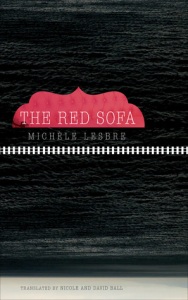
The Red Sofa by Michèle Lesbre

translated by David Ball, Nicole Ball

An Unexpected Trans-Siberian Railway Trip

le canapé rouge the red sofa michèle Lesbre

A French novella that I read in an afternoon, we accompany our Parisian protagonist Anne, on a train journey towards Lake Baikal, in Southern Siberia, a journey she makes on a local train, having spontaneously decided to find out why her friend Gyl is no longer responding to her letters.

For the first six months he had written often, telling me he had time to go fishing for omul in the lake and make kites for children.
And then, silence.

Once on the train and it’s a long journey, she has time to think and recall their friendship, they were lovers many years ago and while she holds no flame for him, the journey allows her to reflect on the highs and lows of their union.

I knew that the return trip is the real journey, when it floods the days that follow, so much so that it creates the prolonged sensation of one time getting lost in another, of one space losing itself in another. Images are superimposed on one another – a secret alchemy, a depth of field in which our shadows seem more real than ourselves. That is where the truth of the voyage lies.

Get To Know Your Neighbour

What she does spend time thinking of, is her recent past and another spontaneous decision, to knock on the door of a neighbour whom she has never seen, an elderly woman.

I had never run into her in the lobby of the building, not on the stairs. I knew all the other people who lived there, or at least their names and faces, but Clémence Barrot remained a mystery. No sounds would ever reach me when I walked by her door, and if I asked questions about her, all I got were laconic answers and knowing looks…A character!

The door is opened by a young girl and peering inside she sees the older woman sitting on a red sofa by a window. As an excuse for her curiosity she mentions there might be noise as she has people coming for dinner that evening. The woman asks her a favour in return for the anticipated inconvenience.

With a big smile, she retorted that she would rather we proceeded differently: for all past dinners, for this one and the next ones, she would only ask in exchange that I occasionally read to her a little, if I had the time.

Passionate French Women Who Faced Death Unflinchingly

And so we meet some bold French female heroines of the past, sadly a number of whom for their feminist inclinations in the wrong era, lose their lives at the guillotine.

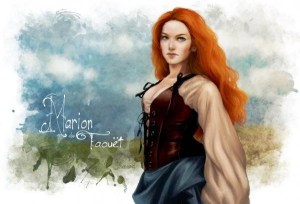
“Tell me about that gutsy girl again,” Clémence Barrot would sometimes ask about Marion de Faouët and her army of brigands. She had, just as I did, a real affection for that child who had not grown up to become a lady’s companion despite all the efforts of the Jaffré sisters. No, she became a leader of men instead, an avenger of Brittany which had been starved during the 1740’s.

A wild beauty, faithful to her village, her loves and her ideals, Marion had been imprisoned several times before dying on the gallows at the age of thirty-eight.

While these stream of consciousness thoughts pass through her mind, various locals enter and exit the train. She is happy to be immersed in the languages of the area and in two books she has brought with her, Dostoevsky’s War and Peace and a book by the philosopher Jankélévitch.

Travel To Exotic Destinations Through Story

le canapé rouge the red sofa Michèle Lesbre WIT Month

Becoming particularly interested in one man whom she can’t communicate with – Igor – she imagines things about him from the little she observes and seeks him out more than one time when he disappears.

I had just read ‘There are encounters with people completely unknown to us who trigger our interest at first sight, suddenly, before a word has even been said…”

It’s an engaging read considering not much happens, but there is just the right mix of action and reflection and indeed, by the end a build up to a couple of dramas and quiet resolution.

I really enjoyed the read and was surprised at how captivated I was by the journey. I do love long train journey’s and hers was such an indulgent whim, that the suspension of what she will encounter is enough to keep the reader interested, and the relationship with her elderly neighbour provides a brilliant counterpoint and empathic adjunct, becoming the more significant event to the ‘thousands of miles’ distraction.

N.B. This was one of the many Seagull Books offered weekly to readers during the period of confinement.

Further Reading

Reviewed by Rough Ghosts 

Seagull Books: More of their extensive collection of titles by Women In Translation

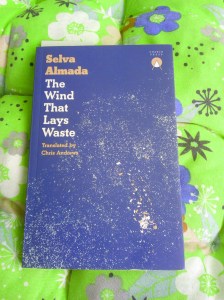
The Wind That Lays Waste by Selva Almada tr. Chris Andrews

Evangalising Across the Argentinian Countryside

A reverend and his teenage daughter break down in the middle of nowhere on a steaming hot dry day, after he ignores her advice to get the problem checked before they left the last town (his home town). A visit that caused her to feel both sorry for  her father.

But her sympathy didn’t last. At least he could go back to places full of memories…Leni had no lost paradise to visit. Her childhood was very recent, but her memory of it was empty.  Thanks to her father, the Reverend Pearson, and his holy mission, all she could remember was the inside of his car.

Leni, now 16, hasn’t seen her mother since the Reverend dumped his wife and her suitcase on one of their road trips.

This happened almost ten years ago. The details of her mother’s face have faded from Leni’s memory, but not the shape of her body: tall, slim, elegant. When she looks at herself in the mirror, she feels that she has inherited her bearing. At first she believed it was just wishful thinking, a desire to resemble her. But since becoming a woman, she has caught her father, more than once, looking at her with a blend of fascination and contempt, the way you might look at someone who stirs up a mixture of good and bad memories.

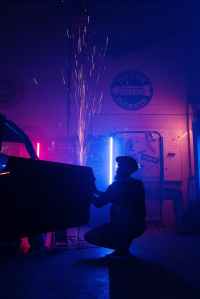
The Lone Garagist

The Wind That Lays Waste Selva Almada

Photo by cottonbro on Pexels.com

A truckdriver tows them to ‘the gringo Brauer’s‘ garage, a man raising his teenage son Tapioca alone, the boy abandoned there by his mother when he was 8 years old.

Tapioca’s memories of his mother are vague too. After she left him, he had to get used to his new home. What interested him most was the heap of old cars. The dogs and that mechanical cemetery were a comfort in the first weeks while he was adjusting. He would spend all day among the car bodies: he played at driving them, with three or four dogs as co-pilots. The Gringo left him to it, and approached the boy gradually, as if taming a wild animal.

The father hadn’t finished school himself, his son could read, write and do sums so didn’t see why the boy needed to keep up with it. He decided Tapioca could learn by working and observing nature.

It might not be scientific, but nature and hard work would teach the kid how to be a good person.

Seeing the Light

Storm Thunder Wasteland

Photo by Johannes Plenio on Pexels.com

The Reverend sees good in the boy and sets his righteous missionary sights on him. Leni sees what’s happening but doesn’t intervene.

Leni had conflicting feelings: she admired the Reverend deeply but disapproved of almost everything her father did. As if her were two different people. Earlier, she had told him to leave Tapioca alone, but if she had joined them on the porch now, she too would have been captivated by his words.

Brauer doesn’t appreciate the Reverend putting ideas in his son’s head, the tension mounts and none of them know yet that there’s a storm coming.

It’s a slow build-up, getting to know the characters, two men set in their ways, with children who rarely question their authority. They are used to being in charge. It’s a short, tense, reflective novella of these two unorthodox families whose lives intersect and cause a disruption, just as the storm breaks a long period of dry.

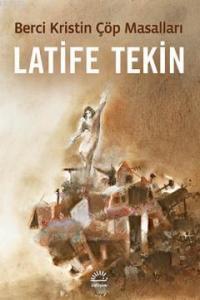
Berji Kristen: Tales From the Garbage Hills by Latife Tekin (1993)

translated by Ruth Christie, Saliha Paker

“One winter night, on a hill where the huge refuse bins came daily and dumped the city’s waste, eight shelters were set up by lantern-light near the garbage heaps.”

Berji Kristen Tales from the Garbage HIlls Latife Tekin Turkish LitThe opening sentence introduces us to the birth of a poverty-stricken community, one that will rise up despite numerous efforts to destroy it. As more displaced people hear of them, it continues to reassemble, grow, and become occupied by the marginalised, who do what they can to get ahead.

Mattresses  were unrolled and kilim-rugs spread on the earthen floors.  The damp walls were hung with  faded pictures and brushes with their blue bead  good-luck charms, cradles were slung from the roofs and a chimney pipe was knocked through the sidewall of every hut.

It’s a story of impoverishment, perseverance and the survival of the poorest. Every step forward encounters a knock back, an obstacle to overcome. Toxic factories employ them, their ailments dealt with in bribes, even their love lives are dictated by the relative positions they occupy in the unconventional heirarchy of the community.

The workers named the factories after their effects, some made the lungs collapse, some shrivelled the eye, some caused deafness, some made a woman barren. Their proverb for marriage between equals was ‘A bride with dust in her lungs to the brave lad with lead in his blood.’ The saying gained ground when one after another the young car battery workers married girls from the linen factory.

Berji Kristen Latife Tekin WIT Month

After winning the battle of constant demolition and renaming it ‘Battle Hill’, two official looking men replace their sign with a blue plaque inscribed ‘Flower Hill’.

After the renaming, people heard the demolition had stopped and came to the Hill in their hundreds, deceived by the charm of its name.

Rumour and gossip fuel their perceptions and without worldly knowledge they speculate; theories on events pass from one person to another, changing and evolving into a level of understanding they can accept.

One night yellow pamphlets are stealthily left at their doors, by morning they are strewn everywhere, caught in branches, stuck under their doors. They couldn’t understand why the workers would leave them and others wondered why they could not speak up instead of writing and why they’d left them in the dead of night.

Flower Hill Folk!

Support the strike!

Individuals rise and fall in power, characters referred to by occupation or memorable anecdote, new creatures arrive like ‘The Regular Worker’ spawning the song ‘Work Faster’ and ‘Poet Teacher’ writes about scavenger birds and his pupils.

Latife Tekin Turkish Author Tales From the Garbage Hills

Author, Latife Tekin

A lyrical voice is given of a metaphorical nature to the deprived, who have memories of villages of old, of fleeing, of different times. Latife Tekin “gives expression not only to their way of life but also to their outlook on life, perception of reality, sense of humour and dreams.”

It is told in such an engaging style, it reads as if it is narrated aloud, though it is neither fairy tale nor fantasy, it is quite unlike anything I’ve read before, the story and the voice, a depiction of the creation and development of an aspiring community of marginalised people.

Assuming the position of a detached but devoted narrator rather than a patronising intellectual onlooker, Tekin has reconstructed the dreams and realities of sqatterland in specific detail and with a uniquely metaphoric use of the language, without overlooking the humorous attitudes, ironic perception and emotional vitality of the community amid the filth and poverty of its living conditions. Saliha Paker, Introduction

Further Reading

Article: Contemporary Turkish Women Writers in English Translation by Dr. Roberta Micallef

Review: Bosphorous Review of Books reviews Berji Kristen by Luke Frostick

My Reviews of Books by Turkish Women Authors

The Other Side of the Mountain by Erendiz Atasü tr. Elizabeth Maslen

Three Daughters of Eve by Elif Shafak

Honour by Elif Shafak

The Happiness of Blonde People by Ekif Shafak


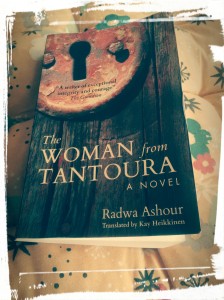
The Woman From Tantoura by Radwa Ashour (2010)

translated by Kay Heikkinen.

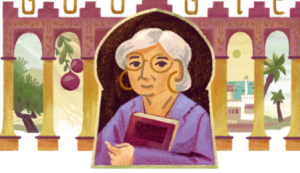
Radwa Ashour

Radwa Ashour Woman from Tantoura Granada WITMonth

Radwa Ashour (1946 – 2014) was a highly acclaimed Egyptian writer and scholar who after studying a BA and MA in Comparative Literature in Cairo, went on to do a PhD in the US in African-American Literature.

As a university student in her native Cairo in the early 1970s, says Ashour, she’d found no one who considered writers in the African diaspora worthy of study. But in 1973, a joyfully-cultivated friendship with Shirley Graham Du Bois ­ world traveler, litterateur, and widow of W.E.B.du Bois­ led Ashour to UMass. Madame Du Bois, as the école-educated Ashour still calls her late liaison to Amherst, was living in Cairo at the time, and pointed the young Egyptian toward the then-infant Afro-American Studies department here.

Her interest in African-American literature was due to her view that “works on oppression and the overcoming of oppression speak deeply to readers in the Arab world.” She was passionate about social justice, evident in her writing, which sought to personalise the lives and conditions of marginalised groups.

Throughout her career she wrote more than fifteen works of fiction, memoir and criticism, including the novels Granada and Spectres.

The Woman From Tantoura

Radwa Ashour Tantoura WITMonthThe more I read, the more this novel got its hooks into me. After a while, a pattern begins to emerge, one that is universal. To find a place where one can live authentically, and be at home.

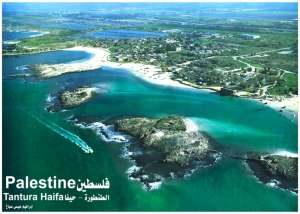
Because of the initial setting, a fishing village in Tantoura, Palestine, in 1948 – the year of ‘The Nakba‘ I expected it was going to be traumatic, it’s the part we don’t wish to linger in, to be witness to the horrific expulsion of families from their homes, of the disappearance of sons and fathers, the rest either becoming refugees in their own country or fleeing to find refuge elsewhere.

Even if we know it can’t begin well, sometimes, we need to read through, to follow the life of a thirteen year old girl into womanhood, in the hope that we see her find solace, to have empathy for her worry and anxiety for her own children and husband after all she has witnessed.

The story begins with Ruqaya standing on the seashore, seeing a young man come out of the sea as if he were of it, as if the waves released him on to land. She is mesmerised. The man will become her fiance, though they will never marry. It is the end of her childhood, the end of blissful days on that shoreline, though memories and the scent of it will stay with her forever, through all the moves that follow. And the key to the old house.

Looking for a Place to Call Home

Key Tantoura Palestine Radwa Ashour

Photo by Ylanite Koppens on Pexels.com

Later on I would learn that most of the women of the camp carried the keys to their houses, just as my mother did. Some would show them to me as they told me about the villages they came from, and sometimes I would glimpse the end of the cord around their necks, even if I didn’t see the key.

The novel is narrated by her 70-year-old self, pushed into writing down and describing the many experiences and turning points in her life, by her middle son.

It’s not only the story I’m interested in, I’m after the voice, because I know its value and I want others to have the chance to hear it.

A reluctant narrator, the timeline moves back and forth,  less a chronology events than a response to emotions that arise that provoke the memory. It’s a recollection of a life lived in the wake of tragedy, of determination and survival, of not forgetting, maintaining a connection to a culture and values as best one can.

There was no acceptable or reasonable answer for the question for “why?” however much it rose up, loud and insistent.  I did not ask “why”. I mean I didn’t ask the word, and perhaps  I was not conscious that it was there, echoing in my breast morning and evening and throughout the day and night. I didn’t say a thing; I fortified myself in silence.

Tantoura Palestine Radwa AshourWhile her mother uses imagination to create a vision of what happened and where the missing are, Ruqayya’s advances then retreats, as the present awakens the past, rarely does she dwell in an idealised future.

Am I really telling the story of my life or am I leaping away? Can a person tell the story of his life, can he summon up all its details? It might be more like descending into a mine in the belly of the earth, a mine that must be dug first before anyone can go down into it.Is any individual, however strong or energetic, capable of digging a mine with their own two hands?

Seeking Refuge

To see them seek refuge in another country, where a similar tragedy can happen, one understands what it must feel like to feel that no place is safe, and then when she finds a ‘safe place’ with her high achieving son, the culture shock is too much to bear, bringing to mind the memoir of the Palestinian intellectual Edward Said’s Out of Place.

Bird of Paradise Radwa Ashour TantouraThere is no place that quite replaces the childhood environment and home, except perhaps to create one’s own family, and this Raqayya will do, with her son’s and the daughter, a girl Maryam her husband brings home one day from the hospital, adopting her as their own. And in growing things, not the almond tree or the olives,  but flowers, a thing of beauty, the damask rose, the bird of paradise.

I found similarities in reading this novel, to the feeling evoked in reading Nella Larsen’s Quicksand, her constant search too, for the place where she could be herself, though her search was all the more elusive and complex, there being no place or people who accepted her rootlessness, her mixed blood, something that the clannishness of many ‘peoples’ reject.

“In Egypt, we have a flag, an airline of our own, we are an independent country,” she said. “But there is this feeling we are not free to be who we are in the new world order.” I am always conscious I’m a person from the Third World. I’m an Egyptian, an Arab, and an African all in one. Also, I’m a woman. I know to be all these things is to be particularly conscious of constraint.” Radwa Ashour

The Woman From Tantoura is my first read for #WITMonth, reading Women in Translation.

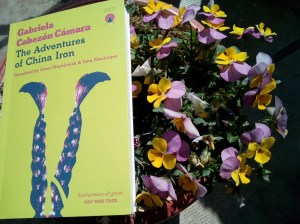
The Adventures of China Iron by Gabriela Cabezón Cámara

translated by Fiona Mackintosh and Iona Macintyre

Wow. This is quietly revolutionary. And funny. Educational. Expansive. Luminous. Brilliant.

I want it to win.

Drawing inspiration from other texts that have in turn been inspired by a life, or experience lived in Argentina, whether the epic poem ‘the gaucho’ Martin Fierro by José Hernández (a lament for a disappearing way of life) or the autobiography Far Away & Long Ago of the naturalist  William Henry Hudson, The Adventures of China Iron is a beautiful elegy (for there will be consolation), a brilliant feat of the imagination that takes readers on an alternative journey.

Review

China Iron, wife of Martin Fierro, who in the original version was given just a few lines, is now the lead and is about to awaken to all that is and can be.

Her adventure is a heroine’s journey from dystopia to utopia, from naive to knowledgeable, from woman to young brother to lover, from unconscious to awakened, from surviving to aware to thriving.

While I was writing I felt I was describing the mind-blowing experience of being a newborn since in China’s eyes everything is new and has the shape and shininess of a new discovery. She is trying out her freedom, travelling for the first time, leaving the tiny settlement in which she had spent her whole life. She is discovering the world, the different paths through it, love. Gabriela Cabezón Cámara

Part One – The Pampas

China was passed over to Martin Fierro in holy matrimony in a card game. She bore him two children before he was conscripted, what a relief. Scottish Liz had her husband Oscar taken in error, so she packs a wagon to go and find the land they’ve procured, taking China and the dog Estreya with her. This is the beginning of China’s awakening, she will learn from Liz and being in nature, on the move.

Who knows what storms Liz had weathered. Maybe loneliness. She had two missions in life: to resuce her gringo husband and to take charge of the estancia they they were to oversee.

Liz informs China about the ways of the British Empire, clothing, manners, geography, Indian spices, African masks. Some things she understands, others take longer to reconcile. She discovers ‘a birds eye view’ from up there on the wagon.

And I began to see other perspectives: the Queen of England – a rich, powerful woman who owned millions of people’s lives, but who was sick and tired of jewels and of meals in palaces built where she was monarch of all she surveyed – didn’t see the world in the same way as, for example a gaucho in his hovel with his leather hides who burns dung to keep warm.

For the Queen the world was a sphere filled with riches belonging to her, and that she could order to be extracted from anywhere; for the gaucho, the world was a flat surface where you galloped around rounding up cows, cutting the throats of your enemies before they cut your own throat, or fleeing conscription or battles.

China leaves behind neglect and enters the realm of non-violent company, nourishment and knowledge. She comes to think of the wagon as home and falls for Liz’s charm. They track Indians by examining the dung of their animals. When they see it’s fresh, they stop and change.

I took off my dress and the petticoats and I put on the Englishman’s breeches and shirt. I put on his neckerchief and asked Liz to cut my hair short. My plait fell to the ground and there I was, a young lad.

Photo by Juanjo Menta on Pexels.com

They encounter a lone gaucho (cowboy) Rosario and his herd of cows, he becomes the fourth member of their party. We learn his tragic backstory as well. He laughs at China’s clothing, but says it’s a good idea and that all women should carry a knife the way men do.

We knew he was talking about his mother and how he’d have preferred her to have grown a beard if it meant she’d have stayed a widow with him by her side instead of that monster.

They make slow progress, in part due to China’s desire that this in-between peaceful co-existence, the happiest she’s ever experienced, never ends.

Part Two, The Fort

They arrive at the estancia run by Hernandez, they dress in their chosen uniforms Liz had allocated from the stores inside the wagon;

uniforms for every kind of position on the estancia according to the imagination of the aristocrat and his stewards, Liz and Oscar.

Here they come across the opposite of what they’d found in the plains, here is a world run by the self-righteous Hernandez, who runs his estancia like a dictatorial regime, with strict rules and regulation, reward and punishment, inspiring hatred and allowing revenge. Seeing himself as the seed of civilisation, others as savages with no sense of history and the gauchos as his protegé, he sets out to retrain them in his ways, with a whip and a rod.

Photo by Artem Beliaikin on Pexels.com

Part Three – Indian Territory

In the final part they come into contact with the indigenous population and even the air feels easier to breathe. Here the language changes, perception changes, there is acceptance, equilibrium, reunion.

This whole section reminded me of the shape-shifting shamans, of a higher perception or consciousness, living with the indigenous people allows them to let go of all expectations and see with different eyes.

“Although we have been made
to believe that if we let go
we will end up with nothing,
life reveals just the opposite:
that letting go is
the real path to freedom.”

– Soygyal Rinpoche

I absolutely loved this, I hope it wins the International Booker 2020 thoroughly deserving in my opinion.

Ever since I had the idea of giving China a voice, I had one thing clear in my mind: I wanted her tale to be an experience of the beauty of nature, freedom in body and mind; a story of all the potential and possibilities in store when you encounter other people, of the beauty of light. I wanted to write an elegy to the flora and fauna of Argentina, or whatever is left of it, an elegy to what used to be here before it all got transformed into one big grim factory poisoned with pesticides. I wanted to write a novel infused with light. Gabriela Cabezón Cámara

Further Reading

Interview: International Booker Prize 2020 Interview with author and translators

Top Five Translated Fiction

Translated Fiction

Tilted Axis Press who published the award winning Han Kang’s The Vegetarian and Human Acts asked me to write an article about why I read translated fiction, so rather than repeat myself, if you are interested in a deeper explanation you can read more about my motivations by clicking on the link below:

“Reading in Translation, A Literary Revolution” by Claire McAlpine

At the end of the article is a list of titles I recommended with links to my reviews. But for today I’m just going to pull up from my memory five books that have stayed with me that at the time of reading transported me elsewhere and that I remember being excellent and memorable reads.

That’s one of the reasons I continue to love reading translations, they’re a form of armchair travel, not to see the sights of other countries, but to enter the minds of their storytellers, to see things from another perspective or delight in discovering one similar one to our own. To break out and away from the narrow influence of the culture we are within. Most of what we are offered to read from traditional channels was imagined, created and published only in English, less than 5% of fiction originates from other languages.

Women in Translation

It’s hard to only choose five especially as I’m going to refrain from choosing titles I have mentioned already in a list I made in August 2019 leading up to #WITMonth.  Do check out the list below, it contains some of all time favourites.

My Top 10 Books by Women in Translation in 2019

To put this into context, I have read approximately 180 books translated from other languages. In choosing the five listed below, I’m trying to be mindful of what I think people might enjoy during this time of isolation.

My Top Five Works of Translated Fiction

1. The Yellow Rain by Julio Llamazares tr. Margaret Jull Costa (Spain)

This was a fabulous read for me and one I’ve never forgotten and often recommended, it’s a quiet, short read, an elegy that evokes the end of an era, in this case one man living alone in a village in the Pyrenees long after everyone else has abandoned it. It might sound melancholic, but this is the nearest literature comes to being like staring at a painting and admiring the creation. Here’s what I said in my review (click on the title to read the whole review):

Written in the future, the past and the present, in a lyrical style that for me never depresses though we might think it bleak, this ode to a changing landscape that is reverting back to its true nature is haunting, gripping, colourful and soul destroying all at the same time.

2. Her Mother’s Mother’s Mother and Her Daughters by Maria José Silveira tr. Eric M.B. Becker (Brazil)

This is one of the more recent translations I’ve read, and one of the most accomplished, for it dares to tell a potted history of Brazil through interconnected stories of daughters, from 1500 to the modern age. They are grouped into five eras providing an insight into how easily humanity loses its connection to its  origins, thinking itself above the rest.

There are occasional traits that pass from one generation to another, in this line of women who range

from slaves to slave-owners, revolutionaries to idle society ladies, muses to artists, powerful matriarchs to powerless victims, Indians to respectable “white” women whose eyes would “light up in shock” if they found out about their indigenous (and African, and working class) ancestry. Enrico Cioni

3. Nothing But Dust by Sandra Colline tr. Alison Anderson (France)

Although it is a French novel, it’s set in the Patagonia steppe, Argentina, about four boys growing up in harsh conditions on a farm under the rule of a tyrannical mother. It’s one of those novels that makes you feel like you are there, willing the youngest son Raphael on as he is challenged by his two older brothers and harsh mother.

It evokes a strong sense of place whether that is the dry, dusty, harshness of the plateau or the lush, fertile, freedom of the forest the youngest son encounters when he must track down two missing horses. It’s a fantastic, compelling novel of the human condition, in an original setting and family dynamic. Thought provoking, atmospheric, charged with tension, it will stay with you long after reading.

4. The Whispering Muse by Sjón tr. Victoria Cribb (Iceland)

I remember reading this novella and the wonderful feeling it evoked as it was New Years Day in 2016 and my first read of the year. The story takes place on a ship in 1949, the narrator is a passenger and Caeneus, the second mate of the freighter, is a storyteller.

Each night he tells part of the story of Jason and the Argonauts, the epic poem by Apollonius of Rhodes, (Hellenistic poet, 3rd century BC), so reading the book necessitated a number of welcome diversions to look up that story and an increasing awareness of the connection between what we are reading and that ancient myth. Entertaining, intriguing, intellectually stimulating and fun, I scribbled all over that book in pencil and had fun learning so much more than what was written between the pages.

5. Bonjour Tristesse by Françoise Sagan tr. Irene Ash (France)

Because I live in France, I probably read more French books (in translation or original language) than any other foreign language, despite reading from more than 20 countries annually, so it’s not surprising to find a second French title on my list.

Bonjour Tristesse is a slim, coming-of-age classic of Cecile, a 17 year-old girl on holiday with her father at a villa on the Meditarranean, near St Raphael. I loved it.

Jealous of her father’s intentions to remarry she behaves badly and then regrets it, at the same time expressing remarkable insight into her flaws and misgivings. She knows this marriage will turn her and her father into happy, civilised beings, yet she deeply resents it.

Utterly engaging, I was riveted, I loved the ability her character had to understand the personalities around her and her own flaws, despite being unable to stop the mischief she provoked; not to mention this was written when the author was only 18 years old herself. I’m not usually a big fan of classics, but the French writers Françoise Sagan and Colette have me overcoming my usual reluctance.

Do you have an all time favourite read of translated fiction? Share in the comments below. I’m always looking to add other people’s favourites!

If you missed them, here are the rest in the series I’ve posted so far, more still to come!

Further Reading During Our Confinement

My Top 5 on the TBR (To Be Read)

My Top 5 Spiritual Well-Being Reads

My Top 5 Nature Inspired Reads

My Top 5 Uplifting Fiction Reads

Her Mother’s Mother’s Mother and Her Daughters by Maria José Silveira (Brazil) tr. Eric.M.B. Becker

Just brilliant.

What a perfect way to navigate through 500 years of history of a country, without ever getting bogged down in the detail, to follow the lives of daughters, a matrilineal lineage, whose patterns are affected if not dictated by the context of the era within which they’ve lived.

An omniscient narrative begins with the daughter of a native tribeswoman, who leaves her village and family on the arm of a Portuguese ship hand, and moves to the many generations living on sugarcane plantations, to the era of daughters of wealthy business owners living off the profits of those ancestors; from the bitter to the sweet, the uncaring to the revolutionary, five centuries of women, interlaced through stories.

Each chapter follows one young woman and though some of their lives are short-lived, they at least give birth to one daughter, even if some don’t live to raise them. Though unlikely in reality that so many generations would all produce at least one daughter who survives long enough to reproduce, this construct provides the framework for telling the stories, weaving together the historical threads, allowing only us as readers to see what they often don’t, that they are, that we all connected if we look back far enough, or inside deep enough.

Translator Eric M. B. Becker, the winner of a 2014 PEN/Heim Translation grant, produces an excellent translation. By leaving particularly Brazilian terms such as “emboaba” and “cafuzo” untranslated, Becker manages to make readers of English understand the untranslatable within its context. The novel maintains a casual, dreamlike quality, as if the narrator were telling these stories to a friend. Each character is given their own original voice, emotions, and musicality. If some syntax feels unexpected, it is almost always for the benefit of sound.

L. E. Goldstein, Harvard Review

Their stories are grouped into five parts:
A Shortlived Romance – Inaia (1500 – 1514) and her daughter Tebereté (1514 -1548)
Desolate Wilderness -six daughter descendants, the slave years (1531 – 1693)
Improbable Splendour – five daughters, the commercial trading years, accumulating wealth (1683 – 1822)
Vicious Modernity – four daughters, revenge, jealousy, naivety, the elite upper classes (1816 – 1906)
A Promising Sign – three daughters, working class, equality, human rights, exile, freedom (1926 – present)

There are so many stories, it is difficult to retain them all and remember them, and for this it’s necessary to slow-read this book to really take in the breadth of storytelling, which implicitly tells the greater story of a country’s evolution, growth, pain and development. But what better way than to inhabit the lives of one family and follow them over the course of time, recalling the fates of each character and the essence of the life they lived, was enabled or disabled by the time they lived through.

The narrator makes an appearance from time to time, like the hand that threads the needle, they are threadbare and unintrusive, like a pause in reading to make a cup of tea, they don’t disturb the reader, if anything we are comforted by the presence.

I absolutely loved it, I read this because I seek out works by women in translation to read in August for #WITMonth and finding a book like this is such a joy, for it gives so much in its reading, great storytelling, a potted history of Brazil, a unique multiple women’s perspective and an introduction to an award winning author, the writer of ten novels, this her first translated into English.

The variety of their personalities, and the pain, beauty, and strength they display shows that genetics alone does not make a person who they are. In this book, the characters’ environments form them, from the people with whom they interact to the great changes taking place in the pulsing heart of Brazil itself.

L. E. Goldstein, Harvard Review

I wrote most of this review back in August last year, and as you know, I wasn’t capable of sharing anything for some time after that. I passed the book on to a wonderful friend who came to be with me during that time, and for that reason too I’m unable to share any quotes.

It was one certainly of my favourite reads of 2019. A real gem.

Thank you to Enrico for his excellent review that made me get my own copy of the book to read. Read his review, it’s more of an incisive literary criticism that looks at the challenges of writing a novel like this and how Silveira overcomes them.


Celestial Bodies by Jokha Alharthi tr. Marilyn Booth

Celestial Bodies won the 2019 International Booker Prize, a literary prize open to newly translated works of fiction into English.

Jokha Alharthi is from Oman and her novel was originally written in Arabic. She is the first female Omani novelist to be translated into English and the first author from the Arabian Gulf to win the prize. The judges had this to say:

“It’s less flamboyant than some of the other books, there’s a kind of poetic cunning to it. It starts feeling like a domestic drama in a fascinating world, but with the layers of philosophy, psychology and poetry, you are drawn into the prose, through the relationship between the characters. It encouraged us to read in a slightly different way.”

It is a read that requires just letting go and going with the flow, allowing the characters to lead us wherever it is the author is taking us. I say that because it is a non-linear narrative, that moves its narrative perspective often from one character to another and also across time seemingly randomly, as events trigger memories and take the story back to their origin.

There is a family tree in the opening pages, which I did refer back to often, though perhaps it wasn’t really necessary, sometimes just knowing it is there is an excuse to refer to it, but it’s not really necessary for a story that follows no chronological order, that moves from the present to the past and back generations according to the feelings, thoughts and behaviours of its characters.

Abdullah’s thoughts occupy us more than most, and they often refer him back to a childhood memory, that turns into a recurring adult nightmare of being suspended by ropes in a well, a punishment for taking his father’s rifle to shoot magpies with the boys who lured him out to join them. Only they beat him.

He is married to Mayya, who he loves, since the first day he saw her – and because he was a man, he could have her as his wife. The feelings aren’t reciprocated and love doesn’t flourish there. Unbeknown to him there is another ‘celestial body’ orbiting in his universe that intends to reel him in.

For me, this felt like a novel that centred around the lives of those connected with ‘The Big House’ whether they were descendants of the one who built it, to contain his family, slaves, to be place friends could visit. For some it is a sort of prison, not necessarily the slaves, for they have certain freedoms not given to those who are part of the family, especially those who have no memory of being stolen.

It is useless, Zarifa, to try telling this man that no one stole you. That you were born a slave because your mother was a slave and that’s the way life is. That slavery passes to you from your mother. That no one stole you, and al-Awafi is your place, its people are yours.

Her husband remembers and shouts when she says such things.

The second child of his mother who had five boys in all, he remembers everything: the local gangs that attacked their village wanting money, or perhaps to pay old scores; the merchants, a jumble of Baluchs and Arabs, who bought them, there on the plains, the filthy crammed ships those merchants crammed them into; the eye disease that spread fast from one child to the next on shipboard; his mother’s screaming for her other children, who’d been shoved onto other boats; the nursing baby who died of smallpox while on her breast, so the slave traders snatched him away and threw him into the sea.

Her son also sees things differently:

He spoke through clenched teeth. Listen to me. Merchant Sulayman raised me and, yes, he put through me through a little schooling, and he found me a wife, but it was all for his own self-interest, all because he meant me to serve him, and to have my wife as his servant too, and then my children later on.

Even those who leave, (to Cairo), when tragedy strikes, in their upset they return to this small town of The Big House, forever connected to those who reside there.

At certain points in their domestic history, there are things that are changing in the external and international world, like the abolition of slavery, though those affected by it here, seem immune to the changes, their lives don’t change, they are not even aware of their rights. Change here happens slowly, in the rebelliousness of each new generation, challenging what came before in some way.

Time changes them, multiple generations must live together in understanding and be misunderstood. Some things are never understood and leave some always seeking the truth, to the point of obsession.

Do you see the way people move life – and I mean, just the bits of their lives you can see? Most of their movement through life is invisible, it goes on inside of them, so for us it exists beneath the surface. Their own private worlds, their imaginations. When I liberated myself from living through my father’s head I created my own imagination with a paintbrush.
.
My art saved me from acting out the image my father had made for me.
.
When I could finally shake myself loose, when I managed to no longer live inside the image of me he had in his head, I finally found out what freedom tastes like….How liberated a person feels when it’s finally no longer a question of being just an extension or embodiment of someone else’s fancy, even if that someone is your father.

It doesn’t follow a conventional plot and just as in life, the voices of the household come through chapters almost haphazardly, just as thoughts do, and yet over the span of 240 pages we have a sense of this extended family and community of the pressure of time moving on, of lives changing and challenging old perceptions.

As I look back at the book, I see so many passages highlighted and randomly opening to any of them I immediately see what it was that attracted me and understand why this book elevated itself above the rest, to win the Man Booker International Prize in 2019. There is a richness to it, a complete immersion, a gathering of influences, duty alongside rebelliousness, tradition nestled with change, love and loss, history and modernity.

International Booker Long List 2020

The International Booker Prize long list was announced today Feb 27. Thirteen novels of translated fiction from 8 languages, 11 countries, six male authors and seven women. The judges this year were looking for distinctive voices that stayed with them, fiction that once you’d read it, you couldn’t stop thinking about.

The prize is awarded every year for a single book that is translated into English and published in the UK or Ireland. It aims to encourage more publishing and reading of quality fiction from all over the world and to promote the work of translators.  The contribution of both author and translator is given equal recognition, with the £50,000 prize split between them.

Ted Hodgkinson, Chair of Judges said:

‘What a thrill to share a longlist of such breadth and brilliance, reflecting a cumulative artistry rooted in dialogue between authors and translators, and possessing a power to enlarge the scope of lives encountered on the page, from the epic to the everyday. Whether reimagining foundational myths, envisioning dystopias of disquieting potency, or simply setting the world ablaze with the precision of their perceptions, these are books that left indelible impressions on us as judges. In times that increasingly ask us to take sides, these works of art transcend moral certainties and narrowing identities, restoring a sense of the wonderment at the expansive and ambiguous lot of humanity.’

Below are the novels on the list with a short summary of their premise. Surprisingly, I have read and reviewed two (reviews linked below) and they are indeed thought provoking novels, and I have The Adventures of China Iron on my shelf to read. The shortlist will be announced on April 2nd.

The Enlightenment of The Greengage Tree by Shokoofeh Azar (Iran) Translated by Anonymous from Farsi

Set in Iran in the decade following the 1979 Islamic Revolution, this moving, richly imagined novel is narrated by the ghost of Bahar, a 13-year-old girl whose family is compelled to flee their home in Tehran for a new life in a small village, hoping in this way to preserve both their intellectual freedom and their lives. They soon find themselves caught up in the post-revolutionary chaos that sweeps across the country, a madness that affects both living and dead, old and young.
The Enlightenment of the Greengage Tree speaks of the power of imagination when confronted with cruelty, and of our human need to make sense of the world through the ritual of storytelling. Through her unforgettable characters and glittering magical realist style, Azar weaves a timely and timeless story that juxtaposes the beauty of an ancient, vibrant culture with the brutality of an oppressive political regime.
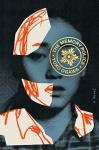
The Memory Police  by Yoko Ogowa (Japan) Translated by Stephen Snyder from Japanese

Hat, ribbon, bird, rose. To the people on the island, a disappeared thing no longer has any meaning. It can be burned in the garden, thrown in the river or handed over to the Memory Police. Soon enough, the island forgets it ever existed. When a young novelist discovers that her editor is in danger of being taken away by the Memory Police, she desperately wants to save him. For some reason, he doesn’t forget, and it becomes increasingly difficult for him to hide his memories. Who knows what will vanish next?
The Memory Police is a beautiful, haunting and provocative fable about the power of memory and the trauma of loss, from one of Japan’s greatest writers.

The Adventures of China Iron by Gabriela Cabezón Cámara (Argentina)Translated by Iona Macintyre & Fiona Mackintosh from Spanish

1872. The pampas of Argentina. China is a young woman eking out an existence in a remote gaucho encampment. After her no-good husband is conscripted into the army, China bolts
for freedom, setting off on a wagon journey through the pampas in the company of her new-found friend Liz, a settler from Scotland. While Liz provides China with a sentimental education and schools her in the nefarious ways of the British Empire, their eyes are opened to the wonders of Argentina’s richly diverse flora and fauna, cultures and languages, as well as to the ruthless violence involved in nation-building.
This subversive retelling of Argentina’s foundational gaucho epic, Martín Fierro, is a celebration of the colour and movement of the living world, the open road, love and sex, and the dream of lasting freedom. With humour and sophistication, Gabriela Cabezón Cámara has created a joyful, hallucinatory novel that is also an incisive critique of national origin myths and of the casualties of ruthless progress.
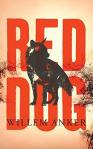
Red Dog by Willem Anker (South Africa) Translated by Michiel Heyns from Afrikaans

In the 18th century, a giant bestrides the border of the Cape Colony frontier. Coenraad de Buys is a legend, a polygamist, a swindler and a big talker; a rebel who fights with Xhosa chieftains against the Boers and British; the fierce patriarch of a sprawling mixed-race family with a veritable tribe of followers; a savage enemy and a loyal ally. Like the wild dogs who are always at his heels, he roams the shifting landscape of southern Africa, hungry and spoiling for a fight.
Red Dog is a brilliant, fiercely powerful novel – a wild, epic tale of Africa in a time before boundaries between cultures and peoples were fixed.

The Other Name: Septology I – II byJon Fosse (Norway) Translated by Damion Searls from Norwegian

Follows the lives of two men living close to each other on the west coast of Norway. The year is coming to a close and Asle, an ageing painter and widower, is reminiscing about his life. He lives alone, his only friends being his neighbour, Åsleik, a bachelor and traditional Norwegian fisherman-farmer, and Beyer, a gallerist who lives in Bjørgvin, a couple hours’ drive south of Dylgja, where he lives. There, in Bjørgvin, is another Asle, also a painter. He and the narrator are doppelgangers – two versions of the same person, two versions of the same life. Written in hypnotic prose that shifts between the first and third person, The Other Name calls into question concrete notions around subjectivity and the self. What makes us who we are? And why do we lead one life and not another? With The Other Name, the first volume in a trilogy of novels, Fosse presents us with an indelible and poignant exploration of the human condition that will endure as his masterpiece.
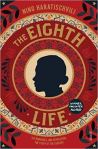
The Eighth Life by Nino Haratischvili (Georgia) Translated by Charlotte Collins and Ruth Martin from German

At the start of the 20th century, on the edge of the Russian empire, a family prospers. It owes its success to a delicious chocolate recipe, passed down the generations with great solemnity and caution. A caution which is justified: this is a recipe for ecstasy that carries a very bitter aftertaste…
Stasia learns it from her Georgian father and takes it north, following her new husband Simon to his posting at the centre of the Russian Revolution in St Petersburg. But Stasia’s will be the first of a symphony of grand, if all too often doomed, romances that swirl from sweet to sour in this epic tale of the red century.
Tumbling down the years, and across vast expanses of longing and loss, generation after generation of this compelling family hears echoes and sees reflections. Great characters and greater relationships come and go and come again; the world shakes, and shakes some more, and the reader rejoices to have found at last one of those glorious old books in which you can live and learn, be lost and found, and make indelible new friends.

Serotonin by Michel Houellebecq (France) Translated by Shaun Whiteside from French

Dissatisfied and discontented, Florent-Claude Labrouste feels he is dying of sadness. His young girlfriend hates him and his career as an engineer at the Ministry of Agriculture is pretty much over. His only relief comes in the form of a pill – white, oval, small. Recently released for public consumption, Captorix is a new brand of anti-depressant which works by altering the brain’s release of serotonin.
Armed with this new drug, Labrouste decides to abandon his life in Paris and return to the Normandy countryside where he used to work promoting regional cheeses, and where he had once been in love. But instead of happiness, he finds a rural community devastated by globalisation and European agricultural policies, and local farmers longing, like Labrouste himself, for an impossible return to what they remember as the golden age.

Tyll by Daniel Kehlmann (Austria-Germany) Translated by Ross Benjamin from German

He’s a trickster, a player, a jester. His handshake’s like a pact with the devil, his smile like a crack in the clouds; he’s watching you now and he’s gone when you turn. Tyll Ulenspiegel is here!
In a village like every other village in Germany, a scrawny boy balances on a rope between two trees. He’s practising. He practises by the mill, by the blacksmiths; he practises in the forest at night, where the Cold Woman whispers and goblins roam. When he comes out, he will never be the same. Tyll will escape the ordinary villages. In the mines he will defy death. On the battlefield he will run faster than cannonballs. In the courts he will trick the heads of state. As a travelling entertainer, his journey will take him across the land and into the heart of a never-ending war. A prince’s doomed acceptance of the Bohemian throne has European armies lurching brutally for dominion and now the Winter King casts a sunless pall. Between the quests of fat counts, witch-hunters and scheming queens, Tyll dances his mocking fugue; exposing the folly of kings and the wisdom of fools.
With macabre humour and moving humanity, Daniel Kehlmann lifts this legend from medieval German folklore and enters him on the stage of the Thirty Years’ War. When citizens become the playthings of politics and puppetry, Tyll, in his demonic grace and his thirst for freedom, is the very spirit of rebellion – a cork in water, a laugh in the dark, a hero for all time.

Hurricane Season by Fernanda Melchor (Mexico) Translated by Sophie Hughes from Spanish

Hurricane Season opens with the macabre discovery of a decomposing body in a small waterway on the outskirts of La Matosa, a village in rural Mexico. It soon becomes apparent that the body is that of the local witch, who is both feared by the men and relied upon by the women, helping them with love charms and illegal abortions.
Mirroring the structure of Gabriel García Márquez’s Chronicle of a Death Foretold, the novel goes back in time, recounting the events which led to La Matosa’s witch’s murder from several perspectives. Hurricane Season quickly transcends its detective story constraints: the culprits are named early on in the narrative, shifting the question to why rather than who. Through the stories of Luismi, Norma, Brando and Munra, Fernanda Melchor paints a portrait of lives governed by poverty and violence, machismo and misogyny, superstition and prejudice. Written with a brutal lyricism that is as affecting as it is enthralling, Hurricane Season, Melchor’s first novel to appear in English, is a formidable portrait of Mexico and its demons.

Faces on the Tip of My Tongue by Emmanuelle Pagano (France) Translated by Sophie Lewis & Jennifer Higgins from French

Meetings, partings, loves and losses in rural France are dissected with compassion.
The late wedding guest isn’t your cousin but a drunken chancer. The driver who gives you a lift isn’t going anywhere but off the road. Snow settles on your car in summer and the sequins found between the pages of a borrowed novel will make your fortune. Pagano’s stories weave together the mad, the mysterious and the dispossessed of a rural French community with honesty and humour. A superb, cumulative collection from a unique French voice.

Little Eyes by Samanta Schweblin (Argentina) Translated by Megan McDowell from Spanish

They’ve infiltrated homes in Hong Kong, shops in Vancouver, the streets of Sierra Leone, town squares of Oaxaca, schools in Tel Aviv, bedrooms in Indiana.
They’re not pets, nor ghosts, nor robots. They’re real people, but how can a person living in Berlin walk freely through the living room of someone in Sydney? How can someone in Bangkok have breakfast with your children in Buenos Aires, without you knowing? Especially when these people are completely anonymous, unknown, untraceable.
The characters in Samanta Schweblin’s wildly imaginative new novel, Little Eyes, reveal the beauty of connection between far-flung souls – but they also expose the ugly truth of our increasingly linked world. Trusting strangers can lead to unexpected love, playful encounters and marvellous adventures, but what if it can also pave the way for unimaginable terror? Schweblin has created a dark and complex world that is both familiar but also strangely unsettling, because it’s our present and we’re living it – we just don’t know it yet.
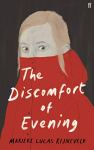
The Discomfort of Evening by Marieke Lucas Rijneveld (The Netherlands) Translated by Michele Hutchison from Dutch

Jas lives with her devout farming family in the rural Netherlands. One winter’s day, her older brother joins an ice skating trip. Resentful at being left alone, she makes a perverse plea to God; he never returns. As grief overwhelms the farm, Jas succumbs to a vortex of increasingly disturbing fantasies, watching her family disintegrate into a darkness that threatens to derail them all.
A bestselling sensation in the Netherlands by a prize-winning young poet, Marieke Lucas Rijneveld’s debut novel lays everything bare. It is a world of language unlike any other, which Michele Hutchison’s striking translation captures in all its wild, violent beauty.

Mac and His Problem by Enrique Vila-Matas (Spain) Translated by Margaret Jull Costa & Sophie Hughes from Spanish

Mac is not writing a novel. He is writing a diary, which no one will ever read. At over 60, and recently unemployed, Mac is a beginner, a novice, an apprentice – delighted by the themes of repetition and falsification, and humbly armed with an encyclopaedic knowledge of literature.
Mac’s wife, Carmen, thinks he is simply wasting his time and in danger of sliding further into depression and idleness. But Mac persists, diligently recording his daily walks through the neighbourhood. It is the hottest summer Barcelona has seen in over a century.
Soon, despite his best intentions (not to write a novel), Mac begins to notice that life is exhibiting strange literary overtones and imitating fragments of plot. As he sizzles in the heatwave, he becomes ever more immersed in literature – a literature haunted by death, but alive with the sheer pleasure of writing.