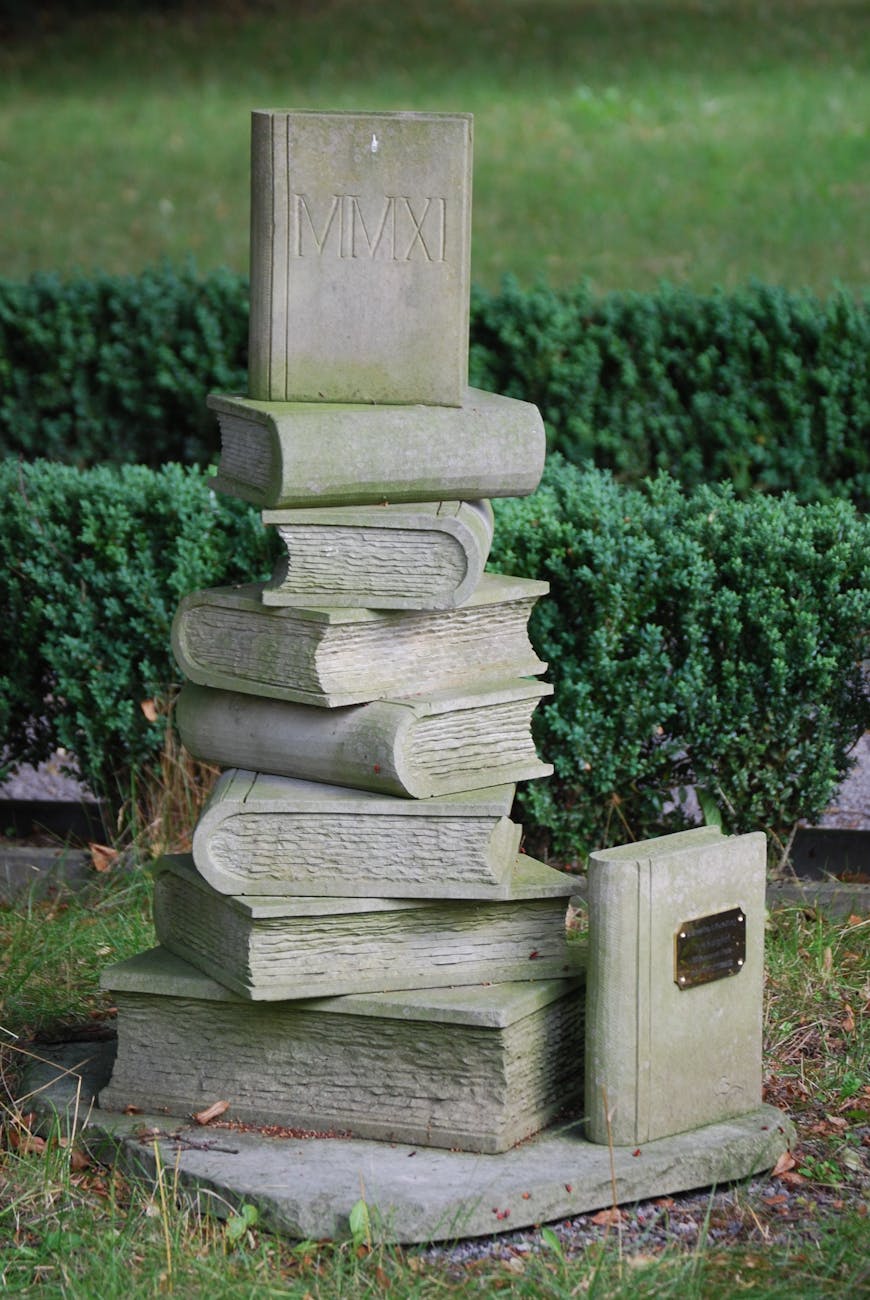
Ansouis Village Annual Book Sale

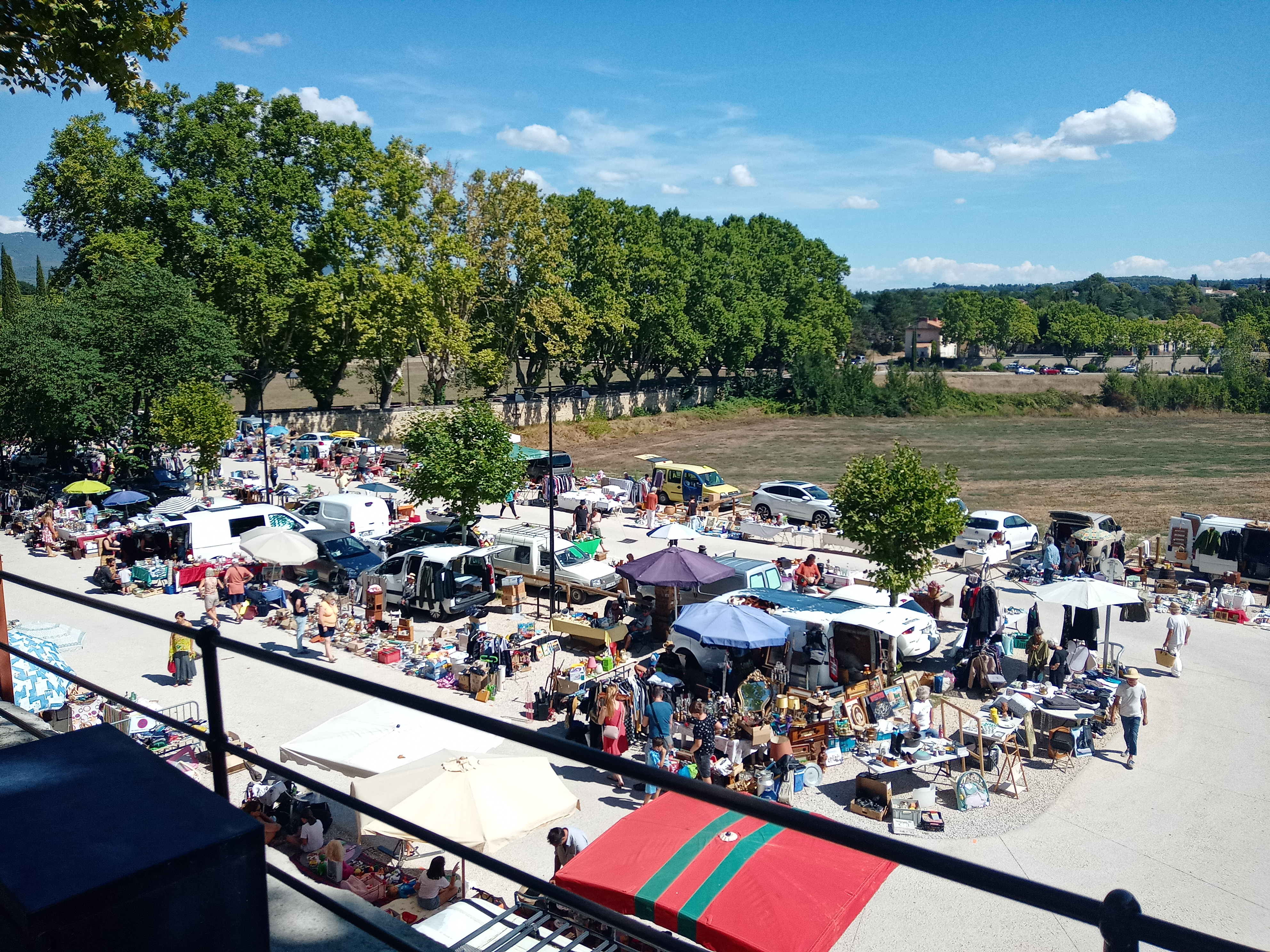
Yesterday (Sunday) was the annual ‘vide grenier‘ (garage sale) in the medieval village of Ansouis in the South Luberon area of the region Vaucluse. It’s a village I drive through at least once or twice a week for work. It’s a nice place to stop for a while.

The village has a population of around 1,000 people and is dominated by the fortress like Château d’Ansouis, sitting on a rocky perch overlooking the village and valley all around.

Every year the local French library has a few tables, where they sell second hand books, in both English and French.

It’s my favourite book sale, because it’s set up in this beautiful location, there’s easy parking and it’s always on a sunny day in mid September. If you arrive early, you are guaranteed to be rewarded.

I like to cull the bookshelves every year and donate to this market, and then try not to buy back too many. However this year I arrived just as another woman was depositing her donation and I saw those two Booker Prize winning novels that I haven’t read yet, Bernadine Evaristo’s Girl, Woman, Other and Sri Lankan author Shehan Karunatilaka’s The Seven Moons of Maali Almeida.

And then there were more…

In addition to the other impulsive purchases you can see in the image above, I found Northern Irish author Jan Carson’s The Raptures, a signed copy of Kamila Shamsie’s Best of Friends, Japanese author Mieko Kawakami’s Breasts and Eggs translated from Japanese and more. Oops. 12 books later…

Often these are books I have seen reviewed and I’m interested in, but not enough to rush out and purchase a copy, however they are the kind of books I would borrow from a library, so I guess this is like an annual library visit. Isn’t it?

I had heard about the Cazalet Chronicles Quintet by British author Elizabeth Jane Howard and couldn’t pass up the opportunity when I saw all four of them sitting in a box waiting to be claimed. Anyone keen for a buddy read?

There are lots of other things that people are selling, old china and glass, cutlery, clothes, old linens, the contents of workshops, old music albums – brocante. A treasure trove of things we don’t need, but definitely fun to look at.

The only other thing I look out for are old postcards, like these of Marseille’s Le Palais Longchamp, the Route de la Corniche and Le Parc Borely, all of which I found in Ansouis a couple of years ago. And all places I connect with and have fond memories of.

Even though they have already been used and written on (many many years ago), I like to give them a second life, sending them as bookmarks, to friends who also know and remember these places.

I didn’t find any today, well, there were some very small but beautiful old black and white photos of Berlin, but I didn’t connect with them in the same way as I do with the southern French locations.

Have you read the Cazalet Chronicles or any others from this haul that you recommend?

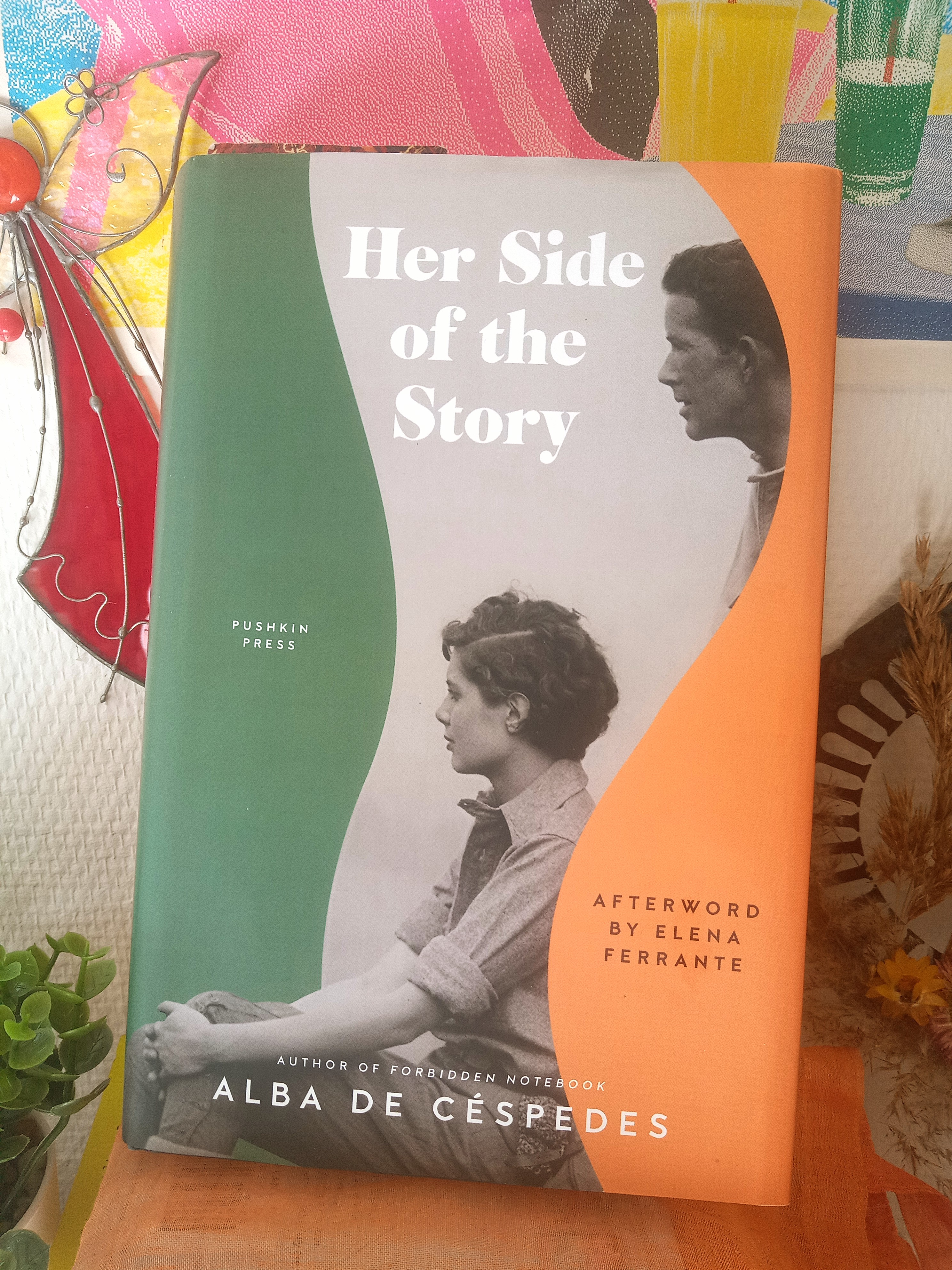
Her Side of the Story by Alba de Céspedes tr. Jill Foulston

Stunning.

I thought The Forbidden Notebook which I read in 2023 was excellent, but this novel is in a category of its own. This is probably the title in 2024 I was looking forward to the most and it exceeded my expectations.

Originally published in Italian in 1949 as Dalla parte de lei, this captivating new English translation by Jill Foulston was published by Pushkin Press in 2024.

Women’s Partisan Struggle in 1930’s -1940’s Italy

Alba de Céspedes (1911-1997) was a bestselling Italian-Cuban novelist, poet and screenwriter who worked as a journalist throughout the 1930’s while also taking an active part in the Italian partisan struggle and was twice jailed for her anti-fascist activities.

After the fall of fascism – Rome, considered the heart of fascism under Mussolini, was liberated in June 1944 and many felt the country had lost its basic values after 20 years of fascist government – Alba de Céspedes founded a literary journal called Mercurio, publishing many great names of Italian literature and politics, as well as Katherine Mansfield, Jean-Paul Satre, Ernest Hemingway.

Due to a lack of funding it would close in 1948, and in its final issue she published an essay by Natalia Ginzburg entitled ‘On Woman’, alongside a letter she was inspired to write in response to it. Certainly, she would have been working on the novel Her Side of The Story, at the time this essay (discussed below), was published.

Women Writing From the ‘Well’

Photo by ArtHouse Studio on Pexels.com

Ginzburg had written of an affliction unique to women – at a time when they were often confined to the home and not considered equal under the law – that she described as “a continuous falling down a deep dark well“, a terrible melancholy typical of feminine disposition that likely originated from the age-long tradition of subjection and subjugation.

In her open letter, de Céspedes confesses that she also writes from the ‘well’ Ginzburg theorises. Despite that, de Céspedes believed women’s freedom consisted of being able to go down those emotional and psychological wells, which were for her a strength, rather than a curse. ‘Every time we fall down a well’, de Céspedes wrote, ‘we descend to the deepest roots of our being human; when we come back to the surface, we carry such experiences with us that enable us to understand everything men never will — since they never fall into any well’.

In the same issue of Mercurio, de Céspedes published La donna magistrato’ (‘The Woman Magistrate’), an essay by Maria Bassino, one of the most important criminal defense lawyers at the time, addressing women’s rights to become magistrates. In her letter to Ginzburg, de Céspedes explained that those two essays were published together to denounce the injustice done to women when they were tried by magistrates who cannot understand women’s reasons to ‘kill, steal, and commit other humiliating actions’; referring to men who never experienced the depth of wells.

If we are not sure of the depth and character of the mid twentieth century well, then by the time we finish reading Her Side of The Story, we most certainly have a greater understanding of it.

The Review: Her Side of the Story

Photo via Pexels.com

An expansive coming of age tale of love and resistance, this feminist, social novel explores a young woman’s attempt to break free from society’s expectations and live life on her own terms. Amid great storytelling, it is a fearless condemnation of patriarchy and rejection of fascist ideals in a society on the cusp of witnessing social change for women.

Alessandra grows up in a bustling apartment block in 1930’s Rome with a shared courtyard, where everyone knows everyone, spending most of her time alone in the apartment in the care of Sista, while her father is at his office and her mother is out teaching piano lessons. She adores her quiet, delicate mother, who keeps to herself and treats her daughter like a friend, while despising a father she believes doesn’t deserve an elegant, cultured woman like her mother.

The women felt at ease in the courtyard, with the familiarity that unites people in a boarding school or a prison. That sort of confidence, however, sprang not so much from living under a common roof as from shared knowledge of the harsh lives they lived: though unaware of it, they felt bound by an affectionate tolerance born of difficulty, deprivation, and habit. Away from the male gaze, they were able to demonstrate who they really were, with no need to play out some tedious farce.

Alessandra looks back and recounts her childhood, adolescence and marriage, describing her experience of them all, her inner world view and how it was shaped by what she observed happening around her, everything she thought and how she responded to it all.

Though she spends much time alone, she rarely keeps her thoughts to herself, allowing the deepest parts of herself to be exposed, challenging what she does not agree with, determined to take charge of her life and live it according to her own desire, against convention.

A Rare and Faultless Admiration of Mother

The first section is focused on the mother-daughter relationship, on Alessandra’s blind faith in everything her mother is and does, including her obsession with the Pierce family, their friendship with Lydia and her daughter Fulvia upstairs and sessions with the medium Ottavia who visits the apartment block on Fridays. Invited to play at a private concert with the Pierce son Hervey joining on violin, the celebratory event witnessed by her husband, becomes a turning point.

The depictions of life in the apartments, the details of the women’s lives, the absent husbands, the affairs, the way daughter’s follow mother’s examples, the witnessing of each other’s lives, the door porter who sees and knows all, the desire for privacy and impossibility of it are all brilliantly depicted. Alessandra’s mother is a romantic with dignity, she is not interested in an affair, but is vulnerable to kind attention.

After a near expulsion from school for hitting a boy for his psychological cruelty towards another girl, she confesses what happened to her mother and worries about her father’s response.

“We can’t tell him everything. Men don’t understand these things Sandi. They don’t weigh every word or gesture; they look for concrete facts. And women are always in the wrong when they come up against concrete facts. It’s not their fault. We’re on two different planets; and each one rotates on its own axis – inevitably. There are a few brief encounters – seconds, perhaps – after which each person returns to shut him- or herself away in solitude.”

Alessandra spends a lot of time reflecting, examining the depths of her thoughts, actions and observations and how they may have come about. From her parents certainly, but she recognises something restless in herself, that seeks retribution.

I could reproach her for having subjected me to that climate of perpetual exaltation, which, above all, made me completely devoted to the myth of the Great Love and thus unintentionally led to the painful situation I find myself in today. I could reproach her, perhaps, if she hadn’t already paid for her ambitions. And now that I am forced to write about her and look into the most intimate and dramatic moments of our life together, it’s not really to accuse her of having made me what I am but to explain those of my actions which would otherwise be clear only to me.

Allesandra, sono io, I am Alessandra

Photo by Piotr Arnoldes on Pexels.com

It is Sandi’s story but it is also the story of many ordinary lives of girls and women, growing up in discordant families, with the weight of expectations, the allure and (false) promise of love, the desire to be educated, to participate in something greater than ‘the home‘, to be heard, respected and taken seriously.

“…Alba de Céspedes intended to act as the defender of women. Like Flaubert, she could say of her protagonist: Alessandra, sono io, I am Alessandra.

Rural Idealism Enforced by The Matriarch

In the second section, Alessandra is sent to live on a farm with her paternal grandmother Nonna, a grand matriarch of a traditional, religious family who surround her with examples of duties expected of her and demonstrate how they will act to facilitate them. She enjoys the natural environment and complies to a certain point, but insists on her right to further her studies, rejecting the suggestion of a well aligned matrimony.

Though this section was originally cut from the first English translation (1952) of the novel, it is restored here. The rural setting represents tradition and a connection to the land, the roots of family, hard work and lineage. Mussolini’s regime focused on rural regions to uphold goals of self-sufficiency, free Italy from “the slavery of foreign bread” and control the agricultural sector. Propaganda praised this lifestyle, much of it targeted at women and upheld by women. Nonna exemplifies and encourages the virtues of sacrifice for the greater good and giving up one’s selfish desires.

Bewildered, I observed these grave, taciturn people who had been strangers to me a few hours before, but who now embraced me within a mechanism so robust I sensed it could easily overwhelm a person.

War breaks out, she returns to Rome, to her studies, to employment, to living again with her father and meeting Francesco, the man she would truly love and believe she could have a different kind of life with. And it might be said that that is where her troubles really begin.

Love, Marriage, War – the struggle

There is so much that could be said about Alessandra’s wartime and matrimonial experience, that is better left for the reader to discover.

There is no stone left unturned in her dissection of the relationship she has with the older anti-fascist Professor, a charismatic man with a sense of justice who stands up for his beliefs, the only man she will ever truly love and her attempts to talk to him about the things that unsettle her, that she feels could be easily resolved, if only he took the time to listen. Once married, he is barely aware of or able to respond to her feelings, while she continues to try to make him understand, slowly unravelling in her persistent attempt.

The most misleading virtue of marriage is the ease with which one forgets, in the morning, everything that happened the night before. Encouraged by the clear colour of the sun’s first rays and the energy and rhythm of everyday gestures, I was always the first to turn back towards Francesco.

The novel tracks the attempt to rise above expectation and the subsequent decline into acceptance, focusing on the effect of this repression, the mental deterioration of generations of women for whom the burden of that ordinary life, of a woman’s limited lot, and the inaccessibility of how (here) she imagines it might have been, become too much to bear. She wants the reader to understand this very well, effectively making you live it alongside her.

Intense, compelling and set against that backdrop of wartime Rome and Italy coming out of a long repressed fascist era, I found it utterly riveting. Her Side of the Story is a powerful, intimate and insightful exploration of the female psyche, of the desire to be, and do, more than meet long outdated representations of women in families, society and relationships. Unputdownable, one of the best of 2024 for sure. Fans of Natalia Ginzburg and Elena Ferrante will likely enjoy this. Expect to feel unsettled.

There’s No Turning Back

Delighted to learn that her debut novel There’s No Turning Back translated by Ann Goldstein will be published in February 2025.

Highly Recommended.

Further Reading

Natalia Ginzburg’s essay ‘Discorso sulle donne‘On Women’ translated by Nicoletta Asciuto, The Fortnightly Review

Jacqui’s Review at JaquiWine’s Journal, April 2024

Chicago Review of Books: The Prescience of Alba De Céspedes’s “Her Side of The Story” by Margarita Diaz November 24, 2023

Author, Alba de Céspedes

Feminism Journal writing Womens Rights Italian Literature

Alba de Céspedes (1911-97) was a bestselling Italian-Cuban novelist, poet and screenwriter.

The granddaughter of the first President of Cuba, de Céspedes was raised in Rome. Married at 15 and a mother by 16, she began her writing career after her divorce at the age of 20. She worked as a journalist throughout the 1930s while also taking an active part in the Italian partisan struggle, and was twice jailed for her anti-fascist activities. After the fall of fascism, she founded the literary journal Mercurio and went on to become one of Italy’s most successful and most widely translated authors.

After the war, she accompanied her husband, a diplomat to the United States and the Soviet Union. She would later move to Paris, where she would publish her last two books in French and where she spent the rest of her life. She died in 1997.

The Forgotten Seamstress by Liz Trenow

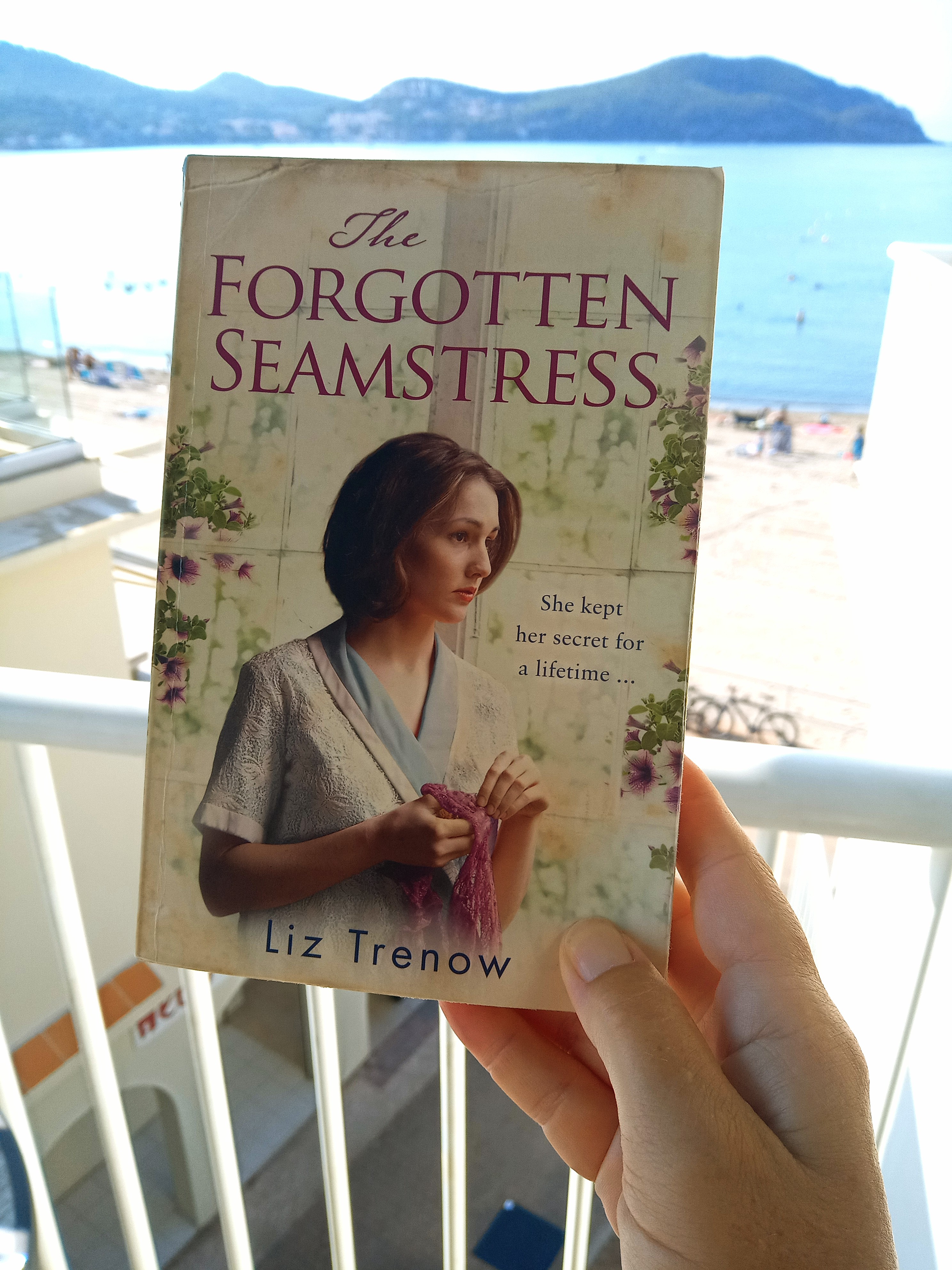
The second holiday read work of historical fiction I read was another dual narrative The Forgotten Seamstress by Liz Trenow.

Different timelines and narratives reveal the story of Maria Romano, a young orphan. She and her friend Nora, both adept at sewing, are called in one day after a grand lady visits the East End of London orphanage and admires their work.

She goes on to tell us that the grand lady who came a few months ago is a duchess and the patron of the Needlework Society and was visiting to inspect the work that the convent was doing for the poor children of the city. She was so impressed by the work Nora and me showed her that she is sending her housekeeper to interview us about going into service.

The house they are moved to, they soon discover is a royal household. Maria catches the eye of the young Prince and being young and obedient, responds when he requires her service and is unsuspecting of the trouble ahead for her, when their fun creates a dilemma for her.

A Series of Taped Interviews, 1970

An academic doing a PhD interviews patients in Helena Hall, an institutional asylum where thousands of women dwelled, recording their stories. Some speak of voices or fantasies, at least as the medical establishment puts it. Like Maria who imagined she worked for royalty and knew a prince. They called her Queenie. No one believed her story. And yet…

The transcriptions of the cassettes allow Maria to tell her story and the reader to decide whether she is a reliable narrator or not.

London 2008

In the modern day, Caroline Meadows is left a quilt by her grandmother, who spent a short time at Helena Hall. Either she or someone she knew made the quilt.

The central panel was an elegantly embroidered lover’s knot surrounded by a panel of elongated hexagons, and a frame of appliqué figures so finely executed that the stitches were almost invisible. And yet, for all the delicate needlework, the design of the quilt seemed to be quite random, the fabrics so various and contrasted it could have been made by several people, over a long period of time.

At a crossroads in her life, her relationship has ended, a job recently lost and she is coping with a mother with onset dementia who is becoming a danger to herself. It is the perfect moment for her to throw herself into the mystery of the quilt and reveal the truth behind what happened to the young Maria.

Then there is a journalist Ben, who she’s unsure about when she contacts him, is his interest in her just about the story he is chasing, or might it be something else? When the quilt goes missing, he helps her, though she remains wary.

Royal Secrets, Institutionalising Women, Lives Stolen

This was an enjoyable read of twists and turns, revelations and class punishment, the incarceration of innocent women in order to maintain the reputations of others, and the terrible expendability of babies and illegitimate children, deprived of their identities, heritage and mothers.

The Winemaker’s Wife by Kristin Harmel

In the last two weeks of August, I was on holiday in St-Cyr-sur-Mer and during this time there was a lot of swapping of books. This is one of two works of historical fiction I read.

1940s couple walking arm in arm towards stairs flanked by pillars, green foliage surrounds

I started with this one out of interest because it was set in the Champagne region of France, which I had visited in October 2023.

It was interesting to imagine this story set during the lead up to World War II, perhaps not surprising to learn that the area was occupied for four long years and equally understanding that many of the vintners were able to keep their best vintages hidden in the array of underground tunnels behind false walls.

The Winemaker’s Wife is a dual narrative historical fiction novel, set in the champagne town of Rians, France, in 1940 and in 2018 New York City, Paris and Rians.

The plot concerns the unravelling of a family mystery, with secrets, lies, cover-ups, betrayals, and goings on in the network of tunnels beneath the chateau champagne house, Maison Chauveau.

1940 Champagne Region of Rians, France

Inès has just married Michel, the owner of the champagne house, when the Germans invade. She has tried to make herself useful, but doesn’t seem to have made much of an impression. Assisting them are Céline and Theo Laurent, the chef de cave.

Céline was quiet and serious, always tromping around with a frown on her face, while Inès did her best to look on the bright side.

When Inès has had enough, she visits her friend Edith and her husband Edouard at the Brasserie Moulin, but it’s not always safe there and in her naivete, she makes a fatal mistake that is going to affect all of them.

The two couples try to continue to run the winemaking business but the invaders have a taste for more than just champagne. Despite the danger surrounding them, they seem to be inviting trouble, when they make things even more riskier for themselves. And that doesn’t include resistance activities which are even more reason to not bring attention to themselves.

New York to Paris, A Grandmother in her Centennial Year

Meanwhile, in 2019 New York, elusive 99 year old French grandmother Edith turns up unannounced to take her niece Liv on a trip to Paris and Rians and is hiding the reason for going there.

As she gets closer to understanding why they are there, it seems all roads lead to Maison Chauveau and there might even be a love interest for the recently heart broken young woman.

I have to say I questioned the grandmother’s motives given her age. It seemed strange to me that she had waited until her 99th year before taking such a trip, as good as admitting she had intended to take her secrets to the grave. I did not trust her – and with good reason, it turns out.

Imagined History versus Real History

Though it was often difficult for me to believe in the characters and the narrative, having just read the true historical account of Marie Madeleine Fourcade in Madame Fourcade’s Secret War by Lynne Olson, I would recommend The Winemaker’s Wife as a light holiday read for those who enjoy historical fiction, champagne and visiting France.

Extra pics from a stroll down Avenue de Chapagne, where there are many champagne houses like the one above and a visit to the underground champagne storage tunnels of Möet & Chandon in Épernay, October 2023. They’re incredible and worth a visit, an underground labyrinth.

Read more about Champagne Hillsides, Houses, and Cellars here.

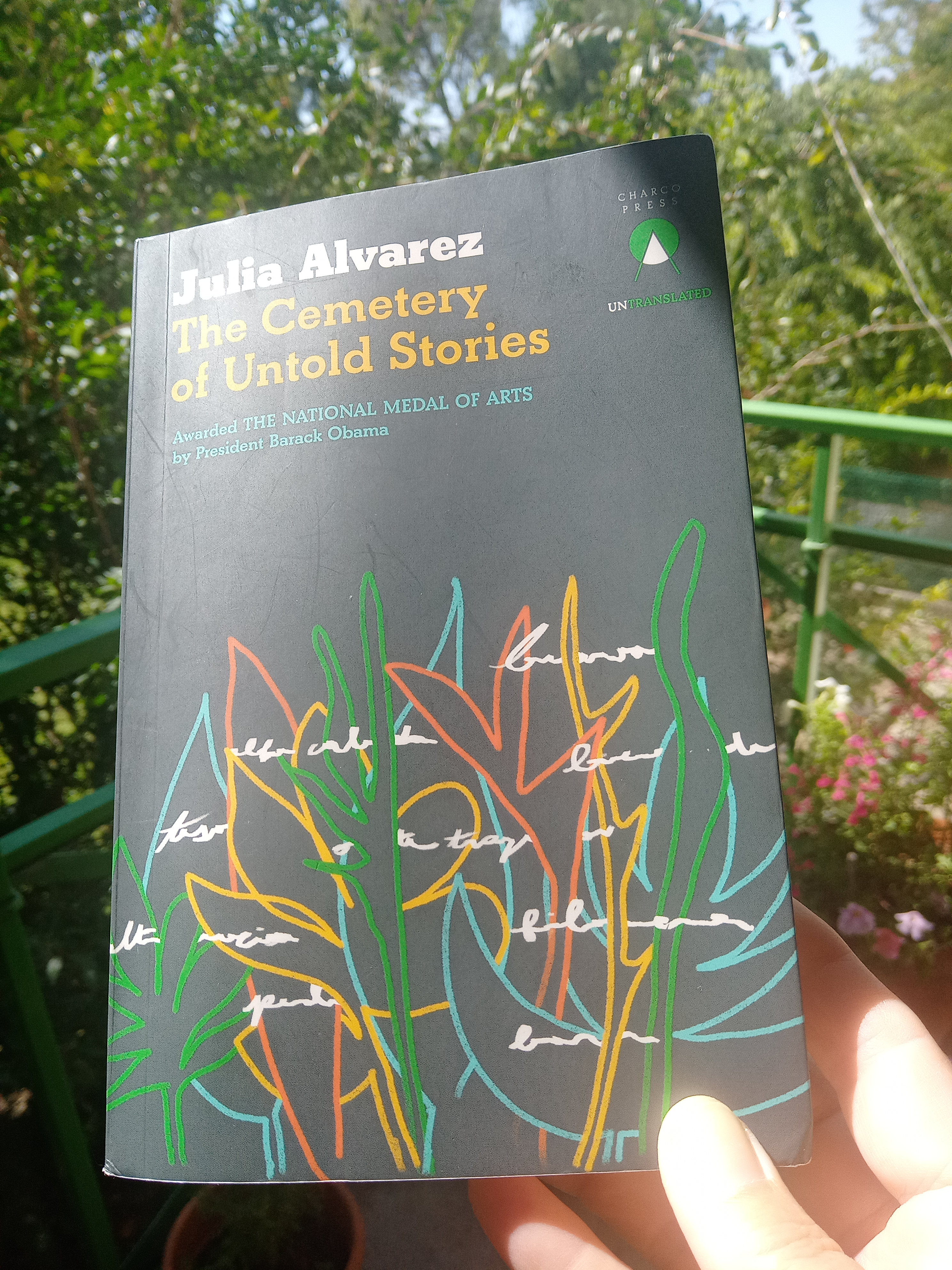
The Cemetery of Untold Stories by Julia Alvarez

The Cemetery of Untold Stories by Julia Alvarez is part of the Charco Bundle 2024 Untranslated series. Most of the Charco books are works of Latin American origin translated into English.

Julia Alvarez was born in New York City, the second of four daughters. Moving back to the Dominican Republic shortly after her birth, her family were forced to flee ten years later due to her father’s involvement in an underground movement to overthrow the oppressive dictatorship of Rafael Trujillo, who maintained control of the country for 31 years.

Reading The Cemetery of Untold Stories very quickly pulled me in and gave me the feeling I would often encounter when reading works by other woman writers from the Caribbean, like Maryse Condé’s Victoire: My Mother’s Mother, Simone Schwartz-Bart‘s The Bridge of Beyond, Cristina García’s Dreaming in Cuban.

There is something unique to their storytelling that expands beyond our known reality, that embraces the imagination, allowing it a glimpse of another dimension of perceiving that is good hearted, that exists to open minds, bring awareness and healing.

We know we are going there, because the opening chapter entitled Let’s go to Alfa Calenda is a version of that place.

Half the time Papi didn’t even know where he was. What was the harm in pretending? We’re going to Alfa Calenda, they told him as they packed up his belongings, put the house on the market, and boarded the Jet Blue flight to JFK. Just the mention of that fantasy place he’d invented with his mother seemed to soothe him. His personal Shrangri -la-la land, his daughters had dubbed it.

Alma is a writer at a turning point in her life/career. She and her three sisters live in the US and their lives have converged after the recent deaths of both parents in short succession. When their father dies, they discover that he owned many small properties in the Dominican Republic. Unable to find a fair way to apportion them, they decide to draw lots (a mediator’s suggestion), Alma draws the first lot and chooses a wasteland near a dump, on the outskirts of a barrio, then withdraws from the selection process. Closing in on her own latter years, she decides to return to her native land and bury her unfinished stories.

Should Alma follow in her parents’ footsteps, she’d be much better off in her native land. Even if it wasn’t first rate in terms of social services, that world had been her first world: her senses, her body’s rhythms, her psyche were all steeped in it. The weather, the smells, the sound of Spanish, gestures understood without explanation. Life was also cheaper there.

Alma is going to put her stories to rest, stories she has abandoned, failed to bring to life. This new development has given her a project, crazy as it sounds to her sisters. She needs a collaborator and remembers her friend Brava, she won’t judge her new ambition.

Like her art, Brava’s personality was larger than life, a fireball throwing off sparks. None of the anguished and torturous revisions and self-doubts that beseiged Alma.

They will build a cemetery for characters of Alma’s untold stories, a gallery to Brava’s art.

Alma is a curiosity to the residents of the barrio, all kinds of rumours circulate when the bulldozers arrive.

A sign goes up on the wall at the main gate. EL CEMENTERIO DE LOS CUENTOS NUNCA CONTADOS. A cemetery for untold stories. The only way to enter is to speak into a small black box at the front gate. Cuéntame, a woman’s soft voice requests. Tell me a story. Only then does the door open, or not.

Photo M. van Duijnen Pexels.com

As she builds her cemetery and buries her boxes of manuscripts, different members of the community enter her life through their own stories and the neglected buried characters begin to reveal more about theirs, defying the author and rewriting their fates. Her helpers don’t always follow her instructions.

Alma pulls Brava aside. What’s going on?

El Baron is the boss of cemeteries, Brava explains. The deity who allows passage between the worlds. The first tomb always belongs to him.

The stories reveal themselves, as do the characters who enter the cemetery, looping in on themselves and making what might have been judged, better understood. It asks the question of whose stories get to be told by who, to whom and which stories are better buried.

It is also about listening, imagining, seeing differently, knowing when to speak up and when to stay quiet. It is a quiet celebration of stories, storytelling and the inspiration behind characters who might not always have had a voice.

Did these things really happen?

That isn’t the point, Pepito explains. These stories are about real passions in people’s hearts. They tell of all that is possible.

Julia Alvarez is a long accomplished author and while clearly this is a work of fiction, it often made me wonder about aspects of her own life, as it felt as if it dipped in and out of the familiar, (a successful Dominican Republican writer in the latter years of her career) while carrying a warning about a writer’s obsession to complete the unfinished.

I loved this novel and I am very happy to have encountered Alvarez for the first time, knowing there is a promising backlist to explore. It is always a pleasure to discover another of those unique voices with connections to that Caribbean storytelling culture that I so adore. Incredibly, though her 7th novel, it is her first to be published in the UK. It feels wrong to be starting at the end, but it also is a novel that begs to be reread, to be even more deeply understood.

Have you read any of Julia Alvarez’s works? If so, tell us your favourite in the comments below.

Further Reading

New York Times Review: A Novelist Comes Home to Bury Her Words, and Brings Them Back to Life, by Luis Alberto Urrea, April 2024

Interview: Following the screening of Julia Alvarez: A Life Reimagined, by Mikaela Lefrak, 6 Sept 2024

Documentary: American Masters (PBS) Julia Alvarez: A Life Reimagined (Premiere 17 Sept, 2024)

Author, Julia Alvarez

Julia Alvarez has written many bestselling novels including: How the García Girls Lost Their Accents (1991), In the Time of the Butterflies (1994) (considered her masterpiece), ¡Yo! (1997), In the Name of Salomé (2000), and Afterlife. She has also written collections of poems, three works of non-fiction, and numerous books for young readers. The Cemetery of Untold Stories is her most recent novel. She is currently assembling “Visitations,” a collection of poems, to be published in 2025.

The immigrant experience and bicultural identity is the subject of much of Alvarez’s fiction and poetry. Her awards and recognitions include the Pura Belpré and Américas Awards for her books for young readers, the Hispanic Heritage Award, and the F. Scott Fitzgerald Award. In 2013, she received the National Medal of Arts from President Obama.

Filmed in the U.S. and the Dominican Republic, Julia Alvarez: A Life Reimagined features extensive interviews with Alvarez, her family, and her literary contemporaries.

“Eventually, storied and unstoried join in mystery. Nothing holds anyone together except imagination.”

Fresh Dirt from the Grave by Giovanna Rivero tr. Isabel Adey

Fresh Dirt From the Grave is another Charco Press title, this time from Bolivia. It is a collection of six stories that unsettle the reader, navigating paths outside the norm, revealing aspects of characters, of circumstances and inclinations that pierce like a wound, while evoking expressions of love, justice and hope.

Described as where contemporary horrors and ancient terrors meet, these short stories by Bolivian author Giovanna Rivero are not my usual fare, however I chose to read it for #WITMonth and discover what the boundaries of Gothic really means.

There are six stories and the first few were tales of macabre revenge that reminded me of Yoko Ogawa’s excellent collection Revenge.

Overall an interesting, dark collection that brings out a quiet consideration in each of the protagonists as they grapple with their challenging situations and must either make a decision or give in to one made by an other.

blessed are the meek

A young woman is violated. Everyone around her seems to be denying the gravity of it. The family moves away, until the opportunity arrives to bury their grief, literally…

It shouldn’t have been her family that had to leave. But they were the ones who left.

fish, turtle, vulture

Photo A. Tuan on Pexels.com

A man survives 100 days at sea, the young apprentice companion with him does not.

Now he is meeting the mother of that young boy. She feeds him tortillas, asking him to repeat again what happened out there.

Atoning for his loss, he will atone for hers.

Tell me more, she says, pushing the plate of tortillas towards him as if she were paying him to tell the tale with that warm, fragrant dough.

it looks human when it rains

A Japanese widow in Bolivia teaches origami to women prisoners in a jail. She is curious about these so-called murderers, until she teaches them how to make a snake – and observes in the eyes of one woman, something terrifying.

She was surprised to find that she was not appalled by their crimes, their mistakes, their unbridled passions, the gross misjudgements that had led them there. Who was she to ponder their failings.

Her own past comes back to haunt her, a young woman lodger helps her in the garden, things that were buried resurface in her mind, in her life. A sense of injustice, a prickle of rage. The year of the snake had been the worst, the part she had tried to bury. Origami was a path, a light, because it never resorted to twists or curves to fix a form.

No one who had been so fortunate as to find themselves among the group of émigrés that embarked on the voyage to Brazil and Peru in 1957 before settling in Bolivia, in the eastern rainforest of Yapacani, had returned to Japan carrying the wilting flowers of the fiasco on their backs.

Socorro

“Those boy’s aren’t your husbands” says a deranged Aunt in the opening lines.

I didn’t know in that moment, what shook me more: the mad woman’s barbed remark or the cackle she unleashed as she spoke those words, which felt like a reprimand.

A woman, her husband and twin boys visit her mother and Aunt. She is an expert in mental health but being around her Aunt unsettles her in ways that her professional self finds hard to deal with. The moments of lucidity among the madness, reach in to her own hidden aspect and threaten to overwhelm her.

Donkey Skin

Two children orphaned overnight are sent to live with their French Aunt in Winnipeg, Canada. When they get to 17 years old, they plan an escape, and their world gets turned upside down again.

The only blood uncle we had left in Santa Cruz, Papa’s brother, said that children were always better off being raised near a female voice, and so without saying a word, he signed all the migration papers needed for Dani and me to leave Bolivia and his life for good. Being Bolivian is a mental illness, he told us in that good-humoured way of his, which made us forgive him for everything, even for handing us over like pets to Aunt Anita, who, when the time came to appear at the juvenile court, despite all those breath mints she slotted between her teeth, still couldn’t disguise the stench of whiskey.

Kindred Deer

A brown deer stands next to a dead tree Kindred Deer in Giovanna Rivero's Fresh Dirt from the grave attend a dead deer
Photo by Pixabay on Pexels.com

Intelligent but struggling financially, students sign up for medical trials that promise to cover their debts, but at what price.

The medicinal smell that rises from Joaquin’s body like an aura has taken over our bedroom. It’ll be gone in a few days, they told him.

They ignore the corpse of a dead animal outside their window, leaving it longer than they should to address. Like the strange mark on his back that shouldn’t be there, have they left that too late as well, will he pay the ultimate price?

Pay him double or I’m leaving, I say.

Author, Giovanna Rivero

Giovanna Rivero was born in the city of Montero, Santa Cruz, Bolivia in 1972 and is a writer of short stories and novels.

She holds a doctorate in Hispano-American literature. In 2004, she studied on the Iowa Writing Program and in 2006 was awarded a Fulbright scholarship, enabling her to take a masters in Latin American literature at the University of Florida. In 2014, she received her doctorate.​ In 2011, she was selected by the Guadalajara Book Fair as one of the 25 upcoming stars of Latin American literature.

She is the author of the books of short stories as well as children’s books. She has published four novels: Las camaleonas (2001), Tukzon (2008), Helena 2022 (2011) and 98 segundos sin sombra (2014). Her literary work, which moves between horror literature and science fiction, is regarded as a major contribution to the renewal of the Gothic and fantastic genres in Latin America.

Time of the Flies by Claudia Piñeiro tr. Frances Riddle

Women in Translation Month

15 years after killing her lover Ines is released from prison. A dark, intelligent mystery with a surprise collective voice

I read Claudia Piñeiro’s latest novel for #WITMonth. It is from the Charco Bundle 2024, a subscription where they send you nine titles, the best of contemporary Latin American fiction they are publishing throughout the year. It’s one of my absolute favourite things, an annual literary gift to me, surprise books that I haven’t chosen myself. And they are so good!

Also, it’s August. Women in Translation month. So I’m prioritising books in that category, another of my favourite things. World travel and storytelling through literature.

Claudia Piñeiro is fast becoming one of my favourite Latin American authors. This is her third book I have read. Elena Knows was Shortlisted for the International Booker Prize 2022; it was intriguing, but the next one, A Little Luck was even better. More engaging emotionally, full of suspense, an immersive read.

Review

Time of the Flies has it all. The more I consider it, I find it is literary brilliance.

A past crime, a slow burning mystery, a complicated mother daughter relationship, a developing friendship between women who are used to not trusting anyone, unwanted motherhood, a dilemma that might be an opportunity or a trap. A sociological commentary on the lives, loves, wrath and resentments of women and thought provoking references to other works of literature, from classic mythology to contemporary feminism.

Female Friendships, Fumigations and Investigations

Inés, the mother of Laura ( a role she is trying now to deny) has been released from prison 15 years after killing her husband’s lover. She has set up a pest fumigation and private investigation business with fellow friend and ex inmate Manca.

FFF (flies, females and fumigations) a business run by women for women. Non-toxic pest control.

The two friends and business partners work separately but they consult each other when a case requires it, although Inés knows more about autopsies, fingerprints, and criminal profiles than Manca does about cockroaches.

A new client makes Inés an offer that might be an opportunity or a trap, she considers whether to pursue the opportunity and Manca, her friend and business partner investigates the client and becomes suspicious when she finds there is a connection between this woman and someone Inés knows.

She curses her fate and whatever recommendation or flyer that landed her at Susan Bonar’s house in the first place to be confronted by a part of her past that she does not deny but prefers to forget.

The Collective Voice, And Medea

Then there is a collective voice of feminist disharmony that enters the narrative every few chapters to opinionate on what just happened, if there is an issue that women might have an opinion on.

It’s never a consensus, it illustrates the difficulty of any collective voice that doesn’t resonate together, and demonstrates the aspects being considered on a topic. Other voices are quoted that challenge:

“There are many kinds of feminism in the world, many different political stances within the social movement and different critiques of our culture.” Marta Lamas Acoso. I don’t agree. Me neither. I do.

Each of these chapters begins with an epigram from Medea by Euripides (a Greek tragedy/play from 431 BC), that sets the tone for the theme that will be discussed. Like our protagonist Inés, Medea too, took vengeance against her philandering husband Jason, by murdering his new wife and worse, her own two sons.

This quote below precedes a discussion on the issue of one woman killing another woman, whether that is femicide. Equally interesting quotes from Rebecca Solnit and Toni Morrison are also referred to in the text.

Medea by Euripides A Greek Tragedy, Time of the Flies Claudia Pineiro Collective voice of women feminist issues

Chorus:

‘Unhappy woman, 

Feu, feu [Ah, ah] unhappy for your miseries.

Where will you turn? To what host for shelter?’

Once you realise what the collective voice is doing, it provides a pause in the narrative and allows other voices to engage with the reader. In case you missed that a significant issue had just appeared in the text you’re going to be confronted with it here. It doesn’t distract from the story (well, yes it does initially), however the chapters are only a couple of pages long. It adds depth to the narrative making this more of a literary novel, it pushes the reader to consider the issues, which some readers may not appreciate, but it is likely they will remember.

What About Those Flies

Inés sees a fly. In her eye. It comes and goes, it is a part of her. The doctor has checked it out and explained it away, but for her, it is significant. She understands the brain’s suppression mechanism that will make it disappear.

If she had to define it, she’d say it’s the feeling that there’s something fluttering around her head that she can’t catch, that there’s something right in front of her eyes that she can’t see. But it’s definitely not a fly.

Flies ascend in the narrative, they have a champion in Inés and we will even come across numerous literary references to them, some that hold them more in esteem than others. They are also that niggle that she feels, something that wants attention that she is not seeing.

Even Manca made a contribution to my literary education. IN her efforts to encourage me to write, she gave me a novel (I don’t read novels Manca); Like Flies from Afar, by one Kike Ferrari. Manca doesn’t read either, not even the instructions on how to use her appliances, but she went to the bookstore and asked for ‘one about flies’, and the bookseller said: ‘The fly as a methaphor, right? I’ll bring you one of the best crime novels of the year.’

(…)
(…)
The novel has its central mystery that is slowly unravelled, while it explores the complexity of the mother daughter relationship, the effect of abandonment and absence and the promise that a new generation can bring to old wounds.
(…)
(…)
(…)

So, Those Ellipsis’s

Though it was a slow read for me, it really got me in its grip and there was so much to consider beyond the mystery, like the collective voice, which makes the reader consider issues from different points of view.

Then there are the ellipsis’s. The pause, things left out, the reader’s imagination engaged, what are they? Pause for thought indeed. Usually present when there is dialogue, they make the reader consider why they are there. Are parts of the dialogue unimportant? Are they an invitation to imagine what was said in between? Whatever the intention of the author, the effect is to awaken the reader to their presence and make you think about the why.

By the time I finished this, I absolutely loved it, for everything. For its central storytelling, its reflective invitation, the literary references, the collective voice and its ability to keep me entertained and interested and intrigued. A quirky, enticing, novel that praises flies and finds all these intriguing literary references to them. It is a cornucopia of elements amidst great storytelling.

Further Reading

Read an Extract of Time of the Flies by Claudia Piñeiro

Actualidad Literatura: The Time of the Flies <<El tiempo de las moscas>> reviewed by Juan Ortiz

Author, Claudia Piñeiro

Born in Burzaco, Buenos Aires in 1960, Claudia Piñeiro is a best-selling author, known internationally for her crime novels.

She has won numerous national and international prizes, including the Pepe Carvalho Prize, the LiBeraturpreis for Elena Knows and the prestigious Sor Juana Inés de la Cruz Prize for Las grietas de Jara (A Crack in the Wall). Many of her novels have been adapted for the big screen, including Elena Knows (Netflix).

Piñeiro is the third most translated Argentinean author after Jorge Luis Borges and Julio Cortázar. She’s also a playwright and scriptwriter (including popular Netflix series The Kingdom). Her novel Elena Knows was shortlisted for the 2022 International Booker Prize.

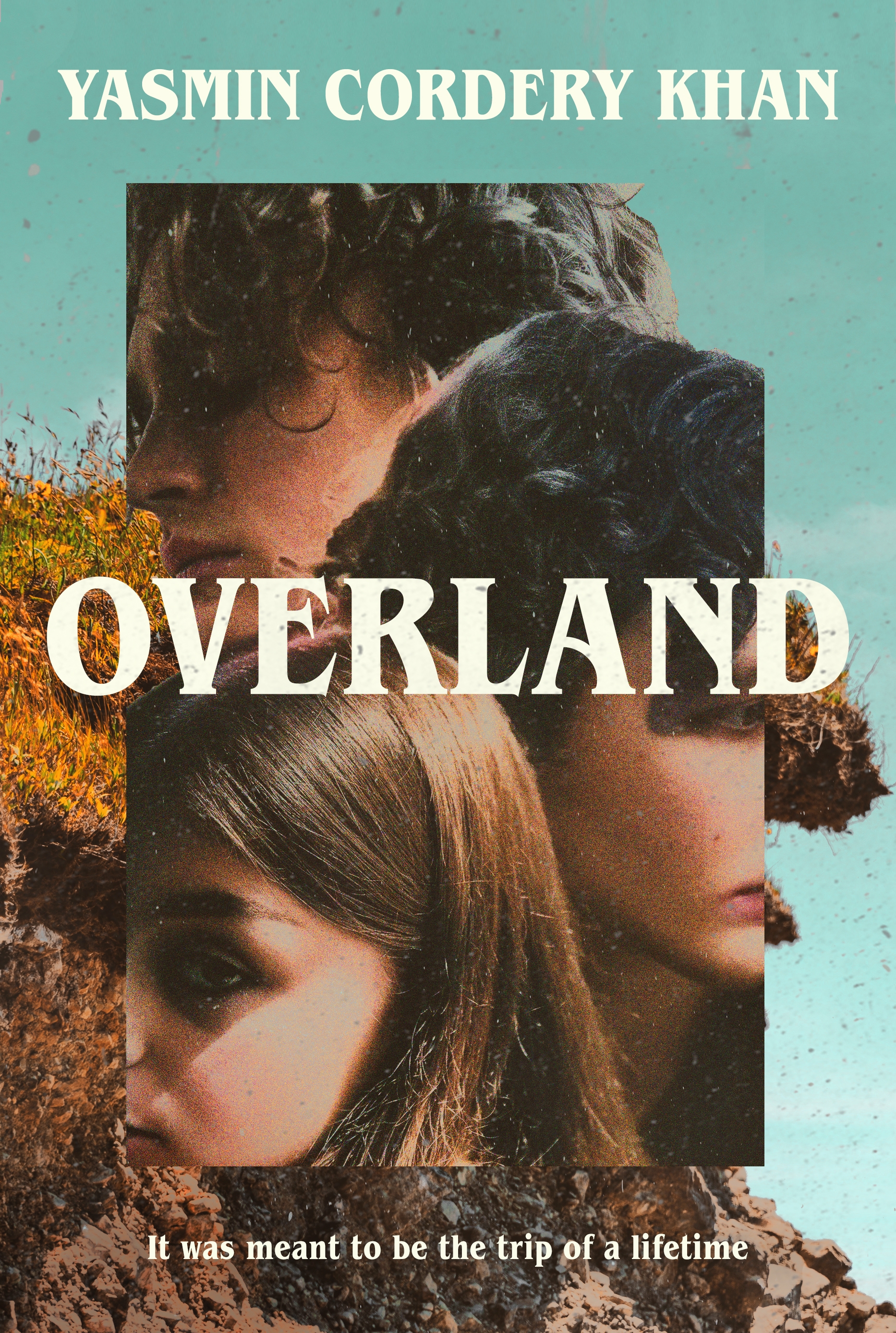
Overland (2024) by Yasmin Cordery Khan

The Overland, the Hippie Trail, the Big OE

I was interested to read this to observe some of this particular overland route that many young people took in the late 1960’s early 1970’s.

While for some it signified the hippie trail, for others, for example, those coming from New Zealand, it was a kind of right of passage, referred to as ‘the Big OE’, the ‘overseas experience’, which that culture accepts is something that every young person might do in their twenties, while still single, and eligible to get a working holiday visa in the UK to help fund their travels.

By the 1990’s when I did my OE, the overland route had changed, it was no longer advisable to take the route that those from the 1970’s had taken. My mini version of the overland, was to spend three months travelling through India, Nepal, Vietman and Thailand.

Employers expected many young in their twenties to leave to take up the two year visa opportunity and gain valuable experience from living in another country and travelling in other cultures. I remember my boss when I told him I was leaving telling me that he learnt more in first couple of weeks travelling in Asia than he had in the previous couple of years in his employment. It did make me wonder what happened in those couple of weeks!

Both of my birth parents travelled a similar route, from different starting points, and reading Overland made me want to know more about their experiences, because they were very different from what I read here.

Both had to find work in foreign countries to fund their travels, and set off on their own, without a vehicle or travelling mate, although as anyone travelling alone soon discovers, it doesn’t take long to connect with other like minded travellers.

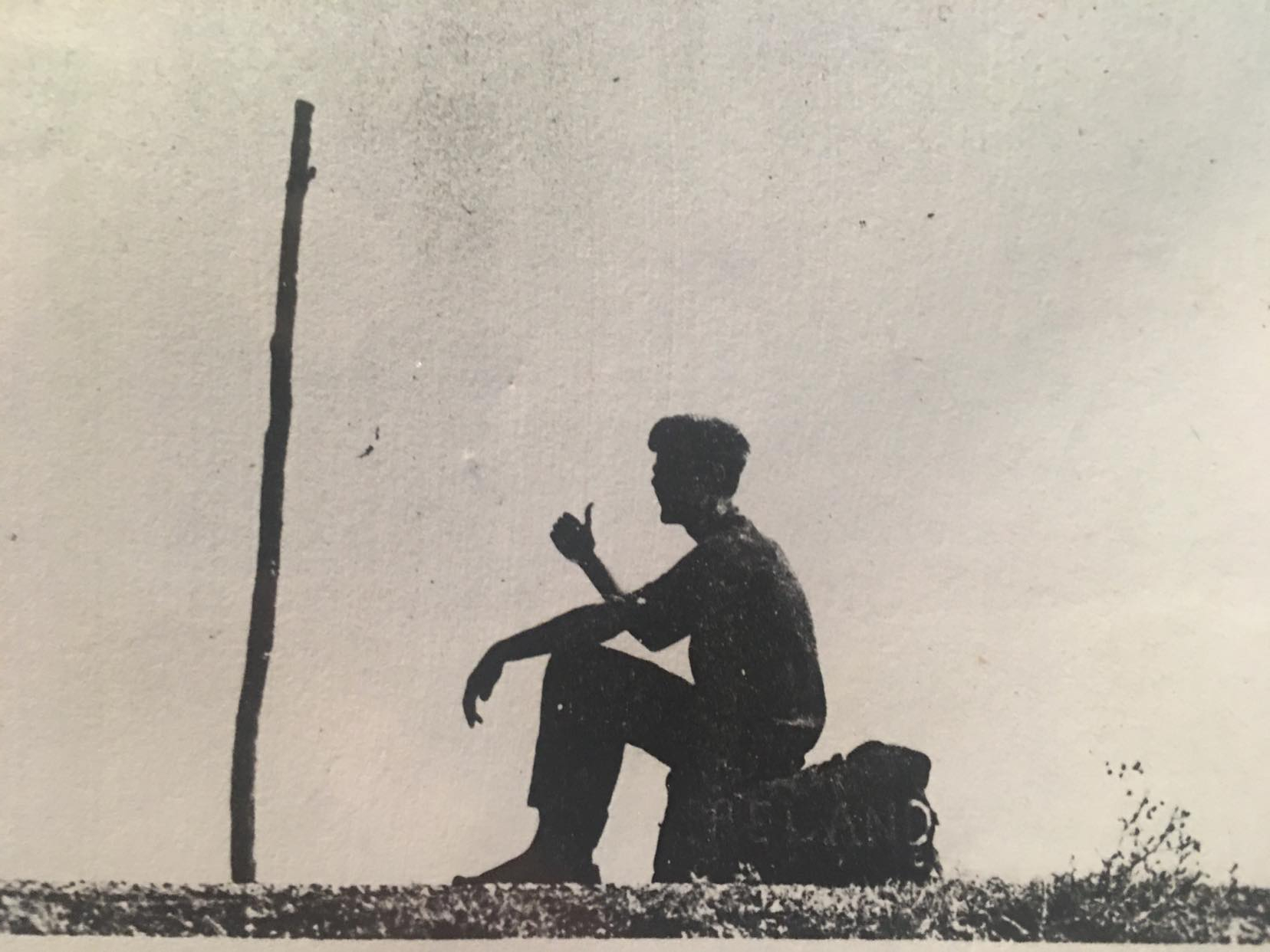
Recently my father found some old photos from that journey he set out on at the age of 18, one of which is depicted above, others show him working on a construction site in Kuwait, interacting with local workers. Not the same route followed as this overland novel depicts, much more of an intrepid journey.

Young Brits Abroad in a Land Rover

Three youth did an overland trip and on the first page of the novel, Joyce, who describes herself as a nobody, is looking back fifty years later after an otherwise uneventful life, recollecting the trip. There had been scandal and controversy at the time of their voyage and she had slipped under the radar. A recent visit to a car boot sale in the grounds of an old country house has awakened memories and now she is reliving the trip.

I saw Persia in the time of the Shah, and the sun set over Kabul and the sun rise at Taj Mahal. I was there too and this is my story.

Overland thus begins with an advertisement in a London newspaper in 1970.

Kathmandu by van, leave August

Share petrol and costs.

Joyce is just out of secretarial college and comes across the ad because she likes reading the miscellaneous section of the newspaper. She goes to Clapham to meet the two boys who are taking the Land Rover on the trip. Friends from boarding school Fred, whose aristocratic family own the vehicle, and Anton, son of an Egyptian Doctor and English mother, who has been supported by Fred’s family since a family tragedy.

From London to South Asia via Istanbul, Turkey, to Tehran, Iran to Kabul, Afghanistan to Pakistan, India, Nepal, Sri Lanka, Bangladesh to Thailand

The Aristocrat, The Son of an Immigrant, A Working Class Girl

It becomes clear that the three travellers are from different socio-economic backgrounds and being confined to a vehicle for a trip through foreign lands is going to bring out aspects of what each of them is either escaping or moving towards. When Anton asks Joyce why she wants to go, she can tell he’s looking for an intellectual response and sceptical of her motives. Reasons she keeps to herself (and from the reader) for a long while.

First impression: arrogant little twit. My face was burning with embarrassment at having been corrected, but he didn’t seem to notice. I might not have all your certificates, but I know about real life, I thought.

There’s No Place Like Home

The three of them go on the journey and have to overcome various challenges they confront in each country, whether cultural, mechanical or human. Over time their characters and back stories are revealed and in Fred’s case his father’s dark history, in one of the countries they will travel to. All of this plays into how they cope with the situations they encounter. And they come to consider their own destiny.

In a nutshell, if I could have articulated it, I’d have said that England was my destiny. Because by that point – although I liked those landscapes and those wild places that we drove through, don’t get me wrong – a realisation was growing in me, more and more, about the sheer beauty of the English countryside.

They will discover the consequences of acting or not acting on their instincts, who they can trust, who they should avoid and what to do when one of them starts experimenting in ways that threaten to derail them from their objective.

“We were all on pretty much the same route, there were only so many digs to stay in. So even though we were crossing the world, there was a small world on the overland, its own little bubble, the same faces and names and rumours recirculated and resurfaced.”

The Memory Trip

I enjoyed the novel for the way it depicted the journey and the places they stopped, mostly unfamiliar until they get to India, then it awakened my own overland journey, particularly the memory of taking the local night buses, with 3 people per seat (no headrest) and trucks/buses driving in the middle of the road in the dark of night. (We soon understood what “HORN PLEASE” on the back of the vehicle in front referred to). Yes, the all night loud music playing to keep the driver awake (ear plugs essential), stopping for sweet roadside chai, meeting young Indian astronomers on their way to view the total solar eclipse in Fatepar Sikri.

Ultimately, the overland is an opportunity to immerse in a culture, live for a period in a different way, encounter different ways of thinking and being, different perspectives, that much of this was missed in their journey taints the possibility of this experience having any meaning.

I enjoyed less the depiction of the dysfunctional character of Fred and the obsessive, slightly unreliable narrator Joyce. Anton was the more interesting character for me, due to his interest in the culture and languages and people, so without giving anything away, the ending was disappointing, but maybe that’s the message, about who in this life gets protected and who falls into the cracks.

So, there is the significance of the roles each of them played, their own histories, that of their families, the different social class they issued from and how that figured in the way they behaved and how they end up.

Alwynne, one of my Goodread’s friends articulates the themes succinctly here, in and extract from her review:

“Khan’s novel’s convincing, beautifully-observed and meticulously researched, making it hard sometimes to remember Joyce is a purely fictional creation. This isn’t a nostalgic glimpse at lost innocence, instead Khan’s narrative gradually constructs a damming portrait of a newly post-colonial world, casually racist, steeped in orientalist attitudes. A place where, for people like Joyce and Fred, nation, the myth of empire, class and identity are still tightly intertwined. Khan’s exploration of these connects to an oblique, underlying series of reflections on history, memory and the legacy of imperialist atrocities – and above all the failure to take responsibility or atone for the evils of the past. But despite the complexity of Khan’s themes, it’s highly readable. An absorbing, fluid piece.”

Highly Recommended.

Yasmin Cordery Khan, Author

Yasmin Cordery Khan is a novelist and historian. Her first book, The Great Partition: the Making of India and Pakistan (2007), won the Gladstone Prize for History from the Royal Historical Society. Her second book was The Raj At War: A People’s History of India’s Second World War (2015) followed by the novel Edgeware Road (2022).

She has written for the New Statesman and Guardian and appeared on BBC radio and television, and is an editor of History Workshop Journal and a trustee of the Charles Wallace India Trust. She lives in Oxfordshire.

Tidal Waters by Velia Vidal (Colombia) tr. Annie McDermott

Women in Translation

Tidal Waters is my first August read for #WIT month. Reading Women in Translation.

What an original, good-hearted, open, vulnerable read. I’m not sure whether what I read was fictional or not, because much of what is described in the ‘letters to a close friend’ coincides with elements in the author bio inside the front cover of the book and the main character is Vel.

The Epistolary Novel

epistolary novel of letters, reading, literacy, poverty, Afro Colombian

An epistolary narrative, it is about the return to a place and finding new purpose, along with the motivation to pursue it and taking others with you – told through a correspondence that bears witness and though we don’t see the replies, we can tell that they encourage and support both the idea(s) and the woman pursuing it.

I don’t know if I mentioned this specifically, perhaps not in a letter, though maybe when we met up before I left to come and live here here for good, but part of what pushed me to make this radical life change was the need to feel that my existence had meaning, that I was spending each day doing something I cared about and could feel proud of at the end of my life. And that’s just what I found in being Seño Velia, the woman who has meetings with people about books, who tries to motivate children to love reading and books as much as she does, and who supports the teachers.

Finding Purpose and Motivation, In Community

The letters span 3 years from May 2015 and they track a significant change in Vel’s life as she decides to return to Choco (to the Afro-Colombian community she was raised in) to start a new venture to bring reading, literacy and a love of books to it. The correspondence exhibits the growth and expansion of her writing, the letter becomes a safe harbour and she tests it by taking her writing to another level, stretching into a more personal yet contained arena.

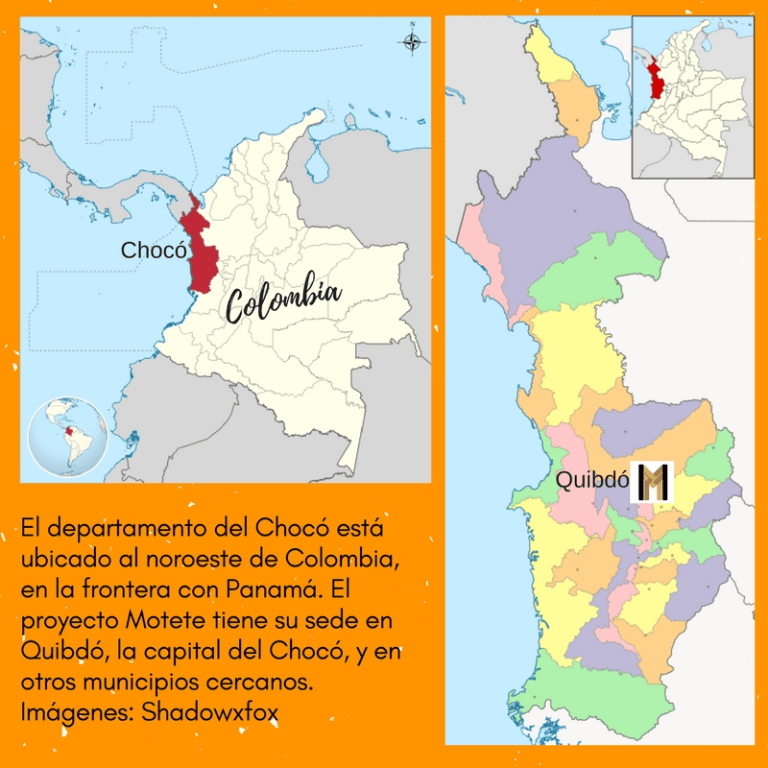
Tomorrow I start a diploma in reading promotion, and with it my project, Motete. We’ve chosen three areas of Quibdo where I’ll start running the workshops.

She is taking a risk starting a new venture, but believes in it and is surrounded by extended family and connections, which facilitate her ability to reach out even further into the community and invite everyone in, to be part of or benefit from her shared love of reading.

And so this project is coming together. This basket, this Motete, is filling up. The slogan for my project is ‘Contenidos que tejen’ – contents that weave – and every day I like it more. Every day I realise that these contents are weaving fulfillment and happiness within me…

The thing is, motetes have been used to carry food for the body: plaintains, bushmeat, fish. Our is to fill them with food for the soul: art, culture, books. And just as motetes are woven by hand, I thought these new contents would also form a fabric: the fabric of society, of community, the fabric of souls.

Letter Writing

Her unnamed friend that she writes to is someone she hasn’t known long, he occupies a space between the familiar and the unfamiliar that she claims as a freedom to express herself, to be vulnerable and open, someone who has mentored and shown her how to get funding. The range of things she will write to him of, span a wide spectrum.

We never see the replies but the continuation of her own correspondence displays her life, her dealing with health problems, the double bind of her wounding and love, of being raised by doting grandparents, while having complicated relationships with a teenage mother unable to mother her and an emotionally absent father. Her later sadness and depression, helped through therapy, tears and conversations, to ways of coping and healing. Her optimism for her venture, and the community connections she creates keep her going.

I grew a lot. I learned. But most of all I tried to weave a new way of relating to my father that hurt as little as possible.

The Sea, The Sea

One of the themes is the sea, the absence of sea, the way the river meets the sea and her relationship to it. She yearns for it when it has been absent for some time, just as she yearns for the letter writer and the relief that comes in the act of writing to him.

She describes herself in her current role as being like the sea at that place where it meets the river.

I’m like the Pacific Ocean, pressing at the river with its tides to make it flow the other way, or lapping at the land when its waters rise, when it feels like gaining inches of new ground. You need strong motivation to stick to this way of life, which isn’t exactly a fight against the world, but rather the certainty of forging your own path.

An Homage to Correspondence

I loved this slender book, it’s project and generosity, its intimate sharing and platform for expanding and learning and having the courage to venture into new areas. It made me think of an exquisite title I’d forgotten about, Leslie Marmon Silko’s slim book of correspondence The Delicacy and Strength of Lace: Letters Between Leslie Marmon Silko and James Wright.

That correspondence was written when Silko was 31 years old and Wright 51. They had planned to meet in the Spring of 1980, mentioned in letters of Oct/Nov of the previous year, not knowing he would be gone before then.

They discuss her novel, his poetry, language, his travels, her adventures with animals, their speaking engagements, their mutual challenges and experiences as university professors, and soon began to share more personal feelings, as she acknowledged the tough time she was having and he shared his own experience, expressing empathy.

Velia Vidal dedicates her book:

To my recipient,
simply for being there.

and when I read about her own projects in society, her love of the sea and shared readings and efforts to help move children and young adults out of poverty, it is all the more inspirational to read these letters, understanding the difference a letter can make, to see someone take a risk and pursue something that will help others from her community, while fulfilling her own dreams and aspirations.

Highly Recommended.

Velia Vidal, Author

Velia Vidal (Bahía Solano, Colombia, 1982) is a writer who loves the sea and shared readings. In 2021 she was a fellow at Villa Josepha Ahrenshoop, in Germany.

For her book Tidal Waters she won the Afro-Colombian Authors Publication Grant awarded by Colombia’s Ministry of Culture. She is the co-author of Oír somos río (2019) and its bilingual German-Spanish edition.

She is the founder and director of the Motete Educational and Cultural Corporation and the Reading and Writing Festival (FLECHO) in Chocó, one of the most isolated, complex and neglected regions in Colombia with the highest afro-descendant population density in the country.

Vidal graduated in Afro-Latin American Studies and has a Masters in Reading Education and Children’s Literature. She is also a journalist and specialist in social management and communication. In 2022 she was included in the list of 100 most influential and inspiring women in the world by the BBC.

She writes children’s literature, fiction and non-fiction, and poetry. Her work has been translated into German, English and Portuguese.

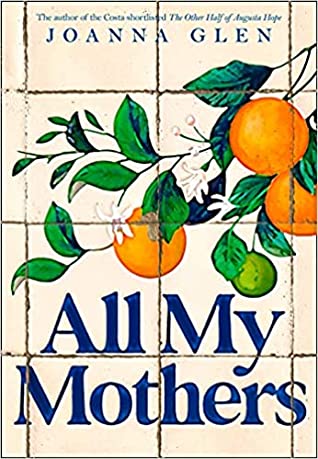
All My Mothers (2021) by Joanna Glen

I picked this book up because of its premise of a child having questions about her early life and origins, sensing she is being lied to by her parents.

A 30 Year Story from 80’s London to Córdoba

Adoption Motherhood Mothers

The book is 480 pages and most of the first half is narrated by Eva as a child or teenager. It begins as she is starting school and beginning to develop friendships. She befriends Bridget Blume and is besotted. Not just by her, but by her entire family, especially her mother who is so unlike Eva’s mother whom she calls Cherie (like her father does).

At school Eva is deeply affected by a book the teacher reads ‘The Rainbow Rained Us’, in which a rabbit throws a stone at the rainbow of Noah’s Ark breaking it apart into hundreds of multicoloured mothers who repopulate the earth with children.

The Many Colours of Mother Love

There Blue Mother stood in a mesmerising cornucopia of blues, at the edge of a turquoise sea, laughing, the wind in her hair, surrounded by her blue family.
‘Blue Mother is free and open and speaks from her heart.’
She sounded exactly like Bridget’s mother – utterly perfect.

From then on she refers to her mother as Pink Mother and Bridget’s mother as Blue Mother.

Pink Mother was sitting upright in a kind of fairy-tale bed, a bit like my mother and father’s, a four-poster, with a roof and curtainy droops around it.
No,no,no.
‘Pink Mother is delicate and feminine,’ said Miss Feast, explaining that delicate meant not strong.

When they are asked to share a baby photo, Eva becomes even more convinced than she already was, that her mother is not her mother, there is no photo of her as a baby, nothing before the age of three and a half.

The novel’s first half follows her through primary school, her developing friendship and first great loss, first the loss of a favourite teacher, then a death that will result in her friend’s family moving to another country and then abandonment by her father, who returns to Spain and rarely if ever makes contact.

Eva’s personality develops and is compromised by these losses and causes her to develop or accept superficial relationships, taking some time to realise what she lost by neglecting what has been meaningful to her.

Hispanic Studies, La Mezquita, A Headless Nun

In the second half of the novel she has started a university degree, changing locations due to the demands of her boyfriend Michael.

The pace really picks up in this half, perhaps because we have left the child narrator behind, so Eva becomes less introspective and more in charge of acting on the questions and thoughts she has and voicing some of the strong opinions she has.

When told they will spend a summer semester in Córdoba, Spain, the separation from all that is familiar and expected of her, marks the beginning of a transformation and a quest into looking for the answer to questions she has about her origins.

la mezquita the grand mosque in Cordoba, Spain
Photo Juan L. Secu on Pexels.com

The second half is something of an adventure as she develops a new friend Carrie who is interested in helping her and the two begin to consider not returning to their previous lives, to stay in Córdoba.

As Eva enters her 20’s her relationships and perspective begin to evolve, although she remains somewhat detached, circumspect and emotionally distant. With the presence of those around her, she begins to understand the complexity of being a mother, of being mothered and that judgments can change, as can people, especially when they find those relationships that are mutually nurturing.

The final third of the jumps into a second person narrative perspective ‘you’ and becomes somewhat nostalgic and didn’t work quite so well as the preceding chapters. It’s like the beginnings of a letter to a little girl who is still a baby, perhaps the thing that she had missed from her own life, being provided for another.

Writing From Experience versus Imagination or Observation

It is an interesting and captivating read, however I couldn’t help but feel as I was reading that this was imagined, rather than felt, because I am interested in books, fiction or nonfiction that come from the experience of separation.

In an interview with Carolyn Ray of JourneyWoman Bookclub, Joanna Glen shared that one of her aims was to explore the question, What is Our Deepest Longing?

I suppose the motherhood theme came next thinking what is our deepest longing that we have right from the beginning and of course a baby’s deepest longing is to gaze into the mother’s eyes and receive the gaze of love back. So I was thinking, what would be the most powerful or perhaps the saddest lack, would be not to feel that connection. That would be a very visceral fundamental lack.

She shares more about her own experience in the interview, which was the opposite of what she explores in the novel regarding the mother child connection, but brings alive the adventure of living abroad, in the town of Córdoba as a young person.

Overall, an enjoyable summer read that is likely to spark an interest in Córdoba, if like me you have never been there and one that celebrates female friendship and connection across different age groups and cultural backgrounds.

Further Reading

TripFiction Review: All My Mothers by Joanna Glen, coming of age novel mainly set in Córdoba. Aug 2021

Author, Joanna Glen

Joanna Glen’s novels include All My Mothers and The Other Half of Augusta Hope, which was shortlisted for the Costa First Novel Award and the Authors’ Club Best First Novel Award.

She and her husband live in Brighton.