Love Forms by Claire Adam (Trinidad & Tobago)

I first heard this recommended on the Irish Times Women’s podcast summer reads of 2025 and shortly after that it was longlisted for the Booker Prize 2025. It didn’t make the shortlist, but it was the novel I was most drawn to, given the adoption theme, but coming from a different culture than that we usually hear from.

Love

forms in the human body

Louise Glück ‘The Fortress’

Forced Relinquishment Across Seas
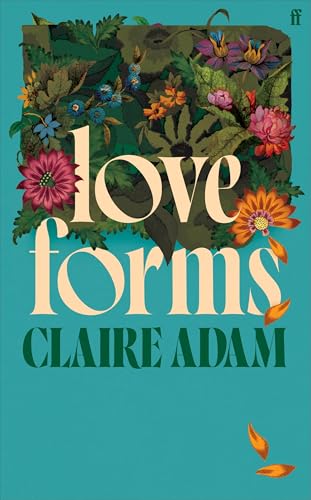
Love FOrms by Claire Adams longlisted Booker Prize 2025 Trindad & Tobago

A 16 year old living in relative privilege in Trinidad, has one crazy night out at carnival and months later is clandestinely bundled into various transportations, made to wait at different locations, never told where she is going, crossing the water to a hideaway in neighbouring Venezuela, where she will stay a while, give birth to her baby and return alone.

It was my father who made the arrangements. My uncle helped, since he lived down south, where all this kind of business is carried out. I’m talking south-south : down past the airport, past the swamp, past the oilfields, everything. Way down at the bottom of the island, down where Columbus landed, long ago.

Years later, 58 years old, living alone in London, unable to pick up her career in medicine, two grown sons, divorced, her family still in Trinidad, she begins to search for her lost daughter, with very little knowledge, except that memory of the trip in the dark. The rest must be imagined.

I’ve spent many hours trawling through images online, trying to find this place again.But Venezuela is a big country…Even now, over forty years later, I still don’t know exactly where I was.

Gone But Never Forgotten
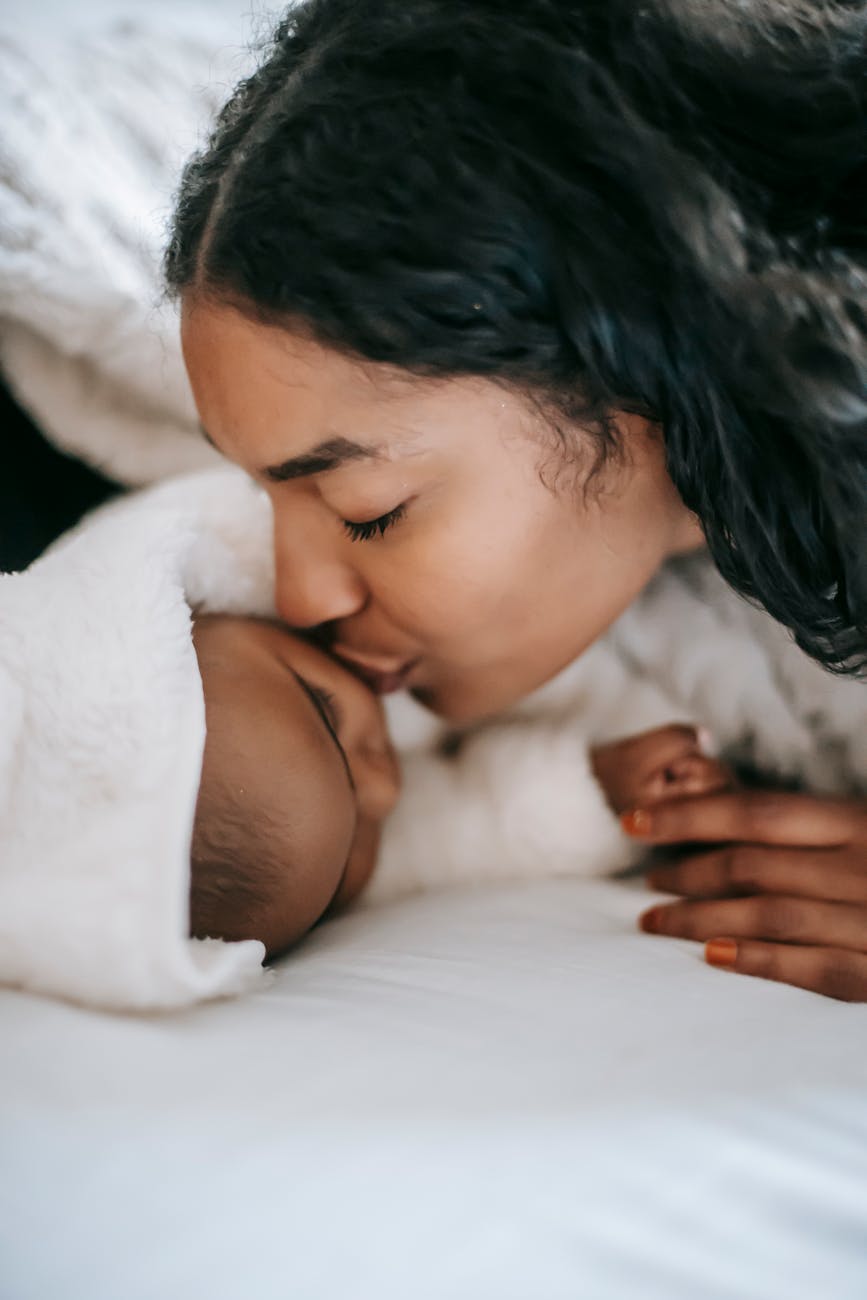
Photo by W. Fortunato Pexels.com

The novel explores a certain way of living in Trinidad, a daughter made to feel shame, an event unspoken of for more than a decade, a self-exile imposed. A child never forgotten, forever part of her, out of reach.

Over the years, I’ve come across a few photos in magazines and newspapers that I’ve cut out and kept, because they look the way I imagine her to look. I have them in different ages.

Though she maintains contact with her family, there is more than just physical distance between them. There’s a loss of intimacy, of trust, a love that overnight became conditional, an imposed silence that is easier to bear from afar.

I do love my mother dearly, despite everything, but this particular issue is fraught for us. If she and I were to start talking, and I were to finally tell her the honest truth about everything I’ve felt over these past forty years? Well, I couldn’t do something like that – not now, at her stage of life.

There’s A Community Out There

Not until she begins her search and becomes familiar with the experiences of others like her, of children like the one she abandoned, does she begin to be able to understand what it is she has been feeling, a life long loss, momentarily offered the promise of being filled, as each potential contact (a woman her daughter’s age searching for their mother) raises that hope. She confides in a work colleague, a safe stranger.

‘I wasn’t going to tell you,’ I said. ‘But I guess, why not. Another person has been in touch. A girl. I mean, a woman. From the websites. As a possible, you know. Match.

He was watching me closely, and I tried to take on the right manner. Steady and controlled, hopeful but in a measured way. With a hint of detachment, as if I were talking about something at a much greater remove, of academic interest. I said she was in Italy, a town in the north, and that she was a professional person, a biochemist with a pharmaceutical company.
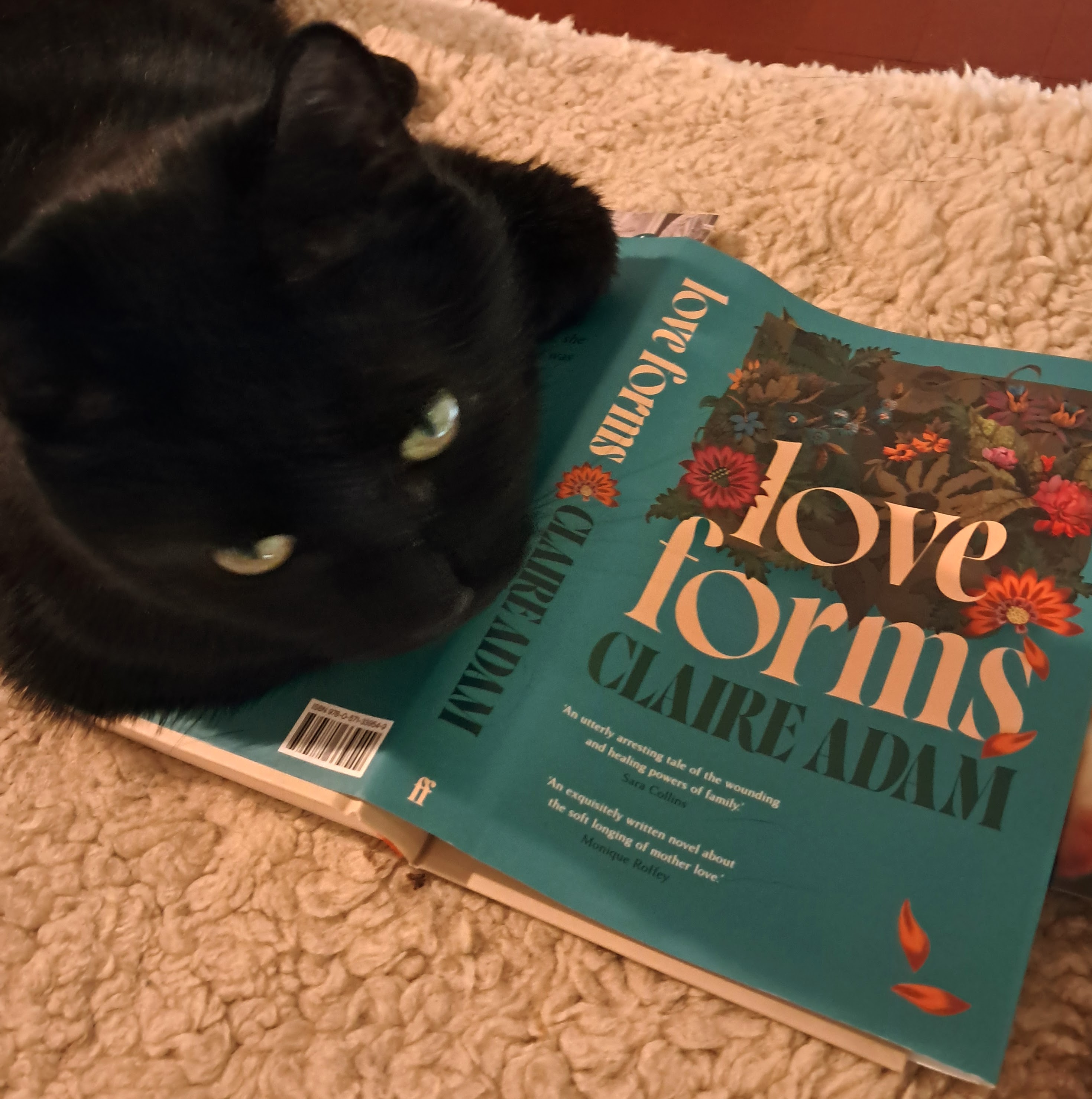
This was a compelling read that would create interesting discussions, with its deeply flawed characters, many terribly inhumane behaviours and the life long wounding adults commit, who care more for status and reputation than the damage heaped on women and children for being in the too common situation of being pregnant, or birthed, unwanted. It’s a conversation and narrative that has for too long been dominated by one side, so it is good to see it being explored through fiction.

This kind of story comes in so many varieties and though this one is unique, again it is driven by the shame and blame of young women, without consideration for those whose consent is never given, those future adults severed from the natural maternal bond and their lineage, conditioned into false belonging.

On the return journey, in the jeep and then in the dented, rattling airplane, I felt as if something had changed, although I couldn’t, at that stage, have fully articulated what it was. Pieces were beginning to settle in new patterns. Maybe my story wasn’t: Dawn, who made a mistake and brought shame to her family. Maybe its: Dawn, mortal woman, who took a wrong turn in life and got lost.

One of the most hopeful parts of this novel for me, was the knowledge that this character and this author, read the forums and the stories of the many humans born into this paradigm who write of their shared, common experience of how that separation affects a child, their life, their future relationships, which helps dispel the myth, that it’s a good or right thing to do, to sever any baby from its mother.
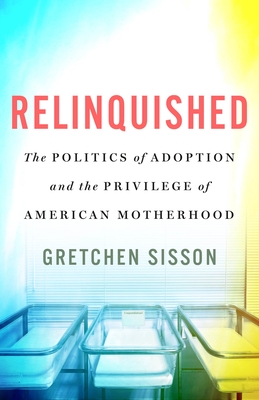
The Politics of Adoption and the Privilege of American Motherhood

Last year, I read the book Relinquished by Gretchen Sisson, a non fiction work that was the result of ten years of interviews, research and analysis of young women who had given up their babies, looking back at the impact of those decisions.

If you have any interest in the subject of family preservation, and creating conditions where families are supported not separated, read this. If you want to know the truth behind the experience of relinquishing a child (a lifelong trauma), not to mention the impact that has on the child (loving family or not), become more well informed by reading this excellent work.

Further Reading

Read an Extract from the novel ‘Love Forms’ by Claire Adam

Guardian Review: Love Forms by Claire Adam, reviewed by Julie Myerson, June 2025

Recommended Resources : Adoptee Documentaries, Adoptee Podcasts, Adoptee Books

Recent Research: Relinquished: The Politics of Adoption and the Privilege of American Motherhood by Gretchen Sisson (2024)

Claire Adam, Author

Novelist Claire Adam was born and raised in Trinidad. She was educated in the United States, where she studied Physics at Brown University, and now lives in London with her husband and two children.

Her first novel, Golden Child, published in 2019, won the Desmond Elliott Prize, the McKitterick Prize, the Authors Club Best First Novel Award and was named one of the BBC’s ‘100 Novels that Changed the World’. Adam’s second novel, Love Forms, was longlisted for the Booker Prize 2025

I wanted to explore the bond between mothers and their children. On one hand, it’s the most ordinary, mundane, taken-for-granted thing in the world… on the other hand, it’s deeply mysterious. In the case of a mother and child who’ve been separated since birth, for example, often there is a pull towards each other that lasts a whole lifetime. These are people who don’t know each other, who’ve basically never ‘met’ – and yet they yearn to be together. Why is that? Claire Adam

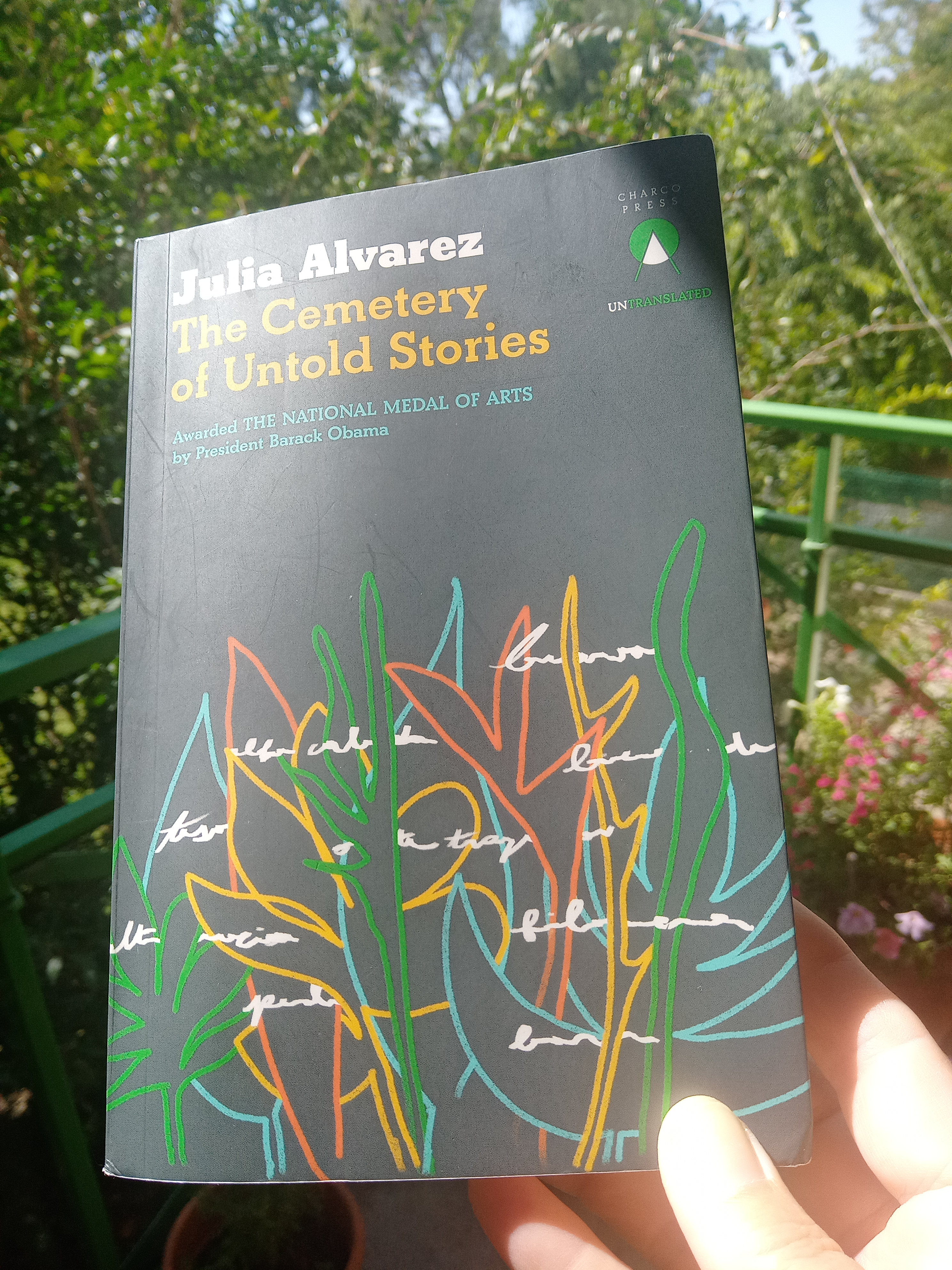
The Cemetery of Untold Stories by Julia Alvarez

The Cemetery of Untold Stories by Julia Alvarez is part of the Charco Bundle 2024 Untranslated series. Most of the Charco books are works of Latin American origin translated into English.

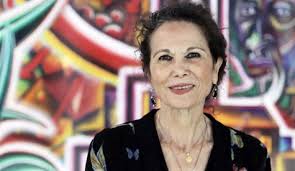
Julia Alvarez was born in New York City, the second of four daughters. Moving back to the Dominican Republic shortly after her birth, her family were forced to flee ten years later due to her father’s involvement in an underground movement to overthrow the oppressive dictatorship of Rafael Trujillo, who maintained control of the country for 31 years.

Reading The Cemetery of Untold Stories very quickly pulled me in and gave me the feeling I would often encounter when reading works by other woman writers from the Caribbean, like Maryse Condé’s Victoire: My Mother’s Mother, Simone Schwartz-Bart‘s The Bridge of Beyond, Cristina García’s Dreaming in Cuban.

There is something unique to their storytelling that expands beyond our known reality, that embraces the imagination, allowing it a glimpse of another dimension of perceiving that is good hearted, that exists to open minds, bring awareness and healing.

We know we are going there, because the opening chapter entitled Let’s go to Alfa Calenda is a version of that place.

Half the time Papi didn’t even know where he was. What was the harm in pretending? We’re going to Alfa Calenda, they told him as they packed up his belongings, put the house on the market, and boarded the Jet Blue flight to JFK. Just the mention of that fantasy place he’d invented with his mother seemed to soothe him. His personal Shrangri -la-la land, his daughters had dubbed it.

Alma is a writer at a turning point in her life/career. She and her three sisters live in the US and their lives have converged after the recent deaths of both parents in short succession. When their father dies, they discover that he owned many small properties in the Dominican Republic. Unable to find a fair way to apportion them, they decide to draw lots (a mediator’s suggestion), Alma draws the first lot and chooses a wasteland near a dump, on the outskirts of a barrio, then withdraws from the selection process. Closing in on her own latter years, she decides to return to her native land and bury her unfinished stories.

Should Alma follow in her parents’ footsteps, she’d be much better off in her native land. Even if it wasn’t first rate in terms of social services, that world had been her first world: her senses, her body’s rhythms, her psyche were all steeped in it. The weather, the smells, the sound of Spanish, gestures understood without explanation. Life was also cheaper there.

Alma is going to put her stories to rest, stories she has abandoned, failed to bring to life. This new development has given her a project, crazy as it sounds to her sisters. She needs a collaborator and remembers her friend Brava, she won’t judge her new ambition.

Like her art, Brava’s personality was larger than life, a fireball throwing off sparks. None of the anguished and torturous revisions and self-doubts that beseiged Alma.

They will build a cemetery for characters of Alma’s untold stories, a gallery to Brava’s art.

Alma is a curiosity to the residents of the barrio, all kinds of rumours circulate when the bulldozers arrive.

A sign goes up on the wall at the main gate. EL CEMENTERIO DE LOS CUENTOS NUNCA CONTADOS. A cemetery for untold stories. The only way to enter is to speak into a small black box at the front gate. Cuéntame, a woman’s soft voice requests. Tell me a story. Only then does the door open, or not.

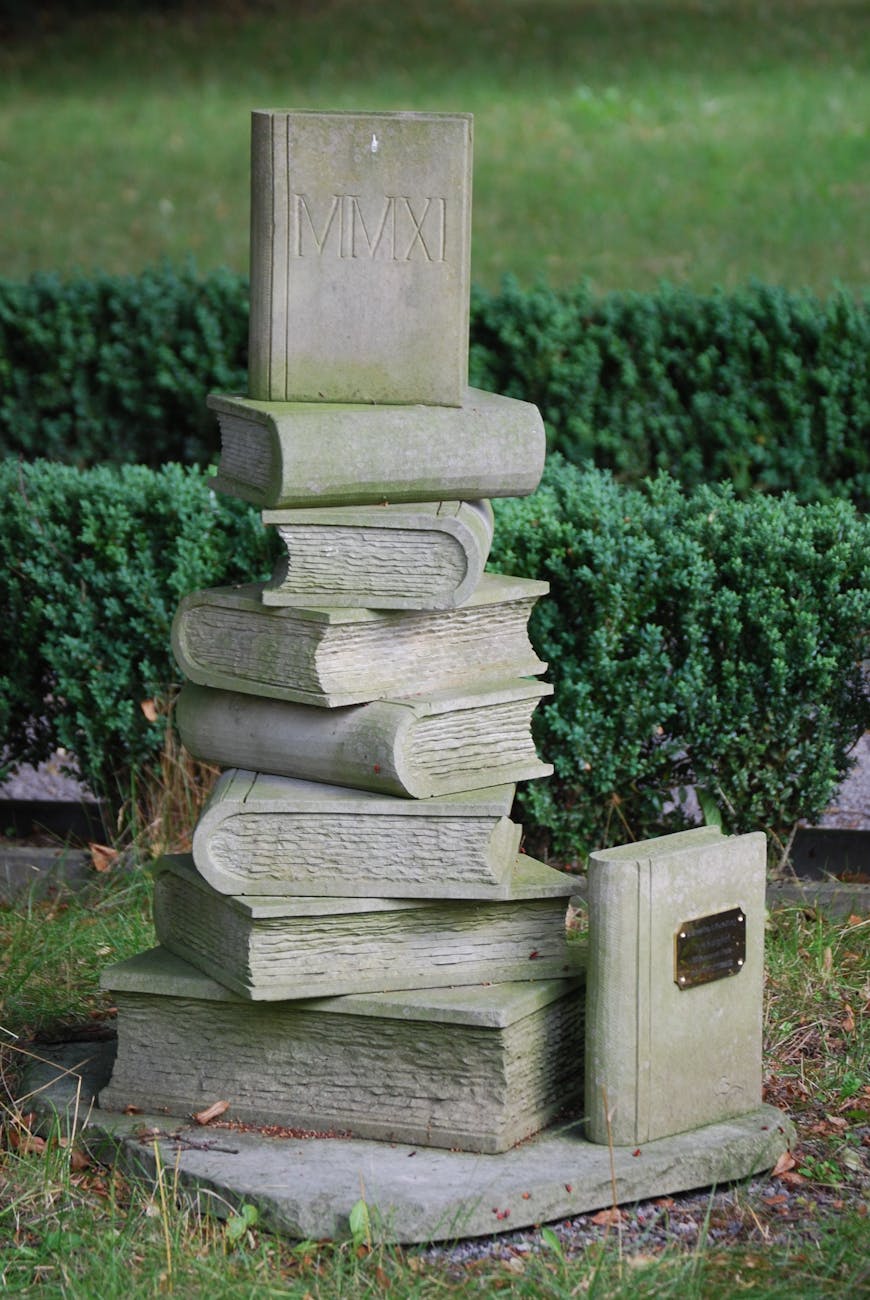
Photo M. van Duijnen Pexels.com

As she builds her cemetery and buries her boxes of manuscripts, different members of the community enter her life through their own stories and the neglected buried characters begin to reveal more about theirs, defying the author and rewriting their fates. Her helpers don’t always follow her instructions.

Alma pulls Brava aside. What’s going on?

El Baron is the boss of cemeteries, Brava explains. The deity who allows passage between the worlds. The first tomb always belongs to him.

The stories reveal themselves, as do the characters who enter the cemetery, looping in on themselves and making what might have been judged, better understood. It asks the question of whose stories get to be told by who, to whom and which stories are better buried.

It is also about listening, imagining, seeing differently, knowing when to speak up and when to stay quiet. It is a quiet celebration of stories, storytelling and the inspiration behind characters who might not always have had a voice.

Did these things really happen?

That isn’t the point, Pepito explains. These stories are about real passions in people’s hearts. They tell of all that is possible.

Julia Alvarez is a long accomplished author and while clearly this is a work of fiction, it often made me wonder about aspects of her own life, as it felt as if it dipped in and out of the familiar, (a successful Dominican Republican writer in the latter years of her career) while carrying a warning about a writer’s obsession to complete the unfinished.

I loved this novel and I am very happy to have encountered Alvarez for the first time, knowing there is a promising backlist to explore. It is always a pleasure to discover another of those unique voices with connections to that Caribbean storytelling culture that I so adore. Incredibly, though her 7th novel, it is her first to be published in the UK. It feels wrong to be starting at the end, but it also is a novel that begs to be reread, to be even more deeply understood.

Have you read any of Julia Alvarez’s works? If so, tell us your favourite in the comments below.

Further Reading

New York Times Review: A Novelist Comes Home to Bury Her Words, and Brings Them Back to Life, by Luis Alberto Urrea, April 2024

Interview: Following the screening of Julia Alvarez: A Life Reimagined, by Mikaela Lefrak, 6 Sept 2024

Documentary: American Masters (PBS) Julia Alvarez: A Life Reimagined (Premiere 17 Sept, 2024)

Author, Julia Alvarez

Julia Alvarez has written many bestselling novels including: How the García Girls Lost Their Accents (1991), In the Time of the Butterflies (1994) (considered her masterpiece), ¡Yo! (1997), In the Name of Salomé (2000), and Afterlife. She has also written collections of poems, three works of non-fiction, and numerous books for young readers. The Cemetery of Untold Stories is her most recent novel. She is currently assembling “Visitations,” a collection of poems, to be published in 2025.

The immigrant experience and bicultural identity is the subject of much of Alvarez’s fiction and poetry. Her awards and recognitions include the Pura Belpré and Américas Awards for her books for young readers, the Hispanic Heritage Award, and the F. Scott Fitzgerald Award. In 2013, she received the National Medal of Arts from President Obama.

Filmed in the U.S. and the Dominican Republic, Julia Alvarez: A Life Reimagined features extensive interviews with Alvarez, her family, and her literary contemporaries.

“Eventually, storied and unstoried join in mystery. Nothing holds anyone together except imagination.”

Redemption Ground, Essays and Adventures by Lorna Goodison

A mix of memoir, poetry, life adventure and epiphanies, I loved this collection by Jamaican writer Lorna Goodison.

Bonding With the Irish Over Tea & Poetry

essays memoir creative nonfiction Jamaican literature

The opening essay ‘The Song of the Banana Man’ and ‘The Fiddler of Dooney’ totally sets the scene for the rest of the book. It is an anecdotal story of the author and her friend, excited to be in London, overhearing two ‘bobbies’ (policemen) talk about a cafe they were just passing, in a way that lured them inside.

‘Whassis then, a new tea ‘ole?’

Their schooling in Kingston, Jamaica had been heavy on all things British and European, so entering this establishment was something related to that indirect familiarity. They encounter three boys from Ireland, who ask if they are from the West Indies and they begin to banter, drinking toasts to the colonial experience, singing songs and reciting poetry.

When I play on my fiddle in Dooney,
folk dance like a wave of the sea;

The poems they chose were about ordinary people, sure of themselves, of what they did, grounding words shared by these young people, whose paths have crossed, starting out on their own journeys. The exchange lasts while they’re having their tea and comes to a natural end, upon which they part ways. The author is at the beginning of her life journey, but the lines recited by them all have staying power.

And I was not sure where I belonged or what my own purpose was in life back then…. But listening to those three Irish men recite ‘The Fiddler of Dooney’ that afternoon, maybe I’d thought yes, that’s what I’d like to be, someone whose artistry makes people dance like a wave of the sea.

A Working Class Teen Dares to Do Better

In, A Taste of Honey, she recounts the experience of seeing a movie in 1963, adapted from the play created by Shelagh Delaney (who was 18 years old when she wrote it) that moves her, that is a moment of epiphany. Being one of nine children, she relished the opportunity to go and see the film one Saturday afternoon alone.

Shelagh Delaney went to a play that she found boring, pretentious and condescending, and said to herself I can do better than that, and went home and wrote A Taste of Honey.

The film would win a BAFTA award.

A Taste of Honey showed working-class women from a working-class woman’s point of view, had a gay man as a central and sympathetic figure, and a black character who was neither idealised nor a racial stereotype. – extract from The Guardian by Dennis Barker

Goodison reflects on why she was so moved by this film, how it gave her some of her life and writing purpose and inspiration.

Shelagh was pronounced ‘ineducable’, but was able to produce work that affected me so deeply that I ended up sitting alone in a cinema after everyone else had filed out, trying hard to compose myself enough to go outside and face a world where most people would not understand why a simple thing like a Saturday afternoon matinee could make me weep as if a close friend or relative had died.

The Daffodil Drama

Writing poetry from a young age, in ‘Some poems that made me’ we read more of this early education and a different take on Wordsworth’s ‘I Wandered Lonely as a Cloud’, aka ‘The Daffodils’ poem, after she researches his childhood and life and decides to give the poet a break. See my review Lucy by Jamaica Kincaid for another reference to the daffodil drama.

Over the years I have said quite a lot about this poem, as have other writers throughout the British Commonwealth who have come to regard it as the ultimate anthem to British colonial oppression.

She will encounter may poets and poems until she arrives at the one voice that cause her to stop reading everyone else and just read his poems. In the work of Derek Walcott, who would become a friend and mentor, she found poem as a source of hope and consolation; poem as a lifeboat, anchor and safe harbour.

As she begins to think of her own place in the world, she seeks out women poets, finding nourishment in the work of Gwendolyn Brooks and other African-American fiction writers, while still searching for poetry by Caribbean women, ultimately ending up writing the poems she wanted to read and finding the right language to express them.

I learnt early in my life as a writer that if I wanted to write about my people I had to learn to listen carefully to family stories then imagine, and constantly reimagine those stories…All writer’s do this, but Caribbean writers face formidable or particular challenges because of the ways in which slavery, and then colonialism, erased or distorted so much of our lives that we have to learn to writer ourselves into the story in any way we can.

Tributes to the Mothers & Imagination

We read ‘Guinea Woman’ the poem she wrote trying to imagine a woman she had never met, her great grandmother, an elegy for her mother Doris ‘After the Green Gown of My Mother Gone Down’, and another poem entitled ‘Bedspread’ inspired by news of the home of Winnie Mandela being raided by police, where they seize personal effects including a bedspread, taken because it was in the colours of the African National Congress.

The collection takes the reader to different countries and places on her journeying, sharing both fun and pivotal moments, stories of redemption, of good souls that come to set the indebted free, of her own life crisis in New York, that preceded a change in direction, acting on a promise to herself.

A Musical Accompaniment

Like my reading experience of Bernice McFadden’s excellent The Book of Harlan, whenever Lorna Goodison mentions music, like in the vignette ‘A Part for Tarquin’, I look it up and listen while reading. This one is about her friend Bernard dragging her along to a non-party that she doesn’t wish to attend, and ends with them listening into the night to the pianist Wynton Kelly playing the Miles Davis sextet Some Day My Prince Will Come.

That was the night I began to really appreciate the genius of the Jamaican-American pianist Wynton Kelly, about whom Miles himself was supposed to have said, ‘Wynton is the light for the cigarette; without him there is no smoking.’ That night I realised that if hope has a sound it would be Wynton Kelly’s piano-playing. His hope notes were like sunbeams on the morning waves coming in at Bluefields beach.

Loved it all.

Author, Poet, Essayist, Lorna Goodison

Caribbean poet Lorna Goodison was born in Kingston, Jamaica in 1947. A painter before she turned her focus to poetry, Goodison was educated at the Jamaica School of Art and the School of the Art Students League in New York. She was appointed poet laureate of Jamaica from 2017 – 2020. In 2018, she received a Windham–Campbell Literature Prize, and in 2019, she was awarded the Queen’s Gold Medal for Poetry.

Her numerous poetry collections include Collected Poems (2017), Supplying Salt and Light (2013), Goldengrove: New and Selected Poems (2006), Controlling the Silver (2005), Traveling Mercies (2001), Heartease (1988), and Tamarind Season (1980).

She is the author of the short story collections By Love Possessed (2011), Fool-fool Rose is Leaving Labour-in-Vain Savannah (2005), and Baby Mother and the King of Swords (1990), and the memoir From Harvey River: A Memoir of My Mother and Her People (2007), which won the British Columbia National Award for Canadian Non-Fiction.

In 2019, she published Redemption Ground: Essays and Adventures

Professor of English and of Afroamerican & African Studies at the University of Michigan, Goodison divides her time between Toronto and the north coast of Jamaica.

Goodison’s image-rich and socially- and historically-engaged poems often inhabit the lives and landscapes of her Jamaican homeland. “I suspect that I might always write about Jamaica,” Goodison stated in an interview with Mosaic: Literary Arts of the Diaspora. Goodison also discussed the humor in her work, noting, “Jamaicans are very comical people, and laughter is a way of coping with life’s displeasures. Also, when you make something of it [a hard situation], it says that you are in control. There are incidences when we have no control; all we can do is make some sort of a gesture. Sometimes, the world can throw things at you that are so cruel and so devastating that you are in no position to have any kind of real response but to make a gesture. And I think that sometimes laughter is a gesture saying that you have not completely annihilated me; you have not robbed me of my ability to respond as a human being.”

Noting that Goodison often “complements her careful observation of the physical world and her fine eye for detail with a tense, lean, elliptical style” in a review of Supplying Salt and Light, Jim Hannan observed, “At their best, Lorna Goodison’s poems observe the unsavory in history and society even as they guide us firmly toward sources of redemption. With compassion and empathy, Goodison writes about human failure and triumph in large and small measures.”

Waiting for the Waters to Rise by Maryse Condé (2021) tr. Richard Philcox

This story (originally published in French in 2010 as En attendant la montée des eaux) follows the character of Babakar, a Doctor from Segu, Mali who delivers babies. In the opening chapter while it pours with rain outside, he is called to attend a birth of a young woman he does not know but recognises, who does not survive the birth. Understanding that the man who accompanies her Movar, is not the father, he claims the baby as his own, seeing it as a sign, a return.

It does occasionally trouble him, what he has done and sure enough, one day Movar returns and tells him of the promise made to the young mother, to return her child to her family in Haiti, from where she had fled. The novel begins in Guadeloupe and moves to Haiti, while also travelling to other places through the backstories of the adjacent characters.

Waiting For the Waters to Rise Maryse CondeThough the story follows Babakar, each time we encounter a new character, there is this digression into their backstory(s), so we learn of all these male characters stories, Babakar (in Mali and the often present apparition of his mother Thécla Minerve), Movar, (in Haiti) Fouad (in Lebanon, though being Palestinian he dreams of the poetry of Mahmoud Darwich) who all come together in Haiti, and underlying the visit, this search to find family and learn why the young mother had fled.

Although the story is about the search for Anais’s (the baby) family, for all that this is an employed man raising a young baby on his own, she was remarkably absent, as were her carers, creating a bit of a disconnect, considering the entire motivation for this grand journey was supposedly her well-being, or the pursuit of this promise. The baby seemed to pose no great inconvenience, which seemed strange, the story centred solely on the male characters.

With so much of the novel told in backstory, there was a lot of ‘telling’ and I found myself reading over parts of those narratives quite quickly as they didn’t seem to progress or relate to the story itself. Perhaps there was something universal in the stories of the three main men, in the collapse of their earlier lives that found them seeking solace in each others company, but it didn’t work for me as well as I had hoped.

The family that Anais came from had its own complicated history and political associations, but was less in the foreground.

It was interesting, having just read Love, Anger, Madness: A Haitian Trilogy by Marie Vieux-Chauvet, to be back in Haiti and to understand more of the references and pick up on the atmosphere of the location, the unpredictability and quasi-fear around certain people, never quite knowing if they are safe or not and that metaphor of the title, suggesting disaster not far off.

close up water drop photography

Photo by PixabayPexels.com

As the novel came to a close, those waters began to rise and there is yet another opportunity to enter into an interesting story as the two characters make a plot direction changing decision and enter into an aspect of the story we will never know. And what about the baby, I wonder, not for the first time?

Maryse Condé is a Guadeloupean author writing in French, the author of many novels including the historical fiction masterpiece Segu and I, Tituba Black Witch of Salem.

She remains a favourite author and I’m looking forward to reading more of her work, last year’s Crossing the Mangrove was just brilliant as were her childhood essays in Tales from the Heart: True Stories from My Childhood.

The Mermaid of Black Conch by Monique Roffey

Read Caribbean Book of CinzJune is Caribbean Heritage Month in the US, held to recognise the many contributions they have made, so not surprisingly, it has been picked up by Book of Cinz to create awareness for Caribbean Literature, Caribbean Authors and Authors from Caribbean Heritage for readers, encouraging us all to discover and read more of their works.

The Contemporary Caribbean Woman Writer, Keeping Ancestral Connections Alive

I have a fondness of Caribbean women writers and in years past I have reviewed a number of books by the Guadeloupean author Maryse Condé. Crossing the Mangrove  was one of my favourite reads in 2020.

Jamaica Kincaid is another author I admire and her novel The Autobiography of My Mother was an Outstanding Read of 2015. There is something special in the way they writer inter-generational stories, even when some have immigrated, there remains a connection between women in families, even those who have passed, that they have a particular way of expressing that I find magical, as they address themes of identity, belonging and familial connection.

Mythology and Colonisation

It seems that they have developed their own history, mythology, use of language and tradition and not only are they connected to the African diaspora, there is the effect and influence of colonisation, something that both takes away from their essence and has woven itself into their thinking, they can neither rid themselves of it or embrace its legacy.

mermaid of the black conch Monique RoffeyThe Mermaid of Black Conch is an excellent example of the intersection of those effects and her well drawn characters each possess something of that heritage and complication.

Monique Roffey uses a Neo-Taino (people who inhabited the Caribbean 2000 years before the Christian era) legend of a woman transformed into a mermaid, having been cursed by jealous women due to her beauty and effect on men as the foundation of a contemporary story, when this ancient mermaid is captured by an opportunistic and exploitative American man and his son in a fishing competition.

A local fisherman David sings to himself awaiting his catch and the ancient mermaid Aycayia first appears to him. The story is told in part through his journals and in part through the poetic songs of the mermaid and a third person narrative.

She looking like a woman from long ago, like old time Taino people I saw in a history book at school. She face was young and not pretty at all and I recognise something ancient there too. I saw the face of a human woman who lived centuries past, shining at me.

David feels guilty when he hears of the mermaids capture knowing that she has become familiar with his presence. He blames himself for her capture and decides to intervene knowing nothing good will come of her being taken by men not from the island.

Trophy Hunting

photo of man fishing

Photo by William McAllister on Pexels.com

The man who captured her insists she is a fish and has destructive, misogynistic intentions, while his son, whom he had brought with him in the hope of father-son bonding, is appalled but ineffective in stopping him, as are the other men on the boat.

They are a reminder of the many who came before them exploiting the islands natural resources, wishing to claim her bounty as their own.

Uncomfortable yet uncaring, violence and violation has become normalised and the suggestion that she may be worth millions renders them all complicit.

David’s original plan to release her is thwarted as she transforms into a woman, but with few of the skills necessary to survive and he is afraid of people finding out he had sheltered her. He tries to gain her trust, but she is wary of men.

She’d changed his comprehension of what it was to be human. An intuition pestered him that they had met before, that he’d even been searching for her, out there, by those jagged rocks off Murder Bay.

Settler Colonialism and Land Ownership

Miss Arcadia Rain, another island inhabitant lives in the biggest house on the island with her deaf son Reggie. She is local, white and a landowner; she keeps herself distant from the population, though she is as much a part of it as them all. The bay area was her inheritance, it is both her joy and a burden something she struggles to reconcile.

The Rain family had owned almost the whole of St Constance, since 1865, a generation after slavery time. The estate was mostly rainforest high up in the hills, but it came down to St Constance and the bay.

The mermaid becomes friends with Reggie and the two use sign language, to communicate; the friendship brings David and Miss Rain together as they try to figure out what to do.

humpback whale in ocean water on sunny day

Photo: Stefanie Klenner @ Pexels.com

Inevitably there is another jealous woman, and the ill-meaning cackle of those who long ago cursed Aycayia can be heard, as strange things happen on the island making it clear that she is unlikely to be able to stay.

The story explores love, loss, separation, the destructiveness of female jealousy, the ease and allure of male corruption and the repercussions of one family possessing ownership of most of the land in a community.

Although the mermaid is the oldest inhabitant, she is seen as an outsider and her presence brings out the good and the bad in the community, exposing its cracks.

It’s a thought -provoking read and an interesting portrayal of a community living under the influence of its historical past and that influences the behaviour of contemporary inhabitants.

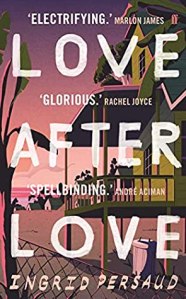
The Mermaid of Black Conch was the 2020 winner of the Costa Book Award, with another Caribbean author Ingrid Persaud winning the Debut Fiction Prize for Love After Love.

Further Reading

The Observer: The Mermaid of Black Conch by Monique Roffey review – a fishy tale of doomed womanhood by Anthony Cummins

Do you have a favourite Caribbean novel?

Lucy by Jamaica Kincaid

Though I read Caribbean-American author Jamaica Kincaid a long time before encountering the Italian author Elena Ferrante, reading Lucy made me aware of a similarity in their characters, in their holding nothing back, allowing even the darkest thoughts to arise, unfiltered stream of consciousness narratives of moments that challenge the reader. They are confronting in their truth-telling and demand to be read beyond the surface.

There is no alluding to, there is cold, hard, observant reality and with Lucy’s arrival to a new country, there is the stark contrast of perspectives between her and those she encounters, that speak to their historical context and how they continue to play out in the present.

Review

Jamaica Kincaid coming of age novel LucyLucy is a 19 year old woman who has left her home in the West Indies and come to America to be an au pair for a family of four young children. The book is set over one year, her experience as a new, young immigrant.

It is both an escape and an adventure for Lucy, to have left everything behind and to strike out on her own independently; she reinforces that feeling in her refusal to open weekly letters from her mother. She does however often occupy her thoughts, moving between anger, resentment, longing and regret.

Lucy quickly develops a close relationship with Mariah reinforcing the complexity of the mother-daughter bond.

The times I loved Mariah it was because she reminded me of my mother. The times that I did not love Mariah it was because she reminded me of my mother.

She is surprised when she experiences homesickness for the first time.

I did not know that the sun could shine and the air remain cold; no one had ever told me. What a feeling that was! How can I explain? Something I had always known – the way I knew my skin was the colour brown of a nut rubbed repeatedly with a soft cloth, or the way I knew my own name – something I took completely for granted, “the sun is shining, the air is warm,” was not so.

Having never understood and had impatience for characters in books who yearn for home, she discovers a rising and  unwelcome longing for all she had willingly left behind. Though her words of home and family are often bitter, she experiences a reluctant and surprising feeling of loss.

Oh, I had imagined that with my one swift act – leaving home and coming to this new place – I could leave behind me, as if it were an old garment never to be worn again, my sad thoughts, my sad feelings, and my discontent with life in general as it presented itself to me.

She replaces the discontent of life in her home and country, with a new melancholy, as she discovers what it feels like to be an outsider, an immigrant.

A Daffodil Isn’t Always A Symbol of Joy

One morning Mariah speaks to her of the arrival of spring, of how it made her feel glad to be alive.

She said the word “spring” as if spring were a close friend, a friend who dared to go away for a long time and would soon appear for their passionate reunion. She said “Have you ever seen daffodils pushing their way up out of the ground?

Lucy thought:

So Mariah is made to feel alive by some flowers bending in the breeze. How does a person get to be that way?

Lucy Jamaica Kincaid daffodils symbol colonialism

Photo by eberhard grossgasteiger on Pexels.com

She remembers being forced to memorise and recite a poem when she was ten years old (at Queen Victoria Girl’s School), the praise she’d received afterwards and the nightmare of being chased by daffodils she’d had that evening.

I was then at the height of my two-facedness: that is, outside I seemed one way, inside I was another; outside false, inside true. And so I made pleasant little noises that showed both modesty and appreciation, but inside I was making a vow to erase from my mind, line by line, every word of that poem.

She recounts the dream memory in anger to Mariah. In a park a few days later they come across a swathe of flowers under a tree that Lucy doesn’t recognise but is filled with the desire to crush and kill.

Mariah said, “These are daffodils. I’m sorry about the poem, but I’m hoping you’ll find them lovely all the same.”

The flowers represent the disconnect between them, the presentation of something as beautiful that recalls the deep-seated, long reaching tentacles of imperial injustice, and Mariah’s colonial-like suggestion, further pressing Lucy to see the world as she does. Lucy reminds Mariah of her humiliating experience, the long poem about flowers she would not see in real life until she was nineteen, and feels guilty in her response.

I felt sorry that I had cast her beloved daffodils in a scene she had never considered, a scene of conquered and conquests; a scene of brutes masquerading as angels and angels portrayed as brutes…It wasn’t her fault. It wasn’t my fault. But nothing could change the fact that where she saw beautiful flowers I saw sorrow and bitterness. The same thing could cause us to shed tears, but those tears would not taste the same.

A Clash of Cultures – Our Circumstances Develop Our Perceptions

Though the family provide her comfortable means to enter this new world, she mock-marvels at how these people came to be the way are, noticing and judging the way they act, the things they say, seeing their similarity to all humanity (in her experience), observing the naivety of privilege, in thinking they might be exempt from certain tragic situations,  expressing shock at circumstances Lucy considers normal.

Mariah did not know that Lewis  was not in love with her anymore. It was not the sort of thing she could imagine. She could imagine the demise of the fowl of the air, fish in the sea, mankind itself, but not that the only man she had ever loved would no longer love her.

It is a year that changes her further, as she comes to know this new country, makes a new friend or two and begins to see herself as the woman other people see and pursues that self to meet a kind of aloof desire.

Kincaid’s biting prose is sublime, never what you expect, she delights in the unfiltered version of humanity and delivers many poignant, ironic and thought provoking insights along the way. Brilliant.

The Author, Jamaica Kincaid

Lucy Jamaica Kincaid review

Jamaica Kincaid was born Elaine Potter Richardson in the capital city of St. John’s, Antigua in 1949.  Antigua is a small island in the West Indies (a region of the Caribbean basin), colonised by the British in 1632 that became independent in 1981.

Her mother was from Dominica and her biological father, a West Indian chauffeur, whom she didn’t meet until her thirties.  Kincaid was an only child until she was nine, when the first of her three brothers was born.

Until then she’d had the sole attention of her mother so life changed dramatically thereafter. At 17 she left for America and did not return to Antigua for 20 years, though it resonated deep within her creativity.

She is currently Professor of African and African-American Studies at Harvard University, with a focus on creative writing and African American writers.

In November 2020, UK publisher Picador won a four way auction to publish 10 books (in 2022 & 2023) by Jamaica Kincaid, the titles to be released are her novels Annie John, The Autobiography of My Mother, Lucy, Mr Potter and her most recent novel, See Now Then; the non-fiction works Talk Stories and My Brother; two books on gardening, My Garden Book and Among Flowers; and the short-story collection At the Bottom of the River.

Further Reading

My review of The Autobiography of My Mother – my Outstanding Read of 2015

My review of Tsitsi Dangarembga’s This Mournable Body – a post-colonial novel set in Zimbabwe

My Review of The Lying Life of Adults by Elena Ferrante

New Yorker Article: The Disturbances of the Garden: In the garden, one performs the act of possessing by Jamaica Kincaid, August 31, 2020


Love After Love by Ingrid Persaud

As soon as I saw that there was a book out called Love After Love, I was curious, then seeing it was written by a UK based Trinidadian author, I knew it was no coincidence.

Derek Alcott, Poet

Trinidad Literature Costa PrizeLove After Love is the title of one of my favourite poems by Derek Walcott (1930-2017) of St Lucia in the West Indies. A poet and playwright, he received the Nobel Prize for Literature in 1992. He moved to Trinidad after graduation when he was 23, having already published two volumes of poetry by the age of 19.

I first encountered his poem in the front of Audrey Niffennegger’s The Time Traveller’s Wife. It is a poem that elicits different feelings from readers, depending perhaps on when in their lives it is encountered; some relate it to rediscovering one’s cultural identity, others to grief, a broken heart or to the freedom of finding one’s true purpose.

For me it evokes a feeling of a partial awakening of consciousness, the discovery that one is able to self-nourish and expend love and energy inward, rather than expressing it or looking for it externally. It represents a form of liberation and freedom, a soul awakening, leading.

I was curious to see how Ingrid Persaud would write a story with such a bold and beautiful reference.  How would this story encapsulate the essence of that wonderful poem I wondered, and imagine if it succeeded.

Winner of Costa Book Award 2020, First Novel

Love After Love Ingrid Persaud Love After Love was shortlisted for the popular Costa Book Awards (annual literary awards recognising English-language books by writers based in Britain and Ireland) in the First Novel category.

I was quietly confident it would win this category, as I’ve followed category judge and highly valued reader/blogger Eric Anderson of The Lonesome Reader for years and I knew how much he loved this novel (it was in his Top 10 of 2020). It did win and the novel, The Mermaid of Black Conch: A Love Story by Monique Roffey also set in the Caribbean won the Novel Award.

Ingrid Persaud won the Commonwealth Short Story Prize in 2017 and the BBC Short Story Award in 2018. An author I’m sure we’re going to be reading more of in future.

Review

From the short opening Betty chapter I was riveted. Vivid, charged and terrifying, I felt like my heart was in my throat with my hand gripping it. And then, just as quickly, an immense relief followed it.

Costa Book Awards 2020 Love After Love Derek Walcott poemBy page seven there is a broken arm and a funeral as I gasp “Thank goodness” for I couldn’t bear to spend more time in the presence of Betty’s volatile husband Sunil. After five pages of tension-filled dialogue, the book becomes unputdownable.

In that opening chapter we read of a significant turning point in Betty’s life. There will be a further turning point later relating to the events of that day, one that the second half of the book and its characters will struggle with.

The book is structured into chapters told from the perspective of the three main characters, Betty, Solo and soon to become boarder Mr Chetan, Betty’s work colleague who calls her Mrs Ramdin, despite her insistence that he use her first name. The dialogue is written in the unique island way of speaking, a Trinidadian dialect, that I imagine is even more colourful to listen to on audio. It brings the text alive.

In Mr Chetan’s opening chapter he is late for work, waiting to catch a maxi taxi and getting more and more stressed as none are passing to flag down. He is a little mortified to see Mrs Ramdin’s car slowing down, instructing him to jump in quick, they’re holding up traffic.

Nothing’s wrong with Mrs Ramdin. She’s a little talkative. And you can see the girl she was in her big dark eyes and simple shoulder length hair. I just prefer not to be too friend friend with people in the main office. Next thing the whole of town all up in your business. I know she so so. Good morning, how you going, but never any big conversation.

That unexpected interaction lead to his learning she was looking for a lodger, and if he knew anyone suitable. Though he doesn’t present himself as a candidate then, because he knows she would prefer a woman, later he seeks her out and by the weekend is moving in.

The delightful, yet lost Mr Chetan is a sensitively drawn character, living in a country fearful of being himself, yet finds ways to make the lives of those around him better. Cast out from his own, he is everyone’s friend.

In the first half of the book we get to know these brilliantly portrayed characters, the new routines and life they create for themselves as a kind of family, the laughs, the loves, the conversations, the creation of a bond they’re hardly aware of as it entwines their lives together. Until the hunger to create a life for themselves results in both Solo and Mr Chetan moving away. All three of them will undertake an inner journey of discovery.

Betty is distraught. Solo takes such a tough line against his mother once he has left, too young to know what preceded him, she experiences the mother’s dilemma of not wishing to cast her sons father as a villain, while suffering the sons judgement of her, having cast her as the ‘baddie’ instead.

I must be call Solo a hundred times but he not answering. I don’t know if to stop calling or what to do. He have age so he could do what he want. I must accept that. You make your children, look after them and hope for the best. But oh gosh, man. Any fool knows that reaching adult age is not the same as having the sense and the experience. And if anybody needs some good sense knocked into them it’s that boy and his hard head. Who going to help him up there? Hari?

Solo is angry and not in the mood to listen, nor realises what he has lost in leaving. Betty’s calls go unanswered. She writes letters instead and we hear her thoughts, we hear his and we experience the frustration of a mother-son situation that endures.

Ingrid Persaud captures brilliantly the dynamic of both, the stubborn independence of the son, his inner pain and the torturous way he deals with it – hides it – and the perseverance of his mother, never giving up on her son, consistent in her love of him. Solo’s struggles are also external, the flip side of the American dream, the reality of creating a new life alone, where everything is unfamiliar and one doesn’t know who to trust, the shame that prevents a young man from admitting to his mother that he isn’t okay.

And Mr Chetan, always there for them both, with his quietly spoken, sound advice and his complex life.

Totally engaging characters and story line all the way through, sad to have left them all behind.

Highly recommend!

Further Reading

Review, The Washington Post: ‘Love After Love’ reminds readers why we go to books in search of answers to life’s great questions by Naomi Jackson

My Review: Cereus Blooms at Night by Shani Mootoo

L O V E   A F T E R   L O V E
The time will come
when, with elation
you will greet yourself arriving
at your own door, in your own mirror
and each will smile at the other’s welcome, and say, sit here. Eat.
You will love again the stranger who was your self.
Give wine. Give bread. Give back your heart
to itself, to the stranger who has loved you all your life, whom you ignored
for another, who knows you by heart.
Take down the love letters from the bookshelf,
the photographs, the desperate notes,
peel your own image from the mirror.
Sit. Feast on your life.
love after love Ingrid Persaud Costa Book Awards

I, Tituba Black Witch of Salem by Maryse Condé tr. Richard Philcox

A Maryse Condé FanGirl Moment

I Tituba Black Witch of Salem Maryse Conde

When I opened I, Tituba to begin reading, on the first page there was a quote from the author Maryse Condé that read:

Tituba and I lived for a year on the closest of terms.
During our endless conversations she told me things she had confided to nobody else.

It gave me such a good feeling to read that, knowing that Condé was doing here, what she did in Victoire: My Mother’s Mother, when the grandmother she’d never met, awakened her from her dreams, to chastise her from the corner of the room.

Sometimes I would wake up at night and see her sitting in a corner of the room, like a reproach, so different to what I had become.

‘What are you doing running around from Segu to Japan to South Africa? What’s the point of all these travels? Can’t you realise that the only journey that counts is discovering your inner self? That’s the only thing that matters. What are you waiting for to take an interest in me?’ she seemed to be telling me.

But that book wasn’t published until 20 years after Condé was listening to Tituba tell her story.

A Caribbean Writer Returns

I, Tituba is the first novel written after Segu and The Children of Segu, historical masterpieces that inform, disrupt and provoke, however the initial reaction was such that Maryse Condé declared she would never write about Africa again.

Tituba came to me or I came to her at a period of my life when really I wanted to turn toward the Caribbean and start writing about the Caribbean.

Who was Tituba?

Tituba existed, she was accused and ultimately set free, however, despite the shelves of history books about the Salem witch trials, there is little factual information about her, who she was, who freed her, or her life after release from prison.
I felt this eclipse of Tituba’s life was completely unjust. I felt a strong solidarity with her, and I wanted to offer her her revenge by inventing a life such as she might perhaps have wished it to be told.

If we look for her story in the history of Salem, it isn’t there. Condé too, looked for her history in the colonization of the continent and found silences, omissions, distortions, fabrications and fleeting, enigmatic insinuations. And so she wrote this novel.

Review

On a ship sailing for Barbados, young Abena was raped by an English sailor, then sold to a planter along with two male slaves. She was employed in the household until the pregnancy discovered whereupon she was banished to the cabin of a male slave Yao. Tituba was born.

In a short reprieve, they find comfort in each other’s company and Tituba would adored by a man more father to her than any other. The joy that now lightened Abena’s world was seen by the master and desired for himself. She struck back, died for it, and for his concubine’s crime, Yao was sold.

Driven off the plantation, Tituba was taken in by Mama Yaya; still grieving for two sons, she had cultivated the ability to communicate with the invisible.

People were afraid of her, but they came from far and wide because of her powers.

Mama Yaya taught her everything, in the ways of her people:

Mama Yaya initiated me into the powers of knowledge. The dead only die if they die in our hearts. They live on if we cherish them and honour their memory, if we place their favourite delicacies in life on their graves, and if we kneel down regularly to commune with them.

Ann Petry Tituba Salem Witch TrialsAnd so Tituba is given a past, skills and knowledge and might have remained in that life, had she not grown into a young woman with desires herself and fallen for the man who would become her husband John Indian.
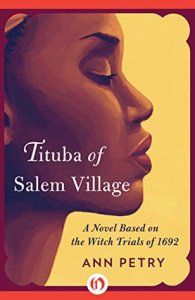
He belonged to Susanna Endicott who I encountered in the memorable opening scene of Ann Petry’s Tituba of Salem Village.

After a short period in that household where John had lived most of his life, things deteriorated and in an act of revenge the mistress sold them both to the frightening Reverend Samuel Parris, who sailed for the Bay Colony the very next day.

From Island Life to Boston, Massachusetts

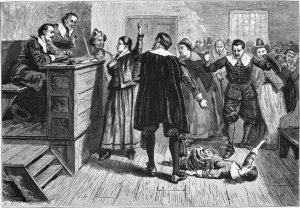
In Boston, with the mistress unwell in a room upstairs, Tituba spends time with the daughter Betsey and orphaned niece Abigail, who makes trouble that spreads like a contagion to other young girls in the community, as they fall prey to strange fits and mass hysteria.

I also recognized Abigail and Betsey’s companions in their dangerous games, those young girls whose eyes were shining with excitement. They were dying to roll on the ground too and to attract everybody’s attention.

And so the bad behaviours of girls given credence, turn into accusations of witchcraft against Tituba and others, they are jailed and many lose their lives, until the Govener writes to London for advice on legal proceedings concerning witchcraft resulting in a general pardon and Tituba is condemned to live.

Prison costs mean she can only leave if someone pays and a man with nine children who has lost his wife claims her. And it is through this relation that she will gain her freedom.

Freedom At What Price

If the first part is written from compassion, yet seeking revenge, the second part initially seems strange and challenges the reader, in its use of parody. I found it difficult to accept, the reader isn’t given the satisfaction of a gratifying ending, yet reading past the novel into the essay and interview at the end of the book, I’m confronted with my own subconscious bias and lack of understanding, in a clever and deliberate intervention by the author.

And so Tituba is granted her revenge. We are all complicit.

Reading the book and thinking about it after reading the interview resulted in a deeper reading experience and consideration. My feeling while reading was heightened by having read Ann Petry’s sympathetic version first, Condé takes a different approach, reckoning with the past.

I suggest that though Petry’s version was written 30 years before, it might be better to read her more optimistic version last.

What Is it About Witchcraft?

Magic witchcraft spells Tituba Isobel GowdieLike Condé, who said she knew nothing of witchcraft, I have decided to read a contemporary book next, published in 2020, to see what’s going on in the world of witchcraft today.
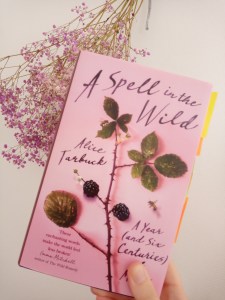
Next up A Spell in the Wild: A Year (and Six Centuries) of Magic by Alice Tarbuck.

Further Reading

Paper: Hesitating Between Irony and the Desire to Be Serious in I, Tituba by Sarah Barbour, Wake Forest University


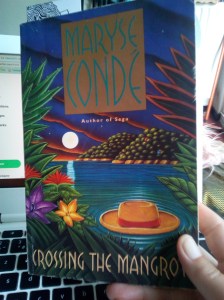
Crossing the Mangrove by Maryse Condé (1995)

translated (from French) by Richard Philcox.

A Favourite Author

Maryse Conde Crossing the Mangrove WIT MonthMaryse Condé is one of my favourite authors and I’ve been slowly working my way through her books since she was nominated for the Booker International Prize in 2015, back when it was held every two years, for an author’s lifetime works.

I started with vignettes from her childhood, then moved on to a novel about her grandmother whom she’d never met, then her masterpiece of historical fiction Segu, her own favourite The Story of the Cannibal Woman, A Season in Rihata and now this very Caribbean novel Crossing the Mangrove, which I absolutely loved. Links to my reviews below.

This is almost a form of noir novel; a death provides the catalyst to revealing an island society, portraying all it diversity and colour, its social good and evil – poverty, discrimination and exploitation, and rather than seek a tidy resolution of that death, it demonstrates the folly of that way of thinking, creating instead, a thought-provoking insight into a multi-layered, multi-ethnic mix of minds and bodies, in their states of love, bliss, paranoia, anxiety and confusion.

It is such a great read, I had to force myself to pause halfway in order to savour it. I can imagine rereading it, it’s such a multilayered novel, that can be read for pure entertainment value or thought about more deeply in how it attempts through exquisite storytelling and characterisation, to lay bare the complexity of such a diverse community, it’s impossible to keep up with who is who is what from where, demonstrating how farcical that is anyway and yet nearly everyone contributes to it, the labelling, the judgements, the superiority and inferiority complexes. Brilliant.

“Life’s problems are like trees. We see the trunk, we see the branches and the leaves. But we can’t see the roots, hidden deep down under the ground. And yet it’s their shape and nature and how far they dig into the slimy humus to search for water that we need to know. Then perhaps we would understand.”

Can You Cross A Mangrove?

Crossing the Mangrove Maryse Condé

Mangrove of Sainte Rose, Guadeloupe

The trigger for all of this, in a novel where every chapter takes the perspective of a different character, is the wake of a man found dead in the mangrove. No one really knew Francis Sancher but everyone had had an encounter with him and there were rumours aplenty.

“Nobody ever understands, Madame Ramsaran. Everyone is afraid of understanding. Take me, for instance. As soon as I tried to understand, to ask for an explanation for all those corpses, all that blood, they called me every name under the sun. As soon as I refused to go along with the slogans, they kept a serious eye on me. Nothing is more dangerous than a man who tries to understand.”

I don’t know about the mangroves in Guadeloupe, but recalling the mangrove swamp from a biology field trip at school, they are incredibly difficult to navigate, like a natural defence system, with spiky roots sticking up out of the water, preventing a way forward. They become a tangled array of wet and slimy roots, attracting many species of bugs, insects and critters and are found in locations where salt water and fresh water mix, a buffer between land and sea.  An apt metaphor for navigating a life, for understanding a complex society.

Stories in his Wake

We come to know more about this intriguing stranger who came to Rivière au Sel expecting to die, we learn who cultivated a desire for that to happen, who fell for his charm, a variety of voices that convey the life stories of this diverse group of villagers – young and old, men and women, siblings and parents, illiterates and intellectual elites, peasants and upper class Creoles, those who belong and those who would always be considered outsiders.

Crossing the Mangrove Maryse Condé

Maryse Condé

The multiplicity of voices, narrated through nineteen characters attendant at the wake, creates a portrait of the social, cultural, political, linguistic, intellectual and economic diversity of this Caribbean island society, complete with desire, unrequited love, arranged marriage, jealousy, disappointment, bitterness, greed, exploitation, revenge, racism, classism, joy and hilarity.

“I would say you are a man of great wisdom!” I murmured.

He smiled.

“Wisdom? I wouldn’t say that. Rather that I tried to untangle the skeins of life.”

The dead man is only given voice through those attending his wake, like the author who is given voice through her characters.

The quote above reminds me of all the narratives of Maryse Condé, of her life, her research including the all important oral histories and her own insatiable appetite for “untangling the skeins of life”, presenting them to us through her essays and novels. She truly is a magical and gifted writer, and in this novel she returns to a landscape closer to home, evoking it through this collection of characters beautifully.

“Now Francis Sancher is dead. But he alone has come to an end. The rest of us are alive and continue to live as we’ve always done. Without getting along together. Without liking ourselves. Without sharing anything. The night is waging war and grappling with the shutters. Soon, however, it will surrender to the day and every rooster will crow its defeat. The banana trees, the cabins and the slopes of the mountain will gradually float to the surface of the shadows and prepare to confront the dazzling light of day. We shall greet the new face of tomorrow and I shall say to this daughter of mine:

“I gave birth to you, but I misloved you. I neglected to help you flower and you grew stunted. It’s not too late for our eyes to meet and our hands to touch. Give me your forgiveness.”

In 2018 Maryse Condé was declared the winner of the Alternative Nobel Prize for Literature.

Further Reading

Tales From the Heart: True Stories From My Childhood

Victoire: My Mother’s Mother

Segu

The Story of the Cannibal Woman

A Season in Rihata

The Story of the Cannibal Woman by Maryse Condé, tr. Richard Philcox #WITMonth

Although she recommends you start with her book of essays Tales from The Heart: True Stories from My Childhood about growing up the youngest of eight children in a black bourgeois family in Guadeloupe, Maryse Condé cited The Story of the Cannibal Woman as her personal favourite of her works at a discussion I attended at our local library last year. It was translated by her husband Richard Philcox.

It was interesting to read this novel so soon after Yewande Omotoso’s The Woman Next Door, given certain points in common, both placing a black Caribbean woman in South Africa and observing her relations with others around her, in the post-apartheid context, it made me wonder if she had been aware of Condé’s earlier work.

As The Story of the Cannibal Woman opens, we learn Rosélie is a 50-year-old recent widow, living alone, without family connections and few friends in Cape Town, South Africa, after the brutal murder of her white British husband, a retired university professor, who nipped out after midnight one evening, allegedly to buy cigarettes and never returned home.

The police suspect it wasn’t a random encounter, something Rosélie refuses initially to acknowledge, completely ignoring her husbands study, a room she rarely ever ventured into, one strangely she is even less inclined to now.

“Aren’t you going to return home?”

Home? If only I knew where home was.

Chance had it I was born in Guadeloupe. But nobody in my family is interested in me. Apart from that, I have lived in France. A man took me to Africa, then left me. Another took me to the United States, then brought me to Africa, and he too left me stranded, this time in Cape Town. Oh, I forgot I’ve also lived in Japan. That makes for a fine charade, doesn’t it? No, my country was Stephen. I shall stay wherever he is.

Left alone without an income to support her (they’d never married though fortunately the house was in both their names), and having made only half-hearted attempts to exhibit her paintings, even then via the efforts of others willing her to succeed, rather than by her own initiative, she decides to offer her services and a healer/clairvoyant.

It is through these occasional appointments with clients that she encounters different members of the local population and the variety of issues confronting them, such as the former trade unionist, who’d languished for years in prison on Robben Island, now a tourist guide for the masses wishing to see where Nelson Mandela had been interned, “revisiting his abuse and torture day after day, describing it down to the last detail to the inquisitive hordes in an endeavour to satisfy their curiosity, the poor guy was losing his head”

10.00am, Patient No. 7, David Fagwela, Age: 73, Particularity: one of the few South African clients, Profession: retired miner

It is an intriguing dual mystery, the ongoing investigation and gradual uncovering of the motive behind the crime plays out at the same time as the intrigue mounts regarding the widow’s reluctance confront the truth about her husband, whose death has loosened the tongues of people close to her, they now freely express their disapproval of him and the way they perceive he treated Rosélie. She appears to be shocked by these revelations and thus retraces her memories of their lives together in London, New York, Tokyo and Cape Town.

It’s an astute medium through which to learn more of their back story, for in narrating those events Rosalie shares how she interpreted events, but the reader will create their own impression and begin to see the abyss between her perspective, Stephen’s and that of their friends.

The couple go on a safari soon after arriving in South Africa, Rosélie was terrified.

What did frighten her were the men. White men. Guides, game wardens, local visitors, foreign tourists. All wearing boots and safari hats, sporting double-barrelled guns, playing in a Western without a hint of a bison or an Indian now massacred or defeated, herded toothless into their reservations. Stephen, on the contrary loved dressing up in a bush jacket and canvas shorts in camouflage, a flask clipped to his waist and sunglasses perched on his nose.

“You don’t know how to enjoy yourself,” he reprimanded her, manly grabbing the wheel of the Land Rover.

Not her fault if she suffered from the complex of a victim and identified with those who are hunted.

At the same time Rosalie is going through her crisis, there is a well publicised case in the newspapers of a woman named Fiela, who allegedly murdered her husband. In court she refuses to speak, the public begin to turn against her, some calling her a witch, others a cannibal. The police officer on Stephen’s case wonders aloud whether she might open up to Rosalie, as many of her patients do. Rosalie has imaginary conversations with Fiela, the one personality to whom she feels able to ask questions (albeit in her dreams), that she can not utter to anyone else:

“Fiela, you’ve settled into my thoughts and dreams. No bother at all. As discreet as an alter ego. You hide behind everything I do, invisible, like the silk lining of a doublet. You must have been like me, a solitary child, a taciturn teenager….Fiela,  what have they got against him? He has always been by my side.Thoughtful.Considerate. Patient to my moods…Fiela, he always forgave me, I who was not beyond reproach, who, I confess, had been unfaithful before.”

Although there was the allegation against Fiela, this story wasn’t about her, it is about Rosélie, so after reading I didn’t understand the reference to the cannibal woman, so I looked it up to see what its symbolic meaning was and discovered that it is related to post colonisation and the loss of cultural memory, this post colonial world inevitably leading to a sense of spiritual devastation, it has even become in television series today, a symbol of self-awakening.

Rosalie is far from her roots and her culture and took shelter with a man, who further alienated her from that, even though he was relatively kind to her. His death has forced her to confront herself.

Maryse Condé

I thought this book was brilliant, it can be read superficially as a plot driven novel, or at a deeper analytical level, by looking at an outside view of post apartheid South Africa through the eyes of a bi-cultural, biracial couple, neither of whom come from there.

It’s techniques with flashbacks to fill in the story are typical of the Caribbean style which Maryse Condé does to great effect as are the dream sequences, where her subconscious self expresses itself openly, illuminating the reader. I understand why it is her favourite, she has accomplished a grand feat of literature in this one thrilling novel.

“The author demonstrates how one’s entire sense of self gets swallowed up by trauma and its dislocating aftermath.” – New York Times

Highly Recommended!

My Previous Reviews of Maryse Condé’s work:

Tales From the Heart: Stories From My Childhood

Victoire: My Mother’s Mother

Segu

A Season in Rihata

Buy a Copy of The Story of the Cannibal Woman via Book Depository