This House of Grief (2014) by Helen Garner

True Crime in Australia
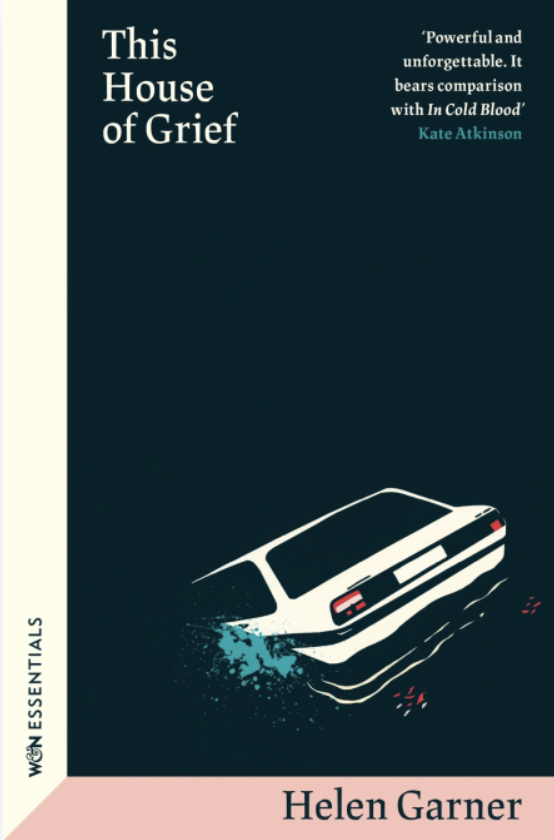
This House of Grief by Helen Garner courtroom drama true crime Rob Farquharson Cindy Gambino

On Father’s Day in 2005, driving his three young children back to their mother’s house, a recently separated husband drives off the road plunging down a bank and into a dam. The man manages to escape and the three children drown.

Everything that happens just before the couple’s separation, on that day and in the period afterwards becomes part of the story presented as evidence to either support the man’s grief or accuse him of the children’s murder.

Sitting In on Courtroom Drama

Helen Garner, author and freelance journalist, sits through the initial court case, the appeal and retrial, presenting to the reader a version of what she witnesses from the courtroom.

Courtroom justice The Mushroom trials Helen Garner This House of Grief
Photo by K. Bolovtsova Pexels.com

Unlike a jury that must weigh evidence against a charge, she speculates, confers and tries to understand the truth. She swings from one opinion to another, grappling with the thought of whether or not it is possible in a moment of impulsivity, that a man who clearly loved his children, could commit this act deliberately.

The man’s ex-wife doesn’t believe he did it intentionally.

Ultimately it is for a jury to decide and a judge to sentence.

As the American writer Janet Malcolm says in her magisterial work ‘The Journalist and the Murderer,’ “Jurors sit there presumably weighing evidence but in actuality they are studying character.”

Whose Perspective Matters?

The case shows how complex justice can become, often with strategic purpose, how fatiguing it can be on everyone involved, how very different perceptions of the same information can be, how loyal family can be, how spiteful people in relationships can act, and how strong denial and self-delusional are.

Garner doesn’t just follow the evidence and observe all the attendants in the room – noting their expressions, responses, who looks at who, capturing side comments, little notes passed to and from people, eavesdropping conversations – she also follows up with people on the outside, who have spent their careers in courtrooms, testing out some of her observations and theories.
The Mushroom Tapes by Helen Garner Chloe Hooper Sarah Krasnostein Conversations on a Triple Murder Trial in Australia

In her recent collaborative book The Mushroom Tapes, she attended a murder trial with two literary authors. They provided a counter to own thinking, enabling perspectives to be tested, refined, looked at from different angles.

In this earlier work, Garner is accompanied by her curious and attentive 16-year-old niece Louise. Though at certain points she questions the parents openness in allowing her to be present (she considers this on a day she was absent, with frank relief), each time she shares one of Louise’s insightful comments, it is revelatory.

There is something to be said for the cross generational team observation, good for the author and also a reminder to the reader that this is one person’s observation and it is a majority that decide.

On a day when the trial was slow going, when confusion and boredom filled the room and she noted that everyone had been affected by it, she contacted an old friend, a now retired barrister.

‘Farquharson’s counsel,’ I texted, ‘is killing us with boredom.’

He replied at once: ‘A time-honoured approach, when no feather to fly with. Still, one has heard it said that the fear of boring oneself or one’s listeners is a great enemy of truth.’

Time Heals and Time Destroys

The trial dissects not just the events of that one devastating Father’s Day, but the relationship of the couple, and things said to others while they were going through the painful process of separating. Things that in hindsight might be construed as intention, not mere jest. Throughout the first trial Cindy Gambino is supportive of her ex-husband, she refuses to believe that this man she knows loved his children, could ever intentionally carry out such an act.

Police wire-tap friends and try and get them to lead conversations where they need them to go. But all of these relationships are averse to betrayal, their histories are too long, connections too deep and their fear of reprisal too great.

Be Careful What You Say in Public

A couple of months before the retrial Garner was invited to give a talk about non-fiction in a State library. Someone in the audience asked her about her opinion on the trial, a subject she did not wish to get drawn into.

I confined myself to the observation that the only person who knew the truth wasn’t talking, and changed the subject.

One day a month or so later during a lunch break of a pretrial preliminary sitting, the defence lawyer pulled Garner aside for a word. He told her he had been sent a video of her talk at the library; Fear that she had said something inappropriate ripped through her.

My heart went boom. ‘Did I drop a clanger?’

‘You did. You said, “Only one person knows what happened in the car that night, and he’s not talking.” He leaned forward on both elbows and subjected me to a power-darkened look. ‘Our case is that my client doesn’t know what happened in the car that night. Because he was unconscious. By offering that opinion in a public forum, you were undermining my client’s right to silence. I think you might be in contempr of court.’

‘Contempt of court? Me?’ I broke into a cold sweat.

Discrediting a Witness

By the time of the retrial, five years after the event, the experience of repetition was disagreeable for many who took the stand. Significantly, Cindy no longer took the same position she had held. The defence sought to undermine that too.

It was exactly what Morrissey was after, a deeply ‘feminine’ shift, inspired not by reason but by wifely grievance and the bitter desire to settle a score.

Audiences attend to unravel a mystery, to understand a truth, but what they find in the courtroom is something a game or a debate, presentations of evidence on one side and efforts to discredit them on the other. The law is the rule book.

I tried to describe how I thought cross-examination worked.

‘The whole point of it is to make the witness’s story look shaky, to pepper the jury with doubt. So you get a grip on her basic observations, and you chop away and chop away, and squeeze and shout and pull her here and push her there, you cast aspersions on her memory and her good faith and her intelligence till you make her hesitate or stumble. She starts to feel self-conscious, then she gets an urge to add things and buttress and emphasise and maybe embroider, because she knows what she saw and she wants to be believed; but she’s not allowed to tell it her way. You’re in charge. All she can do is answer your questions.’

An Unjust System?
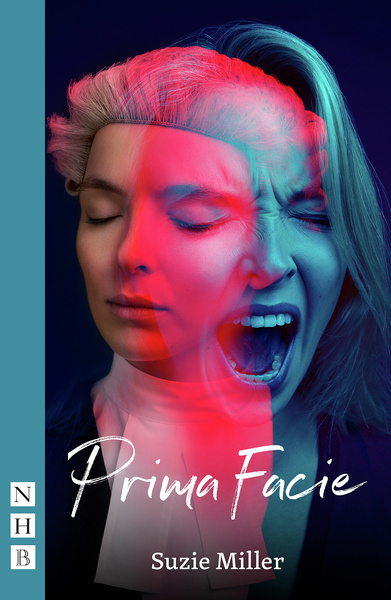
Prima Facie Suzie Miller Jodie Comer theatre play justice system

There are most certainly issues in the legal system that are problematic. The re-traumatising of victims is one and the unconscious bias against certain people is another. Recently I listened to an interview with Australian lawyer Suzie Miller, who ironically, has turned to theatre to communicate the inherent biases in the legal system.

Her play Prima Facie to be shown at the Gaiety theatre in Dublin 27-31 January sold out in less than a minute. It is the story of a proud barrister, who becomes a victim and finds herself on the other side of the justice system, and has a rude awakening, on discovering that the law was not written with victims in mind and that she is the one on trial.

I am planning to read the play soon, because of the incredible story of how Suzie Miller came to be in a position to be able to present this story, after all her education and experience and the fact that judges immediately set about implementing change after seeing it. Watch this space.

Though it is at times a laboured read and a tragic one, I did enjoy following the lengthy process through Helen Garner’s eyes. It did not leave me with any definitive answers though, except how difficult it must be to be a jury member in one of these crimes, when there is a system that facilitates the process that seems more like a chess game that an attempt to deliver justice. A system in need of its own reform.

Have you read This House of Grief or seen Suzie Miller’s play?
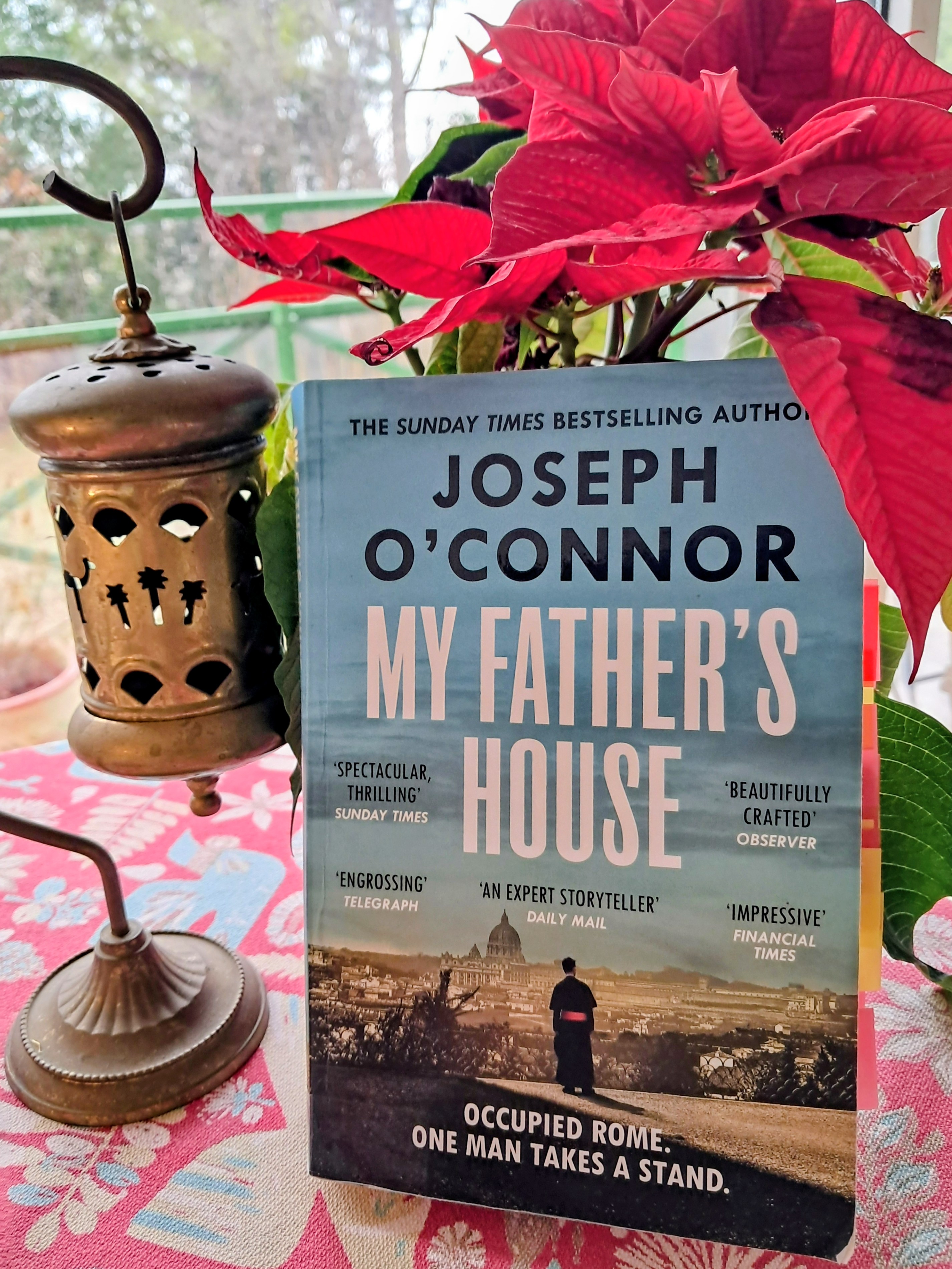
My Father’s House (2023) by Joseph O’Connor

The Rome Escape Line

My Father’s House was a spontaneous library read, an historical thriller based on a true story and the first book in the Rome Escape Line Trilogy.

The second book The Ghosts of Rome (2025) continues the story of Irish priest Father Hugh O’Flagherty  and the clandestine group known as ‘The Choir’ who smuggle thousands of escapees out of Nazi-occupied Rome via a secret route known as the Rome Escape Line.

Inspired by Real People and Events in Rome WWII

The first chapter begins:

Sunday 19th December 1943

10.49pm

119 hours and 11 minutes before the mission

My Fathers House by Joseph O'Connor Book 1 Rome Escape Line Trilogy

A car is being driven in the streets of Rome with Delia Kiernan, a diplomat’s wife and an injured man in the back. The pace and elements of danger are set. The next chapter is her voice, in January 1963, from a transcipt of a BBC research interview, questions inaudible, conducted in White City, London.

In her interview, as the wife of the senior Irish diplomat to the Vatican, she answers questions about the young Irish of the city, many of them seminarians.

One or two were scarcely into long trousers and they staring down the barrel of priesthood. Some of them, you wondered had it maybe been more Mammy’s idea than their own.And, often enough, though some won’t like me saying it, a nun was the youngest daughter of a poor family, with no other prospects.

On Father Hugh O’Flagherty she said:

But this Monsignor fellow was different, down to earth. Affable. You get that with Kerry people, a sort of courtesy. Too many priests at the time saw themselves not as a sign of mercy but as grim little thin-lipped suburban magistrates. Hugh wasn’t too mad on authority.

A City of Hiding Places and Bridges

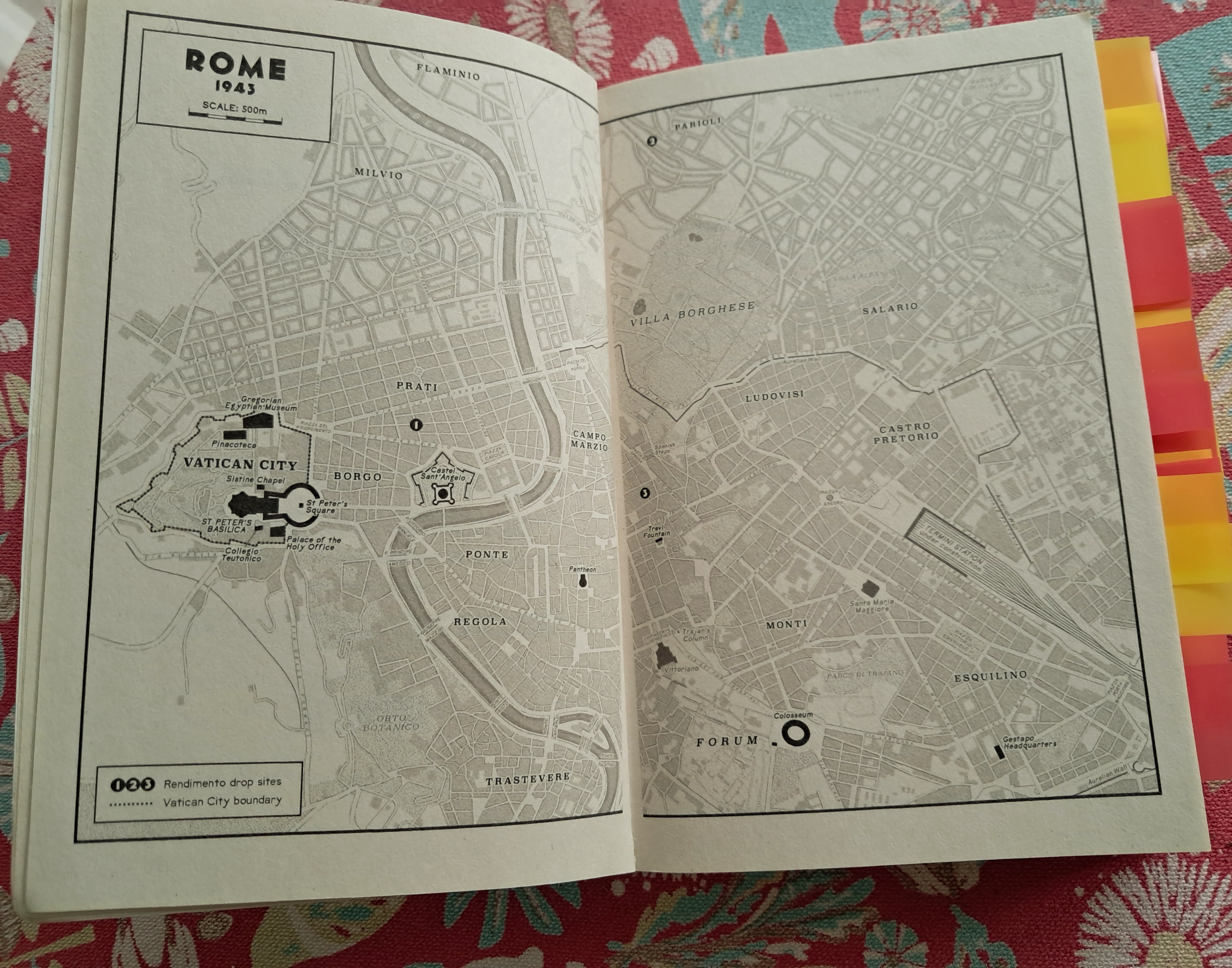
On the opening pages we also see a 1943 map of Rome and the boundaries of Vatican City, the only safe zone in the city during the war. In the narrative that continues, we observe and learn of its streets, alleys and underground tunnels and those who know them well, like a London cabbie used to know ‘The Knowledge’, crucial to the group during the event of 24 Dec 1943 that is to be carried out.

A Polyphonic Literary Thriller

Written like a literary thriller, as we read, are not exactly sure what the mission on Dec 24 is, like those involved, we too read on a need to know basis, and we begin to understand as an alternative thread of the story is told twenty years in the future in 1962 and 1963, by some of the participants in that mission. These chapters are given headings that tell us they are The Voice of… BBC transcript, research interviews, though again, we do not know what the purpose was for. But they give us another form of chorus, allowing multiple voices to perpetuate the wider moral and political considerations, each voice uniquely shaped and restrained.

So the evening unfolds and we feel the danger and the writing is a kind of lyrical realism with a sense of moral urgency. Short sentences are very descriptive, they act like a constant scan of the area every time a character moves. They must be able to detect without being detected. It creates taut, cinematic prose that at times I almost wanted to skip over, but eventually I got used to the style and it flowed better. While it is not melodramatic at all, it made me think of the shadow elements in a thriller, those not very well lit forms infused with creepy music that make the viewer uneasy. O’Connor succeeds through language to create this unease in the reader.

Father O’Flaherty writes his last will and testament that same night.

As for me, in those days, I saw all political systems as more or less the same, forms of foolishness, the prattling of apes, designed to keep the lesser chimps down. This was a shameful foolishness of my own. I have come to see that neutrality is the most extremist stance of all; without it, no tyranny can flourish.

Classic Theatrical Structure

A prolific writer of novels and Theatre/Spoken word, it is no surprise that the narrative is so propulsive, but it is done in a way that is not action oriented, as descriptive, it is written in a way that makes the reader pay attention to everything around them. The description is purposeful rather than decorative, it contributes to the sense of unease and provides cover, hiding places, makes us aware of danger.

Rome and Vatican City Map 1943 Joseph O'Connor My Father's House

The novel is structured into Act I: The Choir, Act II The Solo, Act III The Huntsman, and the final Act is Coda. So we meet all the characters, the mission is carried by one, supported by all the other characters, and then the one who really wants to capture him, has his moment.

Countdown To the Solo Act

The hours before the mission commences are narrated and then Hugh O’Flaherty is off on the night crusade, but one man is determined to catch him outside the neutral territory of Vatican city, SS Officer Paul Hauptmann, a man who rules with terror and is obsessed with stopping the one man who does not fear him. Within the walls of the Vatican no one can be touched, he is biding time, waiting for the priest to cross over into the occupied territory.

A Neutral Territory Within an Occupied City

Photo by Alexandre Moreira on Pexels.com

The way it’s written deftly portrays the dark, menacing shadow of occupation and the risk these people take and the incredible preparations they make and memorise should they be confronted. Ultimately, they are facilitating the continued funding of the Escape Line, in order that others can continue to help those whose lives are at greatest risk to find safe haven.

Written in such a propulsive and careful manner, that even as the reader, we are not entirely sure of the mission until it fully progresses, making one feel the risk of having too much knowledge and experience the tension and potential danger waiting around each corner.

Not at all my genre, I was intrigued to find out what the Rome Escape Line was all about and recalled that the sequel The Ghosts of Rome won the overall Book of The Year in all categories at the 2025 An Irish Book Awards as well as the Listener’s Choice Award.

Described by the Irish Times as an “extraordinary picture of Rome under Nazi control; brutal, chaotic, treacherous, decaying, wrecked and crumbling, and yet sometimes still bathed in glorious and unexpected light’

Highly Recommended if you are interested in WWII history of Rome and the Vatican. The third and final book in the trilogy is expected in 2027, though nothing has been announced yet.

Have you read either of the Rome Escape Line books? Share your thoughts with us below.

Further Reading

The Guardian: My Father’s House by Joseph O’Connor review – a literary thriller of the highest order

Author, Joseph O’Connor

Joseph O’Connor is a novelist, screenwriter, playwright and broadcaster from Dublin.

He is the author of eleven novels including ‘Star of the Sea’‘Ghost Light’ (Dublin One City One Book novel 2011) and ‘Shadowplay’.

Among his awards are the Prix Zepter for European Novel of the Year, France’s Prix Millepages, Italy’s Premio Acerbi, an American Library Association Award and the Irish Pen Award for Outstanding Achievement in Literature. His work has also been translated into forty languages and in 2014, he was appointed Frank McCourt Professor of Creative Writing at the University of Limerick.

The Mushroom Tapes (2025) by Helen Garner, Chloe Hooper, Sarah Krasnostein

Conversations on a Triple Murder Trial

The Mushroom Tapes was probably more interesting for me because I knew nothing about the trial and stumbled across it after having already decided to read Helen Garner’s collected diaries. This is a catch up review from Dec 2025.

Courtroom Content, Trial Coverage, the Spectacle of Justice

The book concerns a 2025 trial in Australia, which was very widely covered in the media, in a similar way to the coverage of the Johnny Depp v. Amber Heard trial.

Court Trials of public interest become like live reality television when the Courts decide to allow love broadcasting to the wider public, who capitalise on it turning it into something more like serialised drama.

Three Literary Authors on a Road Trip

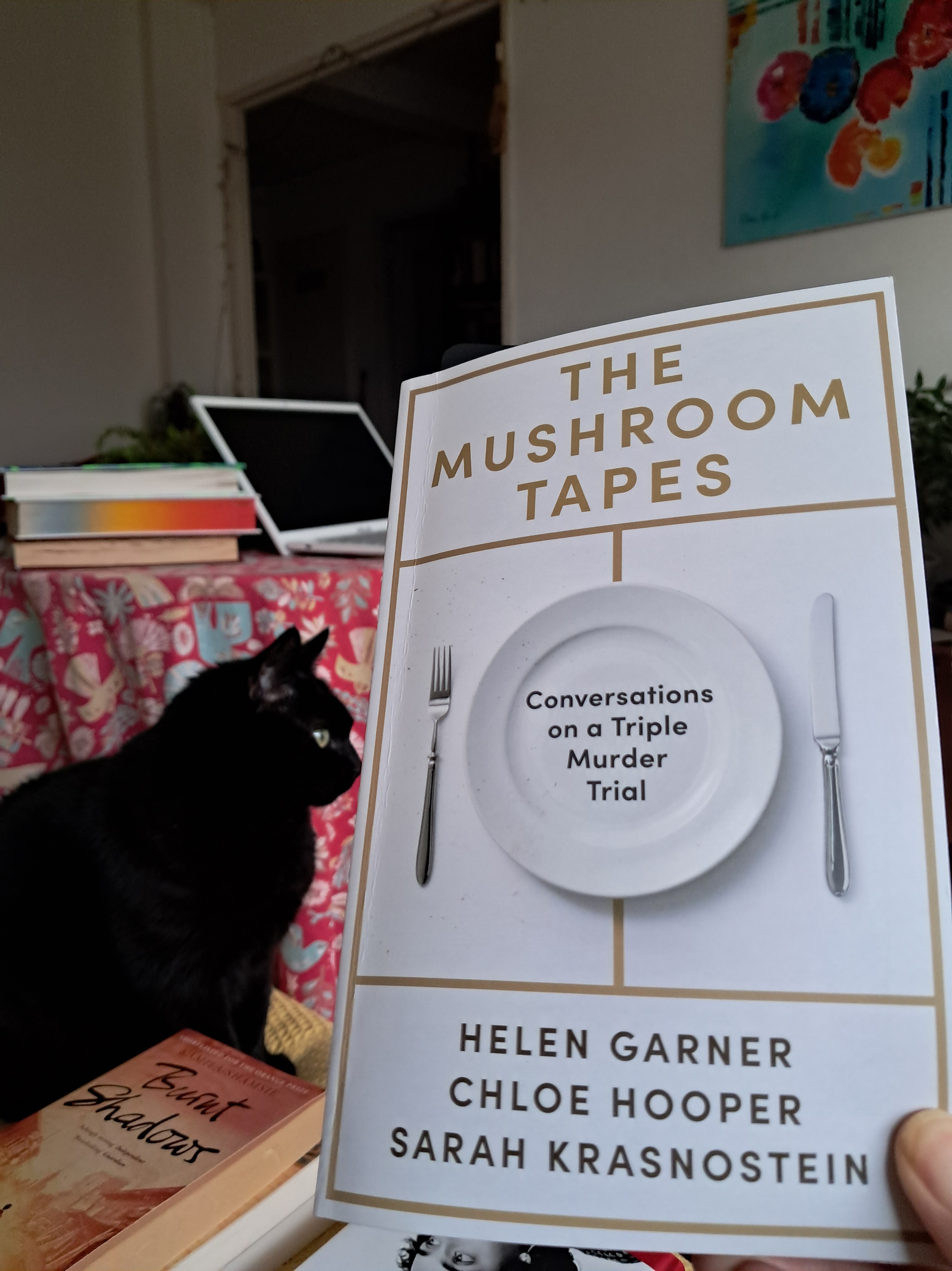
The Mushroom Tapes by Helen Garner Chloe Hooper Sarah Krasnostein Conversations on a Triple Murder Trial in Australia

The nonfiction book The Mushroom Tapes: Conversations on a Triple Murder Trial was created by three established Australian literary nonfiction writers:

Helen Garner, an acclaimed novelist and nonfiction writer with a long history of researching and writing about real-world true crime legal cases.

Chloe Hooper, an award-winning author known for deeply researched true-crime and nonfiction works.

Sarah Krasnostein, multi-award-winning writer and critic with a background in long-form journalism and law.

The book was created shortly after the conclusion of nine weeks of evidence to a jury in 2025. It is based on recorded conversations in the car and a local cafe, and reflections during and after the Erin Patterson triple-murder trial in Victoria, Australia, combining legal observation with personal and ethical analysis rather than simple narration.

It starts and we are not even there. Everyone in the world is talking about it. People say to us, you must be going. No, we answer. No. No. No.

…Heads turn to watch the trial. We see them start to stir. Via a media audio-link we listen to the evidence of the woman’s estranged husband. One wild domestic detail galvanises us: his dying aunt remembered that the guests ate off four grey plates, while the hostess served herself on an orange one.

On day five we get in the car.

Courtroom justice The Mushroom trials Helen Garner
Pic K. Bolovtsova Pexels.com

The book is split into six parts: The Court, The Church and the House, The Death Cap, The Victims, The Accused, The Verdict and it ends with Coda (the conclusion).

The first page shows a map of south east Australia, showing where the trial took place, the distance from the city of Melbourne, where the homes of the people involved were and where she foraged.

The text begins on 5 May and concludes on 4 July 2025.

Collaborative Authorship

This was a spontaneous book purchase. I was curious to see how the three authors could pull off the idea of road trip conversations, and create a collaborative approach to authoring a book of this nature.

We’ve never travelled anywhere together before. We’re writers and we’re friends, but this morning we’re almost shy of each other, not a hundred percent how we’re going to handle the day.

None of us wants to write about this. And none of us wants not to write about this.

While it does work and I really enjoyed the way the book is presented, I read it not long after Killers of the Flower Moon by David Grann, which is true crime on a whole different level, a case that involves years of research and delving into archives and uncovering the conspiracy of a nation. This is nothing like that, so not not investigative epic, but reflective, conversational, and essayistic.

It has more in common with Helen Garner’s earlier work, This House of Grief, being as much about the writer’s observations and response as the crime itself and in this case, The Mushroom Tapes shares the considerations of three people, arriving at a collective understanding and sensibility. It might be compared to French author, Emmanuel Carrère’s The Adversary, an exploration of the double life of a once respectable doctor.

What Happened

Photo V. Vieira Pexels.com

In July 2023, in a quiet Australian country town, Erin Patterson, stay-at-home mother and true-crime aficianado, invited her estranged husband’s devoutly Christian family to Sunday lunch. Her ex-husband was invited but pulled out at the last minute.

Within days, three of her guests were dead and the fourth was in a coma. They had been poisoned by death cap mushrooms found present in the Beef Wellington dish she had served.

The Trial

Two years later, Patterson stood trial, accused of three counts of murder and one count of attempted murder. The prosecution argued she deliberately foraged, prepared, and added the poisonous mushrooms to the meal to kill her guests; the defence claimed it was a tragic accident and that she had “panicked” after realising people had died.

The Mushroom Tapes

It is a terrible and tragic event when three close relatives die so suddenly after a Sunday lunch and even worse to imagine the poisoning may have been deliberate. The three writers decide to follow the trial and between them combine close legal examination and observation of people in the courtroom as the events unfold (reminding me of Yvvette Edwards courtroom novel The Mother), with personal and ethical analysis.

Chloe: Why is the public fascinated by a female poisoner?

Sarah: It’s archetypal. Adam and Eve and the apple. It’s through myths and fairytales.

Chloe: These crime stories seem to work as modern folktales. We mike it all the more if the characters are clearly good or bad, much as those old tales need a witch.

Helen: When I was splitting up with my husband, he said angrily to me, ‘You think you’re a good person!’

Chloe: Did you take that as an insult?

The women listen to the evidence and discuss it in a way that makes for an easy reading, intriguing form of coverage, a lot less repetitive no doubt than the actual trial.

Female Poisoners

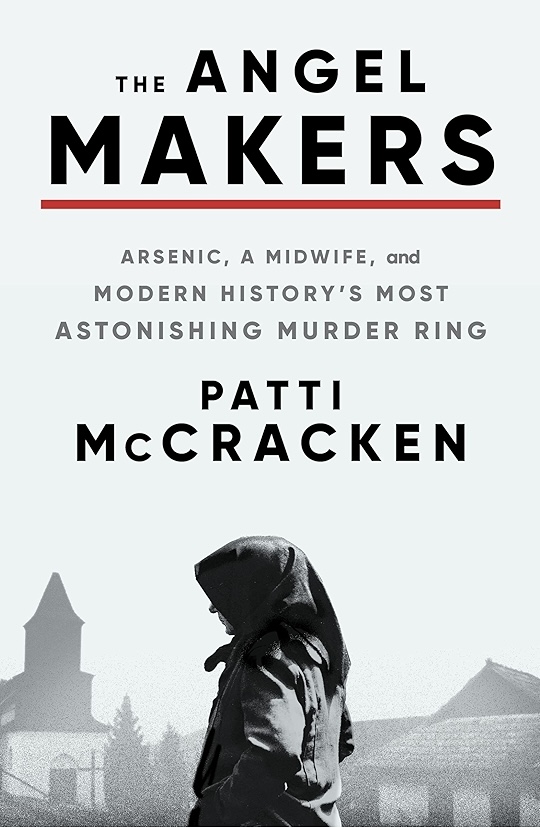
I also picked this book up because my curiosity had been piqued earlier after listening to a podcast interview with the author Patti McCracken prior to the publication of her true crime book The Angel Makers (2023). A village in Hungary in the 1910-1920’s had more than 160 cases of death by poison.

Women in the village had been complaining to their midwife ‘Auntie Suzy’ about unwanted pregnancies, domestic violence and a host of other marital complaints; she had a plethora of knowledge that she passed on to her clients. The story blends social history, gender roles, desperation, and crime, exploring why these women turned to murder and how the killings remained undetected for so long.

True Crime Devotees

It is likely that Erin Patterson and her true-crime friends were aware of that book. Stories about true crime, we learn, fascinate women. A criticism of true-crime is that it desensitises us to murder.

Chloe: I want to know more about true-crime’s appeal to women. I read that something like seventy percent of Amazon’s true-crime book reviews are by women, whereas for war books it’s like eighty-two per cent men. A female audience is driving the production of true crime in every medium. Why are women so fascinated by this?

Though they attempt to discover a motive, the four victims are portrayed as kind, gentle people, so the focus shifts to an analysis of the personality of Erin Patterson, the accused, the disintegration of her marriage, her resentments, her fascination with true crime and the devoted online community of friends she was part of in absence of the same in her own life.

According to the newspapers, Erin had described her upbringing to her Facebook friends:

My mum was ultra weird her whole life. We had a horrible upbringing. Mum was essentially a cold robot. It was like being brought up in a Russian orphanage where they don’t touch babies.

Dad wanted to be warm and loving to us, but mum wouldn’t let him because it would spoil us, so he did as he was told. She would shout at him if he did the wrong thing, so he became very meek and compliant. My sister and I would hide in our room most of the time so we couldn’t do anything wrong.

Chloe: Erin said that, to cope with this, she spent most of her childhood reading.

It seems also strange the attention the trial is given in this age of podcasts and content creation, so many people pursuing a trial for their own opportunity and attention, a conversational book seems almost an oxymoron.

Helen: I look at some people I’ve seen in the dock and I think, Jesus, I’ve been there, and somehow I didn’t crack – something in me stopped me from cracking and murdering…A friend of mine said to me, ‘I have to know why she broke.’ That’s what I’m always looking for in these stories. What was the point at which Erin just could not hack it any longer.

Chloe: She has elements of a fantasist or fabulist. Who knows what she’s told herself about breaking.

Final Words From the Survivor

It is an intriguing and compelling read, with its own glimmer of hope, as the sole survivor of the four dinner guests shares the final thought-provoking words, exhibiting values seriously lacking elsewhere.

Sarah: Erin was estranged from her parents, so Don and Gail became even more important for the practical and emotional support they gave. Love betrayed is often the motive for extreme rage. I almost find it more incriminating the more she talks about this well of deep feeling she had for them, because this rage about rejection hovers at the edges.

Further Reading

The Guardian: The Mushroom Tapes review – Erin Patterson through the eyes of Helen Garner, Chloe Hooper and Sarah Krasnostein

Author, Helen Garner

Helen Garner is one of Australia’s most acclaimed and revered writers: of novels, stories, screenplays and works of non-fiction. In 1993 she won a Walkley award and in 2006 she received the inaugural Melbourne Prize for Literature. In 2019 she was honoured with the Australia Council Award for Lifetime Achievement in Literature. Her best-selling books include Monkey Grip, The Children’s Bach, Cosmo Cosmolino, The Spare Room, The First Stone, This House of Grief, Everywhere I Look, The Season and her diaries, the collected volume of which has been shortlisted for the 2025 Baillie Gifford Prize.

Author, Chloe Hooper

Chloe Hooper’s first novel, A Child’s Book of True Crime , was short-listed for the Orange Prize for Fiction.  In 2006 she won a Walkley Award for her writing on the inquest into the death in custody of Cameron Doomadgee. The Tall Man, her 2008 book-length account of the case, received numerous awards including the Victorian, New South Wales, Western Australian and Queensland Premier’s Literary Awards.

Her account of the Australian Black Saturday bushfires, The Arsonist: A Mind on Fire, was voted 2018’s Best Non-fiction title by Australian Independent booksellers.

Author, Sarah Krasnostein

Sarah Krasnostein is a multi-award winning writer and critic. Her best-selling books include The Trauma Cleaner, The Believer, the Quarterly Essay, Not Waving, Drowning, and On Peter Carey

She has won Walkley Awards and been awarded the Victorian Prize for Literature, the Australian Book Industry Award for General Non-Fiction, the Victorian Premier’s Prize for Non-Fiction, the Prize for Non-Fiction at the New South Wales Premier’s Literary Awards and the Dobbie Literary Award. She holds a doctorate in criminal law and is admitted to legal practice in New York and Victoria.

You Are Here (2024) by David Nicholls

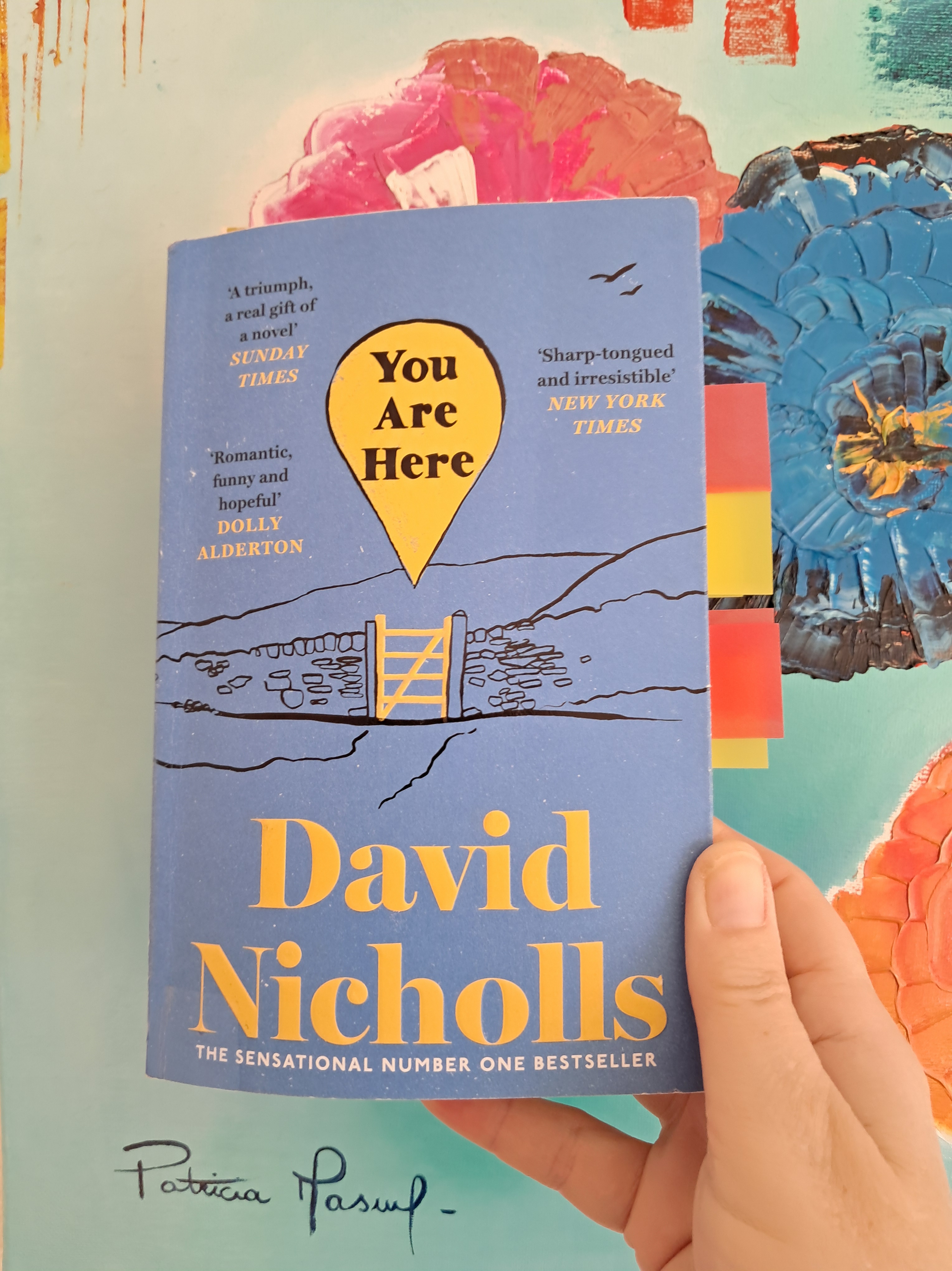
I picked this up from the library during the festive season for a light romcom type read without looking too much into what it was about. I remember when David Nicholls wrote One Day (2009), seeing that book splashed all over red double decker buses in London as if it were a movie, and it was a book. That was a book about two people from different backgrounds, barely connecting while at university, but keeping a tenuous friendships alive over 20 years. Emotional depth, continuity, the will they, won’t they get together intrigue – readers loved it.

Perfect Arc, Terrible Title

So I know he understands the formula, he is known to adapt books into screenplays, he’s got the story arc down pat. The only thing he gets wrong in my humble opinion are the totally forgettable book titles! And this one is terrible! You Are Here? I guess it could have been worse, Here is Now, or Another Day.

I was a little unsure going in, as I realised how lonely the two main characters were being portrayed, but then I remembered, they are going to be going through a transformation, so they must start out being somewhat at a loss. I persevered.

Northern England’s Coast to Coast

You Are Here by David Nicholls romantic comedy hiking coast to coast England

The book is about this one friend Cleo, who invites her friends Michael, Marnie, Conrad and her son Alex to go on a 2 or 3 day walk from the Cumbrian west coast of England inland, only Michael plans to go all the way west to east through Yorkshire to the opposite sea.

…he thought he could make it to the east, a high belt cinched under Scotland’s arm, crossing the Lakes, over the Pennines, along the Dales and across the Moors, then descending down the Yorkshire coastline to dip his toes into the North Sea. It was the famous route devised by Alfred Wainwright, 190 miles usually covered in twelve or thirteen days, though he felt sure he could do it in ten if he didn’t stop or rest.

When Freedom Beckons

You Are Here David nicholls hiking coast to coast engliand
Photo by A. Rasool on Pexels.com

As they set off, the weather deteriorates and some of them pull out, so then it is just Marnie and Michael who continue. She continues to delay her taxi and return train to London, enjoying the challenge, though at the back of her mind is a deadline for the copy edits she’s doing for an erotica novel, and at the back of his mind is a loose arrangement he made to meet the wife he separated from eighteen months ago.

Books saw her through the pupal stage of thirteen to sixteen, frowning at Kafka and Woolf, tearing through John Irving and Maeve Binchy, widely read in the proper sense, making no distinction between Jilly Cooper and Edith Wharton.

Marnie (38) is divorced and Michael (42) nearly 2 years separated, both are childless and while they say they were good with their solitude, the pandemic had not been exactly welcome, however this walking holiday does seems to be helping, lifting both their spirits.

Being with other families sometimes felt like indoctrination, as if she were attending a symposium on what family life could be. Here’s what you might have had if you’d made better choices, here’s where you might have poured your love.

After a slow and reluctant start, with their attention elsewhere, they begin to connect and are able to talk about things in a way they have not with anyone else – so it might seem predictable – but no, there has to be a deep connection, some kind of disruption, perhaps the feeling that’s it is over, and then the will they, won’t they, before the end.

‘Well, seven days! What did you talk about?’

‘You know – life, love, death,’ she said, and Conrad laughed, though in fact this had been true. ‘There’s something about walking, things slip out. It’s like taking a truth serum or something. Also it was very beautiful. Look.’

For two private people, the open air, the focus on the walking and the terrain facilitates them being a little vulnerable with each other (they are English, so not too much), while not quite being as open as good friends. That would require taking a risk, and neither are quite there yet.

Photo by Hc Digital Pexels.com

I really enjoyed it, particularly towards the end as other elements in their lives began to put pressure on them, where they were likely to make mistakes, exposing their flaws, where they had to step up and beyond, because they couldn’t be guaranteed each other’s company like they had been on those seven days.

Apart from the English weather, it would be great to see this made into a film or series, it certainly lends itself to it, with the wry English humour and the opportunity to see all that beautiful landscape.

It reminded me a little of The Unlikely Pilgrimage of Harold Fry by Rachel Joyce, a character who walks from the south of England to the north, and interestingly she is also a playwright.

Recommended if you enjoy light, uplifting, humorous fiction that moves forward at a good pace.

Further Reading

The Guardian: You Are Here by David Nicholls review – a well-mapped romance

Author, David Nicholls

David Nicholls is the bestselling author of Starter for Ten; The Understudy; One Day; Us, which was longlisted for the Booker Prize for Fiction; Sweet Sorrow; and You Are Here. 

He is also a screenwriter who has also written adaptations of Far from the Madding Crowd, When Did You Last See Your Father? and Great Expectations, as well as his own novels. His adaptation of Edward St Aubyn’s Patrick Melrose, starring Benedict Cumberbatch, was nominated for an Emmy and won him a BAFTA for best writer. Nicholls is also the Executive Producer and a contributing screenwriter on a new Netflix adaptation of One Day.

The Vanishing Act of Esme Lennox (2006) by Maggie O’Farrell

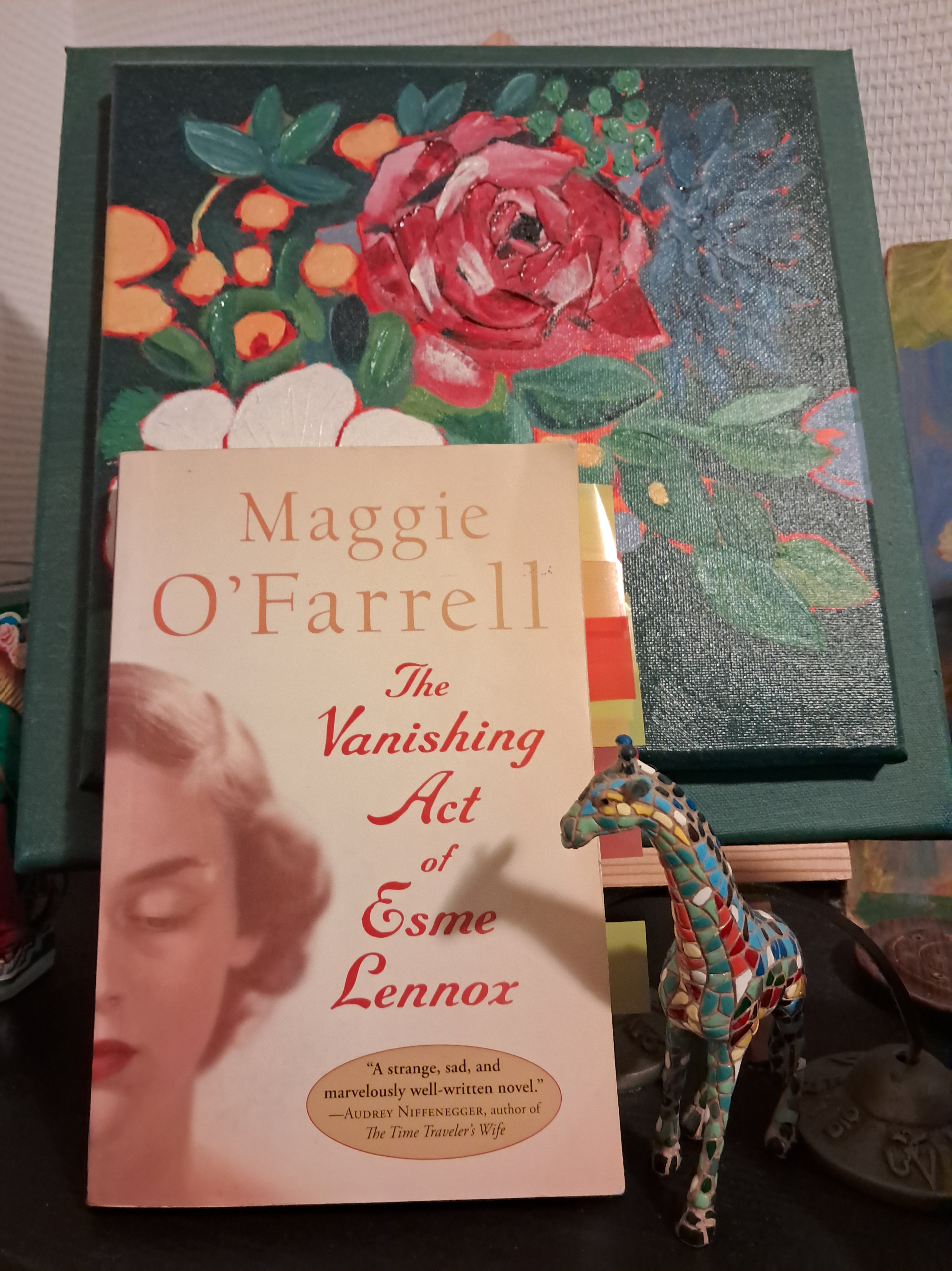
In my library picks, I picked up a Maggie O’Farrell novel from her backlist, not one of her historical fiction novels of recent years, more of a Gothic mystery set in mid 20th century Scotland, in and around Edinburgh.

With another work of historical fiction due in 2026 ‘Land‘ set in 1860’s Ireland, and now the recent success of the film ‘Hamnet‘, her star is firmly set in the ascendant.

A Gothic Mystery in Edinburgh

Set in twin timelines, early 1900’s and early 2000’s, it tells the story of a family that returns from India after a tragic loss. Two sisters who were born there are abruptly brought to Scotland, to live in the household of a strict and rigidly corseted upper-middle class family, ruled by a grandmother in an environment that free-spirited Esme Lennox neither fits nor readily accepts conforming to.

As she gets in trouble, her sister sees her own opportunity and makes decisions that will cast long shadows on the family for decades.

Modern Life, Modern Dilemmas

In the early 2000’s, Iris runs a shop and has complex relationships with her brother and an unavailable man Luke she met at a wedding. Into this already complex life, a telephone call informs that she is the next of kin of a resident of the Cauldstone Hospital, a woman they claim is her grandmother Kitty’s sister, despite Iris believing her grandmother had been an only child. She is asked to come to an appointment where all shall be revealed.

Meanwile Esme’s world is about to change, though in another sense she is returning to where it all started.

Esme takes one last look at the driveway and sees a woman who used to have the bed next to her, standing beside a brown car. An old man is stowing a suitcase in the boot. The woman is weeping and peeling off her gloves. The man doesn’t look at her. Esme turns and starts climbing the stairs.

Family Secrets and Omissions

Photo A. Palmowska Pexels.com

Iris’s grandmother Kitty is in care and hardly remembers her grand-daughter. They haven’t been close since she was a child, when she seemed to turn against the child.

Iris visits the long-stay psychiatric hospital and learns more about her grandmother’s secret affairs that appear to have been signed over to her without her knowledge or consent.

‘I have here a copy of a document lodged with us by her solicitor, signed by Mrs Lockhart, naling you as the family member to be contacted about affairs pertaining to one Euphemia Esme Lennox, her sister.’

Iriss is really cross now. ‘She doesn’t have a sister.’

There is a pause in which Iris can hear the man moving his lips over his teeth. ‘I’m afraid I must contradict you,’ he says eventually.

Photo Suzy Hazelwood Pexels.com

No one in her family has heard of this woman, her mother lives abroad, her father is no longer living and her grandmother Kitty has Alzheimers. And the hospital is closing down. If arrangements aren’t made with family members the residents are to be moved to a hostel. Iris can’t possibly take on the responsibility, but she is curious about who this woman is and why she has been left in this place.

‘It’s not unusual for patients of ours to…shall we say, fall out of sight. Euphemia has been with us a long time.’

‘How long exactly?’

Lasdun consults his file, running a finger down the pages. The social worker coughs and leans forward. ‘Sixty years, I believe, Peter, give or take -‘

‘Sixty years?’ Iris almost shouts. ‘In this place? What’s wrong with her?’

The novel concurrently tells the story of those defining circumstances in Esme’s early years that lead to her being sent to the hospital, and Iris’s determination to get to the bottom of what of her grandmother did or didn’t know.

But before she can do this, she will meet and consider whether or not to take in this great Aunt and try to find something out from her grandmother, whose mind is no longer in ordinary reality.

Why Deny Sisterhood?

When Iris brings Esme to her apartment, it becomes clear that she recognises it, she too has lived there.

She cannot fathom the strangeness of all this. She has acquired a relative. A relative who knows her home better than she does.

‘Which was your room?’ she asks.

Esme turns. She points. ‘The floor below. The one overlooking the street. It was mine and Kitty’s. We shared.’

Girls’ Behaviours and Predicaments

The novel contrasts modern life in Edinburgh, depicting Iris’s unconventional but common behaviours with the rigid social norms of early-20th-century Scotland, especially around outspokenness, sexuality, consent and judgement. Any breach of these norms by girls was considered a form of madness and could result in them being committed to a psychiatric institution. The Edwardian era epitomised rigid class structures, strict gender expectations and a superficial elegance that masked deep social control.

Maggie O’Farrell imagines two girls who were not born into those social norms, but come into them later in childhood, and what happens to them after coming from a different culture, even though their parents were from that Scottish background. It seems unbelievable and yet we know it was very common for such situations to happen.

It’s an immersive page-turner and shocking portrayal of misdiagnosis, patriarchal control and the devastating lack of female solidarity, where women choose safety, respectability, compliance and/or silence over loyalty. This silence continues to be inherited in successive generations rather than challenged.

Highly Recommended.

Have you read The Vanishing Act of Esme Lennox? Do you have a favourite Maggie O’Farrell novel?

Let us know what you think in the comments below.

Further Reading

Reviewed here:

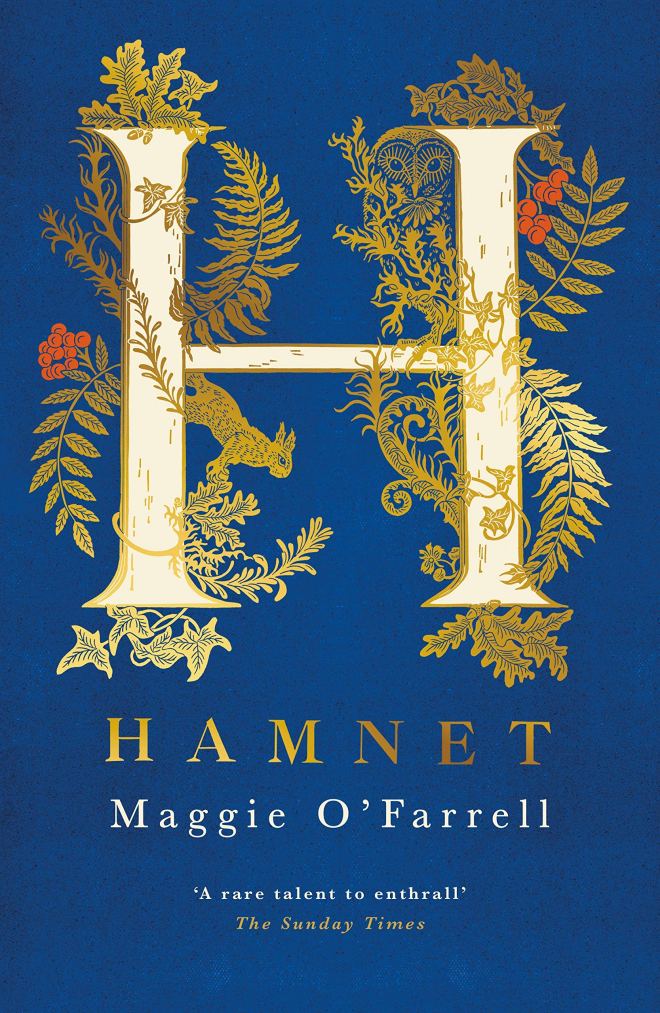
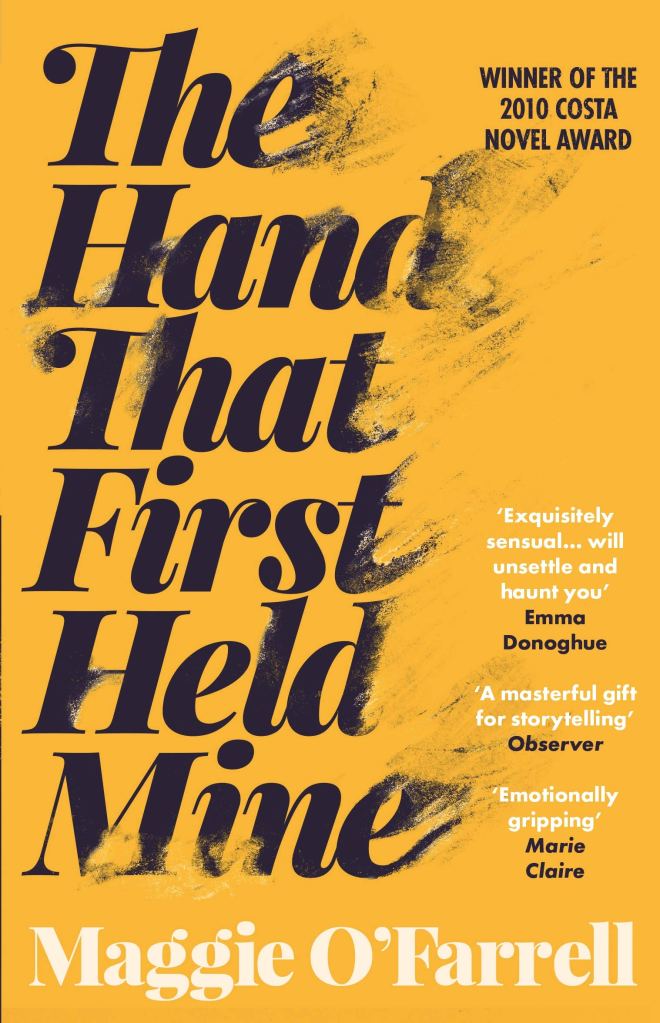
I Am, I Am, I Am: 17 Brushes With Death, A Memoir

Hamnet

The Marriage Portrait

The Hand That First Held Mine

Author Maggie O’Farrell

MAGGIE O’FARRELL was born in 1972 in Coleraine, Northern Ireland and grew up in Wales and Scotland. Currently, she lives in Edinburgh.

Her novels include Hamnet (winner of the National Book Critics Circle Award), The Marriage Portrait, After You’d GoneThe Vanishing Act of Esme LennoxThe Hand That First Held Mine (winner of the Costa Novel Award), and Instructions for a Heatwave. She has also written a memoir, I Am, I Am, I Am: Seventeen Brushes with Death

Hamnet, which imagined the untold story of Shakespeare’s son, won the 2020 Women’s Prize for Fiction and was Waterstones’ Book of the Year and is now feature film.

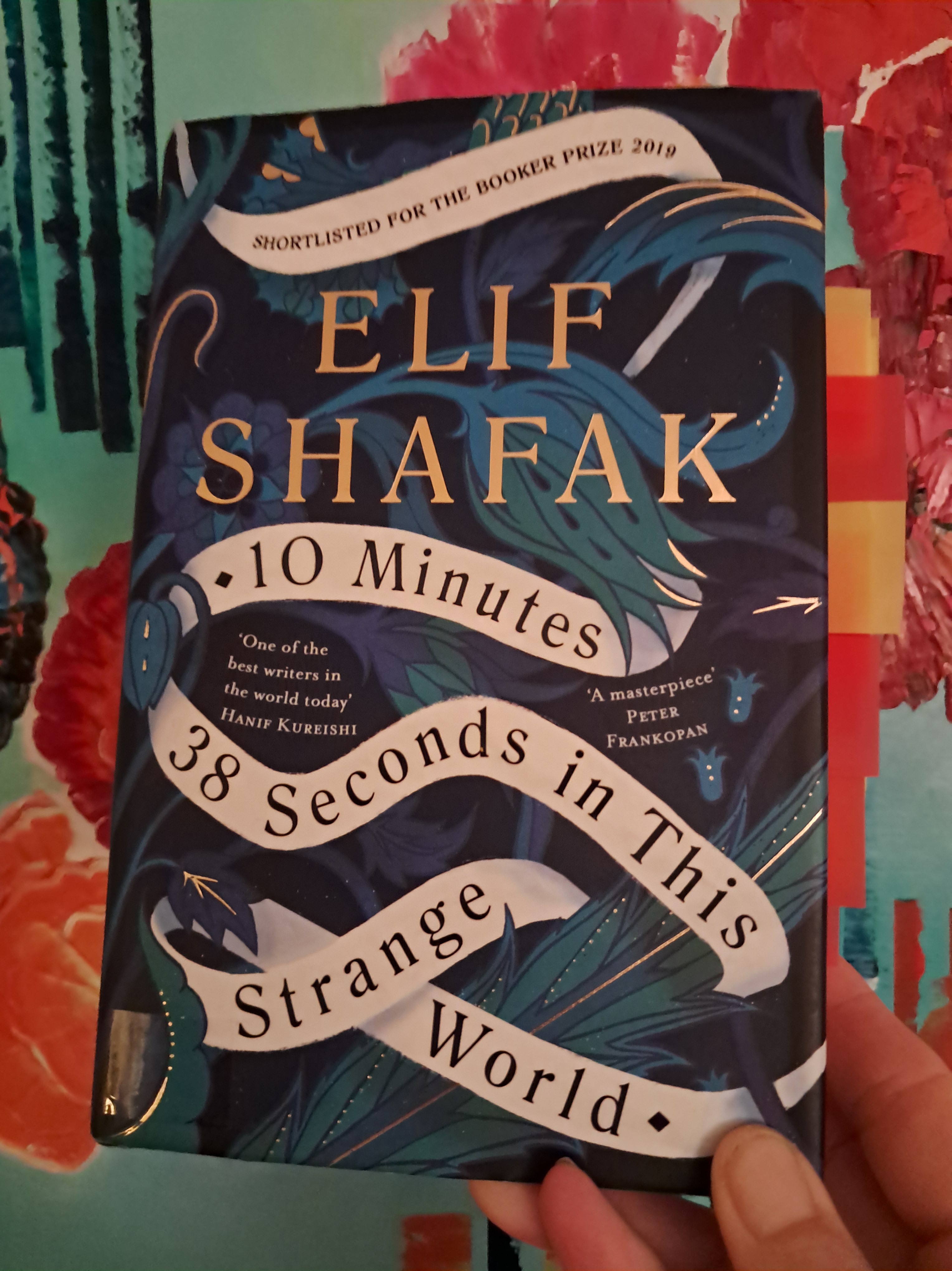
10 Minutes 38 Seconds in This Strange World by Elif Shafak

Elif Shafak is one of my favourite writers, ever since being lent The Bastard of Istanbul (2006) and then on learning she had been a Rumi scholar, was delighted to read The Forty Rules of Love (2009).

She is one of the most interesting and prolific authors of cross-cultural fiction, and made the transition in 2004 from writing in Turkish and being translated into English, to writing directly in the English language. She made the decision to write in English to have distance and freedom from political and social pressures implicated by writing in her native language, and to approach her heritage and subjects of interest from an alternative perspective.

A Profound Dedication

Her engagement in writing about social issues, multicultural and political themes and her relocation to London from Istanbul, and her deep engagement with history, identity, gender, religion and cultural themes, her regular speaking out, her weekly essays to followers and her prize nominations have all contributed to raising her profile to the point of being elected President of the Royal Society of Literature (RSL) in the UK in 2025, succeeding Bernardine Evaristo. She is a great writer and an important connector between cultures, disciplines and literary communities.

10 Minutes 38 Seconds

This book was shortlisted for the Booker Prize 2019, the prize that year won by Bernadine Evaristo for Girl Woman Other. I spotted this on the shelf at the library I mentioned in my last post, along with Intermezzo by Sally Rooney and The Vanishing Act of Esme Lennox by Maggie O’Farrell and You Are Here by David Nicholls. I immediately jumped to read the Elif Shafak and I am happy to see there are few more of her backlist I might be able to get to this year as well.

10 minutes 38 seconds in this strange world by elif shafak

Shafak’s novel starts with the intriguing title, what exactly is the meaning of 10 minutes and 38 seconds? The novel starts with a seven page chapter called The End. We are confronted with the early morning discovery of the body of Leila, before any of her friends have learned of her premature death/murder.

Once the authorities had identified her, she supposed they would inform her family. Her parents lived in the historic city of Van – a thousand miles away. But she did not expect them to come and fetch her dead body, considering they had rejected her long ago

You’ve brought us shame. Everyone is talking behind our backs.

So the police would have to go to her friends instead. The five of them: Sabotage Sinan, Nostalgia Nalan, Jameelah, Zaynab122, and Hollywood Humeyra.

A Post Death Structure

Photo Tara Winstead Pexels.com

The book then is structured into, Part One: The Mind, Part Two: The Body and a very short few pages, Part Three: The Soul. In Part One we learn about the significance of the 10 minutes 38 seconds and this is what the chapters pertain to.

During this period of time when the victim is dead her consciousness is replaying memories, aromas, all of the things that she has sensed and experienced and known, and it is in these chapters that we learn about her past with her family and we are introduced to the five friends. These are the flashbacks of her life passing through her consciousness. Thus forming the structure of this first half of the novel.

Researchers at various world-renowned institutions had observed persistent brain activity in people who had just died; in some cases this had lasted for only a few minutes. In others, for as much as ten minutes and thirty eight seconds. What happened during that time? Did the dead remember the past, and, if so, which parts of it, and in what order? How could the mind condense an entire life into the time it took to boil a kettle?

As each minute passes and each sense is evoked and each friend is remembered, there is then a short story about that friend and how they came to the name they now hold and what brought them to the city of Istanbul where they all resided until this moment.

Friends on a Mission

Photo by Kathryn Archibald on Pexels.com

When we get to Part Two: The Body, the consciousness has left the body and we arrive in the present moment with the five friends trying to deal with the fact that their friend is missing, is dead, and no one will allow them to visit her.

“Grief is a swallow,’ he said. ‘One day you wake up and you think it’s gone, but it’s only migrated to some other place, warming its feathers. Sooner or later, it will return and perch in your heart again.”

The want to pay their respects, to do something for her, but the city has already judged her and made decisions without the consent of family or friends, so this part of the novel becomes something of an adventure as the friends bond together to make amends for the current situation and try to do something for their dear friend. And go on a road trip in an old truck.

A Clever Structure Dulls Character Recall

The only trouble I found with the clever format of the first half, was that because it all takes place in the past and each chapter is about a different friend, by the time they all come together half way into the novel, it is not as easy to remember who they are, because they haven’t been regularly present in the text until now.

Thus it created a disconnect for this reader, who likes to imagine each character as they are introduced, but they need to stay present for that image and impression of them to last. I found that I had to refer back to the beginning to recreate that sense of the character, in order to recall who they were.

Overall I found it an enjoyable read, the characters come from all walks of life, mostly marginalised for one reason or another and in their neighbourhood they have found each other, look out for each and wish to challenge the way they and others like them are treated. By coming together to do something for Leila, they are also challenging the way their city deals with others who have been marginalised, that grief, burial, remembrance and recognition of those who have passed should be something universal that all can participate in, regardless of where life has taken them.

Nostalgia Nalan believed there were two kinds of family in this world: relatives formed the blood family; and friends, the water family. If your blood family happened to be nice and caring, you could count your lucky stars and make the most of it; and if not, there was still hope; things could take a turn for the better once you were old enough to leave your home sour home.

It’s a beautiful fable-like story, much of it inspired by real circumstances, real places and conditions and inspired by friendships lived by the author from time lived in the city of Istanbul.

Highly Recommended.

Further Reading

UnMapped Storylands: Elif Shafak’s Sunday Essays: Substack: ‘When Will You Begin That Long Journey Into Yourself?‘ Jan 11, 2026

‘I wish I could show you when you are lonely or in darkness the astonishing light of your own being.’ Hafez

Books reviewed here:

The Happiness of Blond People (2011) – A Personal Meditation on the Dangers of Identity (Essay)

Honour (2011) (Novel)

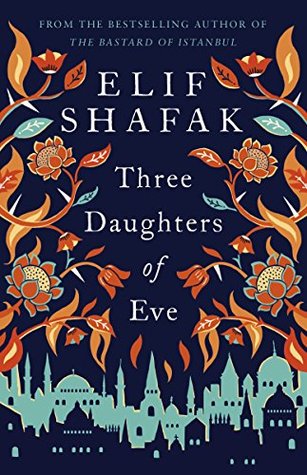
Three Daughters of Eve (2016) (Novel)

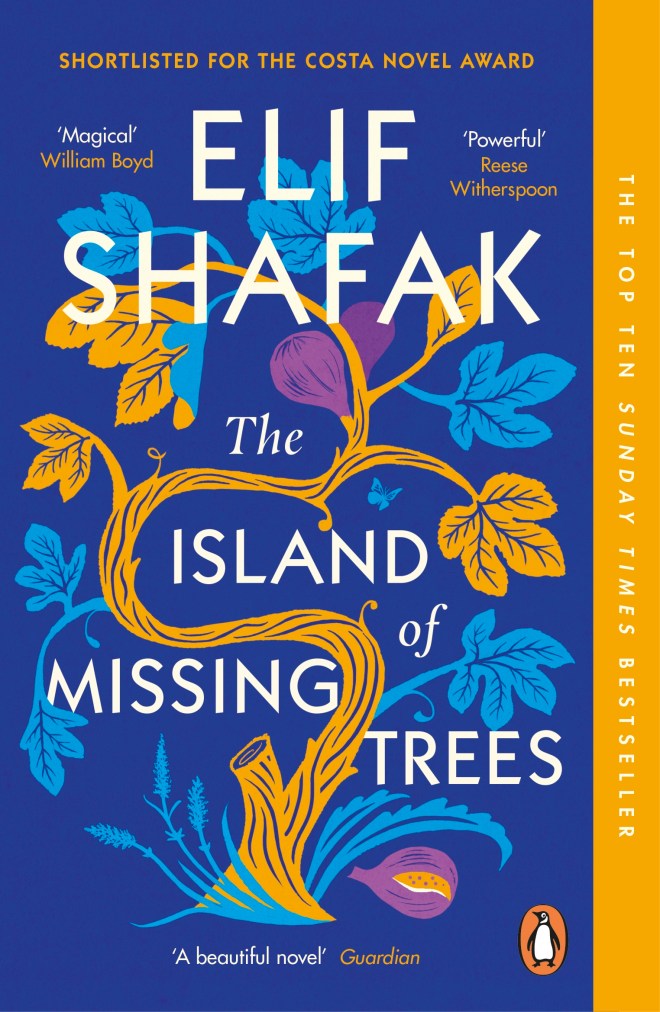
The Island of Missing Trees (2021) (Novel)

Author Elif Shafak

Elif Shafak is an award-winning British-Turkish novelist and storyteller. She has published 21 books, 13 of which are novels and her books have been translated into 58 languages. 

Shafak is a Fellow and President of the Royal Society of Literature and has been chosen among BBC’s 100 most inspiring and influential women. An advocate for women’s rights, LGBTQ+ rights and freedom of expression, Shafak is an inspiring public speaker and twice TED Global speaker.

A Flash Book Sale & Library Haul

Recently I attended a flash booksale at a small local English library, donating a bag of books and picking up a few temptations, despite going with the intention of not buying.

New Daughters of Africa

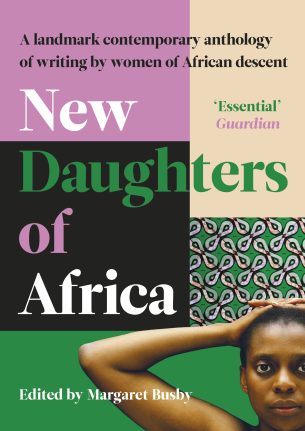
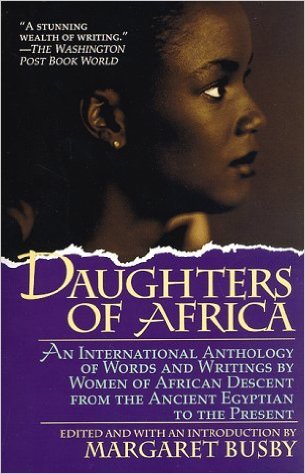
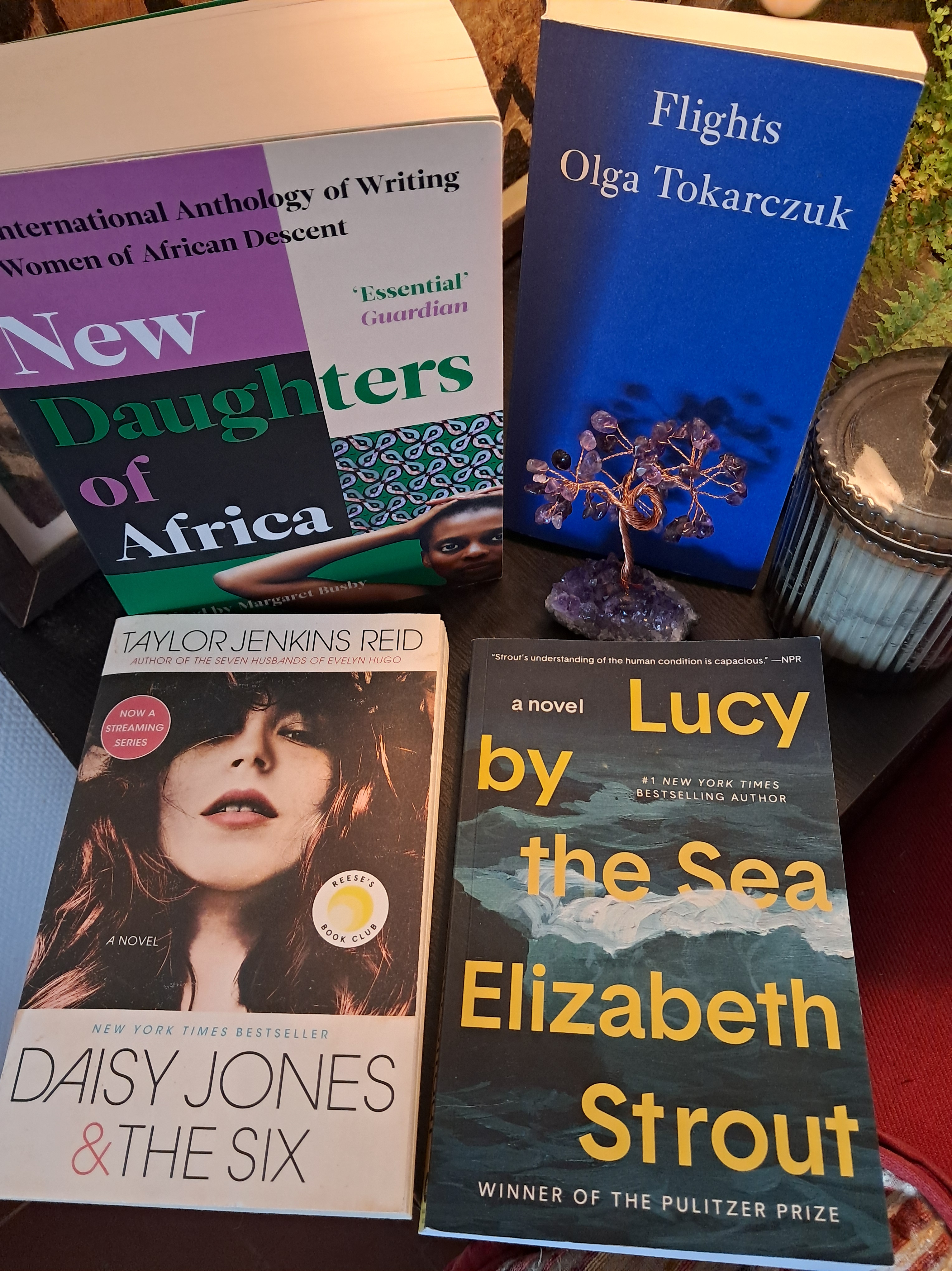
I was remarkably restrained and only bought four books, one of which is more of a reference book, but one that introduces many other authors. I’m talking about the New Daughters of Africa by Margaret Busby, her second anthology of over 200 women writers of African descent, the follow up to the original landmark anthology, Daughters of Africa (1992).

This new companion volume brings together fresh and vibrant voices that have emerged more fully in the last 25 years, but looks back over all the decades of the 1900’s. It does not duplicate any of the authors from that first anthology, but updates it and included more contemporary authors.

I enjoy reading unique African women voices, whether of Africa or the Caribbean, or Francophone and it is helpful to have a repository of those voices in one collection.

It is from Margaret Busby’s earlier list of authors that I discovered and have read/reviewed authors like Buchi Emecheta (Nigeria/UK), Mariama Ba (Senegal), Ann Petry (US), Nella Larsen (Danish Caribbean/US), Zora Neale Hurston (US), Simone Schwartz Bart (Guadaloupe), Tsitsi Dangarembga (Zimbabwe), Gayl Jones (US), Audre Lorde (US), Octavia Butler (US), bell hooks (US), Wangari Maathai (Kenya) and the late, great Maryse Condé (France/Guadalupe)

Now in this second anthology, among others we find Leila Aboulela (Sudan/Scotland), Ayọ̀bámi Adébáyọ̀ (Nigeria), Chimamanda Ngozi Adichie (Nigeria), Edwidge Danticat (Haiti), Yvvette Edwards (UK), Nawal El Saadawi (Egypt), Aminatta Forna (Sierra Leone), Bernadine Evaristo (UK), Maaza Mengiste (Ethiopia), Afua Hirsch (UK), Andrea Levy (UK/Jamaica), Imbolo Mbue (Cameroon), Marie NDiaye (France), Chinelo Okparanta (Nigeria), Yewande Omotoso (Sth Africa/Barbadoes), Namwali Serpell (Zambia), Warsan Shire (Somali/Kenya/UK), Zadie Smith (UK), Jesmyn Ward (US).

Literary Travel and Insight

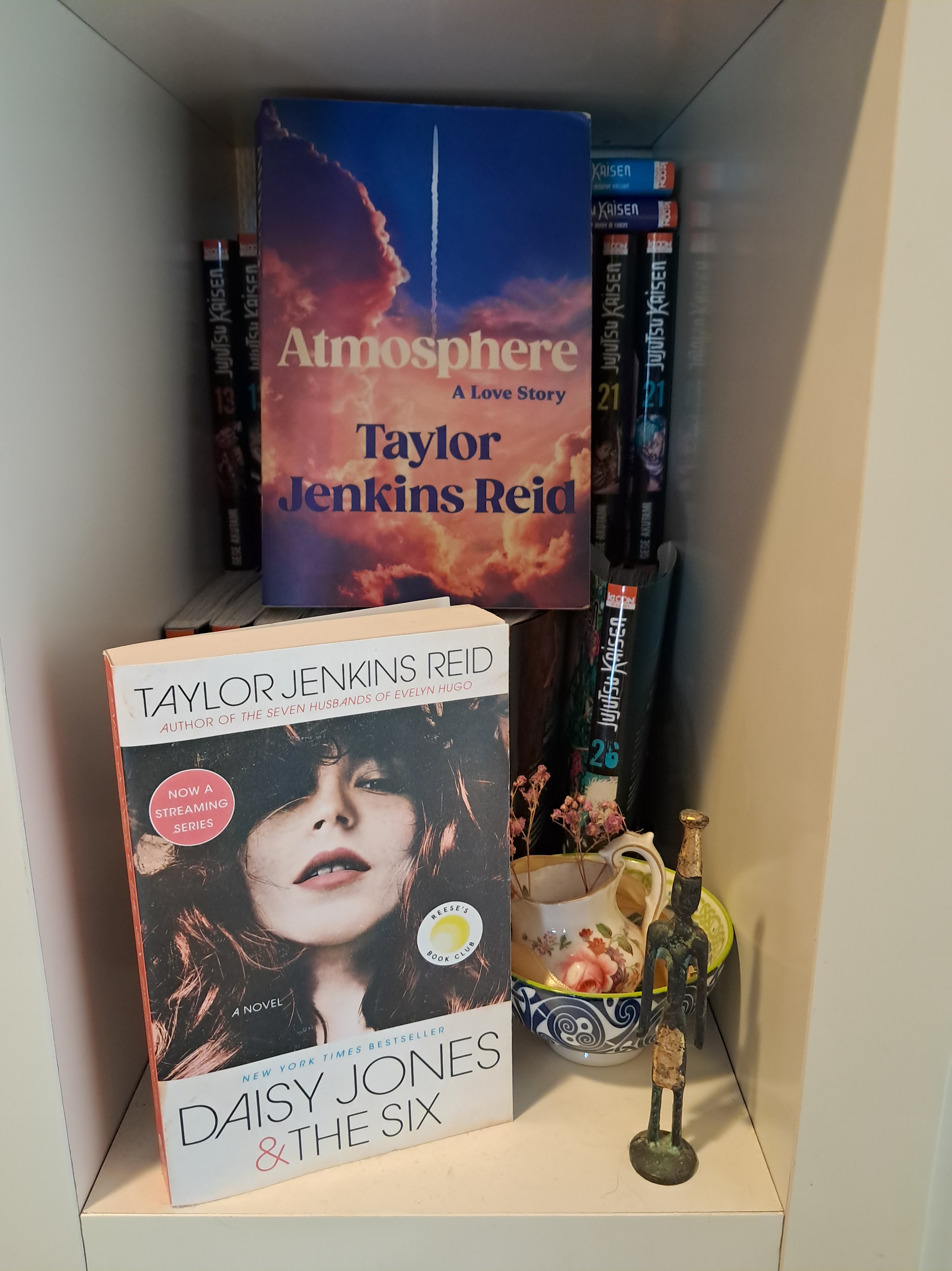
New Daughters of Africa Margaret Busby Daisy Jones and the Six Lucy By the Sea Flights Olga Tokarczuk

As well as this great find, I also picked up a copy of Flights by Olga Tokarczuk, the brilliant Polish author and winner of the Nobel Prize for Literature in 2018, the same year that she won the International Booker Prize for this fragmentary novel Flights, a book based on some of her own experiences as a traveller that she describes as a constellation novel, constructed from small fragments. The judges said:

‘We loved the voice of the narrative – it’s one that moves from wit and gleeful mischief to real emotional texture and has the ability to create character very quickly, with interesting digression and speculation.’

I recall buying it as a gift for a family member, but I did not read it myself. I did read and adored Drive Your Plow Over the Bones of the Dead by Olga Tokarczuk tr. Antonia Lloyd-Jones and it was my One Outstanding Read of 2022, so I am keen to explore more of her work, despite knowing it can be quite complex.

Here’s a description of the novel:

Olga Tokarczuk’s unique novel interweaves reflections on travel with an exploration of human anatomy – examining life and death, motion and migration.

In the 17th century, the Dutch anatomist Philip Verheyen dissects and draws pictures of his own amputated leg. On to the 18th century, where a North African-born slave turned Austrian courtier is stuffed and put on display after his death. Next stop is the 19th century, as we follow Chopin’s heart making the covert journey from Paris to Warsaw. Final destination is the present, with the harrowing story of a young husband whose wife and child mysteriously vanish on holiday on a Croatian island.

A Comfort Read and a Musical Drama

The other two I picked up were Lucy By the Sea (2022) by Elizabeth Strout, which is a follow on novel in the Amgash, Illinois Series, to My Name is Lucy Barton (2016), Anything is Possible (2017), Oh William! (2021), and Tell Me Everything (2024). I haven’t read the third in the series, but I see they have a copy in the library. Strout is great comfort read, immersing into her characters’ lives is perfect for winter.

Atmosphere Taylor Jenkins Reid Daisy Jones and the Six

And finally I picked up Daisy Jones and the Six (2019) by Taylor Jenkins Reid, a novel about the rise and implosion of a 1970’s rock band (loosely based on Fleetwood Mac and the volatile dynamics between Stevie Nicks and Lindsey Buckingham) and now a TV series, because I like musical dramas and would like to read the book first.

I have her latest novel Atmosphere (2025), a space novel, which I might read first, because I don’t think it is as good, so I’d rather save the best for last.

She is well known for her emotionally immersive storytelling and readable plotlines, her debut historical fiction novel, The Seven Husbands of Evelyn Hugo (2017) about a reclusive Hollywood icon was a runaway bestseller.

Mood Reading and Library Obligations

So that’s it, watch out for reviews of these coming in 2026, I’ve started the year somewhat randomly, but aware that library books have to be returned, so I’ll be sharing those soon, the first one I have already reviewed was Intermezzo by Sally Rooney.

Have you read any of the books or authors I shared here? Let us know what you recommend or if you enjoyed any of these three novels I picked up in the sale.

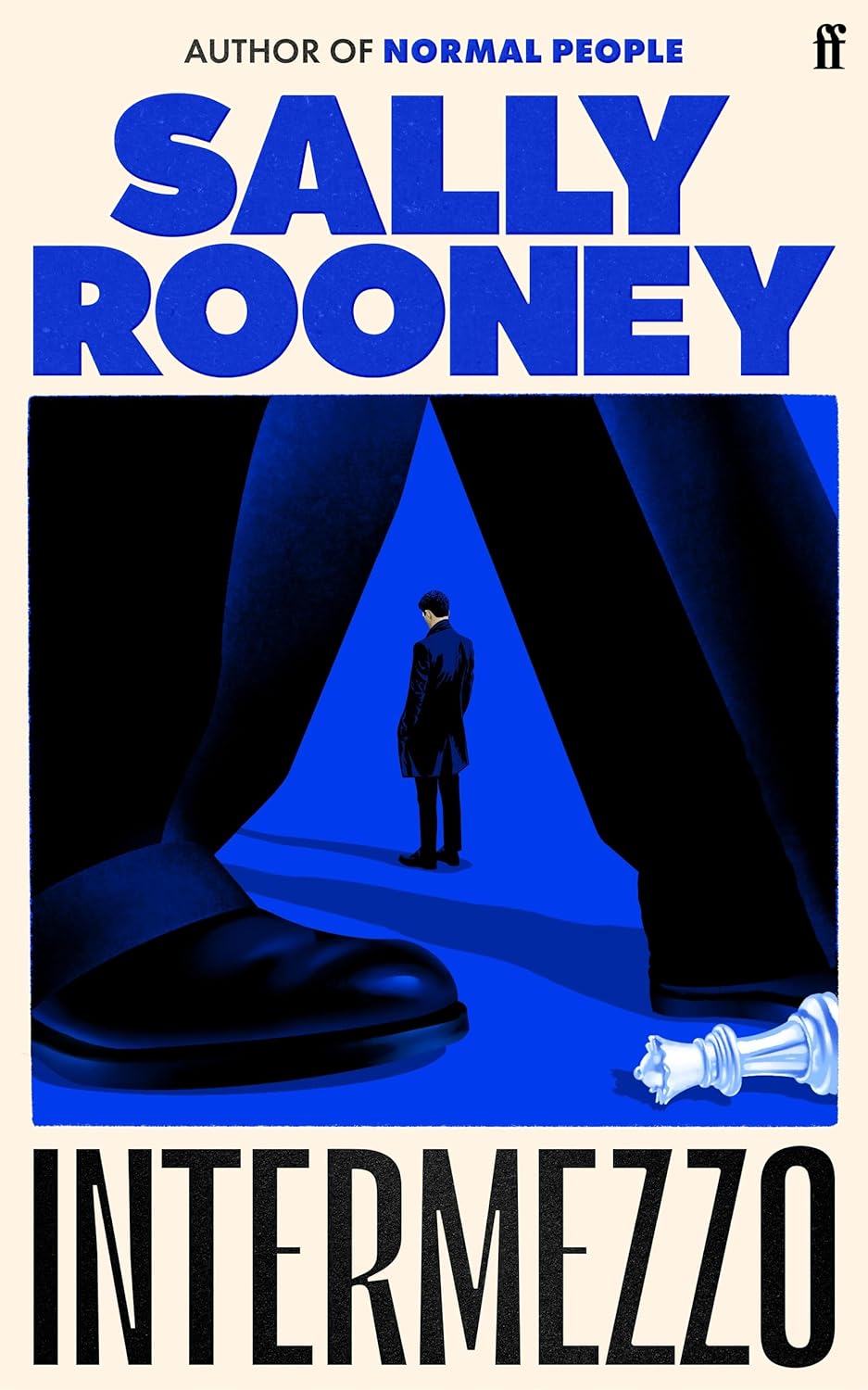
Intermezzo by Sally Rooney (2024)

After donating a bag of books at a recent book sale, I spotted a few novels on the shelves of this small English library that I was curious about, so joined the library and came home with four popular titles I thought I might read over the festive season, the first one being Intermezzo by Irish author Sally Rooney. I had heard it discussed by the Irish Times Woman’s Podcast Bookclub where thoughts on it were quite divisive.

Sally Rooney’s earlier novels Conversations With Friends (2017), Normal People (2018) and Beautiful World, Where Are You (2021) all examine how educated young people try to love each other under conditions of class inequality, political exhaustion, and intense self-consciousness, where desire is constantly constrained by these factors and the question then becomes whether love can survive these somewhat undermining conditions.

An Irish Millennial Perspective

Intermezzo by Sally Rooney Irish literature 2025

I haven’t read anything by Rooney, however knowing those novels have been a huge international success, being a writer with her literary pen poised on particular millennial characteristics, I picked up the latest, Intermezzo (2024) set in modern day Dublin, to understand what that might be all about.

I finished it in late December and overall I enjoyed it, though in the beginning I found it a little tiresome and repetitive, especially all the awkward self-conscious sex scenes between the younger brother and his newfound lover, but as the story progressed and the conflicts and mysteries become more present in the narrative, it became ever more psychologically interesting and I ended up really liking it. So it almost lost me in the beginning, but ultimately (in 442 pages) it gets there and I’m all the more appreciative of it for going back and considering it again now, from a distance.

Grief As a Turning and Growth Point

The Kindness of Enemies Leila Aboulela The Queen's Gambit Intermezzo Sally Rooney
Photo C. Solorzano Pexels.com

The novel charts the months following the father’s premature death and how it affects his two sons Ivan 22, a socially awkward, competitive chess player who has not been on form recently and is questioning whether he might be past his best, and his elder brother Peter 32, a corporate, detached Dublin lawyer juggling two relationships and medicating himself to get sleep.

You know, a lot of people told me I was letting it take up too much time, and I just thought they didn’t understand. But now I think, maybe I’ve really wasted a lot of my life.

Unresolved Mother Son Issues

The boys mother has long since moved on to a new relationship and the boys have complicated relationships with her.

I guess I would say, if you’re interested, they’re both kind of dominant personalities. Who like getting their own way. So my mother trying to be the authority figure, that never went down too well with Peter, if you get me. Because he wouldn’t be a great fan of getting bossed around.

I see, Margaret says.

Ivan is looking at her. Yeah, he says. Whereas with me, I guess, my mother can be the authority more. But with no great results, because she’s never happy with me.

Photo: Katrin Bolovtsova

The brothers have different personalities and are no longer close like they once were. In fact, they find it difficult being around each other without emotions escalating to volatility. And yet. Underneath, there’s a desire to connect.

Without their father present in their lives, they get easily derailed, falling into old destructive patterns. Something needs to shift and change if they are to arrive in a place of acceptance.

The same ritual he thinks each time. She tries to extract from him some valuably hurtful information and he tries to conceal from her any aspect of his life in which he suspects she might gain a foothold. Her fake innocuous queries and his studied evasions. Screens her calls whenever Naomi is home. Why does his mother even want to know; why does he want not to. Contest for dominance. Story of his life.

In essence, this is what the novel explores. Are these two brothers able to grow through the grieving process into a new form of relationship with each other that might sustain them in the years ahead? And can they successfully be in a relationship with another, given the stagnant place they are currently at.

Millennial Self-Consciousness and Entangled Love Lives

They are each trying to navigate romantic relationships, and here there is much interiority expressed, both anxiety and indecisiveness, but the feelings push them forward and the interactions they have with women allow them to be tested and move forward as they confront someone else they have feelings for and have to adapt to stay in relationship.

Ivan meets the older, separated Art Centre Manager, 36 year old Margaret, who struggles with how they might be perceived due to the age difference, but she can’t deny the strong connection and positive effect they have on each other. They must explore their own different perspectives and experiences to maintain that something they have together, if it is deemed worth it.

Dimly she wonders now whether she has been thinking somehow about herself, her own circumstances, and she feels her face again growing flushed. It is this, she thinks, her own sense of identification, that has thrown everything into confusion. She has lost sight of the brother Ivan has been describing, replacing him with herself, and therefore attributing to herself a greater understanding of his motives than she could possibly possess.

Peter is navigating the familiar, intellectually compatible friendship with his ex-girlfriend Sylvia, a chronically ill English literature professor he’s known since college, and a more challenging, non-committal relationship with student Naomi who sells images of herself online to help fund her studies.

Unclear whether you’re cheating on me with her, or you’re cheating on her with me, she said. Absentmindedly he considered the proposition. Either option preferable he thought. Dignity of old-fashioned faithlessness. Neither, he answered. Sylvia is a very dear friend of mine. And you’re just a homeless college student who lives in my house. That made her laugh. The actual disrespect, she said.

Using Voice Stylistically to Create Power Dynamics

Photo by Leeloo Pexels.com

Rooney explores how intimacy is negotiated under constant moral and social evaluation, both from the family and society and from one’s own self-judgement.

Peter’s thoughts are expressed in short, clipped, declarations with little depth, a voice trained to avoid vulnerability, and control interpretation, reducing the risk of him being misunderstood or judged, which doesn’t always help navigate the path of more intimate relationships.

This controlled minimal manner of speaking suits his profession and will have developed as he absorbed criticism in the maternal relationship and created a habit regarding his brother. His short sentences create discomfort, they become a form of domination by withholding forcing the other to elaborate.

They are initially disconcerting to read, but after a while you get used to the style. This manner has been said by some to be ‘Joycean’ not because it is like Ulysses in style, but because it shares with Joyce a particular attitude to consciousness, authority, and language under pressure. This way of expression gives Peter’s voice a hard, self-contained quality that Joyce often gave to male consciousness.

Meanwhile Ivan’s longer, more considered sentences allow for doubt and consideration, for exploration and confirmation in the relationship. Oh, and there is a touching storyline around the family whippet.

A Long Positional Game

Ultimately every character has a reckoning, no one is immune to the need to look at their own part in creating some of the perceived conflict and the novel travels the arc from the initial state of these relationships, through the hashing things out, blame, judgement, self pity, self consciousness, fear of what others might think, and out the other side to talking it out, owning up, allowing unconventionally without fear of judgement, settling differences through to forgiveness.

It’s not a fast paced read, it’s more of a slow, gradual navigation of challenging relationships between not particularly likeable characters, but that makes it all the more interesting to see how and whether they might overcome the exit of the one person who was their centre, and move to a healthier way of co-existing. It is an exploration of buried pain and unresolved issues meeting new opportunities and fresh hurts. A long, positional game played in mutual fear of getting it wrong.

Further Reading

The Guardian – Intermezzo by Sally Rooney review – is there a better writer at work right now?

Chicago Review of Books – Mixing Loss with Life in “Intermezzo” by Cait O’Neill, October 1, 2024

Author Sally Rooney

Sally Rooney is an Irish novelist from Castlebar, Country Mayo. She is the author of Conversations With Friends, Normal People and Beautiful World, Where Are You.

Interesting Fact: While attending Trinity College Dublin, Rooney was a university debater and in 2013 became the top debater at the European Universities Debating Championships.