Baileys Women’s Prize Short List 2015

From a long list of 20 novels and from a collection of 160 original entries, the five judges have narrowed the field down to 6 novels vying for the Baileys Women’s Prize for fiction 2015.

Five of the authors have been shortlisted previously and one, my favourite (though I have only read two on the list) is a debut author, Laline Paull.

The shortlisted novels are:

It’s another excellent list from this worthy prize that celebrates hard-working, talented and inspirational women writers with a particular talent for creating life-like characters inhabiting believable worlds, whether it’s the smaller canvas of detailed family life in Anne Tyler’s fiction, or the imaginative hive of Flora 717, brilliantly conceived in Laline Paull’s The Bees.

Syl Saller, Chief Marketing Officer, Diageo had this to say about the shortlist:

“From a debut to a twentieth novel, this year’s shortlist celebrates exceptional female writers who display a rich and diverse talent for telling stories. Having always championed women, Baileys is thrilled to be working with the Prize to get these six novels by inspirational women into the hands of more book-lovers around the world.”

And the shadow jury (a group of blogging reviewers who are reading all the books and creating their own short list and winner) organised by Naomi at WritesofWomen, came up with their alternative shortlist below, having read and debated the 20 nominated novels.

Shadow Jury Alternative Shortlist

Shadow Jury Alternative Shortlist

One of the jury members, our much admired reviewer Eric of LonesomeReader had this to say about the prize:

“Whichever book ultimately wins, I am so glad this prize has introduced me to a range of unique books I probably wouldn’t have read otherwise. From Laline Paull’s outrageously original The Bees to Jemma Wayne’s ambitious take on the aftershock of war in After Before to Rachel Cusk’s fascinating chorus of voices in Outline to Grace McCleen’s elegant portrayal of madness in The Offering to Marie Phillips’ hilarious Arthurian tale The Table of Less Valued Knights to Sandra Newman’s challenging mighty tome The Country of Ice Cream Star. In my opinion, book prizes help us notice great literature we might have missed and the Baileys Prize has offered up a lot of excellence this year.”

I recommend visiting either of these blogs mentioned if you wish to read reviews of the books.

So, any predictions for a winner? We will have to wait until 3 June 2015 to find out!

Under the Tripoli Sky by Kamal Ben Hameda tr. by Adriana Hunter

We are in the city of Tripoli, bordering the Mediterranean in the 1960’s, though this is no seaside idyll.

Tripoli SkyThe narrative follows in the footsteps and the mind of a boy named Hadachinou who prefers the company of his mother, her friends, great-aunt’s and escorting girls sent on errands who are not yet kept indoors, bound by the shackles of marriage, in a society where a river of seething discontent courses through the veins of many, where the sexes barely tolerate each other and anyone who seems to have escaped the marriage trap is resented their so-called freedoms.

Hadachinou is privy to the thoughts, gossip and attitudes of women, a witness to their interior lives, he listens to their stories and absorbs their repressed desires as his own begin to awaken.

The tea ceremony was the only part of the day when my mother and her friends could live their lives in real times and tell their own stories. At last they could talk about dreams, longings and anxieties , all in the same breath and their bodies were at peace.

I sometimes wondered how these women who were all so different were able to spend hours at a time, each talking about her own god, her own people and thoughts, free to be wildly outspoken but without provoking any true conflict. It was because they had no power to preserve and no possessions to watch over. That was for the people on the other side of the wall: the men, the sheikhs, the governors and their hunting dogs! Scheming and calculating, diplomacy and power struggles were their domain.

Here with the women, my guardian angels, there were just words, spoken openly and easily, flitting and whirling about, a life force in themselves. Without these moments of trusting abandon, they would have dried up with sorrow. Or imploded as they toiled over their cooking pots.

Taynal Mosque

Taynal Mosque Source: wikipedia

While the men are at work, or at the mosque or in the coffee houses, the women finish their work and make time to see each other.

Here, great-aunt Nafissa has had enough of the women bad mouthing his mother’s childhood friend Jamila, words they only speak when his mother leaves the room, venomous remarks spiralling into bitterness about what they perceive as her secret life; flushed with rage, aunt Nafissa rails against them:

‘Leave Jamila alone,’ she cried. ‘Let her live her life. Its only because you’re jealous that you see evil in everything. She and her friends allow themselves freedoms you don’t have, freedoms you envy because your husbands keep you on a tight leash. What would you have her do? Stay at home like you, sitting on cushions and sucking on loukoums while you wait for men who never come home? You think those women are living bad lives? You make me laugh! But you don’t know when to hold your tongues, that’s for sure, and you’re full of spite. And, anyway, it’s not as if any of this has ever stopped you taking their money!’ she added, always ready to speak out against injustice.

OldTripoli

Old Tripoli Source: wikipedia

It is not easy to read about a repressed patriarchal society without much glimmer of hope, a slice of life narrative set in a pre-Gaddafi society on the verge of change.

I found it a sombre read, left wondering if this boy will be changed by virtue of his proximity to the women folk, or whether that might become a reason for his need to escape, lest he not fit in.

Looking out to sea, I remembered what Hadja Kimya had said: ‘Hadachinou, keep yourself busy doing simple things that delight you. Give yourself a goal. The soul of life is the little things, the minor events no one notices… That’s where life is, the pleasure of being alive, otherwise there’s just this vast blueness casting its shadow over us. Go on, keep yourself busy, do something, and then you might find yourself one day.’

This is cultural insight beyond the normal bounds of the English language, thanks to the translation of Adriana Hunter and the passion of Peirene Press in bringing these kinds of stories into the mainstream.

Those Who Leave and Those Who Stay by Elena Ferrante tr. Ann Goldstein #FerranteFever

Those Who StayThis is the third book in Elena Ferrante’s Neapolitan tetralogy about two friends Elena and Lila, growing up in an impoverished neighbourhood of Naples.

It follows on from Book One, My Brilliant Friend and Book Two, The Story of a New Name (click on the titles to read earlier reviews).

Lila has married, had a child, reformed her husband’s business, strayed and finally separated from her husband and moved to another area outside the neighbourhood to live with Enzo, a childhood friend. She gets a job in a sausage factory, working under oppressive conditions that attract the interest of social activists and harsh threats from the ‘fascists’.

“Can you imagine what it means to go in and out of refrigerated rooms at twenty degrees below zero, and get ten lire more an hour – ten lire – for cold compensation? If you imagine this, what do you think you can learn from people who are forced to live like that?”

In Pisa, Elena has remoulded herself, no longer referring or comparing herself to Lila. She observes how people from her type of neighbourhood and class are perceived outside it, among the bourgeois, those raised within the milieu of intellectuals and achievers, those with access to money, social connections, many of whom are gifted with a presence she can only dream of. Elena finishes her university studies and becomes engaged to Pietro, who was raised within that other world; coming from a well-known academic family, he too will become a university professor, teaching and writing academic works like his father.

As she is concluding her studies, Elena writes a fictional story drawn from aspects of her past, though never admitting it is anything but fiction. She gifts the story to Pietro on an impulse, hoping he will read it. He passes the manuscript to his well-connected mother Adele, thus Elena treads the path laid in front of her, towards becoming an author. Adele introduces her to contacts that will result in her first book being published, establishing her career as a writer.

“I spoke of the necessity of recounting frankly every human experience, including – I said emphatically – what seems unsayable and what we do not speak of even to ourselves.”

Though Elena does her best to avoid it, Pietro finally meets her family and though he insists on a civil ceremony for their marriage, a decision that stuns and terribly disappoints her mother, he wishes to do the traditional thing by asking her father for her hand. Her father is calm and accepting, however her mother’s thoughts insist on an airing and she lectures the young professor unabashedly.

  “When at last she was silent, he said that he knew very well how precious I was and that he was grateful to her for having brought me up as I was.”

Through marriage, Elena succeeds in elevating herself above her roots, though finds herself stranded in not quite belonging to either her future role or her past. They are like roles she assumes outside herself, taking care not to stand out when she returns to the neighbourhood and paying attention to how she should behave in her new role as the wife of a professor.

“As soon as I got off the train, I moved cautiously in the places where I had grown up, always careful to speak in dialect, as if to indicate I am one of yours, don’t hurt me.”

However, marrying the young professor, writing the story that turns into a successful novel, moving to Florence and becoming a mother leave her little time to play any other role than that of housewife.

Lila leaves the neighbourhood, escaping her marriage and taking on a job in a sausage factory owned by a friend of Nino Sarratore, whom the girls met one summer. Her job leaves her little time to spend with her son. Unwillingly, she becomes connected with worker’s rights activists and discovers the dirty arm of the neighbourhood loan sharks who are leaning on her employer, while continuing to try to lure her back into their realm.

Lila and Elena’s worlds drift further apart and although they are aware of the need to share with the other, they each possess the instinct to soldier on without admitting their struggle or need for support or encouragement. Elena will receive both her mother-in-law and her mother at different times so that she can write and Lila will return to the neighbourhood to ease her difficulties. Both have opportunities within their reach, yet both are susceptible to self-destruction.

“Too many bad things, and some terrible, had happened over the years, and to regain our old intimacy we would have had to speak our secret thoughts, but I didn’t have the strength to find the words and she, who perhaps had the strength didn’t have the desire, didn’t see the use.”

Those Who Leave and Those Who Stay is a compelling story of the lives of two women and those around them, and a penetrative observation on the creation and consequence of decisions women make, how they live with those decisions and the often destructive way they bring about change. It narrates a journey of moving away from one’s origins and the sacrifice the attainment of that desire requires.

Elena leaves her past and a life she didn’t want, behind her, however in attaining a new life, she loses sight of who she really is and what drives her. She is just coming to the point of realising that when her world spins out of control. And thankfully for us all the fourth book is being translated. I expect the wheel may come full circle.

Italian Screenwriter Francesco Piccolo

Italian Screenwriter Francesco Piccolo

Note:  It has been announced that My Brilliant Friend will be made into a television series in Italy. The author/screenwriter Francesco Piccolo, winner of the esteemed Italian literary Strega Prize 2014 (with his bittersweet memoir of life on the Italian Left, ‘Il desiderio di essere come tutti’ (The Desire To Be Like Everyone) will work on the screenplay.

Next Book in the Series: The Story of the Lost Child

Testament of Youth by Vera Brittain

Vera BrittainThat Vera Brittain chose to name her autobiography a Testament, at first seems like an assertion of her intellectual inclinations, particularly in light of the decision she made to pause her hi-brow Oxford University studies when the First World War began as her closest friends, her fiancé Roland and brother Edward all signed up to participate, one by one departing for France.

She had fought hard to be accepted into Oxford, at a time when women were not exactly welcome, her own family and many of their social peers thought it a waste of time. It remained important, but while those she was closest to were sacrificing everything, it felt indulgent to be pursuing anything intellectual. She volunteered to become a VAD (Voluntary Aid Detachment) nurse as she sought the diversion of physically demanding work to lessen the idle hours of mental anguish concerning her male contemporaries at war.

Testament is more than one woman’s intellectual account, it is evidence of a generation’s stunted youth, a youth stolen by war and loyalty, one that for the men who participated, would continue to be acknowledged and remembered, their efforts appreciated and honoured. For Vera Brittain it would bring grief, disappointment and disillusionment.

She recalled one of her last bittersweet moments, punting up the river in Oxford with her friend Norah, whom she would not see again after the end of that term.

‘No evening on the river had held a glamour equal to that one, which might so well be the last of all such enchanted evenings. How beautiful they seemed – the feathery bend with its short, stumpy willows, the deep green shadows in the water under the bank, the blue, brilliant mayflies which somersaulted in the air and fell dying into the water, gleaming like strange, exotic jewels in the mellow light of the setting sun.

I had meant to do such wonderful things that year, to astonish my fellows by unprecedented triumphs, to lay the foundations of a reputation that would grow ever greater and last me through life; and instead the War and love had intervened and between them were forcing me away with all my confident dreams unfulfilled.’

Malta Vera Brittain

Vera Brittain, 3rd from left, in Malta, WWI

Her nursing efforts took her out of the northern provinces of England for good, away from her studies at Oxford to a military hospital in London, until events would propel her to volunteer for a foreign assignment, taking her to Malta and then close to the front line in France for the remaining years of the war.

Her account is all the richer for the journals she kept from 1913 to 1917 and rather than present them in full, she selects extracts to bring the era to life, sharing the angst and idealism of her youth, simultaneously looking back and narrating from the wisdom of early middle age, for she was 40 years old before she would finally see the much revised autobiography in print.

The book contains snippets of letters to and from Vera and her fiancé Roland and her brother Edward, they were her life blood, her motivation to face the relentless days in the hospital, where their work offered so much and yet did so little to stem the flow of blood and severed limbs, pain and hopelessness.

The letters that pass between Vera and Roland reveal the slow loss of hope, optimism and valour as they struggle to find meaning in war. Despite the often depressing content, they are fortunate to have each other, writing letters prolifically, drawing each other deeper into a love that they knew could be destroyed on any day.

After the war, Vera returns to Oxford and finds herself isolated. She has difficulty articulating her experience in a way that is understood and instead invites scorn and derision. A new generation of youth has swept up behind her and they have little time for the lessons that might be gleaned from a mature student who forsook her youth for volunteer nursing abroad. She gets involved in the debating society, and in one of the more excruciating passages in the book, valiantly tries to prove her point only to discover it will be she who is taught the lesson.

‘In the eyes of these realistic ex-High-School girls, who had sat out the war in classrooms, I was now aware that I represented neither a respect-worthy volunteer in a national cause nor a surviving victim of history’s cruellest catastrophe; I was merely a figure of fun, ludicrously boasting of her experiences in an already démodé conflict. I had been, I suspected, largely to blame for my own isolation. I could not throw off the War, nor the pride and the grief of it; rooted and immersed in memory, I had appeared self-absorbed, contemptuous and ‘stand-offish’ to my ruthless and critical juniors.’

Vera’s hope and her life purpose after the war, was to try to understand and then participate in any action that could prevent humanity from making the same terrible mistakes that caused the loss of so many lives. She changed her focus from Literature to History and searched for proof of anything that had been put in place to prevent such destructive hostilities from wiping out a generation of youth. She found what she was looking for in treaties and agreements and became an international speaker for the League of Nations attempting to advance understanding and awareness among the common population.

The book impressed me with its honesty, particularly as Vera Brittain was not afraid to portray her flaws; through the extracts from her journals we have a real sense of the character she was in her twenties and though she is the same person after the war and we recognise her inclinations, her direction in life is permanently altered by the experiences of those years.

The combination of experiencing the present through her diary and letters and her observations from the maturity of having survived war and gained some distance from it, from which to observe her former self, provides the reader a unique insight into humanity.

For me, it was a gripping read and although we learn much of the story in the opening introduction, it does nothing to lessen the effect as we witness Vera receiving news she has dreaded from the beginning and more than the individual events, the observation of emotional ups and downs and the effect of war on a generation seen from a young woman’s perspective is more insightful than any rendition of battles or victories I have ever read.

If the prospect of reading a 600 page book seems daunting, look out for the movie coming out in 2015!

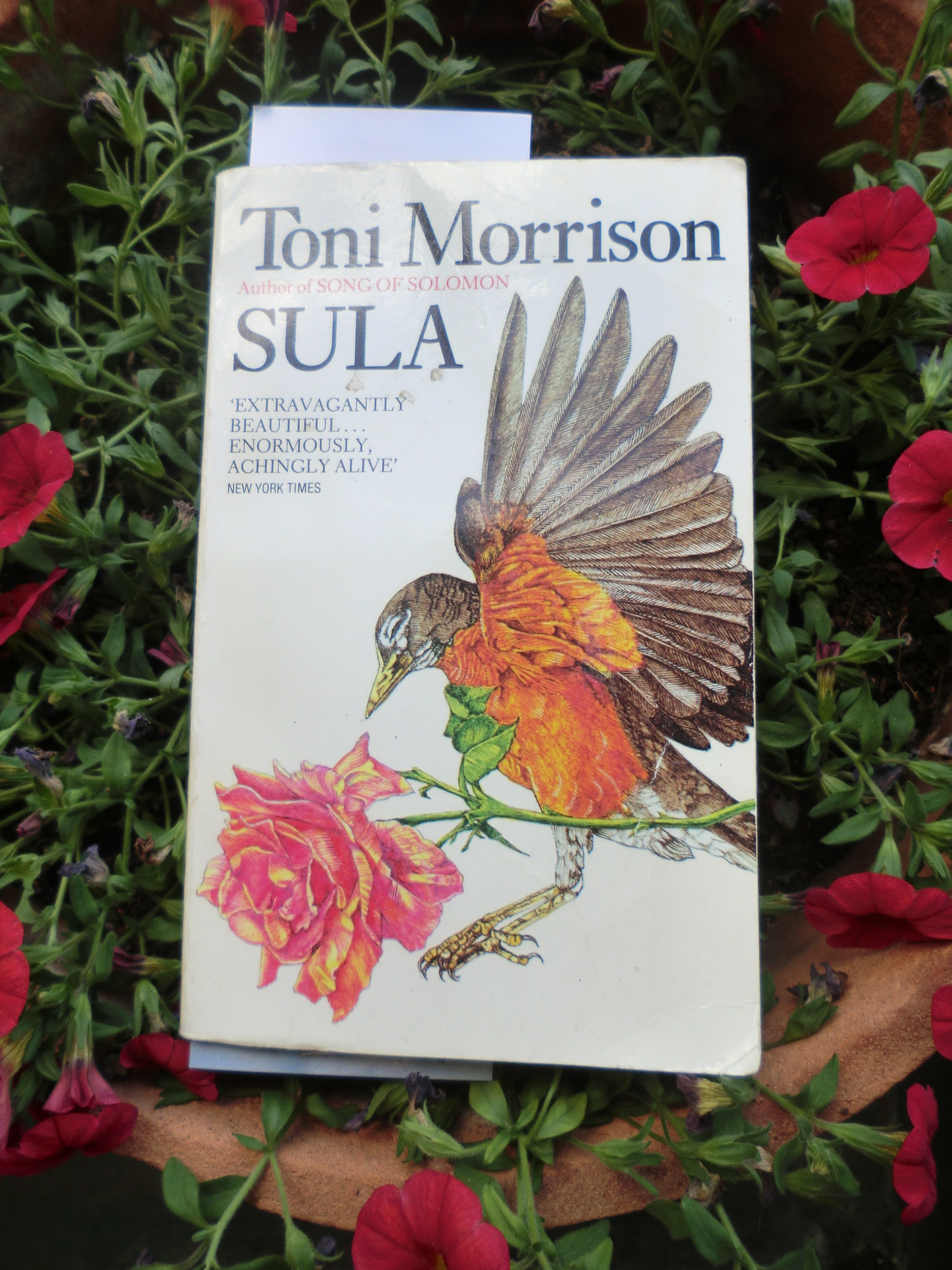
Sula, Toni Morrison

SulaA farmer promises freedom and a piece of land referred to as Bottom, to his slave if he performs some difficult chores. The town of Medallion grows up around the farmland, looking down on the valley where the more fertile land and the white folks live.

The slave blinked and said he thought valley land was bottom land. The master said, ‘Oh no! See those hills? That’s bottom land, rich and fertile.

‘But it’s high up in the hills,’ said the slave.

‘High up from us,’ said the master, but when God looks down, it’s the bottom. That’s why we call it so. It’s the bottom of heaven, the best land there is.’

It’s the town where Sula and Nel grow up in the 1920’s. Both are only children, Nel raised in her mother’s quiet, orderly neat home that oppresses her and keeps her protected and Sula in the home of her infamous grandmother Eva Pearce, a woman who hasn’t come downstairs in years and may or may not have done despicable things before she became one-legged and runs a kind of boarding house for vagrants.

“a household of throbbing disorder constantly awry with thins, people, voices and the slamming of doors”

In childhood, the two girls differences are insignificant, they revel in each other’s company, they test the boundaries of their community and environment, they experience joy and witness horror. They bury the past until it returns to haunt them in adulthood, when they can no longer avoid who they were always destined to be, thanks to the judgments and perceptions of others and the behaviours of those who went before them. And themselves.

“Their evidence against Sula was contrived, but their conclusions about her were not. Sula was distinctly different. Eva’s arrogance and Hannah’s self-indulgence merged in her and, with a twist that was all her own imagination, she lived out her days exploring her own thoughts and emotions, giving them full reign, feeling no obligation to please anybody unless their pleasure pleased her.”

The book is separated into two parts, the early 1920’s during the girls childhood and the late 30’s, early 40’s when Sula returns and creates a disturbing ripple throughout the small community, no longer used to her carefree ways, having forgotten the inclinations of the female characters she was spawned from. She becomes estranged from them all. Except one.

It is about the innocence and bonds of childhood, secrets between friends, the inclination to follow the well-trodden path of those who have gone before, despite the desire for freedom and individuality and the reluctance of others to see them any differently.

Toni Morrison

Toni Morrison

Her books are almost always the perfect size of a novella and every one of Toni Morrison’s stories I have read brings so much more than the sum of its pages to the reader in terms of things to consider, long after the last page is turned.

Her language is poetic, her characters resplendent with their flaws, they speak for the one and the many and show us ourselves, the parts we hide from view, that which is judged from outside and the inclination to judge without knowing.


Baileys Women’s Prize for Fiction 2014 Winner

It seems like a very long time since we learned of the short list.

My blog post about the shortlist is here, and it gives a one sentence summary about each of the books, the only book I have read and reviewed, so of course it is my favourite is Chimamanda Ngozi Adichie’s Americanah which I reviewed here.

Here are the six novels that were shortlisted for the prize:

Today Peirene Press are running their weekly quiz using the hashtag #PeiQuiz and their question is:

PeiQuiz

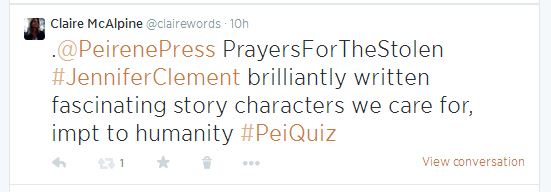
My answer to the quiz was:

PeiQuiz2

a book I read recently, which was not only a great story, but one you won’t be able to stop thinking about and one I gave a rare 5 stars to. You can read the review here if you missed it.

But back to the Baileys Prize!

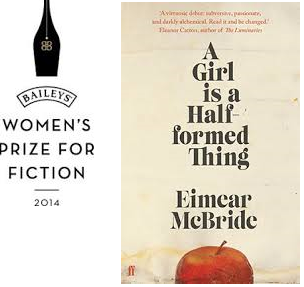
The winner of the Baileys Women’s Prize for Fiction in 2014 is….


Baileys 2014 winner

Congratualtions to Eimear McBride and Galley Beggars Press, a fabulous result for a novel that was written in six months and took 10 years to find its place in the world, proof if ever there was for writers to continue to persevere!

Further Reading

Review Eric Karl Anderson at Lonesome Reader, who read them all and accurately picked the winner, he writes excellent reviews, I recommend following

Review Anne Enright’s review of A Girl is a Half-Formed Thing in The Guardian.

The Invention of Wings by Sue Monk Kidd

Although Sue Monk Kidd will be a name familiar to many, it was only a few years ago that her book The Secret Life of Bees was recommended to me by a dear and special friend who always went out of his way to visit and spend a few days with us when making his 10 yearly pilgrimage to Rome. We always had wonderful discussions about books, about life, the situation in Palestine, our mutual family connections and much more. So when I saw that the author had published another novel, I wanted to read it, to remember that stories continue to be told and memories passed on, even when those who told them and recommended them are no longer with us. He would have loved this story I am sure.

Invention of WingsThe Invention of Wings is a work of historical fiction, inspired when the author came across their names at an exhibit at the Brooklyn Museum. The discovery of two sisters Sarah and Angelina Grimké, abolitionists whose story was little known outside academic circles was all the more poignant for Sue Monk Kidd, when she learned they came from Charleston, South Carolina, the town she was living in at the time.

The story is a work of fiction, but the work of Sarah Grimké and her sister was real and her writing and achievements are receiving the recognition they deserve, representing as they did, an era when even a life of privilege did not give women the right to express a public opinion and especially one that challenged the status of individuals in a society.

In her novel, Sue Monk Kidd tells a story of two girls growing up in an urban slave-holding family in Charleston, South Carolina. Sarah is the daughter of a wealthy, aristocratic family and Hetty, or Handful as she is referred to, is gifted to her on her 11th birthday, an event that Sarah actively attempts to reject and does so in writing. She is refused her request, just as she is also denied and mocked for her desire to pursue a professional career, her punishment to be banned from her father’s library and from reading books.

For many years she accepts her fate, although as retribution and in response to a promise made to Charlotte (Handful’s mother), she teaches Handful to read, not only a forbidden act, but against the law. Certain events eventually shake off her complacency and after one particular episode, despite the risk of rejection and ostracism by her family and community she becomes wedded to her new vocation and dares not only to voice her outrage but with the support of her sister begins to take a more active and dangerous role in standing against slavery and advocating equal rights for women.

WingsThe slave Hetty also possesses a rebellious streak, more dangerous in someone of her stature, where any small infraction can result in violent and damaging consequences, as she will discover. Denied an education, she and her mother Charlotte become talented seamstresses, Charlotte narrating her life story through the quilted squares she creates in her own time, each one representing a significant event in her life, images that speak the words she could not read or write, a reminder of who they are, where they have been, stories continually passed from mother to daughter. It was a way to subvert the system and to preserve her story.

In a sense both Sarah and Hetty are enslaved and Hetty articulates it in a scene that haunts Sarah long after.

“I’m twenty-seven-years old, Handful, and this is my life now.” She looked around the room, up at the chandelier, and back at me. “This is my life. Right here for the rest of my days.” Her voice broke as she covered her mouth with her hand.

She was trapped same as me, but she was trapped by her mind, by the minds of people around her, not by the law. At the African church, Mr Vesey used to say, Be careful, you can get enslaved twice, once in your body and once in your mind.

I tried to tell her that. I said, “My body might be a slave, but not my mind. For you, it’s the other way round.”

Wings are a metaphor for freedom from oppression but they also represent the ability to soar, not only to be able to choose what we want to do and how to live a life, but to do it to the best of one’s ability, to step beyond the expectations of family, community, society.

Sarah Grimké (1792-1873)

Sarah Grimké (1792-1873)

I thought this book was excellent and I like it all the more for having understood subsequently how it came about. The female characters are particularly vivid, especially Handful and her mother Charlotte and though Sarah took time to come to terms with her own vocation and to shed the trappings of her upbringing, she is an incredibly courageous character given society had rather dismissed her given her disappointment in not being able to pursue a career or attracting the right kind of husband.

When asked about writing from the perspective of an enslaved character, Sue Monk Kidd mentioned that while writing this book she read an interview with Alice Walker in which she says “She was all over my heart, so why shouldn’t she be in literature”, exactly how she felt about Handful.

I also wondered about the author’s reasons for embracing such a story, her own connections to America’s history in the South and in the links below is a Reader’s Guide in which she speaks of her own upbringing in the South in the fifties and sixties, where she was witness to many terrible racial injustices and divides, which has had the effect of drawing her towards writing about them.

“I’ve been drawn to write about racial themes because they are part of me, and also because they matter deeply to me. I can’t help but feel a social responsibility about it as a writer. Racism is the great wound and sin of the South and indeed, the great wound and original sin of America. Two hundred and forty-six years of slavery was an American holocaust, and its legacy is racism. I don’t think we’ve fully healed the wound or eradicated the sin. For all the great strides we’ve made, that legacy still lingers.” Sue Monk Kidd

Additional Links

A Readers Guide – Q & A with Sue Monk Kidd

Interview with Oprah – Sue Monk Kidd chats with Oprah and takes Reader’s Questions

Note: This book was provided by the publisher Viking, an imprint of the Penguin Group.

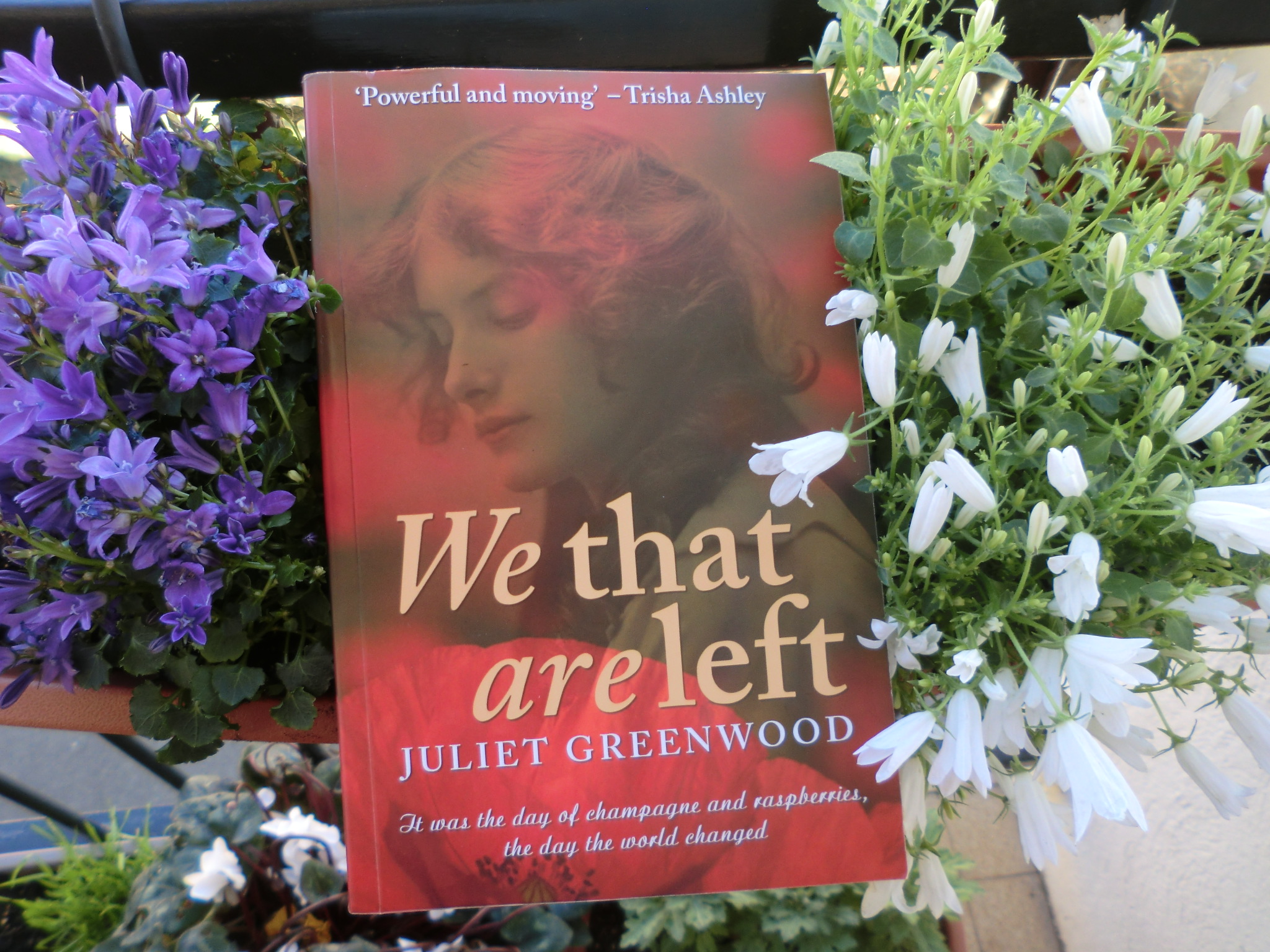
We That Are Left by Juliet Greenwood

There are few greater delights than a book that draws you in from the very first pages and immediately makes you care about what happens next, that demands your attention in every free moment you can conjure until the end.
We That Are Left (2)Juliet Greenwood, while painting a world that is far from one that we might imagine living ourselves, one that takes place in an enormous stately home on a hill overlooking a village in Cornwall – manages to imbue in the reader a kind of aspiring fantasy that those who prefer an episode of Downton Abbey to Twilight will be more than happy to immerse themselves within.

Two years ago I read her novel Eden’s Garden also set in Cornwall and Wales and adored it. That book was a dual narrative of two women, one in contemporary time, the other in the Victorian era, whose lives we follow and as the novel progresses reveals what connects them.

Now Juliet Greenwood has written a timely novel, chronicling the lives of a group of young women, focused on Elin Helstone, a young wife living in Hiram House, a country estate that has been her family home since birth.  Now run by her increasingly distant husband Hugo, he has become consumed by dark thoughts he is unwilling to share connected to events of the Boer War and is now likely to be called up in yet another war. Elin tries to anticipate her husbands needs until the onset of war provides the circumstance  that will propel her towards asserting an independence she will find difficult to relinquish.

Elin’s unmarried cousin Alice lives with them, though Hugo pursues every opportunity to introduce her to eligible company in the hope that she too might exit his orbit. Then there is Mouse, Lady Margaret Northholme, whom the two young women meet in the opening pages and become firm friends, their lives will become forever entwined as war descends upon the country and everything as they have previously known it changes forever.

The opening pages possess an air of excitement and potential, young people meet at their big houses, conforming to social convention and can’t quite believe the rumours of pending war.

‘It will most likely blow over. War is such a medieval occupation. I can’t imagine any modern state embarking on such barbarity.’
War Draft

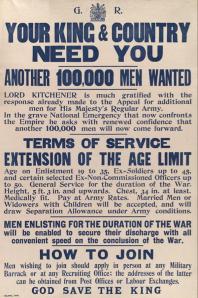
However, war does arrive and strips the village bare of men, plunging those who stay behind into an alternative way of living, they must live with the fear of not knowing what will happen, of the risk of attack and the dread of a telegram bearing tragic news.

That fear of the unknown will become less significant in comparison with the experience awaiting Elin and her gardener Jack as they depart on their own dangerous mission.

‘Nervous?’

‘Terrified,’ I replied.

‘So you should be. There’s no point in being brave from now on. Forget what anyone ever told you about heroes. Once we reach the other side, it’s fear that will keep you alive.’

Juliet Greenwood creates believable characters, putting them in credible but challenging situations where they fulfill our suspicions of their true natures, while her trademark elements of mystery and intrigue run on continuously throughout the narrative.

She does the same with country locations, we inhabit Hiram Hall and the Welsh farmhouse as if we had known them for years, the author invokes the reader’s imagination bringing the outdoor landscape and its associated elements into the page like fog creeping in from the bay. As Lewis Hyde, author of The Gift reminded us “The spirit of an artist’s gifts can wake our own.’
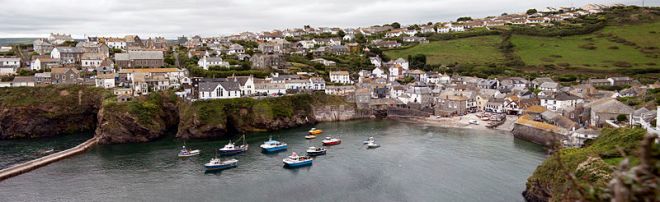
Port Issac Cornwall

We that are left begins in 1914, a mere five years before Michel Déon’s The Foundling Boy (reviewed here) in 1919 and yet the contrast couldn’t be greater.

Here we become immersed in the war years (Déons novel set in the interwar years) where the absence of so many men advanced opportunities for women like no suffragette initiative yet had, though they certainly paved the way for women like Elin, Lady Margaret, Kitty, Alice and others to be able to take the initiative and get involved in the war effort. They learn to drive, volunteer in hospitals, grow food and distribute it to those with little or nothing. Women of the upper classes who were used to being waited on found themselves with few staff and having to manage like common people. Servants experienced the shift in equality between the classes.

Having complained about the lack of female role models with redeeming features in Michel Déon’s coming of age novel, I find them in abundance here and can’t help but observe the contrast in the female characters portrayed here versus those we met across the channel.

The actions of these women were no doubt inspired from Juliet Greenwood’s research into women and the war effort and she mentions the Virago Book of Women and the Great War edited by Joyce Marlow in the bibliography.
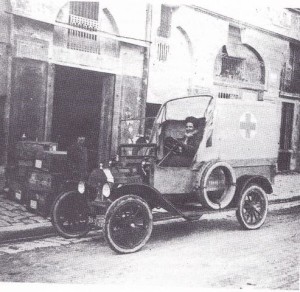
!!!!Car

Gertrude Stein With Auntie and war supplies, 1917

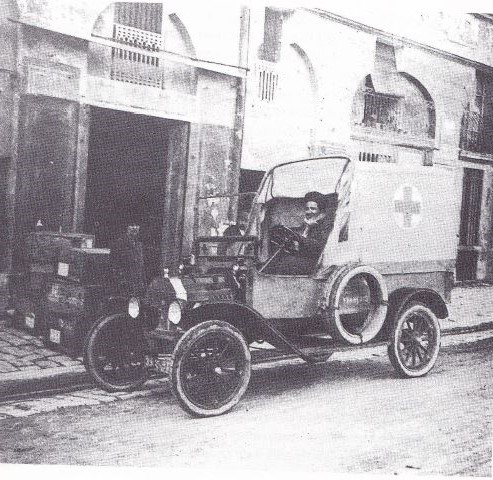
I was reminded of the incredible and courageous efforts of Gertrude Stein and Alice Toklas as portrayed in Diana Souhami’s excellent biography Gertrude and Alice; Gertrude having sold her Matisse Women with a Hat she and Alice initially decamped for the French Riviera abandoning Paris, but after some time became bored and returned deciding they too wanted to help with the war effort.

After meeting with an organisation that distributed supplies to hospitals, they were informed it would be most useful if they could provide a truck and do the same. So Gertrude took driving lessons, wrote to a cousin in New York asking for a van to be sent, had it converted and named Auntie and off they went road tripping around the country, becoming known at the garages throughout France, distributing the hospital supplies, writing letters to soldiers whom they referred to as their military godsons and collecting recipes along the way. But that’s another story!

We That Are Left is an enthralling read that sets a compulsive pace from that first intriguing landing and doesn’t let up until the final pages. It  is a moving contribution to contemporary WWI fiction and an enlightening exposé on how perceptions and the role of women experienced a complete and irreversible paradigm shift during those years, from which we have benefited more than we realise.

Highly recommended.

Note: Thank you to the author Juliet Greenwood for providing the photos of Glynllifon Hall above, and to her publisher Honno Press for providing me with a copy of the book to read.

The Hidden Lamp edited by Florence Caplow

Stories from Twenty-Five Centuries of Awakened Women

The Hidden LampThe Hidden Lamp is a rich source of feminine wisdom, a compilation of one hundred stories, some a mere paragraph long, each one chosen by one woman and commented on, sharing a contemporary perception of how that text speaks to her.

We as readers have the opportunity to receive the wisdom of the original text, reflect on it ourselves, observe the comments of the woman who has chosen to share it with us, often with a personal anecdote in this unique collection of twenty-five centuries of awakened women – those who in Buddhist terms have gained enlightenment.

Most well-known Zen stories or koans (according to American Zen Master, poet and author Zoketsu Norman Fischer) come from three collections Blue Cliff Record (12th C), The Book of Serenity (12th C), and The Gateless Barrier (13th C) and are an almost exclusively male domain.

In this collection, we find the long missing stories of women, shared in a unique collaborative style between its editors and commentators. Many of those interpreting the texts are Zen teachers and many others come from a wide range of Buddhist traditions and lineages, lending the collection an open-minded virtue, accessible to all, whether male or female, and regardless of knowledge of Buddhism philosophy and practice.

“Koans are powerful and succinct stories, most often about encounters between Zen teachers and students. They can be playful and humorous, mysterious, opaque or even combative.”

It is an invitation to consider what has been said, to ponder it and respond ourselves.

Reading the stories make fables seem like children’s stories. These excerpts often require an extraordinary stretch of the imagination to understand and there will be some we are simply not ready to interpret.  For those who have studied them, their revelations have often taken months or even years to realise.  Thanks to the commentaries, we can at least read of another’s insight although this does not in all cases necessarily bring clarity. We must accept that we are not yet ready for their learning.

Joko Beck

Charlotte Joko Beck

One of the first stories came from Peg Syverson’s reflection after listening to Joko Beck* give a talk. A young man raised his hand and bluntly asked “Are you enlightened?” to which she replied “I hope I should never have such a thought!”

Peg Syverson shared that she had thought of this exchange many times since she first heard it, that many of the things this teacher of hers said, surprised her. She likened it to another story of a Japanese master Nan-in, serving tea to a professor, pouring the tea until the cup filled and then overflowed, and still he continued to pour until the professor said, “It is overfull! No more will go in!”

“Like this cup”, said Nan-in, “you are full of your own opinions and speculations. How can I show you Zen unless you first empty your cup?”

The responses are often unexpected and penetrating. Their meaning isn’t obvious on first reading, they require us to look at the question, and at what those who ask are bringing along with the question. Syverson recounts her own audience with Joko, the question she was required to ponder and respond to, then despite several weeks of contemplating an answer, when she gave it, would receive another insightful, thought-provoking response, which upon reflection, changed the nature of her relationship with her son, the subject of her initial question. The clarity of the teacher’s mind in responding so succinctly is astonishing.

The answers seem nearly always to require that you go away and reconsider the exchange, eventually revealing the answer that perhaps was always within you. It is a kind of active learning, rather than the passive receipt of an interpretation and response, which can easily be set aside or forgotten.

The Hidden Lamp is not a book to read in one sitting, it is a reference to draw on now and then and a rich source of ancient feminine wisdom and modern thought, whose content is valid for one and all. Some of the names of the women in the book will be well-known and others less so, however their contributions might as well be nameless, as it is the story that brings the richness to the reader, the reputation of all the contributions having already been established.

His Holiness the 14th Dalai Lama of Tibet

His Holiness the 14th Dalai Lama of Tibet

Personally I always have at least one text of Buddhist thought/philosophy on the bedside table, I find them a quiet source of intellectual wisdom that easily resonates with my own world view.

Whether it’s a collection like this or one of the many excellent works of the Dalai Lama, or the pocket books of Pema Chodron, they all share a wisdom that comes from the practice of kindness, empathy and altruism while providing a prism of compassion through which to observe our everyday thoughts and encounters. A kind of preventative medicine for the mind, these awakened beings have spent years pondering the nature of suffering and both their practices and their words are a thoughtful guide and nurturing remedy to all negative emotion or thought.

* Joko Beck (American, 1917 – 2011) was a pianist and mother of four, who began Zen practice in her 40’s, founded two schools and wrote two books Everyday Zen: Love and Work and Nothing Special: Living Zen.

Note: This book was an Advance Reader Copy(ARC) provided by the publisher via NetGalley.

Magda

Magda (2)In the course of Meike Ziervogel’s novella, we meet three generations of women in one family, an embittered grandmother, her daughter Magda and the lovesick teenager Helga. They have little in common except the desire to improve their lives and those of their children, something in which all three of them will spectacularly fail.

Magda succeeded in elevating her station in life, though some may have perceived that she achieved notoriety only through marriage. However, from an early age she appeared to decide she deserved better than the position society had set her; taking her destiny into her own hands it manifested physically in the clothes she wore, the adornments with which she accessorised and in her comportment. She kept quiet about her material accumulation, but her gestures spoke volumes and even as she volunteered selflessly to help those less well off, others looked at her with scorn and derision.

Despite her mother’s efforts to do her best by her headstrong daughter, that didn’t mean she should give herself airs and graces she was not born to, at least that was her mother’s opinion.

Was it a consequence of being sent to a convent for schooling at a young age (at the suggestion of a new stepfather) that developed her resourcefulness and sense of superiority? By the time her mother decided to end her education and send her to work in a factory to smother that conceited attitude, the stepfather who had come to adore the charming girl, would have none of it.

We learn of the mother’s perception of Magda after the fall of Hitler, whilst she is being interviewed by a commissar and she is revelling in having an important audience in which to denounce her child – though more through envy, jealousy and a sense of outrage at being unappreciated, forgotten even – not quite the admission of guilt he is looking for, though he hopes it may contribute to establishing Magda’s fanaticism.

It reflects the irony of a mother wanting the best for her baby girl and then having to live in the shadow of who her offspring has become, someone unreachable, who has by necessity let go and left the bitter mother full of resentment behind.

Magda_Goebbels

Magda Goebbels

Upon receiving this book from the author Meike Ziervogel, (also founder of the publishing company Peirene Press), I read a few mentions of intentions to read Magda that indicated a certain wariness, expecting it to be disturbing, as do a few of the more provocative blurb comments, suggesting the portrayal of mother’s as abusers and the association of one mother being a Nazi sympathiser and married to a prominent figure in that regime (Joseph Goebbels, Hitler’s propaganda minister).

I didn’t find the book like that at all and found the suggestion that…

…abuse breeds abuse through generation after generation. – Frederick Taylor, author of Exorcising Hitler

…misleading, even false.

I found much to admire in Ziervogel’s depiction of the character Magda, her ability to use disadvantage to her advantage, her separation from her mother allowed her to amass inner resources, to learn another language, to create a persona that made her different. She understood implicitly her mother’s advice that she should better her social status; her falling – or failing – was the direction in which she channelled the fire within her, that desperate need for some kind of meaningful fulfillment, that was at its height at the wrong time in history, her calling came not for Him (God) but for him (the Führer).

She believed in him and his vision with a fanaticism, similar to religious fanaticism and in the same way that a small minority of devout religious followers go to extremes for their beliefs, so too does Magda.

Helga’s is a brief, heart-breaking coming-of-age story, the story within the story and it seems appropriate that she, the innocent, is depicted through a different narrative structure, the intimacy of her private diary.

As I reread the last three chapters a second time, I noted  all the chapter headings which read like flash fiction, framing the story in less than thirty words.

3 generations by Allia

3 generations by Allia

The Preparation

The Girl Behind Convent Walls

The Mother and the Commissar

The Calling

Helga’s Diaries

The Pill Box

The Vision of Magda Goebbels

The Final Task

As a novella, Magda doesn’t waste words, yet it manages to depict the depth of the three generations of its female characters. While it succeeds here, the end remains shocking and disturbing, unjustified, it is impossible to accept.

The book is fiction, inspired by real historical figures and events. I have written these thoughts without having read about the actual life of Johanna Maria Magdalena “Magda” Goebbels (11 November 1901-1 May 1945), wishing to pay closer attention to the author’s story and her character creation than the historical account, which could easily overshadow one’s impression of a work of fiction.