Whale is a clever satirical novel that is written in a fable-like way, using an all-seeing, all-knowing omniscient narrative voice, along with occasional interjections by the author, as he pauses the narrative and talks to the reader.
Set in a remote village in South Korea,it follows the interconnected lives of a series of unfortunate women, who go through various highs and lows, having experiences that the author tells us depict certain universal laws.
What is supposed to come always ends up coming, even without a harbinger. This was the law of fate.
It begins with Chunhui, a female brickmaker who learned her profession from her stepfather. She could also communicate with an insightful elephant. We learn that a fire burned the brickyard to the ground killing eight hundred souls and that she was charged with arson, imprisoned and tortured. She has just been freed and returned to the derelict site as the story begins.
Cocooned by the morning fog, the town faintly reveled its shape, mike a once prosperous ancient city fallen into ruin. Even at a distance she could see the remnants of the movie theatre looming up among the buildings, resembling a large whale breaching the surface for a breath. This whale-inspired theatre had been designed by Geumbok, Chunhui’s mother.
In effect, we start at the end and the novel then goes back in time, to how the brickyard came to be, starting with a woman who sold her daughter to a passing beekeeper for two jars of honey, another who built a cinema in the shape of a whale and the many reinventions of their lives as they embrace and discard different people, occupations and places, in pursuit of their desires.
Geumbok has a knack for spotting an opportunity, for seeing business potential and no fear of taking risks. Every idea she has makes her and those around her wealthy, until it doesn’t.
Geumbok’s understanding of ideology was very simplistic, but her convictions were firm, as most people’s are. This was the law of ideology.
A satire on Korean history and society, and perceived by some as ‘magical’, I found the relentless abuses and sexism towards the female characters wore me down and slowed the pace of reading. Perhaps it was the ‘knowing’ that things rarely ever come right, that any overcoming of obstacles or even resilience is eventually met with yet another example of tragedy, betrayal, seduction or disappointment.
I did enjoy the novel for the most part and I understand why it might have been a bestseller in Korea in the day (published 20 years ago), however it didn’t fit right for me, reading it in 2023, and had me craving for signs of social justice, improvement or anything that might leave the reader believing in some aspect of humanity.
I think that narratives are beginning to challenge that historical status quo of abuses towards women, the down-trodden and the poor and I find I have less tolerance and patience towards those that do little to redeem it.
‘The characters have the power of archetypes – they’ll haunt your dreams. Geumbok, the protagonist, is an irrepressible entrepreneur and individualist, but with contradictions – she is sly and gullible, loving and violent, dedicated and treacherous. You can’t take your eyes off her. The story, however, really belongs to Chunhui, her daughter, who is a tragic saint and a survivor.’ International BookerJudges
Cathy at 746 Books is hosting the annual 20 Books of Summer challenge, one I have never participated in, but I decided this year that I’m going to try and make space on the bookshelves and donate more books in September to a local vide grenier in Ansouis, Vaucluse, where there is always a large sale of English books.
Below are the 20 books I am will read from this summer, from now until the end of August. I’m predominantly a mood reader, however August is Women in Translation #WITmonth, so I have included a few titles for that. Here are the books on my list:
Other People’s Books, Their Must-Reads
The pile on the left are books that have been lent or given to me by friends, these are books that when I see them on the shelf, I think, I must hurry up and read that, because I need to let my friend know what I thought of it. They are promising, because they were loved by the person who gave it to me! So come on Claire, hurry up and read them, there are potential gems hiding in here!
The title link is to the description in Goodreads, when I’ve finished, I’ll add a link at the end to my review.
Nine Perfect Strangers by Liane Moriarty – I’m starting here today and it’s already given me a few laugh out loud moments. Nine people attend a remote health spa, somewhere north of Sydney, Australia, they’ve all responded to the offer to change their lives in 10 days, but who exactly is this intriguing person who is going to turn their lives around? On verra! – my review
The Maid by Nita Prose – a friend bought this as an airport read and it was the the Goodreads Winner for Best Mystery & Thriller in 2022, it’s described as a locked-room mystery and a heartwarming journey of the spirit, exploring what it means to be the same as everyone else and yet entirely different. – my review
The Tea Girl of Hummingbird Lane by Lisa See – hugely popular author of historical fiction, often connected to China, this novel is set in a remote mountain village tea plantation, exploring the rituals and traditions of the Akha people and the effect of a stranger in their midst. It promises strong and complex female characters and insights into little known aspects of Chinese culture. – my review
All Are Welcome by Liz Parker – this romantic comedy novel was given to me by a friend and it was written by her cousin, got to support family ventures! A darkly funny novel about brides, lovers, friends and family and all the secrets and skeletons in the closet that come with them. Described by one reader as a hybrid ‘beach read’, character-driven, dysfunctional family story.
Purged by Fire: Heresy of the Cathars by Diane Bonavist – a little known work of historical fiction about the struggle of the Cathars of the Languedoc region in Southern France (who rejected the teachings of the Catholic church) in the 13th century, and the papal directive to to root them out as they were deemed heretics, to confiscate property, and burn the unrepentant at the stake. Here is a story of three people trapped in the fatal complicities of that Inquisition.
Dreams of Trespass by Fatema Mernisse – tales of a girlhood harem, this is a memoir of a young girl’s growing up in a French Morroccan harem in Fez, set against the backdrop of WWII.
The Promise by Damon Galgut – this won the Booker Prize in 2021 and was lent to me by a friend, despite me saying I wasn’t going to read it, the premise sounds very much like the incredible South African novel Agaat by Marlene van Niekerk that I read in 2015, but I need to give this back, so…
My Name is Resolute by Nancy E.Turner – this author wrote one of my favourite historical fiction trilogies about a pioneer woman who sought a living in the harsh, untamed lands of the Arizona Territory circa late 1800’s. They were based on the author’s great grandmother Sarah Prine; These is My Words, Sarah’s Quilt, A Star Garden. This new book, begins in 1729, the heartfelt story of a woman struggling to find herself during the tumultuous years preceding the American Revolution.
Women in Translation #WITMonth
The pile on the right are all books I really want to read soon and they are a mix of works by women in translation and other books that I feel will be easy to pick up and get lost in, not overly challenging. I think I may be being rather ambitious as not only am I working throughout the summer, I have visitors coming and going throughout most of July and August. But there is a sense of freedom that summer brings and it is light so late, I’m going to create the list and then just see what happens.
Fresh Dirt From the Grave by Giovanna Rivero (Bolivia) tr. Isabel Adey (Spanish) – gothic short stories from Latin America, this is part of my annual subscription to Charco Press. Six tales of a dark beauty that throb with disturbing themes: the legitimacy of revenge, incest as survival, indigenous witchcraft versus Japanese wisdom, the body as a corpse we inhabit. Rivero’s stories pierce the reader like a wound, but in the end also offer possibilities of love, justice and hope.
Elena Knows by Claudia Piñeiro (Argentina) tr. Frances Riddle (Spanish) – a word of mouth sensation and International Booker Prize shortlist (2022) I’ve been wanting to read this for ages, so added it my 2023 bundle from Charco. The author has another book coming into English in July this year A Little Luck, so I may even get to that title this summer. – my review
Boulder by Eva Baltasar (Spain) tr. Julia Sanches (Catalan) – shortlisted for the International Booker (2023) Eva Baltasar demonstrates her preeminence as a chronicler of queer voices navigating a hostile world― in prose as brittle and beautiful as an ancient saga. – my review
Permafrost by Eva Baltasar (Spain) tr. Julia Sanches (Catalan) – having learned Boulder was #2 of a Triptych, I’ve added #1 to the list. Full of powerful, physical imagery, this prize-winning debut novel by acclaimed Catalan poet Eva Baltasar was a word-of-mouth hit in its own language. It is a breathtakingly forthright call for women’s freedom to embrace both pleasure and solitude, and speaks of the body, of sex, and of the self. There’s a third book Mamut not yet translated. – my review
My Summer Reading
My Fourth Time, We Drowned by Sally Hayden – this non-fiction, journalistic masterpiece is chronicle of the plight of refugees that find themselves in Mediterranean water’s and the implicated political decisions that have made their lives that much worse. I came across this after reading Leila Aboulela’s River Spirit, historical fiction set in Sudan. Sally Hayden has written about the situation in Sudan today. Her book won the Orwell Prize for Political Writing 2022 and is described as a must read. #humanrights – my review
The Coroner’s Daughter by Andrew Hughes – I should have read this in April, it was the One Dublin One Book choice for 2023. Last year we read the excellent Nora by Nuala O’Connor about the lives of Nora and James Joyce, this year it’s historical fiction set in 1816 Dublin, about a young lady sleuth operating at the dawn of forensic science.
Promise at Dawn by Romain Gary – I have this in English and French and my neighbour keeps telling me to read it,I know this is going to be a gem, it is the story of the love for his mother that was his very life, their secret and private planet, their wonderland “born out of a mother’s murmur into a child’s ear, a promise whispered at dawn of future triumphs and greatness, of justice and love.”
Homesick by Jennifer Croft – another title from Charco Press, not translated, but the author is a translator. This is a work of autobiographical fiction, longlisted for the Women’s Prize for Fiction.
The Island of Missing Trees by Elif Shafak – I’ve read 4 of her novels The Forty Rules of Love, The Bastard of Istanbul, Three Daughters of Eve and Honour and one work of nonfiction The Happiness of Blond People – A Personal Meditation on the Dangers of Identity. I’m always interested in the work of Turkish writer Elif Shafak, who writes from the perspective, and comes from, the place where East meets West.
Daughter of the King by Kerry Chaput – set in La Rochelle, France 1661 – historical fiction based on the true story of the French orphans who settled Canada, a story of one young woman’s fight for true freedom.
End of Story by Louise Swanson – and here is the wonderful Louise Beech, whose novel How To Be Brave was such an unforgettable experience; this novel sees her using a new pen name for a different genre, a novel that is making a bit of a splash, it came about after a tweet made by a British politician (now the Prime Minister) suggested that people in the arts ought to retrain.
“This got me trying to imagine about a world without the arts. Without stories.”
Have you read any of these titles above, any recommendations, suggestions as to which to read first? Do you have summer (or winter) reading plans? Let me know in the comments below.
The winner of the International Booker Prize 2023 has been announced tonight in London.
Here are the six books on the shortlist, that were under consideration for the prize.
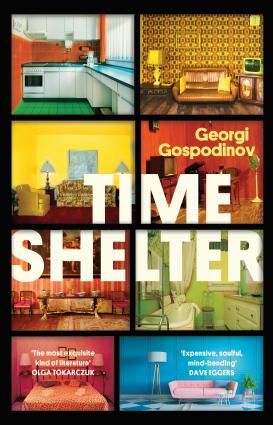
The winner is the Bulgarian novel Time Shelter by Georgi Gospodinov translated by Angela Rodel.
Blurb
A ‘clinic for the past’ offers a promising treatment for Alzheimer’s sufferers: each floor reproduces a decade in minute detail, transporting patients back in time.
An unnamed narrator is tasked with collecting the flotsam and jetsam of the past, from 1960s furniture and 1940s shirt buttons to scents, and even afternoon light. But as the rooms become more convincing, an increasing number of healthy people seek out the clinic as a ‘time shelter’, hoping to escape the horrors of modern life – a development that results in an unexpected conundrum when the past begins to invade the present.
Intricately crafted, and eloquently translated by Angela Rodel, Time Shelter cements Georgi Gospodinov’s reputation as one of the indispensable writers of our times, and a major voice in international literature.
Judges’ Verdict
Here’s what the judges had to say about the winning novel:
‘Our winner, Time Shelter, is a brilliant novel, full of irony and melancholy. It is a profound work that deals with a very contemporary question: What happens to us when our memories disappear? Georgi Gospodinov succeeds marvellously in dealing with both individual and collective destinies and it is this complex balance between the intimate and the universal that convinced and touched us.
‘In scenes that are burlesque as well as heartbreaking, he questions the way in which our memory is the cement of our identity and our intimate narrative. But it is also a great novel about Europe, a continent in need of a future, where the past is reinvented, and nostalgia is a poison. It offers us a perspective on the destiny of countries like Bulgaria, which have found themselves at the heart of the ideological conflict between the West and the communist world.
‘It is a novel that invites reflection and vigilance as much as it moves us, because the language – sensitive and precise – manages to capture, in a Proustian vein, the extreme fragility of the past. And it mixes, in its very form, a great modernity with references to the major texts of European literature, notably through the character of Gaustine, an emanation from a world on the verge of extinction.
‘The translator, Angela Rodel, has succeeded brilliantly in rendering this style and language, rich in references and deeply free.
‘The past is only ever a story that is told. And not all storytellers have the talent of Georgi Gospodinov and Angela Rodel.’
Time Shelter wasn’t on my radar, but I may have to consider it now.
I have read and really enjoyed Still Born by Mexican author Guadalupe Nettel and I am currently reading Whale by South-Korean author Cheon Myeong-kwan and I’m planning to read Boulder by Catalan author Eva Baltasar.
Have you read any from the shortlist? Any thoughts on Time Shelter?
Brazilian author, Ana Paula Maia’sOf Cattle and Men, was an interesting and confronting story that in parts was hyper realistic in a visceral way, and fable-like in other ways. It is the fourth book I’ve read this year from the Charco Press Bundle 2023.
Set in a place where there is a one-man owned slaughter-house, not far away a hamburger processing plant, the author creates a small world that concerns men and their relationship to meat and their relationship to the beings who provide it.
Two enclosures, one for cattle and one for men, standing side by side. Sometimes the smell is familiar. Only the voices on one side and the mooing on the other distinguish the men from the ruminants.
Humanity has been able to consume meat in part because they are separated from the process of how to turn something sentient into something edible.
Man’s Need for Ritual
Here, we meet Edgar Wilson, stun operator, who has ritualised his occupation and believes that it has an effect on the animal.
Edgar picks up the mallet. The steer comes up close to him. Edgar looks into the animal’s eyes and caresses its forehead. The cow stomps one hoof, wags its tail and snorts. Edgar shushes the animal and its movements slow. There is something about this shushing that makes the cattle drowsy, it establishes a mutual trust. An intimate connection. With his thumb smeared in lime, Edgar Wilson makes the sign of the cross between the ruminant’s eyes and takes two steps back. This is his ritual as a stun operator.
He has a dark history and holds little compassion for men who are carelessly cruel. It brings out his own.
Milo decides to keep quiet. He knows Edgar Wilson’s loyalty, his methods, and he knows that Zeca really was useless. No one had reported him missing, and if anybody came looking for the boy, he would simply say he never showed up for work again. That he doesn’t know where he’s gone off to. Just as no one questions death in the slaughterhouse, the death of Zeca, whose rational faculties were on par with the ruminants, would surely be ignored. Senhor Milo knows cattlemen, he’s cut from the same cloth. No one goes unpunished. They’re men of cattle and blood.
Recently the animals waiting in the holding area have become unsettled and strange, unexplained happenings have been occurring. The men stay up into the night to investigate and try to find the suspected predator that is disturbing the animals and worse.
How Language Eviscerates and/or Exposes
I thought this novella was quite incredible and it evoked all kinds of memories and thoughts, that may not be like many other readers.
Firstly, the realism of the slaughter house. Although this novel concerns what seems like a small scale operation, the attention to detail in its execution and the evocation of all the senses in that environment immediately reminded me of memories I would rather forget.
When I was a university student, one summer I needed to find a job allied to the agricultural industry. I wrote to a family friend who was a ‘stock agent’ asking if he knew of an opportunity. He suggested a “freezing works” (an interesting choice of name used in New Zealand and Australia to describe a slaughterhouse at which animal carcasses are frozen for export) and so I began my summer working in this enterprise’s pay office, transferring data from daily timesheets into a ledger that would eventually be input into a computer to generate their pay. Far from the action, except that one of my roles was to go and collect those time sheets from the different departments. And that is where and how, I witnessed, with every one of my senses, everything.
Secondly, the question of what an animal intuits and feels. Being raised on a 1,600 acre sheep and cattle farm, I can acknowledge that as humans, we are conditioned to accept certain realities and often made to participate in them, until the age of free will. Within childhood, in my case, we occasionally had access to a ‘farm animal’ as a pet – the relationship building that can occur between the human and the animal is undeniable, but equally, not every human will allow that relationship to occur.
Our pet lambs (after the annual school pet day) were put back into the flock; my pet calf, I rescued from one fate (slaughter), to have her destined for another (to become the ‘house cow’), providing daily milk to the family; she could therefore keep her offspring for six months. There was on occasion, an attempt to ‘mother’ one newborn (orphan) onto another, an act that could result in the false mother killing the strange newborn, despite it being dressed in the skin of her own dead lamb.
There is indeed a knowing.
For a few moments, Edgar Wilson yields to the late afternoon sun that has not yet fully set, but that is rushing headlong into a moonless, starless night. He knows how to listen in silence, even when others are just sighing or snorting. Life in the country has made him like the ruminants, and being a cattleman, he is able to strike a perfect balance between the fears of irrational beings and the abominable reverie of those who dominate them. He sinks two fingers into the paint can and marks the foreheads of the four cornered cows.
In Of Cattle and Men, Ana Paula Maia shows man’s inhumanity to man and his denial that an other meat-producing species might have awareness, consciousness or feeling. So the men are confused by what is occurring and they look only towards what they know, that which man is capable of; therefore they suspect other men, each other. They disbelieve what is in front of them, what they see.
Because what if those animals had agency?
Certainly not my usual kind of read, but I read this novella in one sitting, intrigued by the premise and captivated by the writing. Brilliantly portrayed, evocative of place and confronting to humanity’s blindness, I’d definitely read more by Ana Paula Maia.
Ana Paula Maia, Author
Ana Paula Maia (Brazil, 1977) is an author and scriptwriter and has published several novels, including O habitante das falhas subterráneas (2003), De gados e homens (2013), and the trilogy A saga dos brudos, comprising Entre rinhas de cachorros e porcos abatidos (2009), O trabalho sujo dos outros (2009) and Carvão animal (2011). Her novel A guerra dos bastardos (2007) won praise in Germany as among the best foreign detective fiction.
As a scriptwriter she has worked on a wide range of projects for television, cinema and theatre. She won the São Paulo de Literatura Prize for Best Novel of the Year two years in a row: in 2018 for her novel Assim na Terra como embaixo da Terra, and in 2019 for Enterre Seus Mortos.
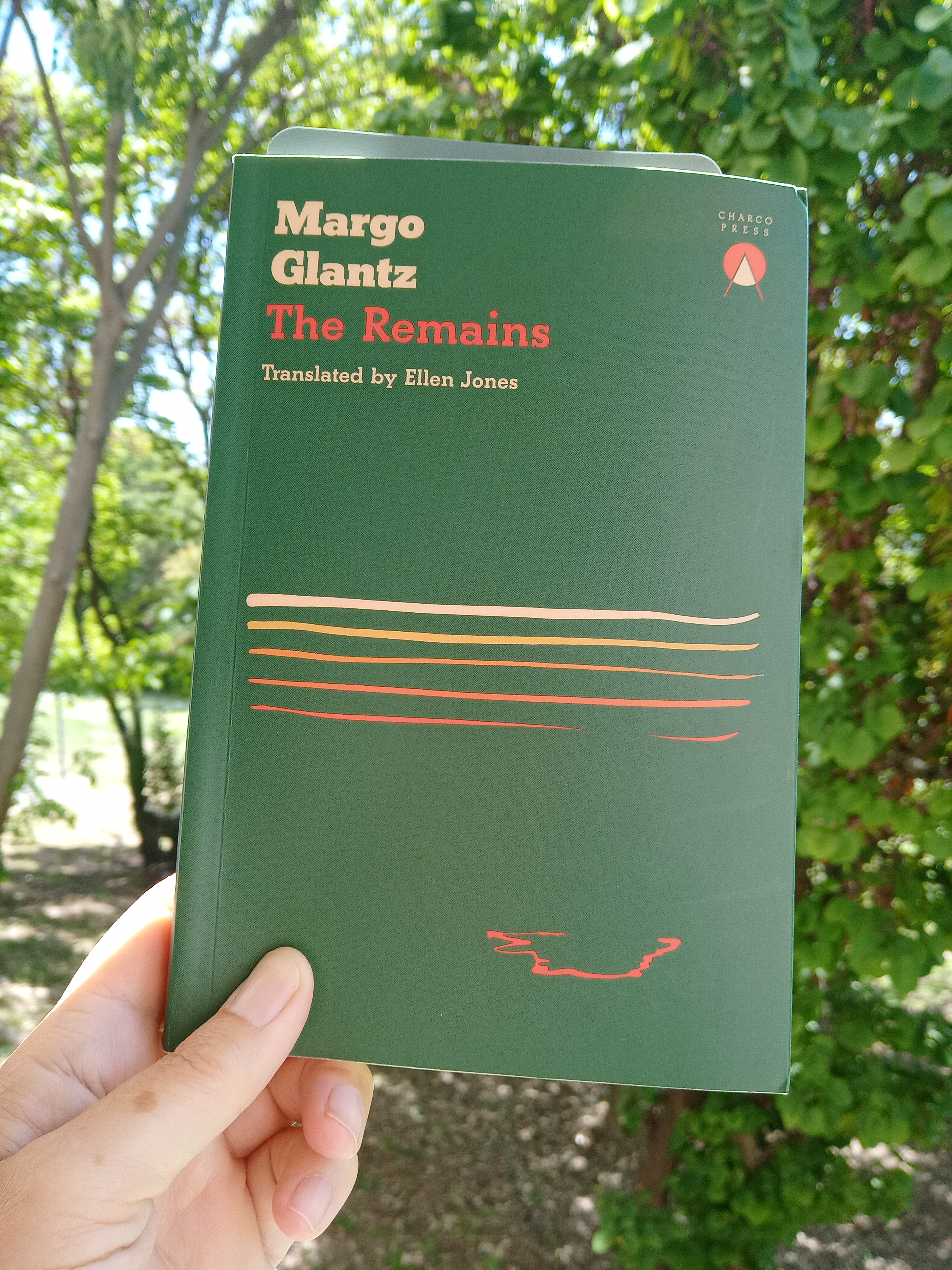
How to describe this incredible literary masterpiece. A lyrical elegy of tempo rubato.
A Symphony of Reluctant Grief
A divorced woman, Nora Garcia (a cellist), returns for her deceased ex-husband Juan’s, (a pianist and composer) funeral; back to a Mexican village from her past, through the art and music they played and navigated together.
A lyrical and rhythmic form of elegy that, rather than speak about the person who has passed, we experience something of a past version of that person; they are almost present, seen through the distorted lens of a reluctant, grieving ex. We can almost hear his continuous and relentless explanations to his often-time audience of one.
It felt like listening to a symphony in words, as like with music, thoughts and conversations repeat with slight changes over time.
Revelatory thoughts of the woman who knew a man best, observing the body, imagining the isolation and neglect of a heart, that brought this death about. The incantation going into detail of the functions and dysfunctions of the heart, both as the pump that irrigates the body and the metaphor for feelings of love and neglect.
The heart has impulses that reason doesn’t know.
A Different Kind of Garden Party
The novel is set in the present, on the afternoon that the body is displayed in the coffin in a room, and our narrator is a guest like many others, who aren’t sure to whom, they ought to offer condolences. She overhears snippets of conversations, adding to the cacophony of her own reflections.
Its not like death goes around whispering in our ear, though, does it? It just arrives, suddenly, when we least expect it. Silence falls and I move away – he’s right, I think, death doesn’t whisper in our ear, it just arrives, alone, without warning us in advance. I don’t care how simple dying or anything else is for that matter, even if it was that simplicity that made his heart explode, made it shatter into pieces (mine too), yes, life, the absurd wound that is life, yes, it’s true, the heart is only a muscle that irrigates the body, keeping it alive, a muscle that one day fails us.
Scenes and topics of conversation from the past circulate through her mind as she observes all around her. Much of it is about music, about their preferences, their differences told through how revered pianists played the music of Bach, Beethoven and more.
In her grief, she writes intense descriptions of a person talking to her, observing visual elements, lips moving, facial gestures, drifting off and away, out of her own body, hearing nothing of the tedious chatter. Her thoughts range from music, pianists, the genius castrati voices of eighteenth century Italian opera, to the intricacies and origins of open-heart surgery.
Grief arrives unbidden, tears overflow, the intellect refuses it, reprimands her, convinces her she doesn’t care. The body does not comply. She recalls evenings spent listening to great pianists, their heated arguments, wondering if it was due to their diametrically opposed ways of seeing the world.
Though I don’t profess to know too much about the world of classical music or the work of all the names mentioned – the way Glantz takes the reader on a voyage through these subjects, venturing into them in depth, returning again in brief, then jumping into subjects of the heart – was compelling to read, in a mesmerising way.
Her reassessing of her relationship, observing the many people come to farewell the man she doesn’t know whether she loved or despised, while in the throe of grief, bewilderment and loss, showing us how lives intersect and continue to have a presence in the mind of another, long after separation.
“Life is an absurd wound: I think I deserve to be given condolences.”
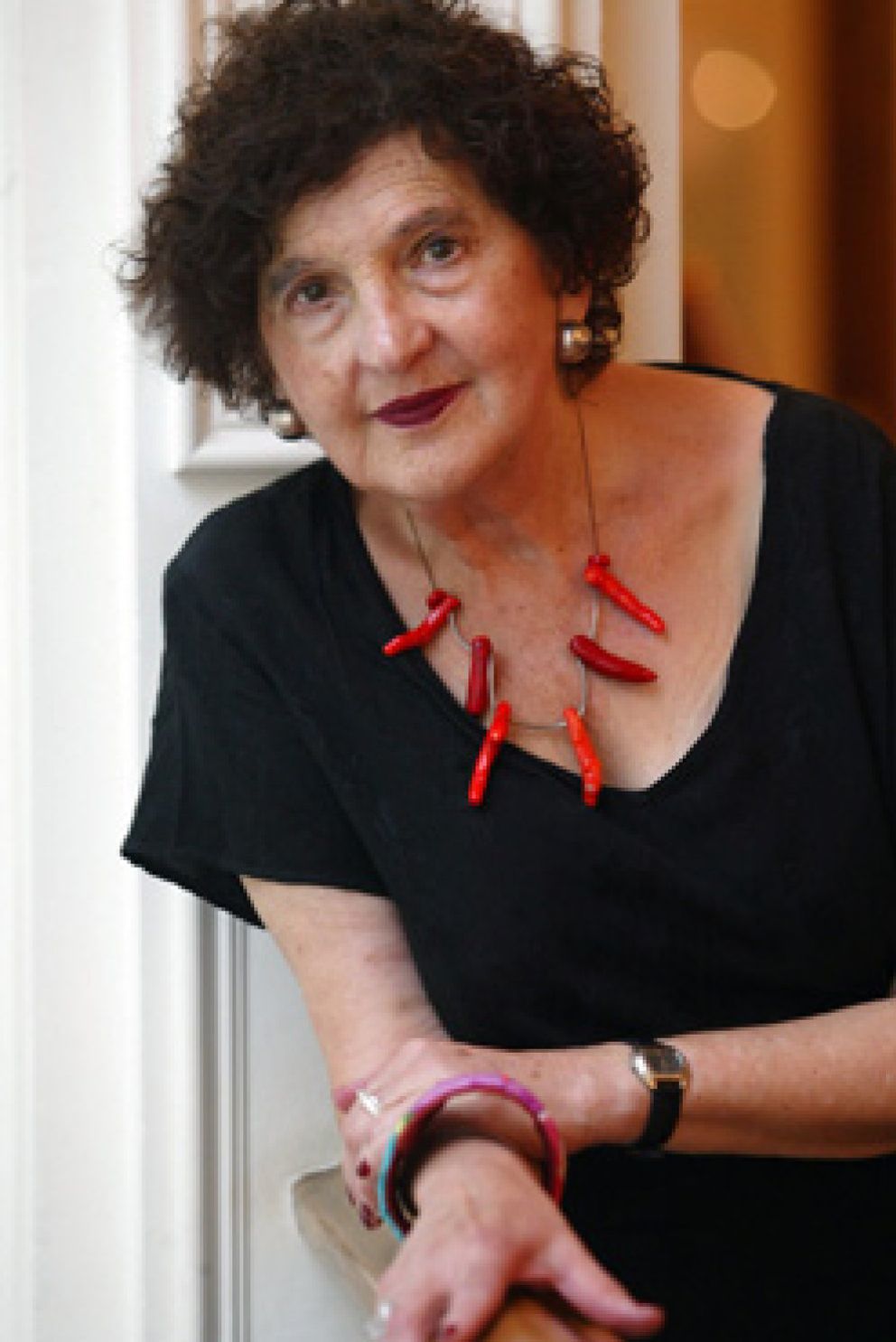
Margo Glantz, Author (1930- )
Margo Glantz fused Yiddish literature, Mexican culture, and French tradition to create experimental new works of literature.
A prolific essayist, she is best known for her 1987 autobiography Las genealogías (The Family Tree), which blended her experiences of growing up Jewish in Catholic Mexico with her parents’ immigrant experiences. She also wrote fiction and nonfiction that shed new light on the seventeenth-century nun Sor Juana Inés de la Cruz. Among her many honors, she won the Magda Donato Prize for Las genealogías and received a Rockefeller Grant (1996) and a Guggenheim Fellowship (1998).
Glantz demonstrates tremendous versatility as an individual and as a writer in the creative ways in which she blends her multiple cultural, religious and literary affinities. She unabashedly resists classification or categorisation of any kind and therefore identifies herself neither as a Jewish writer nor as a composer of personal narrative, nor as a Sor Juanista, the term used to refer to those scholars who devote themselves to the study of Sor Juana Inés de la Cruz. Belonging to no single one of these groups or schools of thought, she is an enigmatic amalgam of all of them. Glantz’s multiplicity is what makes her unique, and failure to recognize any component of her being would diminish her diversity.
Despite being one of the most iconic figures in Latin American literature, her work is little known in English. Charco Press now bring her work to a new audience with this excellent translation by Ellen Jones.
The Remains was longlisted for the Warwick Prize for Women in Translation 2023.
While I have been busy elsewhere, the Dublin Literary Award Shortlist of six novels has also been announced.
Chosen from a diverse longlist of nominations from libraries around the world, this award gives us an insight into what books readers from around the world are being engaged by thanks to books being lent by public libraries.
You can see the entire longlist of 78 novels in my earlier post here.
Of the six shortlisted titles below, four are in translation. The novels chosen explore a range of issues including the power of books, racially-inspired hate crimes, relationships, ageing, toxic masculinity, the impact of war, and span many locations and eras.
Shortlisted titles:
Cloud Cuckoo Land (Science Fiction/Fantasy) by Anthony Doerr (US)
The Trees (Dark Murder Mystery/Social Satire) by Percival Everett (US)
Paradais (Dark Underbelly of Humanity Literary Fiction) by Fernanda Melchor (Mexico), translated by Sophie Hughes
Marzahn, Mon Amour (Uplifting Working Class fiction) by Katja Oskamp (Germany), translated by Jo Heinrich
Love Novel (Intense Domestic Fiction) by Ivana Sajko (Croatia), translated by Mima Simić
Em (War Effect & Displacement fiction) by Kim Thúy (Canada/Vietnam), translated by Sheila Fischman
I’m intrigued to read Percival Everett, a writer I’ve been aware of for some time but not read.
I highly recommend Marzhan, mon amour, I absolutely loved it.
I’ve read Kim Thúy before, so I’m eyeing her novel too, despite how traumatic much of the story seems, based on realife stories of happenings in Vietnam, but uniquely, being told from a woman’s perspective and covering many of the subjects rarely written or spoken if elsewhere.
The winning novel will be announced on the 25th of May.
Let me know if you’ve read and enjoyed any of these titles, or are tempted by anything here.
The shortlist of six books for the International Booker Prize has been announced.
Six shortlisted titles
The titles are:
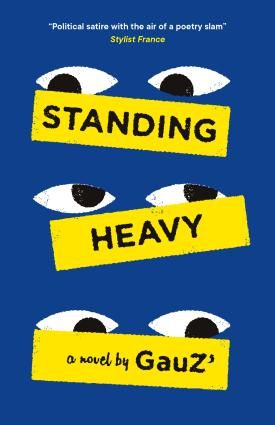
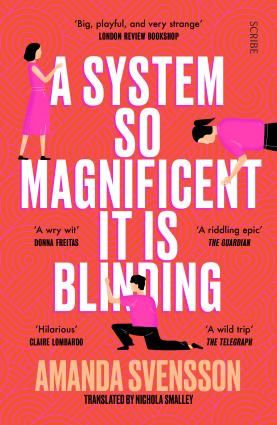
Boulder by Eva Baltasar, translated by Julia Sanches – my review Whale by Cheon Myeong-kwan, translated by Chi-Young Kim – my review The Gospel According to the New World by Maryse Condé, translated by Richard Philcox Standing Heavy by GauZ’, translated by Frank Wynne Time Shelter by Georgi Gospodinov, translated by Angela Rodel Still Born by Guadalupe Nettel, translated by Rosalind Harvey – my review
The books on this year’s shortlist originated from Bulgaria, Côte d’Ivoire, France, Mexico, South Korea and Spain. As I read them I’ll link my review.
Collectively this group of novels acts as a reflection of the societies they each inhabit, in particular the place and role of women, the effect and deconstruction of colonial legacies and the absurdities if nationalism.
Motherhood as a theme is explored, outside the nuclear family, within modern lives, changing attitudes and age-old challenges. Still Born and Boulder explore women coming to terms with biology and the body, while tending with the severe emotional consequence of their decisions.
You can read book blurbs of the six titles shortlisted in my earlier post here.
I’m planning to read Still Born and being a fan of Maryse Condé, who has said this will be her last novel, I’ll eventually read her novel too. Incredibly, having lost her sight, she has narrated this novel orally through her husband and translator Richard Philcox. It seems somehow apt, given her own research into the life of her grandmother, whom she never knew, also told to her orally and written about in her novel Victoire, My Mother’s Mother.
Are you planning to read any of these titles? Any predictions to win?
The International Booker Prize 2023 longlist has been announced. It features work from Africa, Asia, Europe and Latin America, including three writers whose work appears in English for the first time, and books translated from 11 languages.
This Year’s Judges
The panel of judges is chaired by the prize-winning French-Moroccan novelist, Leïla Slimani. The panel also includes Uilleam Blacker, one of Britain’s leading literary translators from Ukraine; Tan Twan Eng, the Booker-shortlisted Malaysian novelist; Parul Sehgal, staff writer and critic at the New Yorker; and Frederick Studemann, Literary Editor of the Financial Times.
The 2023 judges are looking for the best work of international fiction translated into English, selected from entries published in the UK or Ireland between May 1, 2022 and April 30, 2023. The books, authors and translators the prize celebrates, offer readers a window into the world and the opportunity to experience the lives of people from different cultures.
The shortlist of six books will be announced on Tuesday, April 18. The winning title will be announced at a ceremony in London on May 23, 2023.
The Longlist
The list includes one of my favourite authors, Maryse Condé, who was nominated back in 2015 when the prize was for a lifetime of work, I have read eight of her novels and there are more to explore, including her latest below.
The novels that made the list traverse elements of Korean fairy tale, French horror, Caribbean gospel, Indian melodrama, Scandinavian saga – and East Germany’s answer to Trainspotting.
A short description of the book and the judges comment follow, click on the title to read my review:
Boulder by Eva Baltasar (Spain), translated by Julia Sanches (Queer love and Motherhood, Intense)
Eva Baltasar demonstrates her pre-eminence as a chronicler of queer voices navigating a hostile world – in prose as brittle and beautiful as an ancient saga.
Working as a cook on a merchant ship, a woman comes to know and love Samsa, who gives her the nickname ‘Boulder’. When the couple decide to move to Reykjavik together, Samsa announces that she wants to have a child. She is already 40 and can’t bear to let the opportunity pass her by.
Boulder is less enthused but doesn’t know how to say no – and so finds herself dragged along on a journey that feels as thankless as it is alien. With motherhood changing Samsa into a stranger, Boulder must decide where her priorities lie, and whether her yearning for freedom will trump her yearning for love.
“Boulder is a sensuous, sexy, intense book. Baltasar condenses the sensations and experiences of a dozen more ordinary novels into just over one hundred pages of exhilarating prose. An incisive story of queer love and motherhood that slices open the dilemmas of exchanging independence for intimacy. “
Whale by Cheon Myeong-kwan (South Korea), translated by Chi-Young Kim (Epic Adventure-Satire -Fairytale)
An adventure-satire of epic proportions, which sheds new light on the changes Korea experienced in its rapid transition from pre-modern to post-modern society.
Set in a remote village in South Korea, Whale follows the lives of three linked characters: Geumbok, an extremely ambitious woman who has been chasing an indescribable thrill ever since she first saw a whale crest in the ocean; her mute daughter, Chunhui, who communicates with elephants; and a one-eyed woman who controls honeybees with a whistle. A fiction that brims with surprises and wicked humour, from one of the most original voices in South Korea.
“A carnivalesque fairytale that celebrates independence and enterprise, a picaresque quest through Korea’s landscapes and history, Whale is a riot of a book. Cheon Myeong-Kwan’s vivid characters are foolish but wise, awful but endearing, and always irrepressible. This is a hymn to restlessness and self-transformation.”
The Gospel According to the New World by Maryse Condé (Guadeloupe/France), translated by Richard Philcox (Literary fiction -Caribbean influence)
A miracle baby is rumoured to be the child of God. Award-winning Caribbean author Maryse Condé follows his journey in search of his origins and mission.
Baby Pascal is strikingly beautiful, brown in complexion, with grey-green eyes like the sea. But where does he come from? Is he really the child of God? So goes the rumour, and many signs throughout his life will cause this theory to gain ground.
From journey to journey and from one community to another, Pascal sets off in search of his origins, trying to understand the meaning of his mission. Will he be able to change the fate of humanity? And what will the New World Gospel reveal?
“Maryse Condé is one of the greatest Francophone authors and the great voice of the Caribbean. In this book she proves again what a gifted storyteller she is. The narration is lively and fluid, and we feel carried away by this story as we do by the fables of our childhood. She takes liberties, finding references in the Bible as well as in Caribbean myths. The book borrows from the tradition of magic realism and draws us into a world full of colour and life. This is a book that succeeds in mixing humour with poetry, and depth with lightness.”
Standing Heavy by GauZ’ (Ivory Coast), translated by Frank Wynne (French) (Immigrant story – shifting perspectives – Paris)
A unique insight into everything that passes under a security guard’s gaze, which also serves as a searingly witty deconstruction of colonial legacies and capitalist consumption.
Amidst the political bickering of the inhabitants of the Residence for Students from Côte d’Ivoire and the ever-changing landscape of French immigration policy, two generations of Ivoirians attempt to make their way as undocumented workers, taking shifts as security guards at a flour mill. This sharply satirical yet poignant tale draws on the author’s own experiences as an undocumented student in Paris.
“A sharp and satirical take on the legacies of French colonial history and life in Paris today. Told in a fast-paced, and fluently translated, style of shifting perspectives, Standing Heavy carries us through the decades – from the youthful optimism of the decolonisation of the 1960s to the banal realities of daily shift work on the margins of contemporary consumer society – to deliver a fresh perspective on France that is critical, funny and human.”
Time Shelter by Georgi Gospodinov (Bulgaria), translated by Angela Rodel (Alzheimers -Memory-Humour)
A ‘clinic for the past’ offers a promising treatment for Alzheimer’s sufferers: each floor reproduces a decade in minute detail, transporting patients back in time.
An unnamed narrator is tasked with collecting the flotsam and jetsam of the past, from 1960s furniture and 1940s shirt buttons to scents, and even afternoon light. But as the rooms become more convincing, an increasing number of healthy people seek out the clinic as a ‘time shelter’, hoping to escape the horrors of modern life – a development that results in an unexpected conundrum when the past begins to invade the present.
Intricately crafted, and eloquently translated by Angela Rodel, Time Shelter cements Georgi Gospodinov’s reputation as one of the indispensable writers of our times, and a major voice in international literature.
“A wide-ranging, thought-provoking, macabre and humorous novel about nationality, identity and ageing, and about the healing and destructive power of memory. It asks the question: what is our place in 20th century history, when that history seems to be constantly shifting? ‘Nostalgia isn’t what it used to be,’ they say, and this book shows us – in moving, funny and disturbing ways – how and why.”
Is Mother Dead by Vigdis Hjorth (Norway), translated by Charlotte Barslund (Dark suspense – Mother-daughter rship)
‘To mother is to murder, or close enough,’ thinks Johanna, as she looks at the spelling of the two words in Norwegian. Recently widowed, Johanna is back in Oslo after a long absence to prepare for a retrospective of her art. The subject of her work is motherhood and some of her more controversial paintings have brought about a dramatic rift between parent and child.
This new proximity, after decades of acrimonious absence, set both women on edge. Before too long, Johanna finds her mother stalking her thoughts, and herself stalking her mother’s house.
“This is a dark, chilling book. One of its tricks is to rely on a narrator who is an anti-heroine, and who can be annoying because of her narcissism and her malice. That’s what makes her real and what makes us care about her. This novel provides a very fine and cruel understanding of family relationships: the violence of the mother-daughter dynamic, which reminds us of Marguerite Duras; the impossibility of getting to know each other within the same family; family life as a prison of secrets and silence. Vigdis Hjorth manages to create a lot of suspense – a thriller-like tension – and what is amazing is that you never really know whose side you are on.”
Jimi Hendrix Live in Lviv by Andrey Kurkov (Ukraine), translated by Reuben Woolley (Russian) (Black humour – magic realism – borderland city)
Shot through with Kurkov’s unique brand of black humour and vodka-fuelled magic realism, Jimi Hendrix Live in Lviv is an affectionate portrait of one of the world’s most intriguing cities.
Strange things are afoot in the cosmopolitan city of Lviv, western Ukraine. Seagulls are circling and the air smells salty, though Lviv is a long way from the sea. A ragtag group gathers round a grave – among them an ex-KGB officer and an ageing hippy he used to spy on. Before long, Captain Ryabtsev and Alik Olisevych team up to discover the source of the ‘anomalies’.
Meanwhile, Taras – who makes a living driving kidney-stone patients over cobblestones in his ancient Opel Vectra – is courting Darka, who works nights at a bureau de change despite being allergic to money. The young lovers don’t know it, but their fate depends on two lonely old men, relics of another era, who will stop at nothing to save their city.
“The escapades of Kurkov’s loveable eccentrics provide a frame for an intriguing portrait of Lviv in the 2000s, a melancholy borderland city that finds itself recalling a troubled past as it sits on the cusp of an uncertain future. This is a book full of magic that is always grounded, cosiness that is always on the edge of being unsettled, and dark humour that is always affectionate.”
The Birthday Party by Laurent Mauvignier (France), translated by Daniel Levin Becker (Literary Horror – the marginalised – rural France)
This gripping tale of the violent irruptions of the past into the present, from a major contemporary French writer, is a deft unravelling of the stories we hide from others – and from ourselves.
Buried deep in rural France, little remains of the isolated hamlet of the Three Lone Girls, save a few houses and a curiously assembled quartet: Patrice Bergogne, inheritor of his family’s farm; his wife, Marion; their daughter, Ida; and their neighbour, Christine, an artist.
While Patrice plans a surprise for his wife’s fortieth birthday, inexplicable events start to disrupt the hamlet’s quiet existence: anonymous, menacing letters, an unfamiliar car rolling up the driveway. And as night falls, strangers stalk the houses, unleashing a nightmarish chain of events.
“This impressive and fascinating book reconciles two primal feelings: empathy and dread. It is a very scary book, rooted in the traditions of horror. It is as scary as when we listened to stories about ogres and wolves as children. The writing is formidable. The slow rhythm of the sentences creates tension as much as the situation itself. Mauvignier also describes brilliantly an abandoned rural France where there is a sense of marginalisation and humiliation.”
While We Were Dreaming by Clemens Meyer (Germany), translated by Katy Derbyshire (reunification – shattered dreams – hope)
Startlingly raw and deeply moving, this extraordinary debut novel from one of Germany’s most ambitious writers is full of passion, hope and despair.
Rico, Mark, Paul and Daniel were 13 when the Berlin Wall fell in autumn 1989. Growing up in Leipzig at the time of reunification, they dream of a better life somewhere beyond the brewery quarter. Every night they roam the streets, partying, rioting, running away from their fears, their parents and the future, fighting to exist, killing time. They drink, steal cars, feel wrecked, play it cool, longing for real love and true freedom.
“As walls fall and political systems collapse, a group of youngsters in Leipzig are pitched into a helter-skelter world of partying, violence, drugs, crime and techno music. Energetic, blunt and hard-charging, While We Were Dreaming skillfully captures with pathos and anger the sense of what happens when all the certainties of the grown-up world evaporate and the future is up for grabs. The story of German unification as it did not appear on your TV screen.”
Pyre by Perumal Murugan (India), translated by Aniruddhan Vasudevan (Tamil) (Love -Social discrimination – Caste)
Young love is pitted against social discrimination in Perumal Murugan’s powerful and compelling novel, set in the rural Tamil Nadu of 1980s.
Saroja and Kumaresan are in love. And in danger. After a whirlwind romance they marry in a small southern Indian town, before returning to Kumaresan’s family village. But the newlyweds are harbouring a dangerous secret: they belong to different castes, and if the villagers find out they will be in grave peril.
Faced with venom from her mother-in-law, and pointed questions from her new neighbours, Saroja struggles to adjust to a lonely and uncomfortable life. Kumaresan throws himself into building a business, hoping to scrape together enough money for them to start over somewhere new. But as vicious whispers encircle the couple, will their love be enough to keep them safe?
“An intercaste couple elopes, setting in motion a story of terrifying foreboding. Perumal Murugan is a great anatomist of power and, in particular, of the deep, deforming rot of caste hatred and violence. With flashes of fable, his novel tells a story specific and universal: how flammable are fear and the distrust of others.”
Still Born by Guadalupe Nettel (Mexico/France), translated by Rosalind Harvey (Parenting – freedom – relationship compromises)
Guadalupe Nettel’s gripping and insightful fourth novel explores one of life’s most consequential decisions – whether or not to have children.
Alina and Laura are independent and career-driven women in their mid-thirties, neither of whom have built their future around the prospect of a family. Laura has taken the drastic decision to be sterilised, but as time goes by Alina becomes drawn to the idea of becoming a mother.
When complications arise in Alina’s pregnancy and Laura becomes attached to her neighbour’s son, both women are forced to reckon with the complexity of their emotions, in Nettel’s sensitive and surgically precise exploration of maternal ambivalence.
“Two best friends share an aversion to ‘the human shackles’ of motherhood, only to discover that life has other plans. With a twisty, enveloping plot, the novel poses some of the knottiest questions about freedom, disability, and dependence – all in language so blunt it burns.”
A System So Magnificent It Is Blinding by Amanda Svensson (Sweden), translated by Nichola Smalley (Family saga – cult – changelings)
This joyful family saga about free will, forgiveness, and interconnection poses a question: are we free to create our own destinies or are we just part of a system beyond our control?
In October 1989, a set of triplets is born, and it is at this moment their father chooses to reveal his affair. Pandemonium ensues.
Over two decades later, Sebastian is recruited to join a mysterious organisation, where he meets Laura Kadinsky, a patient whose inability to see the world in three dimensions is not the only intriguing thing about her. Meanwhile, Clara has travelled to Easter Island to join a doomsday cult, and the third triplet, Matilda, is in Sweden, trying to escape from the colour blue.
Then, something happens that forces the triplets to reunite. Their mother calls with worrying news: their father has gone missing and she has something to tell them, a 25-year secret that will change all their lives.
“When a set of adult triplets learn that one of them might have been switched in the hospital after their birth, each of them become convinced that they are the changeling. Amanda Svensson’s raucous, sprawling debut takes on the enigmas of our origins, riddles of human consciousness and animal cognition, doomsday cults, and the most bedeviling of mysteries – the minds and choices of our closest intimates.”
Ninth Building by Zou Jingzhi (China), translated by Jeremy Tiang (Cultural Revolution – interconnected stories – shared humanity)
A fascinating collection of vignettes based on the author’s life in China during the Cultural Revolution.
Revisiting his experiences as a boy in Beijing and then as a teenager exiled to the countryside, Zou captures a side of the Cultural Revolution that is seldom talked about – the sheer tedium and waste of young life under the regime, as well as the gallows humour that accompanies such desperate situations.
“A kaleidoscopic and understated collection of interlocking tales of life in an apartment building under the Cultural Revolution – the daily tedium of its inhabitants, lit by brief and tenuous moments of shared humanity.”
“Who has not,
at one point or another,
played with thoughts of his ancestors,
with the prehistory of his flesh and blood?”
Jorge Luis Borges, I, A Jew
Our Father, Who Hath Sinned Against Us
Two centuries ago in Peru, Nicolasa Cisneros gave birth to seven children and raised them fatherless, responding to anyone who asked after her husband that he was travelling. This woman gave her name ‘Cisneros’ to these children. A maternal name that carried down another four generations via her youngest son Luis the Poet, to Fernán to Groucho to Renato, the author.
This work of autofiction opens when the author with his elderly uncle is taken to a cemetery where the tomb of his great-great-grandmother lies, where he is shown proof of her close association with Gregorio Cartagena, a priest, the man who fathered all her children, whom she was never married to, a man who denied his children both his name and a relationship with their father.
Renato Cisneros struggles with the idea of having been denied this name and heritage, having embraced another that he had been proud of, but that now became a source of confusion and a questioning of much that he had assumed.
The upright and irreproachable men I had admired for as long as I could remember, the flesh of my flesh, abruptly became blurred, reduced to timid, vulgar and inconsequential individuals. My former clarity became turbid. Clay became crust. The tight weave became unstitched, revealing its threads.
An Identity Crisis
This novel is his way of exploring all that, of seeing how this new information informs him, how it makes apparent the patterns and threads of a lineage. Although much of the narrative by necessity has been ficitonlised, it reads like a work of creative nonfiction.
The custom of the double life has been repeated in each generation. If this is not a habit, a custom, a trend, I don’t know what it is. An enduring coincidence? A hereditary gene? A vice, an illness, an infection? An echo? How to escape it? Can atavistic viruses be eliminated? Can contagion be avoided? Can this intangible, genetically transmittable part of us ever be decontaminated, or does it become intrinsic from the start and all we can do is bear it? How can we be sure what is ours, our own, and what is passed on if everything comes to us melted down and mixed up at birth? Were the men of my family aware of obeying an established mould? Did they ever set to correct that tradition, or were they simply carried along by it? Am I yet another such man? Will I repeat the story I am writing? Or am I writing it down in order not to repeat it?
The narrative switches between a near present day Lima 2013/14 when he is searching and discussing his thoughts with his aged Uncle Gustavo, and delves into the family relationships of 1830’s Peru through and up to the early to mid 1900’s.
It was his Uncle who opened his eyes to the presence of the twin graves, who had been willing to engage him in an open conversation, as he tried to understand what occurred and how it was affecting him and discussed his right to document family secrets and lies perpetuated. Gustavo had tried to engage his siblings years before, without success.
They had no desire to understand or clear away the dense clouds that shrouded their world. The did not believe that ‘pain, if it brings truth, is always a good thing’.
Cisneros, having learned of the deception of the priest and the circumstance of his great great grandmother, finds correlating patterns down the lineage as he investigates.
Poets and Politicians, Journalists and Diplomats
The story unearths the life of Nicolasa and each of the subsequent grandfathers, moving from Peru to La Havre, to Paris, to Argentina and back to Peru, as these men’s careers rise and fall and move in parallel with Peruvian history and as they cross paths with a number of historical figures and events. The historical and political aspects are light enough not to impose too much on the narrative, while giving context to mobility of the family, both physically and socially.
Two of the grandfathers were renowned poets, whose verses were often performed at family gatherings, though the author knew little of who they really were.
I learned to both love and and to resist the Cisneros clan. Because they said things by halves, because they spent their lives speaking superficially about our dead ancestors at literary soirées that felt like joyful funerals, or rather the same funeral being reprised over the decades.
Ancestor Trouble, Lies Become Truths Become Lies Become Stories
It reminded me in places of a similar journey taken by Maud Newton, in her equally riveting Ancestor Trouble: A Reckoning and a Reconciliation; estranged from her father, she too explores the concept of inter-generational inheritance, something she fears, but wishes to come to terms with. And how lies, even when they are known, can be passed down families to become ‘sort of’ truths, as Daphne du Maurier recounts in her work of autofiction The Glass-Blowers, a story that busts open the myth of her own family heritage and false name.
Although one might think a family history is personal, which it is, You Shall Leave Your Land is universally interesting for the questions it poses to us all, and for the cultural expose of a tumultuous period in Peruvian history as it developed into a Republic, with changes in leadership creating exiles of people overnight.
Blame and Misfortune, A Woman’s Lot
If I have one criticism, it would be the way the women in the story have been depicted, they are made to be responsible and given agency in a way that might raise the eyebrows of some readers. In times gone by, when a woman fell pregnant, there were few options open to them and very little choice.
For example, when Luis Benjamin is given an ultimatum by the mother of his children to legitimize their relationship, he takes the children and disappears and yet when she reverts to the life she had previously, he judges it and views this as an erasure of their bond and time together – whereas it is more likely that without the support of her children’s father, she had little choice but to use her talent and beauty to survive. Clearly there is much imaginative licence used, however, I found myself querying some of those authorial decisions.
Overall, I thought it was an excellent and thought provoking novel, another beautifully translated gem from Charco Press. It can be read as a standalone novel, though it is a prequel – an earlier novel The Distance Between Us is delves into the life of his father, who is barely mentioned in this book.
Renato Cisneros, Author
Renato Cisneros (Lima, 1976) is a well-known journalist, broadcaster and writer in Peru, where he presents current affairs programmes on radio and TV. Having published a number of books of poetry and two novels, in 2015 he stepped back from his career as a broadcaster to fully concentrate on his writing.
The Distance Between Us (a novel about a son embarking on a journey to understand his complex relationship with his father and how it shaped the man he is today) sold over 35,000 copies in Peru and was shortlisted for the Second Mario Vargas Llosa Biannual Award, longlisted for the Prix Médicis (2017) and was the winner of the Prix Transfuge du Meilleur Roman de Littérature Hispanique (2017). The prequel, Dejarás la tierra (You Shall Leave Your Land) is a bestseller in Spain and Latin America and was published in English in January 2023 by Charco Press. Renato Cisneros currently lives in Madrid.
It feels a little fraudulent to write about my favourite reads of 2022, when I forbid myself to read or write about books for six months of the year, while I was working on a creative writing project. Writing about books is one of my greatest pleasures, however I realised that if I could harness that energy and apply it to something else I wished to complete, perhaps I could finish that other project.
I did finish it, so I’m giving myself a break and reopening the blog door, keeping the ‘thoughts on books’ muscle active.
An Irish Obsession and A Foreign Language Desire
Though I read less than half the number of books of 2021, I did manage to read 30 books from 13 countries, a third Irish authors, thanks to Cathy’s annual Reading Ireland month in February. I’m looking forward to more Irish reads this year; there were many promising reads published in 2022 that I wasn’t able to get to.
Sadly I missed Women in Translation month in August, though I managed to read six books in translation, two making my top reads of the years.
2023 will definitely be better for translations, since I’ve taken out a Charco Press subscription, giving me the opportunity to read a few Latin American contemporary authors from Argentina, Brazil, Bolivia, Peru, Colombia and Mexico.
Non-Fiction, A Rival to the Imagination
As far as genre went, there was a much greater balance between fiction and non-fiction than in previous years, due to having been in the mood to read a lot more non-fiction this year.
And so to the books that left the most significant impression, where I have reviewed them I’ll create a link in the title.
One Outstanding Read
Was there one book that could claim the spot of Outstanding Read of 2022? This wasn’t easy to decide given most of my reading occurred in the beginning of the year, but as I look over the titles, there was one book that I remember being pleasantly surprised by and having that feeling of it not wanting to end, and being laugh out loud funny in places.
It is one of those novels, or perhaps I ought to say she is one of those writer’s whose works I wouldn’t mind being stuck on a desert island with, more than just a story, they open your mind to other works, stimulate curiosity and have a particular sensibility that reassures this reader that the novel will endure.
“I absolutely loved it and was surprised at how accessible a read it was, given this is an author who recently won the Nobel Prize for Literature. Her power to provoke by telling a story is only heightened by the suggestion on the back cover that her ideas presented here caused a genuine political uproar in Poland.” – extract from my review
So here it is, my One Outstanding Read of 2022 was :
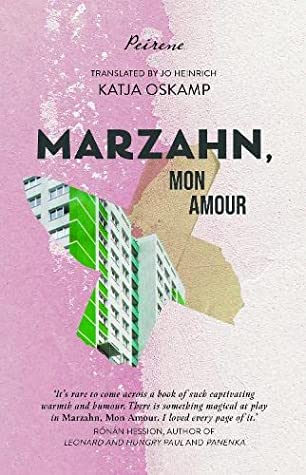
– What a joy this Peirene novella was, one of those rare gems of what I perceived as uplifting fiction, until I lent it to a friend who is a nurse, who DNF’d it, making me realise that what can be delightful for one reader can be quite the opposite for another, in this case, someone who had heard too many sad stories from patients, requiring an empathetic barrier, to endure the overwhelm it creates.
Marzhan is a much maligned multi-storied, communist-era, working class quarter in East Berlin, where our protagonist, a writer, leaves her career behind to retrain as a chiropodist, due to the sudden illness of her husband. In each chapter, we meet one of her clients, members of the local community, many who have lived there since its construction 40 years earlier. A chronicler of their personal histories, we witness the humanity behind the monolith structures of the housing estates, the connections created between the three women working in the salon and the warmth and familiarity they provide to those who cross their threshold. A semi-autobiographical gem.
– Another novella, this was another delightful, often hilarious story, with well constructed characterisation. Set in a fictional Seacliff caravan park in Ballycastle on the North Coast of Ireland, a group gather to place a memorial bench on the cliff top for a departed friend.
Each chapter is narrated by one of 10 characters, revealing their state of mind and concerns, while exploring complex family dynamics, ageing, immigration, gender politics, the decline of the Church and the legacy of the Troubles. A sense of mystery and suspense, pursued by teenage sleuth Alma, lead to the final scene, the cliff-hanger. A delightful afternoon romp.
– Set in Ukraine in 2014, during the Euromaiden protests, four characters with different backgrounds (two outsiders, two protestors) cross paths, share histories, traverse geography and represent different perspectives in this Revolution of Dignity, the origin of a conflict that endures today.
The narrative is gripping, informative, well researched and had me veering off to look up numerous historical references. Moved by the documentary, Winter on Fire: Ukraine’s Fight for Democracy,Pickhart was struck by the fighting spirit of the Ukrainian people against their government and the echo of the past, when the bells of St. Michael’s Golden-Domed Monastery rang for the first time since the Mongols invaded Kyiv in 1240AD.
“Though it is novel told in fragments, through multiple narratives and voices, there is a fluidity and yet the plot moves quickly, as the connection(s) between characters are revealed, their motivations and behaviours come to be understood and revelations acknowledge the pressures and complexities of life in this country, some things universal, others unique to their history and geography.”
Nora, A Love Story of Nora Barnacle & James Joyce, Nuala O’Connor (Ireland) (Historical Fiction)
– Absolutely loved it. I was instantly transported into Nora’s world, seeing their life and travels, the many challenges they faced and the unique connection that kept them together throughout. I knew nothing of their lives before picking this up during the One Dublin, One Book initiative in April 2022. Knowing now all the many places they lived and how Europe allowed them to live free of convention, I’m curious to encounter the stories Joyce created while Nora was keeping everything else together for him.
It is incredible that Nuala O’Connor managed to put together such a cohesive story given the actions of Joyce’s formidable grandson/gatekeeper Stephen, who did all he could to prevent access or usage of the family archive, including the destruction of hundreds of letters, until his death in 2020.
– What a treat this was, one of Janet Frame’s early novels written in the 1960’s when she was living in London, one she was too self conscious to allow to be published, so it came out posthumously in 2007. Written long before any of her autobiographical work, it clearly was inspired by much of her own experience as a writer more confident and astute with her words on the page than social graces.
In the novel, a young NZ author living in a studio in London, is invited to spend a weekend with a journalist and his family, something she looks forward to until beset by anxiety and awkwardness. Her visit is interspersed with reminiscences of her homeland, of a realisation of her homesickness and desire to return. She imagines herself a migratory bird, a kind of shape-shifting ability that helps her to be present, absent, to cope with the situation and informs her writing.
“A certain pleasure was added to Grace’s relief at establishing herself as a migratory bird. She found that she understood the characters in her novel. Her words flowed, she was excited, she could see everyone and everything.”
Top 5 Non-Fiction
All About Love: New Visions, bell hooks (US)
– What a joy it was to discover the voice and beautifully evolved mind of bell hooks in these pages.
Her perspective is heart lead, her definition of love leaves behind conditioned perceptions of romance and desire and the traditional roles of carer, nurturer, provider – and suggests that it might be ‘the will to do for oneself or another that which enables us to grow and evolve spiritually’ love becomes a verb not a noun.
It is a way of looking at this least discussed human emotion and activity that fosters hope and encouragement, in an era where we have been long suffering the effects of lovelessness under a societal system of domination.
– This collection of essays, art and information about contemporary Ireland is an underrated gem! Europa Editions noticed my prolific reading around Ireland after I read Sara Baume’s wonderful A Line Made By Walking and mentioned that she was one of the contributors to this stunning collection.
I planned to read a couple of essays each day, but it was so interesting, I kept reading until I finished it. Brilliant!
Across 11 essays, the collection explores the life and times of modern Ireland, with contributions from Catherine Dunne and Caelinn Hogan – discussing the decline of the Church’s influence, the dismantling of a system designed to oppress women and a culture of silence in The Mass is Ended; William Atkins writes a fascinating essay on the Boglands; Manchan Magnan shares how the contraction of a small local fishing industry heralded the decline and disappearance of much of the Irish language in An Ocean of Wisdom; Sara Baume writes of Talismans and Colum McCann of nostalgia in Everything That Falls Must Also Rise.
The BBC’s former political editor in Northern Ireland Mark Devenport, writes about a region hanging in the balance, the UK and the EU, torn between fear and opportunity and the distinct feeling of having been abandoned in At The Edge of Two Unions: Northern Ireland’s Causeway Coast; while Lyra McKee’s gut-wrenching essay Suicides of the Ceasefire Babies investigates the troubling fact that since the signing of the Good Friday Agreement in 1998, more people in Northern Ireland have committed suicide than were killed during the 30 year conflict.
“Intergenerational transmission of trauma is not just a sociological or psychological problem, but also a biological one.”
And more, a brilliant essay on citizen assemblies, another on Irish music, rugby and a less enchanting one that explores locations in The Game of Thrones.
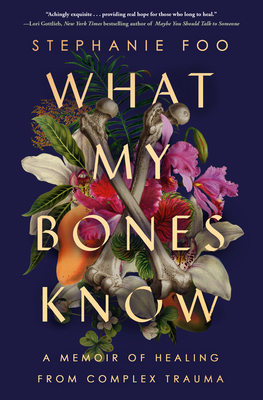
What My Bones Know, A Memoir of Healing from Complex Trauma, Stefanie Foo (US) (Memoir)
– This was a gripping memoir I couldn’t put down. I read it for reference purposes, interested in the solutions she finds for healing complex PTSD. It is well researched, while each section contributes to the arc of a comprehensive and compelling narrative.
Stefanie Foo had a dream job as an award-winning radio producer at This American Life and was in a loving relationship. But behind her office door, she was having panic attacks and sobbing at her desk every morning. After years of questioning what was wrong with herself, she was diagnosed with complex PTSD – a condition that occurs when trauma happens continuously, over the course of years.
She becomes the subject of her own research, her journalist skills aiding her to interview those responsible for various discoveries and healing modalities, gaining insights into the effect and management of her condition, eventually reclaiming agency over it.
“Every cell in my body is filled with the code of generations of trauma, of death, of birth, of migration, of history that I cannot understand. . . . I want to have words for what my bones know.”
– This was a fascinating read and exploration, at the intersection between family history and genetics; the author sets out to explore the nurture versus nature question with the aid of DNA genetic reports and stories both documented about and passed down through her family. Some of those stories and people she was estranged from create a concern/fear about what she might inherit.
Maud Newton explores society’s experiments with eugenics pondering her father’s marriage, a choice he made based on trying to create “smart kids”. She delves into persecuted women, including a female relative accused of being a witch, and discovers a clear line of personality inclinations that have born down the female line of her family. A captivating and highly informative read.
My Father’s Daughter, Hanna Azieb Pool (UK/Eritrea) (Adoptee Memoir)
– A memoir of the Eritrean-British journalist, Hannah Azieb-Pool, who returns to Eritrea at the age of 30 to meet her family for the first time. In her twenties, Azieb-Pool is given a letter that unravels everything she knows about her life. Adopted from an orphanage in Eritrea, brought to the UK, it was believed she had no surviving relatives. When she discovers the truth in a letter from her brother – that her birth father is alive and her Eritrean family are desperate to meet her, she is confronted with a decision and an opportunity, to experience her culture origins and meet her family for the first time.
It’s a story of uncovering the truth, of making connections, a kind of healing or reconciliation. Ultimately what has been lost can never be found. It’s like she was able to view an image of who she might have been and the life she may have had, and while viewing it was cathartic, it is indeed an illusion, a life imagined, one never possible to live.
* * * * * *
Have you read any of these books? Anything here tempt you for reading in 2023?
Happy Reading All!




 Brazilian author, Ana Paula Maia’s Of Cattle and Men, was an interesting and confronting story that in parts was hyper realistic in a visceral way, and fable-like in other ways. It is the fourth book I’ve read this year from the
 A divorced woman, Nora Garcia (a cellist), returns for her deceased ex-husband Juan’s, (a pianist and composer) funeral; back to a Mexican village from her past, through the art and music they played and navigated together.
 The novel is set in the present, on the afternoon that the body is displayed in the coffin in a room, and our narrator is a guest like many others, who aren’t sure to whom, they ought to offer condolences. She overhears snippets of conversations, adding to the cacophony of her own reflections.
 A prolific essayist, she is best known for her 1987 autobiography Las genealogías (The Family Tree), which blended her experiences of growing up Jewish in Catholic Mexico with her parents’ immigrant experiences. She also wrote fiction and nonfiction that shed new light on the seventeenth-century nun Sor Juana Inés de la Cruz. Among her many honors, she won the Magda Donato Prize for Las genealogías and received a Rockefeller Grant (1996) and a Guggenheim Fellowship (1998).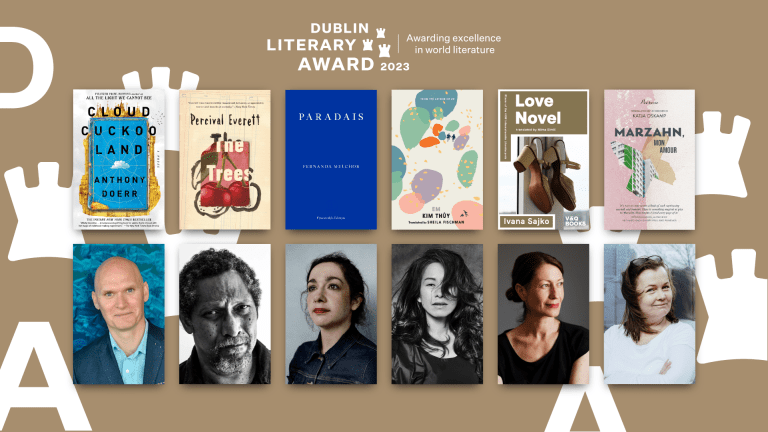






 This work of autofiction opens when the author with his elderly uncle is taken to a cemetery where the tomb of his great-great-grandmother lies, where he is shown proof of her close association with Gregorio Cartagena, a priest, the man who fathered all her children, whom she was never married to, a man who denied his children both his name and a relationship with their father.
 This novel is his way of exploring all that, of seeing how this new information informs him, how it makes apparent the patterns and threads of a lineage. Although much of the narrative by necessity has been ficitonlised, it reads like a work of creative nonfiction.
 If I have one criticism, it would be the way the women in the story have been depicted, they are made to be responsible and given agency in a way that might raise the eyebrows of some readers. In times gone by, when a woman fell pregnant, there were few options open to them and very little choice.
 Though I read less than half the number of books of 2021, I did manage to read 30 books from 13 countries, a third Irish authors, thanks to Cathy’s annual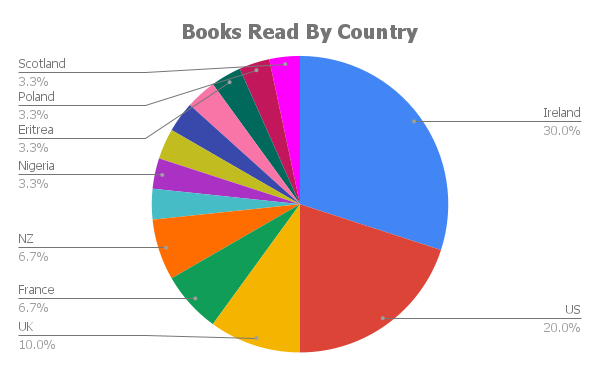




 Nora, A Love Story of Nora Barnacle & James Joyce, Nuala O’Connor (Ireland) (Historical Fiction)
 All About Love: New Visions, bell hooks (US)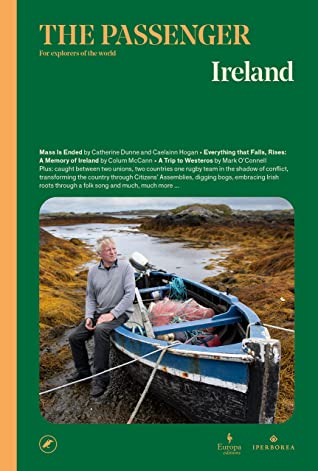
 What My Bones Know, A Memoir of Healing from Complex Trauma, Stefanie Foo (US) (Memoir)
 My Father’s Daughter, Hanna Azieb Pool (UK/Eritrea) (Adoptee Memoir)
 Word by Word