Tidal Waters by Velia Vidal (Colombia) tr. Annie McDermott

Women in Translation

Tidal Waters is my first August read for #WIT month. Reading Women in Translation.

What an original, good-hearted, open, vulnerable read. I’m not sure whether what I read was fictional or not, because much of what is described in the ‘letters to a close friend’ coincides with elements in the author bio inside the front cover of the book and the main character is Vel.

The Epistolary Novel

epistolary novel of letters, reading, literacy, poverty, Afro Colombian

An epistolary narrative, it is about the return to a place and finding new purpose, along with the motivation to pursue it and taking others with you – told through a correspondence that bears witness and though we don’t see the replies, we can tell that they encourage and support both the idea(s) and the woman pursuing it.

I don’t know if I mentioned this specifically, perhaps not in a letter, though maybe when we met up before I left to come and live here here for good, but part of what pushed me to make this radical life change was the need to feel that my existence had meaning, that I was spending each day doing something I cared about and could feel proud of at the end of my life. And that’s just what I found in being Seño Velia, the woman who has meetings with people about books, who tries to motivate children to love reading and books as much as she does, and who supports the teachers.

Finding Purpose and Motivation, In Community

The letters span 3 years from May 2015 and they track a significant change in Vel’s life as she decides to return to Choco (to the Afro-Colombian community she was raised in) to start a new venture to bring reading, literacy and a love of books to it. The correspondence exhibits the growth and expansion of her writing, the letter becomes a safe harbour and she tests it by taking her writing to another level, stretching into a more personal yet contained arena.

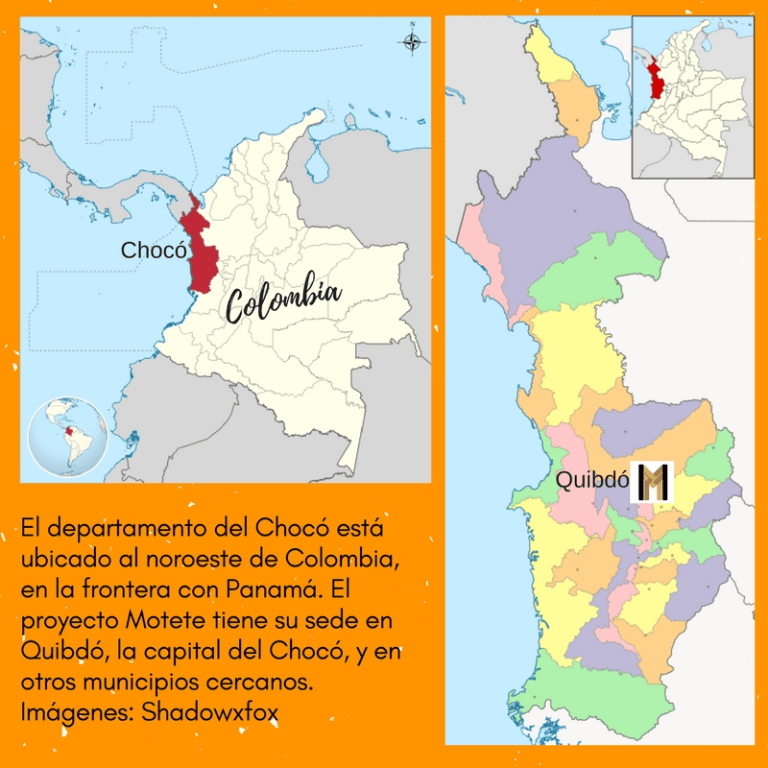
Tomorrow I start a diploma in reading promotion, and with it my project, Motete. We’ve chosen three areas of Quibdo where I’ll start running the workshops.

She is taking a risk starting a new venture, but believes in it and is surrounded by extended family and connections, which facilitate her ability to reach out even further into the community and invite everyone in, to be part of or benefit from her shared love of reading.

And so this project is coming together. This basket, this Motete, is filling up. The slogan for my project is ‘Contenidos que tejen’ – contents that weave – and every day I like it more. Every day I realise that these contents are weaving fulfillment and happiness within me…

The thing is, motetes have been used to carry food for the body: plaintains, bushmeat, fish. Our is to fill them with food for the soul: art, culture, books. And just as motetes are woven by hand, I thought these new contents would also form a fabric: the fabric of society, of community, the fabric of souls.

Letter Writing

Her unnamed friend that she writes to is someone she hasn’t known long, he occupies a space between the familiar and the unfamiliar that she claims as a freedom to express herself, to be vulnerable and open, someone who has mentored and shown her how to get funding. The range of things she will write to him of, span a wide spectrum.

We never see the replies but the continuation of her own correspondence displays her life, her dealing with health problems, the double bind of her wounding and love, of being raised by doting grandparents, while having complicated relationships with a teenage mother unable to mother her and an emotionally absent father. Her later sadness and depression, helped through therapy, tears and conversations, to ways of coping and healing. Her optimism for her venture, and the community connections she creates keep her going.

I grew a lot. I learned. But most of all I tried to weave a new way of relating to my father that hurt as little as possible.

The Sea, The Sea

One of the themes is the sea, the absence of sea, the way the river meets the sea and her relationship to it. She yearns for it when it has been absent for some time, just as she yearns for the letter writer and the relief that comes in the act of writing to him.

She describes herself in her current role as being like the sea at that place where it meets the river.

I’m like the Pacific Ocean, pressing at the river with its tides to make it flow the other way, or lapping at the land when its waters rise, when it feels like gaining inches of new ground. You need strong motivation to stick to this way of life, which isn’t exactly a fight against the world, but rather the certainty of forging your own path.

An Homage to Correspondence

I loved this slender book, it’s project and generosity, its intimate sharing and platform for expanding and learning and having the courage to venture into new areas. It made me think of an exquisite title I’d forgotten about, Leslie Marmon Silko’s slim book of correspondence The Delicacy and Strength of Lace: Letters Between Leslie Marmon Silko and James Wright.

That correspondence was written when Silko was 31 years old and Wright 51. They had planned to meet in the Spring of 1980, mentioned in letters of Oct/Nov of the previous year, not knowing he would be gone before then.

They discuss her novel, his poetry, language, his travels, her adventures with animals, their speaking engagements, their mutual challenges and experiences as university professors, and soon began to share more personal feelings, as she acknowledged the tough time she was having and he shared his own experience, expressing empathy.

Velia Vidal dedicates her book:

To my recipient,
simply for being there.

and when I read about her own projects in society, her love of the sea and shared readings and efforts to help move children and young adults out of poverty, it is all the more inspirational to read these letters, understanding the difference a letter can make, to see someone take a risk and pursue something that will help others from her community, while fulfilling her own dreams and aspirations.

Highly Recommended.

Velia Vidal, Author

Velia Vidal (Bahía Solano, Colombia, 1982) is a writer who loves the sea and shared readings. In 2021 she was a fellow at Villa Josepha Ahrenshoop, in Germany.

For her book Tidal Waters she won the Afro-Colombian Authors Publication Grant awarded by Colombia’s Ministry of Culture. She is the co-author of Oír somos río (2019) and its bilingual German-Spanish edition.

She is the founder and director of the Motete Educational and Cultural Corporation and the Reading and Writing Festival (FLECHO) in Chocó, one of the most isolated, complex and neglected regions in Colombia with the highest afro-descendant population density in the country.

Vidal graduated in Afro-Latin American Studies and has a Masters in Reading Education and Children’s Literature. She is also a journalist and specialist in social management and communication. In 2022 she was included in the list of 100 most influential and inspiring women in the world by the BBC.

She writes children’s literature, fiction and non-fiction, and poetry. Her work has been translated into German, English and Portuguese.

International Booker Prize Longlist 2024

On 11 March the longlist for the International Booker Prize 2024 was announced. It was a notable celebration for Latin American fiction, with authors representing Brazil, Argentina, Peru and Venezuela on the list. 

The 13 novels cover 10 different languages, Spanish, Italian, Swedish, German, Albanian, Portuguese, Dutch, Korean, Polish and Russian. They span multiple genres and generations, as well as personal and national histories, oppressive regimes and the shadow of colonialism. Though they may seem unfamiliar, many have been bestsellers in their home countries.

Take the Quiz!

If you are not sure which of these books might be your style, you can do what I did, and take their quiz!

-> Quiz: which book from the International Booker Prize 2024 longlist should you read?

I’ll let you know which book they have recommended I read at the end of this post. If you take the quiz, let me know in the comments below which book came up for you.

The 13 Novels on the Longlist

The 13 books chosen by this year’s judges represent the best in translated fiction, published in the English language in the UK and Ireland selected from 149 books published between 1 May 2023 and 30 April 2024.

I have two on my shelf already, but not the one the quiz recommended I should read!

The titles are listed below with a description and the judges’ comment: 

Not a River by Selva Almada (Argentina), tr. Annie McDermott (Spanish) (#1 on my shelf)

– Selva Almada’s novel is the finest expression yet of her compelling style and singular vision of rural Argentina. 

Three men go out fishing, returning to a favourite spot on the river despite their memories of a terrible accident there years earlier. As a long, sultry day passes, they drink and cook and talk and dance, and try to overcome the ghosts of their past. But they are outsiders, and this intimate, peculiar moment also puts them at odds with the inhabitants of this watery universe, both human and otherwise. The forest presses close, and violence seems inevitable, but can another tragedy be avoided?

Not A River moves like water, in currents of dream and overlaps of time which shape the stories and memories of its protagonists. Enero and El Negro have brought their young friend and protégé Tilo on a fishing trip along the Paraná River in Argentina. The island where they set up camp pulses with its own desires and angers, tensions equal to those of the men who have come together on its shores. Alongside the story of these grief-marred characters, the author offers those of the women of the town – and what luck to root for or mourn them: the mother whose ever-growing fires engulf us, her two flirtatious, youth-glowed daughters, and the almost-mythical manta ray who becomes one of the guardians and ghosts of this throbbing, feverish novel.’ 

Simpatía by Rodrigo Blanco Calderon (Venezuela), tr. Noel Hernández González & Daniel Hahn (Spanish)

– A suspenseful novel with unexpected twists and turns about the agony of Venezuela and the collapse of Chavismo. 

Set in the Venezuela of Nicolas Maduro amid a mass exodus of the intellectual class who have been leaving their pets behind. Ulises Kan, the protagonist and a movie buff, receives a text message from his wife, Paulina, saying she is leaving the country (and him). Ulises is not heartbroken, but liberated by Paulina’s departure. As two other events end up disrupting his life even further, Ulises discovers that he has been entrusted with a mission – to transform Los Argonautas, the great family home, into a shelter for abandoned dogs. If he manages to do it in time, he will inherit the luxurious apartment that he had shared with Paulina.

‘In this realistic allegory set in Caracas during Nicolás Maduro’s dictatorship, we meet Ulises, a former orphan who is desperate for a sense of purpose and belonging. His wife has just announced by text message that she is leaving him and his father-in-law has willed him Los Argonautas, a house of accumulating secrets and mythologies. Much like that of Jason of the Argonauts, Ulises’ inheritance is contingent on the completion of a task: to transform the house into a veterinary clinic and kennel for the stray dogs left behind by the elites who have fled the city. Within the madness and austerity of political corruption and historical revisioning, Ulises devotes himself to one of the saner choices left to him: complete the task by saving the dogs, with the help of his Medea-like lover, Nadine, and the leftover animal rescue and house staff. In doing so he simultaneously creates a chosen family and a practice of care that is a stronger balm for the heart than sympathy.’

Kairos by Jenny Erpenbeck (Germany), tr. Michael Hofmann

– An intimate and devastating story of the path of two lovers through the ruins of a relationship, set against the backdrop of a seismic period in European history. 

Berlin. 11 July 1986. They meet by chance on a bus. She is a young student, he is older and married. Theirs is an intense and sudden attraction, fuelled by a shared passion for music and art, and heightened by the secrecy they must maintain. But when she strays for a single night he cannot forgive her and a dangerous crack forms between them, opening up a space for cruelty, punishment and the exertion of power. And the world around them is changing too: as the GDR begins to crumble, so too do all the old certainties and the old loyalties, ushering in a new era whose great gains also involve profound loss. 

‘An expertly braided novel about the entanglement of personal and national transformations, set amid the tumult of 1980s Berlin. Kairos unfolds around a chaotic affair between Katharina, a 19-year-old woman, and Hans, a 53-year-old writer in East Berlin. Erpenbeck’s narrative prowess lies in her ability to show how momentous personal and historical turning points intersect, presented through exquisite prose that marries depth with clarity. She masterfully refracts generation-defining political developments through the lens of a devastating relationship, thus questioning the nature of destiny and agency. Kairos is a bracing philosophical inquiry into time, choice, and the forces of history.’ 

What I’d Rather Not Think About by Jente Posthuma (Netherlands), tr. Sarah Timmer Harvey (Dutch)

– A deeply moving exploration of grief, told in brief, precise vignettes and full of gentle melancholy and surprising humour. 

What if one half of a pair of twins no longer wants to live? What if the other can’t live without them? This question lies at the heart of Jente Posthuma’s deceptively simple What I’d Rather Not Think About. The narrator is a twin whose brother has recently taken his own life. She looks back on their childhood, and tells of their adult lives: how her brother tried to find happiness, but lost himself in various men and the Bhagwan movement, though never completely. 

‘A deeply moving exploration of grief and identity through the lives of twins, one of whom dies by suicide. Posthuma delves into the surviving twin’s efforts to understand and come to terms with the loss of her brother, examining the profound complexities of familial bonds. Posthuma navigates delicate themes with sensitivity and formal inventiveness, portraying the nuances of the twins’ relationship and the individual struggles they face. The author skilfully inflects tragedy with unexpected humour and provides a multifaceted look at the search for meaning in the aftermath of suicide. What I’d Rather Not Think About stands out for its empathetic portrayal of love, loss, and resilience.’  

Lost on Me by Veronica Raimo (Italy), tr. Leah Janeczko

– Narrated in a voice as wryly ironic as it is warm and affectionate, Lost on Me seductively explores the slippery relationship between deceitfulness and creativity.

Vero has grown up in Rome with her eccentric family: an omnipresent mother who is devoted to her own anxiety, a father ruled by hygienic and architectural obsessions, and a precocious genius brother at the centre of their attention. As she becomes an adult, Vero’s need to strike out on her own leads her into bizarre and comical situations. As she continues to plot escapades and her mother’s relentless tracking methods and guilt-tripping mastery thwart her at every turn, it is no wonder that Vero becomes a writer – and a liar – inventing stories in a bid for her own sanity.

‘A funny, sharp, wonderfully readable novel in which a fresh, playful voice takes us to the heart of an obsessive, unpredictable family. This engaging book tells the story of a young writer finding her special place where the “most fragile, tender, and comical parts” of herself come dazzlingly to life in wild escapades and moments of unexpected reflection.’ 

The House on Via Gemito by Domenico Starnone (Italy), tr. Oonagh Stransky (#2 on my shelf)

– Narrated against the vivid backdrop of Naples in the 1960s, The House on Via Gemito has established itself as a masterpiece of contemporary Italian literature.

The modest apartment in Via Gemito smells of paint and white spirit. The living room furniture is pushed up against the wall to create a make-shift studio, and drying canvases must be moved off the beds each night. Federí, the father, a railway clerk, is convinced of possessing great artistic talent. If he didn’t have a family to feed, he’d be a world-famous painter. Ambitious and frustrated, genuinely talented but full of arrogance and resentment, his life is marked by bitter disappointment. His long-suffering wife and their four sons bear the brunt. It’s his first-born who, years later, will sift the lies from the truth to tell the story of a man he spent his whole life trying not to resemble.

‘The House on Via Gemito is a marvellous novel of Naples and its environs during and after the Second World War. The prism for this exploration is the relationship between the narrator and his railway worker / artist father – an impossible man filled with cowardice and boastfulness. His son’s attempt to understand and forgive his father is compelling; we are held through the minutiae of each argument and explosion, each hope and almost-success.’ 

Crooked Plow by Itamar Vieira Junior (Brazil), tr. Johnny Lorenz (Portuguese)

– A fascinating and gripping story about the lives of subsistence farmers in Brazil’s poorest region.

Deep in Brazil’s neglected Bahia hinterland, two sisters find an ancient knife beneath their grandmother’s bed and, momentarily mystified by its power, decide to taste its metal. The shuddering violence that follows marks their lives and binds them together forever. 

‘Bibiana and Belonisía are two sisters whose inheritance arrives in the form of a grandmother’s mysterious knife, which they discover while playing, then unwrap from its rags and taste. The mouth of one sister is cut badly and the tongue of the other is severed, injuries that bind them together like scar tissue, though they bear the traces in different ways. Set in the Bahia region of Brazil, where approximately one third of all enslaved Africans were sent during the height of the slave trade, the novel invites us into the deep-rooted relationships of Afro-Brazilian and Indigenous peoples to their lands and waters – including the ways these communities demand love, gods, song, and dream – despite brutal colonial disruptions. An aching yet tender story of our origins of violence, of how we spend our lives trying to bloom love and care from them, and of the language and silence we need to fuel our tending.’  

The Details by Ia Genberg (Sweden), tr. Kira Josefsson

– In exhilarating, provocative prose, Ia Genberg reveals an intimate and powerful celebration of what it means to be human. 

A famous broadcaster writes a forgotten love letter; a friend abruptly disappears; a lover leaves something unexpected behind; a traumatised woman is consumed by her own anxiety. In the throes of a high fever, a woman lies bedridden. Suddenly, she is struck with an urge to revisit a particular novel from her past. Inside the book is an inscription: a message from an ex-girlfriend. Pages from her past begin to flip, full of things she cannot forget and people who cannot be forgotten. Johanna, that same ex-girlfriend, now a famous TV host. Niki, the friend who disappeared all those years ago. Alejandro, who appears like a storm in precisely the right moment. And Birgitte, whose elusive qualities shield a painful secret. Who is the real subject of a portrait, the person being painted or the one holding the brush?

‘Ia Genberg writes with a remarkably sharp eye about a series of messy relationships between friends, family and lovers. Using, as she says, “details, rather than information”, she gives us not simply the “residue of life presented in a combination of letters” but an evocation of contemporary Stockholm and a moving portrait of her narrator. She has at times a melancholic eye, but her wit and liveliness constantly break through.’  

White Nights by Urszula Honek (Poland), tr. Kate Webster

– A highly artistic study of death encapsulated in moving stories set in Poland’s Beskid Mountains region.

White Nights is a series of thirteen interconnected stories concerning the various tragedies and misfortunes that befall a group of people who all grew up and live(d) in the same village in the Beskid Niski region, in southern Poland. Each story centres itself around a different character and how it is that they manage to cope, survive or merely exist, despite, and often in ignorance of, the poverty, disappointment, tragedy, despair, brutality and general sense of futility that surrounds them.

‘A haunting series of interconnected stories set in a small town in the Beskid Mountains of Poland, a place enveloped by the continuous daylight of the summer months. Through a cast of characters each facing their own existential crises, Honek crafts a narrative mosaic that explores themes of isolation, identity, death, and the longing for connection. The book’s strength lies in its ability to capture the intense, dreamlike quality of its setting, where the natural phenomenon of “white nights” serves as a backdrop for the characters’ introspective journeys. White Nights is a dark, lyrical exploration of the ways in which people seek meaning and belonging in a transient world.’ 

Mater 2-10 by Hwang Sok-yong (Korea), tr. Sora Kim-Russell & Youngjae Josephine Bae

– An epic, multi-generational tale that threads together a century of Korean history. 

Centred on three generations of a family of rail workers and a laid-off factory worker staging a high-altitude sit-in, Mater 2-10 vividly depicts the lives of ordinary working Koreans, starting from the Japanese colonial era, continuing through Liberation, and right up to the twenty-first century. 

‘A sweeping and comprehensive book about a Korea we rarely see in the West, blending the historical narrative of a nation with an individual’s quest for justice. Hwang highlights the political struggles of the working class with the story of a complicated national history of occupation and freedom, all seen through the lens of Jino, from his perch on top of a factory chimney, where he is staging a protest against being unfairly laid off.’ 

A Dictator Calls by Ismail Kadare (Albania), tr. John Hodgson

– A fascinating meditation on Soviet Russia, authoritarianism, power structures and a period of great writers. 

In June 1934, Joseph Stalin allegedly telephoned the famous novelist and poet Boris Pasternak to discuss the arrest of fellow Soviet poet Osip Mandelstam. In a fascinating combination of dreams and dossier facts, Ismail Kadare, winner of the inaugural International Booker Prize, reconstructs the three minutes they spoke and the aftershocks of this tense, mysterious moment in modern history. Weaving together the accounts of witnesses, reporters and writers such as Isaiah Berlin and Anna Akhmatova, Kadare tells a gripping story of power and political structures, of the relationship between writers and tyranny. 

‘The core of this brilliant exploration of power is an analysis of 13 versions of a three-minute telephone conversation between the Soviet dictator Joseph Stalin and the novelist Boris Pasternak in 1934. Each of these is an attempt to understand or justify Pasternak’s troubling, ambiguous response from a slightly different point of view. The book begins with what seem like autobiographical memories of Kadare’s time as a student in Moscow, setting a tone which hovers continually between fiction and non-fiction, between what is real and what is invented. Kadare explores the tension between authoritarian politicians and creative artists – it is a quest for definitive truth where none is to be found.’

The Silver Bone by Andrey Kurkov (Ukraine), tr. Boris Dralyuk (Russian)

– Inflected with Kurkov’s signature humour and magical realism, The Silver Bone crafts a propulsive narrative that bursts to life with rich historical detail. 

Kyiv, 1919. The Soviets control the city, but White armies menace them from the West. No man trusts his neighbour and any spark of resistance may ignite into open rebellion. When Samson Kolechko’s father is murdered, his last act is to save his son from a falling Cossack sabre. Deprived of his right ear instead of his head, Samson is left an orphan, with only his father’s collection of abacuses for company. Until, that is, his flat is requisitioned by two Red Army soldiers, whose secret plans Samson is somehow able to overhear with uncanny clarity. Eager to thwart them, he stumbles into a world of murder and intrigue that will either be the making of him – or finish what the Cossack started.

‘A surprising book from Ukrainian novelist and journalist Andrey Kurkov, The Silver Bone is a crime mystery set in 1919 Kyiv during a time of chaos, shifts of power and random violence in the aftermath of war. But amidst the brutality is Kurkov’s sense of irony and absurdism. A young engineering student sees his father cut down by Cossacks and, moments later, a sabre cuts off his own right ear. He manages to catch it and keep it in a box, where it can still hear for him, wherever he is. Inspired by real-life, post-First World War Bolshevik secret police files, Kurkov’s novel creates an atmosphere that ranges from 19th century Russian literature to the immediacy of the current war in Ukraine, though it was initially published before Putin’s invasion.’ 

Undiscovered by Gabriela Wiener (Peru), tr. Julia Sanches (Spanish)

– A provocative, irreverent autobiographical novel that reckons with the legacy of colonialism through one Peruvian woman’s family ties to both colonised and coloniser. 

Alone in an ethnographic museum in Paris, Gabriela Wiener is confronted with her unusual inheritance. She is visiting an exhibition of pre-Columbian artefacts, the spoils of European colonial plunder, many of them from her home country of Peru. Peering through the glass, she sees sculptures of Indigenous faces that resemble her own – but the man responsible for pillaging them was her own great-great-grandfather, Austrian colonial explorer Charles Wiener. In the wake of her father’s death, Gabriela begins delving into all she has inherited from her paternal line. From the brutal trail of racism and theft Charles was responsible for, to revelations of her father’s infidelity, she traces a legacy of abandonment, jealousy and colonial violence, and questions its impact on her own struggles with desire, love and race in a polyamorous relationship. 

‘A compelling search for identity that explores the complicated relationship between the person you want to be and the stories of the past that might have made you. This is an exploration of colonialism’s surprising effects on a writer investigating her antecedents and ancestors starting from a display case of Peruvian artefacts in Paris and ending in a story of family, love and desire.’ 

The Shortlist

The shortlist of six books will be announced on 9 April 2024.

The winning title will be livestream announced at a ceremony on Tuesday 21 May 2024.

My Quiz Result

Photo by cottonbro studio on Pexels.com

When I did the quiz for the first time, it came up with the result Undiscovered by Peruvian author Gabriela Wiener.

I did it a second time and I must have changed one of my answers and it came up with Not a River by Selva Almada. I have previously read and enjoyed one of her earlier novels The Wind That Lays Waste (my review here).

The good news is that I do have Not a River on my shelf because it is part of my Charco Press 2024 bundle, so I’ll be reading it next.

Many of these authors are new to me, though I have read Jenny Erpenbeck’s Visitation and Domenico Starnone’s Ties.

I will be looking out for Undiscovered to see if that quiz really does have any insight into my reading preferences! What book did it tell you to read? Let me know in the comments below.

Man Booker International Longlist 2016 #MBI2016

MBI logoToday the longlist of the newly formed Man Booker International (MBI) 2016 was announced. In the past, this award was made every two years to an author for a body of work, so usually an author who has written numerous novels and is recognised as having made a significant literary contribution.

That changed after 2015, which was the last year under the old rules, I remember last year, from the longlist of 10 authors you can see here, I decided to read some of the works of the Guadeloupean author Maryse Condè.

She didn’t win the prize, but she was the right choice for me. I read her childhood essays Tales From The Heart, True Stories From My Childhood , the novel Victoire: My Mother’s Mother and the masterpiece she is most well-known for Segu.

Maryse Condé

Maryse Condé

Literary Works of Maryse Condé

In addition to the MBI, there was another prize called the Independent Foreign Fiction Prize (IFFP) which rewarded one novel, a recent publication, that had been translated into English in the previous year.

In 2016, these two prizes have joined together, to become one, retaining the rules of the IFFP Prize and the name of the Man Booker International Prize. The £50,000 prize is shared equally between the author and the translator.

Boyd Tonkin, chair of the 2016 Man Booker International Prize judging panel, said:

‘For the first longlist in its new form, the Man Booker International Prize invites readers to share a thrilling journey of discovery across the finest fiction in translation.
The 13 books that the judges have chosen not only feature superb writing from Brazil to Indonesia, from Finland to South Korea, from Angola to Italy. Our selection highlights the sheer diversity of great fiction today.

From intense episodes of passion to miniature historical epics; from eerie fables of family strife to character-driven chronicles of urban life, this list showcases fiction that crosses every border. It also pays tribute to the skill and dedication of the first-rate translators who convey it to English-language readers.’

Thirteen books have been announced on the longlist:

José Eduardo Agualusa (Angola) Daniel Hahn, A General Theory of Oblivion – On the eve of Angolan independence an agoraphobic woman bricks herself into her apartment for 30 years, living off vegetables and the pigeons she lures in with diamonds, burning her furniture and books to stay alive, writing her story on the apartment’s walls.

Elena Ferrante (Italy) Ann Goldstein, The Story of the Lost Child – book four in the Neapolitan saga of two friends, Lena and Lila, now adults, returning to their childhood town, dealing with life as mother’s, lovers, surviving an earthquake, tragedies of nature and humanity.

Han Kang (South Korea) Deborah Smith, The Vegetarian – Yeong-hye, seeking a more ‘plant-like’ existence, decides to become a vegetarian, prompted by grotesque recurring nightmares. In South Korea, where vegetarianism is almost unheard-of and societal mores are strictly obeyed, Yeong-hye’s decision is a shocking act of subversion.

Maylis de Kerangal (France) Jessica Moore, Mend the Living – takes place over twenty-four hours surrounding a fatal accident and a resulting heart transplant as life is taken from a young man and given to a woman close to death, examining the deepest feelings of everyone involved.

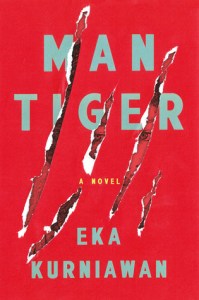
Eka Kurniawan (Indonesia) Labodalih Sembiring, Man Tiger – A slim, wry story set in an unnamed town near the Indian Ocean, Man Tiger tells the story of two interlinked and tormented families, and of Margio, an ordinary half-city, half-rural youngster who also happens to be half-man, half-supernatural female white tiger.

Yan Lianke (China) Carlos Rojas, The Four Books – In the ninety-ninth district of a sprawling labour camp, the Author, Musician, Scholar, Theologian and Technician are undergoing Re-education, to restore their revolutionary zeal and credentials. In charge of this process is the Child, who delights in draconian rules, monitoring behaviour and confiscating treasured books.

Divided into four narratives, echoing the four texts of Confucianism and the four Gospels of the New Testament, The Four Books tells the story of one of China’s most controversial periods, demonstrating the power of camaraderie, love and faith against oppression and the darkest possible odds.

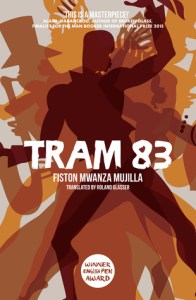
Fiston Mwanza Mujila (Democratic Republic of Congo/Austria) Roland Glasser, Tram 83 – In a war-torn African city-state tourists converge with students, ex-pats and locals. Their one desire: to make a fortune by exploiting the wealth of the country, both mineral and human. As night falls, they go out to drink, dance, eat and abandon themselves in Tram 83, the only night-club of the city, a den of all iniquities. An African-rhapsody novel infused with the rhythms of jazz.

Raduan Nassar (Brazil) Stefan Tobler, A Cup of Rage – A pair of lovers – a young female journalist and an older man who owns an isolated farm in the Brazilian outback – spend the night together. The next day they proceed to destroy each other. Erotic cult novel by one of Brazil’s most infamous modernist writers explores alienation, the desire to dominate and the wish to be dominated.

Marie NDiaye (France) Jordan Stump, Ladivine – a psychological tale of a trauma that ensnares three generations of women, via a woman captive to a secret shame. Once a month, Clarisse Rivière leaves her family and secretly takes the train to visit her mother, Ladivine. Just as Clarisse’s husband and daughter know nothing of Ladivine, Clarisse has hidden nearly every aspect of her adult life from this woman, whom she dreads, despises but also pities.

Kenzaburō Ōe (Japan) Deborah Boliner Boem, Death by Water – his recurring protagonist and literary alter-ego returns to his hometown village in search of a red suitcase fabled to hold documents revealing the details of his father’s death during WWII: details that will serve as the foundation for his new, and final, novel.

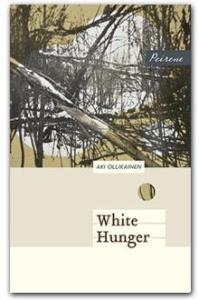
Aki Ollikainen (Finland) Emily Jeremiah & Fleur JeremiahWhite Hunger – 1867: a year of devastating famine in Finland. Marja, a farmer’s wife from the north, sets off on foot through the snow with her two young children. Their goal: St Petersburg, where people say there is bread. Others are also heading south, just as desperate to survive.

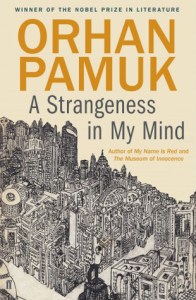
Orhan Pamuk (Turkey) Ekin Oklap, A Strangeness in My Mind – the story of Mevlut, the woman to whom he wrote three years’ worth of love letters, and their life in Istanbul. Mevlut Karataş sells boza (a traditional mildly alcoholic Turkish drink) in Istanbul and wishes for love and riches. He doesn’t have the best of luck (falling in love with a woman and accidentally eloping with the sister) as he ages, attempts to discover what is missing from his life.

Robert Seethaler (Austria) Charlotte Collins, A Whole Life – Andreas lives his whole life in the Austrian Alps, arriving as a boy taken in by a farming family. A man of few words, when he falls in love with Marie, he has friends light her name at dusk across the mountain. When she dies in an avalanche, pregnant with their first child, Andreas’ heart is broken. He leaves the valley just once more, in WWII – and is taken prisoner in the Caucasus – returning to find modernity has reached his remote haven.

*****

A fabulous lineup of books and authors across countries and languages. I have read two of the books, Elena Ferrante’s The Story of the Lost Child and Aki Ollikainen’s White Hunger, both of which are excellent, and although I haven’t read The Vegetarian, I have read Han Kang’s more recent novel Human Acts which was brilliant!

I’d love to read Marie NDiaye, Orhan Pamuk, Kenzaburō Ōe, Robert Seethaler, Yan Lianke, they all sound fantastic. And Man Tiger sounds interesting, and I definitely want to read more of Han Kang!

A shortlist of six books will be announced on 14 April.

So many great reads, which of these sounds the most appealing to you? Have you read any already?

Further Reading

The Guardian ArticleMan Booker International 2016 longlist includes banned and pseudonymous authors

Purchase A Book:

If you wish to buy one of the above books, you can do so via the Book Depository link below, with whom I have an affiliation.

Buy One of These Books at Book Depository


Baileys Women’s Prize for Fiction 2015 Winner

British author Ali Smith has won the 2015 Baileys Women’s Prize for Fiction with her sixth novel How to Be Both.

“Ancient and modern meet and speak to each other in this tender, brilliant and witty novel of grief, love, sexuality and shape-shifting identity.”

Shami Chakrabarti, Chair of Judges

Ali Smith


How to Be Both is a novel all about art’s versatility. Borrowing from painting’s fresco technique to make an original literary double-take, it’s a fast-moving genre-bending conversation between forms, times, truths and fictions. There’s a renaissance artist of the 1460s. There’s the child of a child of the 1960s. Two tales of love and injustice twist into a singular yarn where time gets timeless, structural gets playful, knowing gets mysterious, fictional gets real – and all life’s givens get given a second chance.

The winning title was also chosen by the Shadow Jury, who made their announcement yesterday, see some of their reviews here:

How To Be Both

– reviewed by Eric at The Lonesome Reader

– reviewed by Naomi at The Writes of Women

lbaileyslogo

Very Inspiring Book Blogs

The Very Inspiring Blogger Award is flying like an angel around the blogosphere, touching down on many of the dedicated and inspiring people out there dedicated to books and writing and sharing the word on literature.

very-inspiring-blog-award-logo

So congratulations to the following for being nominated, you are all an inspiration to me and I thank you most kindly for nominating Word by Word.

Thank you:

  1. Lizzi at These Little Words – Thoughtful considered reviews,she reads a mix of contemporary recent publications and favourites from the shelf waiting to be read.
  2. Sandra Danby Author of Ignoring Gravity – a new blog for me, but I am soon to read her book, so watch this space.
  3. Jacqui at Jacqui Wine’s Journal – Long-time reader and tweeter, new recruit to blogging, excellent shelf of reads with a penchant for translated fiction and a connoisseur of wine! Also part of the Shadow Jury for IFFP – see Stu below.
  4. Nancy at Ipsofactodotme – Out of The Comfort Zone Reading more like it, Nancy is Inspiration extraordinaire, taught herself to read in French through reading classic French literature, with a cat and a Heineken for company, while living in the Netherlands, I love the eccentricity and achievements of inspirational bloggers!

The award has the following rules:

  • Thank and link to the person who nominated you.
  • List the rules and display the award.
  • Share seven facts about yourself.
  • Nominate 15 other amazing blogs and comment on their posts to let them know they have been nominated.
  • Optional: display the award logo on your blog and follow the blogger who nominated you.

Seven Things About Me You May Not Know:

  1. Golden Plover - the other life...

    Golden Plover – the other life…

    The first time I went on a date I had to ride 6 kilometres across farmland on my horse to get there.

  2. I learnt to drive on a Massey Ferguson tractor with no second gear.
  3. I was once an extra in a film called ‘Bedlam Britannica’ a documentary about how the British treated their mentally ill. My role was a lunatic, part of a patient’s hallucination.
  4. When I was travelling in India, someone asked me if I was Japanese.
  5. Now people ask me “Vous êtes Anglais?”
  6. I once attended two weddings in subsequent weekends; the first was in Beirut, the second in Lagos.
  7. I love the sea and sometimes wonder how life might have unfolded had I said yes to that job on a tall ship sailing around the world.

So Fifteen Book Bloggers That Inspire Me Today:

  • The Lonesome Reader – I will read anything and everything he reviews, whether I like the book or not, Eric is an inspirational and aspirational reviewer, one of the best. His reviews read like compelling essays and I know Col (see below) is a big fan of his too.
  • Vishy The Knight – Diligent reader, lover of books across genre, the most comprehensive reviews ever & the kindest, most attentive blog commenter in history.
  • The Only Way Is Reading – When Col gives a 10 (check out his awesome rating system) I absolutely have to read the book, introduced me to Primo Levi.
  • The Writes of Women – Reviews of Books By Female Writers, Influential Opinion Maker on Books @Frizbot
  • Winstons Dad – Stu is the Super Champion of Translated Fiction and Chair Person of the Shadow Jury for IFFP (International Foreign Fiction Prize), a Translation Activist who reads around the world!
  • HeavenAli – Unearths and Rediscovers Forgotten Books, has read more Persephone Books than Anyone I know!
  • My Writing Life – Julia Hones, a creative spirit writing, reading and sharing insightful and compassionate pearls of wisdom, a place to rest a while.
  • A Life In Books – Susan is an ex bookseller and knows what’s coming out, writes informed reviews and contributes to the conversation.
  • Book to the Future – SteJ reads books with the weirdest covers ever, he thrives on finding the literary bizarre and his reviews and blogs are compelling and original. Blogging shines a bright light out from under the bushel for this one.
  • KimberlySullivan – Kimberly is based in Rome but travels a lot and writes amazing short stories and she goes to the Matera Women’s Fiction Festival every year!! One day I’m going to meet her there! She is total inspiration and gets out there and achieves her dreams and reads and blogs and juggles kid stuff.
  • Thinking in Fragments – Alex is a thinker, a reader and comes to blogging having left the academic world which we are all the richer for having her valued presence and contribution to our virtual world.
  • Books and Reviews – Elena, Spanish Feminist, I came across her wonderful blog when we both read Carmen LeForet’s Nada at the same time, inspirational indeed!
  • ReadEng. Didi’s Press – Well Deidre is up there in the North of France and I’m down here in the South and one day we’ll meet in the middle, I love her, love her blog and A D O R E her Youtube channel! She’s evolved into a SuperStar BookTuber, Go Girl! Love all her recommendations, and she’s great to listen to. More on Youtube than the blog these days. I’m sure we knew each other in a previous life. J
  • Mes étagères en franglais – What dedication, reading in French and English, she puts up her reviews in both languages, dedication to books and reviewing and the French/English languages. Bravo I say!
  • Biblioglobal – Another champion of reading around the world, across cultures, translated fiction and fiction written by those who live or come from other cultures, always love visiting here.

Wow, that was hard work! And sorry for those I missed, there are too many to choose from, so many great blogs by writers as well as readers, I hope you enjoy the selection and find someone new to visit and follow. Just click on the title to go there. And of course, no obligation to those nominated to participate.

After all that, I need a little inspiration from Matera!

Literary Blog Hop Winners!


I am delighted that two readers will soon be turning the pages of these wonderful books:

Carrots and Jaffas, an insightful imagining of a period in the life of identical twin boys when they become separated and;

The Blue Room a stunning translation of Norwegian Literature, a book that spans a day in the life of a young woman locked in her bedroom by her mother.

Thank you to everyone who participated in the Literary Blog Hop and thanks again to Judith at Leeswammes for organising it. I’ve had lots of visitors here and a few new followers.

The Winner of  Carrots and Jaffas is….

AMB wins

A.M.B!

who writes about books, writing, and the law at The Misfortune of Knowing

The Winner of The Blue Room is…..

Madness

 Elizabeth who writes about love, self acceptance and confidence at ChubbyMadness

I hope you enjoy the books,  I would love to hear your thoughts on them and thank you to everyone else for participating, you are all winners really!

Happy Reading!

Baileys Women’s Prize for Fiction Longlist 2014

Baileys logoOverjoyed to see the Baileys (nee Orange) Women’s Prize for Fiction come out early this morning and to recognise a few books that I have actually read and really enjoyed. And even more pleasure in the fact that there is now a list from which I am sure to find more that I might not have been aware of, to add to the ever-growing list.

It may be a women’s prize, but it celebrates diversity across generations, genres, countries and cultures, something that blogging has certainly encouraged as the recommendations and access to what is available out there is no longer limited by geographic borders and what’s on display in bookshops.

BaileysThe 20 titles are selected for excellence, originality and accessibility in writing by women (in English) from throughout the world.

The judges had this to say:

“The judges feel that this is a fantastic selection of books of the highest quality – intensely readable, gripping, intelligent and surprising – that you would want to press on your friends, and the judges have been doing just that,” commented Helen Fraser, Chair of Judges. “There was a great deal of talent and exciting writing in the books that were submitted this year and we hope that between now and the announcement of the shortlist on 7th April many readers will want to share the enjoyment we have had with these 20 terrific novels.”

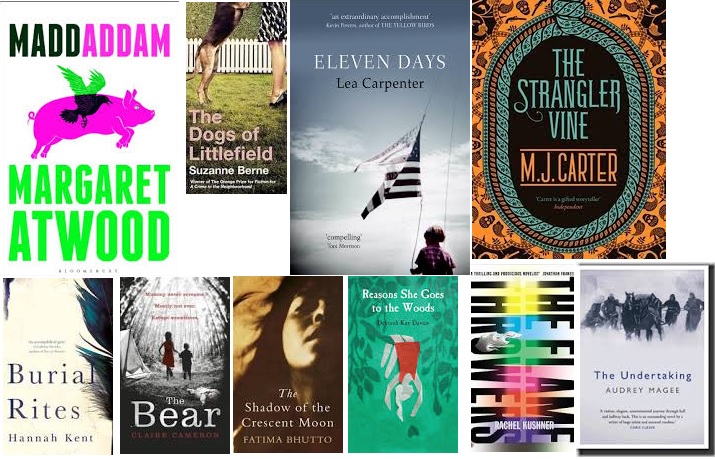
And the longlisted titles are:

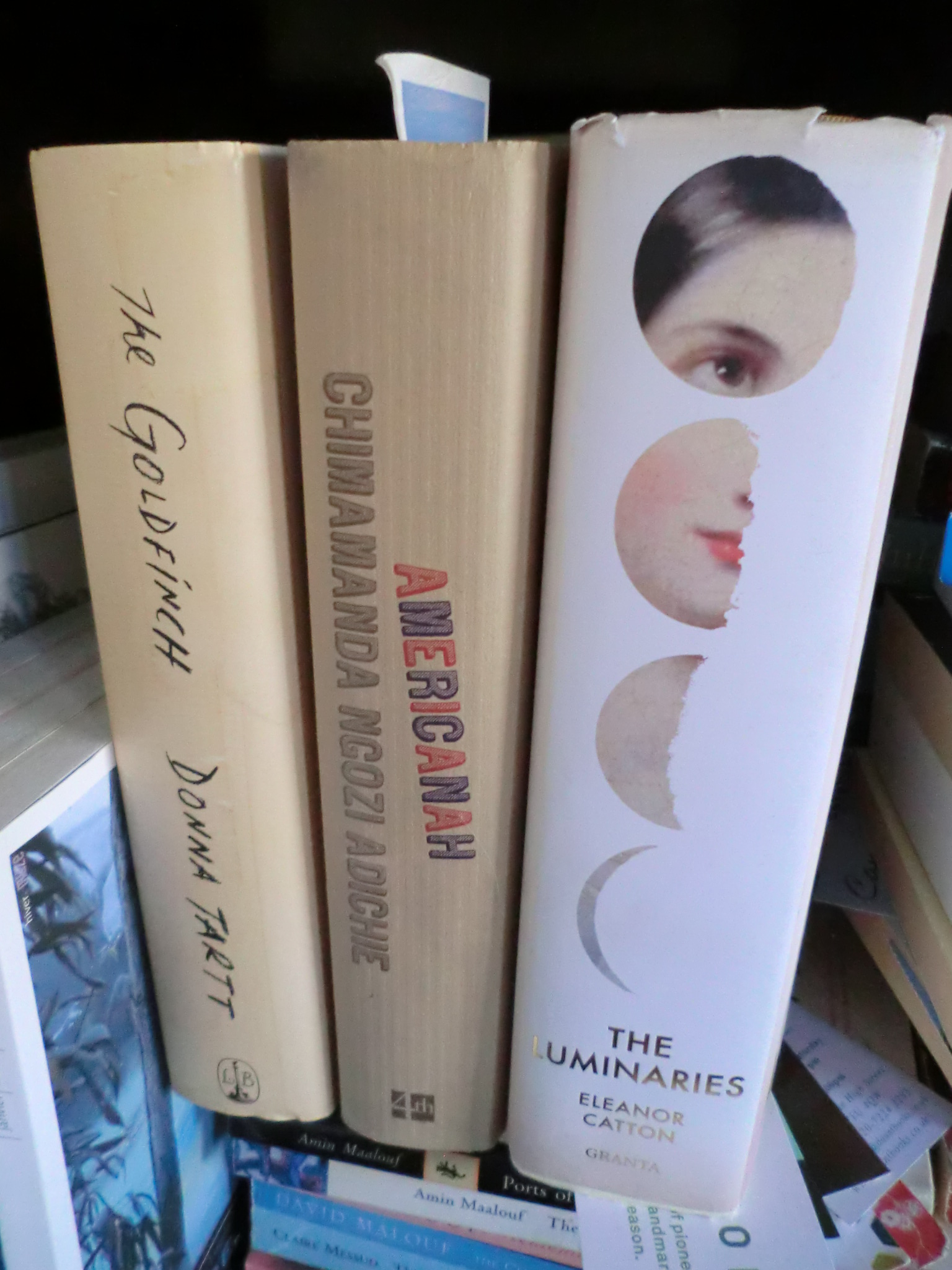
Baileys1Chimamanda Ngozi AdichieAmericanah –  Nigerian – My review here 

Margaret AtwoodMaddaddam – Canadian

Suzanne BerneThe Dogs of Littlefield – American

Fatima BhuttoThe Shadow of the Crescent Moon – Pakistani – My review here

Claire CameronThe Bear – Canadian

Lea CarpenterEleven Days – American

M.J. CarterThe Strangler Vine – British – 1st Novel

Baileys2Eleanor CattonThe Luminaries  – New Zealand/Canadian – my review here

Deborah Kay DaviesReasons She Goes to the Woods – British

Elizabeth GilbertThe Signature of All Things – American – my review here 

Hannah KentBurial Rites – Australian

Rachel KushnerThe Flamethrowers  – American

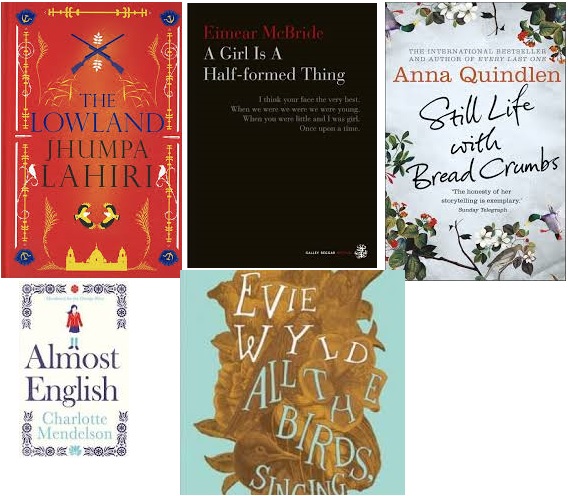
Jhumpa LahiriThe Lowland – Indian/American

Baileys3

Audrey MageeThe Undertaking  – Irish

Eimear McBrideA Girl is a Half-Formed Thing – Irish

Charlotte MendelsonAlmost English – British

Anna QuindlenStill Life With Bread Crumbs – American

Elizabeth StroutThe Burgess Boys – American – my review here

Donna TarttThe Goldfinch  – American

Evie WyldAll the Birds, Singing  – British – my review here

So, one month to read a few more from the list – I will definitely be reading Evie Wyld, I have The Goldfinch, but that’s my summer chunkster, so I’m saving that for August, I’d like to read Hannah Kent’s novel Burial Rites set in Iceland and based on a true story, I have mentioned that numerous times to people and not got around to reading it myself yet. I am curious about The Flamethrowers and Fatima Bhutto’s book sounds interesting.

So what titles are you considering?

Write A Book Review, Anyone Can Do It

GyannA little while ago I received a request from Corinne, an inspirational blogger from Mumbai in India, who shares her thoughts on keeping life simple, authentic and holistic at Everyday Gyann.

She recently started another blog called Write Tribe – Motivation and Support for Writers and Bloggers.  Write Tribe sometimes offers books for review to its followers and as Corinne is a loyal follower of Word by Word, she asked if I could write a post on How to Write a Book Review.

Write Tribe

I’m not a rule follower myself, but I decided to share my thoughts on this habit I have been practising for the last two years, as when something becomes a regular habit, there develop patterns. So I wrote 10 tips on writing a book review and then added number 11 which is to ignore the rules!

The Review Notebooks!

The Review Notebooks!

If you would like to read my thoughts on writing a book review, you can read them in Corinne’s three-part series over at Write Tribe, just follow the links below.

How To Write A Book Review – Part 1

How To Write A Book Review – Part 2

How To Write A Book Review – Part 3

Thanks again Corinne for the invitation and I hope this might encourage readers of this blog who might have been considering it, to go ahead and write a review too.

Claire

What Do We Read?

Photo0652

Recently there has been discussion in the media, on twitter and on various blogs about how books written by women are represented with respect to published reviews and the #readwomen2014 campaign launched as a result.

The annual survey carried out by VIDA – The Count continues to show them as  being under represented in most of the major publications that provide reviews and in translated fiction.

It made me wonder what I do read. I don’t think I have a bias towards male or female authors, but I do have a preference for cross-cultural fiction and I like to read translations, so I decided to look back over the last year and see how I fared.  As you can see below, I definitely read more female than male authors and slightly more than 2012 when 62% of the books I read were by women.

Gender 2013

In total, during 2013 I read 70 books, slightly more than the one book a week I have as an intention and 10 books more than I read in 2012.

As those who read this blog may know, I like to read cross-cultural, contemporary literature, so I read more modern than classics and I like to read around the world. What I hadn’t realised was that last year I read books by authors from 22 countries! Check out this fabulous pie chart.

Country 2013

Compared to 2012 when I only read books from 17 countries! From the US and the UK, I read exactly the same number of books (19) and a visit to Istanbul in May prompted an increase in Turkish literature (5) and three books in December helped my French literature (4) to increase, but I hope that will improve in 2014.

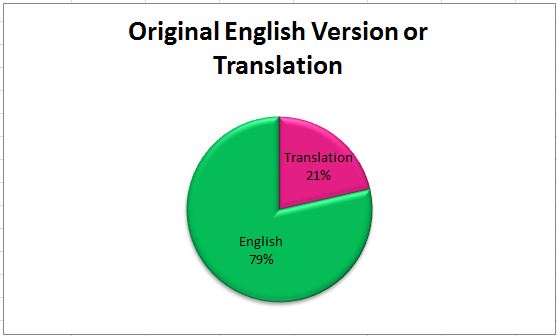
To read that widely, it is necessary to read translated work and 15 of the books I read or 21% were translated compared to only 10% in 2012. I’ve certainly travelled the world through books, I may have to start checking the globe to see which continents are missing.

Translation 2013

And what kind of books do I read? Well mostly fiction, a hefty 76% compared to 23% non-fiction and only 1% poetry, but less than 2012 when 82% of my reading was fiction and 16% non-fiction. I did read some excellent non-fiction in 2013 and hope to do the same this year.

Genre 2013

And lastly, how do I read? Yes, I have a kindle and in 2012 I read 25 books or 41% of them electronically. In 2013 that has increased to 46%, that’s 32 books on the kindle, almost half my reading! That’s thanks mostly to NetGalley who send me ARC’s (Advance Reader Copies) from the publishers that I request, which I am immensely grateful for.

E Book 2013

So now I know what I read and I think I shall just keep on doing the same, which is to be as spontaneous as possible, to engage with others who read for recommendations and keep reading around the world!

Ex Libris: Confessions of a Bibliobibuli by Anne Fadiman

This is my kind of memoir. Or non-fiction. Or essays. Collection of whatever it is we wish to call it. Vignettes.

I have to thank one of my favourite bloggers for bringing this beautiful slim volume of vignettes to my attention, literally.  And if you haven’t already been there, you must visit: Vishy The Knight, an impassioned bibliophile and meticulous reviewer of a wide range of books.

Ex LibrisAnne Fadiman has compiled this collection of eighteen essays written over a period of four years. She calls them confessions, I say they are a tribute to reading and to books. The subtitle to the book actually reads Confessions  of a Common Reader, but I think she might also be a bibliobibuli (those who read too much). One of the most preferable over indulgences I can think of.

I love that her first line is a reference to the Irish novelist John McGahern.  She shares an anecdote from his reading life that she relates to and that many of you, if you have ever been carried away with the reading of a book to the exclusion of all else, will recognise. From that first sketch we read on  continuing to delight in her bookish obsessions and hilarious family, with whom she has long shared the joy of sesquipedalians (big words).

Merging book collections with her husband only takes six years after moving in together and the difficult decisions that are required to be made as a result of deciding not to keep multiple copies and other dilemmas are hilarious and almost comforting to read.

Her attitude on how to treat a book starts off with a hilarious encounter between her brother and a hotel chambermaid  in Copenhagen, a woman who shared their passion for books but clearly sat in the opposite camp with regard to their treatment.

“To us, a book’s words were holy, but the paper, cloth, cardboard, glue, thread, and ink that contained them were a mere vessel, and it was no sacrilege to treat them as wantonly as desire and pragmatism dictated. Hard use was a sign not of disrespect but of intimacy.”

It is the smallest book ever to teach a reader so many new words and the perfect beginning of year read. A collection of entertaining, head-nodding, essays by a bibliophile. A must read for all!

Ex Libris

Sensual Delight

How differently do mental pleasures

Lead us from book to book to roam

And ever, with these ancient treasures,

How cheerful winter nights become!

*

A happy life grows warm in every limb;

And if a precious parchment you unroll,

Your senses in delight appear to swim

And heaven itself descends upon your soul.

J.W.Goethe (1749-1832)