
 I began seeing reviews about When I Hit You, Or, A Portrait of the Writer as a Young Wife late in 2017, most were stunned by this novel, obviously by the subject, a woman writing about the experience of domestic violence and abuse, herself a victim of it within marriage; but also the analysis of her response to what was happening. This was a highly educated, intelligent and articulate young woman writing. It nudged preconceived ideas about victims of domestic abuse.
The reviews made me wish to read it, but the subject prevented me from picking it up sooner. And then it made the long list of the Women’s Prize for Fiction 2018. I relented.
While it genuinely deserves to be on the list for its literary uniqueness and merit, it’s also relevant given we are in an era where the silencing, harassment and abuse of women is reaching a tipping point, in the West at least. The author now lives in London, however this story takes place in contemporary India, where she grew up.
The statistics on domestic violence in India are appalling, violence by husbands against wives is widespread, nearly two in five* (37 %) married women have experienced some form of physical or sexual violence by their husband, and while the statistics vary according to the number of years of education men or women have acquired, 12% of married women with 12 or more years of education have experienced spousal violence, compared with 21 percent of married women whose husbands have 12 or more years of education.
This is one aspect that surprises some Western readers, that highly educated women, married to highly educated men (the husband in this book is a university professor) while less likely to suffer, are not immune. No one is.
The title is a reference to James Joyce’s Portrait of the Artist as a Young Man his debut novel about a young man growing up, (essentially, his alter-ego). In the same way we see the character of this novel traverse the early months of a new marriage, as a young wife.

Meena Kandasamy
Meena Kandasamy has created an artwork, carefully sculpted, observed and understood from different angles, a work that endures over four months, like acts in a play, before the master stroke, a line she drew, that when her husband crossed, would signal to her the moment to leave. It is written by an unnamed narrator in a first person voice that moves from reflective to urgent, from a place of detached distance to a disturbing sense of present danger.
The novel begins in the period after she has escaped her marriage, in recounting the things her mother says to people, it is five years since her daughter left the marriage and the story has mutated and transformed into something the mother can more easily digest as she narrates.
So, when she begins to talk about the time that I ran away from my marriage because I was being routinely beaten and it had become unbearable and untenable for me to keep playing the good Indian wife, she does not talk about the monster who was my husband, she does not talk about the violence, she does not even talk about the actual chain of events that led to my running away. That is not the kind of story you will be getting out of my mother, because my mother is a teacher, and a teacher knows that there is no reason to state the obvious. As a teacher, she also knows that to state the obvious is , in fact, a sure sign of stupidity.
When she tells the story of my escape, she talks of my feet.
The way the story begins, hearing her mother’s voice with hindsight, introduces the subject with a dose of irony. It is a lead up to the author introducing herself as the writer that she is, and sharing the lessons she has acquired through this writing project.
Much as I love my mother, authorship is a trait that I have come to take very seriously. It gets on my nerves when she steals the story of my life and builds her anecdotes around it. It’s plain plagiarism. It also takes a lot of balls to do something like that – she’s stealing from a writer’s life – how often is that sort of atrocity even allowed to happen? The number one lesson I have learnt as a writer: Don’t let people remove you from your own story. Be ruthless, even if it is your own mother.
She continues with narrating the story, and seeing it as if she is playing a role in a drama.
And in some ways, that is how I think of it: it is easier to imagine this life in which I’m trapped as a film; it is easier when I imagine myself as a character. It makes everything around me seem less frightening; my experiences at a remove. Less painful, less permanent. Here, long before I ever faced a camera, I became an actress.
The husband, a Marxist who considered himself a revolutionary, a comrade, using communist intellectual ideas and his activities to elevate his self aggrandisement, detests the idea of his wife’s being a writer, an attitude that pushes her to want to antagonise him. The more he wishes to silence her, the stronger is her will to write, to imagine, to create, to express herself.
Being a writer is now a matter of self-respect. It is the job title that I give myself…
But it’s not just about antagonizing him. There is a distasteful air of the outlaw that accompanies the idea of a writer in my husband’s mind. A self-centredness about writing that doesn’t fit with his image of a revolutionary. It has the one-word job description: defiance. I’ve never felt such a dangerous attraction towards anything else in my life.
Given how prevalent it is, it is a brave and courageous feat for the author to have penned this work and for it to be recognised and appreciated in this way, deservedly so. In an interview with The Wire, (linked below) Meena Kandasamy said:
“I will write in the same way in which I lived through all of this: carrying myself with enormous, infinite grace.”
It is an incredible work of creativity, working through the post-trauma of domestic violence.
 Meena Kandasamy has taken charge of her story, she retells it in exactly the form(s) that she desires, and I am sure she will move on and create more great works of art, in literary form.
This is not a work to shy away from, especially not now, in these times where women are being supported when they choose to express these narratives, in order to move on from the trauma, because no one wants these stories to define their lives or to be who they are. Healing might come slowly, but I hope it does indeed come, that people like Meena Kandasamy can share their version of resilience and acts of moving forward and on, for the sake of themselves and others like them, albeit never forgetting.
I finish with one more of the many quotes I highlighted from reading:
I remind myself of the fundamental notion of what it means to be a writer. A writer is the one who controls the narrative.
I have put myself in a dangerous situation with this marriage, but even in this complicated position, I’m finding plot points. This is the occupational hazard of being a writer-wife.
Further Reading:
Interview: Meena Kandasamy on Writing About Marital Violence
* Statistics on Domestic Violence in India
 Happiness opens with the tale of a wolf hunter in the US called in to track a wolf that is believed to have been killing sheep. He observes the surroundings, lies in wait, makes the kill, collects his bounty and then returns to lie in wait for the she-wolf he knows will come out after three days. Two species. Surviving.
 The fox lives beside the human but inhabits a different time zone, most humans are little aware of their presence as their nocturnal meanderings cease the minute humanity awakens and begins to disturb a territory that belongs more to them in the small hours of the night.

 The first woman who came to mind and whose book I want to recommend is Wangari Maathai’s Unbowed, One Woman’s Story. Kenyan and one of a group of young African’s selected to be part of the ‘Kennedy Airlift’ , she and others were given the opportunity to gain higher education in the US and to use their education to contribute to progress in their home countries. Maathai was a scientist, an academic and an activist, passionate about sustainable development; she started the The Greenbelt Movement, a tree planting initiative, which not only helped save the land, but empowered local women to take charge of creating nurseries in their villages, thereby taking care of their own and their family’s well-being.
 Henrietta Lacks is perhaps one of the most famous women we’d never heard of, a woman who never knew or benefited from her incredible contribution to science and humanity. A young mother in her 30’s, she was diagnosed with an aggressive form of cancer and despite being eligible for and receiving medical care at the John Hopkins hospital in Baltimore, a medical facility funded and founded to ensure equal access no matter their race, status, income or other discriminatory reason, she died soon after.
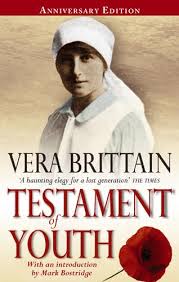 Vera Brittain was a university student at Oxford when World War 1 began to decimate the lives of youth, family and friends around her. It suspended her education and resulted in her volunteering as a VAD (Voluntary Aid Detachment) nurse. Initially based in a military hospital in London, events would propel her to volunteer for a foreign assignment, taking her to Malta and then close to the front line in France for the remaining years of the war.
 Maya Angelou is best known for her incredible series of seven autobiographies, beginning with I Know Why the Caged Bird Sings (1969), narrating her life up to the age of 17. She became a writer after a number of varied occupations in her youth.
 Diana Athill OBE (born 21 Dec 1917) is someone I think of as the ordinary made extraordinary. She was a fiction editor for most of her working life, forced into earning a living due to circumstance, for while her great-grandparents generation had made or married into money, her father’s generation lost it. She clearly remembers her father telling her ‘You will have to earn your living’ and that it was something almost unnatural at the time.
 In The Heart’s Invisible Furies, a title taken from a quote by Hannah Arendt, the German-born American political theorist:

 Sing, Unburied, Sing is set in the same Southern US community, putting us amidst a struggling mixed race family, a young black woman Leonie, who fell in love with Michael from a racist white family implicated in a tragedy that affected her family. In its telling, it traverses love, grief, terminal illness, addiction, prejudice, dysfunctional parenting, hope and survival, the effect this mix has on everyone touched by it, the painful and the poignant.
 There is a reference to her novel Salvage The Bones, as the family return from their road trip, they pass a young couple walking a dog, it is the brother and sister, Skeetah and Eschelle, from the neighbourhood, protagonists of that earlier novel. I was curious to know if the dog was related to China, an unresolved thread left hanging from her earlier novel. I was delighted to encounter them.
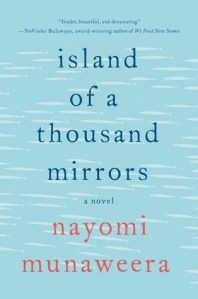 Island of a Thousand Mirrors similarly evokes the childhoods and family life of two families living in the same house. The house is owned by the matriarch Sylvia Sumethra and her husband The Judge, who are Sinhala people (an Indo-Aryan ethnic group originally from northern India, now native to and forming the majority (75%) of the population of Sri Lanka, mostly Buddhist) and upstairs they rent to an extended Tamil family (a culturally and linguistically distinct ethnic group native to Sri Lanka, mostly Hindu).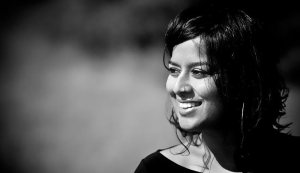


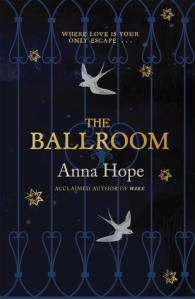
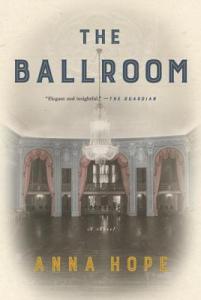 The Ballroom is Anna Hope’s second novel and one inspired in part by a family connection. I review it in full at
 It is 1947, in the province of Punjab, which sits between India and Pakistan, an area where Hindu, Sikh, Muslim and others live side by side. Tension is mounting as political events cause rifts between friends and neighbours as many of the Muslim population support the area becoming part of Pakistan and many Hindu fear for their lives, while the same tensions exist among Muslims living in the predominantly Hindu parts of India.
 The thing they all fear most, that some desire most happens and Asha’s family leave their past behind and head for Delhi. Firoze helps them to escape and Asha leaves with a secret she has kept from everyone, the future unknown.



 Proulx hasn’t published a novel since 2002 and has spent the last ten years researching, studying, writing about and travelling to visit trees and forests of the world. Her novel has at its heart, the theme of deforestation and uses the two families to illustrate her thinking, that there is no greater protector or more harmonious dweller of a lands natural resources than those who are native to the area.

 Word by Word