The Stolen Village by Des Ekin (2006)

Baltimore and the Barbary Pirates

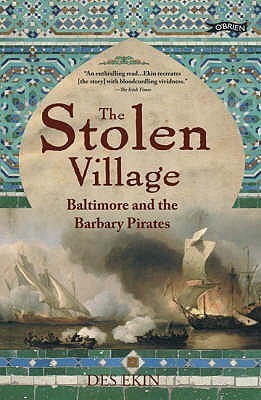
After Mary Read’s pirate adventures in Saltblood by Francesca de Tores, I turned to a book of history, The Stolen Village that tells of a pirate raid on the West Irish village of Baltimore. I must have picked this up at a sale, because it’s not a book that I recall looking for, but it fits perfectly with the pirate theme, and I was curious to know more since like many readers, I had never heard of an Irish village being pillaged to traffic humans.

Conspiracy, Corruption and Ethnic Cleansing

The story of the raid on Baltimore is a tale of plotting and intrigue, of conspiracy and betrayal, and it involves corruption in the highest ranks of of the King’s Navy.

And perhaps most fascinating of all is the theory that the raid may have not been a chance event, but a mission of revenge: a pre-planned act of ethnic cleansing aimed at removing the English newcomers and restoring the village to its original Irish owners.

From Dutch Privateer to Barbary Pirate, A Name Change

The Stolen Village by Des Akin The Irish village of Baltimore raided by Barbary Pirates and taken to Algiers sold into slavery

Captain Morat Rais and his crew of Barbary Pirates aided by 200 troops of the Ottoman Empire enter Baltimore in June 1631, where they succeed in capturing 109 villagers, abandoning 2 elders, taking the rest to Algiers to be traded as slaves, once the Pacha had taken his pick.

We learn this captain was born in Dutch Haarlem around 1570, his real name Jan Jansen. A man who began his career as a privateer in the Dutch War of Liberation. He sought opportunities on the Barbary coast, in the 3 states of Tunis, Tripoli & Algiers, after being captured himself, choosing to reinvent himself and swap allegiances.

In an era when it was commonplace for white traders from England to land on the African coast and to seize black people as slaves, this was one of the comparatively rare occasions when the boot was on the other foot: a slaving mission from Africa landing on English-held territory and seizing white slaves.

More Villagers Taken From Iceland

Four years before the Irish raid, the same captain, in 1627 led 5 ships to Iceland, showing no mercy, assaulting multiple villages and returning to Algiers with over 400 captives, including 240 from the volcanic island Heimaey.

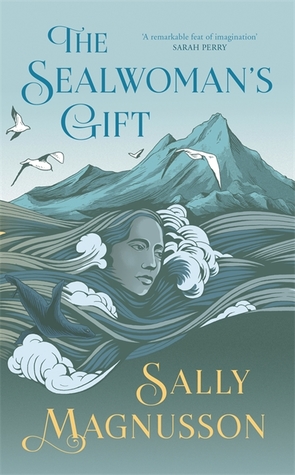
The Sealwoman's Gift by Sally Magnusson The capture of 400 villagers from Iceland sold into slavery in Algiers Morat Rias

When I encountered his name, I knew I’d come across Morat Rais before. In Sally Magnusson’s excellent work of historical fiction, The Sealwoman’s Gift. Much of that story is known from the journals Reverend Ólafur Egillson kept, depicting the terror of the invasion, the sea journey, slave markets and the fates of the survivors.

Of the Irish villagers no written account by a person survived so Ekin uses other sources that inform us what their likely fate would have been, which can make the text feel a little disjointed, without the fluidity of a fictional story, sticking to facts and documented accounts requires the reader to imagine.

Some readers have criticised the book for this, but I read it already knowing this and didn’t mind that it sticks to the facts and therefore lets you know when he is sourcing known information from another event that might gives clues about this one.

Who Were These People in Baltimore?

There is a layer of conspiracy to the Irish raid, a rumour regarding feudal clans and unwanted English settlers that Ekin explores, adding more intrigue to the tale.

There are plenty of myths about that and Ekin dispells three of them, one that they were aggressive colonists, usurpers who had stolen the village from local Irish by force, two, that they were ‘blow ins’, and as such had no permanent ties there; and the third myth that they’d been sent to impose the State religion upon the area.

Ekin tells us they were themselves viewed as rebels and dissenters, refugees who went there to escape all that.

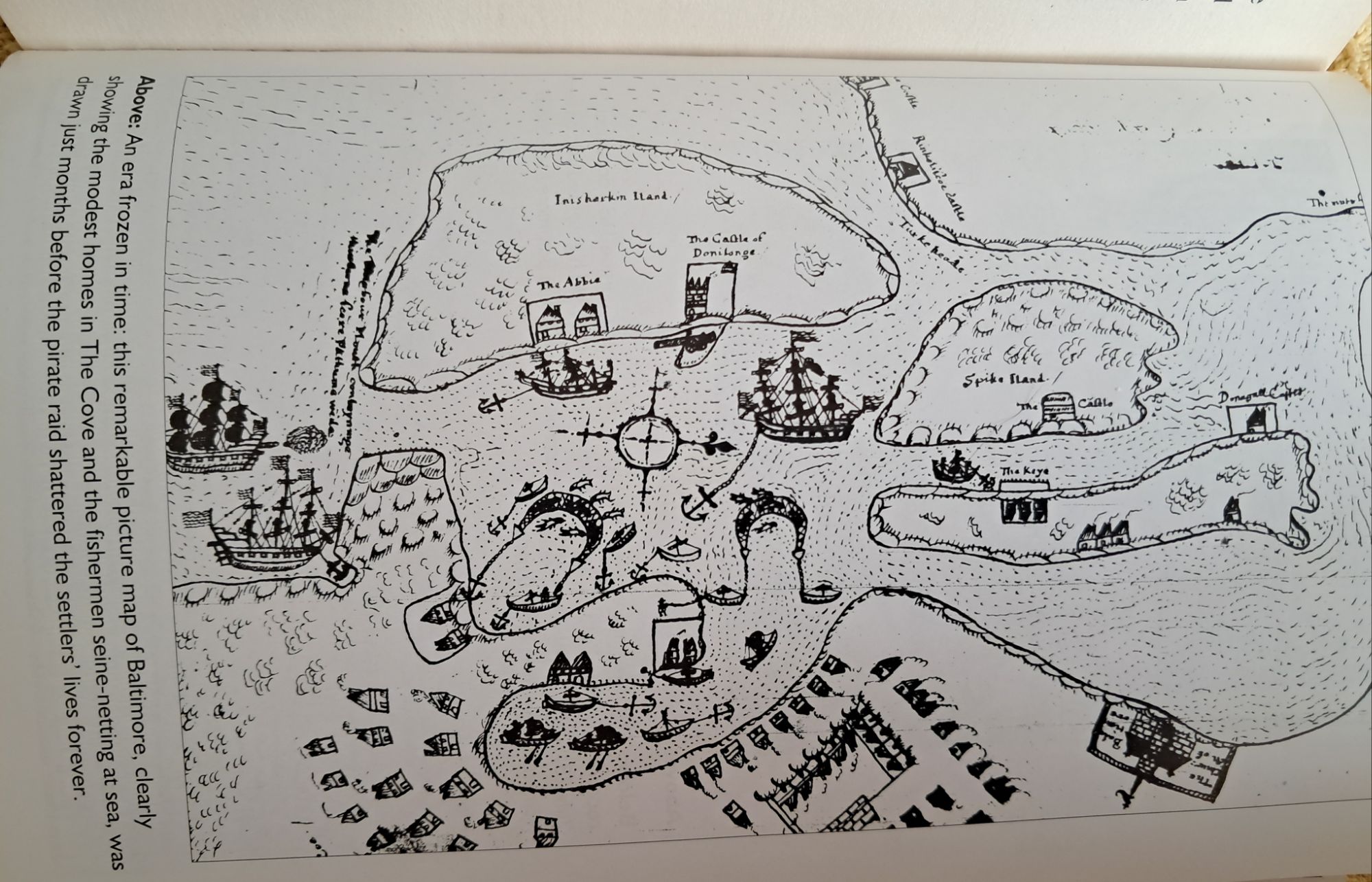
The village of Baltimore, drawn months before the pirate raid shattered the settlers' lives
Baltimore village just months before the pirate raid shattered the settlers’ lives

The new Baltimore settlement had been created by a family of intellectual freethinkers whose fierce refusal to conform had made them a thorn in the side of the religious and political establishment in England for generations.

It is a fascinating story, as is the history of the movement of people and the way in which privateers or corsairs move from legitimate to illegitimate activities, the bases the pirates used that others wanted rid of and all the machinations of the establishment and the clans behind it all that fueled so many conspiracy theories.

With eight pages of glossy black & white photos, a list of The Taken and a comprehensive bibliography, it was a most enjoyable read.

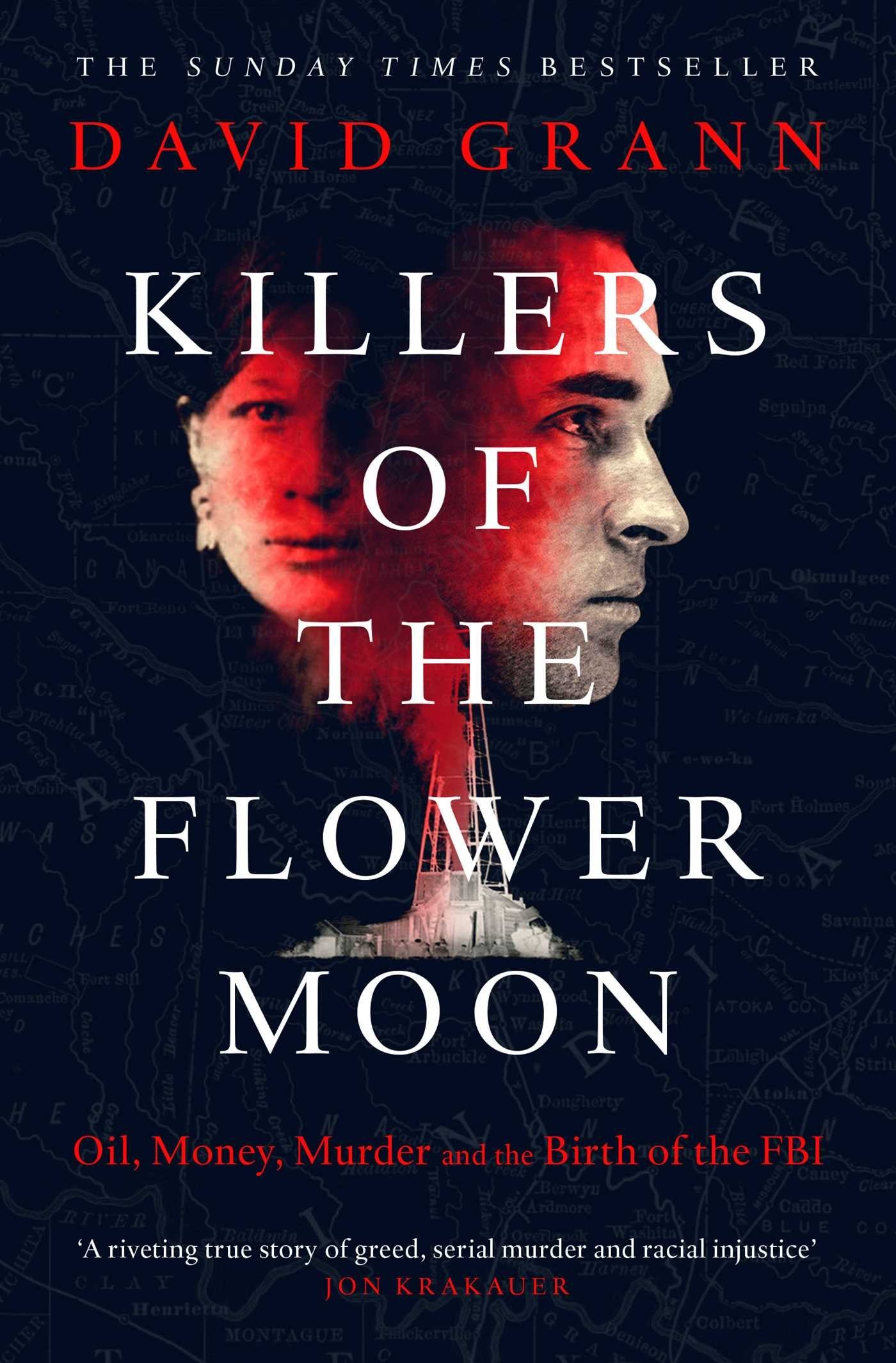
Killers of the Flower Moon by David Grann (2017)

Around the time the Martin Scorsese film of this book came out, the author David Grann had a new nonfiction book coming out The Wager, A Tale of Shipwreck, Mutiny and Murder.

The film about the Native American Osage murders was three and a half hours long and I knew that was not for me, not because the story isn’t important, but the way stories like this are portrayed cinematically in the 21st century is not for me.

I did read The Wager and thought it was excellent, and I knew if I ever came across Killers of the The Flower Moon, I would read that too.

Last week I visited our local English bookstore and there was a second hand copy sitting on the shelf, so I snapped it up and read it in a day.

Killers of the Flower Moon

So what is that title all about?

“In April, millions of tiny flowers spread over the blackjack hills and vast prairies in the Osage Territory of Oklahoma. There are Johnny-jump-ups and spring beauties and little bluets… In May, when coyotes howl beneath an unnervingly large moon, taller plants such as spiderworts and black-eyed Susans, begin to creep over the tinier blooms, stealing their light and water. The necks of the smaller flowers break and their petals flutter away, and before long they are buried underground. This is why the Osage Indians refer to May as the time of the flower-killing moon.”

Land and Oil – From Greed to Domination to Dehumanisation

Grann twists the metaphor to describe what happened to the Osage people when white settler individuals, driven by greed, racism and a total lack of empathy conspired to kill multiple members of families for their wealth and rights to oil profits.

In nature, one species nourishes the next, governed by the cycles of the Moon whereas the story he presents here, uses that phrase to describe a murderous cycle of greed and violence to annihilate and supplant the native Osage.

An Obsession with Wealth and Control

In the early 1870’s , the Osage had been driven from their lands in Kansas onto a rocky, presumably worthless reservation in northeastern Oklahoma, only to discover, decades later, that this land was sitting above some of the largest oil deposits in the United States. To obtain that oil, prospectors had to pay the Osage for leases and royalties.

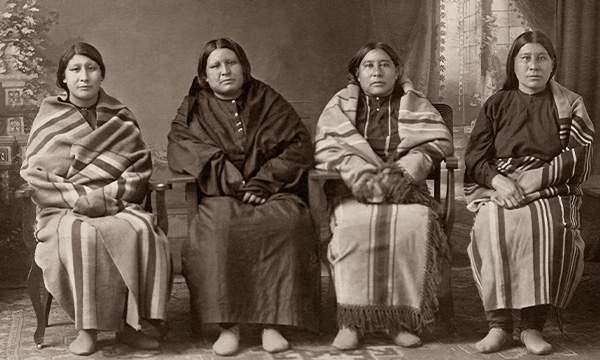
I raced through this book, enjoying how thorough it had been researched. It is divided into three parts, Chronicle One: The Marked Woman (or The Marked Family or The Marked Tribe) focuses on four sisters Mollie, Anna , Minnie and Rita (pictured below) and their mother Lizzie, all of whom find themselves in danger of being killed in an elaborate conspiracy, without knowing who or why.

Four Sisters Targeted

The story opens with the gruesome murder of Anna and then goes back to describe the events that lead the Osage people to be where they were living, how their lives were changed, the treaty that forced them to give up their lands or be declared enemies of the United States, the banned aspects of their languages and lifestyles, the imposed education and names.

In the early 1870’s the Osage were forced to cede nearly a hundred million acres of their ancestral land (between the Arkansas River and the Missouri River), ultimately finding refuge in a 50 – by – 125 mile area in southeastern Kansas. And it was in this place that Mollie’s mother and father had come of age.

One native Osage family of four sisters targeted in the Reign of Terror in the US from 1913 - 1931 by whites seeking to obtain headrights
Osage sisters Me-se-moie (Rita), Wah-hrah-lum-pah (Anna), Wah-kon-tah–he-um-pah (Mollie) and Wa-sha-she (Minnie)

Decades later it was discovered that this infertile land sat above some of the largest oil deposits in the country. To obtain that oil, prospectors had to pay the Osage for leases and loyalties. As a result, as oil revenues grew and their wealth accumulated, the Osage became the wealthiest people per capita in the world. However, severe controls were placed on their ability to access their own money.

Who Was Behind the Murders? A Texas Lawman Investigates

While the family got no help from the local sheriff they paid various private investigators to look into the murder of Anna, when Rita and her husband were killed. The community lived in fear and needed answers.

Chronicle Two: The Evidence Man turns the focus to Texas Ranger, Tom White, who becomes the government appointed (by Edgar Hoover) lead in an investigation, when a number of others who attempt to report back to authorities are mysteriously killed, hinting at a wider conspiracy. Tom White focuses on Mollie’s family when her mother mysteriously dies and Mollie becomes the sole survivor of her family.

Under Hoover, agents were now seen as interchangeable cogs, like employees in a large corporation. This was a major departure from traditional policing, where lawmen were typically products of their own communities. The change helped insulate agents from local corruption and created a truly national force, yet it also ignored regional difference and had the dehumanising effect of constantly uprooting employees.

A Wider Conspiracy Revealed

Chronicle Three: The Reporter circles back and relooks at these events and sees that they were part of a wider pattern of targeted murders, but this is in the 21st century, where there are few people left who can recall events. However, the archives and family testimony reveal the depth of this terrible vengeance against a marginalised population, just because in the process of being banished from their original lands to other infertile lands, they happened to land on undiscovered deposits of oil and became wealthy.

Brilliantly pieced together and a horror to read, how this family of women were targeted and those around them easily influenced to participate in it and the wounding legacy of future generations who lost so much of their family over the greed and jealously of remorseless white men.

Further Reading

Guardian: Killers of the Flower Moon by David Grann review – family murder, oil & the FBI by RO Kwon

NYTimes: The Osage Indians Struck It Rich Then Paid the Price

FBI History : Osage Murders Case – A deadly conspiracy against the Osage Nation and the agents who searched for answers

“The most common comment I have received is: ‘I can’t believe I never learned about this. I think that is a reflection to some degree of the underlying force that led to these crimes, which was prejudice.” David Grann

Author, David Grann

David Grann is an American journalist, a staff writer for The New Yorker, author of The WagerThe Lost City of ZA Tale of Deadly Obsession in the Amazon, shortlisted for the Samuel Johnson Prize.

Killers of the Flower Moon: The Osage Murders and the Birth of the FBI was a finalist for the National Book Award and winner of an Edgar Allan Poe Award for best true crime book. It was adapted into a film directed by Martin Scorsese, starring Leonardo DiCaprio, Lily Gladstone, Robert De Niro, and Jesse Plemons. 

His stories have also been published in the New York Times MagazineAtlanticWashington PostBoston Globe, and Wall Street Journal.

In addition to writing, Grann is a speaker who has given talks about topics from Killers of the Flower Moon and the importance of historical memory to the dangers of complicity in unjust systems, and from the art of writing and detection to the leadership methods of explorers, such as Ernest Shackleton.

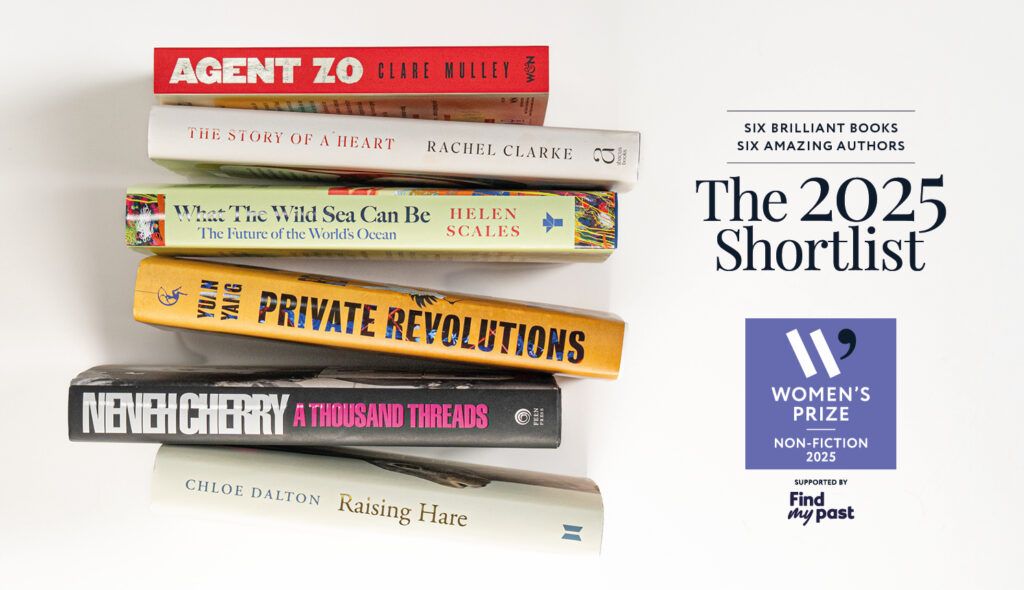
Women’s Prize for Non-Fiction Shortlist 2025

Now in it’s second year running, the Women’s Prize for Non-Fiction Shortlist has been announced. If you want a reminder, here are the 16 books that were on the longlist.

The six titles chosen range from history, science and nature, to current affairs and memoir, united by the power of hope and the necessity of resistance to initiate change.

Judge’s Comment

It’s an absolute pleasure to announce six books on our 2025 shortlist from across genres, that are united by an unforgettable voice, rigour, and unique insight. Included in our list are narratives that honour the natural world and its bond with humanity, meticulously researched stories of women challenging power, and books that illuminate complex subjects with authority, nuance and originality. These books will stay with you long after they have been read, for their outstanding prose, craftsmanship, and what they reveal about the human condition and our world. It was such a joy to embrace such an eclectic mix of narratives by such insightful women writers – we are thrilled and immensely proud of our final shortlist.

Kavita Puri, Chair of Judges

The Shortlist

Here are the six books chosen with a description, a short commentary by one of the judges and a link to a sample read or audio, if you’re interested to read/listen to a little of each title. Listening to the judges describe each book made them all sound really interesting to me.

I think I’m most interested by Agent Zo (after reading Madame Fourcade’s Secret War by Lynne Olson last year) and Private Revolutions because of its insight to another culture and those lives and stories that are so unlike our own. What do you think? Do any of these sound interesting to you?

Let me me know in the comments below.

Womens Prize for NonFiction Shortlist 2025

A Thousand Threads by Neneh Cherry (read a sample) (listen to audio)

Top of the Pops, December 1988. The world sat up as a young woman made her debut: gold bra, gold bomber jacket, and proudly, gloriously, seven months pregnant. This was no ordinary artist. This was Neneh Cherry.

But navigating fame and family wasn’t always simple. In this beautiful and deeply personal memoir, Cherry remembers the collaborations, the highs and lows, the friendships and loves, and the addictions and traumas that have shaped her as a woman and an artist. At the heart of it, always, is family: the extraordinary three generations of artists and musicians that are her inheritance and her legacy.

Musician. Songwriter. Collaborator. Activist. Mother. Daughter. Lover. Friend. Icon. This is her story.

A Thousand Threads by Neneh Cherry is the story of a remarkable life and the many threads that made it. Its about belonging, family, how we find our place in society, as well as music of course. The writing is exceptional and effortless. It’s a complex portrayal full of warmth, honesty and integrity and of how Neneh came to be who she is today.

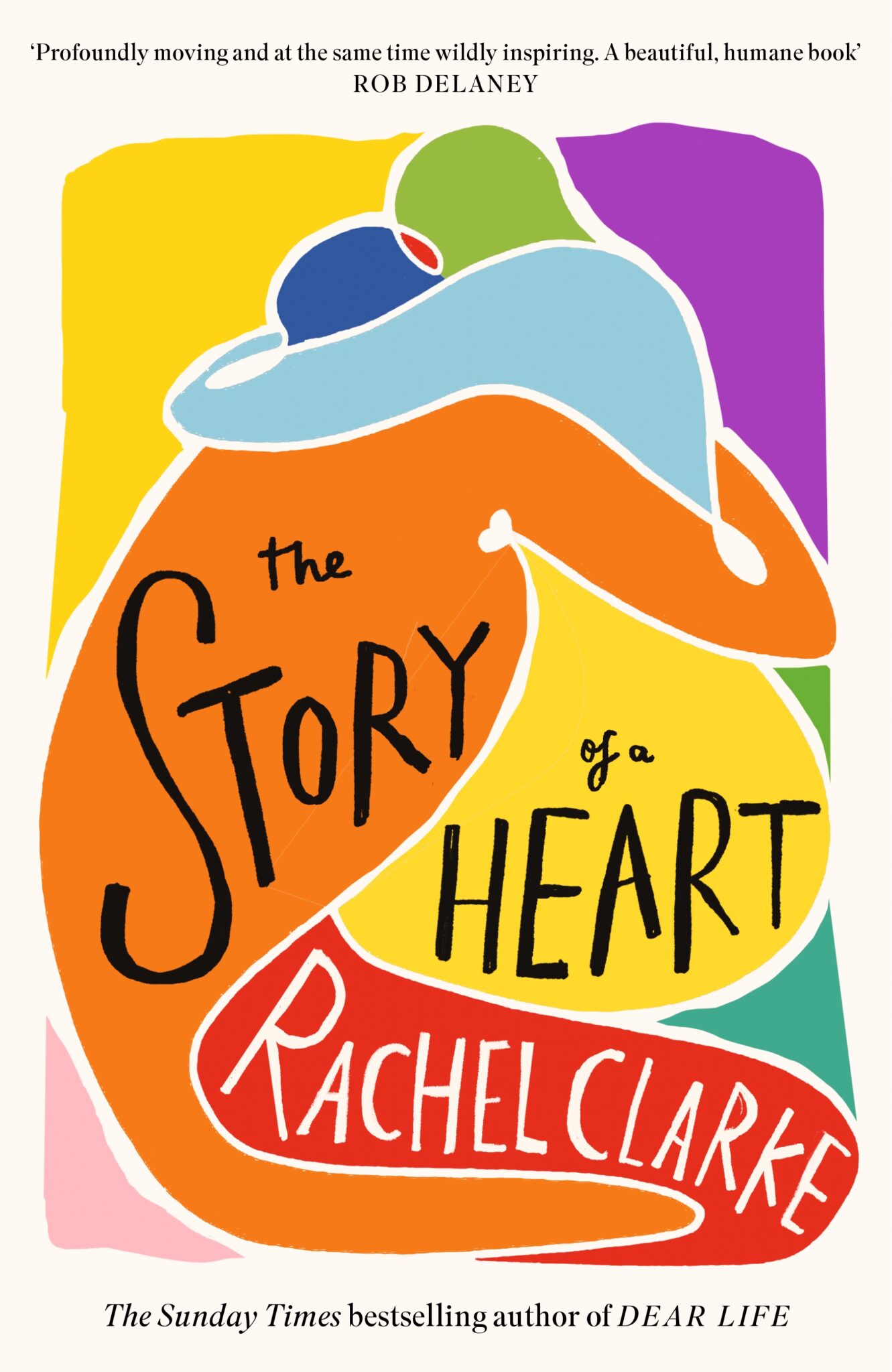
The Story of a Heart by Rachel Clarke (read a sample) (listen to audio)

The first of our organs to form, the last to die, the heart is both a simple pump and the symbol of all that makes us human: as long as it continues to beat, we hope.

One summer day, nine-year-old Keira suffered catastrophic injuries in a car accident. Though her brain and the rest of her body began to shut down, her heart continued to beat. In an act of extraordinary generosity, Keira’s parents and siblings agreed that she would have wanted to be an organ donor. Meanwhile nine-year-old Max had been hospitalised for nearly a year with a virus that was causing his young heart to fail. When Max’s parents received the call they had been hoping for, they knew it came at a terrible cost to another family.

This is the unforgettable story of how one family’s grief transformed into a lifesaving gift. With tremendous compassion and clarity, Dr Rachel Clarke relates the urgent journey of Keira’s heart and explores the history of the remarkable medical innovations that made it possible, stretching back over a century and involving the knowledge and dedication not just of surgeons but of countless physicians, immunologists, nurses and scientists.

The Story of a Heart is a testament to compassion for the dying, the many ways we honour our loved ones, and the tenacity of love.

The Story of a Heart by Rachel Clark is the tale of a boy, a girl and the heart they share. I like how the book combines the author’s expertise and the emotional resonance of the subject to bring together an extraordinary story. It moves effortlessly between disciplines and is meticulously researched and superbly written. I will find it impossible to forget.

Raising Hare by Chloe Dalton (read a sample) (listen to audio)

Imagine you could hold a baby hare and bottle-feed it. Imagine that it lived under your roof and lolloped around your bedroom at night, drumming on the duvet cover when it wanted your attention. Imagine that, over two years later, it still ran in from the fields when you called it and snoozed in your house for hours on end. This happened to me.

When lockdown led busy professional Chloe to leave the city and return to the countryside of her childhood, she never expected to find herself custodian of a newly born hare. Yet when she finds the creature, endangered, alone and no bigger than her palm, she is compelled to give it a chance at survival.

Raising Hare chronicles their journey together and the challenges of caring for the leveret and preparing for its return to the wild. We witness an extraordinary relationship between human and animal, rekindling our sense of awe towards nature and wildlife. This improbable bond of trust serves to remind us that the most remarkable experiences, inspiring the most hope, often arise when we least expect them.

Raising Hare by Chloe Dalton is a beautiful meditation on the interactions between the human and the more than human that takes you under its spell. I really like how the book opens up questions of wildness, how do we let the wild into our lives, what can we do in our spaces to cultivate wild living? This is a captivating book that really stayed with me.

Agent Zo: The Untold Story of Courageous WW2 Resistance Fighter Elżbieta Zawacka by Clare Mulley (read a sample) (listen to audio)

This is the incredible story of Elzbieta Zawacka, the WW2 resistance fighter known as ‘Zo’. The only woman to reach London from Warsaw during the Second World War as an emissary of the Polish Home Army command, Zo undertook two missions in the capital before secret SOE training in the British countryside. As the only female member of the Polish elite Special Forces – the SOE-affiliated ‘Silent Unseen’ – Zo became the only woman to parachute from Britain to Nazi German-occupied Poland. There, whilst being hunted by the Gestapo who arrested her entire family, she took a leading role in the Warsaw Uprising and the liberation of Poland.

After the war she was demobbed as one of the most highly decorated women in Polish history. Yet the Soviet-backed post-war Communist regime not only imprisoned her, but also ensured that her remarkable story remained hidden for over forty years. Now, through new archival research and exclusive interviews with people who knew and fought alongside Zo, Clare Mulley brings this forgotten heroine back to life, and also transforms how we see the history of women’s agency in the Second World War.

Agent Zo: The Untold Story of Courageous WW2 Resistance Fighter Elżbieta Zawacka by Clare Mulley is a masterfully written biography that brings Elżbieta’s extraordinary story to life in exceptional detail. Phenomenally well researched, it’s a window into World War 2 stories that aren’t often heard, told through the life of an inspiring and powerful protagonist. I loved how the book follows Elżbieta right into the twenty-first century, showing the complexity of post-war politics. This is a history that still resonates today.

What the Wild Sea Can Be: The Future of the World’s Ocean by Helen Scales (read a sample) (listen to audio)

No matter where we live, ‘we are all ocean people,’ Helen Scales observes in her bracing yet hopeful exploration of the future of the ocean. Beginning with its fascinating deep history, Scales links past to present to show how prehistoric ocean ecology holds lessons for the ocean of today.

In elegant, evocative prose, she takes us into the realms of animals that epitomize current increasingly challenging conditions, from emperor penguins to sharks and orcas. Yet despite these threats, many hopeful signs remain, in the form of highly protected reserves, the regeneration of seagrass meadows and giant kelp forests and efforts to protect coral reefs.

Offering innovative ideas for protecting coastlines and cleaning the toxic seas, Scales insists we need more ethical and sustainable fisheries and must prevent the other existential threat of deep-sea mining. Inspiring us all to maintain a sense of awe and wonder at the majesty beneath the waves, she urges us to fight for the better future that still exists for the ocean.

A heartfelt exploration of the deep sea from coral to whales to emperor penguins to kelp, the writing is urgent and spellbinding and gripping, showing how humans have accelerated climate change and how we can fight for a better future. I absolutely loved spending time with the marine biologist Helen Scales down in the brutal and beautiful depths of the ocean.

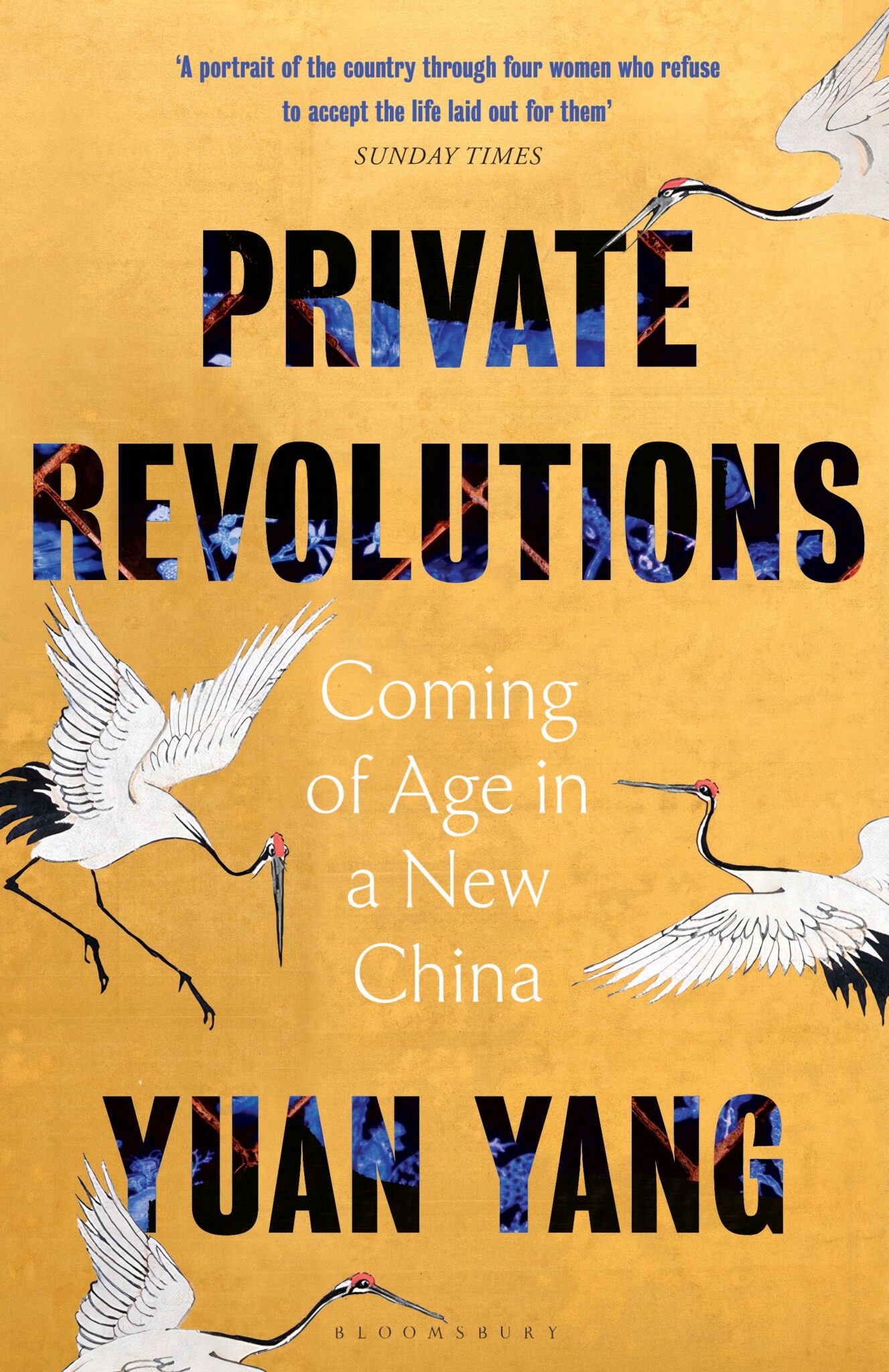
Private Revolutions: Coming of Age in a New China by Yuan Yang (read a sample) (listen to audio)

Yuan Yang, the first Chinese-born British MP, tells the stories of four Chinese women striving for a better future in an unequal society.

From June, who dreams of going to university rather than raising pigs, to Sam, forced into hiding as her activist peers are lifted from the streets, this is a singularly immersive portrait of a rapidly changing nation – and of the courage of those caught in the swell.

Private Revolutions: Coming of Age in a New China by Yuan Yang traces a moment of transition in China through the lives of four women who were growing up in the years after Tiananmen Square.These coming-of-age stories are ones you rarely hear of; individuals who want different lives from their parents who are battling the system.It’s eye-opening, beautifully written and carefully researched.

The Winner

The winner of the Women’s Prize for Non-Fiction will be announced on 12 June 2025, the same day as the winner for the Women’s Prize for Fiction, whose longlist you can view here. That shortlist will be announced on 2 April.

The Woman’s Prize for Nonfiction longlist 2025

Today the Women’s Prize for Nonfiction longlist 2025 was announced.

16 books ranging in matter, style and genre, from agenda-setting reportage on contemporary issues alongside revisionist histories and myth-busting biographies; to memoirs of self-determination and intimate narratives that shine a light on ordinary people combine with real-life criminal cases, notorious and forgotten, whilst others defy genre-classification, weaving multiple disciplines into a compelling narrative work.

The authors nominated are from a range of professional areas and expertise, including a music icon, human rights lawyer, political adviser, marine biologist, NHS palliative care doctor and Pulitzer Prize winner.

What the Judges Said

What unites these diverse titles, that boast so many different disciplines and genres, is the accomplishment of the writing, the originality of the storytelling and the incisiveness of the research. Here are books that provoke debate and discussion, that offer insight into new experiences and perspectives, and that bring overlooked stories back to life and recognition. Amongst this stellar list, there are also reads that expertly steer us through the most pressing issues of our time, show the resilience of the human spirit, alongside others that elucidate the dangers of unchecked power, the consequence of oppression and the need for action and defiance.

Kavita Puri, Chair of Judges

The Longlist of 16 titles

Click on any title to read the longer description of the book on the Women’s Prize website.

Autocracy, Inc.: The Dictators Who Want to Run the World  (Political Science) by Anne Applebaum (Poland/US) – explains the world we live in today and how liberal democracy is currently under threat.

Embers of the Hands: Hidden Histories of the Viking Age (History) by Eleanor Barraclough (UK) – described as an accessible gateway into this period of time, it has great storytelling, it is told with extreme authority and very readable.

The Eagle and the Hart: The Tragedy of Richard II and Henry IV (History) by Helen Castor (UK) – this book is a timely study of political power focused on Kings Richard II and Henry IV who are vividly brought to life in astonishing detail. Not just a personal history but a glimpse into different music and performance.

A Thousand Threads (Memoir) by Neneh Cherry – (Sweden/Sierra Leone) – a unique portrait of a life lifved fully creatively.

The Story of a Heart (Medical Memoir) by Rachel Clarke (UK) – it tells how one family, in the midst of their grief gives the heart of their child so that another human being can survive. It is written with such compassion, it is storytelling at its best.

Raising Hare by Chloe Dalton (UK) – a charming and beguiling book that captures the unusual relationship between the author and the leveret (baby hare) that she rescues.

Ootlin (Memoir) by Jenni Fagan (UK) – moving, enlightening and at times harrowing, a read about growing up in a broke, UK care system, a memoir written like poetry.

Why Fish Don’t Exist: A Story of Loss, Love and the Hidden Order of Life (biography/memoir/science adventure) by Lulu Miller (US) – a book that defies category, combining a personal voyage of discovery with a taxonomy of fish.

Agent Zo: The Untold Story of Fearless WW2 Resistance Fighter Elżbieta Zawacka  (biography/history/WWII) by Clare Mulley (UK) – this is a masterclass of biographical writing, a gripping read, well-researched, about a woman we should know about.

By the Fire We Carry: The Generations-Long Fight for Justice on Native Land (History/True Crime/Social Justice) by Rebecca Nagle (US) – an eye-opening read, the book delves deep into a court case that reveals the forced removal of native Americans onto treaty lands in the nations earliest years.

Wild Thing: A Life of Paul Gauguin (Biography/Art History) by Sue Prideaux ( UK/Norway) – this deep dives into a phenomenal and artistic career, the pages come alive with colour and magic, with incredible storytelling.

What the Wild Sea Can Be: The Future of the World’s Ocean (science/climate/environment) by Helen Scales (UK) – a widely researched, deeply resonant account of our threatened oceans, which strikes a helpful balance between hope and pragmatism.

The Peepshow: The Murders at 10 Rillington Place (true crime/history) by Kate Summerscale (UK) – this is how history should be written, it is evocative, carefully researched and hard to put down.

Sister in Law: Fighting for Justice in a System Designed by Men (social justice/true crime) by Harriet Wistrich (UK) – this is both a harrowing and hopeful account of of Wistrich’s battles to fight injustices against women in the legal system.

Tracker (collective memoir/biography/oral history) by Alexis Wright (Australia) – explores new ways to write biography, challenging the expectations of form, whilst giving a unique glimpse into the life of someone from the stolen generation in Australia.

Private Revolutions: Coming of Age in a New China (history/biography/feminism) by Yuan Yang (China/UK) – a powerful and intimate portrait of life in modern China told through the stories of four young women.

Have You Read Any of These?

Let us know in the comments if you have any of these titles or if there are any that you are particularly looking forward to reading.

I haven’t read any, but I enjoyed Kate Summerscales’s The Suspicions of Mr Whicher, another true crime tale and Mrs Robinson’s Disgrace, so I’m sure her book will be an interesting read.

I like the sound of Private Revolutions, something new, to be delving into the modern lives of young women in today’s China and I can’t help but be interested in Agent Zo, the story of another woman in the resistance, after reading the excellent Madame Fourcade’s Secret War in 2024.

What do you think?

The Wager, A Tale of Shipwreck, Mutiny and Murder by David Grann

A tale of shipwreck mutiny and murder British navy

The Wager by David Grann recently won the 2023 Goodreads Choice Award for Best History & Biography.

David Grann is the author of the #1 New York Times bestsellers Killers of the Flower Moon (recently made into a film by Martin Scorcese) and The Lost City of Z.

In this latest book he chronicles the fate of the 18th century British warship, the Wager, which had set out on a secret mission during an imperial war with Spain (with dubious reasoning behind it), with the intention of tracking down a fleet rumoured to be carrying a horde of treasure.

Not only was there a significant human cost to these excursions, it was the era of plundering natural resources, constructing a single large warship could require as many as four thousand trees, therefore a hundred acres of forest might be felled.

The conflict was the result of the endless jockeying among the European powers to expand their empires. They each vied to conquer or control ever larger swathes of the earth, so that they could exploit and monopolise other nations’ valuable natural resources and trade markets. In the process, they subjugated and destroyed innumerable indigenous peoples, justifying their ruthless self-interest – by claiming they were somehow spreading “civilisation” to the benighted realms of the earth. Spain had long been the dominant empire in Latin America, but Great Britain, which already possessed colonies along the American eastern seaboard, was now on the ascendance – and determined to break its rival’s hold.

Wrecked off the coast of Patagonia, after rounding the notoriously dangerous Cape Horn, those who survived would spend months on an island before putting together makeshift vessels from what they had salvaged, leaving the island in two groups, heading in opposite directions, with different stories to tell.

Reading Outside the Norm

It’s not my usual reading fare, however after reading a praise-worthy review, I was drawn to it, when I read that the men who laboured on these large ships were often kidnapped and forced to crew, sometimes taken from workhouses or even snatched just as they were returning from having crewed on another ship, much to the consternation of their waiting families.

After peaceful efforts to man the fleets failed, the Navy resorted to what a secretary of the Admiralty called a “more violent” strategy. Armed gangs were were dispatched to press seafaring men into service – in effect, kidnapping them. The gangs roamed cities and towns, grabbing anyone who betrayed the telltale signs of a mariner: the familiar checkered shirt and wide-kneed trousers and round hat; the fingers smeared with tar, which was used to make virtually everything on a ship more water-resistant and durable.

It took a little to get into the rhythm of the book, as the various characters and their backgrounds were introduced, just as the ship HMS Wager delayed leaving British shores due to setbacks, both human and due to adverse weather conditions. Once they set sail, on August 23, 1740 and with the help of route maps on the inside front and back flaps, the story became more captivating.

Hidden Histories in the Archives, Disrupting the Historical Narrative

It is a fascinating account that David Grann became aware of upon visiting the UK National Archive in Kew, reading an ancient logbook of one of the crew of the ship, which then lead him to other accounts of the adventures of those onboard, in particular, rival perspectives on what happened after HMS Wager was shipwrecked on May 14, 1741 off the southern coast of Patagonia, Chile.

The time survivors spent on Wager Island is reminiscent of William Golding’s Lord of the Flies. As Captain David Cheap tries to keep order and calm, as food sources they manage to salvage deplete and disagreements increase, men become desperate, divisions occur, loyalties waver.

When the Captain crosses a serious line, his authority and ability to stay in charge decline, causing a major rupture in support for the direction they plan to take.

Indigenous Intuition, Avoiding the Real Savagery

One of the more interesting parts of their land based story, given how difficult it was for them to survive and the factions that develop as the group splits loyalties, was the arrival of a group of Kawésqar indigenous people, who pretty much live in their canoes circumnavigating the coast, living off the land, sea and foreshore.

These people helped the castaways by obtaining meat and seafood for them, quickly and adeptly building dwellings and then would leave (they knew not to trust these pale faced marauders). Witnessing the insidious tensions mounting among the castaways, one morning they would awake to discover them, their canoes and dwelling all gone, never to return.

Aware of how helpless the Englishmen were, the Kawésqar would regularly venture out to sea and then magically return with nourishment for them. Byron saw one woman depart with a companion in a canoe and , once offshore, grip a basket between her teeth and leap into the freezing water. “Diving to the bottom,” Byron wrote, she “continued under water in an amazing time.” When she emerged, her basket was filled with sea urchins – a strange shellfish, Byron wrote, “from which several prickles project in all directions.”

Logbooks of Seafaring Adventures Can Be Important Navigation Tools

Eventually the castaways would rebuild from what they had been able to salvage, another sailing vessel and one group who disagreed with the Captain which route to take would depart in one direction and the rest, some months later in the opposite direction.

Cheap’s plan, meanwhile, was taking on new, hidden dimensions. Poring over charts, he began to believe that there was a way to not only preserve their lives but also fulfill their original military mission. He calculated that the nearest Spanish settlement was on the island of Chiloé, which was off the Chilean coast and some 350 miles north of their present location.

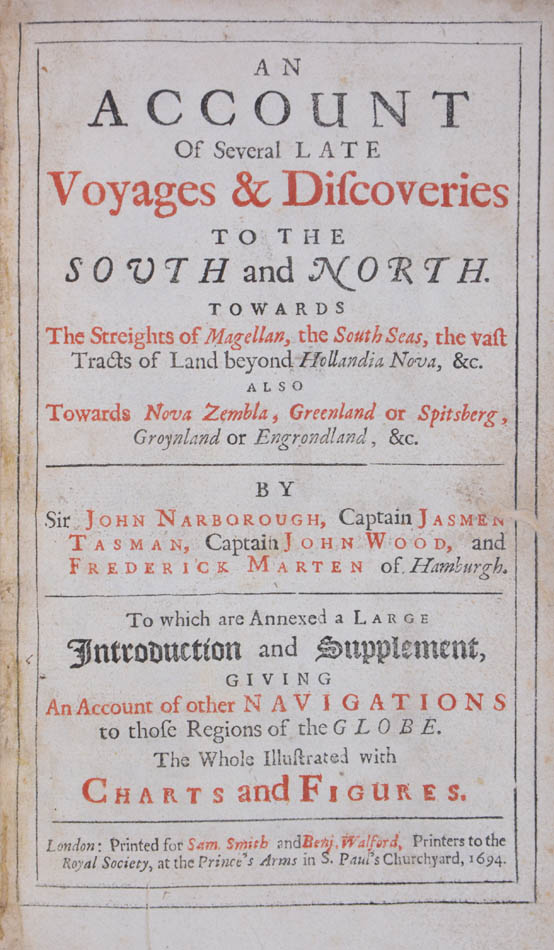
Bulkeley, on the other hand, borrowed the 16-year-old midshipman John Byron’s copy of Sir John Narborough’s chronicle of sea tales exploring the Patagonia region, believing it may contain critical clues for navigating a safe passage away from Wager Island. He would use this reference to take his group of men through the tricky Strait of Magellan, thus avoiding Cape Horn.

After a voyage, the captain of a ship turned over the requisite logbooks to the Admiralty, providing reams of information for building an empire – an encyclopedia of the sea and of unfamiliar lands.

Anson and his officers would frequently consult the journals of the few seamen who had ventured around Cape Horn.

Moreover, these “logbooks of memory”, as one historian coined them, created a record of any controversial actions or mishaps that occurred during a voyage. If need be they could be submitted as evidence at courts-martial; careers and lives might depend on them.

Who Is Actually On Trial Here, Man or An Empire?

The trip culminates in some survivors return to England and various allegations against different people, threat of imprisonment or hanging. A trial will be held.

In the meantime the stories and individual accounts captured the imagination of ‘Grub Street hacks’ and others who profited by publishing narratives of the high sea and inhospitable island adventures, in an era that ironically resembled the ‘fake news’ era of our own time. Due to the sheer number of differing accounts, perceptions of the Wager affair varied from reader to reader.

Once the broadsheet newspapers and periodicals were filled with breathless reports, book publishers competed to release first-hand accounts from the former castaways.

Though few of those narratives survived today, plenty of archive material made it possible for David Grann to put together an interesting account of an inconclusive British imperial adventure that may have lost the nation more than just men and a ship, but much credibility for the human and financial cost of their exploits, all in the name of retaining their perception as being a superior imperial power.

Author, David Grann

David Grann is an American journalist, a staff writer for The New Yorker and author of Killers of the Flower Moon, The Osage Murders and the Birth of the FBI, which was a finalist for the National Book Award and winner of an Edgar Allan Poe Award for best true crime book. He also wrote The Lost City of Z, A Tale of Deadly Obsession in the Amazon shortlisted for the Samuel Johnson Prize, also adapted into a critically acclaimed film directed by James Gray.

Grann’s investigative reporting has accumulated several honours, including a George Polk Award. He lives with his wife and two children in New York.

Best Books Read in 2021 Part 3: Top 10 Non Fiction

Paris Hotel de Ville Christmas 2021

Sisters in Paris

I had hoped to issue Part 3 of My Top Reads of 2021 in December, however that didn’t happen. I put my books and blog aside for a month while my sister was visiting, to just enjoy each other’s company and the beauty of the local environment where I live.

Given the times we are currently living through, it has been a humbling gift to combine those two things, to re-connect and enjoy our surroundings, albeit mid-winter.

2022 Reading Plans of a Mood Reader

Today my friend Deidre at Brown Girl Reading called and it was like a sign from the book world, a reminder that this post was sitting here, as are the many piles of unread books. Before speaking to her I had no idea what I might read next, or in 2022.
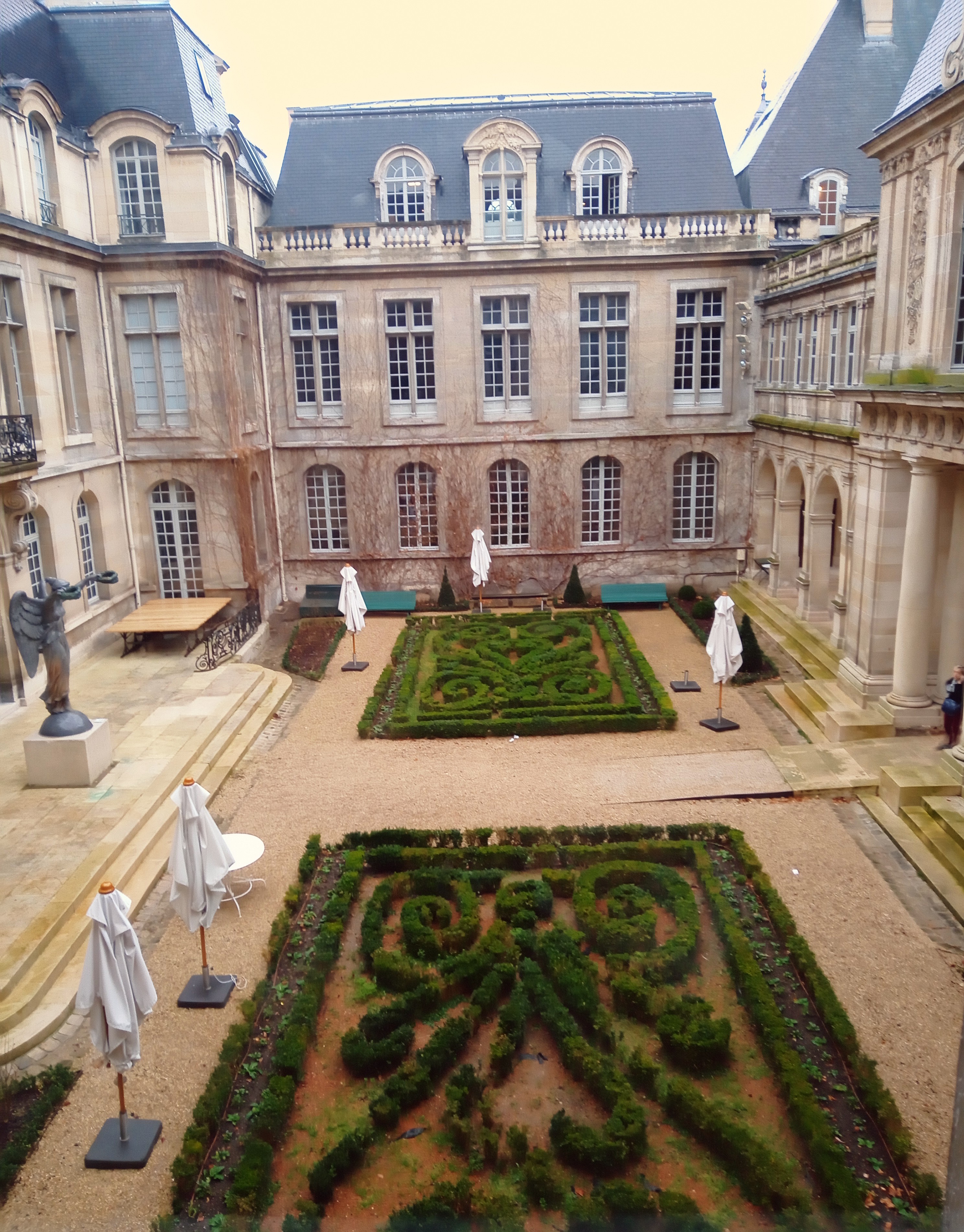
Musée Carnavalet Me Marais Paris History Madame Sévigné de Seve

History of Paris, Musée Carnavalet

As a mood reader, I don’t tend to make plans, but as I stood in front of the shelves, I noticed that I have already accumulated some little piles of books by authors I want to read more of, like Buchi Emecheta, Gayl Jones, Mary Costello, Janet Frame; more books by Northern Irish authors, including a few more by Brian Moore.

There’s a French history written by women pile, inspired by a recent visit to the History of Paris, Musée Carnavalet. It seems something in my subconscious had indeed been planning!

Best NonFiction Reads of 2021

So, to complete there three part series, following on from Part 1: The Stats + One Outstanding Read of the Year and Part 2: Best Fiction Reads, here is my Part 3: Best NonFiction Books of 2021 and at the end, I’ve tagged on 4 books from my Spiritual Well-being collection that I read in 2021, each of them equally inspiring and nourishing.

In 2021 I read 28 works of nonfiction, so many of them were were excellent, below is a selection of those that I really enjoyed, that have stayed with me, in no particular order:

Autobiography/Memoir

To My Childresn Children Sindiwe Magona1. To My Children’s Children (1990) + Forced to Grow (1992) by Sindiwe Magona (South Africa) – discovering Sindiwe Magona was one of my reading highlights of 2021. Tired of her people being written about and misrepresented by others, she decided for the sake of generations to come, and especially for girls, to share her experience, of an enriching, loving childhood, of growing up under apartheid and overcoming racist and patriarchal challenges.

The first volume covers her life up to the age of 23, when she encounters the most challenging circumstance ever and then in Forced to Grow, from age 23-40 we learn how she finds a way not only to survive but to grow, develop and thrive, overcoming poverty, pursuing education, collaborating with empowered women, spending over 20 years serving in the United Nations. These two books are like nothing else I’ve ever read coming out of South Africa, more than a gift to her grandchildren, they are a treasure and a lesson in humility to all humanity. I’m hoping there is a third volume in the making.

The Cost of LIving Deborah Levy memoir2. Real Estate (2021) + The Cost of Living (2018) by Deborah Levy (Creative Nonfiction) (South Africa/UK) – An author who left South Africa at the age of 9, Levy’s life and reminiscences are a world away from her birthplace and from the life of her compatriot above, though they have left a barely discernible imprint. While Magona embraces the entirety of her experience, Levy in titling her opening memoir Things I Don’t Want to Know (2013), struggles to talk about what she doesn’t want to talk about, using humour, her observation of others and a feminist lens to deflect her existentialism.

In three volumes, as she begins a new phase, unravelling from marriage into mature, independent woman, she reflects on life, her influences, her frustrations, critiquing the roles society assigns us, the way literature and cinema perpetuate them and considers the effect of disrupting them, breaking free. She observes what is going on around her while considering the wisdom of writers who came before, liberates herself from convention, while longing still for aspects of a distorted dream. Slim volumes, entertaining to read, they both inform and obscure, a life in fragments.

autobiography memoir australia indigenous3. My Place by Sally Morgan (1987) (Australia) (Biography/Memoir) – a classic of Australian aboriginal literature, Morgan writes about her childhood when her identity was hidden from her, uncovering her Aboriginal ancestry and understanding why her grandmother was so fearful of talking about the past.

Sharing what she discovered of the life stories of her mother, grandmother and great Uncle to understand why it was deemed necessary to be protected from the knowledge of who she was, she uncovers a heritage and her place in it, in this extraordinary and valuable account. An absolute must read.
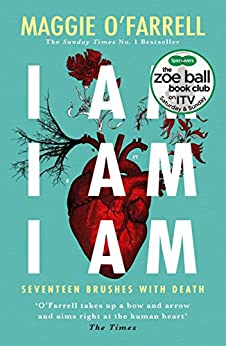
Maggie O'Farrell Memoir Near Death Experiences4. I Am, I Am, I Am, Seventeen Brushes With Death (2017) by Maggie O’Farrell (Northern Ireland/British) (memoir) – a unique memoir told through 17 encounters with death that range from the terrifying to the mundane, the memorable to the repressed.

O’Farrell finds meaning in these experiences, initially cultivating a state of fearlessness followed by the magical effect and shift in perspective that giving birth to a child brings about. A remarkable and thought provoking work using a unique structure, I thought it was brilliant.

Nature Writing

Indigenous Wisdom, Scientific Knowledge and the Teachings of Plants5. Braiding Sweetgrass by Robin Wall Kimmerer (2013) (Creative Non Fiction) (US) – In this remarkable collection of 32 essays, organised into 5 sections that follow the life cycle of sweetgrass, we learn about the philosophy of nature from the perspective of Native American Indigenous Wisdom, shared by a woman of native origin who is a scientist, botanist, teacher, mother.

Sharing scientific knowledge and going out into the forest and field, she demonstrates how close and quiet observation of plants in their habitat teach us. The most crucial lessons being learning how to give back, reciprocity and gift giving, using our imagination and intuition to reconnect with nature and understand the connection between them and us. Just stunning.

nature writing Wainwright prize6. Diary of a Young Naturalist by Dara McAnulty (2020) (Northern Ireland) – an inspired account of a year in the life of a 15 year old boy with a passion for nature and all forms of wildlife and how his connection to them assists him to navigate life mitigating the intensity and challenges of autism.

His observations are a pleasure to read, his use of language evocative and resonant in bringing the natural world he loves to life for the reader. A writer to watch, inspirational.

Justice/Social Science/History

The Fire Next Time James Baldwin7. The Fire Next Time James Baldwin (1963) (Letters) (Social Justice) (US) – a short book of just two letters, one written to his young nephew, a kind of preparation for what lies ahead of him as he will become a young black man in America and a tender description of who he sees in him, his heritage, his family connection and that he is loved, a beautiful literary gift to a young boy.

The second letter he writes to himself, Letter From a Region of My Mind – like a journal entry, he writes of his own development of his self-awareness, of the experiences that moulded him, of his choices to seek refuge and revenge in the same calling, his assessment of meeting Elijah Muhammed, leader of the Nation of Islam. Baldwin’s message is one of love, of standing up for one’s rights, of dignity and the health of one’s soul, of our responsibility to life. A gem of a book, as relevant now as when he wrote it.

Nurturing Humanity8. Nurturing Our Humanity, Riane Eisler, Douglas Fry (Austria/US) (Social Science/Cultural History/Anthropology) (2019) – The long awaited sequel to her brilliant The Chalice and The Blade (1987) which introduced Eisler’s theory on domination versus partnership models of society, this new book written in collaboration with Anthropologist Douglas Fry, explores how domination and partnership have shaped our brains, lives and futures.

They demonstrate through decades of research how we have been influenced by a system of domination that favours hierarchical structures, ranking of one over another, authoritarian parenting and leadership, fueled by fear, tamed by punishment, sustained by conditioning. They argue that the path to human survival and well-being hinges on our human capacities to cooperate and promote social equality, through empathy, equity, helping, caring and various other prosocial acts. A riveting, essential read on understanding human nature and where we are headed.

Sea People In Search of Ancient Navigators of the Pacific9. Sea People Christina Thompson (2019) (Australia/US) (History)  – I loved and was fascinated by this book, a woman curious about her husband and son’s cultural heritage, looks back at what has been written by various/mostly male historians about these ancient navigators of the Pacific and according to their own paradigm and biases, their theories on how they arrived there.

What she discovers are non-instrument navigation techniques that Europeans weren’t aware of, abilities developed by these ancient mariners that are fascinating to imagine, and that a small group seek to emulate, challenging themselves to go back in time, to think and understand the sea, the stars and nature, as their ancestors did. Fascinating and insightful.
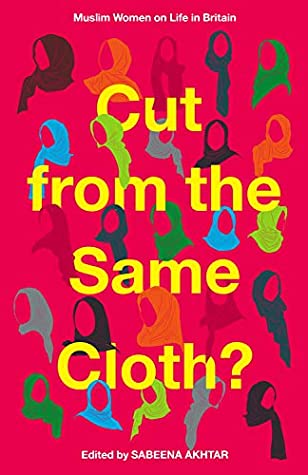
Cut From the Same Cloth Sabeena Akhtar10. Cut From the Same Cloth, Muslim Women on Life in Britain (2021) Edited Sabeena Akhtar (UK) (Essays) – this was a long awaited volume of essays, crowdfunded by many supporters, brings together the voices of 21 Muslim women of different ages, races and backgrounds, allowing them to explore their experience and spiritual perspectives, expressing them creatively.

More than mere essays, collectively, their words bust the all too common stereotypic myths of the hijab wearing woman and introduce us to a bright, humorous, passionate group of women, whose honesty and thoughts are both empowering and insightful. Though they are writing for themselves and each other, anyone interested in understanding the many diverse views of British Muslim women today, will enjoy reading this anthology.

Spiritual Well-being Reads

Finally, one of the genres I like to read is Spiritual Well-being and there is a page dedicated to those books at the top of this blog, for easy reference. They tend to be winter reads, corresponding to that time when we tend to go within and might benefit from a revisiting of inspirational words and an alternative perspective on how to co-exist with whatever it is we are dealing with in the external world.

Sensitives and Soul Purpose

The Power of Empaths in an Increasingly Harsh WorldThis year I found inspiration from two of my favourites in this field, and two new authors, all of them coming from renowned publisher Hay House.

“Every thought we think is creating our future.” Louise Hay

Anita Moorjani’s Sensitive is the New Strong (2021) (India/Hong Kong/US) is written in particular for highly sensitive empaths, with information about recognising this in oneself, learning to develop it as a strength, while understanding the importance of  how to protect your energetic body from the negative effects of the kind of world we live in today.

Rebecca Campbell What is a Soul WLetters to a Starseed (2021) by Australian intuitive and creative, now based in Glastonbury, Rebecca Campbell, who previously wrote Light is the New Black(2015) and Rise Sister Rise (2016). This latest book is for those interested in understanding more about soul purpose.

She considers the big questions that mystics and philosophers through the ages have been asking about our cosmic origins, in a much lighter way: What is the soul, where did it originate and why have we chosen to come here at this time? You’ll know if this is meant for you or not.

Archangel Guidance and Self-Worth

the female archangels Claire StoneAnother new author I picked up this year was Claire Stone and her book The Female Archangels (2021) (UK) having already read quite a few books by Kyle Gray, which I’ve found hugely beneficial in previous years to carry with me and read whenever I had to deal with stressful hospital environments, unhelpful bureaucracy, anxiety producing school meetings – an alternative to pharmaceuticals I guess!

I enjoyed reading her book, although it might be more suited to practitioners or those already in the habit of ritual, as many of her suggestions require props.
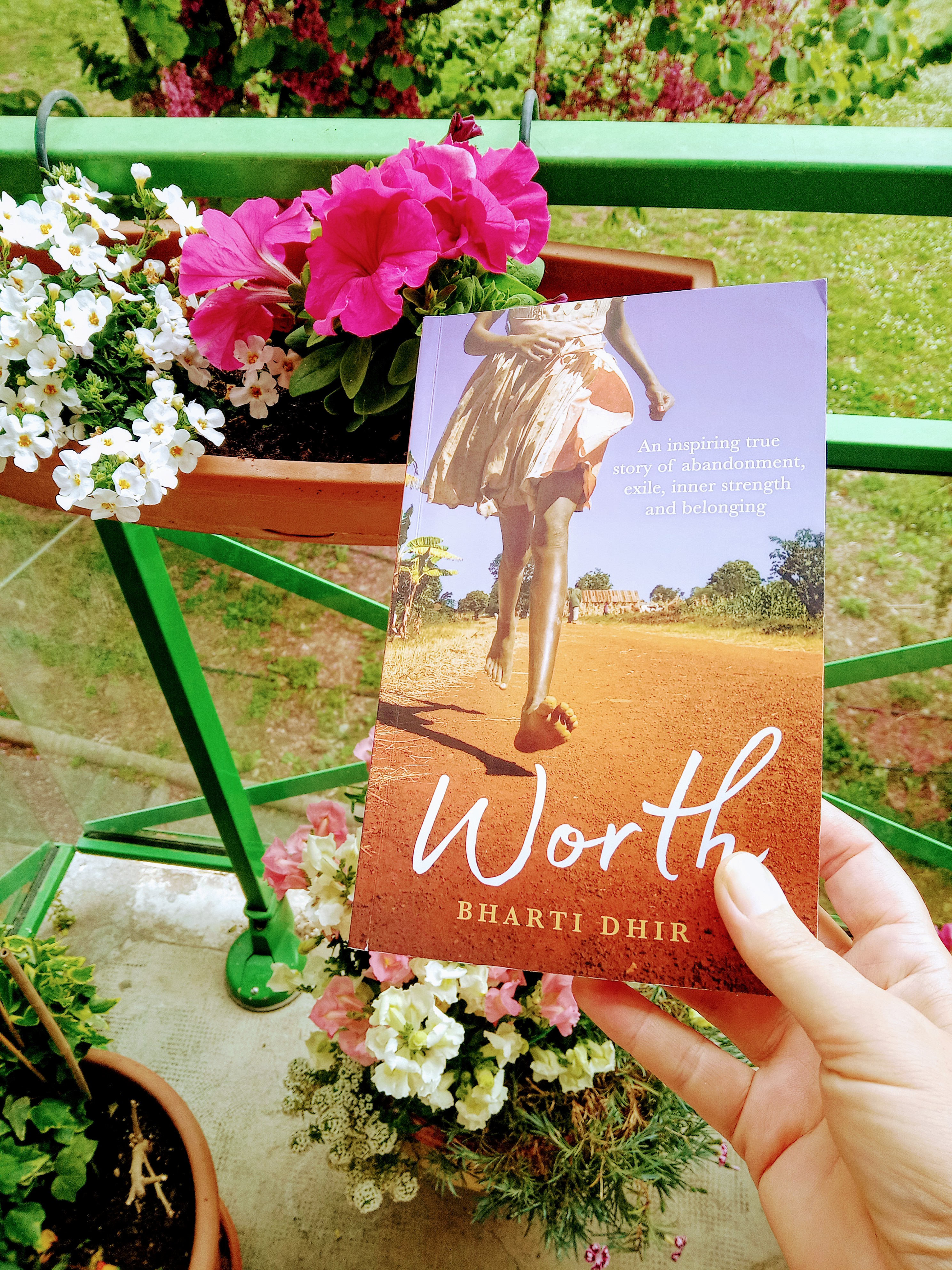
Inspirational memoir of belongingFinally, Worth by Bharti Dhir (2021) (UK/Uganda) – Bharti Dhir was abandoned as a newborn in a fruit box on the side of the road in the Uganda countryside. To this day she doesn’t know who her birth mother was, though rumours created a version of the story and the imagination of the author and reader contribute to what might have happened.

Throughout her childhood there are numerous events, situations, heath problems and challenges that Bharti and her family live through, address and overcome, some of which contribute (at the time) to diminishing her sense of self-worth. With each situation, she shares how she is able to look back with compassion and forgiveness and describe how she was able to turn all that around.

Her reflections on compassion and empathy are enlightening and model a nurturing way to embrace our humanity and practice them as acts of self-care.

 * * * * *

That’s it for 2021 nonfiction reads. Share with me your recent nonfiction favourites or thoughts on any of the above.

Happy Reading for 2022 and thank you for reading!

Claire

Sea People by Christina Thompson

In Search of the Ancient Navigators of the Pacific

Growing up in rural/coastal New Zealand and being immersed in Maori culture from the age of 5-12, the myths, legends, stories, cultural practices have always resonated with me.

Perhaps because I was so young, or because there was a clear connection to the landscape and environment that rang true, the geography of New Zealand was part of the mythology, that curious blend of enchantment and reality; it made sense to a child.

Sea People In Search of Ancient Navigators of the PacificA Polynesian Connection and Resonance

I read Sea People not so much out of that European curiosity to discover where people originated from, but for the familiarity of that “way of seeing” through the oral tradition of storytelling, of describing things from where I see and what I see around me, not from the lofty heights of above looking down.

My curiosity in all honesty, lay too in wondering if a woman’s perspective and approach might be different.

As the number of oral cultures in the world has diminished, interest in them has grown, and one of the most intriguing questions is whether there might be such a thing as an ‘oral way of seeing’, a  worldview common to oral peoples that might be different in some generalizable way from the worldview of people in cultures with writing.

I loved it.

Like her own mixed family, the author Christina Thompson straddles the masculine/feminine, Polynesian/European aspects and shares something that goes back over all the approaches to Polynesia from the earliest eyewitnesses of 1521 to the brilliant modern day reconstructions of Polynesian canoes, that set sail with a crew of experimental voyagers, trained in the old non-instrument methods of navigation, to re-enact the voyages of the ancient Polynesians.

map-polynesia-frontThe Polynesian Triangle is an area of ten million square miles, defined by the three points of Hawai‘i, New Zealand and Easter Island. All the islands inside this triangle were originally settled by a clearly identifiable group of voyagers: a people with a single language and set of customs, a distinctive arsenal of tools and skills, and a collection of plants and animals that they carried with them wherever they went.
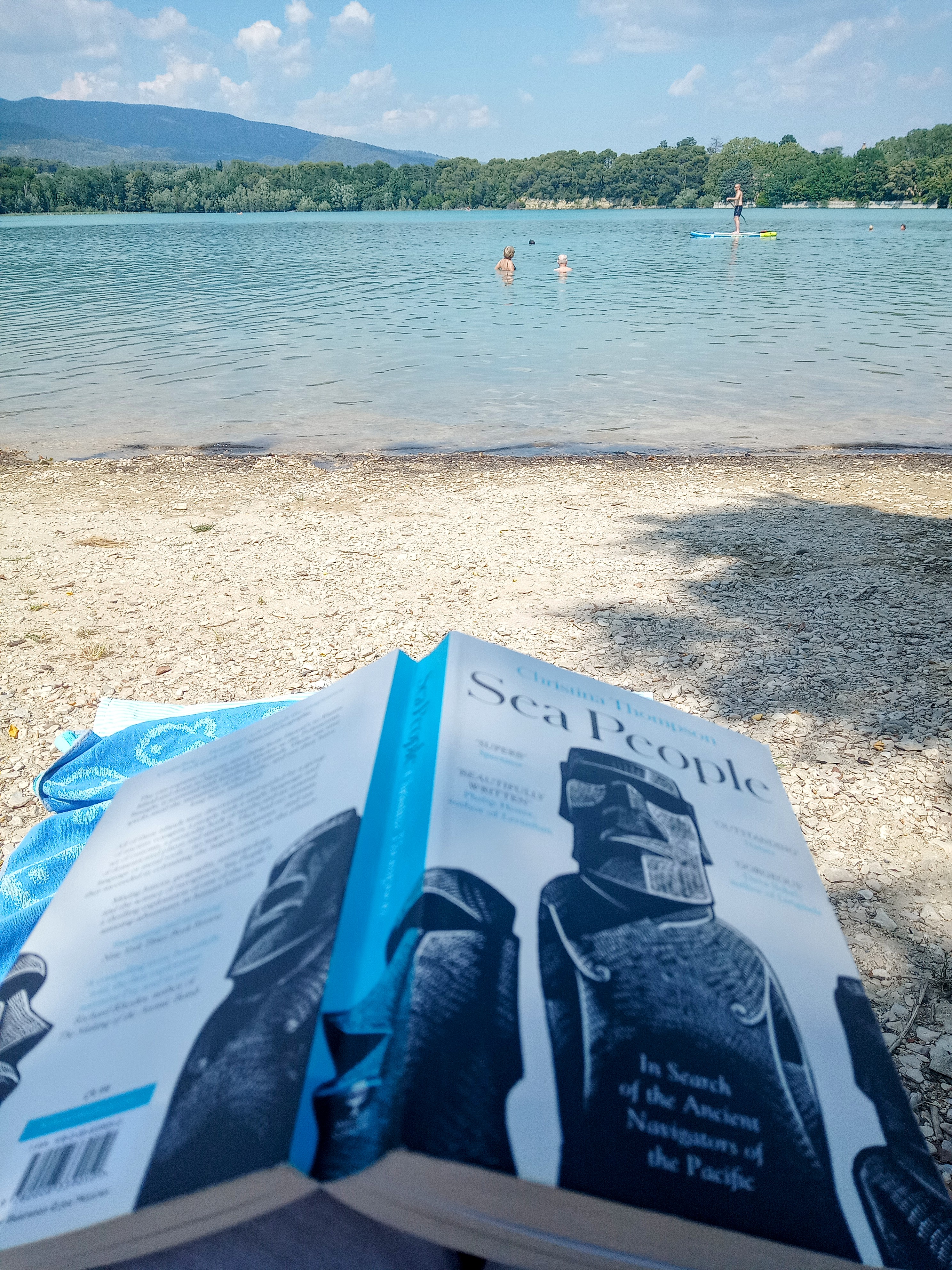
Sea People tells the story of these remarkable voyagers and of the many people—explorers, linguists, anthropologists, folklorists and navigators—who have puzzled over their astonishing history for more than three hundred years.

There is a reason the remote Pacific was the last place on Earth to be settled by humans: it was the most difficult, more daunting even than the deserts or the ice.

cottages in the middle of beach

Photo by Julius Silver on Pexels.com

Written in six parts, chronologically, we follow the thinking of the different eras, immersing in the exploration and research studies of the time, travelling through all the speculation, attitudes, reverence and mystery of a very Eurocentric enquiry, until recent times when those of Polynesian heritage themselves, as decolonization and indigenous rights movements were gaining strength worldwide, demanded representation and respect in these constant intellectual probings.

The first parts look at the various European explorations, their intentions, their reception, discoveries and the kind of records they kept about they witnessed. It also shows the difference in their encounter(s) when they befriend and take a Polynesian navigator with them, bridging a cultural divide, that had often resulted in violence previously.

Much has been made in histories of the Pacific about the problem of observer bias. Early European explorers saw the world through lenses that affected how they interpreted what they found. The Catholic Spanish and Portuguese of the sixteenth century were deeply concerned with the islanders’ heathenism; the mercantile Dutch, in the seventeenth century were preoccupied with what they had to trade; the French, coming alone in the eighteenth century, were most interested in their social relations and the idea of what constituted  a “state of nature”.

Part Three looks at some of the stories the Polynesians told about themselves and the difficulty their European visitors had in understanding and interpreting them.

Europeans and Polynesians, it would seem, had very different ideas about the purpose of narratives and the relative meanings of “falsehood” and “truth”.

The Polynesian Art of Non-Instrument Navigation

For me that was the highlight of the literary journey, when Nainoa Thompson, a young Hawaiian, did all he could to learn the old ways, studying the stars, the winds, reading the waves and ocean swells, the imagined island, all the techniques known that had been passed down, to navigate like the ancient mariners, great ocean distances with nothing but what nature offered to guide them.

And in the face of disbelief by all the European sceptics who’d come before, unable to embrace the paradigm of this ancient skill, they succeeded, using practical sea voyaging, no computer simulation or dusty pottery references or annals of research; a brilliant touch of reality and reaching back through the generations of ancestry.

It was a stunning achievement. Without maps or charts or instruments or recording devices, without even paper and pen, an apprentice navigator – the first from Hawai’i in at least half a century – had piloted a canoe more than 2,500 miles, spanning more than thirty-five degrees of latitude.

A wonderful history and a beautifully accessible read. While it is inevitably limited due to being addressed from within those same structures that European exploration came from, and written by an outsider (albeit married to someone from the region), it provides a valuable insight into that outsider view and representation of centuries of exploration.

It will lead very nicely on to my next read, appropriately, the inside view from Dr Hinemoa Elder in her book of Maori wisdom, Aroha.

Sea People Christina Thompson

Christina Thompson

A dual citizen of the United States and Australia, she was born in Switzerland and grew up outside Boston and spent a decade living in Australia. Since 2000 she has been the editor of Harvard Review and teaches writing at Harvard University Extension. She lives outside Boston with her husband and three sons.

Sea People won the 2020 Australian Prime Minister’s Literary Award, the 2020 Victorian Premier’s Literary Award, and the 2019 NSW Premier’s General History Award. Her first book, Come on Shore and We Will Kill and Eat You All, was a finalist for the 2009 NSW Premier’s Literary Award and the 2010 William Saroyan International Prize for Writing.

Further Reading/Listening

NPR Interview: ‘Sea People’ Examines The Origins And History Of Polynesia by Ilana Masad

Read More Co: Author Interview: Christina Thompson

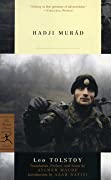
Hadji Murad by Leo Tolstoy tr. Aylmer Maude

The Kindness of Enemies Shamil ImamI read Hadji Murad because it was referenced in the last pages of Leila Aboulela’s excellent The Kindness of Enemies and is set in the same location as the historical part of her book, 1850’s Caucasus. Aboulela’s book centres on the kidnap of A Russian Princess and her time in captivity under the protection of the Highlander Shamil Imam. He wishes to trade her for his son, help captive by the Russians for more than ten years.

Tolstoy was in the Russian army for a time and clearly witnessed many missions. One of the events he had knowledge of and wrote about, though this novella was published post-humously by his wife, was the defection to Russia and subsequent killing of one of Shamil Khan’s chieftans, another Highlander, Hadji Murad.

Though I’m not a huge fan of the classics, there are some exceptions and I did enjoy Anna Karenina, however having read Aboulela’s version which really brings the characters alive and highlights their dilemmas so openly, I found it hard to connect with Tolstoy’s tale, which rarely touches on lives other than the soldiers and noble decision makers.

Hadji Murad Thistle Leo Tolstoy

Photo by nastia on Pexels.com

The opening scene though is brilliant, the ploughed field, bereft of life, everything turned over, leaves only one sturdy thistle, half destroyed but for that one stalk still standing tall, the flower head emitting its bold crimson colour.

The land was well tilled and nowhere was there a blade of grass or any kind of plant to be seen; it was all black. “Ah, what a destructive creature is man… How many different plant lives he destroys to support his own experience!” thought I, involuntarily looking round for some living thing in this lifeless black field.

It is the scene that brings back the memory of this man Hadji Murad and compels him to write out those pages, perhaps purging himself of a ghastly memory.

“What energy!” I thought. “Man has conquered everything, and destroyed millions of plants, yet this one won’t submit.” And I remembered a Caucasian episode of years ago, which I had partly seen myself, partly heard of from eye-witnesses, and in part imagined.

It does make me think that he had intended not to publish it, that perhaps it was written for another purpose altogether. Particularly as, at the time he wrote it (1896-1903)

he was spending most of his time writing his virulent tracts against the art of fiction and denouncing some of the best writers in the world, including Shakespeare.

In conclusion, it highlights to me the importance of reading various perspectives of history, not just one side or the other, but also across gender. It is refreshing to read a female historian’s fictional version of an age old conflict, inhabiting characters who observe from positions of lesser power, of oppression, for their powers of observation are that much stronger than the privileged, it being one of their necessary survival instincts.

Zuleikha by Guzel Yakhina (Russia) tr. Lisa Hayden

Last year my favourite read Kintu, by Ugandan author Jennifer Nansubuga Nakumbi was published by OneWorld Publications. This year, I enjoyed another of their award winning titles The Baghdad Clock by Shahad Al-Rawi (Iraq) (tr. Luke Leafgren) and now I am adding to that list, this wonderful historical fiction epic, Zuleikha by Guzel Yakhina (Russia) translated by Lisa Hayden.

The Russian Gulag – Labour Camps

April 2019 is the 100th anniversary of the beginning of the Gulags in Russia. Gulag is an acronym for Glavnoe Upravlenie Lagerei, or Main Camp Administration, they were a system of forced labour camp, a kind of re-education in a prison-like environment.

The Gulag was first established in 1919, and by 1921 the Gulag system had 84 camps. But it wasn’t until Stalin’s rule that the prison population reached significant numbers. From 1929 until Stalin’s death, the Gulag went through a period of rapid expansion.

At its height, the Gulag network included hundreds of labor camps that held anywhere from 2,000 to 10,000 people each. Conditions at the Gulag were brutal: Prisoners could be required to work up to 14 hours a day, often in extreme weather. Many died of starvation, disease or exhaustion— others were simply executed. The atrocities of the Gulag system have had a long-lasting impact that still permeates Russian society today.

Kulaks and Dekulakization

The first people to be interned in these camps were known as kulaks (literal translation – fist, as in tight-fisted) meaning affluent peasants – originally the term referred to independent farmers in the Russian Empire who emerged from the peasantry and became wealthy, but the definition broadened in 1918 to include any peasant who resisted handing over their grain to authorities and under Joseph Stalin’s leadership it came to refer to peasants with a couple of cows or five or six acres more than their neighbors and eventually any intellectual who offended him.

Portrayed as class enemies of the USSR, the process of re-education was dekulakization the campaign of political repressions, including arrests, deportations, and executions of millions of prosperous peasants and their families. It is these people, decreed kulaks in the 1930’s, that are the subject of this novel.

Book Review – Zuleikha

As soon as I read premise of this novel, I wanted to get it, one of my favourite books The Industry of Souls by Martin Booth was set in a Russian gulag, though these are very different books. And there is nothing quite like being swept away by those wonderful character-lead novels such as Dostoevsky’s The Idiot and Tolstoy’s, Anna Karenina and the provocative poetry of Pushkin’s Eugene Onegin that have entertained us and demonstrated important aspects of creating characters in literature, and who could forget one of the highest grossing films of all time, Doctor Zhivago.

While we may not quite reach the heights of the masters, we are offered a refreshing and unique perspective in this compelling novel about a Tartar Muslim woman named Zuleikha, whose independent farmer husband has been accused of not having collectivised his property, resulting in her being sent away to be dekulakized.

They encounter the Red Army and their leader Comrade Ignatov as they return from hiding provisions, a meeting that will forever be etched in the minds of both Zuleikha and Ignatov, the latter becoming an equally important protagonist in the novel, which charts the journey and evolution of both characters.

They travel the same paths in opposite roles, one of the ironies of the novel to see how imprisonment in many ways improves the life of Zuleika, and control of the camp significantly diminishes the life of her captor.  Effectively she is rescued from a tyrannical husband and mother-in-law, having been married off at the age of fifteen (he 30 years her senior) where she was little more than a slave in their household, having also given birth and lost all her babies in that period.

Photo by Pixabay on Pexels.com

Unlike some gulag stories, the people in this novel who are sent to be dekulakized are not sent to an existing facility. They spend months on a long train journey, where many will die, some escape, getting to know each other and then just as winter sets in they’re put on a barge, travel up a river and are dumped there. In order to survive, they must build shelter and find food, so their fate also extends to the leader who oversees them, Ignatov.

Although Zuleikha arrives in an emaciated state, she soon attains strong motivation to remain healthy, she finds solace in her role in the kitchen and ultimately strength in her eventual role as a hunter, venturing into the forest every day to set traps and capture wildlife to keep them all from starving.

Whereas Ignatov, who has enjoyed relative freedom and even privilege in his previous role, riding across the country rounding up suspected kulaks, is unhappy with orders to take on the role of Commandant to accompany these people to an unknown destination. His transformation is more of a decline from his lofty position of power, he loses faith and no longer commands the same respect he had, even for himself.

Who was Zuleikha?

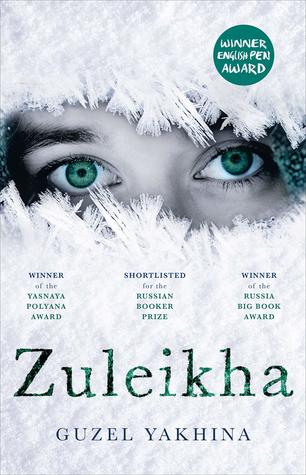
On the cover of the book and mentioned throughout the text, are Zuleikha’s intense green eyes, other versions of the novel are entitled “Zuleikha Opens her Eyes“, this transformation of character through having her eyes opened is one of the themes of the novel, she sees beauty as well as suffering, she will experience true love and profound heartbreak. It’s about a woman who comes out from having been defined and used by men, into finding new strength and her own role. It is a form of emancipation, albeit it a preliminary one.

Yusef runs away from Zulaikha

One aspect of the novel I haven’t seen discussed anywhere is the significance of the names, Zuleikha and Yuzuf. I had a sense that those names somehow went together and I discovered an epic poem of the same name written in 1483 AD by the Sufi poet Jami.

It is an allegorical poem about the pursuit of love and of God, which also covers the allure and the suppression of love, the suffering of slavery and in aspects of this poem, I find aspects of three characters in the novel, Zuleikha, Ignatov and Yuzuf and I end my review with an ambiguous extract that may refer to a lover or a son, from the poem that reminds me of the closing pages of the novel.

The novel is unique in that it is written (and translated) by a woman who makes a young woman the centre of such an epic story, in part inspired by the actual memories of her own grandmother. She hasn’t set out to recreate the dire, conditions and cruelty of the camps, we witness a tale of survival, and through the eyes of a woman who already had a dire life, despite being the wife of an affluent peasant.

Guzel Yakhina’s grandmother was arrested in the 1930’s, taken by horseback to Kazan and then on a long railway journey (over 2,000 miles) to Siberia. She was exiled from the age of 7 until 17 years, returning to her native village in 1947. It was these formative childhood years that were in a large part responsible for her formidable character.

Upon her death at the age of 85 years, the author realised the importance of her early life and thus began her research and determination to understand how her grandmother operated, bringing her back in part through the inspired creation of the extraordinary character Zuleikha.

“I realised it would be impossible to remember the things she said as her stories were not recorded,” Yakhina says. “There was a feeling of guilt.”

A thought-provoking, interesting story and reflection, not at all brutal or hard to read, the author writes with compassion for her characters and brings out something very different from what we have come to expect from stories set in prison-like environments.

Highly Recommended.

 Zuleikha and Yusuf – extract from the epic poem

“The one sole wish of my heart,” she replied,
“Is still to be near thee, to sit by thy side;
To have thee by day in my happy sight,
And to lay my cheek on thy foot at night;
To lie in the shade of the cypress and sip
The sugar that lies on thy ruby lip;
To my wounded heart this soft balm to lay;
For naught beyond this can I wish or pray.
The streams of thy love will new life bestow
On the dry thirsty field where its sweet waters flow.”

Jami, Sufi poet (tr. Charles Francis Horne)

My Reviews of Novels set in Russia

Eugene Onegin by Pushkin

The Kindness of Enemies by Leila Aboulela

The Industry of Souls by Martin Booth

Further Reading

Review: Lisa Hill’s review of Zuleikha at ANZLitLovers

Article: The Calvert Journal: “Learn to live with it, even forgive.”Guzel Yakhina on the traumas of Soviet history

Article: Peninsula, Qatar: Russian novel tells story of survival, love in Stalin’s camp

Buy a Copy of Zuleikha via Book Depository

N.B. Thank you to OneWorld Publications for providing me with an advance reader’s copy of this novel.

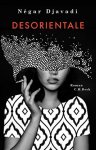
Disoriental by Négar Djavadi tr. Tina Kover #WITMonth


I could end my review right there, those were the words I tweeted not long after I finished Négar Djavadi’s Disoriental while I was still in the moment of coming to the end of an excellent story of an immersive experience I wasn’t ready to be done with. It was a five star read for me, but I’ll share a little more of the experience to help you decide if it’s for you or not.

The novel is a dual narrative, set in the present and the past, where the protagonist – who for some time is nameless, with little said to explain how she came to be here – is sitting in a fertility clinic, waiting for her appointment. This immediately creates questions in the reader’s mind, as it is made clear there is something unusual about the situation, that she is taking a risk to even be there. This contemporary narrative, slowly builds the picture of who she is and the  circumstance she is in.

This interminable waiting creates an opening for her to reflect and remember, thus interspersed between what takes place in the present, is the story of her family, a long line of Sadr’s, beginning with her parents Sara and Darius, forced to flee Iran, who came to France when she and her two sisters were of school age.

The narrating of family stories, taking us back as far as her great-grandfather Montazemolmolk with his harem of 52 wives, serves to provide context and an explanation for why certain family members might have behaved or lived in the way they did, helping us understand their motives and actions.

The daughter Nour, born with unusual piercing blue eyes, her mother dying in childbirth, the man obsessed with making her his wife, her reluctance to go out being the object of unwanted attention, her children who desire to be free of restriction, the reading of the coffee cups, predicting the sex of the child of a pregnant woman; Uncle Number Two and his secret.

Darius, the timid elder son, sent to Cairo to study law, abandons his studies and pursues a doctorate in Philosophy at the Sorbonne. Eventually he returns to the family, changed by his studies and experiences and though quiet in person, wields a mighty sword through his journalistic pen and letters to a political regime he detests and chooses not to ignore.

It is a story that spans a changing, turbulent time in Iranian history, one that travels through highs and lows, for while the passionate intellectual is free to express their opinion and brings no harm, they continue to live within their culture, family and be an active part of their community and society. But when freedom of expression becomes a danger to the individual, the sacrifices that are made stifle and silence them, but don’t always make them safe. Life in exile, without the connections to friends, family, neighbours, reduces these adults to shadows of their former beings, unable to truly be themselves in a foreign culture.

I highlighted so many great passages in reading, but I’ve already passed the book on to someone else to read, so can not share them here yet. It is a reminder of another era, of people who had rich, cultural and intellectual lives, of families who fled persecution, not because of war, but because of their intellectual and philosophical activism and of how much is lost, when a new generation grows up within a culture no longer connected to their past, to their heritage and worse, in a country that has been subject to the propaganda of the media, and perceptions of that culture are tainted by the agenda of politicians and parties, and what they wish their populations to believe about foreign cultures.

I absolutely loved it, I liked the slow drip revelation of what this young woman’s life had become, having been severed from her country and community of origin and the colourful, abundant richness of the family history and culture, which while separate from her life today, existed somewhere deep in her psyche, in her genes, and in those non-genetic aspects we inherit from previous generations even without knowledge of what has passed.

It is as if she had a crystal ball to look back through the years, through lives she hadn’t personally experienced and discovered events from the past that created an aspect of who she was and would in turn, be passed on and live deep within the yet unborn child she desires to conceive.

Highly Recommended.

Buy a Copy of DisOriental via Book Depository