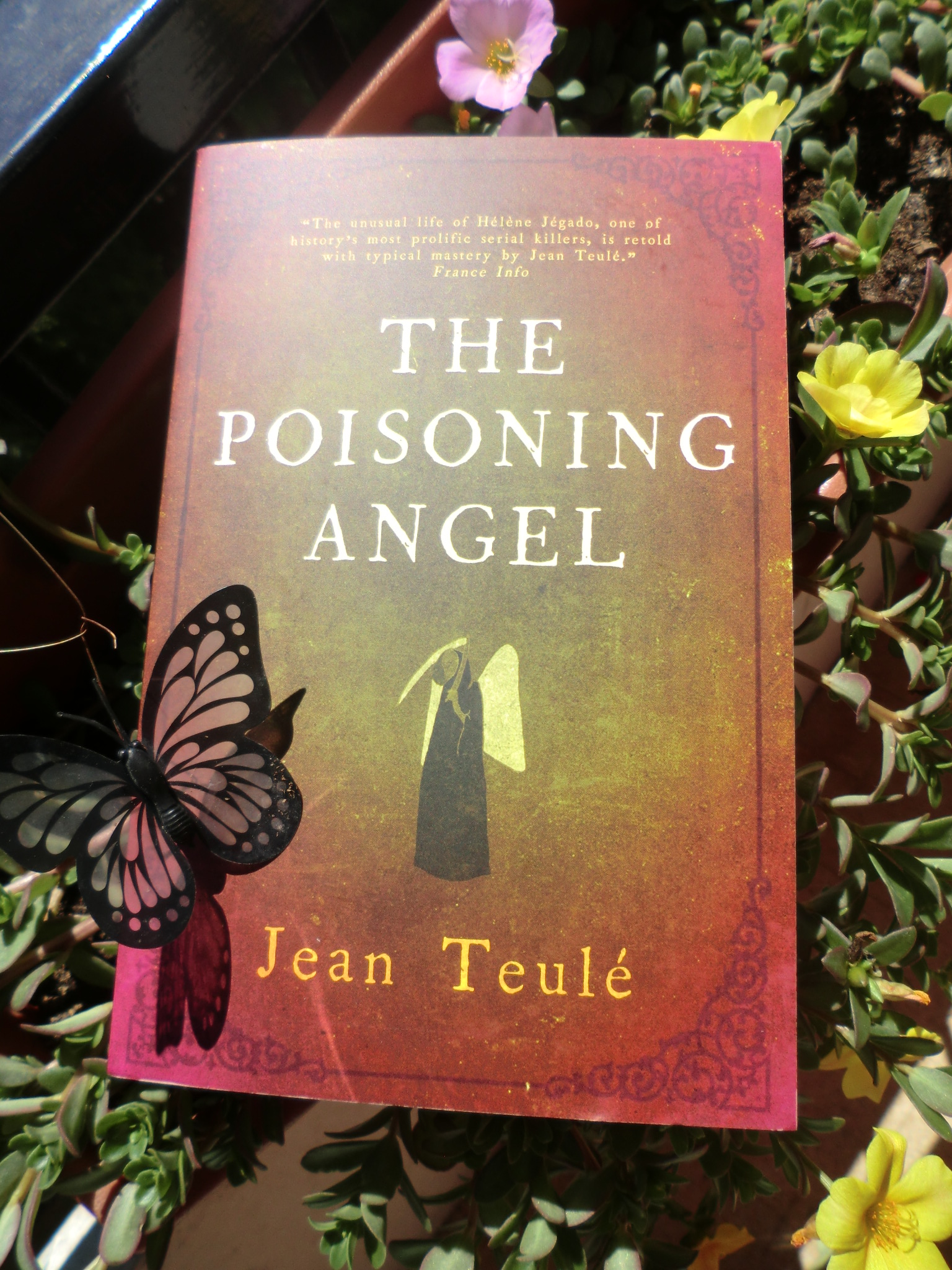
The Poisoning Angel by Jean Teulé tr. by Melanie Florence #TranslationThursday

Poisoning (3)A real-life character tour de force from French author Jean Teulé featuring a famous female serial killer from the nineteenth century.

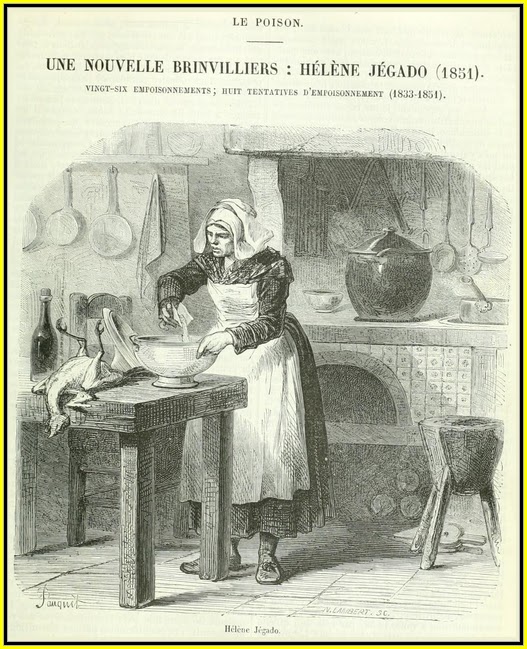
Hélène Jégado is warned about and thus introduced to the deathly effects of certain plants and flowers from a young age, she learns what to watch out for, including their superstitions.

‘Maman, who’s this Ankou you’re always talking about?’

Her mother tells her he is Death’s worker, the girl becomes obsessed with this idea, and makes it her vocation to fulfill his wishes, the only way she knows how.

Beginning with the demise of her very own maman.

Ankou‘The Ankou wears  a cloak and a broad hat,’ said Anne Jégado, sitting down again. ‘He always carries a scythe with a sharpened blade. He’s often depicted as a skeleton whose head swivels constantly at the top of his spine like a sunflower on its stem so that with one glance he can take in the whole region his mission covers.’


A story of the travels and inclinations of a girl who after poisoning her mother, travels from household to household as a domestic cook unable to restrain herself from eventually succumbing to the desire to add that little something extra to the recipe, her speciality the infamous soupes-aux-herbes.

Her deathly intent, seemingly existed without malice or evil inclination, more of an addiction, a calling, a macabre loyalty to that voice in her head, the legend of Ankou, death’s helper, leading her on, guiding her towards the next victim.

Each chapter begins with a small map of the Breton region, indicating her journey, where she will travel to next, until finally, very much later, she is confronted and must face her accusers.

Macabre, yet told with an element of detachment that stops it from being sinister. Entertaining and fascinating, a little insight into another era and a moment of unforgettable history in the north of France.

Jégado

Note: This book was an ARC (Advance Reader Copy) kindly provided by the publisher Gallic Books.

Women in Translation #WITMonth

During August many I will be reading novels by women that have been translated from a language other than English. It’s an initiative created by Meytal Radzinski at Biblibio, Life in Letters and can be followed on twitter using the hashtag #WITMonth.

WITMonth15

Literature in translation represents less than 5% of published works in the English language, compared to nearly 50% for example in France and of works translated, approximately 30% is attributed to women.

I have gathered together a stack of books I already own that are works of translation and it is from this pile that I will be reading this month. It coincides with my interest in reading what I call cross cultural fiction, or literature from another perspective than that which we have grown up and/or been educated around, which in my case was very Anglo-focused.

WIT Month

If you have a favourite book by a woman, that has been translated, please tell us about it in the comments below so I can add it to my list for next year.

So far in 2015, I have read and reviewed the following books by women that have been translated: (click on the title to read the review)

Stone in a Landslide by Maria Barbal (Spain) translated Laura McGloughlin, Paul Mitchell (Catalan)

Beside the Sea by Véronique Olmi (France) translated Adriana Hunter (French)

Tales From The Heart, True Stories From My Childhood, by Maryse Condé (Guadeloupe) translated Richard Philcox (French)

Ru by Kim Thuy (Vietnamese-Canadian) (read in French, available in English)

The Wall by Marlen Haushofer (Austria) translated Shaun Whiteside (German)

Victoire: My Mother’s Mother by Maryse Condé (Guadeloupe) translated by Richard Philcox (French)

Happy Reading All.

The President’s Hat by Antoine Laurain

The President’s Hat is the first book of Antoine Laurain’s that was translated from French into English by Gallic Books. It appears that three translators were used for the different voices.

Daniel Mercier voiced by Louise Rogers Lalaurie

Fanny Marquant and Bernard Lavallière voiced by Emily Boyce

Pierre Aslan voiced by  Jane Aitken

In February, Gallic Books sent me a copy of his second translation The Red Notebook, which I devoured immediately and adored. Click on the link to read my review.

Thanks to that review where I indicated a wish to read The President’s Hat, Owen at The Carrot Cake Diaries sent me his copy and I returned the favour by sending him one my all time favourites, Martin Booth’s The Industry of Souls.

The President’s Hat is just as brilliant in its light-hearted uplifting way. It is the story of what happens to the people beginning with Daniel Mercier who encounter a black hat with the letters F M embossed in gold lettering inside the rim, when it is left on a restaurant seat by the former French President François Mitterand. Daniel is the first person seized by a compulsion to covet the hat and wear it until he too will leave it behind and the adventure moves on to the next person.

black hat

Each person who encounters the hat, is touched by it sufficiently to act in a way that will have a significant impact on their lives, thus taking the reader on an entertaining journey across France and into Venice in the eighties via gifted storytelling.

Although he appears only very briefly in the story, it is in a way a tribute to the man who was a popular President in the 1980’s, who ruled from 1981 to 1995 and in his last address to the people said:

“I believe in the forces of the spirit, and I won’t leave you.”

He died one year later.

mitterrand tranquille

Impossible to put down, uplifting and a joy to read, it is wonderful to come across one of those ‘turn-to’ authors when in need of a literary pick-me-up or just a fun read!

Reader for Hire by Raymond Jean tr. Adriana Hunter

CIMG7184From the 2015 theme Chance Encounters: Meeting the Other comes another novella from Peirene Press, translated from French, Reader for Hire (La Lectrice) by Raymond Jean, translated by Adriana Hunter.

The first book in the series was Finnish author Aki Ollikainen’s White Hunger, a chilling tale of the necessity of abandonment to survive, when leaving behind what seems like certain death is replaced by a journey towards what is a less certain but equally probable demise, trying to escape the famine of 1867 Finland, heading for St Petersburg on foot through the snow.

This second book Reader for Hire tells the story of thirty-four year old Marie-Constance who is married, childless and unoccupied. She still regularly visits one of her literature professors at the university where she failed to complete her studies, but otherwise appears to possess little motivation to change her life or find a job.

One day a friend makes a suggestion that she at first considers outlandish, however with nothing better to do, the idea sticks and despite her general lethargy for being proactive, acts on it.

“You have a wonderful voice, it’s silly not to do something with it. A woman really needs an occupation these days…When we were at the Conservatoire you showed such talent… Why don’t you put an ad in the papers offering to read to people in their own homes?”

The man at the newspaper agency tries to discourage her, attempting to enlighten her as to what she may be exposing herself to, without being so direct to describe his exact misgivings, wishing to warn her of the kind of response she might attract, suggesting she remove the words ‘young woman’ and replace them with ‘person‘, a recommendation she rejects vociferously and thus proceeds with the advert offering her services as a reader.

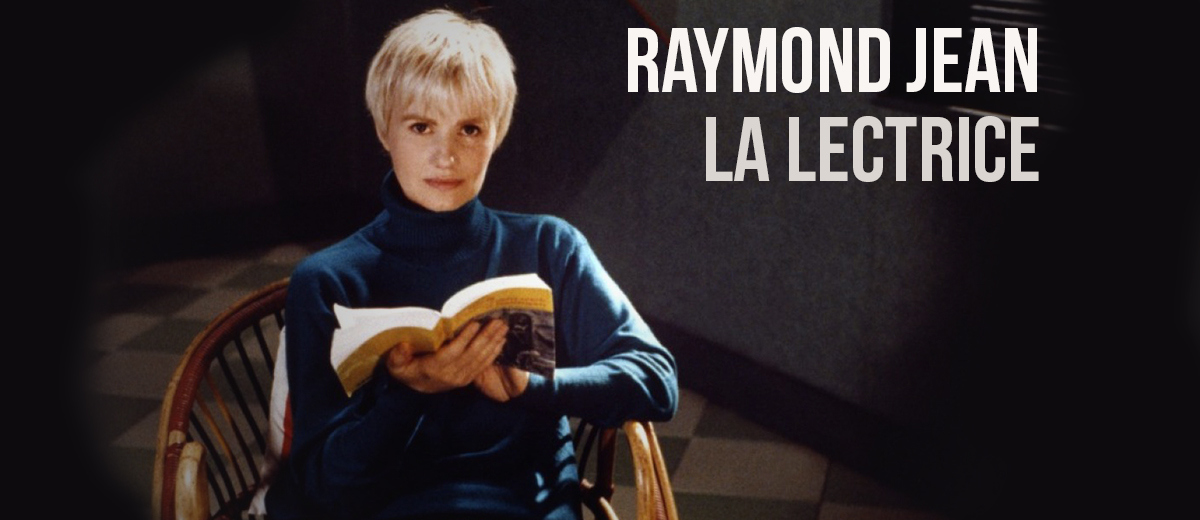
Miou-Miou in the film, La Lectrice

Miou-Miou in the film, La Lectrice

It’s a social satire that attempts to celebrate the joy of reading aloud, willing it to be the life changing experience it could be, that clearly is not. Instead, it reveals just how much loneliness, desperation and depravity exists in our society and how many are looking for something that might quell the symptoms, even if that means corrupting something else offered. Despite the obvious need to use her to fulfil their empty lives, Marie-Constance is determined to turn her fantasy into a viable profession and talks of it as if it already is.

“…I mustn’t lose the few ‘regulars’ I’ve managed to hook. In fact I’m on my way to my managing director today. He’s more hooked than anyone else, we’ve all grasped that, but by something other than reading. I’ve made my decision and I’m ready. But I might still try and bring him around to literature.”

A wheelchair bound adolescent, a six-year-old girl who wants to go to the fair, not stay at home and be read to, the aging, demented communist wife of an ex General, the depressed Managing Director and the elderly magistrate, they come in all forms and guises and like a Doctor choosing the right medicine, Marie-Constance will select Maupassant, Marx, Claude Simon, de Perec and others in her quest for the best bookish match. She thinks only in terms of literary solutions, seeking out the company of her old professor for guidance, though he too appears to have other intentions.

I enjoyed most of the book, particularly while there was still some mystery and intrigue around the characters and their motivations, however I wanted the fantasy to endure, for Marie-Constance to  find more of the genuine kind and less of the erotic, sadly the fictional reality, as depicted by Raymond Jean seems to illustrate that depravity is more in abundance and women will continue to allow it.

The book was originally published in French in 1986 and was made into a film two years later starring the French actress affectionately known as Miou-Miou, a name given to her on her acting debut by French comedian Coluche, a reference to her ‘petite voix douce miaulante’ soft voice.

Contemporary European Fiction via Peirene Press

Contemporary European Fiction via Peirene Press

The Red Notebook by Antoine Laurain tr. Emily Boyce and Jane Aitken

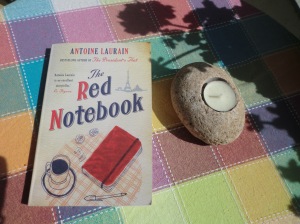
The Red Notebook Antoine Laurain Paris Light Translated FicitonAntoine Laurain is the French author of five novels, including The President’s Hat, a novel that has found a popular and loyal following in the US and UK since being translated into English by Gallic Books.

Not serious literature, they’re the kind of books you reach for when you need something uplifting and entertaining. I reached for this one at the end of winter when in the grip of a terrible flu and found it the best medicine of all!

My Review Notebooks The Red Notebook Antoine Laurain

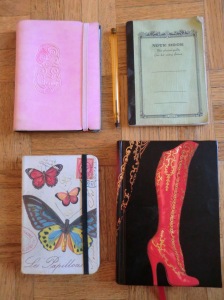
A Selection of Word by Word notebooks.

Intrigued and incensed in equal measure, as a notebook toting woman myself, I wanted to know more of this story centred around a character whose red notebook, containing handwritten thoughts and random PRIVATE jottings, has fallen into the hands of the curious bookseller, Monsieur Laurent Letellier.

Recognising it as a handbag of quality and not something intended to be thrown out, when Monsieur Letellier comes across the abandoned handbag on a Parisian street early one morning, he picks it up intending to hand it in at the police station, which he almost succeeds in doing, except, you know, French bureaucracy, it will require a one hour wait and he has a shop to open up, so plans to return later. Only later becomes much, much later and the police station is not where he will return it to.

mauve handbag The Red Notebook Antoine Laurain ParisThe bag belongs to Laure, a woman we meet in the opening pages as she clutches her handbag to her detriment, metres from her apartment, only to be shoved against a metal door frame, losing the bag anyway. Without keys, and despite it being 2am, she manages to check into the hotel opposite, promising to pay in the morning, by which time she will have fallen into a coma.

Once the bag comes home with the bookseller, it becomes a major temptation and much of the book is spent on various dilemmas arising as a consequence of his inaction, which in turn provoke memories of past events. The longer it stays with him, the more trouble it causes and the more intrigued he becomes by its owner, despite recognising his chances at redemption grow slimmer as each day passes.

Jardin du Luxembourg Antoine Laurain The Red Notebook

Early morning in the Luxembourg gardens, Paris

One of the items the bookseller discovers is a signed copy of Accident Nocturne by Patrick Modiano which leads him to track down the reclusive author, known to frequent Luxembourg Gardens most mornings. As a bookseller, he knows how rare book signings by this author are, so hopes the author may lead him to the woman.

The Modiano cameo intrigued me, particularly as he’d just won The 2014 Nobel Prize for Literature, was that the reason to mention him, I wondered? And then I read Helen’s Mad About The Books review of Dora Bruder and found an even better reason for the reference to this esteemed author.

Paris Soir Dora BruderIn Dora Bruder, Modiano tells how in 1988 he stumbled across an ad in the personal columns of the 1941 New Year’s Eve edition of Paris Soir. The ad had been placed by the parents of 15-year-old Jewish girl Dora Bruder, who had run away from the Catholic boarding school where she’d been living.

It set the author off on an obsessive quest to find out everything he could about Dora Bruder and why during the most dangerous period of the German occupation of Paris, she had run away from those protecting her. But that’s another story and book, so see Helen’s review below for more on that extraordinary tale.

The Red Notebook has little of the hardship and tragedy of Dora Bruder, it reads more like a book that could be made into an entertaining romantic comedy, it has all the ingredients, the streets and bookshops of Paris, an artists’ workshop, handbags and their intriguing taboo contents, a jealous girlfriend and a lippy adolescent daughter. Watch this space I say!

Personally, I found it wonderful to discover an author who can do uplifting, feel good stories that push the right buttons for booklovers without becoming sentimental or too romantic. Though the ending may not be realistic, it was fun getting there.

If you like a glimpse of local life in Paris, characters who observe bookshelves and mention what other characters are reading, people who write in notebooks, the short form novella and an uplifting story, that could turn into a beautiful film, then pick up a copy of The Red Notebook here.

Further Reading:

Review by Susan of A Life in Books  – The President’s Hat, Antoine Laurain

Review by Helen of Mad About the BooksDora Bruder, Patrick Modiano – translated into English by Joanna Kilmartin as The Search Warrant

Article by Antoine Laurain – On Patrick Modiano winning the 2014 Nobel Prize

Dora Bruder Patrick Modiano The Red Notebook Antoine Laurain

Note: This book was an ARC (Advance Reader Copy) kindly provided by the publisher, Gallic Books.


Beside the Sea by Véronique Olmi, tr. by Adriana Hunter (French)

A single mother of two boys wants to take them on a little holiday near the sea. That might sound simple enough, but for this mother, it is a major life event and a challenge, as she suffers from some kind of mental affliction that normally requires her to take daily medication.

Beside the SeaThis trip is out of the ordinary and we experience it from inside the mind of the mother, the stream of consciousness narrative is so effective here, it gets inside our mind as we read. We feel her sense of anxiety acutely and become almost as sensitive as she is to the threatening hostility of the outside world, that place from which she wishes to protect her children.

She wants them to experience the wonder of the seaside, she takes them for hot chocolate and they visit a funfair, all of which present certain challenges. She observes and reflects on aspects of their characters with a poetic clarity that all mothers will relate to.

“I stopped on the sea wall, my two kids holding my hands, I wondered how to do it, how to say hello to the sea.  It was making a hellish noise, really angry, and the children cowered. I stayed there, not moving a muscle, watching it…I’d been waiting for it such a long time!”

It is an incredible novella and I appreciated it all the more, ironically, after following  recent discussion on Vishy’s review of Nabakov’s Lolita . They discuss that dilemma many readers have when they recognise an exceptional prose style but feel uncomfortable with the subject or the perceptions of the protagonist. It makes it hard to share an opinion and it takes time to understand our reactions. We observe them first and then try to understand them.

What I found most interesting in those subsequent comments actually came from the more experienced readers, those who had read it more than once and they describe what changed in terms of their own perceptions with subsequent readings. In the first read we react more to the story and character, in subsequent readings it seems the reader has greater insight into the intentions of the writer/artist, beyond surface character and plot.

Those comments made me think more about Beside The Sea and wonder if I might appreciate it more coming to it for a second time. I was in admiration of the style but uncomfortable with the journey. I would recommend it to the curious, thinking reader who isn’t quick to judge and it’s not one to read when you’re feeling fragile.

anxietyThe author does an incredible job in making the reader empathise with the mother, even though I didn’t particularly enjoy going into that state and arriving at its inevitable conclusion.

I also couldn’t help thinking about these kind of stories in the media, the short versions which usually focus on the result and not what leads people to where they end up. I don’t want to spoil the read, so you’ll just have to read it to find out what I mean by that. I think the enjoyment of this book will also be dependent on where one is on the ‘potential for empathy’ scale.

It is an interesting challenge, that an author would choose to travel inside the mind of someone like this and write in the stream-of-consciousness form.  I am sure this was one of the works that the publisher and writer Mieke Ziervogel read as background research in writing her own debut novella ‘Magda‘.

Poignant and thought-provoking given the issues that lie beneath its surface, this is the story that is almost never told and rarely understood by the public, who often only see that end result favoured by the media and judge it far too easily.

This is the first book in the Peirene Press Female Voices: Inner Realities series, all of which I am reading in January 2015.

Next Up : Stone in a Landslide by Maria Barbal (translated from Catalan)

Female Voice Inner Realities

14 July La Fête Nationale: A Salmagundi of French Literature

Prise de la Bastille by   Jean-Pierre Houël Source:Wikipedia

Prise de la Bastille by Jean-Pierre Houël
Source:Wikipedia

Today is a holiday here in France, marking the celebration of la fête nationale or as we know it in English Bastille Day, commemorating 14 July 1789 when the population fearing an attack by the royal military stormed the Bastille prison and released the many political prisoners in what became a symbol of the end to the rule of the monarchy and the beginning of independence.

There will be a military parade in the Avenue des Champs-Élysées in Paris and here in Aix-en-Provence and most towns in France there will be organised displays of fireworks to commemorate.

To celebrate the National Holiday, I am following the initiative of Marina Sofia at Finding Time To Write to highlight some recently read and upcoming French reads, now available in English, here is my salmagundi of French Literature!

Click on the title to read the review and read to the end to find the definition of that tasty word for the day Salmagundi:

Two French Books I am looking forward to reading:

Poisoning (3)

The Poisoning Angel by John Teule

translated by Melanie Florence

This book is actually to be published today 14 July 2014 and the author is a well-known name in French contemporary literature. In fact I have one of his books in French on the shelf already.

This one is based on a true but gruesome story of one of the most notorious serial poisoners that France has ever known and was described by the Sunday Telegraph as:

“a bawdy romp one minute, a gruesome tragedy the next. The writing is beautiful, witty, grisly and moving, and reeks of authenticity.”

Let’s hope all that comes off in translation.

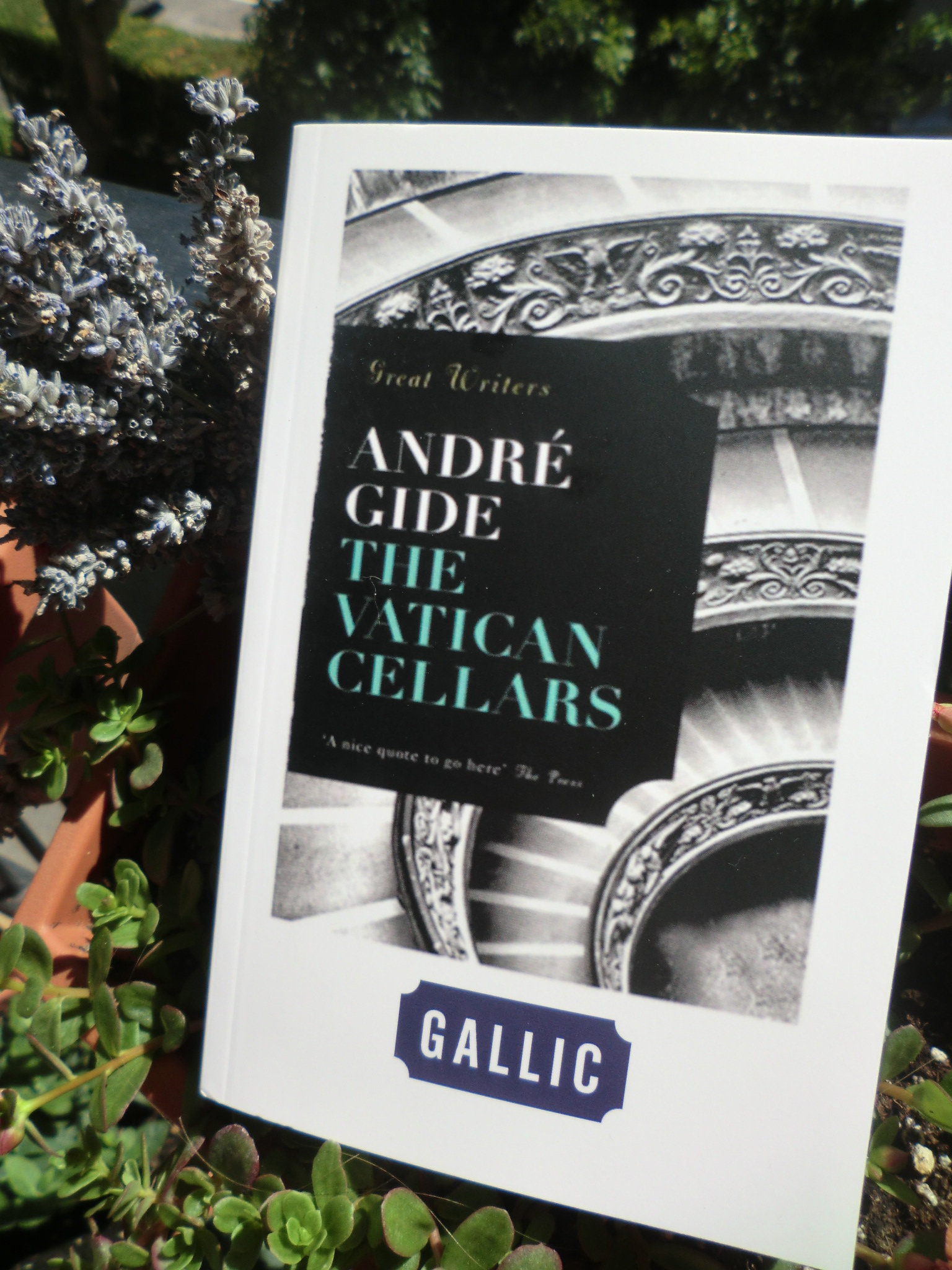
Vatican Cellars

The Vatican Cellars by André Gide

translated by Julian Evans

This book will be published in August 2014 to mark the centenary of the book’s first publication. It is set in the 1890’s around a group of ingenious fraudsters who claim that the Pope has been imprisoned and a false Pope enthroned in his place.

I haven’t read anything by this author, but he sounds like he caused quite a sensation with this novel and others, as he took it upon himself to explore morality in his work and was a major influence on the writing of Jean-Paul Sartre and Albert Camus. He was awarded the Nobel Prize for Literature in 1947 and one year after he died (in 1951) his works were placed on the Vatican’s list of banned books.

Three French Books I Read This Year:

Nagasaki (2)

Nagasaki by Eric Faye

translated by Emily Boyce

A short novella, based on a true story of an event that happened in Japan, that will make you check your fridge contents and ensure you lock the door at night.

Foundling2

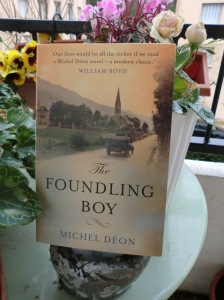
The Foundling Boy by Michel Deon

translated by Julian Evans

Coming of age story of a young boy left as a baby on a doorstep, who grows up and has an insatiable need to travel and experience the world. The sequel soon to be translated into English as well.

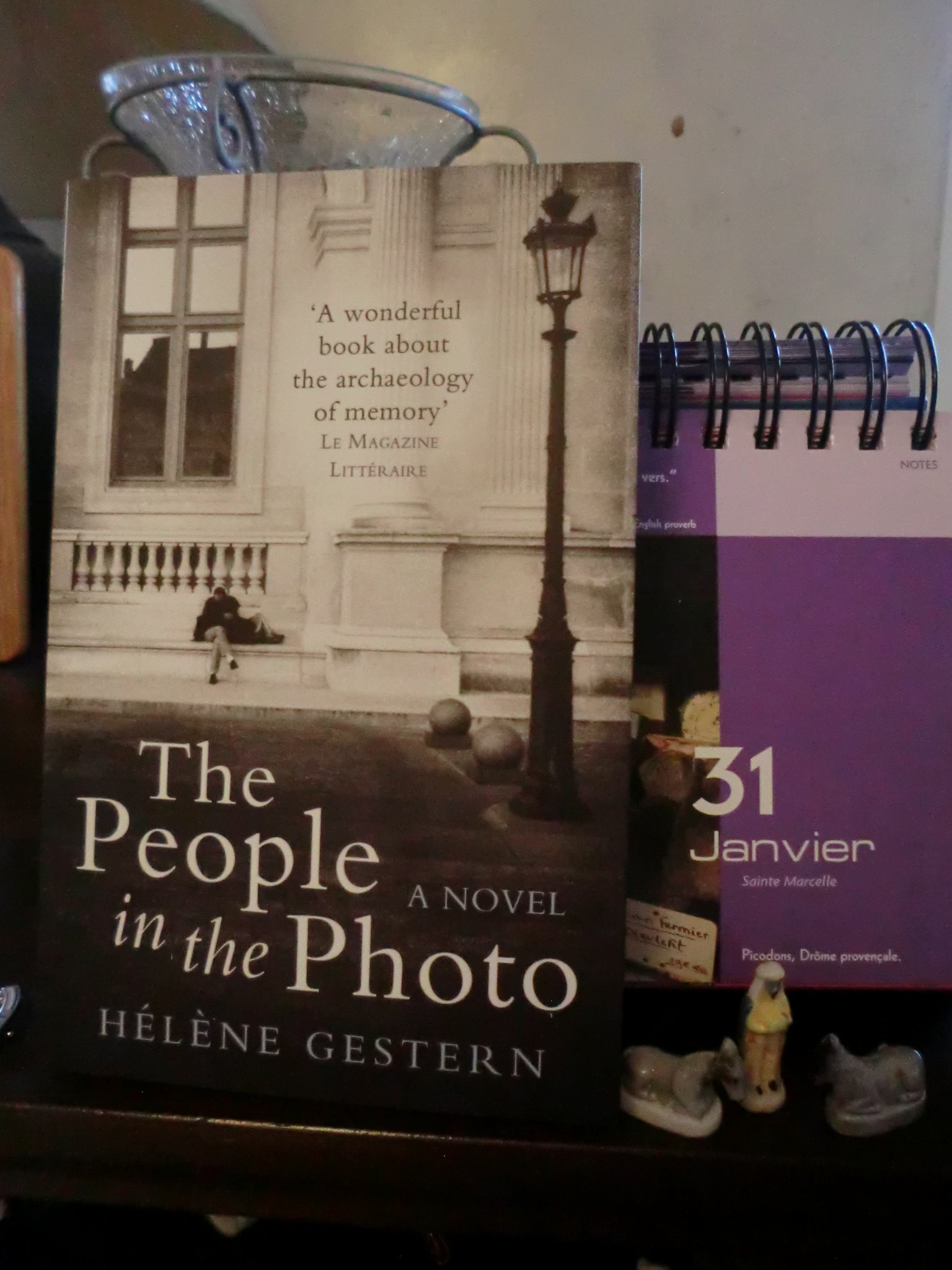
People in Photo

The People In the Photo by Hélène Gestern

translated by Emily Boyce,Ros Schwartz

A wonderful epistolary novel about a young woman searching for answers about events in her mother’s life before she was born, a photo provides a clue to those she knew.

Two Great Books Set in France:

All the Light

All the Light We Cannot See

by Anthony Doerr

Paris and Saint-Malo pre and during WWII following the lives of two children and their growth into adolescence, Marie-Laure who lost her sight at six and Werner who lost his parents and is raised in an orphanage. An excellent story that leads to the crossing of paths of these two characters and wonderfully evocative of place.

I Always Loved You

I Always Loved You

by Robin Oliveira

An insightful historical novel about the American painter Mary Cassatt, her life in late 1800’s Paris as she struggles to establish her name in the art world, enduring a life-long though fractious relationship with the impressionist painter and sculptor Edgar Degas.

Salmagundi:

  1. a mixed dish consisting usually of cubed poultry or fish, chopped meat, anchovies, eggs, onions, oil, etc., often served as a salad.
  2. any mixture or miscellany.

 Bonne Fête!


The Truth About the Harry Quebert Affair by Joël Dicker

Ok a few truths.

TruthAboutHarryThe Truth About the Harry Quebert Affair was originally written and published in French. The Swiss author, 28-year-old Joël Dicker’s first novel wasn’t a big hit, but he followed it up by writing this 600 page satire of  a young American man (his age) who writes one bestseller and then can’t write anything else.

His pushy agent and publisher threaten law suits and ruin unless he meets a deadline on his next big thing. Rather than write, he visits his ageing writing professor in New Hampshire, who was once a young man who wrote a bestseller and then didn’t write anything else. He gives him advice that prefaces many of the chapters:

“Books are interchangeable: People want a story that excites them, relaxes them, entertains them. And if you don’t give them that, someone else will – and you’ll be history.”

More truth.

Harry QuebertYesterday I was in the popular French bookstore FNAC (a kind of WH Smith equivalent) in Lyon and saw La Vérité sur l’Affaire Harry Quebert is still in the Number 1 slot. I saw it the day before in the giant supermarket Carrefour in the same position. It’s been a bestseller for over a year in France.

I do love watching a book become a runaway success and don’t always read them, but this is a book in translation, double victory –  the rights sold to 35 countries and translated into 37 languages and it won two prestigious French book awards.

The Harsh Truth.

However despite all the accolades, I have to be honest and say that I did not enjoy the read, it offered very little in terms of what I like to get from a book and worse, it annoyed me immensely in parts.

Maybe Not Your Truth Though.

But first the story, because it is a somewhat compelling read which many have and still may enjoy; full of twists and turns, a disappearance,a cold case reopened, concerning teenage girls, older men, appearances not what they seem, everyone with something to hide and more twists than an old-fashioned telephone cord. So many twists in fact, I can’t remember who did it. No, everyone did it, didn’t they? Well, Dicker certainly has a skill in making you think they’re all capable of murder.

So Marcus Goldman is living the life of a rich and famous writer in New York on the strength of a debut bestseller, when his writers block starts to have menacing consequences and he has to come up with a solution, quickly. He visits his old university professor Harry Quebert, whom he had kind of forgotten while he was busy being famous and pursued by actresses and other celebs. Not long after his visit, Harry is accused of the murder of Nola Kellergan (Nola, Lola, Lolita?), a 15-year-old girl who disappeared 30 years ago, whose remains are discovered, implicating Harry Quebert.

Marcus returns to Harry’s home when he is arrested and makes the investigation of his innocence his new purpose in life, he meddles in police affairs, interviews locals and even receives his own menacing threats penned by someone who wants him to leave town. The case might well provide him with the solution he requires, as his publisher asks him to write The Truth about what went on between Harry Quebert and Nola Kellergan.

Joel Dicker

Joël Dicker speaking in FNAC bookstore

A Consuming Truth

Viewing the wall of bestsellers is the first thing you see when you enter major supermarkets in France like Geant Casino and Carrefour; it says a lot about local culture that people are being enticed to grab a book at the very first moment they enter a supermarket! I don’t think I have seen that in any other country, I have listened to experts talk about enticing customers with fresh healthy fruit at the entrance, but not literature.

Too Many Additives

For me, although I get the requirement of a modern social satire to exaggerate, the Harry Quebert story carried too many characters that were inflated caricatures of American stereotypes, with insufficient humour to make it work. Trying to be a satire, a pastiche and a murder mystery with its innumerable twists made it for me, like a cocktail made by an unsupervised teenager  who, rather than combining two ingredients, like a mature pre-adult can’t resist adding a little of everything on offer until ultimately it becomes unpalatable.

I viewed it as an outsiders attempt at making a comment on modern American society, media, publishing, the sensationalism and obsession with broadcasting the trials of celebrities. That a 28-year-old writer could enter into a police murder investigation and  didn’t ring true enough for me to be able to read it without the constant presence of low-level annoyance at its flaws. Perhaps if I had saved it for a summer read when my expectations are lower, I may have enjoyed it more.

I do love that a French bestseller was picked up by international publishers and translated into English, the author interviewed in The Observer and elsewhere, but sadly, this award-winning novel wasn’t my cup of tea.

Great Gatsby2And in a twist of Great Gatsbyish irony, it seems that thousands of the English translation books are languishing in storage, waiting for a boom that has yet to arrive. Will it take a generation to be revered as an apt indictment of the times or will it languish in obscurity as a publishers costly mistake?

Further Reading:

The Observer Article – Joël Dicker: ‘I lost a bit of control of my life’

Note: This book was kindly sent to me by the publisher via NetGalley.

The Foundling Boy – Le jeune homme vert by Michel Déon

Foundling2Thank you to publisher Gallic Books, who noticing that I had recently read The Lost Domain (le Grand Meaulnes) by Alain-Fournier suggested I might also enjoy Michel Déon’s The Foundling Boy. Originally written in French Le jeune homme vert was first published in 1975 and now translated into English for the first time, is beginning to be enjoyed by readers of the English language.

Set in Grangeville, Normandy in the inter-war years prior to WWII, it is a coming-of-age story of the young Jean Arnaud, who starts his life in a basket on the doorstep of Albert, a one-legged war veteran, now a pacifist gardener cum caretaker  and his wife Jeanne, who raise the child as their own.

Jean grows up in the shadow of Michel and Antoinette, children of Antoine de Couseau, an errant landowner whose father built up a fortune, only for his son to slowly lose it all – unsurprisingly as much of the first 200 pages is spent in his company, a man who whenever challenged by his wife or confronted by business decisions, takes to his latest model Bugatti, a car he replaces every year and heads south, following what becomes a well-worn trail via Lyon, Aix, St Tropez to Menton, allegedly to see his grown daughter Genevieve, recuperating in a hospital residence from lung problems.

The visits rarely last longer than a wave from the window before he heads off to enjoy the hospitality and warm sheets of various mistresses en route and this being France of course, the husbands all take it in their stride.

There is a real fascination throughout the novel for unique cars that love to take to the road. I went back to look at the references which I probably glossed over in my first read, now much more knowledgeable about Ettore Bugatti and his racing cars, from the 1923 Type 22 here on the left through many other models to the 1938 57SC Atlantic on the right. And Antoine de Couseau is not the only character whom Jean Arnaud meets, to possess a similar fascination. For being raised a peasant, he has seen many a luxurious interior when it comes to cars.

Jean too, has a love of his bike and travel and will spend four days in London, developing a taste and allure for freedom and adventure and not long after will follow in the footsteps of the writer Stendhal to Milan, Florence and Rome, meeting up with Ernst, a German lad who is following a similar trail in the footsteps of Goethe, his father’s hero – having swapped his son’s copy of Mein Kampf for Goethe’s Italienische Reise (Italian Journey).

Arnauds JourneyThe two young men share adventures, debate philosophical perspectives and encounter the fragility of friendship in the face of prejudice and racism.

Losing everything and having almost become the amoureux slave of a restaurant proprietor, who offers him a job so he can earn enough money to return home, Jean finally returns making the acquaintance of Palfry on his way, only to discover things at home vastly changed.

Throughout all Jean’s experiences, there are the interactions with family, friends, neighbours, villagers and people he meets along the way, it is not enough to accept the wisdom of others, he wants to explore for himself, whether it is the landscapes of neighbouring countries or the social acquaintances of his friend Palfry, a man who gave him a ride in his car dressed as a priest and whom he meets at various stages in his life who teaches him that things are not always as they seem. Ultimately, this searching might also be to understand who he really is, something within him, but that he also seeks outside from those he knows, the mystery of his birth.

“What is certain is that, overnight, Jean Arnaud matured by several years, learning that a priest may also be a plotter, and that without being thieves and murderers men might have to hide from the police because they were defending a noble cause. The world was not built of flawless blocks, of good and bad, of pure and impure. More subtle divisions undermined the picture he had so far been given of morality and duty. “

Fairly early on, it occurred to me that nearly every female character was caricatured as something of an object, the neighbour’s daughter, the house-maids, the women Antoine de Courseau encounters on his travels, even his daughter Geneviève becomes a ‘kept’ woman.

While it is an engaging and entertaining read, that moves along at the rambling, colourful pace of a joy-ride in a Bugatti, it began to feel like a book written for men, for it is they who travel (with the exception perhaps of Geneviève), have adventures, engage in meaningful banter, witty dialogue and to whom much of the advice within is given.

I admit to a moment of despair in being unable to think of one woman with redeeming qualities, that a female reader might relate to, why even the landlady of the Bed & Breakfast in Dover drags the poor 13-year-old youth off to the pub keeping him there till closing, Jean’s first impression of England is certainly one that stays long in his memory.

Jean purchases himself a notebook early on in his journeys and in his letters and notes, we are witness to how he begins to see the world:

I’ve bought myself a notebook where I’ve started making a few notes:

a) Duplicity: absolutely necessary for a life without dramas. You have to harden your heart. I need to be capable, without blushing to my roots, of sleeping with a woman and then being a jolly decent chap to her lover or husband. This is essential. Without it society would be impossible.

I guess, we could just say it is delightfully French and certainly the women are not portrayed as victims, quite the opposite in many cases, but they did make this reader pause for reflection. An eye-opening, memorable journey through the European landscape whilst inhabiting a very French culture and perspective.

Michel Déon inhabits his male characters with pride and indeed enjoys himself so much, he can’t help but put himself into the narrative from time to time speaking with much enthusiasm and familiarity directly to the reader. And with good reason, for it has been said of his young hero that:

“The character of Jean Arnaud has been heralded as one of French literature’s great adolescents, alongside Flaubert’s Frédéric Moreau, Stendhal’s Julien Sorel and Alain-Fournier’s Augustin Meaulnes.”
les vingt ans

Michel Déon has the last say, as he leaves Jean Arnaud in a military camp on the eve of war, a sealed envelope in his pocket with instructions not to open it unless he is in extreme need, his life full of promise yet hardly begun by telling us not to worry about those things he has not revealed, that here he was a foundling boy and in another book, he will tell the story of how his protagonist becomes a man.

The sequel, The Foundling’s War (Les Vingt Ans du Jeune Homme Vert) is due to be translated into English and published also by Gallic Books. I am intrigued to know what Jean Arnaud makes of life given his experience thus far and how war might change him. Watch this space!

The People in the Photo – Eux sur la photo by Hélène Gestern

Belgravia BooksI have been patiently waiting for this book to be published since discovering it at the same time I learned of the existence of Gallic Books, francophile publishers based in London specialising in bringing a varied collection of excellent French titles across genres to the English reading world. You can buy their books online or at Belgravia Books which specialises in books in translation (5 mins walk from Victoria train station).

I had something of a French literature binge in December, reading Philippe Claudel’s Brodeck’s Report, Alain Fournier’s classic The Lost Domain, Faïza Guène’s young adult novel Just Like Tomorrow and a couple of Albert Camus essays in commemoration of his 100th anniversary. And I am set to continue this theme in 2014, perhaps even venturing into reading a few in the original language!

The People in the Photo is Hélène Gestern’s debut novel and centres on 40-year-old Parisian archivist Hélène’s personal endeavour to learn more about her mother Nathalie, who died when she was four-years-old and about whom no-one would ever speak, not her father, nor her step-mother or any other person and she never understood why.

Gestern

Her father has passed away and now her stepmother, the last living connection between her and her mother is seriously unwell, an event that prompts her into action.
Hélène has only one photo of her mother alongside two unknown men and places an advertisement to try to find anyone who might recognise them.

It marks the beginning of a correspondence and indeed much of the novel is in epistolary form, made up of letters and emails, with the exception of extracts that describe the various photos that are uncovered by Hélène and Stéphane, a Swiss biologist, who recognises one of the men in the photo.

The letters add more than just their content to the narrative, they are an adept device for creating pace and intrigue, their length and dates are significant measuring the time that passes, the pauses, the urgency of an occasional email and yet there is an unwillingness to let go of the controlled structure and single dialogue of the letter, their preferred medium; the revealing sign-off salutations a clue to the developing relationship between the two protagonists.

LettersIt is a revelatory journey of two people into the past of their parent’s lives. Inherent in delving into the past, no matter how necessary it may seem, is the risk of deception, disappointment, even horror in enlightenment.

Hélène Gestern deftly captures the seesaw of emotions as both characters experience waves of exhilaration in their search and periods of retreat from the insinuations of discovery, suggestions they aren’t always ready to face the implications of.

At times the characters seemed extraordinarily restrained, upon receiving a box likely to contain pertinent information, Hélène leaves it unopened for days, her excuse – no time or inclination, yet there is always sufficient to write the correspondence. It is understandable in a sense, the fear of what the revelation will bring, then Stéfane does the same, after developing a set of photos, has no time to look at them, yet has time for a 2 hour walk and his correspondence as well.

Perhaps the lure of corresponding with the living, that ever-present possibility of a future still to be enjoyed, sometimes overwhelms the need to continue digging into a dusty, forgotten past that holds little promise of joy. Or it might just be the sign of a compelling read, and our impatience with characters, living or between the pages of a book, who don’t act as we might, were we in their shoes.

It is a captivating read, intensely thought-provoking and intricately plotted, revealing little by little clues to lives lived in a distant era, yet which explain much of the more recent past for two young people allowing them greater understanding and the potential for forgiveness of those who, until their truth was revealed, were to them like shadows of their former selves.

Note: Thank you kindly to Gallic Books for sending me a copy of the book to read and review.