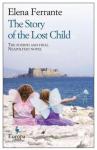
The Story of the Lost Child by Elena Ferrante tr. Ann Goldstein

The final book in the Neapolitan Novels tetralogy that began with Elena Ferrante’s My Brilliant FriendThe Story of the Lost Child continues the saga of two compelling woman, Elena and Lila, childhood friends and now single mothers, back living in the neighbourhood of their humble origins.

At the end of Book 3 Those Who Leave and Those Who Stay, Elena was in the midst of a crisis, unable to think or act in anyone’s best interests, rather, she was lead by the wild palpitations of a lust driven heart and appeared to be prepared to risk all she had fought so hard and for so long to rise above and gain.

Now with everything collapsing around her, she returns to her roots, where things are as likely to be in disorder and chaos, but in a place where she feels safe, it is familiar, known.

Elena’s daughters must adapt to a less pampered life, although their mother wishes that they, like her, acquire sufficient education to allow them choices about where and how they might live. Elena and Lila’s children present them both with significant challenges, causing them to move closer together in some respects and further apart when tragedy strikes hard.

As with the previous books, Elena is never quite sure of Lila’s intentions, questioning her motives when she appears helpful and suspicious of her intentions when she informs her of gossip. It is a characteristic of their friendship that has existed since the beginning, an aspect Elena never fully unravels and keeps her always on guard.

‘I went home depressed. I couldn’t drive out the suspicion that she was using me, just as Marcello had said. She had sent me out to risk everything and counted on that bit of fame I had to win her war, to complete her revenge, to silence all her feelings of guilt.’
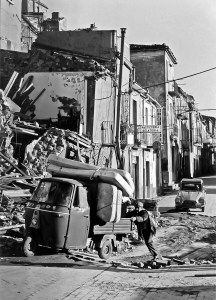
Naples Earthquake 1980It is the 1980’s and one of the turning points in Lila’s deterioration is the earthquake that occurred on November 23, 1980 killing 3,000 and rendering 300,000 of Naples inhabitants homeless. It is used as a powerful metaphor for the destabilisation that occurs in Elena and Lila’s lives.

‘It expelled the habit of stability and solidity, the confidence that every second would be identical to the next, the familiarity of sounds and gestures, the certainty of recognising them. A sort of suspicion of every form of reassurance took over, a tendency to believe in every prediction of bad luck, an obsessive attention to signs of the brittleness of the world, and it was hard to take control again. Minutes and minutes and minutes that wouldn’t end.’

Elena has always sought her independence and intended to create a career as a writer, it is only when she moves back to the neighbourhood that she realises with greater urgency that she must be autonomous.

‘It was then that a part of me – only a part – began to emerge that consciously, without particularly suffering, admitted that it couldn’t really count on him. It wasn’t just the old fear that he would leave me; rather it seemed to me an abrupt contraction of perspective. I stopped looking into the distance, I began to think that in the immediate future I couldn’t expect from Nino more than what he was giving me, and that I had to decide if it was enough.’

Book Four brings the girls full circle into the adult world where the relationships of childhood and dramas of their youth play out in a more dangerous playground, where boyhood pranks have evolved into criminal activities and the annoying habits of children transform into the damaging actions of adults with far-reaching and destructive consequences.

They are no longer observers of the world around them, they are perpetrators of events and circumstances that will affect the next generation, their children. Though they never wanted it and put all their energy into trying to prevent it, in many ways, they have begun to resemble the already departed, those they worked so hard not to become.

Book Four brings Elena and Lila’s stories back to where it all began, reacquainting us with the story’s beginning, of memories and possessions that have endured, that contain within them that sense of unease alongside the familiar, the two coexist and can not be separated, even in maturity. It is a conclusion of sorts, as thought-provoking as we have come to expect previously, not quite giving in to that alternative literary tradition of tying things up neatly.

I read the first three books in close proximity, each volume adding to the compulsion to want to re-enter their lives and discover what would happen next.  The longer gap in awaiting this final novel meant it took a little longer to pick up the pace, suggesting it might be a series best read consecutively.

If you haven’t read Elena Ferrante yet, here are links to reviews of the first three books in this series:

The Neapolitan Novels Reviewed

Book 1: My Brilliant Friend

Book 2: The Story of a New Name

Book 3: Those Who Leave and Those Who Stay


Note: This was an Advance Reader Copy (ARC) thank you to the publisher Europa Editions for kindly providing me with a review copy.
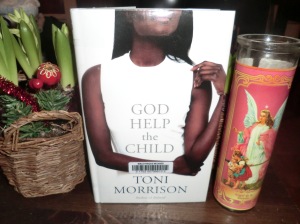


God Help the Child by Toni Morrison

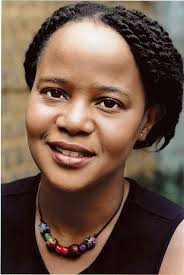
Toni MorrisonBride is young, in her twenties, but has learned early the importance of a word, a gesture, a look that can change people’s perception of you, as long as you stick to it, you become known for it, unforgettable, and that one thing can change your world.

God Help the Child is mostly told through the life experience of Bride, a name she chose for herself as she launched herself into a successful and glamorous career in the perfume/fashion world.

It is far from the memory of neglect and disapproval that was her constant companion throughout childhood, channeled through the eyes, words and gestures of a mother unable to move beyond the disappointment of the blue/black tone of her daughter’s skin.

‘I told her to call me “Sweetness” instead of “Mother” or “Mama”. It was safer. Being that black and having what I think are too-thick lips calling me “Mama” would confuse people. Besides, she has funny-coloured eyes, crow-black with a blue tint, something witchy about them too.’

Before her second interview for the job she covets, she consults a designer called Jeri, who convinces her to only ever wear white, accentuating both her new name and because of the effect it had on what he described as her licorice skin.

‘At first it was boring shopping for white-only clothes until I learned how many shades of white there were: ivory, oyster, alabaster, paper white, snow, cream, ecru, Champagne, ghost, bone.’

Bride waits in a prison parking lot for a convicted felon to emerge on the last day of their sentence. She comes with a gift and a different form of naivety than that she possessed when her testimony put this person away for 20 long years.

Her current boyfriend Booker has just left her, and now this. She excels in acquiring knowledge to help her scale the ladder of success, but there is a gaping hole within that pushes her to put all else aside and find answers to questions she can barely articulate to herself.

On a whim, she tries to track down the man who disappeared without a goodbye and after a car accident and injury, finds herself living with a couple and a girl in self-imposed poverty; a stark contrast to her lifestyle. As she pursues those unclear questions, strange but noticeable things begin to happen to her body, as if it is regressing towards childhood.

Each subsequent part tells of an encounter of someone she meets or has met previously and although their stories differ there is a common thread that ties them all and demonstrates in various ways the effect these childhood experiences have on a person subsequently, how they shape who we become, how we react to things, how they affect one’s perception.

Toni Morrison

Toni Morrison

The characters enthrall, each one introduced fleetingly, intriguing and hinting at the depths that their own stories have led them to become. Morrison makes us wait and slowly reveals those experiences for the select few deemed important to the narrative. It is perhaps through this hinting at and omission, that much is left to the reader to contemplate, but then Morrison isn’t known for having to spell it all out or writing sagas, and there is enough divulged to create a balance and equal contribution between the four parts of the novel.

It is a thought-provoking, evocative novel that deserves more than one reading, demonstrating the ease with which Toni Morrison and her narrative skill are able to skate into the 21st century, to pick up and explore the nuances of another of society’s dysfunctional aspects, that the things you do and say to children in their early years really matter and will impact their adult perceptions, actions and relationships. However, there are moments, that if grasped, can and do lead one out of that.

Brilliantly told, subtle and yet powerful, Morrison’s final words at the end of the book, reminded me of the closing words of Maya Angelou in an interview she gave to the BBC near the end of her life, after a lifetime of addressing issues that manifest throughout life, her final words too, speak of children.

“Exercise patience with yourself first, so you can forgive yourself for all the dumb things you do. Then exercise patience with your children.” Maya Angelou

Breath, Eyes, Memory by Edwidge Danticat

Breath Eyes MemoryNarrated from the point of view of the grand-daughter Sophie Caco, who we meet while she is living with her unmarried Aunt, Tante Atie in a village in Haiti, we enter the difficult world of being female and being raised by women, in an environment where an innocent life, a contented child can turn into a tormented adult, ravaged by recurring dreams and nightmares.

“I know old people, they have great knowledge. I have been taught  never to contradict our elders. I am the oldest child. My place is here. I am supposed to march at the head of the old woman’s coffin. I am supposed to lead her funeral procession. But even if lightning should strike me now, I will say this: I am tired. I woke up one morning and I was old myself.”

Maryse Condé’s novel Victoire: My Mother’s Mother, a book that recounts the facts as she could gather them on the life of her grandmother, helps us understand the importance of memory in the context of a historical narrative of people’s lives. I find her comments important in relation to Edwidge Danticat’s work which also harvests the ‘rich landscape of memory’.

In an interview with Megan Doll, responding to a question about how she went about researching the life of a woman who had died before she was born:

“…people will tell you that in places like the Caribbean, West Africa and so on, we have two distinct elements. We have history which is written in books about the white people — how they came to Guadeloupe, how they colonized Guadeloupe, how they became the masters of Guadeloupe — and you have memory, which is the actual facts of the people of Guadeloupe and Martinique — the way they lived, the way they suffered, the way they enjoyed life. We are trained to rely more on our memories and the memories of people around us than on books. So I interviewed people, I asked questions to everybody who knew her or knew my mother or my father. It took me about three years to write Victoire. I wanted to find the history of my immediate family but at the same time the history of Guadeloupe – a period of time that I didn’t know, which was not too distant, after all, but was distant in terms of the behaviour of the people of Guadeloupe.”

Edwidge Danticat’s novel is a tale that encompasses four generations of women, where stories are passed on, secrets are sent away and a lantern observed in the distance will tell us whether a boy or girl has been born.

“There is always a place where women live near trees that, blowing in the wind, sound like music. These women tell stories to their children both to frighten and delight them. These women, they are fluttering lanterns on the hills, fireflies in the night, the faces that loom over you and recreate the same unspeakable acts that they themselves lived through. There is always a place where nightmares are passed on  through generations like heirlooms. Where women like cardinal birds return to look at their own faces in stagnant bodies of water.”

Sophie’s mother lives in New York, she knows little about her and relates to her Aunt more as a mother figure, she doesn’t know why her mother lives far away, nor is she curious about it, but when she turns twelve her mother sends a plane ticket, it is time for her to join her.

Her mother is a care worker and initially takes her with her to work, until school begins. She presses on her daughter the importance of education, the only escape, opportunity for a girl child to have choices. Sophie witnesses her mother’s violent nightmares, a fear she can not assuage, she learns the reason for her mother’s disturbing state of mind and discovers the ways mother’s ‘test’ their daughters.

Edwidge Danticat

Edwidge Danticat

Despite a protected adolescence, Sophie falls in love, she concocts a lie to put her mother off, but suffers the torment of suspicion and decides to rebel against it.

Eventually she returns to her Aunt and grandmother, to the familiar, the women who have known her from birth, to try to make sense of things.

It is a compelling story of a family, their traditions and superstitions, their aspirations and fears, the things they accept and those they run from. It also touches on the sadness and dissociation of the immigrant from their culture and roots, that in order to attain their desire, it is necessary to give up much of their identity.

“It is really hard for the new-generation girls,” she began. “You will have to choose between the really old-fashioned Haitians and the new-generation Haitians. The old-fashioned ones are not exactly prize fruits. They make you cook plantains and rice and beans and never let you feed them lasagna. The problem with the new generation is that a lot of them have lost their sense of obligation to the family’s honour. Rather than become doctors and engineers, they want to drive taxicabs to make quick cash.”

A simple read and an extraordinary book, the lives of these characters seep into the reader, these generations of women raising their daughters alone, living with their demons of the past, trying to ensure nothing of their own suffering passes on to the next generation.

Edwidge Danticat was born in Haiti in 1969, raised by her Aunt and joined her parents in America when she was twelve. Breath, Eyes, Memory was her first novel, she has written many award-winning short stories and novels including The Farming of Bones, The Dew Breaker and her most recent Claire of the Sea Light.

Victoire: My Mother’s Mother by Maryse Condé tr. Richard Philcox

Maryse Condé is the author I discovered on the Man Booker International long list, the author that stood out for me, even if she didn’t win the prize. Since discovering her, I have read and reviewed the book she recommended for those wishing to discover her work, Tales From the Heart: True Stories From my Childhoodvignettes of her life growing up as the youngest and 8th child of a civil servant (who had been a school principal when her mother married him) and school teacher in a black bourgeoise family.

I decide to follow this up with another tale Victoire: My Mother’s Mother, though publishers label it as fiction, it is based on the life and facts of her grandmother. Victoire was an illiterate, white skinned woman she never met, who worked as a highly reputable cook for a white Creole family, the Walbergs, a connection that her mother Jeanne, though raised, supported and educated by this family, appeared to reject.

VictoireMaryse Condé wrote this account in a desire to learn more of her family history, a quest that began by researching the life of Victoire Elodie Quidal, speaking to a lot of people and a project that would take three years to complete.

When she questioned her mother Jeanne, a woman with no discernible palate, incapable of boiling an egg, she was shocked to learn her grandmother had been a cook.

‘And she didn’t teach you anything, not even one recipe?’ She continued without answering the question. ‘She first worked in Grand Bourg for the Jovials, some relatives of ours. That ended badly. Very badly. Then …then she migrated to La Pointe and hired out her services to the Walbergs, a family of white Creoles, right up until she died.’

Maryse wanted answers, but that was as much as her mother would share, they never resumed the conversation, the years passed by, in a kind of chaos, however that conversation never left her curious mind and her grandmother began to seep into her imagination.

Sometimes I would wake up at night and see her sitting in a corner of the room, like a reproach, so different to what I had become.

‘What are you doing running around from Segu to Japan to South Africa? What’s the point of all these travels? Can’t you realise that the only journey that counts is discovering your inner self? That’s the only thing that matters. What are you waiting for to take an interest in me?’ she seemed to be telling me.

Victoire’s mother Eliette was a twin who died in childbirth at the age of fourteen. More than the shock of her pregnancy and sudden death, was the appearance of a child with clear eyes and pink skin. No one was aware of her having crossed paths with a white man, there were no whites in La Trielle where she lived except priests and at one point a garrison of soldiers, who’d been training in the area, before being despatched back to France.

Eliette’s mother Caldonia raised Victoire and became close to her, when most people were wary of her with her too white skin and transparent eyes. The only education she received was religious and at the age of 10, the Jovial’s requested she come and work for them in the kitchen. Given only the thankless tasks, she observed the others and began to acquire the culinary skills she would become so well-known for.

Obtaining a position as cook for the Dulieu-Beaufort family was a turning point in her life, perhaps even more so than finding herself pregnant at 16-years-old, for in this family she would meet her lifelong friend Anne-Marie, her same age, outraged at having been married off to Boniface Walberg, Victoire’s future employers and the beginning of a mysterious and enduring relationship, one that set people talking and would be seen by her daughter Jeanne (Maryse’s mother) with utmost disapproval.

Apart from a brief period when Victoire fell in love with another, causing a period of separation from her daughter, and a significant turning point in their relationship, she would stay loyal to the Walberg’s all her life. Though she could neither read or write, she accepted her life, despite suffering the disapproval of her unforgiving daughter Jeanne, who would obtain an excellent education and position, marry a man twenty years her senior, removing all risk of insecurity that she’d observed in her mother and previous generations, determined to avoid a similar fate.

In an interview with Megan Doll, in Bookslut Maryse Condé explains her desire to write about her grandmother:

Maryse Condé‘The story is, of course, about my grandmother but the real problem was my mother. I lost my mother when I was very young — fourteen and a half. And during the short time that I knew her I could never understand her. She was a very complex character. Some people — most people, the majority of people — disliked her. They believed she was too arrogant, too choleric. But we knew at home that she was the most sensitive person and I could not understand that contradiction between the way she looked and the way she actually was. So I tried to understand as I grew up and I discovered that it was because of a big problem with her own mother. She seems to have failed; she had the feeling that she was not a good, dutiful daughter. I had to understand the grandmother and the relationship between my mother, Jeanne, and her mother, Victoire, to understand who Jeanne was, why she was the way she was, and at the same time understand myself.’

Condé also finds a connection between her and Victoire through their creativity, her grandmother’s through her renowned cuisine, Condé’s through her writing. At times she almost appears to channel her grandmother, as she senses what she may have been thinking or why she reacted in a certain way,  connecting with this mysterious woman who was so different to the mother she knew, a woman equally misunderstood by the community around her.

This was the perfect follow-up to Tales of the Heart and an intriguing look into the impact of circumstances of birth of three generations of women, how the past constantly threatens and can mock one’s position in the present, somewhat explaining Jeanne’s instinct to distance herself from her illiterate mother while fulfilling her ambitions and then her guilt at having treated her mother badly, when she only wanted the best for her.

The two books I have read were translated from French into English.

From Caucasia With Love by Danzy Senna

A Longish Intro on How I Came Across this Book

OreoDanzy Senna reviewed a book in the New Yorker in May 2015, a work she refers to as that hilarious, badass novel Oreo* by Fran Ross, an overlooked classic, a satire about race, originally published in 1974 without a stir, the novel everyone remembers from that time published two years later, had the title Roots.

Senna read Oreo in the late 1990’s, when she was living in a neighbourhood of what she called ‘Brooklyn’s dreadlocked élite‘ talented, up and coming, young black musicians, film-makers, artists said to be backed by the likes of Tracy Chapman and Alice Walker.

Though it had been written 20 years before, the book seemed to speak of their present and in her article she reflects on the narratives that had tended to gain traction and audience, those like Roots that looked back at slavery and oppression and then those that had been ignored, like Oreo, narratives that looked forward, that addressed modern issues, where no one is immune to criticism.

Sadly, Fran Ross died at a young age of cancer, little known in the literary world, this her only published work. It was republished in July 2015.

*To much of the public, an oreo is a black biscuit with white cream filling, in the African-American community however, it is a racial slur used to insult a black person who appears to act white.

You can read the article linked below, I hope to read the book soon, and all this to say how I came across the author Danzy Senna, who wrote From Caucasia, With Love, a novel about a mixed race family and the effect on their two daughters, when they separate, on account of the differing colour of their skin.

Review of From Caucasia, With Love

CaucasiaBirdie and Cole are two sisters, so close, they have their own made up language they speak fluently, that no one else can understand. The rest of society judges them on appearance, for Birdie appears white and her older sister Cole appears to be black.

While their parents are together it is less of an issue, but when they separate and move away from each other, each daughter departing with one parent, they will discover how much their colour dictates other people’s perceptions of them. Cole leaves for Brazil with her father and Birdie is on the run with her white activist mother fleeing the authorities.

The story is narrated from the point of view of Birdie and although she feels just like her sister, there were already signs of their differences in the behaviour of those closest to them. Her white grandmothers favouritism, and her father’s new girlfriend who won’t look her in the eye,  favoured by one, rejected by the other.

Birdie travels with her mother, losing all contact with her sister and father and integrates into a new life and school as someone she is not, she accepts it, but the truth seethes beneath the surface of all her interactions, she becomes numb to the misconceptions about who she is, until she has had enough and decides to go looking for Cole and her father.

“Strange as it may sound, there was safety in this pantomime. The less I behaved like myself, the more I could believe that this was still a game. That my real self – Birdie Lee – was safely hidden beneath my beige flesh, and that when the right moment came, I would reveal her, preserved, frozen solid in the moment in which I had left her.”

Danzy Senna

Danzy Senna

It is a gripping coming of age story of a girl who must deal with so much more than growing up, being forced to subsume another identity, neither one thing nor the other, without a role model to guide her.

It is a courageous effort to place the reader in the mind of a character who is like a changeling, crossing racial and geographic boundaries, making choices that will ensure not just her survival, but that she gets the answers she is looking for.

Further Reading:

New Yorker Article – An Overlooked Classic About the Comedy of Race by Danzy Senna


Ladder of Years by Anne Tyler

Reading Anne Tyler’s 20th novel  A Spool of Blue Thread, reviewed here, first felt a little like turning to the back of the book before reading it through. This is how it ends, three generations upended, we found out how they came to be and what their origins were at the end.

ladder of yearsI wanted to try another Anne Tyler novel to have a better sense of her work and so I asked around for recommendations and eventually decided on Ladder of Years.

What a great book!

Still set in the same small town Baltimore, another family, this time we are inside the mind of Delia Grinstead, the youngest of three adult sisters, daughters of a local GP who has recently passed away. He had been living with Delia and her husband, who is also a GP, one who took over the practice from her father where Delia remained the administrator, first to her father, then to her husband, never leaving home.

A smooth transition from daughter of the Doctor to wife of the Doctor, the same home, raising three children, taking the same holiday year after year, viewing the same holiday neighbours over the fence year after year, speculating about their family members, having never spoken a word to them.

Delia doesn’t appear disgruntled, but one day while on holiday she walks off down the beach (a bit like our Harold Fry) in her husband’s beach robe and just keeps going.

What follows is something like the winding back of the clock, a version of what her life might have been, had her husband chosen sister number 1 or sister number 2 and not sister number 3, Delia.

It’s not dramatic, it’s almost sensible, if we can use that word about someone who just walks out on their life like that. She expresses no hatred, disappointment or loss, she thinks only about herself in the present and responds always to the requests of others – rather than see fault in her own actions, she interprets others confusion or hurt with, “if they had only asked”, she offers little proactively and yet will respond to anything if asked.

ladderShe is something of an enigma and at first I wondered how she could so easily leave behind her children without much thought, then I wondered if she was menopausal, because at that time women lose a lot of that hormone that makes them so fiercely protective and maternal towards their children, or were they just more grown up and less in need of her?

She doesn’t have a lot to say about her motives, it is as if she acted without understanding the deep need inside her to move. Another reader commented she reminds me of a spoiled youngest born who does just about everything without motivation

I don’t have much of an insight into youngest borns as a type, but Delia was certainly quietly mysterious, I found the novel compelling, without any clear or stated motivation, she was unpredictable and yet ever so conservative.

Brilliantly constructed, a compelling read, I really enjoyed Ladder of Years and was intrigued right up until the last page. And bizarrely, there is also a spool of blue thread in this book, a small detail written twenty years ago(published in 1995), that would one day grow up to become an entire novel of its own.

A Spool of Blue Thread by Anne Tyler

Anne Tyler is an author that is well-known to many and A Spool of Blue Thread is her 20th published novel, said perhaps to be her last.

If like me you haven’t read Anne Tyler before (am I the only one?), you can get an idea of what she’s about from this succinct, sound-bite like feature 10 Things you Need to Know about Anne Tyler by Shelley Marks via The Pool, a hip, online writing, audio and video resource for women, that launched just before Easter. Click on the image below to visit.

The Pool

Anne Tyler writes about family and domestic life in suburban America (Baltimore) and this new novel opens with something of an anti-drama when Abby and Red Whitshank receive a confusing telephone message from their son Denny, who has left home but not exactly settled into whatever it is he intends to do. Abby swings between wanting to just leave him be and being over-anxious to find out what’s going on.

A SpoolThe novel dwells on certain periods when members of the family return home, the four children are all adults in the opening pages and as the back story is filled in, we observe petty grievances, old resentments, current mysteries and a family coming to term with changes as their parents age and may need to move on from the family home.

The book is separated into four parts, starting with Abby and Red in their later years in 1994, sliding back to 1954 just before they began dating, and then even further back to the period when the family home was built by Red’s father Junior, the most intriguing chapters of the book for me, where we hear about how he and his wife Linnie met, the book then returns to the present in Part Four.

The family home could almost be considered a character in itself, the novel concerning the minutiae of family life and events related to that house that was originally built by Red’s father Junior Whitshank, a home he constructed for Mr and Mrs Brill, but one he tended with a love and obsession to detail one would normally reserve for one’s own home. For deep inside, he knew he was building it for himself, he would just have to wait the necessary years – a patience he knew well, and sure enough the opportunity came around when he would indeed reclaim it.

“It was nothing but an architect’s drawing the first time he laid eyes on it. Mr. Ernest Brill, a Baltimore textile manufacturer, had unfurled a roll of blueprints while standing in front of the lot where he and Junior had arranged to meet. And Junior glanced first at the lot and then down at the drawing of the front elevation, which showed a clapboard house with a gigantic front porch, and the words that popped into his head were ‘Why, that’s my house!’ “

Over the years and generations that followed, that home became the repository of memories, events and upbringings whose recollections were as present as the fixings that held the structure together, every inch of the house infused with the presence of family past and present. It is not until we arrive at Part Three that we really understand the significance of the house and what it meant for Junior to have arrived there, thus allowing the next generations to live as they do, in blissful ignorance of their past.

This narration of the present before the past adds an unexpected surprising element to what is otherwise a fairly straightforward domestic saga, the Whitshank’s don’t know much about their origins and the reader too won’t learn what the family will never know until later in the book. It reminds us not to make assumptions about people, not to judge a family by the size of their porch, a book by its cover, and so many other outward appearances that make it easy to create a false image of what lies within.

Spool Blue ThreadA Spool of Blue Thread reminded me in some ways of Jonathan Franzen’s The Corrections, I guess that is the book that comes to mind, when I try to recall if I’ve read anything similar to this.

Ironically, after finishing this book, I read Anne Tyler’s Ladder of Years to get more of a feel for her work and about two-thirds the way through, came across another spool of blue thread, which although a causal reference, did make me wonder if this story had been gestating a long time.

A Spool of Blue Thread is long listed for the Baileys Women’s Prize for Fiction 2015.


The Autobiography of my Mother by Jamaica Kincaid

Jamaica Kincaid’s The Autobiography of my Mother is a book that was being discarded from our local English library that I pounced on when I discovered it in the collection of books that hadn’t been borrowed for years and therefore must make way for others.

The 7 books I rescued from the Annual Library Sale!

The 7 books I rescued from the Annual Library Sale!

I already have two slim novellas by the same author that sit unread, but something about this novel, for it is fiction, despite the playful title, insisted it should be read at once. Not just a fabulous cover, which is repeated inside as chapter headings, each chapter reveals a section of the photo, until the last one revealing the entire portrait – but the comments from various publications and writers who sang its praise back in 1996 when it was first published.

“Writing in precise, lyrical prose that uses the repetition of images and words to build a musical rhythm, Jamaica Kincaid conjures up the world of Dominica in all its beauty and casual cruelty, a world in which the magical coexists with the mundane, a world in which the ghosts of colonialism still haunt the relationships between men and women. In doing so she has written a powerful and disturbing book.” NEW YORK TIMES

And let me say from the outset, I absolutely loved this book, its language, its voice, its poetry, the complexity of its narrator, who could be so distant yet simultaneously get so under your skin. There is a raw but brutal honesty to it, that disturbs and is to be admired at the same time, it is so full of contrasts and so compelling and beats its rhythm so loud, I almost can’t describe it.

Now that I have finished it, I want to read more by Kincaid and just now before writing this review I looked up a little about the author’s own life, and now I am even more intrigued, what an amazing story and experiences which are often at the heart of what she channels through her stories. A unique voice indeed.

So for those who, like me, knew little about this author, a little background before talking about the novel.

Jamaica Kincaid was born Elaine Potter Richardson in the capital city of St. John’s, Antigua in 1949.  Antigua is a small island in the West Indies (a region of the Caribbean basin), colonised by the British in 1632 that became independent in 1981.

Caribbean


Her mother was from Dominica and her biological father, a West Indian chauffeur, whom she didn’t meet until her thirties.  Kincaid was an only child until she was nine, when the first of her three brothers was born. Until then she’d had the sole attention of her mother, so life changed dramatically thereafter and at 17 she left for America, severing ties with her family and did not return to Antigua for 20 years, though it resonated deep within her creativity.

She still lives in the US today and teaches at Claremont McKenna College in Claremont, California. Her most recent novel See Now Then was published in 2013 after a 10 year absence, depicting in her original style the unravelling of an interracial marriage.

Autobiography MotherIn the autobiography of my mother, we encounter Xuela Claudette Richardson, who narrates her life looking back over seventy years, though the sense of her life reads as if it is being lived in the present, so vivid are the memories, so visceral the experiences. Her mother died in child birth and her father left her with his laundry woman until she was seven, when he remarried and came back for her.

She recalls the moment vividly through the senses and how it made her feel.

“I thanked Eunice for taking care of me. I did not mean it, I could not mean it, I did not know how to mean it, but I would mean it now. I did not say goodbye; in the world that I lived in then and the world that I live in now goodbyes do not exist, it is a small world. All my belongings were in a muslin knapsack and he placed them in a bag that was on the donkey he had been riding. He placed me on the donkey and sat behind me. And this was how we looked as my back was turned on the small house in which I spent the first seven years of my life…”

Through the narrator looking back over years and at events that she re-experiences as she recalls them, we see how it was then, that something, whether it is the lack of maternal love or the makeup of this character, nature or nurture, contributes to her way of being in the world in an emotionally detached way. She responds to instincts and observes acutely her own responses and is able to look back on them and describe and account for them, but there is a sense of something missing, that appears through the recurring dream of a mother climbing up and away from her and the questions she asks herself throughout her life.

“Who was my father? Not just who was he to me, his child – but who was he? He was a policeman, but not an ordinary policeman; he inspired more than the expected amount of fear for someone in his position…At the time I came to live with him, he has just mastered the mask that he wore as a face for the remainder of his life: the skin taut, the eyes small and drawn back as though deep inside his head, so that it wasn’t possible to get a clue to him from them, his lips parted in a smile. He seemed trustworthy.”

Yet nothing is ever as it seems and she depicts her father as dishonest and grows up in a culture and environment of distrust, discouraged from making friendships, made to see that no one can be trusted.

“We were not friends; such a thing was discouraged. We were never to trust each other. This was like a motto repeated to us by our parents; it was a part of my upbringing, like a form of good manners: You cannot trust these people, my father would say to me, the very words the other children’s parents were saying to them, perhaps even at the same time. That “these people” were ourselves, that this insistence on mistrust of others – that people who looked so very much like each other, who shared a common history of suffering and humiliation and enslavement, should be taught to mistrust each other, even as children, is no longer a mystery to me. The people we should naturally have mistrusted were beyond our influence completely; what we needed to defeat them, to rid ourselves of them, was something far more powerful than mistrust. To mistrust each other was just one of many feelings we had for each other, all of them the opposite of love, all of them standing in the place of love.”

Her father’s wife who is resentful toward Xuela and reminds her often that she can’t be her father’s daughter, soon bears two children, a boy and a girl. Though there is no love between them, Xuela doesn’t hate her, she has sympathy for her.

“Her tragedy was greater than mine; her mother did not love her, but her mother was alive, and every day she saw her mother and every day her mother let her know she was not loved. My mother was dead.”

At 15, her father removes her from his home and takes her to live with a business partner and his wife as a boarder. She develops a close friendship with the wife, Madame LaBatte, observing with the same acuity their relationship and way of living and enters womanhood herself, observing and experiencing changes in her own body and the effect it elicits in others.

She makes decisions about her own womanhood, about her body, about mothering. And she lives her life in accordance with those decisions. She marries, she discovers love and seems never to lose that ability to see through the illusions that surround all those things without sacrificing pleasure and contentedness.

“And this man I married was one of the victors, and so much a part of him was this situation, the situation of the conqueror, that only through a book of history could he be reminded of a time when he might have been something other, something like me, the vanquished, the defeated. When he looked at the night sky, it was closed off; so, too, was the midday sky, closed off; the seas were closed off, the ground on which he walked was closed off. He did not have a future, he had only the past, he lived in that way; it was not a past he was responsible for all by himself, it was a past he had inherited. He did not object to his inheritance; it was a good one, only it did not bring happiness; and his reply to such an assertion would be the correct one: What can bring happiness? At the moment the conqueror asks such a question, his defeat is secure.”

And at the end I ask, who is writing this story? Who is this mother who had no mother and no children? And in the dying pages, she will answer the question and we may realise we knew it all along.

the autobiography of my Mother plumbs the depths of maternal love and its lack, mother daughter relationships, self-love, absent fathers and the latent influences of enslavement and occupation, how they continue to distort reality even when they are no longer present.

I find it almost impossible to describe the reading experience, except that it left me asking “How did I not know about this book?” The voice is so unique and powerful and much more than an imagination, it is rooted in something strong and yet transparent and is utterly compelling.  Don’t read this for story, this is about writing and thus reading through the senses, Jamaica Kincaid creates prose that inhabits them all.

A 5 star read for me!

Click Here to Buy a Copy of The Autobiography of My Mother Now!


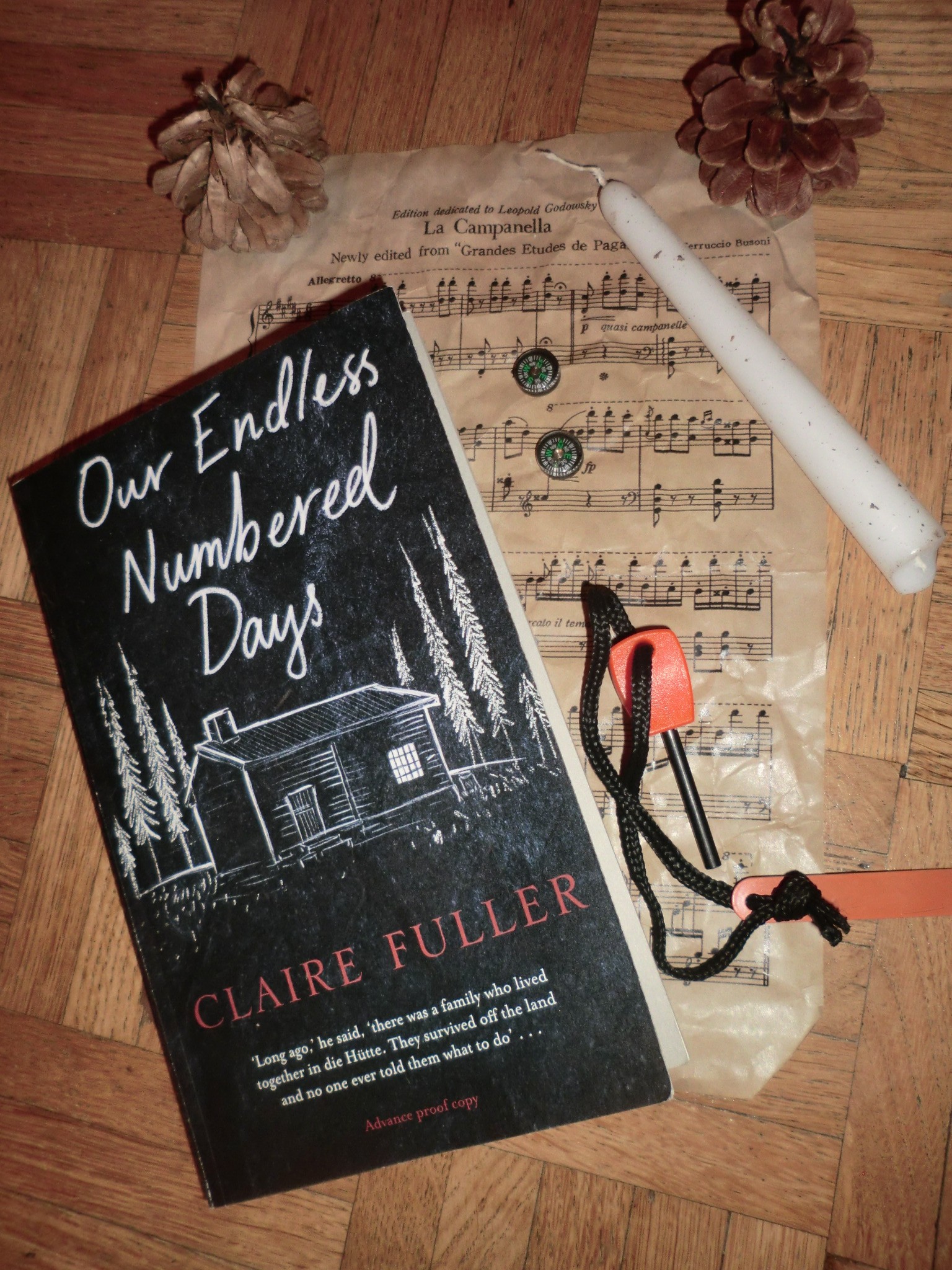
Our Endless Numbered Days by Claire Fuller

Highgate London, November 1985

EndlessPeggy Hillcoat is 17 years old and has been back in her family for 2 months now, everything is familiar and strange at the same time. Her father is no longer there, but in his place is an 8-year-old brother Oskar, she hadn’t known of until her return. He is the same age now that she was when she and her father disappeared, for nine years, without trace.

Claire Fuller’s debut novel Our Endless Numbered Days is the story of Peggy, narrated looking back from the present, when she has returned, slowly revealing the events that occurred that summer when her mother travelled to her native Germany and her father decided to take her out of school early, so they could camp out in the back yard, applying his obsessively learned survivalist skills, as if in preparation for the great Armageddon.

“When my father invited members of the North London Retreaters to our house for meetings, I was allowed to open the front door and show the half-dozen hairy and earnest men into Ute’s sitting room. I liked it when our house was full of people and conversation, and until I was sent up to bed, I lingered, trying to follow their discussions of the statistical chances, causes and outcomes of a thing they called ‘bloody Armageddon’.”

Peggy’s mother Ute was a young concert pianist and at 25-years-old, while on a tour of England, met her father, a stand-in page-turner eight years her junior.

Throughout the story and as witnessed in the quote above, there is a level of perceived inferiority surrounding the father, he is at pains to fulfil his ambition, even if it is only to complete the fallout shelter in the basement, a job he completes on the same day Peggy returns from school to learn that her mother had gone on a concert tour of Germany without saying goodbye or telling her.

The chapters unfold and we witness Peggy happily camping out in their backyard, which backs onto the leafy Highgate cemetery, with her father, learning survivalist skills and it almost feels like a natural extension of their fun that they will put their learnings into practice by packing items written on the endless lists they’ve been creating to depart on a journey into a larger version of the backyard.  But we embark with hindsight, already knowing this is a forbidden trip, one that required them to take their passports, traverse a river and seek out that cabin in the woods Peggy’s father had been telling her about for a long time ‘die Hütte’.

It is because we are forewarned that nine years have passed, that we read of the camping trip with mild horror, wondering how they are going to survive and what might have occurred during this eternity of days that will follow. Especially when her father tells her that they are the only survivors, that the world really has ended. There is no going back.

“Each morning since we had arrived, my father had cut notches in die Hütte’s door frame, but when he got to sixteen he decided to stop.

‘Dates only make us aware of how numbered out days are, how much closer to death we are each one we cross off. From now on, Punzel, we’re going to live by the sun and the seasons.’ He picked me up and spun me around, laughing. ‘Our days will be endless.’”

highgate-cemetery-grave

Highgate Cemetery

Ironically, though far from civilised society, Peggy learns the one thing her mother never passed on to her, how to play the piano. One of a number of obsessions that her father embarks upon, he fabricates a piano out of wood after Peggy who he has renamed Punzel expresses disappointment that the cabin doesn’t possess a piano as he had promised. He has brought the sheet music for ‘La Campanella’ with him, which she will learn by heart on an instrument incapable of making a sound.

‘Its going to take a lot of practice, Punzel. Are you sure about this?’

I knew it was a warning he thought he ought to give, rather than a challenge he wanted me to back down from. There was an enthusiasm bubbling inside him, like he hadn’t had since he started work on the fallout shelter. My father always needed  to have a project.

As the days pass, we become aware of the deterioration in stability of the father and the importance of every ritual to ensure their survival. Right from the beginning we read with a base layer of tension, as if waiting for something bad to happen, wondering what is going to tip the balance, who is going to survive and what the repercussions of these endless days will be.

Fuller keeps us on tenterhooks right until the end, even though Peggy has returned home on the very first page, right from that first page, when she cuts a picture of her father’s head out of a photo and hides it in her underclothing, we sense something not quite right. And by the end we too will be going out of our mind needing to know why.

Our Endless Numbered Days is an extraordinary debut and like Franz Liszt’s piece of classical music La Campanella, it draws us in, lulls us into its rhythm and carries us up as it builds to a crescendo, before crashing us down to experience its wild, unruly finale.

Note: This book was an ARC (Advance Reader Copy) kindly provided by the publisher.

Other Books by Claire Fuller (my reviews)

Swimming Lessons

Bitter Orange

Buy a Copy of Our Endless Numbered Days

Cider With Rosie by Laurie Lee

cider with rosieA nostalgic memoir of early boyhood in a Cotswold village, recalling memories from the age of 3-years-old, surrounded by older sisters and siblings, the father having long abandoned the family household, leaving the housekeeper who had become his wife, to raise the children of his first marriage and the four he had with her.

Rather than a tale of struggle and poverty that we might expect given the circumstance of being raised in a large single parent family, in Laurie Lee’s hands, family life is narrated as a bundle of daily adventures and anecdotes that celebrate village life, sibling love, old lady madness and an attitude of making the most of it.

Born in 1914,and writing this memoir in 1959, Lee’s style shares what he saw looking out at his view of the world, rather than looking within, it is a celebration of the time and a tribute to those he loved, respected, feared and was in awe of around him – including young Rosie, who makes the briefest of appearances luring him into the haystack, a significant turning point in his life no less.

Bank Cottages, the Family Home

Bank Cottages, the Family Home

It is unique to read an author recalling tales of his relatives and sparing a thought for their sensitivity to what he is about to make public, something that today might be glimpsed in the acknowledgements, but rarely in the text, where the current trend is to hold nothing back and share all.

“On my Mother’s side there were these five more uncles: squat, hard-hitting, heavy-drinking heroes whom we loved and who were kings of our youth. For the affection we bore them and the pride we took in them, I hope they’ll not be displeased by what follows.”

This reluctance to spill all, means that the one thing that modern readers are no doubt curious about, the absent father and Laurie Lee’s thoughts about him, rarely get a mention.

“The three or four years Mother spent with my father she fed on for the rest of her life. Her happiness at that time was something she guarded as though it must ensure his eventual return. She would talk about it almost in awe, not that it had ceased but that it had happened at all.”

Acceptance or denial, they all just get on with living, surviving, getting an education and taking care of each other. Certainly they are always entertained, if not by each other, then by the two eccentric Grandmother figures who live within the same building complex and whose mutual hatred for each other seems to be the thing that sustains their life force.

“For several more years the lives of the two old ladies continued to revolve around each other. Like cold twin stars, linked but divided, they survived by a mutual balance. Both of them reached back similarly in time, shared the same modes and habits, the same sense of feudal order, the same rampaging terrible God. They were far more alike than unalike, and could not abide each other.”

Slad ValleyLee paints a picture of village life that is vivid and alive with character and memory as if it happened today without compromising respect for any of the inhabitants; even at their most villainous, he narrates their stories with compassion and mild regret.

His narrative captures the passing of time, the slow encroachment of city life and innovation that will ultimately kill that old village way of life that encapsulated them all, from the Squire down to the struggling newborn. He does so by sharing the stories and anecdotes of others seen through his eyes, rather than turning his gaze inward.

“The last days of my childhood were also the last days of the village. I belonged to that generation which saw, by chance, the end of a thousand years’ life…Myself, my family, my generation, were born in a world of silence; a world of hard work and necessary patience, of backs bent to the ground, hands massaging the crops, of waiting on weather and growth; of villages like ships in the empty landscapes and the long walking distances between them; of white narrow roads, rutted by hooves and cartwheels, innocent of oil or petrol, down which people passed rarely, and almost never for pleasure, and the horse was the fastest thing moving. Man and horse were all the power we had – abetted by levers and pulleys.”

A wonderful narrative of a not so distant time, lost forever.

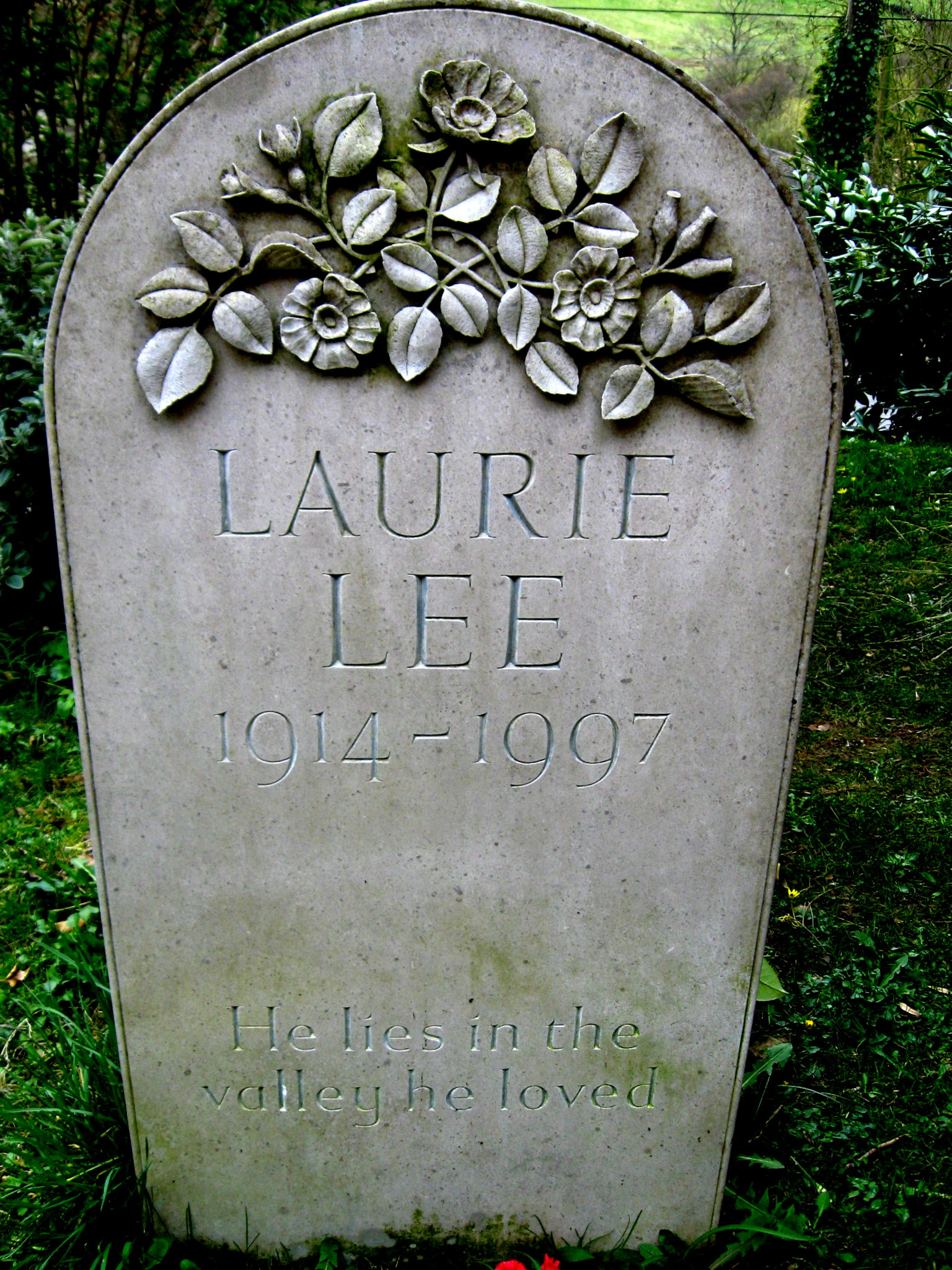
"LaurieLeeHeadstone" by Jongleur100 - Source: Wikipedia

“LaurieLeeHeadstone” by Jongleur100 – Source: Wikipedia

Note: This book was an ARC (Advance Reader Copy) kindly provided by the publisher via Netgalley.