The Gowkaran Tree in the Middle of Our Kitchen by Shokoofeh Azar (Iran) tr. Anonymous

In Feb 2020 I read Shokoofeh Azar’s epic debut novel, The Enlightenment of the Greengage Tree (my review) translated from Farsi. An Iranian writer living in exile in Australia, I was excited to have the opportunity to read a brilliant work of imagination in English. It was later shortlisted for the International Booker Prize (UK), longlisted for a National Book Award for Translated Literature (US) and three Australian Book Awards including the Stella Prize.

Epic and challenging, both that novel and this latest both use elements of magic realism in a unique way to explore recent history, (that of the Iranian Revolution in 1979), while referencing mythic texts and ancient aspects of Iranian culture, which an outsider won’t necessarily pick up on them all, but how incredible a feat, to maintain a compelling plotline that explores the past and uses the metaphysical to assist with confronting situations that are painful to contemplate, creating meaning and helping to overcome trauma.

“Magical realism is not only a realm of boundless imagination, it is also a powerful literary and cultural tool for resisting dominant and imposed powers… I turn to this genre to confront authoritarian structures in Iran while celebrating the true cultural and artistic beauty of my country.”

Preserving a Culture Through Storytelling

Again in The Gowkaran Tree in the Middle of Our Kitchen, Azar writes to embrace and acknowledge family, a beautifully diverse and colourful culture, complex politics, revolution and resistance.

The novel tells a story about a Zoroastrian family with twelve children and a long, interwoven lineage, where the living and the dead are both present and absent, sometimes called on or observed when needed to understand how to navigate the present. Those living in the now are often less aware than those who came before and this connection with their heritage and family is part of the way they survive difficult times.

The story starts with the strange occurrence of a Gowkaran Tree appearing one day in their bustling kitchen, travelling up towards the ceiling, alive with bird life and firmly rooted.

No one but family can see the tree, and while making repairs, their father, a University Professor decides to build a round table around the trunk. The kitchen was their centre and beneath the walls of the old mansion lay the remains of eleven other mansions.

A big, twelve-person table. In this way the Tree of Knowledge, the Tree of Life, the Bas-Tokhmeh Tree, the Gowkaran Tree, the Tree of the Incident, became the kitchen’s centre of gravity.

The grandmother Khanom Joon tells her granddaughter (the narrator Shokoofeh) some of the old family stories, of love and storytelling and the 1,762 notebooks containing the memoirs of their ancestors. She tells her own story and that of the Ball of Light that follows her.

“Curled up in a chair, I let history go and breathed in the air of love and suddenly realised that from now on I was caught. That said, in my dreams I had seen that this madness would grip us both, neither of knowing when it began or how long it would go on. Just like this mansion and this timeless tree and the history of foreigner’s incursions and invasions in this country.”

A Heroine on a Quest, Mentors Abound

I’m not going to even attempt to describe too much of the plot, suffice to say that it is something of the heroine’s journey for the young narrator, who is in the throes of falling in love and will be sent on a quest to search for her brother Mehab, who has gone to fight in the war. A coming-of-age story in harsh times, and yet a celebration of that which continues to resist and persevere and give fruit.

The journey brings to light the terror of a country taken over by despots, and the predicaments of those who capitulate and those who refuse, the voiceless and the silenced. And throughout the Gowkaran Tree remains, rooted, alive and bringing those who remain together.

Why Trees Matter

Trees are a recurring motif in Shokoofeh Azar’s novels. Trees often live on longer than humans, just as our ancestral lineage does, they are places of refuge and transendence.

Photo by Vraj Shah on Pexels.com

The rootedness of a big tree in the middle of a kitchen is a symbol of resistance, of strength and the power of deep, familial roots. Its central presence helps preserve what is under threat – family heritage, culture and identity.

The earthy, rooted tree grounds the magical realism element, allowing the author to meander into myth and folklore without losing the connection to the aspects of the story that are firmly rooted in reality. The reader surrenders and goes with it, relieved by the presence of the Ball of Light and terrified by the danger our protagonist is exposed to on her solo journey.

Destiny and Liberty

The book is made up of 27 chapters in two parts, Part One The Womb of Destiny takes place in and around the home mansion and in Part Two The Ordeal of Liberty, our protagonist is sent out alone on her mission to overcome challenges and learn something before her return.

“The way is reached by taking it.”
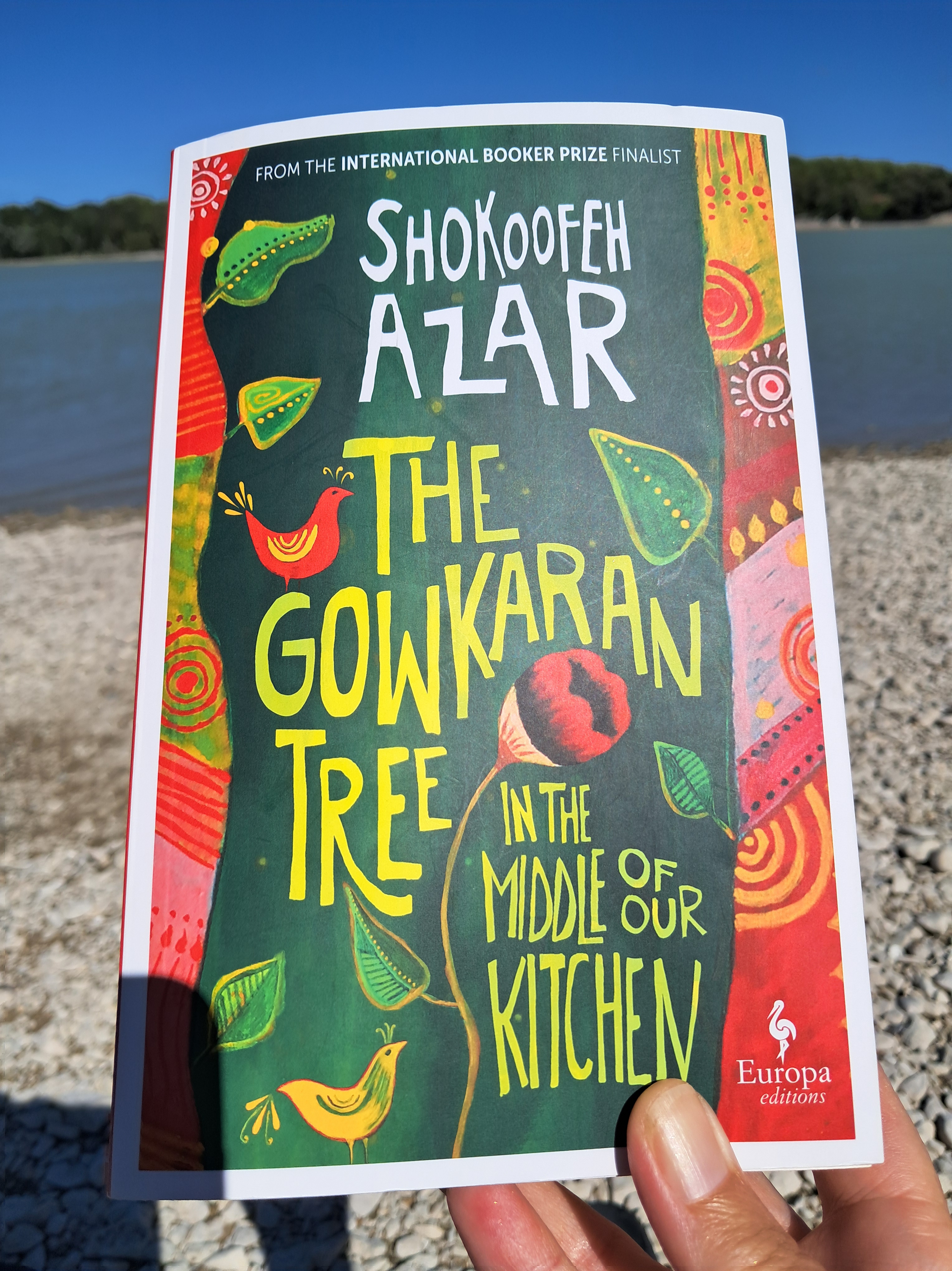
Book cover of The Gowkaran Tree in the Middle of our Kitchen by Shokoofeh Azar

If you’ve read her earlier works, you’ll be prepared for how unique the storytelling is, but if you’re not a fan of magic realism, this might challenge, however for me it was worth it for the immersion in the storytelling, culture and literary tradition, even if not all the references are familiar. The occasional footnotes are helpful.

The way the plot takes the reader on the journey to save a brother, while encountering historical characters along the way reads like a blend of fable and adventure with philosophical insights mitigating the challenging obstacles required to overcome.

At 512 pages, I admit that once I was out of holiday mode, I set it aside, due to the sheer size of it. I do think it asks a lot from readers today to engage with such a massive book.

Shokoofeh Azar has developed a unique style of magic realism to narrate harsh truths about a society under political and cultural oppression, while sharing its depths of family unity, cultural heritage and dedication to resistance. Overall, I highly recommend it and look forward to where she goes next and hope for a more taut, less ambitious novel next time.

Further Reading

Review: World Literature Today : The Gowkaran Tree in the Middle of Our Kitchen by Andrew Martino

Read a great review at Tony’s Reading List

Iranian Daughters: Struggling for the Rights Their Mothers Lost in the Revolution by Sepideh Zamani

Video Conversation : After the Revolution, Edinburgh Book Festival

Shokoofeh Azar, Author

Born in Iran in 1972, the author worked as a journalist and field reporter in her country, covering human rights issues. After several arrests in connection with her work as a journalist, on advice from her family, she fled Iran in 2010 and was granted asylum in Australia, where she has lived as a political refugee since.

She is the author of essays, articles, and children’s books, and is the first Iranian woman to hitchhike the entire length of the Silk Road.

N.B. Thank you to Europa Editions for the review copy.

All That Remains by Virginie Grimaldi tr. Hildegarde Serle (2025)

Contemporary French literature translated to English Virginie Grimaldi All That Remains Il nous restera ça three silhouettes mimosa flowers

We are just coming out of our second summer heatwave and in this kind of heat, where it’s 38°C (100°F) every afternoon, reading needs to be light and propulsive, because the brain just doesn’t function in the same way.

I chose to read French author Virginie Grimaldi’s All That Remains because I felt sure it would provide the sustenance I was looking for, without having to think too much.

Good-hearted, uplifting fiction, great characters and a connection with some of the best parts of French life, that help overcome universal problems that anyone might face. Positive aspects of humanity overcoming the oppressive.

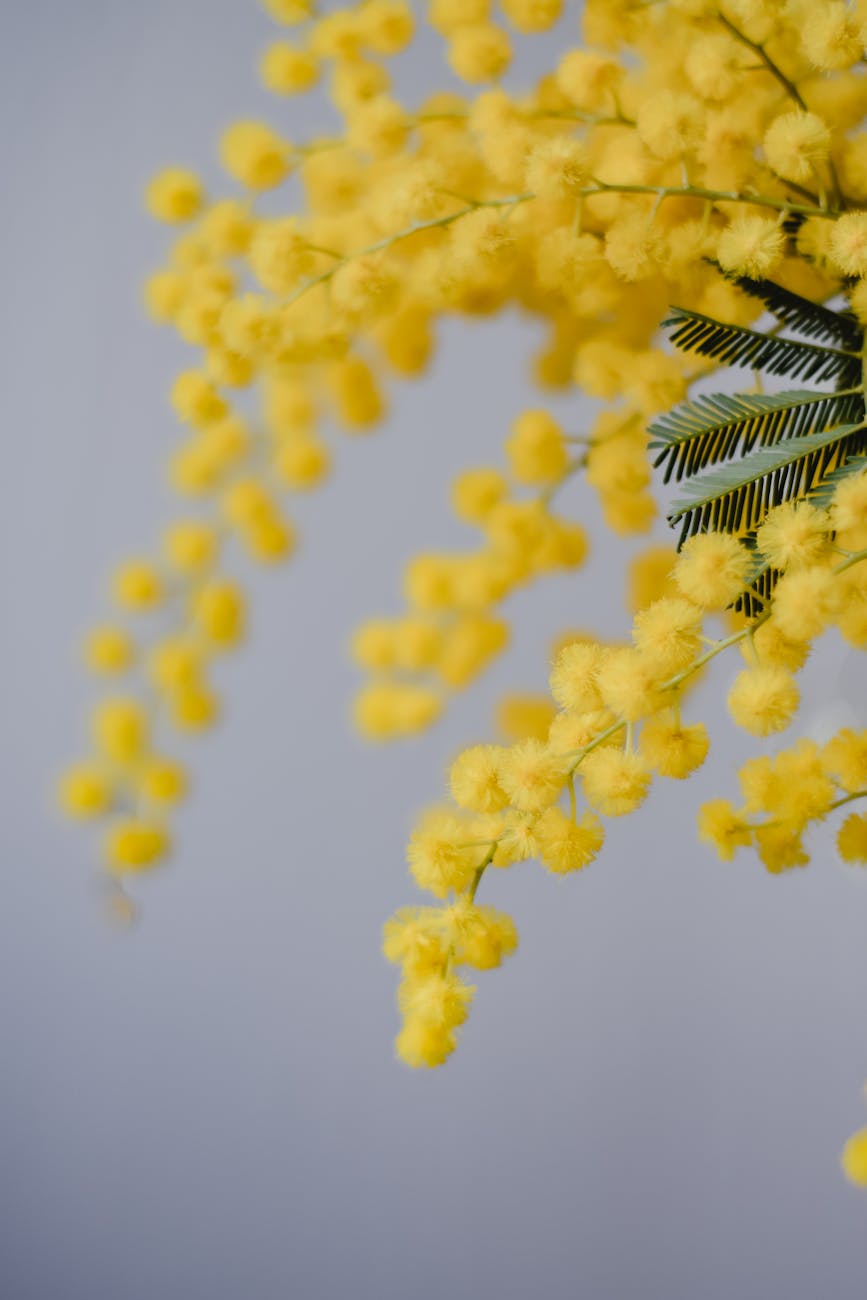
I love the sprigs of mimosa on the book cover, a beautiful winter flowering shrub that thrives in difficult conditions, blooming on the coastal region of the south of France in January and February. It evokes such good feeling, symbolising new beginnings, resilience and adaptability and a sign that spring is on its way.

La Cohabitation Intergénérationnelle

In addition, when I read the premise of three generations living together, it reminded me of a news item I had seen on French television about “La cohabitation intergénérationnelle“, where residents (over 60 years) in Paris and elsewhere, at risk of needing to move out of their apartments or homes, were being matched with students (under 30 years) seeking affordable accommodation, able to be a reassuring presence, particularly at night, and share meals together.

Seeing these people on the screen, sitting talking together, feeling safer at home, having more space, companionship – able to get through those years of difficulty – well, as we say here, « Vive la France »!

Grief, Homelessness and New Beginnings

sprigs of mimosa new beginnings, resilience, surviving in difficult conditions Virgine Grimaldi All That Remains
Photo by Eva Bronzini on Pexels.com

It’s a novel about three people from three different generations, who wind up sharing an apartment together, when their needs intersect.

Jeanne (74) is recovering from unexpected widowhood and needs to do something soon to address unforeseen financial concerns, if she wants to remain in her apartment in Paris. The woman in the bakery won’t allow her to put up a notice, but fortunately someone overhears her asking.

For the past three months, Jeanne had been unweaving those habits, thread by thread. The plural had become singular. The setting was the same, the timing the same, and yet everything rang hollow. Even the melancholy had disappeared, as if her entire life had been training for the bereavement she was now facing. She was desensitized.

Iris (33) a care worker, is being evicted from her temporary studio, living out of a suitcase and in hiding from a situation that will be revealed.

“Hello Madame, I just wanted to confirm my interest in your room for rent. And please know that, if it weren’t for my tricky situation, I’d never have interrupted your conversation with the young man, who also seems in real need of a home. If you’ve not yet made your choice, I’d understand if you favour him. Regards Iris.”

Paul, a French boulangerie bakery in London and Aix en Provence patisserie

Théo (18) is an apprentice in a local boulangerie (bakery) and has just reached the age of independence. Having just bought a car for €200, he parked up outside the house with the blue shutters and thought he’d solved his accommodation woes, however his problems have just magnified.

I don’t intend to drive around in this car. I settle down on the back seat, head resting on my bag, covered with my coat. I put in my earbuds and play Grand Corps Malade’s latest song. I light the roll-up saved since this morning and close my eyes. It’s a long time since I’ve felt this good. No sleeping in the metro for me tonight. For 200 euros, I’ve treated myself to a home.

Jeanne, Iris and Théo in Paris

Each short chapter moves to the next character and within very few pages I was deeply invested in wanting to know more about each one and where the story was going. It’s a wonderful novel about perseverance and overcoming challenges and the messiness of life and finding support and comradeship in unexpected places.

I loved this book and would be not be surprised to see it being made into a film, it’s got all the good vibes and realistic issues that people f all generations have to face, and a unique but encouraging way that different members of a society can be there for those who were strangers at first.

Another #WITMonth read, highly recommended!

There is a crack in everything,

That’s how the light gets in.

LEONARD COHEN

Author, Virginie Grimaldi

Virginie Grimaldi was born in 1977 in Bordeaux where she still lives. Translated into more than twenty languages, her novels are carried by endearing characters and a poetic and sensitive pen. Her stories, funny and moving, echo everyone’s life. She is the most read French novelist in 2019, 2020 and 2021 (Le Figaro littéraire/GFK awards) and winner of the Favorite Book of the French in 2022 (France Télévisions).

N.B. Thank you kindly to Europa Editions UK for sending this copy for review.

The Brittle Age by Donatella Di Pietrantonio tr. Ann Goldstein

Having very much enjoyed her previous two novels translated into English A Girl Returned (my review) and A Sister’s Story (my review), I jumped at the chance to read her latest, winner of the 2024 Strega Prize, a novel inspired by a historic true-crime event in the 90’s, a double femicide in the mountainous region of the Abruzzo Apennines in Italy, a novel dedicated to “all the women who survive”.

Brittle or Fragile, the Impact of Events

l'età fragile The Brittle Age  Donatella Di Pietrantonio Abruzzo Europa Editions winner of the 2024 Strega Prize

When the novel opens, its first three chapters, just over a page each, touch on everything to come, Lucia’s daughter Amanda who has returned from Milan on one of the last trains as the pandemic shuts everything down, she stays in her room, barely eats, doesn’t talk, her phone uncharged under the bed. Lucia worries but can get nothing out of her.

Lucia visits her elderly widowed father, who lives in the house she was born, halfway between the town and the mountain. They walk up there and he reminds her all this will be hers one day too, land he owns that he no longer wants responsibility for.

An alarm signal arises from my stomach to my throat, suffocating me.
“That’s impossible. You sold this land.”
He tried for a long time, he confesses, without success.
I’m silent for a while, in the chorus of birds. At regular intervals the cuckoo solos.
“After what happened no one wanted it, I couldn’t give it away,” he says, as if to justify himself.
“I don’t want it either, it’s a frightening place.”
I’ve raised my voice, the last syllables echo. It will be mine of necessity, I’m his only heir.

Eighteen months before, the excitement of her daughter’s departure for Milan, the city where life would open up and happen for her, a grandfather’s pride. Now in quarantine, returned and nothing like that ambitious young woman that had left.

The Present Awakens the Past

Amanda’s reclusiveness awakens Lucia’s memories of those events of 30 years ago and throughout the novel, we learn not only what happened, but of the guilt Lucia carries for her absence and the heaviness that surviving the tragedy cost her friend, who, to make a better life left the place that held those terrible memories.

She doesn’t want to be seen in the town, people said of her, after the crime. No one mentions her anymore now. They’ve all forgotten Doralice and her story. The young people of Amanda’s age never knew her. Our parents didn’t help us stay connected.

With the memories come scenes that depict generational ways of living, ways of being, some things that stay the same, the things that change, the reasons some stay, while others leave.

Photo by Serafettin on Pexels.com

Lucia recalls trying not to worry about her daughter in the city alone, allowing her her freedom, throwing herself into her work to stop herself taking the train after her. But now she questions whether she underestimated the impact of something that happened to her.

I consoled her as well as I could, from a distance. That time, I really was wrong not to get on a train. Respecting her freedom, I failed her when she needed me. Some boundaries are too subtle for an indecisive mother like me. But do the most stable parents know at every moment the truth of what to do?
“Don’t worry, it will pass,” and I believed her.

Although the story is about a crime, the mystery of what happens sits alongside the portrait of a fractured family and community, all impacted by the past, burying it with silence.

A sacred forest in the south of France, hiking trails in forest mountain areas Italy, France

Our birthplace had protected us for a long time, or maybe that had been a false impression. We grew up in a single night.

The return of Amanda, interest in the mountain property from a developer and a need for resolution, ultimately brings the community together in an act that will work to heal wounds and create momentum for a new era.

The novel is told in five parts: Amanda, The Girls, Dente del Lupo, The Flight, and The Concert in short chapters, going back and forth in time, revealing aspects of the past of Amanda (recent) and her mother (long ago), while witnessing the changed state of their present and their dual need for healing.

The slow reveal of the tragic murders, alongside understanding how it impacted our narrator, plus her own awakening to the effect of that suppressed event, from the safer distance of 30 years in the future, is skillfully blended with the present day psychological suffering of her daughter, as they move towards recovering.

I thought this was so well portrayed, blending the mystery of tragic events, with inter-generational trauma and present day personal struggles, facing the difficulty of breaking through patterns of silence and repression, of deep caring even without understanding, of the need to forgive oneself and the dedicated perseverance of familial maternal love.

Highly Recommended.

N.B. Thank you to Europa Editions UK for sending me a copy of the novel for review.

Author, Donatella Di Pietrantonio

Donatella Di Pietranonio lives in Penne, Abruzzo, where she practices as a pediatric dentist. She began publishing books in 2011, at the age of 49. In the span of a little more than a decade, she has come to the attention of Italian critics and readers, winning the Campiello Prize with her third novel L’Arminuta (A Girl Returned) in 2017. A Sister’s Story was shortlisted for the prestigious Strega Prize and The Brittle Age the 2024 winner of the Strega and Strega Youth Prize. Her short fiction has been published by Granta Italy.

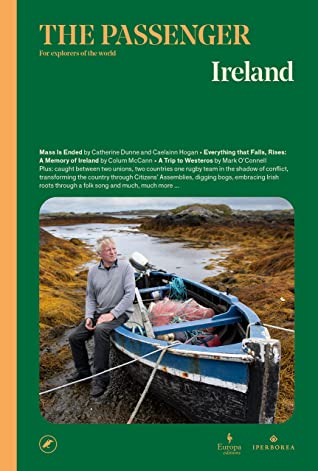
The Passenger – Ireland

For Explorers of the World

essays Sara Baume Colum McCann Europa EditionsHuginn and Muninn are two ravens from Norse mythology. Sent out by Odin at dawn each day, they return at night to perch on the god’s shoulders, whispering to him whatever knowledge and wisdom they have gathered from every corner of the world. Like Huginn and Muninn The Passenger travels far and wide to bring back the best writing from the countries it visits.

I’ve been reading this over the past week and only meant to read a couple more essays today, but they were so interesting, I kept going and finished it.

Featuring long form essays, investigative journalism, literary reportage and visual narratives, it takes readers beyond the familiar stereotypes to portray a country’s shifting culture and identity, its public debates, the sensibilities of its people, its burning issues, its pleasures and its pain. It was published in the UK by Europa Editions on March 17.

Some Numbers About Ireland

Essays About Ireland and the IrishPopulation (the island of Ireland) : 6.9 million (the highest since 1851)

Population (the Republic of Ireland) : 5.01 million

People Who Speak Irish at Home : 83,000

People Who Speak Polish at Home : 120,000

Castles or castle ruins : 30,000

Eurovision Song contest wins : 7 (more than any other country)

Nobel Prizes in Literature : 4

W.B. Yeats (1923),

George Bernard Shaw (1925)

Samuel Beckett (1969)

Seamus Heaney (1995)

11 Essays

The Mass is Ended by Catherine Dunne and Caelainn Hogan

A dual narrative essay written by two women writers from different generations, talking about growing up in Ireland as a woman, how it has begun to transform from an insular, conservative society under the repressive influence of the Catholic Church and how it continued to negatively impact women’s lives long after other countries began addressing such issues. The women discuss the decline of the Church’s influence, the dismantling of a system designed to oppress women and the culture of silence.

Bogland by William Atkins

A fascinating and insightful article about the natural phenomena of the midland area of Ireland, covered in peatlands, referred to locally as bogs. Initially seen as undesirable and an embarrassment, they then became a source of revenue, economic growth and jobs, not to mention local fuel. Environmentally controversial like many fuel extraction processes, the industry is now in decline and being phased out. The bogs have been found to contain human remains from the Iron Age dating back to between 470 BC.

An Ocean of Wisdom by Manchan Magnan

An Ocean of Wisdom

Photo by Kelly L on Pexels.com

Fascinated by the Irish language and its connection to fishing and the sea, we learn how the decline of a small local fishing industry heralded the decline and disappearance of much of the language. Magnan travelled to the three areas of Gaeltachtai (Irish speaking) to discover locals words and phrases that expressed aspects of the sea, weather and coastal life, linguistic nuances that described a way of life that is disappearing (due to the impact of foreign fishing trawlers) and with it, a form of expression and being.

Like other old tongues, the Irish language has unique ways of expressing things – one example of which is that Irish regards the unseen world as being just as real as the seen, and this is evident in many ofthe phrases, metaphors and colloquial expressions that make up daily speech. So the word ceantar, for instance, means place, region or locality, while alltar is its opposite, the other realm, the netherworld. They exist simultaneously in all places at all times.

Our physical bodies occupy the ceantar, but our minds can easily slip into the alltar. Only a thin veil separates the two realms, and there were always those who could pass from one to the other, as is demonstrated by the word púicín, which refers to a supernatural covering that allows otherworldly beings to appear unseen in this reality.

The efforts to revive and reconnect to the language and the growing awareness of the importance language is to maintaining connection to a culture is encouraging. Losing language is to lose meaning and connection, reclaiming it might well contribute to the country’s healing process.

Talismans by Sara Baume

Sara Baume is know for her two fiction novels, a third Seven Steeples due out in Apr ’22, however if you’ve read her excellent work of nonfiction Handiwork, you’ll know she is a visual artist and loves crafting things, using her hands, sculpting or making things from different materials and they always have a theme.

creative nonfiction bird migration songbirdsIn Handiwork, she was sculpting birds, but here she writes about the Irish cottage, its evolution and the rise of the Irish villas that were much despised for a period of time. As she spends months creating objects that represent small scale versions of these houses, she reflects on the way Ireland’s built environment has changed.

The idea was to draw a contrast between the grandiosity of the monster mansions and my choice of coarse, everyday materials – the intention being to invent an updated and deeply cynical souvenir.

She visits a reconstructed Irish cottage with Marion McGarry, author of The Irish Cottage: History, Culture and Design (2017), who recounts :

‘the fire was both physically and socially situated in the centre of the house’. Whereas European families routinely gathered around the kitchen table, the Irish would push all of their furniture back against the walls to surround the light and heat of the hearth.

Everything that Falls Must Also Rise – by Colum McCann

The New York based Irish writer reflects on the choice he and many others made to emigrate, what it’s like to return, to become an outsider and be rooted elsewhere, yet still refer to it as home. Full of nostalgia, this one almost feels out of place in the collection, and the enlarged font size stands out almost as a clue to the demographic its likely to appeal to.

At The Edge of Two Unions: Northern Ireland’s Causeway Coast by Mark Devenport

The BBC’s former political editor in Northern Ireland writes about a region hanging in the balance between two Unions, the UK and the EU, torn between fear and opportunity and the distinct feeling of having been abandoned. A century of Northern Ireland, how attitudes and loyalties are evolving and changing with the generations and neighbouring affiliations.

Suicides of the Ceasefire Babies (originally published in 2016) by Lyra McKee

Ceasefire suicides Northern Ireland

Photo by Luke Webb on Pexels.com

An essay written by the journalist Lyra McKee, who investigated the troubling fact that since the signing of the Good Friday Agreement in 1998, more people in Northern Ireland have committed suicide than were killed during the 30 year conflict.

This was a fascinating read, because it ties in with Kerri Ní Dochartaigh’s Thin Places and when I began to read Lyra’s essay and her questions, I could tell what was coming, because if you’ve read Thin Places and imagined how many other young people have been exposed to what she had been (including being told “you lot had it much easier than our generation” by their parents) and the subsequent suppression of their feelings/emotions, it’s not surprising that there is a significant proportion of the population, particularly in the towns of Belfast and Derry that have suffered the delayed effects of PTSD, without even knowing it.

Her investigation looks at the cause, uncovers existing research and also learns about how trauma survivors pass their behaviours and certain genes (when parental trauma has been experienced prior to conception) to children.

Intergenerational transmission of trauma is not just a sociological or psychological problem, but also a biological one.

Sadly, Lyra McKee was murdered in 2019.

What I Learned On My Trip to Westeros by Mark O’Connell

I guess there had to be the one that references The Game of Thrones, little more than a guided tour of the locations, an attempt to make a connection between the fantasy of the land imagined by George R.R. Martin (inspired by 15th century civil wars) and the more recent history and reality of a divided land.

Unfortunately, the lens through which he views things around him obscures the actual landscape and barely disguises his disdain for the local guides, while going off on a tangent about a novel relating to the philosophical and aesthetic preoccupations of the Argentinian author Borges.

Citizens’ Assemblies: Experiments in Democracy by Ursula Barry

An excellent and insightful look into the establishment of Citizens’ Assemblies, an invention and intervention by common people to facilitate decision making on important issues that have gone unresolved by politicians for far too long.

This was brilliant, I wasn’t aware that it was these assemblies that had been behind some of the most significant changes and reforms in Ireland’s constitution, and a model that has and is being used elsewhere in Europe, when the population begins to protest and govt wants to listen but is unable to act, here is another way that is even more democratic perhaps, than elected officials, who get tied up with multiple agendas and lose sight of the common citizen, especially those adversely affected by outdated policies and inhumane practices.

The final two essays were about one man’s interest in Irish music (from a perspective of a lifetime living in England) and rugby, neither of which particularly interested me enough to write about here!

Overall, an excellent exploration of the life and times of modern Ireland. Beautifully illustrated and highly recommended.

A Sister’s Story by Donatella Di Pietrantonio tr. Ann Goldstein

We first encountered the two sisters in an earlier novel, A Girl Returned. At the time they first met, the elder, the narrator, was being returned to her parents without explanation, 13 years after having been adopted and raised by another couple.

She had given me to another woman to bring up, and yet I had remained her daughter. I will be forever.

Though raised in different neighbourhoods, circumstances, economic conditions and under extremely different parenting, from the moment Adriana first encountered her previously unknown older sister, she became attached, fiercely. Of their mother, our narrator had mixed feelings.

She roused in me an inextricable knot of tenderness and revulsion…

My mother occupied me inside, true and fierce. She remained in large part unknown: I never penetrated the mystery of her hidden affection.

Ann Goldstein Italian literatureIn A Sister’s Story, we encounter them again; the novel opens with the recall of a graduation celebration at Piero’s parent’s country home. Again the novel is narrated by the unnamed elder sister.

I have a photograph of the two of us, in love, looking at each other, Piero with the laurel on his head, eyes of devotion. At the edge of the frame Adriana appears: she entered the shot at the last moment, and her image is blurry, her hair draws a brown wake. She has never been tactful, she interjects herself into everything that has to do with me as if it were hers, including Piero. For her he wasn’t very different from a brother, but nice. My sister is laughing blithely at the lens, ignorant of what was to come for us.

As the narrative returns to the present, the elder sister awakes in a hotel, having travelled overnight from Grenoble back to Italy, confused memories interrupt her thoughts, the result of a telephone call she received that set her out on this journey.

In a now familiar style, unique to Donatella Di Pietrantiono, the present is a mystery, we don’t know why she has returned to where her family came from or what the phone call was about, there is much to fill in since she left. It is clear she has cut ties with many people from her past; the phone call reluctantly yet urgently drawing her back.

Related but moulded by different values and role models the sisters held different aspirations and expectations and behaved nothing like each other. They are deeply connected strangers.

As children we were inseparable, then we had learned to lose each other. She could leave me without news of herself for months, but it had never been this long. She seemed to obey a nomadic instinct: when a place no longer suited her, she abandoned it. Every so often our mother said to her: you’re a Gypsy. Later I was, too, in another way.

photo of teenage girls sitting on the pavement

Photo by Andrea Piacquadio on Pexels.com

The last time the sister’s saw each other, Adriana arrived on her doorstep with a baby, named after their belated brother Vincenzo, denying she was in any danger.

The novel, while moving towards the revelation of the telephone call, explores the complicated relationship between sisters who’ve been formed and wired differently, their desire and struggle to be around each other, their bond and indifference, their separate struggles and opposite ways of dealing with them.

I don’t know when I lost her, where our intimacy was stranded. I can’t trace it to a precise moment, a decisive episode, a quarrel. We only surrendered to distance, or maybe it was what we were secretly looking for: repose, shaking each other off.

It’s an enjoyable read, enhanced by having read the earlier story;  while the first novel was compelling and urgent in a way that made me not want to put it down, the sequel was reflective and mysterious. I enjoyed seeing how the sisters evolved into adulthood in such different ways, trying to hold on to their connection, challenged by the ongoing effect of those formative years.

N.B. Thank you kindly to Europa Editions for providing me with a review copy.

Atlantis, A Journey in Search of Beauty by Carlo & Renzo Piano tr. Will Schutt

Art Architecture Nonfiction

What an unexpected pleasure this was. I spent a week reading it, always looked forward to picking it up and loved the shared narrative between father and son as they travelled around the world on an Italian Navy Research ship, during 8 months.

They revisit the sites of Renzo’s architectural designs, awakening his memory of the creative process, the people he met with to understand their needs and that of the community his structures would serve.

A lifetime of work he was passionate about and given him a unique perspective and wisdom, not to mention the deep cultural immersion all those projects provided this now 80-year-old architect and father.

A Sea-Lover’s Journey

Renzo and Carlo set sail from Genoa one late summer day, and from the blurb, would have us believe they are :

guided by the ancestral desire felt by many explorers before them to find Atlantis, the perfect city, built to harbour a perfect society.

It is as much a conversation as a travelogue and one that takes place when 80 year old Renzo is still contemplating retirement, this revisiting of his projects and the reflection they invite, of inspiration and ideas, of listening and understanding, a quiet dissatisfaction his son will probe, and that scandal his early work (Beaubourg – the Centre Pompidou in Paris) provoked.

Sins of Youth
After the Paris adventure he spent years defending himself against people who feared they would put pipes up everywhere. Rogers suffered the same fate, a fate reserved for heretics in the Middle Ages.

“I see Beaubourg as a joyful urban machine, which inspires more than a few questions.”

design inspiration italy Renzo Piano colour water boats

Photo by Pixabay on Pexels.com

As Carlo questions and muses, he creates a narrative structure within which his father responds and reflects and by the end I can’t even say whose narrative I prefer, there is such a wonderful synergy and relation between the two, a rhythmic flow of thoughts and words.

Perhaps Carlo is able to dig deeper and pick up on certain gestures, more so than another interviewer might, because it is his father he knows so well, referring to him by many names throughout, the Explorer, the Constructor, the Measurer, the Old Man.

Does he call him the Philosopher or the Artist? I’m not sure, but it is clear to me that he is both, his subjects creativity, beauty and place.

A lover of words and speaker of three languages, he educates us in how the word beauty differs in Italian, French and  other languages, something that means good and beautiful, intrinsic in the essence of something. He reminisces with his staff on their collective purpose in a letter he writes them onboard, the day of his 80th birthday.

“The pursuit of beauty. The word is hard to articulate. As soon as you open your mouth, it flies off, like a bird of paradise. Beauty can not be caught, but we are obliged to reach for it. Beauty is not neutral; pursuing it is a political act. Building is a grand act, a gesture toward peace, the opposite of destruction.”

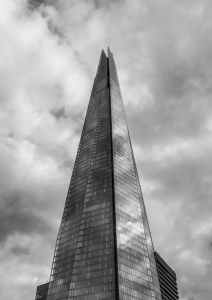
Shard Renzo Piano Architect Atlantis

Photo by Pixabay on Pexels.com

I found the entire book totally engaging, from start to finish; their journey and revisiting the building projects along the Thames and the Seine, in New Caledonia and New York, San Francisco and Osaka Bay and finally to Athens, providing just enough information and context to keep the narrative interesting and intriguing, with the addition of that element of humanity that only two people who know each other as well as these two could bring.

A light touch allows you, even at your most determined, to listen to others and seek to understand them. A heavy tread you’re better off without.
Lightness is key to understanding places, and, in that sense, an architect must inhabit the places where he works. I have been a Parisian, a Berliner, a New Yorker, a Londoner, a Kanak.

All the while remaining who I am.

I think an architect who does not recognize himself in the place he is building cannot capture its soul.

Further Reading

Renzo Piano Video : On the Shoulders of Giants – a wonderful, biographical interview with the Pritzker prizewinning Italian architect

Article (with photos): Les 10 projets les plus célèbres de l’architecte Renzo Piano by Marina Hemonet, AD Magazine – including one here in Aix-en-Provence (Le pavillon de photographie du Château La Coste)

Berlin Unorthodox Renzo Piano Architecture Potsdamer Platz

Photo by Esther on Pexels.com

Anecdote/Coincidence : Upon finishing the four part series Unorthodox this week, I watched the short film ‘The Making of Unorthodox’ intrigued by the storytelling, sense of place and adept characterisation it had evoked. It is filmed in Berlin and Williamsburg, but mostly in Berlin, where the Production Designer Silke Fischer, looking for a specific architectural look and feel to extend the metaphor of freedom, found a great location at Potsdamer Platz next to the Philharmonic.

Unbeknown to me, while I was reading Atlantis, I was also immersed in a series shot on location in one of his architecturally designed buildings.

N.B. Thank you kindly to the publisher Europa Editions for sending me a copy of the book.

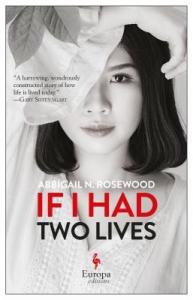
If I Had Two Lives by Abbigail Rosewood

If I Had Two Lives is a story of a child who spends her childhood in Vietnam, her early adulthood in America then makes a return visit to her homeland to confront aspects of her past she wishes to resolve.

In Part One she is escorted by her solider to a secretive military camp where her mother has spent the last four years, she is seven years old and has been separated from her mother for four years.

The mother is distant, busy, under suspicion, she is an energy consultant, the girl tries to please her, get her attention. She struggles to connect with her in the way her heart yearns, becoming overly attentive to trying to please her in a way that children who aren’t able to  take having parents there for them for granted might react.

Whenever she has to travel anywhere she is accompanied by this same solider. She clings to him even though he discourages it. She befriends a motherless little girl she finds playing a game stacking bricks, their time together establishes some of the few memories of childhood they will retain, both haunted by the last time they see each other.

There is a strange, unsafe vibe around the little girl’s father. She develops a desire to hurt something, after killing a fish with her bare hands, her angst morphs into thoughtless cruelty towards the little girl. Suddenly her time there is over, she is again escorted, this time across the China border onto a plane to America.

Years later, I understood that Mother had made sure nobody saw me enter the camp and nobody saw me leave; that the erasure of my records in Vietnam would be complete when I boarded the plane…I told myself that once I got to the US, I would turn around, take a different plane back to Vietnam, go get the little girl so we could leave the camp together for good.  We’d talked about escaping together so many times that being forced to go without her was unthinkable.

In Part Two the girl has been sent to America, her mother having promised (unfulfilled) to follow her there, drifting from the homes of relatives to friends, she outwears her welcome with them all and becomes isolated, alone. Haunted by the memories of her youth, she follows a stranger home because he reminds her of her solider. She befriends a young woman who reminds her of the little girl. Her life is laced with illusion, faces that morph into those who have haunted her past. She is not the only one with a past, living with the effects of trauma and her attempts to reconnect expose her to the nightmares of others, also trying to remember or forget.

“Try telling them some other tales that don’t fit their presumptions. Vietnam” – he dropped his cigarette and crushed it with the toe of his shoe. “Is a war, not a country. Anything besides is irrelevant.”

Meeting both these strangers changes the course of her life dramatically and will push her to confront her past, revisit her home country and look for what she has lost. And to make amends.

More and more I resembled my own mother as I with-held facts and became an accomplice in helping my daughters obscure their origins.

It’s a hard book to describe and one that is disturbing in parts to read, laced with a sadness for a girl that it seems was unwanted, although she was given opportunities, just not love or affection, in turn her own life seems without purpose and missing something that can be felt not described. Her return will provide her a different perspective and bring her closer to understanding her mother and her intention for her daughter, realising she has something of that in her as well.

“When you leave the old country at an age not young enough to get adopted into the new and not old enough to know how to reject it, you become this mutant thing: between borders, between languages, between memories.” He pressed his temples. “If you ask me, I think it’s easier to reinvent than to retrace. You’re not the only one, you know. Look at this city and its faces. You’re not the only one with an ungraspable history.”
I’m not sure I could say I enjoyed it, but it was thought-provoking and made me wonder about the inspiration and experience behind writing it and of the number of sad lives being lived by others, neither from one place nor another, without families, trying to make sense of the world. And of effects of unhealed trauma and displacement.

“If I had two lives to live, I would have done it differently,” she said. “Anything worth having requires your sacrifice, even your personal happiness.”

More than storytelling, despite being fiction, this novel is about what happens to those who leave their homeland, a victim in ways to what they have left, how some are able to manage their past experience, using it to try to improve the situation for others, while others remain a victim to forces and feelings they find difficult to live with, causing them to inflict pain on others or when it gets too much, on themselves, without seeming to, or unable to care who gets hurt in the process.

I am reminded of Cambodian author Vaddey Ratner whose family were evicted from their homeland, she uses fiction in her novel In The Shadow of the Banyan to express memories born of her childhood experience, and although it was traumatic, she was determined to take what was a sad chapter in her country’s history and show us something of its beauty and culture.

 It isn’t so much the story of the Khmer Rouge experience, of genocide, or even of loss and tragedy. What I wanted to articulate is something more universal, more indicative, I believe, of the human experience our struggle to hang onto life, our desire to live, even in the most awful circumstances. – Vaddey Ratner

Abbigail N. Rosewood was born in Vietnam, where she lived until the age of twelve.

This novel was born out of the aching pleasure of rearranging memories, reinventing the past – a personal need to solve my childhood’s mysteries, figure out how I arrived here, and to give myself the emotional conclusions that real life doesn’t afford.

N.B. Thank you to Europa Editions for providing me with a review copy to read.

Buy a Copy of this book via BookDepository.

Farewell, My Orange by Iwaki Kei, tr. Meredith McKinney

Farewell, My Orange is an immigrant story set in Australia, centering around the new life of a young African migrant, now a single mother.  Alternative chapters are in the form of letters written by her friend, a young married Asian mother, to her English teacher, and in both narratives we encounter an older European woman whom the younger women  come to know.

For the first fifty pages, I was unsure who was really in the story, I found the blurb a little disconcerting (and still do) because it didn’t seem to tie up with the names in the story I was reading, which distracted from the read. The two women use different names to refer to the same characters and one of the names in the blurb is never mentioned at all in the novel. I couldn’t figure out what the author was doing by this and actually read most of the novel thinking it was a mistake, albeit a consistent one. Of course, being a prize-winning novella, it isn’t a mistake but it was mildly annoying. The book almost needs a message to tell the reader to forget about what appear to be inconsistencies, all shall be revealed, two pages from the end.

The novella introduces Salimah, who found herself a job in the supermarket after her husband left her and her two sons as soon as they arrived in this foreign country. She attends an English class for learners of a second language where she meets a Japanese woman named Echnida who brings her small baby to class, an older Italian woman Olive, a group of young Swedish ‘nymphs’ and her teacher. She makes observations about her classmates and her own life, as she learns the language that is her entry into this foreign place.
The letters her friend writes to her English teacher reflect on details of her new life, with what seem to be the same people, except the names are different.

The woman, whose letters are signed ‘S’ has sent her manuscript entitled ‘Francesca‘ to the teacher, she thanks her for her input and updates her on her life. Following her academic husband around has meant suspending her own university studies, something the teacher encourages her to continue with. In the first letter, she expresses hope to find a teacher like her in this new town and reflects on learning a foreign language:

“While one lives in a foreign country, language’s main function is as a means of self-protection and a weapon in one’s fight with the world. You can’t fight without a weapon. But perhaps its human instinct that makes it even more imperative to somehow express oneself, convey meaning, connect with others.”

In the next letter she has found the ESL class and mentions the older woman with three grown up children itching to look after her baby and a woman she thinks might be a refugee from Sudan or Somalia, who works in a supermarket and is a single mother. Then there is her neighbour, the illiterate truckie, she reads Charlotte’s Web to him on the communal stairs while he holds the baby, an arrangement they have come to, related to the unwanted noise of another neighbour whose incessant drumming has turned them into unlikely allies.

Salimah is asked by the teacher at her son’s primary school to give a presentation on growing up in ‘her African village’, it becomes a significant project for her, that the ESL teacher and Echidna help her with. She reads to the children about her life, narrating it with the simplicity of a children’s story, an oratory that enraptures the younsters, if not the teacher.

When Salimah finished reading, the children sat in silence. The teacher frankly thought that the story was too personal to be much use for the children’s projects. But it was certainly ‘an Africa you could never learn about from the class material.’ What’s more, after hearing the story the children were extremely quiet, and young though she was, she had learned from experience that when children are truly surprised or moved they forget how to express themselves and say nothing, so she waited for them to slowly begin to talk again.

As time passes, new developments replace old situations, opportunities arise, Salimah’s son begins to be invited to play with a school friend, a pregnancy brings the three women together and it is as if they begin to create a community or family between them.

Suddenly everyone in the room was laughing. With her own bright laughter, Salimah felt a great gust of air that had long been caught in her throat come bursting forth, and was aware of something new approaching within her as she drew fresh breath.

It is a unique insight into the intersection of lives that are so foreign to each other and to the culture within which they now live, the old familiar references of little help or comfort, how new connections are slowly born without expectation and can ultimately delight. It is about the common thread of humanity that can be found, when we let go of the familiar and are open to new experiences, helping each other without judgement.

Ultimately, apart from the confusion of names that interfered with my initial reading experience, I loved this novella. After page 50 I highlighted so many pertinent passages and felt the story grow and expand as the lives of these three women did too on the page.

It gave a unique insight into the lives of women from three different cultures and countries and their experience of living in a foreign country where they didn’t have a complete handle on the language, their struggles, their independence, their initial reluctance and inability to engage.

It isn’t a novel about the new culture or interacting with its people, it’s more about their own subtle transformation and the incremental support they eventually find in other foreigners, sharing their experiences, helping each other in small ways that grow their tentative friendship and hint at a hope that perhaps they might find happiness in this place after all.

Over the period they know each other, something changes in their lives, they have the opportunity to grow a little closer and develop something of a new friendship, connection. We see how this human contact and care helps them overcome the adversity of their individual situations. It’s farewell to one shade of orange and its shadow, only to welcome another brighter one they are becoming used to.

I absolutely loved it and was reminded a little of my the experience of sitting in the French language class for immigrants, next to women from Russia, Uzbekistan, Cuba and Vietnam, women with whom it was only possible to converse in our limited French, supported by a teacher who spoke French (or Italian). So many stories, so many challenges each woman had to overcome to contend with life here, most of it unknown to any other, worn on their faces, mysteries the local population were unconcerned with.

Iwaki Kei was born in Osaka. After graduating from college, she went to Australia to study English and ended up staying on, working as a Japanese tutor, an office clerk, and a translator. The country has now been her home for 20 years. Farewell, My Orange, her debut novel, won both the Dazai Osamu Prize (a Japanese literary award awarded annually to an outstanding, previously unpublished short story by an unrecognized author) and the Kenzaburō Ōe Prize (another literary award, the winning work selected solely by Ōe.).

Buy Farewell, My Orange

via Book Depository (free shipping)

N.B. Thank you to Europa Editions for sending me a copy of this book.

Disoriental by Négar Djavadi tr. Tina Kover #WITMonth


I could end my review right there, those were the words I tweeted not long after I finished Négar Djavadi’s Disoriental while I was still in the moment of coming to the end of an excellent story of an immersive experience I wasn’t ready to be done with. It was a five star read for me, but I’ll share a little more of the experience to help you decide if it’s for you or not.

The novel is a dual narrative, set in the present and the past, where the protagonist – who for some time is nameless, with little said to explain how she came to be here – is sitting in a fertility clinic, waiting for her appointment. This immediately creates questions in the reader’s mind, as it is made clear there is something unusual about the situation, that she is taking a risk to even be there. This contemporary narrative, slowly builds the picture of who she is and the  circumstance she is in.

This interminable waiting creates an opening for her to reflect and remember, thus interspersed between what takes place in the present, is the story of her family, a long line of Sadr’s, beginning with her parents Sara and Darius, forced to flee Iran, who came to France when she and her two sisters were of school age.

The narrating of family stories, taking us back as far as her great-grandfather Montazemolmolk with his harem of 52 wives, serves to provide context and an explanation for why certain family members might have behaved or lived in the way they did, helping us understand their motives and actions.

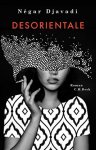
The daughter Nour, born with unusual piercing blue eyes, her mother dying in childbirth, the man obsessed with making her his wife, her reluctance to go out being the object of unwanted attention, her children who desire to be free of restriction, the reading of the coffee cups, predicting the sex of the child of a pregnant woman; Uncle Number Two and his secret.

Darius, the timid elder son, sent to Cairo to study law, abandons his studies and pursues a doctorate in Philosophy at the Sorbonne. Eventually he returns to the family, changed by his studies and experiences and though quiet in person, wields a mighty sword through his journalistic pen and letters to a political regime he detests and chooses not to ignore.

It is a story that spans a changing, turbulent time in Iranian history, one that travels through highs and lows, for while the passionate intellectual is free to express their opinion and brings no harm, they continue to live within their culture, family and be an active part of their community and society. But when freedom of expression becomes a danger to the individual, the sacrifices that are made stifle and silence them, but don’t always make them safe. Life in exile, without the connections to friends, family, neighbours, reduces these adults to shadows of their former beings, unable to truly be themselves in a foreign culture.

I highlighted so many great passages in reading, but I’ve already passed the book on to someone else to read, so can not share them here yet. It is a reminder of another era, of people who had rich, cultural and intellectual lives, of families who fled persecution, not because of war, but because of their intellectual and philosophical activism and of how much is lost, when a new generation grows up within a culture no longer connected to their past, to their heritage and worse, in a country that has been subject to the propaganda of the media, and perceptions of that culture are tainted by the agenda of politicians and parties, and what they wish their populations to believe about foreign cultures.

I absolutely loved it, I liked the slow drip revelation of what this young woman’s life had become, having been severed from her country and community of origin and the colourful, abundant richness of the family history and culture, which while separate from her life today, existed somewhere deep in her psyche, in her genes, and in those non-genetic aspects we inherit from previous generations even without knowledge of what has passed.

It is as if she had a crystal ball to look back through the years, through lives she hadn’t personally experienced and discovered events from the past that created an aspect of who she was and would in turn, be passed on and live deep within the yet unborn child she desires to conceive.

Highly Recommended.

Buy a Copy of DisOriental via Book Depository

A Catalog of Birds by Laura Harrington

A friend lent me this book and I recognised immediately that it was a Europa Editions book, but not one I had heard of Europa Editions are one of my favourite publishers, they always have something that will appeal to me in their annual catalog. Many of the books are of Italian origin, or translated from other European languages.
A Catalog of Birds however, is written by the American author Laura Harrington.

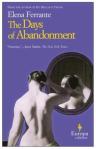
Some of the books Europa Editions have published that I’ve read and reviewed here are, that you might enjoy, are the Elena Ferrante’s Neapolitan series, starting with My Brilliant Friend and Frantumaglia, A Writer’s Journey, also by her The Days of Abandonment, the novel that is like its twin, Ties by Domenico Starnone; the World Noir title The Bastards of Pizzofalcone by Maurizio de Giovanni, Eva Sleeps by Francesca Malendri, The Man Who Snapped His Fingers by Fariba Hachtroubi, Mayumi and the Sea of Happiness by Jennifer Tseng and a new one that I have to read, which I’m really looking forward to, the French translation of Disoriental by Negar Djvadi.

A Catalog of Birds centres around a small 1970’s community in the Finger Lakes region of New York state, an area known for its series of long, thin, deep glacial lakes, it’s high gorges and dramatic waterfalls (and today its wineries).

Despite its natural beauty, this community is affected, as every other is and has been, by the shadow of war, of young men returning from Vietnam, lost dreams, a lost innocence.

The Flynn family’s son Billy has just returned, his body covered in burns, his right arm mangled, his hearing disturbed, after surviving a helicopter crash. The day after his return, his girlfriend Megan disappears.

Megan

Megan hesitates before boarding the bus to a place she’s never been before, hesitates before accepting a ride with a stranger. Thinking of Billy, that horrible hospital, all those wrecked young men and boys. She’s in flight, in flight from it all.
Remembers Billy’s last leave. A year of training under his belt. Three days at home before shipping out to Vietnam. Both of them in the grip of something: anticipation, fear, the unknown.

Billy’s field journal

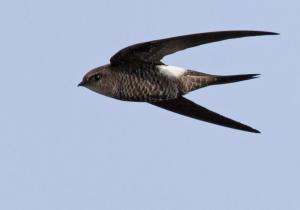
The early pages from Vietnam alternate between scenes on the base: insects, common birds, sketches of his crew; and pages where he was off the base: acres of green, rice paddies, water buffalo. There are birds Nell has never seen before, drawn as only Billy can; each of them so individual, so full of personality you expect them to sing.
Black crowned night heron
Glossy ibis
Pacific swift
There are fewer entries as the months drag on: a lone man crouched in tall burning grass, the shadow of a gunship passing over him, mountaintops ringed with clouds, ravines dark as the far side of the moon. These give way to drawings of the dead, downed helicopters, the last pages full of fire. Page after page: birds, trees, fields, burning.

Billy and his younger sister Nell have a close relationship, they know the surrounding lakes and forests like no other, they are connected to their natural environment in a way that even a highly educated academic specialising in the birds they know so well, had much to learn from.

Esme, 45 yr old ornithologist

Over the years Billy taught Esme a new way to listen, showed her how birds organise their communication, how to read body language between pairs, the meaning of their back-and-forth chat, how they check in on each other, the various warning sounds.

Nell

Billy’s journals are the thread of their childhood; his coming into his own as a naturalist, as an artist, developing his eye, his hand, his deepening identification with birds. From sketching in the field to detailed study, to painting the portraits he began to make the year before he shipped out.

Both Billy’s father Jack and his best friend Harlow, also bear and have borne the hardship of the return from war, they cope in their own way, as has Marion, Jack’s wife, waiting out the long semi-recovery, which in the early years, tests every man who dares survive war’s dark parasitic claim to their sanity. Now they must watch Billy go through the same test.
Harlow Murphy

On good days he fell right into a rhythm of forgetting, found a girl not quite so dedicated to her antiwar stance she’d forego sleeping with a vet, and then drank enough to numb his nightmares. On bad days he was rendered speechless by fury and confusion. He grew his hair long. Learned never to talk about the war.

Jack

“Did you have nightmares Dad?”
“Still do.”
The minutes tick long.
“You can’t leave it. You just end up carrying it.” He takes another swallow of Scotch. “I don’t know how to help him,” he admits. Shamed to hear the words out loud.
“Just love him.”
He looks at his daughter again, wishes it were enough, wishes he didn’t know the limits of love and hope, how little, really, can be covered over, hidden away, made whole.

Nell is too young to remember her father’s return from war, her memories are of the good times she had with her brother and his friend, of the strange feelings that engulf her, of the terrible knowledge of things she knows about Megan, of a desperation to protect her brother, to save his drawings, to bring him back to where he was, when they would go out on the lake, sit in among the trees, listen to birdsong, recognise their warnings, to just be.

Nell

Something lifts in Nell, hearing her brother laugh like that.
She looks at Harlow’s hands. They’re square and strong, the Coke bottle almost disappears in them. Thinks of picking apples in the Alsop orchard. The boys thought ladders were for sissies. Determined to keep up with them, she tried to find a handhold and a foothold to get into the tree. Harlow reached down, grabbed her forearm, pulled her up beside him.
That sudden wash of closeness as she found her footing and her balance. The smell of his skin, touching him. The sun low in the sky, the trees heavy with fruit. Hidden from the others. Light-headed. Vibrating with a feeling she didn’t know how to describe. Twelve years old. How she had wanted to kiss him.
Still does. But it doesn’t look like that’s ever gonna happen again.

Billy

He flirts with driving so fast she’ll be scared into telling him the truth, a truth he probably already knows. Feels her fear then, takes his foot off the gas.
How stupid they were; believing nothing could touch them, catch them, destroy what they had. Willfully blind to the facts, to the birds and the bees, for godsakes. Charmed, meant to be, summer of love, ain’t nothing like the real thing, baby.
He looks at Nell, thinks of how he kept Harlow away from her, but still took what he wanted with Megan. With everything. Grabbed what he wanted with both hands. Flying. The war. Intoxicated in the air. Every time he walked across the tarmac, climbed into the bird. All he’d ever wanted. More awake, more alert, more alive than anytime before or since.

This is a thought-provoking novel about the effect of war on those who were involved in it, on those closest to them, who try to nurture them through the aftermath, about the inclination to not ever to want to speak about what happened, and how that and the changed behaviour trauma causes, affects everyone.

I hope the selection of quotes above provides something of the essence of the novel, it seemed to me that they resonate more than anything I could contribute by way of the review. It is a touching novel that captures the beauty of a shared childhood, the complicity of adolescent friendship and loyalty, the struggle of families, of how they split and come back together, of love, of loss, of the difficulty of practicing forgiveness.

Buy A Catalog of Birds Here