This Is Happiness (2019) by Niall Williams

Irish literature portrait of a community Faha Kerry Novel Historical fiction

I decided to read Niall William’s This Is Happiness, when I saw that he had won the 2025 Kerry Group Irish Novel of the Year Award with his latest novel Time of the Child.

That was the novel I wanted to read, but when I learned that it was a story set in the village of Faha and that an earlier novel preceded it, I decided I would read them both. This is Happiness was longlisted for the Walter Scott Prize for Historical Fiction (2020). The prize that year was won by another Irish author Christine Dwyer Hickey for The Narrow Land, an exploration the marriage of artists Edward and Jo Hopper.

I was curious to see how it would be to read a Niall Williams novel today, remembering the utter pleasure of reading Four Letters of Love in London in 1997, the inaugural book of the first book club I ever joined.

Certain Past, Uncertain Future

I didn’t pay too much attention to this passage on page 3 when I read it, but now that I’ve finished and contemplating why I highlighted so many excellent passages and loved the storyline, somehow this didn’t grip me, I find a clue in this early revelation. When a story is told in the distant past, it brings with it for me, an element of negative nostalgia, because I know this is done, there is little possibility for transformation, it is missing the element of the great unknown, the limitless potential for things to be different.

I myself am seventy-eight years old and telling here of a time over six decades ago. I know it seems unlikely that Faha then might have been the place to learn how to live, but in my experience the likely is not in God’s lexicon.

So we meet our protagonist Noel Crowe reflecting back to when he was 17 years old and had been sent to Faha, County Clare; initially we know not what for, just that something has happened in his life and it had been seen fit for him spend time living with his grandparents.

I had come down from Dublin on the train, not exactly in disgrace – my grandparents, Doady and Ganga were too contrary and crafty for that – but certainly distant from grace, if grace is the condition of living your time at ease on the earth.

Lifting of the Clouds, Coming of the Light

Photo by T. Bernard Pexels.com

The first thing that happens is that it stopped raining. And even though it initially went unnoticed, it became a non-event of significance in that spring of 1958. The second thing was that electricity was to be installed in the area for the first time since the villagers filled in forms a few years before.

Consider this: when the electricity did finally come, it was discovered that the 100-watt bulb was too bright for Faha. The instant garishness was too shocking. Dust and cobwebs were discovered to have been thickening on every surface since the sixteenth century. Reality was appalling…

In the week following the switch-on, Tom Clohessy couldn’t keep mirrors in stock, had a run on hand-, oval-round- and even full-length as people came in from out the country and brought looking glasses of all variety, wet home, and in merciless illumination endured the chastening of all flesh when they saw what they looked like for the first time.

This brought the arrival of the second main character, 60 year old lodger Christy, whom Noel would come to know.

I thought he must be travelling man, there were many at the time, not just the whitesmiths and pot-menders but people adrift in the country generally, for all the reasons known to man unmoored from family or home and making a kind of living from wares carried in cases and opened like miniature theatres to display whatever was newest in the larger world.

Love’s Beginning, Affection’s Endurance

Accompanying world-travelled Christy, Noel was intrigued by his subtle enquiries, indicating past connections in Faha.

I chose Ganga’s method for dealing with catastrophe and pretended nothing had happened. It wasn’t so easy. The scene not only stayed with me, it grew larger for not being spoken and proved perhaps the theorem of imaginary numbers by showing that imagination is many times the size of reality.

When he learns of that history and his intentions, Noel makes a judgement and can’t help himself from interfering, trying to hasten an outcome, until he too experiences the fickleness of youthful desire, the power and impenetrability of the class system and feelings of regret.

A Portrait of A Community in Changing Times

There’s much about this novel I really enjoyed, lots of great passages and the way it tells 17 year old Noe’s perspective and experience, as he spends time with his grandparents, alongside Christy, friend and elder, bringing light to most but not all of the village of Faha, while seeking to atone for past events.

Perhaps it was the slow pace of village life, but the dwelling and description, which often I love, slowed down the narrative and had me less inclined to pick it up.

It could be that I had unrealistic expectations, but also it feels less contemporary than other Irish lit I’ve been reading like Elaine Feeney’s Let Me Go Mad In My Way, where characters are beginning to confront that repressed traditional way of being, while this novel is narrated by a now aged man looking back to that time from the perspective of a younger and older man, where if carried a feeling of foregone conclusions. And knowing that a young person, I felt exactly the opposite to this quote below: the unlived and unknown life in front of me was precisely what made life bearable.

There was every reason to feel natural joy in the world, but for the one that makes it accessible. When your spirit is uneasy, stillness can be a kind of suffering. And when you’re young, the unlived life in front of you, all that future, urgent and unreachable, can be unbearable.

Shortlist of Kerry Group Irish Novel of the Year 2025 won by Niall Williams for Time of the Child Donal Ryan Joseph O'Connor Colm Toibin Christine Dwyer Hickey
Kerry Group Irish Novel of the Year Shortlist 2025

I do recommend it and having noted the book has a significant number of 5 star reviews, I’m clearly in the minority. I will be interested to see how I find The Time of the Child, but I need a break from Faha for the moment, so my next stop is a translated novel set in Mexico City and Aix-en-Provence!

Further Reading

New York Times review: Once Upon a Time In Ireland by Elizabeth Graver

“This Is Happiness” is as full of detours and backward glances as it is of forward motion and — as befits a novel narrated by an old man who comments that “as you get toward the end, you revisit the beginning” — is centrally preoccupied with time itself. NYT

Have you read a recent novel by Niall Williams? Let us know in the comments below.

Boy Swallows Universe (2018) by Trent Dalton

Boy Swallows Universe is the debut novel of Australian author and journalist Trent Dalton, who shared with audiences during the promotional tour of his novel (now a 7 episode Netflix series) that the book was semi-autobiographical, 50/50 fact and fiction.

Eli “does a lot of what I would have [done if I could]. It was all wishful thinking.”

While much of what occurs is true, it reads like a crime, suspense and thriller novel, with unforgettable characters. It is set in a suburb of Brisbane in 1985 and follows a boy through dark, dangerous and at times magical teenage years, intent on changing his family’s lives.

Coming of Age Amid Drug Wars, Corruption and Crim’s

Your end is a dead blue wren.

Boy Swallows Universe Trent Dalton debut novel semi autobiographical 7 part Netflix series based on true story of the authors life growing up in Brisbane Australia

Boys Swallows Universe begins with this cryptic opening line, one of many that appear throughout the text, clues that are eventually resolved in this unique family saviour mystery.

Eli Bell is the main character, he is 13 years old; his brother August, a year older does not talk, he spells words in the air with his finger. He has not spoken since something happened in the past that Eli doesn’t remember. To do with their father. Who he also does not remember.

I can see my brother, August, through the crack in the windscreen. He sits on our brown brick fence writing his life story in fluid cursive with his right forefinger, etching words into thin air.

Finding Meaning and Escape in the Details

Their occasional babysitter Slim, a man who spent a quarter century in jail for the alleged murder of a taxi driver, has taught Eli the importance of details. It’s how he survived the hole. Creating double meanings for here (in the jail) and there (the boundless universe in his head and heart).

When he grows up Eli wants to be a crime reporter for the local newspaper. Slim writes lots of letters to his mates still in prison (using a false name) and suggests Eli can practice by writing letters as well. He has a penpal Alexander Bermudez, once sergeant-at-arms of the Rebels outlaw motorcycle gang.

Slim says a good way for me to remember the small details of my life is to associate moments and visions with things on my person or things in my regular waking life that I see and smell and touch often. Body things, bedroom things, kitchen things. This way I will have two reminders of any given detail for the price of one.

A Stupid Plan, A Secret Plan and a Well Meaning Busybody

The boys live with their mother Frankie Bell and her boyfriend Lyle. The boys get on with Lyle, although Eli has not forgiven him for getting his mother addicted to heroin. Lyle wants to save them all and has a fast track, risky idea about how to do it.

When Lyle’s plan backfires, Eli and August are thrust into survival mode and Eli takes this further with his own big secret plan by going into full on rescue mode, investigative detective, naive peacemaker, all with the aim of trying to get his family back together and his future career on track. Ironically for all the calculated risks it requires, it is his schoolteacher getting too interested in their welfare that worries him.

Mrs Birkbeck leans in closer across her desk. There’s something pious in the way she sits.

‘What I’m trying to say, Eli, is that trauma and the effects of trauma can change the way people think. Sometimes it can make us believe things that are not true. Sometimes it can alter the way we look at the world. Sometimes it can make us do things we normally would not do.’

Sly Mrs Birkbeck. Woman wants to suck me dry. She wants me to throw her a bone about my missing bone.

‘Yeah, trauma is pretty weird, I guess,’ I say.

Eli’s experience of trauma results in him having a highly intuitive subconscious, that combined with a fearless instinct for asking straight up questions push him forward on his quest. The red telephone in the secret dugout room of Lyle’s house is something of an enigma, why does it always ring when he is in there and who is the voice that responds?

A Funny, Thoughtful, Hair-Raising Life Adventure

Boy Swallows Universe is an exceptionally well told tale of a young boy Eli Bell surviving a tumultuous childhood, exposed to the effect of adults involved in drug dealing, of violent school mates, an unusual babysitter and some other hopeful, inspirational characters that make it all worthwhile.

“All of me is in here. Everything I’ve ever seen. Everything I’ve ever done. Every girl I ever kissed on a wagged school day, every punch I ever threw, every tooth I ever lost in a Housing Commission street scrap and every flawed, conflicted, sometimes even dangerous Queenslander I’ve ever come across, as the son of two of the most incredible and beautiful and sometimes troubled parents a kid could ever be born to.” Trent Dalton

This is no story of misery, it is about solidarity between brothers and the tenacity of a boy who won’t accept the way things are, he questions everything and everyone, asking forbidden questions, training himself in observing the details and taking action. Never giving up.

He is trying to save his mother, his mute brother August and himself from the terrible trauma cycles they are all stuck in. He is determined to grow up and become a crime reporter for a local newspaper and to meet the enigmatic Caitlyn Spies.

“The key characters all draw on the people I love most in the world. The most beautiful and complex people I’ve ever known, and I never even had to walk out the door of my house to find them. I just wanted to give the world a story. To turn all these crazy and sad and tragic and beautiful things I’ve seen into a crazy, sad, tragic and beautiful story.”

Brilliantly told, unforgettable characters, a wonderful balance between grounded in the dark reality of a dysfunctional family, a seedy underworld and the ethereal escape of two boys with an ability to dream and imagine their way through the darkest moments of an unsettling childhood.

So many highlighted passages, one of the reading highlights of 2024 for me. Highly Recommended.

I am looking forward to reading his nonfiction book of short stories Love Stories, created when he sat on a busy street corner with a sky-blue Olivetti typewriter and asked the world a simple question: Can you please tell me a love story?

Further Reading

New York Times review: ‘Boy Follows Universe’ follows a Gritty Coming-of-Age in 1980’s Australia by Amelia Lester, May 2019

Trent Dalton on : Why I Wrote ‘Boy Swallows Universe’ Harper Collins

This book is for the never believers and the believers and the dreamers.  This book is for anyone around the world who has been 13 years old. This book is for a generation of Australians who were promised by their parents they would be told all the answers as soon as they were old enough. Well, now you’re old enough.

Here are my answers:

  1. Every lost soul can be found again. Fates can be changed. Bad can become good.
  2. True love conquers all.
  3. There is a fine line between magic and madness and all should be encouraged in moderation.
  4. Australian suburbia is a dark and brutal place.
  5. Australian suburbia is a beautiful and magical place.
  6. Home is always the first and final poem.

Author, Trent Dalton

Trent Dalton Australia author journalist Boy Swallows Universe Lola in the Mirror Love Stories

Trent Dalton is a two-time Walkley Award-winning journalist and the international bestselling author of Boy Swallows Universe, All Our Shimmering Skies, Love Stories and Lola in the Mirror.

His books have sold over 1.3 million copies in Australia alone. He lives in Brisbane, Australia, with his wife and two daughters.

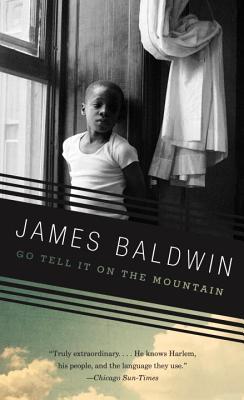
Go Tell It On The Mountain by James Baldwin

James Baldwin’s Go Tell It On The Mountain (1953) was his debut novel, a semi-autobiographical story (inspired by his own childhood in Harlem and his troubled relationship with his father), that narrates a day in the life of 14 year old John, who is the son of a fiery Pentecostal preacher Gabriel, and his second wife Elizabeth.

The Initiation

semi autobiographical novel

It is a coming-of-age story that depicts a range of thoughts, emotions and actions of this boy, while sharing the back stories of his family, culminating in a frenzied religious experience that appears to have set him on his true path.

The story is told in three parts, and though it follows the events of that one day, the three parts focus on the pasts of different characters connected to John’s family. 

Part One, The Seventh Day, is about John, it is his fourteenth birthday and he spends the day thinking about the expectations the family has of him to follow in his father’s footsteps and that he is no longer a child.

He begins to worry that he doesn’t have the same conviction as young Elisha, he feels not only unseen by his father, he feels his wrath and returns it full force in his mind – it enters his dream-life with even greater violence than the looks of disapproval he receives daily. 

The opening chapters are full of biblical language, religious fear and fervour, making it quite intense to begin with, though saved by the dialogue that brings us back to the present day.

“His father’s face, always awful, became more awful now; his father’s daily anger was transformed into prophetic wrath. His mother, her eyes raised to heaven, hands arced before her, moving, made real for John that patience, that endurance, that long suffering, which he had read of in the Bible and found so hard to imagine.”

An Act of Resistance

His mother gives him money and he uses it to attend the cinema. He begins to question his faith, and his father, noticing a rising desire for things he ought not to be thinking of:

Photo by Yuting Gao on Pexels.com
Broadway: the way that lead to death was broad, and many could be found thereon; but narrow was the way that lead to life eternal, and few there were who found it. But he did not long for the narrow way, where all his people walked; where the houses did not rise, piercing, as it seemed, the unchanging clouds, but huddled, flat, ignoble, close to the filthy ground, where the streets and the hallways and the rooms were dark, and where the unconquerable odor was of dust, and sweat, and urine, and homemade gin. In the narrow way, the way of the cross, there awaited him only humiliation forever; there awaited him, one day, a house like his father’s house, and a church like his father’s, and a job like his father’s, where he would grow old and black with hunger and toil.”

The Sins of the Father

Photo by Brett Sayles on Pexels.com

Part Two, The Prayer’s of the Saints is told in 3 parts entitled Florence’s Prayer, Gabriel’s Prayer and Elizabeth’s Prayer.

This section focuses on the past, on Gabriel’s upbringing and life, his sister Florence, her escape North and marriage, a young woman Gabriel worked with named Esther, whose life would be forever changed by their encounter. We learn of Elizabeth’s past, how she meets Richard and also travels North, their tragic story and her meeting Florence, a turning point in her life.

“And this became Florence’s deep ambition: to walk out one morning through the cabin door, never to return. Her father, whom she scarcely remembered, had departed that way one morning not many months after the birth of Gabriel.”

Everything we read here begins to explain the depth of feeling John has, often driven by events he is not aware of, including his own being, his true identity, that he does not yet know. All that has been withheld from him, the secrets people have kept, impact the lives of everyone in this extended family, often without their knowledge.

In the final part, The Threshing Floor, John has a religious experience with terrifying hallucinations, but it is an event that appears to have propelled him out of childhood and towards his calling.

Love/Hate of Parents, Escaping Reality, Awaiting the Calling

Photo by Valdemaras D. on Pexels.com

This is the third book written by Baldwin I have read and while quite different from the others, it is equally compelling. The two I have read I have linked to my reviews below, also highly recommended.

It personifies the common experience of a confused adolescent, whose situation is magnified by the love/hate he feels from one or other parent and the guilt he takes on for it, the emotional roller coaster of new exciting friendship, and the desire to escape into another reality.

The stories of the secondary characters are informative and revelatory, as they contributed to my growing understanding of the unease of the young man.

John’s narrative was convincingly portrayed to the point of it feeling like you were in his shoes and in his mind, the relentless worrying, his paranoid and angry emotions that seemed to take over him, until they culminate in his heightened ‘salvation’ experience.

These heights are a reference to the mountain, a symbol of the ascent and descent through he must pass to move closer to his God, to his own salvation, to his becoming a worthy man.

He thought of the mountaintop, where he longed to be, where the sun would cover him like a cloth of gold, would cover his head like a crown of fire, and in his hands he would hold a living rod.

Life Informs Art

In The Fire Next Time, Baldwin’s essay that first appeared in the New Yorker as Letter from a Region of My Mind, talked of his developing self-awareness as he entered adolescence and the choice he made to seek both refuge and revenge by going into the Church.

“Shortly after I joined the church, I became a preacher – a Young Minister – and I remained in the pulpit for more than three years. My youth quickly made me a much bigger drawing card than my father. I pushed this advantage ruthlessly, for it was the most effective means I had found of breaking his hold over me. That was the most frightening time of my life, and quite the most dishonest, and the resulting hysteria lent great passion to my sermons – for a while. I relished the attention and the relative immunity from punishment that my new status gave me, and I relished, above all, the sudden right to privacy.James Baldwin

Further Reading

If Beale Street Could Talk by James Baldwin

The Fire Next Time by James Baldwin

Thank you to Liz Dexter who blogs at Adventures in running, reading and working from home for the invitation to read this at the time time she was. You can read Liz’s review here.

A Mercy by Toni Morrison

Brilliant.

Toni Morrison February 18 Black History MonthA little way into reading, I had to pause and go back to the beginning, because this story is told not in a linear way, but in a spiral and with multiple perspectives that to me didn’t relate to what the blurb says this book is about.

Florens is the only voice we hear more than once as she sets out on her quest, her chapters are interspersed by those she is growing up around, each one of those is told in the third person, but for their chapter stays with their perspective and views the others. And the last chapter circles back to the beginning and is given to the mother.

The novel begins with Florens beginning to tell us her story/confession and her telling of it will also be the second to last chapter, where she thinks of her mother and what she wishes her to know. We learn of the  plantation where she lived with her mother and younger brother and the accompanied journey she made to her new owner Jacob, given to him in payment for a debt.

It is around 1690, at a time when anyone, of any colour, race or creed could be rented, sold or traded.

The beginning begins with the shoes. When I was a child I was never able to abide being barefoot and always beg for shoes, anybody’s shoes,even on the hottest days. My mother, a minha mãe, is frowning, is angry at what she says are my prettifying ways.

We meet the other women living on Jacob’s farm, how he has “acquired” them, who he is and why he lives the way he does. And the blacksmith, a free man, the turning point of the novel.

To tell any more would be a disservice, for it is a novel to discover, letting it reveal its layers to you.

Their drift away from others produced a selfish privacy and they had lost the refuge and the consolation of a clan. Baptists, Presbyterians, tribe, army, family, some encircling outside thing was needed. Pride, she thought. Pride alone made them think that they needed only themselves, could shape life that way, like Adam and Eve, like gods from nowhere beholden to nothing except their own creations. She should have warned them, but her devotion cautioned against impertinence. As long as Sir was alive it was easy to veil the truth: that they were not a family-not even a like-minded group. They were orphans, each and all.

The Spiralling Narrative

Without looking at the structure, and trying to understand the author’s intention by it, I can see why one might struggle with this, I went back and reread the first chapter countless times as I read forward, because it reveals so much that is understood as we progress. I benefited so much from each time I circled back and reread that beginning. And felt the excitement of realising what Morrison was doing. A lyrical revelation.

The man Jacob gets one chapter, but the first person narrator is the little girl Florens who we see at eight years and at sixteen years and we only understand why, when we read the very last voice, that of her mother, and whose intention it was, who spotted that opportunity, A Mercy. The story is seen from these different angles, perspectives, narrative voices circling the oblivious character.

Just wow.

Ombu Trees Argentina

Photo by Johannes Plenio on Pexels.com

A simple telling of a complex novel in the hands of one of the greats.

To use my own symbolism, which at the end I draw in the back of the book, to capture it immediately it comes to mind, it’s like learning about how trees live in communities and support each other.

There is what you see above ground, what lies below that connects them, and then there is the environment in which they grow, are nurtured, or might wither. And the small mercies.

It was not a miracle. Bestowed by God. It was a mercy. Offered by a human.


Further Reading

Short Video (3 mins) Toni Morrison on her character Florens in ‘A Mercy’

Claudine in Paris (Book 2) by Colette tr. Antonia White #WITMonth

After years of freedom in her beloved countryside of Montigny, having been Queen of her domain and revered in school, Claudine weakens on arrival in Paris, forcibly confined to the rooms within their new home in illness. She wonders what has happened to her, hardly recognising herself.

Her father assumes his previous habits, embarking on his latest project, confined to his library most days, employing an assistant to help him, a young man who appears to have a crush on Claudine.

Seeking company outside the home, Claudine asks after her father’s sister.

“Why haven’t we seen my aunt yet? Haven’t you written to her? Haven’t you been to see her?”

Papa, with the condescension one displays to mad people, asked me gently, with a clear eye and a soothing voice:

“Which aunt, darling?”

Accustomed to his absent-mindedness, I made him grasp that I was actually talking about his sister.

Thereupon he exclaimed, full of admiration:

“You think of everything! Ten thousand herds of swine! Dear old girl, how pleased she’ll be to know we are in Paris.” He added, his face clouding: “She’ll hook on to me like a damn’ leech.”

She is delighted to finally meet her Aunt and to discover Marcel, the young man Claudine’s age who she is guardian to, in fact Marcel is Claudine’s nephew, sent to live with his grandmother after the premature death of his mother.

If Claudine at School represents the unfettered, exuberant joys of teenage freedom, of the innocent and immature love between friends and the cruel indulgences of playful spite, Claudine in Paris is the slap in the face of regarding an approaching adult, urban world, one where the streets are inhabited by hidden dangers, the skies are more gloomy, people are not what they seem, even old friends from school become unrecognisable when the city and her frustrated inhabitants get their clutch onto the innocent.

Claudine wants to embrace it all with the same fervour she did her old school, but discovers her own prudence, when confronted with the reality of entering adulthood.

“There I was, making myself out completely sophisticated and disillusioned and shouting from the rooftops ‘Ha, ha! you can’t teach me anything. Ha, ha! I read everything! And I understand everything even though I am only seventeen.’ Precisely. And when it comes to a gentleman pinching my behind in the street or a little friend living what I’m in the habit of reading about, I’m knocked sideways. I lay about me with my umbrella or else I flee from vice with a noble gesture. In your heart of hearts, Claudine, you’re nothing but a common everyday decent girl. How Marcel would despise me if he knew that!”

Marcel’s father, whom she calls Uncle Renaud, introduces her to the theatre, she gets outfitted with a more appropriate wardrobe for a social life in Paris, she begins to delight in her new surroundings, although a melancholy often arises when she thinks of her life in the countryside, an affliction she thinks might be resolved by finding the right relationship.

“The lilies-of-the-valley on the chimney-piece intoxicated me and gave me a migraine. What was the matter with me? My unhappiness over Luce, yes, but something else too – my heart was aching with homesickness. I felt as ridiculous as that sentimental engraving hanging on the wall of Mademoiselle’s drawing-room Mignon regretting her fatherland. And I thought I was cured of so many things and had lost so many of my illusions! Alas, my mind kept going back to Montigny.”

She even misses her homework and having to explain those mindless subjects she used to abhor, such as ‘Idleness is the mother of all vices,’ one she has had the misfortune to come to understand better .

A marriage proposal awakens her from her misery, an idea forms in her mind and before we know it, the page has turned and we are into Claudine Married!

Further Reading:

An Introduction to Colette

Book 1 – Claudine at School

Book 3 – Claudine Married (to come)

Claudine at School (Book 1) by Colette tr. Antonia White #WITMonth

In the young Claudine, the author Colette (who we met in my earlier post An Introduction to Colette), introduces us to a tomboyish, nature loving, confident girl raised without a mother, cared for in some respects by a maid, just as she had turned fifteen and is finishing her last year in school, with external exams approaching.

“Two months ago, when I turned fifteen and let down my skirts to my ankles, they demolished the old school and changed the headmistress. The long skirts were necessitated by my calves; they attracted glances and were already making me look too much like a young lady.”

Her father is an eccentric, slug loving academic, with his head in his manuscript on the Malacology of the Region of Fresnois, who seems barely to notice that there is a girl turning into a young woman in his midst.

“He is entirely wrapped up in his work and it never occurs to him that I might be more suitably brought up in a convent or in some Lycée or other. There’s no danger of my opening his eyes!”

While she excels at school with little effort, she is rebellious, provocative, manipulative and despite the trouble she causes and schemes she comes up with, there is no other place, except perhaps the woods, that she would rather be. School excites her, not for its lessons, but for the human drama that there is an endless supply of, and the chance for her imagination to stretch its bounds.

“Those French compositions, how I loathe them! Such stupid and disgusting subjects: “Write, so as to draw to your own physical and moral portrait, to a brother whom you have not seen for ten years;” (I have no fraternal bonds, I am an only child.) No one will ever know the efforts I have to make to restrain myself from writing pure spoof or highly subversive opinions! But, for all that, my companions – all except Anais – make such a hash of it that, in spite of myself I am the ‘outstanding pupil in literary composition’.”

Claudine develops an attachment to one of the Assistant teachers, nineteen year old Aimée and in order to spend more time with her exclusively, organises private English lessons at home. This seems to turn the new Headmistress against her even more so than was initially apparent, revealing a complex female tension within the school, tolerated only because of the Headmistress’s special relationship to the District Superintendent of Schools.

Her closest companion might be her beautiful intelligent cat Fanchette, who loves her disinterestedly, despite the miseries she inflicts on her.

“You amused me from the moment you came into the world; you’d only got one eye open when you were already attempting warlike steps in your basket, though you were still incapable of standing up on your four matchsticks. Ever since, you’ve lived joyously, making me laugh with your belly dances in honour of cockchafers and butterflies, your clumsy calls to the birds you’re stalking, your way of quarrelling with me and giving me sharp taps re-echo on my hands. Your behaviour is quite disgraceful: two or three times a year I catch you on the garden walls, wearing a crazy, ridiculous expression, with a swarm of tomcats around you.”

The year passes with the continued dramas between the students, Claudine reconciles herself to friendship with Luce, the younger sister of Aimée, who complains incessantly of mistreatment by her older sister, whose sole attentions are for the Headmistress.

The girls take the train to go and sit their exams, requiring an overnight stay in another town and the daily stress of being called to present for the oral part of the exams, waiting for the night-time listing of who has been called back to present and at the end who has passed.

Never one to conform, Claudine refuses to take part in some of the collective activities and amuses herself by sneaking out and finding her way unaided to friends of the family, who are both shocked and delighted to receive her. Her somewhat privileged life, bereft of expectation, serve to make her school days full of opportunity to exercise her wit, charm, cunning and mild cruelty against her teachers and with her fellow pupils, as she proves herself more than a match for them all.

Her carefree days are about to come to an end however, as her father makes plans for them to move to Paris, the subject of the second novel in this volume The Complete Claudine, Claudine in Paris where she learns she may not have quite the same freedom to roam, as she has had in the countryside, for reasons her father appears mildly reluctant to expand on.

Further Reading

An Introduction to Colette

Book 2 – Claudine in Paris 


Bonjour Tristesse by Françoise Sagan tr. Irene Ash #WITMonth

Bonjour TristesseRachel Cooke in this Guardian article The subtle art of translation reflects on the importance of the right translation and relates her memory of reading Françoise Sagan’s Bonjour Tristesse.

Last year, I decided to treat myself to a new copy of Bonjour Tristesse by Françoise Sagan, a novel I have loved ever since I first read it as a teenager, and whose dreamy opening line in its original translation from the French by Irene Ash – “A strange melancholy pervades me to which I hesitate to give the grave and beautiful name of sadness” – I know by heart.

She decides to splash out and buy a new copy to read and chooses the Penguin Modern Classics version translated by Heather Lloyd.

Some days later, in bed, I began reading it. The shock was tremendous, disorienting. “This strange new feeling of mine, obsessing me by its sweet languor, is such that I am reluctant to dignify it with the fine, solemn name of ‘sadness’,” went the first sentence, which sounded to my ears a little as though a robot had written it.

Françoise Sagan

Author, Françoise Sagan

For a while she continued to read it, telling herself it was stupid to cling to one version, as if it were a sacred thing, however she gave up, it may have been an accurate translation but it lacked the magic of that fist reading experience. She ends by saying that if you tried this story and hated it, to please have another go and entrust yourself to Irene Ash’s gorgeous 1955 translation.

Having read the article, I had no hesitation in going straight for the Irene Ash translation and was transfixed from the very first pages, totally put under the spell of this charming little novella.

Cecile is looking back and recalling the summer she was seventeen, when she and her father spent 2 months on the French Riveria near St Raphael, having a blissful holiday. He is a widower who doesn’t lack for female company and she has just finished school and lives a life of privilege and indulgence, her father imposing few if any limits on her, they are in a sense like children both of them in adult bodies.

He had rented a large white villa on the Mediterranean, for which we had been longing since the spring.It was remote and beautiful, and stood on a promontory dominating the sea, hidden from the road by a pine wood; a mule path led down to a tiny creek where the sea lapped against rust-coloured rocks.

She is surprised to enjoy the company of a young man Cyril, preferring the company of more mature men and her father’s friends, and discovers she quite likes the attentions of this young man who is falling in love with her and she with him.

CalanquesIt should have been perfect, but things change when an old friend of her mother’s Anne arrives and she and her father announce their intention to marry. Although it is actually something Cecile feels is right for them and she adores Anne, part of her resents what signifies to her the end to the playful era she and her father have indulged, for Anne’s presence in their lives will certainly bring order and sensibility.


Yes, it was for this I reproached Anne: she prevented me from liking myself. I, who was so naturally meant for happiness and gaiety, had been forced by her into a world of self-criticism and guilty conscience, where, unaccustomed to introspection, I was completely lost. And what did she bring me? I took stock: She wanted my father, she had got him. She would gradually make of us the husband and step-daughter of Anne Larsen; that is to say, she would turn us into two civilised, well-behaved and happy people.

She embarks on a plan to provoke a change in this happy little situation, instantly regretting it, but unable to halt the progress of a development she has initiated.

Tears came into my eyes at the thought of the jokes we used to have together, our laughter as we drove home at dawn through the empty streets of Paris. All that was over. In my turn I would be influenced, re-oriented, remodelled by Anne. I would not even mind it, she would act with intelligence, irony and sweetness, and I would be incapable of resistance; in six months I should no longer even wish to resist.

It is a simple storyline, but what makes it incredible are the adept insights Cecile has into herself and her behaviour and to all those around her. She acts irresponsibly as if she is unable to help herself, but with a certain equanimity, it is as if she stands outside of herself and narrates events and what is driving each character to act their part in her little drama, which will escalate into tragedy.

Utterly engaging, I was riveted, loved that ability her character had to understand the personalities around her and her own flaws, despite being unable to stop the mischief she provoked, not to mention that this was written when the author was only 18 years old.

Buy Bonjour Tristesse from Book Depository (Affiliate Link)


My Brilliant Friend, Elena Ferrante tr. by Ann Goldstein…Neapolitan Tetralogy Book1

Elena Ferrante is already something of an Italian legend. An author said to spurn interviews, her pen name fuelling speculation about her real identity. Her work is said to be autobiographical and already capturing the attention of English readers in a similar way to the autobiographical series of novels by the Norwegian Karl Ove Knausgaard.

Being a fan of translated fiction I have had my eye on this series for a while and from the reviews and articles I have read, her work reminds me of Caroline Smailes, whose excellent novel The Drowning of Arthur Braxton was my favourite read in 2013.

My Brilliant FriendIn 2012, My Brilliant Friend, the first in the trilogy of Neapolitan novels was translated into English and the two subsequent books The Story of a New Name and Those Who Leave and Those Who Stay were published in 2013 and 2014 consecutively.

The trilogy follows the lives and friendship of Elena Greco and Lila Cerullo, two astute girls from a downtrodden suburb slum of post war  1950’s & 1960’s Naples, as they navigate the challenges and opportunities necessary to survive and overcome their upbringing.

My Brilliant Friend spans Elena and Lila’s childhood and adolescence years in their neighbourhood, one where aggression, tension and feuds reign and graduating from school is less of a priority than finding safety and protection from the inhabitants of their immediate environment.

The first pages begin with the naming of characters, a family tree of the neighbourhood, members of each family and their occupations. I often find these lists of characters overwhelming, so ignored them, telling myself, if the book is good, I’ll know who all these characters are by the end. And when I went back to look at it, sure enough, I knew who they all were.

The story then begins with a prologue when the girls are women in their mid-fifties and creates a mystery that won’t be resolved in the first book, as the girls only reach the age of sixteen by its conclusion. It intrigues and teases the reader to continue to read on and discover what it is Elena knows, that no one else does.

“It’s been at least three decades since she told me that she wanted to disappear without leaving a trace, and I’m the only one who knows what she means.”

A Naples Slum

A Naples Slum

Elena is angry and so begins to write this narrative, in an act of revenge-like competitiveness, a trait that has defined her relationship with Lila throughout their childhood and adolescence.

Narrated from the point of view of Elena, the girls first recollection of being together is around the fearful presence of Don Achille, the local grocer whose name is associated with a fairy tale ogre.

In their play, Lila’s actions are always decisive and with bold intent, Elena is less bold, yet more determined, she follows her friend but wishes to surpass her and learns how to cope with the sacrifices necessary to continue to be her friend. Starting with the day Lila dropped her doll through the street grating into a dark underground cellar.

“But that day I learned a skill at which I later excelled. I held back my despair, I held it back on the edge of my wet eyes, so that Lila said to me in dialect:

‘You don’t care about her?’

I didn’t answer. I felt a violent pain, but I sensed that the pain of quarrelling with her would be even stronger. I was as if strangled by two agonies, one already happening, the loss of the doll, and one possible, the loss of Lila.”

After her early years of passing well her exams, there is one year when Elena’s attention strays and as a result her parents are no longer willing to support her in school. They won’t pay for extra tuition but if she studies and resits the exams, they will allow her to continue.

Lila, who never fails, will have to leave school, regardless of her ability, her family isn’t willing to support her education. She has a hunger for education and follows Elena’s progress, increasing her knowledge, surpassing her friend, becoming more like her teacher, though never sitting another exam.

“She had begun to study Greek even before I went to high school? She had done it on her own, while I hadn’t even thought about it, and during the summer, the vacation? Would she always do the things I was supposed to do, before and better than me? She eluded me when I followed her and meanwhile stayed close on my heels in order to pass me by?”

Snapshot 1 (09-11-2012 17-25)

Friendship by Allia

The book ends with a wedding, the girls paths seem to be heading in different directions, they continue to navigate their lives according to the expectations and threats of their community, yet their paths, in their different ways, potentially hold the seeds of their escape.

My Brilliant Friend is an emotionally charged coming-of-age read and the story held me riveted all the way through from the prologue that isn’t resolved through their early schooldays up to that wedding day.

Ferrante’s depiction of the two girls friendship bristles with vulnerable authenticity, igniting our curiosity in their interactions with their community, making the reader care about what will happen to them all next.

Next Book in the Series: The Story of a New Name (click title to read review)

Buy This Book

Buy My Brilliant Friend at Book Depository

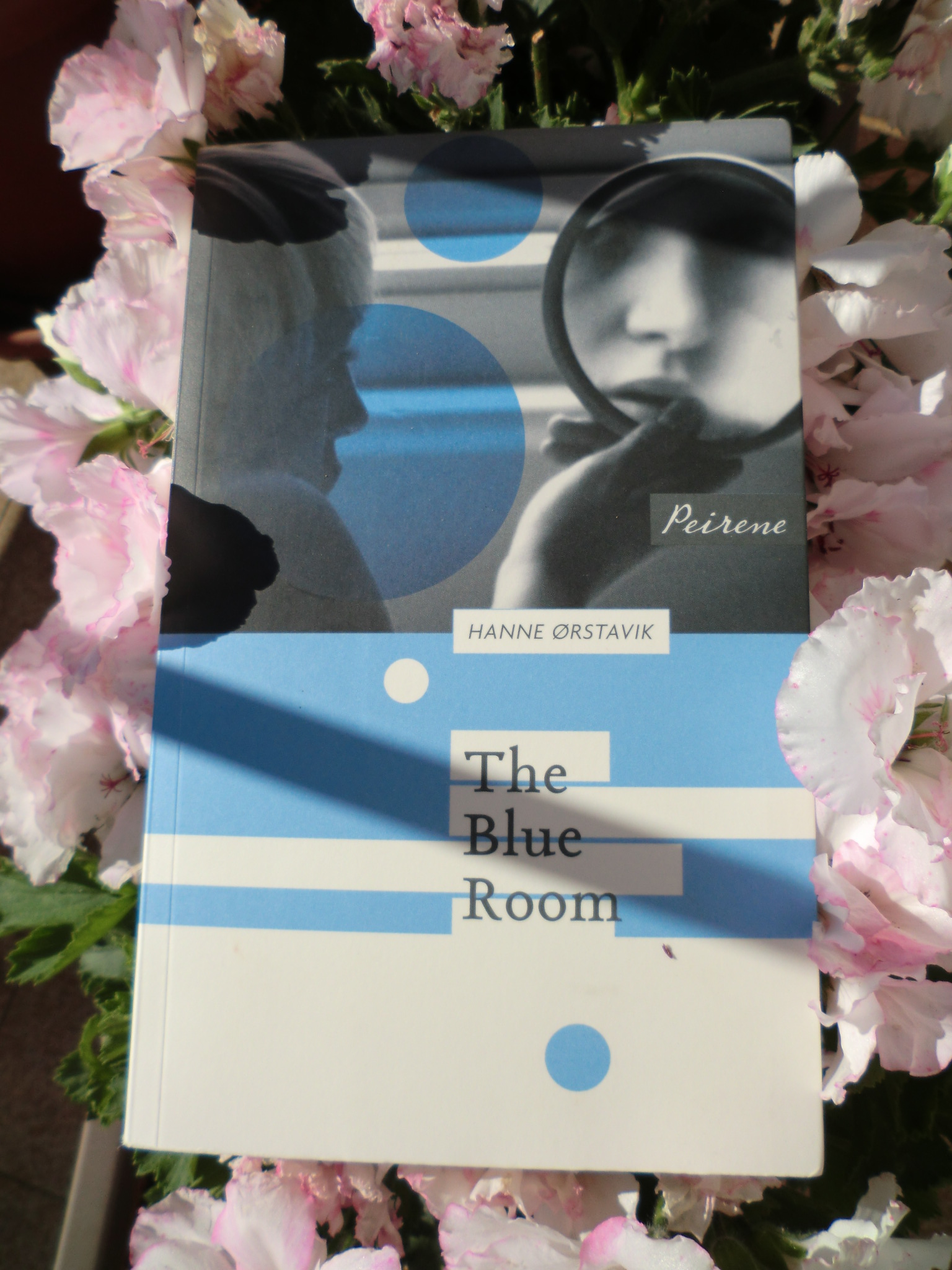
The Blue Room by Hanne Ørstavik

Blue Room2The Blue Room is the latest novella from Peirene Press, a publishing concept I wrote about here.

Peirene’s novellas always promise something a little different, a mix of women and men authors, all of them originating in a language other than English and sometimes writers whose work is being translated into English for the first time.

Perhaps the only positive aspect of there being so little fiction of foreign origin translated into English (4-5%), is the grand opportunity that awaits publisher’s like Peirene Press and Gallic Books to discover true gems of literature to share with the English reading world.

Story telling is universal and equally engaging no matter where it comes from. Just like travel, literature in translation can offer insights into another culture and perspective.

June’s coming-of-age novella, The Blue Room by Hanne Ørstavik translated by Deborah Dawkin, is already well-known in Norway and internationally; she has written numerous books which have been translated into 18 languages, though not until now, into English. The recipient of literary awards in Norway including the Doblou Prize for her entire literary output, she is one of the most admired  authors in contemporary Norwegian literature.

Provoking readers with her large, bold font message on the opening page, Meike Zeirvogel says of The Blue Room:

“Everyone who has read Fifty Shades of Grey should read this book. Why?

The Blue Room holds up a mirror to a part of the female psyche that yearns for submission. The story shows how erotic fantasies are formed by the relationship with our parents. It then delves further to analyse the struggle of women to separate from their mothers – a struggle that is rarely addressed in either literature or society.”

Making us wonder what revelations might unfold.

Johanne lives with her mother in a small apartment, she occupies the only bedroom, her mother hangs a curtain in the living room and sleeps there. The story starts on the day Johanne is due to leave for America with her boyfriend Ivar. She wakes to find the door to her bedroom locked and no response from the other side.

As she spends the day in her room, musing on the likely action and varying theoretical states of mind of Ivar, who would have waited for her and come to his own conclusions concerning her absence, she also thinks back over the past two weeks since she first met him at the university canteen, in between her lectures on psychology, some of which she shares with us, creating a bland kind of irony; the reader can’t help but read significance into the lessons she is learning in class as events play out in her life, where she discovers the essence of her slumbering sexuality, awakened in the shadow of her mother’s history, coming to us in flashes.

BlueFrom the first pages, I recognise it as a slow read, sentences that beg to be read twice, thoughts expressed that benefit from quiet reflection and words that hum from the page in clandestine harmony.

“Suddenly it came over me again and I started to cry. No sobbing, just tears. Water, I thought, nothing but salt water, dropping onto the paper, making minuscule white suns. Clearly the slat had an effect on the colours, erasing them. I didn’t understand what was happening inside me. Then it passed, like a rain cloud, drifting away.”

Although it wouldn’t be called a mystery or suspense novel, there exists all through the pages a sense of foreboding and it was almost with relief that I turned the last pages, half expecting something more sinister to await me or perhaps that was the latent effect of the suspense novel that I did read before embarking on this.

It captures the natural evolution of innocence and like the allure of watching two colours mix on a canvas to see what shade it will yield, first it is necessary to know one’s own true colour before we can observe or understand the effect when it combines with another.

An alluring read, that captivates as it reveals.

Looking forward to the next in the series!