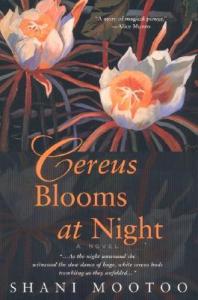
Cereus Blooms at Night by Shani Mootoo

 Cereus Blooms at Night is the partially told story of one woman’s life, beginning when she is admitted to an alms house, suspected of having murdered her father and slowly unravelling back to the turning points, the highs and lows which brought her to be in the state she is in on arrival.

cereusIt is a novel narrated in parts, each part focusing on a character(s) who were influential in her life, including the young man who never knew her until this day, the one who became her confidant, perhaps the first man she ever trusted, after all that had passed beforehand. Much of it is told as Mala slips into memories of herself as child, reliving it.

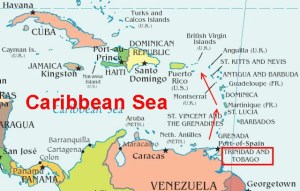
It is set on the fictional Caribbean island of Lantanacamara, in a town called Paradise, the Ramchandin patriarch arriving there from India, trading a life of indentured servitude for little more than the promise of a karmic upgrade for his son, Chandin, who would be taken under the wing of the Reverend in the hope of improving the family prospects.

The young male nurse, Tyler accepted his first job in the alms house and although well-trained and qualified, his employers had yet to extend their generosity towards giving him actual nursing duties. The arrival of the controversial patient Mala Ramchandin, provided him with the first opportunity to exercise his skills.

I hardly had opened my mouth to explain that Miss Ramchandin was too frail to inflict even a bad thought when Sister screamed at me for being insolent and blatantly disregarding her authority.

No one else wanted to go near her, she was bound and believed to be mad and dangerous. Tyler was delighted to be given the opportunity and responsibility and treated his patient with the same compassion he might have offered any patient given the chance. Sensing her distress, he acted to alleviate it regardless of instructions to do otherwise.

cereusAs Tyler gained her trust, Mala’s story is revealed to us through him and through the two visitors she received, who on her first day there, unable to see her, left a pot with a cutting of the fragrant night-blooming cereus plant, a gift that clearly delighted her, a symbol of fragrant, nurturing oblivion.

The novel is full of contrasts, moments of delight and anticipation alongside the growing recognition of impending horrors, abuse and neglect. It taunts the reader into a state of hope, as the potential for things to have been otherwise is so close at times, only for the illusion of escape to become shattered by the reality of a situation that holds tight to those who are caught in its web.

The novel is unique in its portrayal of characters whose sexual identity is unclear, exploring hybridity and sexual minorities within a cultural context, in an intriguing, accepting way.

By the time Ambrosia was five, her parents were embroiled in their marital problems to the exclusion of all else, including their child. They hardly noticed that their daughter was slowly transforming herself into their son.  Ambrose slept right through the month, undisturbed until the first Saturday of the next, and Elsie, hungry for a male in the house, went along with his (her) strong belief that he (she) was really and truly meant to be a boy. Else fully expected that he (she) would outgrow the foolishness soon enough.  But the child walked and ran and dressed and talked and tumbled and all but relieved himself so much like an authentic boy that Elsie soon apparently forgot she had ever given birth to a girl. And the father, in his few waking episodes, seemed not to remember that he had once fathered one.

Despite the harrowing nature of Mala’s experiences, the luminous storytelling and unique characters bring light to otherwise dark places, and show that perseverance and allowing space for love, can overcome all manner of tragedy.

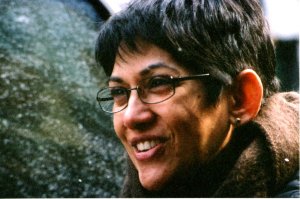
I came across the author Shani Mootoo in my search for other women authors, writing in the Caribbean tradition, authors who may have lived and been educated elsewhere, but whose writing evokes a clear connection to roots from elsewhere. Mootoo was born in Ireland, raised in Trinidad and moved to Canada as a young adult.

Trinidad and Tobago literature is rooted in the oral storytelling of African slaves, the European literary roots of the French creoles and the religious and folk tales of the Indian indentured immigrants.

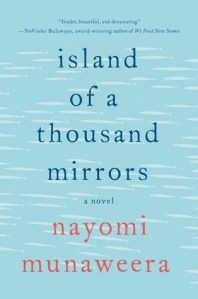
Island of a Thousand Mirrors by Nayomi Munaweera

In 2016 I read Nayomi Munaweera’s second novel What Lies Between Us and it was one of my Top Reads of 2016, a novel of a young woman trying to adjust to a new life in a new country, though still haunted by both the beauty and deeply buried tragedy of her past, her childhood in Sri Lanka.

thousand-mirrorsIsland of a Thousand Mirrors similarly evokes the childhoods and family life of two families living in the same house. The house is owned by the matriarch Sylvia Sumethra and her husband The Judge, who are Sinhala people (an Indo-Aryan ethnic group originally from northern India, now native to and forming the majority (75%) of the population of Sri Lanka, mostly Buddhist) and upstairs they rent to an extended Tamil family (a culturally and linguistically distinct ethnic group native to Sri Lanka, mostly Hindu).

It is a time when they live side by side in relative peace, although there are prejudices and intolerances at the adult level, attitudes that are initially not understood by children. Multiple generations of children will grow up and some of them will be capable of bridging those differences, until violence, heartache and tragedy taint them.

Sylvia’s daughter Visaka grows up in the house and develops a fearful crush on the son of the family upstairs, later when she is married and gives birth to one of our narrators, her daughter Yasodhara too will befriend Shiva, the next generation son of the same family living upstairs.

Her father Nishan is a twin, the lighter skinned one, his sister Mala, despaired of by her mother Beatrice when she was young, perceived as being unlikely to marry, to be rejected because of her skin tone, finds love without the interference of her family, something of a scandal.

There is silence and then the familiar smack of Beatrice Muriel’s palm against her forehead. “A love marriage,” she says. In her opinion, love marriages border on the indecent. They signify a breakdown of propriety, a giving in to the base instincts exhibited by the lower castes and foreigners. She believes marriages are too important to be relegated to the randomness of chance meetings and hormonal longings. They must be conducted with precision, calculated by experts, negotiated by a vast network of relations who will verify the usual things: no insanity in the family, evidence of wealth and fertility, the presence of benevolent stars.

An old photograph reminds Yasodara of the moment she was forced to recognise the age-old prejudices that infiltrate families, that perpetuated the myth that she and her friend Shiva were different.

We had been talking in our own shared language, that particular blur of Sinhala, Tamil and English much like what our mothers used in the early days, when suddenly my grandmother, her attention telescoped on us, pins him like an insect. Her iced voice, incredulous, “Are you teaching my granddaughter Tamil?” Her hand smashing hard across his cheek. He rips his hand from mine, turns to run. The camera in my father’s hand clicks shut.

When violence enters the town and the soldiers come knocking, their world turns upside down, and both families leave. Yasodara and her family will move to America and start over.

In Part Two we meet Saraswathi, the eldest daughter of a Tamil family in the northern war zone of Sri Lanka. Her family have already lost two brothers to war, and they live in fear of losing a third or worse, something terrible happening to the girls. Sara and her sister are still in school, she hopes to become a teacher, but there are white van abductions, despicable acts of violence and lynchings which put stress on the family. There is pressure to join the Tamil Tigers, a militant group fighting for independence.

There are roofless, bombed-out houses with bullet-splattered walls and empty, eyeless rooms everywhere. I hate these houses, they look like dead bodies or like mad people, laughing through their openmouthed doorways. I want to know what this place looked like before, when all the houses were whole, when people lived in them and cared about them and grew vegetables in front of them, flowers even.

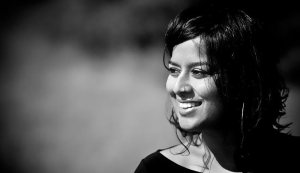
Nayomi Munaweera by Nathanael F. Trimboli

Nayomi Munaweera by Nathanael F. Trimboli

Munaweera writes exquisitely of the island of Sri Lanka, in lyrical prose that takes the reader inside the family experiences, evoking all the senses, the aroma of the cuisine, the fear and excitement of young, forbidden love, the pain of heartbreak, the palpable tension as sisters walk to school, sometimes witnessing images that will stain their minds and revisit their dreams for years.

Through the forced changes political events put on the families, we become witness to the struggle to adapt, in some the nostalgia for the past will lead them back there, in others, it is as if it never was, they have banished nostalgia and reminiscing from their minds and will do all they can to keep it from their children, not realising that they too will grow up and question their parents origins and be curious to know that part of themselves that provokes questions by others, highlighting the obvious, gaping hole in their identity.

I knew it would be good, it is a prize winning novel and deservedly so, it is endearing, evocative and sensual, touching on both the best of humanity and it’s most despicable, unpalatable horrors and the effect that exposure to those horrors can have on the innocent.

Brilliant. Highly Recommended.

Buy one of Nayomi Munaweera’s Books at Book Depository

10 Books I’m Looking Forward to Reading in 2017, Mirrors, Blooms, Wonder, War, Not Nothing

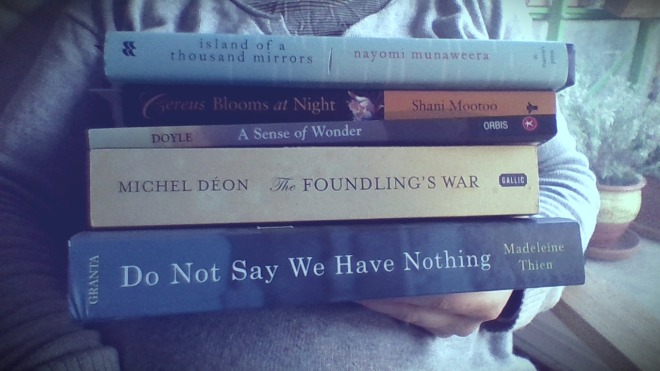
I’m not really into making reading lists, but I do make lots of reading piles of books I think I might read next, which often then get changed, as I’ll read a great review of a book I have on the shelf and be convinced I have to read it sooner, now it’s come to my attention.

So here are five books on my pile at the moment and five waiting on my kindle to start the year with, though don’t be surprised if you find me reading and reviewing something entirely different!

Five From The Shelf

2017-reads

thousand-mirrorsIsland of a Thousand Mirrors, Nayomi Munaweera (Sri Lanka) – Last year I read her second novel What Lies Between Us and it made my top 5 fiction reads and this one is her debut which was longlisted for the Man Booker Prize, the Dublin Impac Prize and won the Commonwealth Regional Prize for Asia. It’s about two families on either side of the conflict during the long civil war, told though the eyes of the eldest daughter of each family.

cereusCereus Blooms at Night, Shani Mootoo (Trinidad) – Part of my fascination with reading stories by women from the Caribbean culture, this one came to my attention last year and is said to be a fascinating narrative propelled by vivdly drawn characters, set on a fictional island, a mystery about a reclusive old woman accused of murder.

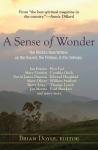
sense-of-wonderA Sense of Wonder, The World’s Best Writers on the Sacred, the Profane, & the Ordinary, edited by Brian Doyle– a beautiful Christmas gift from a dear friend containing an anthology of powerful stories, essays and reflections from some of the world’s best writers including Pico Iyer, Mary Oliver, Barry Lopez, Helen Garner, Cynthia Ozick

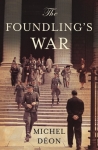
foundlings-warThe Founding’s War, Michel Déon (France) #RIP – the French writer who lived in Ireland, with over 50 novels, plays and essays published, just passed away Dec 28 at the age of 97 years. Having read his novel The Foundling Boy, translated into English by Gallic Books, I’m going to read the sequel A Foundling’s War as a tribute to his lifetime of considerable achievement.

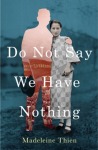
do-not-sayDo Not Say We Have Nothing, Madeleine Thien (Canada/China) – no need to say much about this one, shortlisted for the Man Booker 2016 and I would say it was The People’s Choice, the book most people loved most from the list and one I picked to read when the longlist came out. Secrets from the revolution, a pianist and a composer, intimate and political.

5 on the Kindle

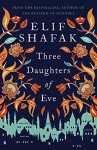
three-daughters-of-eveThree Daughters of Eve, Elif Shafak (Turkey) – I’ve been a fan of Rumi scholar Elif Shafak since she wrote The Forty Rules of Love and have since read The Bastard of IstanbulHonour and her essay The Happiness of Blond People – A Personal Meditation on the Dangers of Identity so I’m looking forward to her latest which she says tackles the confusion of Turkey, faith and God from Turkey to Oxford and back.

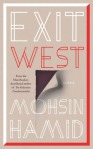
exit-westExit West, Mohsin Hamid (Pakistan) – literary novel of new love in a time of war which causes them to immigrate when the world is in crisis – by a renowned author, with a couple of rave reviews, time to get on the band wagon, a timely novel.

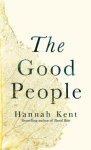
the-good-peopleThe Good People, Hannah Kent (Australia/Ireland) – well I missed Burial Rites, her debut historical novel set in Iceland, about a woman who was executed, so I’m going for her second novel, this one set in Country Kerry, Ireland in 1825 in a time of traditions and superstitions surrounding those born a little different, and women who are vilified for having anything to do with them. I hope it’s as good as her debut!

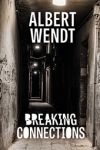
breaking-connectionsBreaking Connections, Albert Wendt (Samoa) – Reading around the world brings me down under to leading Pacific writer Albert Wendt’s new novel by the excellent Huia Publishers. A group whose members refer to themselves as the Tribe, mainly Polynesian grow up together, rise from poverty and become successful professionals, bound by love and fierce loyalty. When one of them is killed, they face an ensuing crisis.

train-to-pakistanTrain to PakistanKhushwant Singh (Pakistan/India) – a classic set in the partition, that was recommended me to me last year after reading Where The River Parts by Radhika Swarup.


Plenty to choose from there, I hope you are looking forward to some exciting reads to start the new year as well.

Let me know what you’re looking forward to!

Click Here to Buy A Novel via Book Depository

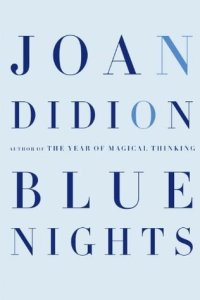
Blue Nights by Joan Didion

This book is called “Blue Nights” because at the time I began it I found my mind turning increasingly to illness, to the end of promise, the dwindling of the days, the inevitability of fading, the dying of the brightness. Blue nights are the opposite of the dying of the brightness, but they are also its warning.

blue-nightsWritten as a reflection on the death of her daughter at 39 years of age, the book begins as Didion thinks back to her daughter’s wedding seven years earlier, which then triggers other memories of her childhood, of family moments, of people and places, numerous hotels they have frequented.

She reflects on her role as a mother, something she hadn’t wanted to be, until suddenly she did, pregnancy had been something to fear, then it became something she yearned for, though it was not to be.

She had difficulty understanding her daughter’s fear of abandonment, knowing how much she needed her child. She displayed little if any understanding or knowledge of common issues that many adoptees often retain within their psyche, issues her daughter presented and was confronted by, including the later presentation of a fully formed family – her birth parents eventually married and had other children.

When we think about adopting a child, or for that matter about having a child at all, we stress the ‘blessing’ part.
We omit the instant of sudden chill, the ‘what if’ the free fall into certain failure.
What if I fail to take care of this baby?
What if this baby fails to thrive, what if this baby fails to love me?
And worse yet, worse by far, so much worse as to be unthinkable, except I did it, everyone who has ever waited to bring a baby home thinks it: what if I fail to love this baby?

Didion examines details of her daughters childhood and life and drawers of photographs and mementos of people who have left her. Not nearly as compelling at her year of magical thinking, and a little too much a collection of names dropped that I found myself skipping over, which all felt terribly sad.

When she speaks of herself, her prose is poetic, mellifluous, at ease. When writing snippets of motherhood and recalling images of her daughter, her language becomes stilted, dissonant, the connections between her thoughts less fluid, the pain too sharp. Ageing has been a long process, one she realises she has seen in her mother, grandmother, but won’t see in her daughter.

joan-didion-and-quintana-rooAlthough the main theme of the book is her daughter’s premature death, nowhere does she analyse or obsess about what actually happened in the way we vividly remember she did about her husband in My Year of Magical Thinking. Rather, the book appears to be as much an acknowledgement of her own ageing and decline, recognising and facing up to her own ‘frailty’, her obsession with her own health scares, recounting every little malfunction or symptom of a thing that never shows up on any of the numerous scans or tests she has. It is as if she writes her own denouement, to a death that never arrives, as the multitude and thoroughness of all the tests she has show how very much alive and in relative good health she is, despite herself.

I was curious to know what she might write looking back at this relationship with her only child, a precious adopted daughter and I was honestly quite shocked at how self-centred the entire book was and how little we came to know Quintana. Rather than go on about that, I refer anyone who is interested to this insightful article below.

Lorraine Dusky also gave birth in 1966 to a daughter, the same year Qunitana was born and for a while she actually thought Joan Didion may have adopted her daughter and went so far as to write and ask. It wasn’t the case and she later met her own daughter, who also died relatively young. As a birth mother she has significant awareness of the issues faced by birth parents and adoptees and her review and commentary of Blue Nights goes some way to addressing Didion’s oblivion.

Article – Joan Didion’s Blue Nights is Really an Adoption Memoir by Lorraine Dusky

joan-didion

Top Reads 2016

In 2016, I read 55 books, just over my ongoing intention, to read a book a week.

I managed to read books by authors from 26 different countries and 19 of them, just over a third, were translations. My absolute favourite book of the year, was written by an author from Guadeloupe, translated from French into English, and 3 of my top 5 fiction reads were translated.

Outstanding Read of 2016
Bridge of Beyond

The book that has stayed with me, that I loved above all else was Simone Schwarz- Bart’s The Bridge of Beyond, a novel that touched on the lives of three generations of women from the French Antillean island of Guadeloupe, narrated by the granddaughter Telumee as she grows up on the island, learning from experience and the traditions of her culture, guided by the wisdom of her grandmother Toussine, ‘Queen Without a Name’. A masterpiece of Caribbean literature, “an unforgettable hymn to the resilience and power of women,” translated from French, republished as a New York Review of Books (NYRB) classic.

Top 5 Fiction Reads

Human ActsHuman Acts, Han Kang (South Korea) tr. Deborah Smith

As much a work of art as novel, Human Acts is an attempt to understand a despicable act of humanity through story telling, Han Kang was one of the most thought provoking authors of 2016 for me, equally incredible was her novel The Vegetarian, which won the Man Booker International Prize in 2016.

What Lies Between UsWhat Lies Between Us, Nayomi Munaweera (Sri Lanka)

Like The Bridge of Beyond, Munaweera’s work is evocative of place and she brings a childhood in the gardens of Sri Lanka alive. A woman remembers her past from behind the walls of a cell, and as she reveals her upbringing and the changes that brought her family to live in America, we wonder what went terribly wrong, that caused her to lose everything. And best book cover!

zoraTheir Eyes Were Watching God, Zora Neale Hurston (USA)

I finally read this great American classic and it was absolutely fantastic, another story that touches on multiple generations of women and how the lives of each affects the other, as they all wish a different life for the future generation. Janie is determined to live her life differently, but some lessons have to be lived thought and not told. The prose is astounding, melodic and the whole reading experience one I’ll never forget.

FirdausWoman at Point Zero, Nawal El Saadawi (Egypt) tr. Sherif Hetata

An internationally renowned feminist writer, activist, physician, psychiatrist and prolific writer, I’d been wanting to read her for some time and during August, reading books by Women authors in translation #WITMonth was the perfect opportunity. And what a novel! Inspired by real events, after she was given the opportunity to interview a woman who had been been imprisoned for killing a man and due to be executed, she retells this story of Firdous, too beautiful and poor to pass through life unscathed, who finds the desire to lift herself and others out of oppression and will pay the ultimate price. Haunting, beautiful, a must read author and book!
Days of AbandonmentDays of Abandonment, Elena Ferrante (Italy) tr. Ann Goldstein

The year wouldn’t be complete without Elena Ferrante, the reclusive Italian author whose identity was outed this year, although I didn’t read any of the reports, preferring she remain as unknown to me now as before. Days of Abandonment was published before her popular tetrology which began with My Brilliant Friend and is a compelling, searing account of one woman’s descent into semi madness following abandonment by her husband, in the days where the hurt prevents her from seeing things objectively and her rationality leaves her. It’s full of tension, as she has two young children and Ferrante uses her incredible talent to make the reader live through the entire uncomfortable experience of this roller coaster ride of temporary insanity.

Top Non Fiction Reads

Memoir

Brother Im DyingBrother I’m Dying by Edwidge Danticat (Haiti)

A beautiful memoir of her father and his brother, alternating between Haiti and America, it is a tribute to a special relationship and an insight into the sacrifices people make to better the lives of others, whether its family or their community. I’ve read her novel Breath, Eyes, Memory she is a wonderful writer with a gift for compassionate storytelling.

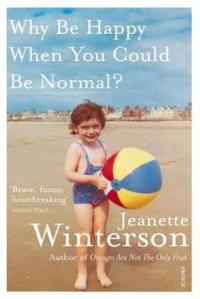
why-be-happyWhy Be Happy When You Could Be Normal by Jeanette Winterson (UK)

Wow, this is the adoption memoir that tops all others, a literary tour de force, an entertaining, horrifying account of a young girl’s childhood, survived by a strong passion for life and literature that gets her through some tough moments and develops an iron will to pursue the joy that appeals so much more than the conformity her mother sought. Brilliant.

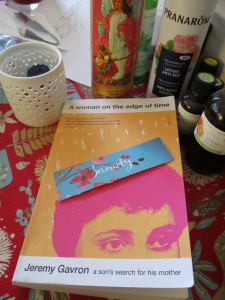
woman-on-the-edgeA Woman on the Edge of Time by Jeremy Gavron (UK)

Less a memoir of the son, than one of his obsession to understand why his mother, when she appeared to have everything a young woman would ever want, decided to end it all. Having never asked questions about his mother’s suicide, Jeremy Gavron, now a father of two girls becomes obsessed with knowing who she was and what pressures lead her to her end. Early 1960’s insight.

The Blue Satin NightgownThe Blue Satin Nightgown by Karin Crilly (US)

A reading highlight of the year for me, I’ve seen Karin’s book go through many stages leading to publication this year, in my review you’ll read how I was involved a little in its development. I knew it would be a success, as we sipped champagne together in Aix after she won the Good Life in France short story competition for the first chapter, Scattered Dreams. Last seen, Karin and her friend Judy were in China continuing their adventures, which age will never hamper and there’s a mysterious new man appearing in her recent Facebook posts, suggesting she may be writing a sequel perhaps?

Soul Food

This year, in particular after the harrowing experience accompanying my 14-year-old daughter through back surgery to correct a curvature of the spine, I read a few books by authors published by Hay House, whose radio show I often  listen to. I’m already a fan and follower of Colette Baron-Reid and her book Uncharted came out this year, and through her I discovered, listened to and read What if This is Heaven by Anita Moorjani, Making Life Easy by Christiane Northrup and I’m still slow reading a few others. During challenging times, these authors are a soothing balm, reminding us of much we may already know, offering an alternative perspective on how we see things and tips for remaining grounded and healthy in body, mind and spirit.

Special Mentions
how-to-be-braveUnforgettable Reading Experience Ever: How to Be Brave, Louise Beech(UK)

I couldn’t let the year pass without mentioning the extraordinary reading experience of Louise Beech’s How to Be Brave. I read this book while I was in the hospital with my daughter and it was surreal, a captivating, incredible story, based partly on true events, both those of the author and her daughter, who are both coming to terms with a recent diagnosis of Type1 diabetes and a retelling of her grandfather’s epic journey lost at sea, after their ship was destroyed.

Bonjour TristesseBest Translations: Bonjour Tristesse(France) & The Whispering Muse (Iceland)

Two fabulous novellas, from Iceland, Sjón’s The Whispering Muse was my first read of the year for 2016 and I loved it, it’s a kind of parody of The Argonauts and had me looking up references to the Greek classic and enjoying both the story and its connections.

Bonjour Tristesse is an excellent, slim summer read, of a young woman’s regret, a heady summer on the French Riviera, engaging as she has a deft ability to portray her minds workings and see herself interacting with the others, aware of her own manipulative ability and yet unable to stop herself. Brilliant.
GeorgiaBest Fictional Biography: Georgia, A Novel of Georgia O’Keeffe, Dawn Tripp (US)

I love the work of the artist Georgia O’Keeffe, she’s probably my favourite artist in fact. And she was an incredible woman, who lived a long time and had an intriguing relationship with her husband, who discovered her as one of his protege, the photographer and gallery owner Alfred Steiglitz. Dawn Tripp has done an outstanding job of researching her life, bringing to this novel, insights from new material available and succeeds in doing what hasn’t really been done before, channelling the voice of the artist, providing a perspective that is loyal to the artist and how she may have thought.

Brief HistoryBiggest, Most Satisfying Challenge: A Brief History of Seven Killings, Marlon James (Jamaica)

Written a large part in Jamaican patois, with a wide array of characters, this 700+ page book won the Man Booker Prize in 2015 and was my summer chunkster for 2016. I gave it 5 stars for sheer effort, even though it’s not really my style of book, I tend to prefer the stories by women writers from around the Caribbean, Marlon James is perhaps too modern for me, he moves his story out of generational tradition and into the cold, dark, masculine front lines of survival, jealousy and ambition in a trigger happy, drug induced frightening world that is far from sleepy villages I prefer to inhabit.

Biggest Disappointment: The Fox Was Ever the Hunter, Herta Muller (Romania)(DNF)

It wasn’t on my reading list and I should have listened to my instinct, but since I was reading books by women in translation and I’d been sent this by the publisher (unsolicited), and it was a novel by a Nobel Prize winning author I attempted it. Impossible. Incomprehensible. Stop. Prize winning authors and books should be looked at like any other book I tell myself, forget about what a committee of 18 Swedish writers, linguists, literary scholars, historians and a prominent jurist with life tenure think, they are not you.

Well that’s it for 2016, another great reading year!

What was your outstanding read for 2016?


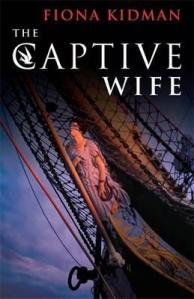
The Captive Wife by Fiona Kidman

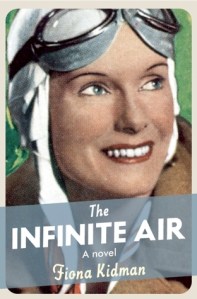
Fiona Kidman is a New Zealand novelist, poet and script writer, whose most recent novel The Infinite Air a novel of the life of the aviator Jean Batten, I reviewed earlier this year.

Gallic Books and Aardvark Bureau

Although she has published over 20 books, she is relatively little known outside Australia and New Zealand, however recently her novels have begun to be published in the UK by Gallic Books, who translate a number of excellent French authors into English, and now with their new imprint Aardvark Bureau, are bringing novels originally written in English, but from countries outside the UK and US, their aim to bring an eclectic selection of the best writing from around the world.

aardvark

One of my favourite reads from 2015 was the Aardvark published novel The Life and Loves of Lena Gaunt by Tracy Farr and in early 2017, they will publish Fiona Kidman’s novel Songs From the Violet Café.

The Captive Wife isn’t a recent novel, just one I had on the shelf, it was originally published in 2005 and I was reminded of it after reading Jeremy Gavron’s memoir, A Woman on the Edge of Time, as his mother, who is the subject of his memoir, also wrote a book called The Captive Wife, though quite a different volume to Fiona Kidman’s.

Review

The Captive Wife is set in the 1830’s, spanning ten years from 1832 -1843 and is based around the lives of two women, one the young Betty Guard and the other her school teacher Adeline Malcolm, whom Betty takes as her confidant, to share what exactly happened to her and her children, when they were taken captive on the shores of New Zealand, during one of their frequent visits.

In narrating her story, we come to know the circumstances of these women and their men and how they came to be living in Sydney, where much of the story is based.  The man Betty is betrothed to Captain John (Jacky) Guard, arrived on one of the convict transport ships, a petty criminal, but one whose fortunes have changed as he gets involved in seafaring and whaling.

Miss Malcolm had been a teacher and is now a governess to two children, her situation somewhat precarious since the death of her mistress and her employer’s disapproval of her connection with the so-called captive wife, Betty Guard, whom rumour has it, was not as captive as many would have them believe.

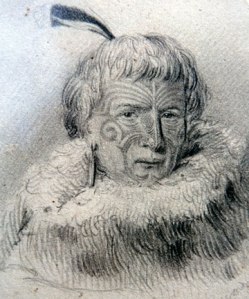
te-rauparahaJacky Guard takes Betty to New Zealand as his wife and they set up home in a bay that is handy for their whaling activities and where it is easy to trade with the native Maori population. Jacky trades with, though doesn’t trust the Maori Rangatira (chief), Te Rauparaha. He is able to negotiate with him, but fears he may have disrespected some of their taboo beliefs. There are constant challenges to their attempt to settle on this land, each time they return to Sydney, their home and belongings are often burned on their return.
Sometimes the whalers invade the villages and fraternise or do worse with the local women and it is through one of these misunderstandings that their lives come under threat and the young Betty is taken captive with her two children.

The novel is based on real events and is compellingly told, as two cultures clash and one way of life is gradually imposed upon another, although the perspective is more oriented towards the colonists, as much of the narrative is told through entries in Jacky Guard’s journal and in the oral narrative of his wife to her ex school teacher.

It is only through Betty’s eyes that we see and experience something of the Maori way of life and their reaction to the arrival of these whalers and traders and the devastation they introduce with what they bring. Betty stays long enough with the tribe to begin to see the value in their ways and it is this sympathy that is subsequently seen as suspicious, as a betrayal not just to her so-called husband, but to the colonial masters.

Betty’s experiences are those of a young woman, though it is as if she has lived much more than her years. Her story is told to Miss Malcolm, who though much older is as much a captive herself, in her spinsterhood and in her inability to communicate her own hidden desire, which Betty’s story forces her to confront.

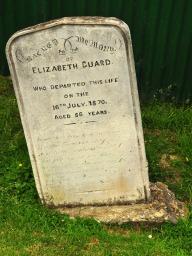
elizabeth-guardElizabeth Parker, the Real Betty Guard

In real life Betty Guard (born Elizabeth Parker in Parramatta, Sydney) made her first voyage with Captain Jacky Guard when she was either 12 or 15 years old, and he 23 years older than her. She is said to have been the first woman of European descent to settle in the South Island of New Zealand and her son John, the first Pakeha child born in the South Island.

She and her family were captured at one point, her husband released with orders to return with a ransom. Her ordeal was later described in a somewhat lurid report in the Sydney Herald of 17 November 1834. It was four months before a rescue mission was  dispatched to bring them back. She and her family eventually settled in Kakapo Bay, where she is buried and where some of their descendants continue to live today.

The Captive Wife is an intriguing story and although a part of me wishes someone would write a novel from the perspective of the indigenous people, at least this gives us an alternative insight, by giving a significant portion of the narrative to the women who lived through these times, rather than referring to them in the footnotes, as was normally the case, as ‘the woman’.

Dame Fiona Kidman

Fiona Kidman in an interview with Kelly Ana Morey of ANZL, the Academy of New Zealand Literature had this to say about communicating with her characters, during the writing process:

I tend to live inside my characters for a long time when I’m thinking about a book. They go with me wherever I go, and sit beside me in the car. This is true, I’m talking to them all the time. And what is happening is that for the most part I’m thinking about how I would have responded to their situations had I been in them.

This was particularly true of Betty Guard, about whom very little was known – and I take some credit for uncovering her true origins and giving her to her descendants – generally, in historical references she was a footnote and referred to as ‘the woman’. I loved giving her a full-blooded persona and thinking myself into the pa sites where she was taken, and discovering both captivity and a wild freedom of the self.

Buy a book by Fiona Kidman

Kakapo Bay

Kakapo Bay


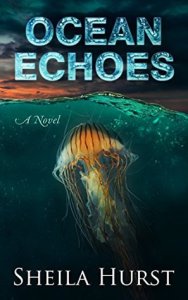
Ocean Echoes by Sheila Hurst

Sheila Hurst is both a reader and a writer with a love of the sea. We connected through a love of literature concerning the sea, I recommended Rachel Carson’s Under the Sea Wind and she recommended The Outermost House by naturalist writer Henry Beston to me, a writer who Rachel Carson mentions as her only other influence when she wrote Under the Sea-Wind.

ocean-echoesOcean Echoes follows a period in the life of a marine researcher named Ellen, who is dedicated to her work, the study of jellyfish, her main desire to discover a new species. She has become ever more focused on her work since a major betrayal that crossed both personal and professional boundaries, an experience that has made her cautious of becoming close to others and less trusting about divulging the findings of her research.
She and her young male assistant Ryan, are soon to join a group on a research cruise to a group of Pacific Island atolls, a fact-finding mission that has suddenly become all the more important as their funding is under threat, the expedition will either help generate funding or could put an end to her research career.

The area they are going into is populated by islanders who have a very different relationship to their environment and the sea, they have rituals that must be respected, if they are to maintain a harmonious symbiotic relationship with the sea. Some of the researchers were resentful at having to go along with their demands, seeing them as no more than superstitions.

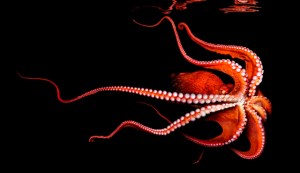
octopus“One of our gods in Mala legend is the fierce sea monster Minawaka. He was once the guardian of the reef entrance to our island. He would change into a shark and travel through the reef, challenging others to fight. But whenever he fought as a shark, great waves would form, valleys would flood, and there would be much suffering…Until one day a giant octopus grew tired of the waves and the suffering caused from all this fighting. This octopus snuck up behind Minawaka and coiled his tentacles around him. The octopus began to squeeze. Minawaka begged for mercy and agreed never to fight again or harm anyone from the island of Mala.”
They saw it as the stuff of legends that had been created to explain the unknown, stories they had little use for in the information age. Ellen knew this, but some of the things she experiences in this environment she has difficulty explaining.

“Ellen had always tried to explain the unexplainable. Now, after visiting this land of magic and legends she wasn’t so sure. Maybe the opposite had been true all along and nothing could ever be fully explained.”

On their research dives, Ellen’s discovers something that may be a new species, but there is something strange and menacing about it, especially when they swarm together. Not only is she looking into this strange new species, but they are discovering the little known history of the area they are in, which has its own dark, menacing past.

Ocean Echoes begins at a gentle pace, with the sense of a story of transformation, but quickly develops into a thrilling mystery, as we enter into a marine sanctuary that is harbouring its own dark secrets. In a world of legends, we are never sure what is real and what is imagined, however the threat is ever-present and the pace quickens along with a sense of foreboding.

jellyfish

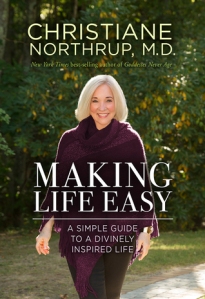
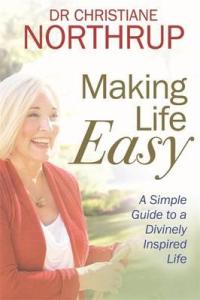
Making Life Easy, A Simple Guide to a Divinely Inspired Life by Christiane Northrup, M.D.

making-life-easyThis was my first read of Christiane Northrup, despite the fact she’s written lots of books, with titles like: Goddesses Never Age: The Secret Prescription for Radiance, Vitality, and Well-Being, The Wisdom of Menopause: Creating Physical and Emotional Health and Healing During the Change and Women’s Bodies, Women’s Wisdom: Creating Physical and Emotional Health and Healing (39 editions published).
In this newest title however, she say’s she’s ‘coming out’ in relation to her spiritual beliefs in a way she has not done before, relying on the banner and weight of credibility of her medical qualifications, which has allowed her to write about more mainstream subjects related to health, ageing and women’s afflictions. Now she reveals another side to her rituals and practises, bringing oracles, angels and raised vibrations into her mainstream medical world.

The first section where she speaks about her spiritual life and the lessons and courses she did to learn the things she has made part of her life was the stand out part of the book for me and a strong affirmation to come across a women from such a traditional profession being so open and honest about her beliefs and experiences beyond the five senses.

“We’re here to develop faith – faith in things that our five senses can’t see, touch, hear or feel and that our intellects can’t prove…clinging to logical, rational, linear thinking is what keeps life hard.”

In essence her message comes down to a basic premise, her philosophy about living an easy life:

“To live an easy life, you have to align with the Divine part of yourself? In fact, you have to let it lead your life. This is not the same thing as waiting for some kind of Divine force outside of you to come swooping in to rescue you from your life. That’s not how it works. You have to make changes.”

She warns that the logical left-brain may find the information she shares challenging, the part that’s always looking for scientific proof, something that is increasingly being discovered in the metaphysical world, which means that many more people are seeing these kinds of developments as more mainstream than they were 20 or 30 years ago.

Christiane Northrup shares the turning point in her life that lead her to develop an interest in the true nature of self – of ego, spirits, souls and combined with her medical knowledge she developed a more holistic way of regarding the health of our emotional and spiritual bodies.

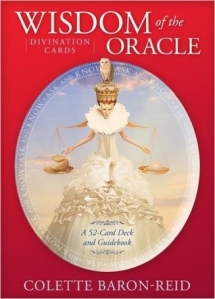
wisdom-oracleThe health and sexuality sections held less interest to me, probably because I was attracted to the book after listening to her speak in a ‘raw and real’ conversation with my favourite ‘intuitive’ Colette Baron-Reid, in that conversation it was the more spiritual aspects that were under discussion, particularly as Colette’s book Uncharted: The Journey through Uncertainty to Infinite Possibility had been published in October 2016. Northrup is a fan of Colette Baron-Reid and mentions that she uses her Wisdom of the Oracle card deck as one of her spiritual tools for guidance.
In fact, she makes quite a number of recommendations regarding authors and people whose work she is interested in and follows, so there is plenty for readers to follow-up on if interested.

“The connection between our thoughts, our emotions, our beliefs, and our biology has now been thoroughly documented by many, including Dr. Bruce Lipton in his book The Biology of Belief and Dr. Mario Martinez in his book The Mind Body Code – a book in which he also describes the devastating biological effects of shame, abandonment, and betrayal.”

She discusses astrology, prayer, ego, soul, medical mediums, communication with the divine, practises to raise your vibration and clear energies, signs and symbols, angels and synchronicity, dreams, oracle cards, tarot readings, psychics, explaining each thing and how people use them, sharing her own experience. She demystifies everything in a grounded, common sense way.

making-life-easy2She also discusses thoughts and inputs, the effect of what we are constantly exposed to and how it should be managed in order to avoid overdosing on negativity and the toxic, fear-enhancing effect of the media for example. She discusses the positive power of affirmations, meditation, gratitude, the power of giving and receiving, connecting with nature, tapping and much more.
“No human being has nervous, endocrine, and immune systems that were designed to process the negative news from all over the planet that’s being piped into their living room on a daily basis.”

“On a purely physical level, fear lowers our vibration and makes us far more susceptible to viruses and bacteria. The biochemical state that fear creates in our bodies adversely affects our immunity and increases our susceptibility to the pathological viruses and bacteria that are all around us.”

I think this will make a significant contribution to bringing a wider and more mainstream audience into the realm of the spirit and the divine, showing us alternative ways to navigate life’s mysterious pathways with faith, confidence, patience and compassion, providing us with small easy practises to help raise our vibration, reduce fear and be open to messages and signs.

“Inspiration from a higher source can’t reach you when you are in the low vibration of states like anger, sadness, and fear. To make life easy, we have to get out of our own way as we seek to get in touch with the Creator.”

souls-tribe

Click Here to Buy a Copy of Making Life Easy via Book Depository

Note: This book was an ARC (Advance Reader Copy) kindly provided by the publisher via Netgalley.

A Woman on the Edge of Time: A Son’s Search for His Mother by Jeremy Gavron

img_0485A Woman on the Edge of  Time is a memoir that reads like a mystery, as Jeremy Gavron, a journalist, interviews family, old school friends, neighbours and colleagues of his mother Hannah Gavron, whom he has little memory of.
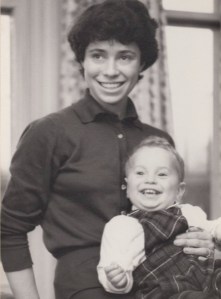
It documents his long-delayed search for a greater understanding of why she took her own life at 29 years of age, a married, working mother of two boys aged four and seven, living in Highgate, London.

It was 1965, she had been on the cusp of publishing a manuscript encapsulating the findings of her sociology research into the conflicts faced by young housebound mothers in North London, The Captive Wife. It was two years since another mother of two young children Sylvia Plath, had done the same thing.

Hannah Gavron was an out-going, confident child, an accomplished, confident teenager, popular and desirous of growing up. She wanted to do something with her life, to share her views with the world, but she also wanted freedom, to leave the constraints of family, to be in love, to claim her place in a rapidly changing society. She married at 18, went to RADA drama school for a year, quit, had two children, then realising her prospects were limited, went back to university to study sociology, attained a PhD and then a teaching post at the “iconic British art institute”, renowned for its experimental and progressive approach, Hornsey College of Art.

It seemed she had everything going for her, and yet at that tender age of 29, when her youngest son Jeremy, was 4 years old, she took her own life, shocking everyone around her.

Now the father of two girls himself, having previously just accepted the subject of his mother was a taboo subject never raised, he is seized by an urgency to know and understand the mystery, for how could it happen that a woman with so much going for her, two small children and a manuscript about to heighten her career, could suddenly end it all?

He interviews an extraordinary number of people and succeeds in recreating the jigsaw of Hannah’s life in incredible detail and begins to understand the multiple forces that may have played a part in leading up to that tragic decision.

As gripping as any mystery, it reads like a pageturner providing an interesting insight into the subject Hannah Gavron wrote her thesis about, ‘The Captive Wife’ and the struggle of women in the early 1960’s, a period just prior to the second wave of feminism, an era whose attitudes and dilemmas were encapsulated in Doris Lessing’s powerful account of a woman searching for her personal and political identity, The Golden Notebook, published in 1962.


Looking back from our own times, the subject seems an obvious one, still relevant today, but in 1960 it was neither obvious nor easy for her to get past her academic supervisors. For all the advances gained by the suffragette movement, and the opportunities the war had given woman to work and experience life beyond family,  the woman’s movement was in retreat in the 1950’s and early 1960’s. in the post-war period, emphasis had been put on the role of motherhood in rebuilding Britain. The Beveridge Report, the basis for social reforms, spoke of how ‘housewives as mothers have vital work to do in ensuring the adequate continuance of the British race and of British ideals in the world’.

A woman attempting to forge an academic career in sociology at the time and proposing studies which focused on women as the subject, was provocative and a gesture not ready to be accepted by many in power in academia.

In Her Wake, Nancy Rappaport

In Her Wake, Nancy Rappaport

It reminded me of reading Nancy Rappaport’s In Her Wake: A Child Psychiatrist Explores the Mystery of Her Mother’s Suicide, she too was 4 years old when her mother, who was raising a large family as well as being involved in organising society events and political campaigning, suddenly committed suicide. That drama took place in 1963 in Boston.

They are tragic stories and serve to create a more substantial memory for the authors, piecing together the lives of these woman who should have been able to contribute so much more than they did.

It left me wondering about the author himself, as he keeps himself well out of the narrative, not shining any light on how it had been for him to grow up under this shadow, this absence. How was it for him to accept the love of another mother, how might this turning point have influenced who he would become. Rather he shines his light outward and builds an incredibly detailed vision of his mother, leaving just a hint of suggestion that within her, we may also finds parts of him.

Further Reading

The Guardian, Nov 2015 – Jeremy Gavron: ‘My mother was a woman who looked for solutions. Suicide was a solution’

The Guardian, Apr 2009 – ‘Tell the Boys I Loved Them’

Buy a Copy of A Woman on the Edge of Time Here


Why Be Happy When You Could Be Normal? Jeanette Winterson

why-be-happyThis stylised memoir, set in the working-class north of England, is the book Jeanette Winterson wasn’t ready to write back in 1985 when at 25 years of age, she wrote the novel Oranges Are Not the Only Fruit, a book that plunged the reader into her universe, one that provided the author the liberty of narrating freely, without the confines of the story having to have been exactly as she had lived it – it was fiction, an imagined story, and she named the main character Jeanette, a provocative gesture for sure.
It was indeed inspired by her own experience, as we discover when she braved it and published this memoir nearly 30 years later (her adopted mother no longer living or able to be disapproving of her work), providing for the title, a quote from the mother who had been unable to shape the little human she acquired into her version of a normal daughter.

In her memoir she allows the real life characters to reveal parts of themselves, in particular Jeanette and the woman who raised her, whom she refers to as Mrs Winterson (her adoptive mother), a telling detail in itself, that she reserves the title of mother for the woman who is a shadowy illusion for most of the narrative; not there, not looked for, a vague presence in her psyche that she continuously rejects the thought of, her biological mother. I did wonder whether this was a literary invention or whether she actually did refer to her adoptive mother as Mrs W. It makes quite a statement.

‘I do not know why she didn’t/couldn’t have children. I know that she adopted me because she wanted a friend (she had none), and because I was like a flare sent out into the world – a way of saying  that she was here – a kind of X marks the spot.

She hated being a nobody, and like all children, adopted or not, I have had to live out some of her unlived life. We do that for our parents – we don’t really have any choice.’

Despite what was likely to have been a desperate desire for a child, Mrs W. dolled out punishments and criticisms more than any form of affection or love for her chosen child. When her mother was angry with her, Mrs W. often repeated one of her preferred biblical phrases “The Devil lead us to the wrong crib”. The Church was like family (though unsuccessful in helping them make friends) and the Bible one of only five books in the house, the one referred to most often. The most regular punishment however, was to lock her in the coal-scuttle or out on the door stoop – for the whole night.

‘Dad’s on the night shift, so she can go to bed, but she won’t sleep. She’ll read the Bible all night, and when Dad comes home, he’ll let me in, and he’ll say nothing, and she’ll say nothing, and we’ll act like it’s normal to leave your kid outside all night, and normal never to sleep with your husband. And normal to have two sets of false teeth, and a revolver in the duster drawer…’

It is a collection of anecdotes, written in a way to make the reader present, it’s not like reading an account of the past, it’s reliving days in the life of this fierce little battler, a girl who had a zest for life, who used her locked up time to invent imaginary characters, who made up stories, who forged her own personality through, who would not be tamed, who left home while still at school, taught herself to drive, lived in a car for a while and remarkably pushed herself forward as one of the ‘experimental’ working-class contenders for a place at Oxford University and succeeded.

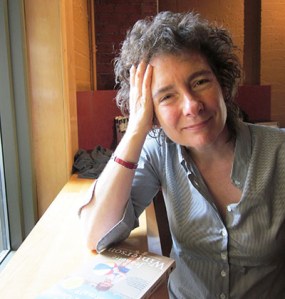
Jeanette Winterson Photo by Sanhita SinhaRoy

Jeanette Winterson, Photo by Sanhita SinhaRoy

Jeanette Winterson writes her own story, forged over a past she didn’t know, that she tried to convince herself wasn’t important until driven almost mad and finally would follow through to unravel the missing link.

Her experience with Mrs Winterson is told with as much compassion as is possible, the facts related in a way that leaves the reader to judge and most will wonder why Mrs Winterson desired a child or was deemed fit to be given one at all.

It is an extraordinary account of childhood and growing up, of what home is, of how we perceive and learn love, of adoption, of how those formative years contribute into making us what we will become and that mysterious ‘other life’ that might have been, when you’ve been switched to alternative parentage post birth.

I never wanted to find my birth parents – if one set of parents felt like a misfortune, two sets would be self-destructive. I had no understanding of family life. I had no idea that you could like your parents, or that they could love you enough to be yourself.
I was a loner. I was self-invented. I didn’t believe in biology or biography. I believed in myself. Parents? What for? Except to hurt you.

It is also a tribute to literature and to the power of stories to influence lives, whether they are an escape for those who need refuge and to understand the world around them, or whether they are the occupation of the oppressed, a creative outlet for someone with nothing but their imagination to keep them entertained while enduring their struggle.

Buy Why Be Happy When You Can Be Normal? via Blackwell’s