Happiness by Aminatta Forna

Happiness opens with the tale of a wolf hunter in the US called in to track a wolf that is believed to have been killing sheep. He observes the surroundings, lies in wait, makes the kill, collects his bounty and then returns to lie in wait for the she-wolf he knows will come out after three days. Two species. Surviving.

London. A fox makes its way across Waterloo Bridge. The distraction causes two pedestrians to collide—Jean, an American studying the habits of urban foxes, and Attila, a Ghanaian psychiatrist there to deliver a keynote speech.

Attila has just been to the theatre, he has arrived a few days early to indulge his passion for theatre and to look up his niece Ama, whom the family hasn’t heard from recently, he will also see an old friend and former colleague Rosie, who has premature Alzheimers.

While we follow Attila on his rounds of visiting his friends and family, all of whom are in need of his aide, we witness flashbacks into his working life, his brief encounters in numerous war zones, where he was sent on missions to negotiate with hardline individuals often operating outside the law. He remembers his wife Maryse, there is deep sense of remorse.

His niece Ama and her 10 year old son Tano have been forcibly evicted from their apartment in an immigration crackdown, she is unable to resolve the matter, hospitalised due to an unstable diabetic condition. Attila responds with the help of the doorman of his hotel, who alerts other hotel doormen, to be on the lookout for Tano who has disappeared amidst all the confusion.

And there is Jean, in London to study the behaviour of the urban fox, she has funding for a period of time to observe them, their numbers, how they have come to be living in the city and whether they expose a risk to the humans they live alongside. She recruited a local street-cleaner and through him others, to be her field study fox spotters, the few people likely to regularly see them.

‘Everything happens for a reason, that was Jean’s view, and part of her job was tracing those chains of cause and effect, mapping the interconnectedness of things.’

These networks of connected men, the doormen, the streetcleaners and others, come together to help Jean and Attila in their search for Tano. They’ve texted his picture to each other, they know who to look for. They demonstrate something important, in their resilience and ability to adapt to this new environment, creating new support circles, many having been through traumatic experiences before finding a semblance of new life in London.

‘Let me do the same for you,’ said the doorman. ‘The doormen and security people, they are my friends. Most of those boys who work in security are Nigerian. We Ghanaians, we prefer the hospitality industry. Many of the doormen at these hotels you see around here are our countrymen. The street-sweepers, the traffic wardens are mainly boys from Sierra Leone, they came here after their war so for them the work is okay.’

The fox lives beside the human but inhabits a different time zone, most humans are little aware of their presence as their nocturnal meanderings cease the minute humanity awakens and begins to disturb a territory that belongs more to them in the small hours of the night.

Jean too remembers what she has left, in America, where she tried to do a similar study on the coyote, an animal that due to the human impact on the environment had left the prairie and moved towards more urban environment.

Finding herself in conflict with locals, who campaigned against the coyote, believing it to be a danger to humans, her voice silenced by those who preferred to extend hunting licences, despite her warnings that culling the coyote would result in their population multiplying not decreasing.

‘If you remove a coyote from a territory, by whatever means, say even if one dies of natural causes a space opens up. Another will move in.’

‘What if you were to kill a number of them, ten per cent of the total population, say?’

‘They’d reproduce at a faster rate. We call it hyper-reproduction. Have larger litters of cubs. Begin to mate younger, at a year instead of at two years. All animals do it, not just coyote,’ said Jean. ‘Humans do it after a war. The last time it happened we called it the ‘baby boom”.’

Now a similar debate arises in London, where the Mayor wants to cull the animals and Jean’s message, based on scientific evidence is being ignored, worse it attracts the attention of internet trolls, flaming the unsubstantiated fears of residents.

UK Cover

Ultimately the novel is about how we all adapt, humans and wild animals alike, to changing circumstances, to trauma, to the environment; that we can overcome the trauma, however we need to be aware of those who have adapted long before us, who will resist the newcomer, the propaganda within a political message.

And to the possibility that the experience of trauma doesn’t have to equate to continual suffering, that our narrative does not have to be that which happened in the past, it is possible to change, to move on, to find community in another place, to rebuild, to have hope. And that is perhaps what happiness really is, a space where hope  can grow, might exist, not the fulfilment of, but the idea, the expression.

Hope. Humour. Survival.

Salman Rushdie alludes to this after the fatwa was issued against him when he said this:

“Those who do not have power over the story that dominates their lives, power to retell it, rethink it, deconstruct it, joke about it, and change it as times change, truly are powerless, because they cannot think new thoughts.”

Aminatta Forna

In an enlightening article in The Guardian, linked below, Forna describes reading Resilience, by renowned psychologist Boris Cyrulnik. Born in France in 1937, his parents were sent to concentration camps in WW2 and never returned. He survived, but his story often wasn’t believed, it didn’t fit the narrative of the time. He studied medicine and became a specialist in resilience.

“It’s not so much that I have new ideas,” he says, at pains to acknowledge his debt to other psychoanalytic thinkers, “but I do offer a new attitude. Resilience is about abandoning the imprint of the past.”

The most important thing to note about his work, he says, is that resilience is not a character trait: people are not born more, or less, resilient than others. As he writes: “Resilience is a mesh, not a substance. We are forced to knit ourselves, using the people and things we meet in our emotional and social environments.

Further Reading

My Review: The Memory of Love by Aminatta Forna

My Review: The Hired Man by Aminatta Forna

Article: Aminatta Forna: ‘We must take back our stories and reverse the gaze’, Writers of African heritage must resist the attempts of others to define us and our history, Feb 2017

Article: Escape from the past: Boris Cyrulnik lost his mother and father in the Holocaust. But childhood trauma needn’t be a burden, he argues – it can be the making of us. by Viv Groskop Apr 2009

***

Note: This book was an ARC, kindly provided by the publisher (Grove Atlantic) via NetGalley. It is published March 6 in the US and 5 April in the UK.

Buy a copy of Happiness via BookDepository
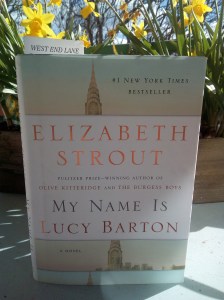
 

My Name is Lucy Barton by Elizabeth Strout

There is something so captivating about the voice of Lucy Barton, it made me wish to slow read this novel, as if it were a box of exquisite chocolates that require enormous self-discipline not to finish in one sitting.

Lucy Barton is in hospital after an operation and isn’t healing as she should, the very kind Doctor doesn’t understand why, so keeps her under observation.

That Lucy finds so many people whose path she crosses in adulthood so very kind or nice, is a telling detail.

Her husband, of whom her parents disapprove and have never met, arranges for her mother to visit Lucy, they haven’t seen each in years, but over five days she sits near her bed and they chat as if those years of silence hadn’t been.

It’s as if Lucy Barton relives a part of her childhood as an adult, but transplanted to a safe, uneventful place, a room in a hospital where they will not be interrupted, except by the occasional nurses.

Then my mother and I talked about the nurses; my mother named them right away: “Cookie,” for the skinny one who was crispy in her affect; “Toothache,” for the woebegone older one; “Serious Child,” for the Indian woman we both liked.

Lucy now lives in NY, her parents are from the rural town of Amgash, Illinois, life for them, including her siblings hasn’t changed much, Lucy however liked to stay after school near the warm radiator, doing her homework, reading books. She read her way through school and out of their town, almost by accident, into university and onward to marriage, children and writing stories.

Her turning point she wonders, came through a chance encounter with a woman in a dress shop, a writer, in whom she recognises something she can’t quite articulate. She attends one of her workshops and though intending to work on a novel, begins to write sketches of scenes of her mother visiting her in hospital, these are the pages she shares in her private meeting with the author, who gives her this advice:

Then she said, “Listen to me, and listen to me carefully. What you are writing, and what you want to write,” and she leaned forward again and tapped with her finger the piece I had given her, “this is very good and it will be published. Now listen. People will go after you for combining poverty and abuse. Such a stupid word, ‘abuse’, such a conventional and stupid word, but people will say there’s poverty without abuse, and you will never say anything. Never ever defend your work. This is a story about love, you know that. This is a story of a man who has been tortured every day of his life for things he did in the war. This is the story of a wife who stayed with him, because most wives did in that generation, and she comes to her daughter’s hospital room and talks compulsively about everyone’s marriage going bad, she doesn’t even know it, doesn’t even know that’s what she’s doing. This is a story about a mother that loves her daughter. Imperfectly. Because we all love imperfectly. But if you find yourself protecting anyone as you write this piece, remember this: You’re not doing it right.”

Through her writing, her listening to her neighbour Jeremy speak of the necessary ‘ruthlessness’ of the artist, of Sarah Payne’s writing advice to take any weakness in her story and address it head-on, Lucy Burton moves her life and her narrative on from its traumatic past, to a new empowered beginning.

But really, the ruthlessness, I think, comes in grabbing onto myself, in saying: This is me, and I will not go where I can’t bear to go – to Amgash, Illinois – and I will not stay in a marriage when I don’t want to, and I will grab myself and hurl onward through life, blind as a bat, but on I go! This is the ruthlessness, I think.

Absolutely loved it, hypnotic, slowly affirming a life that can grow and change and evolve out of traumatic experience, that past narratives don’t define future stories, that love is as hardy as a seed that grows out of rock, not impossible to bloom even in the harshest of circumstances.
My Name is Lucy Barton was long listed for both the Man Booker Prize and the Women’s Prize for Fiction in 2016. She has since written a follow-up book Anything is Possible set in that rural town of Amgash, Illinois, seventeen years after she left it.

The long list for the Women’s Prize for Fiction 2018, will be announced on Thursday 8th March, let’s wait and see if Elizabeth Strout’s newest book will make the cut.

Purchase a copy of My Name is Lucy Barton at Book Depository

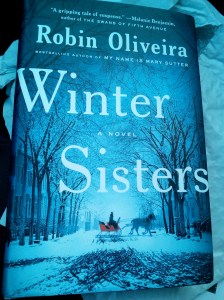
Winter Sisters by Robin Oliveira

I read My Name is Mary Sutter when it first came out and was utterly entranced by Robin Oliveira’s depiction of the character of Mary, a midwife intent on becoming a surgeon in an era where women were totally blocked from pursuing such a thing. She was unable to achieve her ideal through formal channels, so she went to war, the American civil war, and there had the kind of experience few would wish her, unless, like Mary, you were being excluded from pursuing your desired profession and were driven to break through irrational barriers by equally irrational means.

In her research, the author learned that 17 young women became physicians after their nursing experiences in the civil war. While Mary Sutter is fictional, she is a truly inspired character about whom Robin Oliveira had this is say:

“And through it all there was Mary Sutter, whose story I needed to tell as a celebration of women who seize the courage to live on, to thrive, to strive, even, when men conspire to war. Mary, flawed and intelligent, careening between desire and remorse, stumbling forward out of courage and stubbornness, hiding a broken heart, but hoping to redeem something beautiful from a life humbled by regret.”

Her second novel, set in Paris was the excellent I Always Loved You, reviewed here, is about the American painter Mary Cassatt, her life in Paris, struggling to make a name while remaining true to her art, and enduring a life-long fractious relationship with impressionist painter and sculptor Edgar Degas.

When asked what made her return, in this her third historical novel, to the character of Mary Sutter, Robin Oliveira said:

Over the last few years, readers have often asked me to include Mary Sutter in a new book, but I could not think of a single circumstance that would challenge her as much as the obstacles she had faced in the Civil War. Then I learned about the age of consent. I simply couldn’t leave Mary Sutter out of it, for I had finally discovered something of equal importance for her to battle.

So now it is 1869 in Albany, New York, Mary Sutter is now Dr Mary Sutter Stipps, living in Albany, New York, where she practices in a local hospital, despite most of her male colleagues despising her (because she is a woman), she also runs a home practice with her husband William Stipp and a lesser known clinic, where a lantern is illuminated on Thursdays when she opens for ladies of the night, those who are refused treatment elsewhere.

These are the conservative years after the civil war, a period of tumultuous struggle and the emergence of women’s suffrage, meaning any freedoms women attempted to gain were often fiercely opposed and ridiculed. Mary faces opposition at every turn, but refuses to be cowered and will stand up for and insist on justice for what she believes is right and good.

On the evening this story begins, a severe winter blizzard disrupts the city, children are locked in schools for two days, businesses close, the Doctors house their patients overnight, and accidents occur – two days later as people begin to reappear, Mary learns of the deaths of close family friends, the hatmaker Bonnie and her labourer husband David and the unexplained disappearance of their daughters, Emma(10) and Claire(7).

Mary and William search for the girls everywhere, implore the police and their wider networks to help and eventually must accept they’ve gone.

At the graveside, they become acquainted with lumberlord Gerritt Van der Veer, his wife Viola, and their son Jakob. From that day on the lives of the two families become intertwined, as Mary continues her relentless pursuit of the lost girls, leading her to become exposed to the deep manipulations throughout the city and its powerful, by those out to benefit themselves who will do anything to stop those like her, trying to help and heal, without discrimination or judgement.

Book One sets up the story, introducing us to Elisabeth, Mary’s niece, a violin protegé who has been studying in Paris in the company of her grandmother Amelia, who swiftly return on hearing the terrible news, though laden with their own mysterious troubles.

Mary seeks the help of the women she’s met through the clinic, women who hear and see things she and Will would never come across, suspicions begin to arise, as they become aware of a man in hiding, injured on the night the ice cracks on the Hudson River, causing flash flooding across the city.

“I trust her Mother. She’s no opportunist. If she’d wanted money, she would have asked for it then, wouldn’t she have, if she intended to lie? And besides, none of that matters, does it, if we go looking ourselves. The brothels are the single place we haven’t looked. What harm can come from looking? I can’t understand why Captain Mantel refused. Oh damn him.The police know exactly where the brothels are. it would be easy for them.”

By Book Two the story has become riveting, complex, there are elements of the mystery to resolve, a pending court case, perceived betrayals, all set against the legal and societal background of the times they lived in, there are aspects of the law that will shock the reader, we read about the 1800’s and we are reminded of the similar treatment of victims today with regard to police procedure, questioning victims and the law that appears designed to protect the accused more than the victim.

It’s too good a read to give away anything more that happens from Book Two onwards, suffice to say I could not put this down, I was up late finishing it and thought it brilliantly woven together. It’s commentary on the hardships of women and girls, of all ages and from all classes is insightful and outrageous. Women are blocked in so many directions, in particular when they possess talent, controlled, commented on, kept by men in positions of power. Fortunately, there are exceptions, and these characters provide the faint glimmer of hope that gets us through the tough parts.

“He wanted to say, It’s either hide forever or see forever. He wanted to say, You need to choose. He wanted to say, Follow me, I’ll show you…

Every inch toward courage was a decision. Every ten feet on her own would be a triumph. The line between coercion and choice for her was the line between darkness and light. He would never push her, but she needed to choose to climb this hill. If she didn’t, she wouldn’t have the courage to climb onto the witness stand or perhaps even to walk down a street on her own.”

Mary Sutter oversteps the demarcated line of acceptable professions for women, she breaks the mould, though not without challenge and William and Jakob show themselves to be different kind of men, demonstrating the potential of working alongside women, not excluding them.

The price women pay when they overstep that societal and male control, is the story of the Gilded Age, and continues to play out one hundred and fifty years later. Indeed, the changing role of women in society, and what men will accept, remains one of the essential conflicts of our time.

Highly recommended, one of the best historical novels of the year.

Note: This book was an ARC (Advance Reader Copy) kindly provided by the publisher.

The Heart’s Invisible Furies by John Boyne

I had a feeling John Boyne may have put his heart and soul into this book, though I had little idea how so. The blurb is intentionally vague, we know Cyril has been adopted and that the book is about his struggle with coming to terms with his identity.

The last novel of his that I read was The Boy in Striped Pyjamas, a moving story set during WW2, seen through the innocent eyes of Bruno, the eight-year-old son of the commandant at a German concentration camp.

In The Heart’s Invisible Furies, a title taken from a quote by Hannah Arendt, the German-born American political theorist:

“A line came into my mind, something that Hannah Arendt once said about the poet Auden: that life had manifested the heart’s invisible furies on his face.”

we meet 16-year-old Catherine Goggin, sitting quietly in church in a small Irish village of Goleen in County Cork, as she is about to be denounced and humiliated in front of the entire congregation, then thrown out of, not only the church, but her home and the village, for bringing shame on the community.

The story is narrated through the voice of her not-yet born son, the boy that we come to know as Cyril Avery; he will be adopted and raised by Charles and Maude Avery, after Catherine travels to Dublin and takes up employment in the tea room of the Dáil Éireann (House of Representatives), where she is given a chance by the manageress, and eventually becoming that herself.

The book is divided into different parts, each covering a significant chunk of Cyril’s life, initially in Ireland, then a period in Amsterdam, time in New York and finally coming back to Ireland.

Cyril finds it extremely difficult within his family, his school and his culture to be himself. Through his inability to be and express himself, we see how oppressive a culture can be against anything or anyone who dares to step outside the acceptable norm,  highlighting the extreme hypocrisy that therefore must exist, as humans by their very nature are not clones of each other, they are born and exist in more than just binary variations.

Church of Our Lady, Star of the Sea, Parish of Goleen, West Cork

In this first part, as Cyril is growing up, John Boyne makes something of a parody of his life, in particular in relation to his adoptive parents, who continually insist on reminding him that he is not a real Avery, and Cyril himself, so used to hearing this, will correct every person who uses the word mother or father, by inserting the word ‘adoptive’ to be sure they too understand.

“I always called them Charles and Maude, never ‘Father’ and ‘Mother’. This was on Charles’s insistence as I wasn’t a real Avery. It didn’t bother me particularly but I know it made other people uncomfortable and once, in school, when I referred to them thus, a priest punched me around the ears and told me off for being modern.”

The first time we read this, it seems sad, but the continual repetition makes it comic, and it is a tool that Boyne uses, perhaps to soften the effect of what must have been quite a soul-searching book to write, as he reaches deep into his own life experiences to create the life of Cyril.

At the age of seven, he meets Julian, the son of a lawyer who is helping his father stay out of prison for tax evasion, they will become best friends.

But for all that we had, for all the luxury to which we were accustomed, we were both denied love, and this deficiency would be scorched into our future lives like an ill-considered tattoo inscribed on the buttocks after a drunken night out, leading each of us inevitably towards isolation and disaster.

Leinster House, where Dáil Éireann Irish parliment sits

While the novel focuses on Cyril’s attempts to survive in a world hostile to his natural inclinations, his experiences highlight the struggle that so many people encounter, unable to live their lives openly and honestly without the fear of rejection and violence.

Boyne peels back the layers of Irish inclinations and attitudes in the 20th century and shows how destructive this closed mindedness is on the lives of anyone who crosses an imaginary line of acceptable ‘being’. The contrast with how Cyril is able to live his life in the Netherlands, shown through the carefree Bastiaan, who has known no such bigotry in his life experience is revealing.

It’s hard to say too much about the novel without giving away spoilers, except to say that this astonishing novel is a courageous, honest attempt to show how the way we conform to society and culture’s expectations, against our own nature’s can be so harmful to so many and it makes us wonder how life might be, if we lived in a more utopian world, where tolerance reigned supreme.

Boyne admits the comic form isn’t one he’s indulged in before and he has deliberately avoided writing anything personal in his novels until now.

“Perhaps Cyril Avery is everyone I might have been, that I am, that I amn’t, and that I might be yet. The desire to fall in love and to share one’s life with someone is neither a homosexual nor a heterosexual conceit. It’s human. We’re all suckers for a pretty face or a kind heart. What else can we do but keep hoping that the right person will show up?” John Boyne

Reservoir 13 by Jon McGregor

Reservoir 13 was long listed for the Man Booker Prize 2017 and won the Costa Book Award for Best Novel that year as well. It was also nominated for the Goldsmith Prize for experimental fiction, about which he had this to say:
“It felt like a very experimental book while I was writing it, but it’s not necessarily that experimental on the surface, although it demands quite a lot of the reader … a certain patience.”

In terms of the story, it is an impersonal narrative, a series of snapshots into the lives of people living in an English village, beginning in the year that a teenage girl goes missing, an event that in small ways touches the lives of most of the residents, an event that remains permanently associated with it.

The novel continues to zoom in on village life, each chapter equivalent to one year, each subsequent first sentence of the chapter referencing the local fireworks, each chapter resembling a kind of closely knitted pattern. As you would expect, over the years, young people grow up and leave, families are created and fall apart, seasons pass, work is done, animals tended, relationships formed, the past remembered. Likes waves breaking, there is a continuous monotony to life in just another ordinary village, where once upon a time a girl went missing.

“His sister wanted to know where the Tuckers had gone and who would move in next. He said he didn’t always have the answers. He asked her not to ask so many bloody questions, and when the tears came he said he was sorry. It went on like this. This was how it went on.”

I agree it is an accomplished novel, it has been well thought out, structured, it’s almost a piece of modern architecture, in its linear, logical, detached approach. However, I found it almost impossible to be swept into the narrative without the constant awareness of the author’s orchestration and presence, even in some of the voices. It felt very controlled.

There is much that is clever, and intellectually it is something to admire. I reread the comments made on the cover and thought, yes, all that is true, so what did it lack for me? It made me think of a review I read recently for Salt Creek by Lucy Treloar reminding me of that reading experience, which was the anti-thesis of this one. Of being drawn inside a story versus feeling completely outside of it, of the open air art installation versus the museum piece vitrine.

“The passive voice was really deliberate because it just feels very English to me,” McGregor says. “It’s a gossipy village, but they would never think of themselves as gossips. ‘Somebody was seen.’ They’re not going to say: ‘I saw so and so.’ Small communities can be very inclusive, but they can also be very claustrophobic.”

Some books you read and you yourself are far far away from what is happening, you are unable to empathise or relate, you see words on the page, that speak of things happening in and around people, but they are told in a way that keeps them on the page, they refuse to enter your imagination or evoke empathy.

And then there are books that by some kind of magic awaken the imagination, they affect the senses, they can make you feel hot, cold, dehydrated, in pain, terrified, joyous, curious, relieved, all manner of emotions and feelings, and you feel relieved almost that it’s only a story, you will recover. They are not always comfortable, in fact I love reading outside my comfort zone, about other cultures, other experiences, other everything than the familiar.

Reservoir 13 certainly provoked the analytical part of my brain, in fact everything it provoked was in that left hemisphere of the brain and that’s possibly why it was only an okay read for me, it was too far in one direction, admirable as that may be, it leaves me with little to say about it, and little of an impression.

So I’ll finish with a link to the author in an interview with Justine Jordan from The Guardian, which gives greater insight into what the author was attempting to do.

Further Reading:

The Guardian: Jon McGregor: ‘I’m allergic to trying to make points in fiction’ – The prizewinning novelist and short story writer on capturing daily rural life and the joy of a bad review

Have you read it? How was the reading experience for you?


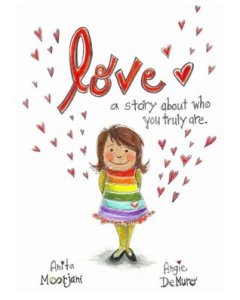
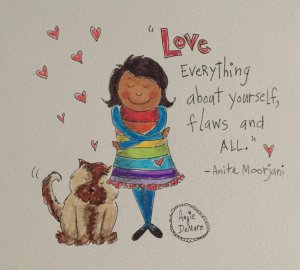
Love by Anita Moorjani & Angie DeMuro and a Poem by Derek Walcott

“Be your own best friend. Love yourself just as you are!”

is the message that Love: a story about who you truly are teaches children to embrace.

Anita Moorjani, author of Dying to Be Me and What If This is Heaven and illustrator Angie DeMuro have co created this book to help parents teach children how to love themselves, especially through the hard times, and to know and understand that this is something important and valuable for all of us to learn.

Within the beautifully written and illustrated pages of the book, children are taught how to have compassion and acceptance for themselves, and how to love themselves through many everyday situations. The happiness and confidence that can come from learning this ability is a gift that children, even grown-up ones, will carry with them their entire lives.

“You can’t love another unconditionally until you love yourself unconditionally, and when you truly do achieve that, you will never allow anyone to use you or abuse you.”

Anita Moorjani, What If This Is Heaven

At the end of the book is a Love Yourself Pledge, with a space to write the name of the person who has been given the book. Anita Moorjani believes her own childhood might have been changed had she had access to something like this.

Although I have not yet bought a copy for myself, this is a book that I’ve gifted, and one I recommend gifting to anyone who might have the opportunity to read to children and to impart positive messages of love and compassion in today’s increasingly stressful world.

I can’t think of any child that wouldn’t want to be exposed to something as reassuring and heartfelt as this, and it may just make a difference to some who needs to hear its message now, especially as we become more aware of the widespread silencing of victims of bullying and criticism, events or experiences that too often children are too afraid to share with parents.

It reminds me too of a wonderful Derek Walcott poem, which since today is Valentines Day, I share below for you, for not everyone can rely on another to express loving words or gestures on this day, but as Derek shares with us below, we have it in us to do that for ourselves.

So what loving thing are you doing for yourself today?

L O V E   A F T E R   L O V E

The time will come
when, with elation
you will greet yourself arriving
at your own door, in your own mirror
and each will smile at the other’s welcome,

and say, sit here. Eat.
You will love again the stranger who was your self.
Give wine. Give bread. Give back your heart
to itself, to the stranger who has loved you

all your life, whom you ignored
for another, who knows you by heart.
Take down the love letters from the bookshelf,

the photographs, the desperate notes,
peel your own image from the mirror.
Sit. Feast on your life.

Derek Walcott

 Happy Valentine Everyone!

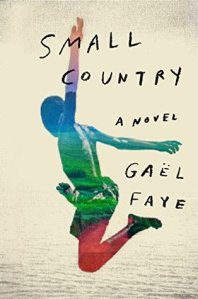
Petit Pays by Gaël Faye

Once I got into the rhythm of this, which is to say, reading in French, and getting past the need to look up too many new words, I couldn’t put this down, by the time I found my reading rhythm, the lives of Gabriel (Gaby) and his sister Ana, his parents, his friends had their claws in me and I had to know what was going to happen next.

I heard about this book initially via a French friend who retired here, but spent most of her married life living in a number of African countries. She introduced the book to me, as having been written by the son of friends. I was intrigued, it wasn’t too long – and then it began to win a lot of prizes! I suspected it might get translated, but decided not to wait.

Gaël Faye, like the protagonist of the book, is the son of a French father and Rwandan mother and the historical facts which run alongside this narrative coincide with what he would have experienced, born in Bujumbura in Burundi and similarly fleeing the country to live in exile when civil war broke out in 1993 at the same time as the genocide in Rwanda against the Tutsi in 1994.

The book starts with Gaby reflecting on a conversation with his father, a turning point in his understanding of the ethnic origin of his people, of the difference between the Hutu, and the Tutsi. He is trying to understand the motivation for the ethnic violence that caused his mother to flee her country of origin.

His father is French, his mother Tutsi from Rwanda, they live in the small country bordering Rwanda, Tanzania and the Democratic Republic of Congo, called Burundi. It boasts the second deepest lake in the world, Lake Tanganyika, which occupies a large portion of the country’s border and is part of the African Great Lakes region.

An italicised chapter depicts Gaby in France on his 33rd birthday, unable to reach his sister Ana, falling into what has become an annual day of melancholy, he remembers his exceptional 11th birthday, his parents and friends. And thus begins the novel, back to Burundi when he is 10 years old, remembering those last days of his parents marriage, replaying scenes that may have contributed to the demise of their relationship and many that contribute to his homesickness today.

Conversations highlight the cultural differences between his parents, disputes provoke them to raise age-old issues, two people, neither of whom are really at home where they are, whose references come from elsewhere, who yearn for different things, Yvonne dreams of Paris, Michel is content with his piece of paradise in Burundi; his business, their beautiful home, domestic servants, the climate, the lake, the mountains, he refers to her dream of Paris and Europe as if it is a fantasy, far from the paradise she imagines.

For Gaby and Ana, Bujumbura is home, it is where they belong. Each day unfolds according to the same routine, as the domestics arrive, the gate is opened, they prepare for school, are driven, there is a change as Gaby begins college and new friendships develop. His close friends live in the same alleyway, the twins, Gino, Armand.  And Francis who they conflict with. They like to hang out in an abandoned Combi, talking, laughing, planning things.

On connaissait tous les recoins de l’impasse et on voulait y rester pour la vie entière, tous les cinq, ensemble.

(We know all the nooks of the alley and we would like to stay there the rest of our lives, all five of us, together.)

J’ai beau chercher, je ne me souviens pas du moment ou l’on s’est mis à penser différemment. A considérer que, dorévenant il y aurait nous d’un côté et, de l’autre, des ennemis, comme Francis.

(I looked hard, I don’t remember the moment when we began to think differently. To consider that, from now on, there would be us on one side and on the other, enemies, like Francis.)

Slowly unsettling news penetrates their utopia, Yvonne is worried for her Aunt and four children who never left Rwanda and for her nephew Pacifique who decides to return there to fight. They begin to listen more often to the radio for news, adults start making confidential telephone calls behind closed doors.

Despite the unsettled times, they plan a visit to Rwanda for a family marriage, excitement and tension mount and while they make the event, the changing atmosphere forces them to return in haste.

The book continues to follow the daily life revolving around Gaby, the highs of the adventures with his friends, despite the unease that pervades their township, the lows of news from Rwanda and a fear that the divisions that have become violent will trickle across to Burundi.

The news of a coup d’etat arrives when the radio plays classic music nonstop, it is a sign, one that has happened before, in November 1966 it was a Schubert piano sonata, in 1987 Chopin. Now, it’s Wagner they hear.

Ce jour-là, le 21 October 1993, nous avons eu droit au Crépsucule des dieux de Wagner.

Attitudes change and begin to take effect in the playground and in the neighbourhood. Gaby befriends an elderly neighbour, a widow with large bookshelves, he seeks respite between the pages of a newfound love, literature.

The story is told through scenes viewed from the perspective of Gaby, we slowly understand the beauty and stability of his life and how that is slowly dismantled and it is no wonder, miles away and many years in the future, something in him yearns for that lost youth.

It is beautifully told, a simple story to follow, with many beautiful descriptive passages, even though we know that this time will be short-lived. It opens our eyes to the tensions that escalate into hatred and violence with little sense, the many victims and the many wounded by loss, destroyed by it.

The ending is not really an ending, it could be said there is more than one ending and perhaps there may even be another book. I found it incredibly moving and was amazed to be so moved in a language that is not my own. An incredible feat of writing, a wonderful talent.

Winner of five French literary prizes including the sought after Prix Goncourt des lycéens, it is due to be translated into English in June 2018 under the title Small Country by Hogarth Press.

As you can see from the photo above Gaël Faye is also a singer, rapper, composer and poet. Unfortunately that concert above is already sold out. However, there is a beautiful song, also named Petit Pays, which gives you a glimpse of that small country he is nostalgic for and the wonderful musical talent he possesses.

A top read, highly recommended.

Sing, Unburied, Sing by Jesmyn Ward

In 2017, I read Jesmyn Ward’s novel Salvage the Bones, it was hurricane season in the US, and the news was full of the fearful anticipation of the destruction they would bring and we were already seeing how many small islands in the Caribbean had been devastated.

Salvage the Bones was set during the period just before and during Hurricane Katrina, one that would claim lives and livelihoods, wreaking havoc on New Orleans and the surrounding area. The family within which that story was set were already suffering poverty and the loss of the mother; they had little, yet what they had meant so much, creating a foreboding sense of much being at stake, it was thrilling and terrifying reading. You can read my review of it here.

Sing, Unburied, Sing is set in the same Southern US community,  putting us amidst a struggling mixed race family, a young black woman Leonie, who fell in love with Michael from a racist white family implicated in a tragedy that affected her family. In its telling, it traverses love,  grief, terminal illness, addiction, prejudice, dysfunctional parenting, hope and survival, the effect this mix has on everyone touched by it, the painful and the poignant.

Leonie falls so quickly for Michael, she is blind to the bind she must endure, that of premature motherhood when she has barely experienced or indulged sufficiently the early infatuation of young love. As a result, she is forever seeking those moments, she is trapped in hedonistic romanticism, she has eyes only for Michael and is unable to embrace, and often rejects motherhood – or as her mother feared, perhaps she never had a maternal instinct at all.

 …from the first moment I saw him walking across the grass to where I sat in the shadow of the school sign, he saw me. Saw past skin the colour of unmilked coffee, eyes black, lips the colour of plums, and saw me. Saw the walking wound I was, and came to be my balm.

She and her 13-year-old son Jojo and toddler Kayla, live with her parents, as Michael is in jail. Leonie gets word he is to be released and takes the children on a nightmare road trip to pick him up. Throughout most of the story Kayla is unwell, she is always in the arms of her brother, it is he that calms and reassures her.

When Leonie puts herself in danger, the apparition of her brother ‘Given’ appears. He is her conscience. He is not the only apparition hanging around the family. Jojo sees a boy who calls himself Richie, and Kayla can see him too. He wants Jojo to ask his grandfather to tell him the rest of the story he has partially told about him, of this boy Richie.

Restless unburied souls.

I want to tell the boy in the car this. Want to tell him how his pop tried to save me again and again, but he couldn’t.

The novel is narrated from three different points of view, Jojo, his mother Leonie and briefly the spectre of the young man  Richie. Jojo is the most reliable and frequent narrator, even while he does have visions of this ghost-like figure. He is the quiet observer of everything, he adapts, he is responsible, he knows they are better off with his grandfather, he is loyal to his mother. He needs to take care of his sister, he has become both parents.

“Sometimes, late at night, when I’m listening to Pop search the dark, and Kayla’s snoring beside me, I think I understand Leonie. I think I now something about what she feels. That maybe I know a little bit about why she left after Mam died, why she slapped me, why she ran. I feel it in me, too. An itching in my hands. A kicking in my feet. A fluttering in the middle of my chest. An unsettling. Deeper. It turns me awake every time I feel myself slipping. It tosses me like a ball through the air. Around three a.m., it lets me drop, and I sleep.”

He accepts the presence of the ghost-like boy Richie, he is aware that it has some need to be fulfilled, though he is wary due to the role he has assumed, to protect his sister. Is it because their grandmother is dying that these restless souls are hanging around? It becomes one of the questions readers will ask themselves, and I found it interesting that I at no point interpreted this as a psychological problem for those who were able to see or sense these apparitions, they were like a puzzle to be solved, or a problem to be ignored, the fact that Jojo hears Richie validated their presence, while Leonie’s visions are easily attributed to her altered state.

Leonie is like a little girl lost, she has some awareness of what she should be doing, but little ability to push herself to do it. Her grief over her brother, her disappointment at her ability to have a connection with Michael’s racist family, her disappointment in herself lead to apathy, to knowing, but lacking the will to act on her better judgement, of which we see glimmers. She isn’t horrid or badly intentioned, she is seeking escape and Michael both reminds her of her pain and is where, and with whom she wishes to bury herself, to flee it.

There is a reference to her novel Salvage The Bones, as the family return from their road trip, they pass a young couple walking a dog, it is the brother and sister, Skeetah and Eschelle, from the neighbourhood, protagonists of that earlier novel. I was curious to know if the dog was related to China, an unresolved thread left hanging from her earlier novel. I was delighted to encounter them.

In many ways Salvage The Bones was the more straight forward story, Esch (in Salvage) and Jojo (in Sing) are similar characters, coming-of-age and surviving a dysfunctional family.  Jojo has the stability and wisdom of his grandfather to ground him, and the care of his sister prevents him from becoming too focused on his own situation. There is hope. However, the supernatural element, which is a lot more than a mere splash of magic realism, makes this a more complex narrative that stretches the reader’s imagination much further to make sense of what is happening, a reminder of dangers, of threats, of the precariousness of young, black lives.

It’s challenging to spend the week there, navigating the lives of this family that seems to have little hope and while Jojo seems to be a sensible child, his interactions with the dead suggest life will continue to challenge him.

It reminded me a little of the magical presence used by some Caribbean authors I enjoy, where ancestors often bring a message or wisdom to the one who is able to sense their presence.

It’s a book that is often uncomfortable to read, but challenges the reader to think deeper than what they encounter on the surface, to ponder the meaning of some of those scenes, especially the end. I think it is a book that is all the more enjoyable for the thoughts it provokes on finishing it, for the discussion it invites you to have with other readers, and this for me is where its brilliance lies, it normalises the mystical, using it to make the reader think beyond the actual events of the story, to question how the lives of others continue to impact the lives of their descendants.

It demonstrates the effect on the young of the tragedies of the past and the need for resolution, for those unburied,  restless souls to be freed from their pain, so that the living can be free of and unencumbered by it too.

Both Jesmyn Ward’s books Salvage the Bones (2011) and Sing, Unburied, Sing (2017) won the prestigious National Book Award in the US, an award that always highlights excellent fiction and nonfiction being published in the US and they have just announced this year that they will now include a fifth National Book Award for translated works of fiction and nonfiction published in the U.S.

Listen below to Jesmyn reading her acceptance speech and speaking to those who question why they should read her books, about the universality of the stories she writes.

“As a lifelong reader, I fell in love with classic “odyssey” novels early on—especially As I Lay Dying, The Grapes of Wrath, and The Adventures of Huckleberry Finn. Yet I always felt somehow outside these books. This novel responds to that tradition, reflecting the realities of being black and poor in the South, the realities of my people and my community. …My characters face the terrible consequences of racism and poverty wherever they go, but they also have an incredible, tender, transformative love for each other. I wanted to acknowledge all of the forces that work against us and our ability to survive despite all.” Jesmyn Ward

Note: This book was an ARC (Advance Reader Copy) kindly provided by the publisher via Netgalley.

Purchase a copy via Book Depository

The Mother of All Questions by Rebecca Solnit

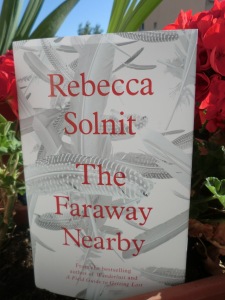
Rebecca Solnit writes reflective, thought-provoking essays, which often connect her intellectual curiosity with where she is in her life now. In an earlier work Wanderlust, she ponders the history of walking as a cultural and political experience; facing the unknown, in A Field Guide to Getting Lost; her mother’s Alzheimer’s, regression and how she spent that final year in The Faraway Nearby.
Now a new collection of essays, the title The Mother of All Questions, from an introductory piece on one of her pet frustrations, that all time irrelevant question that many professional women, whether they are writer’s, politicians or humble employees too often get asked.

But it is the timely and questioning opening essay ‘A Short History on Silence’ that  binds the collection together and should be the question being asked. It is an attempt at a history of silence, in particular the silencing of women, the effect of patriarchal power, the culpability of institutions, universities, the court system, the police, even families, their roles in continuing to ensure women’s silence over the continual transgressions of men.

Rebecca Solnit has been writing about this issue for many years, trying to create a public conversation on a subject that many continued to insist was a personal problem – yet another form of silencing.

As she wrote in Wanderlust (2000)

“It was the most devastating discovery of my life that I had no real right to life, liberty, and pursuit of happiness out of doors, that the world was full of strangers who seemed to hate me and wished to harm me for no reason other than my gender, that sex so readily became violence, and that hardly anyone else considered it a public issue rather than a private problem.”

She makes a distinction between silence being that which is imposed and quiet being that which is sought.

What is left unsaid because serenity and introspection are sought is as different from what is not said because the threats are high or the barriers are great as swimming is from drowning. Quiet is to noise as silence is to communication. The quiet of the listener makes room for the speech of others, like the quiet of the reader taking in the words on the page…Silence is what allows people to suffer without recourse, what allows hypocrisies and lies to grow and flourish, crimes to go unpunished. If our voices are essential aspects of our humanity, to be rendered voiceless is to be dehumanized or excluded from one’s humanity. And the history of silence is central to women’s history’

The list of who has been silenced goes right back to the dawn of literature, it goes back millennia, classics scholar Mary Beard noted that silencing women begins almost as soon as Western literature does, in the Odyssey, with Telemachus telling his mother to shut up.

It continues through the years with the woman’s exclusion from education, from the right to vote, to making or being acknowledged for making scientific discoveries to campus rape and the introduction of sexual harassment guidelines as law and the unleashing of stories and the wave of voices coming out of silence that sharing on social media has spawned, generating a fiercely lively and unprecedented conversation.

80 Books No Woman Should Read is her response to a list published by Esquire magazine of a list they created of 80 books every man should read, a list of books, seventy-nine of which were written by men, with one by Flannery O’Connor. It speaks of the reader’s tendency to identify with the protagonist, only the books she mentions from this list that she has read, she often identifies, not with the protagonist but with the woman, noticing that some books are instructions on why women are dirt or hardly exist at all except as accessories or are inherently evil and empty.

Not surprisingly, her essay (first published at Lithub.com) elicited a significant online response, prompting a reply from Esquire, admitting they’d messed up, saying their article had rightfully been called out for its lack of diversity, and proactively inviting eight female literary powerhouses, from Michiko Kakutani to Anna Holmes to Roxanne Gay, to help them create a new list. You can see the list here.

And in the essay In Men Explain Lolita to Me she expounds further on empathy:

‘This paying attention is the foundational act of empathy, of listening, of seeing, of imagining experiences other than one’s own, of getting out of the boundaries of one’s own experience. There’s a currently popular argument that books help us feel empathy, but if they do so they do it by helping us imagine that we are people we are not. Or to go deeper within ourselves, to be more aware of what it means to be heartbroken, or ill, or ninety-six, or completely lost. Not just versions of our self rendered awesome and eternally justified and always right, living in a world in which other people only exist to help reinforce our magnificence, though those kinds of books and comic books and movies exist in abundance to cater to the male imagination. Which is a reminder that literature and art can also help us fail at empathy if it sequesters in the Boring Old Fortress of Magnificent Me.’

I haven’t read Men Explain Things to Me, although I heard Rebecca Solnit speak about the leading and infamous anecdote it retells when I went to listen to her at the Royal Festival Hall in London.
That talk coincided with the publication of  The Faraway Nearby (link to review) the book that traverses her uneasy relationship with her mother and how the approach of death forces her to contemplate it, how it may have shaped her. I liked the book, but I loved listening to the author in person, she has such an engaging presence, is a captivating speaker, a performer of the reflective and spontaneous.

The Mother of All Questions is a culmination of Solnit’s and many women’s frustrations in the world today, where being a woman living in a patriarchal culture, no matter which part of the world, brings challenges that must reach a breaking point. It is a conversation that is happening everywhere that hopefully will bring change for the better, as many voices come together in solidarity. It is an acknowledgement both of how far we have come and how much we have still to do, to change the culture of silence we have inhabited for too long, to safely be ourselves.

I highly recommend picking up one of her works, if you haven’t yet read her.

The Essex Serpent by Sarah Perry

A Victorian era historical novel (London 1893) set over a single year, that follows the footsteps of the young widow Cora Seaborne, in the months following the premature of her husband, a cruel man who’d become indifferent to her, but one who’d been her companion from such a young age, he’d moulded her into what he could tolerate.

She begins to shed the layers of that stifled London life, both physically and mentally, taking her son Francis and their companion Martha to Colchester, swapping gowns and stays for a man’s tweed coat and trousers. She steps out each day taking herself on long walks in search of anything unusual and in particular remnants and fossilised objects unearthed after a recent earthquake and subsequent landslides.

In London, she had befriended Dr Luke Garret, affectionately referred to as the Imp on account of his size. He is at the forefront of medicine at the time, something of a maverick surgeon, fascinated by the potential of yet unproven surgical procedures, assisted by his friend and colleague Spencer. He is fond of Cora and their friendship continues after the death of her husband.

Katherine and Charles Ambrose, frequent visitors to Essex, unwittingly encouraged Cora’s interest in the region and in fossil remains, through various introductions, one of whom recounts to her the life and work of Mary Anning, the English fossil collector and paleontologist, whose discoveries included the first ichthyosaur skeleton. Mary Anning is the protagonist of Lisa Chevalier’s excellent novel Remarkable Creatures.

Meeting her again in Colchester, the Ambrose’s introduce Cora to the Reverend William Ransome and his wife Stella and a unique friendship develops.

Much of the novel is narrated through letters between Cora and these new friends she’s made since her widowhood and one of the subjects that arises is talk of a creature, said to have reappeared since the land was disturbed by the quake, one they’ve dubbed the Essex Serpent. Local beggar Taylor fills her in on the details of the earthquake and the sleeping legend it has awakened.

‘It had come eight years back, by his reckoning, at eight minutes past nine precisely. It had been as fair an April morning as any could remember, which later was counted a blessing, since most were out-of-doors. The Essex earth had bucked as if trying to shake off all its towns and villages; for twenty seconds, no more, a series of convulsions that paused once as if a breath were being drawn and then began again. Out in the estuaries of the Colne and the Blackwater, the sea had gathered into foaming waves which ransacked the shore and reduced every vessel on the water to splinters.’

Cora is delighted to think that modest little Essex, with its Paleozoic rock beneath their feet, laid down five hundred million years before, shrugging its shoulders, creating waves and toppling church steeples and fantasizes about finding her own ichthyosaur.

Taylor feeds her mind with tales of a creature from 1669, when it was believed a serpent came out of the Essex waters into the birch woods and commons.

‘Those were the years of the Essex serpent, be it scale and sinew, or wood and canvas, , or little but the ravings of madmen; children were kept from the banks of the river and fishermen wished for a better trade! Then it was gone as soon as it came, and for night on two hundred years we had neither hide nor hair of it ’til the quake came and something was shook loose down there under the water – something was set free! A great creeping thing, as they tell it, more dragon than serpent, as content on land as in water, that suns its wings on a fair day.’

Away from the responsibilities and expectations of womanhood and motherhood, long walks reawaken Cora’s naturalist and philosophical interests.

‘It struck her that everything under that white sky was made of the same substance – not quite animal, but not merely earth: where branches had sheared from their trunks they left bright wounds, and she would not have been surprised to see severed stumps of oak and elm pulse as she passed. Laughing, she imagined herself part of it, and leaning against a trunk in earshot of a chattering thrush held up her arm, and wondered if she might see vivid green lichen stippling the skin between her fingers.

Had it always been here – this marvellous black earth in which she sank to her ankles, this coral coloured fungus frilling the branches at her feet? Had birds always sung? Had the rain always this light touch, as if she might inhabit it?’

As Cora pursues fossils and sea creatures, her companion Martha uses the opportunity of having contact with influential men to push her social activism, intent on bringing to light the plight of the working class housing conditions, dire accommodations and landlords who continue to raise rents, not to mention hypocritical attitudes.

‘She spread open the pages and showed him a map on which the poorest of London’s housing was overlaid with plans for new developments. They would be sanitary , she said, and spacious: children would have green spaces to play in and tenants would be free from landlord caprice. But (she flicked contemptuously at the paper) to qualify for housing, tenants must demonstrate good character. ‘They’re expects to live better than you or I ever did to deserve a roof over their children’s heads: must never be drunk or a nuisance to neighbours, or gamble, and God forbid too many children by too many fathers, and had too often. You, Spencer – with your estate and pedigree – you can drink yourself wretched on claret and port and no-one begrudges you any of your homes; but spend what little you have on cheap beer and the dogs and you’ve not enough moral standing to sleep in a dry bed.’

The novel provides a snapshot of the era, with its significant scientific progress and discoveries, its social issues among the classes and between the sexes, medical progress and the conflict between men of science and men of the cloth.

For the most part I enjoyed it immensely, however, if I were to fault it, I thought the seesawing between relentless soul-searching and denial on the part of the Reverend and Cora, in coming to terms with their relationship became a little tedious. It made the second half of the novel drag a little and I notice that all the passages I noted come from the first 200 pages. However the acute sense of place and era and that traversing of issues of the time within the framework of of an engaging story make it all worthwhile.