A Ghost In The Throat by Doireann Ní Ghríofa

There once was a woman who fell in love with a poem.

So begins a mini essay written for the Irish Times by the author Doireann Ní Ghríofa describing her almost life-long obsession with the Caoineadh Airt Uí Laoghaire, (The Keen for Art O’Leary), an epic Gaelic lament, published in 1773 by Eibhlín Dubh Ní Chonaill, upon learning of the brutal murder of her much desired husband, whose unborn child she carried.

In A Ghost In My Throat, she puts aside the documents and transcripts and in compelling, often poetic, multi-layered prose, talks us through the journey this poem has taken her on and carried her through, as she imagines but rarely fabricates the life of Eibhlín Dubh (whose full name translates to Evelyn Black O’Connell).

It is beautifully coherent and audacious, a feat normally given to scholars occupying dusty rooms in closed towers, firstly that the Caoineadh made it into print and endures, despite being the work of a woman; most who lived in the 1700’s, the 1800’s and even the early 1900’s have long since slipped into silence and out of print and secondly that Doireann Ní Ghríofa managed to pursue her research passion while pregnancy, motherhood and house-wifery claimed most of her hours.

Our Purpose Finds Us, Silencing the Naysayer(s)

Photo by Suzy Hazelwood on Pexels.com

More than a passion, the poem provided solace, company, offering mystery and a promise, one whose secrets would only be revealed if she trusted the process and closed her ears to the reverberating comment of the visiting public health nurse, who’d snooped through her folders while she was making tea.

‘Art O’Leary! Probably as close as we got to boy-bands, in my day.’ I try to mask my grimace.

‘Taking a night course, are we?’ I shake my head.

‘So what’s all this for then?’ My shoulders answer on my behalf, my whole body prickling crimson. She soon turns to scolding me about the baby instead: no feeding schedule, no set sleep routine, one would imagine with a fourth child a mother would be a little more, well…she lifts her brows and palms.

Though her words provoke tears, self-pity, anger and rage, they result in a resolute clarification of her purpose.

In my anger, I begin to sense some project that might answer the nurse’s query. Perhaps I’d always known what it was all for. Perhaps I’d stumbled upon my true work. Perhaps the years I’d spent sifting the scattered pieces of this jigsaw were not in vain; perhaps they were a preparation. Perhaps I could honour Eibhlín Dubh’s life by building a truer image of her days, gathering every fact we hold to create a kaleidoscope, a spill of distinct moments, fractured but vivid. Once this thought comes to me, my heart grows quick. I could donate my days to finding hers, I tell myself, I could do that, and I will.

A Female Text

Photo by freestocks.org on Pexels.com

This is something Doireann Ní Ghríofa has thought long about, years in fact. This poem and the absence of women in texts. The absence of women’s words. The difficulty in accessing the voice, the thoughts, the words, the life of women. Valuing their contribution, raising the importance of their passions and intellectual pursuits, that might valiantly sit alongside the domestic pursuits of raising children and keeping a home.

She is all those things, sharing them, giving them equal value and space on the page. A breastfeeding mother, a lover, a housewife, a poet, a reader, a writer, a medical student, a seer.

This is a female text, composed by folding someone else’s clothes. My mind holds it close, and it grows, tender and slow, while my hands perform innumerable chores.

This is a female text, born of guilt and desire, stitched to a soundtrack of nursery rhymes.

Commemoration in a Poem

Her research tells us that in the old Gaelic order poems were traditionally commissioned by taoisigh – who employed a (male) bard to commemorate an occasion or person in verse, whereas that attributed to women resides in their bodies, in song, in an oral or embroidered tradition. Some say this poem can not be considered a work of single authorship, referring to it as a collage, or folky reworking of older keens. This has our author looking up the Latin for text, to find it rooted in the word ‘texere‘ : to weave, to fuse, to braid.

the Caoineadh form belongs to a literary genre worked and woven by women, entwining strands of female voices that were carried in female bodies, a phenomenon that seems to me cause for wonder and admiration, rather than suspicion of authorship.
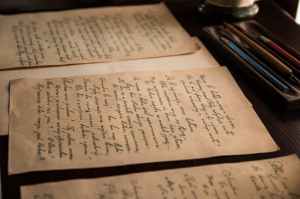
Photo by Pixabay on Pexels.com

Reading all she can find in libraries and online, in academic sources or otherwise, relating to her ghostly poet, Doireann Ní Ghríofa sees between and around the lines of texts, scanning for clues. An 1892 publication: The Last Colonel of the Irish Brigade: Count O’Connell and Old Irish Life at Home and Abroad, 1745-1833 details a stash of family letters belonging to Eibhlín Dubh’s brother Maurice, from which she is able to:

commit a wilful act of erasure, whittling each document and letter until only the lives of women remain. In performing this oblique reading, I’ll devote myself to luring female lives back from male texts. Such an experiment in reversal will reveal, I hope, the concealed lives of women, present, always, but coded in invisible ink.

There is so much in this book that I admire, that I connect to and could mention, but as I see the word count pass 1,000 words, I know I must stop and let you discover it for yourself. Within the first 50 pages I was hooked, highlighting lines, noting synchronicity’s, reliving heartbreaking experiences, recognising an obsessive desire to follow threads, reading, learning, writing while nurturing, mothering & creating. What a find this was!

Having finished it, I can say I absolutely loved it, it is one of my most scribbled in books, reading it over a weekend, I had to force myself to pause to make it last, a hot contender for my ‘Outstanding Read of 2020’ and a brilliant example of a poet with narrative storytelling ability turning to prose. Sad to be finished but happy with the promise the author makes in the last lines.

Highly Recommended

Further Reading

Irish Times : Doireann Ní Ghríofa: The woman who fell in love with a poem

thejournal.ie : ‘It’s so astounding that a woman can disappear to that extent’: Rediscovering the author of Ireland’s greatest love poem
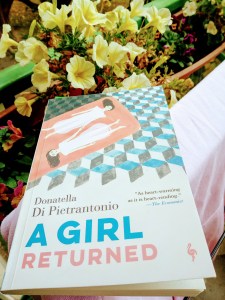
A Girl Returned by Donatella Di Pietrantonio

translated from Italian by Ann Goldstein.

Europa Editions Italian Literature Donatella Di PietrantonioA Girl Returned came to my attention because I like to see what Europa Editions are going to be publishing, they are known for bringing Italian literature to readers of the English language and their big title in 2020 will be Elena Ferrante’s The Lying Life of Adults. One I will be reading soon.

The Adoptee Experience

I chose to read A Girl Returned because I am interested in reading as much as possible, fiction or nonfiction, stories that portray the adoptee experience. And the premise of this book is shocking as the title suggests, when a thirteen year old girl is returned to the family she is born into without being told why or there appearing to be any clear motive.

Though as anyone with a connection with adoption will know, it is rare for the process to exist without the presence of secrets, lies, clandestine activities, resentments, heartbreak and denial.

Book Review

I was thirteen, yet I didn’t know my other mother.

The story opens as a 13-year-old girl struggles up the stairs of an apartment with an unwieldy suitcase and a bag of jumbled shoes. The door is opened by her sister Adriana, whom she has never met.

We looked like each then, more than we do as adults.

Through the months of adjustment that follow, thrown back into the reluctant family she was born into, events are narrated with hindsight, as her memory of that vision of her sister attests. She is determined to unravel the cause of this separation and abandonment by both sets of parents, at birth by her biological family and at 13 by her adoptive family, the latter, whose love she never questioned.

Photo by Ian Panelo on Pexels.com

Aware her mother had been suffering, she continues to worry and wonder about her, we the reader do too, trying to imagine and fearful of what might have ailed her that she was unable to share with her only daughter.

Who knew how my mother was. Whether she’d started eating again, whether she was getting out of bed more often. Or if instead she’d been taken to hospital. She hadn’t wanted to tell me anything about her illness, certainly she didn’t want to frighten me, but I had seen her suffering in the past months, she hadn’t even gone to the beach, she who was usually there in the first warm days of May. With her permission I went to our umbrella by myself, since I was grown up now, she said. I had gone the day before my departure and had even had fun with my friends: I didn’t believe that my parents would really find the courage to give me back.

As time passes, small clues diminish her resolve and trust in those around her, who seem to believe in or at least practice, silence and deception. The only way will be to take matters into her own hands.

The idea came to me at night, I reported it to Patrizia in the morning under the umbrella.

The one unexpected joy in her changed circumstances, though she accepts it reluctantly and is wary of it, is the fierce love, and admiration tinged with jealousy, she receives from her younger sister. Like candle light in a dark room, she is luminous yet capable of harm. There are wild differences, given their different upbringings, but there exists the thread of undeniable connection.

I wasn’t acquainted with hunger and I lived like a foreigner among the hungry. The privilege I bore from my earlier life distinguished me, isolated me in the family. I was the arminuta, the one who’d returned. I spoke another language and I no longer knew who I belonged to. I envied my classmates in the town, and even Adriana, for the certainty of their mothers.

Identity, Exile and The Mother

In a brilliant essay-style review, translator Stiliana Milkova suggests that the main concern of the novel is how essential the role of the mother is to our sense of identity.

Looking at mothers as the figures that determine and define who we are allows us to think about A Girl Returned as a novel about exile and dislocation, rather than simply motherhood. The Arminuta (a word that in the language of the Abruzzo region of Italy means “the returned”) is unexpectedly forced to leave her maternal home, or what she considers her maternal home, and exiled to a place whose customs, and even the language, are almost foreign to her.

The longer she stays in this forced exile, the more detached she becomes from both her present and her past, to who she was, is. So much had been tied to a mother’s love or bond. Though she remembers the feeling of being loved, she now questions it, faced with such devastating evidence.

In certain melancholy moods, I felt forgotten. I’d fallen out of her thoughts. There was no longer any reason to exist in the world. I softly repeated the word mamma a hundred times, until it lost all meaning and was only an exercise of the lips. I was an orphan with two living mothers. One had given me up with her milk still on my tongue, the other had given me back at the age of thirteen. I was a child of separations, false or unspoken kinships, distances. I no longer knew who I came from. In my heart I don’t know even now.

Photo by Bahaa A. Shawqi on Pexels.com

A short novel, A Girl Returned packs a powerful, moving punch and generously provides that glimmer of hope, in an unexpected alliance. Rereading these passages I highlighted makes me wish to repeat the entire reading experience, the shock, the solace, the resistance and resilience.

We look less like each other now, but we find the same meaning in this being thrown into the world.

Highly Recommended.

Reviews

Bella Mia by Donatella Di Pietrantonio, review by HeavenAli (Published in 2014, translated to English in 2016)

My Mother is a River by Donatella Di Pietrantonio, review by HeavenAli (Published in 2011, translated into English 2015)

Further Reading

Reviews by Translators: The Mother Of All Questions: Donatella Di Pietrantonio’s “A Girl Returned,” tr. Ann Goldstein by Stiliano Milkova

Article New York Times: ‘The Ferrante Effect’: In Italy, Women Writers Are Ascendant by Anna Momigliano

N.B. Thank you kindly to Europa Editions for sending me a copy of the book.

Intimations: Six Essays by Zadie Smith

2020 Perspective Zadie SmithShort vignettes as Zadie Smith observes this particular moment in history passing, as she prepares to become one of those who returns, fleeing, always listening and observing others, sometimes in accordance with their uttered thoughts, at other times thinking she was, only to encounter her own subconscious bias.

Meditations by a Stoic

They open with the foreword in which she reveals she has been reading Marcus Aurelius’s Meditations for practical assistance and admits that she is no more a Stoic for having read it. Rather, she leaves that experience with two valuable intimations:

Talking to yourself can be useful.
And writing means being overheard.

I was intrigued to see what Smith had been talking to herself about and what she wished others to overhear, she is a mistress of eavesdropping and she is a Londoner and rider of the No.98, living/now leaving a country that turns many towards needing the benefits of meditation, though I can’t help but wonder if she would have gained more by listening to 21st century meditators such as Deepak Chopra, David Ji and Sharon Salzburg than Aurelius.

Writer’s and Their Reality

In Peonies, she dismisses writing as being creative, alleging that planting tulips is creative; inferring writing is control.

Peonies by Zadie Smith Tulips Intimations

Photo by Burak K on Pexels.com

Experience – mystifying, overwhelming, conscious, subconscious – rolls over everybody. We try to adapt, to learn, to accommodate, sometimes resisting, other times submitting to, whatever confronts us. But writers go further: they take this largely shapeless bewilderment and pour it into a mould of their own devising. Writing is all resistance. Which can be a handsome and even a useful, activity – on the page. But, in my experience, turns out to be a pretty hopeless practice for real life. In real life, submission and resistance have no real shape.

It was observing tulips that brought about this reflection, a few days before the global humbling began, providing a preview into the now common feeling of everyday, one she describes as a ‘complex and ambivalent nature of submission‘.

She saw tulips and imposed peonies, like the fiction writer she is.

Thoughts On Flowers and Self Care

As ever, Zadie Smith creates a space for the reader to think and affirm their own views, even if she does fill it with her own words and worries.

I was a little concerned by her reading habit in A Man With Strong Hands, though an avid reader myself, there are some times and places when it might be better to put the book down and allow the mind to rest, for this self-care activity she indulges, is one the few that allows one’s existential angst to cease, if only momentarily, for that weekly half hour she regularly gifts herself.

I am reminded that we have as much to learn, if not more in the act of mindful contemplation of flowers as we do in observing that less well understood creature of Nature, humanity.

Further Reading

New York Times: Zadie Smith Applies Her Even Temper to Tumultuous Times

The Shadow King by Maaza Mengiste

I was eager to read The Shadow King (shortlisted for the Booker Prize 2020) to learn more about the history of the country, although perhaps if I am honest, I am more interested in the people and the culture, without reference to another culture that is trying to invade or colonise it. Ethiopia became one of only two African nations to have never been colonised, despite attempts following the Berlin Conference of 1884-5 when 14 European countries divided Africa among themselves.

Ethiopia Flag the Shadow King

Photo by Kelly Lacy on Pexels.com

For the culture, the people and their history are so much more than the slim chapters that get all the attention, when power hungry regions and men look for prestige and/or revenge and the media (with its inevitable bias) makes everyone look. And if those nations that invade come out looking bad, or worse humiliated (especially by women), then you can be sure the stories will be buried and/or rewritten so as not to offend the innocent of their own country.

Italy Invades Ethiopia 1935

Ethiopia defeated Italian forces at the Battle of Adwa in the nineteenth century (1896), saving them from Italian colonisation, so their subsequent aggressive incursion in 1935, one that provides a framework for this novel, might be seen as revenge or an attempt to boost Italian national prestige by exercising this second attempt to assert control and join their European brothers in having a colony of their own.

The Shadow King Maaza MengisteBut the novel isn’t about politics, it concerns a few players and characters, who we are given glimpses of, in a style that is like a series of snapshots, a narrative that therefore has gaps and not the fluidity of a traditional story, nor enables us to really get to know too well the characters, limited as we are by this kaleidoscopic technique.

A Photo or A Thousand Words

I heard/saw Maaza Mengiste during the (online) Edinburgh BookFest this year and learned that she was indeed aided in her research and imagination by a set of photographs, something that reminded me of On Chapel Sands by Laura Cumming, an author who also used photographs to aid her storytelling ( a memoir of her mother), however Cumming shares the photographs with the reader and Mengiste  shares two, requiring the words to work even harder for the reader. I found this device here a distraction, not expecting a literary device, I had expected more of a character lead historical narrative, a warning not to create expectations before reading. In the talk she gave, she showed some of the photographs that had inspired some of the narrative, she had surrounded herself with them as she wrote.

A Woman’s Lot & What She is Capable Of

We meet orphaned Hirute, who works as a maid for a husband and wife of nobility, Aster and Kidane, brought into their family due to a promise made to her parents. A fractious relationship exists between the three of them, there is dependence, resentment, attraction, jealousy and comradeship. A heady mix. With the nation at war, and tired of waiting for Kidane to return, the women decide to participate in the fight, an inclination also connected to the gun Hirute was left by her father, one that Kidane took from her, that she is determined to retrieve and use.

Ethiopian Woman The Shadow King Maaza MengisteOne evening they listen to the radio and hear the (now) famous words of Empress Menen of Ethiopia disclosing the aggression to the World Women’s League,  appealing to all world nations:

“We all know that war destroys mankind, and in spite of differences in race, creed, and religion, women all across the world despise war because its fruit is nothing but destruction.

War kills our husbands, our brothers, and our children. It destroys our homes, and scatters our families. At this hour and in such a tragic and sad period, when aggressors are planning to bring a heavy war into our lives, we would like to bring this to the attention of all women through the world, that it is their duty to voice and express solidarity against such acts.”

Women participated in this war, not just an historical fact, but one that Mengiste discovered lay in her own family, (her great-grandmother enlisted to fight). It was a subject few talked about, and one that history books seem to have omitted, to the point where few female veterans remain, whose stories can be told. One can see how easily their experiences are relegated to myth and the author is to be commended for the 10 years of perseverance it took to bring this story to light.

Though she uses her imagination, it is historical fiction after all, this is not a fantasy or adventure, and the role these women took on and the sacrifices and risks they took in doing so, meant they were heroines not in the traditional masculine sense, but that they showed solidarity towards keeping these invaders away and presented an image of provocation and strength, one that no European army, likely had ever seen.

“I realised that the closer I looked at women, the more I began to understand the many different battles that they were fighting; the conflicts were on the battlefields, but they also happened in the military camps. Women had to contend with multi-layered violence; there is fighting as soldiers, but there is fighting as women whose bodies are imagined to be the territories for their compatriots.”

Space is also given to a conflicted soldier in the Italian army, who, while fighting under orders from his own country, learns that his own survival is under threat, when all soldiers are asked to complete a census. Though he states his religion as none, his  name makes him a target of another European aggression going on at that time. He provides a counterpoint to the aggression and his occupation as photographer, a man who sits for hours in contemplation of his subject, often under orders, is a source of both horror and soulful reflection.

Never Admit Defeat, What About Forgiveness?

In an interview, Mengiste tells of a visit to Calabria in the south of Italy for her first book (set in 1974), when a man stood and asked if he could talk to her about 1935; it was a tense and emotional moment from a man asking for forgiveness for what his father had been involved in.

Italy has not talked about this history; it’s still difficult for Italians to comprehend what they did in east Africa. A few people grumbled for him to sit down. But he was visibly shaken and emotional. He told me that his father was a pilot during the war. He said: “My father dropped poison on your people. How do I ask for your forgiveness?” And he started crying.

It was at that moment that I said to myself: “My God, this history is not done, this war that feels distant but is not distant. There’s still the question, How do we bridge this gap between us?”

The Shadow King goes some way towards bridging that gap and opens the way for more to seek answers and ask more questions and to remember that women are not a mere footnote in history, there are thousands of untold stories from the past of their endeavours.

This was a slow moving, challenging read, many may not have the patience required to read it, but I’m glad I persevered.

Maaza Mengiste, Author

was born in Addis Ababa, Ethiopia in 1974. Her family fled the Ethiopian revolution when she was a child a history she explores in her first novel, one I’m looking forward to reading.  A Fulbright Scholar and professor in the MFA in Creative Writing & Literary Translation programme at Queens College, she is the author of The Shadow King and Beneath the Lion’s Gaze, named one of the Guardian’s Ten Best Contemporary African Books. Her work has appeared in the New Yorker, Granta, and the New York Times.

Further Reading

New York Times Interview : The ‘Detective Work’ Behind a War Novel by Wadzanai Mhute Nov 12, 2020

Guardian Interview: The Language of War is Always Masculine

10 Surprising Facts About Ethiopia

Booker Prize Shortlist 2020

Having not really followed this prize in recent years, finding myself more interested in the diversity of the International Booker Prize for translated fiction; this year, I was pleasantly surprised to find a number of titles that were already in my sights, so I thought I’d share the list and plot summaries here, since I plan on reading a few of the titles and I’m interested to see who will win the prize.

Moving With the Times

Personally I think this is a sign that the prize is beginning to move with the times and to recognise that readers and our cultures need exposure to a wider range and scope of voices and stories, if we are ever to move towards greater understanding and tolerance of the other.

The judges had this to say in their summation of the shortlist:

“Every book that we’ve chosen makes one bring all one’s attention and emotions, to understanding what the writer was trying to say and I think that is important.” Margaret Busby

“It’s exciting to realise that there are so many interesting female authors out there. There are so many interesting non-white authors out there giving us different glimpses of what the world is all about, telling interesting and vibrant stories.”  Emily Watson

“We were looking for books that really told a story and grabbed us. We were looking for originality as well. And personally I was also looking for technical mastery, and at the level of the sentence it needed to be really, really superb.” Sameer Rahim

“Every one of these books is an experience which has inspired us and therefore will inspire the reader.” Lemn Sissay

“You have got to read them. If you read this shortlist it will show you where the novel is right now in 2020, and it will give you a pretty good idea of where it might go in the future.”  Lee Child

The 2020 shortlist is:

Booker Prize Shortlist 2020

The plot summaries below come from the Booker Prize website and the links on the author’s names lead to their short biographies.

The Shadow King by Maaza Mengiste (Canongate Books)

Ethiopia. 1935. With the threat of Mussolini’s army looming, recently orphaned Hirut struggles to adapt to her new life as a maid. Her new employer, Kidane, an officer in Emperor Haile Selassie’s army, rushes to mobilise his strongest men before the Italians invade. Hirut and the other women long to do more than care for the wounded and bury the dead. When Emperor Haile Selassie goes into exile and Ethiopia loses hope, Hirut offers a plan to maintain morale. She helps disguise a gentle peasant as the emperor and soon becomes his guard, inspiring other women to take up arms. But how could she have predicted her own personal war, still to come, as a prisoner of one of Italy’s most vicious officers?

The Shadow King casts light on the women soldiers written out of African and European history. It is a captivating exploration of female power, and what it means to be a woman at war.

This Mournable Body by Tsitsi Dangarembga (Faber & Faber)

In this tense and psychologically charged novel, Tsitsi Dangarembga channels the hope and potential of one young girl and a fledgling nation to lead us on a journey to discover where lives go after hope has departed.

Here we meet Tambudzai, living in a run-down youth hostel in downtown Harare and anxious about her prospects after leaving a stagnant job. At every turn in her attempt to make a life for herself, she is faced with a fresh humiliation, until the painful contrast between the future she imagined and her daily reality ultimately drives her to a breaking point.

Burnt Sugar by Avni Doshi (Hamish Hamilton, Penguin Random House)

In her youth, Tara was wild. She abandoned her loveless marriage to join an ashram, endured a brief stint as a beggar (mostly to spite her affluent parents) and spent years pursuing a dishevelled, homeless ‘artist’ – all with a young child in tow. Now she is forgetting things, mixing up her maid’s wages and leaving the gas on all night, and her grown-up daughter is faced with the task of caring for a woman who never cared for her.

This is a love story and it is a story about betrayal. But not between lovers – between mother and daughter. Sharp as a blade and laced with caustic wit, Avni Doshi tests the limits of what we can know for certain about those we are closest to, and by extension, about ourselves.

The New Wilderness by Diane Cook (Oneworld Publications)

A daring, passionate and terrifying novel about a mother’s battle to save her daughter in a world ravaged by climate change.

Bea’s five-year-old daughter, Agnes, is wasting away, consumed by the smog and pollution of the over-developed metropolis they call home. If they stay in the city, Agnes will die, but there is only one alternative – joining a group of volunteers in the Wilderness State. This vast expanse of unwelcoming, untamed land is untouched by mankind. Until now. Living as nomadic hunter-gatherers, Bea and Agnes learn how to survive on this unpredictable, often dangerous land. As Agnes embraces the wild freedom of her new existence, Bea realises that saving her daughter’s life means losing her in a different way.

At once a blazing lament of our contempt for nature and a deeply humane portrayal of motherhood, and what it means to be human, The New Wilderness is an extraordinary, compelling novel for our times.

Shuggie Bain by Douglas Stuart (Picador, Pan Macmillan)

1981 in Glasgow. The city is dying and poverty is on the rise. People watch the lives they had hoped for disappear from view. Agnes Bain had expected more. She dreamed of greater things: a house with its own front door, a life bought and paid for outright (like her perfect – but false – teeth). When her philandering husband leaves, she and her three children are trapped in a mining town decimated by Thatcherism. As Agnes turns to alcohol for comfort, her children try their best to save her. One by one they abandon her in order to save themselves.

Shuggie holds out hope the longest. But he has problems of his own: despite all his efforts to pass as a ‘normal boy’, everyone has decided that Shuggie is ‘no right’. Agnes wants to support and protect her son, but her addiction has the power to eclipse everyone close to her, including her beloved Shuggie.

Laying bare the ruthlessness of poverty, the limits of love, and the hollowness of pride, Shuggie Bain is a blistering and heartbreaking debut, and an exploration of the unsinkable love that only children can have for their damaged parents.

Real Life by Brandon Taylor (Originals, Daunt Books Publishing)

Wallace has spent his summer in the lab breeding a strain of microscopic worms. He is four years into a biochemistry degree at a lakeside Midwestern university, a life that’s a world away from his childhood in Alabama. His father died a few weeks ago, but Wallace didn’t go back for the funeral, and hasn’t told his friends – Miller, Yngve, Cole and Emma. For reasons of self-preservation, he has become used to keeping a wary distance from those closest to him. Over the course of a blustery end-of-summer weekend, the destruction of his work and a series of intense confrontations force Wallace to grapple with the trauma of the past and the question of the future.

Deftly zooming in and out of focus, Real Life is an affecting story about the emotional cost of reckoning with desire, and overcoming pain.

* * * * * * * * * * * *

The Verdict

So, do any of those sound appealing to you?

I’m currently reading This Mournable Body by Zimbabwean author Tsitsi Dangarembga whose work totally deserves to be on the list. I first read her book Nervous Conditions last year which won the Commonwealth Prize 30 years ago and was a 5 star read for me, her latest novel continues the story of convent educated Tambu and her desire to fulfill her own at times unreachable expectations.

I will also be reading Maaza Mengiste’s work of historical fiction The Shadow King after listening to talk about the book at the Edinburgh Book Festival this month, especially given her passion for the story and the personal connection to her female ancestors, who fought to protect the lives and rights of their families.

The winner will be announced on November 17.

The Bird Within Me by Sara Lundberg (Sweden)

translated by B.J.Epstein

The Swedish Artist Berta Hansson

The concept of this illustrated children’s book really appealed to me. It’s inspired and based on the childhood of the Swedish artist Berta Hansson (1910-1994) during the period in her life when she was 12 years old and wanted to be outdoors in nature or painting or making birds out of clay.

However, her father was strict and serious and her mother was frail and in bed very ill, so she was needed to help out in the home and on the farm, and all the more so when one of her older sisters was sent away to study domestic science, to learn how to become a better homemaker.

She initiates a form of protest.

Housewife. Housewives.

That’s what Dad wants us to be –

Julia, Gunna and me –

because that’s how it’s always been

and that’s how it’s going to be.

A Role Model or a Muse

Berta wanted something else for her life, but had no role model or knowledge of how to make her dreams a reality. Her Uncle Johan whom she secretly admired, painted with oil paints and made fiddles instead of spending all his time on farm work, sadly he was looked down on and derided, referred to as the ‘theatre farmer‘.

Sometimes late at night she would sneak out and wander over to a copse of trees by the Doctor’s house, one of the few people who had ever complimented her art.

The Bird Within Me Painting Muse

Photo by Zaksheuskaya on Pexels.com

I peer in.
He sits in the armchair,
reading and smoking his pipe.
If he saw me, I would die.
Paintings hang on his walls from the floor to the ceiling.
They are so beautiful.
I can’t stop looking at them.
To think that someone has painted them.

Breaking Out

It is a story of family and obligations, and of the longing a child has for something that is difficult to articulate or express in words, little understood by the world of adults who harbour expectations.

How to sustain and realise dreams when the way is not clear.

It’s a celebration of the exploration of art and observation in youth and of the struggle against the familial and cultural conditioning and expectations of girls.

A beautiful and thought provoking book for all ages.

You can find a copy of the book here.

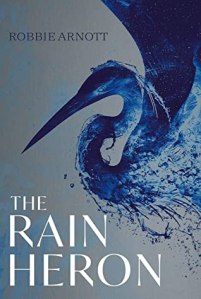
The Rain Heron by Robbie Arnott

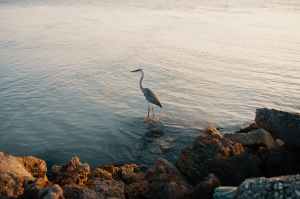
I enjoy fable-like stories or those that reference them and when I saw this title, I was captivated and intrigued by the image and concept of a rain heron. It reminded me of reading Patrick Ness’s The Crane Wife and so I thought why not, see what this eco-fable was about.

Tales of Imaginary Birds and Nature

Eco fable The Rain HeronThe first chapter tells what I imagined was the original fable of the rain heron and the unlucky farmer, and from what I can gather, the author has made this story up as well. It’s a story of a woman running a farm, the daughter of generations of farmers, but one who struggles for many reasons no matter what methods she tries.

Until one day a big storm comes and destroys nearly everything; at the end of which she is found curiously draped over the branches of an old oak tree.

Even more surprising was the large heron that rose out of the floodwaters, leaving not a ripple behind it, that landed on the branch beside her. The birds blue grey feathers were so light, they were near transparent. When it flew off, water fell from its wings like rain. Its appearance changed the fortune of the unlucky farmer, until the neighbour’s jealous son’s envy caused her bad luck to return.

What is A Fable?

So is it a fable? It’s a tale of someone who has bad luck, who for a period their luck changes, but as with life, good luck causes jealously in others, who have destructive tendencies. And so the bad luck continues.

“I just set out to write a story where real characters or characters that felt real had their lives intertwined with the nature fable.”

Arnott then begins a new story in four parts, in which we meet Ren, a woman who has left her home after a military coup and gone to live in the mountains. She is virtually self-sufficient apart from occasional exchanges with a man named Barlow and his son. The outdoor scenes are vivid and believable, Ren is a really interesting character I wish we’d spent more time with.

The Rain Heron Robbie Arnott Crane

Photo by Josh Sorenson on Pexels.com

We don’t know exactly why she fled or what the coup was about, but the man alerts her to the presence of soldiers searching the mountainside for something, a group of four lead by a young woman referred to as Harker. They are in search of evidence of a myth and they will make Ren suffer until she divulges what she knows and leads them to its source.

In the second part, we go back in time to a seaside settlement on the South  coast and meet Zoe and her Aunt, just as the girl is being initiated into the village tradition of squid ink gathering, a secret trade that is shared with no one. An ambitious Northener arrives seeking knowledge for his ideas and is spurned, he turns towards destructive means and with everything that follows Zoe leaves. This community and environment are really brought alive and I was disappointed when this part ended.

The story returns to Harker and her troops and their journey, here I felt the story waned, a few connections had been made and the interwoven nature of the parts revealed, but neither the landscape nor the characters gain traction, Harker is determined in her mission, but self-destructive in her nature and has lost whatever empathy she ever had. Her previous actions are hard to understand, her transformation(s) not entirely believable.

A Man Writing Women Characters

The Rain Heron A trap

Photo by Pixabay on Pexels.com

Most of Arnott’s characters are women and I did find myself pausing early on and wondering why he chose to inhabit so many lead female characters, the unlucky farmer, the woman surviving in the mountain, the leader of the army group. I made a note when this thought arose, because these women were all acting in ways often attributed to men, and I wondered if anyone else had noted this. Harker uses brutal tactics to change Ren’s mind; Ren has abandoned her son.

In an interview Arnott says it made more sense for him to portray those characters as women, because it required them to demonstrate resilience, something he considered more of a female trait within this story.

Because they were spending a lot of time in the wilderness, he thought writing them as male characters would come across as cliché, referring to woman as having:

“that gentle, firm, methodical way of dealing with problems as opposed to letting anger and frustration rise to the surface”

The author says he wasn’t trying to convey a particular message, but the situations he puts his characters in and the familiarity of some of the climatic events that occur make it a thought provoking story, and I think it’s all the better for not coming to any conclusion or moral, for it exists as a catalyst for discussion of those various controversial situations that arise.

The Anti-Hero

My favourite character and the one we spend too little time with was the rain heron, who spends most of the book hidden away, but listening to Arnott talk about his inspiration behind the bird, who he first imagined as a storm, manifest into a bird that had magical qualities and was a kind of anti-hero, made me wish that the heron had more of a presence.

His point here was that in nature, birds and animals are really not interested in humanity, not in the way humans are interested in them, acting from instinct not from consideration or desire. That said, he has created a creature that readers are indeed likely to be fascinated with!

The Rain Heron (2020) was Tasmanian author Robbie Arnott’s second novel, his debut Flames was published in 2018.

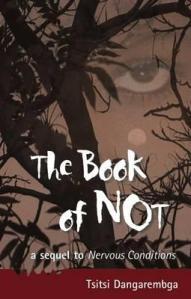
The Book of Not by Tsitsi Dangarembga (2006) (Zimbabwe)

A Zimbabwean Trilogy

A year ago I read and loved Nervous Conditions the first book written by a Black woman from Zimbabwe to be published in English. The author won the Commonwealth Writers’ Prize with it in 1989, which led to translations in many languages.

Her most recent book, the third in this trilogy This Mournable Body was nominated for the Booker Prize and recently shortlisted. I’m eager to get to it, so this is my first read after WIT month, and I eagerly await what will happen to Tambu,  despite the sense of disillusionment.

Most of this second novel takes place in the ‘Sacred Heart’ catholic girls boarding school she is sent to by her uncle, though the tone is uncomfortably set in the opening pages while she is at home with her family. There is a war going on, ever present in the background, setting them all one edge.

They must attend a compulsory village meeting, where a landmine causes her gun-carrying older sister to lose a leg and her Uncle, her educational sponsor and her hoped for ticket out of the village is charged with being:

not exactly a collaborator, but one whose soul hankered to be at one with the occupying Rhodesian forces. Mutengesi. The people in the village said Babamukuru was one who’d sell every ounce of his own blood for a drop of someone else’s.

Mother Daughter Relationships

Tambu’s relationship with her mother is complicated, she finds little solace there, knowing she can never undo her mother’s resentment, unless she fails.

How does a daughter know that she feels appropriately towards the woman who is her mother? Yes, it was difficult to know what to do with Mai, how to conceive her. I thought I hated her fawning, but what I see I hated is the degree of it. If she was fawning, she was not fawning enough. She diluted it with her spitefulness, the hopeless clawing of a small cornered spirit towards what was beyond it. And if she had spirit, it was not great enough, being shrunk by the bitterness of her temper.

Photo by Skitterphoto on Pexels.com

Tambu sets even higher expectations on herself to achieve in her education than her Uncle or anyone else and is frequently self-critical. We know from book one that her sponsorship in education came at the price of her brother’s demise, she wasn’t supposed to be the one to achieve, he was.

Due to her family’s low expectations, she wants to succeed. Due to her Uncle’s sponsorship and high expectations, she needs to succeed. Due to her perceived privilege as one of the few black girls at the mostly white catholic girl’s school, she has to work doubly hard to gain her achievements, with no guarantee of recognition.

As I liked to be good at what I did, I was not afraid of hard work. I would put in what was required to reach the peak I aspired to. It was especially important to be at the top, as it was quite clear to me and to everyone I had to be one of the best. Average simply did not apply; I had to be absolutely outstanding or nothing.

Photo by u0130brahim on Pexels.com

All of these expectations to be and do and know according to a multiplicity of expectations affect her behaviour and attitude, to the point where there is little of her authentic character able to shine forth.

On one level it is the story of a girl from a modest village family trying to become something else and on another level it demonstrates the mutation of an individual, trying to conform to a system that was designed elsewhere, within which she is perceived as being inferior, even though she is the one who is at home, living in her own country and culture. She tries hard to suppress her emotions, fearing they will contribute to her failure.

‘What is the matter?’ Sister was very anxious.
‘I’m fine,’ I told her. My favourite teacher was anxious. But my sister lay first in the sand and then in a hospital bed without a leg. What would Sister do if I told her? What would the other girls do if they heard? They all had their little boxes tight in their chests for their memories of war. There was too much grief here for a room full of girls. Thinking this, I did let go. I forgot about not letting anything out. I kept on wiping so that my tears fell on the cloth sleeve. It was like that when people were kind to you. Sometimes you forgot.

A Colonial Impossibility

It’s a thought-provoking, multi-layered novel and look at an aspect of the effect of colonialism through one girl’s education, her striving to succeed and the systemic prejudice that prevents her from being able to do so in a way that is easier for the Europeans. It’s also about the development of her undu (personhood), something she strives for, that is undermined by the system within which she attempts to develop it.

It is set during the tense and frightening period of fighting against colonial oppression, and the emergence of a new Zimbabwe – news of which occasionally filters in to the school, causing the disappearance of some of the students, and a fear for those like Tambu, who harbour confused, dual loyalties.

Scattered throughout the text are words and phrases in her maternal language, translated at the back, that add to the sense of a cultural insight and a reminder that this isn’t just a coming-of-age story of a young woman in a boarding school, it highlights the increasing dysfunction of one’s ”personhood’ while trying to fit into an alien system that is riddled with a sense of superiority she can never attain, because she is ‘not’.

Further Reading

An Interview with Tsitsi Dangarembga by Caroline Rooney following publication of The Book of Not, June 2007

My Reviews of Zimbabwean Literature

Nervous Conditions by Tsitsi Dangarembga (1988)

This Mournable Body by Tsitsi Dangarembga (2020)

House of Stone by Novuyo Rosa Tshuma (2018)

We Need New Names by NoViolet Bulawayo (2013) shortlisted for Booker Prize & the Guardian First Book Award


The Party Wall by Catherine Leroux (2016)

translated by Lazer Lederhendler (from French-Canadian into English).

Reading Women in Translation

French Canadian literature in translationMy final read of August for WITMonth was The Party Wall, French Canadian author Catherine Leroux’s third novel. It was shortlisted for the Scotiabank Giller Prize, which annually recognizes the best in Canadian fiction – and has just announced its 14 strong long list for 2020. The translation by Lazer Lederhendler won the Governor General’s Literary Award for translation (French to English).

This novel is told in chapters about paired characters; mother and son, brother and sister, husband and wife; so it stops and starts as we leave one pair and move to the next. There doesn’t initially appear to be a connection (although there is) between the lives so the stories are quite different, creating the effect of reading short stories with the expectation that the threads will come together to reveal the tapestry.

The novel opens with Madeleine (actually it doesn’t but it’s the more memorable opening chapter), a woman who has lost her husband; she visits the spot where his ashes lie beneath a tree and talks to him often. Her son has left home and she hears of him through the many travellers who arrive looking for a bed for a night, people he has given her address. There is a sadness of loss of the other in her, an affliction which is given a bizarre (but true) cause when she is told she is not a biological match for her son, when at last he does return.

The Party Wall Catherine Leroux lighthouse

Photo by Kristina Gain on Pexels.com

From the window of her office, Madeleine looks at the watchman doing his rounds. This is what she does when her eyes need a rest. There’s the sea, of course, but it isn’t at all restful. It’s a struggle, a call, a mystery whispered with every rising tide. The watchman, on the other hand, is calm and predictable. Afflicted by gout, he has never taken a day off. He circles around the lighthouse like a grey satellite; his hobbling in no way diminishes his reassuring presence.

As their lives move forward, the theme of separation becomes apparent, its inherent wounding manifesting in different ways in each pair of lives.

Oddly enough, it was a long time before they realised they had both been adopted. Marie, haunted by her origins, preferred to wait before broaching the subject and kept the truth sealed inside her chest. As for Ariel, his sense of belonging to the Goldstein family was so powerful that he rarely gave any thought to the fact he had been born elsewhere, welcomed into the world by unknown hands, which had passed him on to someone else like a baton in a relay race that was to lead to as yet unseen heights.

Silence as a Familial Weapon

graveyard shift cemetery ghostly presence

Photo by Pixabay on Pexels.com

Carmen and Simon are siblings and we meet them around their mother’s deathbed, a woman who never revealed to her children who their father was, controlling them through withholding, keeping them attached through the sliver of possible revelation. Carmen runs marathons to forget, while Simon tries to avoid witnessing his marriage fall apart, removing himself by choosing to work the graveyard shift.

The term “graveyard shift” is perfectly apt: the darkness and silence of a cemetery always mask a ghostly existence, the invisible dramas of the dead and their mourners.

It’s a thought provoking and cleverly constructed novel, however the disjointed stories inevitably expose the weaknesses of one against the strengths of another, and so writing about it a week after reading highlights that which was memorable and that lost to the river of stories who are lost in the current.

Ultimately, what stays with the reader is the importance of the connections we do make, those we choose and those we pursue, for better or worse. A couple of the stories could have evolved into novels in their own right.

The Party Wall has its own logic and its own internal structure and systems: four stories that become intertwined as the book progresses. Three of those came about from extraordinary news stories I had come across. Catherine Leroux

Further Reading

Article CBC/Radio Canada: Catherine Leroux on the literary value of loose ends

Article: How Catherine Leroux ripped fiction from the headlines in The Party Wall

Article: 14 Canadian books make the 2020 longlist for $100k Scotiabank Giller Prize, 8 Sept 2020

Sex and Lies by Leïla Slimani

translated by Sophie Lewis (from French)

Reality bites.

Sex and Lies Leila Slimani MoroccoThe last nonfiction book I read was also set in Morocco (at the time referred to as the Spanish Sahara) written by a foreign woman living openly with her boyfriend, it couldn’t be more in contrast with what I’ve just read here – although Sanmao does encounter women living within the oppressive system that is at work in this collection.

In Morocco the ban on ‘fornication’, or zina, isn’t just a moral injunction. Article 490 of the penal code prescribes ‘imprisonment of between one month and one year [for] all persons of opposite sexes, who, not being united by the bonds of marriage, pursue sexual relations’. According to article 489, all ‘preferential or unnatural behaviour between two persons of the same sex will be punished by between six months and three years’ imprisonment’.

Leïla Slimani interviews women who responded to her after the publication of her first novel Adèle, a character she describes as a rather extreme metaphor for the sexual experience of young Moroccan women; it was a book that provoked a dialogue, many women wanted to have that conversation with her, felt safe doing so, inspiring her to collect those stories and publish them for that reason, to provoke a national conversation.

Novels have a magical way of forging a very intimate connection between writers and their readers, of toppling the barriers of shame and mistrust. My hours with those women were very special. And it’s their stories I have tried to give back: the impassioned testimonies of a time and its suffering.

Photo by Sharon McCutcheon on Pexels.com

In these essays Leila Slimani gives a voice to Moroccan women trying to live lives where they can express their natural affinity for love, while living in a culture that both condemns and commodifies sex, where the law punishes and outlaws sex outside marriage, as well as homosexuality and prostitution. The consequences are a unique form of extreme and give rise to behaviours that shock.

It’s both a discomforting read, to encounter this knowledge and hear this testimony for the first time, and encouraging if it means that a space is being created that allows the conversation to happen at all.

However, overall it leaves a heavy feeling of disempowerment, having glimpsed the tip of another nation’s patriarchal iceberg. We are left with the feeling that this is a steep and icy behemoth to conquer. Article 489 is not drawn from sharia or any other religious source, it is in fact identical to the French penal code’s former article 331, repealed in 1982. They are laws inherited directly from the French protectorate.

In a conversation with Egyptian feminist and author Mona Eltahawy about the tussle between the freedom desired and the shackles forced upon women, Eltahawy responded by using words attributed to the great American abolitionist Harriet Tubman, who devoted her life to persuading slaves to flee the plantations and claim their freedom.

She is meant to have said: “I freed a thousand slaves. I could have freed a thousand more if only they knew were slaves.” Emancipation, Eltahawy told me, is first about raising awareness. If women haven’t fully understood the state of inferiority in which they are kept, they will do nothing but perpetuate it.

Women are stepping out of isolation and sharing their stories everywhere, finding solidarity in that first step, sharing in a safe space, being heard, realising they are not alone.

May it be a stepping stone to change.

I read this book as part of WIT (Women in Translation) month and was fortunate to have been gifted it by a reader, since I participated in the gift swap, so thank you Jess for sending me this book, you can read her review of it on her blog, Around The World One Female Novelist at a Time.