All You Can Ever Know by Nicole Chung

A Memoir of Adoption
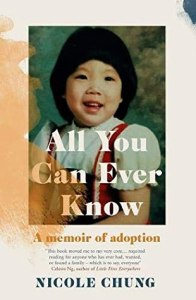
Nicole Chung All You Can Ever KnowWhile every adoptee’s experience is different, there are so many aspects to the experience and responses to them that resonate with other adoptees, that reading a memoir like this can be very helpful, sharing experiences helps us understand.

And the more there are like this, the more anyone thinking of participating in this practice, might do well to be informed of those varying responses, and to check not just their own motivations, but to do an empathy check; to ask themselves, how might it feel to be the shoes of a child as they become a teenager and an adult, when they come to realise they are not the person you tried to mould.

It’s common for some adoptees to grow up believing they haven’t been affected by the pre-verbal trauma of post-birth separation. At the time the author was born, it was still widely believed, in many western countries at least, that babies were a blank slate, you could mould them into the child you wished for.

Family lore given to us as children has such a hold over us, such staying power. It can form the bedrock of another kind of faith, one to rival any religion, informing our beliefs about ourselves, and our families, and our place in the world. When tiny, traitorous doubts arose, when I felt lost or alone, or confused about all the things I couldn’t know, I told myself that something as noble as my birth parent’s sacrifice demanded my trust. My loyalty.

Love is Colourblind

Her family did have a question, in that they were white Americans of European extraction and their child Korean, though she was born in America. That said, when asked, they were advised by various professionals that race wasn’t an issue. And when it was, she kept it to herself.

I didn’t have the background and the language to call it racism. I’d been led to believe racism was something in the past. Even teachers at school presented racism as a thing we had conquered. It was very well intentioned and wrong. I don’t think I gained perspective on that until I moved away from home and lived in pretty diverse areas on the East Coast.

Nicole Chung shares her experience of being an only child in a caring and loving family, but an over-protective one none the less, holding a subconscious resistance to the idea of their child reconnecting with her biological family.
Empathy Nicole Chung Adoption Adoptee

Photo by Brett Sayles on Pexels.com

It’s an attitude that isn’t about actively preventing them, but about never doing anything to support or facilitate that contact, or conversation, or having sufficient self-awareness to look at defensive responses to the idea and recognise them as unresolved issues.

A classic problem, where the one person you might turn to for support, instead of sympathising, feels threatened and therefore may act in ways that undermine the process, creating trust issues.

An awkward, near impossible dilemma of a child needing an empathetic understanding ear about a subject that is at the core of their being, intersecting with a parent pierced with the reminder of a wound or vulnerability (infertility) making it an unbearable thought, that a child they thought was their own (as if a possession) wants to do something they fear may risk their bond with them.

This may be all you will ever know, I was told. It wasn’t a joyful story through and through, but it was their story, and mine too. The only thing we had ever shared. And as my adoptive parents saw it, the story could have ended no other way.

The Search for Biological Family

Nicole Chung follows the clues she has, and discovers she has a family and siblings, but also discovers information that prevents her from having a complete reunion. The timing of when contact happens coincides with the birth of her first child, an upcoming event that provided a strong motive for searching. Emboldened by the request for medical information, given she was an ailing premature baby herself, the two events move closer and almost collide, becoming  too much for her, the roller coaster of setting off down a path of no return.

The contact she does make is ultimately positive, in particular with one of her sisters, she gains a special and close friend, whom she dedicates the book to (and their children). In an interview she talks about the privilege of telling both their stories.

It was honestly a gift. One of the best things I think that’s come out of this book is the chance to talk even more with my sister about it. I just feel really lucky both to have her in my life, and the fact that she really let me — not just let me, but encouraged me to write our story and has been so supportive of it and feels honored by it. – extract from podcast interview, Medium

transracial adoption Nicole Chung All You Can Ever Know

Photo by Alex Green on Pexels.com

The birth of her daughter also awakens the desire for her to connect with a language and culture that is completely foreign to her. It is a reminder that the next generation born, is not born having been separated and conditioned by the families involved, children are able embrace all, from their perspective it is simple to love family in any shape, form, colour, nationality.

There’s a tendency in adoption still to think that the differences are unimportant compared to the love. And I guess I would just say I think both of those things are really important. And I think if you’re going to look at it realistically — you know — look at the child for the whole person that they are and think about what their experience is going to be. You know, these are conversations that you have to have before you adopt and then, obviously, after, as they age in age-appropriate ways. – extract from podcast interview, Medium

Adoptee memoir transracial adoptionIt is a very personal account and kudos to the author for having the courage to share it and inviting readers to go along on the emotional roller coaster of a journey it must have been.

There is a profound sadness in her story though, those aspects of the human story that can’t always be navigated or confronted, understood or forgiven. And so they are judged. And that is the risk and potential source of pain, that taking such a journey involves. Ongoing. The potential for healing.

Since the early 1950s, parents in the United States have adopted more than a half-million children from other countries, with the vast majority of them coming from orphanages in Asia, South America, and, more recently, Africa. South Koreans are the largest group of transracial adoptees in the U.S., and by some estimates, make up 10 percent of the nation’s Korean American population. – Victoria Namkung

Further Reading/Listening

An Extract : Just assimilate Her Into Your Family and You’ll Be Fine by Nicole Chung

Interview with Nicole Chung : ‘I Didn’t Have the Language to Call It Racism’ by Victoria Namkung

No, You Go – A Podcast : Getting Personal with Nicole Chung

Adoption Memoirs Reviewed Here

An Affair With My Mother by Catriona Palmer (Ireland) (2016) (Adoptee)

You Don’t Look Adopted by Anne Heffron (US) (2016) (Adoptee)

Never Stop Walking, A Memoir of Finding Home Across the World by Christina Rickardsson (Sweden/Brazil) (2016) (Adoptee)

Why Be Happy When You Could Be Normal? by Jeanette Winterson (UK) (2011) (Adoptee)

Red Dust Road by Jackie Kay (Scotland/Nigeria) (2010) (Adoptee)

A Long Way Home (Lion) by Saroo Brierley (Australia/India) (2013) (Adoptee)

Blue Nights by Joan Didion (US) (2011) (Adoptive Parent)
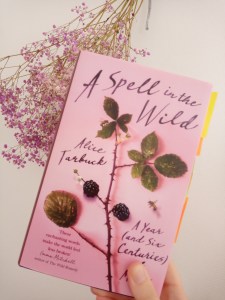
A Spell In the Wild, A Year and Six Centuries of Magic by Alice Tarbuck

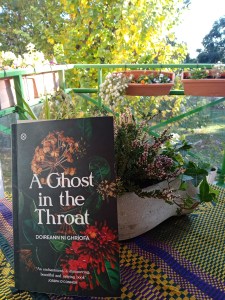
I came across this book in a newsletter I read by the founders of Tramp Press, who published two nonfiction books I recently read and loved, Doireann Ni Ghriofa’s A Ghost In The Throat and Sara Baume’s Handiwork.
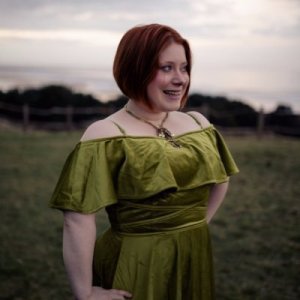
Laura Waddell mentioned hibernation season approaching and the desire to curl up and zone out, which she’d been doing with A Spell in the Wild, describing it as “a witch’s year broken down month by month, full of foraging, feminism, magic, and making meaning” expounding further in this column she wrote for The Scotsman.

At the time I was reading two novels about a woman accused of being a witch, Ann Petry’s Tituba of Salem Village and Maryse Condé’s I, Tituba, Black Witch of Salem and I thought it would be interesting to follow those up with a contemporary view of witchcraft, so the timing of this book, from a Scottish/British perspective, with rich historical references was perfect. 

Review

Dr Alice Tarbuck is a woman at the intersection of many interests and influences, a poet, an academic, a keen forager with a practical and intellectual interest in witchcraft. Being such a loaded word, her book is a wonderful celebration of ritual and magic as well as a demystification of things witch-related, from someone who appreciates the natural world, pulling various practices together into her version of ‘witchcraft’, a blend of the practical, spiritual, academic, magical and intuitive.

Magic happens in all those moments when the world and you aren’t separated any longer by any sort of barrier; be it the brain or the body. It is a stepping into awareness of connection, a tuning into that feeling. Witchcraft is, among other things, a good container for trying to communicate these difficult-to-talk about experiences. We aren’t sure how else to articulate them, so we use metaphor, metaphysics, magic.

She records a year living in accordance with this way of being in the world, sharing it from both a practical perspective and through the vast canon of literature that has gone before.

A Spell For Every Season

Dr Alice Tarbuck, Author

The book is structured into twelve chapters, months of the year, mapping seasonal occurrences, discovering magic in the ordinary, sharing rituals, spells, making suggestions and backing up her pondering with a wealth of literature, indexed at the end. I read the book straight through, but it can be dipped into month by month.

Reigning in the academic somewhat, makes it an extremely accessible and compelling read, blending in personal experience, musing on and striking back at the snobbery, judgement and the often patronising attitudes of those who diminish the occult as some dark, fanciful indulgence, while applying critical academic rigour and vigour to her subject.

An urban dweller, she seeks to demonstrate and share the possibilities inherent in a city, the sacred spaces, the possibility of urban foraging, making use of what is around, rather than dwelling on what it is not.

Debunking the myths, she makes a case for creating one’s own practices, and takes us along as she enters what might be a more traditional sacred space, a forest near Moniack Mhor, and sits and waits. And gauges everything with a sense of humour and realism.

The ground is soft with the decaying remnants of falling trees, velveted with moss. It’s damp. Unmistakeably, so am I. There is nothing less transcendent than a damp arse. It’s time to go back I think.

A Spell in the Wild Alice Tarbuck December magic

Photo by Lisa Fotios on Pexels.com

Reading this in December, the month entitled Midwinter and Magic in the Dark holds particular resonance. Solstice means ‘sun-stop,’ in Neolithic times, sacrifices were made to entreat the sun to return. We in turn become sorcerers of light, following traditions that illuminate, with candles, hanging lights to create a warm ambiance indoors.

It isn’t surprising that humans quickly turn to introspection as the light fails. We light candles against the darkness, and talk long into the night, turning thoughts inward, using the little light left to illuminate our darkest places. Winter can be seen as a time of healing, regrouping, of doing work on ourselves rather than work in the world.

Witches Confessions and Popular Medieval Literature

Tarbuck gives a fascinating short talk, an extension of her April chapter Witches Becoming Animals referring to the trials and subsequent writings that exist around a cotter’s wife Isobel Gowdie’s confession in 1662. She has a wonderful storytelling voice and gives an informative, riveting account, questioning many of the assumptions various writer’s have made about her.

History and reference to the North Berwick witch trials, King James Daeomonologie text, Isobel Gowdie’s confession and Latin treaties on witchcraft make for mesmerising reading.

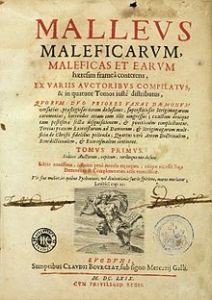
Referring to a popular Latin text that likely influenced King James text, Malleus Maleficarum (The Hammer of Witches) produced in 1487 in Germany, was so popular that by 1669, thirty editions had been published.

It contained among other things why women were particularly prone to satanic seduction, the answer – their weak character and voracious sexual appetite – a misogynistic, church-sanctioned sentiment which echoed throughout medieval witch panics.

Listening to her speak so knowledgeably on her subject in the two talks below, especially the historical context, makes me realise how much Tarbuck has held back, each chapter could easily have been a book. Her ability to narrow it down into something digestible to the everyday reader is exceptional.

Totally down to earth, yet open to the magic of being the silent observer, Alice Tarbuck introduces an enchanting perspective on connecting with nature, creating one’s own simple remedies from urban foraging, keeping and displaying little things one collects on nature walks, inventing spell-poems, (which could as easily be affirmations or prayers) and a little bit of ritual and divination to see one through various difficulties.

Witchcraft is, I believe, the practice of entering into relation with the world, of exerting your will in it and among it, and learning how to work with it in ways that are fruitful for yourself and the world.

The casual, engaging style is a pleasure to read and I couldn’t help but think what a privilege of the 21st century it is, to nonchalantly be able to refer to one’s passion and pastime as witchcraft, without threat of dire consequence. As Tarbuck reminds us, now that witchcraft and research into it is legal, those with an interest are able to reclaim the nuances that were lost during that terrible period of history that condemned women for their ways, opening ourselves up to the more than human environment that surrounds us.

“magic is the superpowerfulness of everything, just as it is” Sabrina Scott

Further Reading/Listening

Human Animal Transformation in Early Witchcraft – a video/talk by Dr Alice Tarbuck, Nov 2020
 
What the Witch Trials & Herecy was All About – Alice Tarbuck talks to Hannah Trevarthen at the Wigtown Book Festival
 
Witchcraft Workshops – for those with an interest in the history, ethics and practice of witchcraft, whether from a personal or a research-based point of view.
 

Purchase a Copy via UK Independent Bookshop

Elena Ferrante Shares 40 Favourite Books by Female Authors

As I’m currently reading her most recent novel, The Lying Life of Adults published in September 2020 and being a fan of many of her books to date, including My Brilliant Friend, The Days of Abandonment, Troubling Love and Frantumaglia, I was interested to learn thanks to the publisher Europa Editions that:

Elena Ferrante has compiled a list of novels close to her heart, all by women authors, and exclusively for Bookshop.org, the new alternative to Amazon for socially conscious shoppers wanting to support high street bookshops when they shop online.

Given the type of characters and narratives Elena Ferrante is known for, her stories usually set in or have a connection with the working class neighbourhood of Naples and concern female protagonists coming to terms with their situation, whether they are girls, young mothers, grieving daughters or an adolescent trying to make sense of the adult world, I thought it would be interesting to know which authors she gravitates towards, who she has been influenced by and being Italian, she is likely to have read books that might be outside the common anglo reading mainstream.

I’m sharing the list here as an easy reference for me to look at and will link any of the titles I have already read to my reviews. I have read 13 of the titles, though only reviewed six of them.

Elena FerranteI’ve also added the countries the author is associated with, either by birth and/or nationality, as I find that helpful, it being one of the criteria by which I decide whether to read a book or not – to avoid always reading works from the same cultural influence.


The list is quite Euro-American influenced, with only one African representation (or two if you count Doris Lessing), so while not quite as diverse as what I like to read, it’s an interesting exploration of the female pysche through female literature of the ages from those cultures represented.

I did also read that the list was limited by what is available in English and by what is available from the Bookshop, so there are titles that haven’t been shared because either they haven’t been translated into English or are not available. I wish they had been included because that might have sparked an even more interesting debate about the lack of availability of works in other languages and to hear the chorus of readers who might have helped persuade publishers to do something about that.

Juliana at The Blank Garden has more to say about that in her critique of the list (see the link to her blog post below), she is very widely read across languages, a wonderful reviewer and has read 28 of the titles. I’ll be referring to her favourites of Elena’s favourites as a further guide!

Elena Ferrante’s top 40 books by female authors

Americanah by Chimamanda Ngozi Adichie (Nigeria/America)
The Blind Assassin by Margaret Atwood (Canada)
The Enlightenment of the Greengage Tree by Shokoofeh Azar (Iran/Australia) translated by Anonymous
Malina by Ingeborg Bachmann (Austria) translated by Philip Boehm (German)
A Manual for Cleaning Women by Lucia Berlin (US)
Outline by Rachel Cusk (UK)
The Year of Magical Thinking by Joan Didion (US)
A Girl Returned by Donatella Di Pietrantonio (Italy) translated by Ann Goldstein
Disoriental by Négar Djavadi (Iran/France) translated by Tina Kover
The Lover by Marguerite Duras (France) translated by Barbara Bray
The Years by Annie Ernaux (France) translated by Alison Strayer
Family Lexicon by Natalia Ginzburg (Italy) translated by Jenny McPhee
The Conservationist by Nadine Gordimer (South Africa)
Fates and Furies by Lauren Groff (US)
Motherhood by Sheila Heti (Canada)
The Piano Teacher by Elfriede Jelinek (Austria) translated by Joachim Neugroschel
Breasts and Eggs by Mieko Kawakami (Japan) translated by Sam Bett and David Boyd
Interpreter of Maladies by Jhumpa Lahiri (US/India)
The Fifth Child by Doris Lessing (Zimbabwe/UK)
The Passion According to GH by Clarice Lispector (Ukraine/Brazil) translated by Idra Novey
Lost Children Archive by Valeria Luiselli (Mexico)
Arturo’s Island by Elsa Morante (Italy) translated by Ann Goldstein
Beloved by Toni Morrison (US)
Dear Life by Alice Munro (Canada)
The Bell by Iris Murdoch (UK)
Accabadora by Michela Murgia (Italy) translated by Silvester Mazzarella
Le Bal by Irene Nemirovsky (Ukraine/France) translated by Sandra Smith
Blonde by Joyce Carol Oates (US)
The Love Object: Selected Stories by Edna O’Brien (Ireland)
A Good Man Is Hard to Find by Flannery O’Connor (US)
Evening Descends Upon the Hills: Stories from Naples by Anna Maria Ortese (Italy) translated by Ann Goldstein & Jenny McPhee
Gilead by Marylynne Robinson (US)
Normal People by Sally Rooney (Ireland)
The God of Small Things by Arundhati Roy (India)
White Teeth by Zadie Smith (UK)
Olive Kitteridge by Elizabeth Strout (US)
The Door by Magda Szabò (Hungary) translated by Len Rix
Cassandra by Christa Wolf (Poland/Germany) translated by Jan van Heurck
A Little Life by Hanya Yanagihara (US)
Memoirs of Hadrian by Marguerite Yourcenar (Belgium/US) translated by Grace Frick

Further Reading

Critic of the List: Elena Ferrante’s Shopping Advice | Reading Project

Article, Guardian: ‘This is revolutionary’: new online bookshop unites indies to rival Amazon

Article, Guardian: List by pseudonymous author of Neapolitan novels includes Zadie Smith, Sally Rooney and several Italian classics


Atlantis, A Journey in Search of Beauty by Carlo & Renzo Piano tr. Will Schutt

Art Architecture Nonfiction

What an unexpected pleasure this was. I spent a week reading it, always looked forward to picking it up and loved the shared narrative between father and son as they travelled around the world on an Italian Navy Research ship, during 8 months.

They revisit the sites of Renzo’s architectural designs, awakening his memory of the creative process, the people he met with to understand their needs and that of the community his structures would serve.

A lifetime of work he was passionate about and given him a unique perspective and wisdom, not to mention the deep cultural immersion all those projects provided this now 80-year-old architect and father.

A Sea-Lover’s Journey

Renzo and Carlo set sail from Genoa one late summer day, and from the blurb, would have us believe they are :

guided by the ancestral desire felt by many explorers before them to find Atlantis, the perfect city, built to harbour a perfect society.

It is as much a conversation as a travelogue and one that takes place when 80 year old Renzo is still contemplating retirement, this revisiting of his projects and the reflection they invite, of inspiration and ideas, of listening and understanding, a quiet dissatisfaction his son will probe, and that scandal his early work (Beaubourg – the Centre Pompidou in Paris) provoked.

Sins of Youth
After the Paris adventure he spent years defending himself against people who feared they would put pipes up everywhere. Rogers suffered the same fate, a fate reserved for heretics in the Middle Ages.

“I see Beaubourg as a joyful urban machine, which inspires more than a few questions.”

design inspiration italy Renzo Piano colour water boats

Photo by Pixabay on Pexels.com

As Carlo questions and muses, he creates a narrative structure within which his father responds and reflects and by the end I can’t even say whose narrative I prefer, there is such a wonderful synergy and relation between the two, a rhythmic flow of thoughts and words.

Perhaps Carlo is able to dig deeper and pick up on certain gestures, more so than another interviewer might, because it is his father he knows so well, referring to him by many names throughout, the Explorer, the Constructor, the Measurer, the Old Man.

Does he call him the Philosopher or the Artist? I’m not sure, but it is clear to me that he is both, his subjects creativity, beauty and place.

A lover of words and speaker of three languages, he educates us in how the word beauty differs in Italian, French and  other languages, something that means good and beautiful, intrinsic in the essence of something. He reminisces with his staff on their collective purpose in a letter he writes them onboard, the day of his 80th birthday.

“The pursuit of beauty. The word is hard to articulate. As soon as you open your mouth, it flies off, like a bird of paradise. Beauty can not be caught, but we are obliged to reach for it. Beauty is not neutral; pursuing it is a political act. Building is a grand act, a gesture toward peace, the opposite of destruction.”

Shard Renzo Piano Architect Atlantis

Photo by Pixabay on Pexels.com

I found the entire book totally engaging, from start to finish; their journey and revisiting the building projects along the Thames and the Seine, in New Caledonia and New York, San Francisco and Osaka Bay and finally to Athens, providing just enough information and context to keep the narrative interesting and intriguing, with the addition of that element of humanity that only two people who know each other as well as these two could bring.

A light touch allows you, even at your most determined, to listen to others and seek to understand them. A heavy tread you’re better off without.
Lightness is key to understanding places, and, in that sense, an architect must inhabit the places where he works. I have been a Parisian, a Berliner, a New Yorker, a Londoner, a Kanak.

All the while remaining who I am.

I think an architect who does not recognize himself in the place he is building cannot capture its soul.

Further Reading

Renzo Piano Video : On the Shoulders of Giants – a wonderful, biographical interview with the Pritzker prizewinning Italian architect

Article (with photos): Les 10 projets les plus célèbres de l’architecte Renzo Piano by Marina Hemonet, AD Magazine – including one here in Aix-en-Provence (Le pavillon de photographie du Château La Coste)

Berlin Unorthodox Renzo Piano Architecture Potsdamer Platz

Photo by Esther on Pexels.com

Anecdote/Coincidence : Upon finishing the four part series Unorthodox this week, I watched the short film ‘The Making of Unorthodox’ intrigued by the storytelling, sense of place and adept characterisation it had evoked. It is filmed in Berlin and Williamsburg, but mostly in Berlin, where the Production Designer Silke Fischer, looking for a specific architectural look and feel to extend the metaphor of freedom, found a great location at Potsdamer Platz next to the Philharmonic.

Unbeknown to me, while I was reading Atlantis, I was also immersed in a series shot on location in one of his architecturally designed buildings.

N.B. Thank you kindly to the publisher Europa Editions for sending me a copy of the book.

Handiwork by Sara Baume

My first read of visual artist, sculptor and writer Sara Baume, I decided to read her work of creative nonfiction before trying her fiction (she has written two novels Spill Simmer Falter Wither and A Line Made By Walking).

I stumbled across this after reading the excellent A Ghost In The Throat published by the same independent Irish publisher Tramp Press, so I bought it hoping for a similar experience.

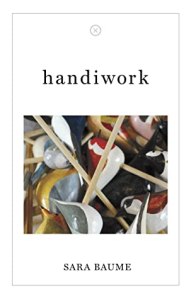
creative nonfiction bird migration songbirds review HandiworkHandiwork is a pure joy to read, it’s a small book, with often only a paragraph on a page, it has a beautifully thought out structure, referencing a number of different texts that the author, who is an artist, a craftswoman clearly holds dear and memories of her father and grandfather, as family members who worked with their hands.

Overall, it is an exploration of her process and influences, charting a daily practice, working with hands, expressing her creativity.

In The Craftsman, Sennett is a little grumpy about the prospect of confronting the question ‘What is art?’ Instead, he sets out his inquiry as: ‘We are trying to figure out what autonomy means – autonomy as a drive from within that impels us to work in an expressive way, by ourselves.’

After travelling Europe, she returns to her parents home and is greeted in her old room by a cacophony of objects she had assembled over many years, re-conceptualised out of available fragments, collected from her material environment.

a practice that Charles Jencks in the early 1970’s designated ‘adhocism’ – a method of creation relying particularly on resources which are already at hand.

Now she lives in a house with Mark, structuring her day between the mundane repetitive tasks of living, mornings dedicated to writing, and afternoons of making.

She considers herself a disciple of William Morris, artist, designer, writer, activist, socialist, who:

blue songbird Sara Baume Handiwork creative nonfiction

Photo by Andrew Mckie on Pexels.com

agreed that hands know what they must do without instruction, that the objects shaped by their ancestor’s phalanxes and phalanges and metacarpals for thousands of years remain in the memory compartment of their tiny brains, in the same way as birds know which way to fly without being guided or following a plotted course, without a book that provides detailed drawings and plans with parts and kits to accompany it.

This text is a place of reflection, aided by quotes from the various authors she refers to, relating to her own experience and insights and to the memory of her father and grandfather, one who worked with wood and the other with metal.

From my Dad I inherited a propensity for handiwork, but also the terrible responsibility, the killing insistence.

Photo by Pixabay on Pexels.com

Her medium is plaster and her subject – she is making, carving, painting and mounting birds. While reading about bird migration. And trying to entice local songbirds she sculpts to a feeder in the garden.

It is like a songbird itself, a small book that sings its tribute to those who craft and create and follow the intuitive inclination to fashion one thing out of another using their hands.

We must begin, William Morris said in his lecture ‘Useful Work v. Useful Toil’ to the Hampstead Liberal Club in 1884, ‘ to build up the ornamental part of life’

Highly Recommended.

‘This little book is a love-child of my art and writing practices, or a by-product of novels past and coming. It’s about the connection between handicraft and bird migration, as well as simply the account of a year spent making hundreds of small, painted objects in an isolated house’. – Sara Baume

Further Reading

Article: New book is a love-child — of my art and writing says Cork author by Colette Sheridan

Read An Extract or Listen on RTE – Handiwork by Sara Baume 2 May, 2020

You Don’t Look Adopted by Anne Heffron

Adoptee birth trauma adoptionAnne Heffron tells us it took her 93 days to write her book, but really it took a lifetime and she is to be commended for being able to complete it.

Being an adoptee and trying to write about the experience and the double edged sword of searching, is like choosing solitary confinement as a self help therapy. You go in thinking it would be a good idea and it can’t be all that hard just to recount your story, and then that being confronted with yourself, that isn’t your self, or is it, thing happens.

Writing is hard. Writing when you are adopted is even harder. If you think your voice is dangerous in its ability to hurt the ones you love, you learn to keep it quiet.

And then the real trouble starts.

It’s therapy without the therapist, so most will abandon it, that’s something adoptees know a lot about, abandonment, often without even realising it.

Photo by Tasha Kamrowski on Pexels.com

Heffron’s book is a narrative of threads woven together over those 93 days, but it is also a collection of anecdotes and reflections, she allows herself to digress and share experiences that have given her insights, that might disarm the reader who is looking for a chronological tale, unlikely if you are an adoptee.

Every adoptee’s experience is different, but there are common elements and sharing the experience and making it available like this is an important resource for other adoptees.

Adopted people aren’t much different from people who weren’t adopted, they just live with more questions. They are the human experience intensified.

Much of the book is about the relationship with her adoptive mother, the strong bond they shared and the utter frustration and anger she often felt towards her, the shock of realising that though she was her only daughter, she was a mother to her brothers as well.

MY HERO

prince charming white horse fantasy

Photo by Helena Lopes on Pexels.com

A few years earlier my half-brother, whom I had never met, got in his car and drove down from his temporary work site in San Francisco to come meet me.

He may as well have come cantering up on a white horse. Having someone claim you is the bomb.

Thoughts on adoption arrive unbidden, so it is understandable that this is a narrative of fragments, and yet put together as they are here, they provide a sense of the whole, not only an incredible achievement, but proof of existence.

Further Reading/Listening

Seven Reasons I Love Anne Heffron by Claire at How To Be Adopted

Adoptees On Podcast – adoptees discuss the adoption experience

My Reviews

A Girl Returned by Donnatella di Pietrantonio (fiction)

On Chapel Sands by Laura Cuming (memoir) – a daughter (art historian) researches her mother’s disappearance

Never Stop Walking by Christina Rickardsson (memoir) – raised in Sweden, a Brazilian adoptee returns home

An Affair With My Mother by Caitriona Palmer (memoir) – born in Ireland, an adoptee searches for her birth mother and looks into the Irish treatment of young unwed mothers

A Long Way Home (Lion) by Saroo Brierley (memoir) – an Indian boy lost on a train, adopted to Australia, retraces his journey to find his family

Journey Of The Adopted Self: A Quest For Wholeness by Betty Jean Lifton (nonfiction) –  adoptee, counselor and adoption-reform advocate

Blue Nights by Joan Didion (memoir) – an adoptive mother reflects

Why Be Happy When You Could Be Normal? Jeanette Winterson (creative nonfiction/memoir)

Red Dust Road by Jackie Kay (memoir) – poet, adoptee of English/Nigerian parentage, raised by Scottish communists

A Ghost In The Throat by Doireann Ní Ghríofa

There once was a woman who fell in love with a poem.

So begins a mini essay written for the Irish Times by the author Doireann Ní Ghríofa describing her almost life-long obsession with the Caoineadh Airt Uí Laoghaire, (The Keen for Art O’Leary), an epic Gaelic lament, published in 1773 by Eibhlín Dubh Ní Chonaill, upon learning of the brutal murder of her much desired husband, whose unborn child she carried.

In A Ghost In My Throat, she puts aside the documents and transcripts and in compelling, often poetic, multi-layered prose, talks us through the journey this poem has taken her on and carried her through, as she imagines but rarely fabricates the life of Eibhlín Dubh (whose full name translates to Evelyn Black O’Connell).

It is beautifully coherent and audacious, a feat normally given to scholars occupying dusty rooms in closed towers, firstly that the Caoineadh made it into print and endures, despite being the work of a woman; most who lived in the 1700’s, the 1800’s and even the early 1900’s have long since slipped into silence and out of print and secondly that Doireann Ní Ghríofa managed to pursue her research passion while pregnancy, motherhood and house-wifery claimed most of her hours.

Our Purpose Finds Us, Silencing the Naysayer(s)

Photo by Suzy Hazelwood on Pexels.com

More than a passion, the poem provided solace, company, offering mystery and a promise, one whose secrets would only be revealed if she trusted the process and closed her ears to the reverberating comment of the visiting public health nurse, who’d snooped through her folders while she was making tea.

‘Art O’Leary! Probably as close as we got to boy-bands, in my day.’ I try to mask my grimace.

‘Taking a night course, are we?’ I shake my head.

‘So what’s all this for then?’ My shoulders answer on my behalf, my whole body prickling crimson. She soon turns to scolding me about the baby instead: no feeding schedule, no set sleep routine, one would imagine with a fourth child a mother would be a little more, well…she lifts her brows and palms.

Though her words provoke tears, self-pity, anger and rage, they result in a resolute clarification of her purpose.

In my anger, I begin to sense some project that might answer the nurse’s query. Perhaps I’d always known what it was all for. Perhaps I’d stumbled upon my true work. Perhaps the years I’d spent sifting the scattered pieces of this jigsaw were not in vain; perhaps they were a preparation. Perhaps I could honour Eibhlín Dubh’s life by building a truer image of her days, gathering every fact we hold to create a kaleidoscope, a spill of distinct moments, fractured but vivid. Once this thought comes to me, my heart grows quick. I could donate my days to finding hers, I tell myself, I could do that, and I will.

A Female Text

Photo by freestocks.org on Pexels.com

This is something Doireann Ní Ghríofa has thought long about, years in fact. This poem and the absence of women in texts. The absence of women’s words. The difficulty in accessing the voice, the thoughts, the words, the life of women. Valuing their contribution, raising the importance of their passions and intellectual pursuits, that might valiantly sit alongside the domestic pursuits of raising children and keeping a home.

She is all those things, sharing them, giving them equal value and space on the page. A breastfeeding mother, a lover, a housewife, a poet, a reader, a writer, a medical student, a seer.

This is a female text, composed by folding someone else’s clothes. My mind holds it close, and it grows, tender and slow, while my hands perform innumerable chores.

This is a female text, born of guilt and desire, stitched to a soundtrack of nursery rhymes.

Commemoration in a Poem

Her research tells us that in the old Gaelic order poems were traditionally commissioned by taoisigh – who employed a (male) bard to commemorate an occasion or person in verse, whereas that attributed to women resides in their bodies, in song, in an oral or embroidered tradition. Some say this poem can not be considered a work of single authorship, referring to it as a collage, or folky reworking of older keens. This has our author looking up the Latin for text, to find it rooted in the word ‘texere‘ : to weave, to fuse, to braid.

the Caoineadh form belongs to a literary genre worked and woven by women, entwining strands of female voices that were carried in female bodies, a phenomenon that seems to me cause for wonder and admiration, rather than suspicion of authorship.

Photo by Pixabay on Pexels.com

Reading all she can find in libraries and online, in academic sources or otherwise, relating to her ghostly poet, Doireann Ní Ghríofa sees between and around the lines of texts, scanning for clues. An 1892 publication: The Last Colonel of the Irish Brigade: Count O’Connell and Old Irish Life at Home and Abroad, 1745-1833 details a stash of family letters belonging to Eibhlín Dubh’s brother Maurice, from which she is able to:

commit a wilful act of erasure, whittling each document and letter until only the lives of women remain. In performing this oblique reading, I’ll devote myself to luring female lives back from male texts. Such an experiment in reversal will reveal, I hope, the concealed lives of women, present, always, but coded in invisible ink.

There is so much in this book that I admire, that I connect to and could mention, but as I see the word count pass 1,000 words, I know I must stop and let you discover it for yourself. Within the first 50 pages I was hooked, highlighting lines, noting synchronicity’s, reliving heartbreaking experiences, recognising an obsessive desire to follow threads, reading, learning, writing while nurturing, mothering & creating. What a find this was!

Having finished it, I can say I absolutely loved it, it is one of my most scribbled in books, reading it over a weekend, I had to force myself to pause to make it last, a hot contender for my ‘Outstanding Read of 2020’ and a brilliant example of a poet with narrative storytelling ability turning to prose. Sad to be finished but happy with the promise the author makes in the last lines.

Highly Recommended

Further Reading

Irish Times : Doireann Ní Ghríofa: The woman who fell in love with a poem

thejournal.ie : ‘It’s so astounding that a woman can disappear to that extent’: Rediscovering the author of Ireland’s greatest love poem

Intimations: Six Essays by Zadie Smith

2020 Perspective Zadie SmithShort vignettes as Zadie Smith observes this particular moment in history passing, as she prepares to become one of those who returns, fleeing, always listening and observing others, sometimes in accordance with their uttered thoughts, at other times thinking she was, only to encounter her own subconscious bias.

Meditations by a Stoic

They open with the foreword in which she reveals she has been reading Marcus Aurelius’s Meditations for practical assistance and admits that she is no more a Stoic for having read it. Rather, she leaves that experience with two valuable intimations:

Talking to yourself can be useful.
And writing means being overheard.

I was intrigued to see what Smith had been talking to herself about and what she wished others to overhear, she is a mistress of eavesdropping and she is a Londoner and rider of the No.98, living/now leaving a country that turns many towards needing the benefits of meditation, though I can’t help but wonder if she would have gained more by listening to 21st century meditators such as Deepak Chopra, David Ji and Sharon Salzburg than Aurelius.

Writer’s and Their Reality

In Peonies, she dismisses writing as being creative, alleging that planting tulips is creative; inferring writing is control.

Peonies by Zadie Smith Tulips Intimations

Photo by Burak K on Pexels.com

Experience – mystifying, overwhelming, conscious, subconscious – rolls over everybody. We try to adapt, to learn, to accommodate, sometimes resisting, other times submitting to, whatever confronts us. But writers go further: they take this largely shapeless bewilderment and pour it into a mould of their own devising. Writing is all resistance. Which can be a handsome and even a useful, activity – on the page. But, in my experience, turns out to be a pretty hopeless practice for real life. In real life, submission and resistance have no real shape.

It was observing tulips that brought about this reflection, a few days before the global humbling began, providing a preview into the now common feeling of everyday, one she describes as a ‘complex and ambivalent nature of submission‘.

She saw tulips and imposed peonies, like the fiction writer she is.

Thoughts On Flowers and Self Care

As ever, Zadie Smith creates a space for the reader to think and affirm their own views, even if she does fill it with her own words and worries.

I was a little concerned by her reading habit in A Man With Strong Hands, though an avid reader myself, there are some times and places when it might be better to put the book down and allow the mind to rest, for this self-care activity she indulges, is one the few that allows one’s existential angst to cease, if only momentarily, for that weekly half hour she regularly gifts herself.

I am reminded that we have as much to learn, if not more in the act of mindful contemplation of flowers as we do in observing that less well understood creature of Nature, humanity.

Further Reading

New York Times: Zadie Smith Applies Her Even Temper to Tumultuous Times

Sex and Lies by Leïla Slimani

translated by Sophie Lewis (from French)

Reality bites.

Sex and Lies Leila Slimani MoroccoThe last nonfiction book I read was also set in Morocco (at the time referred to as the Spanish Sahara) written by a foreign woman living openly with her boyfriend, it couldn’t be more in contrast with what I’ve just read here – although Sanmao does encounter women living within the oppressive system that is at work in this collection.

In Morocco the ban on ‘fornication’, or zina, isn’t just a moral injunction. Article 490 of the penal code prescribes ‘imprisonment of between one month and one year [for] all persons of opposite sexes, who, not being united by the bonds of marriage, pursue sexual relations’. According to article 489, all ‘preferential or unnatural behaviour between two persons of the same sex will be punished by between six months and three years’ imprisonment’.

Leïla Slimani interviews women who responded to her after the publication of her first novel Adèle, a character she describes as a rather extreme metaphor for the sexual experience of young Moroccan women; it was a book that provoked a dialogue, many women wanted to have that conversation with her, felt safe doing so, inspiring her to collect those stories and publish them for that reason, to provoke a national conversation.

Novels have a magical way of forging a very intimate connection between writers and their readers, of toppling the barriers of shame and mistrust. My hours with those women were very special. And it’s their stories I have tried to give back: the impassioned testimonies of a time and its suffering.

Photo by Sharon McCutcheon on Pexels.com

In these essays Leila Slimani gives a voice to Moroccan women trying to live lives where they can express their natural affinity for love, while living in a culture that both condemns and commodifies sex, where the law punishes and outlaws sex outside marriage, as well as homosexuality and prostitution. The consequences are a unique form of extreme and give rise to behaviours that shock.

It’s both a discomforting read, to encounter this knowledge and hear this testimony for the first time, and encouraging if it means that a space is being created that allows the conversation to happen at all.

However, overall it leaves a heavy feeling of disempowerment, having glimpsed the tip of another nation’s patriarchal iceberg. We are left with the feeling that this is a steep and icy behemoth to conquer. Article 489 is not drawn from sharia or any other religious source, it is in fact identical to the French penal code’s former article 331, repealed in 1982. They are laws inherited directly from the French protectorate.

In a conversation with Egyptian feminist and author Mona Eltahawy about the tussle between the freedom desired and the shackles forced upon women, Eltahawy responded by using words attributed to the great American abolitionist Harriet Tubman, who devoted her life to persuading slaves to flee the plantations and claim their freedom.

She is meant to have said: “I freed a thousand slaves. I could have freed a thousand more if only they knew were slaves.” Emancipation, Eltahawy told me, is first about raising awareness. If women haven’t fully understood the state of inferiority in which they are kept, they will do nothing but perpetuate it.

Women are stepping out of isolation and sharing their stories everywhere, finding solidarity in that first step, sharing in a safe space, being heard, realising they are not alone.

May it be a stepping stone to change.

I read this book as part of WIT (Women in Translation) month and was fortunate to have been gifted it by a reader, since I participated in the gift swap, so thank you Jess for sending me this book, you can read her review of it on her blog, Around The World One Female Novelist at a Time.

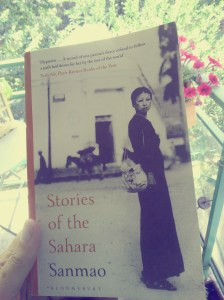
Stories of the Sahara by Sanmao

translated (from Chinese) by Mike Fu.

Literature Worthy of Translation

荷西 Sanmao Stories of the Sahara Echo ChenUsually when I come across a new book that sounds like my kind of read, meaning it is of cross-cultural interest, where a character (or person) from one culture (preferably not one I’m familiar with) encounters another, I’ll find others who’ve read it to discern whether it’s for me or not.
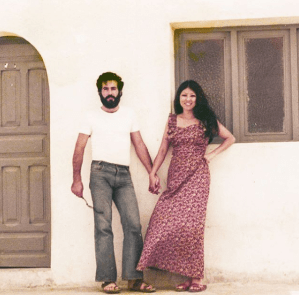

As soon as I saw the cover of Stories From the Sahara, I was intrigued. A fascinating and popular Taiwanese woman author of many books and essays, living in the Sahara with her Spanish lover; why has only one person I follow read this and why are we only hearing about this mysterious travel writer in 2020?

I don’t know the answer to my question (I suspect publisher’s had their radar tuned elsewhere in the past and perhaps the Anglosphere/Sinosphere head butting that takes place in the political arena affected their vision); but August is WIT (Women in Translation) month, a movement that’s gaining traction and interest, the genre and languages of books translated/published is widening and thanks to Eleanor at The Monthly Booking I bought this engaging and unforgettable read.

Thanks Mike Fu, who read the book as a young man and has translated it into English, he is now translating her next book, of their adventures in the Canary Islands.

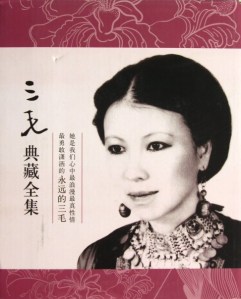
Who is Sanmao? Echo Chen? Chen Ping?

Sanmao 荷西 Stories of the Sahara

Sanmao & José, Al Aaiun, Sahara

In 1973, an independent young Chinese woman, born Chen Ping on 26 March 1943 left her family home in Taiwan, after a family tragedy, to travel to the Spanish Sahara with her friend José. They married in 1974. She had first lived in Spain in 1967 attending university in Madrid.

While in the Sahara she was inspired to write vignettes of her life there, they were published in Taiwan and China to great acclaim. The first volume debuted in May 1976.

Sanmao published more than twenty books, mostly semi-autobiographical essays, selling over fifteen million copies.

In a beautiful, moving essay, commemorating what would have been Sanmao’s 77th year, her niece Jessica Chen, remembers her Auntie, sharing something of the unique soul she was and the words of her grandparents, speaking of their tender, beloved daughter who, “had simply gotten off the train of life sooner than we expected”.

Grandpa and Grandma always said she was a special child with a gift from God, and the richness of her interior life was off-limits to others—unless she chose to let you in herself. Writing was the window she opened to the outside world. The people who understood this would naturally discover a path to her heart; those who didn’t could only stand at the window and gaze in from afar.

What was Sanmao doing in the Sahara?

Spanish Sahara Stories of the Sahara Sanmao

Photo by Taryn Elliott on Pexels.com

One day Sanmao was absent-mindedly flipping through the pages of National Geographic when she came across a feature on the Sahara. It was from that moment that she developed an obsession not just to visit, but to live there.

I only read it through once. I couldn’t understand the feeling of homesickness that I had, inexplicable and yet so decisive, towards that vast and unfamiliar land, as if echoing from a past life.

Arriving in Spain, she learned that 280,000 square metres of the Sahara at the time were designated Spanish territory. Her desire to go there deepened, torturing her with longing.

José went ahead of her, securing a job at a phosphate mine, found them a home, allowing her to fulfill that soul-whispered desire.

Book Review – Stories of the Sahara

Stories of the Sahara Sanmao Portrait I absolutely loved Stories of the Sahara, in its entirety and it will likely be my favourite nonfiction title of the year. It is so refreshing to read a travelogue by a woman from another culture and discover a writer beloved of Chinese and Taiwanese readers for decades.
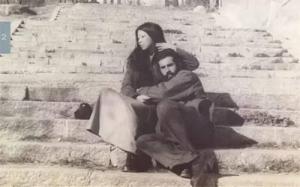
I almost couldn’t get over how tough it was during that initial period and thought often about heading back to Europe. Amid that endless stretch of sand, it was so hot during the day that water could scald your hands, while night was so cold that you had to wear a heavy coat. Many times I asked myself why I insisted on staying here. Why had I wanted to come to this long-forgotten corner of the world all by myself? As there were no answers to these questions, I continued to settle in, one day at a time.

I hadn’t expected it to be so funny, so many of her observations and the things requested of her made me laugh out loud. It’s unlike any other travel memoir I’ve read; here is a sensitive, empathetic woman, bringing a completely fresh set of eyes, to a place few of us will ever have dreamed of living.

At her first glimpse of the periphery of Al Aaiún, as they walk from the airport towards her new home, she is in awe seeing tents, bungalows, camels and herds of goats in the sand.

It was like walking into a fantasy, a whole new world.

The wind carried aloft the laughter of little girls playing a game. An indescribable vitality and joy can be found wherever humans exist. Even this barren and impoverished  backwater was teeming with life, not a struggle for survival. For the residents of the desert, their births and deaths and everything in between were all part of a natural order. Looking out at the smoke ascending to the sky from their homes, I felt that these people were almost elegant in their serenity. Living carefree, in my understanding, is what a civilised spirit is all about.

The combination of her naivete, determination and feminism – her refusal to be stopped from doing what she wants – create some of the most hilarious and alarming moments. Her kindness and frankness gain her entry inside the culture and landscape, providing insights few are capable of accessing. People trusted her – yes they often took advantage of her – but she was a willing participant. They provided rich literary material, clearly!

This is one of those books I don’t wish to share much of what is inside, I prefer to say, “Read this, it’s so good!”

I was intrigued by the obsession she had to go and live in the Sahara, I was delighted that she lived at the wrong end of the street in among the permanent locals, I loved her sense of adventure, how she overcame boredom in searing heat, getting in the car and driving for hours in the desert. But it is her frankness, her empathy and sense of humour that  make it an unforgettable read.

Reading Women in Translation

I picked this up to read for #WITMonth and it’s one of the best, that combination of travel to a new place, meeting local people through the perception of someone from a culture other than our own, priceless.

“Travel with an open heart, then bring back home the feelings that you find.” Sanmao

Further Reading

Colombia University: Interview with translator: Mike Fu

Words Without Borders, Essay by Jessica Chen (niece) March 2020: Sanmao’s Footprints: Remembering the Writer on Her 77th Birthday

New York Times Obituary: Overlooked No More: Sanmao, ‘Wandering Writer’ Who Found Her Voice in the Desert