
The Glass-Blowers (1963) is a work of historical fiction by Daphne du Maurier (1907-1989), based on members of her own family. It begins in 1844 and is largely set during the French Revolution.
A Louis XV engraved crystal tumbler made by the Bussons and passed down through the family was in Daphne’s possession at the time she wrote this book. The novel will celebrate its 60th anniversary in 2023.
An Ancestral Scoundrel
 Daphne du Maurier was a fifth-generation descendant of a master glassblower who moved to England during the French Revolution. Until the author began researching her French ancestry, the family believed they were descended from the French aristocracy and that their ancestor Robert Busson (1747 – 1811) had fled France and the threat of the guillotine during the French Revolution.
The truth was known by his sister and documented in letters now held in a special collections archive at the University of Exeter. Despite knowing these family stories were false, Daphne’s grandfather George continued to perpetuate the story of the aristocratic ancestors. Her father Gerald, who then grew up listening to these tales, also insisted they were true.
Daphne’s research concluded that far from being aristocratic owners of a glass-blowing empire, Mathurin Robert Busson was a failed artisan glassmaker who had escaped to England to avoid a French debtors’ prison. He took the name du Maurier to provide himself status, becoming Mathurin Robert Busson du Maurier.
“She was not at all snobbish,” says American academic Anne Hall, who lives in the Perche region and has made a study of the du Mauriers’ French connection. “So she was genuinely very proud when she found out her ancestors were craftsmen.”
The du Maurier name was a reference to the farmhouse where his family had lived and worked – Le Maurier, still around today in the Perche region, 190km (120 miles) south-west of Paris.
The Glass-Blowers, the novel
The novel begins with an introductory prologue, where Madame Sophie Duval’s daughter writes to her mother of an extraordinary surprise, in meeting a young man at a dinner party whose name was Louis-Mathurin Busson, that he had been born and raised in England of émigré parents.
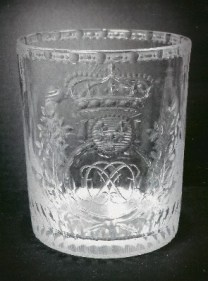
The Louis XV engraved crystal tumbler made by ancestors of Daphne du Maurier
Recognising the names connected to her mother’s family, she enquired of his father’s profession, only to be told he had been a gentleman glass-blower who had owned several foundries before the Revolution and that due to being part of the aristocracy it had been necessary for them to emigrate. He had told her of his father’s tragic death on returning to France in the hope of restoring his family fortunes.
“I asked if he had relatives. He said he believed not. They had all been guillotined during the Terror, and the château Maurier and the glass-foundries destroyed.”
Wondering if this could be her brother’s son, Madame Duval decides to go to Paris immediately to meet this young man and ascertain if he is indeed her nephew. When he shows her an artifact (pictured here) his father left him, there remains no doubt it is indeed her brother’s son. There is much the boy does not know about his father, Sophie then promises to write.
Family History Revealed In Letters
“Perhaps we shall not see each other again. I will write to you, though, and tell you, as best I can, the story of your family. A glass-blower, remember, breathes life into a vessel, giving it shape and form and sometimes beauty; but he can with that same breath, shatter and destroy it. If what I write displeases you, it will not matter. Throw my letters in the fire unread, and keep your illusions. For myself, I have always preferred to know the truth.”
Photo by Pixabay on Pexels.com
Chapter One and the novel begins as Madame Sophie Duval begins to write the story to her nephew, covering sheet after sheet of writing paper in her formal upright hand.
Sophie narrates the story, beginning with her parents’ marriage and the change in lifestyle for her mother as they joined the company of glassblowers to begin a new life together.
My father Mathurin and my mother Magdaleine, with his sister Françoise and her husband Louis Démére – a master glass-maker like himself -seated themselves in the front of the waggon beside the driver, and behind them, in order of precedence, came the various craftsmen with their wives: the souffleurs, or blowers, the melters, and the flux-burners. The stokers, along with the driers, came in the second waggon, and a crowd of apprentices filled the third, with my father’s brother Michel in charge.
Familial Relationships Explored
By the time Sophie was twelve years old her father would be managing four glass-houses. Her elder brother Robert was given responsibilities, but seemed to prefer going off to the town and his rapidly acquired airs annoyed his father. Robert didn’t wish to spend his life dealing with merchants and traders, he believed that by mixing in a more refined society, he would create contacts and obtain more orders that way.
Photo by M. Balland @ Pexels.com
The novel explores the different characters of the brothers, Robert always wanting to get ahead by making foolhardy gambles, putting the family business at risk, Pierre, the dreamer who spends ten years in Martinique, returns and surprises them all by buying a notary’s practice in Le Mans and an advocate for citizen’s rights, and Michel, afflicted with a stutter, the least expected to follow in his father’s footsteps, will become the natural leader.
Sophie is the most conventional, an observer of events, rarely becoming actively involved, her sister Edmé something of an activist, particularly in the years of the revolution.
‘The glass world was unique, a law unto itself. It had its own rules and customs, and a separate language too, handed down not only from father to son but from master to apprentice, instituted heaven knows how many centuries ago wherever the glass-makers settled—in Normandy, in Lorraine, by the Loire—but always, naturally, by forests, for wood was the glass foundry’s food, the mainstay of its existence.’
La Grande Peur, France During the Revolution
The novel loses some of its pace when it moves away from the family business towards the revolutionary era, a period of terror, when rumour is rife of marauding bands of men roaming the nearby forests, food prices becoming exorbitant and strikes and disturbances continually breaking out in Paris and the big cities. Talk of a new constitution, new laws, equal rights for all and the removal of privileged classes was everywhere.
‘How,’ I asked, ‘would having a written Constitution make any of us better off?’
‘Because’, answered Pierre, ‘ by abolishing the feudal system the power of the privileged would be broken, and the money they take from all our pockets would go towards giving the country a sound economy.
This seemed to me all in the air, like so much of Pierre’s talk. The system might one day change, but human nature remained the same, and there were always people who profited at the expense of others.
Clearly the novel was very well researched, which at times compromised the pace of the story. I did set it aside at one stage and took a while to get back to it, that said, it’s a novel that is best persevered with, pushing through the more dense political sections.
It is a fascinating story and an interesting family history, even if not quite the one that was handed down through one of the family lines. What family doesn’t have skeletons in its closets, secrets buried deep and unknown relatives popping up when least expected?
‘I was the only one to know my brother’s secret, and I kept it even from my husband.’
Further Reading
Article: Daphne du Maurier: Novelist who traced past to a French debtors’ jail by Hugh Schofield, BBC
Daphne du Maurier’s French Ancestry and her novel The Glass Blowers – article on The Daphne du Maurier website
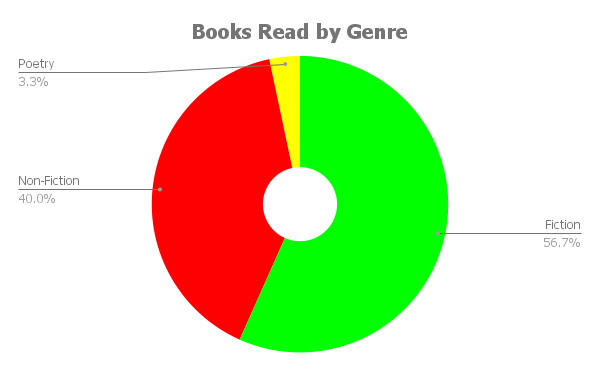
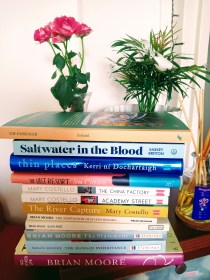 Though I read less than half the number of books of 2021, I did manage to read 30 books from 13 countries, a third Irish authors, thanks to Cathy’s annual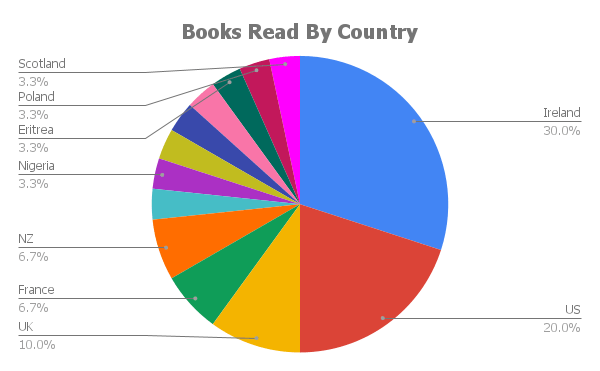




 Nora, A Love Story of Nora Barnacle & James Joyce, Nuala O’Connor (Ireland) (Historical Fiction)
 All About Love: New Visions, bell hooks (US)
 What My Bones Know, A Memoir of Healing from Complex Trauma, Stefanie Foo (US) (Memoir)
 My Father’s Daughter, Hanna Azieb Pool (UK/Eritrea) (Adoptee Memoir)
 Set in 1580’s Stratford, Warwickshire, the novel is about the meeting of two young people, their respective families, the life they create and the effect their twin children have on it.
 Maggie O’Farrell is a Northern Irish novelist, now one of Britain’s most acclaimed and popular contemporary fiction authors whose work has been translated into over 30 languages. Her debut novel After You’d Gone won the Betty Trask Award and The Hand That First Held Mine the Costa Novel Award (2010).
 I thought this was an excellent and exceptional novel, that I chose to read because it is too distressing and overwhelming to be bombarded with only the terrible news that is flooding us at the moment.
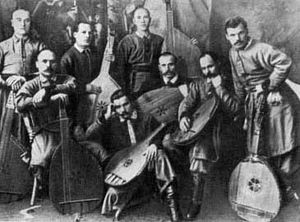 The first lines of the prologue are the collective voice of the
  Katya is a Boston based, American doctor, working with the wounded inside a temporary medical clinic at St Michaels monastery. She is an outsider, drawn to the country because she was orphaned there, but grew up in America with no connection to her birth country. Hers, like the author, is an outside perspective, one that wants to know, to connect, to understand.
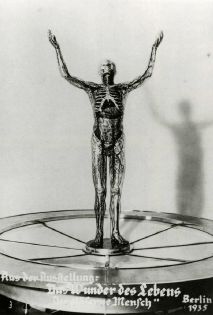 The novel begins with an epistolary narrative of letters written by Doktor Lenard Weber to his daughter Lotte in Frankfurt 1946, after the war has ended. He is telling his daughter how he first first met her mother, his wife Anna, at an exhibition of ‘The Transparent Man’, an installation that showed the inner circuitry of the human body.
 The second narrative voice comes from the imaginary diary of Frau Greta Hahn, the younger wife of the officer and begins in 1943 as she is packing up their lives in Munich, to move to a villa in Weimar, her husband having taken over as Administrator of the Buchenwald prison camp. He has told her and their young son Karl-Heinz how much they will love it there, being near a forest, a zoo, close to nature.
 Catherine Chidgey is an award-winning and bestselling New Zealand novelist and short-story writer.
 Being historical fiction, The Magician’s Wife became one of those books that I often put down to look up the historical characters, such as
  It becomes clear, that this particular série or group of invitees, are people whose influence might be required, to assist the ruler in his campaigns.
 An Immigrant Story

 I loved how this historical novel focuses on the lives of these women, Rue her mother May Belle and grandmother Ma Doe and the community within which they live, without allowing the narrative to stray over too far into the lives and homes of those who diminished their lives.
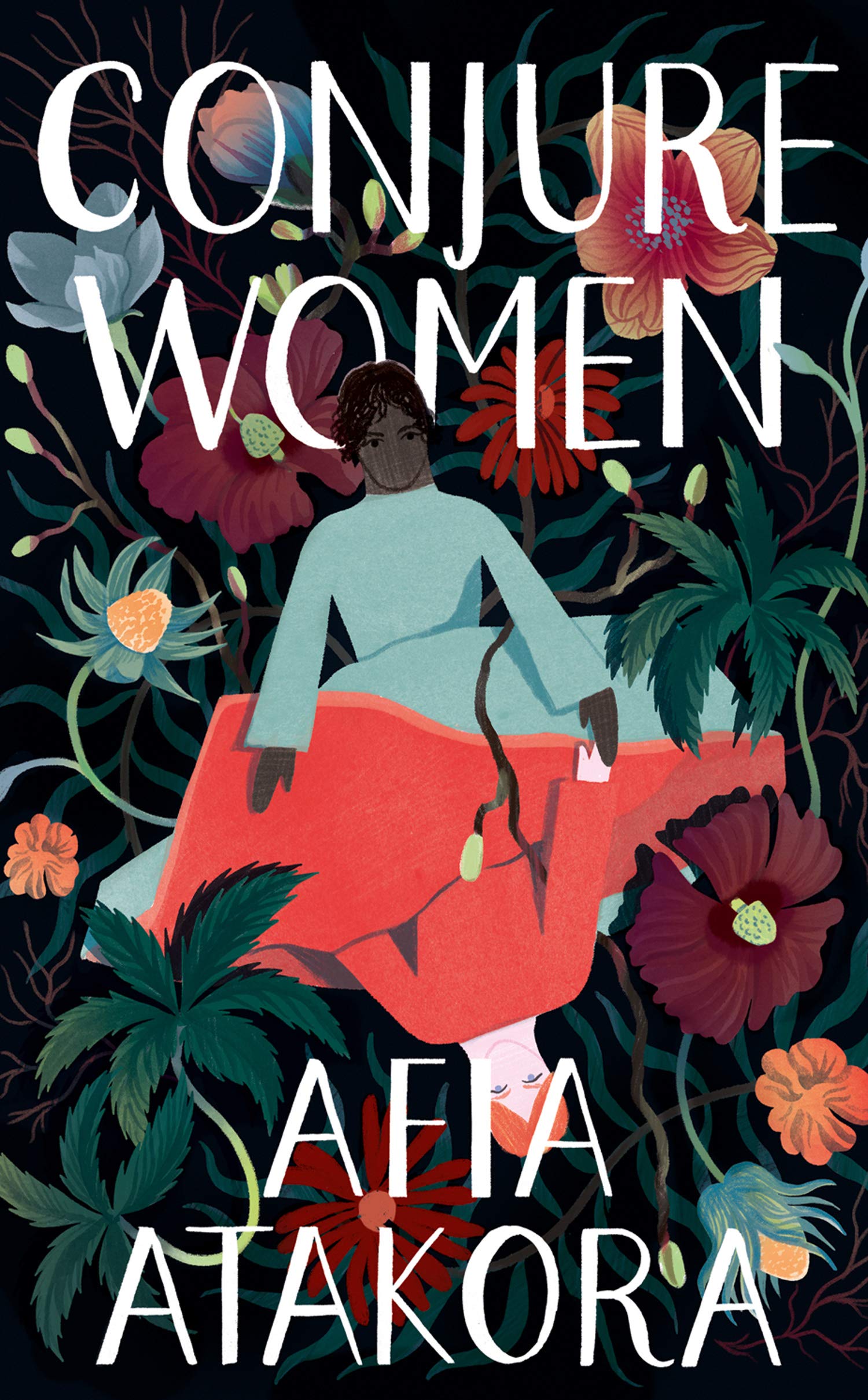 In May Belle’s time, one of the ways to effect a conjure was to make a doll that bore a resemblance to the person and if possible to access strands of hair to entwine with whatever material was used. Varina has porcelain dolls that Rue admires and is envious of, when she discovers her mother is making a doll that faintly resembles her, she pretends not to notice she has discovered it, and will mask even further her disappointment when she misreads its purpose.
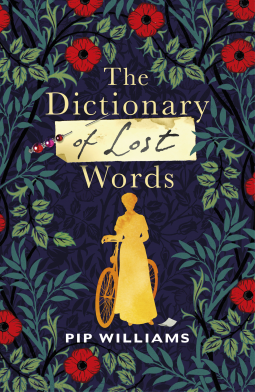 And so I dive in and find myself often using the dictionary feature on the kindle – yes there are a lot of lost words, or words that are no longer in common use, and one of the main words, and locations, the scriptorium had me confused right from the start – a tin shed where a few learned, self-important men are compiling the first edition of the Oxford dictionary? Even as I write these words, the spellcheck has underlined that word in red.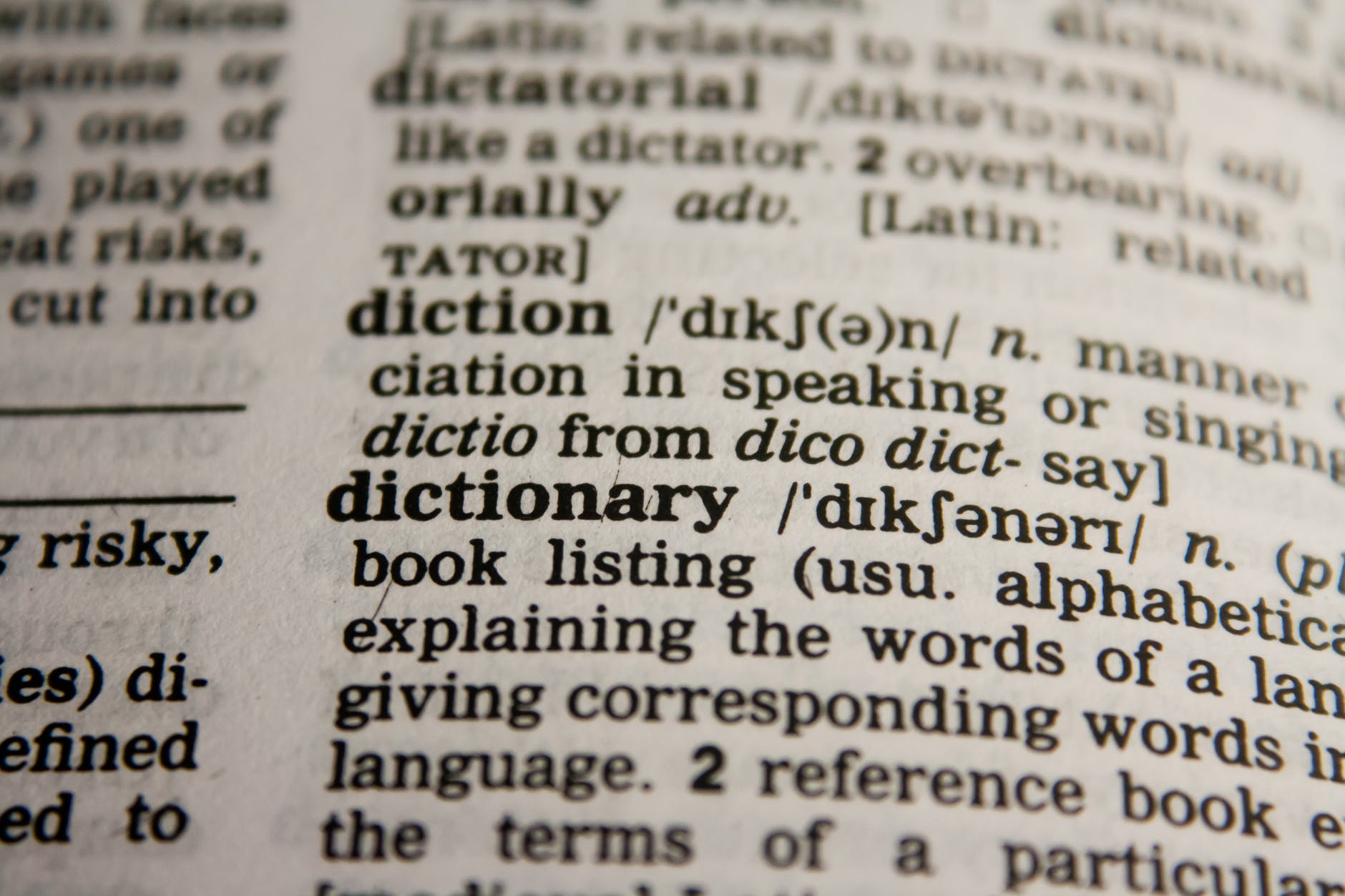
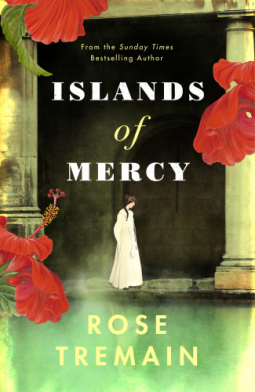 Set in late 1800’s Ireland, Bath, London and Borneo, this is the story of a community of people whose lives intersect in the town of Bath, a dual narrative of events concerning those who live there and the efforts of two men in Borneo with ambitions slightly at cross purposes.

 Word by Word