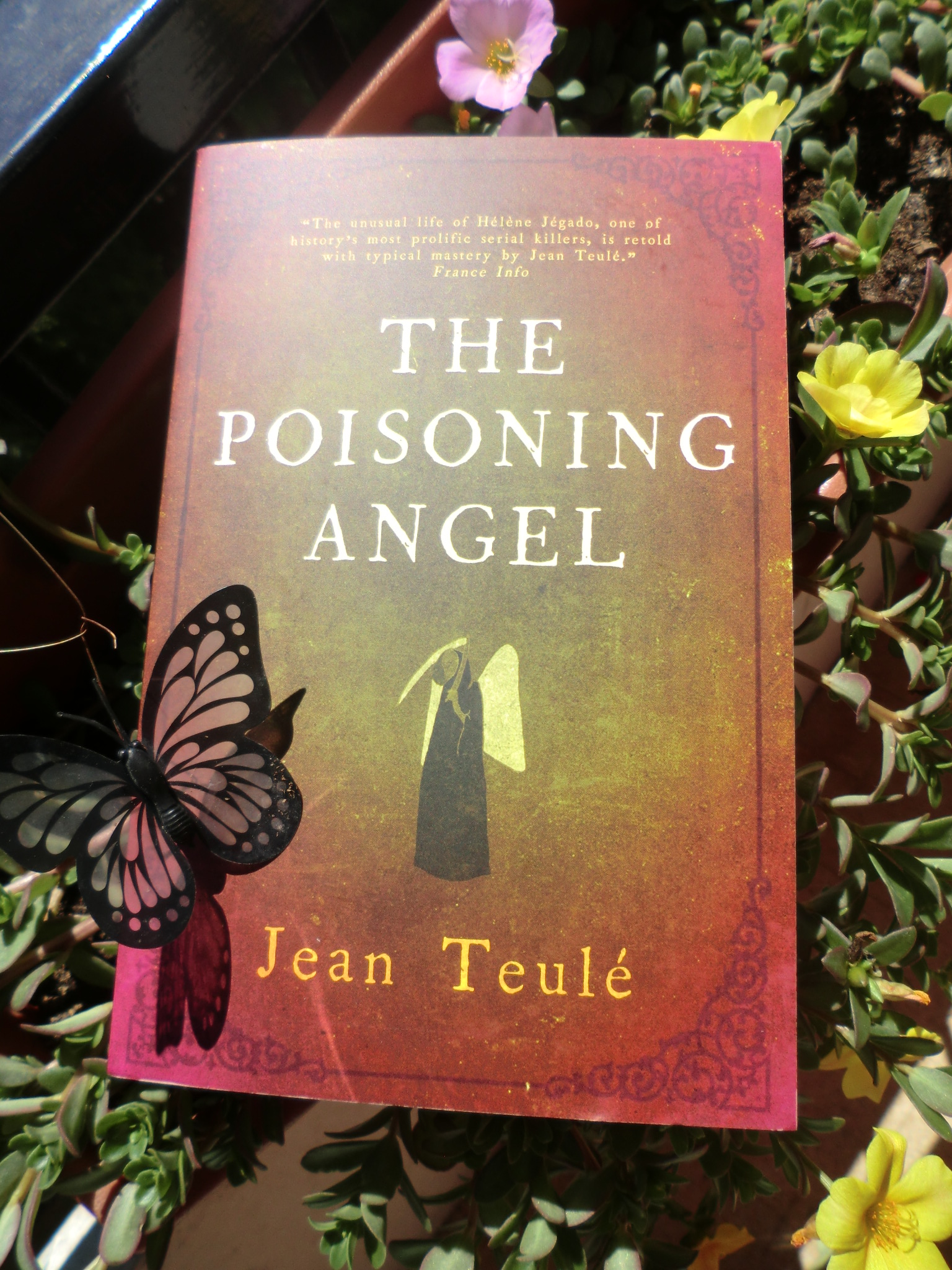
The Poisoning Angel by Jean Teulé tr. by Melanie Florence #TranslationThursday

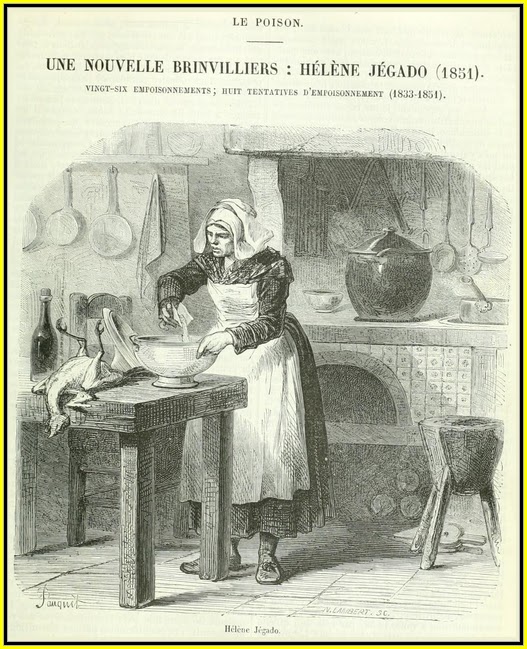
Poisoning (3)A real-life character tour de force from French author Jean Teulé featuring a famous female serial killer from the nineteenth century.

Hélène Jégado is warned about and thus introduced to the deathly effects of certain plants and flowers from a young age, she learns what to watch out for, including their superstitions.

‘Maman, who’s this Ankou you’re always talking about?’

Her mother tells her he is Death’s worker, the girl becomes obsessed with this idea, and makes it her vocation to fulfill his wishes, the only way she knows how.

Beginning with the demise of her very own maman.

Ankou‘The Ankou wears  a cloak and a broad hat,’ said Anne Jégado, sitting down again. ‘He always carries a scythe with a sharpened blade. He’s often depicted as a skeleton whose head swivels constantly at the top of his spine like a sunflower on its stem so that with one glance he can take in the whole region his mission covers.’


A story of the travels and inclinations of a girl who after poisoning her mother, travels from household to household as a domestic cook unable to restrain herself from eventually succumbing to the desire to add that little something extra to the recipe, her speciality the infamous soupes-aux-herbes.

Her deathly intent, seemingly existed without malice or evil inclination, more of an addiction, a calling, a macabre loyalty to that voice in her head, the legend of Ankou, death’s helper, leading her on, guiding her towards the next victim.

Each chapter begins with a small map of the Breton region, indicating her journey, where she will travel to next, until finally, very much later, she is confronted and must face her accusers.

Macabre, yet told with an element of detachment that stops it from being sinister. Entertaining and fascinating, a little insight into another era and a moment of unforgettable history in the north of France.

Jégado

Note: This book was an ARC (Advance Reader Copy) kindly provided by the publisher Gallic Books.

Segu by Maryse Condé tr. by Barbara Bray

As I have been on something of a reading journey through Maryse Condé, I want to capture a little background leading up to how she came to write this masterpiece of historical fiction, set in a time of major change in this part of Africa where her ancestors came from.

Background

 Maryse Condé grew up in a large black bourgeoise family in Guadeloupe, well-educated, with regular family visits to Paris, in fact her parents felt French and were surprised when people they deemed of a lesser status than they, (like Parisian cafe waiters) commented on how well they spoke French, in a patronising way.
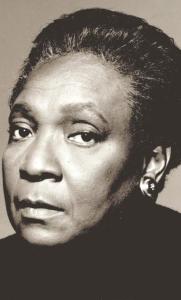
Maryse Condé

Maryse Condé

Maryse Condé was the youngest of eight children, her mother married an older, financially and professionally stable man, she was a formidable teacher, a staunch, authoritative force to be reckoned with.

She died when Maryse was 14 and it wasn’t until years later that Condé began to question why her mother had been the way she had been with her and others, wondering what unseen forces had been pushing from within. this led her to research her grandmothers story, which she published as the novel Victoire, My Mother’s Mother (reviewed here).

Her own childhood she writes about in the beautiful set of vignettes, autobiographical essays collected in Tales of the Heart, Stories from My Childhood (reviewed here).

What she discovered in researching her mother and grandmother’s lives was a history of struggle, of single, compromised women, forced by the abuses inflicted upon them – for which they were harshly judged, though little more was expected of them – to raise their children alone and make do as best they could.

While Condé’s mother was fortunate to have been gifted the opportunity to acquire an education, it was a favour she wanted little or nothing to do with, never sharing the reasons  or people behind it, for her mother Victoire, had been the open mistress of her employer, a friend of his wife, a situation her daughter detested and determined to remove herself far from.

Embarking on her own education, the young Maryse Condé, discovered that though she’d had the best education possible, enabling her to find success in France and Guadeloupe, she learned little about her own history or that of  her people. It was a gap in her education she couldn’t live with, that she wished to fill and it sent her off on a historical pursuit to understand both her maternal history and the voyage of her ancestors.

HeremakhononHer novel Heremakhonon(1976), which I’ve not yet read, is a semi-autobiographical story of a sophisticated Caribbean woman, teaching in Paris, who travels to West Africa in search of her roots and an aspect of her identity she has no connection with.

It is an insightful and somewhat disappointing experience, however for Maryse Condé personally, it was a springboard to the research and work that would follow, as her subsequent novels explore issues of race, gender and culture in a variety of historical periods and locations.

From this context, we come to what is considered a significant and radiant accomplishment, Segu (1984), set in the 19th century Kingdom of Segu (contemporary Mali), entering the soul of the African continent, at a point of prophetic enlightenment, as multiple forces and influences enter into the lives of those, who until now have known great spiritual power and authority.

Review

SeguIn 1797, the kingdom of Segu is thriving, its noblemen are prospering, its warriors are prominent and powerful, at their peak. 

Their people, the Bambara are guided by story-telling griots and divining priests, their lives ruled by the elements and tradition. However their visions fall short in preparing their followers for what is to come.

From the East, religion revolutions have spread Islam across two-thirds of West Africa; from the West, despite laws passed to stop it, the slave trade continues to flourish, and from within merchants make new demands for tropical goods, developing legitimate commerce.

Segu follows the life and descendants of Dousika Traore. He is the king’s most trusted advisor and the fate of his four sons epitomise the challenges that threaten to tear their family and society apart, in this historical turning point of African history. 

Dousika falls out of favour with the King and his son’s each go off in search of adventure outside the kingdom, where they discover quite a different perception of their people and their race.

Tiekoro, renounces his people’s religion, travels North to become a religious scholar and embraces Islam. He is by turn revered, scorned, returns to his home and becomes respected. However his position is always in flux and the balance of power between peoples and their associated beliefs are continuously challenged, he falls in and out of favour.

Siga, initially accompanies his brother and must survive in the same town, but without the introductions his brother has received to help him, he retains his belief in the Bambara gods, defending tradition and becomes a merchant. Although he was born on the same day as Tiekoro, his mother was a slave, so he must accept a less ambitious, less well-connected future.

Naba, is snatched by slave traders and sold and somehow ends up as a slave on a plantation in Brazil. He escapes, only to live on another plantation, a kind of free slave, to be near the woman he loves, whose children will reconnect with the family through a series of coincidences.

Malobali, the youngest, could no longer bear to listen to his older prodigal brother preaching, storms off one day in contempt, never to return. He becomes a mercenary, spending a period of time in a makeshift army, eventually converting to Christianity to improve his chances and has an encounter with the spirit of one of his brothers.

Based on actual events, Segu transports the reader to a fascinating time in history, capturing the earthy spirituality, religious fervour, and violent nature of a people and a growing nation trying to cope with jihads, national, tribal and family rivalries, racism and suspicion, amid the vagaries of commerce.

It shines a light on the impact of cross tribal marriage and partnership, of slavery, both that perpetuated by the Europeans and from within the African continent. The role of the son and the daughter, the rules of marriage, the perceptions of religion, the rise of Islam, the practices of fetishists and superstitions of their followers. The importance of relaying history through the storytelling griots, an inherited role, passed down from family member to family member.

Intuition

Just as with Condé’s previous work, here too there is communication and connections between family members not present, whether alive or manifesting as departed ancestors, they enter via dreams, intuition, providing guidance and reassurance. The presence and guiding voice of ancestors and the reincarnation of souls is important, as is the effect of love/lust on each of them.

As with the best of historical fiction, Segu takes us through a period of significant change, by engaging the reader with a family and its members, its traditions and those who wish to rebel against them, the will to modernise, to make their way forward in a world that is rapidly changing.

It engagingly portrays the balance of power and perceptions between people from different ethnic groups, where one is judged on everything except character. We encounter historic family feuds, feuds between peoples, religion and the rise of Islam, fetish priests, slaves, concubines and nobles, a complex society.

It was a deliberately slow read for me, but at the same time riveting, a book that scratches at the surface of a significant and fascinating subject and does wonders to assist in helping that era and people become more understood.

Buy Segu by Maryse Condé via Book Depository

Victoire: My Mother’s Mother by Maryse Condé tr. Richard Philcox

Maryse Condé is the author I discovered on the Man Booker International long list, the author that stood out for me, even if she didn’t win the prize. Since discovering her, I have read and reviewed the book she recommended for those wishing to discover her work, Tales From the Heart: True Stories From my Childhoodvignettes of her life growing up as the youngest and 8th child of a civil servant (who had been a school principal when her mother married him) and school teacher in a black bourgeoise family.

I decide to follow this up with another tale Victoire: My Mother’s Mother, though publishers label it as fiction, it is based on the life and facts of her grandmother. Victoire was an illiterate, white skinned woman she never met, who worked as a highly reputable cook for a white Creole family, the Walbergs, a connection that her mother Jeanne, though raised, supported and educated by this family, appeared to reject.

VictoireMaryse Condé wrote this account in a desire to learn more of her family history, a quest that began by researching the life of Victoire Elodie Quidal, speaking to a lot of people and a project that would take three years to complete.

When she questioned her mother Jeanne, a woman with no discernible palate, incapable of boiling an egg, she was shocked to learn her grandmother had been a cook.

‘And she didn’t teach you anything, not even one recipe?’ She continued without answering the question. ‘She first worked in Grand Bourg for the Jovials, some relatives of ours. That ended badly. Very badly. Then …then she migrated to La Pointe and hired out her services to the Walbergs, a family of white Creoles, right up until she died.’

Maryse wanted answers, but that was as much as her mother would share, they never resumed the conversation, the years passed by, in a kind of chaos, however that conversation never left her curious mind and her grandmother began to seep into her imagination.

Sometimes I would wake up at night and see her sitting in a corner of the room, like a reproach, so different to what I had become.

‘What are you doing running around from Segu to Japan to South Africa? What’s the point of all these travels? Can’t you realise that the only journey that counts is discovering your inner self? That’s the only thing that matters. What are you waiting for to take an interest in me?’ she seemed to be telling me.

Victoire’s mother Eliette was a twin who died in childbirth at the age of fourteen. More than the shock of her pregnancy and sudden death, was the appearance of a child with clear eyes and pink skin. No one was aware of her having crossed paths with a white man, there were no whites in La Trielle where she lived except priests and at one point a garrison of soldiers, who’d been training in the area, before being despatched back to France.

Eliette’s mother Caldonia raised Victoire and became close to her, when most people were wary of her with her too white skin and transparent eyes. The only education she received was religious and at the age of 10, the Jovial’s requested she come and work for them in the kitchen. Given only the thankless tasks, she observed the others and began to acquire the culinary skills she would become so well-known for.

Obtaining a position as cook for the Dulieu-Beaufort family was a turning point in her life, perhaps even more so than finding herself pregnant at 16-years-old, for in this family she would meet her lifelong friend Anne-Marie, her same age, outraged at having been married off to Boniface Walberg, Victoire’s future employers and the beginning of a mysterious and enduring relationship, one that set people talking and would be seen by her daughter Jeanne (Maryse’s mother) with utmost disapproval.

Apart from a brief period when Victoire fell in love with another, causing a period of separation from her daughter, and a significant turning point in their relationship, she would stay loyal to the Walberg’s all her life. Though she could neither read or write, she accepted her life, despite suffering the disapproval of her unforgiving daughter Jeanne, who would obtain an excellent education and position, marry a man twenty years her senior, removing all risk of insecurity that she’d observed in her mother and previous generations, determined to avoid a similar fate.

In an interview with Megan Doll, in Bookslut Maryse Condé explains her desire to write about her grandmother:

Maryse Condé‘The story is, of course, about my grandmother but the real problem was my mother. I lost my mother when I was very young — fourteen and a half. And during the short time that I knew her I could never understand her. She was a very complex character. Some people — most people, the majority of people — disliked her. They believed she was too arrogant, too choleric. But we knew at home that she was the most sensitive person and I could not understand that contradiction between the way she looked and the way she actually was. So I tried to understand as I grew up and I discovered that it was because of a big problem with her own mother. She seems to have failed; she had the feeling that she was not a good, dutiful daughter. I had to understand the grandmother and the relationship between my mother, Jeanne, and her mother, Victoire, to understand who Jeanne was, why she was the way she was, and at the same time understand myself.’

Condé also finds a connection between her and Victoire through their creativity, her grandmother’s through her renowned cuisine, Condé’s through her writing. At times she almost appears to channel her grandmother, as she senses what she may have been thinking or why she reacted in a certain way,  connecting with this mysterious woman who was so different to the mother she knew, a woman equally misunderstood by the community around her.

This was the perfect follow-up to Tales of the Heart and an intriguing look into the impact of circumstances of birth of three generations of women, how the past constantly threatens and can mock one’s position in the present, somewhat explaining Jeanne’s instinct to distance herself from her illiterate mother while fulfilling her ambitions and then her guilt at having treated her mother badly, when she only wanted the best for her.

The two books I have read were translated from French into English.

The President’s Hat by Antoine Laurain

The President’s Hat is the first book of Antoine Laurain’s that was translated from French into English by Gallic Books. It appears that three translators were used for the different voices.

Daniel Mercier voiced by Louise Rogers Lalaurie

Fanny Marquant and Bernard Lavallière voiced by Emily Boyce

Pierre Aslan voiced by  Jane Aitken

In February, Gallic Books sent me a copy of his second translation The Red Notebook, which I devoured immediately and adored. Click on the link to read my review.

Thanks to that review where I indicated a wish to read The President’s Hat, Owen at The Carrot Cake Diaries sent me his copy and I returned the favour by sending him one my all time favourites, Martin Booth’s The Industry of Souls.

The President’s Hat is just as brilliant in its light-hearted uplifting way. It is the story of what happens to the people beginning with Daniel Mercier who encounter a black hat with the letters F M embossed in gold lettering inside the rim, when it is left on a restaurant seat by the former French President François Mitterand. Daniel is the first person seized by a compulsion to covet the hat and wear it until he too will leave it behind and the adventure moves on to the next person.

black hat

Each person who encounters the hat, is touched by it sufficiently to act in a way that will have a significant impact on their lives, thus taking the reader on an entertaining journey across France and into Venice in the eighties via gifted storytelling.

Although he appears only very briefly in the story, it is in a way a tribute to the man who was a popular President in the 1980’s, who ruled from 1981 to 1995 and in his last address to the people said:

“I believe in the forces of the spirit, and I won’t leave you.”

He died one year later.

mitterrand tranquille

Impossible to put down, uplifting and a joy to read, it is wonderful to come across one of those ‘turn-to’ authors when in need of a literary pick-me-up or just a fun read!

Tales From The Heart, True Stories From My Childhood by Maryse Condé

I came across Maryse Condé recently via the Man Booker International Prize 2015 list of 10 nominated authors. She is third from the left in the picture below.

FinalistsNot a book prize as such, it is an award conferred on an author who has a significant body of published work, regardless of the original language it was written in, though some of it must have been translated into English.

It is from such long lists the gems are found I say, and having read about all 10 thanks to this excellent Interview: The Finalists Speak in The Guardian, I spotted my potential winner immediately. A winner in the sense that I intend to read a few of their books. The Indian writer Amitav Ghosh was the only author I’d read on this list.

One writer jumped out at me straight away and I pursued her works with little consideration for the pending award result. Maryse Condé didn’t win the prize, the Hungarian writer László Krasznahorkai did, a writer whose books intellectuals rave about, but who I’m not sure I’m ready for yet.

Tales Maryse CondéSo I took Maryse Condé’s advice and started by reading this slim volume of essays of her childhood in Guadeloupe, Tales From the Heart, True Stories From My Childhood.

She takes us right back to the beginning, to the day of her birth. Being the youngest of 8 children, the family possessed an extended collective memory and she was fortunate to have heard the story of her birth from other perspectives.

Her appearance was both a source of pride and shame for her then 43-year-old mother and 63-year-old father, proud that her body remained robust enough to support the creation of a child and shame that it publicly displayed evidence of their continued indulgence in carnal pleasures.

The first chapter Family Portrait describes her parents relationship with France:

“For them France was in no way the seat of colonial power. It was truly the Mother Country and Paris, the City of Light that lit up their lives.”

World War II wasn’t considered dark on account of all the dreadful atrocities that occurred:

“but because for seven long years they were deprived of what meant the most to them, their trips to France.”

She recounts an anecdote of a waiter in a café complimenting the family on their excellent French pronunciation, to which her parents felt indignant, considering themselves just as French as a Parisian waiter, even more so because of their higher education, manners and regular travel.

Not understanding why it mattered so, she asked her brother Sandrino:

“Could he explain my parents behaviour?” to which he replied “Papa and Maman are a pair of alienated individuals,”

a mysterious word that would rest a long time in her consciousness until she came to understand it. She realised that not only did they take no pride in their African ancestry, they knew nothing of it, however:

“They believed they were the most brilliant and most intelligent people alive, proof positive of the progress achieved by the Black Race.”

Maryse Condé

In their neighbourhood all the mothers in their circle held a profession and with it contempt for the manual work they believed had been the undoing of their own mothers. They employed a servant who, though she raised 6 children of her own would begin work at 5am to take care of the needs of the family.

We meet her best friend Yvelise, two girls who did everything together, their friendship almost destroyed by the unfortunate intervention of one of her teachers, causing a temporary rupture.

Maryse’s mother Jeanne, knew the life she didn’t wish to lead, nor her children either, she had succeeded in breaking the cycle endured by her mother and grandmother and a good education was key (and perhaps being married to a successful and much older husband). Jeanne was a school teacher, revered and feared in equal measure by those around her. Her eldest son Sandrino and her youngest child Maryse the only two children who weren’t afraid to stand up to her, the others too terrified to challenge her.

On her birthday, her favourite pupils recited compliments, gave her roses, her husband bought her jewellery and the day would culminate with a family play, a short piece of theatre written themselves, in her honour.

‘Beneath her flamboyant appearance, I imagine my mother must have been scared of life, that unbridled mare that had treated her mother and grandmother so roughly…Both of them had been abandoned with their “mountain of truth” and their two eyes to cry with.’

10-year-old Maryse asked if she could read one of her compositions for her mother’s birthday.

‘I had no idea what I wanted to write. I merely sensed that a personality such as my mother’s deserved a scribe.’

If a book of essays can reach a crescendo, this is the moment when we reach it. The moment when Maryse learns that not all lessons come from one’s parents and school teachers, some come from life itself and often when we least expect it.

In the chapter School Days , she is at school (lycée) in Paris when her French teacher asks her to present to the class a book from her island. It is a watershed moment.

‘This well intentioned proposition, however, plunged me into a deep quandary. It was, let us recall, the early fifties. Literature from the French Caribbean had not yet blossomed. Patrick Chamoiseau lay unformed in his mother’s womb and I had never heard the name Aime Césaire. Which writer from my island could I speak about? I resorted to my usual source: Sandrino.’

Sugar Cane Alley

Sugar Cane Alley

Sandrino introduces her to to a treasure. La Rue Case-Negres (Black Shack Alley) by Joseph Zobel and his hero José Hassan. It was made into an award-winning film titled Sugar Cane Alley.

It was her first introduction to a world no one up until that moment had ever mentioned; a world that highlighted slavery, the slave trade, colonial oppression, the exploitation of man by man and colour prejudice.

‘I was scared to reveal how José and I were worlds apart. In the eyes of this Communist teacher, in the eyes of the entire class, the real Caribbean was the one I was guilty of not knowing.’

These glimpses into the more significant and memorable aspects of childhood that shaped the author Maryse Condé are insightful, engaging and honest. Just as her consciousness is awakened, the vignettes finish and leave the reader desperate to know more.

I had intended to read this volume over time, but once I started reading I couldn’t stop, it is almost like reading a coming-of-age novella and at its conclusion, the writers fiction will begin. For Condé’s first novel Hérémakhonon is about a character raised in Guadeloupe, educated in Paris, who then travels to Africa in search of a recognisable past, just as she did.

‘Veronica has spent her childhood in Guadeloupe and, after a period as a student in Paris, wants to escape that island’s respectable black bourgeoisie, which she regards as secretly afraid of its own inferiority. She travels to an unnamed West African state and, while there, seeks an authentically African past with which she will be able to identify.’

Tales From The Heart is an excellent read and an intriguing introduction to the writer and her influences and will certainly make you want to read more of her work. I am very happy I have these three novels on the shelf to follow-up with only I am missing that debut novel which I really want to read now too! Very highly recommended.

Literary Works of Maryse Condé

My Other Reviews

Victoire, My Mother’s Mother 

Segu

The Story of the Cannibal Woman

A Season in Rihata

Click Here to Buy a book by Maryse Condé


Reader for Hire by Raymond Jean tr. Adriana Hunter

CIMG7184From the 2015 theme Chance Encounters: Meeting the Other comes another novella from Peirene Press, translated from French, Reader for Hire (La Lectrice) by Raymond Jean, translated by Adriana Hunter.

The first book in the series was Finnish author Aki Ollikainen’s White Hunger, a chilling tale of the necessity of abandonment to survive, when leaving behind what seems like certain death is replaced by a journey towards what is a less certain but equally probable demise, trying to escape the famine of 1867 Finland, heading for St Petersburg on foot through the snow.

This second book Reader for Hire tells the story of thirty-four year old Marie-Constance who is married, childless and unoccupied. She still regularly visits one of her literature professors at the university where she failed to complete her studies, but otherwise appears to possess little motivation to change her life or find a job.

One day a friend makes a suggestion that she at first considers outlandish, however with nothing better to do, the idea sticks and despite her general lethargy for being proactive, acts on it.

“You have a wonderful voice, it’s silly not to do something with it. A woman really needs an occupation these days…When we were at the Conservatoire you showed such talent… Why don’t you put an ad in the papers offering to read to people in their own homes?”

The man at the newspaper agency tries to discourage her, attempting to enlighten her as to what she may be exposing herself to, without being so direct to describe his exact misgivings, wishing to warn her of the kind of response she might attract, suggesting she remove the words ‘young woman’ and replace them with ‘person‘, a recommendation she rejects vociferously and thus proceeds with the advert offering her services as a reader.

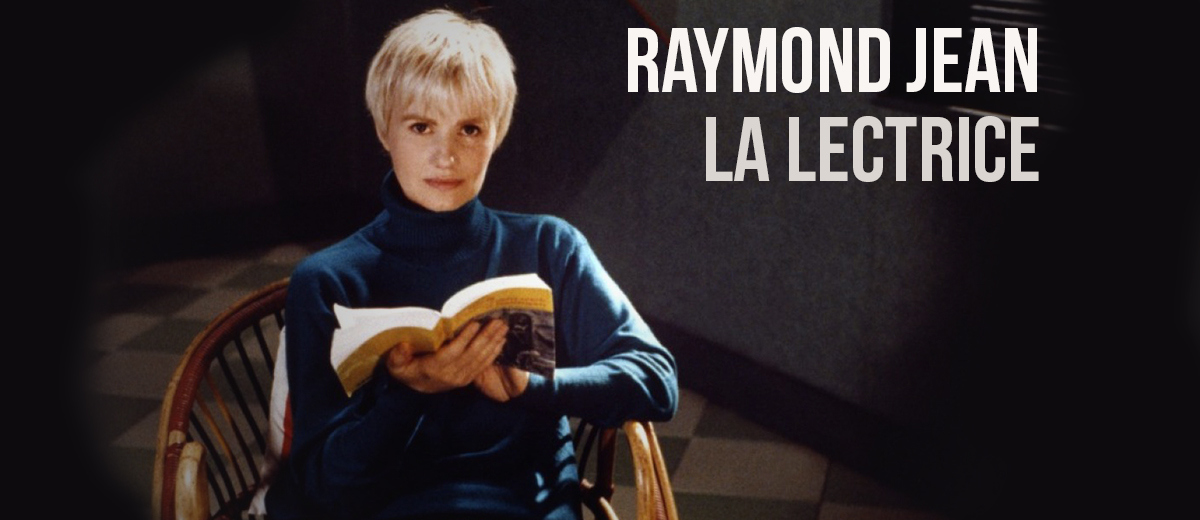
Miou-Miou in the film, La Lectrice

Miou-Miou in the film, La Lectrice

It’s a social satire that attempts to celebrate the joy of reading aloud, willing it to be the life changing experience it could be, that clearly is not. Instead, it reveals just how much loneliness, desperation and depravity exists in our society and how many are looking for something that might quell the symptoms, even if that means corrupting something else offered. Despite the obvious need to use her to fulfil their empty lives, Marie-Constance is determined to turn her fantasy into a viable profession and talks of it as if it already is.

“…I mustn’t lose the few ‘regulars’ I’ve managed to hook. In fact I’m on my way to my managing director today. He’s more hooked than anyone else, we’ve all grasped that, but by something other than reading. I’ve made my decision and I’m ready. But I might still try and bring him around to literature.”

A wheelchair bound adolescent, a six-year-old girl who wants to go to the fair, not stay at home and be read to, the aging, demented communist wife of an ex General, the depressed Managing Director and the elderly magistrate, they come in all forms and guises and like a Doctor choosing the right medicine, Marie-Constance will select Maupassant, Marx, Claude Simon, de Perec and others in her quest for the best bookish match. She thinks only in terms of literary solutions, seeking out the company of her old professor for guidance, though he too appears to have other intentions.

I enjoyed most of the book, particularly while there was still some mystery and intrigue around the characters and their motivations, however I wanted the fantasy to endure, for Marie-Constance to  find more of the genuine kind and less of the erotic, sadly the fictional reality, as depicted by Raymond Jean seems to illustrate that depravity is more in abundance and women will continue to allow it.

The book was originally published in French in 1986 and was made into a film two years later starring the French actress affectionately known as Miou-Miou, a name given to her on her acting debut by French comedian Coluche, a reference to her ‘petite voix douce miaulante’ soft voice.

Contemporary European Fiction via Peirene Press

Contemporary European Fiction via Peirene Press

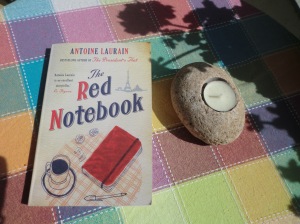
The Red Notebook by Antoine Laurain tr. Emily Boyce and Jane Aitken

The Red Notebook Antoine Laurain Paris Light Translated FicitonAntoine Laurain is the French author of five novels, including The President’s Hat, a novel that has found a popular and loyal following in the US and UK since being translated into English by Gallic Books.
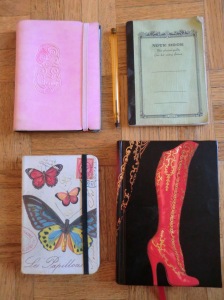

Not serious literature, they’re the kind of books you reach for when you need something uplifting and entertaining. I reached for this one at the end of winter when in the grip of a terrible flu and found it the best medicine of all!

My Review Notebooks The Red Notebook Antoine Laurain

A Selection of Word by Word notebooks.

Intrigued and incensed in equal measure, as a notebook toting woman myself, I wanted to know more of this story centred around a character whose red notebook, containing handwritten thoughts and random PRIVATE jottings, has fallen into the hands of the curious bookseller, Monsieur Laurent Letellier.

Recognising it as a handbag of quality and not something intended to be thrown out, when Monsieur Letellier comes across the abandoned handbag on a Parisian street early one morning, he picks it up intending to hand it in at the police station, which he almost succeeds in doing, except, you know, French bureaucracy, it will require a one hour wait and he has a shop to open up, so plans to return later. Only later becomes much, much later and the police station is not where he will return it to.

mauve handbag The Red Notebook Antoine Laurain ParisThe bag belongs to Laure, a woman we meet in the opening pages as she clutches her handbag to her detriment, metres from her apartment, only to be shoved against a metal door frame, losing the bag anyway. Without keys, and despite it being 2am, she manages to check into the hotel opposite, promising to pay in the morning, by which time she will have fallen into a coma.

Once the bag comes home with the bookseller, it becomes a major temptation and much of the book is spent on various dilemmas arising as a consequence of his inaction, which in turn provoke memories of past events. The longer it stays with him, the more trouble it causes and the more intrigued he becomes by its owner, despite recognising his chances at redemption grow slimmer as each day passes.

Jardin du Luxembourg Antoine Laurain The Red Notebook

Early morning in the Luxembourg gardens, Paris

One of the items the bookseller discovers is a signed copy of Accident Nocturne by Patrick Modiano which leads him to track down the reclusive author, known to frequent Luxembourg Gardens most mornings. As a bookseller, he knows how rare book signings by this author are, so hopes the author may lead him to the woman.

The Modiano cameo intrigued me, particularly as he’d just won The 2014 Nobel Prize for Literature, was that the reason to mention him, I wondered? And then I read Helen’s Mad About The Books review of Dora Bruder and found an even better reason for the reference to this esteemed author.

Paris Soir Dora BruderIn Dora Bruder, Modiano tells how in 1988 he stumbled across an ad in the personal columns of the 1941 New Year’s Eve edition of Paris Soir. The ad had been placed by the parents of 15-year-old Jewish girl Dora Bruder, who had run away from the Catholic boarding school where she’d been living.

It set the author off on an obsessive quest to find out everything he could about Dora Bruder and why during the most dangerous period of the German occupation of Paris, she had run away from those protecting her. But that’s another story and book, so see Helen’s review below for more on that extraordinary tale.

The Red Notebook has little of the hardship and tragedy of Dora Bruder, it reads more like a book that could be made into an entertaining romantic comedy, it has all the ingredients, the streets and bookshops of Paris, an artists’ workshop, handbags and their intriguing taboo contents, a jealous girlfriend and a lippy adolescent daughter. Watch this space I say!

Personally, I found it wonderful to discover an author who can do uplifting, feel good stories that push the right buttons for booklovers without becoming sentimental or too romantic. Though the ending may not be realistic, it was fun getting there.

If you like a glimpse of local life in Paris, characters who observe bookshelves and mention what other characters are reading, people who write in notebooks, the short form novella and an uplifting story, that could turn into a beautiful film, then pick up a copy of The Red Notebook here.

Further Reading:

Review by Susan of A Life in Books  – The President’s Hat, Antoine Laurain

Review by Helen of Mad About the BooksDora Bruder, Patrick Modiano – translated into English by Joanna Kilmartin as The Search Warrant

Article by Antoine Laurain – On Patrick Modiano winning the 2014 Nobel Prize

Dora Bruder Patrick Modiano The Red Notebook Antoine Laurain

Note: This book was an ARC (Advance Reader Copy) kindly provided by the publisher, Gallic Books.


Beside the Sea by Véronique Olmi, tr. by Adriana Hunter (French)

A single mother of two boys wants to take them on a little holiday near the sea. That might sound simple enough, but for this mother, it is a major life event and a challenge, as she suffers from some kind of mental affliction that normally requires her to take daily medication.

Beside the SeaThis trip is out of the ordinary and we experience it from inside the mind of the mother, the stream of consciousness narrative is so effective here, it gets inside our mind as we read. We feel her sense of anxiety acutely and become almost as sensitive as she is to the threatening hostility of the outside world, that place from which she wishes to protect her children.

She wants them to experience the wonder of the seaside, she takes them for hot chocolate and they visit a funfair, all of which present certain challenges. She observes and reflects on aspects of their characters with a poetic clarity that all mothers will relate to.

“I stopped on the sea wall, my two kids holding my hands, I wondered how to do it, how to say hello to the sea.  It was making a hellish noise, really angry, and the children cowered. I stayed there, not moving a muscle, watching it…I’d been waiting for it such a long time!”

It is an incredible novella and I appreciated it all the more, ironically, after following  recent discussion on Vishy’s review of Nabakov’s Lolita . They discuss that dilemma many readers have when they recognise an exceptional prose style but feel uncomfortable with the subject or the perceptions of the protagonist. It makes it hard to share an opinion and it takes time to understand our reactions. We observe them first and then try to understand them.

What I found most interesting in those subsequent comments actually came from the more experienced readers, those who had read it more than once and they describe what changed in terms of their own perceptions with subsequent readings. In the first read we react more to the story and character, in subsequent readings it seems the reader has greater insight into the intentions of the writer/artist, beyond surface character and plot.

Those comments made me think more about Beside The Sea and wonder if I might appreciate it more coming to it for a second time. I was in admiration of the style but uncomfortable with the journey. I would recommend it to the curious, thinking reader who isn’t quick to judge and it’s not one to read when you’re feeling fragile.

anxietyThe author does an incredible job in making the reader empathise with the mother, even though I didn’t particularly enjoy going into that state and arriving at its inevitable conclusion.

I also couldn’t help thinking about these kind of stories in the media, the short versions which usually focus on the result and not what leads people to where they end up. I don’t want to spoil the read, so you’ll just have to read it to find out what I mean by that. I think the enjoyment of this book will also be dependent on where one is on the ‘potential for empathy’ scale.

It is an interesting challenge, that an author would choose to travel inside the mind of someone like this and write in the stream-of-consciousness form.  I am sure this was one of the works that the publisher and writer Mieke Ziervogel read as background research in writing her own debut novella ‘Magda‘.

Poignant and thought-provoking given the issues that lie beneath its surface, this is the story that is almost never told and rarely understood by the public, who often only see that end result favoured by the media and judge it far too easily.

This is the first book in the Peirene Press Female Voices: Inner Realities series, all of which I am reading in January 2015.

Next Up : Stone in a Landslide by Maria Barbal (translated from Catalan)

Female Voice Inner Realities

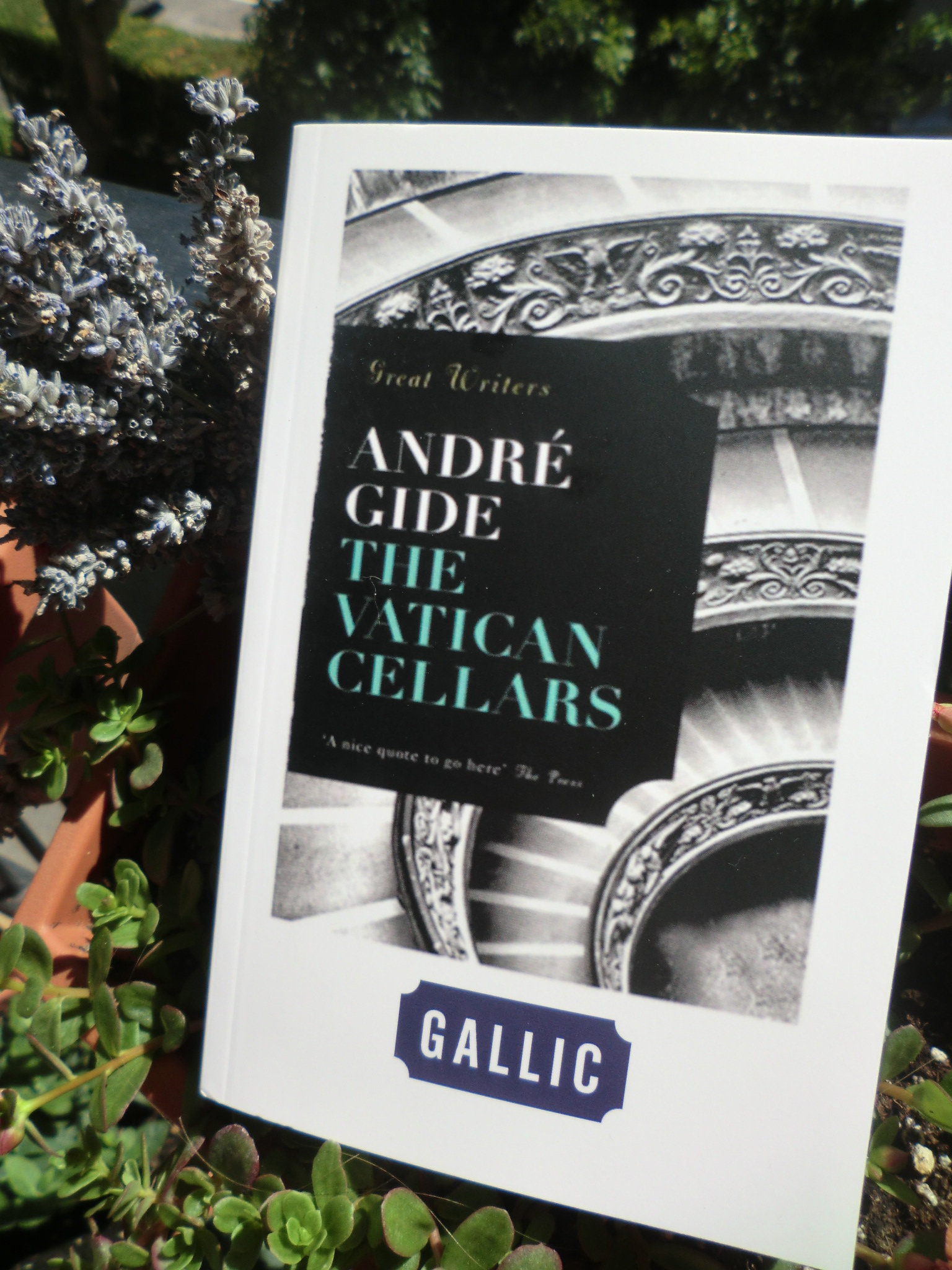
“All Paths Lead to Rome” – The Vatican Cellars by André Gide tr. by Julian Evans

Vatican CellarsOriginally published in the summer of 1914, this year is the 100th anniversary of André Gide’s Les Caves du Vatican otherwise known as The Vatican Cellars and sometimes as Lafcadio’s Adventures in English.

André Gide had quite a reputation and was adored and detested in equal measure in the French literary community during his time. He was a provocative writer, not sensationalist by today’s standards, but he rocked the foundations of robust entities in the early 1900’s and tested some of his friendships with his provocative, satirical works, that challenged the solemnity of the novelistic form and bourgeois attitudes of the time.

He declared the book not to be a novel, but a sotie, a medieval farce in which the players freely mock the powers that be, more often than not, the Church.

“Even in the authentic soties of the Middle Ages there was the attempt to demonstrate the madness of the real world by showing it capsized and lead by fools.” Wallace Fowlie, Andre Gide: His Life and Art

He did this to stand apart from that tradition of European fiction, characterised by its extreme seriousness. Many chose to judge it at face value, or to apply an interpretation that wasn’t his own and cause him to be ostracized by some.

A Young Gide Source: Center for Gidean Studies andregide.org

A Young Gide
Source: Center for Gidean Studies
andregide.org

He wasn’t looking for recognition or accolades, but he was a writer who wasn’t afraid to take on a subject and look at it through a symbolic, metaphorical lens even if it did court contempt in some quarters. Though still highly controversial in France, he was awarded the Nobel Prize in Literature in 1947, he died in 1951 and a year later his works were placed on the Vatican’s list of banned books.

That act was certainly provocative and no doubt helped to heighten the author’s popularity as negative publicity tends to do. So when this book arrived unsolicited in my mailbox, I was curious to find out more, not just about the story, but André Gide, a writer previously unknown to me. In a strange coincidence, this week I see that Papal controversy – or is it just rumour, continue, when I read this headline in The Independent.

God isn’t a magician with a magic wand according to the pope and there are non-believing vicars 

The basic premise of The Vatican Cellars centres around the members of one family, whose connections are slowly revealed, whether by blood or marriage, the first three books (more like parts as the book is only 300 pages) are portrayed from each of the main characters point of view and running throughout the narrative is the effect of a rumoured plot that a gang has kidnapped the Pope and placed him in the Vatican cellars, an imposter installed in his place. The fourth book introduces us to the gang, referred to as The Millipede and the final book is dedicated to the young man Lafcadio and brings all the characters to Rome.

Book One introduces us to Anthime Armand-Dubois, a crippled freemason devoted to scientific research, an atheist who leaves France to settle in Rome to be near a specialist in rheumatic diseases. His departure causes his brother-in-law Julius De Baraglioul great sorrow and his wife Véronique small joy.

“As one of those people who fill their flat disappointed lives with countless small devotions, in her sterility she offered up to the Lord every attention that a baby would have demanded from her. Sadly she entertained almost no hope of leading her Anthime back to Him. She had known for a long time how much stubbornness that broad brow, knitted in perpetual denial, was capable of. Father Flons had warned her.”

Julius, his wife (Véronique’s sister) and their 9-year-old daughter Julie visit, during which Anthime experiences an apparition of the Virgin Mary and the miraculous healing of his affliction. He converts, but loses his freemason and lucrative research contacts and must move to Milan to await compensation promised by the Vatican.

André Gide Source: Centre for Gidean Studies andregide.org

André Gide
Source: Centre for Gidean Studies
andregide.org

Book Two is Julius De Baraglioul, a novelist who arriving back in Paris receives a letter from his father, who is on his deathbed and wishes him to anonymously make the acquaintance of a certain Lafcadio Wluiki to check out his ambitions and character. Julius visits the Lafcadio’s lodgings, meets Carola Venitequa and snoops around his things reading a private notebook since the room is unlocked and uninhabited. He eventually meets him and gives him a copy of his latest novel, one that has been panned by critics. Recognising the book is based on the author’s father, Lafcadio eyes the dying man as a potential new “Uncle” and goes to see him.

In Book Three we meet Amédée Fleurissoire, debated by some to be the true hero of this story; within these pages the entire plot to kidnap the Pope is unveiled. A priest calls on the widow Countess de Guy de Saint-Prix, Julius’s younger sister just after her return from her father’s funeral in Paris and regales her with the extraordinary tale of the Pope’s demise. And here there is an author interjection, a sidestep of the story plot to tell of the factual plot, as the story was inspired by real events that occurred in 1893 by a gang of fraudsters, taking advantage of the Pope’s sympathies toward the French Revolution.

“Whether God’s representative on earth could have been abducted from the Holy See and, by the intervention of the Quirinal, stolen from all of Christendom as it were, is an excessively thorny problem which I do not have the temerity to raise in these pages. But it is a historical fact that, around the end of 1893, rumours were circulating to that effect. It goes without saying that numerous devoted souls became deeply agitated. A pamphlet on the subject appeared in Saint-Malo and was suppressed. …There is no doubt that countless pious souls made financial sacrifices, but it was dubious whether all those who received donations were genuine campaigners, or whether some were perhaps fraudsters.”

The priest wishes the Countess to make a significant donation, so she rushes off to see Madame Fleurissoire, the younger sister of Véronique and Marguerite and wife of our genuine hero Monsieur Amédée Fleurissoire. Hearing about all the fuss Fleurissoire decides he must leave Pau and travel to Rome himself to see what can be done.

Book Four is The Millipede (the centipede) which continues to follow the travels of Amédée, the presence of the gang undetected. He is intercepted at the station and brought to slovenly rooms, where we again meet Carola and he is taken on a bit of a wild goose chase to Naples and back, bumping into Julius who has also appeared in Rome.

Then Book Five brings us back to Lafcadio, raised by his mother and five uncles, across different European countries, he is at home everywhere, but belongs nowhere. After his encounter with Julius’s dying father, he too decides to take the train south, but he is heading for adventure, his destination Borneo. He is the anti-hero, the free spirit, parentless, he lives without obligation or restraint, he can do as he pleases, provided he has the means. His charm takes care of that.

And what happens when they all find themselves in Rome? For that you’ll need to read the book.

As the literary critic Albert Guerard said:

“Perhaps only the maligned casual reader sees that les Caves du Vatican is above all a very funny book.”

It is a book that Gide had in the back of his mind for 20 years before writing it and many of the scenes were inspired from aspects of his own life or those close to him. For example, Anthime’s conversion is said to be based on Emile Zola’s Freemason cousin, who abjured his atheism in a public ceremony at a church in Rome.

The Vatican Cellars is an entertaining, easy read and can be intellectually stimulating if you are interested to analyse it further. I enjoyed it very much and all the more for having read around it, dipping into some of the published literary essays to understand the intentions of the author and the responses of the critics.

He was a humble author with a fascinating intellect who refused to accept literary prizes and acknowledgement at home, until it came to the Nobel, which he felt would have gone to Paul Valéry, if not for his untimely death and accepted it without reserve, though he was too ill to receive it in person.

In an open letter to several leading Swedish newspapers which had sought interviews, Gide confessed that he had received the Nobel Prize:

“with deep emotion, with tears in my eyes, like a schoolboy who has won a prize.”

I leave you with this very funny anecdote that I picked up from an essay by the critic George D.Painter.

“On 7 January 1930 Gide was returning by train from Toulon to Paris with Jacques de Lacretelle. At the opposite table, which was covered with flowers, sat a honeymoon couple, the husband engrossed in The Vatican Swindle. It was the first time Gide had ever seen a stranger reading himself. ‘Here’s your chance,’ said Lacretelle, ‘Tell him who you are – write him a dedication!’ But to do this, Gide would have had to feel sure that the unknown liked the book. Suddenly the young man pulled out a penknife. Good heavens, was he about, like Lafcadio, to plunge it in his thigh? But no, worse still, he seemed to intend to cut the book itself in pieces, and Lacretelle was seized with a fou rire. With great care the bridegroom cut the threads of the binding, detached the part he had read, handed it to his young wife; and both buried themselves in their reading.”

train reading

Note: Thank you most kindly to Gallic Books for sending me a copy of the book.

14 July La Fête Nationale: A Salmagundi of French Literature

Prise de la Bastille by   Jean-Pierre Houël Source:Wikipedia

Prise de la Bastille by Jean-Pierre Houël
Source:Wikipedia

Today is a holiday here in France, marking the celebration of la fête nationale or as we know it in English Bastille Day, commemorating 14 July 1789 when the population fearing an attack by the royal military stormed the Bastille prison and released the many political prisoners in what became a symbol of the end to the rule of the monarchy and the beginning of independence.

There will be a military parade in the Avenue des Champs-Élysées in Paris and here in Aix-en-Provence and most towns in France there will be organised displays of fireworks to commemorate.

To celebrate the National Holiday, I am following the initiative of Marina Sofia at Finding Time To Write to highlight some recently read and upcoming French reads, now available in English, here is my salmagundi of French Literature!

Click on the title to read the review and read to the end to find the definition of that tasty word for the day Salmagundi:

Two French Books I am looking forward to reading:

Poisoning (3)

The Poisoning Angel by John Teule

translated by Melanie Florence

This book is actually to be published today 14 July 2014 and the author is a well-known name in French contemporary literature. In fact I have one of his books in French on the shelf already.

This one is based on a true but gruesome story of one of the most notorious serial poisoners that France has ever known and was described by the Sunday Telegraph as:

“a bawdy romp one minute, a gruesome tragedy the next. The writing is beautiful, witty, grisly and moving, and reeks of authenticity.”

Let’s hope all that comes off in translation.

Vatican Cellars

The Vatican Cellars by André Gide

translated by Julian Evans

This book will be published in August 2014 to mark the centenary of the book’s first publication. It is set in the 1890’s around a group of ingenious fraudsters who claim that the Pope has been imprisoned and a false Pope enthroned in his place.

I haven’t read anything by this author, but he sounds like he caused quite a sensation with this novel and others, as he took it upon himself to explore morality in his work and was a major influence on the writing of Jean-Paul Sartre and Albert Camus. He was awarded the Nobel Prize for Literature in 1947 and one year after he died (in 1951) his works were placed on the Vatican’s list of banned books.

Three French Books I Read This Year:

Nagasaki (2)

Nagasaki by Eric Faye

translated by Emily Boyce

A short novella, based on a true story of an event that happened in Japan, that will make you check your fridge contents and ensure you lock the door at night.

Foundling2

The Foundling Boy by Michel Deon

translated by Julian Evans

Coming of age story of a young boy left as a baby on a doorstep, who grows up and has an insatiable need to travel and experience the world. The sequel soon to be translated into English as well.

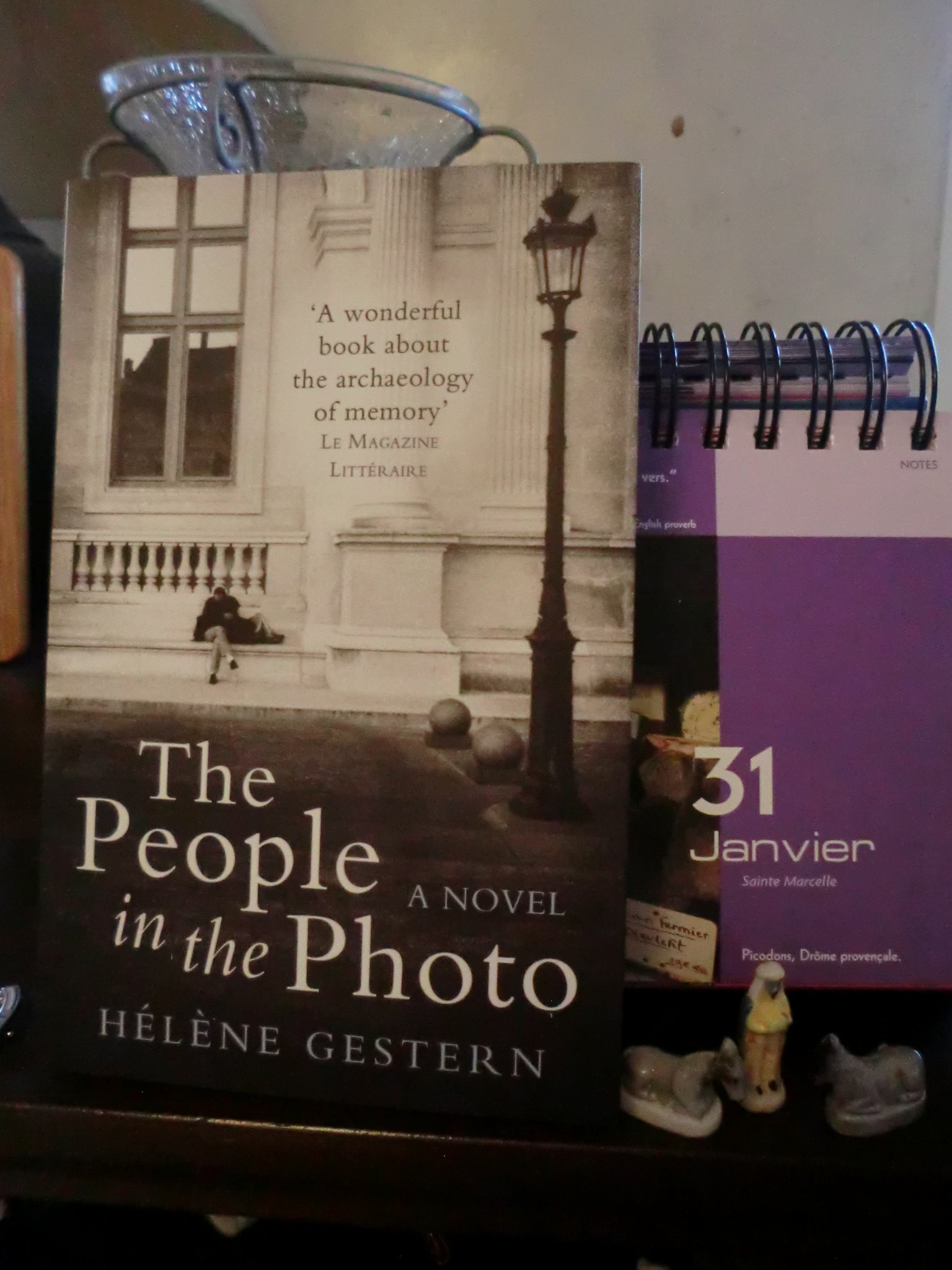
People in Photo

The People In the Photo by Hélène Gestern

translated by Emily Boyce,Ros Schwartz

A wonderful epistolary novel about a young woman searching for answers about events in her mother’s life before she was born, a photo provides a clue to those she knew.

Two Great Books Set in France:

All the Light

All the Light We Cannot See

by Anthony Doerr

Paris and Saint-Malo pre and during WWII following the lives of two children and their growth into adolescence, Marie-Laure who lost her sight at six and Werner who lost his parents and is raised in an orphanage. An excellent story that leads to the crossing of paths of these two characters and wonderfully evocative of place.

I Always Loved You

I Always Loved You

by Robin Oliveira

An insightful historical novel about the American painter Mary Cassatt, her life in late 1800’s Paris as she struggles to establish her name in the art world, enduring a life-long though fractious relationship with the impressionist painter and sculptor Edgar Degas.

Salmagundi:

  1. a mixed dish consisting usually of cubed poultry or fish, chopped meat, anchovies, eggs, onions, oil, etc., often served as a salad.
  2. any mixture or miscellany.

 Bonne Fête!