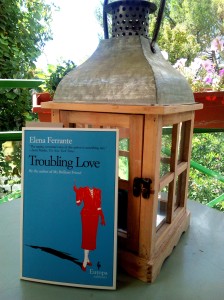
Troubling Love by Elena Ferrante

translated by Ann Goldstein.

Elena Ferrante’s debut novel was first published in Italy in 1991, translated into English in 2016. It became a literary sensation and earned its author the Elsa Morante prize, one of Italy’s most prestigious awards for literature.

A Drowning at Sea

Naples Italy Elena Ferrante Troubling Love

Photo by Bekir Du00f6nmez on Pexels.com

Troubling.

A daughter Delia is concerned after a telephone call from her mother. Following her subsequent disappearance and death, she returns to her mother’s empty apartment, trying to retrace her steps to understand what had been going on in her life that lead to her abrupt departure. Her frustration with her mother is apparent from the first page.

Her sociability irritated me: she went shopping and got to know shopkeepers with whom in ten years I had exchanged no more than a word or two; she took walks through the city with casual acquaintances; she became a friend of my friends, and told them stories of her life, the same ones over and over. I, with her, could only be self-contained and insincere.

Strange things happen, some of which a neighbour helps explain, a woman who opens her door ajar at the slightest noise, thus aware of her mother’s visitors. Yet Delia doesn’t act rationally herself, she’s not the most reliable narrator and there is a sense of confusion and danger as we follow her reckless pursuit of clues across town and memories of the past emerge.

The Abusive, Possessive Artist

Troubling Love Elena Ferrante WIT Month Father Artist

Photo by cottonbro on Pexels.com

Nearly every past relationship recounted is troubled, she and her sisters lived in fear of their father all their childhood, often watching him beat their mother in fits of irrational jealousy, blaming her should any man glance her way, yet he’d spent his days painting images of her naked body on canvas, selling them to anyone who’d pay.

During adolescence I saw those figures of a woman leave the house in the hands of strangers who were not sparing in their crude comments. I didn’t understand and perhaps there was nothing to understand. How was it possible that my father could hand over, to vulgar men, bold and seductive versions of that body which if necessary he would defend with a murderous rage?

Amalia spent her marriage suppressing her natural gaiety and charm, her daughter learned of the danger, developing an instinct for it.

When we went to the movies without him, my mother didn’t respect any of the rules that he imposed: she looked around freely, she laughed as she wasn’t supposed to laugh, and chatted with people she didn’t know. So when my father was there I couldn’t follow the story of the film. I glanced around furtively in the darkness to exercise, in my turn, control over Amalia, to anticipate the discovery of her secrets, to keep him, too, from discovering her guilt.

Much of the novel is narrated through the gaze of others, adding to the awkward, vulnerable, exposed feeling of the women. It’s a narrative of deep unease, both in the present day and in its long reach back to the first encounter between the young Amalia and her future possessive husband.

A Free Spirit Escapes
Troubling Love Elena Ferrante WIT Month

Her mother couldn’t be contained, she was an enigma to Delia, raised in that fearsome household, exposed to it from a very young age, conditioned by it, fear and judgement had become a natural part of her psyche.

I realised I was summarising a woman without prudence and without the virtue of fear. I had memories of it. Even when my father raised his fists and struck her, to shape her like a stone or a log, she widened her eyes not in fear but in astonishment.

Her mother used to sew, her world was measurements and fittings and bodies. Garments play a part in the story, again, a mystery to Delia to unravel and try to understand, as if they too might be a clue to her disappearance.

For all the days of her life she had reduced the uneasiness of bodies to paper and fabric, and perhaps it had become a habit, and so, out of habit, she tacitly rethought what was out of proportion, giving it the proper measure.

As she follows random leads, trying to reconstruct her mother’s movements, she revisits scenes from childhood, drawing a picture of her mother, a vivacious woman full of life, spilling outside the restrained bindings of an oppressive marriage and tries to reconstruct the latter part of her life that she’d lived out separate from her family, though still perceived by her daughter and ex-husband as being in secret.

Maybe in the end all that mattered of these two days without respite was the transplanting of the story from one head to the other, like a healthy organ that my mother had given up to me out of affection.

I was reminded of the experience of reading The Days of Abandonment, there is an intensity to the narrative, its visceral descriptions, evoking reactions, everything feels up close and confronting, we are passengers in the seat of a mind slightly out of control, where new thoughts send the protagonist out in pursuit of the elusive and we must accompany her, reassured by moments of clarity and spun out by acts of recklessness.

Elena Ferrante The Lying Life of Adults WIT MonthThat’s Ferrante.

She has a new book due out in September The Lying Life of Adults said to have the same additive, page-turning qualities of her earlier novels.

Ferrante follows Giovanna’s life from age 12 to 16, charting her development from the sweet girl who adores her parents to a sulking, aggressive teenager who finds pleasure in self-abasement and making those around her uncomfortable. The premise is a fertile one for the author, an expert chronicler of adolescence and its many indignities, as well as its erratic, overwhelming passions.

Kathryn Bromwich The Guardian

Further Reading

My Review of other Elena Ferrante titles:

The Days of Abandonment

My Brilliant Friend, The Story of a New Name, Those Who Leave & Those Who Stay, The Story of the Lost Child

Frantamuglia (non-fiction)

The Guardian: Review: The Lying Life of Adults – a rebel rich girl comes of age by Kathryn Bromwich – Italians who queued up into the night for the reclusive writer’s new tale of painful adolescence won’t be disappointed
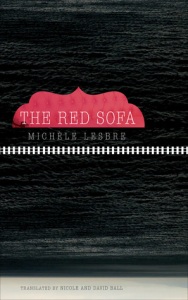

The Red Sofa by Michèle Lesbre

translated by David Ball, Nicole Ball

An Unexpected Trans-Siberian Railway Trip

le canapé rouge the red sofa michèle Lesbre

A French novella that I read in an afternoon, we accompany our Parisian protagonist Anne, on a train journey towards Lake Baikal, in Southern Siberia, a journey she makes on a local train, having spontaneously decided to find out why her friend Gyl is no longer responding to her letters.

For the first six months he had written often, telling me he had time to go fishing for omul in the lake and make kites for children.
And then, silence.

Once on the train and it’s a long journey, she has time to think and recall their friendship, they were lovers many years ago and while she holds no flame for him, the journey allows her to reflect on the highs and lows of their union.

I knew that the return trip is the real journey, when it floods the days that follow, so much so that it creates the prolonged sensation of one time getting lost in another, of one space losing itself in another. Images are superimposed on one another – a secret alchemy, a depth of field in which our shadows seem more real than ourselves. That is where the truth of the voyage lies.

Get To Know Your Neighbour

What she does spend time thinking of, is her recent past and another spontaneous decision, to knock on the door of a neighbour whom she has never seen, an elderly woman.

I had never run into her in the lobby of the building, not on the stairs. I knew all the other people who lived there, or at least their names and faces, but Clémence Barrot remained a mystery. No sounds would ever reach me when I walked by her door, and if I asked questions about her, all I got were laconic answers and knowing looks…A character!

The door is opened by a young girl and peering inside she sees the older woman sitting on a red sofa by a window. As an excuse for her curiosity she mentions there might be noise as she has people coming for dinner that evening. The woman asks her a favour in return for the anticipated inconvenience.

With a big smile, she retorted that she would rather we proceeded differently: for all past dinners, for this one and the next ones, she would only ask in exchange that I occasionally read to her a little, if I had the time.

Passionate French Women Who Faced Death Unflinchingly
And so we meet some bold French female heroines of the past, sadly a number of whom for their feminist inclinations in the wrong era, lose their lives at the guillotine.

“Tell me about that gutsy girl again,” Clémence Barrot would sometimes ask about Marion de Faouët and her army of brigands. She had, just as I did, a real affection for that child who had not grown up to become a lady’s companion despite all the efforts of the Jaffré sisters. No, she became a leader of men instead, an avenger of Brittany which had been starved during the 1740’s.

A wild beauty, faithful to her village, her loves and her ideals, Marion had been imprisoned several times before dying on the gallows at the age of thirty-eight.

While these stream of consciousness thoughts pass through her mind, various locals enter and exit the train. She is happy to be immersed in the languages of the area and in two books she has brought with her, Dostoevsky’s War and Peace and a book by the philosopher Jankélévitch.

Travel To Exotic Destinations Through Story

le canapé rouge the red sofa Michèle Lesbre WIT Month

Becoming particularly interested in one man whom she can’t communicate with – Igor – she imagines things about him from the little she observes and seeks him out more than one time when he disappears.

I had just read ‘There are encounters with people completely unknown to us who trigger our interest at first sight, suddenly, before a word has even been said…”

It’s an engaging read considering not much happens, but there is just the right mix of action and reflection and indeed, by the end a build up to a couple of dramas and quiet resolution.

I really enjoyed the read and was surprised at how captivated I was by the journey. I do love long train journey’s and hers was such an indulgent whim, that the suspension of what she will encounter is enough to keep the reader interested, and the relationship with her elderly neighbour provides a brilliant counterpoint and empathic adjunct, becoming the more significant event to the ‘thousands of miles’ distraction.

N.B. This was one of the many Seagull Books offered weekly to readers during the period of confinement.

Further Reading

Reviewed by Rough Ghosts 

Seagull Books: More of their extensive collection of titles by Women In Translation

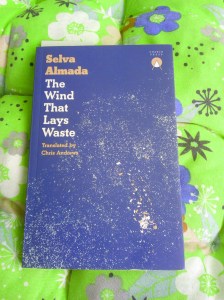
The Wind That Lays Waste by Selva Almada tr. Chris Andrews

Evangalising Across the Argentinian Countryside
A reverend and his teenage daughter break down in the middle of nowhere on a steaming hot dry day, after he ignores her advice to get the problem checked before they left the last town (his home town). A visit that caused her to feel both sorry for  her father.

But her sympathy didn’t last. At least he could go back to places full of memories…Leni had no lost paradise to visit. Her childhood was very recent, but her memory of it was empty.  Thanks to her father, the Reverend Pearson, and his holy mission, all she could remember was the inside of his car.

Leni, now 16, hasn’t seen her mother since the Reverend dumped his wife and her suitcase on one of their road trips.

This happened almost ten years ago. The details of her mother’s face have faded from Leni’s memory, but not the shape of her body: tall, slim, elegant. When she looks at herself in the mirror, she feels that she has inherited her bearing. At first she believed it was just wishful thinking, a desire to resemble her. But since becoming a woman, she has caught her father, more than once, looking at her with a blend of fascination and contempt, the way you might look at someone who stirs up a mixture of good and bad memories.

The Lone Garagist

The Wind That Lays Waste Selva Almada

Photo by cottonbro on Pexels.com

A truckdriver tows them to ‘the gringo Brauer’s‘ garage, a man raising his teenage son Tapioca alone, the boy abandoned there by his mother when he was 8 years old.

Tapioca’s memories of his mother are vague too. After she left him, he had to get used to his new home. What interested him most was the heap of old cars. The dogs and that mechanical cemetery were a comfort in the first weeks while he was adjusting. He would spend all day among the car bodies: he played at driving them, with three or four dogs as co-pilots. The Gringo left him to it, and approached the boy gradually, as if taming a wild animal.

The father hadn’t finished school himself, his son could read, write and do sums so didn’t see why the boy needed to keep up with it. He decided Tapioca could learn by working and observing nature.

It might not be scientific, but nature and hard work would teach the kid how to be a good person.

Seeing the Light

Storm Thunder Wasteland

Photo by Johannes Plenio on Pexels.com

The Reverend sees good in the boy and sets his righteous missionary sights on him. Leni sees what’s happening but doesn’t intervene.

Leni had conflicting feelings: she admired the Reverend deeply but disapproved of almost everything her father did. As if her were two different people. Earlier, she had told him to leave Tapioca alone, but if she had joined them on the porch now, she too would have been captivated by his words.

Brauer doesn’t appreciate the Reverend putting ideas in his son’s head, the tension mounts and none of them know yet that there’s a storm coming.

It’s a slow build-up, getting to know the characters, two men set in their ways, with children who rarely question their authority. They are used to being in charge. It’s a short, tense, reflective novella of these two unorthodox families whose lives intersect and cause a disruption, just as the storm breaks a long period of dry.

Berji Kristen: Tales From the Garbage Hills by Latife Tekin (1993)

translated by Ruth Christie, Saliha Paker

“One winter night, on a hill where the huge refuse bins came daily and dumped the city’s waste, eight shelters were set up by lantern-light near the garbage heaps.”

Berji Kristen Tales from the Garbage HIlls Latife Tekin Turkish LitThe opening sentence introduces us to the birth of a poverty-stricken community, one that will rise up despite numerous efforts to destroy it. As more displaced people hear of them, it continues to reassemble, grow, and become occupied by the marginalised, who do what they can to get ahead.
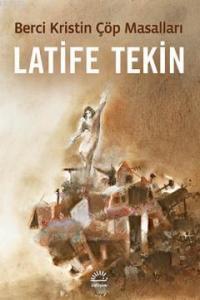
Mattresses  were unrolled and kilim-rugs spread on the earthen floors.  The damp walls were hung with  faded pictures and brushes with their blue bead  good-luck charms, cradles were slung from the roofs and a chimney pipe was knocked through the sidewall of every hut.

It’s a story of impoverishment, perseverance and the survival of the poorest. Every step forward encounters a knock back, an obstacle to overcome. Toxic factories employ them, their ailments dealt with in bribes, even their love lives are dictated by the relative positions they occupy in the unconventional heirarchy of the community.

The workers named the factories after their effects, some made the lungs collapse, some shrivelled the eye, some caused deafness, some made a woman barren. Their proverb for marriage between equals was ‘A bride with dust in her lungs to the brave lad with lead in his blood.’ The saying gained ground when one after another the young car battery workers married girls from the linen factory.

Berji Kristen Latife Tekin WIT Month

After winning the battle of constant demolition and renaming it ‘Battle Hill’, two official looking men replace their sign with a blue plaque inscribed ‘Flower Hill’.

After the renaming, people heard the demolition had stopped and came to the Hill in their hundreds, deceived by the charm of its name.

Rumour and gossip fuel their perceptions and without worldly knowledge they speculate; theories on events pass from one person to another, changing and evolving into a level of understanding they can accept.

One night yellow pamphlets are stealthily left at their doors, by morning they are strewn everywhere, caught in branches, stuck under their doors. They couldn’t understand why the workers would leave them and others wondered why they could not speak up instead of writing and why they’d left them in the dead of night.

Flower Hill Folk!

Support the strike!

Individuals rise and fall in power, characters referred to by occupation or memorable anecdote, new creatures arrive like ‘The Regular Worker’ spawning the song ‘Work Faster’ and ‘Poet Teacher’ writes about scavenger birds and his pupils.

Latife Tekin Turkish Author Tales From the Garbage Hills

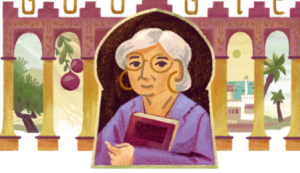
Author, Latife Tekin

A lyrical voice is given of a metaphorical nature to the deprived, who have memories of villages of old, of fleeing, of different times. Latife Tekin “gives expression not only to their way of life but also to their outlook on life, perception of reality, sense of humour and dreams.”

It is told in such an engaging style, it reads as if it is narrated aloud, though it is neither fairy tale nor fantasy, it is quite unlike anything I’ve read before, the story and the voice, a depiction of the creation and development of an aspiring community of marginalised people.

Assuming the position of a detached but devoted narrator rather than a patronising intellectual onlooker, Tekin has reconstructed the dreams and realities of sqatterland in specific detail and with a uniquely metaphoric use of the language, without overlooking the humorous attitudes, ironic perception and emotional vitality of the community amid the filth and poverty of its living conditions. Saliha Paker, Introduction

Further Reading

Article: Contemporary Turkish Women Writers in English Translation by Dr. Roberta Micallef

Review: Bosphorous Review of Books reviews Berji Kristen by Luke Frostick

My Reviews of Books by Turkish Women Authors

The Other Side of the Mountain by Erendiz Atasü tr. Elizabeth Maslen

Three Daughters of Eve by Elif Shafak

Honour by Elif Shafak

The Happiness of Blonde People by Ekif Shafak


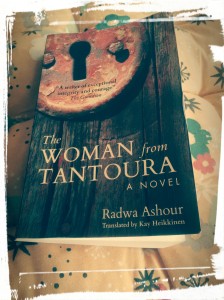
The Woman From Tantoura by Radwa Ashour (2010)

translated by Kay Heikkinen.

Radwa Ashour

Radwa Ashour Woman from Tantoura Granada WITMonth

Radwa Ashour (1946 – 2014) was a highly acclaimed Egyptian writer and scholar who after studying a BA and MA in Comparative Literature in Cairo, went on to do a PhD in the US in African-American Literature.

As a university student in her native Cairo in the early 1970s, says Ashour, she’d found no one who considered writers in the African diaspora worthy of study. But in 1973, a joyfully-cultivated friendship with Shirley Graham Du Bois ­ world traveler, litterateur, and widow of W.E.B.du Bois­ led Ashour to UMass. Madame Du Bois, as the école-educated Ashour still calls her late liaison to Amherst, was living in Cairo at the time, and pointed the young Egyptian toward the then-infant Afro-American Studies department here.

Her interest in African-American literature was due to her view that “works on oppression and the overcoming of oppression speak deeply to readers in the Arab world.” She was passionate about social justice, evident in her writing, which sought to personalise the lives and conditions of marginalised groups.

Throughout her career she wrote more than fifteen works of fiction, memoir and criticism, including the novels Granada and Spectres.

The Woman From Tantoura

Radwa Ashour Tantoura WITMonthThe more I read, the more this novel got its hooks into me. After a while, a pattern begins to emerge, one that is universal. To find a place where one can live authentically, and be at home.


Because of the initial setting, a fishing village in Tantoura, Palestine, in 1948 – the year of ‘The Nakba‘ I expected it was going to be traumatic, it’s the part we don’t wish to linger in, to be witness to the horrific expulsion of families from their homes, of the disappearance of sons and fathers, the rest either becoming refugees in their own country or fleeing to find refuge elsewhere.

Even if we know it can’t begin well, sometimes, we need to read through, to follow the life of a thirteen year old girl into womanhood, in the hope that we see her find solace, to have empathy for her worry and anxiety for her own children and husband after all she has witnessed.

The story begins with Ruqaya standing on the seashore, seeing a young man come out of the sea as if he were of it, as if the waves released him on to land. She is mesmerised. The man will become her fiance, though they will never marry. It is the end of her childhood, the end of blissful days on that shoreline, though memories and the scent of it will stay with her forever, through all the moves that follow. And the key to the old house.

Looking for a Place to Call Home

Key Tantoura Palestine Radwa Ashour

Photo by Ylanite Koppens on Pexels.com

Later on I would learn that most of the women of the camp carried the keys to their houses, just as my mother did. Some would show them to me as they told me about the villages they came from, and sometimes I would glimpse the end of the cord around their necks, even if I didn’t see the key.

The novel is narrated by her 70-year-old self, pushed into writing down and describing the many experiences and turning points in her life, by her middle son.

It’s not only the story I’m interested in, I’m after the voice, because I know its value and I want others to have the chance to hear it.

A reluctant narrator, the timeline moves back and forth,  less a chronology events than a response to emotions that arise that provoke the memory. It’s a recollection of a life lived in the wake of tragedy, of determination and survival, of not forgetting, maintaining a connection to a culture and values as best one can.

There was no acceptable or reasonable answer for the question for “why?” however much it rose up, loud and insistent.  I did not ask “why”. I mean I didn’t ask the word, and perhaps  I was not conscious that it was there, echoing in my breast morning and evening and throughout the day and night. I didn’t say a thing; I fortified myself in silence.

Tantoura Palestine Radwa AshourWhile her mother uses imagination to create a vision of what happened and where the missing are, Ruqayya’s advances then retreats, as the present awakens the past, rarely does she dwell in an idealised future.

Am I really telling the story of my life or am I leaping away? Can a person tell the story of his life, can he summon up all its details? It might be more like descending into a mine in the belly of the earth, a mine that must be dug first before anyone can go down into it.Is any individual, however strong or energetic, capable of digging a mine with their own two hands?

Seeking Refuge

To see them seek refuge in another country, where a similar tragedy can happen, one understands what it must feel like to feel that no place is safe, and then when she finds a ‘safe place’ with her high achieving son, the culture shock is too much to bear, bringing to mind the memoir of the Palestinian intellectual Edward Said’s Out of Place.

Bird of Paradise Radwa Ashour TantouraThere is no place that quite replaces the childhood environment and home, except perhaps to create one’s own family, and this Raqayya will do, with her son’s and the daughter, a girl Maryam her husband brings home one day from the hospital, adopting her as their own. And in growing things, not the almond tree or the olives,  but flowers, a thing of beauty, the damask rose, the bird of paradise.
I found similarities in reading this novel, to the feeling evoked in reading Nella Larsen’s Quicksand, her constant search too, for the place where she could be herself, though her search was all the more elusive and complex, there being no place or people who accepted her rootlessness, her mixed blood, something that the clannishness of many ‘peoples’ reject.

“In Egypt, we have a flag, an airline of our own, we are an independent country,” she said. “But there is this feeling we are not free to be who we are in the new world order.” I am always conscious I’m a person from the Third World. I’m an Egyptian, an Arab, and an African all in one. Also, I’m a woman. I know to be all these things is to be particularly conscious of constraint.” Radwa Ashour

The Woman From Tantoura is my first read for #WITMonth, reading Women in Translation.

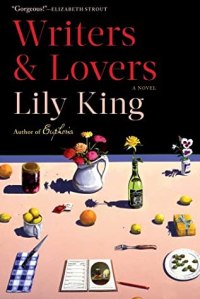
Writers and Lovers by Lily King

A thirty year old woman named Casey rents a tiny room and is soon to be evicted, she’s under a mountain of student debt, prone to crying, having lost her mother quite suddenly, is estranged from her father who tried to turn her into a golf pro as a youngster, an activity she now refuses to have anything to do with.
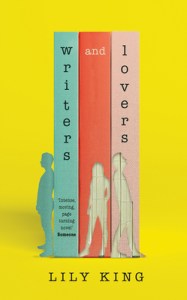
Casey is a waitress in a restaurant, on her last warning, is using her one month of being eligible for health insurance to have as many tests as possible and is paranoid about a lump in her armpit. And undecided about the two men she is simultaneously dating, both writers.

There’s a sense of life passing her by as she receives wedding invitations from friends, who judge her for not being able to afford to be part of their occasion (friends who’ve given up any attempt at independence or flexing their creative muscle for the safety and security of a man).

She’s spent 6 years writing a novel and is now on the verge of her fragile world crumbling on top of her. It is almost with relief that she contemplates the potential life-threatening lump that might be her escape.

I really struggled to stay with this one and persevered because I’d seen a number of good reviews, so I kept hoping it would improve. And it does towards the end. Although it does feel a little like a fairy tale ending. I guess it just wasn’t where I wanted or needed to be at the time of reading. I’ve long wanted to read Lily King’s earlier book Euphoria, which is in part why I jumped at the chance to read this.

I did enjoy the anecdote about Edith Wharton, scolded by her mother as a child for wanting to be alone to make things up and forbidden to read novels until after marriage. When her mother died, she sent her husband to the funeral and stayed home to write. She was 45 years old and published her first novel the following year.

And some thought provoking words about writing and fear:

All problems with writing and performing come from fear. Fear of exposure, fear of weakness, fear of lack of talent, fear of looking like a fool for trying, for even thinking you could write in the first place. It’s all fear.

And this aspect, more of a universal theme here perhaps:

If we didn’t have fear, imagine the creativity in the world. Fear holds us back every step of the way.

And that ultimately is what the journey of the protagonist is about, living in fear and allowing it, nurturing it, holding fast onto it, until she can no more. As she lets go of it, her life begins to change, until she realises, she has nothing to fear.

Passing by Nella Larsen (1929)

I really enjoyed Passing, but I might be in the minority when I say I loved Quicksand which I read first, even more. Quicksand adds into its complexity that little known element of being a TCK (third culture kid), Helga is not only of mixed race, but she was born and is growing up in a culture (America) that neither of her parents were born into or belonged to, there is no extended family for her to mould into, whereas in Passing, we meet two women who have a stronger sense of family and there is more of a focus on belonging to a race and by extension, its culture.

Passing Nella Larsen Harlem Renaissance ClassicBook Review

In Passing, we meet Irene who has just received a letter from an old friend, one who twice in her life she believed she would never see again and with distaste realises this letter is evidence of her reappearance in her life. Intending to resist seeing her, she ignores it.

The narrative then goes back in time to the earlier encounter when Irene was visiting Chicago where her parents live, doing last minute shopping for her children, overcome by the heat, she hails a cab and asks the driver to take her to a rooftop hotel. It is here that Irene practices her version of ‘passing’ as a white bourgeoise person, alone, unobserved, quietly taking tea by a window where no one is near, a moment to recuperate.

“It’s funny about ‘passing’. We disapprove of it and at the same time condone it. It excites our contempt and yet we rather admire it. We shy away from it with an odd kind of revulsion, but we protect it.”

To her horror, a man and woman appear and take the table next to her. The man leaves and the woman stares at her in an unsettling manner. Fear pervades her as the woman approaches, recognising her.

“About her clung that dim suggestion of polite insolence with which a few women are born and which some acquire with the coming of riches or importance.”

Passing is taut with tension beginning with this scene, Irene is careful, her old school friend Clare takes what to Irene  are unbearable risks, something she wants to distance herself from, doing all she can not to fall into her manipulative ways. But her charm is near impossible to resist, she is more practiced in passing and in getting what she wants, in ways Irene wouldn’t dare imagine.

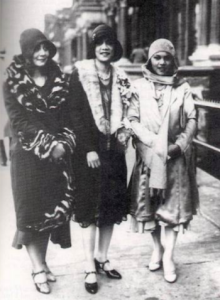
Three Harlem Renaissance Women 1925Irene has strong and angry thoughts on Claire’s predicament, but in her presence is unable to act in accordance with them. She is stuck between loyalty to her race and guilt at her ability to pass for the thing that so oppresses them.
“Mingled with her disbelief and resentment was another feeling, a question. Why hadn’t she spoken that day? Why, in the face of Bellew’s ignorant hate and aversion, had she concealed her own origin? What had she allowed him to make his assertions and express his misconceptions undisputed?”

The fear Irene has turns it into something of a psychological suspense novel, use of the word dangerous planting the seed of it early on.

“Her brows came together in a tiny frown. The frown, however, was more from perplexity than from annoyance; though there was in her thoughts an element of both. She was wholly unable to comprehend such an attitude towards danger as she was sure the letter’s contents would reveal; and she disliked the idea of opening and reading it.”

Neither woman is totally content with the life decisions they have made, each of them reaching for something that eludes now them, witnessing it in the other, living with a pervasive level of anxiety that threatens to disrupt their lives. Their predicaments provide an insight into the country’s turbulent feelings towards integration and race relations in the 1920 -1930’s

Further Reading

My review of Quicksand by Nella Larsen

My review of From Caucasia With Love by Danza Senna

Lapham’s Quarterly: Passing Through by Michelle Dean: Nella Larsen made a career of not quite belonging

Essay in Electric Literature by Emily Bernard: In Nella Larsen’s ‘Passing,’ Whiteness Isn’t Just About Race

New York Times: Overlooked Obituaries – Nella Larsen (1891-1964) Harlem Renaissance-era writer whose heritage
informed her modernist take on the topic of race by Bonnie Wertheim

Harlem Renaissance Titles Reviewed Here

Not Without Laughter by Langston Hughes

Their Eyes Were Watching God by Zora Neale Hurston

Sister Outsider by Audre Lorde

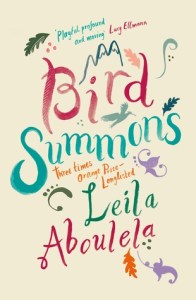
Bird Summons (2019) by Leila Aboulela

This is the first book I have read by Leila Aboulela, an author I have long wished to read, being someone who grew up in one culture and has experienced life in another, an observer perspective that interests me.

A New Exploration of Culture

There was a time when literary insights into other cultures came predominantly from male explorers of anglo-saxon cultures, now we are increasingly able to read stories from a viewpoint of a woman coming from an African or Eastern culture or country, living in the West. They are able to bring a richness in perspective and fresh insights of encounters with the place they have arrived in and people they live side by side.

Bird Summons is a tale of three women. They share in common that they belong to the Arabic Speaking Muslim Women’s Group, although they have all grown up in different countries. Within the group and from that common element, they will challenge and learn from each other.

We witness how attitudes shift and change as they transform, within this environment they have adapted to. One can not live elsewhere and stay fixed in the past and even when one adapts to a new present, it is necessary to continue changing and moving forward, no matter what challenges us from the outside.

The first British woman to perform the Hajj

Salma has organised a trip for the members of the group to visit the remote site of the grave of Lady Evelyn Cobbold, the first British woman to perform the Hajj pilgrimage to Mecca, to educate themselves about the history of Islam in Britain, however rumours of its defacement cause some to have doubts, whittling their numbers to just three.

“The attempt of the women to visit Lady Evelyn’s grave is a way of connecting more closely to Britain. Because Lady Evelyn was a Muslim like them, they see her as one of them and it gives them a sense of belonging.

She was also more independent than they are, stronger, more confident, more able. She was a Scottish aristocrat and therefore vastly more entitled than they would ever be. She represents the figure of a leader which is something that they need.” Leila Aboulela

Sometimes adversity offers a gift and rather than an overnight visit, they decide to stay a week at the loch, a resort on the grounds of a converted monastery, from where they can leisurely make their way to the grave.

A Contemporary Scottish Pilgrimage

Each of the three women has a pressing life issue that over the week consumes them, that the other women become aware of, leading them to have a strange, hallucinatory, spiritual experience. As their journey unfolds, they explore how faith, family and culture determine their lives, decisions and futures.

As they travel we get to know their characters, their lives, how attached they are to the place they now call home and the pressures and influences on them that come from the cultures they have left behind. They live at the intersection of a past and present, of who they were and who they are becoming. This holiday will be transformational for all three of them.

“Salma, Moni and Iman are weighed down by their egos, though it might not be apparent to them at first. Like most of us, they see themselves as good people, justified in the positions and decisions they have taken.” Leila Aboulela

Salma was trained as a Doctor in Egypt, leaving her fiance, for David, a British convert who would bring her to Scotland, something her family approved of and she was excited to do, despite being unable to practice her profession. Though successful in her current job as a massage therapist, when Amir starts messaging her, she begins imagining the life she might have had, obsessively checking and replying to the messages.

Moni left a high flying career, her life now revolves around caring for her disabled son Adam, consuming her and pushing her away from her husband who wants them to join him in Saudi Arabia, something Moni rejects because of how she believes Adam will  be perceived, an outcast.

Iman is young, beautiful, unlucky in love and a poor judge of character, the men she has married were stunned by her beauty but possessive.

Surrounded by adulation and comfort, like a pet, she neither bristled nor rebelled. She did, though, see herself growing up, becoming more independent.

The Hoopoe

Hoopoe bird Bird Summons Leila Aboulela
Photo by Magda Ehlers on Pexels.com

And then there is the Hoopoe. The wonderful bird that’ll take some readers on a side journey to find out more. The bird comes to Iman in a dream, recounting fable-like stories.

It spoke a language that she could understand.  It knew her from long ago, it had travelled with her all those miles, never left her side, was always there but only here in this special place, could it make  itself known.

It is one of only three birds mentioned in the Quran, and symbolises tapping into ancient wisdom, probing one’s inner questions for the answers being sought.

The appearance of the Hoopoe late in the novel heralds a period of magic realism, that reminds me of the experience of reading The Enlightenment of the Greengage Tree. It comes as a surprise when the woman’s reality shifts, as they shape-shift and are tested within the experience. It is disconcerting for the reader as we too experience the women’s confusion, but I recognise it as part of the cultural experience, of an aspect of traditional storytelling bringing a mythical message-carrying bird into contemporary social relevance.

“The Hoopoe in classical Sufi literature is the figure of the spiritual/religious teacher who imparts wisdom and guidance. However, the Hoopoe’s powers are limited. The women must make their own choices.”

It is a wonderful book of three international women, their journey, which they believe to be a pilgrimage to an important site, which becomes an inner voyage of transformation.

Highly Recommended.

Leila Aboulela, Author

Leila Aboulela was born in Cairo and brought up in Khartoum, the capital of Sudan. She lived for some years in Aberdeen, Scotland.

Her novels include The Translator (1999), Minaret (2005) and Lyrics Alley (2010) all of which were longlisted for the Orange Prize — and The Kindness of Enemies (2015). Lyrics Alley also won Novel of the Year at the Scottish Book Awards and was shortlisted for the Commonwealth Writers’ Prize.

“When I write I experience relief and satisfaction that what occupies my mind, what fascinates and disturbs me, is made legitimate by the shape and tension of a story. I want to show the psychology, the state of mind and the emotions of a person who has faith. I am interested in going deep, not just looking at ‘Muslim’ as a cultural or political identity but something close to the centre, something that transcends but doesn’t deny gender, nationality, class and race. I write fiction that reflects Islamic logic; fictional worlds where cause and effect are governed by Muslim rationale. However, my characters do not necessarily behave as ‘good’ Muslims; they are not ideals or role models. They are, as I see them to be, flawed characters trying to practise their faith or make sense of God’s will, in difficult circumstances.”

Further Reading

the punch magazine: interview: Leila Aboulela, Elsewhere, Love

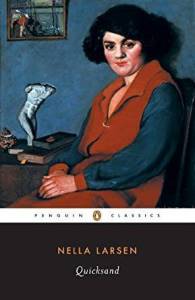
Quicksand by Nella Larsen (1928)

As I read the last sentence, I shouldn’t have been surprised, because the end was coming, there was no time for another escape, for the pattern of Helga’s life to continue. “Oh, my” I uttered, as understanding of the meaning of the title, “Quicksand” sunk in. It had claimed her.

Quicksand Nella Larsen Identity Race BelongingVoice is Everything

What a unique voice and depiction of a rootless young woman searching for her place in the world, bereft, not finding a sense of belonging within family, when the world around her judged the two sides of her family as if they are different peoples because of the colour of their skin.

If you couldn’t prove your ancestry and connections, you were tolerated, but you didn’t belong.

Helga’s mother was a Danish immigrant, her father an African-Caribbean man of whom she had little or no memory or connection to his family. After her mother dies Helga (15) is sent to a boarding school, where life is a little easier for her, except for the growing awareness, like a hole inside her, that unlike her peers, she has no siblings, no family, no roots, no longing for home, no real happiness.

They had mothers, fathers, brothers, sisters, of whom they spoke frequently, and who sometimes visited them.

Her life becomes a search to fill the void, an attempt to purge herself from a self-loathing of having been exposed to both sides of her heritage and their disdain for each other, unable to fully embrace either one, as she is both. And from the opening pages you know you are in the presence of a woman who is on a quest to discover if this is all there is, this half life she’s been living until now.

In one sense, her ability to get up and change her circumstances is admirable, empowering even, her refusal to accept the status quo and take action, her departing words carry unexpected strength. When she resigns from her teaching job mid-term, she doesn’t hold back in telling the principal how much she hates the school and his misguided perception of who he thinks she is, with her conflicted feelings of her biracial and non-Southern lineage.

In the girl blazed a desire to wound. There he sat, staring dreamily out of the window, blatantly unconcerned with her or her answer. Well, she’d tell him. She pronounced each word with deliberate slowness.
“Well for one thing, I hate hypocrisy. I hate cruelty to students, and to teachers who can’t fight back. I hate backbiting, and sneaking, and petty jealousy.”

Revenge Against Rejection

When she encounters those who see her, like Dr Anderson, she feels the urge to abandon her selfish need to flee, responding to a mystifying yearning to serve, until he too says the words that will inflame her ego, pushing reason away, refusing it a place in her thought process.

“Someday you’ll learn that lies, injustice and hypocrisy are a part of every community. Most people achieve a sort of protective immunity, a kind of callousness, toward them. If they didn’t, they couldn’t endure. I think there’s less of these evils here than in most places, but because we’re trying to do such a big thing, to aim so high, they irk some of us more.”

Her loss and lack of rootedness creates an incessant restlessness, her education, beauty and even her bigoted relative provide her the means to be independent. But that which she wishes to escape from, continuously pursues her, seeking solace in the outer world, she avoids the one path that might bring her serenity, to look within.

Nella Larsen Quicksand Passing Harlem Renaissance

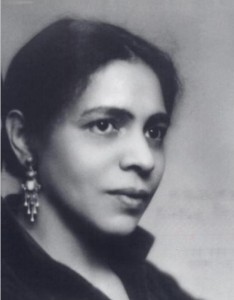
Nella Larsen

She leaves Nashville for Chicago, where she discovers the need for connections and references and is brutally rejected by her Uncle’s new wife, who can’t bear to harbour the thought they might be related.

She saw herself for an obscene sore in all their lives, at all costs to be hidden. She understood, even while she resented. It would have been easier if she had not.

She finds her way to New York and finds solace there, until the restlessness returns. The descriptions of her encroaching discontent are vivid, realistic, perhaps even a real memory, being the more “obviously autobiographical” of Larsen’s two novels.

A windfall from her Uncle provokes an impulse to seek out her family in Denmark, whom she has dim but fond memories of from a childhood visit. Again she begins life anew and initially revels in it, and enjoys being the object of attention, until the vague discontent returns.

She desired ardently to combat this wearing down of her satisfaction with her life, with herself. But she didn’t know how.

A Sign of Healing

We are lured into the belief she may have found the right path, as leaving Denmark signifies a return after hearing the wailing undertones of songs remembered in her youth strike her longing heart, remove her defenses, making her homesick for more than just the land of her birth.

For the first time Helga Crane felt sympathy rather than contempt and hatred for that father, whom so often and so angrily she had blamed for his desertion of her mother. She understood, now, his rejection, his repudiation, of the formal calm her mother had represented. She understood his yearning, his intolerable need for the inexhaustible humor and the incessant hope of his own kind, his need for those things, not material, indigenous to all his peoples’ environments.

Nella Larsen Passing Quicksand BiRacial Identity Belonging

Photo by Josh Sorenson on Pexels.com

A Surprise Twist

The plot then takes a significant and surprising turn and the ending too, contributing to what no doubt makes this an interesting novella for discussion, as to the origins and perpetuation of Helga’s difficulties, separation from the mother, from one’s lineage and family, identity, race, cross-cultural societal differences, what it means to belong and the expectations of being a woman.

I loved it. Even if it felt unfinished, like a young woman’s coming-of-age as she learns who she is, first from the outside, in terms of how others perceive her and also how she perceives the outside world, initially with each move, falling into the same trap of finding solace in that which is external to her. She is ripe for an inner journey of transformation, that which follows the realisation that who ones parents and family are, isn’t who “I am”. Instead she finds something else, a fork in the road and it is as if the author can not take us further.

Nella Larsen

Nella Larsen (1891-1964), an acclaimed novelist of the Harlem Renaissance, became the first African American woman to win a prestigious Guggenheim Fellowship and won the Harmon Foundation Bronze Medal for Literature, celebrated as one of the bright stars of the Harlem Renaissance.

Famous for her two books Quicksand and Passing, she was the daughter of immigrant parents. Her father, Peter Walker, was a black cook from the West Indies, and her mother, Mary Hanson, was a Danish seamstress. Soon after Larsen was born, her father disappeared. Her mother remarried a white Danish man named Peter Larsen and they had a daughter. She spent four years living in Denmark before returning to the US where she worked as a nurse and a librarian.


Not Without Laughter by Langston Hughes

Langston Hughes (1902-1967) and The Harlem Renaissance

Although well-known as a poet and pioneer of the Harlem Renaissance movement – an intellectual, social, musical and artistic explosion centered in Harlem, Manhattan, New York City, from 1918 until mid 1930’s, Langston Hughes also wrote Not Without Laughter, a semi-autobiographical novel, now considered a classic.

Three Harlem Renaissance Women 1925During the Harlem Renaissance, there was an outpouring of creativity, an expression of how African Americans sought social, political, and artistic change in the US, also influencing francophone black writers from African and Caribbean colonies living in Paris. This movement turned attention to and invoked pride, in the lives of Black Americans.

An anthology of essays, poetry and fiction produced during this era, edited by Alain Locke, reflects the voice of middle class African American citizens who desired  equal civil rights like their white, middle class counterparts. Langston Hughes however sought to give voice to and remained a humble advocate for the lower, working class.

His authenticity, appreciation and ability to see beauty in simplicity, evoked through the power of his words, proved him to be one of modern literature’s most revered and versatile African-American authors.

Not Without Laughter, written while he was a student at university, and inspired by his own youthful experiences, provides us a privileged insight into the kind of characters who inhabited his world and imagination, giving us today this powerful, timeless novel.

Books That Connect Threads

As I began reading this I was reminded of Bernice McFadden’s The Book of Harlan, a story of another young man, in part inspired by the author’s grandfather and pulling on historical references of the time, both general to the population and specific to her own family.

Here it’s semi autobiographical, as Hughes writes of a boy named Sandy, like himself and like Harlan, raised by a grandmother who was more worldly and wise, women with ideas about raising grandsons to reach their better potential, while their daughters were off following husband(s) who liked the road and moved from place to place in search of their dreams. Being a young couple and trying to make a living was challenge enough, the grandmother, though often a working woman herself, was a wise and practical choice for keeping a boy on track towards a worthy future.

When I read more about Langston Hughes, I was reminded too of Audre Lorde and her essays in Sister Outsider, of her travels and observations in Russia, looking at that foreign country through the lens of being black and a woman; Hughes too was curious about the world beyond his home town, travelling beyond his home and country.

Hughes rode steamships to West Africa, toured the American South, traveled to Spain to cover the Civil War, rode the Trans-Siberian Railway, and saw his own reputation shift from Harlem Renaissance star in the 1920s to Communist activist poet in the 1930s to public figure in the 1960s…

Book Review

Not Without Laughter is a coming-of-age story that introduces us to Sandy Rogers who lives with his grandmother who everyone refers to as Aunt Hager and his mother Annjee, who works as a housekeeper for a rich white family, while his father Jimboy traverses the country pursuing a living as a musician.

He was a dreamy-eyed boy who had largely grown to his present age under the dominant influence of women – Annjee, Harriett, his grandmother – because Jimboy had been so seldom home.

It’s 1930’s in small town Kansas and Hughes creates a vivid portrait of African-American family life in a racially divided society, where some try to make the most of the way things are without changing it, some try to help others no matter their colour or creed, some aspire to be like what they perceive are successful white folk and Sandy observes all, in the process of making up his mind about all that he witnesses.

Eventually Annjee follows her husband, whom she only ever sees through rose-tinted glasses believing that one day things will change and their fortunes will change. Sandy gets his knowledge of a man’s world from his part-time jobs at the barber shop and as a bellboy in a local hotel.

Aunt Hager as they affectionately call her, is a great character and the one who truly formed Sandy into the quiet, highly observant child and teenager he becomes, a hardworking washerwoman she is always there for those who are ailing, and worked every day of her life to the last.

We follow Sandy through his opportunities and disappointments, his observations of how his people are treated and the strangeness of those who try to be what they aren’t, moving up in a world that makes some of them ashamed of their humble beginnings and the humble trying to stay good, not allowing themselves to indulge in certain types of disreputable fun should it corrupt them.

Racism is ever present, like the shadow that projects itself in full sunlight, unquestioned, accepted and quickly forgotten by white children whose psyche is undamaged by its selective vengeance. Sandy sees everything, choosing his revolutionary acts wisely, knowing when to run, where to find safety  and paying homage where it is due.

Even when he is at a loss, his new situation offers him the opportunity to learn anew, seeing more of the world his people inhabit, the consequences of the various choices they make, so that by the time he too must make a choice, he is as well informed as he can be.

In the home of the social-climbing Tempy, Sandy discovers a treasure trove of literature, which he eagerly consumes. Life  blossoms for Sandy, who, as he excels at school, grows both in stature and self-confidence.  – from the Introduction by Maya Angelou

Langston Hughes The Racial Mountain Not Without Laughter

Langston Hughes

It’s a heartfelt story that leaves a sense of regret as the last page is turned, when Sandy is deciding whether to leave school as suggested by his mother, to support her, or return to his studies as suggested by his Aunt, who like her mother wishes him to have that chance at bettering himself.

His observations of family dynamics, of the impact of race, community connection, the culture of music and the complications of young love are portrayed vividly and without judgement, leaving it to the reader to note the obvious.

Ultimately the title says it all, the way to cope, the example he admires, the man who finds something in his day to laugh about or someone to laugh with, finds joy right there.

A rich and important work, Hughes shines a light on the black American experience, paying homage to those who formed and informed him, enabling him to leave his own legacy for which we are fortunate to have insight into.

I, too, am America.

Further Reading

Poem: I, Too by Langston Hughes

Essay: Langston Hughes landmark essay The Negro Artist and the Racial Mountain

Article, New Yorker: The Elusive Langston Hughes by Hilton Als (2015)

An Introduction to the Author: Langston Hughes 101 by Benjamin Voigt