Reading Ireland Month 2025

March is Reading Ireland month, an initiative created by Cathy at 746 Books and it is simply a way of being in community, while reading anything written by Irish authors or that relates to Ireland, there are no fixed rules, just the intention to Read Ireland, whatever that means to you! There’s even a Spotify playlist if you’re interested in a bit of musical culture.

Getting a Jump Start

For me that means reading more Irish authors from my bookshelves. I did read two in January, in fact my first read of 2025 was Donal Ryan’s Irish Book Award 2024 winning, heart, be at peace, a novel about multiple characters in a rural town in County Tipperary facing the different issues that face them a decade or so on from his debut novel The Spinning Heart.

Then I picked up a beautiful second hand hardback Water by John Boyne on holiday, and read it on my flight home. It is the first of four novellas in his The Elements series and now I want to read the next three, Earth, Fire and the final one Air due out in May 2025. But not yet, I’m prioritising what I already have!

Reading From the Shelves

A selection of books to read during Reading Ireland month of March

So here is the pile from my bookshelves, from which I will be choosing what to read in March 2025.

There are also three titles languishing on my kindle, which doesn’t get as much attention as it should, because out of sight is out of mind when it comes to reading. So I’m jogging my memory and will try to read at least one of these e-books.

On the kindle I have Listening Still by Anne Griffin, The Quiet Whispers Never Stop by Olivia Fitzsimons and Quickly, While They Still Have Horses by Jan Carson. In physical print I have another Carson The Raptures, that I picked up at the annual Ansouis vide grenier in September 2024.

Audrey Magee’s The Colony (2022) was longlisted for the Booker Prize, shortlisted for the Orwell Prize for political fiction and the Kerry Group Irish Novel award, so it gained a lot of attention and I have been keen to read it.

When Fiction Reminds Us of Those Who’ve Passed

I really enjoyed Sebastian Barry’s Old God’s Time (2023) and want to read more of his work, so I chose his Dunne Family trio of books, Annie Dunne (2002), A Long Long Way (2005) and On Canaan’s Side (2011) to delve more into his storytelling. I am part way through reading these now.

I love that this collection of novels and the play that was the first in the series, were all inspired by characters from his own ancestral lineage. That inspired me too.

After reading A Long Long Way, I became curious, as I too have an ancestor, born in the same year as his character Willie Dunne (1896), who like Willie, went to France in World War I, was in an Irish regiment and did not return. My ancestor Edmund Costley died on 9 April 1916, in Ypres, West Flanders, Belgium at the age of 19. I’ll be writing a post about him in April.

Historical Re-Imaginings, True Crime, Women’s Lot

I have read two novels by Mary Morrissey, Mother of Pearl (1995) and Penelope Unbound (2023). Morrissey tends to take historical stories and/or characters and re-imagine their lives. Mother of Pearl was inspired by a notorious baby-snatching case in 1950’s Ireland, that she chose to fictionalise, having said that the truth would have come across to readers as unbelievable; while Penelope Unbound re-imagines the life of Nora Barnacle, if in Trieste, Italy, when James Joyce made her wait all day outside a train station for him, she decides to leave.

This year I’m going to read her imagined autobiography, The Rising of Bella Casey (2013); she was the sister of the acclaimed playwright Sean O’Casey, and it is set at the turn of the century Dublin, a social commentary on the lives of women in that era.

Then there is Maggie O’Farrell’s The Marriage Portrait (2022), another historical re-imagining, this time of the short life of Lucrezia de’ Medici, a sixteenth century member of the renowned aristocratic House of Medici in Italy. I enjoyed O’Farrell’s riveting memoir I Am, I Am, I Am – Seventeen Brushes With Death (2017), the first of her works I read, and then the multiple award-winning, Hamnet (2020) and The Hand That First Held Mine (2010), so I’m looking forward to immersing in this one.

Irish Non-Fiction
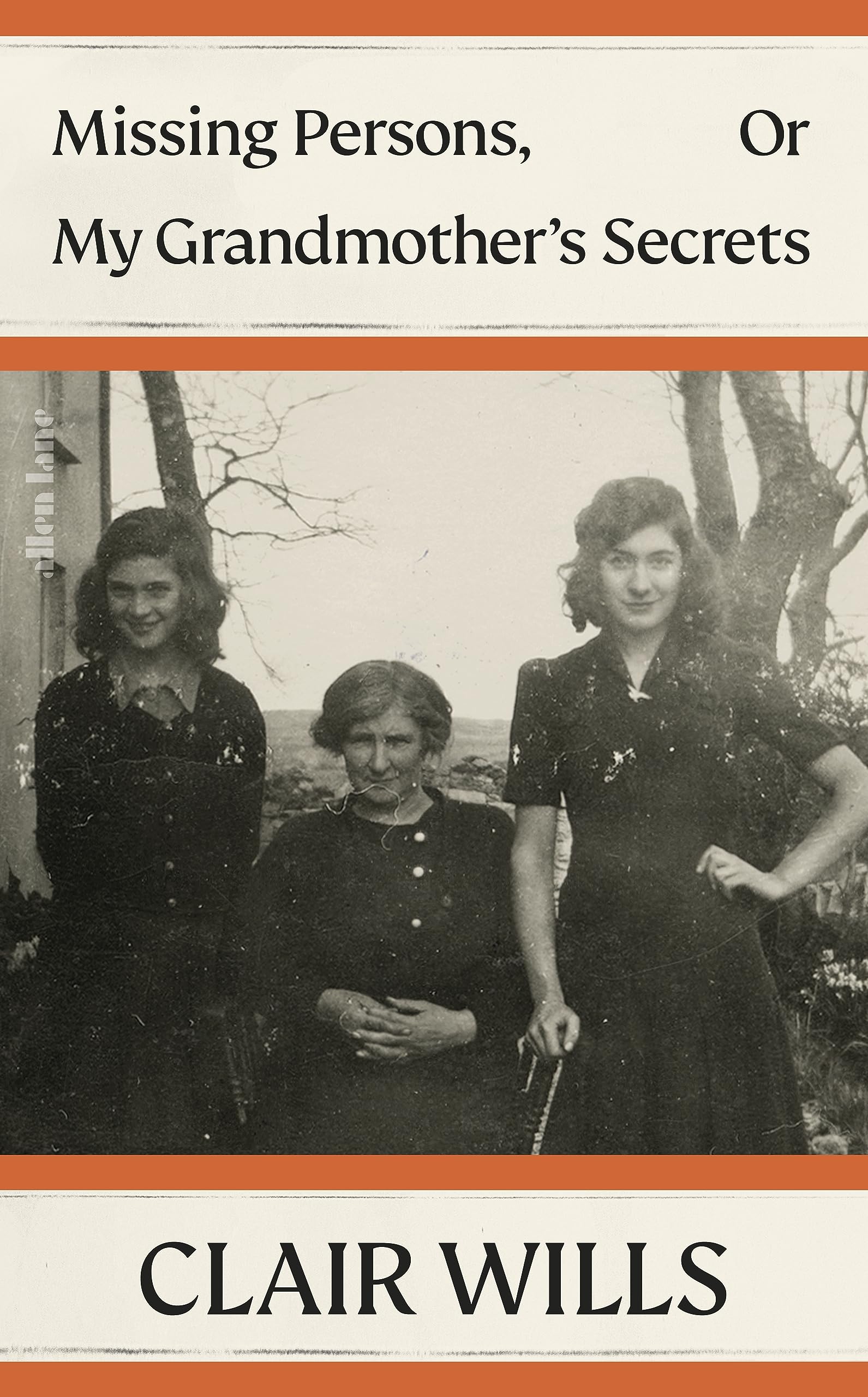
missing persons or my grandmothers secrets unmarried mothers in ireland nonfiction memoir that excavates the truth about silence

There are two non-fiction titles on my pile, Missing Persons, Or My Grandmother’s Secrets by Claire Wills, author, critic and cultural historian, winner of the Irish Book Award for non-fiction, who has written a family history that blends memoir with social history. She explores the gaps in that history, brought about by Ireland’s brutal treatment of unmarried mother’s and their babies, and a culture of not caring, not looking into or asking questions, rolling back a dark period of its history of loss and forgetting.

The second non-fiction title is the candid Fierce Appetiteslessons from my year of untamed thinking, also subtitled, Loving, Losing and Living to Excess in my Present and in the Writings of the Past by medieval historian Elizabeth Boyle.

The title is a reference to Vivian Gornick’s memoir Fierce Attachments, which is part of what intrigued me, but also the uniqueness of someone finding sense of three dramatic events in their life through medieval literature.

Every day a beloved father dies. Every day a lover departs. Every day a woman turns forty.All three happening together brings a moment of reckoning.

Boyle writes on grief, addiction, family breakdown, the complexities of motherhood, love and sex, memory, class, education, travel (and staying put), with unflinching honesty,deep compassion and occasional dark humour.

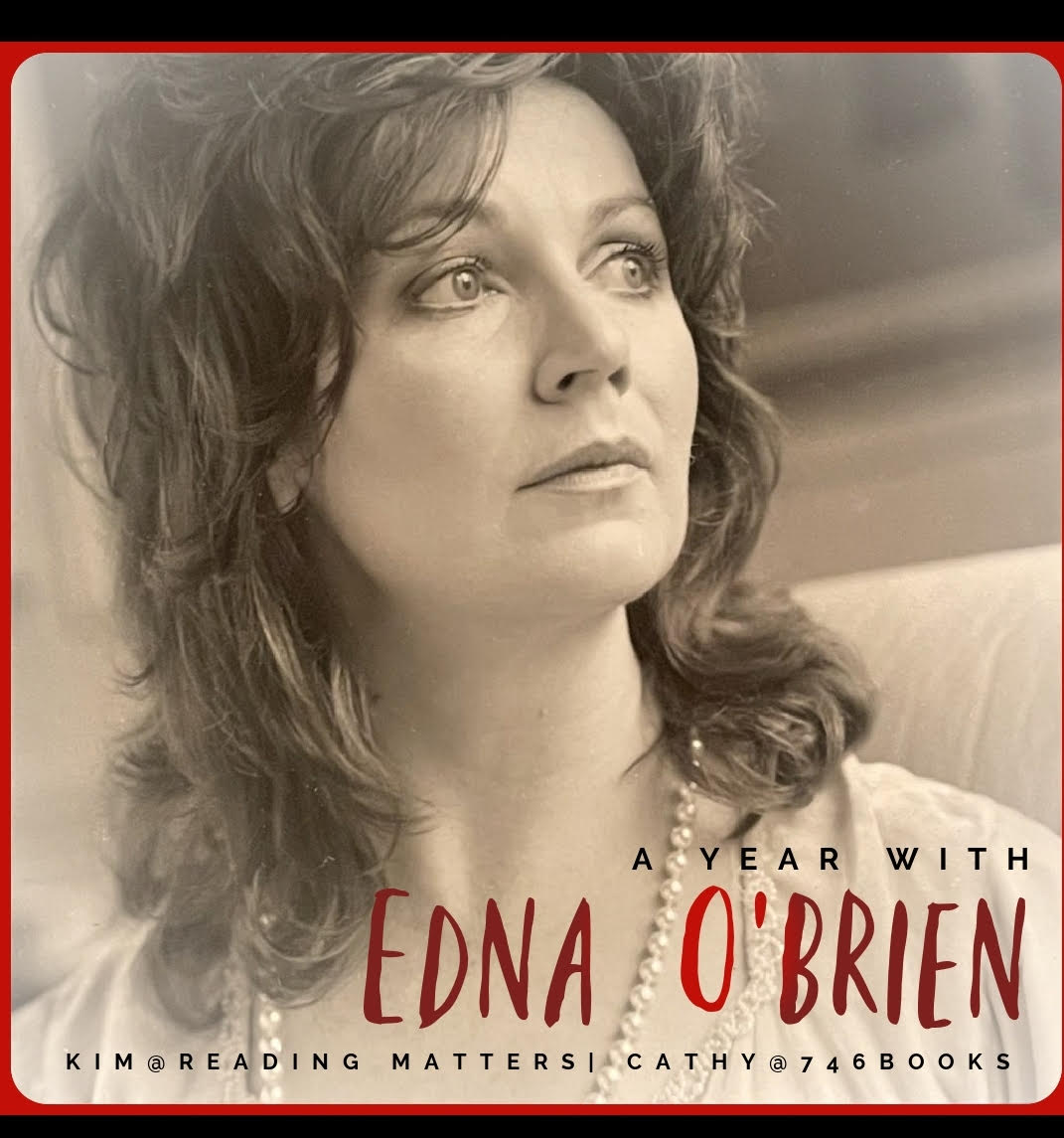
Remembering Edna O’Brien (15 December 1930 – 27 July 2024)
Edna O'Brien The Country Girls The House of Splendid Isolation

I couldn’t read Ireland without adding a title from Edna O’Brien, who died in 2024 at the age of 93. In 2023, I read The Country Girls trilogy, made up of three stories The Country Girls (1960), The Lonely Girl (1962), and Girls in Their Married Bliss (1964) released in 1986 in a convenient single volume.

Credited with breaking the silence on issues young girls faced growing up in Ireland, it was a subject she would often return to. She was punished for it, but lead the way for others to eventually follow.

O’Brien described her work in this way:

I have depicted women in lonely, desperate, and often humiliated situations, very often the butt of men and almost always searching for an emotional catharsis that does not come. This is my territory and one that I know from hard-earned experience. Edna O’Brien (Roth, 1984, p. 6)

Cathy at 746 Books and Kim at Reading Matters are spending a year reading Edna O’Brien and are reading Country Girls in February, you can see their reading schedule for the year if you go to their blog.

I have decided to read one my shelf, The House of Splendid Isolation (1991), the first book in her Modern Ireland trilogy, a political novel, depicting the relations of an Irish Republican Army terrorist and his hostage, an ageing Irish widow, in a house that represents the troubled nation.

Suggestions, Recommendations?

That’s the selection I have made, no guarantees on what I’ll get through, but I’m looking forward to the immersion. Have you read and enjoyed of the titles I mention above?

Are you going to read any Irish literature in March? Let me know in the comments below.

Couver Un Astre by Sophie Fontanel

How to even translate the meaning of this title. Couver means to cover, but that is insufficient to describe what Sophie Fontanel means when she writes ‘Couver un astre’.

While trying to understand the greater meaning, I came across a description that put it like a hen sitting on her eggs, protecting them, brooding, incubating.

A curious way to describe a large balloon don’t you agree? I would have to to read on and find out.

A Ball, A Ballon or An Olympic Cauldron

A large helium balloon floats up into the sky in Paris during the Olympic Games

She was referring to the large twenty-two metre diameter helium-filled balloon that the French designer Mathieu Lehanneur created for the Paris Olympics in July/August 2024. And more specifically, the attachment, adoration and psychological effect this ‘Boule’ had on her and much of the local population, as it sat in the Jardin des Tuileries and every evening rose up skywards and settled there like a full moon, then during the day descended.

It began to gather an almost cult-like following, crowds standing in the street or sitting at their apartment windows, waiting for the moment when the balloon would rise.

With a Huff and a Puff, and an I’m Out of Here

In her slim, contemplative non-fiction work, Sophie Fontanel described her cynicism at the arrival of the Olympic Games into Paris, all the unwanted infrastructure, inconvenience, people and disturbance. So much was she affronted, she left the city the opening ceremony week and went off to a Greek Island with her friends, while another friend, with quite the opposite attitude, quit Bretagne and came to Paris for a month specifically to witness and be a part of the historical moment.

She owns up to exaggerating her anticipated frustrations, but what she isn’t prepared for on her return, is the effect of a giant balloon, seen from the window of her apartment, a balloon that draws crowds as it rises every evening and descends every morning, quietly elevating the ‘joie de vivre’ of those who witness it.

Come Closer, Stand Still, Behold

The book is written during that summer, in sections relating to proximity of observation.

It begins with a series of 8 black and white photos over 4 pages that show the rise and descent of the magnificent creation, followed by:

A Prologue
De loin (From afar)
De près (Up Close)
De plus près (Closer)
De tout près (Up Very Close)
An Epilogue, by Mathieu Lehanneur

There is her contemplation and wonder of it, occasional conversations, both with friends and strangers, various encounters, concluding with that of the inventor/designer himself, who interacts on her social media post and asks his own contemplative question. A kind of invitation to respond, that manifests into an actual invitation to do what he suggests, to get closer and observe from yet another perspective, the magic of this phenomena.

《Et si vous veniez la voir de près? Histoire d’avoir un autre point de vue…》

What was this hypnotic effect of a lustrous balloon that made us not wish to turn away, that made those walking the rue ravioli lift their gaze. Some filmed it …

“Et puis, ils cessaient de le faire. Ce n’est pas que cela ne rendait pas, c’était que rien ne valait l’admiration simple.
De temps en temps, seuls les yeux compte.”
《Eh, c’est à nous, tout ça?》

And then they stopped. Not because it didn’t capture it, it was that nothing beats simple admiration. Sometimes only the eyes can appreciate.

《Hey, this is ours, all this?》

The magic of a gift of a balloon offered to the people. The incomprehension of the gift.

Sharing the Experience, An Invitation

Photo by Mathias Reding on Pexels.com

The author posted a few photos and messages on her Instagram account, having observed the balloon from her window. One day a message appears inviting her to come closer. Intrigued she does and so another wonderful aspect of the book, how sharing reflections and observing beauty and wonder can create connection and community.

I bought this as a gift for a couple of my French friends, who had been somewhat ambivalent about the then approaching season of the Olympics, who were pleasantly surprised by their own reaction when it did finally arrive and in many ways brought out the best in people.

It is a testament to the idea that magic can arrive through creativity and community, that the presence of a balloon can lift spirits, as most children know and many adults have forgotten.

I adored this little book and highly recommend it if you took any pleasure in the summer of 2024 Paris and wished to remember the good feeling it brought about in many.

For the moment it is published in French, hopefully it will get picked up and translated into English.

Sophie Fontanel, Author

Sophie Fontanel is an author and essayist living in Paris. She has been an editor at Elle France for more than a decade. She has written 18 books in the French language.

Mathieu Lehanneur, Designer

“This absolutely unique Cauldron represents all the spirit I wanted to give to the Olympic and Paralympic objects. Light, magical and unifying, it will be a beacon in the night and a sun within reach during the day. The fire that burns in it will be made of light and water, like a cool oasis in the heart of summer. I created the Torch, the Relay cauldron and the Olympic Cauldron as three chapters in the same story. The Cauldron is the epilogue and the ultimate symbol of that story. Light, magical and unifying…” ML

Women’s Prize Nonfiction Shortlist 2024

In 2024 The Women’s Prize created a new prize to raise the profile and awareness of women authors writing nonfiction.

They began with a list of 16 titles, from gripping memoirs and polemic narratives, to groundbreaking investigative journalism and revisionist history. It featured seven debut writers, two international bestsellers, two poets and five journalists. You can see the longlist here.

From Sixteen to Six Titles

The longlist has now been whittled down to six books covering a broad range of subjects – from life writing, religion, art and history, to AI, social media and online politics. What links them is an originality of voice and an ability to turn complex ideas and personal trauma into inventive, compelling and immersive prose.

“Our magnificent shortlist is made up of six powerful, impressive books that are characterised by the brilliance and beauty of their writing and which each offer a unique, original perspective. The readers of these books will never see the world – be it through art, history, landscape, politics, religion or technology – the same again.” Suzannah Lipscomb, Chair of Judges

The six titles shortlisted are:

Thunderclap: A Memoir of Art and Life and Sudden Death by Laura Cumming (UK) (Art History & Grief)

‘We see with everything that we are’

On the morning of 12 October 1654, a gunpowder explosion devastated the Dutch city of Delft. The thunderclap was heard over seventy miles away. Among the fatalities was the painter Carel Fabritius, dead at thirty-two, leaving only his haunting masterpiece The Goldfinch and barely a dozen known paintings. The explosion that killed him also buried his reputation, along with answers to the mysteries of his life and career.

What happened to Fabritius before and after this disaster is just one of the discoveries in a book that explores the relationship between art and life, interweaving the lives of Laura Cumming, her Scottish painter father, who also died too young, and the great artists of the Dutch Golden Age.

This is a book about what a picture may come to mean: how it can enter your life and change your thinking in a thunderclap.

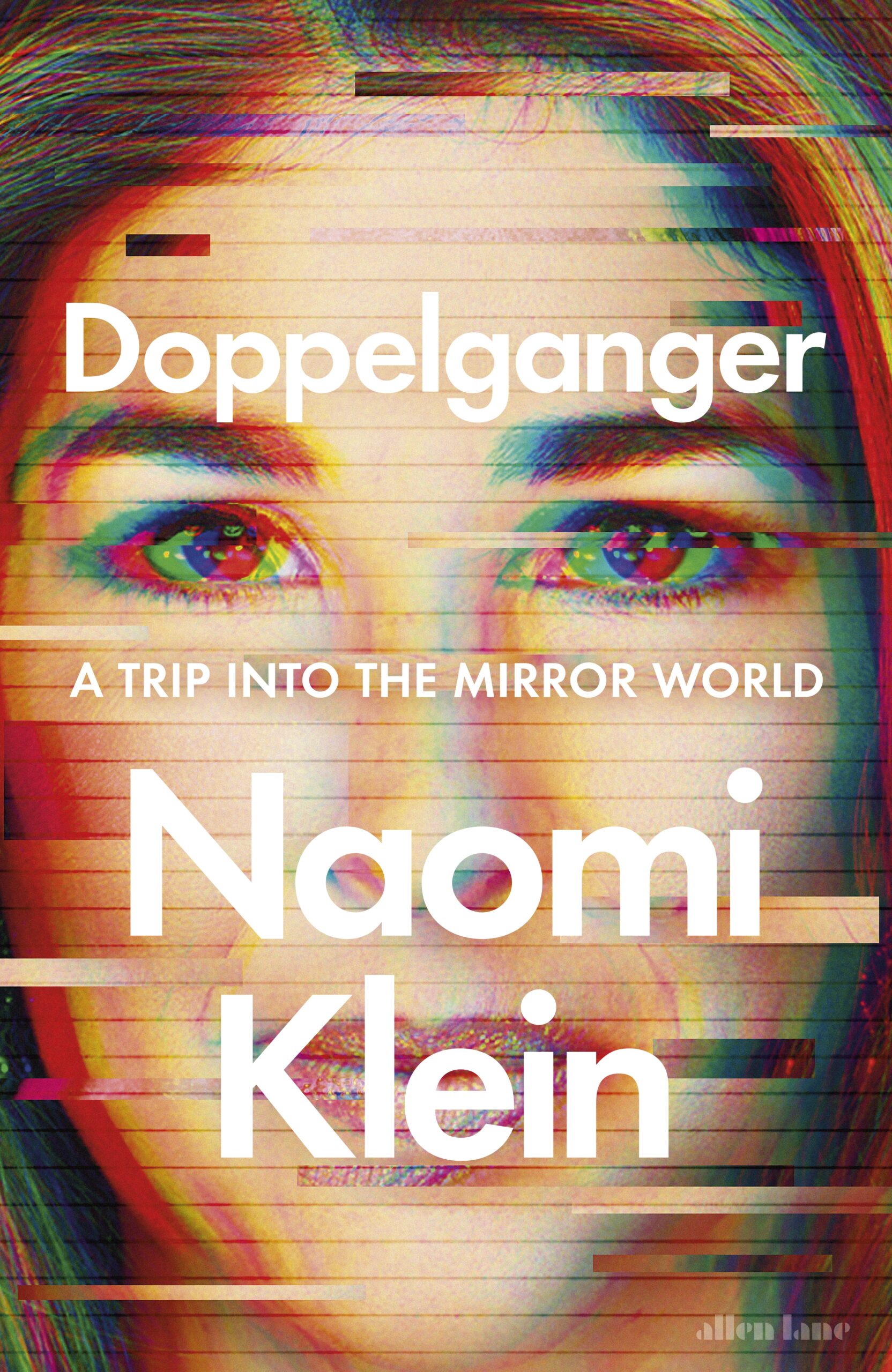
Doppelganger: A Trip Into the Mirror World by Naomi Klein (Canada) (Mistaken Identity)

– When Naomi Klein discovered that a woman who shared her first name, but had radically different, harmful views, was getting chronically mistaken for her, it seemed too ridiculous to take seriously. Then suddenly it wasn’t. She started to find herself grappling with a distorted sense of reality, becoming obsessed with reading the threats on social media, the endlessly scrolling insults from the followers of her doppelganger. Why had her shadowy other gone down such an extreme path? Why was identity – all we have to meet the world – so unstable?

To find out, Klein decided to follow her double into a bizarre, uncanny mirror world: one of conspiracy theories, anti-vaxxers and demagogue hucksters, where soft-focus wellness influencers make common cause with fire-breathing far right propagandists (all in the name of protecting ‘the children’). In doing so, she lifts the lid on our own culture during this surreal moment in history, as we turn ourselves into polished virtual brands, publicly shame our enemies, watch as deep fakes proliferate and whole nations flip from democracy to something far more sinister.

This is a book for our age and for all of us; a deadly serious dark comedy which invites us to view our reflections in the looking glass. It’s for anyone who has lost hours down an internet rabbit hole, who wonders why our politics has become so fatally warped, and who wants a way out of our collective vertigo and back to fighting for what really matters.

A Flat Place by Noreen Masud (Pakistan/UK) (Nature Writing Memoir)

– Noreen Masud has always loved flat landscapes – their stark beauty, their formidable calm, their refusal to cooperate with the human gaze. They reflect her inner world: the ‘flat place’ she carries inside herself, emotional numbness and memory loss as symptoms of childhood trauma. But as much as Britain’s landscapes provide solace for suffering, they are also uneasy places for a Scottish-Pakistani woman, representing both an inheritance and a dispossession.

Pursuing this paradox across the wide open plains that she loves, Noreen weaves her impressions of the natural world with the poetry, folklore and history of the land, and with recollections of her own early life, rendering a startlingly strange, vivid and intimate account of a post-traumatic, post-colonial landscape – a seemingly flat and motionless place which is nevertheless defiantly alive.

All That She Carried: The Journey of Ashley’s Sack, a Black Family Keepsake by Tiya Miles (US) (History)

– In 1850s South Carolina, Rose, an enslaved woman, faced a crisis: the imminent sale of her daughter Ashley. Thinking quickly, she packed a cotton bag with a few items. Soon after, the nine-year-old girl was separated from her mother and sold. Decades later, Ashley’s granddaughter Ruth embroidered this family history on the sack in spare, haunting language.

That, in itself, is a story. But it’s not the whole story. How does one uncover the lives of people who, in their day, were considered property? Harvard historian Tiya Miles carefully traces these women’s faint presence in archival records, and, where archives fall short, she turns to objects, art, and the environment to write a singular history of the experience of slavery, and the uncertain freedom afterward. All That She Carried gives us history as it was lived, a poignant story of resilience and love passed down against steep odds.

Code Dependent: Living in the Shadow of AI by Madhumita Murgia (India/UK) (Technology)

– What does it mean to be human in a world that is rapidly changing thanks to the development of artificial intelligence, of automated decision-making that both draws on and influences our behaviour?

Through the voices of ordinary people in places far removed from Silicon Valley, Code Dependent explores the impact of a set of powerful, flawed, and often exploitative technologies on individuals, communities, and our wider society. Madhumita Murgia, AI Editor at the FT, exposes how AI can strip away our collective and individual sense of agency – and shatter our illusion of free will.

AI is already changing what it means to be human, in ways large and small. In this compelling work, Murgia reveals what could happen if we fail to reclaim our humanity.

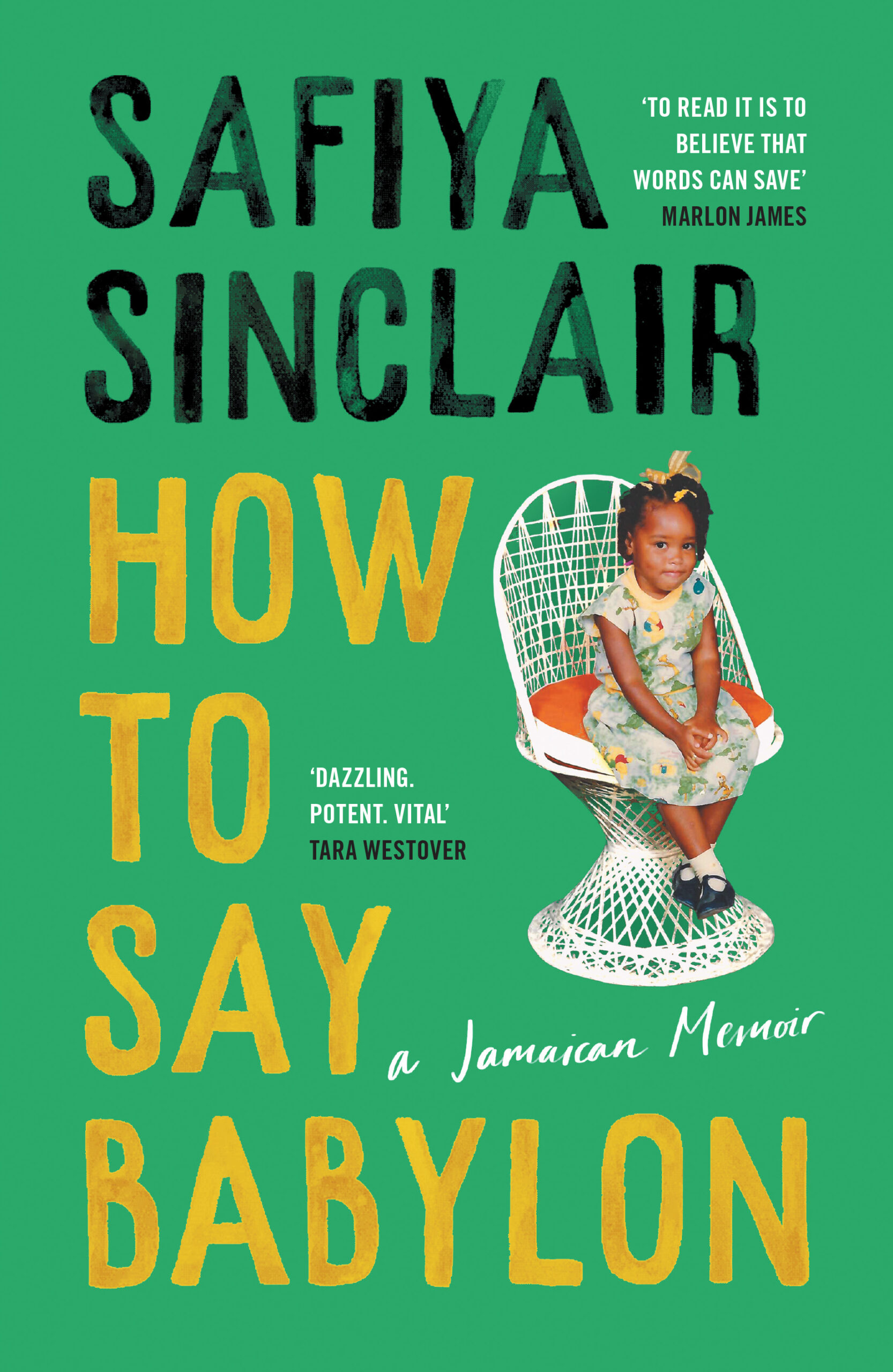
How to Say Babylon: A Jamaican Memoir by Safiya Sinclair (Jamaica) (Memoir)

There was more than one way to be lost, more than one way to be saved.

Born in Montego Bay, Jamaica, where luxury hotels line pristine white sand beaches, Safiya Sinclair grew up guarding herself against an ever-present threat. Her father, a volatile reggae musician and strict believer in a militant sect of Rastafari, railed against Babylon, the corrupting influence of the immoral Western world just beyond their gate. To protect the purity of the women in their family he forbade almost everything: nowhere but home and school, no friends but this family and no future but this path.

Her mother did what she could to bring joy to her children with books and poetry. But as Safiya’s imagination reached beyond its restrictive borders, her burgeoning independence brought with it ever greater clashes with her father. Soon she realised that if she was to live at all, she had to find some way to leave home. But how?

In seeking to understand the past of her family, Safiya Sinclair takes readers inside a world that is little understood by those outside it and offers an astonishing personal reckoning. How to Say Babylon is an unforgettable story of a young woman’s determination to live life on her own terms.

The Winner

The winner will be announced on the 13th of June 2024.

Have you read any of these titles? Anything here interest you? Leave a comment below letting us know if you have read or intend to read any of these titles.

In Ordinary Time, Fragments of a Family History by Carmel McMahon #ReadingIrelandMonth24

In Ordinary Time is one of those wonderful finds, when a number of your own disparate interests collide and someone has managed to put together a work that spans years, across two countries, reflecting on different events in their own life and the background of a country and culture’s history, with these continuous threads running through it, that make it almost seamless.

In a hybrid memoir, Carmel McMahon has written fragments of a family history, structuring them into four parts of three chapters, beginning with Part One: Imbolc: February, The Feast of Saint Brigid and ending in Part Four Samhain: January, Notes on A Return where the story comes full circle.

There are 21 black and white illustrations scattered throughout the text, ordinary photos that amplify the message and create a sense of travel through time. I looked back at the index page for each photo and scribbled my penciled note underneath it, such was the joy of words meeting image.

Full circle feels appropriate to describe a work that despite that linear structure of months and parts, is not that. Rather, it represents points on the spiral of life that goes through cycles; repeating cycles, short cycles, long cycles, interconnected and intergenerational cycles.

Each of the events that she describes in her family history have a shadow history in the culture and while she reflects on her own situation, she finds resonance in the voices of others who have gone before, in particular those whose story we might not have heard, or if we have, might not have been aware of the full picture.

Her story begins somewhere in the middle of her own self-imposed exile, living in New York City. It voyages through her experience with addiction, denial and recovery and ends with the heroine’s return, the learning and this book.

The city had not yet woken on the frigid Sunday morning of February 20, 2011, when the body of a young Irish woman was found outside St. Brigid’s Church in Manhattan’s East Village. The news reports cited alcoholism, homelessness, and hypothermia as contributing factors in her death. They said that earlier that month, on St. Brigid’s feast day she had turned thirty-five years old. They said she wanted to be an artist. They said her name was Grace Farrell.

Photo by C1 Superstar on Pexels.com

She questions whether it begins here, or in 1937 when the new Irish state ratified its constitution to reflect a strengthened church-state partnership, that would have a devastating effect on thousands of lives of girls and women and their children, and the unborn future generations who might inherit that affected DNA. All those sent to the Magdalene laundries.

In 1966, her mother would live a version of the shame that surrounded pregnancy out of wedlock, managing to avoid institutional incarceration by disappearing for a while.

Women and children were not afforded the rights of citizenship, of subjecthood, of being. They lived under threat of being erased, hidden, buried. This is why my mother tells me – halting, hesitating – that in her day it was the worst thing in the world for a girl to find herself pregnant, but worse still was for her to talk about it.

That first sister Michelle, born in London, would be knocked down outside her primary school, three months before Carmel was born. Six more children arrived after her and Michelle’s name was never spoken in their house. The legacy of silence she had been born into continued, was passed on, but not forgotten.

Or did the story begin when she had her first drink at the age of ten, at a family gathering? Feelings of inferiority and shame, dulled by the dregs of the adults drinks that replaced that unwanted feeling with one of warmth, of a circle of golden light.

McMahon left Ireland in the 1990’s and did not return permanently until the pandemic era, 2021. Ironically, it seems to this reader, the return has allowed the distance to reflect on the journey and the learning and to piece the interconnectivity of so many people’s lives past, present and future into this text.

Science has proven and is now able to show how stress and trauma can be passed on biologically from one generation to the next, we read.

We know that now. Vehicles of transportation include, according to the scholar of memory studies Marianne Hirsch, “narratives, actions and symptoms.” The stories we tell and don’t tell, the actions we take and don’t take, the symptoms expressed by a mother holding the trauma tightly to herself, because she refused to burden her children with it.

Listening to the podcast On Being, she hears Dr. Rachel Yehuda reminds listeners that:

…we are not in biological prison: experiences and events in our environment can also make positive changes to our programming. We can consciously move towards healing.

These intertwined fragments thus reveal the events, experiences and the slow realisation of all that is working on her, the understanding and the aspects that will aid the healing.

Photo by Jessie Crettenden on Pexels.com

There are the endless jobs she tries to hold down, while numbing herself nightly; the visits back home precipitated by tragedy, the road trip across America, an escape that brings her closer to understanding loss and aloneness.

The industrial ghost towns, the late spring rain, the wide, low skies. The old sadness rising. An excess of black bile, they used to say, made the melancholic personality. Freud said that mourning and melancholia are akin in that they are both responses to loss. Mourning is a conscious and healthy response to the loss of a love object. Melancholia is more complicated. It operates on a subconscious level. All the feelings of loss are present, but for what? The melancholic cannot say. This, Freud says, is a pathology.

McMahon reads and shares anecdotes and reflections on the lives of other women who immigrated before her; the young Irish immigrant Maeve Brennan who was a staff writer at the New Yorker before the disease of alcoholism colonized her life; Mary Smith, one of many Irish women used for gynecological experiments in New York hospitals in the mid nineteenth century; Grace Farrell.

After a family tragedy, she reads Anne Carson’s Nox, a book of poems created from the notebook she recorded memories and impressions of her brother, in the decade after he died.

She did this, she tells us, because a brother does not end. He goes on.

She reflects on the Famine, on the role of church and state, on the complicit silences and forgetting, on the advances that were made at the expense of the vulnerable, the now removed statues, the little known memorials of the unnamed. She acknowledges the collective impact of a nation’s traumas on individuals and families with brief insights (her own and Carl Jung’s) into a way forward, towards speaking up, sharing stories, creating meaning, allowing space for healing, for moving towards the light, to enable the passing on of a lighter legacy to future generations.

Sharing her story is part of that, not just for the writer herself, but for those who might find resonance in her journey, towards their own. And to remember the forgotten, the ordinary women like Mary Smith.

I could not put this book down, despite wishing to make it last. Though it is a collection of essays, some of which have been previously published, the threads that run through it make it read like a memoir, perfectly balancing the personal stories with the background history, questioning the effect of both on a young woman’s psyche.

Highly Recommended.

Further Reading

Guardian Review: In Ordinary Times: the trials of inherited trauma, Carmel Mc Mahon uses her own story of emigration, uncertainty and alcoholism as one thread in a wider historical tapestry

RTE Radio1 Interview: Carmel McMahon on The Ryan Tubridy Show – (18 mins) – on New York, family tragedy, drinking and the legacy of ‘pidgin emotion’

Guardian Books: Anne Enright: In search of the real Maeve Brennan

JSTOR: Owens, Deidre Cooper, Irish Immigrant Women and American Gynecology: In Medical Bondage: Race, Gender, and the Origins of American Gynecology, 89–107. University of Georgia Press, 2017. 

Carmel Mc Mahon, Author

Carmel Mc Mahon grew up in County Meath, and lived in New York City from 1993 – 2021, when she returned with her partner to renovate a house on Ireland’s west coast.

A graduate of CUNY, her writing has been published in the Irish Times, Humanities Review, Roanoke Review, Longreads and shortlisted for the Hennessy Literary Award.

Grand: Becoming My Mother’s Daughter by Noelle McCarthy

A thought provoking memoir that won the Best First Book in the General Nonfiction category of the New Zealand Book Awards 2023, ‘Grand’ is a reference to the good old Irish vernacular, a bit like the way others use the word ‘fine’, when it covers a multitude of sins, lies, omissions – a word that sums up an aspect of societal tendency, used to avoid expressing what is actually occurring.

Grand Becoming My Mothers DaughterGrand, tells the story of Noelle McCarthy’s growing up in Hollymount, County Cork and the highs and lows of being around a mother, who had already lost two children before she was born and was herself never comforted by her own mother. Seeking to self-regulate through the effect of alcohol, Grand demonstrates numerous effects of having been raised under those circumstances and how a multi-faceted generational trauma passes down.

McCarthy finishes university and after a chance encounter with a New Zealander in a cafe where she worked, decides to travel to New Zealand and finds herself propelled into a media career after a stint in student radio, then becoming a sought after broadcaster and interviewer.

Though it does wonders for her freelance prospects and professional reputation, the lifestyle also pushes her deeper into addictive tendencies, denial and dysfunctional relationships, until the day arrives when she knows she has to change.

She doesn’t hold back from sharing the increasingly ugly detail of late nights, memory lapses and destructive episodes. She notices her inability to schedule morning appointments, in anticipation of planned hangovers and realises it is not normal.

I do not know, at this point, how the people I work with are able to ignore the general air of chaos that surrounds me.

There is a moment in a conversation with an experienced friend, while contemplating whether or not to attend meetings, she is confronted with a moment of choice.

I ask her: ‘What will happen if I go back to the meetings, but I’m not really an addict or an alcoholic?

She shrugs her narrow shoulders. ‘I don’t know. I guess you go for a while, and then stop because you don’t need to be there? Not that big a deal really.’

A pause. ‘ And what if I am an alcoholic, and I don’t go? What will happen then?’

She moves her spoon to one side, picks up a pair of chopsticks delicately. ‘It will get worse. Addiction is progressive.’

The feeling better part after having given up alcohol takes some time to manifest and is beautifully described in one scene by simple observations through the window of a bus. As the vehicle picks up speed, she is filled with “a fierce, clean joy that comes out of nowhere”. She is nearly 31 years old and her life is beginning anew.

The bushes that line the road are full of passionfruit vines and spiky, colourful bird-of-paradise flowers. I watch the kids in their school uniforms chugging Cokes, women at the bus stop, just normal workers going about their business, and I don’t hate them the way I used to. I am just a person among people, no better and no worse. I am nearly six months sober.

The memoir tracks her path to sobriety and to a coming to terms with who her mother is and was, and to her own ‘becoming a mother’.

Noelle McCarthy Grand

Photo by Doug Brown on Pexels.com

It’s interesting that subtitle, because to me she doesn’t “become” her mother’s daughter, if anything that is who and what she is fated to be, without healing or recognition of the generational trauma that lead to her addiction. What she does “become” is’ a mother to her own daughter’, the one role where there is an opportunity to heal from the past and choose to do things differently, to learn how to self regulate her own distorted central nervous system, in order to nurture her daughter in a way that will mitigate what they have all inherited.

It is a compelling read, a deeply honest and vulnerable account of a women in self-imposed exile, trying to live differently, dealing with her own inner demons and having a kind of love/hate relationship with her mother.

The thing that really stood out to me, something that isn’t exactly written, but that is understood, was that Noelle McCarthy was the first child, her mother was able to keep. Though she struggles as a mother, Caroline kept that daughter and loved her fiercely, so this daughter, though she has to deal with the effects of her mother’s alcoholism, she has not inherited the complex-PTSD that babies who were not ‘kept‘ are cruelly gifted with. Ironically, it appears that the mother suffered this neglect, it being suspected that her own mother, most likely suffering from post natal depression, never or rarely held her own daughter.

I want to tell her then, about the study I read about baby monkeys. The ones that don’t get touched and cuddled as much, don’t grow as well, physically or mentally.

Though the relationships are a challenge to navigate, there is a sense of knowing, a sense of belonging to both that family, those siblings and the place she grew up, that leaves the reader appreciating the importance these things contribute to the wholeness of a life.

A compelling memoir and an important contribution to literature that captures the chaos, pain and steps towards healing from alcoholism and addiction.

Noelle McCarthy, Author

Noelle McCarthy Author MemoirNoelle McCarthy is an award-winning writer and radio broadcaster. Her story ‘Buck Rabbit’ won the Short Memoir section of the Fish Publishing International Writing competition in 2020 and this memoir Grand won the Best First Book General Nonfiction Award at the NZ Book Awards 2023.

Since 2017, she and John Daniell have been making critically acclaimed podcasts as Bird of Paradise Productions.  She has written columns, reviews, first-person essays and features for a wide range of media in New Zealand including Metro, The NZ Herald and Newsroom. In Ireland, she’s provided commentary for radio and written for The Irish Times, The Independent and The Irish Examiner.

She lives in the New Zealand countryside with her husband and their daughter, and she misses Irish chocolate.

Grand Becoming my mother's daughter

Reading Ireland Month 2023, A Wish List

Looking ahead, March is Reading Ireland month over at Cathy746Books, so I’m putting together what is currently on my shelf and what is lurking in the depths of my kindle, which I seem to have been more reluctant to read from lately, so a month of focusing on Irish literature should help.

Irish Literature Classic Contemporary Nonfiction
Cathy has set out a program below for the five weeks that focuses on classics, contemporary works (where most of my titles sit), short stories and non fiction.

Eager Anticipation

I had been looking forward to reading Sara Baume’s Seven Steeples, having read her excellent nonfiction title Handiwork, and two other novels, Spill Simmer Falter Wither and A Line Made by Walking – however I couldn’t wait and read it earlier this month. Highly recommended literary fiction, with a strong tendency toward poetic prose.

Intro Week:    1 – 5 March

I’m going to try and read the Edna O’Brien trilogy The Country Girls in the first week, which I have in one volume, but I will post as the three separate books. Originally published in 1960, 1962 and 1964, they are a portrait of youth, marriage, friendship, love and loss and I’m very excited to read this author for the first time and to begin here. She is hailed as one of the great chroniclers of the female experience in the twentieth century.

I managed to acquire a hardback of her 1994 novel, House of Splendid Isolation, which would be great to read if time allows.

Irish Classics Week: 6 -12 March

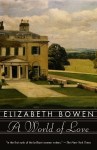
I have the novella A World of Love (1954) by Elisabeth Bowen, which should be possible to read in week 2.

I’m putting Brian Moore into this category, I have 3 of his novels on my shelf, a continuation, having read five of his novels for the 100th centenary in 2021.  A previously neglected Irish author, he lived most of his adult life in Canada and the U.S., thus his literary output was created from the perspective of an outsider, looking back at his own culture, and occasionally at other cultures where he spent time, such as The Statement (1995), a political thriller set in France and The Magician’s Wife (1997), historical fiction set in France and Algeria, both of which take an aspect of French history that he found fascinating, turning them into compelling stories.

I have The Temptation of Eileen Hughes (1981), a Belfast love triangle, Black Robe (1985), a Jesuit missionary in North America in the 17th century, and The Mangan Inheritance (1979), a recently widowed man in Canada journeys to track down an Irish ancestor.

Contemporary Irish Week: 13 – 19 March

In this 3rd week, I shall attempt one or two of these novels from the kindle.

Trespasses by Louise Kennedy – this novel has garnered much praise since publication, set in Northern Ireland during the Troubles, a shattering novel about a young woman caught between allegiance to community and a dangerous passion.

Factory Girls by Michelle Gallen – I loved her novel Big Girl, Small Town and this latest has just been shortlisted for the Comedy Women in Print Award 2022/23 UK/Ireland. This is a definite, she makes me laugh out loud!

The Quiet Whispers Never Stop Olivia Fitzsimons – a dual narrative set in 1982 & 1994 Ireland, exploring the mother-daughter relationship; described as “A story of love, obsession and escape, an uncompromising, lyrical tour-de-force that marks the arrival of an extraordinary new voice in Irish fiction”.

Listening Still Anne Griffin – her debut When All is Said was a runaway international success, a book I enjoyed about a man who toasts 5 friends of importance to him. Her second book is about a young woman who can hear the last words of the dead, though it hasn’t made the same impact on readers; she has a new book due out on 27 Apr 2023 The Island of Longing about the disappearance of a daughter and a mother’s difficulty in accepting her loss, not knowing whether she is alive or dead. This latest is getting many 5 star reviews (from those reading an advance copy), one to watch.

A Traveller at the Gates of Wisdom John Boyne – an unknown man leads the reader through 2000 years of human and family history, slipping through time and space with slightly different identities, continuing on the same path, from Palestine in AD 1 to the year 2080 in a space colony. An ambitious and epic concept, a story that has had mixed reviews.

#ReadingIreland2023

Short Story Week: 20 – 26 March

I have this one collection that I shall try to get to read:

Dance Move by Wendy Erskine – stories set in Northern Ireland, where we meet characters looking to wrest control of their lives, only to find themselves defined by a moment in their past that marked them. In these stories – as in real life – the funny, the tender and the devastating go hand in hand. Full of warmth, the familiar and the strange, they are about what it means to live in the world, how far you can end up from where you came from, and what it means to look back.

Non- Fiction Week: 27 – 31 March

Cacophony of Bone Kerri ni dochartaighI don’t have any Irish nonfiction left unread on my shelf, but I have noted that creative nonfiction author Kerri ní Dochartaigh, whose debut Thin Places I read in 2021 and enjoyed immensely, has a follow up book due out in April 2023, Cacophony of Bones.

It maps the circle of a year – a journey from one place to another, field notes of a life – from one winter, to the next. It is a telling of a changed life, in a changed world – and it is about all that does not change, that which simply keeps on – living and breathing, nesting and dying – in spite of it all.

I would also recommend in this category, the excellent collection of essays The Passenger Ireland – one of my Top Reads in 2022

Literary Inspiration

Dublin One City One Read Irish LiteratureIf you are looking for inspiration, check out Cathy’s blog, where she shares a list of 100 Irish Novels from Gulliver’s Travels by Jonathan Swift (1726) to Here Are The Young Men by Rob Doyle (2014) and 100 Novels by Irish Women Writers from the Memoirs of Miss Sidney Bidulph by Frances Sheridan (1761) to Conversations with Friends by Sally Rooney (2017).

You can check out the One Dublin, One Book challenge – each year an invitation to read an Irish book in April. Last year, I joined in and read the excellent Nora, A Love Story of Nora and James Joyce by Nuala O’Connor.

In April 2023, they will be reading The Coroner’s Daughter by Andrew Hughes.

Alternatively, check out my posts:

My Year of Irish Literature – 2021 Highlights

My Top 5 Irish Fiction & Nonfiction Books

Have you read and enjoyed any of the titles here? Are you planning on reading any Irish literature in March? If so, what are you looking forward to reading? Do you have a favourite Irish author or book? Let me know in the comments below.

Happy Reading Ireland if you join in!

Ockham New Zealand Book Awards 2023 #theockhams

Longlist Announced

The annual New Zealand book awards have announced their longlist, 44 books in four categories (fiction, general nonfiction, poetry, illustrated nonfiction) from 191 nominations (20% increase on 2022), showing how much more dynamic the industry has become in recent years. Read the entire list of nominees for each category here.

This year there were more debut authors than recently (a third of longlisters), which bodes well for the future, according to Nicola Legat, Chair of the New Zealand Book Awards Trust who discusses the longlist here on Radio NZ’s Nights With Karyn Hay.

The Jann Medlicott Prize for Fiction

The 10 novels below will compete for a place on the shortlist of 4, featuring established names like Catherine Chidgey, alongside popular newcomers like Coco Solid who was on the NZ bestsellers list for many weeks, a young urban Aucklander and performance poet, part of a rising generation of Pacifica writers increasingly prominent in New Zealand’s literature scene.

It’s good to see historical fiction starting to become more present and a notable crime thriller, highly praised by Val McDermid.

Jann Medlicott Acorn Prize for Fiction NZ

Better the Blood (Crime Thriller) by Michael Bennett – an exploration of Maori history, the crimes of colonisation and their impact on current lives, through the eyes of single mother and policewoman Hana Westerman, who investigates a serial killer seemingly keen to take revenge for the historic murder of a rangatira (leader). Described here as ‘the stunning new crime novel that’s a Trojan horse for exploring the hurt of colonisation’.

Chevalier & Gawayn: The Ballad of the Dreamer (Speculative/Science fiction/Fantasy) by Phillip Mann – published just weeks before his death, it is describes as a fable for our times. Serious, whimsical, funny, powerful and sexy, Chevalier & Gawayn is a thrilling mix of adventure and adversity and the need to heed the past.

Down from Upland (Domestic Fiction) by Murdoch Stephens – described as a character-driven “slice of life” novel, featuring millenials raising a teenager, set in Kelburn, so doses of Wellington high schools, civil servants & cringe culture.

Home Theatre (Short Stories) by Anthony Lapwood – a genre-bending collection, spanning the fantastical and the keenly real, introducing an ensemble of remarkable characters – and the fateful building that connects them all. Repertory Apartments – where scenes of tenderness and trouble, music and magic, the uncanny and the macabre play out on intimate stages.

How to Loiter in a Turf War (Popular Fiction) by Coco Solid – a lucid, genre-bending cinematic work of fiction from one of the country’s most versatile performance artists. A day in the life of three friends beefing with their own city. With gentrification closing in and racial tensions sweltering, the girls must cling to their friendship like a life raft, determined not to let their neighbourhood drift out to sea. Fast, ferocious, crack-up funny and unforgettably true. Recommended to listen to, narrated by the artist themselves.

Kāwai: For Such a Time as This (Historical Fiction) by Monty Soutar – A young Māori man, compelled to learn the stories of his ancestors, returns to his family marae to speak to his elderly grand-uncle, the keeper of the stories. Set in mid 18th century through to first encounters with Europeans, it delves into an exploration of the culture, first in a series.

Mary’s Boy, Jean-Jacques and other stories (short stories) by Vincent O’Sullivan – a sequel to the tale of Dr Frankenstein’s creature + new stories that traverse other time periods and minds  – stories described as wry, humane, unsparing, essential.

Mrs Jewell and the Wreck of the General Grant (Historical Fiction) by Cristina Sanders –  Set in 1866, the story behind the enduring mystery of one of New Zealand’s early shipwrecks, told from the perspective of the one woman survivor. Fourteen men make it ashore and one woman – Mary Jewell. Stuck on a freezing and exposed island, they must work out how to survive. Described as a gripping page turner.

The Axeman’s Carnival (Bird Narrated Literary fiction) by Catherine Chidgey – Narrated by Tama the magpie (who tweets @TamaMagpie) “Chidgey fuses the sensibility of our cinema of unease – of life on a struggling back-blocks farm with a dour farmer – with the liberating and alienating madness of fame, all of it seen by the novel’s hero, the magpie Tama. Tama does all the voices – orchardists, tourists, fairground commentators, daffy activists, and the unappeasable axeman – and he does them justice. The Axeman’s Carnival is a compulsive read and flat-out brilliant” says author Elisabeth Knox.

The Fish (Absurdist Literary Fiction) by Lloyd Jones – described by Claire Mabey (books editor, The SpinOff) as ‘a brave reckoning with the dark sides of family, memory and the self’. Set in 1960’s NZ, it is a novel of family bonds, strained and strengthened by tragedy, an allegorical tale of absence and return. Who or what the fish is, seems like a mystery to many readers, might be a marmite book, due to the ‘slippery nature of the storytelling’.

General Non-Fiction Award

A big increase in submissions for here with a lot of memoir, Noelle McCarthy’s Grand, filmmaker Gaelene Preston’s Take, Fiona Kidman’s essays So Far, For Now, Kate Camp’s You Probably Think this Song is About You covering a wide range of subjects, creative non-fiction becoming much more prevalent.

This award remains somewhat controversial, given the wide range of sub-genres it includes, pitted against each other: creative nonfiction, memoir, history and academic texts. For this reason, an additional four titles make the longlist.

ONZBA 2023 Longlist NF

Mary and Peter Biggs Award for Poetry

Poetry in NZ is on fire at the moment says Nicola Legat, so many strong voices coming through, on decolonisation, gender issues, it is the poets who seem to be addressing many of these subjects.

Check out Initial Thoughts, Thrills, Surprises, Hidden Gems and Predictions from Claire Mabey and Louise Wallace at The SpinOff.

They predict Echidna by Essa May Manapouri to win.

ONZBA 2023 Longlist_Poetry

Booksellers Aotearoa New Zealand Award for Illustrated Non-Fiction

With incredibly strong representation, this longlist features seven different publishers and you might say adds another 10 to the general non-fiction category. Books with a visual dimension continue to be popular and there are some interesting and intriguing titles here.

Te Motonui Epa by Rachel Buchanan tells the strange but true story of the theft of five wooden panels carved in the late 1700s by Taranaki tūpuna and their connection to the 11 day kidnapping of Graziella, daughter of the collector George Ortiz, who put the Motunui epa up for auction to pay back money he borrowed for the ransom. Epic and fascinating!

I Am Autistic by Chanelle Moriah, is described as ‘a first of its kind: smashing through stereotypes and presenting a clear, interactive tool for those eager to either learn about themselves, or people around them’.

Something Is Happening Here looks at 50 years of the art of Robin White, including insights from art critics and interviews from many others. Including more than 150 of her artworks, from early watercolour and drawings through to the exquisite recent collaborations with Pasifika artists, as well as photographs from throughout her career.

Jumping Sundays, The Rise and Fall of the Counterculture of Aotearoa New Zealand by music historian Nick Bollinger, is a vivid account of the transformation of NZ life brought about by the 1960-70s counter-culture from a bi-cultural perspective – its goals and impact, the festivals and gatherings, of radicals and bohemians resisting the authority of that era.

Illustrated Nonfiction Ockhams 2023

Shortlist Announcement

The shortlist of 16 titles will be announced on 8 March and the winners announced in May, the award ceremony will be the first event of the Auckland Writer’s Festival which runs from 16-21 May, 2023.

All My Wild Mothers by Victoria Bennett

Motherhood, Loss and an Apothecary Garden

I loved this book, a kind of hybrid memoir that combined a passion for herbal folklore and a creative project, the building of an apothecary garden in a location where there were many obstacles to overcome, environmental and human, while exploring and healing from the loss of a loved one.

It reminded me a little of the experience of reading Helen Macdonald’s H is For Hawk, another memoir where the author takes on challenging project while navigating the tumultuous waves of grief – in that case, training a goshawk.

grief nature writing memoir motherhood loss apothecary garden

The memoir began at a moment in the author’s life when there was an unexpected death in the family; grief and coping with it, learning how to manage its lingering presence, is one of the themes she reflects on throughout the book.

At the time of this initial event, she is pregnant with her first child and as the story continues, her son becomes as much a part of the narrative as the author herself.

Victoria Bennett grew up in a large family, one that due to her father’s career, relocated countries often, that fragmented when some of the children were sent to boarding school, and even when they did settle down, did not partake in community life. They were self contained.

Used to living in places where they were outsiders, it became a way of being, even in their country of origin, England. In a conservative rural community, her mother wore hot-pants and homemade kaftans, had an art studio in the shed and had once offered to liven up a craft show with an exhibition of nudes.

Due to circumstance, Bennett and her husband move to a new social housing estate in rural Cumbria, built over what was an industrial site, a barren, rubble-filled, now rule-restricted, wasteland.

Mother and son slowly repurpose their backyard, building an apothecary garden – a construction of permaculture beauty, an appreciation of nature, an alternative education – yet encounter resistance, judgement, complaint and obstacle as subscribers to a more authoritarian rule, attempt to oppress or stamp out their initiative, unable to see the bigger picture of a more sustainable, kinder way of living in the shared world we inhabit.

wildflowers weeds apothecary garden

Photo E. BolovtsovaPexels.com

Bennett’s quest, to build an apothecary garden and educate (home-school) her son, was in part, an effort to integrate into the community, to overcome an inherited sense of not belonging, a deconditioning of learned ways. She overcomes anxiety, often lead by her son’s enthusiasm, to become more participative.

Despite her reticence, she had been raised by a feminist, ‘my mother was fierce about being fair,’ her sisters were outspoken, when Bennett discovers that her efforts to create something sustainable are being undermined by neighbours, she sets out to inform and educate them all.

“When we first moved onto the estate, the garden was a patch of newly sown grass, a thin layer of topsoil, and several metres of rock, rubble, and industrial hardcore. With no money, and only the weeds we found growing on the building site, my young son and I set out to see what we could grow. What was once a wasteland, became a haven for wildlife, and a balm for the body and soul. “

For a memoir that  navigated emotions, it had a good solid structure within which to contain the outpourings – each chapter began with a different plant, starting with the intriguing medieval, magical perception of it, including stunning yet simple black & white woodcut illustrations, the medicinal properties, a bit of folklore and where it might be found.  There followed a meandering through events, memories and reflections from Bennett’s life, that often ventured off from an aspect of the plant’s curative powers.

ALL My Wild Mothers

Photo Yan Krukau Pexels.com

Sow Thistle, Sonchus Oleraceus

Milkweed, swine thistle, turn sole, hare’s colewort, soft thistle

Hang sow thistle in the home to drive out melancholy…

Sow thistle grows abundantly on rubbish dumps, wasteland and roadsides.

All My Wild Mothers is also a reflection on motherhood, of one woman’s experience, given her own inclinations, personality and the effect of being the youngest in a family of six children. It is a celebration of the power and reward of maternal nurturing, of focusing on the development of a child according to their individual needs,

It is sensitively narrated, introspective and a tribute in particular to her sisters and her mother and a celebration of her son, for all that he teaches her, that he reflects back to her, due to the way she parents him and the way he in turn reminds her what it is to be a child, the gifts they offer having been nurtured, loved and allowed to grow into themselves authentically. He is a less conditioned mini human than most and Bennett’s articulate expression and capturing of his innocent yet profound utterances are a gift to all who read her prose.

Children can teach and remind us of so much that is simple and good in life, sadly conditioned out of us by the effect of a societal system that squashes it before it can have enough of a chance to flourish.

I absolutely loved this quiet book, that celebrates the wisdom of small children, nurtured through the early years and the symbiosis of mother and child.

Highly Recommended.

“What is grief, if not love persevering.” WandaVision

Victoria Bennett, Author

Victoria Bennet AuthorVictoria Bennett was born in Oxfordshire in 1971. A poet and author, her writing has previously received a Northern Debut Award, a Northern Promise Award, the Andrew Waterhouse Award, and has been longlisted for the Penguin WriteNow programme and the inaugural Nan Shepherd Prize for under-represented voices.

She founded Wild Women Press in 1999 to support rural women writers in her community, and since 2018 has curated the global Wild Woman Web project, an inclusive online space focusing on nature, connection, and creativity. When not juggling writing, full-time care, and genetic illness, she can be found where the wild weeds grow.  All My Wild Mothers is her debut memoir.

In 2022, her family made the difficult decision to leave the garden and follow a long-held dream of moving to Orkney, where they will discover anew what wildness will grow in a new soil.

Further Reading

For a Peek Inside the Garden + some of Victoria Bennett’s herbal potion recipes

N.B. Thank you to the publisher for the ARC (Advance Reader Copy) ebook provided via NetGalley.

Dear Senthuran, A Black Spirit Memoir by Akwaeke Emezi

This was an interesting follow up to the fiction/auto-fiction debut novel Freshwater by Akwaeke Emezi, which I thought was a stunning and original book, an unforgettable read.

A Black Spirit Memoir OgbanjeDear Senthuran is a collection of letters to what we might call Emezi’s inner circle, past and present.
Emezi was raised in Nigeria and is of Nigerian/Malaysian heritage; they are an ogbanje, a non-human Black spirit being, currently incarnated in human form.

If you read Freshwater, you understand the basis from which this comes from, the overlapping realities they inhabit.

I live there, inhabiting simultaneous realities that are usually considered mutually exclusive. What can we call the dysphoria experienced by spirits who find themselves embodied in human form?

The memoir is thus a record of the period in their life leading up to the publication of that debut novel, of a year spent in an MFA program and both the highs and lows of that experience. It is about world-bending, living in a way that is true to who they are, thus rather than being flexible to how the world works, it is like the opposite, bending the world to meet them.

Emezi lives in America but is not of that culture and it shows in this work, in how confident and fearless they come across, which is one of the reasons it was difficult to align with their student peers, many of whom held much self-doubt regarding their writing ability and expectations, common to their culture of origin.

I call this a culture because that’s what it was. I’ve seen it in several places: people bonding over insecurities and self-deprecation, constantly saying they didn’t think their work was good, looking to the faculty for validation, someone to tell them they were real writers, to give them direction and guidance and a map to where they wanted to go. Institutions love that, I think. It makes you need them. And all those feelings are valid, but the resentment and hostility when you don’t play along, when you don’t shit on your own work, when you don’t wear doubt like a blanket around your shoulders? That’s the part I have a problem with. It reminds me of that thing back home where people want you to “humble yourself” and sometimes their demand is quiet, sometimes it’s blatant, but either way, they make sure you feel it.

Akwaeke Emezi Black Spirit MemoirEmezi writes about the experience and feelings of being unsupported during some of the challenges they faced and about their determination not to compromise when it became clear the debut novel was going to sell.

There is much reflection on writing, the work, they are prolific, determined and have achieved success in a relatively short period of time, despite numerous challenges. They create and share a spell for storytellers, for those trying to create books. Clearly it worked!

With my spell, I drew a map of the future I wanted, then I took those defined lines and pulled them across time, dragging them into the present. Time bends very easily; you can fold it like this with little trouble.

Most of the letters are in appreciation and record events they do not wish to forget, that mark the rise.

f3toni morrison

Toni Morrison

One of the more memorable letters is to the late, great inspirational Toni Morrison. Emezi shares a quote, words she heard her speak in an interview after winning the Nobel Prize for literature. She remembers how Morrison’s work agitated many of the students, ‘because you wrote people who did horrific things, but you didn’t tell the reader how to feel about these people‘ and how delighted they were to discover you could ‘just show a terrible thing and let the showing be the strength of it’.

The words that changed everything for Emezi though were these:

“I stood at the border, stood at the edge, and claimed it as central, claimed it as central and let the rest of the world move over to where I was.”

It is another of the spells they are using to become free.

Throughout the letters, there are references to ‘the magician’, at a certain point the reader asks who or what this presence is: a lover, a boyfriend and if one of those, is it going to endure for the duration of the book? It is a little mystery that eventually becomes a more direct subject of one or two of the letters, another record of events that transpire, of growth that occurs, of pain and hurt, of revenge even. Nothing is exempt in pursuit of the dream, to be the successful writer they desire.

A couple of the letters are to friends who are also human, non-humans, those in their life who totally get it without needing explanation, who accept their reality, with whom they can speak openly, fearlessly.

These humans are so loud in how they press down, in how they enforce their realities…It’s actually impressive, how someone can work so hard to crush a thing they can’t see.

Friendship provides a balm, and many of the letters, while they show the pain and suffering of someone growing into their adult self, lack the mature self-awareness that comes with age and wisdom. They demonstrate the importance of friendship and acceptance along the way.

In a letter To Kathleen on the subject of Worldbending they write:

The last time we texted, you wrote, I need you and our time this break. I know what you mean. The world can be a grit that sands away at us, and love can be a shelter from that…We are safer with each other. We see the world’s we’re trying to make, and we lend our power to each other’s spells.

Shiny Akwaeke Emezi Godhouse

Photo by Thgusstavo Santana on Pexels.com

After the publication of Freshwater, Emezi buys a house in New Orleans and names it Shiny. It is part of the plan, part of the future they are dreaming into being. Not everything in their lives is how they want it, but fortunately there is now a therapist in their lives, some of the reflections come from the raised consciousness of being in that process.

The house felt too big for me; it felt wrong, like I should have bought it years into my career, not thirteen months after my first book. For weeks, I didn’t sleep well there, worried that God would punish me for being so bold, for bending the world like this. It was Ann who talked me down, who told me that the house was oversized precisely so I could grow into it, so I could have the space to learn to unfurl. I needed that much room, as vast as it felt.

Writing To Jahra, another human/non-human entity, in Home, Emezi describes a return to her birth country, on a pilgrimage to a shrine of their deity, Ala. At the site, they feel seen, the entity nourished.

In a letter To Ann, called Anointing they write of the power of naming themselves, a form of disempowerment of those who want to label, categorise, bully by naming.

People want to be the ones drawing the lines, building the boxes, making the names. Maybe because stories live inside all those structures, and if you’re the one controlling the stories, then you’re the one in power. So they get really angry when you name yourself, especially if you’re the type of thing they were expecting to name. You know how it works: they form a circle around you, point, and call you a name you’re supposed to flinch from, a name you’re supposed to deny and be afraid of. That way, their naming becomes a weapon and what you are becomes a shame, a sentence, a tire around your neck rich with fire. Witch. Demon. Ogbanje. When you name yourself, however, you take the power from the wet, foaming flesh of their mouths and mold it in your hand as if it’s nothing, swallow waiting to slide down your throat, slickened with the soup of your self-knowing.
I thought about this a lot with Freshwater – what it meant, first of all, to publicly name myself ogbanje.

Emezi writes for people like them, for people who might think themselves in the margins, as an example of how to live when that perspective is shifted, when the centre is moved. There are costs when you choose or move a centre, costs they are willing to bear. They have been taught how aggressive they need to be with their wellness in order to survive.

Let the world move over, you said, and I obeyed.

It is an astonishing memoir, written from a frank perspective that doesn’t care whether the reader understands or not, it is for those who understand or are curious, the open-minded. And while it may appear self-indulgent, at times arrogant, narcissistic even, their work is making a splash.

I gave a talk at Yale recently, and at the reception afterward, a woman told me about a paper she wrote on Freshwater, how she was taking it to a medical conference to argue for recognising indigenous realities in treating people. It made me so happy, because it felt like a ripple, you know? You make one thing, and someone makes something else from that, and from there the world is changed, one fraction at a time.

Further Reading

My review of Freshwater

My review of The Death of Vivek Oji

NPR: Letters Reveal Author’s Strength In A World Of Destructive Noise by Hope Wabuke, June 9, 2021

New York Times: Akwaeke Emezi: ‘Imagine Being Ogbanje, Like Me’ by Kim Tran, June 7, 2021

Top Reads of 2022

It feels a little fraudulent to write about my favourite reads of 2022, when I forbid myself to read or write about books for six months of the year, while I was working on a creative writing project. Writing about books is one of my greatest pleasures, however I realised that if I could harness that energy and apply it to something else I wished to complete, perhaps I could finish that other project.

I did finish it, so I’m giving myself a break and reopening the blog door, keeping the ‘thoughts on books’ muscle active.

An Irish Obsession and A Foreign Language Desire

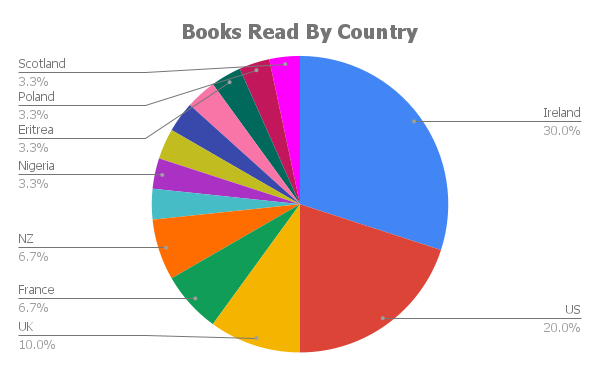
Reading Ireland Month 2022 TBRThough I read less than half the number of books of 2021, I did manage to read 30 books from 13 countries, a third Irish authors, thanks to Cathy’s annual Reading Ireland month in February. I’m looking forward to more Irish reads this year; there were many promising reads published in 2022 that I wasn’t able to get to.
Sadly I missed Women in Translation month in August, though I managed to read six books in translation, two making my top reads of the years.

2023 will definitely be better for translations, since I’ve taken out a Charco Press subscription, giving me the opportunity to read a few Latin American contemporary authors from Argentina, Brazil, Bolivia, Peru, Colombia and Mexico.

Books Read By Country

Non-Fiction, A Rival to the Imagination

As far as genre went, there was a much greater balance between fiction and non-fiction than in previous years, due to having been in the mood to read a lot more non-fiction this year.

Books Read by Genre

And so to the books that left the most significant impression, where I have reviewed them I’ll create a link in the title.

One Outstanding Read

Was there one book that could claim the spot of Outstanding Read of 2022? This wasn’t easy to decide given most of my reading occurred in the beginning of the year, but as I look over the titles, there was one book that I remember being pleasantly surprised by and having that feeling of it not wanting to end, and being laugh out loud funny in places.

It is one of those novels, or perhaps I ought to say she is one of those writer’s whose works I wouldn’t mind being stuck on a desert island with, more than just a story, they open your mind to other works, stimulate curiosity and have a particular sensibility that reassures this reader that the novel will endure.

“I absolutely loved it and was surprised at how accessible a read it was, given this is an author who recently won the Nobel Prize for Literature. Her power to provoke by telling a story is only heightened by the suggestion on the back cover that her ideas presented here caused a genuine political uproar in Poland.” – extract from my review

So here it is, my One Outstanding Read of 2022 was :

Olga Tokarczuk’s Drive Your Plow Over the Bones of the Dead translated from Polish by Antonia Lloyd-Jones

In no particular order, here are my top 5 fiction and non-fiction reads for 2022.

Top 5 Fiction

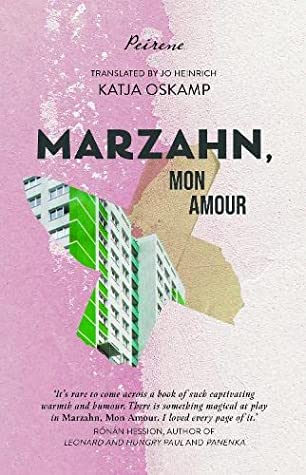
Peirene Press German Literature Women in TranslationMarzhan, mon amour, Katja Oskamp (Germany) translated by Jo Heinrich

– What a joy this Peirene novella was, one of those rare gems of what I perceived as uplifting fiction, until I lent it to a friend who is a nurse, who DNF’d it, making me realise that what can be delightful for one reader can be quite the opposite for another, in this case, someone who had heard too many sad stories from patients, requiring an empathetic barrier, to endure the overwhelm it creates.

Marzhan is a much maligned multi-storied, communist-era, working class quarter in East Berlin, where our protagonist, a writer, leaves her career behind to retrain as a chiropodist, due to the sudden illness of her husband. In each chapter, we meet one of her clients, members of the local community, many who have lived there since its construction 40 years earlier. A chronicler of their personal histories, we witness the humanity behind the monolith structures of the housing estates, the connections created between the three women working in the salon and the warmth and familiarity they provide to those who cross their threshold. A semi-autobiographical gem.

Northern Irish Literature novellaThe Last Resort, Jan Carson (Northern Ireland)

– Another novella, this was another delightful, often hilarious story, with well constructed characterisation. Set in a fictional Seacliff caravan park in Ballycastle on the North Coast of Ireland, a group gather to place a memorial bench on the cliff top for a departed friend.

Each chapter is narrated by one of 10 characters, revealing their state of mind and concerns, while exploring complex family dynamics, ageing, immigration, gender politics, the decline of the Church and the legacy of the Troubles.  A sense of mystery and suspense, pursued by teenage sleuth Alma, lead to the final scene, the cliff-hanger.  A delightful afternoon romp.

Ukraine historical fictionI Will Die in a Foreign Land, Kalani Pickhart (US) (Set in Ukraine 2013/14) (Historical Fiction)

– Set in Ukraine in 2014, during the Euromaiden protests, four characters with different backgrounds (two outsiders, two protestors) cross paths, share histories, traverse geography and represent different perspectives in this Revolution of Dignity, the origin of a conflict that endures today.

The narrative is gripping, informative, well researched and had me veering off to look up numerous historical references. Moved by the documentary, Winter on Fire: Ukraine’s Fight for Democracy, Pickhart was struck by the fighting spirit of the Ukrainian people against their government and the echo of the past, when the bells of St. Michael’s Golden-Domed Monastery rang for the first time since the Mongols invaded Kyiv in 1240AD.

“Though it is novel told in fragments, through multiple narratives and voices, there is a fluidity and yet the plot moves quickly, as the connection(s) between characters are revealed, their motivations and behaviours come to be understood and revelations acknowledge the pressures and complexities of life in this country, some things universal, others unique to their history and geography.”

Dublin One City One Read Irish LiteratureNora, A Love Story of Nora Barnacle & James Joyce, Nuala O’Connor (Ireland) (Historical Fiction)

– Absolutely loved it. I was instantly transported into Nora’s world, seeing their life and travels, the many challenges they faced and the unique connection that kept them together throughout. I knew nothing of their lives before picking this up during the One Dublin, One Book initiative in April 2022. Knowing now all the many places they lived and how Europe allowed them to live free of convention, I’m curious to encounter the stories Joyce created while Nora was keeping everything else together for him.

It is incredible that Nuala O’Connor managed to put together such a cohesive story given the actions of Joyce’s formidable grandson/gatekeeper Stephen, who did all he could to prevent access or usage of the family archive, including the destruction of hundreds of letters, until his death in 2020.

In 2023 the One Dublin, One Book read will be The Coroner’s Daughter by Andrew Hughes.

London Homesickness New Zealand writers abroadTowards Another Summer, Janet Frame (NZ) (Literary Fiction)

–  What a treat this was, one of Janet Frame’s early novels written in the 1960’s when she was living in London, one she was too self conscious to allow to be published, so it came out posthumously in 2007. Written long before any of her autobiographical work, it clearly was inspired by much of her own experience as a writer more confident and astute with her words on the page than social graces.

In the novel, a young NZ author living in a studio in London, is invited to spend a weekend with a journalist and his family, something she looks forward to until beset by anxiety and awkwardness. Her visit is interspersed with reminiscences of her homeland, of a realisation of her homesickness and desire to return. She imagines herself a migratory bird, a kind of shape-shifting ability that helps her to be present, absent, to cope with the situation and informs her writing.

“A certain pleasure was added to Grace’s relief at establishing herself as a migratory bird. She found that she understood the characters in her novel. Her words flowed, she was excited, she could see everyone and everything.”

Top 5 Non-Fiction

nonfiction essays love effect of domination patriarchy black woman perspectiveAll About Love: New Visions, bell hooks (US)
– What a joy it was to discover the voice and beautifully evolved mind of bell hooks in these pages.

Her perspective is heart lead, her definition of love leaves behind conditioned perceptions of romance and desire and the traditional roles of carer, nurturer, provider – and suggests that it might be ‘the will to do for oneself or another that which enables us to grow and evolve spiritually’ love becomes a verb not a noun.

It is a way of looking at this least discussed human emotion and activity that fosters hope and encouragement, in an era where we have been long suffering the effects of lovelessness under a societal system of domination.

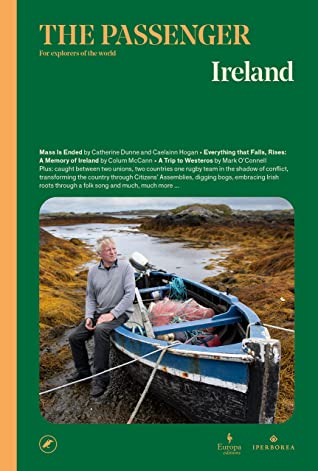
essays Sara Baume Colum McCann Europa EditionsThe Passenger – Ireland (Essays, Art, Investigative Journalism)

– This collection of essays, art and information about contemporary Ireland is an underrated gem! Europa Editions noticed my prolific reading around Ireland after I read Sara Baume’s wonderful A Line Made By Walking and mentioned that she was one of the contributors to this stunning collection.

I planned to read a couple of essays each day, but it was so interesting, I kept reading until I finished it. Brilliant!

Across 11 essays, the collection explores the life and times of modern Ireland, with contributions from Catherine Dunne and Caelinn Hogan – discussing the decline of the Church’s influence, the dismantling of a system designed to oppress women and a culture of silence in The Mass is Ended; William Atkins writes a fascinating essay on the Boglands; Manchan Magnan shares how the contraction of a small local fishing industry heralded the decline and disappearance of much of the Irish language in An Ocean of Wisdom; Sara Baume writes of Talismans and Colum McCann of nostalgia in Everything That Falls Must Also Rise.

The BBC’s former political editor in Northern Ireland Mark Devenport, writes about a region hanging in the balance, the UK and the EU, torn between fear and opportunity and the distinct feeling of having been abandoned in At The Edge of Two Unions: Northern Ireland’s Causeway Coast; while Lyra McKee’s gut-wrenching essay Suicides of the Ceasefire Babies investigates the troubling fact that since the signing of the Good Friday Agreement in 1998, more people in Northern Ireland have committed suicide than were killed during the 30 year conflict.

“Intergenerational transmission of trauma is not just a sociological or psychological problem, but also a biological one.”

And more, a brilliant essay on citizen assemblies, another on Irish music, rugby and a less enchanting one that explores locations in The Game of Thrones.

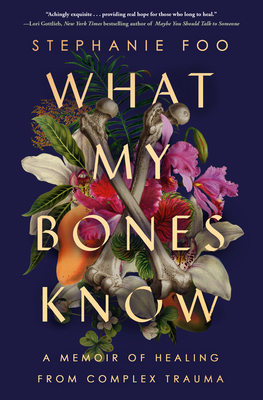
What My Bones Know Stefanie FooWhat My Bones Know, A Memoir of Healing from Complex Trauma, Stefanie Foo (US) (Memoir)

– This was a gripping memoir I couldn’t put down. I read it for reference purposes, interested in the solutions she finds for healing complex PTSD. It is well researched, while each section contributes to the arc of a comprehensive and compelling narrative.

Stefanie Foo had a dream job as an award-winning radio producer at This American Life and was in a loving relationship. But behind her office door, she was having panic attacks and sobbing at her desk every morning.  After years of questioning what was wrong with herself, she was diagnosed with complex PTSD – a condition that occurs when trauma happens continuously, over the course of years.

She becomes the subject of her own research, her journalist skills aiding her to interview those responsible for various discoveries and healing modalities, gaining insights into the effect and management of her condition, eventually reclaiming agency over it.

“Every cell in my body is filled with the code of generations of trauma, of death, of birth, of migration, of history that I cannot understand. . . . I want to have words for what my bones know.”

Ancestor Trouble Maud NewtonAncestor Trouble, A Reckoning & A Reconciliation, Maud Newton (US) (Memoir/Genealogy)

– This was a fascinating read and exploration, at the intersection between family history and genetics; the author sets out to explore the nurture versus nature question with the aid of DNA genetic reports and stories both documented about and passed down through her family. Some of those stories and people she was estranged from create a concern/fear about what she might inherit.

Maud Newton explores society’s experiments with eugenics pondering her father’s marriage, a choice he made based on trying to create “smart kids”. She delves into persecuted women, including a female relative accused of being a witch, and discovers a clear line of personality inclinations that have born down the female line of her family. A captivating and highly informative read.

My Fathers Daughter Hannah Azieb PoolMy Father’s Daughter, Hanna Azieb Pool (UK/Eritrea) (Adoptee Memoir)

– A memoir of the Eritrean-British journalist, Hannah Azieb-Pool, who returns to Eritrea at the age of 30 to meet her family for the first time. In her twenties, Azieb-Pool is given a letter that unravels everything she knows about her life. Adopted from an orphanage in Eritrea, brought to the UK, it was believed she had no surviving relatives. When she discovers the truth in a letter from her brother – that her birth father is alive and her Eritrean family are desperate to meet her, she is confronted with a decision and an opportunity, to experience her culture origins and meet her family for the first time.

It’s a story of uncovering the truth, of making connections, a kind of healing or reconciliation. Ultimately what has been lost can never be found. It’s like she was able to view an image of who she might have been and the life she may have had, and while viewing it was cathartic, it is indeed an illusion, a life imagined, one never possible to live.

 *  *  *  *  *  *

Have you read any of these books? Anything here tempt you for reading in 2023?
Happy Reading All!