Under the Tripoli Sky by Kamal Ben Hameda tr. by Adriana Hunter

We are in the city of Tripoli, bordering the Mediterranean in the 1960’s, though this is no seaside idyll.

Tripoli SkyThe narrative follows in the footsteps and the mind of a boy named Hadachinou who prefers the company of his mother, her friends, great-aunt’s and escorting girls sent on errands who are not yet kept indoors, bound by the shackles of marriage, in a society where a river of seething discontent courses through the veins of many, where the sexes barely tolerate each other and anyone who seems to have escaped the marriage trap is resented their so-called freedoms.

Hadachinou is privy to the thoughts, gossip and attitudes of women, a witness to their interior lives, he listens to their stories and absorbs their repressed desires as his own begin to awaken.

The tea ceremony was the only part of the day when my mother and her friends could live their lives in real times and tell their own stories. At last they could talk about dreams, longings and anxieties , all in the same breath and their bodies were at peace.

I sometimes wondered how these women who were all so different were able to spend hours at a time, each talking about her own god, her own people and thoughts, free to be wildly outspoken but without provoking any true conflict. It was because they had no power to preserve and no possessions to watch over. That was for the people on the other side of the wall: the men, the sheikhs, the governors and their hunting dogs! Scheming and calculating, diplomacy and power struggles were their domain.

Here with the women, my guardian angels, there were just words, spoken openly and easily, flitting and whirling about, a life force in themselves. Without these moments of trusting abandon, they would have dried up with sorrow. Or imploded as they toiled over their cooking pots.

Taynal Mosque

Taynal Mosque Source: wikipedia

While the men are at work, or at the mosque or in the coffee houses, the women finish their work and make time to see each other.

Here, great-aunt Nafissa has had enough of the women bad mouthing his mother’s childhood friend Jamila, words they only speak when his mother leaves the room, venomous remarks spiralling into bitterness about what they perceive as her secret life; flushed with rage, aunt Nafissa rails against them:

‘Leave Jamila alone,’ she cried. ‘Let her live her life. Its only because you’re jealous that you see evil in everything. She and her friends allow themselves freedoms you don’t have, freedoms you envy because your husbands keep you on a tight leash. What would you have her do? Stay at home like you, sitting on cushions and sucking on loukoums while you wait for men who never come home? You think those women are living bad lives? You make me laugh! But you don’t know when to hold your tongues, that’s for sure, and you’re full of spite. And, anyway, it’s not as if any of this has ever stopped you taking their money!’ she added, always ready to speak out against injustice.

OldTripoli

Old Tripoli Source: wikipedia

It is not easy to read about a repressed patriarchal society without much glimmer of hope, a slice of life narrative set in a pre-Gaddafi society on the verge of change.

I found it a sombre read, left wondering if this boy will be changed by virtue of his proximity to the women folk, or whether that might become a reason for his need to escape, lest he not fit in.

Looking out to sea, I remembered what Hadja Kimya had said: ‘Hadachinou, keep yourself busy doing simple things that delight you. Give yourself a goal. The soul of life is the little things, the minor events no one notices… That’s where life is, the pleasure of being alive, otherwise there’s just this vast blueness casting its shadow over us. Go on, keep yourself busy, do something, and then you might find yourself one day.’

This is cultural insight beyond the normal bounds of the English language, thanks to the translation of Adriana Hunter and the passion of Peirene Press in bringing these kinds of stories into the mainstream.
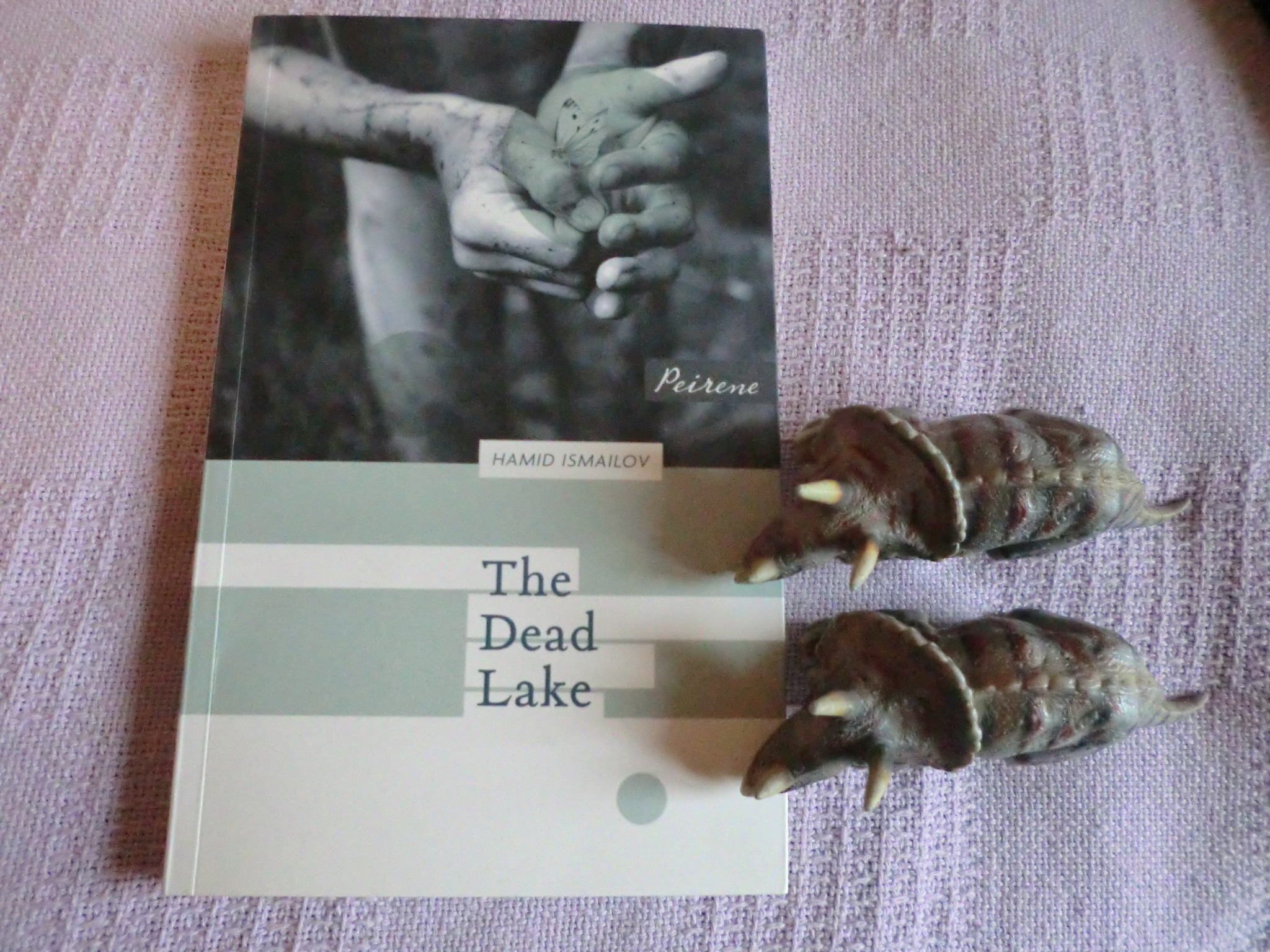
The Dead Lake by Hamid Ismailov, tr. Andrew Bromfield

Dead Lake 2An astonishing tale tinged with sadness, as recounted by the protagonist Yerzhan to a stranger on a train journey across the steppes of Soviet Kazakhstan, that in part continues to be imagined by the listener as from time to time, the young narrator sleeps.

The story begins when the boy enters the carriage playing Brahms on his violin in a manner that causes everyone to stop and look at him, not believing it possible that a boy who looks about ten to twelve-years-old could play to such perfection and with such awe-inspiring panache.

“Then, just as he had the entire carriage gaping after him open-mouthed, he broke off in mid-note. He slung the violin back over his shoulder like a rifle.

‘Wholesome local beverage – entirely organic!’ he exclaimed in a thick, adult voice. He swung a canvas sack down off his other shoulder and pulled out an immense plastic bottle of a yoghurt drink, either ayran or kumis. I approached him, without even knowing why.”

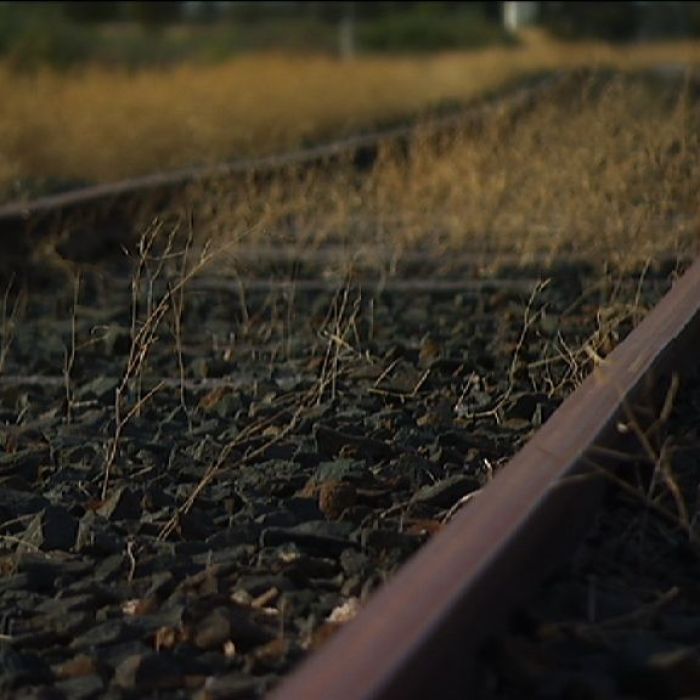
train trackYerzhan grows up at a remote railway siding in a part of the country where atomic weapons are tested. Two families live near each other, their lives more intertwined than appears on the surface.

Yerzhan and the neighbour’s daughter Aisulu travel many miles by donkey to go to school and many more miles to see the strange but talented bachelor, Petko, a Bulgarian violin teacher.

Every so often the ground shakes, another sun rises and everything is still. Then there is the Zone, that area where it is so silent, his ears ring.

“And the thing that loomed over him like a visceral fear could happen in the middle of the sweltering summer, when sheep suddenly started bleating as if they were under the knife and went dashing in all directions, cows dug their horns into the ground and the donkey squealed and rolled around in the dust…

And a slight rumble would run through the ground, Yerzhan’s legs would start trembling, and then his whole body, and the fear would rise up from his shaking knees to his stomach and freeze there in a heavy ache, until the sky cracked over his head and shattered into pieces, crushing him completely, reducing him to dust, to sand, to scraps of grass and wool. And the black whirlwind hurtled past above him with a wild howl.”

A young boy playing the dombra

A boy plays the dombra

His friend Aisulu’s Granny tells him a story of his conception and birth, intertwined with local legend; not knowing who his father is, he often replays the story in his mind, trying to understand it, and who he is.

“Granny Ulbarsyn’s story  wasn’t the only thing that had sunk deep into Yerzhan’s heart.  Grandad’s dombra playing stayed with him too. When no one was looking the boy took the instrument down from its nail high up on the wall. And while his grandfather tapped with the hammer on railway carriages, Yerzhan strummed the dombra secretly, imitating the old man’s knitted brows and hoarse voice. It didn’t take long before he picked out a few familiar melodies and then, with the keen eye he used to keep watch on Uncle Kapek’s behaviour, he followed and memorised  his granddad’s finger movements.”

Dead LakeYerzhan learns the dombra and violin and is bright, but the real light in his life is Aisulu, a light that gradually fades upon his reaching the age of 12, when he walks into the forbidden, radioactive Dead Lake to impress her and from that day on stops growing, destined to watch her pass him by.

“Other people noticed it too and wanted to help. Granny Ulbarsyn fed him with the livers of new born spring lambs, Grandad Daulet ordered carrots from the city through his  friend Tolegen,  and Uncle Shaken brought disgusting fish oil back from his shift. But that only produced a foul-smelling burp! Yerzhan ate it all. But he had stopped growing.”

Another of Peirene Press’s excellent novella’s, this really is an afternoon read, but so rich in the telling, it is a pleasure to go back and reread passages with the familiarity of having read the story. It is a tale tinged with  inevitable sadness as people live with the invisible terrors that are an environmental legacy of the Cold War.

If you want to read more contemporary European literature outside the English language, you can do no better than take out a fabulous subscription with Peirene Press. Three novellas a year and the kind you’ll rarely find in most bookshops.

Note: The author Hamid Ismailov was born in Kyrgyzstan and moved to Uzbekistan as a young man. He writes in both Russian and Uzbek and his novels have been translated into many European languages. Sadly his work is banned in Uzbekistan today and he has had to flee the country due to his ‘unacceptable democratic tendencies’.

All Quiet on the Western Front by Erich Maria Remarque translated by A.W.Wheen

Vera BrittainVera Brittain gave us her Testament of Youth, an account of a generation of youth lost whether they lost their lives or survived World War One, for those who lived, something of the essence of youth was lost to them forever and none who were part of it were unaffected or not changed by it.

Earlier in the year Juliet Greenwood gave us a fictional account of woman during World War One in We That Are Left, a novel that highlights the significant changes in the lives of women during that period, to the point of not going back to the way things were.

More recently Richard Flanagan’s Testament of Horrors, which for this reader was more than was possible to absorb, despite the later redeeming passages I may have missed, so visceral were his descriptions.

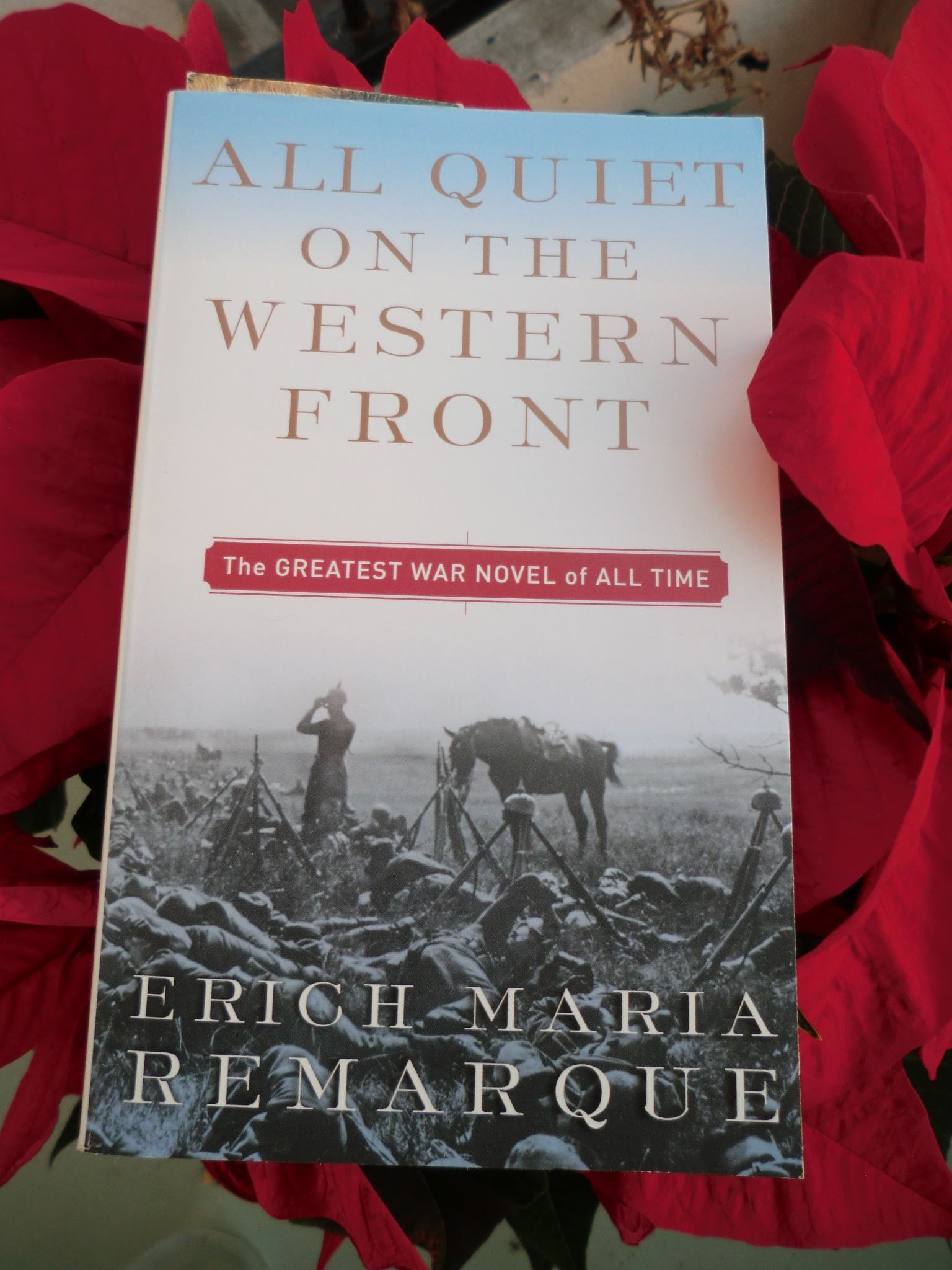
And now, I add the German Literature classic All Quiet on the Western Front to that tome of war literature that shares something of the experience and its effect, the novel by Erich Maria Remarque telling the story of Paul Baumer, a 20 year old German soldier.

He and his friends are pressured by their schoolmaster to join up early, an action that won’t be forgotten and which will be repaid when they meet again under different circumstances.

“For us lads of eighteen they ought to have been mediators and guides to the world of maturity, the world of work, of duty, of culture, of progress – to the future. We often made fun of them and played jokes on them, but in our hearts we trusted them. The idea of authority, which they represented, was associated in our minds with a greater insight and a more humane wisdom. But the first death we saw shattered this belief. We had to recognise that our generation was more to be trusted than theirs. They surpassed us only in phrases and in cleverness. The first bombardment showed us our mistake, and under it the world as they had taught it to us broke in pieces. ”

All QuietHe narrates his journey, their comradeship, their fear, their daily survival. Their small joys often centred around food, their occasional escape, a mild wound or a leave pass and thoughts of how they might ever continue a life other than this if ever there is a peacetime. It is something few can imagine and most don’t want to, it isn’t relevant.

On one of his infrequent visits home, Baumer tries to understand what has changed.

“They talk too much for me. They have worries, aims, desires, that I cannot comprehend. I often sit with one of them in the little beer garden and try to explain to him that this is really the only thing: just to sit quietly, like this. They understand of course, they agree, they may even feel it so too, but only with words, yes that is it – they feel it, but always with only half of themselves, the rest of their being is taken up with other things, they are so divided in themselves that none feels it with his whole essence; I cannot even say myself exactly what I mean.”

The longer war rages, the further away from their past the young men become, they find solace in each other and even begin to miss the front when they are on leave, as they are no longer the youth they were and those that know them now are not here.

The author was himself a German solider who survived the war, became a teacher and a writer, but when in 1933, his works were banned and publicly burned on the initiative of the Nazi propaganda minister, Joseph Goebbels he and his wife left Germany to live in Switzerland. All Quiet on the Western Front had been published at a similar time to Hitler’s Mein Kampf and the two narratives were polar apart. The moment Germany elected Hitler to power, he went after Remarque. Sadly, it was his sister who paid the price, convicted of undermining morality as her brother was beyond reach. She was beheaded in 1943.

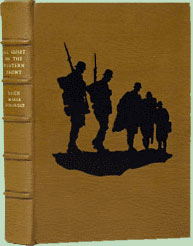
All Quiet 1st Editiom

1st edition in English

I read this on Armistice Day, 11 November, the day that an armistice was signed in France between the Allies and the Germans in 1918, commemorating the end of hostilities in WW1.

Although it is fiction, it reads like a true account. It is a remarkable book, sharing both the physical and mental aspects of youth at war and their slow realisation of its personal consequences.

It is tragic, sad and true and there is an element of hopelessness, that even though we can come to understand what will happen to those affected by war, there is little to be done to prevent it, we as humanity continue to choose it as a method of punishment disguised as a weapon of peace.

Those Who Leave and Those Who Stay by Elena Ferrante tr. Ann Goldstein #FerranteFever

Those Who StayThis is the third book in Elena Ferrante’s Neapolitan tetralogy about two friends Elena and Lila, growing up in an impoverished neighbourhood of Naples.

It follows on from Book One, My Brilliant Friend and Book Two, The Story of a New Name (click on the titles to read earlier reviews).

Lila has married, had a child, reformed her husband’s business, strayed and finally separated from her husband and moved to another area outside the neighbourhood to live with Enzo, a childhood friend. She gets a job in a sausage factory, working under oppressive conditions that attract the interest of social activists and harsh threats from the ‘fascists’.

“Can you imagine what it means to go in and out of refrigerated rooms at twenty degrees below zero, and get ten lire more an hour – ten lire – for cold compensation? If you imagine this, what do you think you can learn from people who are forced to live like that?”

In Pisa, Elena has remoulded herself, no longer referring or comparing herself to Lila. She observes how people from her type of neighbourhood and class are perceived outside it, among the bourgeois, those raised within the milieu of intellectuals and achievers, those with access to money, social connections, many of whom are gifted with a presence she can only dream of. Elena finishes her university studies and becomes engaged to Pietro, who was raised within that other world; coming from a well-known academic family, he too will become a university professor, teaching and writing academic works like his father.

As she is concluding her studies, Elena writes a fictional story drawn from aspects of her past, though never admitting it is anything but fiction. She gifts the story to Pietro on an impulse, hoping he will read it. He passes the manuscript to his well-connected mother Adele, thus Elena treads the path laid in front of her, towards becoming an author. Adele introduces her to contacts that will result in her first book being published, establishing her career as a writer.

“I spoke of the necessity of recounting frankly every human experience, including – I said emphatically – what seems unsayable and what we do not speak of even to ourselves.”

Though Elena does her best to avoid it, Pietro finally meets her family and though he insists on a civil ceremony for their marriage, a decision that stuns and terribly disappoints her mother, he wishes to do the traditional thing by asking her father for her hand. Her father is calm and accepting, however her mother’s thoughts insist on an airing and she lectures the young professor unabashedly.

  “When at last she was silent, he said that he knew very well how precious I was and that he was grateful to her for having brought me up as I was.”

Through marriage, Elena succeeds in elevating herself above her roots, though finds herself stranded in not quite belonging to either her future role or her past. They are like roles she assumes outside herself, taking care not to stand out when she returns to the neighbourhood and paying attention to how she should behave in her new role as the wife of a professor.

“As soon as I got off the train, I moved cautiously in the places where I had grown up, always careful to speak in dialect, as if to indicate I am one of yours, don’t hurt me.”

However, marrying the young professor, writing the story that turns into a successful novel, moving to Florence and becoming a mother leave her little time to play any other role than that of housewife.

Lila leaves the neighbourhood, escaping her marriage and taking on a job in a sausage factory owned by a friend of Nino Sarratore, whom the girls met one summer. Her job leaves her little time to spend with her son. Unwillingly, she becomes connected with worker’s rights activists and discovers the dirty arm of the neighbourhood loan sharks who are leaning on her employer, while continuing to try to lure her back into their realm.

Lila and Elena’s worlds drift further apart and although they are aware of the need to share with the other, they each possess the instinct to soldier on without admitting their struggle or need for support or encouragement. Elena will receive both her mother-in-law and her mother at different times so that she can write and Lila will return to the neighbourhood to ease her difficulties. Both have opportunities within their reach, yet both are susceptible to self-destruction.

“Too many bad things, and some terrible, had happened over the years, and to regain our old intimacy we would have had to speak our secret thoughts, but I didn’t have the strength to find the words and she, who perhaps had the strength didn’t have the desire, didn’t see the use.”

Those Who Leave and Those Who Stay is a compelling story of the lives of two women and those around them, and a penetrative observation on the creation and consequence of decisions women make, how they live with those decisions and the often destructive way they bring about change. It narrates a journey of moving away from one’s origins and the sacrifice the attainment of that desire requires.

Elena leaves her past and a life she didn’t want, behind her, however in attaining a new life, she loses sight of who she really is and what drives her. She is just coming to the point of realising that when her world spins out of control. And thankfully for us all the fourth book is being translated. I expect the wheel may come full circle.

Italian Screenwriter Francesco Piccolo

Italian Screenwriter Francesco Piccolo

Note:  It has been announced that My Brilliant Friend will be made into a television series in Italy. The author/screenwriter Francesco Piccolo, winner of the esteemed Italian literary Strega Prize 2014 (with his bittersweet memoir of life on the Italian Left, ‘Il desiderio di essere come tutti’ (The Desire To Be Like Everyone) will work on the screenplay.

Next Book in the Series: The Story of the Lost Child

Literary Blog Hop Winner of My Brilliant Friend

Thank you to everyone who participated in and entered the Literary Blog Hop to win this excellent book, My Brilliant Friend, originally written in Italian by Elena Ferrante.

My Brilliant Friend

And thank you for all the wonderful comments and book recommendations of your favourite translation or book written in a language other than English. As you can see, my TBR is growing!

My New Book Haul

And the winner of the draw is…..

Michelle Willms

Congratulations Michelle! I’ll send you an email to ask you for your address details. Please answer this by Sunday 9th November.

Thanks again to everyone who commented and participated and shared such wonderful book recommendations.

Happy Reading All!

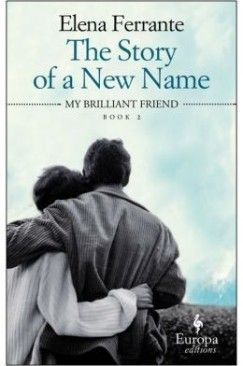
The Story of a New Name by Elena Ferrante tr. By Ann Goldstein … Neapolitan Tetralogy Book 2

The Story of a New NameThe second in the tetralogy of books about two friends Elena and Lila, growing up in an impoverished neighbourhood of Naples. The first book My Brilliant Friend I reviewed here.

Both girls were bright students in primary school, and perhaps because the story is narrated from Elena’s perspective she often sees herself in the shadow of her friend Lila, as if she must strive to attain her success, while Lila’s comes more naturally.

Lila fights to elevate herself, suggesting Elena studies with her to help her friend, thereby attaining the knowledge herself and through imposing her will on her husband, her family and business associates, who need her input and influence which she uses to both help them and to ensure her often rebellious stance is understood by them all.

It is Elena who despite her family circumstances progresses through high school and at the suggestion of a teacher applies to a university in Pisa where she can continue her studies.

Lila whose beauty and bravado bring her more to the attention of local boys wanting to move themselves up in the world financially, becomes entangled in their schemes and part of their negotiations and is married at sixteen to Stefano the grocer, partly in order to avoid the attention of the Solara brothers.

“How difficult it was to find one’s way, how difficult it was not to violate any of the incredibly detailed male regulations.”

Through her personal notebooks that she entrusts to Elena for safekeeping and Elena’s inability to withhold from the temptation of what they offer, we too as readers understand more from within the bounds of Lila’s marriage and life than we might otherwise from the limited perspective of her friend, particularly during the frequent periods where the friendship was being tested and therefore withheld.

Though unwilling to be trapped inside marriage, Elena does envy her friend the space and luxury her new status as Signora Raffaella Carracci has given her and when Lila’s husband suggests a summer holiday on doctor’s orders to increase her chances of conceiving a child, Lila’s insistence that her friend accompany becomes Elena’s excuse to find a way to be in close proximity to Nino Sarratore, the brilliant student she has had a crush on for years. His arrival becomes a turning point in their lives, though not the outcome either of them were wishing for.

Pisa NormaleElena distances herself from Lila and from her family and moves to Pisa, where initially she struggles to brush off the ways of her neighbourhood, her origin, her accent, things that make it obvious to others she is not one of them. She throws herself into her studies and into becoming more like her contemporaries; a new boyfriend aids her transition.

“That day, instead, I saw clearly the mothers of the old neighbourhood. They were nervous, they were acquiescent. They were silent, with tight lips and stooping shoulders, or they yelled terrible insults at the children who harassed them….

They had been consumed by the bodies of husbands, fathers, brothers, whom they ultimately came to resemble, because of their labours or the arrival of old age, of illness. When did that transformation begin? With housework? With pregnancies? With beatings? Would Lila be misshapen like Nunzia?…

And would my body too, one day be ruined by the emergence of not only my mother’s body, but my father’s? And would all that I was learning at school dissolve, would the neighbourhood prevail again, the cadences, the manners, everything be confounded in a black mire,…”

Leaving Naples allows Elena to begin to reform herself, to blend in, the novel highlights the tension between the Neapolitan dialect spoken in her neighbourhood and the correct Italian spoken by the professional, educated classes. Dialect is associated with aggression, insults and anger, with all the negative emotions and difficult challenges of a repressed community, while the Italian symbolises upward mobility and refinement.

Napoletana“Be careful where all this studying leads, Lenu. Remember who you are and which side you’re on.”

I found Book 2 just as engaging as Book 1, more than just narrating the events that mould the two girls’ lives is the underlying philosophical question of whether one can rise above one’s origins via the attainment of significant wealth or education. Elena and Lila represent these twin avenues, in their attempt to escape their origins.

The novel continues to focus on the friendship of the two girls and their connections with others, both those from within their sphere and those they encounter outside, a measure of how far they have progressed in their aim to rise up and out of the confines of the neighbourhood.

The narrative is less dramatic than it might be by some of the omissions. Elena doesn’t recount much of her own dialogue with her boyfriends and much of the story is narrated or told, rather than putting the reader in the midst of the events as if to experience them. It is the psychological and philosophical elements of the placement of the two women in these situations that lend themselves a kind of accepted inevitability, we won’t be shocked by anything that happens, knowing their backgrounds, it is the lure of that question of whether either of them can or will escape their fate that entices us to read on.

Next Book in the Series: Those Who Leave and Those Who Stay (click title to read review)

My Brilliant Friend, Elena Ferrante tr. by Ann Goldstein…Neapolitan Tetralogy Book1

Elena Ferrante is already something of an Italian legend. An author said to spurn interviews, her pen name fuelling speculation about her real identity. Her work is said to be autobiographical and already capturing the attention of English readers in a similar way to the autobiographical series of novels by the Norwegian Karl Ove Knausgaard.

Being a fan of translated fiction I have had my eye on this series for a while and from the reviews and articles I have read, her work reminds me of Caroline Smailes, whose excellent novel The Drowning of Arthur Braxton was my favourite read in 2013.

My Brilliant FriendIn 2012, My Brilliant Friend, the first in the trilogy of Neapolitan novels was translated into English and the two subsequent books The Story of a New Name and Those Who Leave and Those Who Stay were published in 2013 and 2014 consecutively.

The trilogy follows the lives and friendship of Elena Greco and Lila Cerullo, two astute girls from a downtrodden suburb slum of post war  1950’s & 1960’s Naples, as they navigate the challenges and opportunities necessary to survive and overcome their upbringing.

My Brilliant Friend spans Elena and Lila’s childhood and adolescence years in their neighbourhood, one where aggression, tension and feuds reign and graduating from school is less of a priority than finding safety and protection from the inhabitants of their immediate environment.

The first pages begin with the naming of characters, a family tree of the neighbourhood, members of each family and their occupations. I often find these lists of characters overwhelming, so ignored them, telling myself, if the book is good, I’ll know who all these characters are by the end. And when I went back to look at it, sure enough, I knew who they all were.

The story then begins with a prologue when the girls are women in their mid-fifties and creates a mystery that won’t be resolved in the first book, as the girls only reach the age of sixteen by its conclusion. It intrigues and teases the reader to continue to read on and discover what it is Elena knows, that no one else does.

“It’s been at least three decades since she told me that she wanted to disappear without leaving a trace, and I’m the only one who knows what she means.”

A Naples Slum

A Naples Slum

Elena is angry and so begins to write this narrative, in an act of revenge-like competitiveness, a trait that has defined her relationship with Lila throughout their childhood and adolescence.

Narrated from the point of view of Elena, the girls first recollection of being together is around the fearful presence of Don Achille, the local grocer whose name is associated with a fairy tale ogre.

In their play, Lila’s actions are always decisive and with bold intent, Elena is less bold, yet more determined, she follows her friend but wishes to surpass her and learns how to cope with the sacrifices necessary to continue to be her friend. Starting with the day Lila dropped her doll through the street grating into a dark underground cellar.

“But that day I learned a skill at which I later excelled. I held back my despair, I held it back on the edge of my wet eyes, so that Lila said to me in dialect:

‘You don’t care about her?’

I didn’t answer. I felt a violent pain, but I sensed that the pain of quarrelling with her would be even stronger. I was as if strangled by two agonies, one already happening, the loss of the doll, and one possible, the loss of Lila.”

After her early years of passing well her exams, there is one year when Elena’s attention strays and as a result her parents are no longer willing to support her in school. They won’t pay for extra tuition but if she studies and resits the exams, they will allow her to continue.

Lila, who never fails, will have to leave school, regardless of her ability, her family isn’t willing to support her education. She has a hunger for education and follows Elena’s progress, increasing her knowledge, surpassing her friend, becoming more like her teacher, though never sitting another exam.

“She had begun to study Greek even before I went to high school? She had done it on her own, while I hadn’t even thought about it, and during the summer, the vacation? Would she always do the things I was supposed to do, before and better than me? She eluded me when I followed her and meanwhile stayed close on my heels in order to pass me by?”

Snapshot 1 (09-11-2012 17-25)

Friendship by Allia

The book ends with a wedding, the girls paths seem to be heading in different directions, they continue to navigate their lives according to the expectations and threats of their community, yet their paths, in their different ways, potentially hold the seeds of their escape.

My Brilliant Friend is an emotionally charged coming-of-age read and the story held me riveted all the way through from the prologue that isn’t resolved through their early schooldays up to that wedding day.

Ferrante’s depiction of the two girls friendship bristles with vulnerable authenticity, igniting our curiosity in their interactions with their community, making the reader care about what will happen to them all next.

Next Book in the Series: The Story of a New Name (click title to read review)

Buy This Book

Buy My Brilliant Friend at Book Depository

14 July La Fête Nationale: A Salmagundi of French Literature

Prise de la Bastille by   Jean-Pierre Houël Source:Wikipedia

Prise de la Bastille by Jean-Pierre Houël
Source:Wikipedia

Today is a holiday here in France, marking the celebration of la fête nationale or as we know it in English Bastille Day, commemorating 14 July 1789 when the population fearing an attack by the royal military stormed the Bastille prison and released the many political prisoners in what became a symbol of the end to the rule of the monarchy and the beginning of independence.

There will be a military parade in the Avenue des Champs-Élysées in Paris and here in Aix-en-Provence and most towns in France there will be organised displays of fireworks to commemorate.

To celebrate the National Holiday, I am following the initiative of Marina Sofia at Finding Time To Write to highlight some recently read and upcoming French reads, now available in English, here is my salmagundi of French Literature!

Click on the title to read the review and read to the end to find the definition of that tasty word for the day Salmagundi:

Two French Books I am looking forward to reading:

Poisoning (3)

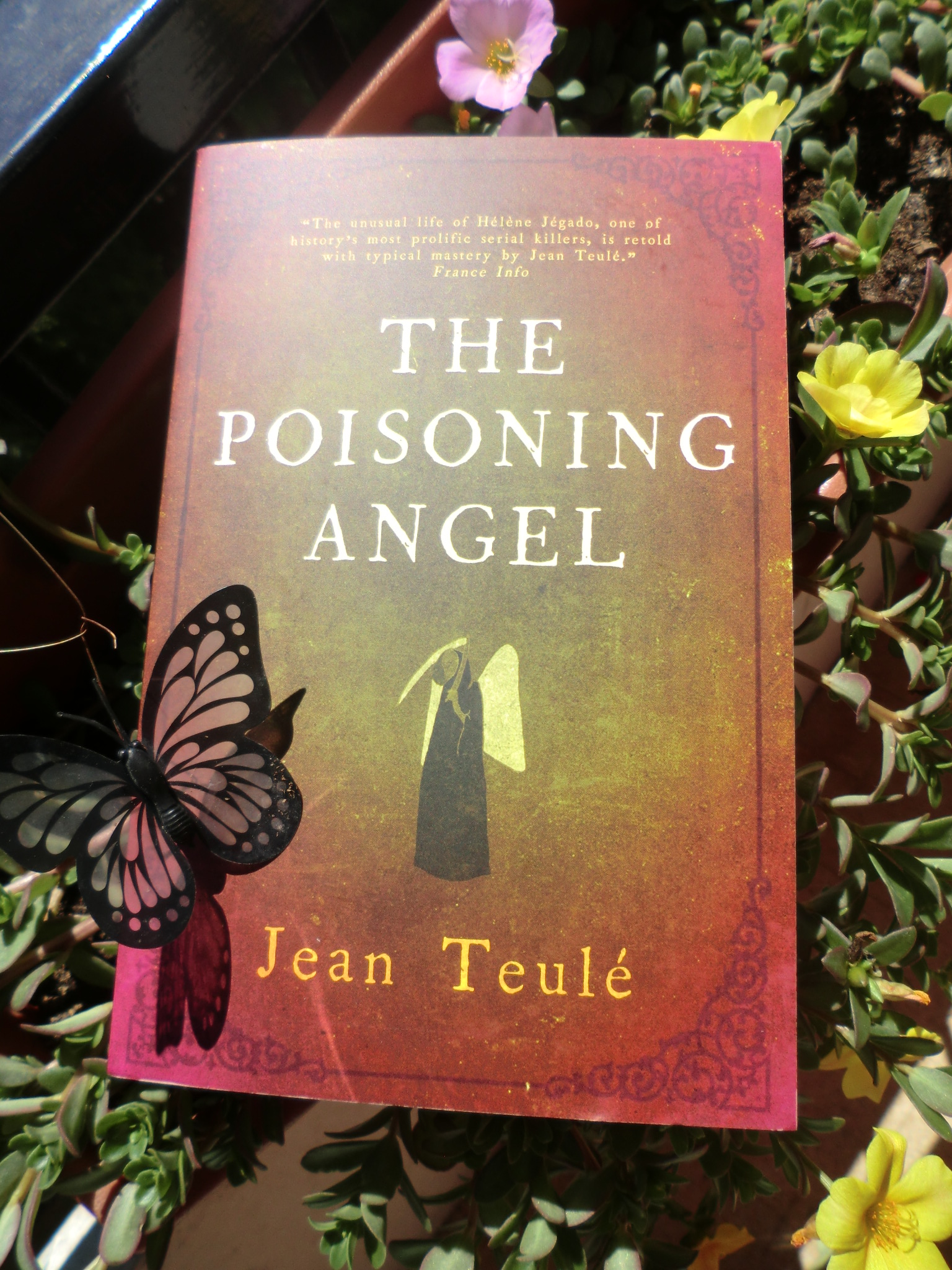
The Poisoning Angel by John Teule

translated by Melanie Florence

This book is actually to be published today 14 July 2014 and the author is a well-known name in French contemporary literature. In fact I have one of his books in French on the shelf already.

This one is based on a true but gruesome story of one of the most notorious serial poisoners that France has ever known and was described by the Sunday Telegraph as:

“a bawdy romp one minute, a gruesome tragedy the next. The writing is beautiful, witty, grisly and moving, and reeks of authenticity.”

Let’s hope all that comes off in translation.

Vatican Cellars

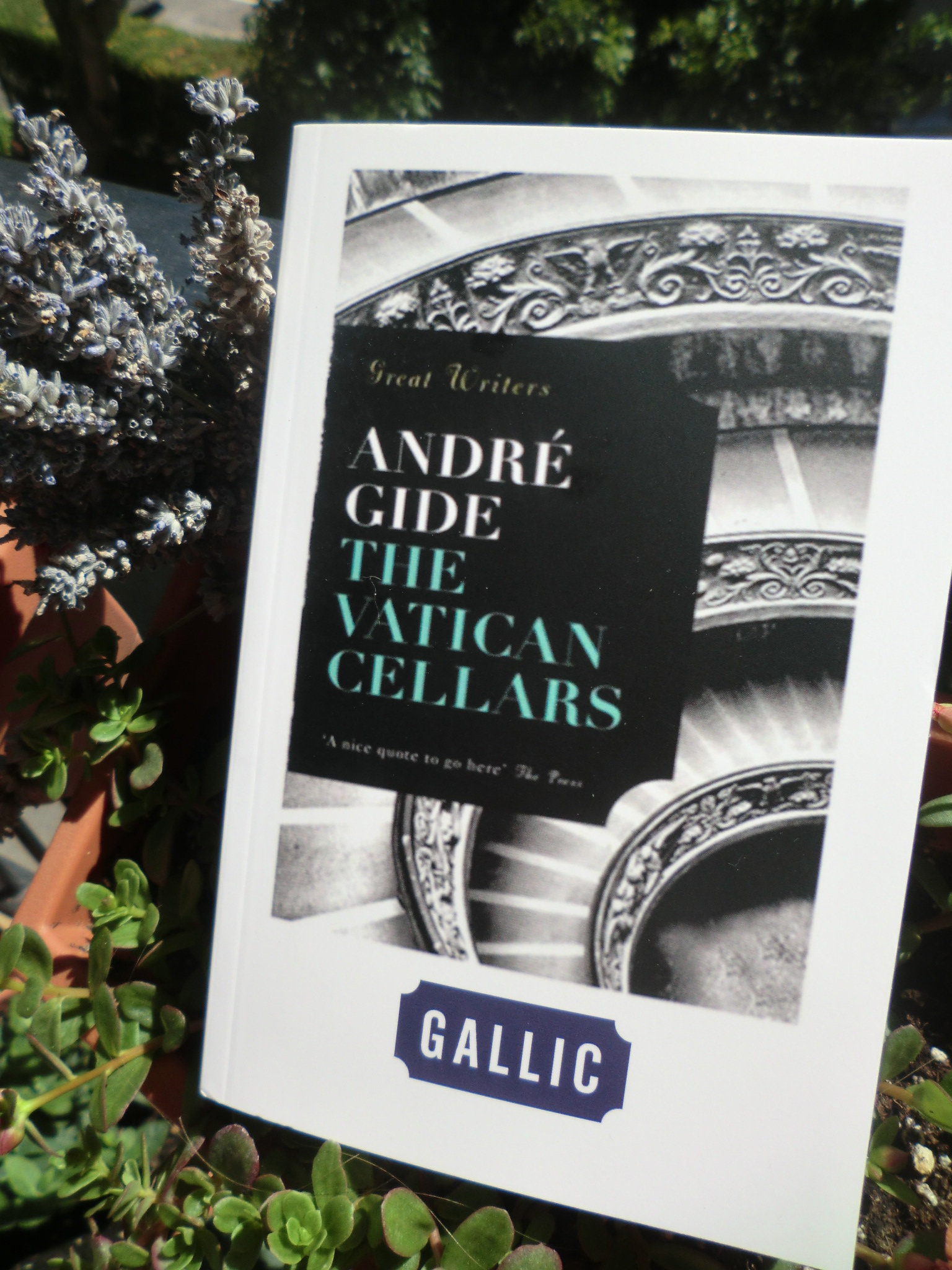
The Vatican Cellars by André Gide

translated by Julian Evans

This book will be published in August 2014 to mark the centenary of the book’s first publication. It is set in the 1890’s around a group of ingenious fraudsters who claim that the Pope has been imprisoned and a false Pope enthroned in his place.

I haven’t read anything by this author, but he sounds like he caused quite a sensation with this novel and others, as he took it upon himself to explore morality in his work and was a major influence on the writing of Jean-Paul Sartre and Albert Camus. He was awarded the Nobel Prize for Literature in 1947 and one year after he died (in 1951) his works were placed on the Vatican’s list of banned books.

Three French Books I Read This Year:

Nagasaki (2)

Nagasaki by Eric Faye

translated by Emily Boyce

A short novella, based on a true story of an event that happened in Japan, that will make you check your fridge contents and ensure you lock the door at night.

Foundling2

The Foundling Boy by Michel Deon

translated by Julian Evans

Coming of age story of a young boy left as a baby on a doorstep, who grows up and has an insatiable need to travel and experience the world. The sequel soon to be translated into English as well.

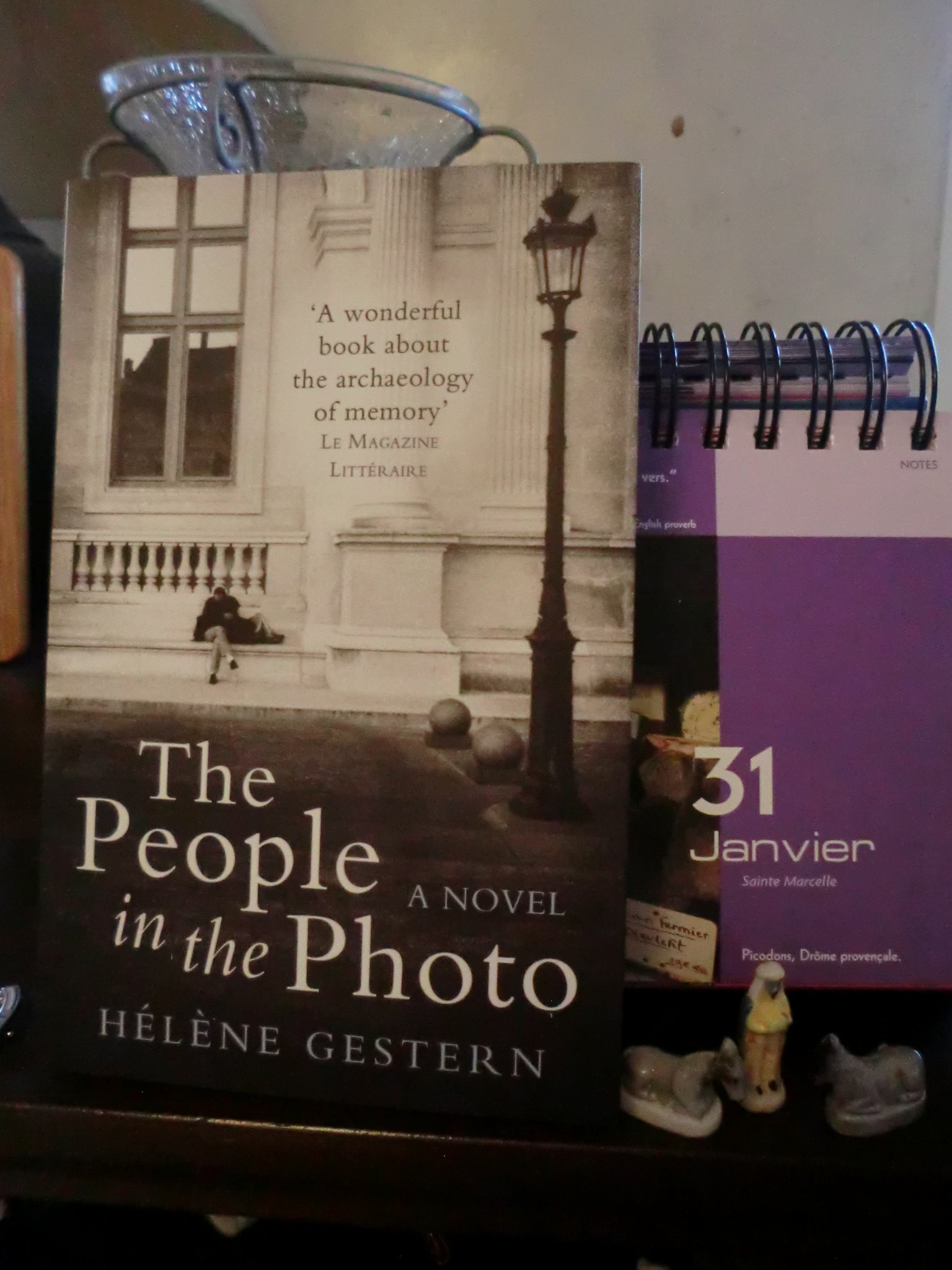
People in Photo

The People In the Photo by Hélène Gestern

translated by Emily Boyce,Ros Schwartz

A wonderful epistolary novel about a young woman searching for answers about events in her mother’s life before she was born, a photo provides a clue to those she knew.

Two Great Books Set in France:

All the Light

All the Light We Cannot See

by Anthony Doerr

Paris and Saint-Malo pre and during WWII following the lives of two children and their growth into adolescence, Marie-Laure who lost her sight at six and Werner who lost his parents and is raised in an orphanage. An excellent story that leads to the crossing of paths of these two characters and wonderfully evocative of place.

I Always Loved You

I Always Loved You

by Robin Oliveira

An insightful historical novel about the American painter Mary Cassatt, her life in late 1800’s Paris as she struggles to establish her name in the art world, enduring a life-long though fractious relationship with the impressionist painter and sculptor Edgar Degas.

Salmagundi:

  1. a mixed dish consisting usually of cubed poultry or fish, chopped meat, anchovies, eggs, onions, oil, etc., often served as a salad.
  2. any mixture or miscellany.

 Bonne Fête!


Very Inspiring Book Blogs

The Very Inspiring Blogger Award is flying like an angel around the blogosphere, touching down on many of the dedicated and inspiring people out there dedicated to books and writing and sharing the word on literature.

very-inspiring-blog-award-logo

So congratulations to the following for being nominated, you are all an inspiration to me and I thank you most kindly for nominating Word by Word.

Thank you:

  1. Lizzi at These Little Words – Thoughtful considered reviews,she reads a mix of contemporary recent publications and favourites from the shelf waiting to be read.
  2. Sandra Danby Author of Ignoring Gravity – a new blog for me, but I am soon to read her book, so watch this space.
  3. Jacqui at Jacqui Wine’s Journal – Long-time reader and tweeter, new recruit to blogging, excellent shelf of reads with a penchant for translated fiction and a connoisseur of wine! Also part of the Shadow Jury for IFFP – see Stu below.
  4. Nancy at Ipsofactodotme – Out of The Comfort Zone Reading more like it, Nancy is Inspiration extraordinaire, taught herself to read in French through reading classic French literature, with a cat and a Heineken for company, while living in the Netherlands, I love the eccentricity and achievements of inspirational bloggers!

The award has the following rules:

  • Thank and link to the person who nominated you.
  • List the rules and display the award.
  • Share seven facts about yourself.
  • Nominate 15 other amazing blogs and comment on their posts to let them know they have been nominated.
  • Optional: display the award logo on your blog and follow the blogger who nominated you.

Seven Things About Me You May Not Know:

  1. Golden Plover - the other life...

    Golden Plover – the other life…

    The first time I went on a date I had to ride 6 kilometres across farmland on my horse to get there.

  2. I learnt to drive on a Massey Ferguson tractor with no second gear.
  3. I was once an extra in a film called ‘Bedlam Britannica’ a documentary about how the British treated their mentally ill. My role was a lunatic, part of a patient’s hallucination.
  4. When I was travelling in India, someone asked me if I was Japanese.
  5. Now people ask me “Vous êtes Anglais?”
  6. I once attended two weddings in subsequent weekends; the first was in Beirut, the second in Lagos.
  7. I love the sea and sometimes wonder how life might have unfolded had I said yes to that job on a tall ship sailing around the world.

So Fifteen Book Bloggers That Inspire Me Today:

  • The Lonesome Reader – I will read anything and everything he reviews, whether I like the book or not, Eric is an inspirational and aspirational reviewer, one of the best. His reviews read like compelling essays and I know Col (see below) is a big fan of his too.
  • Vishy The Knight – Diligent reader, lover of books across genre, the most comprehensive reviews ever & the kindest, most attentive blog commenter in history.
  • The Only Way Is Reading – When Col gives a 10 (check out his awesome rating system) I absolutely have to read the book, introduced me to Primo Levi.
  • The Writes of Women – Reviews of Books By Female Writers, Influential Opinion Maker on Books @Frizbot
  • Winstons Dad – Stu is the Super Champion of Translated Fiction and Chair Person of the Shadow Jury for IFFP (International Foreign Fiction Prize), a Translation Activist who reads around the world!
  • HeavenAli – Unearths and Rediscovers Forgotten Books, has read more Persephone Books than Anyone I know!
  • My Writing Life – Julia Hones, a creative spirit writing, reading and sharing insightful and compassionate pearls of wisdom, a place to rest a while.
  • A Life In Books – Susan is an ex bookseller and knows what’s coming out, writes informed reviews and contributes to the conversation.
  • Book to the Future – SteJ reads books with the weirdest covers ever, he thrives on finding the literary bizarre and his reviews and blogs are compelling and original. Blogging shines a bright light out from under the bushel for this one.
  • KimberlySullivan – Kimberly is based in Rome but travels a lot and writes amazing short stories and she goes to the Matera Women’s Fiction Festival every year!! One day I’m going to meet her there! She is total inspiration and gets out there and achieves her dreams and reads and blogs and juggles kid stuff.
  • Thinking in Fragments – Alex is a thinker, a reader and comes to blogging having left the academic world which we are all the richer for having her valued presence and contribution to our virtual world.
  • Books and Reviews – Elena, Spanish Feminist, I came across her wonderful blog when we both read Carmen LeForet’s Nada at the same time, inspirational indeed!
  • ReadEng. Didi’s Press – Well Deidre is up there in the North of France and I’m down here in the South and one day we’ll meet in the middle, I love her, love her blog and A D O R E her Youtube channel! She’s evolved into a SuperStar BookTuber, Go Girl! Love all her recommendations, and she’s great to listen to. More on Youtube than the blog these days. I’m sure we knew each other in a previous life. J
  • Mes étagères en franglais – What dedication, reading in French and English, she puts up her reviews in both languages, dedication to books and reviewing and the French/English languages. Bravo I say!
  • Biblioglobal – Another champion of reading around the world, across cultures, translated fiction and fiction written by those who live or come from other cultures, always love visiting here.

Wow, that was hard work! And sorry for those I missed, there are too many to choose from, so many great blogs by writers as well as readers, I hope you enjoy the selection and find someone new to visit and follow. Just click on the title to go there. And of course, no obligation to those nominated to participate.

After all that, I need a little inspiration from Matera!

Art in Nature, Tove Jansson #TOVE100

Coming out of any intense, dramatic period of living can make it hard to choose appropriate reading material.

Recently I found it difficult to sustain reading as it all seemed too far removed from life’s demands that I be very present and attentive to the needs of those around me.

It made me reflect on what and who can I read I turn to during these kinds of periods. Short stories and/or non-fiction. Tove Jansson and The Dalai Lama.

TOVE 100 © Moomin Characters™

TOVE 100
© Moomin Characters™

I chose Tove Jansson (translated by Thomas Teal), because even her stories feel like they haven’t strayed too far from the reality within which they were inspired. I find immeasurable comfort in reading the words of this talented artist, the short form allowing a brief respite without requiring an ongoing commitment of a novel, when concentration spans are short.

Art in NatureArt in Nature is an intriguing collection of character studies, characters who happen to be creative, eccentric, obsessive, all curiously flawed in some way and Tove Jansson observes them in a situation until the cracks appear. They are a slice of life short narrative and any one of them could easily have morphed into a longer story such as her novel The True Deceiver I recently reviewed here.

The first story Art in Nature is about a caretaker watching over an exhibition of work in open air.

“He slept in the sauna down below the great lawn where the sculptures were set out among the trees.”

The day has its rhythm and characteristics and the evenings belong to the caretaker, the quiet contemplative time when he is alone among the unmoving silent works, still, post creation. He observes everything, every inclination, every watcher, he categorizes them and becomes attached to how things are.

“Almost all the feet moved respectfully. If they were with a guide, they’d stand still for a while, all turned in the same direction, and then they’d change direction all at the same time to look at something else. The lonely feet were uncertain in the beginning, then they’d move slowly at an angle, stop, stand with legs crossed, turn around, and sometimes they’d lift one foot and scratch with it because there were lots of mosquitos.”

Until one evening when a couple overstays, middle-aged adults breaking the rules, having a domestic argument. He intervenes, listens to them argue, provokes them with his own thoughts on the mystery of what art is.

Tove Jansson's Atelier © Moomin Characters™

Tove Jansson’s Atelier
© Moomin Characters™

The Cartoonist is a mysterious, insightful look into the daily work of an illustrator, a job that Tove Jansson’s mother did and one she dabbled in herself, making me wonder how much of this was inspired by the environment and circumstance of her mother.

A famous newspaper cartoonist has quit suddenly after 10 years and a new artist is required to assume his role without a break in the cartoon strip, without his fans knowing. The new artist slips easily into the role but becomes plagued with needing to know why his predecessor quit.

The Doll’s House is brilliant and shocking and quite different from anything else of Jansson’s I have read. Like The True Deceiver, it shows her deftness at spotting signs and cracks in character that over time can grow from barely visible flaw into raging psychological dysfunction when neither checked or dissipated.

Two recently retired men who have lived together and shared the same respect for the beautiful objects that surround them, are adjusting to the new routine of no longer having demanding day jobs. Alexander is a craftsman and Eric a retired banker.

“Alexander was an upholsterer of the old school. He was exceptionally skilled, and he took a craftsman’s natural pride in his work. He discussed commissions only with those customers who had taste and a feel for the beauty of materials and workmanship. Not wishing to show his contempt, he referred all the others to his employees.”

In the beginning they have difficulty adjusting to this new way of life, discovering that in such close proximity their interests aren’t as fine-tuned or in harmony as they had appeared when their time was absorbed by outside demands. Eric begins to take on more of the domestic role and Alexander begins a project to build a miniature house. He seeks the help of an electrician called Boy, who becomes his trusted helper.

“Boy came back almost every evening. He often brought little table lamps, sconces, or a chandelier that he’d found in some hobby shop or toy store. He came straight from work in his jeans and trailed street dirt over the rugs, but Alexander didn’t seem to notice – he just admired what Boy had brought him and listened gravely to his suggestions about improvements to the house.”

Just rereading these two quotes, makes me realise what clever insights Tove Jansson’s places into the text, the clues into character are there from the beginning and the simple daily events that follow turn these insights into something raw and dangerous.

Another excellent collection of stories from the Finnish artist and writer who would have been 100 years old next month.

Absolutely gripping!

Check out her books and events at TOVE100.com

Tove Jansson with her brother Per Olov © Moomin Characters™

Tove Jansson with her brother Per Olov
© Moomin Characters™