Warwick Prize for Women in Translation longlist 2025

Fourteen titles have been longlisted for the 8th annual award of the Warwick Prize for Women in Translation. The 2025 competition received a total of 145 eligible entries from 34 languages.

The longlist covers 10 languages, with Slovenian represented for the first time in the history of the prize. 

The £1000 prize was established by the University of Warwick in 2017 to address the gender imbalance in translated literature and to increase the number of international women’s voices accessible by a British and Irish readership. 

“For this award that considers all genres on equal terms, the judges have found longlist places not only for fiction of all sorts – from fiercely contemporary short stories to the epic debut by one of the 20th century’s greatest literary voices. We have selected searing memoir too, and (this year) an especially rich haul of poetry. The poetry books stretch from luminous snapshots of everyday experience to immersive mythic narrative in verse. Like our prose selections, they demonstrate the vision and artistry both of the original authors – and of the translators who carry this precious cargo across languages and cultures. Without them, our imaginative worlds would be so much smaller, and poorer.”

The 14 longlisted titles are:

And the Walls Became the World All Around, Johanna Ekström & Sigrid Rausing (Sweden)

translated from Swedish by Sigrid Rausing (Granta) (Biography/Memoir)

– Johanna Ekstrom was a Swedish artist and writer who published over a dozen books of poetry, fiction and memoir in her lifetime. In 2022, ill with cancer, she asked her closest friend, Sigrid Rausing, to edit and finish her final book. Originally a memoir on the loss of a relationship during the pandemic, the focus shifted from the loss of love to, potentially, the loss of life.

These excerpts from Ekstrom’s notebooks interwoven with Rausing’s reflections on the text and on their friendship are a testament to a voice and a life; a book made in grief over the loss of a close friendship of over thirty years.

Désirée Congo, Evelyne Trouillot (Haitian)

translated from French by M.A. Salvodon (University of Virginia Press)

– Désirée Congo is a riveting, powerful, original novel set in the final years of the Haitian Revolution. In this richly textured work, Trouillot constructs an intricate web from the varied experiences of freedmen and women, maroons, enslaved African people and their Creole children, as well as French planters and white smallholders in colonial Saint-Domingue at a historical moment of upheaval.

A lyrical book whose characters enrich our understanding of the last confrontations between Haitian revolutionaries and Napoleon’s imperial forces – a conflict that resulted in the success of the largest slave revolt in recorded history and the independence of the first Black state in the western hemisphere.

Djinns, Fatma Aydemir (Kurdish)

translated from German by Jon Cho-Polizzi (Peirene Press)

– For thirty years, Hüseyin has worked in Germany, taking every extra shift and carefully saving, providing for his wife and their four children. Finally, he has set aside enough to buy an apartment back in Istanbul – a new centre for the family and a place for him to retire. Just as this future is in reach, Hüseyin’s tired heart gives up. His family rush to him, travelling from Germany by plane and car, each of his children conflicted as they process their relationship with their parents, and each other.

Reminiscent of Bernardine Evaristo or Zadie Smith, Djinns portrays a family at the end of the 20th century in all its complexity: full of secrets, questions, silence and love.

The Empusium, Olga Tokarczuk (Poland)

translated from Polish by Antonia Lloyd-Jones (Fitzcarraldo Editions)

– In Sept 1913, Mieczysław Wojnicz, a student suffering from TB, arrives at Wilhelm Opitz’s Guesthouse for Gentlemen, a health resort in what is now western Poland. Every day, residents gather to imbibe the hallucinogenic local liqueur, to obsess over money, status and to discuss the great issues of the day: Will there be war? Monarchy or democracy? Do devils exist? Are women inherently inferior?

Meanwhile, disturbing things begin to happen around the guesthouse. As stories of shocking events in the nearby highlands reach them, a sense of dread builds. Someone, or something seems to be watching them and attempting to infiltrate their world. Little does Mieczysław realise, as he tries to unravel truths within himself and the mystery of the sinister forces beyond, that they’ve chosen their next target.

A century after the publication of The Magic Mountain, Olga Tokarczuk revisits Thomas Mann territory and lays claim to it, blending horror story, comedy, folklore and feminist parable with brilliant storytelling.

Francis Bacon’s Nanny, Maylis Besserie (France)

translated from French by Clíona Ní Ríordáin (The Lilliput Press)
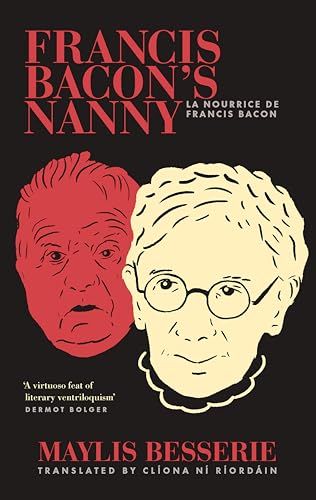
– At the centre of the life of the great artists was an unexpected life-long influences Jessie Lightfoot shielded a young Francis Bacon from the brutish violence of his bullying father, as well as from his worst self-immolating excesses later in life. The tenderness, wit and warmth of this inimitable Nanny stands in illuminating relief to the sulphurous palette that defined Bacon’s work.

Beyond the humour and heart of an extraordinary woman confronted with the shade and guile of the art world, Maylis Besserie offers a glimpse of Ireland in the first half of the 20th C, a place apart from the rest of the world, whose landscapes, imagery and animals haunted the painter’s canvases.

In the final of Maylis Besserie’s trilogy, her focus on the art and lives of artists who crossed borders between France and Ireland closes as Bacon confronts boundaries between the real and the imagined.

Hungry for What, María Bastarós (Spain)

translated from Spanish by Kevin Gerry Dunn (Daunt Books Publishing)

– Violence and desire shatter the surface of the everyday in an exceptional collection of short stories.

A game between a woman’s father and husband simmers and boils into scalding danger; a daughter creates an elaborate feast for her grieving mother; a solar eclipse burns the emotions and truths of a suppressed neighbourhood into the open.

Foregrounding voices and experiences of women and children, veering from claustrophobic, suffocating suburbia to untamed nature and its great vistas of desert and sky, hungry for what focuses on the terror of normality, prising back its veneer of respectability to reveal the hostility & menace that seethe beneath.

Lies and Sorcery, Elsa Morante (Italy

translated from Italian by Jenny McPhee (Penguin Press)

– For years Elisa has lived in an imaginary world of her own but when her guardian dies, young Elisa feels compelled to confront the truth of her family’s tortured and dramatic history by telling the story of her mother, Anna, and grandmother, Cesira. Elisa is a seductive, if less than reliable, spinner of stories, drawing the reader into a tale of intrigue, treachery and self-delusion, which is increasingly revealed to be an exploration of a legacy of political and social injustice.

First published in 1948, Elsa Morante’s novel won the Viareggio Prize & earned her the lasting admiration of writers such as Italo Calvino and Natalia Ginzburg.

My Secret Life, Krisztina Tóth (Hungary)

translated from Hungarian by George Szirtes (Bloodaxe Books)

My Secret Life is the first book in English translation by one of the leading Hungarian poets of the generation who began publishing in the late 1980s. The poems in My Secret Life were selected from three of nine published collections, with the addition of some new or previously uncollected poems. 

Phantom Pain Wings, Kim Hyesoon (South Korea)

translated from Korean by Don Mee Choi (And Other Stories)

– Winged ventriloquy – a powerful new poetry collection channelling the language of birds by one of South Korea’s innovative contemporary writers. An iconic figure in the emergence of feminist poetry in South Korea and now internationally renowned, Kim Hyesoon pushes the poetic envelope into the farthest reaches of the lyric universe. In her new collection, Kim depicts the memory of war trauma and the collective grief of parting through what she calls an “I-do-bird-sequence,” where “Bird-human is the ‘I.’”

Too Great A Sky, Liliana Corobca (Romania)

translated from Romanian by Monica Cure (Seven Stories Press UK)

– The story of the deportation of Romanians from Bukovina, an exercise in historical memory which demonstrates how to maintain humanity in impossible conditions.

Translation of the Route, Laura Wittner (Argentina)

translated from Spanish by Juana Adcock (Bloodaxe Books & Poetry Translation Centre)

– In poems that are precise, frank & finely tuned, award-winning Argentine poet Laura Wittner explores the specificities of parental and familial love, life after marriage, and the re-ignition of the self in middle age.

Un Amor, Sara Mesa (Spain)

translated from Spanish by Katie Whittemore (Peirene Press)

– Fleeing from past mistakes, Nat leaves her life in the city for the rural village of La Escapa. She rents a small house from a negligent landlord, adopts a dog and begins to work on her first literary translation. But nothing is easy: the dog is ill tempered and skittish and misunderstandings with her neighbour’s thrum below the surface. When conflict arises over repairs to her house, Nat receives an unusual offer that tests her sense of self, challenges her prejudices, and reveals her most unexpected desires. As she tries to understand her decision, the community of La Escapa comes together in search of a scapegoat.

Vanishing Points, Lucija Stupica (Slovenia)

translated from Slovenian by Andrej Peric (Arc Publications)

– Lucia Stupica’s 4th book of poetry comes after a decade of silence allowing her poetic voice to become more complex and sensitive to the cracks in time and in the world through which she observes fragments of life – imperfect, painful and real. Her expression retains its tenderness, establishing a deep dialogue with the world, the past and the present, with appearances and the things they conceal.

In an attempt at a new understanding of the world, Stupica writes of the role of women as the hidden movers of history, and the role of those, be they a man, a child or a random stranger, who see the experience of the other, and are open to it. These poems of love, loss, mystery and what lies beyond our understanding make for a haunting and memorable collection in Andrej Peric’s beautiful translation.

We Do Not Part, Han Kang (South Korea)

translated from Korean by e.yaewon & Paige Aniyah Morris (Hamish Hamilton, Penguin Random House UK)
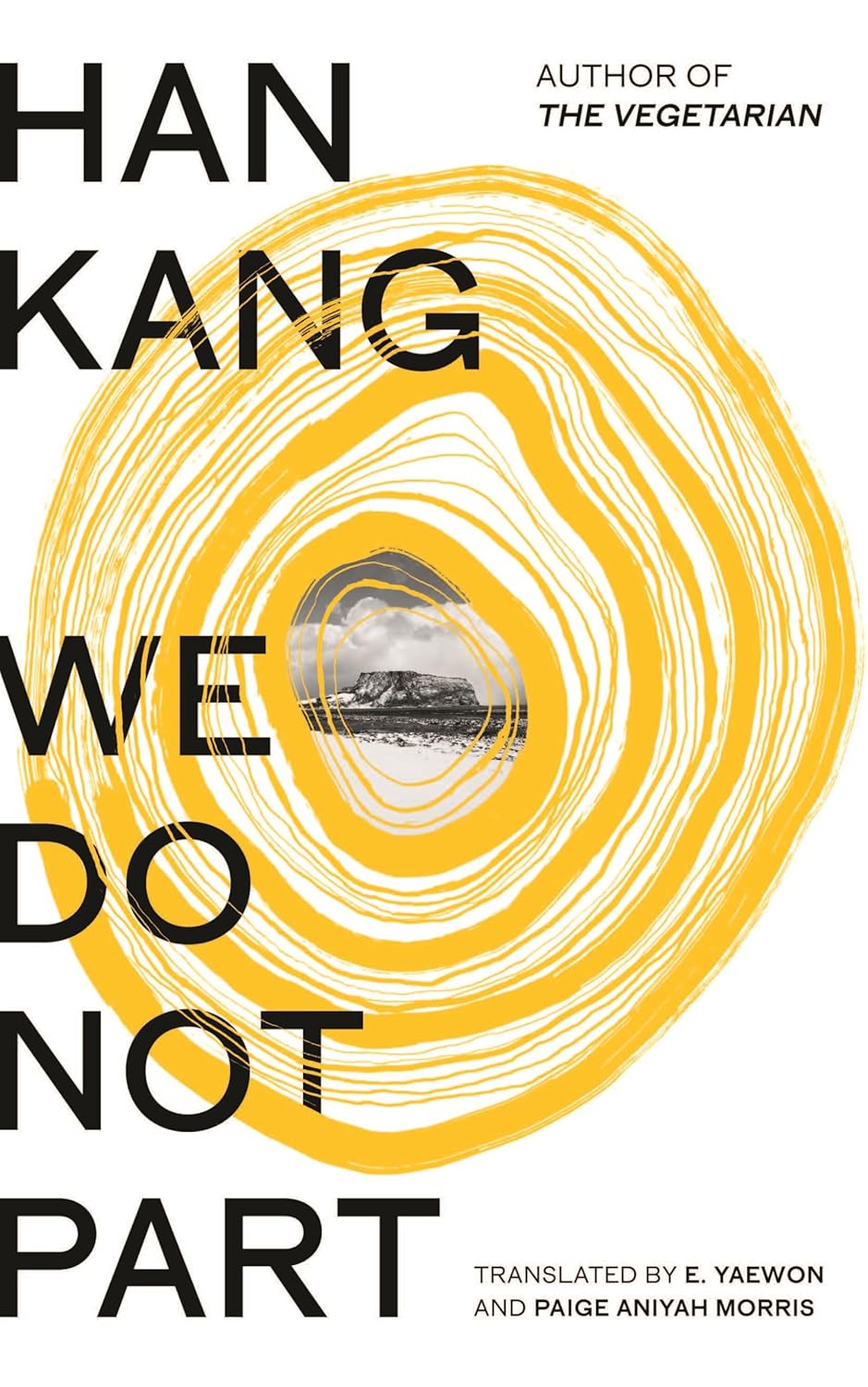
– One morning in December, Kyungha is called to her friend Inseon’s hospital bedside. Airlifted to Seoul for an operation following a wood-chopping accident, Inseon is bedridden and begs Kyungha to take the first plane to her home on Jeju Island to feed her pet bird, who will quickly die unless it receives food.

As Kyungha arrives a snowstorm hits. Lost in a world of snow, she begins to wonder if she will arrive in time to save the bird – or even survive the terrible cold that envelops her with every step. She doesn’t yet suspect the darkness awaiting at her friend’s house.

There, the long-buried story of Inseon’s family surges into light, in dreams and memories passed from mother to daughter, and in a painstakingly assembled archive, documenting the terrible massacre 70 years before that saw 30,000 Jeju civilians murdered.

We Do Not Part is a hymn to friendship, a eulogy to the imagination, and above all a powerful indictment against forgetting.

* * * * * *

I have not read any of these titles, though I have read Han Kang’s extraordinary Human Acts, which this new novel reminds me of. Here the Novel Prize winning author asks similar questions of humanity. Another Nobel Prize winning author Olga Tokarczuk, has a new book here; I enjoyed Drive Your Plow Over the Bones of the Dead, but looking out for the less familiar, I’m interested in Kurdish author Fatma Aydemir‘s Djinns and another Italian classic author Elsa Morante looks tempting, despite the length.

Now that I’ve created the summaries, I can reread them at a leisurely pace in one location.

Any that interest you from this list?

The winner will be announced at a ceremony at The Shard in London on Thursday 27th November.

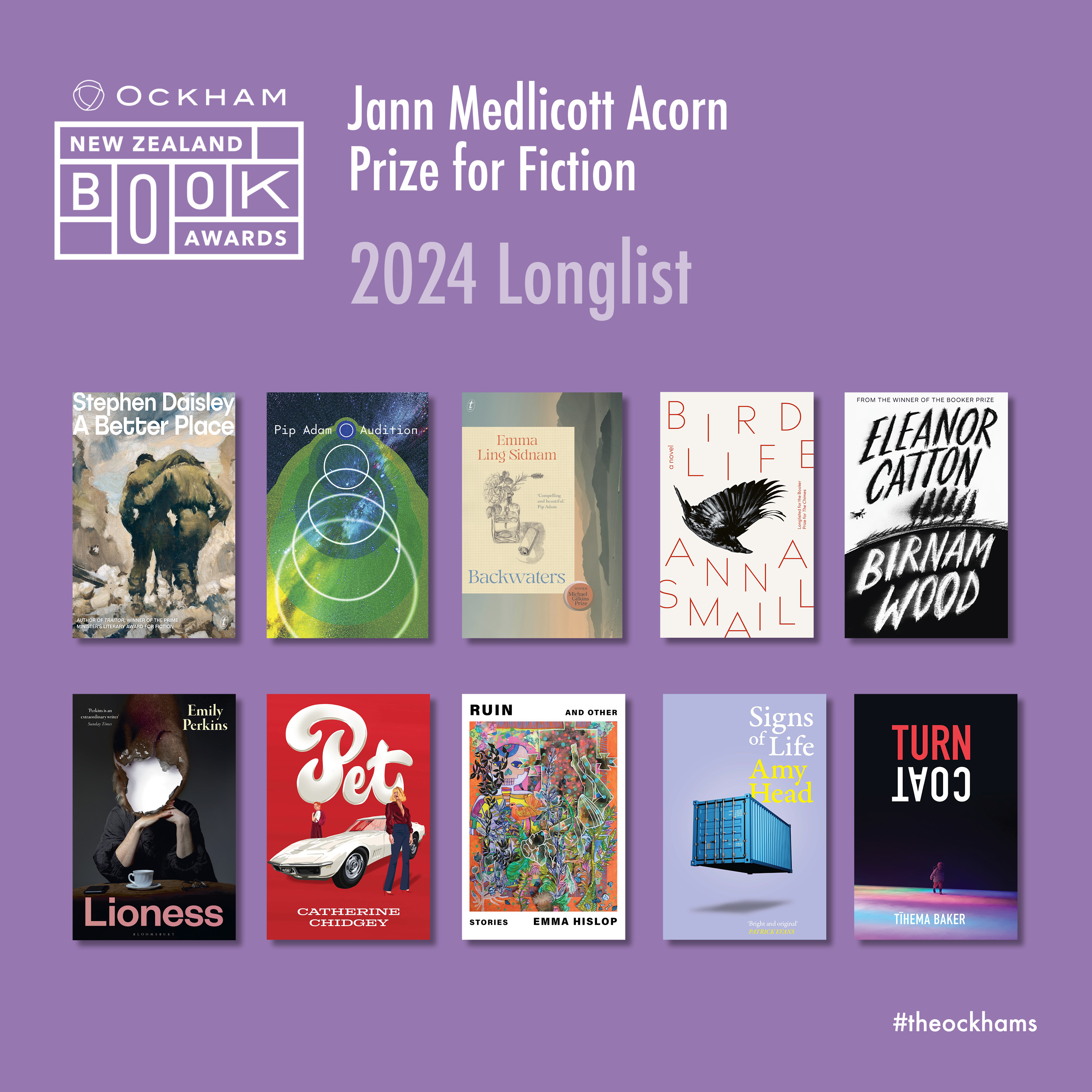
Ockham New Zealand Book Awards longlist 2024

The NZ Book Awards longlist comes out so early in the year, I am often late catching up with it. There are longlists for fiction, poetry, general nonfiction and illustrated nonfiction, a total of 44 titles. The complete list can be viewed here.

2023 was a great reading year for New Zealand fiction, and author Catherine Chidgey who won last year’s fiction award for her novel The Axeman’s Carnival, is again nominated this year for her latest Pet. Both her novels were longlisted for the Dublin Literary Award 2024, a unique position to be in. This year’s longlist features eight novels and two short story collections.

From the list below, I have read three novels, though only reviewed Birnam Wood by Eleanor Catton. I enjoyed both Lioness and Pet, and may reread them to review later, as I read them during the summer months, when books tend to be devoured and not thought too deeply about.

It’s good to see two short story collections nominated that address topical themes and the intergalactic indie hit about alienation that entertains and makes its readers consider what that feels like.

The links in the titles will take you to the Goodreads descriptions of the novels. I have created or copied short blurbs to give you an idea of what they’re each about.

The Jann Medlicott Acorn Prize for Fiction longlist

A Better Place by Stephen Daisley [WWII visceral novel] – a novel about brothers at war, empathy and the aftermath. Aged 19 in 1939, Roy and his twin brother Tony enlist in the NZ Infantry Brigade. They fight in Crete where Tony dies. Burdened by the loss of his brother, Roy continues to Africa and Europe.

Audition by Pip Adam [Science Fiction/Dystopia] – a novel, part science fiction, part social realism that asks what happens when systems of power decide someone takes up too much room – about how we imagine new forms of justice, and how we transcend the bodies and selves we are given.

Backwaters by Emma Ling Sidnam [family history/belonging] – debut novel by award-winning New Zealand poet about a 4th generation New Zealander struggling with a sense of identity and belonging.

Laura is tired of being asked where she’s really from. Her family has lived in Aotearoa New Zealand for four generations, and she’s ambivalent at best about her Chinese heritage. But when she’s asked to write about the Chinese New Zealander experience for a work project, Laura finds herself drawn to the diary of her great-great-grandfather Ken, a market gardener in the early years of the British colony.

Bird Life by Anna Smaill [literary fiction/magical realism] – A lyrical and ambitious exploration of madness and what it is like to experience the world differently. Smaill teases out the tension between our internal and external lives and asks what we lose by having to choose between them.

In Ueno Park, Tokyo, as workers and tourists gather for lunch, the pollen blows, a fountain erupts, pigeons scatter, and two women meet, changing the course of one another’s lives. Two women deal with individual traumas, form an unlikely friendship, helping each other see a different possible world.

Birnam Wood by Eleanor Catton [Eco Mystery/Thriller(y)] – an eco-thriller of sorts that considers intentions, actions, and consequences, an unflinching examination of the human impulse to ensure our own survival. Featuring green activists, politician farmer and his wife, a tech billionaire and the lone wolf investigative journalist with a past.

Lioness by Emily Perkins (Literary Fiction/Blended Family, Second Wife Drama) – a novel of a woman’s self doubt and shifting place in second families and relationships.

Trevor and Therese are a power couple living in the capital city, he is a developer and she runs a chain of fashion boutiques. That’s the exterior. At home, there is his adult family (issues) to contend with and her uncertain place in a scenario that is rapidly shifting when his deals come under scrutiny and his children make increasing demands. Increasingly, she finds refuge elsewhere, inviting another kind of risk into her precarious existence.

Pet by Catherine Chidgey [Coming of Age/School Drama/Literary Fiction] – Set in New Zealand in 1984 and 2014, traversing themes of misplaced trust, bullying, racism and misogyny, a chilling novel that explores the consequences of age old complacency and silence.

Like every other girl in her class, twelve-year-old Justine is drawn to her glamorous, charismatic new teacher, and longs to be her pet. However, when a thief begins to target the school, Justine’s sense that something isn’t quite right grows ever stronger. With each twist of the plot, this gripping story of deception and the corrosive power of guilt takes a yet darker turn. Young as she is, Justine must decide where her loyalties lie.

Ruin and Other Stories by Emma Hislop (Kāi Tahu) [Short Stories on Being A Woman/Friendship/Relationships/Power] – Moving between contemporary New Zealand and London, a debut short story collection that explores power and its contortions, powerlessness and its depravities, and the ends to which we will go to claim back agency.

Women and girls walk a perilously thin line between ruin and redemption in these stories as they try—with varying degrees of success—to outmanouver the violence that threatens to define their lives.

There’s the physical violence of men against their bodies—and sometimes the violence they exact in revenge. While doubts about a romantic partner, an abandonment by a sister, the fallout of a parent’s porgnography addiction, the betrayal of a friend, even the desire to touch a stranger’s fur-like body are subtler aggressions that pack their own kinds of punches.

Signs of Life by Amy Head [short stories/earthquake/post recovery] – A ‘lest we forget’ collection.

Christchurch, post earthquakes, the earth is still settling. Containers line the damaged streets, inhabitants waver – like their city – suspended between disaster and recovery. Tony, very much alive, is declared dead, Gerald misreads one too many situations in his community patrol, and boomer Carla tries online dating. At the epicentre of these taut, magnetic stories is 20-something Flick who, just as she is finding her feet, faces a violent disruption – this time in human form – while her mostly-ex gets set to marry. Keenly observed, deftly humorous, Signs of Life turns on the smallest of details to show how we carry on.

Turncoat by Tīhema Baker (Raukawa te Au ki te Tonga, Ātiawa ki Whakarongotai, Ngāti Toa Rangatira) (Science Fiction/Literary Political Satire/Indie smash-hit!) – a futuristic novel about an idealistic human, that explores the effect of being colonised and serves as a commentary on the experiences of Māori public servants while inviting Pākehā to imagine that experience.

Daniel is a young, idealistic Human determined to make a difference for his people. He lives in a distant future in which Earth has been colonised by aliens. His mission: infiltrate the Alien government called the Hierarch and push for it to honour the infamous Covenant of Wellington, the founding agreement between the Hierarch and Humans.

With compassion and insight, Turncoat explores the trauma of Māori public servants and the deeply conflicted role they are expected to fill within the machinery of government. From casual racism to co-governance, Treaty settlements to tino rangatiratanga, Turncoat is a timely critique of the Aotearoa zeitgeist, holding a mirror up to Pākehā New Zealanders and asking: “What if it happened to you?”

Shortlist Annoucement

The 2024 Ockham New Zealand Book Awards shortlist will be announced on 6 March, 2024.

The Jann Medlicott Acorn Prize for Fiction will be judged by reading advocate and former bookseller Juliet Blyth (convenor); writer, reviewer and literary festival curator Kiran Dass; and fiction writer Anthony Lapwood (Ngāti Ranginui, Ngāi Te Rangi, Ngāti Whakaue, Pākehā). They will be joined in deciding the ultimate winner from their shortlist of four by an international judge.

The winner of the Jann Medlicott Acorn Prize for Fiction will receive $65,000.

A Year of Reading New Zealand Literature

In 2024, Lisa at ANZLitLovers and Theresa at TheresaSmithWrites will celebrate the rich literary heritage of Antipodean writing by joining forces to spend a year discovering New Zealand fiction. 

Reading from their TBR and whatever else comes their way, they’ll be posting reviews on their blogs and sharing via social media using the hashtag #AYearofNZLit

Follow them or join in if you’re interested in reading Kiwi fiction!

Redemption Ground, Essays and Adventures by Lorna Goodison

A mix of memoir, poetry, life adventure and epiphanies, I loved this collection by Jamaican writer Lorna Goodison.

Bonding With the Irish Over Tea & Poetry

essays memoir creative nonfiction Jamaican literature

The opening essay ‘The Song of the Banana Man’ and ‘The Fiddler of Dooney’ totally sets the scene for the rest of the book. It is an anecdotal story of the author and her friend, excited to be in London, overhearing two ‘bobbies’ (policemen) talk about a cafe they were just passing, in a way that lured them inside.

‘Whassis then, a new tea ‘ole?’

Their schooling in Kingston, Jamaica had been heavy on all things British and European, so entering this establishment was something related to that indirect familiarity. They encounter three boys from Ireland, who ask if they are from the West Indies and they begin to banter, drinking toasts to the colonial experience, singing songs and reciting poetry.

When I play on my fiddle in Dooney,
folk dance like a wave of the sea;

The poems they chose were about ordinary people, sure of themselves, of what they did, grounding words shared by these young people, whose paths have crossed, starting out on their own journeys. The exchange lasts while they’re having their tea and comes to a natural end, upon which they part ways. The author is at the beginning of her life journey, but the lines recited by them all have staying power.

And I was not sure where I belonged or what my own purpose was in life back then…. But listening to those three Irish men recite ‘The Fiddler of Dooney’ that afternoon, maybe I’d thought yes, that’s what I’d like to be, someone whose artistry makes people dance like a wave of the sea.

A Working Class Teen Dares to Do Better

In, A Taste of Honey, she recounts the experience of seeing a movie in 1963, adapted from the play created by Shelagh Delaney (who was 18 years old when she wrote it) that moves her, that is a moment of epiphany. Being one of nine children, she relished the opportunity to go and see the film one Saturday afternoon alone.

Shelagh Delaney went to a play that she found boring, pretentious and condescending, and said to herself I can do better than that, and went home and wrote A Taste of Honey.

The film would win a BAFTA award.

A Taste of Honey showed working-class women from a working-class woman’s point of view, had a gay man as a central and sympathetic figure, and a black character who was neither idealised nor a racial stereotype. – extract from The Guardian by Dennis Barker

Goodison reflects on why she was so moved by this film, how it gave her some of her life and writing purpose and inspiration.

Shelagh was pronounced ‘ineducable’, but was able to produce work that affected me so deeply that I ended up sitting alone in a cinema after everyone else had filed out, trying hard to compose myself enough to go outside and face a world where most people would not understand why a simple thing like a Saturday afternoon matinee could make me weep as if a close friend or relative had died.

The Daffodil Drama

Writing poetry from a young age, in ‘Some poems that made me’ we read more of this early education and a different take on Wordsworth’s ‘I Wandered Lonely as a Cloud’, aka ‘The Daffodils’ poem, after she researches his childhood and life and decides to give the poet a break. See my review Lucy by Jamaica Kincaid for another reference to the daffodil drama.

Over the years I have said quite a lot about this poem, as have other writers throughout the British Commonwealth who have come to regard it as the ultimate anthem to British colonial oppression.

She will encounter may poets and poems until she arrives at the one voice that cause her to stop reading everyone else and just read his poems. In the work of Derek Walcott, who would become a friend and mentor, she found poem as a source of hope and consolation; poem as a lifeboat, anchor and safe harbour.

As she begins to think of her own place in the world, she seeks out women poets, finding nourishment in the work of Gwendolyn Brooks and other African-American fiction writers, while still searching for poetry by Caribbean women, ultimately ending up writing the poems she wanted to read and finding the right language to express them.

I learnt early in my life as a writer that if I wanted to write about my people I had to learn to listen carefully to family stories then imagine, and constantly reimagine those stories…All writer’s do this, but Caribbean writers face formidable or particular challenges because of the ways in which slavery, and then colonialism, erased or distorted so much of our lives that we have to learn to writer ourselves into the story in any way we can.

Tributes to the Mothers & Imagination

We read ‘Guinea Woman’ the poem she wrote trying to imagine a woman she had never met, her great grandmother, an elegy for her mother Doris ‘After the Green Gown of My Mother Gone Down’, and another poem entitled ‘Bedspread’ inspired by news of the home of Winnie Mandela being raided by police, where they seize personal effects including a bedspread, taken because it was in the colours of the African National Congress.

The collection takes the reader to different countries and places on her journeying, sharing both fun and pivotal moments, stories of redemption, of good souls that come to set the indebted free, of her own life crisis in New York, that preceded a change in direction, acting on a promise to herself.

A Musical Accompaniment

Like my reading experience of Bernice McFadden’s excellent The Book of Harlan, whenever Lorna Goodison mentions music, like in the vignette ‘A Part for Tarquin’, I look it up and listen while reading. This one is about her friend Bernard dragging her along to a non-party that she doesn’t wish to attend, and ends with them listening into the night to the pianist Wynton Kelly playing the Miles Davis sextet Some Day My Prince Will Come.

That was the night I began to really appreciate the genius of the Jamaican-American pianist Wynton Kelly, about whom Miles himself was supposed to have said, ‘Wynton is the light for the cigarette; without him there is no smoking.’ That night I realised that if hope has a sound it would be Wynton Kelly’s piano-playing. His hope notes were like sunbeams on the morning waves coming in at Bluefields beach.

Loved it all.

Author, Poet, Essayist, Lorna Goodison

Caribbean poet Lorna Goodison was born in Kingston, Jamaica in 1947. A painter before she turned her focus to poetry, Goodison was educated at the Jamaica School of Art and the School of the Art Students League in New York. She was appointed poet laureate of Jamaica from 2017 – 2020. In 2018, she received a Windham–Campbell Literature Prize, and in 2019, she was awarded the Queen’s Gold Medal for Poetry.

Her numerous poetry collections include Collected Poems (2017), Supplying Salt and Light (2013), Goldengrove: New and Selected Poems (2006), Controlling the Silver (2005), Traveling Mercies (2001), Heartease (1988), and Tamarind Season (1980).

She is the author of the short story collections By Love Possessed (2011), Fool-fool Rose is Leaving Labour-in-Vain Savannah (2005), and Baby Mother and the King of Swords (1990), and the memoir From Harvey River: A Memoir of My Mother and Her People (2007), which won the British Columbia National Award for Canadian Non-Fiction.

In 2019, she published Redemption Ground: Essays and Adventures

Professor of English and of Afroamerican & African Studies at the University of Michigan, Goodison divides her time between Toronto and the north coast of Jamaica.

Goodison’s image-rich and socially- and historically-engaged poems often inhabit the lives and landscapes of her Jamaican homeland. “I suspect that I might always write about Jamaica,” Goodison stated in an interview with Mosaic: Literary Arts of the Diaspora. Goodison also discussed the humor in her work, noting, “Jamaicans are very comical people, and laughter is a way of coping with life’s displeasures. Also, when you make something of it [a hard situation], it says that you are in control. There are incidences when we have no control; all we can do is make some sort of a gesture. Sometimes, the world can throw things at you that are so cruel and so devastating that you are in no position to have any kind of real response but to make a gesture. And I think that sometimes laughter is a gesture saying that you have not completely annihilated me; you have not robbed me of my ability to respond as a human being.”

Noting that Goodison often “complements her careful observation of the physical world and her fine eye for detail with a tense, lean, elliptical style” in a review of Supplying Salt and Light, Jim Hannan observed, “At their best, Lorna Goodison’s poems observe the unsavory in history and society even as they guide us firmly toward sources of redemption. With compassion and empathy, Goodison writes about human failure and triumph in large and small measures.”

Seeing For Ourselves and Even Stranger Possibilities by Suhaiymah Manzoor-Khan

Essays, Prose and a Play on Seeing

I first came across the writer Suhaiymah Manzoor-Khan in 2021, she wrote the opening essay ‘I Am Not An Answer, I Am The Question’ in Cut From The Same Cloth?Muslim Women on Life in Britain edited by Sabeena Akhtar. Her essay was about the understanding she came to while a student at the University of Cambridge where she encountered a tool for attempting to ‘unlearn’: questioning.

I realised that most feminist and anti-racist politics I had engaged with up until that point were shallowly asking the wrong questions. Most of the questions being asked were not my questions at all. So much of my educational and consciousness-raising work had been the work of answering questions posed by others.

Her book Seeing For Ourselves and Even Stranger Possibilities is an extension to the understanding she shared in that initial essay.

It is interesting to read the opening pages where she is grappling with her purpose for writing and how to begin this book, having just finished reading Annie Ernaux’s nobel lecture, where she reaches back sixty years to a diary entry and finds her opening line (her purpose for writing), in the words ‘j’écrirai pour venger ma race’ (I will write to avenge my people).

Manzoor-Khan writes about ‘the gaze of the other’ and questions whether she has anything to add to a complex and much discussed subject and finds out she does when she turns the topic on its head.

Ernaux was writing from the perspective of a higher educated French working class woman in the closing years of a writing career, while Manzoor-Khan writes from the perspective of a higher educated British Muslim woman at the beginning of hers.

Troubled by such doubts, I started to consider why being a subject rather than an object was the furthest horizon I could dream of. What lay beyond ‘seeing with my own eyes’? What if ‘seeing for ourselves’ wasn’t actually the best way to see? What could transcend the desire to be see-er instead of seen? What if I closed my eyes and did not prioritise seeing at all?

Looking into these stranger possibilities, she contemplates the how to, and finds no easy route than to go forth and try. What results is a combination of prose, poetry and a short play interspersed throughout the text; looking at the question from different angles and so too, using different genres.

Need, Want, Seeing, Overcoming

The book is structured into seven parts:

the need - how I am found
the want - how I find myself
becoming a sight - the portal of objecthood
striving to see - seeking subjecthood is a circle
escaping the cycle - even stranger possibilities
grief is a type of ghaib - love is a type of sight
a note on endings - the impossibility of concluding

The need is about clarifying intention and the want is to bear witness to an existence. This latter section opens with a poignant vignette on hoarding nineteen white IKEA boxes in the author’s room that cause her shame. On further reflection, she discovers their ‘why’, they are evidence of a life.

I am afraid to let on about this in case it becomes obvious how afraid I am to go unseen. In case it becomes obvious how powerful it is to destroy a people’s history. How catastrophic it is to leave them believing they are suspended. To eliminate their past, present and knowledge.

The Writer and The Book in Conversation

Photo by Monica Silvestre on Pexels.com

Throughout the text are acts, scenes from a short play. It is how the book opens, Act 1, a conversation between the writer and the book.

the writer: You’re not what I expected you to be.

the book: What did you expect?

the writer: You were supposed to be about seeing and being seen
About the different gazes upon us
And how to see ourselves without them

the book looks smirkingly at the writer, knowing more than her (as always).

The way these brief interludes are positioned lightens the tone of the book, giving it a different vibe, featuring characters such as the writer, the book, her head, her heart, her fear, her eyes, her soul.

Because of their brevity, the voices of those characters speak more loudly and succinctly than the more existential meanderings of the author on changing her perspective of the gaze, from ‘others’ on her to (even stranger possibilities) just the ‘one’. The many different forms that address her subject, allow the reader to consider, reflect and attempt to understand the perspective being shared.

It is a philosophical read, of short easy-reading vignettes,some that challenge more than others, of poetry and the interspersed acts and scenes of the play featuring the writer, the book, her eyes, her fear, her head, her soul. In another scene, a group of onlookers struggle with the question of being seen, of invisibility, of too much visibility, of how we are perceived by others, by ourselves, by the Divine Presence…

It is a companionable read, though not easy to review, as the author reminds us, this is a book of questions, and it is also a journey, it is not a conclusion or a set of answers, it is observations, reflections, it invites participation, it does not exist in isolation.

It puts into word the frustrations and injustice of invisibility and challenges that which is seen (the blind scrutiny) in its place.

Perhaps rather than the head, the intellect, the eyes, the judgments, we ought to perceive with the soul, if so, what might that look like?

Rather than striving to be seen, approved or understood by gazes that shrink me, all I have to do is that which brings me closer to my Maker, who sees the full context of me. Everything else is either a means to this or a diversion from it.

The book is available from its UK publisher Hajar Press, and as an ebook here.

Further Reading

The Skinny: ReviewSuhaiymah Manzoor-Khan’s cross-disciplinary book is a beautiful consideration of devotion to faith, family and politics by Paula Lacey

Suhaiymah Manzoor-Khan, Author

Suhaiymah Manzoor-Khan is a poet and writer whose work disrupts assumptions about history, race, violence and knowledge.

She is the author of Tangled in Terror and the poetry collection Postcolonial Banter; a co-author of A FLY Girl’s Guide to University; and a contributor to the anthologies Cut from the Same Cloth? and I Refuse to Condemn.

Her writing has also featured in The Guardian and Al Jazeera, and her poetry has been viewed millions of times online. She is a co-founder of the Nejma Collective, a group of Muslims working in solidarity with people in prison. She is based in Leeds and is currently writing for theatre.

New Zealand Book Awards 2023 winners #theockhams

Back in February I posted on the long longlist of 44 books in four categories for the New Zealand Book Awards 2023, also known as  “the ockhams”. The shortlist whittled that down to 16 titles and now we have a set of winners in each of those four categories and a handful of ‘Best First Book’ prizes.

Fiction Prize

No surprise that the winning novel that has captivated not just the nation (winning The People’s Choice), but also the twitterverse, narrated by Tama the magpie, @TamaMagpie, Catherine Chidgey’s The Axeman’s Carnival won the $64,000 Jann Medlicott Acorn Prize for Fiction.

I’m very much looking forward to reading this, and hoping that since Europa Editions UK published her excellent novel Remote Sympathy in 2021, it won’t be long before we see this novel available in Europe and the rest of the English reading world.

Catherine Chidgey Tama the magpie

Chidgey’s masterful writing explores the diversifying of rural life, the predicament of childlessness, the ageing champ, and domestic violence. She provides a perspicacious take on the invidious nature of social media and a refreshingly complex demonstration of feminist principle.

“The unforgettable Tama – taken in and raised by Marnie on the Te Waipounamu high country farm she shares with champion axeman husband Rob – constantly entertains with his take on the foibles and dramas of his human companions. Catherine Chidgey’s writing is masterful, and the underlying sense of dread as the story unfolds is shot through with humour and humanity.

“The Axeman’s Carnival is unique: poetic, profound and a powerfully compelling read from start to finish.”

Poetry Prize

I was particularly intrigued by acclaimed Māori poet and scholar, Alice Te Punga Somerville’s poetry collection, Always Italicise, How To Write While Colonised and was pleased to see it win this category.

‘Always italicise foreign words’, a friend of the poet was cautioned. Alice Te Punga Somerville does exactly that. With humour and rage, regret and compassion, she ponders ‘how to write while colonised’ – penning poetry in English as a Māori writer; tracing connections between Aotearoa, New Zealand and the greater Pacific region, Indigenous and colonial worlds; reflecting on being the only Māori person in a workplace; and how – and why – to do the mahi anyway.

Alice Te Punga Somerville Always Italicise

“Readers are challenged but crucially invited in to accept that challenge and reach a new understanding of what it is to be a Māori woman scholar, mother and wife in 2022 encountering and navigating uncomfortable and hostile spaces.

“Always Italicise stood out amongst a very strong field for its finely crafted, poetically fluent and witty explorations of racism, colonisation, class, language and relationships. It’s a fine collection, establishing and marking a new place to stand.”

General Non-Fiction & Illustrated Non-Fiction

Broadcaster, music critic and author Nick Bollinger won the Booksellers Aotearoa New Zealand Award for Illustrated Non-Fiction for Jumping Sundays: The Rise and Fall of the Counterculture in Aotearoa New Zealand.

Drawing on archival research and rich personal narratives, Nick Bollinger has written a compelling account of an epoch-making period, linking international trends to the local context in a purposeful-yet-playful way.

“A joy to read and to hold, Jumping Sundays is a fantastic example of scholarship, creativity and craft.”

Historian and lawyer Ned Fletcher won the General Non-Fiction Award for his work, The English Text of the Treaty of Waitangi, shedding new light on New Zealand’s founding document’s implications, contributing fresh thinking to what remains a very live conversation for those that call Aotearoa New Zealand home. The treaty was made between the British Crown and about 540 Māori rangatira (chiefs) on February 6, 1840.

Best First Books

Home Theatre by Anthony Lapwood, a collection of interlinked short stories won the Hubert Church Prize for Fiction; Khadro Mohamed’s We’re All Made of Lightning takes the reader to distant lands, Egypt and Somalia, in heightened sensory language as she grieves for her homeland, winner of the Jessie MacKay Prize for Poetry; the Judith Binney Illustrated non-fiction, first book award went to Christall Lowe’s Kai ,which offers whānau stories and recipes that provide wider insight into te ao Māori, creating a homage to food that is grounded in tradition yet modern, the new Edmonds!

Finally, the E.H. McCormick Prize for General Non-fiction and the book I am currently reading, went to Noelle McCarthy for Grand, Becoming My Mother’s Daughter. This book was running neck-a-neck with The Axeman’s Carnival for The People’s Choice, up until the last few days, when Chidgey’s book surged ahead.

An exquisite debut, it masterfully weaves together the threads of Noelle McCarthy’s life, and her relationship with her mother, in a memoir that connects with truths that unite us all. Poignant and poetic language renders scenes with honesty and colour. Intimate, but highly accessible, the fragility and turbulence of the mother-daughter relationship is at times brutally detailed. Despite this, Grand is an uplifting memoir, delicate and self-aware, and a credit to McCarthy’s generosity and literary deftness.

NZ Book Awards

A Special Mention

Non fiction NZ art assessment 50 years as an artistOne that didn’t win, but that was Number 4 in The People’s Choice and one I have heard a lot about and sighted on a recent visit to London, is Robin White: Something Is Happening Here.

Described as more than an exhibition turned art book. It features stunning reproductions, historical essays and the insights of two dozen contributors that do justice to the institution that is Robin White. As iconic screenprints flow seamlessly into large format barkcloth, White’s border-crossing practice is temporally divided with the savvy use of typographic spreads. Space, too, is given to the voices of her Kiribati, Fijian and Tongan co-collaborators.

More recently in her life, collaboration with others has become important, a way of working in the space between cultures, enriching and liberating from the confines of self.

Strikingly elegant yet comprehensive, excellence is what’s happening here.

Check out Robin White’s Artist Profile here.

Ockham New Zealand Book Awards 2023 #theockhams

Longlist Announced

The annual New Zealand book awards have announced their longlist, 44 books in four categories (fiction, general nonfiction, poetry, illustrated nonfiction) from 191 nominations (20% increase on 2022), showing how much more dynamic the industry has become in recent years. Read the entire list of nominees for each category here.

This year there were more debut authors than recently (a third of longlisters), which bodes well for the future, according to Nicola Legat, Chair of the New Zealand Book Awards Trust who discusses the longlist here on Radio NZ’s Nights With Karyn Hay.

The Jann Medlicott Prize for Fiction

The 10 novels below will compete for a place on the shortlist of 4, featuring established names like Catherine Chidgey, alongside popular newcomers like Coco Solid who was on the NZ bestsellers list for many weeks, a young urban Aucklander and performance poet, part of a rising generation of Pacifica writers increasingly prominent in New Zealand’s literature scene.

It’s good to see historical fiction starting to become more present and a notable crime thriller, highly praised by Val McDermid.

Jann Medlicott Acorn Prize for Fiction NZ

Better the Blood (Crime Thriller) by Michael Bennett – an exploration of Maori history, the crimes of colonisation and their impact on current lives, through the eyes of single mother and policewoman Hana Westerman, who investigates a serial killer seemingly keen to take revenge for the historic murder of a rangatira (leader). Described here as ‘the stunning new crime novel that’s a Trojan horse for exploring the hurt of colonisation’.

Chevalier & Gawayn: The Ballad of the Dreamer (Speculative/Science fiction/Fantasy) by Phillip Mann – published just weeks before his death, it is describes as a fable for our times. Serious, whimsical, funny, powerful and sexy, Chevalier & Gawayn is a thrilling mix of adventure and adversity and the need to heed the past.

Down from Upland (Domestic Fiction) by Murdoch Stephens – described as a character-driven “slice of life” novel, featuring millenials raising a teenager, set in Kelburn, so doses of Wellington high schools, civil servants & cringe culture.

Home Theatre (Short Stories) by Anthony Lapwood – a genre-bending collection, spanning the fantastical and the keenly real, introducing an ensemble of remarkable characters – and the fateful building that connects them all. Repertory Apartments – where scenes of tenderness and trouble, music and magic, the uncanny and the macabre play out on intimate stages.

How to Loiter in a Turf War (Popular Fiction) by Coco Solid – a lucid, genre-bending cinematic work of fiction from one of the country’s most versatile performance artists. A day in the life of three friends beefing with their own city. With gentrification closing in and racial tensions sweltering, the girls must cling to their friendship like a life raft, determined not to let their neighbourhood drift out to sea. Fast, ferocious, crack-up funny and unforgettably true. Recommended to listen to, narrated by the artist themselves.

Kāwai: For Such a Time as This (Historical Fiction) by Monty Soutar – A young Māori man, compelled to learn the stories of his ancestors, returns to his family marae to speak to his elderly grand-uncle, the keeper of the stories. Set in mid 18th century through to first encounters with Europeans, it delves into an exploration of the culture, first in a series.

Mary’s Boy, Jean-Jacques and other stories (short stories) by Vincent O’Sullivan – a sequel to the tale of Dr Frankenstein’s creature + new stories that traverse other time periods and minds  – stories described as wry, humane, unsparing, essential.

Mrs Jewell and the Wreck of the General Grant (Historical Fiction) by Cristina Sanders –  Set in 1866, the story behind the enduring mystery of one of New Zealand’s early shipwrecks, told from the perspective of the one woman survivor. Fourteen men make it ashore and one woman – Mary Jewell. Stuck on a freezing and exposed island, they must work out how to survive. Described as a gripping page turner.

The Axeman’s Carnival (Bird Narrated Literary fiction) by Catherine Chidgey – Narrated by Tama the magpie (who tweets @TamaMagpie) “Chidgey fuses the sensibility of our cinema of unease – of life on a struggling back-blocks farm with a dour farmer – with the liberating and alienating madness of fame, all of it seen by the novel’s hero, the magpie Tama. Tama does all the voices – orchardists, tourists, fairground commentators, daffy activists, and the unappeasable axeman – and he does them justice. The Axeman’s Carnival is a compulsive read and flat-out brilliant” says author Elisabeth Knox.

The Fish (Absurdist Literary Fiction) by Lloyd Jones – described by Claire Mabey (books editor, The SpinOff) as ‘a brave reckoning with the dark sides of family, memory and the self’. Set in 1960’s NZ, it is a novel of family bonds, strained and strengthened by tragedy, an allegorical tale of absence and return. Who or what the fish is, seems like a mystery to many readers, might be a marmite book, due to the ‘slippery nature of the storytelling’.

General Non-Fiction Award

A big increase in submissions for here with a lot of memoir, Noelle McCarthy’s Grand, filmmaker Gaelene Preston’s Take, Fiona Kidman’s essays So Far, For Now, Kate Camp’s You Probably Think this Song is About You covering a wide range of subjects, creative non-fiction becoming much more prevalent.

This award remains somewhat controversial, given the wide range of sub-genres it includes, pitted against each other: creative nonfiction, memoir, history and academic texts. For this reason, an additional four titles make the longlist.

ONZBA 2023 Longlist NF

Mary and Peter Biggs Award for Poetry

Poetry in NZ is on fire at the moment says Nicola Legat, so many strong voices coming through, on decolonisation, gender issues, it is the poets who seem to be addressing many of these subjects.

Check out Initial Thoughts, Thrills, Surprises, Hidden Gems and Predictions from Claire Mabey and Louise Wallace at The SpinOff.

They predict Echidna by Essa May Manapouri to win.

ONZBA 2023 Longlist_Poetry

Booksellers Aotearoa New Zealand Award for Illustrated Non-Fiction

With incredibly strong representation, this longlist features seven different publishers and you might say adds another 10 to the general non-fiction category. Books with a visual dimension continue to be popular and there are some interesting and intriguing titles here.

Te Motonui Epa by Rachel Buchanan tells the strange but true story of the theft of five wooden panels carved in the late 1700s by Taranaki tūpuna and their connection to the 11 day kidnapping of Graziella, daughter of the collector George Ortiz, who put the Motunui epa up for auction to pay back money he borrowed for the ransom. Epic and fascinating!

I Am Autistic by Chanelle Moriah, is described as ‘a first of its kind: smashing through stereotypes and presenting a clear, interactive tool for those eager to either learn about themselves, or people around them’.

Something Is Happening Here looks at 50 years of the art of Robin White, including insights from art critics and interviews from many others. Including more than 150 of her artworks, from early watercolour and drawings through to the exquisite recent collaborations with Pasifika artists, as well as photographs from throughout her career.

Jumping Sundays, The Rise and Fall of the Counterculture of Aotearoa New Zealand by music historian Nick Bollinger, is a vivid account of the transformation of NZ life brought about by the 1960-70s counter-culture from a bi-cultural perspective – its goals and impact, the festivals and gatherings, of radicals and bohemians resisting the authority of that era.

Illustrated Nonfiction Ockhams 2023

Shortlist Announcement

The shortlist of 16 titles will be announced on 8 March and the winners announced in May, the award ceremony will be the first event of the Auckland Writer’s Festival which runs from 16-21 May, 2023.

Not Without Laughter by Langston Hughes

Langston Hughes (1902-1967) and The Harlem Renaissance

Although well-known as a poet and pioneer of the Harlem Renaissance movement – an intellectual, social, musical and artistic explosion centered in Harlem, Manhattan, New York City, from 1918 until mid 1930’s, Langston Hughes also wrote Not Without Laughter, a semi-autobiographical novel, now considered a classic.

Three Harlem Renaissance Women 1925During the Harlem Renaissance, there was an outpouring of creativity, an expression of how African Americans sought social, political, and artistic change in the US, also influencing francophone black writers from African and Caribbean colonies living in Paris. This movement turned attention to and invoked pride, in the lives of Black Americans.

An anthology of essays, poetry and fiction produced during this era, edited by Alain Locke, reflects the voice of middle class African American citizens who desired  equal civil rights like their white, middle class counterparts. Langston Hughes however sought to give voice to and remained a humble advocate for the lower, working class.

His authenticity, appreciation and ability to see beauty in simplicity, evoked through the power of his words, proved him to be one of modern literature’s most revered and versatile African-American authors.

Not Without Laughter, written while he was a student at university, and inspired by his own youthful experiences, provides us a privileged insight into the kind of characters who inhabited his world and imagination, giving us today this powerful, timeless novel.

Books That Connect Threads

As I began reading this I was reminded of Bernice McFadden’s The Book of Harlan, a story of another young man, in part inspired by the author’s grandfather and pulling on historical references of the time, both general to the population and specific to her own family.

Here it’s semi autobiographical, as Hughes writes of a boy named Sandy, like himself and like Harlan, raised by a grandmother who was more worldly and wise, women with ideas about raising grandsons to reach their better potential, while their daughters were off following husband(s) who liked the road and moved from place to place in search of their dreams. Being a young couple and trying to make a living was challenge enough, the grandmother, though often a working woman herself, was a wise and practical choice for keeping a boy on track towards a worthy future.

When I read more about Langston Hughes, I was reminded too of Audre Lorde and her essays in Sister Outsider, of her travels and observations in Russia, looking at that foreign country through the lens of being black and a woman; Hughes too was curious about the world beyond his home town, travelling beyond his home and country.

Hughes rode steamships to West Africa, toured the American South, traveled to Spain to cover the Civil War, rode the Trans-Siberian Railway, and saw his own reputation shift from Harlem Renaissance star in the 1920s to Communist activist poet in the 1930s to public figure in the 1960s…

Book Review

Not Without Laughter is a coming-of-age story that introduces us to Sandy Rogers who lives with his grandmother who everyone refers to as Aunt Hager and his mother Annjee, who works as a housekeeper for a rich white family, while his father Jimboy traverses the country pursuing a living as a musician.

He was a dreamy-eyed boy who had largely grown to his present age under the dominant influence of women – Annjee, Harriett, his grandmother – because Jimboy had been so seldom home.

It’s 1930’s in small town Kansas and Hughes creates a vivid portrait of African-American family life in a racially divided society, where some try to make the most of the way things are without changing it, some try to help others no matter their colour or creed, some aspire to be like what they perceive are successful white folk and Sandy observes all, in the process of making up his mind about all that he witnesses.

Eventually Annjee follows her husband, whom she only ever sees through rose-tinted glasses believing that one day things will change and their fortunes will change. Sandy gets his knowledge of a man’s world from his part-time jobs at the barber shop and as a bellboy in a local hotel.

Aunt Hager as they affectionately call her, is a great character and the one who truly formed Sandy into the quiet, highly observant child and teenager he becomes, a hardworking washerwoman she is always there for those who are ailing, and worked every day of her life to the last.

We follow Sandy through his opportunities and disappointments, his observations of how his people are treated and the strangeness of those who try to be what they aren’t, moving up in a world that makes some of them ashamed of their humble beginnings and the humble trying to stay good, not allowing themselves to indulge in certain types of disreputable fun should it corrupt them.

Racism is ever present, like the shadow that projects itself in full sunlight, unquestioned, accepted and quickly forgotten by white children whose psyche is undamaged by its selective vengeance. Sandy sees everything, choosing his revolutionary acts wisely, knowing when to run, where to find safety  and paying homage where it is due.

Even when he is at a loss, his new situation offers him the opportunity to learn anew, seeing more of the world his people inhabit, the consequences of the various choices they make, so that by the time he too must make a choice, he is as well informed as he can be.

In the home of the social-climbing Tempy, Sandy discovers a treasure trove of literature, which he eagerly consumes. Life  blossoms for Sandy, who, as he excels at school, grows both in stature and self-confidence.  – from the Introduction by Maya Angelou

Langston Hughes The Racial Mountain Not Without Laughter

Langston Hughes

It’s a heartfelt story that leaves a sense of regret as the last page is turned, when Sandy is deciding whether to leave school as suggested by his mother, to support her, or return to his studies as suggested by his Aunt, who like her mother wishes him to have that chance at bettering himself.

His observations of family dynamics, of the impact of race, community connection, the culture of music and the complications of young love are portrayed vividly and without judgement, leaving it to the reader to note the obvious.

Ultimately the title says it all, the way to cope, the example he admires, the man who finds something in his day to laugh about or someone to laugh with, finds joy right there.

A rich and important work, Hughes shines a light on the black American experience, paying homage to those who formed and informed him, enabling him to leave his own legacy for which we are fortunate to have insight into.

I, too, am America.

Further Reading

Poem: I, Too by Langston Hughes

Essay: Langston Hughes landmark essay The Negro Artist and the Racial Mountain

Article, New Yorker: The Elusive Langston Hughes by Hilton Als (2015)

An Introduction to the Author: Langston Hughes 101 by Benjamin Voigt

The Delicacy and Strength of Lace by Leslie Marmon Silko & James Wright

Letters Between Poets

Exquisite, a beautiful, too brief collection of letters between two poets, written over a period of 18 months, bringing something special to each others lives at a time when they both needed it, she knowingly, he, not realising he was living his last months of life throughout this correspondence which comes to such an abrupt end.

“I am overwhelmed sometimes and feel a great deal of wonder at words, just simple words and how deeply we can touch each other with them, though I know that most of the time language is the most abused of all human abilities or traits.”

As you may know, if you follow my reviews, I recently read Leslie Marmon Silko’s The Turquoise Ledge: A Memoir which I loved, followed by her well known novel Ceremony which was exceptional and set me off looking for more of her work.

As I mentioned in my review of the memoir, my original purpose in reading Silko, was not by reputation. I had never heard of her. I was looking for a work of creative non-fiction with a nature writing slant, something that could evoke the landscape and the culture of Tuscon, Arizona. If this book I had imagined existed, it would be the ideal birthday present for a special friend. And it certainly did exist, I discovered The Turquoise Ledge; as Silko and those who understand the way of the shamans will appreciate, it was as if I dreamed it into being!

My friend is also a writer and her most prolific and preferred writing practice is the letter; yes, that disappearing art of epistolary literature arising from the hand-written form. When I saw there was a slim collection of letters between Leslie Marmon Silko and a poet named James Wright (1927 – 1980), (frequently referred to as one of America’s finest contemporary poets), I knew it must accompany the memoir.

James Wright, poet

The correspondence is written when Silko is 31 years old and Wright is around 51. They had planned to meet in the Spring of 1980, mentioned in letters of Oct/Nov of the previous year, not knowing he would be gone before then.

They discuss her novel, his poetry, language, his travels, her adventures with animals, their speaking engagements, their mutual challenges and experiences as university professors, and soon begin to share more personal feelings, as she acknowledges the tough time she is having and he shares his own experience, expressing empathy.

“I realize many wonderful things about language – “realize” in the sense of feeling or understanding intuitively: I realize such things most often when I am greatly concerned with another person’s feelings. I think such realization is one gift which human beings may give each other. I’m not much good at analysis or scholarly efforts with language, probably because I don’t value them as much as I value understanding, which is informed by that which is deeply felt before it is examined.”

Having already read about the snakes, lizards, parrots and numerous other animal life that live in close proximity to her, it was natural for me to see that in her letters, she sometimes shared an anecdote about one of these non-human characters who feature often in her memoir. In one she writes an entertaining piece about her mean rooster.

There are all kinds of other rooster stories that one is apt to hear. I am glad I have this rooster because I never quite believed roosters so consistently were as the stories tell us they are. On these hot Tucson days, he scratches a little nest in the damp dirt under the Mexican lime tree by the front door. It is imperative for him that the kittens and the black cat show him respect, even deference, by detouring or half-circling the rooster as they approach the water dish which is also under the lime tree. If they fail to do this, then he jumps up and stamps his feet, moving sideways until they cringe. This done, he goes back to his mud nest.

Silko opens up to Wright quite early on, letting him know how grateful she is to have this correspondence, a distraction from recent events that occupy her mind, he is more reserved initially, until she shares her grief openly and he responds in kind, taking their letters to another level, a kind of healing balm to the harsh reality of life.

This is one of the most moving, insightful and entertaining collections of letters I’ve ever read, born of a mutual respect & admiration, a sharing of poetry, storytelling & increasingly personal heartache, soothed by the knowledge that the other too carries their pain & grief of current situations that are outside their control.

This correspondence came at a time in Silko’s life when she couldn’t talk or share much with those closest to her, James Wright, her (senior) intellectual contemporary and brief confidant filled that void and they’ve left us this beautiful literary gift.

Leslie Marmon Silko is a poet, essaysit and novelist. James Wright won the Pulitzer Prize in 1972 for his “Collected Poems.”  Above the River: The Complete Poems appeared more than a decade after his death.
They met only twice. First, briefly, in 1975, at a writers conference in Michigan. Their correspondence began three years later, after Wright wrote to Silko praising her book “Ceremony.” The letters begin formally, and then each writer gradually opens to the other, venturing to share his or her life, work and struggles.

The “New York Times” wrote something of Wright that applies to both writers– of qualities that this exchange of letters makes evident.

“Our age desperately needs his vision of brotherly love, his transcendent sense of nature, the clarity of his courageous voice.”

Not having read his poetry, I read some of his works online and this one poem resonated well with their correspondence. Click on the link below to read:

A Blessing by James Wright

Buy a Copy of The Delicacy and Strength of Lace via Book Depository

A Thousand Mornings by Mary Oliver

I loved this slim collection of poems, many of which reminded me of something, or awakened something in me, it’s as if they don’t just exist on their own merit, but are pathways of invitation.

Just the title A Thousand Mornings suggests how many, many mornings Mary Oliver has passed in taking walks in nature observing creatures large and small, her shortest poem two lines about an ant; of watching the tides, there are at least three poems about the sea, the one mentioned on the back cover of the book, reminds me of a lesson whose symbol is “chop wood”, that sometimes we need to stop over thinking and tend to the ordinary and mundane.

Her title also reminds me of the benefit of writing morning pages, three pages of longhand, stream of consciousness writing, ideally practiced first thing in the morning, advocated by Julia Cameron in The Artist’s Way, as a way of awakening one’s creativity, overcoming fear or blocks.

I GO DOWN TO THE SHORE

I go down to the shore in the morning
and depending on the hour the waves
are rolling in or moving out,
and I say, oh, I am miserable,
what shall-
what should I do? And the sea says
in its lovely voice:
Excuse me, I have work to do.

***

There is a poem called If I Were on ways to dance and the joy in life it brings, which can be read superficially, but which could be and most certainly is also about writing poetry, as I am reading another book of Mary Oliver’s called Rules for the Dance, A Handbook for Reading and Writing Metrical Verse, the title of which is clearly inspired by a stanza from Alexander Pope’s brilliant, poetic essay An Essay on Criticism a controversial work that discussed and compared styles of poetry and criticism, alluding to poets and critics past and present.

‘True ease in writing comes from art, not chance,
As those move easiest who have learned to dance.’ Alexander Pope

IF I WERE

There are lots of ways to dance and
to spin, sometimes it just starts my
feet first then my entire body, I am
spinning no one can see it but it is
happening. I am so glad to be alive,
I am so glad to be loving and loved.
Even if I were close to the finish,
even if I were at my final breath, I
would be here to take a stand, bereft
of such astonishments, but for them.

If I were a Sufi for sure I would be
one of the spinning kind.

***

THREE THINGS TO REMEMBER

As long as you’re dancing, you can
break the rules.
Sometimes breaking the rules is just
extending the rules.

Sometimes there are no rules.

***

There are mornings in India hinted at in After I Fall Down the Stairs at the Golden Temple and the closing poem of the collection Varanasi, which is in itself something of a response, a balm to the cry nestled within her poem A Thousand Mornings.

And finally one of my favourites:

I HAVE DECIDED

I have decided to find myself a home
in the mountains, somewhere high up
where one learns to live peacefully in
the cold and the silence. It’s said that
in such a place certain revelations may
be discovered. That what the spirit
reaches for may be eventually felt, if not
exactly understood. Slowly, no doubt. I’m
not talking about a vacation.

Of course, at the same time I mean to
stay exactly where I am.

Are you following me?

***

Click Here to Buy Mary Oliver’s A Thousand Mornings via Blackwells (free shipping)

When I Hit You: Or, A Portrait of the Writer as a Young Wife by Meena Kandasamy

I began seeing reviews about When I Hit You, Or, A Portrait of the Writer as a Young Wife late in 2017,  most were stunned by this novel, obviously by the subject, a woman writing about the experience of domestic violence and abuse, herself a victim of it within marriage; but also the analysis of her response to what was happening. This was a highly educated, intelligent and articulate young woman writing. It nudged preconceived ideas about victims of domestic abuse.
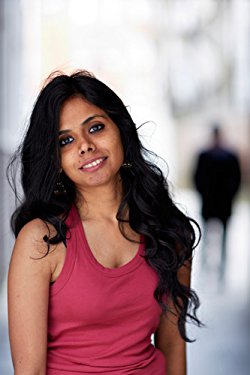
The reviews made me wish to read it, but the subject prevented me from picking it up sooner.  And then it made the long list of the Women’s Prize for Fiction 2018. I relented.

While it genuinely deserves to be on the list for its literary uniqueness and merit, it’s also relevant given we are in an era where the silencing, harassment and abuse of women is reaching a tipping point, in the West at least. The author now lives in London, however this story takes place in contemporary India, where she grew up.

The statistics on domestic violence in India are appalling, violence by husbands against wives is widespread, nearly two in five* (37 %) married women have experienced some form of physical or sexual violence by their husband, and while the statistics vary according to the number of years of education men or women have acquired, 12%  of married women with 12 or more years of education have experienced spousal violence, compared with 21 percent of married women whose husbands have 12 or more years of education.

This is one aspect that surprises some Western readers, that highly educated women, married to highly educated men (the husband in this book is a university professor) while less likely to suffer, are not immune. No one is.

The title is a reference to James Joyce’s Portrait of the Artist as a Young Man his debut novel about a young man growing up, (essentially, his alter-ego). In the same way we see the character of this novel traverse the early months of a new marriage, as a young wife.

Meena Kandasamy

Meena Kandasamy has created an artwork, carefully sculpted, observed and understood from different angles, a work that endures over four months, like acts in a play, before the master stroke, a line she drew, that when her husband crossed, would signal to her the moment to leave. It is written by an unnamed narrator in a first person voice that moves from reflective to urgent, from a place of detached distance to a disturbing sense of present danger.

The novel begins in the period after she has escaped her marriage, in recounting the things her mother says to people, it is five years since her daughter left the marriage and the story has mutated and transformed into something the mother can more easily digest as she narrates.

So, when she begins to talk about the time that I ran away from my marriage because I was being routinely beaten and it had become unbearable and untenable for me to keep playing the good Indian wife, she does not talk about the monster who was my husband, she does not talk about the violence, she does not even talk about the actual chain of events that led to my running away. That is not the kind of story you will be getting out of my mother, because my mother is a teacher, and a teacher knows that there is no reason to state the obvious. As a teacher, she also knows that to state the obvious is , in fact, a sure sign of stupidity.

When she tells the story of my escape, she talks of my feet.

The way the story begins, hearing her mother’s voice with hindsight, introduces the subject with a dose of irony. It is a lead up to the author introducing herself as the writer that she is, and sharing the lessons she has acquired through this writing project.

Much as I love my mother, authorship is a trait that I have come to take very seriously. It gets on my nerves when she steals the story of my life and builds her anecdotes around it. It’s plain plagiarism. It also takes a lot of balls to do something like that – she’s stealing from a writer’s life – how often is that sort of atrocity even allowed to happen? The number one lesson I have learnt as a writer: Don’t let people remove you from your own story. Be ruthless, even if it is your own mother.

She continues with narrating the story, and seeing it as if she is playing a role in a drama.

And in some ways, that is how I think of it: it is easier to imagine this life in which I’m trapped as a film;  it is easier when I imagine myself as a character. It makes everything around me seem less frightening; my experiences at a remove. Less painful, less permanent. Here, long before I ever faced a camera, I became an actress.

The husband, a Marxist who considered himself a revolutionary, a comrade, using communist intellectual ideas and his activities to elevate his self aggrandisement, detests the idea of his wife’s being a writer, an attitude that pushes her to want to antagonise him. The more he wishes to silence her, the stronger is her will to write, to imagine, to create, to express herself.

Being a writer is now a matter of self-respect. It is the job title that I give myself…

But it’s not just about antagonizing him. There is a distasteful air of the outlaw that accompanies the idea of a writer in my husband’s mind. A self-centredness about writing that doesn’t fit with his image of a revolutionary. It has the one-word job description: defiance. I’ve never felt such a dangerous attraction towards anything else in my life.

Given how prevalent it is, it is a brave and courageous feat for the author to have penned this work and for it to be recognised and appreciated in this way, deservedly so. In an interview with The Wire, (linked below) Meena Kandasamy said:

“I will write in the same way in which I lived through all of this: carrying myself with enormous, infinite grace.”

It is an incredible work of creativity, working through the post-trauma of domestic violence.

Meena Kandasamy has taken charge of her story, she retells it in exactly the form(s) that she desires, and I am sure she will move on and create more great works of art, in literary form.

This is not a work to shy away from, especially not now, in these times where women are being supported when they choose to express these narratives, in order to move on from the trauma, because no one wants these stories to define their lives or to be who they are. Healing might come slowly, but I hope it does indeed come, that people like Meena Kandasamy can share their version of resilience and acts of moving forward and on, for the sake of themselves and others like them, albeit never forgetting.

I finish with one more of the many quotes I highlighted from reading:

I remind myself of the fundamental notion of what it means to be a writer. A writer is the one who controls the narrative.

I have put myself in a dangerous situation with this marriage, but even in this complicated position, I’m finding plot points. This is the occupational hazard of being a writer-wife.

Further Reading:

Interview: Meena Kandasamy on Writing About Marital Violence

* Statistics on Domestic Violence in India

Buy a copy of this book via Book Depository